← The Speed of Culture Podcast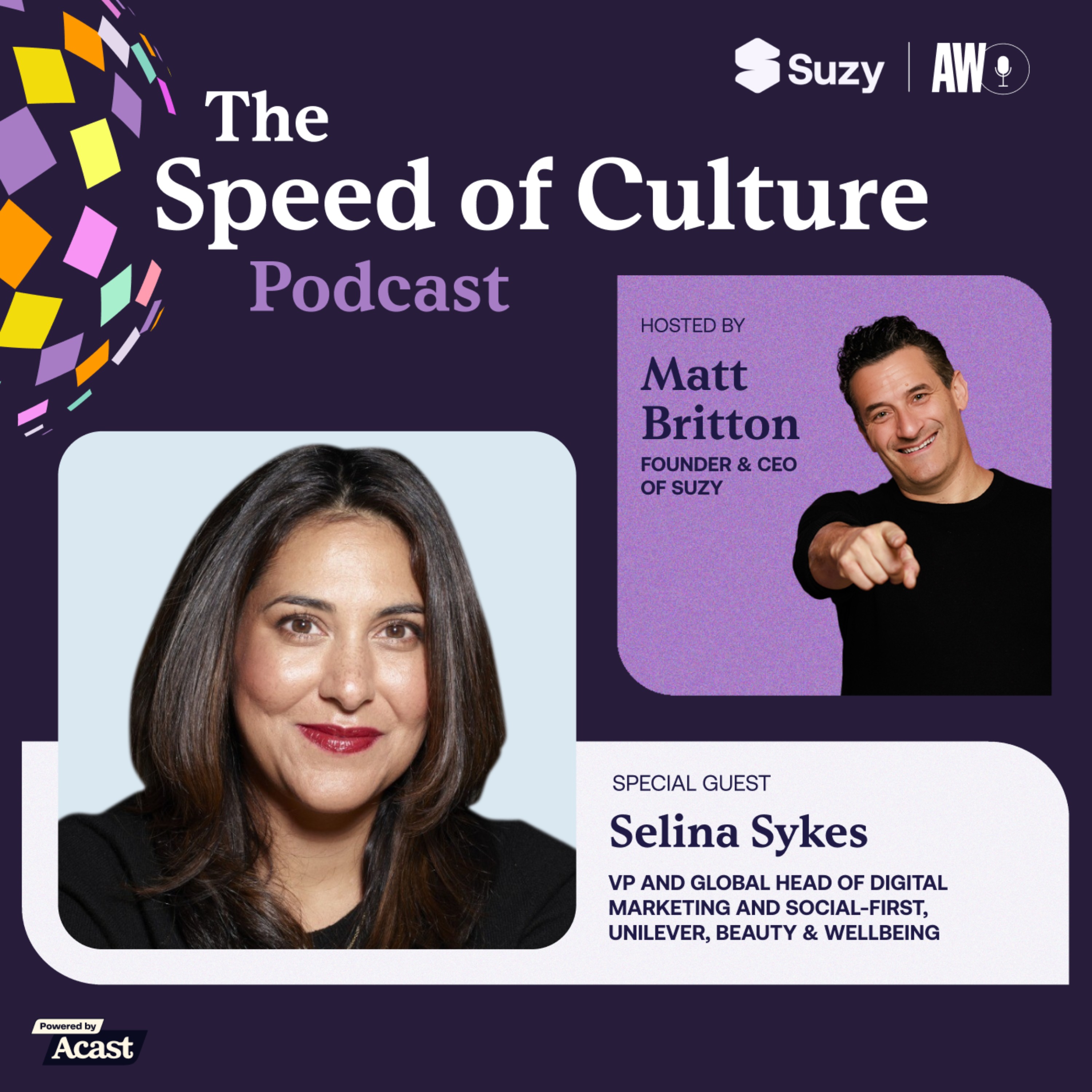
The Speed of Culture Podcast
Digital glow-up: How Unilever blends AI, creators, and culture to build desire at scale
00:28:48
Loading summary
Transcript84 lines
- [00:00]
Raj or Noah
Hey, it's Raj and Noah, and we're back with a new season of Am I Doing It Wrong? The show that explores the all too human anxieties we have about trying to get our lives right.
- [00:08]
Because we're still doing a lot of stuff wrong.
- [00:11]
But who isn't? That's why each week we're talking about the topics that we could all use a little helping hit with. Whether it's making new friends as an adult, managing our emotions, or even dreaming.
- [00:19]
We'Ll be talking to experts in their fields who are definitely doing things right, so the rest of us can be a bit wiser and a lot better equipped to handle whatever life throws at us.
- [00:28]
Subscribe now and listen to new episodes of Am I Doing It Wrong? Dropping every Thursday starting January 1st, wherever you get your podcasts.
- [00:36]
And for the first time ever, we're going to have full video episodes on YouTube. Because as long as there are things to get wrong, we're going to be right here to help you do them better.
- [00:44]
Selena Sykes
Love you. Imagine the merging of trusted intelligence into a unified experience.
- [00:51]
Raj or Noah
Imagine collaboration amongst teams and across continents.
- [00:54]
Selena Sykes
Imagine an empowered ecosystem designed to deliver actionable insights that inspire growth and sustainability.
- [01:02]
Raj or Noah
That's the power of the Connect industrial.
- [01:05]
Selena Sykes
Intelligence platform to help you see further.
- [01:08]
Raj or Noah
Innovate faster, accomplish more.
- [01:10]
Selena Sykes
That's the Connect effect. Learn more@thatstheconnecteffect.com.
- [01:18]
LinkedIn Ads Announcer
Does it ever feel like you're a marketing professional just speaking into the void? But with LinkedIn ads, you can know you're reaching the right decision makers, a network of 130 million of them. In fact, you can. You can even target buyers by job title, industry, company seniority, skills and Did I say job title? See how you can avoid the void and reach the right buyers with LinkedIn ads. Spend $250 on your first campaign and get a free $250 credit for the next one. Get started at LinkedIn.com campaign terms and conditions apply.
- [01:49]
Selena Sykes
We've moved to this desire at scale model where in order to reach people today and in order to connect with them, you need to create so much more content. Because you're trying to feed an algorithm that is interest based and you're trying to connect to people through their passions and through their communities.
- [02:11]
Matt Britton
To thrive in a rapidly evolving landscape, brands must move at an ever increasing pace. I'm Matt Britton, Founder and CEO of suzy. Join me and key industry leaders as we dive deep into the shifting consumer trends within their industry, why it matters now, and how you can keep up. Welcome to the Speed of Culture. Up. Today on the Speed of Culture podcast, we're thrilled to be joined by Selena Sykes, the beauty and well being VP and head of digital marketing and Social first at Unilever. Selena is leading Unilever's global marketing transformation, using AI creators and cultural insight to build brands that inspire desire at scale. Selena, so great to hear from you and to connect on the podcast.
- [02:53]
Selena Sykes
Thanks, Matt. Thanks for having me.
- [02:55]
Matt Britton
And where does this podcast find you today?
- [02:57]
Selena Sykes
I'm in London, so that's where I'm based. So, yeah, here after a very busy week and really looking forward to our chat.
- [03:03]
Matt Britton
And what does marketing look like from a cultural nuance perspective in Western Europe versus the US Are there any real differentiations in terms of brand building that you think are notable?
- [03:14]
Selena Sykes
That's a really good question because with kind of the rise of social media and the kind of globalization of content, like, you could get content on your feed from anywhere, can't you? I think it's really opened a window to those cultural nuances. And I'd say, of course there are. There are things that go on in different parts of the world. But what I really notice more than anything else is two things. One, that all of these trends that might show up differently in the US or in the east or in Western Europe, they tend to have this, like, undercurrent of a cultural force that is happening everywhere. So I'll give you a good example. I think we all noticed last year lots of trends like Brat Summer, Jamir Fall, these things were kind of trending. But what we've seen, the undercurrent and the force that's going on everywhere around that is this redefinition of femininity and what it means to women. And so actually, I think the trends might show up differently in different places, but these changes in humanity and what's really going on for people is huge and is something that as a global business, because Unilever is a global business and we try and do things at scale, we find that we can tap into those everywhere, and then they show up in a different way.
- [04:26]
Matt Britton
And obviously, as a marketer, you know, things are changing so fast right now with the consumer, I would argue faster than ever before, especially with AI and rapid evolution that we're seeing and impact on the way that people find out about products and ultimately they buy products, et cetera. How do you, as a marketer, keep your finger on the pulse of what's going on? What do you lean into in a world where there's so much noise?
- [04:48]
Selena Sykes
Yeah, I think noise is a big threat to us in the business, but it's also for consumers like this can get overwhelmed with everything that's being thrown at you. So personally, I lead transformation. So one of the parts of my jobs is being able to understand the big shifts that are going on and almost filter and codify them so that there's something that's meaningful for the business and can drive impact. So obviously how I do that is really keep close to people outside. All our partners are fantastic. Really keep close to our consumers, like put them at the center of everything that we're doing. We're always keeping them in mind in whatever change that we're bringing in the business. So you also mentioned AI, and I think that is the conversation everywhere. Like every conference I go to, every meeting I go to, there's obviously this conversation. And it's been happening for a couple of years now. It's been the key topic of conversation. And I think as we get more and more into this shift and in what's into what's going on, you can kind of really start to see beyond the hype and understand truly how I see AI as a foundational technology. So it's not the AI itself that we should get excited about. We should get excited about what are we doing with it, what are the real world problems that we are solving? And aren't we lucky that we've got this cool new technology and lots of providers out there willing to help us solve these problems? So we really try and start with the outcomes, like what is the problem to be solved, what is it we need for our business? And fortunately a huge outcome at the moment and for us. You mentioned we were trying to build this whole marketing philosophy around desire at scale. And we are a huge business and to do those things at scale. AI is such an incredible enabler for us because it allows us to shift to this marketing model where we were very broadcast and like one to many to a model now where we're many to many. And so we really focus on that. We really focus on what are we trying to do to reach, persuade and convert our consumers. And then AI is an absolute critical enabler for us to achieve those things. So that's how we really think about this transformation and all the stuff that goes on. We think about the outcomes, we think about the real world problems. And then we think, aren't we lucky that there's technology that can kind of bring our ideas and our wish list to life and make stuff happen.
- [07:06]
Matt Britton
So is there an example you could Talk about ways that you are currently leveraging AI internally with one of your brands just so we can kind of unpack it for the audience.
- [07:14]
Selena Sykes
That's great. So probably most marketers listening to this, like one of the biggest use cases for AI is content creation. Like that's probably like one of the biggest things that people are thinking about in marketing today is how do I use AI? And we've got all these fantastic gen AI tools, Nano, Banana, Soro, these amazing things that we can play with with content creation. But for us of course lots of fun and experimentation. But what we've really done is we've built what we call like a content supply chain. So because we've moved to this desire at scale model where in order to reach people today and in order to connect with them, you need to create so much more content because you're trying to feed an algorithm that is interest based and you're trying to connect to people through their passions and through their communities. So to do that through old method of content and creative, it wouldn't just not be feasible. It genuinely we wouldn't have the capacity in our business to achieve that. So now it's thinking about okay, how do we maintain the creative excellence, the integrity of our content and creative but use this supply chain to really create the volume, the variety, the velocity of content that we need today to achieve that many to many model. And that's a really exciting challenge. And for that challenge we've built this kind of end to end. So we've thought about, I'll really break it down for you. So we've thought right upstream. The integrity of our brands is so important. We've got these like legacy hundred year old brands and they really have so many codes. There's so much salience and kind of equity in those brands. So we've actually taken that, we've re envisioned it for 2025, 2026, we've made it more modern and we've coded it into a system that we call brand dnai. So it's like the DNA of other brands and we've codified it and that provides the context layer. So it gives you all the context about the brands to feed into all of our content creation AI tools.
- [09:10]
Matt Britton
So it's like an agent basically that goes and provides context on everything you need to know about the brand, which kind of creates the foundation for everything you do.
- [09:17]
Selena Sykes
And we actually have an LLM layer on it too. So you can go in and chat to it and be like, should I work with this creator? Should I do this and it really understands the brand because we're constantly programming it with not only everything we know about our brands, but the performance of those brands. So that's one kind of upstream in this content supply chain, then you've got the factory, you've got the tools. And what we've learned in this journey is it's just as much about the people that use the tools as the tools. So we've got some fantastic tools, we work with some great partners. Pencil Pro is great partner of ours. Lots of AI and content generation out there and we have built this people and process around it. So it becomes this system that then creates the content, makes sure we quality control the content, make sure we ship the content into the platforms, do that kind of dynamic optimization that again, AI allows us to do that real time dynamic optimization. We wouldn't have been able to do it without that. And this is the supply chain that we've built and we've rolled that out globally now. So we've got that infrastructure. And I think I'm kind of even more excited about what we're going to be able to do with it versus what we've built because the opportunity now is huge to really raise our game.
- [10:26]
Matt Britton
Yeah. And you're on. I always say, like get on the rails. Because as the frontier models get better, the output of this engine is only going to get better. So you know, you talk about Nano Banana, which came out a couple of weeks ago, and its ability to create infographics and detailed high fidelity imagery is unlike anything we've seen prior. And I'm sure a year from now we're going to be talking about a different version of one of the models that's going to be doing it even better. But as long as you have that system set up and the pipe set up well, then you're going to be able to continue to improve. Or companies that aren't, as the models get better, they actually get less competitive.
- [10:58]
Selena Sykes
I so agree with you. I always say, you know, you can't learn anything by sitting on the sidelines, like just get in there, just play, just get involved, just build things. And it's going to be much quicker for you to learn, much quicker for you to build. And then you're right, as we hit maturity on some of these things, we're going to have the opportunity to go faster. Because we built, we built the pipes. Like you say, that's how we talk about it. We talk about we built the pipes, putting water through the pipes. That's exactly what we're doing so today.
- [11:25]
Matt Britton
Here in December 2025. What are the types of content that you actually are able to create that are AI powered? And I understand you have a human in the loop component, but can you talk about anything that's actually in market that AI had a role in generating for one of your brands?
- [11:38]
Selena Sykes
So like I say, we take this brand DNA, we've got all the context, we've got some base assets and then there's a generative layer so you can generate C so much, especially in the beauty world, we call it modes of action. So it's all the sensorials and the kind of science tech video parts of the videos, then there's the product imagery. So if you can imagine how many times we had to like camera shoot different products and packs because we operate in hundreds of countries. So we've got these digital twins that are kind of the packs that can be shot in many, many different angles. So you can then take that digital twin and you can use it in any product content in any way you want. You can change the light refraction, you can change the background, you can change the angle, you can change the language. So you can really drive that digital twin to make endless infinity amount of content with that. And what we're finding is as we're deploying AI to generate and remix this content, we're seeing not only the cost and time saving that you would expect, so like we're seeing like 40% cost savings up to 60% time savings, we're seeing all of that stuff. But what's more interesting to me is we're seeing higher effectiveness of our communication. So we're seeing like 3x the view through rates, we're seeing 23% increase in purchase intention versus the non AI creative. And I think the reason for that is you're able to take the insights, take the brief, take the context and really shortcut to get that best quality content because you've got everything being integrated quicker than it's been able to do before. And also because we're creating such a big volume of content now, we're able to work out what's working, what's not working. So you really go after the stuff that's working. So that's the other reason why I think the quality and the effectiveness is going up as well as the efficiency going down.
- [13:27]
Matt Britton
Yeah, also like as a global marketer, you know, your ability to have multilingual campaigns, I mean that was such a barrier in the past to executing. And that's why I kind of started off Talking about the cultural nuances. Why? I think over time, the models will know that these markets, this language works better or these words or this phrasing works better based upon the market. So I think it's just fascinating to think about where it's all going to go.
- [13:49]
Selena Sykes
You think about a market like India, where there's so many different languages and dialects, you can really connect with people on such a deeper level. And that's what we want to do as marketers. We want to connect with people as people, not as consumers. We want to matter to them as people. And so all the AI is helping you do is do what you want it to do better. Like get to that depth, get to that volume, get to that connection that you wanted to get to. I think you were talking about cultural nuance. We haven't touched on how you can take insights using AI because you're right. Like, there's so many different insights that are manifested differently for different communities, different markets, different product categories. And I think AI is able to sift through such a high quantity of data that it can help you as a human, kind of synthesize so much. And then you put your human judgment and you say, this is what I'm going to do, and this is the insight. But you couldn't possibly integrate that many signals. There's too many signals, there's too many data points. There's too much going on for a marketeer to be able to really integrate it. So it's about, like I say, using the AI to make you better at doing what you want to do.
- [14:56]
Matt Britton
We'll be right back with the speed of Culture after a few words from our sponsors.
- [15:00]
LinkedIn Ads Announcer
Does it ever feel like you're a marketing professional just speaking into the void? But with LinkedIn ads, you can know you're reaching the right decision makers. A network of 130 million of them. In fact, you can even target buyers by job title, industry, company seniority, skills, and. Did I say job title? See how you can avoid the void and reach the right buyers with LinkedIn ads. Spend $250 on your first campaign and get a free $250 credit for the next one. Get started@LinkedIn.com Campaign terms and conditions apply.
- [15:32]
Raj or Noah
Hey, it's Raj and Noah. And we're back with a new season of Am I Doing It Wrong? The show that explores the all too human anxieties we have about trying to get our lives right.
- [15:41]
Because we're still doing a lot of stuff wrong.
- [15:43]
But who isn't? That's why each week we're talking about the topics that we could all use a little helping hit with. Whether it's making new friends as an adult, managing our emotions, or even dreaming.
- [15:52]
We'll be talking to experts in their fields who are deep, definitely doing things right, so the rest of us can be a bit wiser and a lot better equipped to handle whatever life throws at us.
- [16:01]
Subscribe now and listen to new episodes of Am I Doing It Wrong? Dropping every Thursday starting January 1st, wherever you get your podcasts.
- [16:08]
And for the first time ever, we're going to have full video episodes on YouTube, because as long as there are things to get wrong, we're going to be right here to help you do them better.
- [16:16]
Selena Sykes
Love y'. All.
- [16:21]
Matt Britton
So I was looking through your LinkedIn, as I often do, stalking my guests, and you had a post five months ago saying 11 lions, two Grand Prix, a titanium, and you're talking about obviously the Cannes Lion Grand Prix and Unilever obviously perform really well there. And are we going to be at a place two to three years from now where those awards are won by creative that's completely developed by AI models?
- [16:45]
Selena Sykes
I honestly don't think so. I don't think anything really will be completely developed by a models, because people talk about human in the loop, but if you really think about without the human, you don't have the innovation. Without the human, you don't have the imagination. Like, AI builds itself off past history, so it can't possibly do that stuff that the humans does. It can't bring the heart to it. So I don't think anything's going to be able to be 100% AI driven, but I think people are going to be able to use AI to really elevate what they're doing. And I can talk about that campaign a bit that Vaseline Verified. I think the reason we were really proud and I don't frequently post on LinkedIn, but that was something we were really proud of, is we had a mission to transform how we approach marketing and become. We called it social first, but it's really about being community first, cultural first, people first, and move to this many to many model. And that's really what we mean in like desire at Scale is tapping into that desirability in many different ways. And one of them is about tapping into culture and communities. And with Vaseline Verified, it was really like the epitome. That campaign brought so many of those threads together and the fact that it was recognized was really cool. But it was a campaign that literally came from the community. So it was the community who were talking about Vaseline and their hacks for Vaseline. And this is an 150-year-old product that is being talked about every single day. And we were able to really build on those hacks and bring value to those hacks as a brand. So we weren't just like crashing the party and being like, hi, we're the people you're talking about. We actually came with value and we verified their hacks in our lab with our proper doctors and scientists. Verified. And then obviously went back to them and recruited them. Say, like, do you want to be part of this campaign? Thank you very much for your hack. Your hack's verified, your hack's not verified. And this was more about the creator economy for me. This is about really leveraging community and kind of giving that power of your brand and co creating with the community your brand. It was a really great example of this social first marketing and we're really proud to win the Grand Prix.
- [18:51]
Matt Britton
Yeah, I mean, social first is obviously, it's a buzzword and it gets thrown around a lot. But I mean, why I believe it's important is especially for your brands. I mean, this year, for the first time ever in the us, a first time mother is part of Gen Z, which means she grew up with the iPhone in the household. She grew up consuming content on the mobile device. And when these consumers are consuming content on the mobile device, they're consuming content not from major media networks, but from other people, which is kind of where the creators come in. So when you think about building your brand for this new consumer, you obviously have to be social first and you have to be mobile first. And you really do have to put creators at the center of whatever you're planning.
- [19:31]
Selena Sykes
We really are so energized by how powerful the creator economy is and how many people that are already talking about our brands and love our brands, but also the way that we can co create. So we're doing a lot to build this advocacy and this trust with the communities out there and the creators and bringing them in and working with them. But also I think it's about, we talked about this. It's earning people's attention. It also makes you rethink your brand and say, yeah, it's great to kind of bring these people in and talk to these people and listen to these people. But it also makes you reflect on yourself as a brand and say, how am I showing up? How am I showing up today? Am I earning attention? Am I actually really relevant? And I think that's exactly what we need to do always. Like I said, like the challenge for Unilever is we have these legacy brands, we have these brands that have been around for a really long time and what we've always done successfully is make them relevant today and tomorrow. And that's the work we're doing. We call it being young spirited. But what it's really about is really earning attention, being shared by others, having other people want to talk about us, want to share our content. And that is as much about leaning into the creators as making sure you are worthy of that as a brand.
- [20:44]
Matt Britton
Yeah. And of course it has to be authentic. I mean I think the second a creator just is sort of like does a one night stand so to speak and just takes money just to talk about something versus a marriage over a long term, I think their followers really start to lose, I think a lot of respect for what they're talking about and then they become very much less effective at promoting whatever it is that they're trying to talk about.
- [21:04]
Selena Sykes
Yeah, it's too transactional. Have you heard this like people talking about like the de influencing era?
- [21:10]
Matt Britton
No, I haven't.
- [21:10]
Selena Sykes
But I think do you see that in your feed? Like people start to scroll past that stuff because it's not authentic. So I think we've hit that point now where especially like you're saying Gen Z, like they're like I want real authentic connection. I don't want people that are just transacting and my attention is being bought. But it's a good place to be because I always think this is what we've all of us got into marketing for is to really earn attention and do something that matters to people and make what you are selling really elevate someone's life and relevant to their life. So yeah, it's just a fantastic way for us to raise our game to be shared by others.
- [21:44]
Matt Britton
Yeah, it's almost like the new age example of if you read an amazing article about a company or a person, it carries a lot more weight than just seeing an ad from them. And I think that's the kind of difference between authenticity or pay to play that you really need to tackle within the creator economy.
- [21:59]
Selena Sykes
Yeah, a hundred percent agree to you really earning.
- [22:02]
Matt Britton
So we talked about AI and obviously its role within your organization just in terms of creating content, building the engine. I think that's such a super cool example. I'm curious your thoughts on where AI is going to play a continued role and an increasing role in the consumer journey. What we're seeing is holiday season is as many as 80% of consumers are saying that they're using AI at least during one time. The consumer journey, whether it's through research or the consideration phase, do you see in 2026 this sort of like agentic powered shopping becoming mainstream? And what is Unilever doing about just the big shift we're seeing with the Internet essentially starting to have a new front door from a traditional search engine like Google to more LLMs to help them along the journey?
- [22:49]
Selena Sykes
I think once you start using those like, generative engines to help you do things, it's really hard to go back to like an old search model. So I think as the penetration drives, like, you're going to get more and more usage of them. And then you're right, because there's a difference between like just AI answer engines and genuine agentic, where they're like taking action for you. And I do a bit of both personally, but I can see how it's going to explode. So I'll talk a bit about what I think it's going to do for the consumer journey. That's such an important way because lots of businesses are only looking at AI.
- [23:21]
Matt Britton
Topic du jour right now.
- [23:23]
Selena Sykes
Yeah, but don't you think lots of businesses are looking at it from like productivity in their own business? Whereas actually the shift in how the kind of like existential change in how they'll behave is like really going to be big.
- [23:34]
Matt Britton
So you're right, 100%.
- [23:36]
Selena Sykes
Yeah.
- [23:36]
Matt Britton
And how many markets. Markets has Google made? How many brands has it made? Because it was, it's become a verb. And now all of a sudden, if we're saying that the entire journey is shifting, that just is going to create massive business opportunities and it's happening fast.
- [23:49]
Selena Sykes
Massive, massive, massive. So there's a couple of things here. There's like the stuff you can do today, which is like, how are you showing up in these LLM searches? What's making you show up or not show up? So we're doing all of that work and we're like really making sure. But if you do the work, what you find out quickly is the people that show up are the people that are authentically asking, answering the questions that these people have. Because it's not because people are saying I have eczema on my face or I have eczema, like, what do I do? What's my routine? And they're getting really lovely personalized answers. And something I think is going to really be important next year is how consumers are getting better at prompting and giving Context about themselves. So it's not going to be like a keyword strategy because the prompts are going to be so unique. It's going to be hard for marketers to like by keywords.
- [24:36]
Matt Britton
Hyper personalize. Exactly. And also the Miles, as they learn more about you, you're not going to have to say what shoe size you are. You're not going to have to say how old your kids are. The miles didn't know that stuff. So to your point, it's going to make the journey so much easier for consumers. But it's not like the traditional way that consumers had these sort of one shot search queries.
- [24:56]
Selena Sykes
Yeah. And they haven't commercialized it. Yeah. So you're right. There's a whole opportunity curve at the moment of how you get behind it. So I think there's some stuff you can do today, some like hygiene stuff.
- [25:05]
Raj or Noah
But.
- [25:05]
Selena Sykes
But when you get into it, you realize it all comes back to just really making products that people. And I'll come back to this desire at scale thing because the reason we call it desire at scale is we feel like we want our marketing to tap into like I need this. It goes beyond like there's a rational I want to buy this product. But we've created these brands that people need in their lives. And I think that is if you can truly do that like in an authentic way. So you've got the right technology, the right product experience, the right packaging, but also everything I just talked about in terms of earning attention and being truly relevant to their lives. If you can create that, I think the LLMs will pick it up because you've actually tapped into what really people care about. And then of course there's all the tactical stuff you'll be able to do around it that people are going to all have to get their heads around, which is a lot of the work I'm doing at the moment. But one of the things you mentioned that I love is this agentic shopping, which I think will evolve to not just be agentic shopping, but like your personalized agent. I think everyone will have this personalized agent that will help them with all aspects of their life. So I have one, I've created one that helps me with like prioritization and managing my time. But you could easily see how that could start making recommendations for shopping, doing my weekly grocery shop for me, doing meal planning for me. And then as soon as that's tapped into my grocery shopping like e commerce site, then it'll complete the whole transaction for me and I won't even have to think about it. And the stuff will come up and the meal plan will be ready and that will be the week done. And you can see how that's going to evolve into many different parts of people's lives. So we sometimes talk about it as like winning the machines. It's like another audience that we're going to have to understand how they're making those recommendations and how we show up in the right way for those brands.
- [26:45]
Matt Britton
Absolutely. So shifting gears as we wrap up here, Selena, you have been at unilever for nearly 20 years and a lot of our guests on the podcast, they jump around a lot and they'll be at one place for three years. One year, one place for five. What are some of the benefits do you think you've gained by going through this two decade journey with the same company? Albeit it's a huge company that is a house of brand. So you can obviously jump on globally and brand to brand, but you're still within the same organization, within the same kind of cultural pillars. What type of benefits do you think that has provided you as you grow professionally?
- [27:18]
Selena Sykes
I think the first is what you said. Like, the reason I've stayed for this long is because every other job I've had has felt like I'm working for a different company in terms of the opportunity they've given me. Because especially me, you can see I'm in a transformation job. I need that stimulation of like a new challenge, pioneering, doing something different. So I think this company is big enough so you feel like you've done lots of different things. And in my career, I've done everything from running E Commerce to being the CEO of an incubator, to what I do now, to doing a classic brand role. So it gives you that variety. And I've had real depth of experience in many different places because I know the place I can get stuff done quickly. I understand the people I have, the relationships. And I think something that's really important when you're in a business for that long is not becoming institutionalized and like part of the, you know, letting it too much infect you and always feeling like you have that outside perspective and that you can provoke and challenge because that's a risk, I think if you stay somewhere longer.
- [28:22]
Matt Britton
Right. Stockholm syndrome, as they say, you want to be the revolution with any institution if you can.
- [28:27]
Selena Sykes
Yeah. So I've always tried to like keep a really fresh perspective so you don't feel like you're the person bringing the freshness and the provocation and driving the Change and not kind of having that nostalgia and that kind of, oh, this is how things are done around here. But yeah, personally for me, it's enabled me to get a real depth of experience in many different places because I didn't have to worry about all the culture stuff because I know the people and I know how to get things done. So I can do that. And then I can get really deep into E commerce or creator economy or AI and I can get really into my job quite quickly and actually start delivering quite quickly because I know the place.
- [29:06]
Matt Britton
Yeah, I love that answer. So, as we wrap up here, we often ask our guests if there is a saying or mantra that has helped sort of encapsulate their professional journey. I was just wondering if you have anything that comes to mind that you think really hits the nail on the head in that regard.
- [29:22]
Selena Sykes
I don't know if it's like a perfect phrase, but for me, my mantra is about always having a growth mindset. So it's always about. I'm always thinking, what haven't we done yet? It's not like something can be done or can't be done. It's like, what's the possibility? What's it going to take? What do I need to learn next? And always feeling like you're on that learning journey and there's nothing's ever a kind of yes or no. It's about really trying to find the next possibility and kind of level up and learn something new. Because I think if you keep a learning mindset rather than a knowledge mindset, I think you grow faster, but also you achieve more growth in whatever job you're doing or whatever ambition that you've got. You know, you're always keeping your mind open, going, I'm here to learn. I'm not here to just know everything. I think that's something. And it's also enjoyable to do that because it's really fulfilling.
- [30:09]
Matt Britton
Absolutely. And I think, you know, it's hard to teach that curiosity and that learning mindset, but I think for those who are great at what they do and frankly love what they do, that never really goes away.
- [30:19]
Selena Sykes
Yeah, I think it's really important to keep the curiosity. It's sad when people lose that. But I think curiosity is going to be one of the defining success factors for people in this, like, agentic, autonomous. Because I think that curiosity, A, it's going to get more out of the AI because you're going to be really pushing to get benefits from it, but B, you're going to be coming up with the innovation that is the next thing that the AI can't do. So you're going to bring value to the model.
- [30:43]
Matt Britton
I couldn't agree more. You'll be the pace car, so to speak, for innovation, which it sounds like you've been for Unilever and will continue to be. So thank you so much Selena for taking taking the time to share your wisdom and your stories with our audience. I have no doubt they're going to get a ton of value from it.
- [30:55]
Selena Sykes
It was fun to chat. Thanks Matt. Take care of yourself.
- [30:58]
Matt Britton
Absolutely. On behalf of Susie I team thanks again to Selena Sykes, beauty and well being VP and Head of Digital Marketing at Unilever for joining us today. Be sure to subscribe, rate and review the Speed of Culture podcast on your favorite podcast platform. Till next time. See you soon everyone. Take care. Bye bye. Speed of Culture is brought to you by Suzy as part of the Ad Week Podcast Network and a Guest Creator Network. You can listen subscribe to all Adweek's podcasts by visiting Adweek.com podcasts to find out more about Susie, head to Susie.com and make sure to search for the Speed of Culture in Apple Podcasts, Spotify, or anywhere else podcasts are found. Click follow so you don't miss out on any future episodes. On behalf of the team here at Suzy, thanks for listening.
- [31:57]
LinkedIn Ads Announcer
Does it ever feel like you're a marketing professional just speaking into the void? But with LinkedIn ads, you can know you're reaching the right decision makers, a network of 130 million up them. In fact, you can even target buyers by job title, industry company, seniority, skills, and did I say job title? See how you can avoid the void and reach the right buyers with LinkedIn ads. Spend $250 on your first campaign and get a free $250 credit for the next one. Get started at LinkedIn.com campaign terms and conditions apply.
- [32:29]
Raj or Noah
Hey, it's Raj and Noah. And we're back with a new season of Am I Doing It Wrong? The show that explores the all too human anxieties we have about trying to get our lives right.
- [32:38]
Because we're still doing a lot of stuff wrong.
- [32:40]
But who isn't? That's why each week we're talking about the topics that we could all use a little helping hit with. Whether it's making new friends as an adult, managing our emotions, or even dreaming.
- [32:48]
We'Ll be talking to experts in their fields who are definitely doing things right. So the rest of us can be a bit wiser and a lot better equipped to handle whatever life throws at us.
- [32:57]
Subscribe now and listen to new episodes of Am I Doing It Wrong? Dropping every Thursday starting January 1st, wherever you get your podcasts.
- [33:05]
And for the first time ever, we're going to have full video episodes on YouTube. Because as long as there are things to get wrong, we're going to be right here to help you do them better.
- [33:13]
Selena Sykes
Love you.
- [33:15]
LinkedIn Ads Announcer
The New Year brings new health goals and wealth goals. Protecting your identity is an important step. Your info is in endless places that could expose you to identity theft leading to lost funds. LifeLock monitors millions of data points per second. If your identity is stolen or our restoration specialists will fix it, guaranteed or your money back. Resolve to make identity, health and wealth part of your New year's goals with LifeLock, save up to 40% your first year. Visit LifeLock.com Special offer terms apply.