← The Speed of Culture Podcast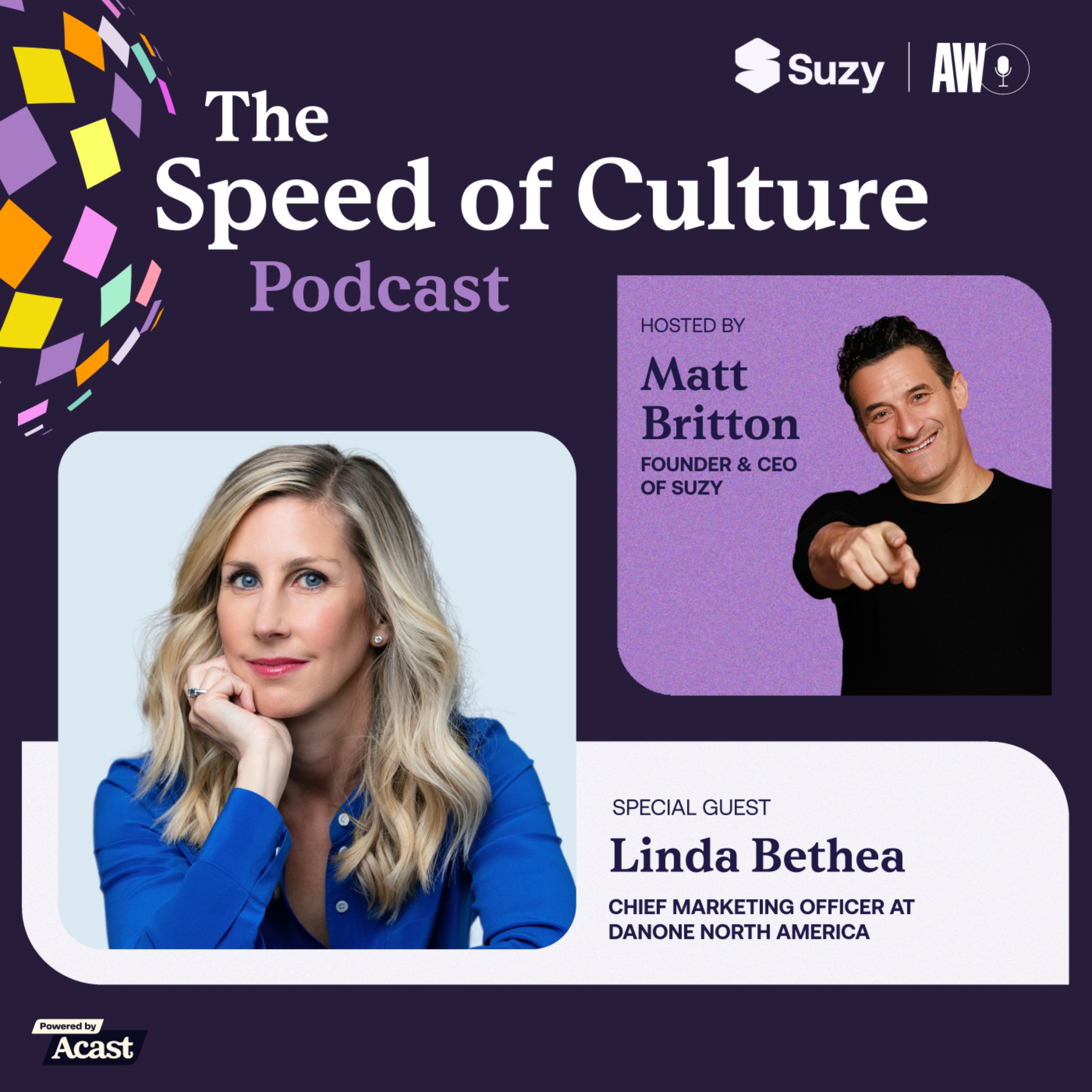
The Speed of Culture Podcast
Culture growth: Why Danone’s CMO believes fundamentals still drive the future
00:26:35
Loading summary
Transcript69 lines
- [00:00]
A
Banking with Capital One helps you keep more money in your wallet with no fees or minimums on checking accounts and no overdraft fees. Just ask the Capital One Bank Guy. It's pretty much all he talks about in a good way. He'd also tell you that this podcast is his favorite podcast too. Ah really? Thanks. Capital One Bank Guy. What's in your wallet? Term supply See capitalone.com bank capital1na member.
- [00:25]
B
Fdic hi, I'm Darina, co founder of OpenPhone. My dad is a business owner and growing up I'll never forget his old ringtone. He made it as loud as it could go because he could not afford to miss a single customer call. That stuck with me when we started OpenPhone. Our mission was to help businesses not just stay in touch, but make every customer feel valued no matter when they might call. OpenPhone gives your team business phone numbers to call and text customers or all through an app on your phone or computer. Your calls, messages and contacts live in one workspace so your team can stay fully aligned and reply faster. And with our AI agent answering 24. 7, you'll really never miss a customer. Over 60,000 businesses use OpenPhone. Try it now and get 20% off your first six months@openphone.com tech and we can port your existing numbers over for free. Open Phone no missed calls, no missed customers.
- [01:29]
C
Finding the right audience shouldn't feel like doom scrolling with Experian. It doesn't. Experian syndicated audiences help you reach holiday shoppers, car buyers and more across over 200 top platforms. With over 2,400 pre built audiences, there's no more doom scrolling. It's audience targeting you can trust. Made simple. Learn more@experian.com Adweek that's experian.com Adweek.
- [02:00]
D
If you want to be a successful marketer, you have to be curious along with that compassion. I'm not always the consumer of the product or brand I'm marketing, so I have to dig deep and really understand that consumer target and have compassion for them so that I can deliver better products and messaging. And then I think on the leadership side, the other two Cs would be courage and conviction. You have to have courage and you have to take risks. You're not always going to be successful and that's okay.
- [02:30]
E
To thrive in a rapidly evolving landscape, brands must move at an ever increasing pace. I'm Matt Britton, Founder and CEO of Suzy. Join me and key industry leaders as we dive deep into the shifting consumer trends within their industry. Why it matters now and how you can keep up. Welcome to the Speed of Culture Up. Today on the Speed of Culture podcast, we're thrilled to be joined by Linda Bethea, the Chief Marketing Officer at Danone North America, a leader in health driven food and beverage innovation with a career spanning PepsiCo, Diageo and now Danone. Linda's built brands that don't just follow culture, they shape it. From driving nutrition forward product innovation to launching SocialForce campaigns with real impact, she's helping consumers make better choices every day. Linda, so great to see you today. Thanks so much for joining.
- [03:15]
D
Hey Matt, great to be here.
- [03:17]
E
Absolutely. I'm a big fan of you and the brands that you've served throughout your career. And I'd love to just kind of dial back the clock, if you will, to your days at PepsiCo. You spent seven years at PepsiCo in a variety of different roles. How are some of your learnings at PepsiCo beneficial in kind of formulating your skill sets in the CMOC?
- [03:37]
D
Today, PepsiCo is a great training ground for any business leader. I started my career at Frito Lay, which operates a direct sale deliver business, which really enabled me to understand sales and operations, which I think are fundamental to success as a marketer and a cmo. After several years there, I moved up to New York and worked across the beverage business, including a joint venture with the Unilever on our ice tea portfolio. So beyond PepsiCo also got to see how Unilever approaches brand building and managing joint ventures, which was also a fundamental business experience. So really great training ground as a marketer as well as a broader business leader. They also have really great leadership development programs which helped me there in every job since.
- [04:24]
E
And when you look at the evolution over the last 15 or so years in the food and beverage space, what's different today that was not the case maybe when you first started out in this sector.
- [04:37]
D
One of the reasons I love my job as a marketer and a CMO is there are fundamentals that haven't changed. The basics of brand building are just as true today as they were when I started my career. Yet how we reach consumers, how we talk to consumers has changed drastically. So it keeps things really interesting. And it's my job to keep my finger on the pulse of those changes and make sure that my team is up to speed on the evolution of consumer engagement, of consumer insights, and really staying ahead of the curve so we can make sure that we're developing the right brands, the right products and the right marketing campaigns to reach consumers in a modern world.
- [05:17]
E
Right now we have seen obviously the barriers to entry for new entrants in the food and beverage space become lower and lower. It's now easier than ever before, arguably to start a company in the food and beverage sector. And a lot of the hallmark brands in the category built their brands and built their moat, so to speak, during a time of the TV industrial era, where if you just had a checkbook, you can basically run a high frequency, your TV spots, everybody would know your brand. And now that's less of a tried and true strategy. So when you look at kind of defending territory and your positioning in the marketplace and ultimately your market share for some of the brands you oversee, how do you look at disruption from new entrants into the space?
- [06:01]
D
Yeah, I mean, you're seeing every category, obviously. We just saw the big news of Pepsi acquiring Poppy, which launched, to your point, as more of that, you know, low barrier to entry startup in the probiotic soda space. But what I think is really interesting is again, the fundamentals of brand building haven't changed. Mental availability is still key. You need to drive that awareness and trial of your brand. But the way that you do that now has changed. To your point, it's no longer about a mass TV campaign. In fact, at Denone, we've shifted the majority of our media spend out of traditional channels into streaming into digital, into social and influencer first, because that's the way to reach consumers credibly. Today there's still stats that show that consumers no longer want to see an ad, they want to have a conversation, and they're more likely to believe content from a trusted influencer than directly from the company itself.
- [06:56]
E
Yeah, I mean, that's interesting and I think it's spot on. I saw a stat recently that this year for the first time, the average age of a first time mother in the US is actually Gen Z. So if you think about, and the big distinction with Gen Z is right, they're the iPhone generation. So they grew up consuming content on their mobile device. And when they were consuming content on their mobile device, more often than not it wasn't from traditional media platforms, but it was from other people. And I think a lot of CMOs are driving their planning process still. Like we are in a different age than we are today, where I think if you look at the champagne tower of media spending and prioritization, it should be through creators, because the CFO of the household grew up knowing no other way. And I think change is hard, old habits die hard. And we see that in the world that we play in. But just curious your thoughts on just how important the creator economy is and maybe what are some of the more specific activations that have been successful for your brands?
- [07:53]
D
Yeah, I mean, the creator economy is very real and very significant, particularly as we think about recruiting those younger consumers into our brands. And to your point, that's where they're consuming content, but it's also where they're discovering brands. If you think about how they leverage their Amazon or TikTok as a search engine, that's often their first stop when they're looking for information. It's not just about content and entertainment, it's about information and discovery. And so we've had to build that into our marketing models to make sure that we're thinking through that in a way to recruit that younger generation. A great example would be the work we've done on our International Delight brand to recruit what we call that cell consumer. We put a specific, specific focus on TikTok as a place to put our dollars to drive not just product content, but creator content. And then we took it one step further with pure entertainment content. We actually created a parody of a reality TV series that we call Creme House, where we've brought our most popular flavors to life as characters and we've had multiple seasons of scripted content targeting that audience. But I do think there has to be a balance because there's still a large segment of consumers, we have a vastly large aging population that are still consuming content in more traditional ways. So we can't ignore the full funnel in our marketing plans.
- [09:14]
E
That's right. And when you look at a concept like Creme House and you bring it to life, what is the creative process that you engage in with your agency partners that maybe you found to be tried and true over time to output winning ideas? Because obviously creativity is in some ways more abundant than ever before. But to really be truly differentiate it, it's harder to come by because so many of the great ideas are always already been done. So just curious, as a cmo, how you look at the creative process for your brands.
- [09:44]
D
This is going to sound very basic, but I believe in the power of a tight brief. I think if you can be crystal clear on your objectives, and I think specifically not just your objectives, but your KPIs, that really gives your partners the free freedom to think more broadly within that framework. And so we partner with people that we trust. We have them get to know our brands, get to know our business, get to know our people, so they feel like extensions of our marketing team, not external vendors or agencies. And so when they're in it with us and they're given that freedom of a tight brief, they can unleash their creativity and come back with some pretty awesome ideas.
- [10:22]
E
So what does it take to earn Linda's trust?
- [10:26]
D
I think you need to have passion and you need to have credibility. Do your homework. Understand our categories, understand our brands, understand our consumers. That consumer first. That consumer led insight is always going to win with me when it comes to creative execution.
- [10:42]
E
Yeah. And obviously one of the big changes we've also seen in your category is a rise of GLP1s like Ozempic impacting consumption habits. Just curious, in terms of a, how big of a change is this? Are you seeing it impact your business results and how's it impacting your product development pipeline moving forward?
- [11:02]
D
It's a great question. I think the food industry is at a tipping point. Consumers are more aware of health and wellness than ever before and specifically looking for healthier options. From a food standpoint, they're actually prioritizing this as part of their health and wellness. Above things like sleep and exercise, they're reading nutrition labels, they're researching healthier options as part of their diets. And so it's had a significant impact on what they're purchasing and what they're consuming. And you mentioned GLP1. We know from data that 1 in 4 people in this country are on a weight loss journey and almost 10% have used a GLP1 drug to help with that weight loss. And people on GLP1s have very different nutritional needs. They're trying to consume less or eat less frequently throughout the day, which makes it really hard to get the nutrients they need in their diets. And what we've seen is that almost 20% of the weight lost on GLP1s is muscle mass because they're struggling to get the right amount of protein. They need to maintain that muscle mass.
- [12:09]
E
Which won't help you over time, especially as you age.
- [12:12]
D
Exactly right. So that's why we've seen this huge rise in protein. We've seen protein searches up 50%. People are looking to include more protein in their diets. And so we have Oikos, which is the number one protein yogurt brand in the category and really looking to expand our portfolio to meet a broader set of consumer needs. And so really excited to announce that we did just launch a first of its kind cultured dairy drink under the Oikos brand called Oikos Fusion, which is specifically designed for people on GLP1s to help them maintain that muscle mass on their weight loss journey.
- [12:51]
E
We'll be right back with the Speed of Culture after a few words from our sponsors.
- [12:54]
C
Finding the right audience shouldn't feel like doom scrolling with Experian. It doesn't. Experian syndicated audiences help you reach holiday shoppers, car buyers and more across over 200 top platforms. With over 2,400 pre built audiences, there's no more doom scrolling. It's audience targeting you can trust. Made simple. Learn more at experian.com adweek that's E-P-E-R-I-A-N.com adweek.
- [13:27]
D
Ready to order? Yes. We're earning unlimited 3% cash back on dining and entertainment with a Capital One Saver card. So let's just get one of everything. Everything.
- [13:36]
E
Fire everything. The Capital One Saver card is at table 27 and they're earning unlimited 3% cash back.
- [13:42]
D
Yes Chef. This is so nice. Nice.
- [13:45]
E
Had a feeling you'd want 3% cash back on dessert.
- [13:47]
D
Ooh Tamisu. Earn unlimited 3% cash back on dining.
- [13:51]
E
And entertainment with the Capital One Saver card. Capital One what's in your wallet?
- [13:55]
C
Terms apply.
- [13:55]
D
See capital1.com for details.
- [13:57]
C
How many times have you wished you could be in two places at once? With wix, you practically can. Wix's website builder is packed with powerful AI tools to make running your business online easier. Build a full site just by talking with AI, get an AI agent to manage your sales and marketing, or work like a 10 person team even if it's just you. So you don't need superpowers to get everything done, you just need Wix. Try it out for yourself@wix.com.
- [14:27]
E
So obviously you're announcing it today and here we are like late summer, unfortunately of 2025, summer flew by. How much goes into a product launch like that? Like what are the earliest iterations of meetings and concepts that one day end up with a new product being on shelf?
- [14:44]
D
It's a long process and again it all starts with consumer insights and really understanding where the consumer is going. And so understand where the consumer is going from a nutrition standpoint, understanding the data on their weight loss journey and then also talking to consumers to understand what are the challenges they're experiencing on these journeys. And one of the key challenges is one finding credible sources of information. There's a ton of information out there, but they don't know who to trust and they have a hard time finding specific information about what should they eat while on a glp. One Drug, for example. And so we really feel like as a leader in nutrition backed science, with one of the most nutrient dense portfolios in the market today, we are uniquely positioned to help meet that consumer need. We can be that credible source of information. We've launched a GLP1 nutrition hub on our website in partnership with registered dietitians and healthcare professionals that provide the information people are looking for. And it also helps them understand across our existing portfolio where they can lean into protein, fiber, hydration to meet those nutrient needs. And now we're leaning in even more with the launch of this new innovation designed specifically for GLP1 users.
- [16:02]
E
And that really speaks to the evolving role, I think, of brands where essentially you're also now a publisher, you want to be a trusted source, you want to have that information, you have the products to pay it off. Where in the past there's a bifurcation between the brand that was on the shelves and where people got their information. But now I think those walls are caving in.
- [16:20]
D
Yeah, I mean they have access to so much more information than they ever did before, but it's really hard to cut through that clutter. And so we believe, again, our mission is to deliver health through food to as many people as possible. And if we can help them cut through that clutter and be that source of credible science backed nutrition information and make it easier for them to include healthy choices in their diets, then we've done our job.
- [16:46]
E
Yeah. And I think in the space you play, especially as you look at the health and wellness area as a natural extension for you to lean into, given all the consumer trends we talked about, obviously simplifying the complex when it comes to language I would think is incredibly important because just because you and your team understand these complex words and phrases, most consumers don't. And they're making a quick second decision on the aisles on what product to grab. So how do you look at language and even its impact on packaging as a driver of growth?
- [17:19]
D
It's a great question and one that I would say is actually a challenge. Again, we have a science backed portfolio of products which are packed with nutrients and benefits and so it's easy to default to a laundry list of those on the packages. But we need to make sure we're focusing on the ones that one, consumers will understand and two, will drive the most purchase interest in our products. So we do a lot of work in consumer testing to understand what is going to have the most impact. Again, we partner with our healthcare professionals, our registered dietitians, our scientists, to make sure that it's credible sources of information, incredible ways to talk about it, but then bringing it to life to the consumer in the right way. And that goes beyond just packaging. Obviously packaging is important, but we want to make sure that we're reaching consumers along every step of their journey. So reaching them with the right message in the right place at the right time. So for example, we've invested a lot of our media over the past few years into retail media. But most recently we've added on some new retail media partners like PatientPoint, which is actually the largest digital screen provider in healthcare providers offices. So imagine you're somebody who's curious about starting a weight loss journey considering a GLP1 drug. You make an appointment with your doctor and you're sitting in the waiting room and you're actually served up information that's relevant and credible around the types of foods you need to eat while on a GLP1 drug. So that's definitely opened up new ways for us to interact with consumers, cut through that clutter and deliver credible information in a simple, easy to digest way.
- [18:55]
E
Yeah, it's really creative activation. So in terms of the consumption patterns of your audience, obviously we saw during COVID just a huge increase of adoption in people ordering groceries online because they were left with no other choice. And we saw the boom of platforms like the cart. Just curious, from an overall share of wallet standpoint, how much growth are you seeing with consumers buying food online versus in store and what are some of the nuances behind that?
- [19:23]
D
Yeah, that's still a huge growth engine in the grocery category. We see growth of online channels outpacing growth of traditional brick and mortar. And so we've built up significant capabilities in that space to make sure we're showing up on the digital shelf just as well as we're showing up on the traditional shelf. And it's a different muscle on the traditional shelf. It's mostly just packaging. Sometimes you have in store activation or merchandising, but the digital shelf gives you so much more. We can actually deliver content in addition to just a pretty picture of a package. And I think consumers really like that because they can go deeper. We talked earlier about they're more interested in health and wellness, they're reading nutrition labels. They can learn more through that online shopping experience than they can sometimes in a traditional retail environment.
- [20:08]
E
Yeah, and I think it also speaks to just more broadly dichotomy. I would imagine that someone like you as the plan every day with making sure you're building the brand and building trust and you have a lot of legacy established brands at the same time being performance oriented and as they're saying the channels that are moving volume and do you find that as a hard balance? A lot of CMOs I talk to say it's one continual journey and they never want to choose between performance and brand. But obviously on a day to day basis, I would imagine that you're kind of modulating up and down the funnel, so to speak.
- [20:40]
D
Yeah, I mean, we operate in an omnichannel world, so we have to make sure we're building omnichannel plans and reaching the consumer wherever they may be shopping for our products. But I think it's also important as we think about that funnel, to set the right KPIs and measure success. At Denone, we believe you should measure what you treasure and that really helps us when we're having conversations with finance or the brand teams about where to put their dollars. And there are some categories that are more developed online and therefore we should shift more dollars there because we're see seeing the return. So it's really important that you have the data and the numbers behind the decisions.
- [21:16]
E
Absolutely. So obviously you can't spend a minute right now in our industry without talking about AI. And I know it has varying impacts on different industries. And just curious where your company is and you personally are on the AI journey and what do you think some of the opportunities are heading into the back half of this year and into 2026 relative to leveraging AI?
- [21:38]
D
Yeah, I mean, AI obviously was the big buzzword of the last 18 months, but I do think it will have a significant impact on our industry and our profession. We at Denone view it as an enabler. We actually have a partnership with Microsoft and we use Copilot exclusively internally to help make everyday tasks more efficient and effective. And then from a marketing standpoint, we've absolutely built AI into our creative development process. We use it for storyboards and mood boards early in the creative or design development journey to drive efficiencies. We're using it for creative testing so we can get results much quicker and enable us to be more nimble and agile in optimizing our campaigns. So we've seen it as a huge benefit in the ways we've been using it to date.
- [22:22]
E
As a cmo, are you more likely to go to a platform like ChatGPT or Claude to get information or uncover insights, or are you more likely to be on social media and looking influencers like where are you getting your inspiration from so you can Bring fresh new ideas and strategies into the office every day.
- [22:42]
D
I think it's important to cast a wide net. I employ a variety of more traditional and more modern sources of inspiration. So I'll give you an example. In the more traditional space, my team does a monthly or quarterly culture trek planned by a member of the team or we'll go out into the world to find sources of inspiration. So in the past, we've done a culture trek to a local farm to table restaurant and seen how they grow their own vegetables that go into the dishes the chef makes. We've gone to a pop up art exhibit, which is the fire design team. So more traditional things like that. And then we obviously spend a lot of time scrolling on social media. We have a new social listening tool capability in team that we've stood up that's really mining for trends and sharing those with the team in real time. We have a Slack channel that's a source of daily inspiration and ideas. People bouncing things off each other. So lots of different ways that we keep our finger on the pulse of what's happening in culture.
- [23:35]
E
Yeah. I think one thing people probably underestimate is not only AI's impact on how we work every day, but it's going to change the consumer. It's going to change how the consumer spends their time and spends their money based on this incredible new tool that we're putting in everyone's hands.
- [23:50]
D
I mean, think about a consumer using AI to create their grocery list and making sure, are we equipped? Are our products going to be the ones that show up on that grocery list? Do we understand?
- [24:00]
E
Like, I'm hosting 18 people, three people are allergic to peanuts. I want it to be Mexican themed. Give me a recipe and ingredient list. And then if you trust it, it's like, how do you make sure your brand is part of that conversation? For sure.
- [24:12]
D
Exactly. And that's happening right now.
- [24:15]
E
It sure is. So shifting gears a little bit to you and kind of your leadership approach, you mentioned your team and if you were speaking to a younger listener, which we have many here at the podcast, in terms of the areas that they should focus on so they can one day perhaps end up in the CMO seat. What are some of those areas and how do you think maybe some of those areas have impacted your development and your career journey?
- [24:38]
D
So the advice I always give is to focus on what I call the four C's. I think first and foremost, curiosity. If you want to be a successful marketer, you have to be curious. Again, we've talked about how this industry has evolved how the food industry is at a tipping point. You have to constantly be learning and evolving. And so being really curious about consumer behavior, consumer insights, will make you more successful in this space. Along with that compassion. I'm not always the consumer of the product or brand I'm marketing. So I have to dig deep and really understand that consumer target and have compassion for them so that I can deliver better products and messaging. And then I think on the leadership side, the other two Cs would be courage and conviction. You have to have courage and you have to take risks. You're not always going to be successful, and that's okay. We have here what we call our wall of shame and our wall of faintness. And you can learn just as much from your failures that may have been shameful as you can from the times you were successful. And so putting equal emphasis on those, I think is really important to building a culture where people feel like they can take risks in a courageous way, but then back it up with conviction. You have to have conviction in what you're proposing that we do so that the team gets behind you. And so have that confidence, have that conviction and back it up with facts.
- [25:57]
E
And I think building a culture where failure is accepted and in some ways sounds like even celebrate it, that's easier said than done because we live in a world where we all want to be accountable for our decisions. And obviously you run a very high stakes organization that has lots of money behind it and lots of stakeholders. So how are you able to get your team to actually believe it's okay to fail? I guess. I mean, the wall of shame is a really interesting concept that I have never thought of in terms of a positive application.
- [26:27]
D
I think you have to role model it. I will be the first one to share my failures. I'm not perfect. I'm learning every day and I've had some massive ones in my career, but I'm still learning every day and I'm still pushing for better. And I am where I am. So don't be afraid to take those risks and learn from them if they don't work out.
- [26:45]
E
Absolutely. So in terms of you and your journey, and obviously you've accomplished so much in your career and it looks like in many ways you're just getting started. When you look at your continual journey as a leader, an executive, as a marketer, moving forward, what are some of the areas that you want to continue to build upon so you can continue to drive differentiated value for the organizations that you serve?
- [27:05]
D
Yeah, I mean, I'm most fulfilled and engaged when I'm challenged. So, again, one of the reasons I love marketing is it is a continual challenge to stay on top of everything, stay on top of the evolving consumer trends, evolving technologies. So look forward to continuing to lean in to AI and other technologies. And then I also love team building. I would not be where I am today without my team. I talk about it all the time, but I truly have the dream team. I think they're the best experts in their fields, and they are passionate and excited to come to work every day to dig in and drive our brands to new heights. So that's what really gets me excited and motivated is to come roll up my sleeves and work with them every day.
- [27:46]
E
That's fantastic. So to wrap up here, Linda, we always ask our guests if there's a saying or a mantra to help sort of encapsulate their career journey to date. Just wondering what comes to mind for you.
- [27:58]
D
It doesn't get easier, but you get stronger.
- [28:00]
E
Okay. And why did that come to mind for you? Is the first thing to say.
- [28:03]
D
I think people think as you move up the ladder that things get easier when you're young and you're hustling. Right. It seems so hard. It's not true. I mean, the more senior you get, the bigger the problems. And so it gets harder, but you get stronger because you learn from your experiences and you become, I think, a stronger leader in that way.
- [28:21]
E
Yeah. And I love how one of your C's was conviction. I think if you have conviction, you really believe in whatever your stance is your idea is, then I think a lot of people in this world of constant change just want somebody to take them by the hand, say, no, go this way, because there's so much swirl. And I think the conviction comment really stood out to me. And I think whether you fail or whether you succeed, if you have conviction, you believe in it, you've done the work, then you have nothing to regret when all is said and done.
- [28:47]
D
Yeah. I've seen a lot of leaders fail because they fail to make decisions. If you're indecisive, you're not going to be a good leader. People do want that direction, and you need to bring people along with you. But at the end of the day, you need to make clear decisions and move forward.
- [29:00]
E
That's right. Well, we're going to leave it with that. I'm very thankful I made the clear decision to bring you on the podcast today. It was a great conversation. I can't wait for our audience to hear it.
- [29:08]
D
Thanks so much for having me.
- [29:09]
E
Absolutely. On behalf of Susie and AGWEE team, thanks again to Linda Bethe, Chief Marketing Officer at Danone North America, for joining us today. Be sure to subscribe Rate Review to Speed a culture podcast on your favorite podcast platform. Till next time. See you soon everyone. Take care. The Speed of Culture is brought to you by Suzy as part of the Adweek Podcast Network and a Guest Creator Network. You can listen subscribe to all Adweek's podcasts by visiting Adweek.com podcast to find out more about Susie, head to to Susie.com and make sure to search for the Speed of Culture in Apple Podcast, Spotify or anywhere else podcasts are found. Click follow so you don't miss out on any future episodes. On behalf of the team here at Suzy, thanks for listening.
- [30:06]
C
Finding the right audience shouldn't feel like doom scrolling with Experian. It doesn't. Experian syndicated audiences help you reach holiday shoppers, car buyers and more across over 200 top platforms with over 2400 pre built audiences. There's no more doom scrolling. It's audience targeting you can trust. Made simple. Learn more at experian.com adweek that's exp E R-I-A N.com adweek.
- [30:39]
A
Banking with Capital One helps you keep more money in your wallet with no fees or minimums on checking accounts and no overdraft fees. Just ask the Capital One Bank Guy. It's pretty much all he talks about in a good way. He'd also tell you that this podcast is his favorite podcast too. Ah, really? Thanks Capital One Bank Guy. What's in your wallet? Term supply See CapitalOne.com Bank Capital One NA Member FDIC.
- [31:06]
D
Say what you want about AI, but it's here and it's helping businesses get more done in a day. Wix's website builder is infused with AI so you can stay ahead. Create a beautiful, functional website just by describing your idea. Track how your site appears in AI search results, create custom images on demand, or launch an entire campaign in a matter of minutes. WIX gives you AI wherever you need it. Try it out for yourself@wix.com.