← The Speed of Culture Podcast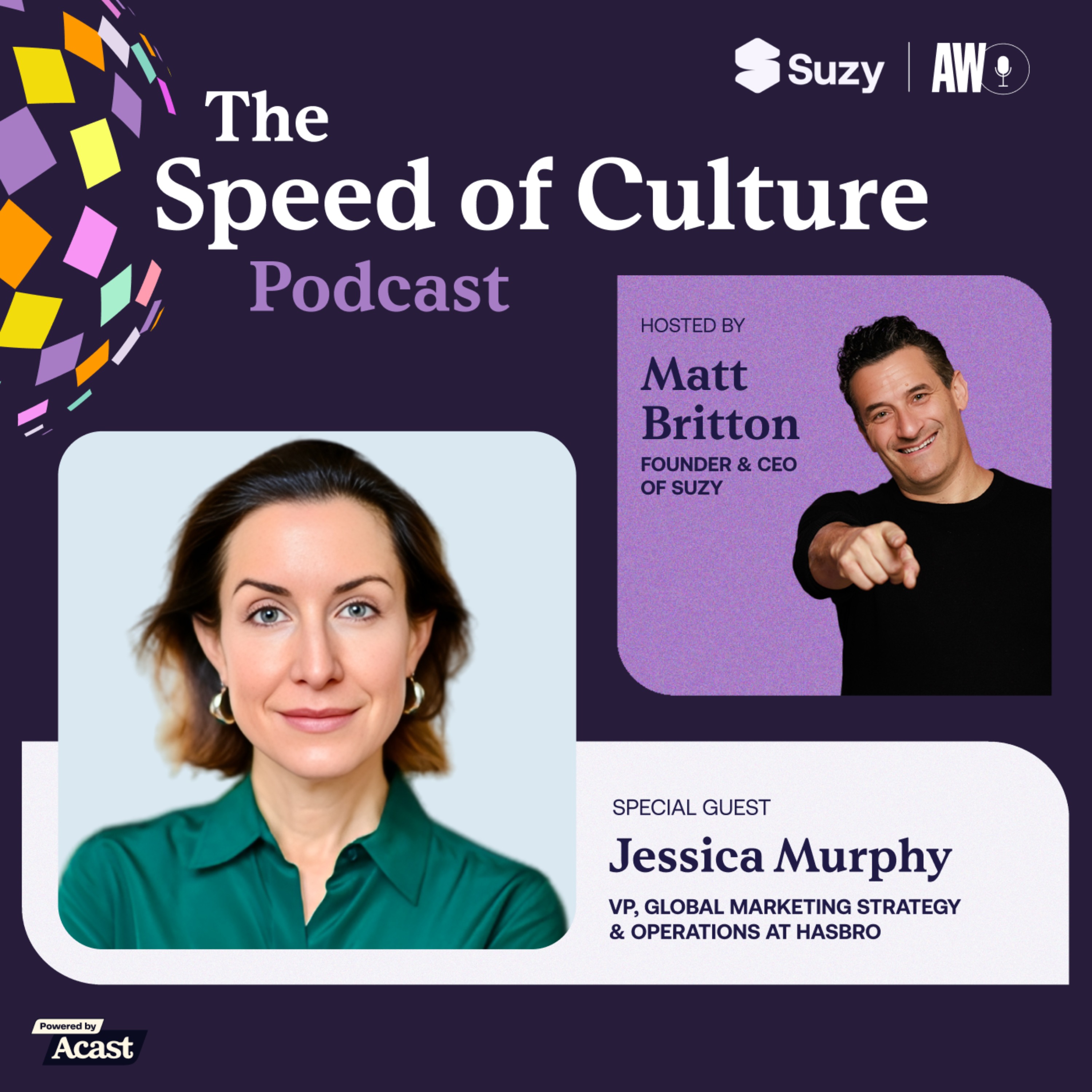
The Speed of Culture Podcast
Game plan: Hasbro’s strategy to reinvent its icons for a new gen
00:24:51
Loading summary
Transcript74 lines
- [00:00]
Capital One Bank Guy
Banking with Capital One helps you keep more money in your wallet with no fees or minimums on checking accounts and no overdraft fees. Just ask the Capital One bank guy. It's pretty much all he talks about in a good way. He'd also tell you that this podcast is his favorite podcast too. Ah, really? Thanks Capital One Bank Guy. What's in your wallet? Term supply See CapitalOne.com Bank Capital One.
- [00:24]
Darina
NA Member FDIC hi, I'm Darina, co founder of Quo. You might know us as OpenPhone. My dad is a business owner and growing up he always kept his ringtone super loud so he'd never miss a customer call. That stuck with me. When we started Quo, our mission was to help businesses not just stay in touch, but make every customer feel valued no matter when they might call. Quo gives your team business phone numbers to call and text on your phone or computer. Your calls, messages and contacts live in one workspace so your team can stay fully aligned and reply faster. And with our AI agent answering 24. Seven, you'll really never miss a customer. Over 90,000 businesses use Quo. Get 20% off@quo.com tech that's Q U O.com tech and we can port your existing numbers over for free. Quo no missed calls, no missed customers.
- [01:26]
Philo Ads Announcer
This episode is brought to you by Philo Ads. Want to get your brand in front of the right audience? Philo Ads is the way to go. With 98% of viewing on connected TVs and over 900 million monthly ad impressions, Philo gives advertisers unmatched accessibility, flexibility and results Power your next campaign with Philo Ads. Today head to Ads Philo TV to get started.
- [01:52]
Experian Announcer
Finding the right audience shouldn't feel like doomscrolling with Experian. It doesn't. Experian syndicated audiences help you reach holiday shoppers, car buyers and more across over 200 top platforms with over 2,400 pre built audiences. There's no more doom scrolling. It's audience targeting you can trust. Made simple. Learn more@experian.com Adweek that's experian.com Adweek.
- [02:24]
Jessica Murphy
So I think when it comes to kids and play, it's no secret we're in a loneliness epidemic and that actually starts with kids. And at Hasbro, we've done a ton of study on this which I love because it gives us such a great purpose in what we do and we've really found that learning to communicate communicate with people starts with play and it starts as a kid.
- [02:49]
Matt Britton
To thrive in a rapidly evolving landscape Brands must move at an ever increasing pace. I'm Matt Britton, founder and CEO of Suzy. Join me and key industry leaders as we dive deep into the shifting consumer.
- [03:00]
Trends within their industry.
- [03:02]
Why it matters now, and how you can keep up. Welcome to the Speed of Culture.
- [03:11]
Up today on the Speed of Culture podcast, we are thrilled to welcome Jessica Murphy, the vice president of global marketing, strateg and operations at Hasbro. Jessica's career sits at the crossroads of creativity strategy and consumer culture, leading iconic brands like Peppa, the Pig, Transformers and Plato into new eras of relevance. Jessica, so great to see you.
- [03:28]
Jessica Murphy
Great, thank you. Happy to be here.
- [03:30]
Matt Britton
Absolutely. So you are such an interesting copy at such an interesting time because many are questioning what is the future of creativity and even play in an era of AI? How do you look at kind of the formation of creativity in the very important upbringing years of children as the world changes so fast with these incredible new innovations that we're seeing?
- [03:53]
Jessica Murphy
That's a big question. So I think when it comes to kids and play, it's no secret we're in a loneliness epidemic. And that actually starts with kids. And at Hasbro, we've done a ton of study on this, which I love because it gives us such a great purpose in what we do. And we've really found learning to communicate with people starts with play. And it starts as a kid. And we're living in an era now where I'll just throw out a few stats. There's so many. But 30% of our kindergartners have lost recess. Kids age 6 to 11 has 25% less free time for play than they did 10 years ago. And that's turning us into adults that don't really understand how to connect and communicate with people that are inner family circle or close knit group of friends. Right. So we have a generation of lonely adults. And it sounds terrible, but it's actually so impactful to health. Again, just some statistics. Being lonely is the equivalent of smoking 15 cigarettes a day. It increases your risk of dementia by 20%. It increases your risk of infectious disease, your risk of premature death by 26%. So how can we raise a generation of kids who understand how to connect with people and who understand the importance of connecting with people? And play is foundational to. So we need to keep kids playing. We need to keep kids playing in real life. So then that brings us to this dichotomy of this age where everything is getting more and more and more digitized, so we're more connected to each other than ever. But we're actually lonelier than ever. So how do we navigate that? And I think one of the ways that we're trying to do it with our IP is to make sure that we're generating experiences across the spectrum. So if you play Monopoly, you have Monopoly junior to play as a kid, you have the classic Monopoly to play with your family, you have Monopoly Go, which is a card game that you can play on the go. And then we have the hugely popular partnership with Scopely, which is Monopoly Go on your phone. And so we offer all these different ways to play so that our IP is a connection point for people, whether physical or digital. But we always want to make sure that we're offering people a chance to connect in real life with our ip. So kind of a long winded answer, but I think we're really looking for the points to connect people in both of those ways. I think also coming out of COVID and with awareness of the loneliness epidemic in real life, experiences are becoming more and more important and more and more sought after. And I do think that's going to continue, which is a benefit for us.
- [06:37]
Matt Britton
Why is play being deprioritized for kids at younger ages? Like what's going on in the education system that's forcing administration to take away recess? I mean, I'd never heard of that before.
- [06:50]
Jessica Murphy
I know a lot of it's budget cuts. A lot of it is trying to squeeze in more with less staff, less resources. So you have that on one end of the spectrum in school and then out of school you have parents who are scheduling their kids more and more and more. Right? More sports, more tutoring, more after school activities. And then you couple that with the fear that we've begun to have as parents of just letting our kids outside to play. I mean, I think you and I are from a similar generation where we grew up and we kind of went outside and maybe we came home for dinner, but maybe our mom had to like call around to different houses to find out where we were. That doesn't really happen anymore. And I don't know if you've read the book the Anxious Generation, but it's all about the fact that parents today fear real life situations for their kids. And what they really should be fearing even more is unsupervised digital experiences for their kids. So I'm hoping that that awareness continues to grow and we try to push our kids out into the real world a little bit more. Because again, that riding bikes with your friends after school, that kind of doing your homework together, that's how you learn to navigate real world problems and real life experiences as an adult.
- [08:09]
Matt Britton
Yeah. And of course, at the heart of play is creativity. And what we're seeing in the workforce is the very nature of creativity is being redefined. Because if you look at of the tools, especially some of the more recent AI tools that Google has pushed out, where anything you can dream of, you can make a video or an image of, and you are no longer bound by having a specialist or a graphic designer do that for you. So it used to mean creativity was held back by your technical ability to use Photoshop or in some ways even write. But now it's really just if you have the idea, you almost have much more potential than ever before. Like, ideas now have so much more potential because you don't have the same dependencies as we did even two or three years ago. So I've been thinking about that a lot recently, because when you think about how kids are raised in school, they're taught to color inside the lines. But I think moving forward, the robots are going to be able to be incredible at coloring inside the lines, but what they're not going to be able to do is color outside the lines and actually symbolize in ways that make us unique as humans. I just want to know what are your thoughts on creativity and how that's going to evolve, given all that?
- [09:18]
Jessica Murphy
Yeah, it's fascinating. I think generative AI is a huge problem solver for everybody with a great idea, just like you said, but it hasn't gotten to the place where it can come up with the creative ideas yet. So you still need the human there.
- [09:32]
Matt Britton
And I don't think it ever will, Jessica, because, like, so much of our creativity comes from our human life experiences, whether it's falling in love or getting your heart broken or having something amazing happen to you in the real world, or whatever it may be. And so I think that input is really the core to our humanity moving forward.
- [09:49]
Jessica Murphy
I hope you're right. I really hope you're right.
- [09:51]
Matt Britton
I think a lot of people out.
- [09:52]
Jessica Murphy
There hope you're right. And I do. I do think you're right. And true creativity a lot of times comes from solving a human need. And machines are never going to understand human needs the way humans understand human needs. But I think that's very much how we're approaching AI at Hasbro, and those tools at Hasbro, like, help them accelerate human creativity, not replace human creativity.
- [10:14]
Matt Britton
Yeah. Have you guys given any thought to a world where the power of AI can be actually embedded into the product so like a kid can talk to Peppa the Pig and Peppa the Pig can teach the kid. Like, to me, I feel like that technology is possible right now. Are those types of innovations, things that you're working on? And when do you see products like that, not necessarily Hasbro, but in the industry in general come to market?
- [10:37]
Jessica Murphy
So we've heard whispers about Barbie coming from Mattel. We certainly have ideas in incubation at Hasbro. I think we just want to be sure that they're going to work as.
- [10:49]
Matt Britton
Expected and be a good thing for kids. Because sometimes like the imagination gets taken away if the toy starts talking to you.
- [10:57]
Jessica Murphy
Right. And wouldn't it be a disaster if you had an AI hallucination as a four year old was playing with their Peppa Pig doll? I think it's a really good point you make about imagination. You want to make sure you're not hijacking the play. Like, how do you keep it interactive but still let the child steer the play and use their imagination for the play and be the master of the play. And then also, how do you really make sure the technology is ready for that? Because going out too soon could be disastrous for our ip.
- [11:25]
Matt Britton
Sure. So speaking of your ip, obviously you have lots of great IP within the business. And these are brands and properties that have been around for a very long time. How do you make sure that they stay relevant with new audiences? And how much of your work is creating new IP versus leaning in and trying to create new use cases and growth opportunities for existing ip?
- [11:48]
Jessica Murphy
That's a good question. I'm really not in the business of creating ip. It usually gets to me once it's partially formed. And then in my role as a marketer, I help shape it to the consumer insights and the marketing strategies that I think can really bring it to life for the consumer. I have been in the fortunate position of helping to reimagine legacy IP and relaunch and reboot legacy ip. So first for Teenage Mutant Ninja Turtles, when I was at Paramount, obviously a huge group effort, but something I was able to play a part in from a retail and a consumer products marketing perspective. And now at Hasbro, we're looking toward the relaunch of My Little Pony. And I've been working really closely with the franchise team on how to make that more relevant for the girls of today. You think about the IP, it's been around for 40 years and the theme has always been friendship. And friendship is always relevant, especially to girls, but now even more and more so to moms. And adults as we face this loneliness epidemic. So now you have multi generational fans of My Little Pony. And our goal is to teach little girls how to be friends and how to make friends and how to be a good friend and remind the teens and tweens and moms and even grandmas now who grew up with the IP how important their friendships are. And so it's kind of taking that legacy and bringing it forward into a new generation and making sure that it's relevant to all the fans. Turtles is much the same way, like it's 30 plus year old brand and you have dads who are fans bringing it to their young kids. How do you make sure you have something fresh and innovative for those dads and fans to collect while you're keeping the Turtles talking in the way that kids talk now on all of the channels and relating to the kids in fun, interactive, relatable ways. So those are things we're always thinking about. How can we keep our brands fresh and relevant not just for kids, but for all of the age demos we service?
- [13:50]
Matt Britton
Yeah, interesting. I mean, of course, at the end of the day, this IP needs a bottle up into product that sits at retail or on Amazon for consumers to purchase what is working in the toy industry here in 2025. Some of the products that are taking off in the audiences that are seeking them.
- [14:08]
Jessica Murphy
I think tactile play is a really.
- [14:10]
Matt Britton
Big one, like slime and play DOH.
- [14:13]
Jessica Murphy
Oriented stuff, things like that. Right. And that is directly tied to anxiety in kids and the fact that they need to play with something tactile is why ASMR videos are so popular. It's why those poppet toys were really.
- [14:27]
Matt Britton
Popular, like Sensory, like it's ADHD as well. It's a big part of that. Yeah.
- [14:32]
Jessica Murphy
And actually we've had meetings at Hasbro where we pass around little cans of Play doh and we just find that if people can keep their hands busy molding clay or, you know, as they talk, the ideas come out faster and the inhibitions go away and you stop overthinking things. So that tactile play experience, I think is really, really coming back. Fashion, I think, is remains really big for young girls. I think the brands that get it right offer them the right blend of what's new and hot, but also really making room for them to accumulate, express themselves. So I see toys where girls can accessorize, girls can play with hair, girls can play with nails and makeup. And it's not really even just a form of beauty, It's a form of self expression that I think is really catching on more and more with young girls today. And then in the boys space you have your tried and true action figures and vehicles. But I think again the brands that are winning are just modernizing it and they're connecting them to digital experiences and they're putting them in video games. And again, going back to what I was saying about physical to digital experience in play and being able to offer kids the ability to go back and forth seamlessly.
- [15:46]
Matt Britton
Yeah, I think that having the multitude of touch points with whatever asset because digital is becoming a bigger part of kids lives for better or worse. I mean I do not envy the job right now of an educator to try to figure out like what does digital teaching tomorrow's leader mean in a world where you really don't know what the jobs are going to be that exist in 2030 or 2035. It's just we're in a whole new world right now where I think people are kind of reinventing while they're on the fly.
- [16:16]
Jessica Murphy
Absolutely. But I think to your point earlier, I think it's ideas. Ideas are never going to go away. Human ideas and ideation and creativity I think are always going to win.
- [16:29]
Matt Britton
We'll be right back with the Speed.
- [16:30]
Of Culture after a few words from our sponsors.
- [16:32]
Experian Announcer
Finding the right audience shouldn't feel like doom scrolling with Experian. It doesn't. Experian syndicated audiences help you reach holiday shoppers, car buyers and more across over 200 top platforms. With over 2,400 pre built audiences, there's no more doom scrolling. It's audience targeting you can trust. Made simple. Learn more at experian.com Adweek that's E-P-E-R-I-A N.com Adweek.
- [17:03]
Philo Ads Announcer
This episode is brought to you by Philo Ads. Want to get your brand in front of the right audience? Philo Ads is the way to go. With 98% of viewing on connected TVs and over 900 million monthly ad impressions, Philo gives advertisers unmatched accessibility, flexibility and results. Power your next campaign Campaign with Philo Ads Today head to Ads Philo TV to get started.
- [17:32]
Capital One Bank Guy
Banking with Capital One helps you keep more money in your wallet with no fees or minimums on checking accounts and no overdraft fees. Just ask the Capital One Bank Guy. It's pretty much all he talks about in a good way. He'd also tell you that this podcast is his favorite podcast too. Ah, really? Thanks Capital One Bank Guy. What's in your wallet term supply. See CapitalOne.com Bank Capital One NA Member.
- [17:57]
Asana Announcer
FDIC when too much work bogs you down, Asana helps you handle it. AI makes it easy to hand off routine tasks and stay focused on important work. That's how work gets handled. Visit us@asana.com.
- [18:17]
Matt Britton
So in terms of we talk about the products and obviously we know we're all lying, that the notion of creativity in play is changing. What's working in terms of bringing your messages to market to drive consideration ultimately purchase for the new products that you bring to market? What are some of the retail channels and what are some of the creative approaches and storytelling based approaches that you're finding effective?
- [18:39]
Jessica Murphy
Yeah, well, when you're talking about kids these days, it's really YouTube and gaming and influencers. Those are the three places they're really dialed into. And I think you can see the most success when you can connect those channels to your retail channels in any meaningful way. So we're seeing that we are amping up our investment on the Amazon media channels of the world, the Walmart Connect channels of the world, Aroundell channels of the world because they're making such big innovations in how they're connecting to upper funnel media tactics. So you put an ad on Roku, it connects directly to Walmart. If you put an ad on Amazon prime, it connects directly to purchase and then you have this data funnel from awareness to consideration to purchase that was hard to piece together previously. So I think technology is making it easier and easier. And even though platforms are bifurcating, they're continuing to proliferate. Kids are mainly gaming and watching YouTube and so those are the primary ways that we want to reach them. I think in terms of messaging, the experiences you can create in games literally allow you to play with the ip and we're all about play, so that's a win. And then when it comes to creators and influencers, it's really about giving them free rein to be the themselves with your product. Kids can sniff out inauthentic content probably even faster than adults can. So it's really, really important to just kind of release your hold on the IP a little bit and allow it to adapt to the play experience in the game and allow it to become what the creator wants it to become in that moment. And I think that's the most effective way to generate interest right now. And then again, going down the funnel to the performance media and seeing that connectivity is where we're really see success.
- [20:40]
Matt Britton
How much work have you guys done in the world of creators? Obviously when you talk about YouTube and you want to corner eyeballs, not to mention Instagram, when kids come 14 to those that wait till 14, not all of them do. How important is the creator economy to your ongoing strategy to make sure that you're where your audience is?
- [20:57]
Jessica Murphy
Extremely important? We deal with creators on all levels. We see them as a paid media channel and we engage them specifically through the marketplaces. We see them as brand ambassadors with bigger deals and contracts where they become the face of our brand for a certain period of time and we engage with them over and over. And then we have fan communities that are die hard fans of our brands and that's a gift. So really you think about them when you develop product and keep the product in their hands and that's really the special sauce there because they're a free mouthpiece for you. But they want to feel like you're thinking about them at all times and you're creating for them. And they want to be the first or among the first to receive our products. So it's really three tiers for us. It's that kind of collector creator fan community, inherent fans that we just have to kind of keep in our fold and keep really engaged. Then there's creators as a paid media channel kind of coming in over that. And then there are those bigger deals where we have a celebrity or a creator face of the brand that becomes a more meaningful tie to the ip.
- [22:08]
Matt Britton
Right. And I would imagine, depending upon the property, a big part of your role is also marketing to the parents. And when it comes to obviously data collection, you can't collect data of kids under a certain age, nor would a company ever, Hasbro ever do that to begin with. So what does marketing to the parents look like and what's the overall split when you think about, okay, I need to drive volume for the holiday season. How much of your time is thinking about driving influence from the younger kids or actually reaching the parents directly?
- [22:36]
Jessica Murphy
That's a hot, hot topic for us. It really varies by ip. It really does. We have to look at VIP and we have to really comb the insights and look at who's driving purchase. And it used to be back 10 years ago when I was at Nickelodeon that when we were talking about preschool ip, we were talking just to parents, we wouldn't even bother. We'd let the content do the work with the kids and the commercials would go to the parents. Now we're finding kids are driving that purchase power younger and younger, starting at the age 20 of. So we really have to talk to the kids when we're selling Play doh. But we also have to talk to the parents. So we're always thinking about what's the split and if one has to go away, which one is it? And we're constantly looking at our campaigns and testing. We'll launch something and say, let's just talk to parents in this specific DMA or market and see if that moves the needle versus this specific market where we're just talking to kids and see which has a bigger influence. So that can continue to shape the split going forward. So there's no one formula. It varies by every single brand, every single season based on the insights that we're seeing come from purchase.
- [23:47]
Matt Britton
Makes sense. Yeah. It's something I've always wondered about in terms of your industry and how you go about going to market. So let's shift gears a little bit as we wrap up here. Jessica, you know, you've had such a great career and you've spent time working at so many great companies like Viacom and Nickelodeon, Pop Sockets, of course, now Hasbro. When you look back on your career, what are some of the things that you've consistently done right along the way to continue to be a valuable executive and a really effective leader at these organizations?
- [24:18]
Jessica Murphy
Adapting to change I think that's the single biggest leg up I've had. I'm someone who kind of thrives on change and dynamic circumstances, and I love to continue learning and change. I think a lot of people fear it or let it trip them up. And I think that something that I've always embraced is new challenges. And I've always said that to my team, it's not a waste of work. It's a pivot or it's a learning opportunity. Something goes away, it's an opportunity to get started on something new. And I think that goes a long way in the corporate world, and I think more and more so as we all evolve and we're in this period of rapid technological shifts. The ability to adapt to change, I think, is really valuable for sure.
- [25:06]
Matt Britton
I think now change is the only constant and the only thing we can bank on is that things will look nothing like they look today, five, ten years from now. So it's just we're in a fascinating time. And in that regard, what advice would you have for some of our younger listeners here on the podcast in terms of some of the things that they should lean into or focus on earlier in their career to set themselves up for success in the world of marketing?
- [25:30]
Jessica Murphy
Yeah, I think that the days of being A deep, deep specialist in one thing, and that being the most valuable tenet, are slowly going to go away with the advent of AI. I would advise people now to get as much experience in as many different facets of marketing as they can, because first of all, you get to know what you like, and that in itself is. Is powerful. Right. You get to know where you want to lean in, but also it makes you a generalist, and it really lends to being a strategic marketer and leader in the future. Yeah.
- [26:03]
Matt Britton
And I would say it also future proofs you. Right. Because you don't want to focus on, let's just say, search engine optimization. If two years from now, everyone's searching for things on ChatGPT, and that's just one example. And some would say, yeah, well, it carries over, okay. But there's a lot of specialism and technical details that won't apply. And I think if you're broad and you have a much wider aperture of marketing and of the consumer, then those skills will be applicable no matter where the world is as your career progresses.
- [26:32]
Jessica Murphy
Absolutely. I couldn't agree more. And I think that it also allows you to really understand when you're marketing a product or a service or a brand, what levers do you want to pull? The knowledge of all the levers really allows you to understand how you want to shape the campaign.
- [26:48]
Matt Britton
Absolutely. That's fantastic advice. So we always wrap up our podcast by asking our guests if there's a saying or mantra that's kind of encapsulated their career journey to date and would love to know what comes to mind for you.
- [26:59]
Jessica Murphy
Yeah, mine is from my dad, and I love this question. I had to think of it, and then I was like, oh, wait, no, it's this. He always said, be brave. When I was little, up until he dropped me off at my dorms freshman year, he taught my sister and I, I think, directly and indirectly, that fear is a paralyzing emotion. And so whenever we were going into an uncertain circumstance, he said, be brave. And I like to remember those words on a daily basis.
- [27:25]
Matt Britton
Yeah, it's fantastic. And in this day and age, I think young people need that more than ever before. You talked about the fear of letting kids play alone outside, and that's a whole nother podcast episode. But I think being brave right now is important because it can't prevent you from seeing the sunshine or crossing the street or traveling, or you have to seize the day, so to speak. So I think that's fantastic advice and a great point to end our chat today. So thanks so much for joining Jessica. It's been a fantastic discussion, really appreciate all the great insights and wishing you nothing but success as we head into the busy holiday season for Hasbro.
- [27:57]
Jessica Murphy
Thank you so much Matt. Great to be here.
- [28:00]
Matt Britton
Absolutely. On behalf of Susan I. Wicken, thanks again to Jessica Murphy, Vice President of Global Marketing Strategy and Operations at Hasbro, for joining us today. Be sure to subscribe bring you to Speed of Culture Podcast on your favorite podcast platform. Till next time Season in one Take.
- [28:12]
Jessica Murphy
Care of.
- [28:17]
Matt Britton
The Speed of Culture is.
- [28:18]
Brought to you by Susie as part of the Ad Week Podcast Network and.
- [28:21]
A Guest Creator Network.
- [28:23]
You can listen subscribe to all Adweek's podcasts by visiting Adweek.com podcasts to find out more about Susie, head to Suzy.com and make sure to search for the Speed of Culture in Apple Podcasts, Spotify or anywhere else podcasts are found. Click follow so you don't miss out on any future episodes. On behalf of the team here at.
- [28:41]
Suzy, thanks for listening.
- [28:58]
Experian Announcer
Finding the right audience shouldn't feel like doom scrolling with Experian. It doesn't. Experian syndicated audiences help you reach holiday shoppers, car buyers and more across over 200 top platforms. With over 2,400 pre built audiences, there's no more doom scrolling. It's audience targeting you can trust. Made simple. Learn more@experian.com Adweek that's E X P E R-I-A N.com Adweek.
- [29:29]
Philo Ads Announcer
This episode is brought to you by Philo Ads. Want to get your brand in front of the right audience? Philo Ad is the way to go. With 98% of viewing on connected TVs and over 900 million monthly ad impressions, Philo gives advertisers unmatched accessibility, flexibility and results. Power your next campaign with Philo Ads. Today head to ads.philo tv to get started.
- [29:57]
Madhupak and Ola
Hi, I'm Madhupak and Ola from TED Business and I'm here to talk about the Financial Times. Every day the world bombards you with endless headlines and noise. What matters most? Facts and context. That's where the Financial Times comes in. With clarity, depth and truly independent reporting, the FT helps you cut through the noise and see what's real and why it matters. Stay informed with the trusted source leaders around the world rely on. Visit FT.comSourceFT to read more and save 40% on a digital FT subscription.
- [30:37]
Jessica Murphy
Ready to order? Yes. We're earning unlimited 3% cash back on dining and entertainment with a Capital One Saver card so let's just get one of everything.
- [30:45]
Matt Britton
Everything.
- [30:46]
Capital One Saver Card Announcer
Fire everything. The Capital One Saver Card is at table 27, and they're earning unlimited 3% cash back.
- [30:52]
Jessica Murphy
Yes, Chef. This is so nice.
- [30:55]
Capital One Saver Card Announcer
Had a feeling you'd want 3% cash back on dessert.
- [30:57]
Madhupak and Ola
Oh, tiramisu.
- [30:59]
Capital One Saver Card Announcer
Earn unlimited 3% cash back on dining and entertainment with the Capital One Saver Card. Capital One, what's in your wallet?
- [31:05]
Jessica Murphy
Terms apply. See capitalone.com for details.