← The Speed of Culture Podcast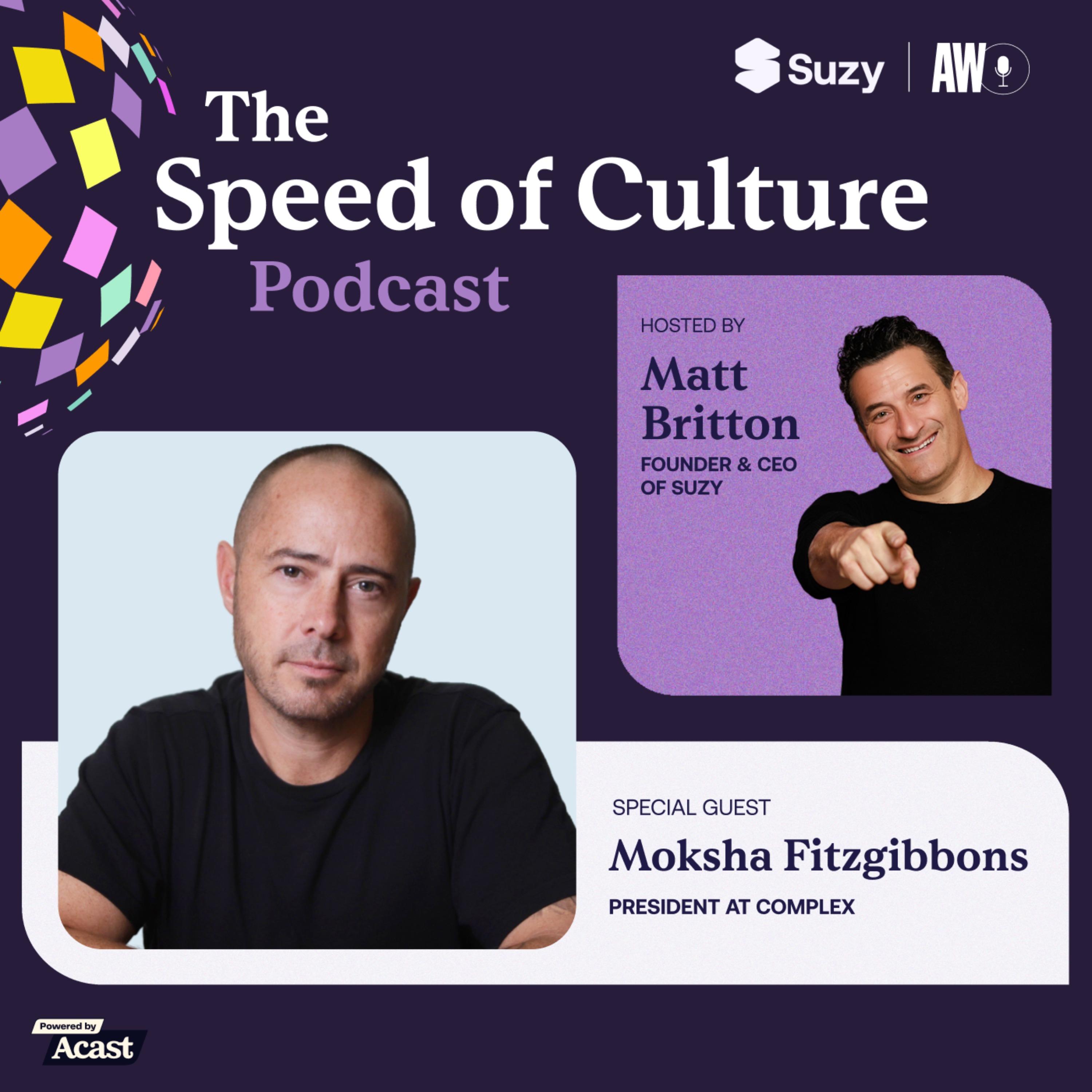
The Speed of Culture Podcast
Hype check: How Complex stays youth-first and culturally relevant
00:39:35
Loading summary
Transcript103 lines
- [00:00]
Moksha Fitzgibbons
Ready to order?
- [00:01]
Capital One Customer
Yes. We're earning unlimited 3% cash back on dining and entertainment with a Capital One Saver Card. So let's just get one of everything.
- [00:08]
Moksha Fitzgibbons
Everything.
- [00:09]
Capital One Server
Fire everything. The Capital One Saver card is at table 27 and they're earning unlimited 3% cash back.
- [00:15]
Matt Britton
Yes, Chef.
- [00:16]
Capital One Customer
This is so nice.
- [00:18]
Capital One Server
Had a feeling you'd want 3% cash back on dessert.
- [00:20]
Capital One Customer
Ooh, tiramisu.
- [00:22]
Capital One Server
Earn unlimited 3% cash back on dining and entertainment with the Capital One Saver Card. Capital One what's in your wallet?
- [00:28]
Moksha Fitzgibbons
Terms apply. See capitalone.com for details.
- [00:30]
TransUnion Narrator
Jen's the mother of two teens. Her online shopping cart is always full of amps and auxiliary cables, so you might think she's funding her kid's garage band. But what you don't know is she's actually the one shredding on stage. With TransUnion's 360 degree view of consumer identity, you can get a clear picture of your marketing audience and reach people like Jen with messages that are more headbanger, less homebody. See how TransUnion is bringing clarity to marketing chaos through deeper insights, smarter reach and Precise measurement@transunion.com clarity.
- [01:04]
Philo Ads Narrator
This episode is brought to you by Philo Ads. Want to get your brand in front of the right audience? Philo Ads is the way to go. With 98% of viewing on connected TVs and over 900 million monthly ad impressions, Philo gives advertisers unmatched accessibility, flexibility and results. Power your next campaign with Philo Ads Today. Head to Ads Philo TV to get started.
- [01:30]
Experian Narrator
Finding the right audience shouldn't feel like doom scrolling with Experian it doesn't. Experian syndicated audiences help you reach holiday shoppers, car buyers and more across over 200 top platforms. With over 2,400 pre built audiences, there's no more doom scrolling. It's audience targeting you can trust. Made simple. Learn more@experian.com Adweek that's experian.com Adweek.
- [02:02]
Moksha Fitzgibbons
What you can do is fully lean into youth and fully lean into technology. Those are two constants that if you lean into youth and you lean into technology, better chances than not you will not get outmoded.
- [02:19]
Matt Britton
To thrive in a rapidly evolving landscape, brands must move at an ever increasing pace. I'm Matt Britton, founder and CEO of susee. Join me and key industry leaders as we dive deep into the shifting consumer trends within their industry, why it matters now and how you can keep up. Welcome to the Speed of Culture.
- [02:41]
Philo Ads Narrator
Up.
- [02:41]
Matt Britton
Today on the speed of Culture podcast. We are thrilled to be joined by Moksha Fitzgibbons, the the president of Complex. Moksha has spent more than 20 years at the intersection of media, commerce and culture, helping build Complex into the definitive youth culture brand, scaling network into a Gen Z commerce powerhouse, and now leading Complex into the future. Moksha, so great to see you today.
- [03:00]
Moksha Fitzgibbons
Yeah, thanks for having me. It's a real honor.
- [03:02]
Matt Britton
Absolutely. So for those who aren't as familiar with the Complex brand and its impact on its audience, why don't you just give us a high level overview?
- [03:11]
Moksha Fitzgibbons
So Complex is a business we launched many years ago. We launched in 2002 is originally we were going to be the first ever digital magazine. That was our ambition. And we launched originally on a Sony mini disc platform.
- [03:25]
Matt Britton
I remember that. Or dating most of our audience. But you and I was that which.
- [03:29]
Moksha Fitzgibbons
Those were apparently going to scale. Huge.
- [03:31]
Matt Britton
Exactly. It was the future.
- [03:33]
Moksha Fitzgibbons
Yeah, we were leaning the future. That didn't work. Needless to say. We then pivoted into a traditional product print magazine. The sort of concept of Complex was that there were sort of all these consumers out there that were interested in sports, but within sports. They were interested in traditional sports like NBA, NFL, but they were also interested in skate and bmx. They were interested in streetwear fashion, but also couture fashion. They liked punk rock and they liked hip hop. And there was no media platform out there that was really bringing all those sensibilities together in one convergence culture making media product that addressed that consumer and their evolving sensibilities. It was really like what became Millennials before Millennials. And we also brought in this piece that young people, they really sort of create their own physical identity through the products they buy and the experiences that they have feed the social ammunition. So we had this really unique format of one half sort of entertainment lifestyle content, and the other half of the product was a buyer's guide. And we really showcasing like sort of all the activities you needed to have the social ammunition within your peer group and then all the products you would buy to create your own sort of personal individuality as a statement of what you're wearing and collecting, et cetera. So we sort of made the magazine quite successful for an independent. And thankfully we started in the early 2000s really working on digital and the physicality of print and the expense of the physicality really makes it hard to scale and reach massive amounts of people. But as we began to work and test and learn in the digital formats, we found the ease and connectivity with consumers was far greater. Like we were scaling so much more audience in one day versus what would take a month to scale in the print product. And we started to lean into that. And it was a bit of stroke of good fortune that we started doing that, because the 2008, 2009 financial crisis happened, and it literally halved our print revenue. If it had not been for that leaning into digital, which grew even during that crazy year, grew 600%. It really saved us. And it showed us, hey, the path forward is digital. So we began to lean in pretty much heavily and exclusively into digital. And we went through the blogger era, we went through the sort of like SEO Facebook audience era, really sort of through all those evolutions to where we are now, where it is really a social first, video first. All the content is created to be highly shareable, highly snackable. It all maintains that core DNA of Complex, which is one of curation. It's a filter around what are sort of the coolest mainstream artists, brands, athletes, et cetera, and maybe even more importantly, who and what you need to look out for next. And Complex over these past two decades, in my opinion, which might be a little bit biased, but it is the most important and definitive media brand for young people between the ages of basically the younger end of our audience is like 16, all the way up to 45. So as sort of the millennial cohort gets older, they still want to be connected and feel youthful, you know, and to understand what's cool. And then the young people are really attracted to all the discovery and the platforming of all these emerging artists brands and et cetera. So that's really been our voice. And as over the last decade, as the media landscape has changed and a lot of brands that were quite solid, like devices of the world, they have sort of gone away. Complex has had this really unique connectivity with consumers. And I mean, objectively, you look in all the data, like, the engagement rates are higher in social. We're one of the very few media brands who can get 60,000 young people to fly to Las Vegas, buy tickets that are 200 to $500, stay the weekend, go to Complex Con. If you think about it like media brands, they don't usually have that level of connectivity.
- [07:49]
Matt Britton
Yeah, some do, but most don't. Like, there's Bravo, and they do the same thing in Las Vegas. You know, that's obviously a much more niche audience, but you're right, that's a great example.
- [07:57]
Moksha Fitzgibbons
I mean, it's like the brands that can do it, I can name them. It's Complex, It's Bravo. And it's essence. And they all have their specialized sort of like very deep relationship with the audience. I think many times what media brands do is like they want as much audience as possible. So their content is kind of a mile wide and an inch deep.
- [08:17]
Matt Britton
They try to be all things, all people.
- [08:19]
Moksha Fitzgibbons
Correct. Where the brands I just mentioned us included, it's the antithesis of that. We are all about depth of connection with consumers and what's happened. The things that we were talking about, like streetwear, hip hop, reggaeton, skateboarding, all those things were much more niche when we begun. And those things now attract a much larger audience. And you can see that we've scaled the. I mean it's pretty amazing. Like we're reaching over 80 million consumers a month are watching our content. It's like a third of the total US Internet population. So anyway, that tone and that style has really worked well for us and not deviating from it and not chasing sort of off brand initiatives.
- [09:00]
Matt Britton
And obviously a lot of what you're talking about in terms of the success is ultimately about curation. Like you need to be able to consistently curate the best types of music content and entertainment content, et cetera. It's going to hit with your audience. So is that hard to scale over time? Because obviously what curates cool is people and people come and go. So how have you been able to be consistent at kind of delivering that type of content and insight that your audience expects?
- [09:29]
Moksha Fitzgibbons
It's twofold. You're right. It's 100% about curation. And within that curation, it's really that what is the point of view of complex? Like the music community, like the artist, the athlete community, the athletes, they all want the cosign from complex, right? So that gives you access to those super highly relevant personalities. They want that sort of positive, complex lens on their business and careers and lifestyle. So that's one fold. You're taking the icons of culture and then you're putting it through your lens, which is very clear and opinionated. And then the other part is really being obsessed with discovery. Over the last few years, obviously streamers have begun to emerge as like celebrities and personalities. And like one of our content people here, Jordan, he tells a great story. Like he discovered this really big streamer now called Plaqueboy Max. And he did it just through like curiosity and trying to find out who is next. And now Blackboy Max is essentially as big as like Kai Sana or close to. And it's that kind of curiosity where you can't see it, but There's a whole bullpen of content creators out in front of me here. All they do all day is they look for what's next or they look for what's happening that they can then contextualize in a way that adds value to the consum and that also obviously on the talent side, whether you're an artist, a musician, whatever sort of your creative skill is, that's really powerful for you too because we're getting your project, your skills, your music, your message out to millions of fans in like a contextually positive way that yields benefits for their brand as well.
- [11:14]
Matt Britton
Yeah, it's really interesting. And when you think about just what is dictating culture moving forward, obviously we've seen a huge overall boom in the creator economy and I have to imagine that that kind of creates both threats and opportunities for complex. How are you looking at activating on that?
- [11:33]
Moksha Fitzgibbons
So like, I think it was kind of a two part question. So on the part of like what's moving culture to your point, things come and go, you can't really always anticipate what's next. But what you can do is, is fully lean into youth and fully lean into technology. Those are two constants that if you lean into youth and you lean into technology, better chances than not you will not get outmoded. Like you will be able to change and pivot whether it's distribution channels, the type of content you're creating, the type of people that you're profiling, if you're obsessed with youth. We literally have signs in here, win the new audience, which is 16 year olds, like bring the 16 year olds into our brand because they will grow with us for the next 20 plus years. And you have to be obsessed with that youth culture. And you can really never bet against the youth because just evolution. And then on the creator side, look, some people probably would consider a threat, but it's actually a great opportunity to partner with those creators, to offer them a platform that in many times is bigger than the platform. They have to offer them resources in terms of studios, creativity, access to other their talent to build IP with them. It's not sort of like old school media anymore where like it's a very entrepreneurial environment where like we're partnering with artists, brands, musicians to do content with them, to do physical merchandise that we sell on our e comm and physical stores. We're trying to be in business with the creator community versus sort of like creating a hedge of protection from them. It's like again it's that whole thing of like Leaning into youth culture, if that's what young people are into. And whether it's TikTok today and maybe it's Twitch tomorrow, we want to be there and partnering with those talents and helping build their brands and helping keep our brand relevant, fresh and interesting.
- [13:28]
Matt Britton
Yeah, absolutely. And of course you had briefly touched upon this, but Complex Con has been a huge success, obviously. And obviously getting people to show up at that event is a badge in its own right. But being able to execute and create the type of experience that I think especially a young discerning audience has come to expect is not easy to do either. So talk to us just about what goes behind an event like ComplexCon, because it's not something that's necessarily native to a digital publisher. It's a different muscle you have to flex. Knowing I've produced many events, I know they're anything but easy. So what goes behind that and why is it so important to the brand?
- [14:05]
Moksha Fitzgibbons
So I think of all of the physical experiences we do, whether it's Complex Con, whether it's our retail pop up strategy or our food festival which is in six markets, to me it's all about consumer reward. It's taking the URL to the IRL and yes, we can monetize around it. But to your point, experiences are incredibly expensive. Nothing ever goes to plan. So there's incremental costs and bumps in the road, but it's really about particularly in a post Covid environment where the research we've done with the, particularly the younger cohort, they want to see the brand show up in person because they've been at home for school, then they went back, entered the workforce or maybe are just entering and people aren't in the office full time. Right. So there's some community lacking there and obviously they've grown up on their iPhones their whole lives so they're missing this physicality. And we really believe that it's a complete reward moment or a surprise and delight moment for them to take this URL and social driven content that they experience every day and let them experience it in real life. That's sort of like the intention behind it. And then in terms of activating it, it's an enormous cross functional endeavor. We've got a dedicated sort of production team who's making sure the trains run on time and then there's the creative team developing all the creative assets that go alongside it. The content team with their strategy for pre promotion live sort of content going on and then the post shoulder content. I mean that's a 90% effort right there. And then there's everybody that's working on the merch and the commerce product we're selling there. And then there's people working with all the brands that come in to activate and do sponsorships and things of that nature. So it really takes like pretty much every single person in the company to pull it off. But it's our biggest sort of single in real life consumer moment. It's a big marketing expression to the audience, to the artist community, to the athlete community, to people that are listening this pod and like they see probably most people listening don't go, but they see all the content in social and the New York Times covering it and all of these things. It really helps contextualize in a physical way what the complex brand is all about. How the audience is super high quality and it's kind of a big flag in the ground for us. And it's been, we'll be on our, it's our 10 year anniversary next year For Complex beyond. We've successfully expanded it to Hong Kong for the last three years. Slightly smaller show like Vegas is about 60, 65,000 people, Hong Kong is about 30 to 32,000. And then next year we're also expanding to Abu Dhabi, so to the Emirates. And our ambition is we want to enter Europe. It's just kind of figuring out where the right market is there and who the right partner with us is because it's not something that we would sort of take on in totality on our own just because the enormity of it. But we really believe that ComplexCon can be this global multi market experience that brings together shopping, collectibles, music, sport, all under one roof in a really sort of positive and interesting way for consumers.
- [17:29]
Matt Britton
I've heard nothing but amazing things about it. So yeah, I'm going to have to come especially knowing it's the big anniversary. So let's talk about the business side. So it's clear that you guys have done a great job in engaging an audience and really staying cool after all these years, which I agree is not easy to do. And there's been so many other kind of failed youth media ventures that have fallen and Complex is still going strong. How are brands leveraging the complex platform today and what are some of the best use cases that you've seen?
- [17:58]
Moksha Fitzgibbons
Yeah, so I would say there's three or four ways we're engaging with brands. So one is partner. Because of our sort of like depth of connection, authenticity and credibility with the audience, brands are mainly working with us on doing Some type of custom program with us in like the traditional advertising space that usually comes in the form of like some type of specialized custom video product. We're working with them hand in hand. Some people still do buy traditional media, but more of it is going to these sort of more in depth partnering with creators, creating something new with them, creating new ip. That's a big part of it. Other brands are working with us on the E Commerce side and we're doing a lot of custom product there. It comes in the form of like brand collaborations. A really great example is something we did in February with the NBA. They were having an exhibition game in Tokyo and we have a relationship with an artist named Takashi Murakami who's a jet, probably like the most famous artist in the world, but definitely the most famous in Japan and Ohtani being the best baseball player in the world right now. We went and pitched MLB this idea and we ended up having Murakami create a whole capsule of product both for the Dodgers and the Cubs. It sold multi tens of millions of dollars worth of product on complex, on NBA, on fanatics. That's a great example of leveraging sort of like our creator and talent relationships. But to do something in the physical space around merch tied to a very key moment for MLB and then other place people are leveraging us is in like the physical experience space. So whether it's around complex con or our food festival family style, which we scaled from one market to five, we've done some really interesting things when we did one in New York in May. And like a good partnership example was with DoorDash, so obviously endemic to food, if you had this product called DoorDash FastPass, you got like exclusive food, you got fast access to the high demand restaurants. But what we did that I thought was really intelligent, we worked with DoorDash to also target restaurants that they've had trouble onboarding onto DoorDash. So we're able to use our relationships to help them onboard a number of super high profile, high demand, hard to get restaurants onto their platform. So they had like the consumer experience, they had the content and media expression of that. And then they had kind of a B2B initiative all through this physical experience. So again we're trying to go deep with our partners and not just be sort of like slinging impressions for lack of a better description.
- [20:51]
Matt Britton
Right. And I mean slinging impressions is something I think brands are decidedly trying to run away from now versus towards just based upon where things are.
- [20:59]
Moksha Fitzgibbons
Yeah. And there's an emerging area that's starting like complex over the years, we always did. We also had like multiple programs with people where we would help them create content that would live on their channels and ours as like a co production. But it was intended to help them reach youth culture. Probably most famously is what we did with Mountain Dew around Green Label. It was a media outlet, it was made documentaries about skateboarding, it was a record label. Like it was a really powerful. But it was kind of in the 1.0 digital sense. And what we're seeing now is particularly in like cpg, the quick serve restaurant arena. These legacy brands, they all have this need state that they need to transition from being essentially linear based brands or TV based brands to social first brands.
- [21:51]
Matt Britton
Like Taco Bell, for example, has done a great job of that.
- [21:54]
Moksha Fitzgibbons
They've nailed it. Right? Like they probably don't need any.
- [21:56]
Matt Britton
We had Sean Tressavant, their CEO on the podcast and they just understand where they're going. Other brands, not so much.
- [22:02]
Moksha Fitzgibbons
And look, that all goes back to my buddy Nick Tran, when he was their first ever social media person and doing social media.
- [22:09]
Matt Britton
Right. He transformed from the inside out. Somebody who's digital first and as a millennial, came in and was like, why aren't you doing this?
- [22:16]
Moksha Fitzgibbons
Yeah. I mean, in all the stunt marketing he initiated, like, I remember one time they did a no phone party.
- [22:23]
Matt Britton
The hotel they did as well. Yeah.
- [22:24]
Moksha Fitzgibbons
And then everyone left and got on their phone and the thing was trending on Twitter in two minutes. So like they were doing it like they're a brand that gets it. But a lot of other brands, they're not there yet. Right. They don't have that muscle inside their building. So in the talks and we're saying like, hey, look, here's how we operate as a social first brand. These are all the different formats, the tactics, the techniques we use. Can we partner with you on helping you with transforming your brand to be social first? And that is an emerging area that we're seeing a lot of people kind of lean in and have high sort of intent interest around. So I think tied back to the whole technology thing, how do you stay relevant? You have to do the same thing with your partnership products too. Right. Like, selling homepage takeovers is not a meaningful business anymore. You have to be more creative and you have to add more value. And those are the areas we're really focused.
- [23:17]
Matt Britton
We'll be right back with the Speed of Culture after a few words from our sponsors.
- [23:23]
Moksha Fitzgibbons
Ready to order?
- [23:24]
Capital One Customer
Yes. We're earning unlimited 3% cash back on dining and entertainment with a Capital One Saver Card. So let's just get one of everything.
- [23:31]
Moksha Fitzgibbons
Everything.
- [23:32]
Capital One Server
Fire everything. The Capital One Saver card is at table 27 and they're earning unlimited 3% cash back.
- [23:38]
Matt Britton
Yes, Chef.
- [23:39]
Capital One Customer
This is so nice.
- [23:41]
Capital One Server
Had a feeling you'd want 3% cash back on dessert.
- [23:43]
Capital One Customer
Ooh, tiramisu.
- [23:45]
Capital One Server
Earn unlimited 3% cash back on dining and entertainment with the Capital One Saver Card. Capital One what's in your wallet?
- [23:51]
Moksha Fitzgibbons
Terms apply. See capitalone.com for details.
- [23:53]
TransUnion Narrator 2
Greg's car shopping and since he lives in Florida, your marketing's probably pushing something a little sporty. Too bad you don't know he's planning a move to Alaska. Turns out marketing without a clear picture of your customer is like driving a convertible in the Arctic. A bad idea. Learn how TransUnion's 360 degree view of customer identity is bringing clarity to marketing chaos through deeper insights, smarter reach, and precise measurement. @transunion.com clarity.
- [24:27]
Experian Narrator
Finding the right audience shouldn't feel like doom scrolling with Experian. It doesn't. Experian syndicated audiences help you reach holiday shoppers, car buyers and more across over 200 top platforms. With over 2,400 pre built audiences, there's no more doom scrolling. It's audience targeting you can trust. Made simple. Learn more@experian.com Adweek that's exper I-a n.com Adweek.
- [24:58]
Philo Ads Narrator
This episode is brought to you by Philo Ads. Want to get your brand in front of the right audience? Philo Ads is the way to go. With 98% of viewing on connected TVs and over 900 million monthly ad impressions, Philo gives advertisers unmatched accessibility, flexibility and results. Power your next campaign with Philo Ads. Today head to Ads Philo TV to get started.
- [25:25]
Matt Britton
Speaking of evolving, very curious to hear your thoughts on AI and its role with your business, both from a content creation standpoint just as well as an overall business model evolution standpoint. Because it's obviously seeping into every corner of how every business operates, especially publishers.
- [25:41]
Moksha Fitzgibbons
It is both an enormous opportunity and an enormous threat to traditional publishers. So Google is going to anything that's E commerce related where they can make a vig. They're not going to insert AI, but anywhere they can scrape and say hey, this is the Coachella lineup. They're not going to drive that for.
- [25:59]
Matt Britton
Now as long as the publishers let them get away with it.
- [26:01]
Moksha Fitzgibbons
Well, Penske's suing them. That's why I use this example.
- [26:04]
Matt Britton
Well, you're seeing a ton of lawsuits in that realm right now.
- [26:07]
Moksha Fitzgibbons
Yeah, but again, it's technology. The writing's on the wall. You can't fight technology. Like, the people that owned horses could not fight the car. Trains became 18 wheelers, ships, planes. It just. You can't go against youth and you can't go against technology. So our mindset is to really lean into the technology. We believe that if we are the ultimate authority in the core areas, that complex wants to be known as authority, we will rank in those LLMs and that will provide value to our brands and our partners. On one side, we're using AI sort of intestine learn cases in video. Like we have a series called 24 Hours to Live where we sit down with a celebrity and they go, hey, if I had 24 hours to live, this is what I do. Well, AI makes all the experiences that they're articulating through the story. So they're like, I'd be on a WaveRunner in Miami and then I'd go to Africa and go skydiving and then I'd have dinner at Luke Cali's. We're using AI to create the whole story versus shooting it in real life. So those are, I think, areas we're experimenting. Certainly areas that are super immediately helpful are like pretty boring internal things like just making design go faster. We have a video green lighting process that we built the whole structure in a GPT. Right. And it's just like a new software interface. Obviously it's helping with coding way faster. There are a lot of things, even doc review, you know, like the legal team, it's like you can ask the GPT, hey, what were the updates to this document? Where are my risks? And it's going to output section 17.1. You have a risk here. It's like it just makes you go faster. And I think that's what I'm encouraging people to do. I'm like, let's just use it, let's lean into it, let's learn it. Because if it can make you go faster, that means the brand can accomplish more. And ultimately it's a productivity tool. I think it does pose risk for certain industries. But like any major transformation technologically, you see a set of jobs change or go away, but then you see explosive growth in other areas. And I think that's probably the inflection point we're in over the next five to eight years or something like that.
- [28:17]
Matt Britton
Yeah. I mean, obviously as a publisher, when you talk about Google, you also want to think about traffic and so many publishers have relied on Google to generate traffic in the past, and now obviously the big buzz term is around driving SEO within chat GPT, and that obviously creates opportunities for new upstarts to come in and all of a sudden they are the highest ranked companies. So I think there's so many different levers.
- [28:39]
Moksha Fitzgibbons
We call it geo.
- [28:41]
Matt Britton
Yeah, geo, exactly. I recently heard another term too. I think it was a. But whatever it is, it all kind of means the same thing. I spoke at a conference last week and I asked show of hands, how many people have used ChatGPT to find something they normally would search Google, and 80% of the people raised their hands. And this was a kind of a legacy industry. So it just shows how fast the consumer is changing in terms of finding information. Yeah.
- [29:02]
Moksha Fitzgibbons
And think about when they really nail it. Right, like what that's going to mean for the app ecosystem. I bet there's a day where you just speak to your phone and it books you the Uber. So you physically don't open your Uber app, but it goes and does it for you.
- [29:18]
Matt Britton
Right. It's going to be the end of the traditional user interface where everything's going to be humanized.
- [29:23]
Moksha Fitzgibbons
And then what does that mean for Uber's very lucrative advertising business?
- [29:28]
Matt Britton
Or was it neither? Amazon, when you just say, I went Nike size 11 and a half, here's a picture I've been buying for me, and then the AI model finds where to source them and there's no Amazon involved.
- [29:38]
Moksha Fitzgibbons
Well, that's probably why they're leaning in with the Echo and all of those products.
- [29:43]
Matt Britton
Right? Voice, Alexa, all those things.
- [29:45]
Moksha Fitzgibbons
And quite honestly, they have the best marketplace in the world. So if they can figure out voice and integrating into digital assistants, which I would assume is on their roadmap, they're going to be fine. I mean, the logistics is just world class.
- [30:00]
Matt Britton
It's ultimately, though, about consumer habit, in my opinion, though. And if somebody is just used to asking ChatGPT GPT for everything, and already 80% of the people are raising their hands, if their output is good enough, they just might go in that direction whether the product's best or not. And I was personally surprised that Google didn't lean in sooner. It was a classic innovator's dilemma, because Gemini is a great product, but a lot of people don't even know about it. And even though it's owned by Google, where people go every single day, I.
- [30:27]
Moksha Fitzgibbons
Mean, it's arguably the best. I think it's certainly on deep research, it's the best. And look they have a real, as you said, inventor's dilemma. You know, I would say it's a business dilemma that you have built the most successful advertising business in the history of man and now you have a pretty immediate technology change that could threaten that business. And you have to figure out how to leverage that, which I think they will like. It's, they're just gonna start service like do you remember old Google, it would like surface those like kind of like box shaded ads. Like they'll just go to that within the search, within the GPT or within Gemini. You're going to have to, I mean like there's no way to at least now, but I guess down the road you'll be able to say physically go buy that for me. But right now that's not possible in most cases. So I think there's probably a more standard search ad that they'll serve up and then ultimately it doesn't matter for Google because they're getting a vig on anyone they send to anybody.
- [31:28]
Matt Britton
Yep. As long as people continue to go there as their entry point, I guess is the question. And we'll see what happens. I mean we've both kind of been in the market to just witness such incredible change. There was a time where you wouldn't be able to convince me that there would no longer be a Blockbuster or it's no longer be an aol. And sometimes companies seem just like they're indestructible and then they're anything but. And it's times like now, which is like, wow, think that you feel these seismic shifts.
- [31:55]
Moksha Fitzgibbons
Yeah, I just read that book, Empire of the Elite. It's about the history of Conde Nast. And it's such a good book. It's really quite strong. It's fascinating stories. But one of the things that sticks in my mind is when I think it was Vanity Fair. They did Demi Moore on the COVID Pregnant, and it sold a million physical copies and it was on every single morning show and every single news outlet for eight days. I'm sure at that moment they thought they were like kings of the world. But here comes the Internet and Vanny Fair is one of my favorite brands ever. But it doesn't pop up as much anymore. Like they own the physicality, they owned the exquisite journalism. It was designed super well, but they didn't have that mentality of leaning into youth and leaning into technology. And you just see it like it's just not as sort of relevant, even though it's a very premium brand that it once was. And I think probably that whole company has those issues or any of the sort of legacy print people have those issues. And even sort of.com 1.0. I mean, it's like there are a lot of great brands out there. The AOLs of the world, the Huffpoes of the world, like a lot of them, you build up such a strong business. There's a fear of change and iteration 100%.
- [33:14]
Matt Britton
And also the leadership just doesn't want to get fired. So like a lot of times it starts at the top. And we're seeing it right now with AI as well, where there's some companies that are run by CEOs that they just don't want to get fired maybe at the end of their career. So they just don't want to rock the boat and embrace risk. And they'd rather be. They're okay with death by a thousand cuts. And there's others. You see Mark Benioff doing it right now, for example. He's just reinventing the business and taking change head on.
- [33:38]
Moksha Fitzgibbons
Yeah, I mean, I think that's an excellent example. But he also comes from a technology background and an entrepreneurial background. And that's one thing I was going to point out is like, when we started this thing, you know, like Mark Echo and his partners, like whatever it was six or eight of us, it was always super entrepreneurial and we've never lost that spirit. Like, it feels like a startup every day. I mean, honestly, it's not for everybody. Sometimes people are like, what the heck is going on here? You guys pivot, change, experiment. Way too much for me. Like, you know, just it stresses them. But for the people that like that environment and I think also complex, never got so massively successful financially, like the way a Google or something did, we were always forced to change and figure out what was next and lean into the next technology and lean into the next experience and go into E Com and then we're going to launch membership. And like, because we didn't have this Brinks truck just dropping off the money every day, we had this like obsessive culture of iteration and trying new things. So I think when folks come from entrepreneurial backgrounds, particularly to your point, it's a very good one. When you have the management class running businesses, they're very conservative and for good reason. They don't want to mess up the gusher of money. But the people that come from entrepreneurial backgrounds, they started with nothing. They're so comfortable with risk. And usually the entrepreneurs are trying to make such an impact from a consumer Perspective that it's not about the money, it's about the impact.
- [35:15]
Matt Britton
Right.
- [35:15]
Moksha Fitzgibbons
Like the, you know, the best entrepreneurs out there, like they either didn't make money for a very long time.
- [35:20]
Matt Britton
Right. They're obsessed with the problem they're solving more than anything else.
- [35:23]
Moksha Fitzgibbons
Yeah. Like Brian at Airbnb, like, yeah, he's a billionaire, but he doesn't care. Like he doesn't care. Like he just wants to be the best.
- [35:31]
Matt Britton
Well, because he's not coin. I think he's not coin operated. I think the best entrepreneurs aren't coin operated. When you chase the money, you're not ultimately passionate about the problem you're trying to solve. And then every decision you're going to make is going to be based upon driving doll, which isn't best for the consumer that you're serving. And I think ultimately you lose the script when you go down that path.
- [35:50]
Moksha Fitzgibbons
Yeah, I mean, I admire him so much because like you ever hear the stories like he doesn't believe in like one on one meetings. He still interviews anyone coming in at all levels. Like it's like he cares, he wants to win. And Covid, I mean, what an amazing. Covid could have been a death nail for him, but he pivoted quickly, made the hard move to make cuts, but they weathered it and it's just such an impressive business and it just feels like his appetite is never full to build what's next. And anyway, not to go down a total rabbit hole, but those types of people, I think are better suited for businesses that are going to face rapid change and iteration versus, hey, I'm at Chevron and we've been making 42 billion every year. I just can't mess it up. They're going to be, I mean, you see it in the oil industry, like why wouldn't they pursue solar, why wouldn't they pursue nuclear? To me it makes total sense. That's the future. Right. But they don't do it.
- [36:49]
Matt Britton
Absolutely. So shifting gears as we wrap up here and this has been, as expected, a great conversation. What are some predictions you have about the future of media and maybe even complex. How do companies like yours need to continue to evolve, to stay relevant, moving forward and not be one of those companies like we've talked about during this conversation that is no longer relevant in today's world.
- [37:13]
Moksha Fitzgibbons
So I think a multi pronged answer. One, you have to be obsessed with the audience and to your point, the problem you're fixing for the audience, that has to remain core. Two, I really believe that you have to be Obsessed with the youth and dialed into what they're doing because that's going to lead you to the technology changes that are happening because you're going to see what the youth are doing. And as sort of a content publisher, an E commerce destination, which is kind of our core business along with the festivals, you have to be comfortable with the points of distribution changing. So Facebook used to be everything, now it's IG, TikTok, YouTube, who knows, I mean, maybe Twitch and all this live stuff becomes the thing. And if you're not pivoting into live and experimenting, you're going to get caught flat footed. And it's the same analogy to the print folks. They were killing it. Here comes digital, they're caught flat footed. So if you're in digital now, then you're not experimenting and with live and you're not leaning towards live, you potentially could have some problems. Same thing with AI. If you're not leaning towards being the most authoritative in your area, you're going to have problems with the LLMs. So you have to take on every one of these technology changes as an opportunity to reach the consumer through a new distribution touchpoint and be very nimble with that. I think most of the people that don't do that, they end up in a bad spot. But the folks that do, they're connecting with their audience in a highly relevant environment, one that the audience is already naturally gravitating to. And then from there, once you have the audience, you can figure out how to monetize. You can change your advertising product, you can change your custom content or sponsorship content. You can change the way you deploy e commerce products to people. It's like people. For years, I mean cable television was probably one of the best businesses ever created, right? And they made a ton of money. But the points of distribution have changed. Far more people are consuming NBA content on TikTok than they are on Peacock.
- [39:19]
Matt Britton
Yeah, I interviewed the CMO of the NFL and we were talking about how now people consume the songs and not the albums. Right. There's gambling and fantasy football and they don't necessarily follow the jersey anymore, but the player and the player's life. And that's a completely different way than I at least experienced sports growing up.
- [39:36]
Moksha Fitzgibbons
Yeah, I mean like I have friends that work over it. Overtime.
- [39:39]
Matt Britton
Yeah, we had the CEO of overtime on the podcast.
- [39:41]
Moksha Fitzgibbons
Yeah, yeah, Dan and Zach are friends. But Dan will tell me like saying to like his kid, you want to watch a game, the kids like now just catch the highlights on TikTok or whatever. And before TikTok, it was Twitter, right? Like, Twitter was like the biggest live sports engagement platform. So you have to be just really nimble. But again, going back, if you have the connectivity with the audience and you put the audience first, you can figure out how to get brand sponsors involved, brand advertisers, e commerce products. But if you lose connectivity, it's so hard to win it back. Because to your point before, we're probably more inundated with more sources of professional journalism and content. And then whatever you want to call the creator class, I guess they're professional too, but many of them are sort of, I would say, super scrappy upstarts. And then what about all the individuals who aren't professional creators, but they're just in your peer group and they're creating every day thousands of clips that you want to look into because those people are in your personal peer group. So there's. There's just a tremendous amount of attention, competition. So it's super important that brands lean into all of these emergent areas, even if they don't work out. Like, you might go spend a bunch of money trying to figure out Reddit, and it doesn't work for you, but you have to try, try, because there's audience connectivity there.
- [40:59]
Matt Britton
That's great advice. So we're going to wrap up here, Moksha, with a quote or a mantra that you think has helped kind of encapsulate your professional journey today. What comes to mind for you?
- [41:09]
Moksha Fitzgibbons
One of my very first bosses, I can remember it vividly. We went to a meeting with Macy's or someone on 34th Street. We're leaving the meeting. And apparently I did not have enough preparation or enough kind of pep in the meeting. And he kind of just not physically took me by the collar, but kind of took me by the collar and just said, like, hey, you need to treat every day, every meeting, like it's your last. You have to come in with the sort of highest sense of urgency. Another piece, he always told me, he said, read the New York Times and the Wall Street Journal every day. Any meeting, any social circle, you will walk in and have something to talk about that's relatable in that meeting, in that social setting. And there's two things he told me. One was very tactical, like, read these two media outlets every day so you're smart or informed, and then make sure you're prepared. And you're going to every single business expression trying to be bright and shiny and impressive. And it stuck with me. That along with a immense fear of being poor. As a young kid living in Tennessee, we didn't have much or any money and it's kind of a healthy relationship with I have a fear of poverty, maybe unhealthy, who knows?
- [42:25]
Matt Britton
Exactly. Well, it's driven to the point that you've gotten today and obviously you've had a great story and you continue to write your story every day. So thanks for taking the time to share your insights and your wisdom and the journey of Complex today. It's been fascinating to me and I can't wait for our listeners to hear it.
- [42:39]
Moksha Fitzgibbons
Yeah, it's super generous of you to have me. I appreciate it was a great conversation and thanks a lot.
- [42:44]
Matt Britton
Absolutely. On behalf of Susie and I, we keen thanks again to Moksha Fixgibbons, the president of Complex, for joining us today. Be sure to subscribe Rate Review the Speed of Culture podcast on your favorite podcast platform. Till next time. See you soon everyone. Take care. The Speed of Culture is brought to you by Suzy as part of the Adweek Podcast Network and a Guest Creator Network. You can listen subscribe to all Adweek's podcasts by visiting Adweek.com podcast to find out more about Susie, head to Suzy.com and make sure to search for the Speed of Culture in Apple Podcasts, Spotify, or anywhere else podcasts are found. Click follow so you don't miss out on any future episodes. On behalf of the team here at Suzy, thanks for listening.
- [43:43]
Capital One Bank Guy
Banking with Capital One helps you keep more money in your wallet with no fees or minimums on checking accounts and no overdraft fees. Just ask the Capital One Bank Guy. It's pretty much all he talks about in a good way. He'd also tell you that this podcast is his favorite podcast too. Ah, really? Thanks Capital One Bank Guy. What's in your wallet? Term supply See capitalone.com bank capital1na member FDIC.
- [44:09]
Capital One Customer
Your business is one of a kind, so your website should be too. With wix, it's easy, almost too easy to create a website that's perfectly yours. Just tell AI what kind of site you want to build or choose from thousands of templates, change whatever you want whenever you want and get everything you need to start running your business your way. No matter what you sell or what you aspire to be, you can do it all yourself on wix.
- [44:39]
Philo Ads Narrator
This episode is brought to you by Philo Ads. Want to get your brand in front of the right audience? Philo Ads is the way to go. With 98% of viewing on connected TVs and over 900 million monthly ad impressions. Philo gives advertisers unmatched accessibility, flexibility and results. Power your next campaign with Philo ads today. Head to Ads Philo TV to get started.
- [45:05]
Experian Narrator
Finding the right audience shouldn't feel like doom scrolling with Experian. It doesn't. Experian syndicated audiences help you reach holiday shoppers, car buyers, and more across over 200 top platforms. With over 2,400 pre built audiences, there's no more doom scrolling. It's audience targeting you can trust. Made simple. Learn more at experian.com adweek that's E-P-E-R-I-A-N.com adweek.