← The Speed of Culture Podcast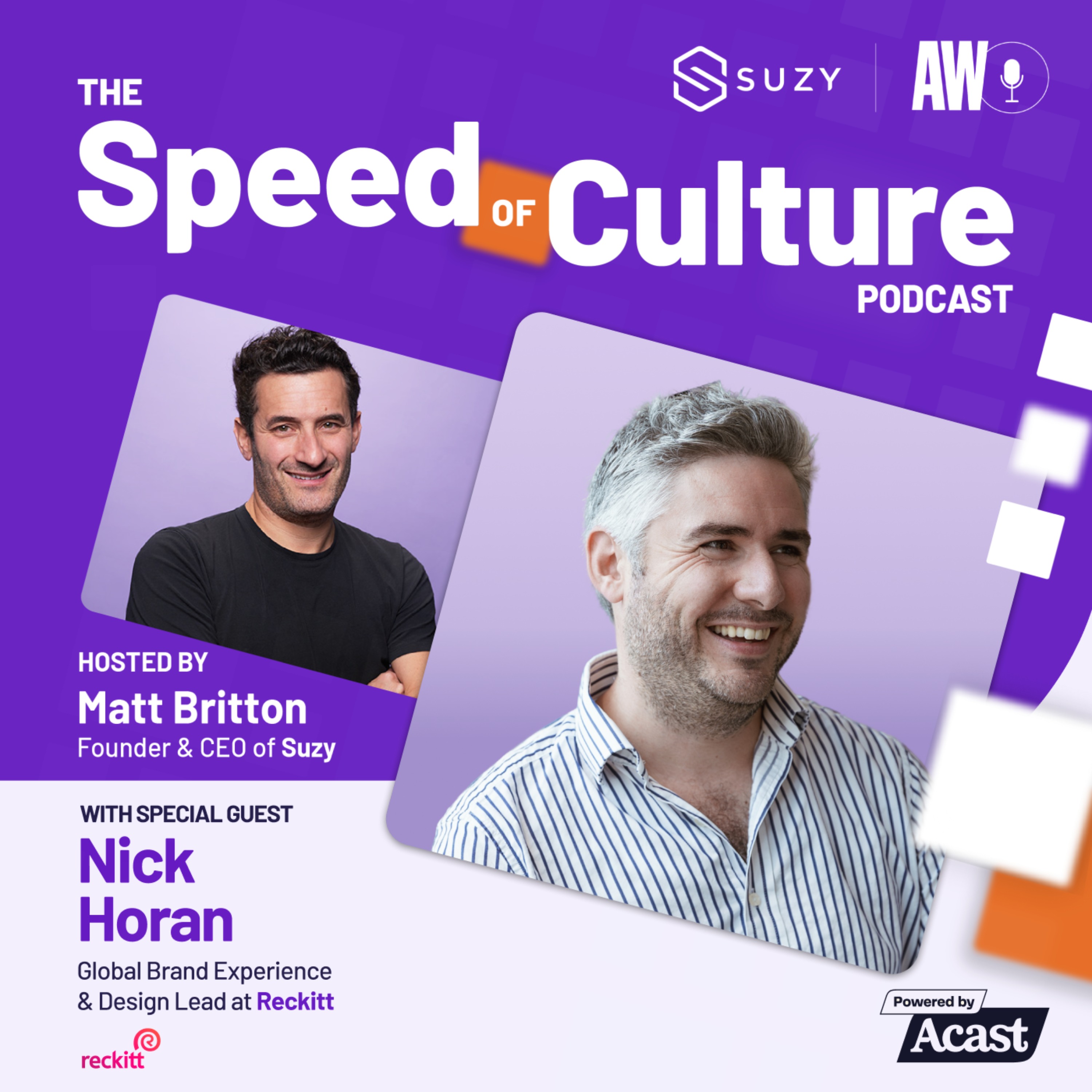
The Speed of Culture Podcast
Powering a Healthier Tomorrow: Inside Reckitt’s Mission with Nick Horan
00:23:02
Loading summary
Transcript54 lines
- [00:00]
Ryan Reynolds
Hey, I'm Ryan Reynolds. Recently I asked Mint Mobile's legal team if big wireless companies are allowed to raise prices due to inflation. They said yes. And then when I asked if raising prices technically violates those onerous two year contracts, they said, what the are you talking about, you insane Hollywood? So to recap, we're cutting the price of mint unlimited from $30 a month to just 15amonth. Give it a try@mintmobile.com Switch $45 upfront.
- [00:26]
Mint Mobile Representative
Payment equivalent to $15 per month New customers on first three month plan only taxes and fees extra speed slower above.
- [00:29]
Kinsta Representative
40 gigabytes ET details running an online.
- [00:31]
Podcast Sponsor
Business Passion, knowledge and a lot of dedication Adding the complexities of setting up and managing hosting for your website piles on more work when you already have so many plates spinning. Whether you manage one WordPress website or dozens, Kinsta's managed solutions give you access to a platform that's optimized for the fastest speed, has enterprise grade security features, and is powered by an intuitive custom dashboard with everything you need to manage your sites efficiently. Plus, Kinsta provides human only WordPress expert support which is available 24, 7, 365 to assist with even the most complex sites. Forget frustrating AI chatbots, Kinsta gives you complete peace of mind by ensuring that your WordPress sites are always online, secure and performing at their best. Start your journey with Kinsta today and get your first month free. Don't have time to migrate your site? Kinsta takes care of everything for you. Learn more@kinsta.com podcast that's K-I-N-S-T A.com podcast.
- [01:33]
Nick Horn
I think what I've learned in my career is no matter where you are in the world or whatever culture you're from, anyone engaging with a brand is looking for the same thing, which is do I see value in engaging with your brand?
- [01:48]
Matt Britton
To thrive in a rapidly evolving landscape, brands must move at an ever increasing pace. I'm Matt Britton, Founder and CEO of Suzy. Join me and key industry leaders as we dive deep into the shifting consumer trends within their industry, why it matters now, and how you can keep up. Welcome to the Speed of Culture.
- [02:10]
Kinsta Representative
Up.
- [02:10]
Matt Britton
Today on the Speed of Culture podcast, we're thrilled to be joined by Nick Horn, the Global Brand Experience lead at Reckitt. Focusing on their Vnish laundry cleaning brand, Nick has transformed brands, focusing on sustainability, design and cultural relevance. With a career spanning continents, he led innovation and built impactful brand experiences which we're excited to talk about today. Nick, how are you?
- [02:28]
Nick Horn
Yeah, very good, thank you for having me today.
- [02:30]
Matt Britton
Absolutely. And where does podcast find you?
- [02:32]
Nick Horn
I'm just outside of Oxford in a place called the Cotswolds in the uk.
- [02:36]
Matt Britton
And has your entire career spanned in Western Europe or have you kind of bounced around a lot?
- [02:41]
Nick Horn
No, I've definitely bounced about a bit. So I spent quite a bit of time in agency land in London where I had the opportunity to work on brands with P and G. And then I had a very nice opportunity to head out to Singapore for two and a half years where I worked with varying clients in Asia, which was fantastic fun. And then, yes, also in the Netherlands with a company called Van Berlo in Eindhoven, working for the likes of Unilever. So a real mixed bag, to be honest.
- [03:11]
Matt Britton
And that type of experience is kind of twofold greatness because on one hand you get to work with The P&GS and Unilevers and world class CPG House of Brands that obviously have mastered the art of brand building and you've had the ability to have vast global experience. So let's kind of unpack both of those because as somebody who's never worked anywhere but here in the United States, what are some of the advantages that somebody like you has gotten through working in so many different cultures and countries along the way?
- [03:40]
Nick Horn
Yeah, I mean, I think what I've learned in my career is no matter where you are in the world or whatever culture you're from, anyone engaging with a brand is looking for the same thing, which is do I see value in engaging with your brand? And frankly, at a global level, it's kind of our job as brand builders, if you like, to demonstrate the value of that. And it's kind of never focusing on the small piece of the pie, but it's looking in the round for kind of a global mega brand as something like Vanish is.
- [04:10]
Matt Britton
But in terms of the cultural nuances somewhere like Singapore versus the Netherlands or the uk, what are some of the distinctions that you've noticed over time that maybe has made you slightly alter or customize your go to market strategy or brand building approach?
- [04:25]
Nick Horn
Yeah, I mean, that's a really good question. I think you know that as we said, okay, sure, people are looking for that same value exchange, but the kind of conversational relevance you've got to look at to kind of untap those different markets obviously changes. So being able to adjust your tone of voice to be relevant in different markets is super important. I think one of my favorite projects, if I may, was with Grant Swisky. Really nice example. It's a fantastic brand. It's known the world over, but they saw an opportunity to untap Chinese New Year in Asia. It's a huge gifting occasion. It's one of the largest mass migration events I think in the world, believe it or not. And Grant's Whiskey have some fantastic brands. For example, they have Monkey Shoulder. So they were able to start thinking about the Year of the Monkey in Asia and how can you then communicate with relevance in a mom and pop shop in Malaysia as an example? So knowing kind of what your core assets are that make you distinct globally, but then actually being able to adapt your tone of voice to work to the Year of the Monkey within a kind of small store environment in an island in Malaysia, that becomes really crucial to be able to unlock sales, purchases, et cetera for your audiences for sure.
- [05:48]
Matt Britton
And you'd mentioned working with places like Unilever and PNG and of course now wreck it. Well established companies that have proven time and time again to be able to create powerful brands. Do you think brand is still relevant here in 2025 given the fact that the barriers to entry are so much lower for anyone to create a brand? Like a lot of the most prolific brands that we see in culture were built during the golden age of television, as you know, because they were able to capture consumers attention on heavy rotation in a limited amount of media channels, where today it's quite the opposite, where this proliferation is low barriers. So how do you look at the role of brand heading forward? What still remains the same and what is different?
- [06:28]
Nick Horn
I'm glad you picked up on that because someone once told me that the average person is exposed to something like 5,000 brands a day compared to the 1950s when it was just 500. So I mean, with that much noise, I mean, it's crucial that every interaction a consumer has with our brands, whether they're seeing a billboard on a bus or using a product or engaging with a brand online, it must feel really meaningful and really consequential.
- [06:57]
Matt Britton
So when a brand interaction feels meaningful, what do you feel is usually the case? Is it just about a value exchange? Is it about moving them emotionally? I guess more often than not when a brand is successful, what have you seen be the case?
- [07:11]
Nick Horn
Yeah, I mean, I was thinking about this before we sort of entered into the room together, but I saw an example quite recently from the food brand Maggie. Now I think they're in a super competitive space. Like they use fairly traditional TV ads. Tactics like discounts are pretty prevalent in that whole category for driving trial. But Frankly, I think a brand will commoditize themselves if that sort of one tactic becomes their sole strategy. But Maggie, I think did something quite different. They created this free cooking curriculum. It was entirely on WhatsApp. And they personally connected through audience, through cookery classes. And I noted down some of the results before this chat. But they received 200,000 messages in their first eight weeks on WhatsApp. They had a four point lift in ad recall. They had a three point lift in campaign awareness. And for me, I think this is a perfect example of meaningful engagement. They're not just relying on ads, they're not just relying on discounts. They're understanding and engaging with their audiences. And when a brand really offers something that gives value to people, that's when they start to build these lasting connections in my mind.
- [08:25]
Matt Britton
Yeah. And I think that's really the core distinction between advertising and content. Right. Like advertising is what's my unique selling proposition and content is what my consumer really care about. Where's my brand fit in? How can I deliver upon those unmet needs? And in the case of a cooking class, obviously they identified the insight that the consumers needed. Those cooking classes needed that education. And to connect your brand to it, you're driving deep engagement, clearly, as evidenced by the messaging. And that is the new way to build, I think, brand equity versus just plastering the same message over and over again, like we saw in the 50s and 60s in the heyday TV. Yeah.
- [09:01]
Nick Horn
And it becomes more about conversation than just broadcast alone.
- [09:05]
Matt Britton
Absolutely. So you are working on Vanish right now, which is a laundry home care brand. Obviously the category you play in is what I would call like a low engagement but heavy usage category. In other words, like, people don't define themselves by they're a laundry detergent, but they buy it every day and it's a huge market share, etc. So it's up to you to make what is an unsexy category sexy. And I just, even by looking at the branding, it's fun, it's different. I can see why you've had success with it. But when you're working on a category like home care, and particularly within the brand, Vanish, like what are some of the considerations that you put into play when making sure that you're creating something truly differentiated and something that's built to breakthrough?
- [09:46]
Nick Horn
I mean, it's a good question and it's kind of interesting, isn't it? Because you sort of say maybe low engagement. But the reason why I say it's interesting is I once spent some time calculating how many interactions Vanish might have per second? And I got to something like 12 interactions per second. That's based on the 70 or so different markets in.
- [10:07]
Matt Britton
What do you mean by that? Interactions per second.
- [10:09]
Nick Horn
So this is what I mean. So 12 interactions per second based on how many markets we're in, based on product costs, sales volumes, media exposure, how many uses are the products having in someone's day to day. So 12 interactions a second is a lot. So I think to your point, to nail a brand's distinctiveness, we first need to define how we want people to experience it. And that's across a labyrinth of different touch points, both online and offline. Today, as we were discussing earlier, it's not just TV advertising, it's not just a supermarket. We're talking E commerce, we're talking social, we're potentially talking in varying different social channels and WhatsApp messaging platforms and so on. So starting to identify every touch point in that journey, from a user's first exposure with a brand all the way through to repurchase. Once we know those touch points, I think we can start to figure out which message, which piece of creative will resonate most at each of those stages. And for us, as you said, it's not just about pushing out content, it's about providing the right creative direction and pretty awesome assets across the 70 or so different markets we operate in. And frankly, it's working. Vanish is fortunate enough to be, I think, in the top 4% of the most recognizable brands in the world now. So it's running through that and being quite forensic about what that total journey is.
- [11:33]
Matt Britton
That's not easy to do in this market. To build a brand with that type of awareness, I mean, that's quite an accomplishment.
- [11:39]
Nick Horn
And for what? It's actually quite a young brand as well. I mean, we're less than 40 years old.
- [11:44]
Matt Britton
Yeah, it's not like Thai, which is kind of as much deeper history. What's interesting, being on the website of Vanish and one thing that stuck out is this big tagline. Clothes live longer with Vanish. And when you talk about like unique selling propositions in your category, often I just see about how well it is in terms of the efficacy of its cleaning power. But this is the first time I can recall really being highlighted the ability that it doesn't damage your clothes. Where did that come from?
- [12:12]
Nick Horn
So Vanish was founded on the sort of purpose, if you like, of safe yet effective stain removal. A lot of competitive brands were things like bleaches that might dye your clothes, or the other route might be Very, very heavy rubbing and mechanical action to remove a stain, literally kind of rubbing clothes together, which ultimately damaged the fabric. So this whole sort of notion of safe yet effective stain removal is very important to the brand and that delivers a certain degree of convenience. But ultimately that allows you to keep your clothes in your wardrobe for as long as possible, which has a really strong benefit on the person's pocket as well.
- [12:50]
Matt Britton
We'll be right back with the speed of culture after a few words from our sponsor.
- [12:55]
Ryan Reynolds
Hey there, Ryan Reynolds here. It's a new year and you know what that means. No, not the diet resolutions. A way for us all to try and do a little bit better than we did last year. And my resolution, unlike big wireless, is to not be a raging and raise the price of wireless on you every chance I get. Give it a try.
- [13:12]
Mint Mobile Representative
@Mintmobile.Com Switch $45 upfront payment required, equivalent to $15 per month. New customers on first three month plan only taxes and fees, extra speed slower above 40 gigabytes on unlimited. See mintmobile.com for details.
- [13:26]
eBay Representative
Picture this. You're halfway through a DIY car fix, tools scattered everywhere, and boom. You realize you're missing a part. It's okay because, you know, whatever it is, it's on ebay. They've got everything. Brakes, headlights, cold air intakes, whatever you need. And it's guaranteed to fit. Which means no more crossing your fingers and hoping you ordered the right thing. All the parts you need at prices you'll love. Guaranteed to fit every time. EBay, things people love.
- [14:00]
Matt Britton
In terms of innovation in your space. And I think for you guys to be able to continually innovate, you need to think about new challenges. You need to think about consumer trends. How do you and somebody in your position have your finger on the pulse of these consumer trends? And how do you spend your time making sure that you're in the know in a world that's changing so quickly.
- [14:18]
Nick Horn
Yeah. And I think that's a really, again, a very important one. As I said, we have proliferated, I think, as in varying different markets. The sheer volume of individual touch points and the individual places that creativity can in essence play. And as you rightly point out, that could be very different in China as it might be from where you're sat or from where I am in the uk and the ways of engaging with those different mediums, frankly, they can change almost overnight. I think we saw now that TikTok's the biggest search engine in the world next to Google, if I'm not wrong. If not Bigger. And I think for me, as sort of creative professional, actually these just give us even more opportunities to do something quite inspirational. On Vanish, for example, is working a lot on creative content around trying to get people to engage with its products and show the results. Now that's quite fun. That can be a really interesting creative start point for things like user generated content, for things like influencer content. Now, keeping abreast of it in a global position is a challenge. And I think from the way Reki is structured, we have a very strong link with our key markets. So Reckitt's largest market is Brazil in Latin America. We have very good links with our Brazilian team in order to kind of understand how people are shopping and engaging with the brand out there. We do a lot of work on audience media segmentation, how people are consuming certain types of media, and that allows us to start to think about what that journey is. We were discussing earlier, what message do I want to surface at those key points? But in my mind, I think that the key part of all this is to make sure that everything remains conversational. That engagement must be two way. And that's something I think as brand owners, if we are, let's say, not linked to the markets well enough, if we're not sure about how those mediums are consumed properly, then we're in danger of becoming a broadcast based brand, which I'm very clear that we shouldn't be, as part of my work on Vanish.
- [16:23]
Matt Britton
Sure. And I think the antidote to not being a broadcast based brand is what you identified is playing in the creator culture. Because Gen Z is now, they're not kids anymore, they are becoming the core household buyer. And Gen Z was the first generation grow up with the iPhone. And the iPhone is their primary place of media consumption. And when they're on the phone, not just iPhone, Android, the smartphone itself, they are more often than not consuming content not from traditional broadcast channels, but from other people. So your ability to tap into the creator culture was very much connected to your ability to capture mindshare with this audience. How involved are you in these kind of creator programs and where do you see that space evolving over time in terms of its importance and relevance to a brand like yours?
- [17:03]
Nick Horn
I think it almost comes back to the evolution of design, full stop. I mean, design previously in the industry was very focused on the craft of making stuff look better, and now that's still important. And don't get me wrong, but today brands are constantly innovating and expanding beyond physical products. So you take companies, Apple, Amazon, Tesla, they're the obvious one, sure, but they've evolved into service driven models. The Apple Watch as we know, is nothing without that ecosystem of apps to support it. And all that has to be designed too. So a lot of our work at reckitt is, is around trying to shape the business beyond just the product, whether that's designing a brand's assets, packaging or tackling larger business challenges. We're still applying the same principle of design thinking and frankly the goal of that is to make sure we're not just creating better looking products, but better products that kind of are more holistic, resonate with people and frankly keeps evolving as the business grows.
- [18:07]
Matt Britton
Yeah, let's shift gears a little bit to you and your career now because obviously you've had a great run and you've worked with some of the most prolific brands. One question I meant to ask you earlier is you mentioned you had a lot of experience working for agencies and the agency model obviously is becoming quite disrupted. But at the same time, we all know some of the most brilliant designers, strategists, creatives reside or have resided in agencies. What did you gain from your time of working in the agency landscape that you were able to take with you to your current role today?
- [18:36]
Nick Horn
I think it's almost a balanced diet of projects, I think depending on the type of agency you're in. But I mean my last agency, Van Burle, which is part of Accenture, you could be going from designing the next sustainable deogenant with Unilever to starting to talk about human machine interfaces on tugboats, which may sound completely random, but actually I think that sort of balanced diet allows you to take inspiration from one category and almost apply it and re skin it for another category. And I think that's where innovation starts to happen is that sort of cross pollination synthesis of different ideas. And I think that as you say, agency landscape is changing. Absolutely it is. But there is still a very important role, I think, to have that sort of partnership with people who are working on all kinds of different industries and places. And that partnership allows us to really start to create unexpected creativity left field ideas that traditionally might not reside in our category but can be borrowed from elsewhere.
- [19:42]
Matt Britton
Right? Yeah. There's tremendous value in going cross category because we think business is so different. But ultimately I think, and what I found at running an agency for 15 years is that a lot of the problems that exist in one industry, that basically exist in all the industries, how do I capture mind share, how do I differentiate, how can I make sure I keep the value of my brand, such as to be able to protect my margins, all those things. So you're right. You can pick up an idea from one category that's very translatable to another, especially in a world where, as we mentioned earlier, content is king and ultimately you're still talking to the end consumer that buys cars and laundry detergent, et cetera.
- [20:18]
Nick Horn
But I also think beyond agencies as well, what we're seeing is far more network between different businesses as well to solve problems. And I think these collaborations are really helping us to innovate in new areas and kind of unlocking some quite interesting new products that are actually good for the world as well.
- [20:39]
Matt Britton
Yeah, absolutely. So when you look back at your career in terms of the decisions you made along the way to kind of prepare you for a role in brand management at the highest level, what are some of the decisions that you made right in retrospect, that gave you the skill set and expertise to be able to thrive in this challenging environment?
- [20:58]
Nick Horn
Oh, that's a good question. I think one of the sort of early skills I learned to hone, if you like, is this thing around resourcefulness, trying not to be limited by the resources that we have around us. If you want to create radical ideas, you almost need to build the selling case for those radical ideas. So that might be as simple as, okay, well, I can't afford a photo shoot. Well, pick up a camera, take a picture, do it yourself, sell it in. And as part of that startup mindset, which kind of has always allowed me to start thinking about how you might scale an idea and that might be okay, well, we've got a really nice idea for a new innovation. I can't afford to launch it at scale. Well, how do we maybe start to test the waters on the digital environment, to test like initial appetite from people on those ideas? So I think certainly working as well in agency culture, that resourcefulness and that startup mindset in order to try and sell things in, to get that next bit of budget, in order to scale that thing in, iterative build something out was certainly important to me as I started my career. It's something I still do now.
- [22:04]
Matt Britton
Absolutely. I think so many of our just being an employer, like so many of our best employees, are exactly that. They are resourceful because there's always a reason to say no. There's always a reason to say, oh, I need to hire somebody or some company to get this done before people actually really take the time to try to figure it out on their own. And especially now with all the tools at our disposal, growing amount of powerful tools. I mean, OpenAI, if they just announced Sora, which is like a text to video AI platform where you can create Hollywood style footage just with a simple prompt. I mean, we literally have the power of Hollywood, the power of Silicon Valley in our pockets and power Madison Avenue really to create anything right now. And I think to say you can't do it really, I think is the worst thing before actually really trying and being resourceful. So I think that's a great point.
- [22:49]
Nick Horn
I also think, and maybe just an additional point, that brands are quite flexible things, they are adaptable. So I don't think we need to be afraid to push the boundaries, to try radical things. But I think the other thing to note is with that you've got to be really tuned into the signals. I mean, if something's working, run with it, scale it, but if it's not losses, quickly learn from here, use that as fulfilled, next thing.
- [23:15]
Matt Britton
So many companies, I've worked with, so many big companies where they'll spend millions of dollars or tens of millions of dollars on a huge campaign and then when it's over, they'll just do something completely different. And it's like, well, hold on, like, what did we learn from this? Is there not anything that we can take from this? And sometimes it does great. Instead of trying to make a sequel that is even better than the first one again, they'll just create a completely new brief and do completely something different. I think what we've seen with certain brands, like just say Red Bull, what they've done, well, they've created a platform and just made it better and better and better and they've caught out a niche for themselves. Because in a world where there's so much choice, you really have to be the very best at whatever it is that you focus on versus just trying to be something new every single planning cycle. Yeah, I agree, absolutely. So to wrap it up, Nick here, and it's been a great discussion, is there a mantra or saying that you guide your career by that comes to mind?
- [24:04]
Nick Horn
It's an old one, I think, from the raf, the Royal Air Force in the uk, which just says rules are for the guidance of the wise and the blind obedience of others. And I think that resonates in the world of branding. The landscape is always shifting, so we do need to stay adaptable and we can't just blindly follow old playbooks. We've got to be willing to break a few of those rules and if we want to stay relevant.
- [24:26]
Matt Britton
Yeah, well, you heard it from Nick Guys, everybody, don't be afraid to break the rules. Don't be afraid to innovate. Color outside the line, so to speak. Because that's where all of the opportunity is. So Nick, thank you so much for taking the time lay cannot wait to see again what's up your sleeve and what's coming from you next with the Vanish brand. Everything you work on. So thanks so much for taking the time to join us today.
- [24:43]
Nick Horn
Thank you Matt. A real pleasure. Thank you.
- [24:44]
Matt Britton
On behalf of Susie Henry Keen, thanks again to the great Nick Horan, the Global Brand Experience Lead for reckitt, for joining us today. Be sure to subscribe, rate and review the Speed of Culture podcast on your favorite podcast platform. Till next time. See you soon everyone. Take care. Speed of Culture is brought to you by Suzy as part of the Ad Week Podcast Network and a Guest Creator Network. You can listen subscribe to all Adweek Week's podcast by visiting adweek.compodcast to find out more about Susie, head to susie.com and make sure to search for the Speed of Culture in Apple Podcasts, Spotify or anywhere else podcasts are found. Click follow so you don't miss out on any future episodes. On behalf of the team here at Suzy, thanks for listening.
- [25:44]
Mint Mobile Representative
There's one thing that will forever change the way you sleep and it's the softest 100% organic cotton bedding from bowl and branch. You'll fall asleep faster wrapped in the most luxurious comfort. You'll never sleep hot again. With airy blankets, cloud like duvets and breathable sheets. You'll experience pure comfort on night one and feel your bedding get softer with every wash. Discover the difference with 15% off your first order@bolenbranch.com with code buttery exclusions Apply. See site for details. A patient's recovery is only as good as their treatment plan and for adult patients with bcg, unresponsive non muscle invasive bladder cancer, carcinoma in situ or nmibccis, Anktiva is an important treatment option to consider. This immunotherapy harnesses the body's natural immune response and works alongside bcg. It's a non surgical option that's been shown to produce durable, complete responses up to four years for some patients, enabling them to avoid or postpone surgical removal of the bladder. Sounds like the doctor needs me. Ask your doctor if Anktiva is right for you.
- [26:46]
Kinsta Representative
Patients treated with Anktiva BCG may still be at risk for more serious muscle invasive or metastatic bladder cancer, which could be life threatening if bladder removal is delayed. If you don't respond to a second round of Ankita with bcg, bladder removal, surgery should be considered before starting Anktiva, Tell your doctor if you're pregnant or planning to become pregnant, as Anktiva may cause fetal harm. Common side effects include abnormal laboratory results, increased creatinine, painful urination, blood and urine, frequent urination, urgent need to urinate, urinary tract infections, high potassium, muscle pain, chills and fever. For more information, visit anktiva.com or call 1-877-Anktiva 1-877-265-8482.