← The Speed of Culture Podcast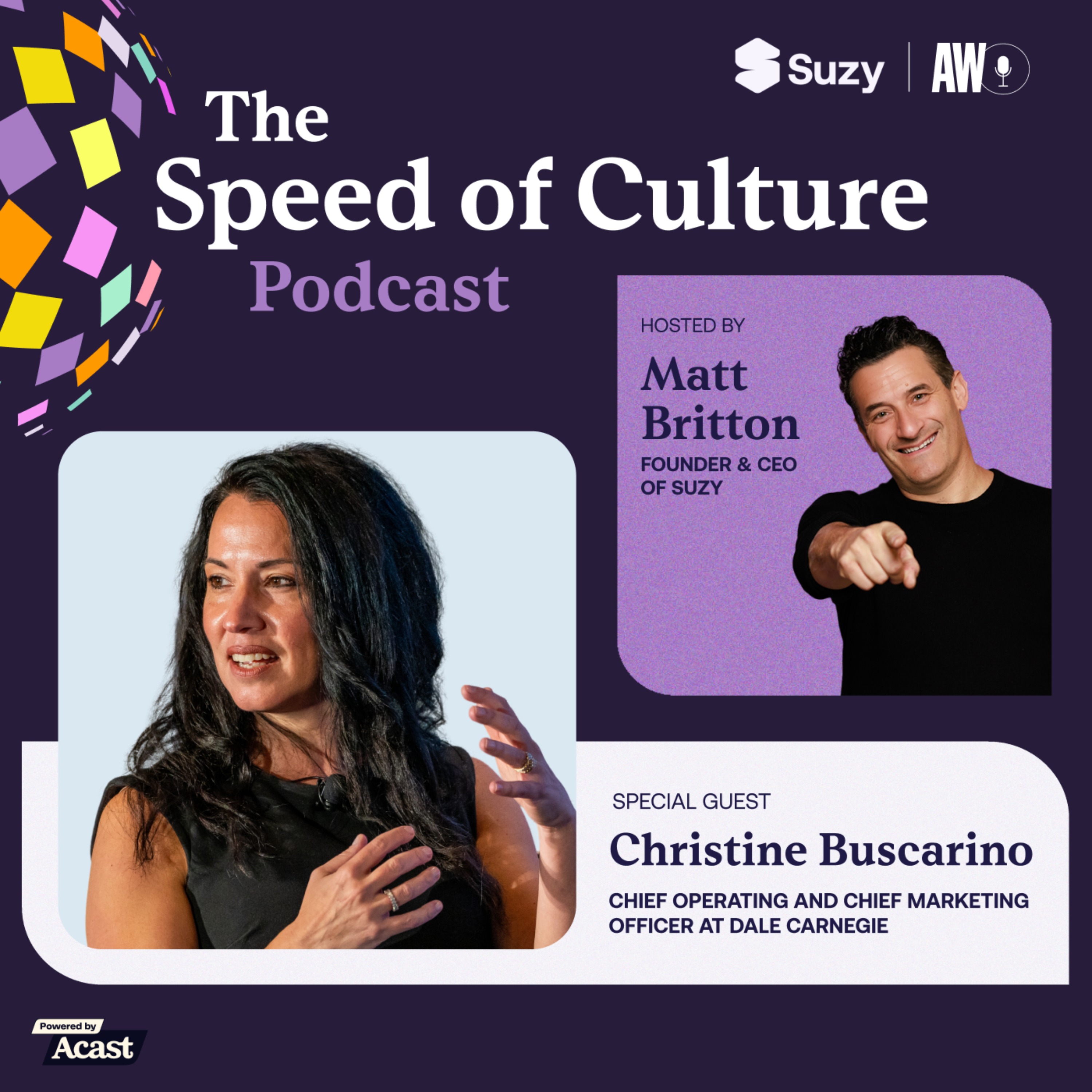
The Speed of Culture Podcast
Soft Skills: How Dale Carnegie is re-humanizing leadership for an AI world
00:27:31
Loading summary
Transcript58 lines
- [00:01]
Capital One Announcer
If you love to travel, Capital One has a rewards credit card that's perfect for you. With the Capital One Venture X card, you earn unlimited double miles on everything you buy. Plus you get premium benefits at a collection of luxury hotels when you book on Capital One Travel. And with Venture X, you get access to over 1,000 airport lounges worldwide. Open up a world of travel possibilities with a Capital One Venture X card. What's in your wallet?
- [00:27]
Capital One Legal Disclaimer Voice
Terms apply. Lounge access is subject to change. See capitalone.com for details.
- [00:30]
Stripe Advertiser
AI companies have unique business models, each with distinct billing needs. Stripe is the go to choice for AI leaders, from early stage startups to scaled enterprises. With Stripe billing, you can support any business model and easily align your monetization strategy with customer value. Join the ranks of 78% of the Forbes AI 50 and millions of businesses worldwide that trust Stripe to help them build more profitable scalable businesses. Discover more@swepe.com.
- [01:01]
Experian Advertiser
Finding the right audience shouldn't feel like doom scrolling with Experian. It doesn't. Experian syndicated audiences help you reach holiday shoppers, car buyers and more across over 200 top platforms. With over 2,400 pre built audiences, there's no more doom scrolling. It's audience targeting you can trust. Made simple. Learn more at experian.com adweek that's E-P-E-R-I-A-N.com.
- [01:28]
Christine Buscarino
Adweek We 100% see AI as a pivotal point in really the future of business. Not only is it moving faster than the speed of light, but it's changed the way we communicate. It's changed authenticity. It's changed what people trust. People fear their jobs. It's replacing certain types of jobs. And we believe at Dale Carnegie that what's most important to really future proof a person is honing in on the empathetic side of what a human delivers that today a machine can't replicate.
- [02:09]
Matt Britton
To thrive in a rapidly evolving landscape, brands must move at an ever increasing pace. I'm Matt Britton, Founder and CEO of Suzy. Join me and key industry leaders as we dive deep into the shifting consumer trends within their industry, why it matters now, and how you can keep up. Welcome to the Speed of Culture. Up to the Speed of Culture podcast. We're thrilled to be joined by Christine.
- [02:34]
Buscarino, the Global Chief Operating Officer and Chief Marketing Officer of Dale Carnegie and Associates.
- [02:39]
Christine has spent over 25 years leading marketing, e commerce and operations for top.
- [02:44]
Brands and now she has Dale Carnegie, where she is driving digital transformation and global growth across more than 80 countries. Christine, so great to see you today.
- [02:52]
Christine Buscarino
Nice to see you, Matt. Thanks for having me.
- [02:54]
Matt Britton
Absolutely. So for those in the audience who don't know what Dale Carnegie is, it'd be great. You know, many people are familiar with the book how to Win Friends and.
- [03:01]
Influence People, but there's also a lot.
- [03:03]
Of people who don't know about the incredible organization that you help lead. So we'd love to hear about it.
- [03:07]
Christine Buscarino
Yeah, thanks for the opportunity. So I joined Dale Carnegie about eight years or so ago and we are a leading provider of professional and leadership training for organizations and individuals across the world. So we help people develop their communication skills, their leadership skills, empathy and resilience, especially during times of change like we face right now.
- [03:30]
Matt Britton
Yeah. So I mean, what are the skills that you find are most lacking within the organizations and what does training look like from a Dale Carnegie programming standpoint?
- [03:40]
Christine Buscarino
Yeah. So, you know, as we speak to leaders across the globe, what remains consistent is the ability to work across generations, but really to build mutual trust, confidence, and really leadership skills across not only their leadership team, but future leaders throughout their organization. So we offer either group training live, online or in person, but we also offer coaching, so executive type coaching that you and I could coach one on one and really develop out the leadership skills in specific scenarios that pertain best to you.
- [04:11]
Matt Britton
Okay. So when you talk about cross generational differences in the workplace, I mean that's something I think a lot about because you have this kind of confluence of generations all memed together. First of all, not everyone's in it off as you know. So building a virtual culture is hard in its own right. But when you look at the current workplace environment, you have Gen Z who grew up with the iPhone in the household and like doing everything and consuming content on mobile. And then you have, on the other side of the equation, Gen Xers and even baby boomers who did not grow up with the Internet. And for some of those people, and it's just not as commonplace or natural to deviate towards these digital technologies. So what do you see as some of the biggest challenges in kind of the cross generational workplaces and what have you seen as some of the solutions to try to get people to work more closely and effectively together?
- [04:58]
Christine Buscarino
We do a lot of our own primary research and leverage research from others as well as we look across generational gaps. And even with the focus now on the middle manager who is really not only responsible for the results, but responsible for the people. And what we've seen the biggest change being is what matters most to the newer generations has changed. They want to know how they influence. They want to know how they make a difference on performance. They want to know that their manager cares.
- [05:26]
Matt Britton
How's that difference in the past, was it just about how much money you made?
- [05:28]
Christine Buscarino
Well, not necessarily, but the choices of where you could work in the past were more limited to geography. So now that this generation has visibility in hybrid environments to being in New York and working with a colleague in Hong Kong, there's an endless amount of opportunities that somebody has when searching for a job and staying, more importantly inside of an organization. So while all of influence that you have on an organization remains true and important, the values though, that these younger generations have are much more visible, let's call it that way, across the organization. So what managers need to focus on, that middle manager that I was mentioning, is really how to build communication, trust, empathy, and lead with empathy. And that's hard. You and I come from a generation where it's about results. And yes, of course your people matter, but results first. Where we now recognize that a lot of what leaders need to instill is empathy to get to know their teams and to let their teams know they know them and really build results based on people and culture.
- [06:37]
Matt Britton
Yeah, it's so interesting you said. I mean, I struggle with that too because I run a venture funded software company. My board wants results. So when I speak to my employees sometimes, like, okay, like there's a famous quote in Mad Men, which is my favorite show of all time, and the lead female character says to Don Draper, her name's escaped me right now, she says, you never compliment me and you never give me appreciation. He said, that's what the money's for.
- [07:01]
Right.
- [07:01]
And that was obviously filmed in the 50s and we're in a completely different age right now. But there are a lot of managers who believe that. They believe that's what the money's for and you shouldn't need all these other things. I'm paying you. But that's just not how I think younger people look at their career. And they also want a certain level of recognition and appreciation that isn't always correlated with money. It makes them feel like they have purpose in what they're doing.
- [07:24]
Christine Buscarino
Yeah, I mean, you said it perfectly right? Purpose, knowing how they contribute, how they're making a greater impact on their business and the world. And yeah, money matters. Obviously, at the end of the day, that's how you're rewarded. But with so many opportunities now that exist at hand's reach, what matters most, we're Finding is cultures that every day get to know their teams and build their culture around the values that matter most to the individual. So that comes with leadership training, communications training, negotiation training. And we believe very much that if you have a very satisfied and engaged employee base and culture, you will get those results that, as you mentioned, were the things that people measured performance on only long ago. So I think that's what's changed most. And that's where Dale Carnegie is still very much relevant. I mean, the book was written back in the 1930s, and if you just take the principles out of the book and put them into today's context. Dale Carnegie was brilliant. I mean, he read the future, and all of the principles and skills still remain that we then teach in our training and our coaching to use in today's context, which what matters most to individuals.
- [08:33]
Matt Britton
Yeah, it's. They say the more things change, the more they stay the same. And I do think there's certain principles that do exist. The other thing I'd mentioned during my intro is that Dale Carnegie operates in over 80 countries. So what are the cultural nuances when it comes to leadership and building an effective workplace that may vary from market to market that you have to be keen on when you roll out your training?
- [08:55]
Christine Buscarino
Yeah. So, you know, I think one of the things that we find is how different cultures explain it may sound different, but at the end of the day, it comes down to the same principles that leaders need, which is about communication and embracing change, change management and helping organizations and the people inside of them be resilient. So the story or the context may sound a little bit different when you're talking to somebody in India versus the United States. But at the end of the day, what Dale Carnegie trainers are really good at is using our learnings in the current context so they're transferable. And that's what's amazing to me is just fast forward 113 years, those same teachings still apply. I mean, you and I talk about it all the time with AI. We're teaching people how to build trust, influence, and be resilient today. And that's what Dale talks about, you know, in his book, you know, how to Win Friends and Influence People. That was written in the 1930s. It's incredible. It's just contextually how someone may explain it. I always use the example. When I first came on, we were talking about agility and people are like, well, what course do you have on agility? Well, the Dale Carnegie course, it talks about resilience, it talks about working as teams. It Talks about negotiation. Is that really an agility course? It absolutely is. It absolutely is. But that's a trend that we embraced here early in the United States, that maybe in other regions came a little bit later, but it 100% transcends.
- [10:28]
Matt Britton
Yeah, we're going to get into AI transformation in a second, obviously. But another area I wanted to touch upon is public speaking. So ultimately, speaking and presenting is about storytelling. And I believe no matter where we go with AI, you're still going to need humans to inspire other people and tell stories, to drive decisions, to get people to make movements emotionally. I don't think it's ever going to go away because we are emotional beings. I know that Dale Carnegie does a lot of training in the public speaking realm. What are your thoughts on the importance of public speaking and presenting within companies, and what are some of the pillars there that make somebody an effective public speaker?
- [11:08]
Christine Buscarino
Presenting with influence and empathy is something that I've seen in my own self in taking one of our courses. I've seen in my son who just recently took a course and I see in a lot of our participants that take courses. At the end of the day, it's the emotional component that builds trust with your audience. And that's the part that has become so critical and important, especially in today's world, where individuals aren't sure what's real and what isn't real. But what the individual or the person can communicate with conviction and confidence to engage an audience is really what starts to stand out. We've heard from so many CEOs that as they think about building their future teams, they not only are going to hire for those technical skills that are critically important, but those people skills that regardless of the role that they're in, really make them stand out as the contributor to the organization, the face to the organization that builds trust, credibility and influence across, whether it be a client base or an employee base.
- [12:14]
Matt Britton
I know Dale Carney executes both in person and virtual training, and many of our listeners work at virtual hybrid organizations. In the post Covid world, what has been kind of some effective tactics at delivering training virtually that gets people to actually stay engaged and listen where they don't have three other screens open at the same time, chatting away or doing other things. Because I think that especially when you look at younger generations, they're so prone to distraction. There's so many other things going on. So what really grips people in a virtual environment?
- [12:47]
Christine Buscarino
So a lot of the things that we talk about in our training is about being concise, storytelling, showing People why it matters to them and what they get from doing something. People care about, how it influences them and what they can take from what the other person on the other side is conveying. And it's become so much more important. Eye contact, which we talk so much about when you meet somebody, I tell everybody, shake hands, make eye contact with the camera. That's critically important for the other person on the other end to stay engaged. So a lot of what we really emphasize in our presentations in public space speaking, whether it's in a virtual environment or in a physical environment, is that conciseness, that being very clear, using a story to engage the listener. And in closing with, again, what they should do and why it matters to them, is a technique that, regardless of the modality you're in, we found is highly effective, especially in virtual environments like the one you and I are in.
- [13:47]
Matt Britton
Yeah, I bought this camera. It's like $150. It's called Eye contact, and it's a camera where you swing down, it's kind of like an arm. And right now your face, the actual camera is right over where your face is. Like, I made the window just small enough so I'm looking directly at you. And I have found that since I've actually installed and started using this camera, I have better podcast conversations because I'm looking directly at the person. And I think that's obviously the same dynamic exists in the real world as well. I do think, like younger generations, you know, a lot of them grew up not having as much in person interactions. We talk about this whole loneliness paradox where younger generations feel more connected than ever before because they're always on their phones and always feeling, quote, unquote connected. But at the same time, they're spending less time in person with other people, which makes them feel more disconnected. So I think that has to have some type of an impact on tomorrow's leaders as they enter a workforce and are forced to forge these new connections.
- [14:49]
Christine Buscarino
Yeah, you're absolutely right. A lot of our kids went through the COVID age where they were forced out of physical environments and said, sit in front of this screen and guess what you saw? You saw the ceiling fan. You didn't see their face. So they lost the how do I have a conversation one on one with somebody to truly comprehend and to get their attention? And when they all went back, we're now looking at kids that are in the workforce now. They're starting to work. They are tomorrow's future leaders. And it's re implementing the skills that maybe we as parents were able to start to instill when they were together. But more importantly in work environments, those critical skills such as communication and really just building trust with the other person are lacking, unfortunately, because they do hide behind the screen. So watching my 20 year old or my 18 year old have a conversation with someone in a physical environment versus a virtual environment looks really different. And it's our jobs at Dale Carnegie, or as parents, or as leaders to really help that generation regain the effectiveness of their presentation so that when they do become the future CEO, they're just as effective as people and leaders are that grew up in an environment where that was all that mattered.
- [16:08]
Matt Britton
Yeah, that's right. At the same time, I think as somebody who runs a virtual organization where people are spread out everywhere, that also provides opportunities for people to stand out. Now, obviously, in a Zoom environment, all of our windows are the same size, which in some ways is a great equalizer because when you are at a conference room, obviously we have this concept at Suzy called the Hippo, which is the highest paid person's opinion. And at many organizations everyone will look at the end of the table to the Hippo. And if they say it's great, everybody else says it's great. And I think there is that different dynamic in a virtual environment because you don't have a head of the table, so to speak. I think some of the opportunities that exist for younger employees is like if your company operates over Slack, then be the most vocal person in Slack and share articles that you think are interesting and share your thoughts and ideas and just you can stand out that way through repetition and passion in a way that maybe you wouldn't be able to do if your company just operated the way it used to, where the only way you communicate it was in conference rooms. So I think there is, at the same time as things change, different ways for people to stand out.
- [17:14]
Christine Buscarino
Yeah. And I'm going to take it to the simplest form. When I am communicating through a messenger type app or a Slack, I just want to get to the point and type. But the simplest little thing like recognizing somebody by name. Hey, Matt, really thoughtful suggestion. What did you think about this versus getting to. Yeah, sounds great. Let's just get to the crux of it. That simple remembering of somebody's name and acknowledging them as an individual makes such a difference. We have a very simple procedure for doing that and memorization skill for doing that. But you truly see somebody smile and say, okay, this person isn't just a chat buddy at this point. They're truly recognizing me for the contribution I'm making. That's how you stand out. And that's a very simple little technique that remains very effective for not only getting somebody's attention, but also being very effective in your communication.
- [18:04]
Matt Britton
We'll be right back with the Speed.
- [18:06]
Of Culture after a few words from our sponsors.
- [18:08]
Experian Advertiser
Finding the right audience shouldn't feel like doom scrolling with Experian. It doesn't. Experian syndicated audiences help you reach holiday shoppers, car buyers and more across over 200 top platforms with over 2,400 pre built audiences. There's no more doom scrolling. It's audience targeting you can trust. Made simple. Learn more at experian.com adweek that's E-P-E-R-I-A N.com adweek.
- [18:41]
AT&T Advertiser
And now a next level moment from AT&T business. Say you've sent out a gigantic shipment of pillows and they need to be there in time for International Sleep day. You've got AT and T5G so you're fully confident, but the vendor isn't responding and International Sleep Day is tomorrow. Luckily, AT&T 5G lets you deal with any issues with ease so the pillows will get delivered and everyone can sleep soundly, especially you. AT&T 5G requires a compatible plan and device coverage not available everywhere. Learn more@att.com 5G Network.
- [19:11]
Capital One Legal Disclaimer Voice
Banking with Capital One helps you keep more money in your wallet with no fees or minimums on checking accounts and no overdraft fees. Just ask the Capital One Bank Guy. It's pretty much all he talks about in a good way. He'd also tell you that this podcast is his favorite podcast too. Ah, really? Thanks Capital One Bank Guy. What's in your wallet? Term supply See capital1.com Bank Capital One NA Member FDIC.
- [19:41]
Matt Britton
So Christine, I'm very privileged and excited to be working with your organization, Dale Carnegie on a joint training experience that we're creating together called Human by Design. And ultimately it's about future proofing individuals in an AI driven world because as you and I both know, AI has really changed society in profound ways and is just starting to have its impact. Talk to me about why AI was an important topic for Dale Carnegie to dive into and what you hope to get out of the project that we're working on together.
- [20:13]
Christine Buscarino
Yeah, so Matt, we 100% see AI as a pivotal point in really the future of business. Not only is it moving faster than the speed of light and faster than I think anyone ever expected, but it's changed the way we Communicate. It's changed authenticity, it's changed what people trust. People fear their jobs. It's replacing certain types of jobs. And we believe at Dale Carnegie, we saw this during COVID we've seen it for years, that what's most important to really future proof a person or to bridge the gap between technology and people skills is really honing in on the empathetic side of what a human delivers that today a machine can't replicate. So for us, we hear from clients all the time. I'm trying to build AI into my business, but it's affecting culture. How do I have an organization that removes the fear and creates confidence in working with it so that it makes my employees more productive, the results are stronger and they can actually move from role to role more so than just growing up a ladder in a lateral role. So that's why it's important to us. We're hearing it, we're hearing it across the world. We're concerned that communication skills, presentation skills will get lost if we don't work with someone like yourself that truly understands not just the technology side, but the competencies needed to be a leader in a world that's changing faster than, let's call it, any other change management process we've ever been through.
- [22:00]
Matt Britton
Yeah, I agree. I think that's well put. And I also think the skill sets needed to thrive and AI driven world are different because I believe, and I've said many times, that we are entering the final stages of the knowledge economy where if you are able to main and we learn as kids to memorize and regurgitate knowledge and that's what makes us do good on tests. And then when you grow up, if you can regurgitate knowledge on how to write a contract, you're a good lawyer, or how to do someone's taxes, you're a good accountant. And those are areas, for example, that AI is becoming increasingly adept at. So if it's not about knowledge, what is it? And I do believe it's about more of the softer skills like critical thinking and creativity and problem solving. And I think upskilling in those areas are really the areas that people need to focus on so they can future proof themselves in the AI driven world. Because ultimately if you walk into work every day and do the same thing, or wait for your boss to tell you what to do, then ultimately you're going to be on the wrong side of AI transformation.
- [23:02]
Christine Buscarino
Absolutely. There is not only an expectation that you get greater results because of the technology that we now have access to, but there is absolutely an expectation that the leaders know how to kind of bridge the gap between the two and not only lead an organization that uses technology to stand out, but their productivity as an individual is 10 times what it is today because of it. And you and I have both heard, I mean, CEOs are not hiring people unless they can use the tools married with the people skills like building trust, influencing others, and being resilient through times of change, because these are really the competencies that technology can't replace. So it's an interesting profile that we've created for future leaders and as individuals. And what we're finding in people that are responding to some of the things that we're talking about collectively is they're not only thinking about themselves, but leaders are coming and saying, how can I bring this into my organization? We know we need to use the technology, but we don't know how to use it and master it with the people skills that matter most and how to still remain to our customer that authentic provider of a service. Customer is still the center of everything. And customers, especially more so today, want to trust the brand they work with. And businesses are really trying to figure out, how can I instill that level of trust and confidence that my client has in me when I'm using a lot of tech to do the work.
- [24:37]
Matt Britton
And I also think the last thing I'll say is, I think kind of the confluence of the pillars that Dale Carne has deployed in tried and true fashion to train people on a wealth of topics, combined with this incredible new evolution we're seeing, just, I think, is the recipe for something that could be really powerful in organizations and something that every day as I travel around the world and I speak to companies about this, it's clear and evident, so very needed. A lot of companies are like a deer in a headlight right now. They don't know what to do. And they also don't know how to deploy this new technology. Because you can get so overwhelmed with the rate of change of AI or the pure amount of tools that you almost don't know where to start. But when you have the right skill sets and you understand what AI is capable of, then you can deploy this powerful technology in the right way to transform your organization. And right now, it is life or death for so many companies where you need to act, you need to act fast, because one day you're going to find yourself being the next Kodak or Blockbuster if you don't make these changes.
- [25:35]
Christine Buscarino
Yeah, absolutely. And it's so interesting, even in we Started talking over the summer and how quickly we've even heard clients change the word from I don't know how to, I need the confidence to. So they understand how important it is. But it's now, how do I take the things that are going to make me stand out to bridge the gap between technology and people?
- [25:58]
Matt Britton
Absolutely. So I want to shift gears as we wrap up here to you and your career. And I would love to just know, in your current role as Global Chief Operating Officer and CMO of Dale Carnegie, like, how are you spending your time? What does the pie chart of a day look like? And what are some of the ways that you hope to continue to evolve and improve the organization moving forward?
- [26:19]
Christine Buscarino
So starting as a marketer, I always start with the customer. I grew up in office supplies. I question, am I just this one hit wonder, 20 years selling pencils and ink, can I move across industries and really give a heartwarming, excellent experience to my client? So really challenged myself by moving industries, Went into women's dresses at Adriana Papel and now Dale Carnegie and providing the people skills that help us as human beings forge greater relationships. And what remains the same is if you know your customer and if you can provide solutions to your customer that resonates with their needs, that's really what matters. So regardless of the widget or the industry that you're in, understanding and knowing your customer first and solving the challenges that they may have inside of their daily life is what makes us a strong brand. And one of the things that at Dale Carnegie we try to do is reach more people so that they know what Dale Carnegie can do today for them, more so than what Dale Carnegie is known for, which is the books and so forth, and especially hitting the younger generation that's about to enter the workforce. So we spend a lot of time, I spend a lot of time not only figuring out what is that message, how do we create the awareness, but where does technology come in to take the routine tasks away, to give us the time to focus on the client, having those meaningful conversations, ensuring that we're developing new products and solution that meet their need. So as I think about my role, whether it be my marketing hat or my operations hat, what brings them together is a customer focused strategy and making sure that our solutions speak to and focus on what matters most to them, and gives us the time as salespeople, trainers, marketers to focus on the relationship side of things and allow technology to take some of the tasks out of our hands and make us more efficient and more productive as leaders, which is.
- [28:22]
Matt Britton
Really the higher order calling for every organization right now is how do you eliminate the mundane routines? You can focus on what's most important to move the business forward.
- [28:30]
Christine Buscarino
Exactly. And how we stand out and look different to the world.
- [28:32]
Matt Britton
Absolutely. So to wrap it up here, Christine, it's been such a great conversation. We always asked our guests if there's a saying or mantra that helps encapsulate their professional journey to date. So just really curious to hear what comes to mind for you.
- [28:46]
Christine Buscarino
So I'm going to use a Dale Carnegie quote, not just because I believe in Dale Carnegie's mission, but because really thinking about how we can change the future has been something that early in my career to today matters most to me. So Dale Carnegie once said, the best possible way to prepare for tomorrow is to concentrate with all your intelligence, with all your enthusiasm on doing today's work. Super day by day, that's the only possible way you can prepare for the future.
- [29:15]
Matt Britton
I love that. Well, it's clear that you are embracing those tenets in your work at Dale Carnegie and super grateful not only that you joined the POD today, but that we have the chance to work together and looking forward to seeing what we can accomplish to help people future proof themselves in a time where that's so very needed.
- [29:31]
Christine Buscarino
Thank you for having me and thank you for the impact that you're making on people today.
- [29:34]
Matt Britton
Absolutely. Thanks so much. On behalf of Susan, I would team Special thanks to Christine Buscarino, the global COO and CMO of Dale Carnegie and Associates, for joining us today. Be sure to subscribe, rate and review the Speed of Culture podcast on your favorite podcast platform. Till next time. See you soon. Take care. Bye bye.
- [29:54]
The Speed of Culture is brought to you by Susie as part of the Ad Week Podcast Network and a guest Creator Network. You can listen subscribe to all Adweek's podcasts by visiting Adweek.com podcast to find out more about Suzy, head to Suzy.com and make sure to search for the speed of Culture in Apple Podcasts, Spotify or anywhere else podcasts are found. Click follow so you don't miss out on any future episodes. On behalf of the team here at Suzy, thanks for listening.
- [30:35]
Experian Advertiser
Finding the right audience shouldn't feel like doom scrolling with Experian. It doesn't Experian syndicated audiences help you reach holiday shoppers, car buyers and more across over 200 top platforms with over 2,400 pre built audiences. There's no more doom scrolling. It's audience targeting you can trust. Made simple. Learn more at experian.com adweek that's E-P-E-R-I-A-N.com adweek.
- [31:08]
Capital One Legal Disclaimer Voice
Banking with Capital One helps you keep more money in your wallet with no fees or minimums on checking accounts and no overdraft fees. Just ask the Capital One Bank Guy. It's pretty much all he talks about in a good way. He'd also tell you that this podcast is his favorite podcast too. Ah, really? Thanks, Capital One Bank Guy. What's in your wallet? Terms apply. See CapitalOne.com's Bank Capital One NA Member FDIC.
- [31:36]
Capital One Announcer
How does F1 turn data into insights at 200 mph? AWS is how fans get inside the strategy. AWS powers next level innovation for millions of businesses.