← The Speed of Culture Podcast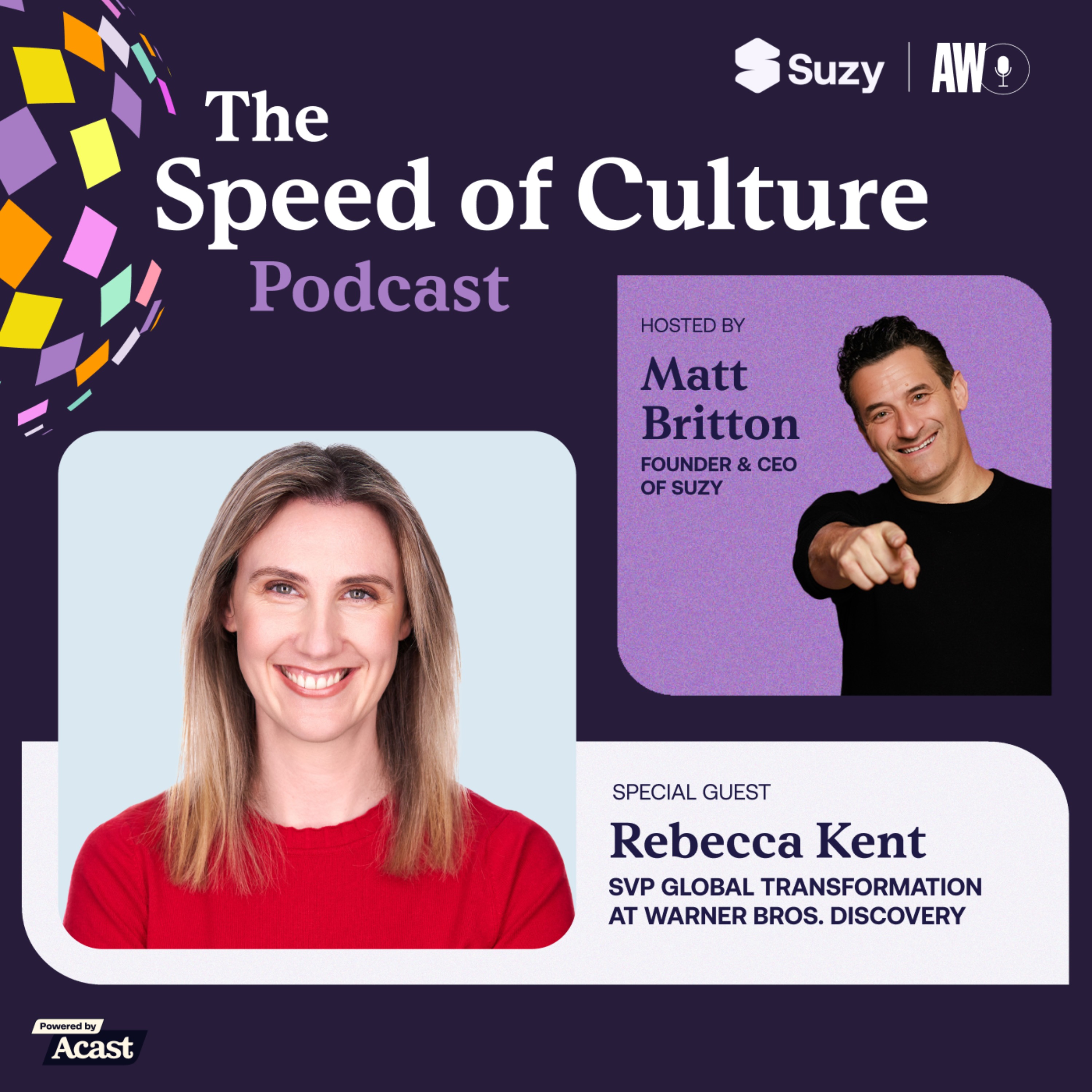
The Speed of Culture Podcast
The Future of Streaming & Storytelling: Rebecca Kent on Warner Bros. Discovery’s Next Chapter
00:25:04
Loading summary
Transcript146 lines
- [00:00]
LinkedIn Ad Representative
Does it ever feel like you're a marketing professional just speaking into the void? Well, with LinkedIn ads, you can know you're reaching the right decision makers. You can even target buyers by job title, industry, company seniority, skills. Wait, did I say job title yet? Get started today and see how you can avoid the void and reach the right buyers with LinkedIn ads. We'll even give you a $100 credit on your next campaign. Get started at LinkedIn.com results. Terms and conditions apply.
- [00:30]
Boost Mobile Advertiser
Come on down to Boost Mobile and turn your tax refund into six months of savings.
- [00:34]
Boost Mobile Voice Coach
Nope, all wrong. You're on the radio touting Boost Mobile's 5G network. You gotta use your radio voice like this. Come on down to Boost Mobile and get six months free when you buy. Six months on our best unlimited plans. Now you go.
- [00:46]
Boost Mobile Advertiser
This is just how my voice sounds.
- [00:47]
Boost Mobile Voice Coach
Just say it like you mean it.
- [00:49]
Rebecca Campbell
Okay.
- [00:50]
Boost Mobile Advertiser
Plus, enter to win up to $10,000 and double your tax refund.
- [00:54]
Rebecca Campbell
Oh, my.
- [00:55]
Boost Mobile Advertiser
Requires upfront payment, taxes and fees. Extra terms and exclusions apply. Visit boostmobile.com for full on returns and suites details.
- [01:04]
Rebecca Campbell
I think where it's headed is really about consumer choice. What's really important to a company like Warner Brothers Discovery is meeting consumers where they are.
- [01:16]
Matt Britton
To thrive in a rapidly evolving landscape, brands must move in an ever increasing pace. I'm Matt Britton, founder and CEO of Suzy. Join me and key industry leaders as we dive deep into the shifting consumer trends within their industry, why it matters now, and how you can keep up. Welcome to the Speed of Culture.
- [01:37]
Interviewer
Up today. Live from CES in Las Vegas, we are thrilled to be welcoming Rebecca Kemp. Rebecca is the SVP of global transformation for Warner Brothers Discovery, a relatively new role that came about when the two companies came together. Rebecca is super focused on strategy, transformation and leadership in the ever emerging media and entertainment space. Rebecca, so great to see you.
- [01:56]
Rebecca Campbell
Thank you. I'm so excited to be here.
- [01:57]
Interviewer
Yeah. So we were just talking during the onset that you are based in Sydney, Australia and the rest of your team is all in America.
- [02:03]
Rebecca Campbell
Yes.
- [02:04]
Interviewer
So what is that like? Like, are you up at all hours of the night? How are you able to pull that off?
- [02:08]
Rebecca Campbell
Yeah, I'm very fortunate. I feel so fortunate that I'm able to do this. But yeah, I am basically doing a US role from Sydney, Australia. And while it does mean I get up early, I'm an early bird, so that's fine with me. It's really great because the rest of the team kind of respects that and so they know if they're going to meet with me. They do it in their afternoon, I do it in my early morning. We make.
- [02:28]
Interviewer
That's awesome. How did it come about?
- [02:30]
Rebecca Campbell
I would say something from the pandemic. So kind of I don't think I would have been able to do this prior to the pandemic, but I think the pandemic showed that we can really engage. Virtually. As long as you are willing to get up early, which I am, then everything's usually over. Video conference these days anyway, and we have offices all over the US So often I'm on video calls with people who might be in New York and LA and Atlanta and Seattle. So the fact that I'm in Australia doesn't really impede those meetings because we're all virtual anywhere.
- [03:00]
Interviewer
Yeah. Does it all involve a lot of travel?
- [03:02]
Rebecca Campbell
I do a lot of travel. Luckily I love business travel, so it's not a problem. I'm probably in the US every two months.
- [03:08]
Interviewer
Gotcha. So the media and entertainment space, especially in the world of streaming, has just been dizzying in terms of the amount of change and fragmentation and choice, et cetera. For those in the audience who don't know exactly what Warner Brothers Discovery is, can you just describe the company for us?
- [03:24]
Rebecca Campbell
Oh, wow. What a big question describing the company of Warner Brothers Discovery.
- [03:28]
Interviewer
Yeah.
- [03:29]
Rebecca Campbell
So we are a media and entertainment company that spans everything from film to television studios to television networks to streaming to in person experiences such as studio tours to gaming to news with CNN and sports with tnt. We have a really big global presence as well. We're operating in most markets around the world doing some form of those.
- [03:53]
Interviewer
And what are your. Some of your most popular media brands?
- [03:56]
Rebecca Campbell
I've mentioned a couple. Definitely Warner Brothers in terms of film. Max. In terms of streaming. Hbo.
- [04:02]
Interviewer
Yeah, yeah.
- [04:02]
Rebecca Campbell
Cnn, tnt.
- [04:04]
Interviewer
Wow. So that's a. That's. You're right, it is a lot. And ultimately at its core, it's an entertainment company that is focused on content and experiences for consumers. Right. And the way that consumers have consumed content has really changed over time. You know, it wasn't too long ago where when I was growing up, at least it was a couple broadcast TV channels and then it became the cable TV era and now we're in a largely fragmented world. When you look at the consumer in terms of how they want to interact and consume your content, where do you think it's headed moving forward?
- [04:39]
Rebecca Campbell
Yeah, I think where it's headed is really about consumer choice. And so what's really important to a company like Warner Brothers Discovery is meeting Consumers where they are. So if you are a consumer that really only wants to consume stuff over streaming, then fantastic. We'll provide a service where you consume our content over streaming. If you're someone like me who still loves the cinema and loves that in.
- [05:03]
Interviewer
Person kind of cinematic come back at least in 2024, I hope it does.
- [05:08]
Rebecca Campbell
And I hope it does for many years to come, because I think there's nothing more beautiful than that cinema experience. But if that's how you want to consume cinematic content, then we'll be there as well. If you're someone who wants to consume content still on television, which some people still do, then we're there for you in television. So it's really about providing that ch to consumers that depending how you want to consume our content, we'll make sure we're there.
- [05:30]
Interviewer
And in terms of choice, one of the trends that have occurred, at least in the streaming space is this sort of ad supported model versus paid model. Is that kind of how you look at giving consumers choice in that realm? And are you going deeper into the advertising supported land moving forward based upon success of so many other streaming platforms?
- [05:50]
Rebecca Campbell
Yeah. Again, that's a choice. That's more of a choice about price point.
- [05:53]
Interviewer
Right.
- [05:53]
Rebecca Campbell
Are you someone who's more price sensitive, so would prefer to pay a lower price and consume ads in order to do that, or are you someone who's not so price sensitive and who really hates ads and so is willing to pay to not have that ad experience? Again, it's about giving choice to consumers about where they want to kind of land in terms of pricing.
- [06:10]
Interviewer
Yeah. And in terms of the business model behind the ad model, there's so many interesting things that you guys are doing to be able to drive engagement for your advertisers. For so long, the notion of attribution and targeting wasn't really possible through the TV screen. And now the fact that you can go direct to consumer gives you so much optionality and gives the advertiser so much flexibility. Where are you guys leaning in there in terms of making sure that you have a really competitive product in the marketplace to deliver on the needs of advertisers?
- [06:43]
Rebecca Campbell
Yeah. So you're exactly right. It has changed a lot over the years. And again, we talked about choice for consumers. I guess we're giving more choice to advertisers now that you can kind of be with us in different spaces compared to where you could in the past. And there's a few things we're doing in this space. We launched the Shoppable Ads with Max, which have been really great.
- [07:03]
Interviewer
That's fascinating.
- [07:04]
Rebecca Campbell
Yeah, that's about providing contextual advertising to our audiences. So if you're someone who's watching a holiday baking show, you're probably more likely to be inspired to watch something related to the holidays and related to baking than you would kind of any other product at that time. And so we want to give advertisers the opportunity to be in those contextual places.
- [07:23]
Interviewer
So, such a big company, so many things going on. And the role of global transformation is a big role. How are you spending your time at the company? Define what the role is and what success looks like for you in 2025.
- [07:36]
Rebecca Campbell
Yeah, the role changes depending on the nature of the business, which is one of the things I think is beautiful about a role like transformation. What the business wants to transform differs.
- [07:45]
Interviewer
Year to year or even quarter to quarter. Yeah, heaven forbid.
- [07:48]
Rebecca Campbell
But yes, you're right.
- [07:49]
Interviewer
Right.
- [07:50]
Rebecca Campbell
So it's really about doing what the business needs are at. So when the companies first merged, I did a lot of work looking at the merger activities and kind of how we bring the companies together. Now we're in a different era. I'm doing a lot of round data and looking at how we can really use data along with emerging technologies to kind of leapfrog it and move the business forward.
- [08:10]
Interviewer
So when you're doing that, I imagine when you're looking at data, you're kind of uncovering certain insights about the business. Is that in the realm of viewing data or in terms of trends with consumers, in terms of new genres of shows that they're trying to look at?
- [08:23]
Rebecca Campbell
Yeah, I'm really interested definitely in consumer data. And we mentioned kind of at the start of the podcast about the many different business lines that we have. So we have lots of different customer data across these different business lines. And so I'm interested in how do we bring that together? How do we kind of serve our customers better? I'm interested with some of the emerging technologies coming out about how we can personalize experiences for our customers and also look at our customer across business. Business line. So taking an example, if you're a customer of Max, how do we understand you? Well, how do we personalize the experience for you, Max? But are you also a customer of us in other areas? Do you also go to the cinema or do you also involved in some of our gaming products? That's really interesting to look at how we can kind of link customers across business units. So we're very much in our infancy along here, but I'm Very interested in how we can use customer data.
- [09:15]
Interviewer
And speaking of Max, I mean the whole TV kind of ecosystem and industrial complex of you is so complicated. It because you have companies like yours that create and stream content. You have the component manufacturers like Samsung that have their own fast channels and they have their apps integrated. And then you have the Amazons and Apples and Googles that have their own third party dongles and platforms they stream over. So I would imagine a big part of your organization, at least when it comes to streaming in the home, is just dealing with all these partners and understanding where you fit in the midst of all that.
- [09:49]
Rebecca Campbell
Yeah, partnerships are really, really important across the whole ecosystem when it comes to something like this. So we have partners in the production space who are really important to us. We have partners in the distribution space, which is what you're talking about. Yeah, we have partners in the advertising space. It's really all about the whole ecosystem and partnerships are super important along that. Yeah.
- [10:09]
Interviewer
Another thing that you guys have is some really amazing ip. Harry Potter, Game of Thrones. So how do you look to kind of leverage that IP as kind of a competitive differentiator?
- [10:21]
Rebecca Campbell
Yeah, we love our ip. We feel very strongly about it and it is an important differentiator. So we really nurture that. We try to look after our brands, we really try to look after our franchises. And we're also interested in how we can deepen fan experiences with these brands and franchises. So you mentioned Harry Potter. Yeah, that kind of started for us with the films many years ago, but now we have these fantastic studio tours around the world and most recently we launched one in Japan.
- [10:50]
Interviewer
Yeah, I heard about that.
- [10:51]
Rebecca Campbell
A really deep, rich fan experience for our kind of fans in Japan. We have retail stores around with Harry Potter, we have partnerships, licensing business. Exactly. All really about deepening fans engagement with that particular ip. And so we try and do that across our major franchises. About if you are a deep fan of our product, how can we really serve you in lots of different interesting ways?
- [11:18]
Interviewer
Yeah, I mean people just get obsessive about these sorts of things. And now online you can connect with communities on places like Reddit. And if you build IP that really captures people's imagination, they have kind of an insatiable appetite in ways that they want to interact with it.
- [11:33]
Rebecca Campbell
Yeah, they really.
- [11:34]
Interviewer
So figuring out how to actually unlock all those things for the customer I imagine is a huge opportunity.
- [11:39]
Rebecca Campbell
Yeah, it is. It's really interesting. And then kind of linking that back to what we said earlier about customer data. How do we kind of find out more about those deep fans and what they want.
- [11:49]
Matt Britton
We'll be right back with the Speed.
- [11:50]
Interviewer
Of Culture after a few words from our sponsors.
- [11:55]
Voice Actor
Race the rudders. Race the sails. Race the sails.
- [11:59]
Matt Britton
Captain, an unidentified ship is approaching. Over.
- [12:02]
Voice Actor
Roger, wait. Is that an enterprise sales solution?
- [12:07]
LinkedIn Ad Representative
Reach sales professionals, not professional sailors. With LinkedIn ads, you can target the right people by industry, job title and more. We'll even give you a $100 credit on your next campaign. Get started today at LinkedIn.com results, terms and conditions apply.
- [12:25]
Ryan Reynolds
Ryan Reynolds here from Mint Mobile with a message for everyone Paying big wireless way too much. Please, for the love of everything good in this world, stop with Mint. You can get premium wireless for just $15 a month. Of course, if you enjoy overpaying. No judgments. But that's weird. Okay, one judgment anyway. Give it a try@mintmobile.com Switch upfront payment.
- [12:47]
Boost Mobile Advertiser
Of $45 for 3 month plan equivalent to 15 per month required intro rate first 3 months only, then full price plan options available, taxes and fees extra. See full terms@mint mobile.com.
- [12:57]
Interviewer
How do you guys look at just the overall consumer segmentations? Like you almost serve everybody. But when you guys look at if you're going to invest in ip, are you going to invest in a new show or is it, we know that these are our four core demos that we can really win in or do you try to kind of service everybody being such a big company?
- [13:15]
Rebecca Campbell
Bit of both. It really depends on what we're talking about. Right. Yeah. In terms of whether we need to service everybody. And sometimes you do or whether we don't. We can just serve as a kind of a niche.
- [13:25]
Interviewer
Yeah. Because like at a company like yours, it's like I would imagine, one challenge, just focus, you know, because it's such a broad surface area. How do you know where to double down and really, truly win in? And sometimes it's driven by the consumer, sometimes it's driven by, I guess, the existing assets you have. But I would think that's a big part of the strategy.
- [13:43]
Rebecca Campbell
Yeah. And I think it's something we're really good at, honestly. It's focusing and prioritizing against all that noise.
- [13:48]
Interviewer
Yeah, sure. One cultural shift that obviously I know that you're focused on is the globalization of content. Right. So content's globalized. That traveled throughout the summer and it was just incredible to see how much American content is just so popular there. And content travels everywhere. You look at Taylor Swift and the success of her show and you know, so how is globalizing content brought to Life through some of the things you're doing, because obviously I imagine there's huge growth opportunities everywhere around the world, given the assets you have.
- [14:17]
Rebecca Campbell
Yeah, and what I love about a lot of the assets we have is they do travel really well. So you talked about Game of Thrones, you know, friends, if we talk about Harry Potter, if we talk about a DC universe, a lot of these are really universal and can travel to lots of different markets around the world. So I'm always excited by that. A bit like you, I love to see our brands in other parts of the world, but a shift that I'm kind of interested in. And again, I think kind of new technology is helping us with this is that's all kind of America out to the world. We also produce content in some local markets, so I love to be able to bring more of that to American audiences.
- [14:53]
Interviewer
In terms of how consumers are watching and consuming your shows, are there any notable shifts in terms of them watching it? I know it's all about choice, but are they watching more on their phone now, less on the tv? You know, we mentioned the movie theater. Like from a zooming out perspective, where is the new consumer, I guess at right now in terms of how they want to interact with your content?
- [15:16]
Rebecca Campbell
Yeah, I think a lot is around generational lines.
- [15:19]
Interviewer
Yeah, yeah, makes sense, right? So Gen Z, all about the phone.
- [15:22]
Rebecca Campbell
Exactly. I'm showing my age, probably saying that I love to go to this cinema, but it is around those generational lines. And whether you see viewing, and this could differ depending on your mood. But whether you see viewing as a solo experience in which you're happy to watch it kind of on your phone, in your bedroom or on your laptop, or you're seeing it as a co viewing experience in which you want to share it with another person or persons, or whether you see it as a more immersive experience, in which case you want to go to the cinema. And that does tend to kind of broadly go across generational.
- [15:51]
Interviewer
Yeah, speaking of immersion, I mean, I feel like consumers just can't get enough immersion stuff, stuff like that. I don't know if you're in the sphere here in Las Vegas, but like, it's just such an incredible experience in terms of how it immerses you, whether it's a concert or a movie you're watching there. And then you have these VR headsets that kind of immerse you. And there's a new concept in Los Angeles called Cosm for watching live sports, which is kind of like a sphere type experience. So TVs keep getting bigger and bigger and bigger. So it's almost like when you had great content, whether it's sports, whether it's something like Harry Potter or Game of Thrones, at least the American consumer just wants more of it. Bigger, more, louder. And I wonder if there's a breaking point to that, but I guess maybe not because soon they'll be in games, it'll be like they will be a character in it. It's fascinating to see.
- [16:35]
Rebecca Campbell
And what I find fascinating about it is we're talking about two trends that seem to be kind of counterintuitive to each other. So we've talked about people watching on their mobile solo and having a very kind of that experience versus a whole immersive experience. And both seem to be growing.
- [16:52]
Interviewer
Yeah.
- [16:53]
Rebecca Campbell
So I think perhaps they are complimentary to each other that maybe you get sick of watching things alone on your phone and you want to be completely immersed or a lot of people talk about short term kind of attention spans these days. Is it that an immersive experience, you really don't want to pick up your phone because you're so immersed in the experience. And is it actually a way to ensure that you're not kind of second screening? I mean, that's another trend that we see.
- [17:17]
Interviewer
Right.
- [17:18]
Rebecca Campbell
That we didn't see 10 years ago, is people watching content at home, but then also perhaps on their being on.
- [17:23]
Interviewer
Their phone at the same time, like live sports and live award shows where they want to feel like they have their finger on the pulse of what's going on and build community around it. That tends to work really well.
- [17:34]
Rebecca Campbell
Yeah.
- [17:34]
Interviewer
Versus if it's time shift, it maybe slightly less so.
- [17:37]
Rebecca Campbell
Yeah, exactly. But if someone's in a real immersed experience going through one of our Harry Potter studio tours, they're very unlikely to also be trying to see what's on TikTok. If anything, they're trying to take videos and photos of themselves.
- [17:49]
Interviewer
Totally.
- [17:50]
Rebecca Campbell
So that they can spread it on social media. So it's a different experience.
- [17:53]
Interviewer
Yeah. Shifting gears a little bit to you. I mean, I imagine given how rapidly evolving your industry is, given that you are in Sydney and people are everywhere and it's such a big company. Like it's not easy to drive transformation. Like it's not as easy as it was if you were walking through an office with 10 people every day. Right. What have been some of the strategies that you've been able to deploy throughout your career and now that are able to make impact in terms of working with other people, getting them to Embrace change. Getting them to embrace transformation.
- [18:22]
Rebecca Campbell
Yeah. No matter what the transformation is, it really comes back to the basics. If you need to bring people along the journey, people need to feel like they are being part of the journey.
- [18:32]
Interviewer
Being told what to do.
- [18:33]
Rebecca Campbell
Yeah. Rather than having someone coming in and, sorry, we're going to change and you need to change now. Let's bring them in. Let's bring them in. Make them feel like they are part of forming that change. And often some people give that lip service of, oh, yeah, you can ask them, but we already have it in mind. No, actually bring them in because they probably have great ideas about how to move along that change curve. It also helps with them. Everybody feels a little bit apprehensive at first when we have to change. But if you bring people in, ask their opinion, genuinely want to hear from them, then they start to feel like, okay, I'm now part of the change. And then they move from that apprehension to more leaning in with it. And then it is really about making sure that at the end, you know what goal you're kind of heading towards and being really clear about that with people so that they understand what it is you're heading towards and why. And I think no matter what it is, I follow those kind of principles all around the world to kind of make transformation happen.
- [19:29]
Interviewer
Are you sometimes thoughtful about how many people you'll bring into a project? Because sometimes I find the more people that are there, the less gets done. And there's this famous quote I love in all your towns and all your cities are under statues of committees. Because it's like the committees bog everything down and everybody just likes to hear themselves talk. Like, at least that's what I've found in large groups. How do you feel about, like, the right amount of people to really make progress on a project in the transformation realm?
- [19:57]
Rebecca Campbell
Yeah, I think it depends. Are you asking people to help you do the change? Are you just asking them to give their thoughts on the change that is already going to happen? Because that's different. So the people who actually need to do the work, I agree with you. Smaller is usually better, otherwise it can get unwieldy. But in terms of making people kind of brought into the journey, aware of it, feeling like they can have some input. I rather cuff that net wide.
- [20:23]
Interviewer
Yeah. And what are some of the groups that you find yourselves working within the broader organization that you need to partner with to get some of the big changes done that you don't need to happen?
- [20:33]
Rebecca Campbell
Literally everybody.
- [20:34]
Interviewer
Wow.
- [20:35]
Rebecca Campbell
Like, I find myself. I found Myself, working with sales, working with product, working with content, working with all the back office functions. They're also hugely important. So working with finance, working with hr, working with technology. There really isn't a group that isn't important in a lot of the transformation work we're doing.
- [20:53]
Interviewer
So how do you spend your time? I imagine no two days are quite alike, but how you spend your time keeping your finger on the pulse of the consumer so you understand what the key initiatives and mandates that make sense for you to lean into, to really drive impact for you.
- [21:07]
Rebecca Campbell
Yeah, look, it's a great question because I think there is a risk of a role like this, of you becoming too internal focused and really you do need to remain external focused.
- [21:15]
Interviewer
Right.
- [21:15]
Rebecca Campbell
So what's happening out there?
- [21:17]
Interviewer
Syndrome, they say, well, you just lose touch with everything that's happening. Exactly.
- [21:20]
Rebecca Campbell
What are your consumers asking for? What are the trends you really want to keep kind of on top of that.
- [21:24]
Interviewer
Yeah.
- [21:25]
Rebecca Campbell
And so I make a conscious effort to do that. So I read a ton, I speak to a ton of people, I go to events because I want to keep externally focused and not too internally focused on the change we're trying to make happen.
- [21:36]
Interviewer
And there's situations sometimes where something within your portfolio of content or assets just starts bubbling up that maybe you didn't expect. And then because maybe something happened in culture, like what comes to mind is, I know this was on your network, like the Menendez brothers on Netflix was like a documentary that like, it captivated people. And all of a sudden everyone started talking about it and it became like in the pop culture zeitgeist. And I don't know, but I would imagine Netflix probably didn't assume that was gonna happen before it happened and then they had to react to it. Does it. Do you find that happens in your organization where you'll put something out there, whether it's squid games or succession or something that you put out there and maybe it becomes so much of a bigger hit than you thought and you have to quickly jump on it.
- [22:18]
Rebecca Campbell
Yeah. And what a wonderful problem to have. It is not at all.
- [22:23]
Interviewer
Right. But then to actually do it for a big organization and move fast across all the from the work on and instantly start rowing the boat in a different direction. I can imagine might not always be easy.
- [22:33]
Rebecca Campbell
I do we actually have that muscle.
- [22:35]
Interviewer
You do. That's great to do that.
- [22:37]
Rebecca Campbell
We really do. And I think that's just part of the transformation that we did when we brought the companies together was to break down silos so that we can work Across. So something starts to really hit in the TV network space, how does everyone else jump on board? Or if something starts to really bubble up in the streaming world, how does everyone kind of jump on board? Barbie was a great example of that. Yeah, that was a fantastic film here. But we were also doing things on our TV networks to support that. We're also doing stuff on streaming.
- [23:05]
Interviewer
Yeah, it was all over the place.
- [23:06]
Rebecca Campbell
And that was really deliberate. So I think we do have that muscle kind of ready to go to jump on those opportunities.
- [23:11]
Interviewer
Yeah. I was speaking with Julian Jacobs from UTA yesterday. Was telling me about the partnership they forged between Chevrolet and Barbie and how successful it was by putting their brand really in the center of a huge cultural moment. And it's a great example of how you have a property like that and how it can really help boost advertisers who really want to capture the attention of their end consumer.
- [23:32]
Rebecca Campbell
Exactly.
- [23:33]
Interviewer
So what was the merger like? Because it was such a big news story when it came out. When two companies came together, what's it like being on the inside of something like that? Like, all of a sudden you have all these new colleagues and new leaders. Like, just. I'm curious, like, what that was like at being part of it.
- [23:47]
Rebecca Campbell
Yeah, it was wonderful. It was fantastic. A real kind of care a moment.
- [23:51]
Interviewer
Yeah, I'm sure.
- [23:51]
Rebecca Campbell
And it's all those emotions. It is excitement. It is, wow. I meet all these new colleagues, it's great. But then naturally there's a lot of hesitation and there's a lot of kind of uncertainty around that too. And so what I really tried to do in my role is try to help the business through that period of uncertainty.
- [24:07]
Interviewer
Sounds like a lot of leadership skills and teamwork, development skills and just people skills are incredibly important in doing what you're doing.
- [24:15]
Rebecca Campbell
It is a people. It is a people problem. That's what we're trying to do. And I'm trying to transform a business, but ultimately it's trying to kind of help people along the transformation journey.
- [24:23]
Interviewer
Absolutely. So when you look back on your career and you've been at a lot of great places and this is such a cool role that you're in now, what were some of the things that you focused on along the way, ever since, you know, you entered the workforce that put you in a position to be in a role that you're in today?
- [24:39]
Rebecca Campbell
Yeah, I've done a lot of different roles.
- [24:42]
Interviewer
Yeah.
- [24:42]
Rebecca Campbell
Across the years, and I've worked in lots of different countries. And I think what's really the advice I would give someone looking at how do I get to that is say yes. Yes. So when given an opportunity to take on a new project or to do a different type of role or to be involved in something, say yes. Even if at the onset you're thinking, I don't know, I don't know if that's scared when you say yes often. Right. I'm not sure I know enough about this or I'm not sure I'm going to enjoy this or if I don't like it, how am I going to step back from this? But if I didn't take on those different roles, if I didn't take those risks, I wouldn't be where I am today. I absolutely think say yes and then if things don't work out, deal with that. Then.
- [25:21]
Interviewer
Yeah, I think it's great advice. And I think so many people have imposter syndrome or they just we're all making it up as we go along. That's the reality is especially in this world. So it's like you ultimately have to just have confidence in yourself.
- [25:31]
Rebecca Campbell
Yeah. Back yourself. Right?
- [25:32]
Interviewer
Yeah.
- [25:32]
Rebecca Campbell
Yeah.
- [25:33]
Interviewer
And bet on your future self and put yourself in a position to win. And then, and as long as you're working hard, you're well intentioned, good things normally happen. So to wrap up here, we always ask our guests, is there a saying or mantra that guides your professional journey? That comes to mind.
- [25:46]
Rebecca Campbell
Yeah, it is. Change is the only constant.
- [25:48]
Interviewer
Yes.
- [25:48]
Rebecca Campbell
Yes, indeed. I take that in my professional life and it's very much applied to the media industry. But I also take it in my personal life. Things change all the time, plans change, so you've got to roll with it. It's the only constant.
- [26:01]
Interviewer
Yeah. In some ways it's what keeps life interesting, right?
- [26:04]
Rebecca Campbell
Exactly.
- [26:04]
Interviewer
Awesome. Well, I want to thank you for joining us today amidst your busy schedule at ces. I know big company, lots of initiatives, travel all the way from Australia and really appreciative for taking the time.
- [26:13]
Rebecca Campbell
Thanks, Matt. It's absolutely.
- [26:14]
Interviewer
On behalf of Susie and Ivory team, thanks again, Rebecca Campbell, the SVP of Global Transformation of Warner Brothers Discovery, for joining us today. Be sure to subscribe rate review the Speed of Culture podcast on your favorite podcast platform. Till next time. See you soon, everyone. Take care.
- [26:31]
Matt Britton
The Speed of Culture is brought to you by Suzy as part of the Ad Week Podcast Network and a guest creator network. You can listen subscribe to all Adweek's podcasts by visiting adweek.com podcast. To find out more about Suzy, head to susie.com and make sure to search for the speed of culture in Apple podcasts, Spotify, or anywhere else podcasts are found. Click follow so you don't miss out on any future episodes. On behalf of the team here at Suzy, thanks for listening.
- [27:26]
Rebecca Campbell
Iphone 16 Pro, Conuna, Lignanueva, and my plan.
- [27:46]
Voice Actor
Race the rudders. Race the sails. Race the sails.
- [27:49]
Matt Britton
Captain, an unidentified ship is approaching. Over.
- [27:52]
Voice Actor
Roger, wait. Is that an enterprise sales solution?
- [27:57]
LinkedIn Ad Representative
Reach sales professionals, not professional sailors. With LinkedIn ads, you can target the right people by industry, job title, and more. We'll even give you a $100 credit on your next campaign. Get started today at LinkedIn. Com. Results, terms and conditions apply.