← The Spiritual Hustler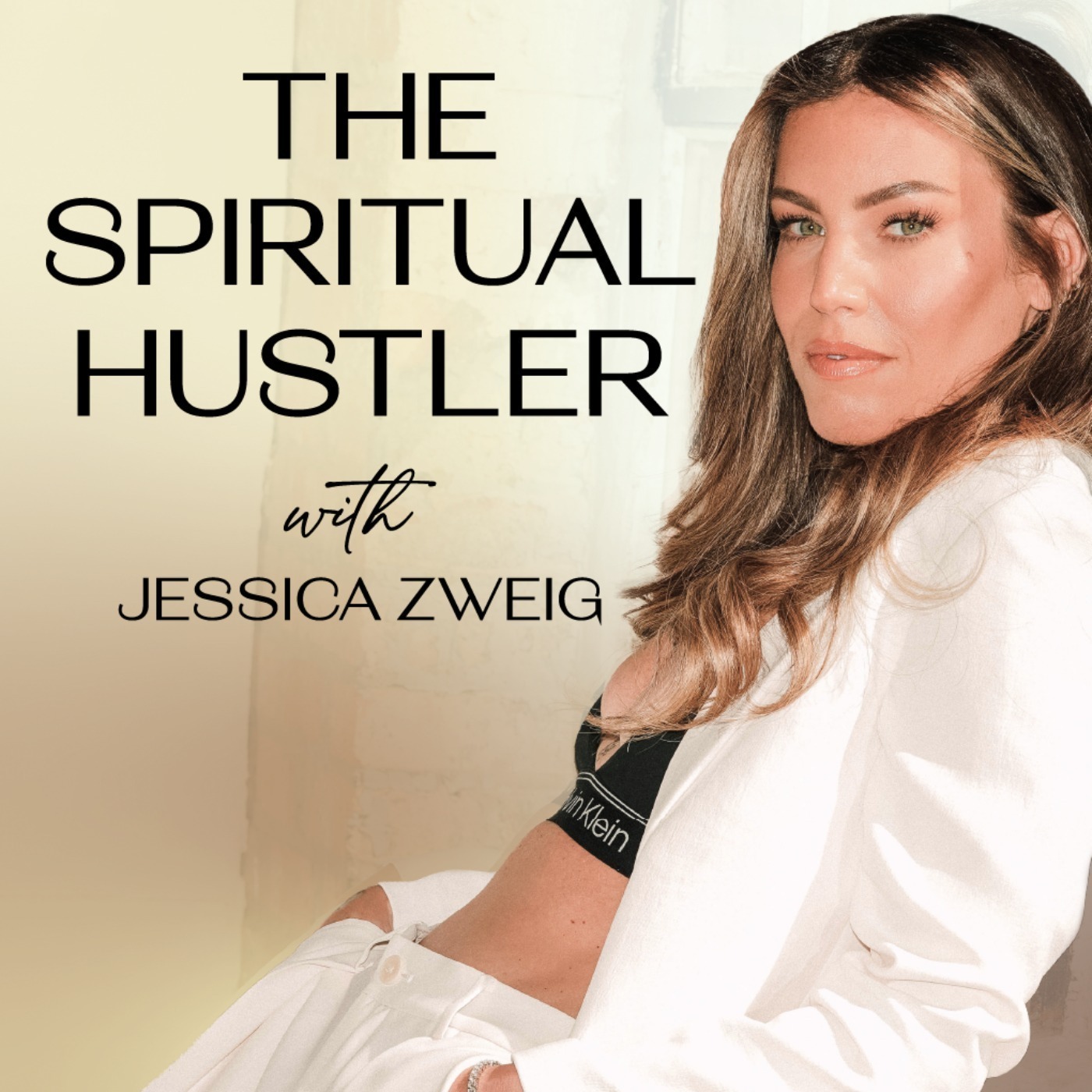
The Spiritual Hustler
Should Online Business Owners, Personal Development Coaches, & Spiritual Teachers Talk About Politics?
00:26:39
Loading summary
Transcript11 lines
- [00:02]
A
Welcome to the Spiritual Hustler podcast.
- [00:04]
B
I'm your host, Jessica Zweig, multi seven figure serial entrepreneur, best selling author and branding and business coach. And this is a show where we are redefining the word hustle, reclaiming our true feminine nature of magnetism and putting down the self judgments and shame around loving to work and making a lot
- [00:25]
A
of money at it.
- [00:26]
B
On this show, you're going to learn
- [00:27]
A
how to stop hustling and start spiritually
- [00:29]
B
hustling by pressing play. You are now, now part of a new movement of women who don't hustle for money. We hustle for meaning. We don't hustle from lack. We hustle for love. We don't hustle from survival. We hustle for humanity's thriving. We hustle toward healing the ancestral programming of fear and step into a new understanding of safety in the body to receive this shift isn't going to only heal your life.
- [00:56]
A
It's going to make you a whole lot richer too. This is the Spiritual Hustler podcast. Well, hello my beautiful spiritual hustlers and welcome back to the podcast. I'm your host, Jess, and as always, so happy to be here with you guys. I have been really, really excited to talk about this. Actually, this topic has been on my heart for so long and a couple weeks ago on the gram, I asked my community on Stories to send in your questions. What do you want me to talk about on this podcast? And I'm gonna do a whole Q and A episode coming up in the next few weeks. But I really, really wanted, when I got this question, I was like, ooh, I'm gonna do a whole episode just about this because it's worth a longer conversation. And I think that if you saw the title to this podcast, you're probably really maybe eager to know what I have to say about it. And, you know, hopefully this shed some light on what I know a lot of people in my space, in the online space who are running businesses, in the personal development, entrepreneurial coaching world, the spiritual world might feel about it too. I don't want to speak for everyone, but I, I will speak for myself. But I know just based on the fact that I have a lot of women who are my friends and peers in this same space feel the same. And before I get into today's conversation, I really want to formally say thank you for being here. I definitely don't take your presence, your time, your engagement with this podcast for granted. It really means the world to me. I have been so clear that this podcast has created a New conversation in the collective of female entrepreneurs who are wanting to build businesses differently. We want to unhook ourselves from the programming. That success has to be hard. And of course, we're going to have days that suck. That's just the 3D human life. But for the most part, I'm here to play a game. Especially in 2026, the year of the Fire Horse. You guys have been around a minute. If you're new, welcome. You've probably heard me talk a lot about the fire horse medicine for this year and what it really means to me and how I'm embracing this energy, which is fun, you guys. It's freedom. It's being gorgeously unbothered by the. That has kept us so stuck and cranky and overwhelmed and stressed out about that just doesn't matter. And that we cannot control. And I just want to invite you to really play with that energy this year. I mean, this is the podcast, like I always say, where we break down all things business, what it means to be a hustler, build a business that makes you real money. Not just enough money, but an overflow of money that there's nothing wrong with wanting to build a business that makes you prosper so that you can create more impact in the world. Because it's not just about wealth, it's about impact. I don't coach a single woman who is just here to make a lot of money and buy Chanel and Louis Vuitton bags. Like, that's not the game that I'm playing and this is not the conversation we're having. But it is to be a boss, to stand in your wealth, your worthiness, your leadership, your vision, so that you can build a business, scale products, programs, offerings, and services, build a team, operationalize your business to scale and really be a true entrepreneur. And we talk about what that takes on this podcast. And then we, of course, always talk about the spiritual, the downloads, the cosmic universal energies, whether it has to do with Chinese astrology or human design or the Akashic records or plant medicine, parasite cleansing, microdosing crystals, feng shui. We talk about all of it here. We should. We should talk about it all in one breath. Because being a female entrepreneur today requires us to be in our hearts, to lead from the heart. And our heart is the most magnetic organ in the human body and literally makes us magnetic when we ooze the vibrations of joy and bliss and pleasure and play and fun and ease. Literally makes us more money when we are in that frequency. But it connects us to our higher selves. Our heart. It is the bridge between the lower chakras, the root, the sacral, the solar plexus. The heart sits in the middle and connects us to the throat, the third eye and the crown. And it is really that bridge that we are here to call down as female bodies on this planet at this time, to work in the 3D with our 5D, our fifth dimensional higher selves that really operate from the new Earth principles of oneness and reciprocity and generosity and abundance where everyone gets to win, including you. That is the conversation that we are having all the time on the Spiritual Hustler podcast. So like I said, if you're new, welcome. If you're not new, welcome back. Amongst all of those topics, if you will, that I just mentioned, you didn't hear the word politics. You didn't hear the word social issues. You didn't hear the words international affairs, Democrats versus Republicans. I just have a lot to say about this today. So I got this question on my Instagram a couple weeks ago. We're going to dive right in. And she asked me, you know, how do you feel about people in the personal development space, in the spiritual space and the business coaching space? And the word she used was bypassing, bypassing political issues on their platform. I've been really disappointed is what she said. And if that was you, and you're listening, I love you and I hear you. And that question meant so much to me that I am dedicating an entire episode to it. And I will just speak for myself. I know I'm not alone in this, but this is my show, so I'm going to just speak from my own experience and really want to ground us, actually, first and foremost in the world of online entrepreneurs who are using social media to grow their businesses. I'm going to say that again. Online entrepreneurs use social media to grow their businesses. And so one post that might offend someone, might get them shadow banned, might cause them to lose a bunch of followers because people don't agree with their beliefs, impacts their family, it impacts their revenue. And I'm not sitting here to say that our livelihoods aren't more important than what's happening in the world. What's happening in the world is awful and it is grave and it is tragic and enraging, actually. But if we as online entrepreneurs that are here running platforms that are devoted to a specific theme topic, industry, switch lanes for even a moment, we do not have the luxury of losing the ability to grow our businesses because of it. I'm just going to be honest about that if is not necessarily about not caring. Because the truth is social media is a micro sell of someone's life. Okay? How someone is showing up, especially if you have a big following, especially if you're using your social media to grow your personal brand, to grow your business, to get clients in the door, grow leads. You have to show up in an incredibly intentional and strategic way today in order to grow. And no one should feel sorry or wrong about that. And on that same exact token, if you will, that same coin. This is what I teach in my school, the feminine frequency business school. This is what I brought to thousands of clients during my Simply Be chapter when I ran a personal branding agency. This is what I wrote about in my first book, be a no bullshit guide to increasing your self worth and net worth by simply being yourself. I wrote the methodology on how to build an authentic personal brand today. And you being intentional and and discretional with your messaging doesn't make you any less authentic. It doesn't. You don't owe the Internet of strangers your whole life in a glass case. You just don't. And if you try to be all the things and share every little thing that you're doing that day, feeling that day, thinking that day, or upset about that day, or passionate, you're just going to become a complete hot mess on the Internet and no one is going to know what you subscribe to and what you stand for. And therefore no one is going to engage with you in a meaningful way and follow you for more. Right? That's the strategy today. That's how you build a personal brand, which is with clarity and consistency. All right sisters, who is ready for their next level in 2026? And what if your next level in your business did not come from pushing harder? I know it's the year of the horse and we're all here for the momentum, but actually sinking deeper with your own body. Now, if you're a female entrepreneur who leads with intuition, creativity and heart, I have no doubt that's you because you're here. Then my obsession, one of my favorite brands on the entire planet, Microflow was made for you. Now, Microflow is the cleanest, highest vibrational magic mushroom micro dosing supplement on the market. It is 100 organically grown so you can trust its frequency. Its third party party lab tested Raiki infused and intentionally formulated by renowned root cause health expert Christy Nal. Now it's also get this, the first cycle syncing micro doing protocol specifically made for the female nervous system. Because we are different women 28 to 30 days out of the month. If you feel me, and how you create, how you lead, and how you build your business changes with your cycle and the moon. So the Exude and Surrender Bundle are my favorite. It's a perfect place to begin. Exude supports the first two weeks of your cycle when you're feeling radiant and expressive and your heart is open. This is ideal for the seasons of visibility and creation and leadership. And then you switch to Surrender, which invites more softness and nourishment and deeper inner connection. And this is where your intuition and clarity get reborn. Now, together, they help you drop way out of your head, back into your body, and into the kind of feminine flow where your best ideas and your boldest decisions come through. Now, if you're ready to go even deeper into ceremony, healing, and higher consciousness, then I'm going to recommend the Theta blend, which is infused with sacred Egyptian blue lotus and opens the doorway to 7D Awareness. You've just got to trust me and try it. Micro doing is not about bypassing, okay? It's about coming home into your body, into your truth, and into your feminine power as a woman in business. And we need Microflow this year more than ever. So explore the full Microflow line@microflow healing.com and use code JESSICA10 for $10 off of your order. That's code JESSICA10 for $10 off of your order. And so the people that you are seeing today that are sticking to their lanes and not stepping out of it, no matter what is going on in the world, they're doing that because it actually does impact their livelihoods, and it doesn't actually get them any further faster to continue to grow their influence and. And make a bigger difference in the long run. I'm gonna break this down and dissect this, using myself as an example, and I'm gonna get specific. So I'm Jewish. And In October of 2023, when October 7th happened, I was extremely. Extremely. There's really no word for it. Upset is an understatement. It shook me to my core. And that topic of what's happening in the Middle east is one of the most divisive topics, as we all know, out there, out of all of them, it's like kryptonite. But I was super hopped up on my own emotions. I was furious. I was heartbroken. I was angry. I felt all of this cellular DNA activated inside of my body from, like, my lineage of ancestral trauma and discrimination and genocide. And I got on Instagram the entire month of October of 2023. Now, this was before I launched my third business. This before I sold my agency. I was actually in the process of Simply be's acquisition at the time. So I, Jessica Zweig, as a business and as a platform and as a brand, wasn't what it is today. And I lost 2,000 followers in a month. Less than a month. Like, two weeks. And I got hateful, hateful DMs. It was so toxic. And I was engaging with, like, so many people I didn't know. And to be totally fucking honest, like, I didn't want those 2,000 people to follow me anyway. At the end of the day, like, okay, fine. But I realized that if I was going to really put myself out there, I had to be careful because again, I don't give a flying fuck about Instagram followers. I really don't care about the vanity metric of it. I just don't. Like 2,000 could be 2,20,000, could be 200. It happens to all of us. We fluctuate. But I realized in that moment that if I was going to stand in the brand that I wanted to create, I couldn't talk about it the way I wanted to because it wasn't healthy for me. It wasn't smart for the future of what I was building. And so what did I do? I didn't post a single thing about the conflict, and instead I picked up books and I educated myself on the conflict. I went back to my religious background and studied more scripture and parts of my faith that gave me peace and comfort and a state of homeostasis within my own identity. I started listening incessantly to podcasts on the topic of Israel and Palestine. I became a sponge instead of being a mouthpiece for. For a topic that, truly, I'm not an expert on. Truly I'm not. I'm. My platform has always been personal branding, personal development, business leadership. I'm not a political pundit. That's not what pays my bills and who writes me my check. I don't work for cnn. I remembered my lane and what I found going offline and filling my own cup and expanding my own mind and doing my own learning and increasing my own education and having conversations offline with people who. From both Palestine and Israel and my Jewish friends and my non Jewish friends. Like, there was so much more richness in those conversations than anything I would have ever posted as a reaction on an Instagram story ever could do. And so I want you listening if you have feelings like, why isn't this person posting? I'm so Disappointed. You really don't know what that person is doing to be engaged in the issue is at hand. You don't know if that person is looking to grow their own capacity to learn more about themselves. You don't know the conversations and the change and the forthright action that they're taking that actually moves the needle way further than anything on social media will actually ever do. And I think we're all quite aware now that, like, social media is just filled with fake news and people are going apeshit over a single meme or headline or single three second clip that's been taken totally out of context. Like, in my view, it's just a lot of wasted energy when we're trying to chip away at this behemoth of a problem using Instagram. It's kind of a zero.
- [17:27]
C
Okay, you guys, you know that I am all about the rituals, the energy, the practices that keep us in touch with the divine and our power, the things that we can add to our life that really, really remind us who we are. And one of my favorite rituals pretty much every morning, true story. Is putting on my Malkari jewelry. Okay? Because honestly, these pieces are not just jewelry. They are activated sacred talismans that honestly help me lead with a consciousness as a confident woman in my business and my life. They are seriously activations, you guys, when you put them on, not only are they gorgeous and Versat and they stack and there's so many options to choose from, they are spiritual activations. And that's really because the founder of Melcari is my best friend and stylist, Tali Kogan, who is a visionary woman in the world of fashion who lives by the belief that you can have anything in life that you want as long as you dress for it. And I am here to preach from the mountaintops that that is true.
- [18:37]
A
And so when I wear her pieces,
- [18:39]
C
I feel freaking unstoppable. Yes, they're edgy and high fashion. They'll take your cutest little outfit or your T shirt and jeans to absolutely new heights. But they're also deeply spiritual. Each necklace, each ring, each bracelet is a code. And like the lion of Malkari roaring through you, it reminds you that you are already the queen of your own business in your life. When you put them on, you're going to feel a difference. And if you're curious, which I know you are, to up your style game and your frequency, check the link in the show notes and use the code Jessica. 15 for 15% off your order. Because it's not often that Accessories feel like medicine. And Melkari is feminine power. You can wear
- [19:30]
A
some game now. I also want to go back to the point I made around livelihood, because you might have heard that and been like, wow, maybe she's more interested in making money than she is in bettering the world. I don't know. I'm not putting thoughts in your head. This is a really honest conversation today, and I wanted to be as honest as possible. Here is the second point I want to really drive home around this. I talked about this at the top of the podcast. I talk about this on every single episode of this podcast. When women who are in their hearts have money, we have power. And when women have both, we have the ability to influence the world for the better. Because that's what women in their hearts do. I work with thousands of female entrepreneurs. They're everything from business coaches and consultants to interior designers to women in the wellness world. Doctors, chiropractors, holistic practitioners. I work with women who are in the spiritual space and plant medicine and reiki and the healing arts. I work with women who are in tech and AI and business softwares. Okay, all of the women that I touch, I consider each and every one of them healers, actually, because they're all working towards a greater vision to make the world a better place with the things that they're creating, full stop. And so my lane, how I decide to show up online to grow my business using social media so that I can create more impact within my community and, yes, more abundance in my own life allows me to go create more impact and more abundance for every woman that I'm touching, because my work is devoted to helping women rise in their worth and their wealth. And if I get distracted, if I post a single thing that distracts that mission, I am doing you guys a disservice. That's my lane. That's how I'm influencing the world. That's how I'm creating a better future for the children of this planet by empowering women to stand in their power and create. Create livelihoods themselves where they have options, where they have overflow, where they have agency and sovereignty to use their time, to have more freedom in their location, in their schedules, with how they show up for their families, for the space. They get to be the creative visionaries, to birth platforms of their own, to serve more people and to create more light and consciousness to their unique masses. Wanting you to reframe, you know, the work of politics and social issues. And I really believe that every single person is passionate about what they're passionate about. And maybe I'm giving the collective too much credit because there's so much fucking vitriol out there, but I really believe that people are as fired up about their side of the aisle, or whatever you want to call it, because they care. They care about something bigger than themselves. I want to hope that that's true. And so if you're looking at people who only stand up and talk about social issues and politics as the ones that are not bypassing, that are facing the issues head on, I'm gonna invite you to rethink that. Because we're all contributing, I believe, to the end goal, which is love and peace and safety and harmony and oneness for a better world where everyone gets to thrive. And that, I think, gets clouded by the matrix, by the 3D polarization of us versus them. And this is the third point I want to make, which is if you're here listening to my podcast, I think you know that us versus them is a fucking illusion. It's a total made up projection built, frankly, by forces at the top that have designed humanity to see each other as other on purpose. So by contributing to the narratives, you're just feeding that agenda. And as a spiritually awake, conscious, lightworker woman that you are, that I am, we tap out. We have tapped out of the craziness because it just perpetuates more of that separation. You know, a couple weeks ago, I was in the middle of launch for the Feminine Frequency Business School and the Jeffrey Epstein files were dropped and released. And when that happened, I was first of all enraged. So enraged, like my blood was boiling. And I mean, it's something about that whole thing, like, just hit me to the depths of my feminine identity. I'm getting emotional just like thinking about it. And I was also mind blown, like, third eye blown open, crown chakra blown open. Like, every cell in my body just tingling knowing that that timing of the Epstein files dropping in the final few days of the Year of the Snake, before the Year of the Horse was about to commence, which I believe this is the year for female leadership. The Fire Horse energy is all about female entrepreneurs and female leaders. I've been saying this now for months. And when this dropped, the timing, the cosmic universal alignment of it affirmed everything that I was believing and feeling and burning in my body on top of my rage that all of these famous men were being exposed for abusing, disempowering, and violating the feminine. I did a reel. I recorded a talking head. I was actually driving in my car. I was so pissed off. And I pulled over to the side of the road like a crazy person, and I got out my phone and my dashboard and I just went off about it. And I was like, what the year of the Fire horse has to do with the Jeffrey Epstein files? Like, that was the whole reel. And I recorded it, I edited it. It was so fucking hot. I knew that if I posted it, it would go viral or do really well, whatever. And I was in the middle of my launch. And transparently, I spend a lot of money on ads on meta. Like, I have a very friendly relationship with meta. I have to in order to have my ads scale. And I'm spending a lot of money on these launches. And I paused before publishing it. It was literally in my app with the caption and everything. I was about to hit publish. And I reached out to my ads girl. I reached out to my digital marketing partner just because 99.9% of me was about to post this. But there was that.01% of me that was like, ooh, I don't know if I should. I think this is going to piss a lot of people off and it's going to cause some attention to my account that I might not want, slash, need, or will it impact my favorability in the meta algorithm. My ads girl is the expert on all of this. And I checked myself before I wrecked myself, and I texted her and I said. And I sent her the video. I was like, can I post this today? And she said, you can do whatever you want, but this is a risk. And I don't know if I would do this during launch. And I was mad. It's like, God damn it, this video was so fucking good. And I can't post it anymore because it's not relevant at all. Because it was the final few days of the Snake. And over the course of those next few days, I channeled all of that anger in conversations with my friends who are passionate about the topic, too. And it was so much more productive than posting something on Instagram. I listened to a handful of podcasts about the topic. My good friend Jenna Kutcher sent me a substack that she wrote about it, and I read it, like, three times. And it really made me feel so seen and so not alone in in my fury. And I give women like that so much credit. And maybe there will be seasons of my career and my message and my platform where I do speak out and stand up for what's happening inside of my heart. But I have just learned for me that there are more productive ways for me to cope, for me to tackle issues, for me to expand my capacity to understand what's happening in the world, for me to honestly soothe myself and have meaningful conversations with real people off of social media that are so much more beneficial to the woman that I get to show up as and communicate and serve for all of you. I just hope that this episode today opened up the aperture a little bit as to why certain people choose to post and choose not to post in certain seasons for certain reasons, and that none of us should feel bad if we do contribute to what's happening online about politics, and we shouldn't feel bad if we don't. Everyone has sovereignty. Every one of us has a choice. And instead of judging people for the choices that they make, and this comes down to even seeing people do post things that you disagree with. I think we all need to have a lot more grace. And I also think that we have to have a lot more consciousness. You know, the last thing I will share is, you know, my husband and I both love music, right? And we follow a lot of artists. I'm sure you do. On Instagram. We follow their accounts because we're super fans, right? And in the last few years, some of the artists that we love are posting issues and are making choices and sharing content that we don't agree with. And it's kind of heartbreaking. Like, it makes us look at their music a little differently. Okay, just gonna be real, real today. And we don't want to go to their concert. We don't want to buy their next album. Not that we buy their next album, but we'll listen to it on Spotify with a little tinge of reservation and a small sour taste in our mouth. Those are really famous people who have so little to lose because they're multi millionaires with millions of fans across the world. And if they post something on Instagram that pisses off 25,000 people, it's not going to make a dent in their livelihood. But most of us aren't famous artists. Most of us are just trying to feed our families. Most of us are just trying to get through the day and pay our bills and grow our businesses week to week, quarter by quarter, year over year. And if we choose to not engage with activating, triggering, polarizing content, or, excuse me, be creators of that kind of content, that's okay. It's actually more than okay. It contributes to not just their own personal lives for the better in a direct and indirect way, but it actually gives them more space to do the work that they're really here to do, which is to uplift consciousness and to create more impact and inspiration and education with the gifts that they have been given. And when you distract yourself from that and you lose the plot of why you're really doing what you are doing, unless you're trying to go be a broadcast journalist on CNN or Fox News. And I don't think that's here. We've got to remember that everyone is playing their part. And just because the way that said person that you have assumptions and expectations and judgments around aren't playing their part according to how you feel they should is less of a reflection of them and more of a reflection of you. So I invite us all to stand in what we believe and that's a multi dimensional statement, while also letting others do the same. I love you all so much. I want to thank you for listening to this one today. I had a lot to say about it and I hope that it was helpful and I hope that you feel even more clear on how you show up as a creator and a consumer. Have a beautiful, beautiful week and I will see you on the next episode of the Spiritual Hustler podcast. Bye, guys.