← The Spiritual Life with Fr. James Martin, S.J.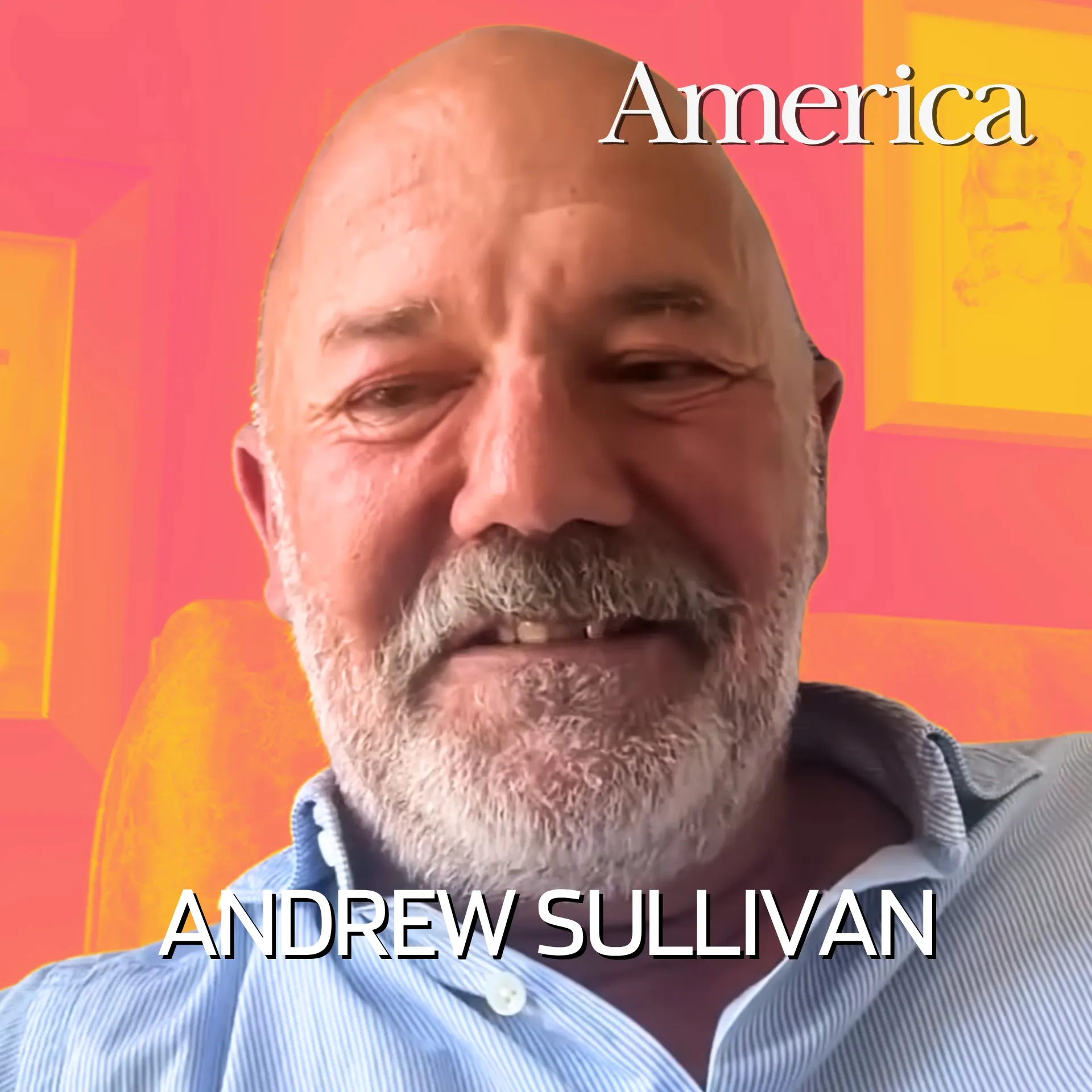
The Spiritual Life with Fr. James Martin, S.J.
How Andrew Sullivan experienced God amidst fear and agony
00:54:33
Loading summary
Transcript68 lines
- [00:01]
A
Santa Clara University's new Cunningham Showquist center for Applied AI and Human Potential asks a simple question. How can we develop real world AI applications that put people first? The answers could make a world of difference. To learn more, visit SCU Eduai Center. When you enter into a world of mortality, suddenly everything becomes more real. When you think you could die any minute, suddenly you are alive to living. And so I could see more clearly all the signs that God was sending that I had previously been too busy to notice.
- [00:50]
B
Welcome to the Spiritual Life. I'm Fr. Jim Martin. On this podcast we reflect on how people experience God in their prayer and, and in their daily lives. And I am joined by my wonderful producer, Maggie Van Dorn. I always come up with a new adjective, but wonderful seems to fit. So, Maggie, good to be with you.
- [01:07]
C
Thank you, Jim. I do try to channel wonder.
- [01:10]
B
That's great. Full of wonder.
- [01:13]
C
It's good for the spiritual life.
- [01:14]
B
That's right.
- [01:15]
C
So, Jim, who are we speaking with on this episode?
- [01:19]
B
We are speaking with Andrew Sullivan, who I've long wanted to have on this podcast. Can you tell us a little bit about Andrew Sullivan's background?
- [01:27]
C
Absolutely. So Andrew Sullivan is a political commentator and essayist known for his influential writing on politics, culture and religion. And he's the author of several books including Virtually An Argument About Homosexuality, Love Undetectable Notes on Friendship, Sex and Survival, and the Conservative How We Lost it, how to Get It Back. Andrew previously served as editor of the New Republic and has written for publications including the Atlantic, New York Magazine and the New York. He's a pioneer of political blogging and founded the Daily Dish, one of the earliest and most widely read political blogs. And today, Andrew writes the independent newsletter the Weekly Dish, where he continues to offer wide ranging commentary on democracy, conservatism, faith and public life. So, Jim, how did you first become acquainted with Andrew's writing and what impact did it make on you?
- [02:28]
B
Well, Andrew Sullivan and also was a very big deal, particularly because he was named editor in chief of the New Republic at a very young age. And I'll have to admit I was kind of jealous when I saw, oh my God, who is this guy? He is a great writer. And so of course I followed his stuff. And then when he came out with his book Virtually Normal, which as far as I know is the first book sort of taken seriously to really advance the idea of same sex marriage, you know, it really came out a long time ago. He, he has been such a strong voice in the Catholic community, the gay community, even the political community. Of course. And then in 1993, he did an interview, which we talk about a little bit. I lead the interview off with this question to him. He did an interview with Tom Stahl, who has since died, a Jesuit priest who was then executive editor of America. And it was called I'm Here. I was on the front cover of America interview with Andrew Sullivan about being a Catholic and a gay man. And this is, again, 1993, you know, so it really made a big impact on me. I read that, and I just thought, wow, who is this guy?
- [03:39]
C
And just over 30 years ago.
- [03:40]
B
Yeah. And, you know, a real window into his life of faith. Right. Because it was primarily about being Catholic. And so that really sort of cemented my interest in him. And I was very. I am very happy that he really goes quite deep into his spiritual life in our conversation here.
- [03:57]
C
Yeah. So our spiritual question or audience question this week comes from Joyce. And we thought this would be a fitting question for Andrew as he deals with this very tension. And it is. How do I reconcile differences between my personal experience of faith and the church?
- [04:18]
B
Yeah. And a perfect question to ask him because he really has wrestled with that. So thank you, Joyce.
- [04:24]
C
And if you would like to ask Father Jim a question, you can write to us at the spiritual life@americanmedia.org and
- [04:31]
B
now onto our conversation with Andrew Sullivan. So, Andrew Sullivan, welcome to the Spiritual Life.
- [04:44]
A
Thank you, Jim, for having me.
- [04:45]
B
Wonderful to have you. Andrew, as you know, I've been an admirer of yours for a long time. First as a reader of the New Republic, where you were editor, and even more so after I read the interview you did with America magazine way back in 1993 with our editor, Tom Stahl, whom, as you probably know, died a few years ago. The COVID said, I'm here an interview with Andrew Sullivan. And it focused mainly on your being an openly gay Catholic. Excuse me, an openly gay man and a Catholic. It was a big deal for a Catholic magazine to feature that on the COVID So I thought I'd start with a quote from that wonderful interview. And here's the quote from. I'm not angry at the church because I do not believe the church is an evil institution. I do not believe it wants to hate gay people. I think the church just cannot cope. It's like a family that cannot talk about this, even though its own son or daughter is gay. So I'm just curious if you feel the same way today or if you feel the church has changed since 1993.
- [05:46]
A
I think we're in a whole new World. I do think the conversation began and it continued, and against quite severe odds, the church, the people of the church, rose to the occasion in a way that I think the American people rose to the occasion. It's very hard to explain today what it was like in 1990, say, or 1992. We were heading into a holocaust. From 92 to 96 was by far the biggest wave of death that we were dealing with as people in the AIDS epidemic. The church was pretty silent about it. I had a couple of really traumatizing experiences with the church over that. But the conversation started with aids. It started because so many gay men who had been hidden, invisible couldn't be hidden anymore because they were dying and they were stricken and they were in desperate need. And the question was simply not whether we can bother to talk about it, but how do we talk about it, and what are we going to say and how do we deal with this, and how can we channel the gospel in discerning, to use a very Jesuitical term, discerning the time? And I'm amazed, Jim, to be honest with you, because when I was starting those things, I was very naive. I mean, I was. I was barely 30 years old. I was very young, and I hadn't been a gay activist. I mean, I had just been a writer, and I had not even been that much of a gay writer. But I wasn't going to lie about it. And for the first time, not lying about it meant that you were making this huge statement. And so I was kind of forced to explain who I was. And that was a remarkable experience for me over the next maybe 10 years of dialogue, of debate, of conversation with the church. Often, I mean, in that period, I went to places like Notre Dame. I went to Boston College and gave talks on the question of homosexuality, which was the first time it had ever happened in Notre Dame, the first time it had ever happened at Boston College. And it was me. I mean, I was kind of a little. Just little taken aback by that. But the moment the conversation began, the church, in my view, rose to the occasion there. Then, of course, in the 2000s, another conversation broke out with the sex abuse crisis, which also revealed, I think, the need to have a conversation about this topic and its various ramifications and permutations.
- [09:12]
B
Yeah, I'm curious what you think changed, because you could say it was either or maybe both, people's sympathy awakened sympathy or compassion for gay men who were dying or that more and more people were coming out and therefore it was changing. Families and parishes and dioceses do you think it was a combination of those two things or.
- [09:33]
A
Yes. Look, we know what to do when we see a sick person. As Catholics, we don't ask, is this person gay, straight, black, white, male, female? The question is, is this person suffering, and how can we help that person? And, you know, I think of Father Michael Judge, who in the 80s, was walking into St. Vincent's Hospital. In those days, people were dying in truly horrifying ways, rejected. No one saw them. He would go in his robes, and sometimes the men were so angry and terrified and lonely that they would tell him, get the hell out of my room. Saw one vision of the church and felt these people hate me. But even when they did that, he waited, and I spoke to him about this. He waited until they passed out or fell asleep, then he went to the bottom of the bed and he massaged their feet. That's what we're supposed to do, right? That is in a metaphor. That is what we're supposed to do. Not judge, but be there and silently love someone. And, of course, Michael then, out of the same force of love, ran into the World Trade center to help those who were suffering in 9, 11, and was killed and carried out in that amazing photograph. Like the Pieta.
- [11:11]
B
Yeah. The first official victim.
- [11:13]
A
Yeah.
- [11:14]
B
Yeah.
- [11:14]
A
That's the church to me. And I knew the church was there, even though I could see in the hierarchy and in other places, fear. Mainly fear, which led them to do and say really awful things.
- [11:31]
B
Yeah. If I could ask you a question. I didn't plan to ask you this, but I was a delegate at the synod for the last couple of years, and I participated in those conversations, especially in the Vatican, in October 2023 and October 2024. And along with other people, I talked about LGBTQ issues on. In the plenary sessions and to these delegates. And one of the. So the pushbacks that I got was basically, this is an ideology. It's unnatural. It's all made up, blah, blah, blah, from bishops from sub Saharan Africa and Eastern Europe. And you're talking about the church changing, certainly in the United States. What do you think helps people in the church, church leaders who have that approach, that it is an ideology and that it is unnatural. What do you think helps them to open their eyes a bit? Is it experiences with LGBTQ people? Is it theologizing? Is it biology? What do you think helps?
- [12:34]
A
I think that what's happened to the gay rights movement, it has become a rigid ideological construct that has lost the core moral quality of its founding and of the arguments that we need to make and is now, in my view, counterproductive. So I would go back and talk about human beings, which is how the church sees us. Just human beings try to live our lives as well as we can in the eyes of God. And that just requires accepting us as truth tellers. We're not lying about who we are. We are oriented towards the same sex. There's no real understanding fully of how or why, but that we exist is real, and that the most important thing that Francis did was just be with us, to remove the stigma, to show that these are human beings too, and that we also, as gay people, have a wide variety of personalities, experiences, lives, and we need to be taken as individuals and as individuals need to be brought into the arms of God. And now, that may mean a lot of different questions about how we live our lives, but that's the case for everyone, straight or gay. The question of the gender ideology stuff, which is an entirely separate question, has, I think, been terribly damaging. But at the same time, I also think it's quite clear that for a small, tiny percentage of people, living as presenting as the opposite sex is the only way that they can live with any kind of peace or sense of calm or identity. And therefore, they're not harming anyone that we should, as Francis did, invite them, be with them, talk with them. That's all we need to do. And so much of the LGBTQIA ideology is actually harming that, and I think confusing people as to what we're really trying to argue, undoing a lot of what we try to do, which is talk to Catholics and say, look, you know me, I'm your son. You know him, he's your uncle. We know us. We're your family now. Just treat us like another member of the family. And they have my own parish, for example. I see so much life in it now. I see the gay and lesbian people in there, not there as gay and lesbian people, there as Catholics, contributing, praying, receiving the sacraments, doing our best, which is often never good enough to try and live as best we can. And that's all we want and all we need.
- [15:53]
B
You mentioned Pope Francis and I had a couple chances to speak with him about this, about this, these topics. What do you think enabled an elderly Argentine Jesuit former provincial to be able to do this, in your estimation, to be able to welcome people like this?
- [16:14]
A
I think the key to Francis is a painting, actually. It's of Our lady, and she is untying knots. She's not resolving the problem. She's the way you untie knots, you just loosen them. He was the untie of knots. And the knot was part theology, part ideology, part fear, part woundedness that needed to be unpicked, to be opened a little bit, to breathe so that we could say words and talk to each other. And this is his great achievement. Dispelling fear. Fear of the gay, fear of the trans person, fear of the lesbian person, which was the primary and predominant feeling that most people in the west until very recently towards gay people and transgender people. And there is nothing more like Jesus than dispelling fear. It is the prerequisite for loving someone. And so I do feel. I never felt not at home in the church because it really was my home. I mean, I really grew up in it and loved it and can't conceive of a life without it being integral to me. And so I hung in there, even though there were moments when it was pretty cruel, actually, because that's what we were asked. That's what Jesus was telling us to do. We're not. Don't get angry at these people. They're just broken like us. There was a moment back in. Was it 93, I think, when the quilt came to Washington D.C. which is astonishing thing, which is this vast testament to lives lost in the AIDS epidemic laid out on the Mall in this rather amazing way. And it. And when you went on to. Was like a sacred space because people intuitively went quiet with a sense of the gravity of it. And it just so happened I went there on a Sunday afternoon. I always go to the Sunday 5:30, the hangover mass, as we call it. And lo and behold, that day the sermon was on the parable of the healing of the ten sinners. And only the Samaritan comes back to thank Jesus. And then the sermon began. And the sermon began by the priest saying, it's very hard for us to understand a disease like leprosy in the 20th century. We just don't have that. So maybe we should think of something, something like cancer. And I started to physically shake with anger that here we are. And I looked around me, I looked at the altar itself, and I saw someone serving at the altar who was HV positive. That's how close it was. So being me, after the sermon, after the Mass, I come up to the priest and I said rather sarcastically, and I'm not that proud of the way I said it, have you heard of aids, Father? It's in the newspapers. And he said, well, that wouldn't affect anyone here, would it? Wow. And then it took me a few Months to go back, because the level of denial and the abdication of moral responsibility was so stark. Not of all Catholics, don't get me wrong. That man on the altar was a buddy with me in a group that we went out and we took care of people dying because we thought it was our Catholic duty to go and help people in that situation. So, yes, of course we were hurt. But anger is not something you should feel at Mass. And rage is something that will not lead to anything but increased embitterment. And I could see so many people struggling with death. You know, these incredibly difficult. In their 20s and 30s. Of all the situations to need the Church, that was it. And for me, it saved me. The sacraments, the church, my prayer life, my faith, how God was closer to me in those years than he's ever been since. But I really do see it as a beautiful story that through all that pain, and I do think it's important to remember that pain. It's the catalyst for everything. The better angels of our nature won out.
- [21:54]
B
Let me ask you two questions more about your spiritual life. The first question is, you said you couldn't go back to that parish for a couple of months. What enabled you to go back?
- [22:08]
A
I needed to be there. I was alone. I was frightened. I thought I was dying. I was diagnosed. I was nursing my best friend to death. At 31 years old, I needed the church more than I'd ever needed the church. So I went. There's a side chapel for St. Francis. And I went back into the side chapel. I was there, but not there. I went to communion and
- [22:50]
B
I prayed.
- [22:51]
A
And by prayer, I knows you. I'm talking then. I mean, my spiritual life isn't. Was never as. Never as electrified and as vivid and as full of supernatural stuff, too, that I experienced, by which I mean things I can't explain. A sense of our Lord coming to me, a sense of our Lord's voice in my head. A sudden obsession with a particular passage in the Gospels that I opened at random. When you enter into a world of mortality, suddenly everything becomes more real. When you think you could die any minute, suddenly you are alive to living. And so I could see more clearly all the signs that God was sending that I had previously been too busy to notice. And also the process of being broken down in one day. I was told, you're probably going to die in the next couple of years and we're going to deport you from America because you're not allowed to stay here. If you have hiv, your career is over. My Mother had been hospitalized in a mental hospital again. So I had. My mother's had a long history of mental illness. My best friend was dying. I mean, God took everything away from me as a way of giving me everything back. I was 29 years old. I was big shot, lots of press. I was a Gap ad. I had all these interviews. I was like, I didn't ask for it, but that's what it was. And suddenly God was like, andrew, Andrew, we are all caught up in all this stuff. Let's, let's. Let's take he. Let's grab you by the scruff of the neck, then rob you of everything and start over. That's a test, and I don't think I passed it, but I think God passed it for me. I think he picked me up and let me carry on that way.
- [25:11]
B
Yeah, I don't think any of us ever pass the test fully.
- [25:15]
A
Right.
- [25:15]
B
I mean, unless we're saints or Mary. Let me ask you, though, I'm very curious. You talked about supernatural things that happened to you, feeling God's presence and God's voice. Can you talk about maybe one of those experiences, what that was like for you and what happened?
- [25:31]
A
Well, one was actually Mass, and it's very hard to explain it really, but it was the consecration. I was praying, and suddenly on the altar was for me all I can say was an intensification of everything, really everything. And I was transfixed for several minutes in a way that I had never been before. And I didn't know what to make of it, except something was reaching to me or. I've always been obsessed with the Mary and Martha story in the Gospels. It's such a wonderful little story. I'm especially obsessed with the way Jesus responded to Martha, which is just like one of the wonderful things in the Gospels. He goes, martha, Martha. He repeats her name twice. It's this lovely domestic scene where she is all uptight and Mary is doing the right and Martha, whom one sympathizes with because, you know. And then over the next month, as I told a few people what was going on with me, I heard them say, andrew, Andrew. It's a love and sadness all wrapped up into one big thing. It's forgiveness and criticism and loving criticism, but also forgiveness. And I needed to hear that. And I heard it in my mind, and then I heard it through the voices of others. And they kept repeating the name. And I was like, is this God trying to tell me something? And I think he was, you're not alone. I do love you. Even Though you refuse to believe it. And there was actually a very particular moment of crisis, which is my 30th birthday, when I. I had to call my mom. And she was in an unbelievable state, a mental hospital. And I was also really shell shocked from my own diagnosis. And I was. I was in prom. I went to the beach, and I was walking to the beach just with all this stuff in my head. And halfway there, I just literally fell to my knees and just felt something I've never felt before, which is not that God did not exist, though I was struggling with that, given so much horrible stuff had happened to so many good, innocent people around me. But it occurred to me for 15 minutes I knelt there in the sand that God was evil, that that's the real alternative. And that was a dark night. I mean, it was a dark 15 minutes or thereabouts. And all I can tell you, Jim, is that I got up after that and walked to the beach, and I did not get up of my own accord. I promise you that. I was picked up and told, no, not evil, Good, live. Got things to do. So what I'm saying is that in all of this agony, God was working, and I think he was working in the church as well. And I think we have seen the fruits of it. And I think the fruits of it came from a lot of people, a lot of families, a lot of individuals just making themselves vulnerable to one another and telling the truth and seeking. Well, Francis, just seeking the way of the Lord, you know, and why would he say that's not acceptable for you? Of course he will.
- [29:49]
B
Thank you for sharing all that. The Martha and Mary Gospel passage is very important to me, too. My mom died a couple weeks ago, and I used that for her funeral homily.
- [29:58]
A
Oh, dude, I'm so sor.
- [30:00]
B
Yeah, no, thank you. But one of the most. I think one of the great things about that passage for me is that she speaks to him very bluntly. You know, tell her to help me. And I remember. I mean, who talks to Jesus like that? And I remember years ago, I was on a retreat and a Jesuit said, we only talk that way to people we love, Right? Tell her to help me. I mean, no one talks to Jesus like that in the Gospels except maybe the disciples when they say, don't you care? You know, we're. We're perishing on the boat.
- [30:34]
A
Well, the other time someone talks to Jesus like that is Mary again, right?
- [30:38]
B
Now, if you had been here, my
- [30:40]
A
brother is dead because you didn't show up.
- [30:43]
B
That's right.
- [30:44]
A
Incredible thing to accuse someone of.
- [30:46]
B
Yes, no, I know. But one of the things that someone said, Andrew, which I found really powerful after the funeral homily on Martha, which was basically about my mom's being just honest, is that Jesus's use of the double name Martha, Martha is he has to get her attention, which I love. It's not kind of comforting, but she's so wrapped up in her tasks, he has to say it twice. Exactly. Like, pay attention.
- [31:21]
A
It's so human.
- [31:22]
B
Oh, it's very human. And you know, those two women, the, the personalities just shine right through.
- [31:28]
A
They do. I mean, one of the reasons I, I, I'm believer in the gospels, it's precisely because in those gospels it's so bloody human. There are so many personalities that should not be in a tract making the case for something. It's just humans interacting in this astonishing way. And Mary, Martha, just fantastic characters.
- [31:53]
B
We're going to pause for a short break, but we will be right back. Ryan Reynolds here from Mint Mobile. I don't know if you knew this, but anyone can get the same Premium Wireless for $15 a month plan that I've been enjoying. It's not just for celebrities. So do like I did and have one of your assistant's assistants switch you to Mint Mobile today. I'm told it's super easy to do@mintmobile.com
- [32:18]
C
Switch upfront payment of $45 for three equivalent to $15 per month required intro rate first three months only, then full price plan options available, taxes and fees extra. See full terms@mintmobile.com.
- [32:37]
B
You know, Andrew, I want to take you back a little bit. You know, you had this strong faith. You said the church is your family. You said that you needed the church during, during your own struggles. Where did that all come from? Were you raised by a very religious family?
- [32:53]
A
Yes, I was. It's my mother and my grandmother. As always, it's the women. My father didn't go to church at all. My father was agnostic at best. An Englishman now. Gardening, rugby, cricket, the weather and getting on with it. My mother and my grandmother particularly. My grandmother was Irish. She was the seventh of 13 kids in Tralee. Ran away from home, went to London and became the cleaning lady for priests. This was Catholic. This was super Catholic. And I loved, was a huge from the beginning, I became rather enamored of the church and its beauty and its difference and the rituals and the weirdness. I became an altar boy and my mother and I just lost her too.
- [33:58]
B
I'm sorry.
- [34:00]
A
Yeah. My mother, Mary we had her funeral on August 15th. I mean, she was. Unfortunately, she suffered terribly from mental illness. I first lost her to a hospital when I was 4. She had bipolar and borderline personality. And it was. I'm not. I won't go into all of. All my childhood and adolescence. But she was in and out of hospitals a lot. And also, for reasons she couldn't help really quite emotionally, I learned as I grew older, abusive and hard to deal with. But I loved her more than anyone, and she loved me, and that's all that really mattered. And she gave me the church. And weirdly, as she became unstable, as my parents marriage turned into this horribly toxic and frightening situation for kids, the church also became a refuge. It was quiet, it was orderly, it was somewhere I could go. And similarly, the Catholicism I was brought up in was full of infatuation with the natural world, with the trees and the woodlands and the wildlife that I lived. I grew up in a rural town, and I spent all my summers out in the woodlands and ponds and fields. Everything was just sort of sacramental, the countryside. And so that too was also for me a place of spirituality. Nature. For me, that is always where I go to be. If not church, then I try and find quiet places in nature. I'm writing a memoir of my faith life. I'm trying to, but it's the hardest thing I've ever tried to do, and I keep failing. But I have in my head title chapters for each decade of my life in terms of faith. And the first decade is enchantment, this amazing introduction to enchantment of the world. Just the miracle of the world and the goodness of it. And while you look to nature for what's good and true, then I kind of went into a certainty mode. I was rigid, doctrinal, intellectual. I mastered it all. I could give you the ins and outs of transubstantiation of every single thing I had mastered by the age of 15, in my 20s, when I actually, for the first time, I came to America and I started living really, that was more life, that was more just me confronting the interaction of life, adult life, the choices you have to make with the faith I had been given in the next 10 years. Death, grappling with everyone you love and know, dying in their 20s and 30s, then doubt, because the sex abuse crisis happened. And suddenly everything I respected about the institution seemed extraordinarily debased and had to start over. And so then I. The period of, I don't know, pain and doubt distancing to some extent. But then Grace, as you get older, you can forgive everything. And you, if you allow yourself.
- [38:05]
B
Andrew, you're so articulate about your faith. I'm kind of curious. Why is this a hard book to write?
- [38:12]
A
That's a very good question. Because I don't feel worthy of writing about it. I think it's this kind of topic that I feel given. Given what has already been written. Who the hell am I to add to this? That's one thought I have. Secondly, it's just been. I think it was very hard until both my parents had died, because I think to talk about my mom and my grandmother and my faith in the first 10 to 20 years of my life requires me talking about my family in a way that is. Reveals stuff that's very tough. And I didn't feel I could lie about that. But I also knew that my mother would not want that to be around when she was alive. And I never wanted to hurt my parents because I love them. And the other thing is simply, it's hard to write about faith, Jim. It's just very hard. It's much harder than anything else that I've tried to write about. Part of me, I feel like when I start to write, I feel like I'm running a horse, running up to a fence, and I bridle. I just can't quite do it. I have to go back again, try again, and I haven't quite found the voice yet. I want to write something that just simply explains how somebody very modern, which I am, whether I like it or not, finds Christianity and Jesus himself incredibly compelling for our particular moment in history. And we need it because many of the core principles of a liberal democracy are really, whether we, like, not rooted in the Christian understanding of the core dignity of the individual and the need to prevent the abuse of power. And if we lose those core moral principles, it's hard for us to sustain the political practices. Which is why we're in this extraordinary situation right now where we have the President of the United States lambasting Christian values every day of the week, every hour of the day. And that's dangerous. I think when you have people justifying the murder of civilians as God's will, you just have to say no. The values that are being. Being promulgated from this White House are despicable. And I am so grateful that we have a boat capable of saying that. And it's so wonderful that he's an American as well.
- [40:58]
B
Well, I said after his election that they can no longer use the excuse that the Pope doesn't Understand the United States.
- [41:04]
A
Well, yes, of course he understands the United States because he's also been away from the United States.
- [41:11]
B
Yes. No, I agree. And, you know, it's funny. I knew him a little bit before his election from the synod. And one of the surprises for me was at the synod, he was. I was at his table for two weeks, and he was the quietest person in the table. All the cardinals and archbishops and bishops and whatnot. I'll tell you a funny story as an aside. After the conclave, I was helping out some TV stations, and I came back to the Jesuit Curia, and I was so moved and overwhelmed, and I just exclaimed to all these Jesuits, I said, I can't believe that he was at my table, the Pope. And they said, no, you were at his table, Jim. So let me ask you a question, though. How do you stay rooted in this moment spiritually?
- [41:57]
A
Nature, meditation, prayer, quiet. There is literal noise everywhere, but there is also allegorical noise everywhere in our. In our phones. I'm in the middle of it. It's a monster. And I do think that technology is a huge burden for us at Christians right now because it is irresistible. It's amazing in so many ways. I mean, I have. I'm able to write and send it out to 200,000 people a week. I have no editor. They pay me directly. It's the most astonishing writing environment writers have ever had, but it crowds everything out. I mean, one of the best things I did was. Now, 10 years ago, I went on a. A Buddhist retreat. Well, but not quite Buddhist. It was. It's. It's a non. It's a. It's the parsley meditation, which is rooted in Buddhism, but it's not theologically Buddhist as such. Called the Insight Meditation Society. And I went for ten days of silence. Ten days and nights. And it was a really grueling and helpful experience because after about five days, I broke down. Why did I break down? You go in this lovely, quiet place. Well, the truth is that when you go there, the first thing you do is you give up your phone. And then basically what happens is you've given up distractions. And it takes about five days of no distractions for you to arrive at what you were distracting yourself from the real. And it was my mom and the pain she went through when I was a child and how I felt it so deeply. Then my grandmother came to me. That's all I can say. She came to me. Her spirit came to me. It's all going to be okay, Andrew. Your mother is Going to be all right. My grandmother used to sing this hymn all the time. And I heard it in my head, the melody of it. And we played it at my mother's funeral as the processional hymn. And it's Lord, for Tomorrow and its needs. I do not pray. Just keep me, Love me, Guide me, Lord, just for today. And that's what my grandmother came to tell me. And she lived that way. She was the most carefree. She was talking to the saints. She lived in this world of the past, of the enchanted past. And she came to tell me, it's all right, Andrew. It's okay. And then I caught up and carried on. And it was then the next five days were bearable. But it's interesting, I think, as an exercise, to ask yourself, when I scroll, when I'm doing all these things, what am I running from? We're all running from something that we may not fully realize. And sometimes it requires you to be stopped and to have no distraction.
- [45:40]
B
This is a good place for us to end. I would love to just continue. We have an audience question, Andrew, and I'm going to read it. It's from Joyce. I'll answer it, and then I'll give you the opportunity to answer it. So Joyce asks us, how do I reconcile differences between my personal experience of faith and the Church? Which is, of course, a lot of what we've been talking about today. So, Joyce, I would say one of the things to remember is that the Church is a human institution, divinely instituted, but that the Church did not, you know, die on the cross and rise from the dead. So we have to distinguish between the Church, a human institution, and Jesus Christ and God. And to really reverence the experiences that you have in your own life of God's presence, which are really holy. And to understand that when you enter into the Church, you're entering into a community where people have had experiences like yours, but perhaps not exactly like yours. They are more or less imperfect. And to understand that as you enter that space, you're entering a space that is both human and holy, and it's okay for those two things to happen. I always think of Thomas Merton's line about religious life, which is the first and most elemental test of anyone's vocation, is the recognition that life in community means life with people who are more or less imperfect. That's kind of a paraphrase, and I think that's part of the Church. So, Andrew, how would you answer Joyce's question? How do I reconcile differences between my personal experience of faith and the church.
- [47:16]
A
Well, I sort of want to know what she's referring to because I want to get specific on that one. But I think it's an interaction because sometimes what you really want to do or what you really want to feel is really not what God is telling you, it's what you want. And sometimes the church is very helpful and useful guy to say, aha, no, or to make you double check, am I really, really doing this for the right reasons, Mike? So I think of it as a constant dialogue, in a way. Constant, but with great respect for the authority of the church. And I know that sounds quite conservative for me, but I Look, it's 2,000 years. They have thought about a lot of things for 2,000 years. There's a reason I wrote a little piece about just war, about this current Iran war. And I'm like, look, one of the great things about being Catholic is we don't have to. We could. We already have a set of questions we could ask. We know what these are. We can go there and look at. And we might be have biases, but it's a way to get out of our biases and look at it from an eternal viewpoint. And at the same time, for example, when I had to ask myself as a kid, as an adolescent, am I a bad person for having a huge crush on my friend at school who's a boy? And no, it's obviously not. And I have to say that the priests that I have actually encountered in my journey on that have been both principled and empathetic. And look, there are some contradictions that come with life. And if you want to live a life without contradiction, you're really seeking to die. It's part of where we are, and you live with it. Imperfection is. I like the word brokenness because I think we're broken. There are periods when the church is broken. You can see it. You have to read history. But then my mom and grandma come in. They say, but Jesus our Lord, will never, never abandon his church. So it may have some bad times, but you got to hang in there. Because in the end, our Lord is watching out and it will be all right, that all be well, and all manner of things shall be well. This amazing simple statement of Jew and Norwich's faith that still rings in my grandmother's mouth and voice.
- [50:14]
B
Beautiful. Well, that's a perfect answer. Thank you so much on behalf of Joyce Andrew Sullivan. Thank you for so many things. First of all, thank you way back when for that interview in 1993, which really helped me a lot personally. Thanks for being a public Catholic and thank you especially for sharing your own spiritual journey and some of those really intense spiritual experiences with us. I look forward to that book a lot. And thanks for appearing on the Spiritual Life. God bless you.
- [50:41]
A
Thank you, Jim too, for all you do. And thanks for putting up with me today.
- [50:47]
B
Thanks very much, Andrew. God bless you. Well, I was so happy, Maggie, that he felt comfortable going very deep with us, particularly in some of those spiritual experiences that he talked about.
- [51:04]
C
Yeah, absolutely. Anyone who can model what it looks like and sounds like to live a life of authentic faith and questioning and wrestling, it's just a great privilege to hear that story from him. So Jim, what have you written in reflection on this episode?
- [51:21]
B
Yeah, that experience that he talked about on the beach I found was so powerful that I've written an article about personal spiritual experiences and how we share them and what that means. So I hope people enjoy that. The link is in the show notes. Also, I'd like to let you know that I have a new book out, a memoir called Work in Progress. It's the story of finding work through a variety of crazy summer jobs like busboy, dishwasher, caddy, factory worker and many more. And eventually finding God. Basically, it's a light hearted spiritual memoir about growing up in the 60s, 60s, 70s and 80s and is available in print, ebook and audio anywhere. Books are sold. I really hope you enjoy Work in Progress. The Spiritual Life with Father James Martin is produced by Maggie Van Doren, Sebastian Gomes and myself, production assistants from Kevin Christopher Robles and Will Gualtieri. Adam Buckmuller engineered the show. The theme score is courtesy of Teddy Abrams and Nate Farrington. You can follow me across social media@james martinsj. Thank you so much and God bless you.