← The Spiritual Life with Fr. James Martin, S.J.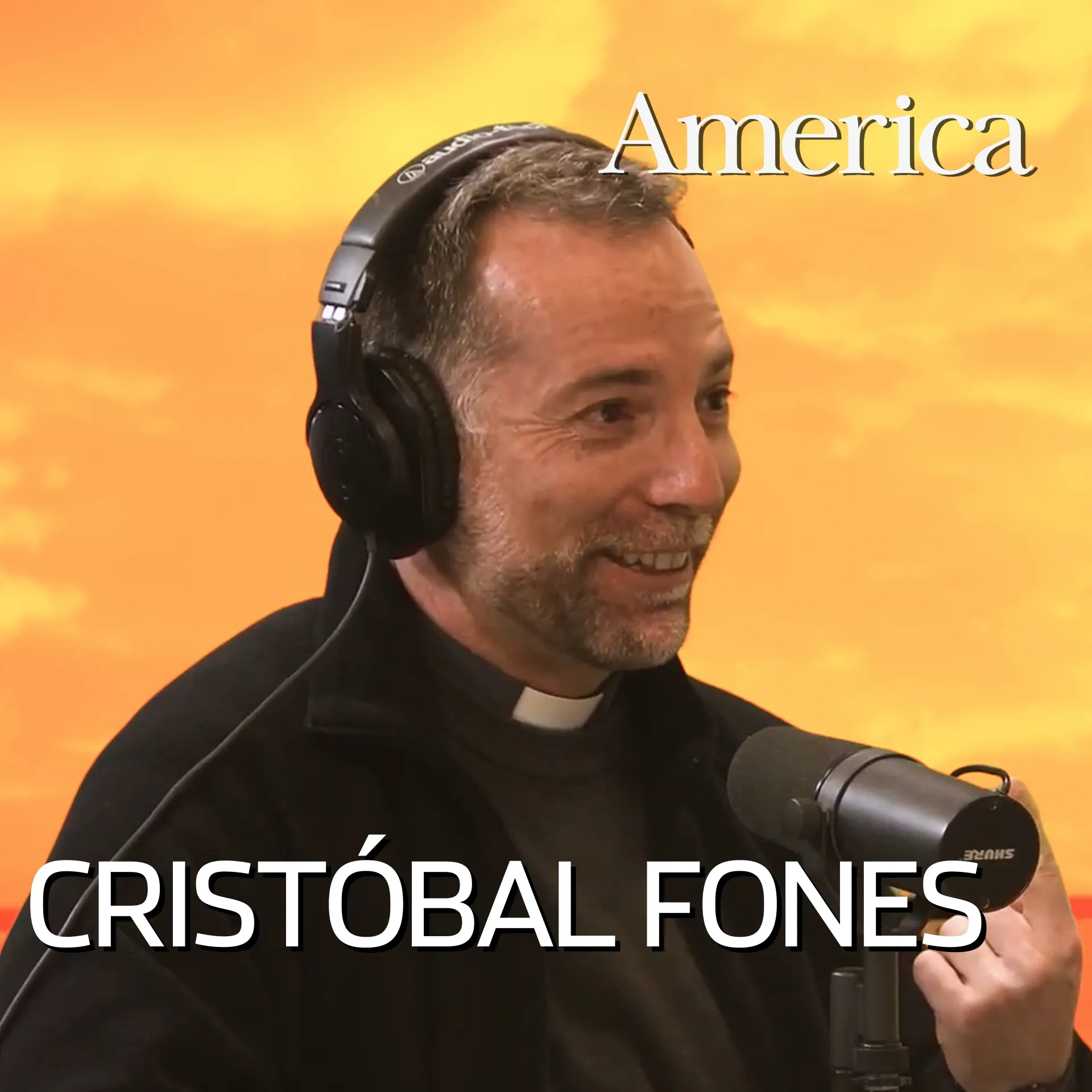
The Spiritual Life with Fr. James Martin, S.J.
Jesuit musician Cristóbal Fones on praying with the Pope
00:57:26
Loading summary
Transcript105 lines
- [00:00]
Catholic Health Association Announcer
Why does the term healthcare leave people feeling sick to their stomach? Maybe it's because instead of being tied to health, the word seems to have a deeper connection to industries. At Catholic Healthcare, we're returning the word healthcare back to its former glory. Because when healthcare really cares, communities thrive, prevention is prioritized, and everyone has access to care. Say it with me, health care sounds better already. Catholic healthcare, we care you flourish. Sponsored by the Catholic Health Association.
- [00:32]
Fr. Cristobal Fons
I will say that when we pray for something, we are opening, we are growing spiritually and humanly to those realities because we are making some space in our lives to those very critical, important issues that we need to address as a whole, as a family, as human beings, but obviously as members of the church. Is it gonna change anything that I pray or not for that? I don't know. Let's give that to God. But at least you may open yourself to this reality and learn a little bit more about it and transform your heart.
- [01:09]
Fr. Jim Martin
Welcome to the Spiritual Life. I'm Fr. Jim Martin. On this podcast, we reflect on how people experience God in their prayer and in their daily lives. And I'm joined by my prayerful producer, Maggie Van Doren. Maggie, good to be back with you.
- [01:24]
Maggie Van Doren
It's great to be with you, Jim. And we are certainly getting a lesson in prayer on this episode of the Spiritual Life. Who are we speaking with?
- [01:33]
Fr. Jim Martin
We are speaking with my Jesuit brother, Fr. Cristobal Fons. Can you tell us a little bit about Cristobal?
- [01:39]
Maggie Van Doren
Sure. Cristobal Fons is a Chilean Jesuit priest and a gifted music artist and the international director of the Pope's Worldwide Prayer Network. He's also a widely known voice in contemporary Catholic music and spirituality. And before he entered the novitiate in 1994, he actually sang at popular music festivals and weddings. Chris Dobal's work focuses on prayer, mission, and forming hearts attentive to the compassion of Christ and the needs of the world. And I can say, you know, after listening to this conversation, we are lucky to have a very professional prayer on the podcast.
- [02:21]
Fr. Jim Martin
Exactly. And someone who is in charge of, in a sense, other people's prayers. Of course God's in charge, but as the executive director of the Pope's Worldwide Prayer Network, he really helps Pope Leo with different intentions and helps people join their intentions with the Pope's intentions. So it's really a fascinating conversation.
- [02:41]
Maggie Van Doren
Yeah. He brings so many people from across the world together in community and in prayer. It's a really special ministry. And there is a couple, I guess, practices that came up in the course of this conversation that I wanted to ask you about, Jim. So one of them is the morning offering, which is Catholic prayer practice. How would you describe the morning offering?
- [03:05]
Fr. Jim Martin
Yeah, the morning offering is the traditional Catholic prayer that many people say, maybe not as many as had said it in the past. One version goes, I'm reading one. Oh, Jesus, through the Immaculate Heart of Mary, I offer you my prayers, works, joys and sufferings of this day in union with the holy sacrifice of the Mass. It continues. What does it mean? There's different versions you can find online and in prayer books. It's offering your day offering, as that prayer said. Your works, your sufferings, your desires, everything to God for the day. I think it's really beautiful. It's, you know, usually people do it, obviously, in the morning. And it's a gift, right? It's offering your gift of the day. And I think it really helps to orient you to what the day should be, which is a gift to God. So he talks a little bit about that in its connection to the Pope's worldwide prayer network.
- [03:59]
Maggie Van Doren
Yeah, well, that's great. I often pray at night, and that's how I have been raised to since I was a child. But I like this idea of beginning the day with an offering like that. That's really something. So the other conversation that came up was around the Sacred Heart of Jesus, which I'm sure many Catholics have seen imagery and iconography of the Sacred Heart, but might not know the story behind it.
- [04:25]
Fr. Jim Martin
Yeah, we talk a little bit about that in the conversation. And it's a devotion that has been associated with the Jesuits for a long time. It is not strictly, you know, from the Jesuits. It existed before the Jesuits, in a sense, popularized it. But Basically, in the 17th century, in a town called Parais Lemon Monial, a visitation sister named Saint Margaret Mary Alacoque received private revelations of, in a sense, Jesus appeared to her, right, showing her his Sacred Heart. One of the most beautiful parts of the story is that she wasn't the most, shall we say, educated or successful, in a sense, sister in the convent in Paris Le Monial. And as is the case in many of these situations, with private revelations, their sisters did not believe her. And in prayer one day, she was speaking to Jesus, and Jesus said to her in her prayer, I will send you my faithful servant and perfect friend. And just a little while later, a Jesuit named Claude La Colombiere was sent to Paris Pare lumonial, I think, to begin his tertianship, which was the last stage of Jesuit formation. I may be wrong about that part. But in any event, Claude was sent to Paris and became Margaret Mary's spiritual director. And she was able to open her heart to him, to Claude. And as her spiritual director, he was able to help her understand those things. And in the end, it was Claude, I think, who ended up going to England and I believe working with some nobility there, who spread the devotion as Margaret Mary understood it. So it's long been associated with the Society of Jesus, with the Jesuits. Cristobal is a Jesuit. And if people want to know more about the Sacred Heart devotion, they can turn to Pope Francis last encyclical, which was all about the Sacred Heart, called Dilexite. So that's a little bit of a precis on the devotion, as we call it, to the Sacred Heart of Jesus.
- [06:34]
Maggie Van Doren
That was masterful. Thank you, Jim. It also reminds me that we do prayer in community and we often need one another, that Claude was like a translator for Sister Margaret Mary. Right. And so this is, of course, linked to the audience question that we have selected for this episode, which comes from William. And William asks, why do Catholics pray to saints? And how does that work? And I think your answer and Cristobal's indicates that it is very much grounded in community.
- [07:09]
Fr. Jim Martin
Absolutely. And I love that idea of them being a little community. And I always think that being Jesus, faithful servant and perfect friend, is a great goal for all of us.
- [07:20]
Maggie Van Doren
I know I would like that on my epithet. So if you'd like to ask Father Jim a question, you can write to us@thespirituallifemericanmedia.org well, great.
- [07:30]
Fr. Jim Martin
Thanks, Maggie. And now onto our conversation with Christobel Fones. Well, Christobel Fones, my Jesuit brother, welcome to the spiritual life.
- [07:45]
Fr. Cristobal Fons
Thank you very much. I'm very glad to be here and
- [07:47]
Fr. Jim Martin
great to have you here with us. Cristobal, you're the executive director of the Pope's Worldwide Prayer Network, formerly called the Apostleship of Prayer. Can you describe what that means for our listeners and viewers?
- [08:00]
Fr. Cristobal Fons
That's a very good question. I'll try to. Well, we have built upon a very important tradition of more than 180 years of the apostleship of prayer, which started in 1844 in a Jesuit community as an initiative to pray for the missions of the church. But very early in the development of this apostolate in the 1890s, Pope Leo XIII was the first pope that entrusted some specific intentions for each month so these groups and these people could pray about. And then this developed in many, many countries around the world. But in the 90s, you know, the groups were becoming older people, and so it needed a refreshment, a recreation that we call. And Pope Francis got into the office and he said, I am interested in this, so I need people committed to accompany the mission of the church and the church. I mean, the challenges of facing humanity in general. And we pray for what we care about. So he was very concerned about because he want people to be caring for the world and the challenges. So the recreation now called Pope's Worldwide Prayer Network, is inheriting the treasure of the apostleship of prayer, we may say. And what do we do? We try to pray and to be transformed by praying every day, offering ourselves as a means to collaborate with Christ's mission of compassion, we may say, for the Word. We are not a communication project. We are not, you know, just an initiative from the Vatican. We are actually 22 million people committed to make their own. This mission entrusted to us, it is a pontifical work, but entrusted to the Jesuits. The. That's why I'm in charge of it now worldwide.
- [09:56]
Fr. Jim Martin
So are you someone who sort of says to people, here's what we're praying for every month, or does the Pope give you a mission to pray for a particular topic?
- [10:06]
Fr. Cristobal Fons
Well, certainly it is the Pope, but he does it in a very synodal way because, for instance, we just finished the process of discernment for the 2020 seventh intentions, and we started last September asking all the national offices to send us propos and all the dicasteries of the Vatican. So thinking what is going to happen in 2027? And when I talked with Pope Leo, explaining this to him, he said, 2027, that's really far away. I said, well, because we need to receive them. It's more like 600 proposals then to translate them into one language. Many of them are the same because the Spirit really works on that. Then we select some of them that has not been addressed recently. And we propose to the pope about 16 or 18 of them. And he takes some time to discern, to read, to pray, and he decides, taking from those proposals or not.
- [11:05]
Fr. Jim Martin
So give our listeners an example of, like, what kinds of things they would pray for.
- [11:09]
Fr. Cristobal Fons
Well, we can talk about this month, prayer intention, which is for children with incurable diseases and their families and those who take care of them. So it is a reality that perhaps people who are listening to this podcast are not that close to. Or maybe they are, but it is a reality, a very complex one in terms of finances and in terms of that life will be probably for the Rest of the time, because not all of the diseases are taking them to death, but they may remain attached to hospitals and treatments for their entire life. So this very, very important to open our communities to that reality, to be aware of that, to intercede for them and hopefully to reach them out. I mean, that's part of the work we do, to have always a call to action. So everyone is invited to get sensitive about all these intentions and to get into them. It's not just naming them and then our Father, who are never. No, no. It's just to acknowledge this challenge and to pray in a way that we may be transformed by praying about them.
- [12:22]
Fr. Jim Martin
Well, let me ask you kind of a theological or maybe spiritual question that some people are probably wondering, what does it mean to pray for something? So we're joining our prayer intentions, which I like very much, doing this every month. What do you say to people who say first, they might say, well, God already knows about children with incurable diseases and he should have done something already, or, well, if it's a million people praying, why do I need a million and one people to pray? So what do you say to people when asked about how does that work in a sense?
- [12:52]
Fr. Cristobal Fons
Well, I may approach that question in two ways. One is we do, from the baptism, participate in what we may call the baptismal priesthood, which is presenting the world to God. You know, we say, okay, God, this is our world. These are our needs. This is what we are grateful for, et cetera. And we are all participating on that same movement also because the intercession prayer has a value in itself, like reminding God what he already knows. Obviously, he's quite more committed with these realities than we are. But it's a way to make it explicit that we are in the same preoccupation, because behind all this is a spirituality, pretty much Ignatian one, but that we call spirituality of the heart of Jesus, which is the closer I am to the feelings, the worries that are in the heart of Jesus, the closer I am to the needs of the world, because that's where they are. You know, he's worried about that we may encounter peace, fraternity, and so on. But on the other hand, I will say that when we pray for something, even if it is something or someone not necessarily close to us, we are opening, we are growing spiritually and humanly to those realities because we are making some space in our lives to those very critical, important issues that we need to address as a whole, as a family, as human beings, but obviously as members of the church. So it Makes a lot of sense. I mean, sometimes I say, yeah, let us help the Pope by praying for these intentions. But in reality, he's helping us to exercise our baptismal priesthood in a very concrete way. It's not just pray for the world. No. I invite you this month to pray for this. Next month we are going to pray for discernment, especially nuclear discernment, which is very important. I mean, it's going to change anything that I pray or not for that. I don't know. Let's give that to God. But at least you may open yourself to this reality and learn a little bit more about it and transform your heart.
- [15:08]
Fr. Jim Martin
Before we go a little further on that topic, you mentioned Pope Leo, I know that you met with him along with the staff. Can you talk about at least what you can. Can you talk about what that was like?
- [15:18]
Fr. Cristobal Fons
Yeah, it's very often. Well, I must say that he's very relaxed. I mean, he's very normal. That is very beautiful. Then, the first time I met him, I greeted him in Italian and he answered to me in Spanish, and from then on, obviously in Spanish all the time, which is great for me. I feel very at home. And I think for him, it's also good because he knows that I am a Chilean. And in the audience, he addressed the entire network, in those who were present there, the continental coordinate or some ambassadors, and my team inviting us to continue on this path. He was very kind, very close to all of us, and he put some specifics. He said, please take care of the young people so that they may become the new generation of intercessors for the mission of the church. And I was like, well, I may work on this. And we have a lot of ideas and things to do ahead, so I hope in the next years we can develop them.
- [16:25]
Fr. Jim Martin
It's wonderful to hear that he's so normal. That was my limited experience with him at the synod. He's just very relaxed and very down to earth. You mentioned the heart, being in touch with the heart. Is there a connection between the apostleship of prayer and the devotion of the Sacred Heart? Can you tell? For listeners who don't know the story of the Sacred Heart devotion and how it came to be? Margaret Mary and Claude.
- [16:49]
Fr. Cristobal Fons
Yes. Well, she was a nun. Like many saints, she was very weak. And, you know, she wasn't the strongest or the smartest or whatever, but she started having these revelations, private revelations. At the beginning, she was very shy on sharing this, but she opened her heart to this spiritual director who was a Jesuit, San Claude De la Colombiere. And he was amazed with this. And he started writing down the revelations she will be receiving for a couple of years, three years, I guess. And at the beginning, obviously they were very reluctant. But with the time, they realized that this was a strong revelation and for the sake, not only of her, but for the humanity in a context where religion was very strict.
- [17:41]
Fr. Jim Martin
So this is 17th century, frankly.
- [17:43]
Fr. Cristobal Fons
So 17th century. And there was a huge need to go back to emotions and to have a personal relationship of friendship with the Lord. It is not just, you know, following commandments. And in that sense, we have played a huge role Jesuit like, connecting people with their affections and to put faith into daily life and our emotions and our desires and our expectations, because the Lord reveals in that daily life. So the apostleship of prayer was connected very easily to this in the sense that connected to the heart of Jesus, we connect with the heart of the world. So transforming ourselves by being closer to him, we can transform the world as well. And since then, it has been a critical part of our apostolate. And in 19, one general congregation of the Jesuits decided to finally receive this Munus Avissimus already had said something in the late 90s, but it took a long time to receive that.
- [18:48]
Fr. Jim Martin
Can you translate that?
- [18:49]
Fr. Cristobal Fons
What we receive, well, it is a light, it's a commandment, but we receive it with pleasure kind of thing. And since then on, the Jesuits have decided that the main mean to promote this devotion and this approach to a personal relationship of friendship with the Lord is the dismission of the apostleship of prayer. So we are part of the same tradition and we continue on with that.
- [19:14]
Fr. Jim Martin
Well, let's go a little deeper on that. What were the revelations to Margaret Mary? So Jesus appears. Can you describe that? For people who don't know the story?
- [19:22]
Fr. Cristobal Fons
It is important. But before answering that question, I will put on the table a wider context, because the spirituality of the Heart of Jesus, related and it is very well written in the Lexit Noss, is that insisting on a personal relationship with the person of Christ symbolized in his heart. At the beginning it was his open chest with blood and water, the first Fathers. And then in the medieval ages, it was developed as well. So the apparitions to Saint Marguerite Alacoque is just one key moment in a wider, you know, spiritual experience. But in this case in particular, he was insisting on the pain that he was feeling. And that's the important thing to realize that the Lord has feelings because he's fully human as we are. The pain of being the indifference, we may say nowadays in a more modern way, the globalization of indifference. Because that will hurt his heart, because he wanted us to be together in fraternity. So that was causing him a lot of pain. And she was like, no, I don't want to see you suffering like that. So I will offer myself to console you. And by offering myself, it's not just an emotional thing. It's just, I will put myself into work so the world can be better. And you can also feel other joys, not only pain.
- [21:07]
Fr. Jim Martin
You know, one of the other things I love about this story is Claude La Colombiere, who's this Jesuit, who goes and is asked to be her spiritual director. And as you know, one of my favorite parts of the devotion is, you know, she was not very well understood by the sisters in her convent in Paris, Le Monial in France. And she despaired of this. And Jesus said to her in one of the revelations, I will send you my faithful servant and perfect friend. And I always thought that was such a great goal for all of us, for us to be Jesus, faithful servant and perfect friend. So for me, it's also. It's not simply the Sacred Heart and Margaret Mary and her story, but it's also Claude's story, which I think is really beautiful. So how can someone pray with the Sacred Heart today? What would you say to that? What does that mean for someone?
- [21:57]
Fr. Cristobal Fons
You know, I didn't know much about this devotion, but when I got into the office, I realized I have been doing it my entire life because I understand prayer as a relationship. Not something that we do or some words that we say, but basically building up a relationship of intimacy. I mean, the kingdom of God is when we connect. And for me, Jesus has been my best friend ever. The other day, my mom gave me a recording in a cassette when I was three years old. And I was talking with Jesus the same way I do now. It is incredible. So he has been part of my life all the time. And it's very natural for me to connect with him, to talk freely about what I do, what I feel, what I fear, what I hope. And it has been that way. So for me, was very natural to say, okay, if I need to promote this, this is very easy. Because, I mean, connecting with the heart of a person is connecting with the core of the person, not with the external part of the person or what he does or what he says only, but what that person is. I mean, it's so human, you know? And so I feel in a relationship like that with Jesus, we Become more human as well, because it is the way in which we should treat each other.
- [23:27]
Fr. Jim Martin
That's a great insight. I'm not sure if it's the same in Spanish, but to say to get to the heart of the person, it means not just his heart. Exactly what makes that person tick and what is the central part of that person. That's beautiful. The other thing I like about the Sacred Heart is I was on a retreat once, and I. I had not really understood it very well. I didn't grow up in a very Catholic family. I was not at age 3, saying, you know, I want to be Jesus best friend. But a retreat director said to me, it means, can you love like Jesus does? And I thought that was very simple. Right. Can you love like Jesus does? And another retreatant on retreat said to me that she liked the fact that the image of the Sacred Heart, for those who don't know it, it's Jesus sort of revealing his heart. It's on his outside. And so it's vulnerable, it's exposed. Right. And there's a sense of us being sort of with Jesus when we expose our hearts, when we are vulnerable. Cristobal, you talked about being a child, and so this leads naturally to our next question. Can you talk about your vocations to the society and how that developed?
- [24:31]
Fr. Cristobal Fons
Sure. And I like the last word you used, because vulnerability will be my favorite word.
- [24:37]
Fr. Jim Martin
Good.
- [24:38]
Fr. Cristobal Fons
Yes. Because I relate not with a superstar or a hero from Marvel. You know, I got to know Jesus as a recent person with his wounds, not without them. You know, he decided to keep them. So as a reminder that we are vulnerable. But there is so much beauty in it. And I think that's part of my faith story. I mean, I. I was a pretty normal person, but longing for this intimacy, I may say, from an early age. I started in. Well, I have a beautiful family. We are six siblings. And my father was a very faithful man and my mother as well. But not churchy people. I mean, we will go to Mass, but I had no idea about many things that people already know about the Pope, the catechism, or many things. We just build up a relationship with the Lord. He was part of the family. We may say, for instance, in Christmas Eve, this tradition that we had, we used to hate it, but now I really loved it. My parents will ask us to write a letter as a gift to Jesus every year. And in that letter, we should be explicit of our gift to him for the next year. Obviously, I will make my home or those kind of things, you know, and we had to read it first before receiving our gifts.
- [26:11]
Fr. Jim Martin
Wow.
- [26:12]
Fr. Cristobal Fons
Because it was his birthday and his celebration. But that's a very catechetical way to put it, you know, like he was at the center of the family in a very natural way. I studied in a Jesuit high school. And during my time in high school, honestly, I didn't think about becoming a Jesuit. I was really into a spiritual life, though. So everyone else was thinking me as a Jesuit, except for me. And then I entered sociology in Catholic U. Because we don't have the college system like you here. You have to choose the career from the beginning. And in that year, two important things happened to me. One is that my father got cancer, pancreatic cancer. And in five months he died. So that was very strong for me. It made me think about things that probably an 18 years old people don't, you know, like, what do I want to do with my life and what is the purpose of it, et cetera. And the second important thing that happened is that there was a big flaw.
- [27:18]
Fr. Jim Martin
Yeah.
- [27:19]
Fr. Cristobal Fons
That covered many houses and many people died in one part of Santiago. And I went there to help. But after the emergency, I remained there as a catechist in this small chapel in a very poor area of Santiago. I was 18, and the guys in my group, they were 29, 27, but I had received a very good formation. So I remained there and that changed completely my life. So I had this kind of conversation in November, more or less that year. My father died in July. In November, my spiritual director said to me, well, what have you done during this month? And I went to this place and I was feeling this and that and okay, what else have you done? Next week I went again and they invited me to their houses. And I said, yeah, but what else have you done during the. Oh, well, yeah, I'm studying. I have these friends. I have done this and that. And when I went back to my house, I said, what if I do what I do on Saturday evening my entire life? And that changed everything. I felt such a joy in my heart. I mean, I said, all right, okay, what do I have to do? I mean, I give it all. And it has been like that since then.
- [28:33]
Fr. Jim Martin
It's funny you should say that. When I was discerning a vocation, I was working for corporation General Electric. And I was really struggling. And someone asked me very similar question. I was seeing a therapist at the time and he said, why are you working at GE if you hate it? And I said, well, I don't know what I would do. And I had contacted the Jesuits a few years before and he said very similar. He said, well, what would you do if you could do anything you wanted to do? Which is basically like the same question to you. Saturday night, and I said, I joined the Jesuits. And he said, why don't you? And I thought, why don't I? So that's great. Why don't you do something that you're doing on Saturday night? Now part of your ministry, which I think is very well known to Spanish speaking Catholics, is music ministry. How did that. Can you describe it for. Maybe our American listeners may not know it as well, but maybe our Spanish speaking American listeners may know it. Can you describe what your ministry is and how it developed?
- [29:31]
Fr. Cristobal Fons
Well, only recently I can talk about this as a ministry because for many years this was just so spontaneous. It wasn't really something organized or prepared from my side. But I will say now with perspective, that I learned to love people by singing. You know, like I relate to people singing. I had a girlfriend singing, I have friends singing, I got to know the Lord singing. I have served many, many places and people by singing. So when I enter the Society, I'm just being myself. It's not something planned. I remember when I applied to the Society, we have to go through a conversation with different examinators. And one of them asked me, are you willing to give up on your music? And I said, well, yeah, if the Lord wants me to, no problem. And next day the other examinator said, are you willing to defend your talent and to bring it to the Society? I said, yeah, obviously I will. And I. I wasn't lying. I mean, then I learned that that's called indifference.
- [30:33]
Fr. Jim Martin
It's very free.
- [30:34]
Fr. Cristobal Fons
Yeah, but for me, I don't see myself as a musician. I just see myself as a Jesuit. And music is part of who I am. It's just the way in which I relate to people. I lived two years with the indigenous people, for instance, down in Chile, and it was so natural for me to say, oh, they don't have songs in their language. Why don't I compose the first Mass for them? So it's kind of a response to reality from what I have at hand, which is music. And I have been recording. I already have 12 albums in different languages. Spanish, obviously, Maputhungun, which is the indigenous language, and some in English, some in Portuguese, but very little yet. But I have something that I can tell you because music has exposed me to enculturation and encounter with the different. We will say when I was with indigenous people down in Chile. I remember the day I composed the Our Father. So I went to the church where obviously we will celebrate in Spanish all the time. Very, very simple people. And I took the drum, the traditional drum, which is called Cultrung, and I wanted to show them this song. And I was very nervous about it. And I said, please listen to that. And then you made your comments. So I started, Etcetera. And they were all listening, like very attentively. And at the end I said, okay, what do you think about it? Silence. Oh my God. I said, they didn't like it or did I do something wrong? And the older man there said to me, brother Peni, in their language, this is the most beautiful thing we have heard in so many years to praise the Lord in our language, but we cannot sing it. And you know exactly why. And I was like, oh my God, because he was the authority in the community. And I said, well, just tell me, because I don't know. And he said, because if Jesus praised his father in Spanish, we have to do that. Wow. So we started a whole conversation about this, you know, like, being Christian doesn't mean to lose your culture. All the contrary. So it's that you may become the best version of who you are. Mapuche people, you know, and it was all new for them because what they have learned from good intentions, you know, the catechists, was that they had to leave behind their traditions, their culture, their lives to become Christians. On the contrary, Jesus wouldn't understand a word in Spanish. He spoke another language and it was all new for them. And for me it was like, wow, with music we can do so much if we take it seriously. You know, I keep that as a treasure in my heart because it was very revealing for me.
- [33:47]
Fr. Jim Martin
Well, and isn't it interesting that you're telling them that, you know, Jesus is part of their culture? I had an experience in Kenya. I worked with refugees in East Africa in Nairobi, and there was a man from Uganda who would. One of the things we did was we helped to sponsor a refugee handicrafts and he would bring in painted versions of white Jesus. And I said to him, well, I think actually what would sell more are sort of African looking Jesus and Ugandan looking Jesus. And he said, no, no, because this is the way Jesus is. And I thought, now I felt in a sense guilty because I didn't want to force my idea.
- [34:34]
Fr. Cristobal Fons
We don't have to impose that.
- [34:35]
Fr. Jim Martin
Yes. But eventually the funny thing was, not only did he start painting them, but they sold better Than the white Jesus. So I can imagine he said, thank you, brother.
- [35:02]
Podcast Sponsor Announcer
The Spiritual Life is sponsored by Give Us this Day from Liturgical Press. Our community works for a faith that fuels hope, justice and prayer with voices and perspectives you trust. Like a monthly feature from Father James Martin, Blessed among Us, and reflections that meet you where you are. Listeners of the spiritual life receive 10% off a new subscription@giveusthisday.org spiritual life.
- [35:34]
Dramatic Voice Actor
Our names were whispered through time. From generation to generation. Our lives were to become one. The story started long ago. Don't you feel that there are things that cannot be explained? I have to go. If you need me to do this, Abraham, I will go with you. What if we were brought together for a purpose? He appeared to me. Who appeared to you? An angel of God. I thought my purpose was elsewhere, but I don't need to keep looking anymore. I should have known you wouldn't understand. Heno, don't you dare.
- [36:37]
Podcast Sponsor Announcer
Rachel.
- [36:38]
Dramatic Voice Actor
My own sister. After all I have given you, Esau. You left me no choice. This is not what God wants.
- [36:47]
Fr. Jim Martin
No, it is not what you want,
- [36:51]
Maggie Van Doren
Leia.
- [36:52]
Dramatic Voice Actor
God has a destiny for us all. My whole life I've been waiting. What if this is it? Nothing is impossible for God.
- [37:14]
Maggie Van Doren
If you're looking for purpose and meaning in your life, Oblate School of Theology is the place for you. With courses available in person or online, this graduate and professional school welcomes men and women of all faith traditions. Enrich your faith and visit.
- [37:50]
Fr. Jim Martin
Does music influence how you relate to God?
- [37:53]
Fr. Cristobal Fons
Absolutely.
- [37:53]
Fr. Jim Martin
In what way?
- [37:55]
Fr. Cristobal Fons
Well, first of all, because I tend
- [37:58]
Fr. Jim Martin
to talk a lot, like many Jesuits.
- [38:01]
Fr. Cristobal Fons
Yes. So music is made out of sound and silence. If it is only sound, it's just noise. So that is very important. To really create music, you need to stop and to make pauses. So that helps me to relax and to repose before him. 99% of the music I have recorded is actually talking to him. You know, like a prayer, a colloquio, I will say. So I feel very at home singing that, first of all. And second, because sometimes, through the arts, we can express things that are not words, are not able to do that. So adding words and music brings something new to my spiritual experience. And if people listen to my music, they will see that I'm not a great singer, I'm not a wonderful musician. But I'm someone who really believes in what I am singing. I will never sing something I really don't believe is true. And you can tell that. I mean, it's honest music. I will say it's not Meant for selling, but it's meant for facilitating a spiritual experience.
- [39:24]
Fr. Jim Martin
Well, we're talking about your own music. Let's go a little deeper in your own spiritual life. So, executive director of the Pope's Worldwide Prayer Network, what is your prayer like?
- [39:33]
Fr. Cristobal Fons
Well, in the morning, I usually read the gospel because it's a kind of basic connection of who Jesus is and what did he say or he did. So for me, it's a constant being rooted in this relationship. It's not abstract. It's not the idea I have of Jesus, but he. I want to be with him, really him. So starting from the Gospel helps me a lot. I read it carefully, and then I just keep myself in silence. If something shows up. Good. And if nothing, I just start the day.
- [40:11]
Fr. Jim Martin
This is the daily Gospel reading for the Mass.
- [40:14]
Fr. Cristobal Fons
The daily Gospel reading for the Mass. I use that one usually. I write a little bit my colloquio at the end of the prayer, like, thank you. You didn't tell me anything today. Okay, I will start anyways. I offer my day. Thank you for this. And since I arrived in Rome, I have been starting to pray the offering prayer as well that we use in the prayer network, because I am the international director. I should use it, you know, but it helps me.
- [40:40]
Fr. Jim Martin
And let's pause. The morning offering prayer is what? Can you describe that?
- [40:43]
Fr. Cristobal Fons
Yeah, yeah, I will read it for you. Because there are many, many different offering prayers, and that's perfectly fine. The idea for us is to promote the daily offering in general. But we use this one because it's a kind of summary of the devotion as we understand it now in the prayer network. So let me read it for you, good Father, I know you are with me. Here I am on this new day, place my heart once more with the heart of your son, Jesus, who gives himself for me and who comes to me in the Eucharist. May your Holy Spirit make me his friend and apostle, available for his mission of compassion. I place in your hands my joys and hopes, my works and sufferings, everything that I am and have in communion with my brothers and sisters of this worldwide prayer network with Mary, I offer you my day for the mission of the church and for the prayer intentions of the Pope and my bishop for this month. Amen.
- [41:49]
Fr. Jim Martin
So you pray the gospel. I'm going to back up a little bit for people. People who listen to this are always interested in advice on prayer. So when Cristobal prays the gospel, he reads the reading and then he what do you imagine yourself in the Gospel reading or Are you just sort of quiet and looking for insights? What's going on inside the.
- [42:08]
Fr. Cristobal Fons
It depends on the reading. Sometimes when it is a reflection made by Jesus, I just repose on there and think about the meaning of it, how it touches me or not. I mean, if it is Jesus saying, okay, love one another as I love you, I say, okay, am I loving as he loves me kind of thing. And try not to rush, because the rest of the day I will be rushing a lot. So that's my quiet time. I don't need to get many conclusions from my prayer. I just want to be there. But sometimes I get a lot from it. And some other days I just say I read the Gospel. And if the gospel is more like an action, I really get into the scene because I'm very creative. So I pay attention to all the details, the clothing, the colors, the environment. And normally my imagination takes me towards what the gospel doesn't say. You know, like the emotions of those who are watching Jesus and those around, or the feelings of those who are touched by him, or those kind of things. And that moves my heart a lot. And if I am distracted, I start writing, because that helps me a lot. I write what I am thinking and feeling, and it's a kind of conversation with him that helps me because I get to the focus again. But it's not necessarily a long period. It's like 35 minutes or so. And then I go and get my coffee and start working and answering emails for the rest of the day.
- [43:45]
Fr. Jim Martin
Thank you for sharing that. Does the morning offering orient you in a different way? Do you feel like you are more conscious of actually giving your actions to God?
- [43:55]
Fr. Cristobal Fons
It's kind of tricky because this is at the same time my daily spiritual life, but my work. So I'm constantly thinking, oh, I need to do the translation of this to this language, or, oh, I forgot to publish this in that place kind of thing. But having said that, I must confess that especially because this mission has been very hard for me. I mean, I used to be a missionary in the southern part of Chile, and all of a sudden I am in the Vatican working for the Pope with a huge responsibility. So offer myself in a daily basis had been more meaningful than ever in my life.
- [44:31]
Fr. Jim Martin
It's interesting. So you're not just offering your day and your actions, you're offering yourself and
- [44:36]
Fr. Cristobal Fons
my mission and who I am, actually, because I feel constantly so inadequate for what I'm doing. You know, like, I'm the worst person you could have chosen for this. I'm so positive about that. But you did, so here I am. It's kind of like that now.
- [44:53]
Fr. Jim Martin
Why do you say that? Why do you say you're the worst person?
- [44:55]
Fr. Cristobal Fons
Because I'm very a people person. And all of a sudden, I'm in a lot of administration stuff, you know, trying to deal with very important institutional things. And I used to be just a missionary, you know, just talking about Jesus everywhere very freely. And now I need to read every single thing that the Pope is going to do that day and to whom he's addressing and how we can amplify that in the prayer network and so on. So it's very different. I don't have the natural abilities to do that, but I think I'm growing slowly, and I have a great team.
- [45:34]
Fr. Jim Martin
How about the rest of your day and the rest of your week and the year? Do retreats figure into it or spiritual direction? And where does all that fit?
- [45:44]
Fr. Cristobal Fons
Well, people may know or not that with Jesuits, we do twice, at least twice in our lives. The month retreat, long retreat in silence. I did it as a novice, and then I did it after tertianship. During tertianship, like after 13 years of formation.
- [46:01]
Fr. Jim Martin
Tertianship is the last stage of Jesuit training.
- [46:03]
Fr. Cristobal Fons
Yeah, exactly. And I remember that when I was about to do this for the second time, I called my mom, saying, okay, Mom, I'm going into this retreat. And after all these years, because when I was a novice, I was promising chastity, obedience, and poverty. I had no idea what I was promising. Now I do know what it means to be a Jesuit. Many things have happened during these years. I really expect a lot from this retreat, so at least a couple of albums, you know, and it was wonderful. And at the end, I called my mom, and she was very, you know, excited about it. And she asked me, well, tell me everything. What did you discover? What new insight? And I said, you know, Mom, I discovered that God is our Father and we are brothers and sisters. And she said, come on. I have taught you that from the beginning. You knew that already. Yes, but one thing is to know it in your mind. And a very different thing is that you may feel that everyone, even those I don't know, or even those I disagree with, are my brothers and sisters. And that was very new for me, you know, for.
- [47:16]
Fr. Jim Martin
I think it's the first time I've talked to a Jesuit about his Jesuit prayer life and retreats. Can you describe for people who might say, christobel and Jim go away for eight days. What do they do for eight days? Do they just sit in a room and are silent? Can you describe what an eight day retreat is like for our listeners?
- [47:33]
Fr. Cristobal Fons
Yeah, sure. Well, first of all, it's in silence that's important because it takes me like three days to get there, you know, because as a very known Jesuit says, silence is not the lack of noise, but the lack of ego. And it takes me a while to get rid of it. So to put the Lord in the center, that will be the first thing. But in a daily, concrete way. We wake up and we have some brief morning prayer, but then we prepare what we call, I don't know how to say in English, blockes. Blocks. Now, like a specific moment to pray, like about an hour.
- [48:14]
Catholic Health Association Announcer
Right, sure.
- [48:14]
Fr. Jim Martin
A block of prayer.
- [48:15]
Fr. Cristobal Fons
Block of prayer, right. So with a specific structure proposed by St Ignatius Loyola, which start with disposing ourselves, then to ask for a specific grace to receive in that specific prayer, then usually we use the Scripture to enlighten that one. And then we normally have received some insights to reflect on. So we are there just, you know, letting those words and feelings and emotions and ideas show up. And we try to present them to the Lord so he can organize them a little bit according to his will. And at the end, normally we finish that block of prayer by just talking freely with him, what we call colloquium. And it's a conversation, a colloquy. Right, Colloquy in English. All right. And we do these blocks like four or five times during the day. And the rest is just, you know, having lunch or having dinner and celebrating the mass with the group and, you know, walking around or just sleeping, which is good too. Or reading, some spiritual reading. I don't do much reading because normally that takes me to work and to try to get conclusions and prepare homilies, and I try to avoid that. But for some people, that's very useful too.
- [49:39]
Fr. Jim Martin
And you're usually working with a director, too?
- [49:41]
Fr. Cristobal Fons
Well, at least once a day or every other day, we have a personal conversation, not to talk necessarily about the content, but how I am organizing the day and how do I feel about it. Am I receiving the graces I'm asking for or not? And he may discover and help me a lot whether I am doing things right or not. So he's more like an accompaniment than a director.
- [50:08]
Fr. Jim Martin
Yeah, I've always thought the director's role, the old saying is it's the Holy Spirit who directs. I think the director is also good at sort of pointing out what you might be missing. And oftentimes we'll ask you to repeat something.
- [50:20]
Fr. Cristobal Fons
Yes.
- [50:20]
Fr. Jim Martin
I remember in my tertianship retreat, I was praying over the crucifixion and my retreat director said, I don't think you're really entering into it. And I said, of course. Typical judge, of course I am. I'm very. I want you to go back. So he had me go back twice, twice to the crucifix. And he was right. I think it's necessary to have a director on a retreat.
- [50:38]
Fr. Cristobal Fons
Absolutely.
- [50:38]
Fr. Jim Martin
Because you can just kind of spin off on your own.
- [50:41]
Fr. Cristobal Fons
Because it's not all about the method, but about the Spirit and where he's leading us. And I remember one eight day retreat because normally I know the Lord, he knows me, and I kind of get there very easily, but sometimes it's not easy. And I was very dissolved. Dissolved is the word in desolation.
- [51:01]
Fr. Jim Martin
In desolation, right.
- [51:02]
Fr. Cristobal Fons
In desolation. So first day I say, okay, tomorrow I'll do it. Right. Second day in desolation. Oh my God, what am I doing wrong? I mean, I'm preparing the blocks and everything, but nothing happens. And third day, same thing. And I said to the director, I mean, I don't know what else to do. And he said, well, you should wonder whether you are searching for the consolation of God or the God of consolations. And I was like, oh my God, that's completely true. I was trying to feel something and not to encounter him. And that changed everything. I mean, it was very important for me.
- [51:37]
Fr. Jim Martin
Yeah, I think Teresa of Avila said, you know, being attached not to God, but to the fruits of prayer, which is kind of ancillary. Cristobal, thank you so much for sharing so much of your faith and your spiritual life with us. We have an audience question which we take and I'll answer it first. And then I'm curious what you would have to say. And the question is from William. And William asks us, why do Catholics pray to saints? And how does that work? So William, I can say that I wrote a whole book called My Life with the Saints, which is about that. And it's a long standing tradition. I often say to people, do you ever ask for someone on earth to pray for you? And they'll say, sure, I all the time. And I'll say, why not ask for someone in heaven to pray for you as well? So we believe that the saints are in heaven. Why would they not pray for us? We're also praying for their prayers too. We're asking for their prayers. We're not asking the saint to do something. We're asking the Saint to pray for us, and that's called, as Cristobal mentioned, intercession. So you might ask Therese of Lisieux for some intercession. Help me with this. And how does it work? I don't think we know exactly how it works, but I do believe that it works and that it helps. And I do believe that, for example, Therese of Lisieux or Margaret Mary Alacoque or Claude de la Colombiere are with God. And why would they not want to pray for us? So that's my answer to the question. We ask for their prayers the same way that we ask for prayers of people on earth. What would you say to that? Christobel, I'm sure you ask that question a lot. Why do Catholics pray to the saints? And how does that work?
- [53:10]
Fr. Cristobal Fons
I think your answer is beautiful and very profound. I may add to that same response that it builds up community. And to pray for one another and to ask others to pray for us creates a sense of community, not only among those I know, but among everyone in this church, in heaven and on earth, so we can really feel and be a people of God. And I think that's very important, to be connected through what is dear to us, what we need, what we are worried about. You know, like, it's a very concrete way. It's not just a theological statement. But we ask them to pray for us because we are worried about things and we want to accomplish things, and we are trying to be pilgrims, you know, in a meaningful way. And we know that they will understand us because they have been there.
- [54:06]
Fr. Jim Martin
That's a good. That's a good way to end. They do understand us. Christobo Fones, thank you so much for joining us. Thank you also for all the work that you do on behalf of the Pope, the society, and the Church at large. And please pray for us as well.
- [54:20]
Fr. Cristobal Fons
I will. And I ask you also to pray for me, and I invite you to be a part of this prayer network. It's very easy to join. You have a US Office here, but also you can visit popesprayer Va, where you will find all the information.
- [54:34]
Fr. Jim Martin
Thank you very much. Well, wasn't that a great conversation?
- [54:56]
Maggie Van Doren
Oh, yeah, it was fantastic. And I just loved hearing about Cristobal's experience of prayer, his practice of prayer, and just how genuine and authentic it was.
- [55:07]
Fr. Jim Martin
Yeah. And what I loved was kind of a mixture of telling us about his work, which is, you know, the Pope's worldwide prayer network, which helps us to pray, but also going deeper about his own spiritual life, which I really appreciated. I've written an article about the Sacred Heart at America Media. You can find it@amer America magazine.org or by clicking the link in the show notes. Also, I'd like to let you know that I have a new book out, a memoir called Work in Progress. It's the story of finding work through a variety of crazy summer jobs like busboy, dishwasher, caddy, factory worker, and many more, and eventually finding God. Basically, it's a lighthearted spiritual memoir about growing up in the 60s, 70s and 80s and is available in print, ebook and audio anywhere. Books are sold. I really hope you enjoy Work in Progress. The Spiritual Life with Father James Martin is produced by Maggie Van Doren, Sebastian Gomes and myself, production assistants from Kevin Christopher Roblez and Will Gualtieri. Adam Buckmuller engineered the show. The theme score is courtesy of Teddy Abrams and Nate Farrington. You can follow me across social media. Amesmartinsj thanks so much and God bless you. Hey everyone, it's Father Jim Martin. I want to take a moment to welcome all of you, especially new listeners, to the Spiritual Life. This is a podcast that we hope will nourish your spiritual practice through open and honest conversations about life, prayer, and even suffering. We're now in the season of Lent, as you know, and there's no better time for us to pause and pay attention to the deep longing for God that exists within all of us. And you're not alone in that. We'd like to accompany you on this journey of discovery. So our staff at America Magazine is writing short and inspiring Bible reflections every day during Lent. They are free for listeners of the Spiritual Life, and you can sign up@amer America magazine.org thespiritual life.