← The Spiritual Life with Fr. James Martin, S.J.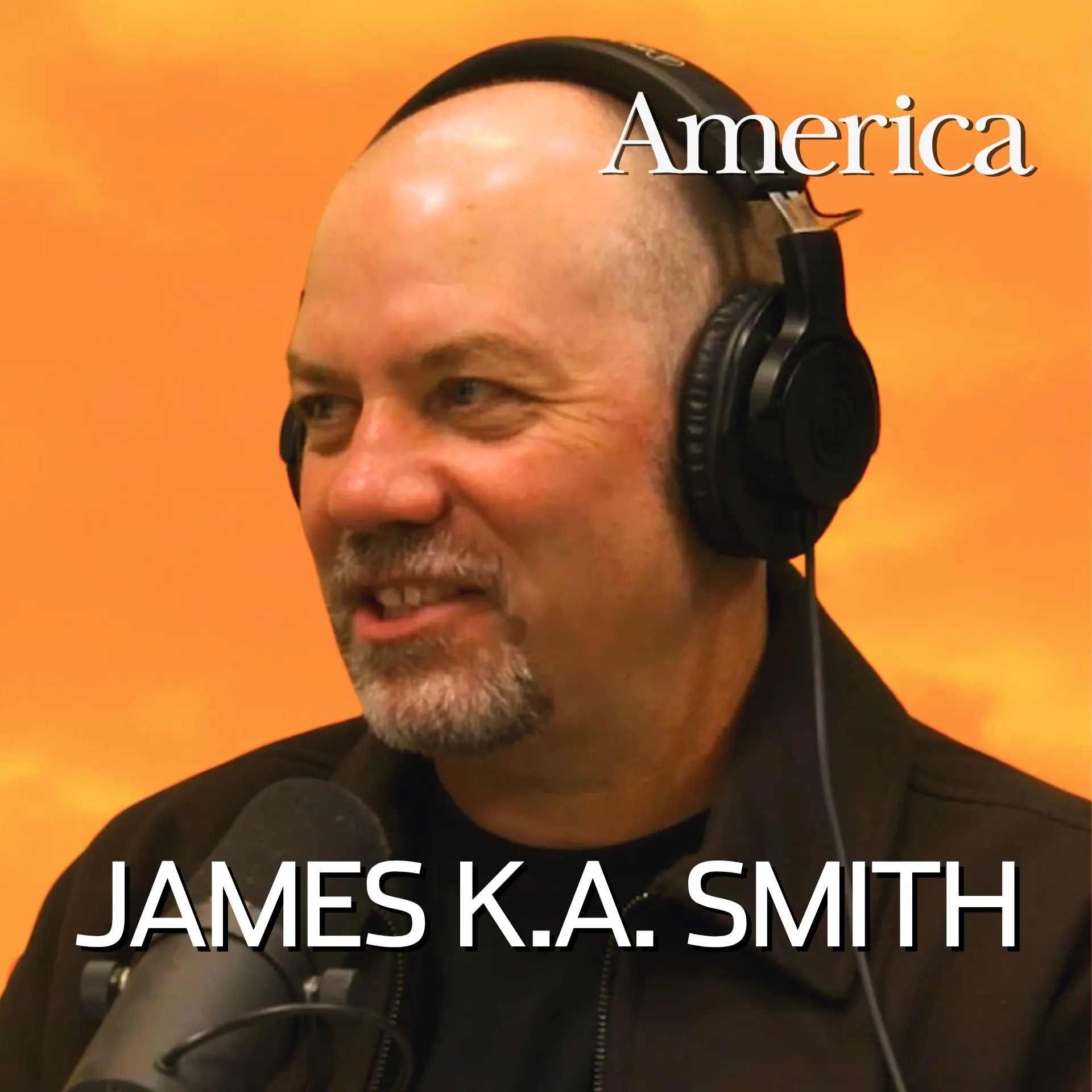
The Spiritual Life with Fr. James Martin, S.J.
Our human desire for God, with the Augustine scholar James K.A. Smith
00:50:42
Loading summary
Transcript94 lines
- [00:02]
Jamie Smith
In fact, I think the best way to understand the way Augustine uses this language of pilgrimage and journey is actually to understand it more as what I call a refugee spirituality. I think he thinks all of us are migrants who are looking for a country we've never been to, and yet. Yet somehow our hearts are made for that home. And so it makes him very attuned, I think, to the vulnerability of the Christian life, to the risks of the life in which we find ourselves. There's a kind of spiritual realism that I find very gracious, like it's a way of knowing that God has patience with me and that I shouldn't have any illusions about how difficult the road will be. But I'm accompanied on the journey by the incarnate One who is with us.
- [01:05]
Father Jim Martin
Welcome to the spiritual life. I'm Father Jim Martin. On this podcast, we reflect on how people experience God in their prayer and in their daily lives. And I am joined by my wonderful producer, Maggie Van Doren. Maggie, good to be with you.
- [01:19]
Maggie Van Doren
Great to be with you, Jim. And we are talking to an Augustinian scholar today, James KA Smith.
- [01:28]
Father Jim Martin
Yeah, we're really excited to have him on. Can you talk to us a little bit about James K.A. smith, who goes by Jamie? That's how we'll refer to in the interview.
- [01:37]
Maggie Van Doren
Yeah. So Jamie is a leading Augustinian theologian and a professor of philosophy at Calvin University. Jamie has written several books, including Desiring the Kingdom, you, Are what yout Love, and On the road with St. Augustine. And just this month, Jamie published a new book which is called make youe Home in this Luminous Mysticism, Art, and the Path of Unknowing. And it's out now. Just a few months ago, the staff at America Media had the unique pleasure of making a retreat that Jamie spoke at. And he was sharing the contours of Augustinian theology with us and helping us to understand where this might show up in the pontificate of Pope Leo, our first Augustinian pope. And while we learned a lot there, we also found the experience to be deeply impactful for many of us in our spiritual lives. So, of course, we had to invite Jamie on the spiritual life.
- [02:36]
Father Jim Martin
Yeah, he was great. He was so helpful and so clear and really so powerful and profound. We really wanted to have him on. And Augustine is such an important part of Christian history. Part of my own life. And part of your life, too, Maggie. Right?
- [02:49]
Maggie Van Doren
Yeah. One of the most influential classes that I took in Undergrad was on St. Augustine. We, of course, read the Confessions, which is regarded as one of the first spiritual Autobiographies in the west and excerpts from the City of God, which is an enormous tome of a book. But that class and the study of Augustine did make pretty lasting impression on me.
- [03:13]
Father Jim Martin
Yeah, me too. I love the Confessions. I didn't know much about Augustine before I entered the Jesuits. I'd heard of him, but in my philosophy studies, I fell in love with the Confessions.
- [03:23]
Maggie Van Doren
And what do you think you loved about it?
- [03:24]
Father Jim Martin
I think it was just so honest. It's, you know, as you say, it's sort of seen as the first autobiography, or at least modern autobiography. And he's just so honest and writes beautifully, and the story's fascinating. You know, the story of his conversion is just fascinating.
- [03:42]
Maggie Van Doren
Yeah, it's honest and it's relatable. I just couldn't get over how the writings of someone from the 4th and 5th century could seem so relatable and modern to my ears.
- [03:54]
Father Jim Martin
Exactly.
- [03:55]
Maggie Van Doren
Yeah. So, Jim, can you help us understand maybe the relationship between St. Augustine, the Augustinian order, and, of course, Pope Leo?
- [04:07]
Father Jim Martin
Yeah, it's a little complicated, but pretty straightforward once you know it. So St. Augustine, as you were saying, he's active around 400 A.D. early church Father writes in the Confessions, the City of God, many, many other things that Jamie talks about. So that's Augustine. The Augustinians used his rule. So The Order of St. Augustine is a religious order. Right. Like the Jesuits or the Trappists or the Benedictines. They live vows of poverty, chastity and obedience. They live in community, and they sort of took their inspiration from The Rule of St. Augustine were founded in 1244, and, you know, they're all over the world today. The Augustinians in the United States are probably best known. Before Pope Leo came on the scene for Villanova University, they're educators there. That is where Pope Leo, formerly Robert Prevost, did his studies and also did his formation at the Villanova University. So we have a pope who is a member of The Order of St. Augustine, the Augustinians, and he is influenced not only by St. Augustine himself. Right. And the saint's writings, but also the spirituality of the Augustinians. So it's a little complex, but that'll help us understand our conversation more with Jamie Smith.
- [05:29]
Maggie Van Doren
Well, Jim, you just gave us marvelous trajectory throughout time and history, so I appreciate all of those connections you made for us. Now, one of the themes that comes up in the conversation, and of course it's going to come up with any discussion of Augustine is one of spiritual hunger, of questioning, of doubting, and this hunger drawing us closer to God. So the audience question this week I think really does come out of that same spirit. It's from sue and she asks how can we reconcile the two churches of today, a church that follows Jesus and a more worldly church.
- [06:10]
Father Jim Martin
Well, thanks so much, Sue. Jamie gives a great answer to that. And there's a little bit of a lead up to the answer when he talks about the city of God and the city of Man. I think you'll really like his answer and our whole conversation.
- [06:20]
Maggie Van Doren
That's right. And if anyone wants to ask Father Jim a question, be sure to write to us at the spiritual life@americanmedia.org and
- [06:29]
Father Jim Martin
now onto our conversation with Jamie Smith. So, Jamie Smith, welcome to the Spiritual Life.
- [06:42]
Jamie Smith
Thanks so much. It's great to talk to you.
- [06:43]
Father Jim Martin
Yeah, great to have you. And congratulations on the new book.
- [06:46]
Jamie Smith
Thank you very much.
- [06:47]
Father Jim Martin
More about that later.
- [06:48]
Jamie Smith
Sure.
- [06:48]
Father Jim Martin
Now you are known mostly as a scholar of Augustine, St. Augustine, but could we focus a little bit on your own religious upbringing? Can you tell us about your background there?
- [06:57]
Jamie Smith
Yeah, I'm a Canadian, so I grew up in southwestern Ontario. And if anybody knows Robertson Davies novels, it's kind of that world. Interestingly, I did not grow up in the faith. I did not grow up in a religious home. And I found my way to Christian faith when I was 18 years old. I was dating a girl drew me into her family who were which was a family of very serious faith. I've now been married to that girl for 35 years. It's interesting. You know, in some ways I feel like I grew up and when I met her and met her family, I sort of heard the gospel for the first time. I just never, I had never encountered it. I just lived in a sort of flattened, secular kind of world. And so there was a way in which Christianity made sense to me. And interestingly, I do think it sort of woke up the intellectual life for me in ways that maybe we'll get to talk about. But when I look back on it, I would also say in some ways her family kind of loved me into the kingdom of God. She grew up on this farm and it was almost this kind of like they had a little bit of a commune thing going on and there were just all these people around all the time and they loved to be together and her aunts and uncles. And I think I came from a pretty messed up family life and experienced brokenness in ways that as an 18 year old I still couldn't name at that point. But now I look back and I realize Part of what I found there was a sense of belonging and family and a kind of homecoming, which is just kind of interesting because I'm a philosopher. I'm a philosopher of religion. I love thinking about the faith, but I just have to be honest that I also met God through this family. That just showed me a kind of communion that I didn't even know I'd been longing for.
- [09:10]
Father Jim Martin
I think that's so beautiful. I think this is the first time on our show I've heard anyone that has talked about a family kind of welcoming them into the faith. What was the denomination?
- [09:19]
Jamie Smith
So this was a very, very conservative evangelical sect called the Plymouth Brethren. They're the people who kind of invented dispensationalism and like rapture theology and things. So there's a lot of things I have since unlearned about that experience. And there's an irony in that. I feel like the love I experienced in this family wasn't necessarily reflected in the theology I was hearing in the congregation that we particip. But the other thing that was funny is my first experiences of worship, of communal congregational worship, again just sort of woke something up in me. And before I had even made any sort of commitment of faith. I remember being in the congregation and listening to Deanna's uncle preaching one night. It was a very lay driven kind of community and her uncle was preaching and shocking even to me. I said, I think I'm gonna do that. I think I'm supposed to be doing that. Which is such a strange thing for an 18 year old kid to sort of respond to. I was a jock, I didn't care about any of these things. But somehow this experience of the word, as I say it sort of awoke something in me. And there was a time where I thought probably this meant I was on a path to become a minister or a pastor, but that ended up taking a curve into this more academic track.
- [10:54]
Father Jim Martin
Now, are you still a member of the Plymouth Brethren?
- [10:56]
Jamie Smith
No, no. Now I'm kind of like a mainline Presbyterian and that's been a long path. I'm sort of a closet Episcopalian, I guess, something like that.
- [11:05]
Father Jim Martin
Well, we welcome all types on this show. How did you get interested in St. Augustine?
- [11:11]
Jamie Smith
Yeah, that's a great question. So as I said, I'm a philosopher by training. I did a first master's degree up in Toronto at the University of Toronto. That's where I first started. Sort of my interest was kind of piqued a little bit. And the fun story is I ended up going to do my Ph.D. at Villanova University. So here's the story. You can guess where this is going. Villanova's getting a lot of play these days. I actually went to study, like, sexy French, German, ecst, Existentialism and phenomenology and all these things. That's kind of where I was going. But while I was there studying this German philosopher named Martin Heidegger, it turned out that Heidegger's earliest formative work was on St. Augustine and lecturing on St. Augustine's confession. So in 1995, these lectures were published just as I was beginning my doctoral university. And as some of your listeners will know, Villanova is an Augustinian Catholic university. And so this was a place where I was sort of philosophically making my way back to Augustine with that kind of philosophical interest. And then he turned out to be a spiritual lifeline for me. And what a gift, a providential gift. I would say that I got to study this with other Augustinians, an incredible crew of patristic scholars as well. And it's funny, my doctoral advisor, his name is John Caputo, and he told me just recently after Pope Leo's election as Pope, that in fact, he taught Pope Leo German and French existentialism and phenomenology in his class in 1977 at Villanova University. So it's just kind of great fun to share this spiritual camaraderie with Pope Leo, whom I adore. I am just so grateful for it.
- [13:10]
Father Jim Martin
Yeah, me too. I mean, so you studied with people who not only knew Augustine, but loved Augustine and really, in a sense, lived out his charism and his vocation. Let me ask you, because I'm sure not everyone on this podcast listening may know. Can you give us a little thumbnail sketch of Augustine's life and who he was and where he fits into the Christian history?
- [13:29]
Jamie Smith
Yeah, I mean, I think Augustine is so fascinating. I'm still waiting for somebody to make Martin Scorsese, really still needs to make his Augustine movie, because it could be great. For those who are unfamiliar, Augustine lives in the late three hundreds and early four hundreds. He's from North Africa. He's born and raised in sort of what we would think of as Tunisia, Algeria region. His dad is Roman. His mother, Monica, is Berber African. So he kind of has this sort of biracial identity in some ways. But he is ambitious. He is a climber. His mom also has a lot of ambition for Augustine. So, you know, he's studying, he's going to school in North Africa, and really he's trying to climb to the upper echelons as a rhetor, which is a little bit like a lawyer meets an English teacher in some ways. And so he journeys, he leaves Africa. The reason why this becomes interesting spiritually is he leaves Africa as something of the prodigal son. He actually is trying to escape his mother's clutches. Leaves in the dark of night from the port in Carthage, makes his way to Rome. In Rome, he's intensely spiritually curious, but he's also deeply ambitious and quite promiscuous. He's kind of looking for love in all the wrong places. And so part of his story is kind of climbing all of these ladders of success and excess. Eventually makes his way to Milan, which is where the seat of the emperor is at that time. Basically is kind of working for the White House. And it's there that he hears Ambrose preaching in the cathedral, and he's sort of grasped by faith and then makes his way back to Africa, becomes a priest, becomes a bishop, and kind of the rest is the history of Christianity in the west in some ways.
- [15:31]
Father Jim Martin
Now, why do you think he is so important for Christians, I mean. Cause there's so many church fathers that we could point to. But why Augustine? And why is he so foundational?
- [15:38]
Jamie Smith
I think he's early, relatively early in the Christian tradition. He is voluminous in how much he has to say. We have shelves and shelves of not only, like, the books he wrote, but the sermons he wrote and the letters he wrote. He is one of the geniuses of the Western intellectual tradition in that sense. So he's incredibly articulate and thoughtful and creative. He's wrestling with the legacy of Paul, I would say, in particular. And I think this is happening just after the sort of Constantinian turn in Western Christianity. And so there's a lot of opportunity for his work to have kind of a wide influence.
- [16:22]
Father Jim Martin
Can you explain Constantinian term for us?
- [16:25]
Jamie Smith
Yeah, in the sense of. I'm thinking of after Emperor Constantine, in a way. Christianity is kind of given both new permission and new encouragement in its public role within the empire. And so that starts to just change the plausibility conditions for Christianity in a way, in the world. So there's this theological side, this doctrinal influence that Augustine has. Interestingly, we could also say whatever you might think of the Protestant Reformation, in some ways, it itself was an Augustinian renewal movement of sorts. You know, Luther and Calvin. Martin Luther was Martin Luther, OSA Order of St. Augustine. I do think Augustine is an important shared ecumenical source in Western Christian tradition, which is important. But I also think, and I think this is what Pope Leo represents, too. There is another side of Augustine. Augustine the pastor, Augustine the shepherd. That is a deep spiritual tradition of piety and practice that I think sometimes gets lost. There's a lot of people who love to hate Augustine. And by the way, there are reasons to get upset with Augustine. His view of women is terrible, for example. But there is this other. One of the things I love about Augustine is, and maybe this is what resonates with my own story, my own beginning of my faith journey is it's a religion of the heart. It is a religion of the affections. Augustine is saying, what do you love? It's not just what do you believe? Or what do you know, but what do you love? And what are you looking for from what you love? And for Augustine, so much of our angst and so many of our spiritual frustrations come from loving good things in the wrong way. And so I appreciate. I found him in some ways. I came to him as an academic and I stayed with him as a fellow pilgrim.
- [18:31]
Father Jim Martin
Yeah, I really like that insight. And you had shared that with us in an America media retreat about Augustine and desire in the heart. And of course, you know, our hearts are restless until they rest in you, our Lord, which I've always found tremendously powerful. And I think for a lot of people, the beginning of the spiritual life is this desire. Is this desire to know more, to be in union with God. And I can't tell you how many times I've used that with people, and it's resonated with them. One of the things I'm dying to ask you about is this. There's so much of Augustine. I mean, there's the commentary in the Psalms and the City of God and the Confessions. There's so much. Are there kind of besides the desire, are there kind of core theological themes that he comes back to over and over again?
- [19:13]
Jamie Smith
So, yes. So I think desire, this sense that in a way, God is an answer to our deepest hungers. Everybody's got a hungry heart. To quote the Boss. Another theme that I think is really, really significant in Augustine is this theme of pilgrimage, that the Christian life is a journey, and it's a long one. In fact, I think the best way to understand the way Augustine uses this language of pilgr and journey is actually to understand it more as what I call a refugee spirituality. I think he thinks all of us are migrants who are looking for a country we've never been to, and yet somehow our hearts are made for that. Home. And so it makes him very attuned, I think, to the vulnerability of the Christian life, to the risks of the life in which we find ourselves. I also think it makes him very sympathetic to actual migrants and refugees. And that's something that he lived out in. His work as a bishop was providing sanctuary in basilicas and cathedrals and things like that, you know, now I'm in my 50s on this journey, and there's a kind of spiritual realism that I find very gracious. Like it's a way of knowing that God has patience with me and that I shouldn't have any illusions about how difficult the road will be. But I'm accompanied on the journey by the incarnate one who is with us.
- [20:57]
Father Jim Martin
Yeah. You talked earlier about your own desires that were awakened by spending time with your eventual wife's family. Can you identify in yourself what you were hungry for, what you were longing for at the time?
- [21:09]
Jamie Smith
Yeah, that's.
- [21:12]
Father Jim Martin
Will you be my spiritual director for the next hour? I will be, yes.
- [21:15]
Jamie Smith
So it's funny, I think that my deepest desire that I didn't even know I was trying to work out was to be seen and to be known. And honestly, for a father to say to me, I love you. You're doing. You can come home. I think so many ways in which I. All kinds of other ambitions in my life, trying to be successful in all kinds of different ways, I think were some way of saying, look at me. I want to be noticed. And I think what I didn't realize is what I needed was to be seen by this heavenly Father who says, you're mine.
- [21:58]
Father Jim Martin
You're my beloved son.
- [21:59]
Jamie Smith
You're my beloved son. And by the way, I don't think that really dawned for me till my mid-40s, you know, in the most powerful sense. I think I knew it intellectually, but it didn't really become the story in my bones until that point. And it was incredibly liberating because then I'm not so frantic in my need to perform and to, you know, exercise professional conquest. I still want to do good things with the gifts I've been given, but I don't need to show off for God to love me. And that's. Yeah, it's been liberating.
- [22:42]
Father Jim Martin
Yeah. I mean, I think for a lot of people, they had that idea of the transactional God. Right. If I do this, God will love me. And oftentimes it comes from our parents or, you know, authority figures, you know, who gave us conditional love. And it really can influence and really sort of abuse In a sense, our image of who God is. I'm curious, though, what enabled you to have that kind of felt knowledge that you were beloved, besides the intellectual understanding of that therapy?
- [23:10]
Jamie Smith
To just be very candid, I would say my own experience of therapy has been a powerful spiritual encounter in my life. And then the other thing I would say, and this also grows out of a side of Augustine that the younger me didn't appreciate, kind of the mystical side of Augustine. As you know, in book nine of the Confessions, one of the great culminations of Augustine's story is he and Monica right before she dies, which is probably something hard. I'm cognizant of you recently losing your mother.
- [23:44]
Father Jim Martin
It's okay. I'm happy to hear about it. Monica and Augustine, I love it.
- [23:47]
Jamie Smith
Yeah. I mean, Monica is the patron saint of mothers of wayward sons. You're doing great, though, Jim. But they have this mystical experience together in Ostia, this coastal town outside of Rome. What did that mean for Augustine? This intellectual giant was, in a sense, transported into an awareness with a presence, with a communion and union with God that he could never put into words to say. For Augustine, words failed him is really saying something, because this guy had words for everything. And I would say, yeah, since my mid-40s and. And post therapy, this mystical tradition, which then I have found again in St Teresa of Avila and St John of the Cross, that speaks to me of this kind of awareness that we can have of our belovedness that can't be articulated in sort of discursive, propositional language, and yet it orients a whole life. I can live the rest of my life with that.
- [25:03]
Father Jim Martin
What do you say to people who say, well, I haven't experienced that I may know and believe that God loves me. Right. Or to quote James Allison, the theologian, that God likes me. That has a whole different kind of valence. What do you say to someone who says, I haven't had that experience. Where do I go for it?
- [25:25]
Jamie Smith
Yeah. Cause part of me gets scared that you can't program it.
- [25:29]
Father Jim Martin
Sure. It's all grace.
- [25:31]
Jamie Smith
Right. It's not something that you can achieve. And there's not quite a formula. I would say a couple things. One is, I do think putting ourselves in a community of faith and practice is just a way to keep tilling the soil of possibility. For that to happen for us, you can sort of commit yourself to the conditions that make that more possible. I do think there is something about finding contemplative traditions of Christian spirituality that cultivate in us a kind of inwardness and reflection, which is where you find it. Martin Laird, who I think is one of our great spiritual writers, he says in his little book, into the Quiet Land, that this mystical awareness of your belovedness is not something you accomplish or achieve. What you're trying to do is remove all the noise and distractions that have prevented you from hearing that this whisper has been being uttered over and over in the depth of your own heart. And I do think this is one of the great spiritual challenges of our culture of incessant distraction, is we are just so pulled by all of these other rival stories that in some ways, maybe what someone could do is they could just look to peel away as much noise as they can and just cultivate some time to listen to the still, small voice. And if we could get quiet enough, they might be surprised to hear that story rumbling in their belly.
- [27:19]
Father Jim Martin
That's always been there.
- [27:21]
Jamie Smith
That's always been there. That's the key.
- [27:23]
Father Jim Martin
Yeah, I really like what you said, that you have to kind of create this environment. You know, one of my spiritual directors said that, you know, you go to pray and, you know, you sit down to pray every morning for an hour or whatever at night, and something may happen, something may not happen. You may feel something happen, you may feel dry, but if you never do it, then you're not going to feel it at all. So you do have to kind of create that environment. And also, I totally agree that. I mean, I find it even in my life, you know, you're sort of stuck to your phone and you're, you know, scrolling through it or you're looking on what's on Netflix, and it's very distracting. And I think it's very difficult for people in this generation, and younger people especially, to really, as you say, peel it away and just be comfortable with the silence. I think people are uncomfortable with silence. One of the reasons, I think, in a sense, you don't feel popular. Right. I want to be connected to my friends, but it is. It's kind of essential. We're going to pause for a short break, but we will be right back.
- [28:20]
Podcast Sponsor Voice
The Spiritual Life is sponsored by Give Us this Day from Liturgical Press. Our community works for a faith that fuels hope, justice, and prayer with voices and perspectives you trust. Like a monthly feature from Father James Martin, Blessed Among Us, and reflections that meet you where you are, Listeners of the spiritual life receive 10% off a new subscription@giveusthisday.org SpiritualLife.
- [28:52]
Dramatic Reader/Voice Actor
Our names were whispered through time. From generation to generation. Our lives were to become one. The story Started long ago. Don't you feel that there are things that cannot be explained? I have to go. If you need me to do this, Abraham, I will go with you. What if we were brought together for a purpose? He appeared to me.
- [29:35]
Jamie Smith
Who appeared to you?
- [29:37]
Dramatic Reader/Voice Actor
An angel of God. I thought my purpose was elsewhere, but I don't need to keep looking anymore. I should have known you wouldn't understand. Hey, girl. Don't. Don't you dare. Rachel. My own sister. After all I have given you. Esau. You left me no choice. This is not what God wants.
- [30:05]
Father Jim Martin
No, it is not what you want.
- [30:09]
Maggie Van Doren
Leia.
- [30:10]
Dramatic Reader/Voice Actor
God has a destiny for us all. My whole life I've been waiting. What if this is it? Nothing is impossible for God.
- [30:40]
Father Jim Martin
So what are your spiritual practices yourself? What are your daily spiritual practices?
- [30:45]
Jamie Smith
Yeah. So, of late, my day begins in quiet. You know, it's funny. The tradition that I came into the faith through would have set me up with very sort of didactic practices. It's like, read your Bible. Make sure you're sort of like, absorbing this content. And now, over the last several years, my day is much more. It's less me performing and more me receiving. And so I'm just starting it in the quiet of contemplation for as long as I can. And then I will use. Actually, probably the companion who's been most with me in that practice of late is Meister Eckhart.
- [31:28]
Father Jim Martin
Oh, wow.
- [31:29]
Jamie Smith
John Sweeney and Mark Burroughs have created these wonderful little volumes of Eckhart. Where they take things from Eckhart's sermons and then they kind of translate it into poetry. And it's just interesting how when you have it on the page and there's all this kind of white space around it, I find I'm invited to just sit with it. And, like, it's almost like lectio divina. I'm sort of like, dwelling with this over and over again. I'm doing that at the beginning of a day just to sort of center. And then I guess I keep looking for little sabbaths throughout the day where I return to the breath of that sort of contemplation and just try to recenter myself in that again. I mean, I would also say congregational life is important to us, too. So that is still something that is part of sort of who I say we. Because, you know, this is a journey I'm on with my wife, too. But the simplicity. Sometimes when I talk about how sort of bare bones the other piece is. And yet, in some ways, I feel closer to God than I've ever felt when I like great repertoires of performance, you know.
- [32:37]
Father Jim Martin
Well, I think you need both. I think you need the intellect. Where you do know the Bible, you do know the tradition and you need the heart as well. Meister Eckhart, can you describe for our readers who that was?
- [32:46]
Jamie Smith
Yeah, Meister Eckhart was a German mystic in the 1200s, I believe, and just an incredibly potent articulator of the mystery of God. Also had an influence, I think on Martin Luther. So he's just. I have found him a very, very powerful spiritual companion.
- [33:10]
Father Jim Martin
Do you pray with Augustine much?
- [33:12]
Jamie Smith
Not so much actually.
- [33:13]
Father Jim Martin
Is that because he's too kind of like he's work for you?
- [33:16]
Jamie Smith
Yeah, maybe that's it. You know, I meet Augustine in my study so much I do find his sermons can be a source. Like maybe if I'm on retreat I take Augustine's sermons with me or if I myself am grappling with a biblical passage for something, he's a companion in that way. What about, how do you. Does Augustine show up much for the Ignatian tradition?
- [33:45]
Father Jim Martin
Augustine and the Ignatian tradition, I would say in the emphasis on desire, desire is a way to God. St. Ignatius would always say, pray to understand your desires. And I really do find that one phrase. Our hearts are restless until they rest in you. Completely revelatory for people. Because you can say to people at the beginning of their spiritual journey, hey guess what? These questions that you're asking, and even if you're an agnostic or an atheist, are God's ways of drawing you closer. And I often say, how else would God draw you closer other than to awaken in you the desire for God. And that quote is just, it unlocks it for people because it gives them the permission to say that my questions and my even doubts are actually or could actually be God's drawing them closer.
- [34:36]
Jamie Smith
Yeah, exactly. I mean this will sound really strange to put it this way, but Augustine should make us curious about even our idolatries. The things that I have a penchant to idolize to, like almost over identify with. Augustine would say, oh, tell me more about that. There's something going on there that you're really looking for, that you really want something, you're hungering for something from that. Augustine thinks that's probably not going to give you what you need. But let's get curious about. And it is, you know, as a sort of spiritual direction and self diagnosis to get curious about the things that I tend to overemphasize in my life might tell me Something about how I haven't yet met God in ways that he wants me to find Him.
- [35:33]
Father Jim Martin
Yeah. And that's very Ignatian. We talk about, or Ignatius talks about disordered affections. And the disordered affections, they're in a sense, in themselves, Right. You might have a. An affection for a certain person or success or something like that in themselves. They're not bad, but they're disordered if they move you away from God. And the question is, as you were saying, what is the deeper desire? And, of course, the deeper desire is always for fulfillment with God. And so it's how do we, in a sense, diagnose that and how do we sort of peel away the layers to get to the real desire? I'm very curious. I've been also dying to ask you, Pope Leo, OSA as well, Augustinian, is there an Augustinian spirituality not based on St. Augustine, but on the order of St. Augustine? What would you say to that?
- [36:21]
Jamie Smith
Yeah, so it is interesting, right? One of the other things that Augustine bequeaths to the Western Christian tradition is one of the earliest rules for monastic life. The Rule of St. Augustine was sort of retrieved by the order of St. Augustine. And, you know, I'm not internal to that, so I don't want to pretend that I can say what it feels like from the inside. But one of the things that stands out to me when you just read his rule is the centrality of friendship. You know, it's interesting. There's a place in the Confessions where Augustine says, without friends, I couldn't be myself. I couldn't be happy without friends. And when he was sort of cajoled into becoming a bishop, one of the things he stipulated was, fine, fine, I'll do it as long as you let me build a community within the bishop's residence, because I don't want to be alone. I feel like I can see that in the ministry and witness of Pope Leo already. You see somebody who recognizes his dependency on others. There's a deep sort of vulnerability there where we realize we need others to become the self that God has made us to be. And I think that sense of friendship, community, dependency, is maybe one of those facets of the Augustinian tradition.
- [37:51]
Father Jim Martin
How about unity? One of the things I've noticed from Pope Leo is this emphasis on unity. Of course, his motto is in the one capital O, we are one. And I've always wondered about that. I'm not a scholar of Augustine or the Augustinians, but I was curious. Is that part of Augustine's heritage Would you say yes.
- [38:10]
Jamie Smith
And this is, in fact, I believe that is a quote from St. Augustine. I wish I could remember where it's coming from. This deep sense of catholicity, in the most generous sense of we find ourselves as one body and that sense of absorbing diversity into a unity. So it's not uniformity, it's unity that then recognizes a diversity of gifts.
- [38:42]
Father Jim Martin
In that respect, when you see him in public and when you hear him speak and when you read his writings, do you get a sense that Augustine is behind this? St. Augustine is behind this? Yeah.
- [38:55]
Jamie Smith
I'm a little worried. I read into it, but it does. Like, he just speaks in a tone and tenor and grammar almost. That feels so familiar if you know Augustine's sermons.
- [39:10]
Father Jim Martin
Yeah, I'm really curious because I'm dying to ask you this as well. As a Jesuit, whenever Francis would open his mouth, we would all say, that's exactly what a Jesuit would say, you know, in terms of discernment and placing yourself in the Gospel passages and things like that. What kinds of things? Kind of tip you off to the fact that. That Leo is an Augustinian.
- [39:31]
Jamie Smith
Watch how frequently he talks about journeying. I hear this constant refrain of the Christian life as a pilgrimage, as a journey, and that we do it together. The City of God is a collective band on the road. And I just hear that in a lot of his very, very pastoral address. I think we can hear this in his ministry, his preaching, his writing. It feels familiar to me.
- [40:10]
Father Jim Martin
Since you brought up the City of God, can you describe what that is and some of its themes?
- [40:16]
Jamie Smith
Yeah, this, by the way, I think, is so crucial for the time we find ourselves in, maybe particularly in the United States. So one of Augustine's latest work was this ginormous doorstop of a book called the City of God. And. And he makes a distinction there between what he calls the earthly city and the heavenly city, or the city of man and the City of God. And a lot of people, when they hear this distinction, in fact, it might be roughly familiar to them, and they imagine that somebody like Augustine must be talking about, like, two levels. Do you know what I mean? Like, oh, down here on the earth, now we're in the earthly city, and we're hoping to get to this ethereal, white, pearly gates place, which is the heavenly city. No, no, no, no, no. For Augustine, the heavenly city and the earthly city is a way of talking about two rival imaginations for what human society could look like. And what distinguishes the heavenly city and the earthly city is not their jurisdictions or Their spheres or their levels. It's their loves. The earthly city is animated. He says this is a way of imagining society where the most important thing is love of self. And it finds its expression in. Augustine famously puts it, the libido dominandi, the desire, the lust for domination. Does this sound prescient? Does this sound contemporary? I mean, it's just. And forgive me, but I'm not sure our vice president has read this book correctly. The love that animates the city of God, this very different way of imagining human society is the love of God. How does that show up? Sacrifice, A willingness to lay down our lives for our neighbors. And one of the things that's interesting is Augustine could appreciate that we're always. The world is intermingled. Do you know what I mean? We live in what he called the permixtum of these two rival ways of being human. And get used to it. It's gonna be the case till the end of time. But we should be trying to be citizens of whatever space in which we find ourselves, who nonetheless are people whose citizenship in the heavenly city transforms the way that we live with our neighbors. I think it's a really crucial framing to retrieve today, especially when so many people who call themselves Christians and people of faith seem really interested in Dom.
- [43:01]
Father Jim Martin
Yeah, and I love that idea that there's kind of that mixture. How much of this is related to the idea of the reign of God being kind of the already but the not yet. Is there some of that in the city of God?
- [43:13]
Jamie Smith
Exactly that. In a sense, the reason why we can have, hopefully, a ministry of mercy and charity and a kind of leavening influence in the societies that we are a part of is because the reign of God has. Has already broken in. In Christ primarily, and now in his body. And in a sense, we want to be people who live in whatever region we find ourselves, who are ambassadors of that coming kingdom, of the kingdom for which we pray every day. Thy kingdom come. It's funny. There's a letter. There's a late letter from St. Augustine that he writes to a fellow named Boniface who was a governor of North Africa for the Roman Empire. And you can tell at this point that Boniface is a Christian and he's getting a little impatient. And you could tell he basically just wants to make the kingdom arrive here and now. And Augustine writes to him and he cautions him, and he says, we ought not want to live ahead of time with only the saints and righteous. It's not your job, Boniface, to purify the world. We ought not live ahead of time. There's a sense of it's not our job to make the kingdom come or to impose what we think is God's version of right order. It's our job to be ambassadors and foretastes of that shalom, that flourishing, that love overflowing in the world.
- [44:43]
Father Jim Martin
Well, and also, we can't do it. I mean, we wouldn't be able to do it if we tried. And I love that Romero prayer. You know, we plant the seeds that others will harvest. Right. We are stewards of a future that is not our own. I think that's hard for people. I mean, you want change and you want to. You would like the kingdom of God to be here in the City of God, to be kind of fully present, but it's not up to us. It's in God's time. And that can be frustrating for people who are even devout believers. You know, this is the perfect seg to our audience question, and it's from sue, and it's the perfect question for you. I'll answer it first. Put my two cents in, and then I'll let you answer it. So sue asks, how do we reconcile the two churches of today, a church that follows Jesus and a worldly church that follows what she calls less than spiritual men? So, as Jamie was saying, I think part of it is with patience. That's the first thing, and sort of faith and prayer. But I also think it's having a sense of history, you know, that the church has always been filled with less than spiritual men. And, you know, we look back on St. Peter, who denied knowing Jesus three times. Of course, Judas, you know, he. He's ejected from the apostles in a sense, but there's always been these imperfect people, men and women, you know, who have been part of our church and have led the church. And I really do think, going back to the time of the apostles, you know, I often point out that James and John were arguing, you know, are we going to be first? And, you know, the other apostles are indignant at them. And so to say that this has always been part of the church, it's always been part of, you know, since we're, in a sense, stuck with the city of man and the city of God, but that it is up to us to continue to work for, you know, a church that is more spiritual, that is less worldly, and that is less corrupted. So it's that kind of tension between the already and the not yet. So again, from sue to Jamie, how do we reconcile the Two churches of today, the church that follows Jesus and one that a worldly one that follows less than spiritual men. What would you say to Sue?
- [46:46]
Jamie Smith
Yeah, I so appreciate your reply. I would say first of all, Augustine helpfully gives us some resources here because he's also careful not to identify the City of God with the church. Don't think that that's the institutionalization of the City of God. So that's a helpful reminder, as you say, it's a kind of eschatological reminder. We're still praying for the kingdom to come. And then I think in the spirit of your reply too, I would say so often the witness to the spiritual church, as I think sue calls it, happens from the bottom up and not from winning some contest, from the top down. And I'm mindful of St. Teresa of Lizzie's Little Way. And I think it might be the Siouxs of the world who in their bottom up world, in their parishes, in their communities, who show they're not gonna get sucked into the culture wars. They're not playing this game of contest and domination. They're bearing witness to how the world could be otherwise. Let's not underestimate how powerful and attractive the beauty of such faithful lives can be.
- [48:02]
Father Jim Martin
Jamie Smith, thank you so much for sharing something of your own life. Thanks so much for explaining Augustine. Cause I know it really is on a lot of people's minds, especially Catholics these days. And thank you for your new book and thanks for just joining us today.
- [48:14]
Jamie Smith
Such a pleasure. Thank you so much.
- [48:24]
Father Jim Martin
I was so happy that he shared so many of the themes that he shared with us on that retreat because I just found that retreat really sort of mind clearing.
- [48:33]
Maggie Van Doren
Yeah, everybody has a hungry heart. That line from Bruce Springsteen, in a way, you know, St. Augustine paraphrase, perhaps. I think it's something that really everyone can relate to.
- [48:47]
Father Jim Martin
Yeah. And I'm going to write on that theme of desire in the spiritual life. And just that sentence, our hearts are restless until they rest in you, O Lord. Which you can find at America Media and the link is in the show notes. Also, I'd like to let you know that I have a new book out, a memoir called Work in Progress. It's the story of finding work through a variety of crazy summer jobs like busboy, dishwasher, caddy, factory worker, and many more. And eventually finding God. Basically, it's a light hearted spiritual memoir about growing up in the 60s, 70s and 80s and is available in print, ebook and audio anywhere books are sold. I really hope you enjoy Work in Progress The Spiritual Life with Fr. James Martin is produced by Maggie Van Doren, Sebastian Gomes and myself. Production assistance from Will Gualtieri and Adam Buckmuller, who also engineered the show. The theme score is courtesy of Teddy Abrams and Nate Farrington. You can follow me across social media at. James martinsj. Thanks so much and God bless.