← The Spiritual Life with Fr. James Martin, S.J.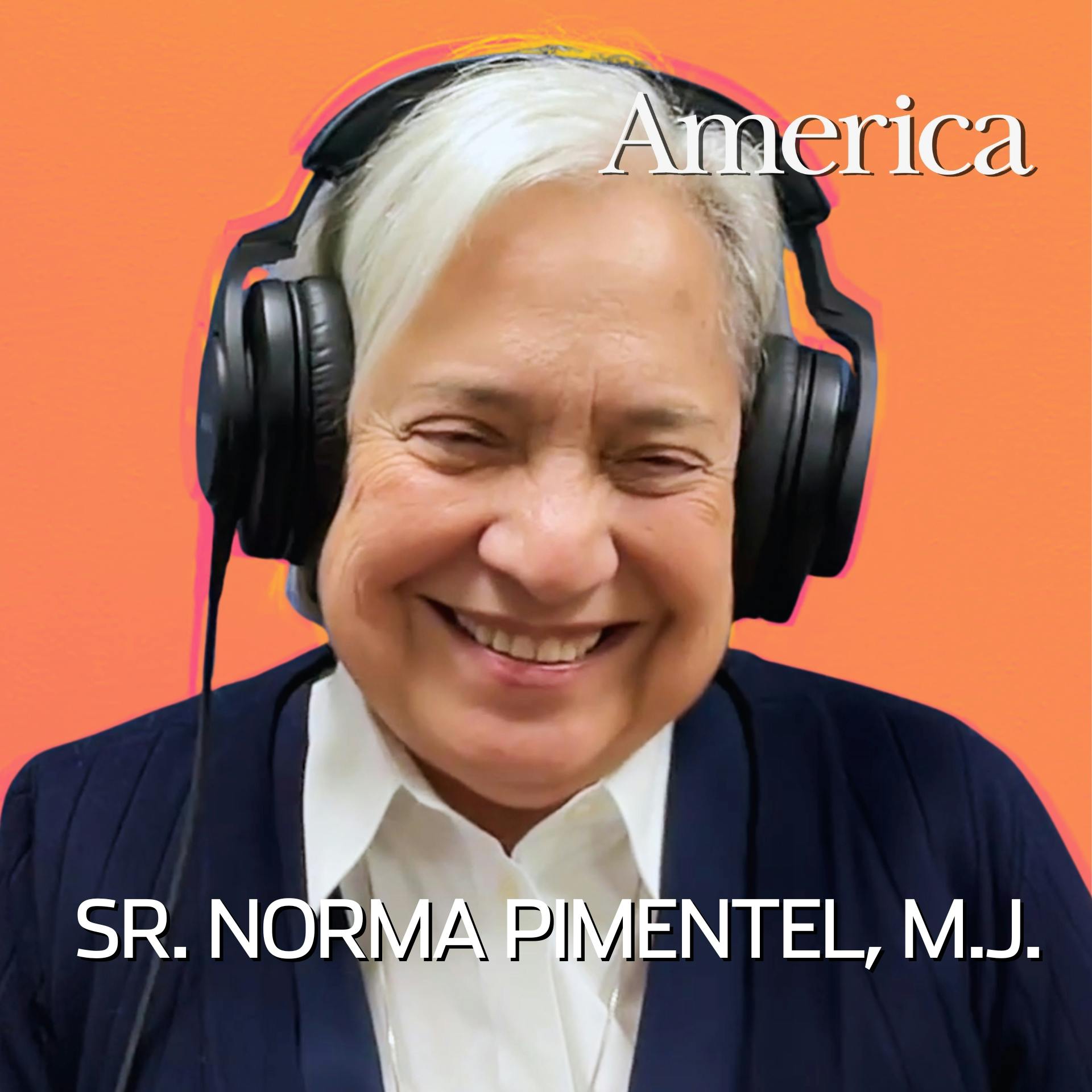
The Spiritual Life with Fr. James Martin, S.J.
The Catholic sister ministering to migrants at our border
00:45:10
Loading summary
Transcript87 lines
- [00:00]
Fr. Jim Martin
At the recent jubilee of Young People in Rome, Pope Leo called on participants to spread your enthusiasm and the witness of your faith. At Boston College Clowes School of Theology and Ministry, you are invited to answer that call. Through graduate theological studies, 100% of master's students receive scholarships. Learn more at bc.educstm.
- [00:21]
Sister Norma Pimentel
So I think when there are difficult times, I think I always turn to this phrase from the scripture that says, be still and know I am God.
- [00:38]
Fr. Jim Martin
Welcome to the spiritual life. I'm Fr. Jim Martin. On this podcast, we reflect on how people experience God in their prayer and in their daily lives. And I am joined by my indefatigable producer, Maggie Van Doren. Maggie, good to be with you.
- [00:52]
Maggie Van Doren
It's good to be with you, Jim. And I hope I'm indifferent. I can't say it, but I hope I am that for you.
- [01:01]
Fr. Jim Martin
I think you are that. Good to be with you. And this time, we are speaking with Sister Norma Pimentel. Can you tell us a little bit about this amazing woman?
- [01:10]
Maggie Van Doren
Yeah, I would be glad to. So Sister Norma Pimentel is a missionary of Jesus, and for over 12 years, she has been the Executive Director of Catholic Charities of the Rio Grande Valley. She is nationally recognized for her compassionate leadership in serving migrants and refugees at the US Mexico border and for her advocacy for humane, faith based responses to migration.
- [01:34]
Fr. Jim Martin
Yeah, And I think what's interesting is also that pretty much for all of her life in a religious order in the Missionaries of Jesus, she has been working with migrants and refugees, you know, almost all of her adult life. And she talks about all those experiences in our conversation.
- [01:48]
Maggie Van Doren
Yeah, she's a real, a subject matter expert on this. And it comes at a very prescient time, I think, in our nation's history. But before we get into that, Jim, what gospel grounding do we have for talking about migration?
- [02:08]
Fr. Jim Martin
Well, we have gospel grounding that is very clear, particularly in Matthew 25, where Jesus says in a passage often called the judgment of the nations, which is kind of a litmus test for who gets into the reign of God, who gets into heaven. When I was a stranger, you took me in, or you didn't take me in, you know, you cared for me. And at the time, this would have meant, you know, again, these are aliens, resident aliens, Migrants. Right.
- [02:36]
Maggie Van Doren
The Holy Family was a refugee family.
- [02:40]
Fr. Jim Martin
Absolutely. And even though that's been sort of much bandied about on social media, popes all the way back to Pius XII have said the Holy Family is the archetype of every refugee family. So the Holy family were refugees themselves. And the flight into Egypt, you know, they're leaving their homeland, they're going hundreds of miles away to a different culture, a different land. So Jesus reflecting, perhaps on his own experience, but really just on the timeless tradition of the Hebrew scriptures, which also says in Exodus, you shall not oppress the resident alien. This is God saying this to the people of Israel, because you yourselves were aliens once in the. Of Egypt. Right. During the Exodus. And so, you know, the Old and the New Testament are really clear about the need and the command and the requirement for people to take care of migrants, refugees, internally displaced people, whatever you want to call them, people who are seeking a new life and seeking safety. And again, there's that great insight that the people of Israel were themselves aliens in the land of Egypt. And also, if we doubt that, or if we don't care somehow about the Old Testament, which is crazy, we have Jesus himself saying, how you treat the migrant and the refugee and the internally displaced person is how you treat me. So really, I often say to people, Maggie, that, you know, a lot of the Gospels can be a little obscure and, you know, you might have to have a little bit of a knowledge of Greek or a little bit of a Bible commentary, but some of it's really straightforward.
- [04:11]
Maggie Van Doren
Yeah. There's no equivocating this.
- [04:13]
Fr. Jim Martin
Yeah. So this is Sister Norma, a missionary of Jesus. You know, this is the name of her religious order carrying this out, you.
- [04:20]
Maggie Van Doren
Know, and at this particular historical moment, we have all been honed in, focused on the issue of immigration. Our nation has been rocked by the killing of Renee Goode and the procedures of ice, and many of us are looking for answers. And what's really extraordinary about this conversation is that Sister Norma has been dealing with this kind of upheaval, both in a daily way and in the longer trajectory of her work, for decades now.
- [04:45]
Fr. Jim Martin
That's absolutely right. And I think what's wonderful, as you're pointing out, is that we tend to get wrapped up in arguments and debates and political points and whatnot. And here's someone who knows. Right. Here's someone who has firsthand experience and can tell us, as you said, as a wisdom figure, what's going on on the ground. What's the Christian response? What's her response been? What has she found helpful?
- [05:07]
Sister Norma Pimentel
Right.
- [05:07]
Fr. Jim Martin
And not helpful, but to really trust someone who is on the ground and who's with. She talks in our interview about sleeping in a shelter with migrants for 10 years with her sisters. She understands it. And so I think it's great to have someone who's an expert who can really tell us what's really going on. And that's definitely Sister Norma.
- [05:28]
Maggie Van Doren
And she offers really great insight into what sustains her in this ministry because it can be tumultuous and it can be scary. And she returns again and again to the presence of God.
- [05:41]
Fr. Jim Martin
Yeah. And I think it's also very scary when you see some of the language that's being used against migrants and refugees. But it's amazing in this interview how much she finds comfort and solace in her prayer. In a very explicit way, she talks without giving away too much of the interview, not only feeling calm in her prayer, but being able to bring that calm to other people. So it's also something that relates to people who might not be working one on one with migrants or refugees, but in their daily lives as well.
- [06:11]
Maggie Van Doren
Absolutely. And that ties in, Jim, to our audience question this week. And that question comes from Ayela. And the question is, is there a prayer or mindset that helps you continue putting one foot in front of the other during uncertain and turbulent times? So both Father Jim and Sister Norma will answer that question a little later on in the episode. And of course, if you'd like to ask Father Jim a question, you can write to us at the spiritual life@americanmedia.org.
- [06:40]
Fr. Jim Martin
Well, thanks so much, Maggie. And now onto our conversation with Sister Norma Pimentel. Sister Norma, welcome to the spiritual life.
- [06:55]
Sister Norma Pimentel
Thank you, Fr. Jim it's my pleasure to be here.
- [06:58]
Fr. Jim Martin
Great to have you. So Sister, our audience now knows a little bit about your ministry, but I want to go back a little bit in the past. Can you first tell us a little bit about your religious order, the Missionaries of Jesus? I'm not sure if many of our listeners are familiar with it and perhaps a little bit about its spirituality and how you came to know them.
- [07:19]
Sister Norma Pimentel
Certainly, you know, the Sisters Missionaries of Jesus came from Spain and they were invited by our then bishop to come to South Texas. And so when they were here in South Texas, and especially where I'm from, Brownsville, we all knew them as Las Callejeras, you know, the nuns of the street, because what they did was actually visit home by home in the neighborhoods, the families, get to know them and be present to them and help them out. And so I got to know them in that one retreat, in that one prayer group that I was invited and I wasn't really wanting to go to and ended up God really turning my life around. And my vocation happened. My life was focused 100% in God from that moment forward. And the sisters were at that retreat and that would attend to that retreat in that church. And so they invited me to a vocational retreat. And I'm here now.
- [08:20]
Fr. Jim Martin
So when did you meet the Missionaries of Jesus? How old were you?
- [08:24]
Sister Norma Pimentel
I was 24 years old, or about to become 24 years old. Yes.
- [08:30]
Fr. Jim Martin
And what were you doing at the time when you were 24 years old and met them?
- [08:34]
Sister Norma Pimentel
You know, my plans were to. I had no sense of wanting to be a sister or anything having to do with the church. My life was revolved around art, you know, since I was little, I kindergarten, you know, I remember the teacher telling me, norma, I want you to do the Nativity in the wall. And she put butcher paper, and I did it. You. All my life, art has been the center of my life. And I went to school, get a Bachelor of Fine Arts, and I was gung ho to continue that. And so I was pretty much waiting to follow up and go off into. Continue my studies in architectural design and just to live my life and follow up my dream. And this is where things changed. At a prayer group that I was invited by one of my friends and. And I ended up going to this prayer group and I met the sisters. And so I really seriously thought this is what God wanted for me to do, you know, follow him and see my life. This is where he wanted me to, who I was called to be.
- [09:43]
Fr. Jim Martin
And I'm sure a lot of listeners will want to know, how were you able to discern that interiorly? Was it an attraction to what the sisters did? Was it something that was going on inside of you during the retreat? What was it that, in a sense, convinced you?
- [09:57]
Sister Norma Pimentel
You know, I grew up with my parents talking to me about God, a God that's going to get after me if I didn't behave. You know, that was God to me all my life until I actually met God as a God that loves me, you know, a God that was very different. And so I fell in love with God. And when the sisters asked, I said, yes, I think I want to do that. And I think God is calling me to be a sister, you know. And so I did. And I said, if it's not for me in one year, I'll get out, continue my life. But I want to see if this is what God wants of me, you know?
- [10:33]
Fr. Jim Martin
And how long has it been now?
- [10:35]
Sister Norma Pimentel
Wow, 40 years maybe. Yeah, I think since that first day. Yeah.
- [10:40]
Fr. Jim Martin
Is it fair to say you've been working with migrants and refugees almost the entirety of your Time as a missionary of Jesus. Is that fair?
- [10:47]
Sister Norma Pimentel
I think so, Father Jim. You know, because even from the very start, when I enter religious life, I saw how border patrol would call Sister Juliana very late at night and just ask, sister, we have this fat mom and child. Would you be able to take them into your house and take care of them? And because really, back then, there wasn't really a space for mothers and children. And so our community was always. Always had a mother or with a child in our house, and we was part of our community, you know, in our meals. And while the sisters would prepare them to move on to their final destinations, where they were, they had family here in the United States and follow their process of establishing whether they could stay or not through asylum or not. And so the sisters, right from the start, this is who I became part of. And then very soon, in those years when I entered, our bishop, then John Fitzpatrick, asked the sisters if they can oversee this shelter for refugees that were coming from Central America. And they say, yes. And so I completely dived into that. I was actually working for the diocese and the catechetical office, and I told Bishop, I would love to be part of that. I want to be with the families and with the children, and I want to be able to help the sisters. So actually, we moved in and lived at the shelter for 10 years almost.
- [12:20]
Fr. Jim Martin
You know, you were living in a shelter for migrants and refugees for 10 years?
- [12:24]
Sister Norma Pimentel
Yes, yes. And it was usually just two sisters, Sister Juliana and myself, you know, that were there overseeing the shelter and taking care of the hundreds and hundreds of immigrant families that were arriving every day, day and night. And so I was fully 100%, totally engaged in being present and helping Sister in attending to the needs of the families that were arriving from El Salvador, Nicaragua, Honduras, Guatemala. Those are the main countries that we were seeing people come from.
- [12:59]
Fr. Jim Martin
And what was your experience of God like back then? Because I would imagine a lot of people might think, oh, my gosh, that would be so overwhelming. And even though it's such a privilege to be with people, maybe it would be stressful or you wouldn't get enough sleep or. So where was God in all of that?
- [13:14]
Sister Norma Pimentel
Well, he definitely was taking care of us because he was only two of us. But, you know, I found myself that one day out of the week, we would always take the day. And for me, that was like a retreat day, a time for me to spend in prayer and meditation. Because when I would go back to the house, I noticed the change in me, how I was very present in the calm and God became a source of calmness that I would be able to. Then instead of see problems or chaos, one thing after another, I would always see opportunities to be able to offer how to resolve whatever surface during the day and being present to the families and engaged and be part of that. And so it was a beautiful experience of being like an oasis for the families while they arrived and stayed with us for a couple of days.
- [14:14]
Fr. Jim Martin
Well, it sounds like that day of prayer was a real oasis for you. I know a lot of people would be interested in hearing what was your prayer like that helped ground you, because you said you went away and you had this retreat day, and you came back and you felt more calm. What happened in your prayer that helped you to feel calmer?
- [14:31]
Sister Norma Pimentel
I think that just having that time alone and aside from whatever else I did in the day while I was there, it helped me to be able to center myself and calm down and feel a different kind of Norma, you know, a Norma that was more at ease, a Norma that was more present, you know, and whatever I did as far as the. The prayers that we did during the day, the sisters, and the time I was spent at the chapel, that was enough for me to find myself calmer and more present to what was happening before me as I continue the rest of the week.
- [15:17]
Fr. Jim Martin
Now, you've been doing this work for a long time. Can you describe what your current ministry is?
- [15:22]
Sister Norma Pimentel
Well, my current ministry is overseeing the Cherbolch arm of the Catholic Church and here in South Texas at the Diocese of Brownsville. And so it involves really being present and responding to what our community, our people here in the Rio Grande Valley, El Valle. What are the needs that are surfacing that they need a response from the church? You know, there's a lot of, for example, food insecurity, housing insecurity, emergencies that may happen because of, like, immigrants that started to enter the United States, and they needed attention and care and humanitarian care and presence. And so we, in my responsibility as Catholic Charities has been to make sure that we join with others in the community to respond and to care and to make sure that refugees, immigrants that are arriving into our community and brought to us by, in most cases, everybody that we were receiving were people that border patrol release and basically ask us, can you take care of them? You know, can you help them get to their next step in their process of their legal status? You know, and so I think that we were a way to show that God is with them and God is present through our actions of love and care.
- [16:46]
Fr. Jim Martin
You're probably one of the most well known people in the Catholic Church who ministers to migrants. Even though you say you're working with all sorts of people in the diocese. What do you think the most common misconception about migrants and refugees is, and how do we counter that?
- [17:01]
Sister Norma Pimentel
I think the most misconception is what we hear sometimes in the media. That is showing the immigrants or the refugees as intrusive, as criminals, as people that are really. We have to be afraid of them, you know, but the majority of them, the people who are released and allowed to enter a community and continue that process of asylum, they are actually just simple people, fathers and mothers with their kids asking for an opportunity for life to feel safe, to feel protected, to have their kids have an opportunity to go to school and not afraid that they may be killed or that may be hurt in any way, and they could have a future, a good future. And so that's what I think is the biggest misconception, that we don't give them a chance to really see who they really are.
- [18:03]
Fr. Jim Martin
Yeah, I agree. I worked for two years in East Africa with Jesuit Refugee Service in Nairobi, and I came to know refugees from, Gosh, Ethiopia and Sudan and Rwanda and Uganda, and. And, you know, I saw people who were simply trying to make a life for themselves and were fleeing violence and warfare and famine and persecution. And I often would say to people, you know, you would do the same thing, you know, if you were endangered and you wanted to try to help your family and, you know, just preserve your life. What do we do to counter those misconceptions?
- [18:40]
Sister Norma Pimentel
You know, Father Chiem, I think that getting to know a family, getting to know a person. Pope Francis encourages us to do this a lot, to encounter the other, to get to know who they are, know their story. I think that by doing that, we will be able to experience the presence of the other person in a very beautiful way, that you can then understand their struggle, understand where they're coming from and why they're here, and maybe not be so quick in seeing them as something bad. You know, I remember one time in Bronzeville when we had the shelter in Bronzeville. This lady comes over to sell me a Xerox machine. And she was very not happy that we were helping, according to her, illegal aliens. And she said right out front, sister, I don't like that you help illegal aliens. And I said, but I'm still going to sell you my Xerox machine. But anyway, I said, thank you for telling me. Let me show you what I do and why and so I walked her through the center, the shelter that we have there in Brownsville, Casa Romero. And I introduce her to the families and show her why they were there and who they were. And when we get back to the office, she turns and tells me, Sister, I am 100% in favor of what you're doing. So when you see a mother, a child and a baby and a parent, things change. You know, it's like you start to see them up close and your response to them will be very different. I believe that totally.
- [20:18]
Fr. Jim Martin
I think that's a great insight, because when you meet them as individuals, you hear their stories, they cease to become stereotypes or, you know, political figures or even ideologies, and they become human beings. I remember I read something from Walter Brueggemann, the Old Testament scholar, who said that, you know, stories really open our minds up and arguments close them down for the most part. And this is one of the reasons Jesus taught in stories. And I think when you're meeting a person, you're meeting their story, and it's essential. Now, I think one of my questions for you is, you know, what would you say to listeners who are concerned about what's happening in our country in particular, but either don't work with migrants one on one, or can't do what you did, which is to bring someone who disagrees with them face to face with a migrant or a refugee? What do you tell people like that who want to help, and how can they discern their own response in these times?
- [21:19]
Sister Norma Pimentel
Well, I think we have to definitely be very in touch with God's presence in us, because God will be our compass. God will be that force within us that will guide us toward the other, whoever that person is, and respond the way he would like us to respond to, because we are actually his hands, his feet, his presence. And so I think that there are immigrants or refugees everywhere in every community here in the United States. How can you be present to someone that is right now in great fear and is scared and is needing to feed their little ones or kids and is afraid to work, afraid to go to school, afraid to everything? You know, just simply acknowledge that that is a human being and say hello and smile and maybe ask them for their name and ask them, how are you doing? I think that is the first steps that we must take. God will let you know what else you need to do.
- [22:28]
Fr. Jim Martin
What do you think it is that keeps people from reaching out? Do you think it's fear? Are they afraid? Or is it hatred? Or what is it that you experience that prevents people from taking that first step.
- [22:41]
Sister Norma Pimentel
You know, you mentioned hatred. I think that hatred may surface from lack of understanding and misconceptions and fear. And so if we really fear what this individual is possibly doing or hurting or bringing into my life, then there is a shutdown or a resistance to keep that person away or not close. God needs to be at the center of everything that, who we are. And when that happens and when we really put ourselves in God's hands, we will allow to be guided by that love that God is giving us to make sure that we reflect that love of God to every person we encounter in our day, every day.
- [23:30]
Fr. Jim Martin
So it's this idea that perfect love casts out fear, right? That we're called to.
- [23:36]
Sister Norma Pimentel
Well, it gives us the courage, right? It gives us the courage to really live out our faith. Something like what Pope Francis said many times, you know, he said, go to bed doing good, you know, well, that good is with everybody, you know, with no exceptions. You know, he would say we must allow everybody in. Todos, todos, todos. Everybody, everybody needs to be part of, you know, we can't exclude anybody. When we exclude somebody, we're not really living out that plan of God in our life.
- [24:08]
Fr. Jim Martin
We're going to pause for a short break, but we will be right back.
- [24:13]
Sister Norma Pimentel
If you're thinking about what's next in your life and you have questions that you want to explore and you want to explore that with some other people, the Boston College Companions program will help you. It will provide a context for you to explore some of those questions and an incredible environment to ask the biggest questions of life and the most personal questions.
- [24:44]
Maggie Van Doren
This episode is brought to you by Greenlight. Get this. Adults with financial literacy skills have 82% more wealth than those who don't. From swimming lessons to piano classes, us parents invest in so many things to enrich our kids lives. But are we investing in their future financial success? With Greenlight, you can teach your kids financial literacy skills like earning, saving and investing. And this investment costs less than that. After school treat start prioritizing their financial education and future Today with a risk free trial at greenlight.com Spotify greenlight.com Spotify.
- [25:18]
Fr. Jim Martin
Now you brought up Pope Francis. I wasn't going to ask you about this, but I know you had some interactions with him. Can you describe how much time you had with him and what your encounters were with him?
- [25:30]
Sister Norma Pimentel
Yes. Well, you know, I never expected and he, they actually told me that he wasn't interested in talking to nobody but the mothers and the Children of the refugees, you know. And so he said, I cannot even say hi, you know. And I said, nope, he's going to be present only to the immigrants, you know, said, okay. So I was in the pews, and then all of a sudden, you know, the moderator of the event, she went around and, oh, here's bishop and here's the mayor and here's the sister and here's. And they said, oh, momento. Yeah. And he stopped everybody and said. Or something like, I go, oh, my God, it's me. You know, it's like, I couldn't believe. It's like, wow. You know, he wants to talk to me, you know, So I got up and he actually said a lot of stuff, how much he was so happy to what we were doing here in South Texas with the community volunteers of everybody responding and welcoming the so many families and caring for them. And then he says, at the end, he said, You know, I don't know if it's right for a Holy Father to say this, but I'm going to say it anyway. I love you very much, you know, and so. Wow. So it was a blessing. It was. Oh, my God. He lifted me up and said, go forward, my child, and continue doing good.
- [27:03]
Fr. Jim Martin
You know, that's very uplifting. Let me ask you something that's quite topical as we're recording. What are your thoughts about the way that ICE is operating these days?
- [27:14]
Sister Norma Pimentel
You know, I'm very sad to see families hurting, to see families scared to be CFAM is treated the way they're treated. I think that we cannot be okay with anyone being treated without the dignity and respect that we, every human person, deserves. That is a right given gift from God. And to see that so destructively, it hurts so much. And I wish that how can we be present to them to show that we care about the fact that anyone, when anyone is treated so wrongly. It's just something that I feel very sad about, and I wish that we could do something about that.
- [28:04]
Fr. Jim Martin
Yeah, I agree. I was telling someone the other day that one of my good friends, George Williams, is the Catholic chaplain at San Quentin, and he works with people who are murderers and mass murderers, and they're treated as well as he can with dignity and. And they get the sacraments and they're treated like human beings. And it's amazing to me that even people, you know, even if you think that, you know, people have in some way, you know, broken the law, no one deserves to be treated like this.
- [28:34]
Sister Norma Pimentel
Nobody. You know, I think that violence and mistreatment of another person can never be justified. You know, it is wrong how we proceed to handle and take care of what needs to be done to figure out what we, this country needs to do. There's a wrong and right way of doing things, and that is very wrong.
- [28:56]
Fr. Jim Martin
I agree. Now, what do you say to people who say, well, you know, they broke the law, they're illegal, or they're illegal aliens and so they deserve it and we're just enforcing the law and they should get out. What do you say to people who say that? And I'm sure you hear that all the time.
- [29:11]
Sister Norma Pimentel
It's not about them who entered the country in a manner that they did without legally entering. But I think this is beyond that. I think that is because many of the people that entered actually entered legally through the port of entry through app that they asked for an appointment and they were going to court and they were actually doing things try for that process. And so they're still being treated like this. So it's no longer about somebody who entered illegally. It's about really generalized. Everybody is without any exception. Nothing can justify the fact that somebody's treated wrong. I think that protecting the human dignity of every person is above and beyond anything else. And I think that we're called to show who we are, people of higher standards and higher respect to human life.
- [30:17]
Fr. Jim Martin
And it is true, isn't it, that the vast majority of migrants are here legally, as you're saying, they've tried to work through the legal systems. Is that accurate?
- [30:25]
Sister Norma Pimentel
That's what they want. If they're not doing it, it's because they're not given that option. I think that our country needs to establish pathways to that will give people the right to follow the right way to proceed, to legalize their status. Nobody wants to be afraid all the time of the fact that where they live and where they work and how they live their lives. I think if we can show ways of how someone can be able to define the fact that they have credible fear for their life and they can follow a certain process, we lack that. And we need to be able to create a reform in the immigration process that offers that so that people can actually do it the right way.
- [31:14]
Fr. Jim Martin
Now, you've been accompanying migrants who have been really struggling. And I'm wondering, are there spiritual lessons you've learned from the migrants themselves?
- [31:23]
Sister Norma Pimentel
Well, one of the things is, for me, when we had so many people at our center and and we needed additional space, we would bring them to the basilica. Father Jorge was very open to his sister Wherever you need to put them, go ahead. You know. But I also took them to the convent. I have a hall. And there in the chapel that is right next to the hall at night, when the lights were off, the men would go and kneel down before the Blessed Sacrament and quietly crying and praying to God. For me, they have a very profound spirituality and connectedness to God, you know, that's what I saw when I saw them, you know, when they entered the center and immediately kneeled down before Our lady. That we have a beautiful Our Lady Guadalupe right at the entrance. And they would just cry and say, thank you. Thank you. Just knowing that God is with them, you know. And if I asked them, you know, why did you come? You know, because God was with me. And God I knew I could cross, that God would help me through all the difficult encounters I may have, you know, I was able to experience truly the sacredness of their presence amongst all that difficulties and journeys that were so difficult and painful. And them basically arriving to our center all dirty, muddy and tired and hurting and scared and. And yet at the same time, their presence seems to, I feel, made our space holy, you know, and just by having them with us, you know, and giving them a space where they could rest their head and close their eyes and the children run around and play like kids, our center became a sacred space, you know.
- [33:19]
Fr. Jim Martin
Would you say that's the most rewarding part of your ministry?
- [33:22]
Sister Norma Pimentel
Well, the most rewarding part of my ministry. I love children. And anytime that. I mean, our center was like a playground of kids running around and playing. And anytime they're playing, whether with balloons or with whatever, I would just be part of that, enjoying them, you know, One time we had this company come and put that bungee thing that you get in these houses that are inflatable. And the kids were either jumping around, and I just took off my shoes and I joined them. Yeah. And just have fun. And that experience and just, you know, being present with the kids just gave me life, you know, I remember one time I saw this little. I was talking to somebody in the shelter, and I heard this child crying and crying. And I said, well, I would have to look for that child. Why is this child crying? And the dad was holding her, and she said, she wants gum, you know, because she had. We had a little game that had little gumballs, you know, but it was not gumballs, but they looked like gumballs. And so she thought they were gum. And she cried that she wanted one of those gumballs, you know, And I said, don't worry, I'll get you some wine. So anybody. Does anybody have gum? You know, and so somebody came out with some. A piece of gum and says, here, Sister. And so I gave that gum to this child, and she was my best friend for the rest of the time there. She followed me. She hold on to my head. Everywhere I went, I made a friend, you know.
- [34:48]
Fr. Jim Martin
That's beautiful. Those are great images, actually, of the kingdom of God, the bouncy castle with you bouncing along with them. And someone, even though it's not, you know, baskets and baskets of loaves and fishes, that someone, you know, has enough gum for the little girl. That's beautiful. What's the most difficult part of your ministry?
- [35:06]
Sister Norma Pimentel
Oh, my most difficult part is not being able to do something to help somebody from getting hurt. You know, I remember one time I would go at night before the day's over, if I hadn't been there at the center. And I go and pray with the families as they would turn off the lights, and everybody's gonna say, let's pray as we end the day. And one day I had this little boy, he must have been three years old, maybe four, I don't know. He comes over and pulls my dress, and he tells me, do you have a clean pair of pants? Because mine is. I pe oned it, you know, it was late at night. Usually by that time, there's nothing everybody had. We've given out all that we have. And I said, mijo, I don't. I don't have one, but tomorrow I'll bring it to you. You know, I felt when I left there that night, I thought to myself, I felt so bad. I said, oh, Norma, you could have gone to Walmart. You could gone somewhere and get. This poor little boy is going to bed with these dirty pants, you know? And so the most difficult thing for me is not being able to give that smile or that need that. That child or that person or that mother needs at that moment. You know, it's hard when I'm not able to be there for them the way they need me.
- [36:28]
Fr. Jim Martin
And how do you deal with that spiritually?
- [36:31]
Sister Norma Pimentel
I've learned that being before the Blessed Sacrament and starting my day by praying, by spending time in silent adoration before God, is really the best way that I find more nourished of God's presence that. That if I dedicate that first hour of my day, it will make things right for me so I can be able to do the best I can as the day unfolds before me. And I think it Calms me down and it calms others as well.
- [37:04]
Fr. Jim Martin
Well, I love that idea of the Blessed Sacrament and the presence of God not only calming you, but calming other people through you. I think that's wonderful because you have to be with people. Are there any other spiritual practices that you like that you do through the day or through the week that you find helpful?
- [37:19]
Sister Norma Pimentel
Well, during the day, I'm always in talking to God, whatever it is that's happening, whatever it is. Like for example, okay, God, you have to help me here, because I don't know what to do here, and you've had me here, so you better come up with the right solution to what I'm doing. So I'm always talking internally, but I'm talking to him or asking, I need the Holy Spirit, please. I'm going to start talking to this couple, whether it's counseling or I have to go before this person, maybe the mayor of the city or whoever it is that I'm going to talk to. Please, God, send me your Holy Spirit. May I be able to speak and say the right thing that you need me to say? You know, so there's always that connectedness all day long. You know, I don't never go alone. There's always that presence that I know God I can talk to as almost if he was right there by my.
- [38:14]
Fr. Jim Martin
Side, you know, that's a great image. St Ignatius Loyola, the founder of the Jesuits, often used to talk about, about speaking to God as one friend speaks to another, which is great. How do you feel like God answers you? So I would imagine a lot of people say, well, I'm going to try to do that now. And how do you know when God or how God is answering you in those moments?
- [38:34]
Sister Norma Pimentel
You know, I recognize God's voice by the fact that what I say and what I do is good. What I say and how I impress them to somebody. I see that it can only come from God because it's about the goodness of life and of the best that we can be to each other. And anything good only comes from God, from nowhere else. And so because of that, it's a reaffirmation for me that God is present and God is guiding me and God is really here among us and showing us how to deal with whatever it is we're dealing with.
- [39:18]
Fr. Jim Martin
That's so beautiful. Thank you so much for sharing so much of your own spiritual life with us, Sister Norma. We're going to turn to an audience question now, and we're going to both answer it. And this is from someone named Maella. And Maella's question is, is there a prayer or a mindset that helps you continue putting one foot in front of the other during uncertain or turbulent times? What would you say to that, Sister? And then I'll answer it.
- [39:46]
Sister Norma Pimentel
Oh, wow. So I think when there are difficult times, I think I always turn to this phrase from the scripture that says, be still and know I am God. Whenever things are a little rough or whenever things are difficult, I need to reconnect with the calmness of presence of God. And by reminding myself that that is important before I proceed to try to make sense of what is happening and what gives me the ability to move forward. Like you said, one foot in front of the other. Aiela, just remember that we must bring calmness to ourselves by knowing we must be still first so we can acknowledge that his presence with us, you know, God is right here with us right now. But sometimes it takes a little bit of our quietness, calmness, so that we can then really, truly be present to that calmness and that peace that we need at that moment when things are really rough, you know?
- [40:57]
Fr. Jim Martin
Yeah, I love that. Be still and know that I am God. You know, Sister, you've probably seen this. I saw a poster when I was on retreat once, and it said, be still and know that I am God. Be still and know that I am. Be still and know. Be still, be. And then just blank.
- [41:13]
Sister Norma Pimentel
Beautiful. Beautiful. Isn't that amazing? That's it. We just need to be. And we will feel that presence of God, and He will then give you how to put that feet forward, you know?
- [41:27]
Fr. Jim Martin
Yeah. And I would say the same thing to Myela that really, as Sister Norma was saying, it's a. It's a sort of reminding of yourself that God is with you. Right. Because I think sometimes when we are in turbulent times or uncertain times, we can feel so alone and sometimes even so panicky. Right. So panicky and so worried and so despairing. And if you remind yourself that God is with you and that God is helping you, and you know, as we say in Jesuit circles, that not only does God want you to make good decisions, but God's going to help you make good decisions. Right. If you try to listen to his voice and even just take a breath. I like what you said earlier about just being with the Blessed Sacrament and being calm, Even if it's something as simple as taking a breath and saying, I know that you are with me, I think that's very powerful and can really help us move ahead in difficult situations that's right. Well, Sister Norma, thank you for so many things. Thank you for your incredible work on behalf of the church, on behalf of all of us with migrants and refugees, with Jesus brothers and sisters, with the strangers he asked us to look after. Thanks for just your own witness as a religious and thanks for spending time with us.
- [42:37]
Sister Norma Pimentel
Well, thank you Father Jim, for you because honestly, you're doing some amazing work for all of us and constantly reminding us truly that God is loved by your actions and what you do. Thank you very much from my heart to yours.
- [42:52]
Fr. Jim Martin
Thank you Sister. Well, I really enjoyed that conversation with Sister Norma. I think she's an incredible disciple of Christ, an incredible missionary of Jesus. You can read a reflection I wrote on our conversation@americamagazine.org or click the link in the show notes. Also, I'd like to let you know that I have a new book out, a memoir called Work in Progress. It's the story of finding work through a variety of crazy summer jobs like busboy, dishwasher, caddy, factory worker, and many more. And eventually finding God. Basically, it's a light hearted spiritual memoir about growing up in the 60s, 70s and 80s and is available in print, ebook and audio anywhere. Books are sold. I really hope you enjoy Work in Progress the Spiritual Life with Fr. James Martin is produced by Maggie Van Dorn and Sebastian Gomes and myself with production assistance from Kevin Christopher Robles and Will Gualtieri. Adam Buckmuller engineered the show. The theme score is courtesy of Teddy Abrams and Nate Farrington. You can follow me across social media. Amesmartinsj. Thanks so much and God bless. Well, the holidays have come and gone once again, but if you've forgotten to get that special someone in your life a gift, well, Mint Mobile is extending their holiday offer of half off unlimited wireless. So here's the idea. You get it now, you call it an early present for next year.
- [44:31]
Sister Norma Pimentel
What do you have to lose?
- [44:33]
Fr. Jim Martin
Give it a try@mintmobile.com Switch limited time.
- [44:37]
Maggie Van Doren
50% off regular price for new customers. Upfront payment required $45 for 3 months, $90 for 6 month or 100 $180 for 12 month plan taxes and fees. Extra speeds may slow after 50 gigabytes per month when network is busy. See terms.