Loading summary
Transcript5 lines
- [00:00]
A
Audible subscribers can listen to all episodes of the Spy who ad free right now. Join Audible today by downloading the Audible app. A Note to Listeners this episode contains a depiction of sexual assault and isn't suitable for everyone. Please be advised. May 1987 Communist Czechoslovakia A man sits in a blue van parked on a side street in a residential area of Prague. His earpiece crackles to life. Target is on her way. The man maneuvers the rear view mirror so he can see himself clearly. He studies his own wrinkled face, trying on a softer expression, smoothing down his moustache. Then he pulls on an old corduroy jacket. It's frayed at the elbows and heavily patched. He grabs the walking stick resting on the passenger seat and opens the door. He leaves the van and closes the door, taking care to not make too much sound. He walks with a slight limp. Rounding the corner, he sees a brunette woman in late middle age. She is glancing between the building she stands in front of and the scrap of paper in her hand, as if checking the address. The man hobbles towards her, wearing a kind smile. Hello. Are you lost? Oh, no, not lost. I'm looking for an apartment, but I can't seem to find it. Are you local? The man peers down at the note she is holding. Oh, I'm sorry. You're about 20 years too late. They pulled that whole row down when they dug the Metro. Rather than look despondent, the woman's eyes twinkle. You know the place? I've been searching for this address for four decades. Did you know them? The people who lived there? The man squints his eyes and looks up at the clouds as if trying to recall names and faces. Yes, I think I do. A nice couple. Took in foster children, even a foreign boy, if I remember rightly. He pauses for dramatic effect. A lovely child. Helmut, was it? Or Erwin, perhaps? The woman's eyes widen. Erwin. Yes, I think you're right. Oh, thank you. You don't know what this means. The man smiles, bids his farewell and, pretending to have remembered something he ought to have done, turns back on himself. He turns the corner, straightens his back, and tucks the walking stick under his arm. The man throws the stick on the passenger seat and removes his uncomfortable jacket. He presses the signal button on his earpiece. Contact successful. She bought it completely. Roger that. We'll take it from here. This man is no good Samaritan. He's an officer in Czechoslovakia's secret police force, better known as the stb. For the past week, he and his colleagues have watched that Dutch woman's every move, following through cafes and churches, museums and ministries. Her name is Johanna Van Halen, and she's visiting Prague to learn about the son she gave up for a daughter option. They want her to leave convinced that she's learned the truth, because if she discovers what really happened, the identity of the man she thinks is Irwin Van Harlem collapses. And with it, the COVID story of one of Czechoslovakia's most valuable spies.
- [04:28]
B
This message comes from Betterment. Dan Egan, VP of Behavioral Finance and Investing, explains how Betterment's Tax Impact Preview tool can help you make smarter investment decisions.
- [04:40]
C
Tax Impact Preview is a preview of what taxes you would owe if you sold out of a position today. Often when individuals are investing, there's a disconnect between when they sell something and when they pay the taxes on it. You might sell it in February and the IRS comes calling in April. What we wanted to do is make people aware of the consequences of their decisions before they made them. People might forget that short term capital gains are taxed at a higher rate than long term capital gains. We wanted to make that information salient and give it to them at the point in time so they can make more informed decisions before they go through with them.
- [05:12]
B
Learn more about Tax Impact Preview and all the other helpful investment tools@betterment.com the Tax Impact Preview tool provides an estimate of tax implications. Betterment does not provide tax advice, and investing involves risk performance not guaranteed. You know that moment when you order food and suddenly everyone around you gets very interested in your dinner? Yeah. That's what GrubHub does. Gives you deals so good you'll have to guard them. Gold Days of grubhub plus is here. Four weeks of grubhub's best offers all month long in May, only for grubhub plus members. And if you're not a member, you can sign up now for just 99 cents a month for six months. That's 90% off Grubhub plus membership, auto renews and terms apply. Sign up now on the app@grubhub.com plus gold. Don't miss it.
- [06:05]
A
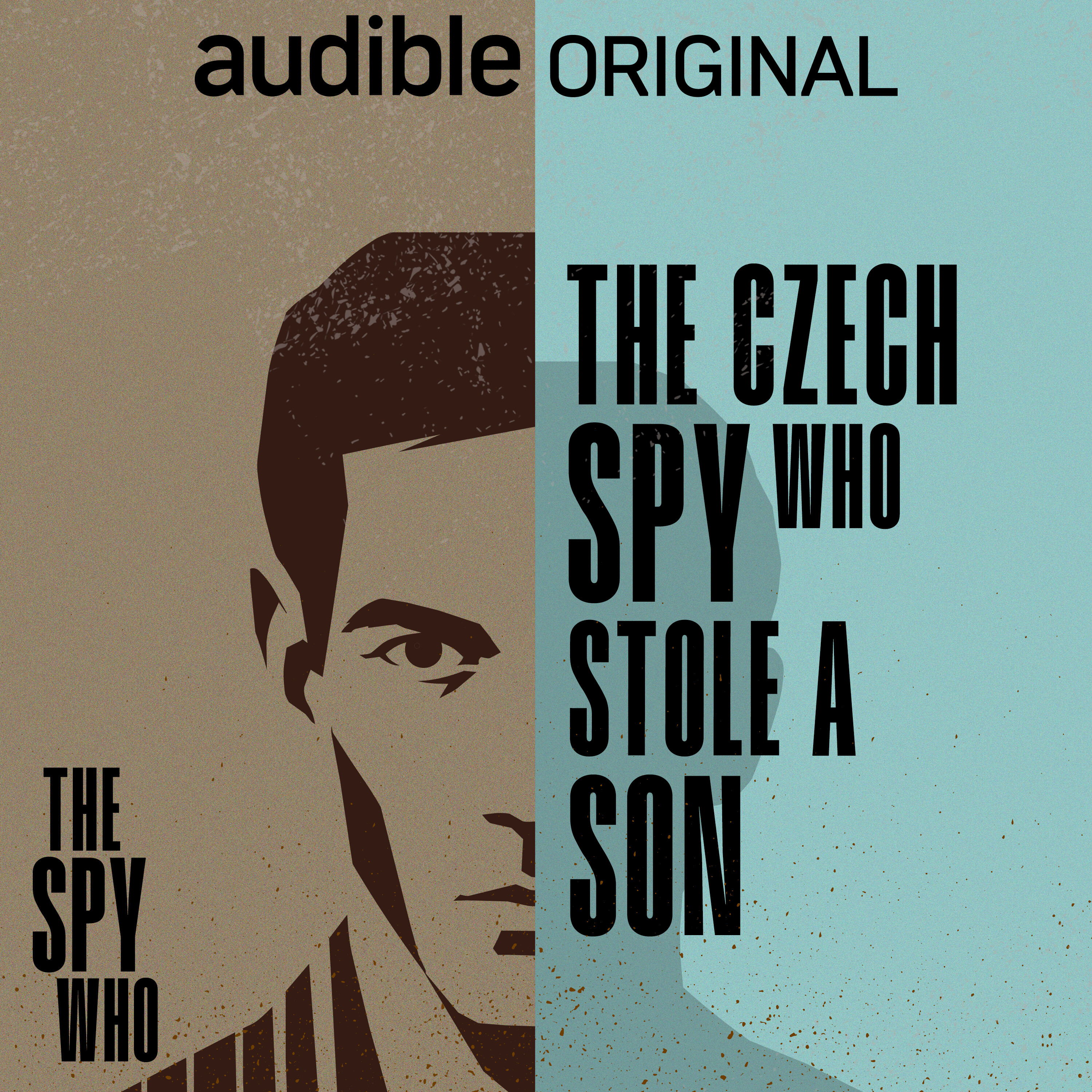
I'm Amelia Fox and this is the Spy. An Audible original. Beneath the veneer of the everyday lurks the realm of the spy. It's a dank, murky world full of dark corners, sinister motives and corrupted morals. A place of paranoia and infiltration, sabotage and manipulation. This season we access the case file of Vaclav Yelinek, the Czechoslovak deep cover spy who lived for years in Britain posing as a Dutchman named Erwin Van Hallum. But this spy didn't just infiltrate organizations to steal secrets for his superiors in Prague and Moscow. He infiltrated a family by convincing a mother he was her long lost son. What you're about to hear are dramatized reconstructions of events based on the information that's been made public. But remember, in the shadow realm of the spy, the full story is rarely clear. You're listening to the spy who stole a son. This is episode one. The Kidnap December 1943 the Hague, Holland. 19 year old Johanna van Harlung smiles as she dances, her brown curls pinned carefully for the evening. Her partner is Gregor Kulik. He's a 21 year old Polish soldier serving in the German army, stationed at the nearby military base in Vassana. Johannes father is a collaborator who has been supporting the Nazis since they invaded the Netherlands. And reaping the financial benefits of his support, he has encouraged his daughters to be friendly with the occupying forces. And Joanna has been happy to spend time with the handsome young soldier she met on a train last month. Kulik speaks tenderly into Johannes ear. You dance beautifully. Well, you're the one leading. In a few days Kulik will return to the Eastern front. Tonight he pulls her into his body, squeezing her a fraction too tightly and toward the edge of the dance floor. Follow me. Johanna looks at Kulik quizzically as he turns the latch. Her smile falters. Gregor, we shouldn't be in here alone. He steps closer. Let go of my arm. She feels the gentleness drain from him. He clamps a hand over her mouth. Outside, the party goes on. Nine months later August 24, 1944. Amsterdam. Johanna lays alone on a small bed on a maternity ward. The Allied advance is closing in on the Netherlands. The city shudders under bombing raids. It's all right. I'm here. Breathe. Here with me. It's a boy. The midwife swaddles the infant and presses him into Johanna's arms. You'll have to manage, dear. I'm needed elsewhere. Johannes stares at the child in her arms and feels a euphoric warmth spread through her body. It doesn't matter that he was conceived in violence or that the baby's father has returned to the front with no promise to return. Or even that her own father has cast her out because of him. He is her child and she will protect him with her life, no matter what happens. She strokes the baby's head and tightens her hold. I will call you Erwin. Six days later the Hague. Johanna walks slowly down her parents street. Baby Irwin bundled tightly against her chest. She has nowhere else to go. No money, no work, no roof to provide shelter but this one. Her father told her not to return here with the child. Her only hope is to change his mind. Her father stands framed in the doorway. He looks at his daughter, then at the bundle of blankets in her arms. His face hardens. Joanna does not move. She lifts her eyes to the upstairs window. The curtains shift slightly. Joanna sees her mother peeking through the glass, her eyes wet with tears. Then the curtain flicks closed. Three weeks after her father slammed the door on her, Johannes stands on a crowded train platform beside her elder sister Henrietta. The waiting train is not supposed to carry civilians. It is filled with injured German troops being sent back east to Germany and beyond. Johannes father has not completely abandoned her, however. He has used his Nazi connections to secure her a one way ticket out of Holland. Inside a third class carriage, Johanna cradles her baby tightly, as though someone might prise him from her arms at any moment. I can't give him up, Henrietta. I won't. How can they ask me to? I'm his mother. You heard what father said. He will not let you back into the house while you have that child. That child? Your nephew, you mean? Forget it. I'll just find somewhere else. Where? Johanna, you're 19. You have no money, no work, no husband and Europe is at war. How will you feed him? Johanna looks down at her son. Her father's instructions are clear. Travel to Czechoslovakia and leave the child somewhere respectable but unrecoverable. Don't worry Erwin. I won't let you go. What? I don't care what you or father say. I won't give him up. November 1944 Rumburg, German occupied Czechoslovakia Johannes sits on a hard wooden chair in the hallway of a provincial orphanage. Erwin is now three months old. She travelled as far east as she could on that hospital train across the collapsing Third Reich, through towns busy with soldiers and refugees. Finally she reached the borderlands of Czechoslovakia. She found clerical work and a room with a single bed. Just enough to survive, but not enough to manage both work and a child. Soviet troops are advancing from the east. Foreign nationals are being told to leave. Ms. It's time. Johanna doesn't move. She studies the baby's face, his blue eyes, the pale tuft of his hair. She takes him in, memorizing every detail. The nurse places her hand on Joanna's shoulder. We will take good care of him. I know. Johannes stands as if to take her baby back. But her arms stay by her side. There is no other choice. The nurse turns Away. Johanna remains rooted to the spot, numb with pain. She stares at the doors through which her baby has been taken, hoping they might open again and return her child to her arms. Three years later, January 1947, the Hague. Johanna opens the front door of her childhood home. Her father has allowed her to move back in now that Irwin's gone. Two officials stand on the steps, their collars turned up against the cold. Svan Hallum? Yes. We're from the orphanage in Rumburg. Johannes breath catches we wrote to you several times through the Red Cross as well. What? I never saw any letters. The fees are overdue. You must either settle your bill and reclaim the child or consent to his adoption. If you do this, the orphanage will waive the money owed. Her father looms in the doorway behind her. Johanna, it's done. Time to let go. Father, please. You have no money, no husband, no house. Think about what is best for the child. Being with his mother is best for the child. He ignores her and turns to the social workers. She will sign the adoption papers. Pen, please. Father, please let him come home. This was never his home and it never will be. Now. Sign. As Johannes signs away her son in the doorway, the wind lifts the corner of the page. Just over two years later. April 1949. Prague. The offices of Czechoslovakia's secret police, the STB. Czechoslovakia is now under Communist rule, its leaders answering to Moscow. The secret police are building files not only on enemies of the state, but also on the dead, the displaced and the forgotten. An intelligence officer runs his finger down a list of names gathered from orphanages across the country. These are children whose names no longer belong to anyone. His finger stops at one. Erwin van Hallum. Dutch mother, Polish father, deceased. Placed in care in 1944. Adopted name changed. No further claimants. Wow. Look at this. The officer sets the file aside. There's a birth certificate, a nationality, a ready made life in the new Cold War with the West. Identities are weapons, cover stories waiting to be deployed. And Erwin van Hallum has just been chosen with the VentureX business card from Capital One. You earn unlimited double miles on every purchase. Plus big purchasing power means you can split, spend more and earn more. The Capital One Venture X business card. What's in your wallet? Term supply. See capital1.com for details. Sixteen years later 1965 Schneerhova Street, Prague. Vaclav Yelli Neck is 22 years old. During his compulsory military service, he caught the attention of the Czechoslovak secret police, the stb. His ambition and discipline marked him out as a potential recruit. Now he's been ordered to report to an address in Prague. He has no idea what awaits him there. Comrade Jelinek. A stranger is seated at the kitchen table in a clean and well kept flat. He is wearing ordinary clothes but has the manner and authority of a military officer. The man gestures for him to sit. You've done well. Disciplined, intelligent, adaptable. So we would like to offer you an opportunity. An opportunity? You would become what we call in our department an illegal. Yellingeck cannot hold back his curiosity. What department would that be, sir? The man's eyes narrow. I'm coming to that. First let me explain what's at stake. You would live abroad under a foreign identity for years at a time. No diplomatic cover, no embassy protection. Espionage. Let's call it long term surveillance. There would be training. Three years. Languages, tradecraft. You will sever all contact with your family. No marriage either. No attachments that compromise the mission. If you're arrested, we deny all knowledge of you. Sounds like a dream posting. In return, you'll receive a promotion and a significant increase in pay if things go well. Medals, a comfortable pension, and the knowledge you served your country and the socialist cause. Where would I live and study? The handler smiles and gestures around the room. Jellyneck's eyes flick around the flat. The furniture is clean and new. The floors are freshly polished. In the corner a refrigerator hums. This apartment will be yours if you accept. You don't have to answer right away. Think it over. Consider the life we're offering you. But know this. Once you accept, there is no going back. Yellynek walks slowly through the apartment's rooms. He runs his hand across a smooth wooden table. He opens a cupboard. It's stocked with food. In his parents flat, the walls sweat with damp. The bathroom is shared with two other families. Here everything gleams. I won't go back. Summer 1967 Resh north of Prague after almost two years of training, Jelinek is ready to test his abilities. In front of him, beyond a tall barbed wire fence, sits one of Czechoslovakia's nuclear research facilities. His STB tutors want him to obtain intel from within it without detection. He strips quickly and pulls on a pair of blue workman's overalls. He crouches by the fence, wire cutters in hand. He waits. When the patrol passes, he slips through the gap he has made in the wire. Inside the guard post, two men are deep in conversation. The barrel of a mounted machine gun hangs down over the concrete wall. It's unmanned. The guards don't look up. Jellynek creeps past them. He enters a low concrete building and pulls a miniature camera from his pocket. Control panels, filing cabinets, wall charts. Jellynek is careful to capture images of every piece of potentially useful information. When he has what he needs, he moves to the next room. Inside, scientists are deep in their work. Jellinek spots the man he is supposed to contact in order to complete his training mission. He approaches quietly while removing a fresh radish from his back pocket. The scientist startles. He spins around to see what has made the noise. Jellynek cocks his head. You weren't expecting me? The scientist looks confused. Then a flash of understanding crosses his face. I thought you were due next week. What are you doing here so early? Yellynek grins broadly. It wouldn't count if you knew I was coming. With an irritated expression, the scientist thrusts a folder into Jellynek's hands. Heaven knows why we have to be involved in these stupid games. There. Go. Jellynek nods once, then leaves the building the same way he entered it, unchallenged. Two days later what the are you playing at? Yellynek sits at a trestle table opposite his handler. The folder from the nuclear facility lies open on the desk between them, along with the developed photographs. Yellinek stares at his superior in an attitude of casual defiance. You told me to infiltrate the facility, so I infiltrated the facility. You were supposed to submit a plan, to seek approvals. Who do you think you are, James Bond? You broke into a secure facility without anyone knowing what you were doing. I made a plan. I knew what I was doing. I met the objectives. I showed initiative. You showed insubordination. There were armed guards, machine guns. You could have been killed. What then? I would be dead. And what would I tell your parents? That I failed my training? The handler studies Jellinek. This compulsive streak is concerning, but there is no denying his bold approach. Got results. And Moscow expects results from the stb. This is not a game, Jelinek. We're not looking for action heroes where you're going. Patience isn't just a virtue. It's what will keep you alive. A few weeks later Prague Jelinek walks through the city center and turns a corner. As he heads down the street. He checks the reflections in the windows of a passing tram and sees he's still not shaken his tail. For the past week he has been trying to shake an STB surveillance team. He's reached the final stage of his training. Now he must prove that he can evade surveillance. But so far. So far he has failed to lose the unit following him. He turns a corner. They turn a corner. He stops. Suddenly they stop. Feeling a sting of irritation, Jelinek makes a snap decision. He knows Prague. This is the city where as a boy he and his friends played hide and seek until it got dark. It's time to bend the rules and win the game. Jelinek heads north, away from the city center, toward a neighborhood in the suburbs he knows well. He slips behind a small gardener's cottage and drops into the storm drains. The stench is immediate, but he grew up playing in these tunnels. He knows every turn. He moves quickly through the maze of tunnels, counting junctions in his head. Left, right, straight on to the river outlet. He emerges several streets away at the prearranged rendezvous. He waits. Nothing. No watches. No mocking whistles. For the first time, Jelinek has lost them. He's free. Several months later 1968 an STB safe house in Prague. Jellynek sits opposite his handler. Between them lies a thin file. Well, you passed your training. Yellinek nods, neither surprised nor complacent. Now things become serious. You are, from this moment forth, Erwin van Halen. Jellinek opens the file and reads the details aloud. Birthplace, Amsterdam. August 1944. Mother Dutch. Johanna van Halem. Father Polish. Deceased. Entered foster care 1949. Adopted 1951. Jellynek pauses and tilts his head slightly. The boy is still alive. The couple who adopted him changed his name. Erwin ceased to be until now, of course. Jellyneck nods. His handler cuts in. Memorize everything in this file. Schools, streets, the names of your neighbors when you were 8 years old. Your favorite teacher, the pet you buried the year you got pubes. What about the mother? The one who gave him up? She relinquished her rights. We have all the paperwork. Even if she wanted to find her son, there's no trail to follow here. Original birth certificate, signed adoption consent. You can use these to apply for a Dutch passport. Jellynek studies the signature at the bottom of the page. Johanna van Hallum. What about my papers? I mean my real ones. They have been disposed of. Commiserations. But Vaclav Jellynek no longer exists, and as far as anyone can prove, he never did. Jelenek takes a breath. He knew this was coming, and yet it feels strange to have witnessed his own passing this way. May I say goodbye to my parents? No. We will inform them you are serving your country. You may see them again when your work is complete. The two men lock eyes. Jelenik knows his posting will last for years, possibly decades. There is no guarantee his parents will still be around for a reunion when the time comes. Jellinek closes the file and with it the last chapter of his old life. He is Erwin Van Halem now, Seven years later. June 1975 Victoria Station, London Batslav Jellynecks steps off the train and onto the platform. He's 31 years old and handsome, in a sharp double breasted pinstripe suit, wearing polished shoes, his silk tie perfectly knotted. He has spent years building his cover as a hotel worker in Austria. Now, at last, he has arrived in Britain to begin spying in earnest. He catches his reflection in a shop window and smiles. The tailor did a fantastic job. He looks every inch the English gentleman. Banquets surely await. He strides out of the station and toward a waiting black taxi cab. O you get in line. Gillyneck freezes. He's only been in London five minutes and has already made a faux page. A lengthy line of passengers snakes along the pavement, every one of them glaring at him. He glumly joins the back of the queue. When his turn finally comes, Jelenek climbs into the back seat. The cab pulls away. Jelinek looks out of the back window. He sees his suitcase still on the pavement. Stop. Stop. The driver looks at him in the mirror. What's the problem? Jellynek gestures at the suitcase. The driver does not move. Well, go on then. Jellynek stares. Then, slowly, understanding dawns on him. The driver expects him to get the suitcase himself. Just as Jelinek retrieves the suitcase, another passenger slips into the back seat of his taxi. The driver pulls away. What the. Jellynek turns around to the long line of people waiting for taxis. The guy at the front nods toward the pavement. Back of the queue, mate. A few weeks later. South Kensington, London Jellinek lets himself into his small flat. He has spent the day carrying plates at the Hilton Hotel on Park Lane, where he now works as a waiter. It's not the high life he dreamed of, but it provides workable cover. The days are long and by the time he returns home, he is exhausted. But it's only now that the real work begins. First thing this morning, at a pre arranged hour, he received a radio transmission from Prague. Now he sits beneath a single desk lamp, pencil in hand, decoding the messages using a one time cipher. The first message is brief. His parents have been visited. They are well. The second message is longer. Jelinek's brow furrows as he translates. His eyes widen as the message forms. He is being instructed to explore ways of infiltrating the Royal Household. Moscow wants him to Consider the placement of electronic listening devices inside Buckingham Palace. Oh, sure, simple. From the rooftop bar of the Hilton, he can see Buckingham palace with its gates and its trooping guards. But his spymasters might as well be asking him to plant a bug on the moon. Jelenek folds the paper neatly. His superiors must imagine his life is filled with flutes of champagne, chandeliers, and state banquets. Right now, the only intel Jelinek has gathered is the hotel staff rota. A few months later Hilton Hotel Park Lane it's less than an hour before the hotel restaurant opens, and Jelinek is brushing down the white linen tables. His colleague Gary stands by the service station, staring into space. Didn't get it. Yellynek looks up. What? Didn't you get the palace job? Jellynek's stomach drops. Gary hoped to become a footman at Buckingham palace, and Jellinek hoped he could then use Gary to make a breakthrough in his mission to get close to the royals. But now that hope is gone. I'm sorry, Gary. Did they say why? Nope. They wouldn't tell me. You think it's because Yellynek stops himself. What, because I'm Jewish? Oh, they'd never say it, Erwin. But sure, why not? Jelinek looks out of the tall window in the distance, just visible beyond the trees, the roofline of Buckingham Palace, a stone's throw and a universe away. May 1977 South Kensington, London Jellynek drops his jacket over a chair. Another long day. Finished. Another day. No closer to Buckingham Palace. He bends down to collect the post, a sheaf of bills. Gas, electricity, a leaflet for double glazing. He flicks through them without looking. Then he stops. The emblem in the corner is unmistakable. The Red Cross, the International Relief Organization, and its address to Erwin Van Hallam. To this flat. How the hell. He tears open the envelope and unfolds the letter. Dear Mr. Irwin Van Hallam. His eyes move quickly down the page. The letter is from the Red Cross's international tracing service, which helps reunite families separated by war. A woman named Johanna von Harlem is searching for her son. They want his consent to give her his address. Jellinek lowers the letter slowly as the blood drains from his face. For nine years, he has carefully constructed the lie that he is Erwin van Halem, from birth certificate to passport to a life in London. But now the past he built his false identity on has caught up with him. What will he do? Follow the Spy who on the Audible app or wherever you get your podcasts, you can listen to all episodes of the Spy who ad free by joining Audible. You have been listening to the Spy who, an Audible original. Have you got a spy story you'd like us to tell? Email your ideas to thespywhoaudible.com Quick note about our dialogue we can't know everything that was said or done behind closed doors, particularly far back in history, but our scenes are written using the best available sources, so even if a scene or conversation has been recreated for dramatic effect, it's still based on biographical research. We used many sources in our research for this season, including the Czech Spy by Yaroslav Kimenta and A Spy in the Family by Paul Henderson and David Gardner. The Spy who is hosted by me, Amelia Fox. It's a Yellow Ant production. This episode was written by Simon Parkin and researched by Louise Byrne, with thanks to Jaroslav Schwel and Ine Brus. The senior producer was Jay Priest. The sound designer was Joshua Morales. Music supervision by Scott Velasquez for Frisson Sync for Yellowant. The story editor and executive producer was Tristan Donovan. For Audible, the executive producer producers were Estelle Doyle and Theodora Laludis.