Loading summary
Transcript214 lines
- [00:01]
Progressive Insurance Announcer
Insurance isn't one size fits all. That's why customers have enjoyed Progressive's name your price tool for years now. With the name your price tool, you tell them what you want to pay and they'll show you options that fit your budget. So whether you're picking out your first policy or just looking for something that works better for you and your family, they make it easy to see your options. Visit progressive.com, find a rate that works for you with the name your price tool. Progressive Casualty Insurance Company and affiliates Price and coverage match limited by state law
- [00:32]
Joshua Bassett
the following podcast is a Dear Media Production It's a very intimidating thing. A blank page. I didn't even know if I was going to talk about it. I was just like, I'm going to see this through and write it out and get it on the page and then I can decide later. I detail some trigger warning, some sexual abuse that I experienced when I was like a teenager. My friend read the book and he was like, oh man, I didn't know another guy had ever gone through what I'd gone through. And he never told anybody about what he'd been through. And so that was the beginning of him being able to one process it but also speak about it. I'm actually not scared at all and to talk about it because I know how freeing it is. We wonder why toxic masculinity is so prevalent. I think the most masculine thing you can do is be emotional and tender and sincere. I think that, you know, when you suppress emotions, then you become numb. And when you become numb, then you're less sensitive to the ways in which you're hurting the people around you. If I'm numb, you just assume other people are numb or you don't feel that sensitivity, so you're more reckless and more harmful. And so I think that a huge part of the way we're going to make the world a better place is by creating space for men to be honest, vulnerable, and emotional. I really also want to speak to men of all ages and hope that it can bring some sense of vulnerability and healing and give people the permission to be honest about how they really feel. Because a lot of people take their secrets to the grave and they are very much buried in shame and in guilt. And that's why you see so many people, I think, taking their own lives is because they found that there's no place for them to get help or healing or to be honest or they're afraid that their biggest secrets or their biggest shames are unredeemable.
- [02:15]
Podcast Host (Squeeze)
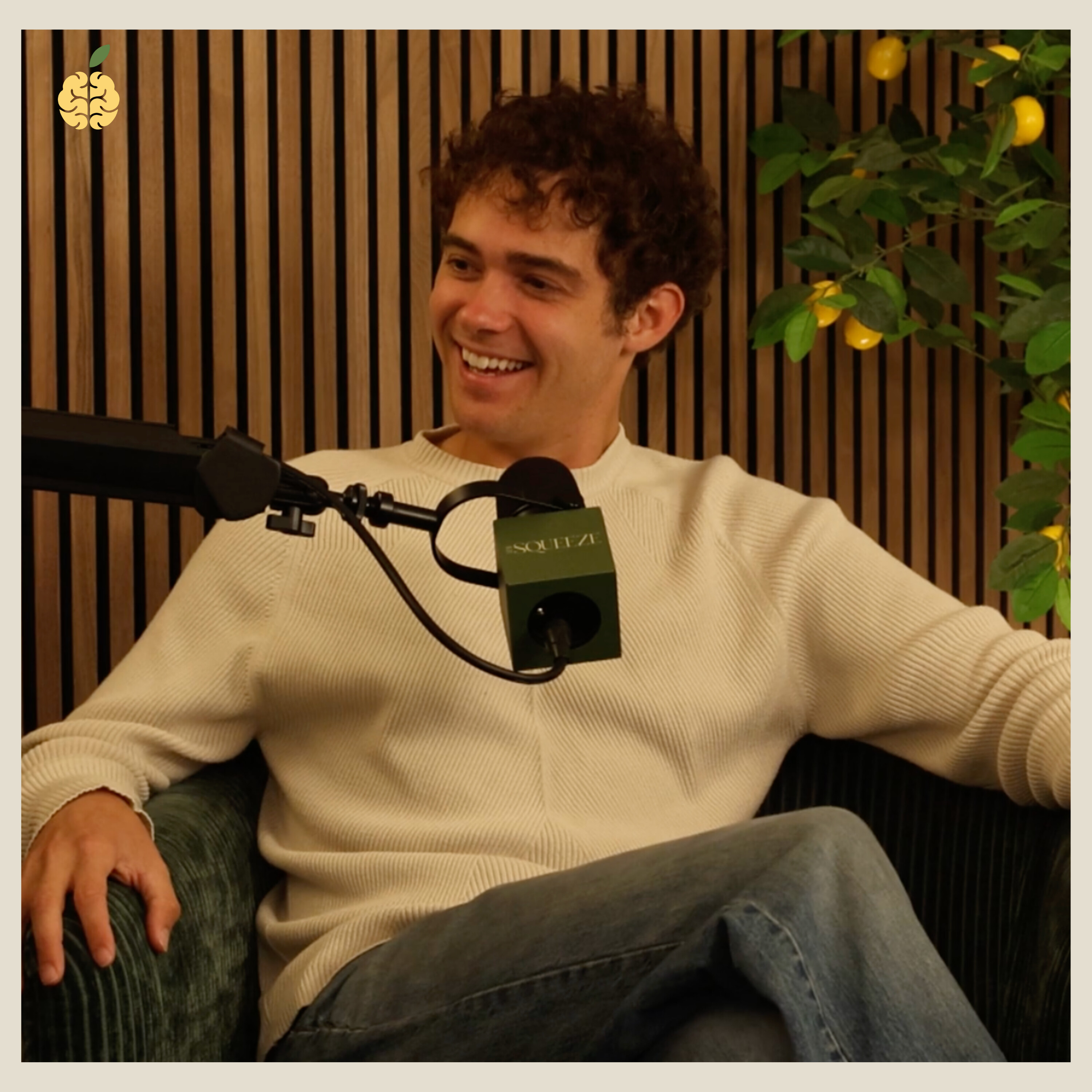
Lemon drops. Lemon drops. Lemon drops. I hope you are having a fabulous day and I have a fabulous episode for you. Today's guest is Joshua Bassett. He is an Emmy award winning actor, singer and songwriter. He's worked across film, music, and television and is best known for his role in the Disney series High School. The the series. Joshua's rise to fame has not been the easiest. He has been met with a lot of public scrutiny that he since has shared about how deeply that impacted his mental health. In this episode, we really cover every topic of mental health. We cover topics like ptsd, sexual abuse, addiction, and depression. Josh recently released his memoir, Rookie My Public, Private and Secret Life. He is so raw and honest in this book and it's really cool to hear him talk about how much he's really grown over his time in the spotlight. He's been through so much. He's done so much work on himself and he is just so honest. In today's episode, I had the best time sitting down and talking with him. He was so kind and I can't wait for you guys to hear his story.
- [03:26]
Podcast Co-host (Tay)
No better way to welcome you to this place than us just chatting the whole time. I love that. I'm so excited for today because I've been, like, wanting to chat with you for a very long time.
- [03:37]
Joshua Bassett
Amazing.
- [03:37]
Podcast Co-host (Tay)
So this is fun because I feel like you have obviously experienced a lot in the public eye and your life has been very public and you've been honest with, like, about a lot of things too.
- [03:49]
Joshua Bassett
Yeah.
- [03:49]
Podcast Co-host (Tay)
Which I love that you're doing that. And I think that takes a lot of courage to do that.
- [03:53]
Podcast Host (Squeeze)
But I'm excited to dive into all things.
- [03:55]
Podcast Co-host (Tay)
Well, we start each episode off.
- [03:57]
Podcast Host (Squeeze)
There's this jar.
- [03:58]
Podcast Co-host (Tay)
It's a game called Citrus Got Real. If you want to pull a little piece of paper out of there and read it to our Lemon Drops, those are our listeners.
- [04:05]
Joshua Bassett
Hello, Lemon Drops. Lovely to be here. And again, I just wanted to honor and thank you for all that you do in the mental health space and everything. And I think it's so needed to have these conversations. And I think we're a bit overcorrecting from a generation that swept everything under the rug. But I'm so happy we're overcorrecting and talking about everything. So I'm excited to dive into everything. But what are they called? Lemon drops.
- [04:27]
Podcast Co-host (Tay)
Lemon Drops. Yep.
- [04:27]
Joshua Bassett
Hello, Lemon drops. Ooh. If you could instantly master any skill, what would it be? Oh, man, I'm really bad at foreign languages.
- [04:37]
Podcast Co-host (Tay)
I mean, it's in everyone Yeah, I guess so.
- [04:40]
Joshua Bassett
But, like, it'd be so awesome to be able to go anywhere and to talk to anyone of any language. Yeah, I think that'd be super great. I also can't really cook.
- [04:48]
Podcast Co-host (Tay)
Okay.
- [04:48]
Joshua Bassett
So I'd love to do. I'm sure I could do it very easily. My roommate keeps saying it's, like, not that hard, but, like, I just, I don't do it, but I don't know. Honestly, I was going to say parkour as well, but I think I did instantly master it. I just went to a parkour gym with my roommate for his birthday, and I did every obstacle course the first try, all the way through, pretty much.
- [05:07]
Podcast Co-host (Tay)
So is this parkour gym, like, is it, like, foamy everywhere or.
- [05:11]
Joshua Bassett
There's some foam situations, but there's like a trampoline park section and then there's like an adult section that's like American Ninja Warrior. I don't know if you know that show, but it's like huge walls that you run up and, like, insane Rita was there. I, I, I, like, cut my hand or whatever. But anyways, it was a great time, and I realized that it's all I want to do with my life. It's the most fun I've had in as an, as an adult, like, ever.
- [05:31]
Podcast Co-host (Tay)
What the heck?
- [05:32]
Joshua Bassett
I probably have a better answer than, these are kind of mid. I don't know. Let me get back to you.
- [05:36]
Podcast Co-host (Tay)
No, I like those. I know. I'm trying to think if I, I know. I feel like my go to would be, like, singing or something. That would be something fun.
- [05:43]
Joshua Bassett
Yeah. I can't really dance very well, so maybe that would be nice.
- [05:46]
Podcast Co-host (Tay)
That's funny. I have a running joke with my husband that I've like, always. I did, like, I did like theater as a kid, but I have, I've joked with him for, I don't know. We've been together eight and a half years, so a long time that for my birthday or for Christmas, I want singing lessons. And for the first, just because I'm like, who, who wouldn't want to sing?
- [06:05]
Joshua Bassett
Yeah, like, totally.
- [06:06]
Podcast Co-host (Tay)
And he thought I was joking for, like, the first couple years. And I say it joking. Like, I laugh when I say it, but I'm like, no, like, I actually, like, I, I would, I would, I would enjoy singing. Absolutely. I still haven't gotten the singing lesson.
- [06:18]
Joshua Bassett
Sure, sure.
- [06:19]
Podcast Co-host (Tay)
So maybe once we have this baby, then he'll hear me singing to the baby and he'll be like, okay, there you go. It's time.
- [06:25]
Joshua Bassett
Yes. You got to make it painful for him so that he. He invests in the voices. No, I'm just kidding. But Ed Sheeran, did you hear his, like, original singing from when he was, like, 11? He was, like, on some talk show, and he played him singing when he was 11 because everyone will be like, oh, you're so talented, or whatever. He's like, no. He's like, this took a lot of work. And you listen to him. It's like the worst singing I've ever heard in my life. And now he's like the biggest singer in the world. So, you know.
- [06:45]
Podcast Co-host (Tay)
Yeah.
- [06:45]
Joshua Bassett
Have hope. It's possible.
- [06:46]
Podcast Co-host (Tay)
There. There is hope for me. Never. Never say never. I'm. I'm. I'm ready to. I'm ready to dive into.
- [06:53]
Joshua Bassett
I love that.
- [06:54]
Podcast Co-host (Tay)
It's great. Awesome. Okay, well, I mean, let's just kind of get into it. I'm really.
- [06:57]
Joshua Bassett
Another one or.
- [06:58]
Podcast Co-host (Tay)
No, no, I think. I think we're good. Unless you had another answer that you thought of.
- [07:01]
Joshua Bassett
The only other answer I thought of was sports. I can't do sports to save my life. I get any at all. Like, it's really, really embarrassing. I have five sisters in theater. Never get into sports. So, like, honestly, any of them, I. I can't do any sports at all.
- [07:16]
Podcast Co-host (Tay)
So you're a man of the arts. The sports people can't do the arts, so.
- [07:20]
Joshua Bassett
I guess so. I guess so.
- [07:21]
Podcast Co-host (Tay)
There's. There's.
- [07:22]
Joshua Bassett
There's a trade off.
- [07:23]
Podcast Co-host (Tay)
Yeah, there's a trade off that I. I like the parkour one. Yeah, I'm gonna try that. Not me being like, let's go, but I'm also pregnant. Yeah, I was gonna say that. I. I need some. I need some time. My husband would love that.
- [07:33]
Joshua Bassett
I'm sure we can go hang out together.
- [07:35]
Podcast Co-host (Tay)
That would be really fun.
- [07:37]
Podcast Host (Squeeze)
Okay, well, let's dive into it.
- [07:38]
Podcast Co-host (Tay)
We have. I feel like a lot of mental health stuff I want to talk about with you. So I've been, like, trying to sort of. What exactly? Like where exactly I want to start. But I guess probably the best place to start is when did mental health become something for you? Was it something that you had dealt with as a kid growing up, or when did it kind of first present itself to you?
- [08:02]
Joshua Bassett
Yeah, well, I think I grew up in a household that was very creative, very nurturing, but a lot was swept under the rug. I mean, everything was taboo, you know, nothing was really talked about. And, you know, I was a relatively happy kid. And then when I was about 14, 15, and honestly, like, really, when I was 16. I remember being so deeply depressed. I was going through some tough stuff in my social circles and some like, false rumors being spread around me that were like, super humiliating, even though they weren't entirely true. And it was kind of like, I don't know, I just remember feeling like so alone. And I remember being in my bedroom and just like, you know, I had like a stash of vodka that I like, had stolen from a friend's parents liquor cabinet and I would just like secretly be like sipping on that alone. And I remember just being so depressed. And then overnight I moved to LA because I got a gig and so my whole life changed. And I remember that being such an exciting and exhilarating time. And then, you know, there was a period a little bit after that where I had like, insomnia for like two or three months straight. Like I literally, my life was slipped upside down. Like, couldn't fall asleep until the sun came up. And so it's been a bit of a roller coaster, you know, as is, you know, most people's mental health. Right. It's never, it's rarely just like a steep decline. It's like often, you know, a journey. So, yeah, I'd say around like 15, 16 is when I started to like really battle with like depression and anxiety and crippling fear. And so, yeah, I think about then,
- [09:33]
Podcast Co-host (Tay)
yeah, you touched on like public scrutiny, obviously. I think a lot of people know that that is something that is a part of your story. And I think anyone that is in a position, even just in the spotlight, everyone deals with it. Sometimes it's greater, sometimes it's not as big. But that's definitely something that you dealt with, you know, young too. How, how do you. How have you learned to kind of balance that feeling of being misunderstood or even just accepting the fact that people maybe aren't going to like, understand who you really are.
- [10:10]
Joshua Bassett
Yeah, I mean, I think, you know, a lot of it goes back to identity. And I've talked about this a lot of like, you know, I've been a fan of artists and then six months later been like, I can't stand their music or vice versa. I feel like there's artists that are terrible and then I hear their stuff and I fall in love with it. And that artist can't be affected. Right, by my, my adoration or the lack of it. And obviously that's something maybe as silly as like appreciating their art. And obviously there's a whole spectrum of ways people like or don't like people. But I Try to remember, like, everyone has their own perspective, and a lot of times people aren't accurately seeing things or they're projecting from their own pain and their own wounds. And they'll see someone, like, for example, like, somebody was, like, just ripping on Noah Khan. I saw, like, a. A tweet or something where someone was just, like, destroying no con being like, this is the worst thing I've ever heard. Like, anyone who listens to him is, like, an idiot. It was like this insanely long rant, and I just, like, laughed at it. And I, like, listened to his new album, which, by the way, phenomenal. I don't know if you've heard his new one.
- [11:10]
Podcast Co-host (Tay)
I've heard a couple songs.
- [11:11]
Joshua Bassett
Oh, my God. You got to listen start to finish, and you got to read along the lyrics. It is so profound. His lyrics are absolutely stunning. But anyway, my point is, I was listening to his thing, and I was like, man, like, I can look at that tweet that somebody talked about of him and laugh about it, but if it was about me, it would have probably have affected me. And so you have to just remember it's a difficult thing in the daily battle often, but to be a little bit removed or, like, even I just saw a TikTok that somebody made criticizing the book. And, you know, there. There were some valid points kind of, but majority of what she said, like, wasn't really fair, I found. And so I just was, like, able to laugh at it and be like, you know, at a certain point, you can't take it too seriously. You can't take yourself too serious. And I think when you're. When you're focused on mission and you're focused on purpose, and you're focused on loving and serving and giving, then you're less sensitive to the feedback and criticism because it's less about you and more about the people you're trying to help. And I feel like so long I've kind of started to walk forward, and then people start. You know, it's like the analogy I give is, like, you'll be in this, like, cave, and then you start to come out of your cave and you want to get back out in the world, and people start to throw rocks at you, and then you go right back to the cave. You know, there's been a lot of that back and forth in my life where I get the courage to go out and be out in the public eye, and I do it for a little while, and then the criticism gets to me and I go back and I retreat And I kind of let them win. And I'm. I'm really tired of letting trolls and haters and losers steal my joy and my peace. And so, you know, it's just like, I love the saying, you got to have thick skin and a soft heart and you can't really, you can't let people that don't care about you, your well being dictate how you feel about yourself. Because, you know, another thing I wrote in my notes at the other day is I'm done trying to be understood by people who are intentionally mishearing me, you know, or I said it probably better the way I wrote it. But yeah, there's certain people who, like, you can bend over backwards, do everything you can to explain yourself to them, and they won't hear you because they don't. They aren't trying to hear you.
- [13:00]
Podcast Co-host (Tay)
Yeah, exactly.
- [13:01]
Joshua Bassett
So I'm. I've said a lot of different things just then, but.
- [13:03]
Podcast Co-host (Tay)
No, no, no, you literally said so many good things. And I was just talking with my girlfriend about this because she decided to share something in response to someone being negative to her on the Internet. And I feel like we are just really living in a culture. Like, obviously we've been in this cancel culture thing for a while, but there
- [13:24]
Podcast Host (Squeeze)
is truly no filter of people sharing
- [13:27]
Podcast Co-host (Tay)
their opinions on social media. Like, and just.
- [13:30]
Podcast Host (Squeeze)
I think people are just being ruthless.
- [13:32]
Podcast Co-host (Tay)
Like, they forget that there are like other. Like, we're actually humans that are watching it. And so it just 100%. I don't know, like, what we need to do to get out of it. But, like, yeah, everyone is entitled to have an opinion, like you were saying. But like to go out of your way to say how horrible something is like, excuse me, you're good. No, I just.
- [13:53]
Podcast Host (Squeeze)
Yeah, we're just.
- [13:54]
Podcast Co-host (Tay)
It's just we're in this weird state right now. I don't, I don't know what it is.
- [13:58]
Joshua Bassett
Do you mind if I read a bit of the book?
- [14:00]
Podcast Co-host (Tay)
Please.
- [14:01]
Joshua Bassett
I actually talk about how When I was 14, my friend and I were like, ruthlessly making fun of this girl and, like, made multiple accounts and we're just like straight up bullying her. And, you know, I was 14 and naive in a way, but I did know better, you know, but it's so hard when you don't see the eyes of the person that you're speaking to. Like, to, to really understand the effects of what you're saying. So let me see if I can find this little. I already found the chapter.
- [14:33]
Podcast Host (Squeeze)
You can take it.
- [14:33]
Podcast Co-host (Tay)
Okay, got it.
- [14:37]
Joshua Bassett
When I read horrific things about myself online, I remember the harmful things I said as a K kid, having not understood just how painful they can be. The Internet has desensitized us. Humanity is harder to see through a screen. There are things people say online they would never in a million years say in real life, and they often do it anonymously. We can't drive without a license or vote without a birth certificate, and yet we can have an entire online profile with no accountability. This should not be so. Now on the receiving end of ruthless online bullying, I see how profoundly damaging words can be. Look, I get it. It doesn't feel real nor consequential when you can't see the eyes of the person receiving your harsh words, when you don't see their heart sink or the light in their eyes dim. But we must take serious consideration of the weight our words hold. Our words are a weapon we must wield with reverence. Um, and yeah, again, it's like I can't really blame people because I get it. You know, I have been that person who was insensitive and didn't really understand it. And so I think as we step into this day and age where there's so much accessibility and you can say anything, I think these conversations are so important. And, you know, I also talk about in that chapter, chapter how there's a parallel between the rise of social media and the rise of the suicide rates, specifically in younger women, but of all, across all categories. And that rise is no coincidence in my opinion. And so I think we need to start changing the narrative of what's acceptable. And honestly, I have. I have seen a shift. I mean, yes, it's still like the Wild west in a lot of ways, but I think people are being held more accountable to the words that they're saying and understanding that we have to think a second before we post. And oftentimes it's such an impulsive, easy thing, right? Like, for sure, if you are to publish an article that takes a whole series of steps and you have to rewrite and reread or whatever, but you know, now you can just like one, one thought and post it and you don't even have to think about it and you don't even understand the effects. And maybe people do understand that and they weaponize that, but in general, I think people are unaware of the real world consequences of what they say online.
- [16:32]
Podcast Co-host (Tay)
So, yeah, was there a point that got you to this state? Like, did you reach, like, was there a light bulb moment that went off for you to just Be like, okay, I'm just gonna accept, like, what people may say and learn to, like, laugh it off, or has that just been, like, a lot of work over time?
- [16:48]
Joshua Bassett
Oh, no. I mean, it's still a daily thing. I mean, my friend here can testify that just the other day, I saw that girl's TikTok, and while a lot of it was bull, yeah, it did affect me. And, like, I was like, man, like, I want to kind of argue with her. Not argue, but I want to respond, and I want to whatever. And there's times to respond, but I learned I just got to let it go. And so, I mean, yeah, it's still a pretty frequent thing. You know, I would say that it gets easier, but I don't know that it necessarily goes away. Maybe it does.
- [17:14]
Podcast Co-host (Tay)
Yeah, there's some.
- [17:15]
Podcast Host (Squeeze)
There's some statistic.
- [17:17]
Podcast Co-host (Tay)
I can't remember what the exact number is, but reading, like, a positive comment stays with us for about, like, 30 seconds to a minute. And then a negative comment can stay with you for, like, up to, like, multiple days or weeks.
- [17:29]
Joshua Bassett
Absolutely.
- [17:30]
Podcast Co-host (Tay)
And it's just so interesting in, like, a sea of positive comments, there could be the one negative, and that's literally. Literally the one that we remember.
- [17:37]
Joshua Bassett
Absolutely. And I think part of that's the way our survival brains work, you know? And, you know, you can have a field of roses, but if there's, like, a tiger in the middle, it doesn't matter how many roses. That's a stupid example, but you know what I'm saying.
- [17:49]
Podcast Co-host (Tay)
I saw it. I was there.
- [17:51]
Joshua Bassett
Your brain is kind of locking on the tiger. And so we do have this survival instinct that I think when our identity's threatened, it feels like it's a real threat. And so it makes sense that we gravitate towards that. But that's just something that really takes effort. But I found, like, for example, if I start my day with, like, five minutes of gratitude, and I will just, like, out loud, speak the things I'm grateful for, then as I go throughout the day, I start to notice and see things that I'm grateful for naturally, because I've programmed my brain to look for the good. And that doesn't mean we should spiritually bypass. It doesn't mean we should ignore the bad. But, you know, you can choose what to dwell on. And, you know, it's so funny. Like, I remember there was a song that I was teasing a. A couple years ago, and it was kind of blowing up, and there was, like, so much positivity, and there was, like, maybe like, 10% negativity. And I remember just, like, losing it and crashing out and telling my team, like, oh, my God, everyone's hating on it and whatever. And they're like, all we see is positivity. Like, we're seeing all this, like, lovely stuff. And it's so interesting how we choose to see that stuff. So I think it's. Yeah, there's always going to be a spectrum of noise coming in, and it's like, what are you dialing your radio to? Like, what are you choosing to. To listen to and to believe and focus on? And that takes practice. But I think that the more you do it, the easier it gets, you know?
- [19:05]
Podcast Co-host (Tay)
Yeah. The majority of, I mean, your life and career there has been social media. And I think people in the industry, like, I think. I think Instagram just came out when, like, when the Twilight franchise was, like, ending or starting. Like, my husband didn't really deal with the social media aspect of it all, but people in the industry now are definitely dealing with it and not even dealing with it, but it's just like an added layer of input instead of just there being in, you know, magazines and whatever it is.
- [19:40]
Podcast Host (Squeeze)
There are certain moments in life where everything just shifts, where your priorities become really clear really fast, and especially being pregnant. Now I'm stepping into this new season of life. I've been thinking so much more about family, what it means to show up for people you love, and how important it is to just be there for them, especially when things feel uncertain or overwhelming. I think we all like to believe that if something hard ever happens, we'll be able to handle it. But the reality is, some situations are bigger than anything you could prepare for. And that's why learning about Ronald McDonald House really stayed with me. Ronald McDonald House supports families with children who are ill or injured around the world. The organization provides accommodations, essential resources, and a community of support, all at no cost, so families can be at the heart of their child's care. It's not just about having a place to stay. It's about removing barriers during one of the hardest moments a family could go through. It's about making sure parents don't have to choose between being close to their child and everything else they're navigating. And something that really stood out to me is the reality of how many families actually need that support. Today, Ronald McDonald House is only able to support about one third of the families around the world who needed services. And that need is expected to grow. This gap inspired an ambitious goal to double the number of families served by 2030. When I heard that, it honestly stopped me for a second because that means there are so many families out there who need this kind of support and
- [21:14]
Podcast Co-host (Tay)
just don't have access to it yet.
- [21:16]
Podcast Host (Squeeze)
And that's why this mission feels so important right now. Ronald McDonald House is announcing the McBride family as its first global spokes family to shine a light on a family who has stayed in the urgent need to support more families around the world. Their story is something that really puts everything into perspective. After a car accident led to multiple hospital stays, surgeries, and the premature birth of their daughter Juliana, the McBrides turned to Ronald McDonald House and discovered far more than a bed to sleep in. They found holistic support, community and resources when their family needed it most. It's not just about a single moment of support. It's about everything that comes with it. It's about giving families the ability to stay close, to feel supported, and to not have to go through something like that alone. And when you hear stories like that, it makes you realize how much of a difference something like this can make. Not just practically, but emotionally, too. So when we talk about this goal, doubling the number of families served by 2030, it's not just a number. It's real families, real moments, real support that changes everything about how someone experiences the hardest of times in their life. With a goal to double the number of families served by 2030, Ronald McDonald House needs your support. Please donate today at ronaldmcdonaldhouse.org Donate McBrideFamily to help more families stay I feel like buying glasses used to be one of those things that felt way more complicated than it needed to be. Everything was either super expensive or the styles just didn't feel like something you'd actually wear. And even just trying to figure out if something would look good on your face from a tiny picture, it just made the whole process harder than it should be. That's why I've been loving Warby Parker. They've honestly made everything so much easier. Their virtual try on is actually such a game changer. You can literally try on glasses from your phone and see how they look on your face in real time. You can, and it actually works. I've tried other virtual try ons that just felt super janky. But with Warby Parker, you can genuinely tell how the frames are going to look and fit. It's truly the coolest thing. Once you find a pair you like, the quality is amazing for the price. The prescription glasses start at $95, which I feel like is rare for frames that look this good and feel really well made. Another thing I love is that they have everything in one place. Prescription glasses, sunglasses, contacts, even online eye exam. Plus they have retail stores if you ever want to go in person, which is really nice. It feels like they've taken something that used to be confusing and made it really simple and actually enjoyable. Warby Parker gives you quality and better looking prescription eyewear at a fraction of the going price. Our listeners get 15% off plus free shipping when they buy two or more pairs of prescription glasses at warbyparker.com squeeze that's 15% off when you buy two pairs of glasses at w a r b y parker.com squeeze after you purchase they will ask you where you heard about them. Please support our show and tell them that the squeeze sent you. Philly Crocs are one of those things that somehow become everyone's personality once they finally get a pair. Because once you wear them, you get it. Crocs classic clogs are so comfy. Like genuinely the kind of shoe you throw on once and suddenly find yourself wearing everywhere. Errands, walks, traveling around the house, literally anything. And honestly, I think a part of why people love them so much is because they're just easy going somewhere. You literally just slip them on and go. There's no thinking involved and somehow they still make an outfit feel fun. And I feel like Crocs have become such a form of self expression. They're customizable, they come in tons of colors and styles, so whether you want something super neutral and simple or something bold and colorful, there's a version for everybody. Speaking of style, classics have so many fun silhouettes like the classic crafted clogs. If you're looking for something different but just as comfy. And I love that you can really make them your own, depending on your vibe and mood. And obviously we have to talk about the Jibbitz because that's what makes them even more fun. There's even a Jibbitz charm for anyone which honestly makes decorating them feel weirdly addictive because once you start adding charms, you immediately want more. If you guys know me and have watched any of my content, you know how obsessed I am with my Crocs. I think I probably have 12 pairs at minimum. I wear them all the time and I feel like I have a style, a color, a look, a gibbet for any occasion to match, any outfit, any errand, any outing. They truly are just so easy to slip on and go visit crocs.com or a store near you to find your perfect pair of classic clogs.
- [26:08]
Podcast Co-host (Tay)
Have you had to set boundaries with social media?
- [26:12]
Joshua Bassett
It's funny to say that, because I remember being, like, 12 and I was like, I'm gonna take three months off of social media. Like, that I should not be having to do a social media cleanse before I hit puberty. You know what I'm saying? Like, so, yeah, no, definitely. I mean, I have like a. I have a screen time limit that my roommate has access to on my phone. Although sometimes I bypass it. I probably abuse it, but in general, yeah, I try to limit it, but lately it's actually been. I've been less healthy with it, I'll be honest. But, yeah, I think. I think you need to have boundaries. And I think part of it is like, you know, I just moved back to New York and being there, there's so much more, like, community and so much more fun and spontaneity. And so I think when you're surrounded by people that you love and you're doing things that are fun and, you know, adventurous or, you know, you're going to a museum or whatever, like, naturally you're just going to spend less time on your phone. But I think, like, it's kind of like when you fill up on candy and then you have no appetite for, you know, dinner. Because I think a lot of times when we. If we remove that candy first, then. Then we're hungry and then we go and we try to find. Does that make sense? Yeah, I'm big analogy guy, so just get used to those. But no. But, yeah, I definitely have to have boundaries. What about you? I mean, what is your, like, diet with social media?
- [27:22]
Podcast Co-host (Tay)
Yeah, I'm pretty. I feel like I'm pretty decent with it. I kind of, like, swung when I started the podcast, I was like. And that was like, three and a half years ago. I was really like, no. Not looking at comments or anything. But I'm really lucky because my husband's fan base is literally, like, the kindest people ever. Like, he's just like the best human and he. I think it's just been really cool to, like, see how, like, his audience loves him and they've kind of just like, accepted me and loved me. So I've been really lucky. Knock on what. I haven't had to deal with much, but still, I definitely.
- [27:58]
Podcast Host (Squeeze)
Well, I went through a period where
- [28:00]
Podcast Co-host (Tay)
I was not looking at anything. But when the podcast was happening, our Lemon Drops would comment on the post and be like, tay, I know you're never going to see this. But I really liked when this happened and this. So I. Once that started happening was like, okay, I need to, like, break these walls down and just kind of like. Actually, I think the boundary was a little too high. But it's been really cool since being pregnant and sharing about my pregnancy because I've been really honest about it, like that not so fun sides of pregnancy that a lot of people don't share. And it's actually been one of the coolest things. The amount of responses I get every time I share, it's just. Just other women being like, I'm, you know, this many weeks pregnant, and I feel the same way. And it's just. It is really cool when we decide to, like, open up and share things.
- [28:45]
Joshua Bassett
Yeah.
- [28:46]
Podcast Co-host (Tay)
Response to it is really cool.
- [28:48]
Joshua Bassett
Shout out to the Lemon Drops.
- [28:49]
Podcast Co-host (Tay)
Yeah.
- [28:49]
Joshua Bassett
You guys rock.
- [28:50]
Podcast Host (Squeeze)
They are my favorite.
- [28:51]
Joshua Bassett
Yeah. It's interesting. There's a quote in my book that's actually Bo Burnham, something he said in one of his specials.
- [28:55]
Podcast Co-host (Tay)
Yeah.
- [28:56]
Joshua Bassett
He said, haters gonna hate, lovers gonna love. You have to reject both sides and so you can live in this healthy middle. Yeah, Some version of that. And I think it's interesting because. Yeah, I mean, I think. I think once your identity is strong enough, then you're allowed to look at the comments. And then. Because again, like, there's some people that one day could be saying awesome things about you and your husband, and then that very same day, it could be ripping you to shreds. And, like, you can't. If you don't have a strong identity and who you are within your community and with yourself, then. Then you are at the mercy of the sort of ways. But if you're strong enough, I think then you can look at both and you can kind of be able to reject. And when I. But I agree that there's so much more. There's such a greater reward and being vulnerable, you know, Like, I talk about addiction in my book and stuff, and there's been some people running with that and just, like, making fun of me or just saying, like, such mean things. And it just doesn't affect me because I get so many messages every day of people saying, like, man, I didn't know anyone else had gone through that, like, how I had. And I feel so much more seen. And I'm like, I would rather one person be set free from me being vulnerable and 100 people be mad at me, then never say anything at all. So I agree that it's, you know, it's worthwhile.
- [30:02]
Podcast Co-host (Tay)
It's so good yeah. When you were writing this, what topic were you most scared to talk about? I mean, you're like, all of it.
- [30:14]
Joshua Bassett
Yeah. Yeah. Correct, Correct. I mean, it's less about what was I afraid to talk about, more about what I was afraid to face for myself. Because, you know, in it's. It's a very intimidating thing, a blank page. And there'd be times where I wasn't even planning on talking about certain things, but as I was writing a chapter, I'd remember something that happened to me, and I'd be like, oh, yeah, that. That did happen. And I didn't even know if I was going to talk about it. I was just like, I'm going to see this through and write it out and get it on the page and then I can decide later. And I found myself coming back to it. And, you know, for example, I detail some trigger warning, some sexual abuse that I experienced when I was, like, a teenager. There's a handful of accounts that I have, but one of them was when I was a teenager and my friend read the book and an early draft, and he was like, oh, man, I didn't know another guy had ever gone through what I had gone through. And he never told anybody about what he'd been through. And so that was the beginning of him being able to one, process it, but also speak about it and talk about it and stuff. And so, again, it's stuff like that where I'm like, I'm actually not scared at all to talk about it because I know how freeing it is. Like I said, so. Yeah, I mean, you know, I think I'm. I'm pretty used to people running with things I say and using them against me. And so I just gotten to a point again where I'm like, look, we're all gonna die. And, like, my life purpose here is not to be liked or to make people comfortable, but to be honest, even if it makes me look ugly, because I know that that's the only place we can begin to grow is from a place of honesty. And so, yeah, I don't know that's really much of an answer, but.
- [31:48]
Podcast Host (Squeeze)
No, that's great.
- [31:49]
Podcast Co-host (Tay)
I love that you talked on that about your friend reading that early draft, because it. The mental health space definitely is a more predominantly women led space.
- [32:00]
Joshua Bassett
Yeah.
- [32:00]
Podcast Co-host (Tay)
Because it is, I think, just more natural for women to talk about how they're feeling, whereas men feel like they need to have this, like, hard facade and don't feel like they can open up about things.
- [32:13]
Joshua Bassett
Yeah.
- [32:14]
Podcast Co-host (Tay)
So I think it's really important. And I love that you felt, you know, called to be open about this kind of stuff, because I think it's important for men to face those things and to hear that other men have gone through the same things. Like, I remember when my husband, like, shared about, you know, his body image struggles for the first time, the amount of men in his DMs. It was like we were both like, what is going on? Like, this is crazy. And there's just so. I feel like men, women are behind in a lot of things in the medical and field, all the things. But I think. I really think that men are, like, behind in this space of just, like, being able to view vulnerability and sharing how they're feeling, like, as actual courage and not a weakness.
- [33:04]
Joshua Bassett
Absolutely. And. And I think we, you know, we wonder why toxic masculinity is so prevalent. And it's because, you know, if we're bottling again, I think the most masculine thing you can do is be emotional and tender and sincere and sensitive. But I, you know, I definitely agree. I mean, I talk about in the book how, you know, I have five sisters. And I asked my mom this to confirm, but she said that I was more emotional than all five of my sisters combined. I mean, I was a very, very emotional kid, and yet I was being told that I had to stop crying because I'm a guy. And all my sisters were allowed to cry, but I wasn't. And then I talk about how when I was 14, so basically when I was, like, 12, I, like, would beat myself up every night and be like, you can't cry. I was so embarrassed. And anytime someone would, like, make a comment about or make fun of me, I was so, so embarrassed. And so I really suppressed that emotion for a couple years. And then When I was 14, I was in Bridget Terabithia, the Musical, which, if you don't know, is a very emotional ending. And I had to cry for 20 minutes straight on stage. And so then I had to relearn how to cry. And the very same. My friend's mom, who was, like, bullying me essentially for crying, came up to me after the show and was like, it's so beautiful that you were able to be so tapped in with your emotions. I'm like, oh, isn't that funny how when it's for art, then it's okay, but when it's in real life, then it's not. So, yeah, it's definitely an interesting thing. And I think that, you know, when you suppress emotions, then you become numb. And when you Become numb, then you're less sensitive to the ways in which you're hurting the people around you. You know, it's like, if my hand is numb and I bang it on the wall, not going to matter. And so if I'm numb, then I. You just assume other people are number. You don't feel that sensitivity, so you're more reckless and more harmful. And so I think that a huge part of the way we're going to make the world a better place is by creating space for men to be honest, vulnerable, and emotional. And I look at things like, have you seen the Manosphere documentary on Netflix? Louis theroad? You know what that is? Oh, dear God. It's the most terrifying documentary I've ever seen. It's following a lot of these alpha male influencers who are in the space, who are like, your only value is in what you can provide. And women are submissive and obedient. And it is like the most disgusting document. I mean, I've never cringe so thoroughly ever in my entire life. And the, the most terrifying part about it, and, you know, some of these fans might come after me and, like, you know, that's okay. But the most terrifying thing is that these people aren't just saying these things, but they're walking around and there's hundreds of people coming up to them saying, you're my hero. You're the only voice I listen to. And we look in politics and we look in the world and the leaders and the people who are the. The biggest microphones today. And I am mortified at the. The men that are. That have platforms right now. It is absolutely terrifying. And so in a lot of ways, like, I'm. I'm a little bit allergic to social media, and I want to stay off of it. I don't want to go near it. But I look around and I'm like, who's talking about, like, you know what I'm saying? I'm not saying that I'm in any kind of, like, savior by any means. I'm just saying, like, there's. There's very few voices I find. Obviously there are plenty of really wonderful ones, but there are way too many that are incredibly toxic. And, you know, anyone can grab a microphone nowadays. And that's a beautiful thing because it leads to a lot of exchange of ideas and a lot of connection and conversation. That's really great, but there's a lot of scary stuff out there. And so I hope that this book, even though, like, at my book events, it's like, I'd say 99% women. I'm like, I really also want to speak to men of all ages and hope that it can bring some sense of vulnerability and healing and give people the permission to be honest about how they really feel. Because a lot of people, you know, take their secrets to the grave and they. They are very much buried in, in shame and in guilt. And that's why you see so many people, I think, taking their own lives, is because they found that there's no place for them to. To get help or healing or to be honest or they're afraid that their biggest secrets or their biggest shames are unredeemable. And, and it's, it's, you know, it's. It's so funny. My friend here behind the camera and I were talking about how she'll, like, she'll say something that she believes and I'll, like, kind of say it back to her just so she sounds, she hears how it sounds. And in saying it back to her, she's like, oh, you know what? That is pretty silly that I thought that person was mad at me or whatever. And I think it's in being able to talk about it that we can sort of take this, like, big, scary weight out of it and, and see it for what it is and move forward from there.
- [37:17]
Podcast Co-host (Tay)
And so anyways, yeah, I love that little microphone comment you made because that literally is what social media is like. Everyone has a microphone. Anyone could share whatever they want. Which is awesome. Yeah.
- [37:29]
Joshua Bassett
And also terrifying.
- [37:30]
Podcast Co-host (Tay)
Yes. And we have to, I think we just have to remember, like, to not take everything in for fact.
- [37:37]
Joshua Bassett
Like, right.
- [37:38]
Podcast Co-host (Tay)
Anyone can say whatever they want. And we just have to, I think, still not stay vigilant, but, like, just, just like, remember to be like, like, like take it in, but be like, oh, like, maybe that's like, not true. Like, maybe, you know, there's is a world where not everything 100 people are saying is correct.
- [37:54]
Joshua Bassett
Totally. And there's also times where I'll say something and then six months later, I have a totally different perspective on it. And I'm like, man, that's just out there floating around what I said. Like, I don't even believe that anymore. Yeah. And so it's interesting, like, as we're evolving, like, the, the accessibility that. That is so fluctuating and stuff. But, you know, I think again, it's. It's also an opportunity for people to, to grow and, and you know, I always appreciate and admire creators who are able to own and acknowledge, like, if they've been Wrong about something and be able to move forward. But again, we do live in this kind of day and age where you make a mistake or you say something wrong and obviously there's nuance to this. And there's like a whole spectrum of things.
- [38:31]
Podcast Host (Squeeze)
Right.
- [38:31]
Joshua Bassett
Like, there's certain things people say that they should not, you know, big time out for it. I agree. You know, it's like anyone has a microphone and so be careful who you're, who you're letting in.
- [38:42]
Podcast Co-host (Tay)
Yeah. You've talked about friendships. I feel like a lot as we've been sitting here. I can sense the importance of them to you.
- [38:52]
Podcast Host (Squeeze)
Have you always.
- [38:54]
Podcast Co-host (Tay)
Have you ever dealt with lack of trust in people or being able to let people in?
- [39:00]
Joshua Bassett
I'm just kidding. Yeah, that's definitely been a huge issue for me. And I think betrayal is, is a really difficult thing to bounce back from, you know, because, you know, especially like if you're an intimate relationship with somebody and they cheat on you, you know, it's like, how do you learn to love again? Right. And I think that cheating is one thing, but also like in friendships as well, there's all kinds of things of backstabbing or somebody that you thought you loved, you find out something they said about you that's like either untrue, unkind, or both. And. And so it's very difficult to navigate learning to love again. And I think that's why we also live in a day and age of such isolation. And I do believe that the cure for addiction and the cure for suicide and the cure for depression and the cure for anxiety is connection. I think connection is the cure for all of those things, amongst other things as well. But that's one of the main cures for it. And so that's why I have such a deep hatred for gossip. And one of the chapters is gossip is insidious. And I think people think that gossip is not a big deal and it's harmless. But I think that's a very naive and, and completely false and dangerous belief to have because gossip can really poison people's perspectives. And of course, you know, it's different, like venting and processing with somebody versus like intentionally changing the perspective on somebody in order to hurt them. Like that is such a. A damaging weapon. Like I said, you know, words are weapons. So anyways, yeah, I think I've gone through seasons of serious isolation, but I think time really reveals who are your true friends. And though there's a lot of people I thought would be in my life forever that I don't talk to anymore. There are some, like, remarkable and wonderful anchors that, like, I'm like, man, you know, if it all goes away, like, you know, whatever happens in my life, I have these people and, and that's enough. And, and I think that, you know, we just, we're in a time of this sort of faux connection and, and yet, like, complete isolation and loneliness. And so I don't know what the solution is for that, but I think that in whatever form it is, it's community.
- [41:10]
Podcast Host (Squeeze)
Yeah. I'm not kidding when I say I've absolutely become one of those people who takes way too many photos of my dogs, talks to them like they're humans, rearranges my schedule around them, and gets emotional thinking about them getting older. And if anyone understands being dog obsessed, it's Ollie. They're seriously focused on creating the best experience possible for both you and your dog. And I think what really sets them apart is how thoughtful everything feels. First, the food itself. Ollie's fresh recipes are developed by real chefs and backed by vet nutritionists. So it feels really good knowing the meals are made with high quality ingredients and actually designed with your dog's health in mind. Ever since switching Remy and Lily to Ollie, they genuinely get so excited for meal time. The second they hear me open the
- [41:53]
Podcast Co-host (Tay)
container, they come running down.
- [41:55]
Podcast Host (Squeeze)
And honestly, it gives me such peace of mind knowing they're eating food with high quality ingredients. And the whole experience is incredibly personalized. From the second you sign up, everything is tailored specifically to your pup. The meals come perfectly portioned and they even send a puptainer and scoop to make storage and serving super easy. But one of the coolest things is that Ollie goes beyond just food. Through their app, you can actually check in on your dog's health. With real vets, you can upload photos and get insights into things like your dog's weight, digestion, teeth and coat. Get ready for both you and your pup to be obsessed. Head to ollie.com squeeze tell them all about your dog and use code squeeze to get 70% off your welcome kit when you subscribe today. Plus, they offer an obsession guarantee. If you're not completely obsessed, you'll get your money back. That's o l l I-e.com squeeze and enter code squeeze to get 70% off your first BO box. Ollie, feed the obsession. I think one of the hardest parts of working out sometimes is all the overthinking that comes with it. Figuring out what workout to do. If you're doing it right, what your plan should be, it can make movement feel way more stressful than it needs to be. Peloton helps you unlock all the expansive, joyful feelings you get through movement with Peloton Cross Training Tread Plus Powered by Peloton IQ I love that the Peloton IQ builds a workout roadmap that's completely personalized to you so you can stop overthinking and just move. It makes workouts feel more in the moment and a lot less intimidating. Peloton IQ provides intelligent strength coaching so you can stay in the moment. It actually reads your movement and coaches you in real time, which makes strength training feel so much more approachable and personalized. And with the swivel screen, you can seamlessly go from running on the Tread plus to strength training without breaking your flow. I think it's really motivating when workouts actually evolve with you. Instead of feeling repetitive, Peloton IQ learns what kinds of classes and movement styles you respond to and creates recommendations based on your goals and energy, which makes it easier to stay consistent and keep coming back to it. Let yourself run, lift, fail. Try and go explore peloton cross training tread plus at 1peloton.com I need to put you guys onto something I've genuinely been loving lately because I feel like finding drinks that actually taste good and feel simple is weirdly harder than it should be. I feel like so many drinks now are either packed with sugar and ingredients you don't recognize, or on the other hand, some sparkling waters barely taste like anything. But Spindrift is actually different because it's the only sparkling water in America made with real squeezed fruit and honestly, you can taste the difference immediately. There are so many flavors to choose from and honestly I have tried so many of them and I love them all. But I've especially been into the raspberry lime lately. You can actually taste the raspberry in it and the lime flavor. It's so refreshing without tasting artificial or overpowering. And I think what I appreciate most is it feels like one of those little upgrades in my day that's easy but still makes a difference. Like opening up an ice cold spin drift during work or while we're recording or even just driving around running errands. Feels so refreshing. Every Spindrift sparkling water is proudly made the hard way from farm to can. It all starts with the best tasting ingredients sourced from farms worldwide and handled with care throughout the process so every sip is flavorful, lightly carbonated and delicious. Our listeners get 15% off their next order of Spindrift. Visit drinkspindrift.com and use code TAY at checkout for 15% off your site wide purchase. One use per customer. Valid through 123126. Not valid on subscription orders. That's D R I N K S P I N D r I f t dot com. Use code TAY for 15 off your next order.
- [45:53]
Podcast Co-host (Tay)
Because I feel like a lot of what you were saying also probably, like, ties into your, like, spirituality and your faith and where you're at, like, in that journey.
- [46:02]
Podcast Host (Squeeze)
What.
- [46:03]
Podcast Co-host (Tay)
How has your faith kind of, like, shaped how you see others and honestly, even how you see yourself?
- [46:10]
Joshua Bassett
Yeah, I mean, faith is such a tricky, tricky one. And I'm definitely in a time of great. I mean, I've always been a questioner and I've always been a challenger. And I've always kind of been like, I just. I refuse to kind of fit in a box or just believe what I've been told.
- [46:27]
Podcast Co-host (Tay)
Yeah.
- [46:28]
Joshua Bassett
And so, yeah, I mean, I think in my experience, encountering what I believe to be the love of God has transformed the way that I look at myself and the way that I look at others. And I think that, you know, there's a chapter in my book that's where hearts are hard. Hell is. And I think that I, because of a lot of wounds, because of a lot of difficulty, you know, I grew up in a very religious household and absolutely despised religion. And to be honest, I stall all respect to anyone of any faith. I. I very much still do not like religion and the religious institute. And I think that Jesus did neither. And so, you know, I try to, like, I don't know, it's such a nuanced conversation that I'm, like, not even sure where to start on it because there's so many layers to it. But I am a firm believer in, you know, treat people how you want to be treated. Love, forgive, don't judge. I think we need a lot more compassion. And I personally care a lot less about what people believe and more about how they treat each other. And I actually wrote that on my phone the other day, too. It's probably going in the next book, which is God's only concern is how we care for one another. And the more I get to know God, that's what I truly believe is, like, it really is less about being right or wrong and more about being caring or not caring and being compassionate or not being compassionate. And some people believe that the most caring thing to do is to beat someone over the head with what they believe to be the truth. And while I understand and have compassion for that perspective, you know, are you being right at the expense of being loving? You know, and I think that I don't really know how to answer your question. That's. That's where I'm at.
- [48:02]
Podcast Host (Squeeze)
Oh, that's good.
- [48:04]
Podcast Co-host (Tay)
I'm curious because of being so young, entering the industry, and honestly, just like growing up, being a teenager, a young adult, and just even having some. Having a platform and being on social media, obviously, you know, I think maybe
- [48:24]
Podcast Host (Squeeze)
a decent amount of what you've been
- [48:27]
Podcast Co-host (Tay)
through may be because of the industry that you are in. But I'm curious if you have any advice for young people that are entering this space or even just curious about entering the space if you have any advice for them.
- [48:42]
Joshua Bassett
Yeah, I mean, I think the most important thing is to just do everything you can to not lose sight of what really matters. You know, I always say, like, what good is a mansion if you're all alone? Right? I would much rather be in a tent with my best friends by the river for the rest of my life than have all the riches and all the adoration in the world and be alone, you know, and that's pretty cliche, but that it's just like. Like the easiest trap to fall into. And so often you get into this industry and you're offered a lot of shiny things and you're promised the world, and it all sounds fun and some of it is fun. I'm not saying you can't enjoy a lot of that stuff, but the second anything is more important than people, you've lost the plot. You've lost all side of what really matters. And so, you know, I've found that people will step on you if it gets them a little bit higher. And you have to really watch out for those people because they sure do love you when things are going your way or when they can get something from you. But watch how they treat you when you don't offer them something of benefit or when you don't let them step on you. It's. It's nasty to see. And so, you know, again, I think like, you, you know, we can all help each other, but the second that you're using somebody else to get further along, is. Is really a dangerous place to be and is. Is really obviously not loving. And so, you know, I'd say go for it. Follow your dreams. Don't be afraid. You know, be courageous. Be almost like unreasonably courageous. I think some of the most successful people are, like, pretty delusional in a really cool way. You know, they're just like, why not me? Why can't I go for it? And. And that's really awesome. I. I always say, like, follow your dreams, but who are you when you wake up, right? Like, you can go for it. You know, sneak into the event. Like, I talk about in the book how I snuck into the VMAs red carpet in an outfit I stole, made it onto Vogue's 100 Best Dress, like, all this awesome stuff. But, like, what about the next morning? Like, you know, who. Who am I then? And what matters at the end of the day is your character. And the other thing I'll say is, how can you uniquely make the world a better place? Because there are certain stories that only you can tell. There's so certain gifts that only you have, or maybe there's a combination of gifts that you have that you can find a way to make the world a better place. And I think so many people are stuck in lives that they're unhappy with, and the question is, like, you know, for example, one of my friends is, like, the best baker in the world, and she currently has a job she's unhappy with. And I keep telling her, I'm like, dude, would you just. Just use. And obviously, that's a big leap to take, but I'm still like, you have such a gift that, like, you know, there's a way to do what you love and turn your talent into something valuable that you can do what you love for a living. And I think anytime that you can find that, obviously, it's easier said than done. I know we're in a very tough economy. I know that there's. There's a lot of caveats to that statement, but that would be my encouragement, I guess, is. Is to learn to do what you love and make sure that you never lose sight of what matters in life.
- [51:45]
Podcast Co-host (Tay)
Yeah, I love that. Where did the idea of writing a book come from?
- [51:50]
Joshua Bassett
Yeah, I think. I don't know. I've just. I've been writing so much for so long in my life, and I always have stuff in my notes app, and I think that I love storytelling. And a couple of my friends had mentioned, like, that I should compile some of my stories or some of my philosophy, philosophical ideas into a book, and I definitely had imposter syndrome because I'm like, I'm no school that never went to school. I don't know the basics of English. Like, I. I really know very little. And I called my mentor and the showrunner for asking musical Tim Federle, who is an author as well. And he was like, I would love to see you write a book. I would love to see this kind of book from you. And I think you could do XYZ thing. And so I wrote like, 10 or 15 sample chapters, sent it to my agent, and he was like, yeah, every actor thinks they can write a book. We'll get you a ghostwriter. Like, all that stuff. And I was like, like, bro, like, no, if I'm gonna write it, I'm gonna write it. I'm not doing no ghostwriter thing.
- [52:43]
Podcast Co-host (Tay)
Yeah.
- [52:43]
Joshua Bassett
And then I got hooked up with a literary agent who just, like, lost it. And he was like, oh, my God. He was like, you gotta write this. Like, you. You. He was just, like, so encouraging and so sincere, and he was like, a ghostwriter. Like, it's gotta be you. And so that kind of gave me the confidence and the edge to, like, to. To do it. And then I signed a. A deal five years ago with a company I won't mention. And they kept telling me over and over again, write the book you want to write. You can talk about anything you want. And so for five years, I was, like, really working on it and taking my time. And just as I live my life, I'd put together notes or voice memos and kind of organize them in a folder. And then eventually I was like, okay, it's time. I got to really finish this thing. And so I put together the manuscript, I sent it in, and they're like, yeah, we don't know if you can talk about ketamine and suicide and body dysmorphia and. And et cetera, et cetera, et cetera. And I was like, you guys told me that I could this whole time.
- [53:34]
Podcast Co-host (Tay)
Yeah.
- [53:34]
Joshua Bassett
And so to their credit, they. They let me go, and I ended up moving to another publisher who didn't touch anything. They, like, they helped me, like, clean up some things, but they didn't tell me I couldn't talk about anything. And so it was so crucial for me to tell the full story and not to water it down for the sake of appeasing any corporations. So, anyways, long winded answer, but that. That's kind of how it all started. And I'm so happy with how it turned out.
- [53:59]
Podcast Host (Squeeze)
I love that.
- [54:01]
Podcast Co-host (Tay)
When the book came out, is it like, what's the first emotion when you. Or even before, like, what's the first emotion that you think of people? Of it just being done? Like, is it. Is it.
- [54:13]
Podcast Host (Squeeze)
Are you proud?
- [54:13]
Podcast Co-host (Tay)
Are you, like, anxious about it being out in the world? Like, what. What are those first, like, few emotions that you have?
- [54:20]
Joshua Bassett
Yeah, the day that it came out, I was tmi. I was in my shower just like, like gagging, essentially, and, like, bawling, bro. I literally was, like, weeping and weeping and weeping and like, almost throwing up and then weeping and weeping. I don't know. It was such a release for me because for so long I've kind of let other people tell my story and let the narrative be dictated by whoever. And so this is, in a lot of ways, taking my power back. And so, yeah, I mean, it was definitely difficult. And like, I actually think, think, like, the minute it came out, I was just really sad. And I can't explain why, but I was really sad. And then the next day I did this event at the Grove, or no, sorry, at Barnes and Noble in New York. And just to see people come up and pour their heart out and tell me what it means to them or tell me that they were at a point where they almost took their own life and something I wrote helped them get through it. Like, that's the stuff that just like, brings you right back to what matters. And any kind of fear or sadness just flies out the window because that's so much more important than any of those things. So it's been a bit of a roller coaster, I'll be honest. I mean, like, truly, like, I'll. I had that night, and then the next morning I was super depressed and, like, resistant and, like, was just like, I don't know, and like, in my head. And then the next day I had an event in Chicago and it was amazing. And then that next morning I was feeling terrible. So it's been. It's been quite a fast roller coaster of emotions. But I think because it's so vulnerable, there's so much of myself being kind of put on display that it's. It's. It's almost like I have like a vulnerability hangover, you know?
- [55:49]
Podcast Co-host (Tay)
Yeah.
- [55:49]
Joshua Bassett
But, you know, it's. It's been. It's been the whole spectrum of emotions.
- [55:52]
Podcast Co-host (Tay)
Yeah, I'm sure there's also, like a bit of. Because I know I experience this sometimes when I do, like, live speaking things is when people are sharing their stories with you. It is so, like, there is part of me that really just like, I get so fueled by doing live events because, like, being able to hear the person share instead of just like reading the message, like, actually having that one on one conversation with them and being like, you said so, and so you said this and this helped me or Whatever it may be in that moment, it's so, like, I feel so just, like, honored that someone feels safe enough to share this with me or that something I went through and was maybe debating sharing resonated with them. But I do. I feel the same thing. I. The last, like, like, big event that I did, I was driving home and I just started crying. And I think it's just like this, like, being an empath and, like, caring for people and even if you're not an empath, but I think it's just that release of you are still taking on these people's stories. And, like, so not only am I, like, you know, debriefing the day I had, but it's also fully, like, trying to comprehend and sift through everything I just heard.
- [57:06]
Joshua Bassett
Right.
- [57:07]
Podcast Co-host (Tay)
So I totally. I totally relate to that.
- [57:09]
Joshua Bassett
Yes. Yeah, it can be. It can be beautifully draining.
- [57:12]
Podcast Co-host (Tay)
Yeah, yeah, yeah. I wouldn't trade it. But yeah, there's definitely.
- [57:15]
Joshua Bassett
Exactly.
- [57:15]
Podcast Host (Squeeze)
You have.
- [57:15]
Podcast Co-host (Tay)
You have to just like, now I know that I will have either that night or the next day. I know that that's how I'm gonna be feeling. So I just am kind of like.
- [57:26]
Joshua Bassett
Yeah.
- [57:26]
Podcast Co-host (Tay)
I don't let myself overthink, like, how I'm feeling, that I'm totally, totally. Because I know that that's right.
- [57:32]
Joshua Bassett
Yeah. It's a lot easier when you're anticipating it. It. Yeah. Versus when you're like, why do I feel like this? Yeah, yeah.
- [57:37]
Podcast Co-host (Tay)
No, for sure. Obviously, you know, we've been talking about mental health this whole time, but I want to know what prioritizing your mental health, like, looks like for you now. Like, what are some of your non negotiables? I know we talked about acupuncture a little bit earlier, but what. What does it look like for you today?
- [57:52]
Joshua Bassett
Yeah, I mean, I try to look at mental health like mental hygiene. That's been like, the kind of word that I've been using lately is like, you know, you wouldn't. I mean, sometimes you do, but you generally wouldn't go to bed without brushing your teeth. You know, like, no shade to anyone. Fall asleep. But no, I think. I think that there's generally, like, there's tools that I have. I mean, there's some days where I'm a little more militant with it. Like, you know, my morning routine, which is like, I do Wim Hof breathing. I do.
- [58:20]
Podcast Co-host (Tay)
What is that?
- [58:20]
Joshua Bassett
You know, it's like 10 minutes of this, like, deep breathing.
- [58:23]
Podcast Host (Squeeze)
Oh, wow.
- [58:23]
Joshua Bassett
And then. Well, you do, like, what is it? Like 30 deep breaths and Then you exhale and hold for like 60 seconds. There's a whole program you can do on YouTube.
- [58:31]
Podcast Co-host (Tay)
Oh, wow.
- [58:32]
Joshua Bassett
Actually. Awesome. It like takes you out of a state of fight or flight. It's really great for your body.
- [58:35]
Podcast Host (Squeeze)
Oh, that's cool.
- [58:35]
Joshua Bassett
Um, so I'll do like Wim Hof breathing and then I'll do a 15 minute meditation and then I'll journal and then I'll go to the gym. And that kind of checks every box for me. Mental, spiritual, emotional and physical. And kind of gets the cobwebs out and prepares me for the day. And I find that I'm my strongest self when I'm leaning into discomfort in the first thing in the morning because it just strengthens your capacity and your bandwidth for, for life's discomforts and challenges. But you know, a lot of times when there's like a lot of pressure, like, it's very hard for me to do those things. But it's ironic because the more pressure I'm facing, the more I need to be doing those things. But like, I mean, the last couple days I've been like having a hard time a little bit and I haven't been as like, healthy as I should be. And so again, it's just like, it's one of those things that, you know, life, life just flows like that. But. But there's definitely little tools that I have, you know, that keep me in check. But I will say the most effective, most important one though. There's all these awesome tricks and tips and everything is a phone call or a conversation with, with a friend that I really trust and love. Like, there's so many times where I've been having a day where I'm, I'm spinning out and I'm like, unwell and I don't see the purpose of life and I don't want to do anything and I feel hopeless and whatever. I'm caught up in my own mess. And then I get on the phone with somebody or FaceTime a friend, or see it, see a friend and within seven minutes I'm like, totally better.
- [59:58]
Podcast Host (Squeeze)
So, yeah, I love that.
- [59:59]
Joshua Bassett
What about you?
- [60:00]
Podcast Co-host (Tay)
I think I'm kind of similar with everything. You said it. I think the routines and things definitely ebb and flow and you have to just like accept that. Especially if there's lack of routine and consistency in day to day life.
- [60:15]
Joshua Bassett
Yeah.
- [60:16]
Podcast Co-host (Tay)
But yeah, I love having like a morning quiet time. I'm like, that's like a ritual girl of like, I will like turn my jazz music on the tv. I'll light the candle. I'll feed the dogs in the morning. Like, I'm like, quiet time. My husband's still asleep, so I, like, wake up before him and I have my whole, like, journal time. There was a point in time where I literally had like four, like, journal things going on. Like, I literally. I had like a book. I had a book for my Bible study that I'm in with a group of girls. I had my own just, like, journal. I had a five minute journal and then I had like a, Like a health one. I was kind of just. I was getting. It was the new year, so I
- [60:52]
Podcast Host (Squeeze)
was getting back into, like, I love
- [60:53]
Podcast Co-host (Tay)
it, you know, all of my never enough journals, truly. But it really feels. It feels so good, like, to be in that routine. But I'm the same with, like, the friends thing too. And just talking.
- [61:05]
Joshua Bassett
Yeah.
- [61:05]
Podcast Co-host (Tay)
With people. I'll be like, dead. That was actually kind of, I think, what saved me in my first trimester because I was, like, really sick. I would have, like, my friends come over and I wouldn't even be speaking. I would just be on the couch just like, like dead. And just having them around and hearing them talk about things and laugh. Like, it just really. I forget. And sometimes I'm like, I can't, like, see anyone. I'm not in the mood. But it. Every time I've hung out with like, a close friend of mine, I'm like, okay. Like, I didn't, I didn't regret that. I've never left that hang being like, I regret it or I regretted not answering that face. Like, I've never had that.
- [61:39]
Joshua Bassett
Yeah. But if there are times where you are leaving, like, friend hangouts or whatever, and you feel like, worse off than you did that, and maybe they aren't the best people for you, you know? And obviously I think as you get older, like, you, you just keep those people around less. But I think when you have less friends, when you're in high school or whatever, you, like, cling to friends, even if they're, like, toxic. And so there's a nuance to that because I totally agree. But it has to be the right friends. Right? You know, But I, you know, I think that's a huge thing, is like, you're not necessarily looking for a friend to solve all your issues. It's just someone to sit with you while you go through your issues, you know? And that's like the most beautiful thing in the world. And because, you know, obviously we all want to take our burdens off of our friends, but there's some stuff you just got to go through. And so being able to walk through it with somebody else. You know, there's another chapter in the book is for the first time, I'm grateful to have gone through hell so I can walk alongside others holding the hands of those who are looking for a way out. And I think that's like, such a huge part of. Of life and how we're designed to be. I mean, we are communal beings, and there's a time and a place to be alone.
- [62:39]
Podcast Co-host (Tay)
Alone.
- [62:40]
Joshua Bassett
And you gotta learn how to be alone with yourself, otherwise it's gonna be very hard. But, yeah, there's a time and a place, and I totally agree that that's
- [62:46]
Podcast Host (Squeeze)
key to getting through for sure. How.
- [62:50]
Podcast Co-host (Tay)
How do you advocate for yourself now? How have you learned to have your own voice and speak up for yourself?
- [62:58]
Joshua Bassett
Man, that's such a great question. We were just talking about this last night that I think for a while I've kind of let people get the last say or I've not tried to correct things with people, and I'm kind of fed up now with that in a healthy way. I think I'm a little bit like, you know, obviously I can't correct and fix everyone's perspectives, but, you know, I think you do have to be an advocate for yourself at times, you know, and it's. It's nice. Like, I. I have such awesome fans who are so quick to, like, try to correct the narrative if someone's saying something that's not true or, like, misunderstood. But, yeah, you know, I think. I think there's so much power in owning your voice and owning your ability to talk about. Honestly, I'm still learning how to do that. So if you have any tips or tricks or if the lemon drops want
- [63:45]
Podcast Co-host (Tay)
to let me know how, they could let us know in the comment section below. No, I think that's just something you learn over time. And just little small things here and there, I feel like, are kind of like steps into learning how to do that or how to set a healthy boundary or how to speak up for yourself, especially if that doesn't come naturally to you, because that, like, to me, like, speaking up for myself does not come naturally at all. And that's something I've really had to learn. And especially, like, now being pregnant, I have, like. No, I actually. I have a lot of patience, and it's actually a flaw of how much patience and grace I give people. But my patience is very slim when it comes to, like, like, little, like, sings or people. So I'M like, I will speak up to people in public, which I never do. And the first time I did, my husband was like, what are you doing? Like, what's going on? And it was literally like, we were in line to check our bags at the airport, and this lady cut in front of us, not even knowing. And I was just like, excuse me. Like, we're in line. I was obviously very kind about it, and she was like, oh, my gosh, I'm so sorry. But she, like, walked away, and my husband was like, what the heck? Like, what did you just do? Because I never would have done that because I just normally don't care. But I'm like, no, I. I need to pee and I'm nauseous.
- [64:56]
Joshua Bassett
Absolutely.
- [64:57]
Podcast Co-host (Tay)
So I think it's just like, as you grow in time.
- [65:00]
Joshua Bassett
Totally.
- [65:01]
Podcast Co-host (Tay)
I think that's.
- [65:02]
Joshua Bassett
Yeah, that's. I also think it's so interesting how much more willing I am to speak up on behalf of other people.
- [65:07]
Podcast Co-host (Tay)
Yes. Oh, my gosh.
- [65:08]
Joshua Bassett
Yes, it's interesting. The friend I have here, behind the camera, mystery friend I keep referring to. We were at a show, and we were backstage because she knew the artist, and this girl came in and. And she was super, super drunk and so unbelievably rude. And she was trying to ask her question, and I, like, was trying to help. Genuinely. I was like, I think you got the wrong girl. And she turned to me, and I won't say this for your listener's sake, but she said the most vulgar, disgusting, just like an unbelievable thing, and it didn't even really faze me. I didn't think, like, oh, how dare she speak to me like that. She just said it to me, and I was like, okay. And then she turned back to my friend, and my friend was like, that's not okay. She's like, you can't talk to him like that. Like, that's unacceptable. And it took her saying that for me to go, yeah, you know what? You're right. Like, you can't. You shouldn't talk to me like that. But it's interesting. When you see another people, it's a lot easier. Like, vice versa. I bet if she spoke to her like that, yeah. I would have stepped in and be like, this isn't okay. This is unacceptable. Yeah, but when it's to you, you kind of. It's harder to stand up for yourself, I think.
- [66:07]
Podcast Co-host (Tay)
I know. I don't know what. Like, what or why that is. Because when something happens with. With. If someone, you know, is being to my husband or one of My girlfriends. I'm like, I, I, there's like a switch that goes off in my head and I'm like, really? Like, I am too nice of a person. But when someone is not being kind to someone that I love and not giving them respect, I'm like, total mama bear.
- [66:29]
Joshua Bassett
Absolutely. Yeah.
- [66:30]
Podcast Co-host (Tay)
Especially now with pregnancy hormones.
- [66:32]
Joshua Bassett
Right, right.
- [66:33]
Podcast Co-host (Tay)
Which is good. It's proper me for having a child. But no, it's so, it's so interesting. I'm like, how do we like, like learn to like, love ourselves that same and like hold like the respect that we think we deserve to that same standard?
- [66:46]
Joshua Bassett
Absolutely. Yeah.
- [66:47]
Podcast Co-host (Tay)
As the people we love?
- [66:48]
Podcast Host (Squeeze)
I don't know that answer.
- [66:49]
Podcast Co-host (Tay)
Yeah, we'll figure it out.
- [66:50]
Joshua Bassett
I think the same thing goes for like the way that we talk about ourselves to ourselves versus other people. It's so wild the things that you let fly. Like if a friend will say something about themselves, like, hey, don't talk to my friend that way. That's not nice.
- [67:04]
Podcast Co-host (Tay)
Yeah.
- [67:04]
Joshua Bassett
And yet, but I say like the most unimaginable things to myself. So, yeah, there's definitely a weird I, you know, I think that's part of learning to love. And part of the, the growing up process is like, truly like learning to love means also to love yourself. And you know, growing up in like a religious household, there's this weird like shame around, like, oh, you can't love yourself. And obviously I think there's, you know, when you are too self important and when you're, there's like a difference between like loving yourself and then like, like thinking of yourself as higher than others, like that that's a different thing. But I do think that we have this weird, unhealthy overcorrection from pride to shame. And I think that there has to be a healthy middle in humility of being able to truly love yourself and have grace for yourself. And when you screw up, being able to say like, I love you, you're human and it's okay. You know, I think it's so funny how little patience we have for ourselves and often how much more patience we have for other people. And that's another thing I'm learning every day.
- [68:03]
Podcast Co-host (Tay)
Yeah.
- [68:04]
Joshua Bassett
Yeah.
- [68:04]
Podcast Co-host (Tay)
Okay, well, last question I have for you is what are you most proud of yourself for?
- [68:08]
Joshua Bassett
Oh, that's a perfect way to segue out of what I just said. I would say my resilience maybe. I think that though I've quit many times in a lot of ways and have given up, there's definitely been a lot that I've been through that has required me to continue to keep going even when it really didn't feel possible. And I think that resilience is what has made me who I am in a lot of ways. And I still have a lot of resilience to, to, to go. But, you know, I think not giving up when I really wanted to give up and when I had every reason to give up, staying resilient, I would
- [68:50]
Podcast Host (Squeeze)
say I love that.
- [68:51]
Joshua Bassett
What about you? Or do you answer this every?
- [68:53]
Podcast Co-host (Tay)
I, I, I. It never really gets flipped back to me. Every once in a while it does. That's a good question. What? I was not prepared to answer that. I actually didn't even have that down to write you or to ask you. I think maybe I'm proud of myself for learning to give myself grace in this season that I'm in. I'm such a busy body and I'm such. I hold myself to such a high standard and being able to, you know, get my work done and be able to respond to all of my texts into like, like, make sure all of my friends feel loved and heard and all of the above. And my mental capacity has been, has not been the best. And I'm really. I was really hard on myself in the beginning of my pregnancy with that, that I wasn't able to do the things I wanted to do physically, emotionally. And now I've kind of just, like, accepted that. And I'm really, like, proud of myself for, like, getting to. I mean, I still have those thoughts of not being.
- [69:57]
Joshua Bassett
But we're making progress, and that's what.
- [69:59]
Podcast Co-host (Tay)
We're making progress. And that is. Progress is all that matters. I love that.
- [70:03]
Podcast Host (Squeeze)
Well, thank you for coming and chatting.
- [70:05]
Podcast Co-host (Tay)
I'm so excited about your book.
- [70:06]
Podcast Host (Squeeze)
We'll leave a link down below for people to.
- [70:08]
Joshua Bassett
Yes, check it out. Check out. Rookie. Thank you so much. This has been awesome. You're the best. Later. Lemon squeeze or lemon drops?
- [70:15]
Podcast Co-host (Tay)
I mean, that's good too. Please note that this episode may contain paid endorsements and advertisements for products and services. Individuals on the show may have a direct or indirect financial interest in products or services referred to in this episode.