Loading summary
Transcript84 lines
- [00:00]
A
AI is transforming customer service. It's real and it works. And with fin, we've built the number one AI agent for customer service. We're seeing lots of cases where it's solving up to 90% of real queries for real businesses. This includes the real world complex stuff like issuing a refund or canceling an order. And we also see it when Fin goes up against competitors. It's top of all the performance benchmarks, top of the G2 leaderboard. And if you're not happy, we'll refund you up to a million dollars, which, which I think says it all. Check it out for yourself at fin. AI par le tu francai hablas espanol par Liano.
- [00:34]
B
If you've used Babbel, you would Babbel's conversation based technique teaches you useful words and phrases to get you speaking quickly about the things you actually talk about in the real world. With lessons handcrafted by over 200 language experts and voiced by real native speakers, Babbel is like having a private tutor in your pocket. Start speaking with Babbel today. Get up to 55% off your Babbel subscription right now at babbel.com acast spelled B A B B E L.com acast rules and restrictions may apply.
- [01:14]
A
From the Times and the Sunday Times. This is the story. I'm David Walsh.
- [01:25]
C
Average day for me. I'm up pretty early, around about 5ish. I normally go up to the to the farm where the cows will be being milked.
- [01:36]
A
I'm sitting in a podcast studio in New Plymouth on New Zealand's north island, meeting a rugby legend, the Carl Heyman.
- [01:46]
C
For this week. I was trimming a few tails of the cows because they tend to drop a bit of stuff on their tails and it needs cleaning up from time to time. And then I'm just basically a farm hand.
- [01:57]
A
Today Carl lives on a farm in a place called Opanake. His life looks very different to what it once was.
- [02:05]
C
I help the farmer, help them with chores in the morning. Then I'll basically come home, depending how I'm feeling. Then I normally would go back up there and just do odd jobs. I'm basically like a farm janitor
- [02:25]
A
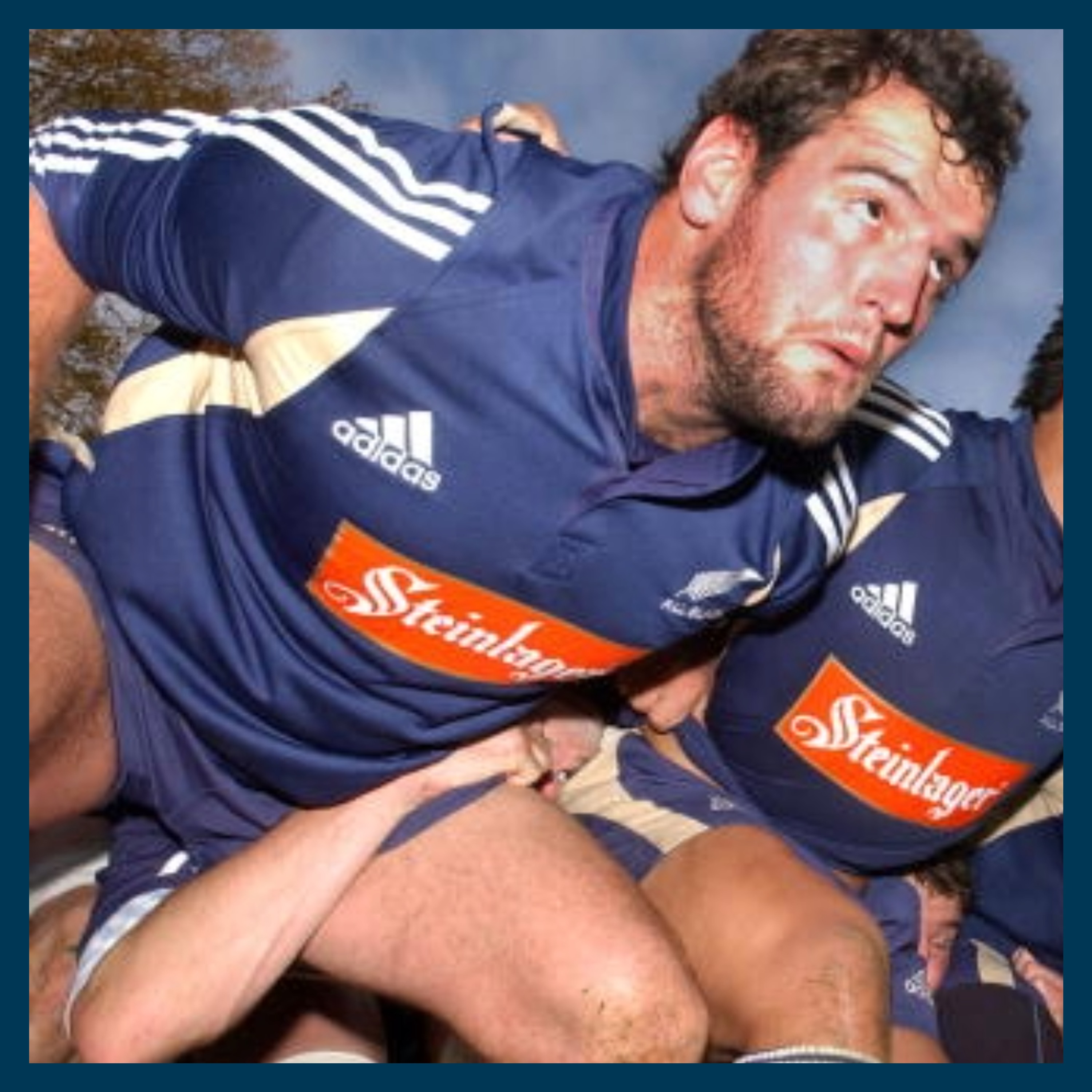
for those who aren't rugby fans. Carl Heyman was the best tight head prop in the world for about 15 years. At his peak he was a colossus, one of the most powerful athletes in the game. Tall, strong, a truly commanding presence on the field. He retired in 2015 and the road since hasn't been easy like I find
- [02:52]
C
it extremely difficult to work a full time job now. Like if someone said tomorrow you need to go and work in this full time, like I have a lot of doubt whether I'd actually be able to last that long.
- [03:08]
A
In 2021, at just 40, Carl was diagnosed with early onset dementia and probable CTE, a disease linked to the sport he loves and one that has torn his life apart. But Carl's story isn't some freak anomaly. It's a symptom of something far bigger, far more troubling that goes right to the heart of the game.
- [03:38]
C
I'm 100% certain that, you know, there's more, sadly, there's more people to come here.
- [03:53]
A
In this final part of our two part special on rugby's existential crisis, I wanted to hear from a player living with the consequences. Someone who'd reached the very pinnacle of the sport and is now enduring its greatest costs. Someone who is spending what time and energy he has left to fight for those who will come after him and who has pretty strong ideas on what rugby could do better. So last month I met up with Carl Heyman to get his story in his own words. Carl, how would you describe how you're feeling now?
- [04:47]
C
It's been really up and down probably since 2021 and really confronting in a number of ways for someone who comes out of a, would say a high level environment of achievement to then breaking your day down and success for that day might be, you know, just getting up, having some healthy food and maybe getting a job done for the day. And sometimes, you know, when your brain energy runs out, that's. Some days you're confronted by that, whereas you've got all these plans, you want to go and do things like normal people would say normal people would, or with normal brain health. And then sometimes you have to check yourself and go, okay, well that's not going to happen today. Or it compromises my probably emotional state as well. At times would say, you know, at times, short fuse. When I played rugby, I'd sit in the changing room and we'd be going out in front of these huge crowds and people used to go to me, are you, are you like, are you alive? Are you okay? Like. Cause you're, you're sitting there so calm and you don't really care. And it's like, yeah, I care. I just like. And I was the most relaxed, probably most relaxed guy in a changing room before a game. Just went about my own thing. And then you get into this position where you start having a bit of Social anxiety and you don't want to be around people and sometimes just having a conversation, although it might not seem from the outside, you've really got to tune in. So it's been a real rollercoaster, actually.
- [06:30]
A
Yes. But basically your capacity for doing stuff is significantly diminished from where it would have been.
- [06:38]
C
Yeah, yeah.
- [06:41]
A
To understand Carl Heyman, it's important that you get a sense of how good he was. When he was really good, he was a tight head prop. That means he played in the front row of the scrum, and the scrum is probably the primary set piece. If you lose the scrum, it's incredibly hard to win the match. Carl Heyman was the best tight head, certainly of his era, and probably one of the best tight heads who ever played the game. You don't get better than Carl Heyman was. He was the thousandth player to play for the All Blacks, making his debut in 2001. The All Blacks at that time and still to a great degree, kind of symbolize what rugby is about. If you're from New Zealand, a relatively small country with a relatively small population, making the All Blacks is seen as the ultimate achievement. Carl played for the All Blacks for just a handful of years, culminating in the 2007 World cup, where the All Blacks were clear favorites to win. When we look back on, on your career, the thing that seemed to like this, the. The rugby fan, regardless of what country they were from, when they thought and looked at Carl Heyman playing, they thought, God, it seems to come easy to this guy. You know, this guy plays tight head prop for a team that was mostly the best team in the world. While you played, the All Blacks were right up there and you just looked like you could. You could do your job comfortably. Is that how it felt to you?
- [08:27]
C
I guess it didn't come easy at first, but that team that we'd built over those years was very special to be a part of that, you know, it was sort of just the role of the prop was starting to change from someone who just scrummed and mauled and lifted in the line outs to okay, a player that's got other responsibilities around the field. I guess I was quite lucky in my younger day. I did quite a lot of walking in the hills and hunting, so I had a good. A good level of fitness. It was a special time. I think that All Black team that we had around from 2004 to our gracious exit from the World cup in
- [09:06]
A
2007, of all the old Black defeats, probably the loss to France in the Quarterfinal in Cardiff in 2007. He's up there amongst the most kind of remembered because it was, it was a big, big surprise. A great All Black team went out at the World cup quarterfinal, which had never happened before. And it really looked like a heartbreaking defeat. And yet you would have always seemed one of those guys, you know, who was almost cool about. But I wonder how you felt after that while the nation was grieving. How did you feel? Were you less affected than others might have been?
- [09:48]
C
That was a really disappointing end to. Although I didn't quite think it was at the end of my orbit career then. Yes, I sort of had intentions to come back, which didn't eventuate. So, yeah, it ended up being my last test. It was pretty, pretty heartbreaking for. Especially a period of time where you expected to win. I remember having a conversation with my dad, said, dad, he was flying over and I said, oh dad, we've lost the quarterfinal. And he says, oh, what, don't you get another chance? Dad was in Hong Kong or somewhere coming over.
- [10:19]
A
I was like, no, he was coming for the semi.
- [10:21]
C
Yeah, yeah. I was like, dad, I'll see you at home.
- [10:26]
A
That quarterfinal in Cardiff and the heartbreaking defeat to France was Carl's final game for the all blacks. He was 28 years of age. He was at the peak of his considerable powers and he did the unthinkable signing for Newcastle Falcons in England. From his point of view, it was straightforward. They were offering him far more money and he thought, why not? Well, that was just something you didn't do if you were an All Black. You didn't go and leave the country when you were the best player in the world in your position. You stayed. But Carl was different. He went against the grain. And of course his decision was met with overwhelming criticism back home.
- [11:18]
C
What other job is there where in a profession where you get offered twice as much money to go and if I was a plumber or an electrician or farmer, farmer. And someone said, we're going to pay you twice as much money to do the same job where people wouldn't go, well, that sounds pretty good. Sounds pretty good. You do it in rugby and everyone's like, oh, he's turned his back on the country. It's like, oh, it's just like I needed a change. I was getting, getting stale.
- [11:48]
A
Carl spent three seasons with Newcastle Falcons before joining the French club Toulon. There he joined an all star squad with rugby greats including Johnny Wilkinson, Bakis Botha, Brian Habana and Matt Gito. This was like Harlem Globetrotters of rugby. And Carl Heyman was a key man in that team. While Karl was playing at Toulon, they won three Heineken Cups. The Heineken cup, now called the European Rugby Champions cup, is the most elite rugby competition in Europe. Do you look upon the three Heineken Cups, the three European Cups, as in terms of success, the kind of summer of your career, the best times?
- [12:35]
C
Yeah, yeah, it was. And to be part of that team was. I don't think it'll ever be replicated. You know, you can go out and buy players that are all great in their own right, but to have them mould and come together as a group like that group did, I've never seen anything like it.
- [12:55]
A
One of the things about your career was how seldom you were injured. I mean, how many games in your five seasons there?
- [13:03]
C
I think between 150 and 160 games.
- [13:08]
A
That kind of averages out about 30 games a season.
- [13:12]
C
Yeah, it was pretty ruthless. The French league, the combat every, every week. And I had no skin on my nose for probably two years. I ended up having to have a skin graft. You'll probably see it through here.
- [13:25]
A
Yes.
- [13:26]
C
Because I originally had a bit of a scrape on there, not to do with rugby. And then just every week after that, it got. That just got ripped open. It got so far damaged that all the capillaries had stopped working.
- [13:40]
A
So this came from scrums going down and your nose hitting the grass?
- [13:45]
C
Yeah. And then someone from the hospital, actually the military hospital in Toulon, rang up the club and said, look, if you don't get this guy's nose covered with the UV and the sunlight going in there all the time, like, he'll end up having some kind of, like, skin cancer or.
- [14:01]
A
Right.
- [14:01]
C
Because there was no skin protection. It was just an open wound, essentially, where the sun was penetrating. So I call it my souvenir of French rugby.
- [14:12]
A
But you weren't getting shoulder injuries, you weren't getting calf muscle injuries, you weren't getting knee injuries.
- [14:17]
C
No, no, I was lucky or unlucky, but I very rarely got injured. I put it down to conditioning probably a lot.
- [14:27]
A
Sir Alex Ferguson, the former manager of Manchester Wundt, said that when signing players, one of the first things he looked at was how many games that player played in an average season. The inference being if the player played a lot and didn't get injured, he was more valuable than the player who did in this regard. Carl Heyman was an A star student. Of course, there is another side to this. It is a very attritional game. And Carl Heyman put himself in the firing line a hell of a lot. When did you first start to realise that despite the fact that you'd never had much by way of physical injuries, that you were getting headaches and something wasn't right?
- [15:22]
C
Towards the end of my career, I realised a lot on the field. I was having, like, real bad deja vu. It's almost like I'm dreaming on the field. Like, I've been here before, I know what's going to happen here. It was a moment of sort of just losing a bit of clarity and. I don't know, I think you see it on those. Some movies and stuff where someone will be drifting off and someone will say, hey, like, snap out of my sort of thing. And I started having these on the field quite a lot. Then I noticed my recall, my memory recall was having some real issues with that. And one of the ones that I do remember, I was trying to renew my son's passport and they said, oh, what's your son's name? I said, charles. And I paused for, like, about 15 seconds and I said, sorry, this is really embarrassing, but I can't remember my son's middle name. And it just, like, completely gone. And then I was just going like, oh, that's not. That's not normal. Like, I can recall it now, but at the time, just getting asked something and then trying to find that information, just going like, where's that gone? Emotional stuff as well was starting to. I didn't notice it at the time, but I found, like, I'd be in meetings at the club and be talking about something and while I'm talking, I'm like, feel my eyes starting to water and it's almost like I'm emotionally going to cry, right? I was sort of certainly starting to change as a. As a person near the end of my career, which would have been about 17 or 18 seasons in the end.
- [17:09]
A
After captaining too long to win their third consecutive European Cup, Carl retired in 2015. He played more than 400 games in his professional career. He struggles to adjust to life after rugby. He begins coaching for Poe, another French Club, in 2016. Soon after, he starts spiraling and his life takes a dark turn. He has suicidal thoughts, endless headaches and he's drinking too much. His memory lapses are becoming more common. He's also struggling to keep his temper. Carl Heyman, the rugby player, had the longest fuse on the rugby pitch. He didn't get into fights very much. He wasn't overly aggressive. This new side to him Alarming.
- [18:08]
C
I think for me it was a bit of a perfect storm around that time. Like I was, I was dealing with not playing, I was coaching, I was struggling mentally to basically keep life together and then sort of life just wobbled its wheels off and you know, my marriage was falling down and then I made some dumb, dumb choices. You know, I was drinking too much and my wife and I just were sort of at points end.
- [18:46]
A
In early 2019, he suspended as a coach after a fight with a number of players. A few months later he's convicted of domestic assault in France after an incident with his then wife and he faces a four month suspended prison sentence. Carl has hit rock bottom. He's had violent, scary outbursts and the memory lapses aren't going away, but he's not making any connection to his brain. His life just looks like it's disintegrating before his eyes and he's become someone he doesn't recognize anymore.
- [19:25]
C
It wasn't till a few years later that I started to, just started to put a few things together.
- [19:33]
A
Carl once said he spent several years, quote, thinking I was going crazy. It wasn't until he started seeking medical answers that he thought any different.
- [19:44]
C
At that time I was back in New Zealand and I was going through my doctor and saying like, look, I'm having all of these things happening to me. Headaches, headaches, you know, short term memory issues, you know, emotional variability. At that stage wasn't sleeping very well at all. So I'd be up at 2 o' clock in the morning and I'd go for a 20 mile, 20 mile bike ride and it was just like, it was bordering on like semi insanity.
- [20:19]
A
His local doctors put in requests for him to see specialists, but they keep being denied. Carl realizes he's not going to get what he needs in New Zealand and so he seeks help abroad.
- [20:35]
C
Went into London and basically went through an array of what they call it, like psychometric testing. And once those results, those tests come back to me, it was quite overwhelming. Like I sort of thought, oh, they'll just say, oh, you know, you're fit and healthy and you're fine, good to go. Because you're indestructible, right? You know, you live in a place where you're made of concrete and you're indestructible. And yeah, it's sort of pretty humbling when that gets presented to you, but in a way it allowed me to understand a few things.
- [21:14]
A
And your diagnosis was early onset dementia?
- [21:18]
C
Yeah, early onset dementia, probable cte.
- [21:21]
A
Right, CTE or Chronic Traumatic encephalopathy is a murderous brain disease caused by concussions and sub concussive impacts. It causes tall protein to build up in the brain and that leads to huge problems. Carl is diagnosed with probable CTE because it can only be diagnosed posthumously with a brain examination. CTE is progressive, meaning it gets worse over time. It includes a harrowing list of symptoms. Memory loss, impulsive behaviour, emotional instability, paranoia, increased aggression, substance misuse and depression. It is also associated with dementia, which is where Carl's early onset dementia diagnosis comes in. Carl is not the first rugby player to be diagnosed with dementia, nor is he the last. It is something that keeps happening. For example, England's Steve Thompson, Alex Popham from Wales and Michael Lippman from Australia, very high profile rugby players were also diagnosed in their 40s. Is the probable CTE the really scary part?
- [22:54]
C
I think it's all pretty scary in a way, David. Look, I have bad days. For me, it was about, and I'm not perfect at this. It's about what I can do, not what I can't do. Because things like this will take you one or two ways. It'll either suck the life out of you and become doom and gloom, or you can say, okay, I need to accept what's going on here, but I can still live a productive life and still feel valued and feel I've got some things to contribute.
- [23:30]
A
You've had upheaval in your personal life. Do you regard that as a separate to your brain injury or do you regard it as connected?
- [23:38]
C
It's very blurred, but I don't see myself as an angry, angry person, but yet I've done things that I'm certainly not proud of.
- [23:49]
A
In addition to the assault conviction against his wife, Carl was caught drunk driving in 2022. His blood alcohol level was over four times the legal limit. And in 2024 he was sentenced for threatening to post a woman's naked photographs online. Due to his dementia diagnosis, the judge ruled he had reduced moral culpability.
- [24:18]
C
It's one of these things you wish you could turn back time, but looking back at it was a lot to deal with and I'm sure it's related, but I'd never use, never use the CTE as an excuse, but I'm sure it's something to do with where I was at in that stage of my life.
- [24:44]
A
Coming up, how Karl is fighting for the players that come after him and the lawsuit that could change rugby forever. Par le tu francais, hablas espanol Par le italiano.
- [25:05]
B
If you've used Babbel, you would. Babbel's conversation based technique teaches you useful words and phrases to get you speaking quickly about the things you actually talk about in the real world. With lessons handcrafted by over 200 language experts and voiced by real native speakers, Babbel is like having a private tutor in your pocket. Start speaking with Babbel today. Get up to 55% off your Babbel subscription right now at babbel.com acast spelled b a b b e o.com baby acast rules and restrictions may apply.
- [25:40]
A
Today's markets move fast. Get the insights you need in 10 minutes with the Barclays Brief, a new podcast from Barclays Investment Bank. Through sharp dialogue and scenario based analysis, our leading experts analyze key market themes each week. So whether you're managing a portfolio or leading a business, the Barclays Brief podcast can help you make smarter decisions today. Stay sharp, Stay brief. Find Barclays Brief wherever you get your podcasts. Okay, Caller one wins courtside seats to tonight's game. What? I won floor seats. You did? I've been calling for 13 months. Wait, Chris. Yes. I finally did it. What are you gonna wear? Men's Warehouse. They've got today's looks for any occasion and I need to look like a celebrity. Want to stick out? Exactly. They've got Chill Flex by Kenneth Cole, Joseph Abood and a tailor at every store for the perfect fit. Congrats. You can stop calling now. Not a chance. Hit any look for every occasion at Men's Wearhouse. Love the way you look. After Former rugby great Carl Heyman was diagnosed with early onset dementia and probable CTE in 2021, he decided to join the lawsuit brought by former players who claimed that rugby's governing bodies, including World Rugby, didn't provide enough protection for them. They claimed the risks of concussion and sub concussive hits were known and foreseeable. Alex Popham, the Welsh player who was part of this lawsuit, put it succinctly when he said, we knew we were going to have physical problems. Nobody told us about the risk. To our brains. Carl was the first All Black to join the lawsuit. Now over a thousand former players, union and league have signed on. The case is still ongoing. Stuck in the pre trial phase. What influenced you to join the lawsuit? What was the determining factor in saying, yes, I want to be part of this?
- [28:07]
C
Hopefully, you know, another generation of players, they'll be safer, you know, they won't be chucked back out on the field after getting knocked out. They won't have to play 30 plus games a year that there's, you know, some robust monitoring around, you know, the amount of contacts these guys are getting in the season. And in the end, there's support for them because I think we're like the crash test dummies, so to speak, of professional rugby. You know, from the late 90s through to that sort of 2000s, early 2000s, professional rugby was all. Was all new. And I think now these guys are getting into their 50s and, you know, late 40s, 50s, 60s, and we're sort of starting to see the effects of what a, you know, large workload within a rugby environment can have on players state of mind.
- [29:00]
A
Notably around the cte, Carl Heyman played in a different era. You could even say it was the wild west of rugby. The authorities say that the game is now very different and players, they claim, are much more protected than they once were. It is true. They've lowered the tackle height. They've made it a rule to immediately remove players suspected of having suffered a concussion. They've offered guidance on how physical contact in training needs to be reduced. They've introduced mouthguards that monitor impact and can signal a concussion. But ultimately, players are still playing a lot of games. If you were the boss of rugby, what number of games would you think appropriate for a professional rugby player?
- [29:54]
C
In this season, I would say somewhere around 20 games.
- [29:57]
A
For me, the number of games is hugely important because it relates directly to how CTE works. The more you play, the more at risk you are.
- [30:11]
C
That is what I'm dealing with. More than, you know, I've been concussed. I remember I got one good one and Auckland, I think, against Australia, where I couldn't stand up, and the rest of them were like what you'd receive from a tackle. So it's all of those little impacts that add up over someone's career that can cause issues. So I think it's a real good point for rugby to rebrand itself and have these competitions which are, you know, I'd say, really meaningful competitions as opposed to just a TV filler, and actually reinvent the global calendar. And it might mean that it's just international games, but we can't have players playing a Super Rugby competition or a European domestic competition, then going and playing six nations, then going on an India tour to New Zealand. It's just saturation. And of course these guys are going to come away with head injuries. Of course they're going to come away with problems. It's a matter of numbers. The guys are even from when I played the guys now are bigger and faster and stronger. Their head's still just their head.
- [31:28]
A
So rugby has to reduce the number of games that people play. This would lead to greater squad size, increased costs. But this is stuff that rugby has to deal with because what they say is true. Player welfare has to come first and has to be seen to come first. Rugby also needs to say, this is the amount of contact you can have in training. And this is not guidance. This is the law and it must be imposed.
- [32:03]
C
There's other ways to get people contact fit, like wrestling.
- [32:08]
A
Yes.
- [32:08]
C
Low impact to the head, but physically very demanding. You know, if you look at a boxer in a boxer's career, say a Tyson Fury, he's not going in and going sparring every weekend. You know, he's conditioning himself, you know, then he's doing some bag work, and then he's. Maybe a month before he goes in for a fight, he'll start sparring. So you sort of look at a sport like boxing, which can be pretty brutal, whereas rugby, in my view, is, you know, the players are taking more hits to the head than any, you know, than any professional boxer.
- [32:44]
A
Boxers often only do two fights a year. A professional rugby player is expected to play maybe up to 30 matches per season. And it's not just the amount of contact and the number of games. There have also been complaints about various players associations in different countries. Effectively the players unions not listening to their players and not understanding what's going wrong and not getting the players the treatment they need. The support for players going through really tough times. You were in this category in a general sense, hasn't been reassuring, if I was putting it politely. Is that your experience with regards to
- [33:32]
C
brain injuries and cte, it's like the hot potato. It's like, we don't want to deal with it. You know, if you have any other issues like going through hardship, lose your job, things like that, that can be great in terms of dealing with head injuries, and it's almost like, oh, we don't want to deal with that. It's the too hard basket. So I guess by helping in a way, that's an admission of there's a problem, where it's so much easier just to dismiss the problem and say, oh, you know, you need antidepressants, or, hey, you know, we'll get you to a counsellor. Whereas it's great that they go to a counsellor and it's great for them to be able to talk, but it's not helping the root cause or diagnosing
- [34:16]
A
the Problem in my reporting, there's one thing that comes up time and again. Rugby authorities don't want to see the problems that players are having as brain injuries, but as psychological issues, mental health issues. My own feeling is that an ugly truth is better than a beautiful lie. And if the game is damaging the brains of players, we need to recognise this and we need to, to act upon it. Do you ever think that the lawsuit, that you're a part of that, when that reaches resolution, it could significantly change rugby? Do you think it might?
- [35:05]
C
I hope it does. I think it'll only make the sport better.
- [35:08]
A
Yeah.
- [35:09]
C
I think rugby has to adapt or there's a serious doubt whether under the way it's going that the game survives.
- [35:18]
A
I would hate to see rugby die, but I do agree that it has come to a very difficult moment. You know, rugby and many other sports say that Clare welfare is their number one priority. And for years I've thought that's a very easy sentence to put on your website. It's not so easy to put player welfare into practice. This is something that world rugby has repeatedly said, I.e. that it has utmost respect for the well being of all our players, that we are unwavering in our commitment to injury prevention strategies. And yet in February it denied any liability in the ongoing lawsuit, claiming that injuries are a foreseeable and inherent risk in playing the sport.
- [36:14]
C
I think it's really sad for the people involved that there's been this denial and I think some admission of what has gone on would, you know, go a long way, I think, to actually putting their hand up and saying, okay, you know, we've got it wrong. It's really tainting whole, the whole sport. It's a good opportunity for rugby to have a bit of a shake up, reinvent itself, put its hand up and then say, let's support people when needed.
- [36:49]
A
And this is kind of almost last question, Carl. People will look at you now and say, Carl Heyman sounded great. I saw a podcast of him, I saw him in an interview. He sounds in good form, very sharp, normal, you would say?
- [37:07]
C
Yeah, I don't know what I'd say, to be honest. Come and see me tomorrow morning maybe.
- [37:15]
A
Yeah. After the interview ended, Carl offered me a lift to New Plymouth Airport. As we were driving there, we got talking about Shane Christie, the New Zealand rugby player diagnosed with CTE who had died last year. Carl said he kept in touch with Shane a lot. I mentioned to Carl that Shane had had a number of psychotic episodes and Carl said, I get those too. And I said, really? How do they look for you? And he said, oh, recently I had one where I'm lying in bed and I'm thinking that somebody has come into the bedroom and put an electric wire around the bed and that basically I'm going to get electrocuted. Or there was another one where I'm lying in bed with my partner and the walls are beginning to come in and crush us and I'm telling my partner she's got to get out of bed because we're going to be crushed. That's the kind of thing he said that I've got. And I thought, even though this man that I've spent the previous three hours with seemed like the most normal man that you could ever meet. Good form, good humour, sharp, all of those things. Carl wasn't that. And that's not the life that he's got right now.
- [38:37]
C
No, it's a hidden, not a silent killer, but it's sitting there under the surface and it's something you deal with on a daily basis, is good days. And there's good days and bad days.
- [38:58]
A
I started life always wanting to be a sports journalist. I was lucky enough to get to live that dream. Rugby has been a particular passion of mine. I want to go on watching rugby, I want to go on enjoying the game. I want rugby to always attract some of the young people who want to play sport. But in relation to the brain damage suffered by many of its players, rugby has lagged behind. I don't want the game to become gladiatorial in the sense that we sit back and watch players risking their brains for our amusement. And I'm also not saying that we can fully eliminate risk. We can't. There will always be some risk and we accept that. But rugby still needs to change. The future of the game depends not just on how it's played, but on how it chooses to care for the people who play it. I hope rugby sides with those like Carl Heyman, who dedicated their bodies for the love of the game and gave us so much. In this episode, you heard from Carl Heyman, a tight head prop from New Zealand. Today's producer was Sophie McNulty. The executive producer was Dan Box, and sound design and music composition were by Mao Lisetto. I'm David Walsh.
- [40:46]
C
Thanks for listening.
- [41:25]
B
If you've used Babbel, you would. Babbel's conversation based technique teaches you useful words and phrases to get you speaking quickly about the things you actually talk about in the real world, with lessons handcrafted by over 200 language experts and voiced by real native speakers. Babbel is like having a private tutor in your pocket. Start speaking with Babbel today. Get up to 55% off your Babbel subscription right now at babbel.com acast spelled B-A B B E L.com acast rules and restrictions may apply from globalization to
- [42:02]
A
innovation sustainability to market volatility. There's always more than one side to a story. Explore different perspectives on today's most important business and economic issues with the Flipside podcast from Barclays Investment Bank. Hear two research analysts in a lively debate, and get insights from every angle to further inform your view. Listen to the Flipside on your favorite platform.