Loading summary
Transcript15 lines
- [00:00]
Katie Prescott
Hi, I'm Katie Prescott from the Times Tech Podcast, which is currently sponsored by IBM. IBM has worked with Wimbledon for more than 30 years, helping the championships use data and AI to create more engaging digital experiences for fans. That includes tools like Match Chat, which can answer questions during play, and Likelihood to Win, which uses live match data to offer near real time predictions. It's a practical example of AI in action, helping fans follow the tournament more closely while showing how organizations can turn data into useful insight. To learn more about how IBM helps create smarter business, visit IBM.com today's markets move fast.
- [00:45]
Barclays Brief Announcer
Get the insights you need in 10 minutes with the Barclays Brief, a new podcast from Barclays Investment Bank. Through sharp dialogue and scenario based analysis, our leading experts analyze key market themes each week. So whether you're managing a portfolio or leading a business, the Barclays Brief podcast can help you make smarter decisions today. Stay sharp, Stay Brief Find Barclays Brief wherever you get your podcasts.
- [01:16]
Manveen Rana
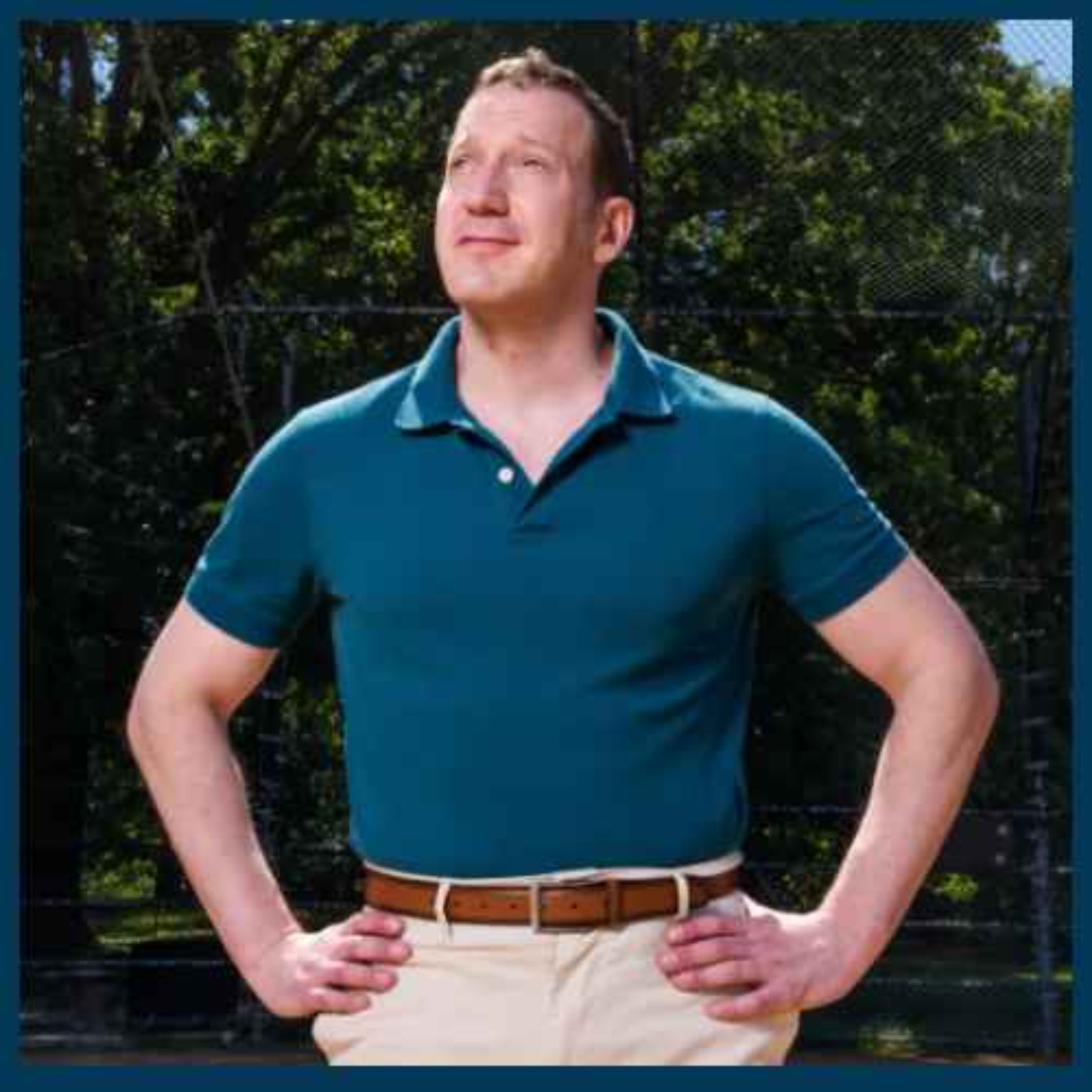
From the Times and the Sunday Times, this is the story on Saturday. I'm Manveen Rana. At 41, Ben Koala, a single gay writer living in New York City, was confronted by an unexpected desire. He wanted to become a father. But wanting a child is not necessarily the same as wanting to be a parent. So could Ben pass on his genes to a loving family and still remain present in some meaningful way while avoiding the full demands of raising a child? That question took him into the largely unregulated world of sperm donation apps, leading to a succession of deeply revealing online encounters. What began as a search for a distant form of fatherhood became a more serious reckoning with responsibility, attachment and what it means to create a life. We asked Ben to read his funny, candid and thoughtful reflections published in the Times this week.
- [02:39]
Ben Koala
At the age of 41, having thus far enjoyed my life as a free and single gay man, I have made a startling discovery. The reproductive instinct. Or some version of it. Anyway, I'm not that interested in the act of reproduction, abomination that I am. But given America's plummeting birth rate and my fear that when I am old there will be no one to think of me as a burden, I have started to wonder if I should do my part to propagate the human race. Plus, I love kids. My sister has two of them, aged eight and five, and they are my favorite people in the world. There is nothing better than the feeling of their ecstatic welcome when I set foot in their home. Except perhaps, the knowledge that I will also be able to leave. What I am looking for, to be clear, is a way to reap all of the benefits of fatherhood without any of the sacrifices. Ideally, I'd be a sort of uncle figure, dropping in once in a while to remind them I'm the reason they exist and to make sure they're getting enough television. I've heard of other gay men supplying sperm to their girlfriends and co parenting their children. While I do think this arrangement has the makings of a terrific reality show, I associate the term co parent with words like polycule, intentionality and organic. It will never do anyway. All my close girlfriends have perfectly virile husbands who have already given them children. It seems that if I want to pass on my genes, I'll have to entrust my legacy to a couple of strangers. Sperm banks are out for two reasons. The fda, that's the Food and Drug Administration, currently bans sexually active gay men from donating to commercial banks. I'm also barred thanks to my medical history. At 23, I had a brush with testicular cancer and had one ball removed. Now, don't worry, I had surgery before anything bad could happen. But today I feel strongly that the one ball I have left offers many positive qualities outside the minor risk of premature death. Luckily, there now exists a healthy black market for sperm where women can acquire the stuff directly from suppliers with only a few keystrokes. Yfactor is one of these services,
- [04:54]
Katie Prescott
A
- [04:55]
Ben Koala
Copenhagen based app to match women seeking sperm with men no one wants to have children with. Y Factor launched in the UK in 2025 and expanded to the US this year, the app offers private individuals who wish to procreate a way to avoid the burdensome regulations of the state or the costs of the commercial market. In the US a vial of sperm can go for north of $1,000. YFactor's founder, Ole Sko, is also the owner of Cryos International, which bills itself as the world's largest sperm bank. The inspiration for SCO's line of work, he told me, came 40 years ago to him in a dream. Not a wet dream, he clarified. Skull told me to think of Y Factor as the tinder of sperm. And indeed, the design of the app lives up to its premise. Users can upload five photos, enter their physical stats, and identify some of their central values from a preset list including health, animal welfare and financial responsibility. I value none of these, so I opted for family, community and the arts. And there is of course, a bio section. I advertised myself on Yfactor as a single gay writer looking for a couple with a sense of humor. Who will raise my offspring without screwing them up too much? I am frankly shocked that my inbox was not flooded with interest. That might have been because Y Factor is new on the scene.
- [06:26]
Manveen Rana
Foreign.
- [06:40]
Katie Prescott
Hi, I'm Katie Prescott from the Times Tech Podcast, which is currently sponsored by IBM. IBM has worked with Wimbledon for more than 30 years, helping the championships use data and AI to create more engaging digital experiences for fans. That includes tools like Match Chat, which can answer questions during play, and Likelihood to Win, which uses live match data to offer near real time predictions. It's a practical example of AI in action, helping fans follow the tournament more closely while showing how organizations can turn data into useful insight. To learn more about how IBM helps create smarter business, visit IBM.com a better
- [07:23]
BetterHelp Advertiser
help ad after my session and talking to my therapist and really feeling seen and heard for the first time, I just felt like a weight just was lifted off of my shoulders and I felt like it was a good match. From the first time we talked, I could tell people from lived experience that they should try therapy. I could really be myself again and I have this continued support with better help. Wherever you are, that's where BetterHelp begins. Visit betterhelp.comrandompodcast to get started.
- [07:53]
Ben Koala
Pay testimonials Results may vary Jimmy Conrad
- [07:56]
Vuori Advertiser
here and I have something to put on your radar. The core short from Vuori because after getting my first pair I was hooked. They work for everything that I like doing soccer, tennis hoops and lifting weights, to name a few. And they're unbelievably comfortable, which is why I wear them doing everything else. They are designed to work for whatever your day throws at you. For our listeners, they're offering 20% off your first purchase, so head to vuori.com footy that's V-U-O-R-I.com F O-O T Y exclusions apply. Visit the site for full details.
- [08:37]
Ben Koala
My own searching within the New York metro area where I reside turned up only 47 profiles of sperm seekers and I can't say I was moved to explore family planning with many of my search results, mostly because the majority of them were blank and photoless. I did send a like to a Brooklyn based lesbian couple who have been together for six years and have two chihuahuas, mainly because their one sentence bio contained nothing. Immediately disqualifying. I have yet to hear back from them. In the two months I have had an active profile on Y Factor, I have attracted only 8 likes. Most of them are based in Europe. There's a British lady named Cat who likes crafts, singing and bright colors, which I guess sounds nice. There's a waitress who describes herself as Bigender, A little weird, but at least the kid would have both a mother and a father. The most promising of these is a Hungarian lady named Tuna. I like the idea of telling people I have a child with a Hungarian lady named Tuna. I also attracted a like from a nice looking lesbian couple in Boston who were offering an online relationship with my potential son or daughter. But I figured that's not going to work. I'm trying to be a distant father, not a long distance father. In fact, I couldn't see leaving my kids with any of these people. So I checked out Just a Baby, an alarmingly casual sounding app that has been around since 2017. In 2022, its founders claimed that it had over 25,000 monthly users more expansive in scope than Y Factor, Just A Baby can help people find more than just sperm. Eggs, surrogacy and co parenting are also on offer. The ethos of Y Factor and Just a Baby is that they are not in the business of selling sperm, administering ivf, or any of the actual mechanics of baby making. They exist to connect grown ups seeking to make babies, an act it might be noted that people have carried out since time immemorial without official oversight. Both are fairly hands off in their vetting of users, an approach that has raised eyebrows given the volume of men on these platforms whose motivation for parting with their seed is the chance to have sex. On both platforms, many of the women's profiles betray an irritation with men vying to procreate, using ni, the nickname for natural insemination. Hoping I'd stand out for being one of the least sexually threatening prospects, I copied my Y Factor Persona and made myself a Just a Baby account about a month ago. Shortly after publishing my profile, I piqued the interest of a 22 year old 109km away who called herself Storm looking for a donor. Smiley face, her profile read. Her photo was of a Wawa gas pump. I decided I would not find calm in that Storm. I also attracted the attention of a 40 year old named Amber whose profile said she's here to make a baby and that she likes to hang out, chill, have fun. Sometimes I wondered, only sometimes. Also, how committed was Amber to raising my child without punctuation? My favorite people on Just A Baby were the ones who clearly felt no pressure to impress anyone. I swiped past a 24 year old named Alia who was looking for a baby so she had something to live for a pretty typical reason to have a kid in fact. But what refreshing honesty. I do not feel motivated enough unless I am affiliated with a baby, she confided on her profile. Well, I am rooting for Aleeya and I hope she one day makes a happy affiliate, but I'd prefer my children were raised by someone who isn't grasping for a reason to stay alive. I have not yet thrown in the towel on fatherhood, but the more I scroll through these apps, the more I doubt I have it in me to be a sperm donor. With every profile I come across, I envision a nightmarish home for my children. Would I be entrusting them to someone addicted, mercurial, unable to use an apostrophe? Maybe it's a good thing I can't donate to a sperm bank. Humanity seems to be filled with people I wouldn't trust to dog sit, let alone raise my child. I guess there is always the possibility that I meet a man who talks me into raising my own damn kids. Surely there's an egg donor out there with even less parental instinct than me. I think given the choice between being a father and a distant father, I'd rather be around for the whole thing. I think what I mean to say, and I can't believe I'm saying it, is that I am looking for the father of my children.
- [13:08]
Manveen Rana
That was Ben Koala and you can read his piece online@thetimes.com the producer and sound designer today was Dave Creasy. The executive producer was Sophie McNulty. I'm Manveen Rana and we'll be back tomorrow with a deep dive into the diamond industry and why its decline could spell disaster for millions. Do join us then.
- [13:46]
Katie Prescott
Hi, I'm Katie Prescott from the Times Tech Podcast, which is currently sponsored by IBM. IBM has worked with Wimbledon for more than 30 years, helping the championships use data and AI to create more engaging digital experiences for fans. That includes tools like Match Chat, which can answer questions during play, and Likelihood to Win, which uses live match data to offer near real time predictions. It's a practical example of AI in action, helping fans follow the tournament more closely while showing how organizations can turn data into into useful insight. To learn more about how IBM helps create smarter business, visit IBM.com Jimmy Conrad
- [14:30]
Vuori Advertiser
here and I have something to put on your radar. The core short from Vuori because after getting my first pair I was hooked. They work for everything that I like doing soccer, tennis, hoops and lifting weights to name a few. And they're unbelievably comfortable, which is why I wear them doing everything else. They are designed to work for whatever your day throws at you. For our listeners, they're offering 20% off your first purchase, so head to vuori.com footy that's V-U-O-R-I.com F O-O T Y exclusions apply. Visit the site for full details.