Loading summary
Transcript89 lines
- [00:01]
Manveen Rana
From globalization to innovation sustainability to market volatility, there's always more than one side to a story. Explore different perspectives on today's most important business and economic issues with the Flipside podcast from Barclays Investment Bank.
- [00:16]
Jim Armitage
Hear two research analysts in a lively
- [00:18]
Manveen Rana
debate and get insights from every angle. To further inform your view. Listen to the Flipside on your favorite platform. This episode of the story is sponsored by PwC.
- [00:32]
PwC Sponsor Voice
Technology doesn't wait, and neither should you. Staying competitive means getting ahead, not just keeping up. PwC takes you further with tech. From optimizing the systems that put your data to work to scaling AI from proof of concept to competitive edge, PwC
- [00:49]
Manveen Rana
helps you meet tomorrow's tech demands so you can compete at a speed that rewrites the rules.
- [00:55]
PwC Sponsor Voice
Discover more@pwc.co.uk
- [00:59]
Manveen Rana
from the Times and the Sunday Times, this is the story. I'm Manveenrana.
- [01:13]
Jim Armitage
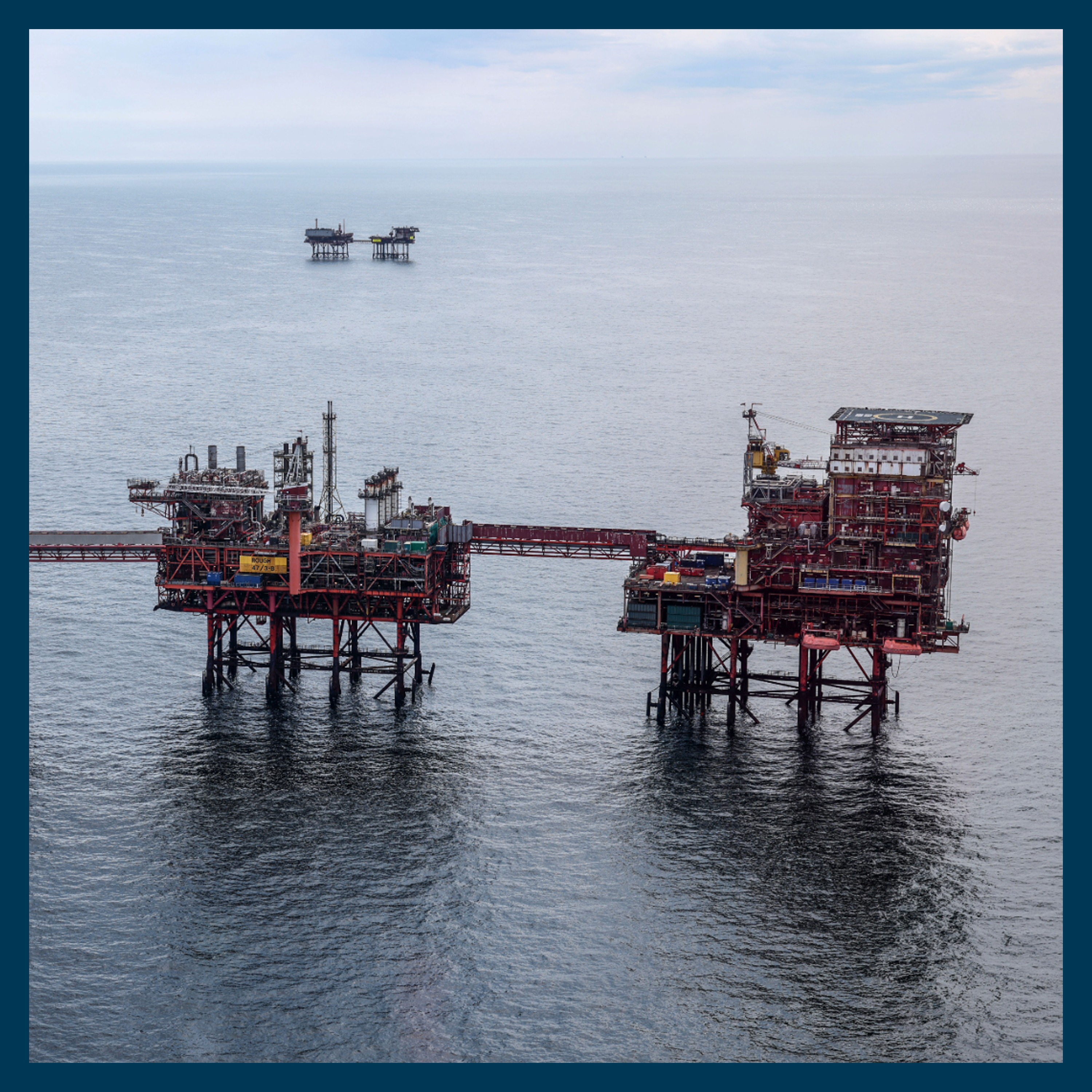
So we've just boarded the helicopter ready to head out over the North Sea with a rust gas insulation.
- [01:26]
Manveen Rana
That's Jim Armitage, contributing editor at the Sunday Times, having the time of his life boarding a helicopter headed out to a gas platform in the North Sea.
- [01:39]
Jim Armitage
Nine of us in the chopper here during the Centrica Chief Executive Chris o', Shea, who's going to be explaining why it's so important.
- [01:50]
Manveen Rana
The platform in the rough gas field off the coast of Yorkshire is at the centre of a thorny political debate that has divided the country and the Labour government. Should the UK be investing in oil and gas or renewables?
- [02:10]
Jim Armitage
We need to take control of our energy prices. The only way to do that is through renewables.
- [02:16]
PwC Sponsor Voice
Homegrown zero carbon power, renewables, nuclear, green, hydrogen, carbon capture, tidal is the right choice for Britain.
- [02:24]
Manveen Rana
North Sea gas and oil is an important part of the mix.
- [02:28]
Jim Armitage
The North Sea is loaded. I have had every oil company come to see me. Sir, could you give us access to the uk? We would do anything to drill in the North Sea.
- [02:44]
Manveen Rana
Beyond the ideological debate, there's also the urgent question of energy security. Should we be spending money now on storing gas or investing it all on a greener future?
- [02:58]
Jim Armitage
The UK has approximately 12 days worth of gas. Compare that to elsewhere in Europe. Germany 89 days, France 103 days.
- [03:08]
Manveen Rana
Some of the most urgent investment decisions that will determine Britain's energy security involved deciding the future of places like the rough gas field in the North Sea. So Jim thought it was time for a visit. The story today Does Britain have an energy security problem? Jim, what made you interested in this story?
- [04:09]
Jim Armitage
I've always been really fascinated in where we get our electricity from the sort of plumbing and the wiring behind the plug socket in our house or the on switch on our laptops. And this was one of those kind of nitty gritty, really digging beneath the surface kind of stories that I really love doing. Plus plus it gave me the opportunity to fulfill one of my life's ambitions, which is to go way out in the middle of the North Sea, which I've always fancied, hanging out with those kind of rugged guys on the rig. And the excitement that goes with that,
- [04:48]
Manveen Rana
well, you get two lifetime ambitions ticked off there because you not only get to explore a rig out at sea, but you also get to go there in a helicopter. Who are you on this helicopter with? Who's taking you out to a rig?
- [05:00]
Jim Armitage
I was there after my request, Chris o' Shea from Centrica, which is the owner of British Gas. He's the chief executive there, earning four and a half million pound a year he got last year. But he was keen to, frankly to lobby on behalf of the company for this project that they're trying to get a deal with the government to fund.
- [05:26]
Manveen Rana
This is a rig out at sea off the coast of Yorkshire. Just describe because, you know, most of us haven't had the chance to go and visit one. What does that look like?
- [05:36]
Jim Armitage
Yeah, they're kind of weird looking things. The one that we're at, it's a platform above the rough gas field. It was segmented into three platforms with like a little kind of a bridge between each one. Very, very flimsy looking as you approach it from the helicopter. And very, I think they look like
- [05:54]
Manveen Rana
spiders almost, with very spindly leg.
- [05:56]
Jim Armitage
It kind of reminded me a bit
- [05:58]
Manveen Rana
of a big weight in the middle.
- [05:59]
Jim Armitage
Exactly. Or like a sort of a ramshackle pier at the seaside. They're very rusty. So this thing's been in there for 30, 40 years. So yeah, they were looking a bit. A bit sad, to be honest.
- [06:12]
Manveen Rana
And what's it like when you're on it? Because that does, you know, that whole architecture sounds slightly ropey. I mean, are they sort of swaying? What do they feel like?
- [06:21]
Jim Armitage
That's what I was expecting it to be like because literally you're out so you can't see the land. So you kind of expect it to be like being on a shore, but it's the complete opposite. It's very, very sturdy. The reason being that this is. I call it a rig. Technically it's a platform. Rigs float on the surface, I learned. So it's a platform which is secured to the sea on these big, heavy, heavy legs. So when you get on it, it's really, really solid. When you jump off the helicopter, the only difference being it's all kind of grill flooring. You look down and all you can see far, far below you is the sea, which was very beautiful on the day we were there.
- [06:57]
Manveen Rana
I mean, it sounds stunning. At the same time, if you're there surrounded by the sea, not able to see the land for a while, that must be very weird. I mean, how long do people who work on that platform, how long are they out there and what is life like for them? What is it like living on a platform?
- [07:11]
Jim Armitage
They absolutely love it. You get this incredible esprit de corps. The morale was really, really high. I spoke to loads of people there. There's about 100 people on this rig platform, I should say about 100 people of varying ages. I spoke to an Apprentice who was 20 and her who was kind of in his 50s, he'd been there for 30 odd years. They work for two weeks on and then they get three weeks off. So that two weeks they're working 12 hour shifts, could be a night shift, could be day shift. So it's very hard work, very intensive work when they're there. I mean, I was thinking I was there on a blazing, blazing hot summer day and it was absolutely boiling. You have to wear these very thick, heavy safety suits while you're out and the sweat is just pouring off you. So 12 hours of that, I wouldn't fancy it, frankly. But they're all kind of, they're all really buff, kind of fitness guys. Even after those 12 hour shifts, a lot of them go to the gym
- [08:07]
Manveen Rana
and this is a gas platform. I mean, just taking a step back, paint a picture for us of the sort of energy landscape in this country. How big a part is gas of that picture?
- [08:19]
Jim Armitage
A lot of people, I think, think of our use of gas in being the gas that we use in our cookers or to heat our homes in the boiler. But also gas is increasingly important for generating electricity. Since we switched off coal, the coal fired power stations a few years back. The sort of the bulk of the energy generation system in the UK is done by gas, obviously, increasingly being replaced and supplemented with wind and solar. But that's really what gas is doing. It's providing the electricity that switches the lights on. I was looking at, you can see in live time where our energy is being generated, generated from, on various websites. And I was looking this morning and at the moment we've got about 30% of the electricity that's being produced is coming from natural gas this morning. About 29% from wind and a bit more from solar. It's a bit overcast today, but that kind of gives you an idea of how much we rely on natural gas.
- [09:15]
Manveen Rana
So it's a key component. Does most of that gas come from platforms like this?
- [09:23]
Jim Armitage
Well, that's a really good point. It comes to the crux of the story. So this platform is over the rough gas field, which, as I said, has been one of the earliest ones to be operated. It was started being drilled in the 70s, so it's all but empty. Chris O', Shea, the CEO, was saying to me, just picture a child sucking up the last bits of their orange juice with a straw. That kind of Slurpee bit. As they chase it around, you think about when you have a glass of juice, you got ice and you got a straw, you know you get to the bottom, don't you? Kids, You've got kids when you get to the bottom and they're small and they're good, but it really annoys you. That's where we are with this reservoir. We're sucking up the last bits. And that goes for most of our North Sea gas reserves. The easy gas has been extracted already from a lot of it. There is still quite a bit left. It's a big sort of political hot potato at the moment. Obviously, there's quite a bit left in harder to reach gas reserves, but modern technology means that specialist companies are able to access that more than they would have been back in the glory days of North Sea gas. The point about the rough field is that, as I say, it's pretty much dribbling to empty.
- [10:38]
Manveen Rana
Where does our gas come from?
- [10:40]
Jim Armitage
So most of our gas is imported, so I think about 40% from Norway, for example, which is obviously the other side of the North Sea. They were a little bit later to start drilling and they've got bigger reserves left. We're also bringing in increasing amounts of liquefied natural gas. That's lng, which comes from primarily the US and Qatar in ships that bring it over.
- [11:05]
Manveen Rana
For people listening, the idea that 40% of it comes from Norway or any other country just will make people wonder what it means for our energy security. We've seen recently with lots of flashpoints around the world, whether it's the Iran war and the Strait of Hormuz now, but before that, actually, from the moment Ukraine was invaded, we have seen attacks on pipelines already. So there must be some fears that as much as Norway may want to help, that isn't necessarily always going to be possible.
- [11:32]
Jim Armitage
Well, we've caught them at it. We've caught the Russians snooping around undersea assets on a regular basis, be that cables, be that pipelines, be that Internet cables. So we know that that is an actual threat. And as we all know, the risk, the sort of security risk level coming from Russia is higher than it's been since the Cold War.
- [11:59]
Manveen Rana
How has that sort of worked for us in the past when these crises arise, what does it mean for our energy security?
- [12:06]
Jim Armitage
Yeah, Ukraine's a great example because when the Russian invasion, the full scale invasion of Ukraine happened, the gas, massive amounts of gas that Russia to export to Europe, that got cut off and that had a knock on effect on what gas prices and just the sort of the flow of gas exports around the world. Gas prices spiked hugely, as we all probably remember. Electricity prices and gas prices in the uk, we were really exposed as to how reliant we were on imports. And part of this story around the Ruff Platform is that. But we've got this massive empty reserve here, or empty resource that could be used to fill up with gas in the good times. So that when we do hit those security crises or whatever it might be, that stops gas flowing in through the normal ways we can draw on those reserves. And in fact, in the Ukraine war, Centrica opened up a bit of RUF to take on some storage gas just to get us over the hump.
- [13:12]
Manveen Rana
So that's interesting. So this is a former gas field that we've always sort of extracted from, but you're suddenly using it just as storage effectively.
- [13:19]
Jim Armitage
Exactly, yeah. It's there as a pretty much empty resource, so why not use it? Use it as a tank, if you like.
- [13:26]
Manveen Rana
That is fascinating. I don't think we've really thought about that in terms of infrastructure very much. Not in sort of public anyway. I mean, tell us a bit about this particular field, where this platform is. So you've said it's past its heyday. It is more empty now, really, rather than a great resource. Give us a quick potted history.
- [13:52]
Jim Armitage
Yeah, so I mean, we could go back to way before prehistoric times, during the millions of years, if you like. Seismic activity, volcanoes, earthquakes and the like created this. It's kind of a bit like, I'd imagine a bit like a solid sponge, if you like, of sandstone, which is a very porous stone surrounded by very hard, impervious rock and salt, which means it sort of forms this sealed reserve which was where the gas was Formed and stored over those millions and millions of years. What we've done, after having drilled all of the stuff up, you're still left with this empty, if you like, an empty sponge, and that can be refilled just as it was emptied.
- [14:38]
Manveen Rana
So how does that work? Is it as easy to sort of pump it back in again and keep a stop on it effectively and keep taking it out as you need it?
- [14:46]
Jim Armitage
Yeah, I mean, the scientific principle of it is quite easy. In practice, as ever, it's rather more complicated.
- [14:53]
Manveen Rana
I was afraid you'd say that.
- [14:55]
Jim Armitage
So you basically compress the gas to quite a high pressure and you pump it in and, as you say, then you can kind of cap it in there. And this sort of natural barrier around the sandstone keeps it there until you need it. And then because it's under pressure, it's just a matter of sort of unscrewing the tap and it comes flowing back up when you need it.
- [15:15]
Manveen Rana
And why is that useful?
- [15:17]
Jim Armitage
Well, it's the flexibility that you get with gas. You can always switch it on and always turn it off. Unlike solar, obviously, which when it's dark or cloudy, you can't use. And wind power, when it's not windy, you can't use that as well. So along with nuclear, it's one of those resources that you can switch on and off, like a tap.
- [15:36]
Manveen Rana
I mean, it does sound useful, being able to have a store of it just offshore that you can turn on and off as and when. I mean, where are we in terms of storage and energy? If we're thinking about the resilience of our economy, particularly whenever you get these moments of shock.
- [15:52]
Jim Armitage
Yeah. So to my mind, Ukraine really highlighted how poorly resourced we were on this, because the UK has approximately 12 days worth of gas. If everything else, if all of our imports closed down, we'd survive for 12 days. Compare that that to elsewhere in Europe. Germany, 89 days, France, 103 days. Yeah. So we're very much lagging. And were the rough switched on fully, that would get us about 30 days just at rough. So we'd be up at more like 40, 50 days, which would be far more comforting, I think.
- [16:28]
Manveen Rana
More comforting, but still a long way from where the rest of Europe seems to be, which is very alarming. Why aren't we using rough already?
- [16:36]
Jim Armitage
It's a good question. So, as I said, we did used to use it until the 90s when the equipment, it started to erode, because this is what happens. It's very, very harsh. Kind of the harshest conditions. You can imagine on the Earth, really, you need more new compressing equipment to compress the stuff. You need new pipes and new joints and all the rest of it. So essentially it became too dangerous and Centrica switched it off, said to the government, look, if you want us to keep supplying this stuff, we're not making any money out of it. We need some help financially because this needs a big upgrade. And what we've asked the government for to support that is to simply give us the same regulatory framework that they've already given the gas interconnectors. So we're asking for nothing new. And what that says is we invested £2 billion. So Centrica want an assurance from the government of some kind that they will be able to recoup the £2 billion of investment that they say they need to revamp this gas field and get it ready to become this massive storage centre that they want to create.
- [17:51]
Manveen Rana
Coming up, could Centrica find a willing partner in Andy Burnham's new government? Or is the UK better off investing in green energy instead? That's in just a moment.
- [18:09]
PwC Sponsor Voice
This episode of the story is sponsored by PwC.
- [18:12]
Manveen Rana
AI is everywhere. Return on investment, not so much. So how do you move past the hype and make AI actually deliver? PwC takes you further with tech, strengthening the data quality, processes and workflows that shape how well AI performs.
- [18:30]
PwC Sponsor Voice
PwC turns innovation into implementation so you can accelerate from experiment to scale.
- [18:37]
Manveen Rana
Discover more@pwc.co.uk everyone treats summer like it owes you happiness. Long days, pool parties, your best life on a loop. So what does it mean when you feel worse? The summer blues are real. It's why summer is one of the busiest stretches of the year for people starting therapy. GrowTherapy is here for all the moments when you decide you want more. More support, more clarity, more tools. GROW connects you with thousands of high quality licensed therapists across the US offering both virtual and in person sessions, nights and weekends. The therapist you want takes Your insurance on GROW. GROW accepts over 125 insurance plan sessions. Average $21 with insurance and some pay as little as $0 depending on their plan. Visit growtherapy.com acast today to get started. That's growththerapy.com acast growtherapy.com acast availability and coverage vary by state and insurance plan.
- [19:43]
Stamps.com Sponsor Voice
Shipping, billing, admin, payroll, marketing. You're managing all the things, so why waste time sending important documents the old fashioned way. Mail and ship when you want, how you want with stamps.com print postage on demand 24, 7 and schedule pickups from your office or home. Save up to 90% with automated rate shopping. That's why over 1 million small businesses trust stamps.com. go to stamps.com and use code podcast to try stamps.com risk free for 60 days.
- [20:29]
Manveen Rana
Jim, you've been telling us about your visit to this platform out at sea, just off Yorkshire, in the rough field that used to sort of pump out lots of gas and now it's thinking much more about storing it. You said that Centrica went to the government saying they'd be happy to do that, but this is expensive.
- [20:50]
Jim Armitage
Yeah, it's a lot of money. It's £2 billion. That's to build a whole new rig and decommission the two old ones. That's to build brand new compressing equipment onshore. The gas is piped to a terminal from the platform at the moment, and that would be kind of reversed, so it'd be piped from the terminal onshore, so a lot of new equipment there would be needed and all of this sort of infrastructure under the ground would need to be replaced and restored. You're talking about three or four thousand jobs to get all that work done. So it would have a kind of an economic benefit in that way. But, yeah, it's a big, big, big old expenditure. 2 billion pounds.
- [21:35]
Manveen Rana
2 billion is a lot. You know, looking at the budget, we've just heard from the government that scrapping the national ID scheme is less than 2 billion. So you get a sense of what that money could be spent on. What have the government said about the idea of using this as storage? Because I think most people would accept that having a bit of energy resilience is a good thing.
- [21:54]
Jim Armitage
Yeah. So Chris o', Shea, the chief executive, has been lobbying the government pretty much since the Labour government came in. Ed Miliband, the former Energy Secretary, about this, but so far, frankly, no dice. Ed Miliband would rather be investing the money in expanding renewables and the infrastructure around that. And he also makes the point, which again is a valid point, that we've got plenty of supply coming in from Norway, We've got plenty of supply coming in from liquefied natural gas. So the view there is, why would we be investing 2 billion pound in a dying form of energy?
- [22:32]
PwC Sponsor Voice
I guess, yes, the North Seas are declining basin, and so the real danger of a decision to move away from decarbonisation is not just what it means for climate change, not just what it means for energy security, not just what it means for bills. Well, in fact, what it means for energy security because it will leave us very, very exposed and impose massive costs as we have to.
- [22:53]
Manveen Rana
As we've mentioned with Ed Miliband, there is the argument about what this means in terms of the green agenda and net zero. Talk us through that side of things. I mean, would this be completely against where the government has been pushing?
- [23:09]
Jim Armitage
Gas is very much seen as a potential transition, transitional form of energy. The reason we switched off our coal is because coal is even more damaging to the environment with greenhouse gases when it is burned than natural gases. So this was always seen as a way of transitioning to being a solar and wind and tidal energy sort of power that Britain's going to be. But Also with this 2 billion centric is saying that rough will also, once it stops being used for natural gas, we'll be able to use it for hydrogen gas, which is another much hoped for greener form of energy. And you could store hydrogen gas in the rough field as well. I didn't mention nuclear there of course. I mean we are going to get quite a bit of new nuclear coming on in the next decade, which is fantastic because that's green. But I think we're still going to need a lot of gas to make up the balance.
- [24:05]
Manveen Rana
If you're the government in the middle of all of that trying to work out where to allocate your money, I suppose it's also directional. So although you accept you're going to need gas for a while, if you think the future is green, would you want to be spending 2 billion on gas storage? I mean what could that pay for in terms of developing green energy?
- [24:25]
Jim Armitage
It's a great point. As I say, a lot of people with the green agenda would far rather see that 2 billion going into the grid infrastructure. What does that mean? That means the pylons, the cables, the substations that we need to get the wind power from, well, predominantly off the north coast of Scotland into the towns and cities where it's needed at the moment. That sort of grid infrastructure is based around the days of coal fired power stations being near the old coal mines with link ups to the big cities. They're nowhere near the north of Scotland, you know, so this needs many, many, many tens of billions to be, to be invested in and that's happening at the moment. There's a, there's a massive amount of activity going on in there, 300 million
- [25:13]
PwC Sponsor Voice
pounds that is being set aside in advance of the spending review so that we can build the supply chains in offshore wind, the factories that will manufacture the wind turbines, the blades, the base for the wind turbines. And there's a huge opportunity here, jobs for engineers and welders, construction workers. And it's part of our whole argument, which is this clean energy transition is about probably our biggest economic opportunity to contribute to economic growth.
- [25:43]
Jim Armitage
But we've got a long way to go. So that 2 billion could be spent on that. Obviously it could be spent on nuclear. There's a of bit a bottomless pit of green energy spending that it could be going into.
- [25:55]
Manveen Rana
What do you think the new government might think about this? Because obviously all of the contact they've had in the past with Ed Miliband as Energy Secretary will change. We do have a new cabinet. Where do we think they stand on this question?
- [26:11]
Jim Armitage
Well, we know that Andy Burnham is more in favour of allowing new oil and gas exploration in the North Sea to.
- [26:19]
Manveen Rana
And there were hints over the weekend about where policy might be going on energy. We had Lucy Powell, the new Education Secretary, on the Laura Kuenssberg show. The way to achieve in the long term energy security and lower bills is by ensuring that we do have our own homegrown, clean, much cheaper energy. We've been absolutely clear that North Sea gas and oil is an important part of the mix. And I think what Andy's talking about is taking a more pragmatic approach.
- [26:50]
Jim Armitage
So if that's a yardstick as to the direction of travel, one assumes that he might be a little bit more prepared to listen to Centrica. I think a lot of it depends on the structure that Centrica and the civil servants might be able to get together. You know, if this is the cheque for 2 billion quid coming from the Treasury, I think that's never going to happen. But Centrica's proposal is that they strike a deal whereby they would be guaranteed a certain minimum price for the gas that they store at rough when they sell it in into the national grid. So in that way they'd recoup that 2 billion pound over many, many years and it would go back, it'd go into a few pence on our household bills or onto the price that the electricity generators pay. The way that these things generally work, you have a cap, what's called a cap and a collar. So if the gas price goes below a certain level and it becomes uneconomic for Centrica, then. Then we pay them a bit. But if the gas price rises and Centrica is making too much profit, then they give us some of that back.
- [27:53]
Manveen Rana
So there are limits. There is sort of a guardrail there.
- [27:56]
Jim Armitage
Exactly, yeah. On either side.
- [28:04]
Manveen Rana
We are still waiting to see what Andy Burnham does about energy, full stop. You know, there have been noises on North Sea oil, which have certainly been met with great applause from across the pond.
- [28:15]
Jim Armitage
Yeah. I mean, Donald Trump likes to get involved, doesn't he, in our politics? And he hates windmills, as he calls them, and he loves oil and gas. But to be honest, I think Burnham, he was not going to want to burn any of that political capital that he talks about by sucking up to Trump. So I think he'll pretty much be his own man on that. I think he does have a very conscious eye on the north, and the north is where generally these energy jobs will be created if that happens. Scotland and the north of England. So I think it points in that direction. I think the removal of Miliband from energy is again, pointing in that direction. It removes one of the potential blockages to a warmer relationship with oil and gas.
- [29:04]
Manveen Rana
The new Energy Secretary, Miette Van Buller, has in the past talked about being committed to net zero. So we're still waiting to see where all of this lands. But it is interesting that one of the first things that Andy Burnham has announced has actually been a cut on vat, on energy bills, on electricity bills, which shows that he is very aware, aside from the net zero climate implications of all of this, just on what it means for household bills.
- [29:29]
Jim Armitage
Yeah, absolutely right. I mean, there's no greater sort of touch point for inflation and the cost of living crisis than our household energy bills. Right. So that's why he's gone for that very visible policy straight away on day one. Obviously, it's only a few quid a month, it's not really going to make that much difference, but it's the vibe, it's the mood music, it's the I feel your pain idea that Burnham's coming up with, naming this as his second policy after homelessness. It kind of cuts both ways with regards to this rough platform. Centrica claims that if we had all of that storage that they're proposing during the price spikes of the Ukraine crisis, it would have saved households 100 quid or whatever it was. And so they will be pushing that argument. But of course, the flip side is the way, as I described it, that we'd probably be paying for the 2 billion would be for a few pence on our energy bills. So, yeah, it kind of cuts both ways on that.
- [30:30]
Manveen Rana
It is a really difficult, really difficult decision for the people in government to work out whether you should be making the most of that resource while it's there. Use it for gas storage, bulk up the resilience of your energy supply for now, or whether you should be throwing it into green energy because that's the future. You can see why it's, it's tough having looked into this, having spent some time thinking about it. Where would you come down on that? If you had to make the decision, what would you do?
- [31:02]
Jim Armitage
I struggle with it. I've had a cold tell wrapped around my head thinking about this myself, and I'm a big fan of green energy and I'm extremely proud of the way that Britain has led the world pretty much on green energy. I just think that on balance, I think we just have to be realistic and accept that we're going to need gas for many decades while we make this transition. And I think we do need to spend the 2 billion. I'm hoping that there might be ways of shaving some of the money off that by getting a decent audit of Centrica's numbers and seeing if we can find perhaps a more efficient way of doing it just to save a little bit of money. But I think, I think frankly, we've got to get this done.
- [32:00]
Manveen Rana
That was Jim Armitage, Sunday Times contributing editor. The producers today were Michaela Arneson and Elle Scott. The executive producer was Sophie McNulty, sound design was by Dave Creasy and theme composition was by Malicetto. If you'd like to get in touch with us about this or any other episode, do drop us a line to the story@thetimes.com thanks for listening. We'll be back tomorrow. This episode of the story is sponsored by PwC.
- [32:46]
PwC Sponsor Voice
What does an AI ready workforce actually look like? Breakthrough performance comes from combining human intelligence with machine capability. PwC brings it all together and takes you further with tech, empowering you to move faster, solve more complex challenges and unlock new value.
- [33:03]
Manveen Rana
PwC combines talent strength with tech strategy so you can unite human potential with AI power.
- [33:11]
PwC Sponsor Voice
Discover more at pwc.co.uk.
- [33:16]
Stamps.com Sponsor Voice
still waiting in line again. That's time you'll never get back. Save time and money with stamps.com over 4 million businesses have skipped the line with stamps.com join them to save up to 90% off carrier rates from your computer or phone right now. Print postage for certified mail, registered mail and packages in seconds. Then schedule a pickup right from your home or office for a limited time. Go to stamps.com and use code podcast for a free welcome gift. Taxes and fees apply.