Loading summary
Transcript76 lines
- [00:01]
A
Shipping, billing, admin, payroll, marketing. You're managing all the things, so why waste time sending important documents the old fashioned way? Mail and ship when you want, how you want. With stamps.com print postage on demand 24, 7 and schedule pickups from your office or home. Save up to 90% with automated rate shopping. That's why over 1 million small businesses trust stamps.com. go to stamps.com and use code podcast to try stamps.com risk free for 60 days. Today's markets move fast. Get the insights you need in 10 minutes with the Barclays Brief, a new podcast from Barclays Investment Bank. Through sharp dialogue and scenario based analysis, our leading experts analyze key market themes each week. So whether you're managing a portfolio or leading a business, the Barclays Brief podcast can help you make smarter decisions today. Stay sharp, stay brief. Find Barclays Brief wherever you get your podcasts.
- [01:04]
B
From the Times and the Sunday Times. This is the story. I'm Luke Jones.
- [01:11]
C
You're joking. Not another one. Oh, for God's sake. I can't. Honestly, I can't stand this.
- [01:21]
B
Wait till Brenda from Bristol hears the state that Keir Starmer is in. Could we soon have another Prime Ministerial resignation to add to these, I will
- [01:29]
C
shortly leave the job that it has been the honour of my life to hold. I do so with no ill will, but with enormous and enduring gratitude to have had the opportunity to serve the country I love. As we've seen at Westminster, the herd instinct is powerful. When the herd moves, it moves. I recognise, though, given the situation, I cannot deliver the mandate on which I was elected by the Conservative Party to the country. I would like to say, first and foremost, I am sorry,
- [02:08]
B
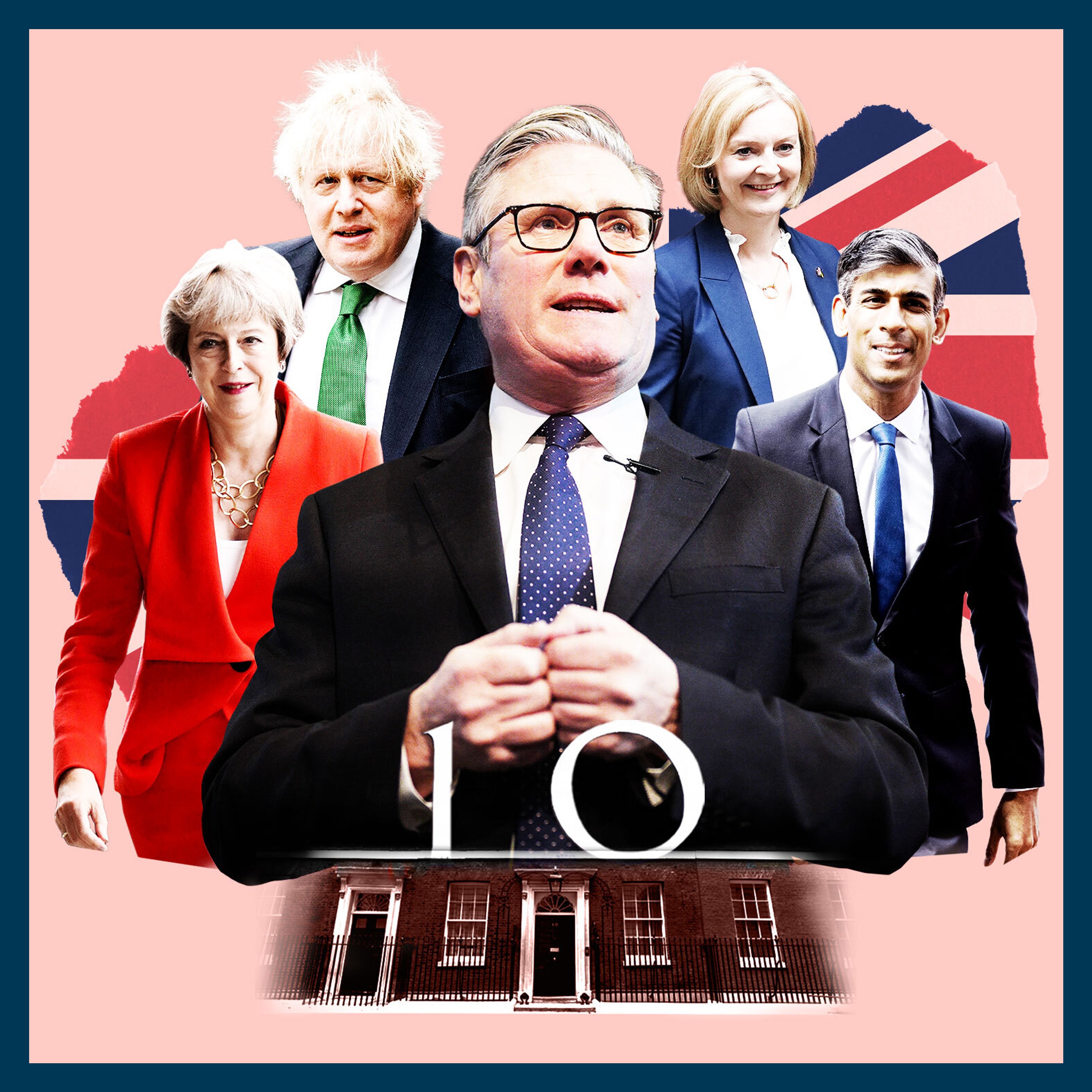
five Prime Ministers in seven years. Bonus points if you can name them all. Does this mean, as some have suggested, that Britain is ungovernable?
- [02:18]
D
No, I don't think Britain is ungovernable. I draw strength from the fact that we are a reasonable, tolerant, decent country. A live and let live country, a diverse country. That is the real Britain. That's not an ungovernable Britain.
- [02:35]
B
So why is Starmer's premiership teetering on the edge, then? Are the challenges of office too great, the fixes required too long term? Are we, the fickle public, too quick to judge? Or maybe number 10 has just had an underwhelming crop of recent tenants. The story today, has Britain become ungovernable?
- [03:10]
C
My name is Josh Glancy. I am associate editor of the Sunday Times.
- [03:15]
B
Why do you think this debate about whether we, you, me, everyone else is ungovernable? Why is that happening now, do you think?
- [03:21]
C
Well, we're in this funny moment, aren't we? If you take yourself back to the summer of 2024, Keir Starmer's Labour was elected with a landslide. Now it was called a loveless landslide. At the time, people were mostly very fed up with the Tories, but there was some optimism that it would be a more competent and stable government. As Keir Starmer said at the time, politics would tread more lightly on our
- [03:42]
D
lives with respect and service. I also promised this a politics that treads a little lighter on all of our lives, because that's the thing about populism or nationalism. Any politics fuelled by division, it needs your full attention, needs you constantly focusing on this week's Common enemy. And that's exhausting, isn't it?
- [04:11]
C
That has not transpired. I think it's fair to say it's been quite a chaotic and disappointing government and it now looks like it may well collapse in some form, in the sense that you have Andy Burnham running for a by election in Makerfield. If he wins it, the expectation is that he will become Prime Minister in some form. None of that is certain, obviously. So I do think we have reached the point now we have had five Prime Ministers in seven years. Get my numbers right. And really, ever since David Cameron whistled his way out of Downing street in 2016, there's been this sense of perma crisis in British politics and this volatility and instability.
- [04:51]
B
The coalition was, by comparison, actually quite stable.
- [04:54]
C
It was an oasis of calm. Yeah. But we have not been able to return again, whatever you thought of it, it was a period of calm and stable government and we haven't had anything since. So I do think now that we're a decade into this era of instability and with the Starmer government tottering and creaking, I do think people are starting to wonder, well, hang on, to what extent are these problems related to Keir Starmer's own political flaws, which are certain many, and have been widely outlined in various newspapers. But to what extent are there actually some quite serious structural issues here?
- [05:28]
B
And so do you think, when we're sort of swimming in all these think pieces about actually, is the problem just us and the country and the way this is all set up, we are ungovernable? Do you buy into that, do you think, actually it's a challenge too far for one man or one woman in number 10?
- [05:42]
C
I mean, I have to say no to that because otherwise we could just all give up and go home. Couldn't we, but no, I don't think so. I mean, if you look at the 1970s as your classic go to point for this appalling nadir of British government and politics and just general prestige in the world, you are getting bailouts from the imf. You have three elections in a year. You know, these two clapped out old geezers, Wilson and Heath, sort of trading premierships.
- [06:08]
D
You say that your departure at this time will not prove obstacle to an improvement in the country's position.
- [06:14]
C
And do you see it in some way as perhaps helping that process?
- [06:17]
E
It could well do.
- [06:18]
C
So I think it's be good to get a fresh look at these problems by a new leader. You know, the country was in significantly worse shape than it is now, I would say, and it did find a way out of that nose dive. So no, I don't think it's ungovernable. Britain has a lot of quite core strengths and quite, in some ways still quite a resilient and strong economy. But I think the barrier is now extremely high. I think for a Prime Minister to come in and for it to really work is now quite a difficult achievement.
- [06:49]
B
Well, let's pull on some of those things of what are the different barriers for them then? I guess the first one could be us, the public and the population and our expectations. Has that shifted in the last 10 years to the extent that actually we expect more or we expect it quicker maybe?
- [07:03]
C
I think that is a big part of it. So I think the pandemic plays a role here because I think it heightened our expectations of what the state should do for us. You know, I think it exacerbated a lot of issues around welfare and who's on disabilities and people falling out of work, which doesn't help our debt situation. But I also just think it changed our relationship with the state. I think it also just really, really worsened the public mood. And it came exactly as, you know, Brexit. In the pandemic, it was almost like a relay race. You know, one passed the baton on to the other, but we never really had a respite. And I do think our attitude towards politics is incredibly negative, while at the same time our expectations from the state are very high. So I do think as a public, you know, there are difficult trade offs to be made in this country. I think most serious economists and politicians, if you ask them privately, agree that the triple lock on pensions need to be scrapped. On the triple lock. I think everyone realizes that this thing needs to go eventually. It will eventually become make the state pension far too Unaffordable. It will increase the share of national income that we're spending on state pensions from about 5% today to nearly 8% in 50 years time. But we're not able to have a really sort of serious discussion about that because the expectation among many pensioners is that they don't want it to be scrapped. And so there is a sense of, I suppose, what you might call it slightly zero sum politics in the sense that the pie is not growing, we don't have economic growth in this country in a serious way and our economic model really hasn't recovered from the financial cris. So in an era of zero sum politics, everyone wants to protect their little slice of the pie, whether it's the triple lock pension or social housing or whatever it is.
- [08:48]
B
But your point as well post Covid, is even if GDP hasn't been growing massively, our expectations of what we would like has in terms of what we might expect for the state. And the pie isn't getting any bigger,
- [08:58]
C
the pie isn't getting any bigger.
- [08:59]
B
Facilitate that.
- [08:59]
C
So the mood gets darker and more competitive and people do start to look to populist alternatives like reform or the Greens who can sell you a different vision, or they could blame someone for what's gone wrong. Is it billionaires? Is it immigrants, Is it the eu? There is also there are times in history when countries and nations and societies do just sort of run out of puff a bit. I know that sounds a little bit nebulous, but there is a feeling and I think when you go back and read histories of the seventies, it is analogous in some ways. The sense that I think the country's quite exhausted and I do think this series of shocks that it's had, the financial crisis, Brexit, Covid and then you could chuck in a bit of Ukraine and the energy crisis on top of that, and now Iran is sort of looming as another shock. I do think it's slightly sort of winded the country in a way that's hard to quite put your finger on, but you do sort of feel it.
- [09:55]
B
And the similar tone, I guess, to the mid-70s, neither of us were there, but let's speculate, was that it was that sense that nothing worked.
- [10:03]
C
But strikes were just one symptom of economic malaise. Britain stagnated in 1970, with first labour, then the Tories fearful to stimulate the economy in case the miraculous balance of payment surplus melted away.
- [10:16]
B
There's almost, there's no point kind of engaging with this because, well, actually what's going to happen all These firms are shutting down. You know, the energy crisis is shooting prices up and the economy's in free fall. What's the point? Listen to the Sex Pistols.
- [10:30]
C
Yeah, unfortunately, we don't have the Sex Pistols anymore. And actually my boss always says that as bad as the 70s were politically and economically, they were quite a good, exciting, jolly time socially and culturally. And I don't know if today is. I do think a lot of it is also about the effect that that negative mood has a lot of relationship to social media and to people's relationship with their smartphones and digital media and AI and the whole sort of technological revolution that it was very exciting 15, 20 years ago and is now quite challenging for people. And I do think the way social media is incredibly negative about Britain, I know a lot of people and a lot of our listeners and readers don't necessarily spend all day on X like others do, but the mood and the effect it has on our discourse and the effect that negative social media algorithms have on how we perceive our country, because our economy isn't in free fall, it's just growing sluggishly, but broadly in parallel with other sluggish European economies.
- [11:27]
B
But on how the public are seeing this and then also how that might be soured by social media, what about the influence of the media? And like newsrooms like this as the expectations of the people, you know, filling column inches or plugging away on 24 news rolling TV channels actually made the situation a bit more difficult for politicians.
- [11:48]
C
So you're asking a political journalist, am I the problem? Yeah, look, I think the fact that journalists spend a lot of time on social media has affected the way they report. So there is the pace of it, the acceleration of it, and the incentive structure to build every mini scandal or mini scoop into a big story for engagement. And the competition it builds between journalists online, I do think that has amplified and accelerated political problems in a sense
- [12:16]
B
of government in crisis.
- [12:17]
C
A sense of government in crisis. And I do think that, you know, political media did get kind of reformulated around Brexit and that became a kind of perma crisis. And it sort of sometimes feels like we're still in that mode and that style of doing politics, that's not just the media, that's also Westminster and the kind of strange tango or symbiosis that the two are in. But I do think that that mode of doing politics has continued and probably does at times exacerbate the sense of crisis. But, I mean, maybe we'll get onto this. I do think that a lot of these, in a way are kind of the top layer of a cake that actually has some quite deep structural roots.
- [12:55]
B
And by that do you mean cause? Anthony Selden, biographer of all our most recent Prime Ministers, his point in one of the papers the other day was that actually Civil Service is part of the problem. He was saying it is sluggish. We've had, what was it, since 2018, we've had four cabinet secretaries where in the past they'd served about an average of nine years. There's churn and a lack of productivity there as well.
- [13:18]
C
So, you know, that political churn creates instability in both Westminster and Whitehall. So I think since 2016 we've had about 13 housing ministers, which obviously makes it very difficult for anyone to implement a long term strategic plan. You know, if you think one of the most effective ministers on his brief in the last decade or more has been Michael Gove and Education, again, whatever you think of it, he really did reshape British schooling. He did that because he spent five years in opposition shadowing the brief. He thought very carefully about what he wanted to do and then he came in and had years of stable government in which to implement it with the full backing of a stable Prime Minister. That's sort of what you need to make significant policy changes and a coalition
- [14:02]
B
government, at least for the first part, who were just like terrified of doing reshuffles because then have to open negotiations with the Lib Dems again. So actually just keeping everyone in post and going was.
- [14:09]
C
There's a lot to be said for that because, you know, people do get better. But, you know, I've written a little list here of sort of structural issues because, you know, there's quite a few of them.
- [14:19]
B
Oh, gosh.
- [14:19]
C
And so, you know, I think the Civil Service is a key one and this is the kind of the great Dominic Cummings sort of Omni thesis, but that basically the Civil Service has become bloated, obstructive, actually has too much power.
- [14:33]
D
The Civil Service has fake meritocracy where it, where it says that we're a Rolls Royce machine and we're all about great talent, blah, blah, blah. But the reality, it basically excludes close to 100% of the world's best talent.
- [14:48]
C
So I think that that's his argument. I think when Labour came in, they were very sniffy about that. And then within six months you started hearing people say, oh, maybe Don Cummings had a point on that. So that's interesting. I do think the pipeline of talent into politics is an issue as well. That's not to say that we don't have lots of talented and hardworking politicians. We do. But again, it comes back to that point about incentives. You know that old line from Warren Buffett's business partner Charlie Munger, who used to say, show me the incentives, show you the outcomes. You know, politics pays reasonably well. But I think really, ever since the big bang in this country and the explosion of the city in the 80s, the incentive for a lot of our best talent has been to go into law, to go into finance. So I think that's a bit of an issue. You then have this issue of what they call the Blair right settlement, which is basically, Tony Blair comes into government, does a lot of good things, but there is an argument that he creates this kind of legal and bureaucratic morass, things like judicial review, things like the echr. And it sort of creates almost sort of parastate that makes it incredibly difficult for politicians to wade through it all. I think Keir Starmer once compared it to me as wading through treacle.
- [16:04]
D
My experience now as Prime Minister is of frustration that every time I go to pull a leverage, there are a whole bunch of regulations, consultations, arm's length bodies that mean the action from pulling the lever to delivery is longer than I think it ought to be. Which is among the reasons I want to cut down on regulation.
- [16:21]
C
All this kind of furniture around politics is proving obstructive, you know, and if you want to do things like build a new nuclear power station and the treasury signed off and the, you know, Energy Secretary signed off and everyone's all behind it and it still takes you decades, right? And you have to build a however many million pound fish disco to do it. And a lot of the time each of these individual laws, you can sort of rationalize them, but when you put it all together as a package, you're like, well, obviously this is making it impossible to get anything done. So every Prime Minister ends up looking quite impotent and almost quite pathetic. And it's amazing how consecutively unpopular our previous sort of five Prime Ministers have been. I think Brexit cannot be overlooked in all of this, both in terms of what it did to public sentiment and divisions it caused. But I also think in terms of what it's done to stunt economic growth, which is debated, but it's clearly had an impact. And I just think that Europe issue has been so divisive in our politics. I mean, it still is in a sense in that, you know, you don't have Nigel Farage without Brexit it obviously brought down successive Tory prime ministers, including Cameron and May.
- [17:32]
B
Yeah. But also in that sense of pulling a lever and nothing happening. The issue with Brexit, as Nigel Farage would see it, is of a promise unfulfilled and the public actually definitively saying something. And the promise then, you know, was what? We'll have far less immigration and we'll reap all these amazing economic benefits. And then that not happening. And that is a real rupture of the contract.
- [17:55]
C
It is. That is still a running sore on our body politic. You know, then you have other things like the two party system is, is fragmenting. So there is an argument that someone like Andy Burnham would make that we now have the wrong electoral system in first past the post and it's not giving us stable governments because it's not suited to our electoral coalition. And then actually you can form quite stable coalition governments. You've just mentioned the one we had obviously quite recently. And so that's another argument as well. Also devolution, you know, you have these kind of centrifugal forces of independence in Scotland and Wales in a sense that the UK is maybe breaking up. You know, when historians look back on this period in 100 years time, you know, they may see that as like the sort of really underlying structural thing that's happening. I do think this issue of migration and not being able to secure our borders and that's to do with frankly these macro forces of like movements of smartphones, the fact that English is the global language and therefore so many people want to come here, the legacies of empire, the difficulties in securing the channel, all these things and decisions made by various governments have led to, I think, higher migration levels than most of the public wanted. I think that's also causing a lot of anger.
- [19:14]
B
Also. All of that, what you've just listed there and what we all, what we discussed previously as well, all of that does then get us into a vicious cycle, doesn't it? Because instability actually stops progress churn of Prime Ministers and of ministers actually stops things getting done. Manveen did an episode of the podcast in 2024 about the murder of Ellie Gould, who was a 17 year old schoolgirl who was stabbed to death by a boyfriend after she broke up with him. And the family were trying to engage with Westminster and actually get sentencing laws changed, but they just explained that the Minister kept changing so they had to keep going back and everything kept being put on hold.
- [19:53]
C
Yeah, we've told our stories time and time again to different ministers. It doesn't help the fact that there's a constant revolving door of ministers. Just as we gain traction with one, there's a reshuffle or a change and we have to start again with the next.
- [20:10]
B
When there's change happening so often, who's reforming anything? Successful?
- [20:14]
C
Well, absolutely. And as I said earlier, most of the most significant changes come through long term strategic policy planning, which is done by politicians, executed by civil servants, and it's hard to see much of that going on. I mean, I do think the core of this though really is the fact that we haven't had good economic growth in this country for a long time. We haven't had productivity growth for a very long time. And I think when the pie is growing, you can brush a lot of this stuff under the carpet. You can pay for nice public services, you can pay for nice benefits, you can pay for the upkeep of your defence if you need to. It depends quite how much growth you have. But you certainly can fend off a lot of these issues because a lot of these issues are perennial and some of them have been present in British politics for decades, really, ever since the Second World War or before even. So, at the core of this feeling of being ungovernable and the mood of ungovernability, I think, is just this enduring sense of stagnation now and this sense of whether it's economic stagnation or even cultural stagnation, but the sense that things are worse than they used to be and aren't likely to get better. You know, when you talk about people about cost of living now, they start to think it's built in, that it's actually structural and it's not going anywhere. So it doesn't matter if the government tries to bring down their energy bills by 100 quid. It's just like, well, it's just going to go up again next year. Something better, something else bad happened. You know, this is the sort of sentiment that's out there.
- [21:48]
B
Coming up, is this just how we do politics now, with extreme and regular churn? Or might there be a way to calm things down? We will have more from Josh in a moment. If you have a question about this or any of the stories on the podcast, get in touch with us. TheStoryAtTheTimes.com is how to email.
- [22:11]
E
Still waiting in line. Again, that's time you will never get back. Save time and money with stamps.com over 4 million businesses have skipped the line with stamps.com. join them to save up to 90% off carrier rates from your computer or phone right now. Print postage for certified mail, registered mail and packages in seconds. Then schedule a pickup right from your home or office for a limited time. Go to stamps.com and use code podcast for a free welcome gift. Taxes and fees apply.
- [22:41]
A
This is a Monday.com ad. The same Monday.com helping people worldwide, getting work done faster and better. The same Monday.com designed for every team and every industry. The same Monday.com with built in AI scaling your work from day one. The same Monday.com that your team will actually love using the same Monday.com with an easy and intuitive setup. Go to Monday.com and try it for free. Yes, the same Monday.com.
- [23:12]
E
okay, caller one wins courtside seats to tonight's game. What? I won floor seats. You did? I've been calling for 13 months. Wait. Chris.
- [23:21]
C
Yes.
- [23:22]
E
I finally did it. What are you gonna wear? Men's Warehouse. They've got today's looks for any occasion and I need to look like a celebrity. Don't want to stick out. Exactly. They've got Chill Flex by Kenneth Cole, Joseph Abood, and a tailor at every store for the perfect fit. Congrats. You can stop calling now. Not a chance. Hit any look for every occasion at Men's Wearhouse. Love the way you look.
- [23:53]
B
Josh, we're talking about whether the UK is ungovernable. We've just heard about why it is so pervasive, that idea that everything is wrong and there's no fixing it. You said a moment ago that actually economic growth, I guess as Rachel Reeves will have said to us in 2023 and 2024 is the answer. We just need to get that going. And then, you know, it's milk and honey for everyone and all the problems seem to vanish. You need to get to that point, don't you? So if you're going in to rewire the British state and actually just make that happen so that everything else can then feel more governable, how do we go about that? Is it just a fabulous political operator in number 10?
- [24:30]
C
I suspect quite a lot of people listening now will think to themselves, well, hang on, isn't Keir Dalmer just rubbish? You know, hasn't he just been a bad Prime Minister? Hasn't Rachel Reeves been a bad Chancellor? And yes, they've made political errors. Things like cutting them into fuel allowance, their failure to get disability benefits through the appointment of Peter Mandelson. In America, there's been a whole litany of U turns. Their whole political operation has felt poorly executed. They're not been very good at communicating their message. All true. And so their big central promise that growth was gonna be their number one priority, they haven't really been able to deliver on. Now, to what extent that is in their power is a sort of broader economic debate. But it is a point that, you know, I do think that, per the question you asked me at the beginning, I don't think this is impossible. We have just listed a whole long list of challenges and they are all there. But I do think a leader who has superb communication skills, a party united behind them, a real deeply developed vision for what they want to do with the country and where they want to take it, that they've sold to the public and can then at least try to implement a theory of how to wield power, what to do about all these obstacles and a real, like, hardened sense of like what those obstacles are, how are we going to go over them, through them, round them. I think a Prime minister like that would have a chance and could make
- [25:52]
B
the sell to the public, which Starmer and Reeves did try to do in the wake of their landslide victory of Bear with us. Things are going to get worse before they get better.
- [26:01]
D
Changing a country is not like flicking a switch. The world is now a more volatile place. This will take a while.
- [26:10]
B
Some of these issues are so big, what is happening with the nhs, the state or schools is not going to be changed in maybe even one parliament. But maybe by the end of this five years we'll have shown enough green shoots for you to renew your confidence.
- [26:23]
C
Well, as you say, I mean, that was the Starmer Reef Cell and that would still be the Starmer Reef Cell if they were sitting here.
- [26:27]
B
Do you think another politician who's a better operator could make that pitch? Better in a way that we'd all go, you've got it will leave you to it.
- [26:34]
C
I think your political capital when you, when you win announced election is all loaded towards the beginning of your administration. So I think they would have to come in and show that they were going to be able to do effective things quickly. A couple of, you know, landmark policies early on and really kind of get some positive momentum going, almost top up that political capital. Because otherwise I do think the mood of the public is so cynical that the moment things start to go wrong, patience wears thin very quickly. What slightly reassures me is that I've been reading Jeremy Hunt's book recently. It's his third book, new book about how to get Britain growing again. And I've also wrote a piece about a group of people, the Labour Growth groups, group of Labour mps and thinkers, and they've just had a big report about how to get Britain growing again. And what really struck me is a lot of overlap there. There was a lot of consensus on various reforms, say to our energy market or to our housing supply that do need to be done. And what they call supply side reform, basically sort of allowing people to build more houses, allowing more energy to be produced, bulldozing through some of these blocks in the system. Also quite a mutual argument about devolving power to the regions more, which doesn't just mean having kind of jolly mayors, but also actually giving them revenue raising power so they can spend money in ways that regional people really understand what's necessary and isn't just coming from sort of centralized Whitehall. A lot of this stuff is becoming quite mutually agreed. I would say there is the glimmer of a path there. It might have a Tory inflection, it might have a more left wing inflection, but a path forward that would address some of these structural issues. But again, it needs all these stars to align. You need the right leader with the right message at the right time. And then I do think you could sort of build a path forward.
- [28:28]
B
But even on some of those points, there would still be angry noises off about why are you building these houses here in my backyard? Or why are you making this tweak to the energy market, which actually screws over this particular group. So it would require still somebody to sort of bulldozer through and say, I can withstand a lot of upset.
- [28:49]
C
Absolutely. They would need very broad shoulders. As Wes Streeting often likes to say, politics is about having arguments. And if you look at the really effective politicians of our lifetime, Margaret Thatcher, just about and Tony Blair, they loved going out and making arguments and that means you make enemies. No policies, no change is going to make everyone happy. You have to go out there, pick a policy you think is best for the country and obviously lean towards your own coalition and then go and make the argument, prosecute the argument, get people on your side and push it through. And that has been a, I think a reasonable critique of Keir Starmer, is that he hasn't operated like that as a politician. He doesn't sell a clear vision to the country, he doesn't prosecute arguments in public effectively. And people haven't really been clear what he stood for. So I think it does come down to, yeah, yeah, yeah, you're gonna make enemies and you're gonna be hated by some people. And good Lord, you know, Margaret Thatcher was hated And I don't necessarily spot everything she did, but certain things she did were extremely necessary. Towards the end of the 1970s, it was apparent that big things needed to change in this country and she changed them. And obviously people hate her to this day for it.
- [29:58]
B
And if that was the route out, as some would say, to the crises of the mid-70s that got us into more economic growth and the rest, and you had Tony Blair with a slightly different political flavor, sort of lifting us out of the sort of sleaze and the sort of lighter economic crises of the. Of the major years, do you see on the horizon, as we're all debating not if Kirstan will go, but who will take over similar characters afoot either on the Labour benches or from other parties.
- [30:26]
C
I'll be honest, at the moment, I don't. You know, Thatcher came in and, as you say, sort of fixed some of the problems of the 70s. Blair, in a sense, was an answer to Thatcher in that the growth and dynamism she created was so unequally distributed that he kind of came in to sort of share the wealth a bit, almost. We now need someone in some ways to unpick what I called the Blair eyes settlement earlier and maybe arguably still deal with some of the legacies of Thatcherism and the kind of austerity build back. Yeah, and the austerity build back as well. That's a good point. So, you know, you're always kind of dealing with some of the effects of what came before you. For me, I've really become quite attached to this idea of someone who makes a kind of steady progress through politics, who did basically what Keir Starmer has tried to do, which is time in opposition. Get ready, be serious, sell yourself as an alternative to the country, get into power and then start delivering real big policies. It just hasn't worked in his case. I'm quite attached to this idea that you just need that sort of model of steady opposition and then effective government, and it just needs to have the right person at the helm and the right team behind them.
- [31:34]
B
But we're talking about this almost. I was just catching myself there as a sort of foregone conclusion that there will be a change in Downing Street. There could not be. I was, well ended up next to somebody yesterday who was a very good friend of Keir Starmer, not in the political world. And they said, people underestimate. He is a, quote, hard bastard. I was like, is he? Maybe he is a bit. Maybe he can be sort of quite cutthroat and ruthless. You See how many people have been chucked out of Downing street to help the ship afloat. Maybe there's more gas in the tank there and this will continue.
- [32:03]
C
Keir Dahmer is an extremely resilient man. He has self belief. He's obviously battled quite hard to get to this point. And he doesn't see why he should have to just hand over his crown to a challenger who never won a leadership election, never won a general election. I can sort of understand why he feels like that. So that's all true and that's why he's still there. Other people, I think, would have buckled under the pressure by now, and he may well go on for that reason. You know, and there are these big external crises. He's not wrong. You know, the stuff in Iran, the intelligence briefings that he's seeing dealing with Trump, trying to put a European coalition together to support Ukraine. I mean, these are big things that he's doing. But it does feel like the party's decisions have been made and that too much blood has been spilled, if you like, or too many Rubicons have been crossed. That's a better phrase for us to turn back for him to lead the party into the next election. But obviously that can manage in lots of different ways.
- [33:16]
B
That was Josh Clancy, associate editor of the Sunday Times. Our monthly Q and A will land in your feeds next Thursday. So if you've got questions, it could be about this, it could be about anything else. Get in touch with us. The storyatthetimes.com is our email address. That's it from us today, though. Today's producer was Sophie McNulty. The executive producer was Tim Walclate. And sound design and theme composition was by Malicetto. I'm Luke Jones. See you.
- [34:14]
A
Still waiting in line again. That's time you'll never get back. Save time and money with stamps dot com. Over 4 million businesses have started skipped the line with stamps dot com. Join them to save up to 90% off carrier rates from your computer or phone right now. Print postage for certified mail, registered mail and packages in seconds. Then schedule a pickup right from your home or office for a limited time. Go to stamps.com and use code podcast for a free welcome gift. Taxes and fees apply.
- [34:45]
E
Okay, caller one wins courtside seats to tonight's game. What? I won floor seats. You did? I've been calling for 13 months. Wait. Chris.
- [34:54]
B
Yes.
- [34:55]
E
I finally did it. What are you gonna wear? Men's Warehouse. They've got today's looks for any occasion and I need to look like a celebrity don't want to stick out. Exactly. They've got Chill Flex by Kenneth Cole, Joseph Abood, and a tailor at every store for the perfect fit. Congrats. You can stop calling now. Not a chance. Hit any look for every occasion at Men's Warehouse. Love the way you look.