Loading summary
Transcript68 lines
- [00:00]
A
Monday.com AI agents took over my work and I absolutely love it. Chasing deadlines, writing status reports, updating stakeholders. Agents handle the daily grind. Now I stay in the loop only when it matters. Create your own AI agent in minutes on Monday.com if you're looking for something predictable and low friction over the long term, public markets may be a suitable option. But the moment you want different investment characteristics, it may be time to consider the private markets. See how your wealth can work smarter@creativeplanning.com Access.
- [00:35]
B
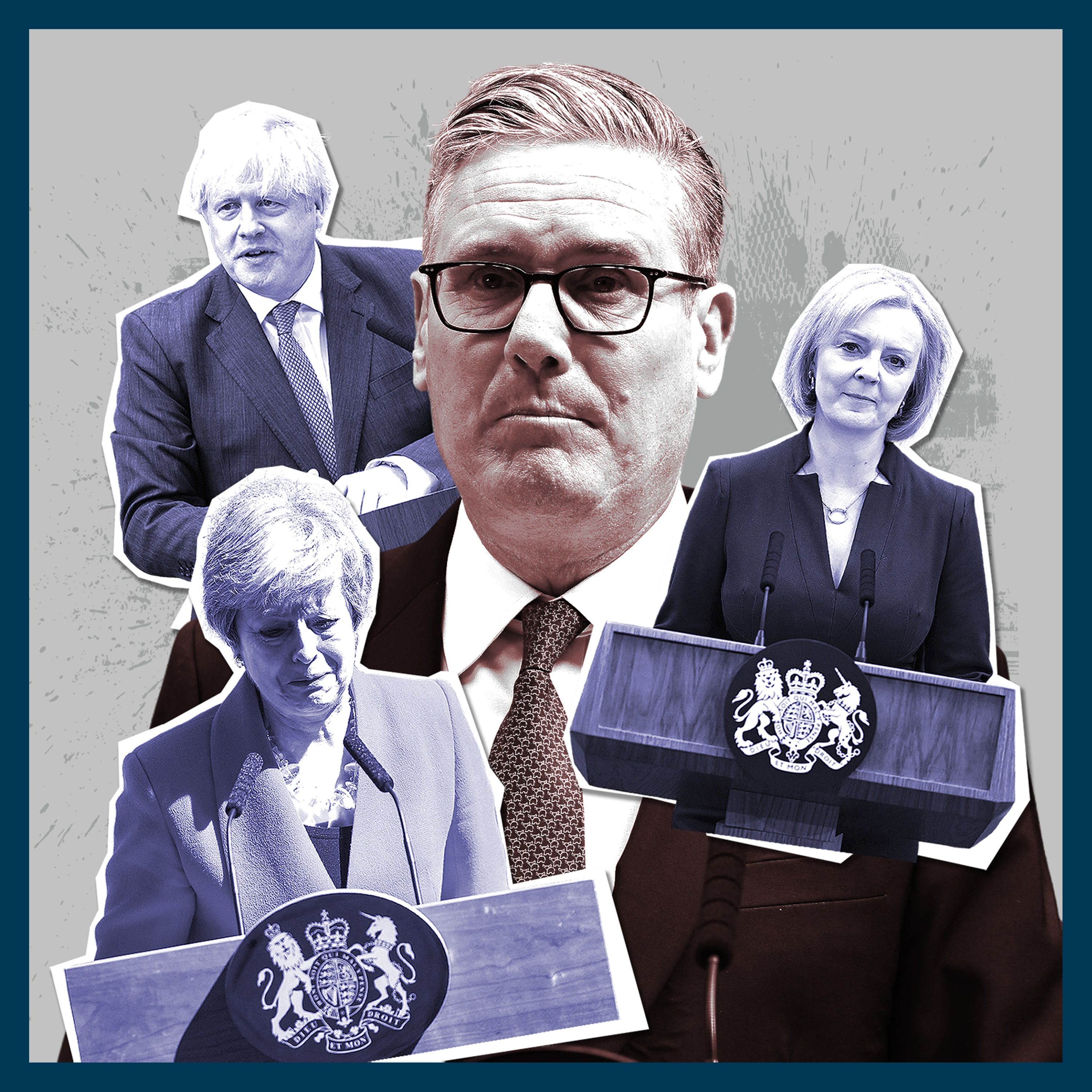
From the Times and the Sunday Times this is the story. I'm Luke Jones. In the end, he'll be the shortest serving Labour Prime Minister we've ever had. Good morning from Westminster On a day of history. A Labour landslide after 14 years in opposition.
- [00:55]
A
A spectator spectacular turn.
- [00:57]
B
23 months ago, Keir Starmer had that post landslide glow.
- [01:02]
C
You campaigned for it, you fought for it, you voted for it. And now it has arrived. Change begins now.
- [01:17]
B
Yesterday he said, I'm off verging on tears.
- [01:20]
C
That is why I will resign as leader of the Labour Party. I shall spend more time on the most important job being the best husband I can to my fantastic wife Vic, who has been a rock by my side through good times and bad.
- [01:39]
B
With even Wes Streeting falling in behind Andy Burnham, there is little chance of a contest. It seems Downing street is firmly Coronation Street. But how did it fall apart for Starmer so quickly? And is Andy Burnham promising anything fundamentally different? New policy, new thought out plans? Or is it just about vibes and momentum to make Britain great to Manchester again? The story today are PM resignations a new British disease?
- [02:25]
A
I did feel quite sad. I did feel a sense of sympathy, particularly as Starmer cracked up towards the end talking about his kids and his wife.
- [02:37]
B
Josh Glancy, associate editor of the Sunday Times, was watching Starmer's statement, Like many of us wondering, how are we here again? How has the life expectancy of a British Prime Minister become so short?
- [02:49]
A
But then you did also think, gosh, it's classic Starmer in that there is a sincere and authentic human being in there, but we're only getting a little glimpse of it. And the rest of it was a bit of a slightly robotic listicle and sort of saying, well, I did a good job and put Britain on a
- [03:04]
C
better footing and look at what we've achieved in just two years. An economy that is stronger, growing faster than our peers, wages rising faster than inflation in every single month since we came to power. An end to austerity with the fastest fall in NHS waiting lists for 17 years.
- [03:28]
A
It didn't really engage with what's happened, it didn't really seek to offer any explanation for what's happened and was quite forgettable. So I think the only bit anyone will remember is that crack of human emotion at the end. Reminds me a bit of Theresa May. She resigned and was quite tearful. I will shortly leave the job that it has been the honour of my life to hold. I do so with no ill will, but with enormous and enduring gratitude to have had the opportunity to serve the country I love. But beyond that, he sort of ended as he. As he governed, which was quite sort of forgettably and blandly.
- [04:12]
B
If we rewind all the way 23 months to when he actually came into office, there was so much hope. He had this landslide victory. He was talking of a politics that was gonna tread lightly on your lives. Did we buy it then? Did you buy it?
- [04:24]
A
So I agree with you, except I would just caveat. I'm not sure there was that much hope. There was optimism and I would just change that word because I don't think many people voted for Starmer thinking this is gonna be awesome because he never really gave us that much to go on. It was that mingvals strategy of an election campaign. We all could see that Britain had some quite sort of chronic, in fact quite acute issues that he was gonna have to deal with. It wasn't sort of Obama in 08 levels of hysteria or excitement, but there was a sense that, okay, well, we've had years of chaos and the Tories have sort of eaten themselves alive over the sort of preceding 24 months. There was hope, I suppose, that this guy was serious, competent and stable and that we would get serious, competent and stable government. It might not be brilliant, it might be underwhelming in places. It might not have a particularly enthralling policy agenda. In fact, there wasn't that much of a policy agenda. But we did think that the basics would be done right and that we wouldn't be back where we are now
- [05:26]
B
and it would be the grown ups in the room, as was said at
- [05:28]
A
the time, and it would be the grown ups in the room. And maybe that was always a bit of a sort of arrogant claim cliche, but I think quite a lot of us did think this will be better and that we have put an end to that psychodrama that consumed us in the late Tory years. So in that sense that hope has proven to be misplaced. I would say, though I always think back to that. We had A politics meeting the day after the election and we were looking at the numbers and how thin the landslide was in a sense, in terms of it was very, very shallow and
- [06:00]
B
sort of low 30s of vote share
- [06:02]
A
had been won on a small vote share and it was a loveless landslide, that was the phrase that was used at the time and it was correct. And so that there wasn't an outpouring of affection for Starmer and it was quite a thin and hollow base of support. And again, that isn't surprising because we weren't really sold a policy agenda. And I gave back to, I mean, I spent quite a lot of time with Starmer on the 24 campaign. I went back and rereading the interview I did, which was right in some places and wrong in others, but I was sort of searching for policy agenda and there just wasn't one. And it got so boring talking to him about policy that I eventually I was just like, well, what he is is a technocrat who thinks that he is so highly competent that he can fix things, he can fix Britain, he'll be pragmatic, he'll take each issue as it comes, have a vague sort of centre left bearing, but nothing more. And I think that's been proven to be wrong and misguided and actually, you know, as Eisenhower says, you know, plans always fail, but planning is everything. You need somewhere to start. You can call it a vision, you can call it a policy agenda, but you need an anchor because otherwise what's happened is that he's been buffeted all over the place. He was talking this week about one of the proudest policies he's introduced is the removal of the 2 child benefit cap.
- [07:19]
B
What have you been most proud of
- [07:21]
A
as Prime Minister over these past two years?
- [07:24]
C
Lifting half a million children out of poverty by removing the 2 child benefit cap.
- [07:30]
A
Well, him and Chancellor Reggiose were opposed to that.
- [07:32]
C
If we're not able to say where the money is going to come from,
- [07:34]
A
we can't promise to do it.
- [07:36]
C
And that's true when it comes to the two child limit and anything else.
- [07:40]
A
I mean, they told us they were opposed to it and now it's one of their proudest policies because the party wanted it. And so that just gives you a sense of the fact that that anchor was never there and therefore it was just quite a chaotic government because we never really knew exactly where he stood on a lot of stuff.
- [07:57]
B
And what do you think it was? I mean, obviously it'll be a mix of things, but what stands out most as being the aspect that has precipitated him leaving so soon, because on the one hand we have got a lack of growth, when actually one of the few things they were saying in the build up to the general election, the answer to a lot of issues was, well, we're gonna go for growth and that's gonna give us the answer to everything. Or is it some of the scandals that we have seen which Starmer was promising he wasn't gonna be that kind of Prime Minister, CC Peter Mandelson, et al. Or has it just been that lack of soaring policy vision that anyone can get behind?
- [08:32]
A
So I suppose the starting point you have to really look at this all through is radical unpopularity. I mean, really, all of our recent Prime Ministers have been very popular, but Starmer is radically unpopular and has been almost from day one, almost from the get go. Particularly once they did winter fuel and talked about cutting winter fuel for pensioners. He's been drastically unpopular and that's why he's leaving. To answer your question directly, they got absolutely wiped in the local elections in May. That was not the starting gun, cause we already had a lot of griping. But that was really the final catalyst for his exit at present. Why is he so unpopular, though? Well, partly, I just think he's not a very charismatic or likable politician. He's a perfectly likable bloke. I mean, some people, you know, find him cold and distant, but he can be perfectly likable. But as a politician, there wasn't the warmth, there wasn't the wit, there wasn't the sincerity, the authenticity. He couldn't sell a story, he couldn't laugh off a scandal, you know. So I think in that sense, the country never warmed to him. He is not and never was a natural politician. He obviously succeeded in opposition and deserves credit for that. But he never seemed to really enjoy political arguments. He never really seemed to sort of relish the cut and thrust of Westminster. In fact, he treated Westminster with a kind of contempt and a disdain. And I mean, he never really built strong relationships with lots of MPs. They didn't feel like he was one of them. And then there have been the missteps, you know, and the problem is up with the scandals. Peter Mandelson, I don't think it's that big a scandal, but he set himself up as whiter than white, holier than thou. He eviscerated Boris Johnson for things like Party Gate, so that when the inevitable scandals did come, he didn't really have much protection from it. But I Just think, fundamentally, this kind of lack of curiosity or interest in the business of politics has often rendered him impotent. The policy I think of that exemplifies this best, actually, is the Assisted dying Bill. So they didn't put that in their manifesto. It wasn't something they campaigned on in 2024, but it was something that Esther Ransohn, who is dying, said she supported. And lots of people around Starmer naturally inclined to agree, polling looked good in the country. So he thought, fine, let's go for it. They handed this incredibly important change to our social fabric to a backbench mp, Kim Ledbetter. They didn't put any government muscle behind it. They didn't properly game out how this policy was going to be enacted. They ended up with a poor bill, a flawed bill, got ripped apart in the House of Lords and effectively kicked into the long grass. It may come back at some point and you just think, did he really care about that? And if he did, why was it done in such a casual and haphazard way? And if he didn't really care about it, why introduce this very important bill that caused really important divisions in the Labour Party? So I just think there are lots of other examples of policies like that. So some of them even more important things like defence spending, why wasn't that Strategic Defence Review costed properly? So, to come back to your original question, why is he so unpopular? I don't think most of the public are that tuned in to a lot of this stuff. I think they just sensed him, a politician who was impotent, who they didn't connect with emotionally and who frankly, didn't seem that suited to the job and kept coming across more in different ways.
- [11:57]
B
You mentioned his legacy as he was trying to sketch it out yesterday on the steps of Downing street and he talked about what they've done in terms of healthcare down waiting lists, immigration numbers being down, the renters and workers rights bill that came into effect. People talk about his success on the international stage. What from there, do you think if you were dispassionately writing his political obituary, you'd say, yeah, fair enough, I'll include this.
- [12:19]
A
I think if we were sitting here in five years time, we will struggle to remember anything that Keir Starmer did. Really? I think we would.
- [12:29]
B
Handling Donald Trump.
- [12:30]
A
Yeah. So the foreign policy is interesting, right? I mean, immensely challenging foreign policy environment, huge geopolitical issues. I think he did okay with Trump. They did sort of fall out in the end, but that was probably politically right for Starmer because it was over this slightly sort of bonkers Iran war that has happened. I think his work on Ukraine and Europe he would see as something to be proud of. But like all British Prime Ministers, in a way, Ukraine's actually been quite an easy issue for them. You know, Sunak and Johnson would probably say that they were proud of the work they did on Ukraine. But I do think getting closer to Macron, moving past some of the issues that Britain had had with the EU post Brexit and being able to work a little bit more closely with them, and stepping in to help Ukraine as Trump pulls back and managing the process of America, so changing its position somewhat on Ukraine, I think that is work that he can be proud of. But there's always a caveat.
- [13:25]
C
Right.
- [13:25]
A
Because again, we just mentioned the failure to fully fund defense spending in this country. Again, we don't know how that will play out, but given that he wanted to be the Security Prime Minister, and this was absolutely the core of his pitch was actually, this is a dangerous world and Iran and Ukraine, and we need Britain to step up and play a role.
- [13:45]
C
We are not just facing dangerous times, but dangerous opponents. I take responsibility for navigating us through a world that is more dangerous than at any time in my life.
- [14:00]
A
But he couldn't get the money needed or the plan in place needed to do the fundamentals. So those words start to look a bit hollow if you can't spend the money properly or you can't procure the money properly to do it. So even on defence and security, I would say you still have some question marks.
- [14:19]
B
And what do you think accounts for that? Because obviously you've interviewed him a lot. But many of us will draw our own conclusions. Watching interviews with him on the television or listening on the radio. Do you think it is a person just paying lip service to these things? Or do you think he genuinely thinks he's trying to make the best of what he can under the pressures and competing demands that he's got?
- [14:37]
A
Yeah. And I don't think we should underestimate just how difficult some of these things are. But I don't think Britain is ungovernable, but it is bloody hard. And there is a reason why the treasury doesn't want to give the Ministry of Defense this money, because they do waste a lot of money and their spending and procurement processes are a complete mess and everyone in Whitehall knows it. So these are difficult decisions. You know, you shouldn't just write a blank check to the mod. But I do think when he says that defence spending is really important for Britain. He means it. But what he doesn't have is then the corollary, the essential corollary, which is, okay, so how much do we really need? How are we going to get it? How are we going to avoid waste? How are we going to get results? So I think he did mean it when he says things like, you know, defence is absolutely the heart of Britain's security in the 21st century. He just didn't really know how to make it a reality. And that's a hard job. But that is the job of Prime Minister fundamentally, because lots of people can say nice, flowery words about the importance of security, but the hard bit is actually getting your pieces aligned and getting things done as Prime Minister. And that's where he consistently struggled.
- [15:51]
B
Coming up, the crown is hovering over Andy Burnham's head. But is he ready? Is there a plan? What differentiates him from the almost two years we've just had? More from Josh in a moment.
- [16:13]
A
If you've used Babel, you would Babbel's conversation based technique teaches you useful words and phrases to get you speaking quickly about the things you actually talk about in the real world. With lessons handcrafted by over 200 language experts and voiced by real native speakers, Babbel is like having a private tutor in your pocket. Start speaking with Babbel today. Get up to 55% off your Babbel subscription right now at babbel.com acast speaking spelled b a B-B-E-L.com acast rules and restrictions may apply.
- [16:48]
D
The pressure to have a summer worth posting about is real. So is financial stress, social exhaustion, and the anxiety that sneaks in right when things are supposed to feel good. Grow Therapy can help with that. Whether it's your first time in therapy or your 50th, grow makes it easier to find a therapist who fits you, not the other way around. They connect you with thousands of independent licensed therapists across the US offering both virtual and in person sessions, nights and weekends. Whatever challenges you're facing, Grow Therapy is here to help. Grow accepts over 100 insurance plans. Sessions average about $21 with insurance and some pay as little as $0 depending on their plan. Visit growththerapy.com acast today to get started. That's growtherapy.com acast growtherapy.com acast availability and coverage vary by state and insurance plan.
- [17:47]
A
For investors at the highest level of sophistication, those with strong advisory support, the natural outcome is two distinct portfolios, one public, one private. Each plays a Different role in the overall strategy. Uncover new investment opportunities for you@creativeplanning.com New.
- [18:17]
B
Josh is talking about the. The turmoil in Downing Street. Of course, it's assumed that Andy Burnham, in lieu of another challenger, where Streeting, of course, has fallen in behind him, is likely to be our Prime Minister coming up. Do you think this actually could be wrapped up quite quickly?
- [18:30]
A
The logic of events is that to speed it all up, doesn't look like there'll be a contest. And I think it's. Yeah, it seems like a done deal.
- [18:40]
B
What do you think of Andy Burnham's position and mandate? Some might question?
- [18:46]
A
Well, it's all a bit strange, isn't it, because we talked about the chaos of the late Tory years recently. But what you would say about that is that some Tory Prime Minister did fight a contest to come in as Prime Minister and replace their predecessor, which is not what you would call a general mandate. It's nothing like the mandate you get from a general election, but it is at least a mandate from their own party. Questions were asked, questions were asked. They have to go and give interviews or have debate or lay out a policy agenda and have that interrogated. And there is a process and the media can all pile in and all of that. We're not getting that. It doesn't look like. So Burnham has come in from being mayor of Manchester. He wasn't involved with Labour's 24 general election. Really. He's now an MP and now he's going to be Prime Minister. And obviously, people like Nigel Farage are already screaming for a general election. We vote for somebody in a general election to be our Prime Minister, we expect them to serve their term. And barring ill health or exceptional circumstances, what is going on here, frankly, is reminiscent of a banana republic that has totally devalued the very process of general elections and democracy. But you can sort of see why, right? Because the moment he has to make really hard decisions or upset people or makes a mistake, his political opponents are all gonna say, well, hang on, who elected this guy? And people like Angela Rayner or indeed Andy Burnham are on the record during various points of Tories switching leaders, saying, we need a general election. Where's the mandate? Who voted for this? So we're gonna hear a lot of that. I can see why they're trying to avoid a contest because it would be messy and possibly force him to commit to various positions that he doesn't want to commit to. But the lack of a contest means that we are really coming in pretty blind here. It's gonna happen very fast, you know. And so what is the Burnham agenda? We have outlines and themes and we have his own backstory that he's been telling us. But beyond that, we don't have that
- [20:49]
B
much clarity, especially on some of those big, acute issues, as you termed them earlier on. We have the question of what is gonna happen to social care, which is currently sitting in the long grass, where it has been for many, many years. And then also on the economy and growth being elusive, you'll have seen that fabulous Victoria Derbyshire interview with him on Newsnight, where she just asked him what were the fiscal rules that he said he would be sticking to, which Rachel Reeves has pinned a Cullis, the master of, and he just tried to get out of it. Seemed uncomfortable.
- [21:17]
D
Remind us what the fiscal rules are.
- [21:21]
A
I'm not going to go through a discussion like an exam on the fiscal rules. I know what the fiscal rules are. I've been very. I've been very clear about it.
- [21:32]
B
And could it take a few more of those to really shake his fresh foundations?
- [21:36]
A
Yeah, this could go wrong quite quickly. But I'll put the optimistic case first and then maybe we could sort of tell. Then you'll rip it to shreds. I think the optimistic case is this. He is genuinely a very good communicator. He doesn't give amazing kind of JFK esque speeches, but he's a good, warm, authentic political communicator. People do warm to him. He's incredibly popular in the Northwest, as we saw in Makerfield. He is coming from outside the Westminster bubble, at least in recent years. Clearly before that, he was part of it. And he does sort of have a theory, a critique of how Britain has been governed and what's gone wrong.
- [22:09]
B
Which is what?
- [22:10]
A
Which is what? Well, I suppose it's being sort of rather nebulously called magisterism. But he thinks the state has become very unproductive and inadequate and needs quite a lot of reform. So he thinks that regions need a lot more power and he wants to properly devolve power, which means devolving fundraising abilities and revenue spending abilities. And he thinks that on issues such as energy and housing and utilities and water and electricity, just people aren't getting a fair deal from those companies. There was too much privatization and therefore he would like to roll some of that back and put more public control into those areas. As we said, some of it will cost money and he hasn't had to tell us where that money's going to come from. But there probably is a Case that actually labor has already been quite left wing thus far. Certainly in economics, he could just take on a lot of what Starmer's been doing, but communicate it better, be a more likable figurehead for it all. I'd say that's the optimistic case for Burnham, is that he's just a better politician and that the party gets in behind him. The party will be quite scarred by everything that's happened and that people may want to sort of make the best of the new opportunity. I would say that's my optimistic case with Burnham, and he has proven that he can take on reform in some of those key areas.
- [23:35]
B
A flip side to that, though, which is actually what Rishi Sunak was writing in the Sunday Times this weekend, is he said, without a leadership election, you do have a weak mandate and you end up being bound by commitments that aren't your priorities. And at least if Keir Starmer had a personality transplant, he could do all of what you just said there and point to a landslide that he'd won. Whereas Andy Burnham, with a parliamentary Labour Party already quite used to rebellion and forcing U turns, doesn't even have that foundation. So where do you think that leaves him?
- [24:09]
A
Technically, people will always say, well, we don't vote for a prime minister, we vote for a party. So technically, they do have the mandate and they're entitled to change their leader. However, clearly, in reality, he doesn't have a huge mandate. And if he wants to do radical things, say, if he wanted to nationalize various utilities in this country, I think he would really struggle with that absence of a mandate. And things are going to go wrong, not just because of mistakes, but because of the reality of the world we live in. And he is gonna struggle in those moments with the clamor for an election and with the questions asked about like, well, you never told us this was your position because you never had to run in a campaign. And so I do think that could be quite difficult for him.
- [24:55]
B
Do you think he is ready? Do you think he has had the time to actually think through all of the issues that he would need to make the appointments around the Cabinet table in his head that he thinks he needs to cause, even if it is maybe mid July that he ends up becoming prime minister, he's got less than a month between now and then. I don't know. There might be a lot of questions in his own head, which he thinks, well, yeah, I don't know what I think about reforming social care as things stand. I don't know what I Think about in terms of how we make sure the straight of Hormuz remains open if the war continues.
- [25:23]
A
I saw a quote in the paper recently from an ally of his saying we don't need a leadership contest. Andy's had 10 years to think about all this. You know, he's been up in the north basically thinking about, well, this is what we're doing wrong and this is how I would do it better. That struck me as a little bit optimistic. A friend of mine who had a baby told me recently, I was asking him what it was like and he said, fatherhood is one of those things where everything you do to prepare for it, like, doesn't really matter because it's just completely overwhelms you. It sort of finds every crevice in your personality. And so therefore who you are as a person is just who you are as a parent. There's not a lot you can do. Yeah, I suppose maybe there's an argument that actually he's just gonna go into it and see how it goes. And it's a bit of a gamble. Clearly there isn't enough time to do deep, unnecessary planning this summer before he takes over. So frankly, it's all a bit of a punt.
- [26:22]
B
Hmm.
- [26:23]
A
Is my feel on it. You know, we have a rough sense of what he's not going to do. He's committed to broadly sticking with plans on immigration, he's committed to sticking with the manifesto pledges on tax, he's committed to broadly sticking with the fiscal rules. And we have a sense of some of the things he wants to do and we've mentioned those things like devolution and public control of utilities. But beyond that we just don't have a lot to go on. His personality, again, you know, he's quite likable, but when he's under pressure, he can get a bit touchy and thin skinned. People who worked with him historically when he was in government talked about he wasn't that much of a details man, that he could be quite vague and wayward. You know, I spoke to someone who used to work with him on his campaigns and they said, you know, getting Andy to sort of stick to the message was often quite difficult. So to the point about my friend having a baby, that all these things will emerge in power, you know, he will be found out, we will discover exactly who Andy Burnham is. The problem is we didn't get to pick him. And so I think if we discover that he's not really up to it, I think we will be rightly pretty frustrated. With the way this has been handled.
- [27:34]
B
Difficult labour, I guess, is the theme that joins us together. The Times Live page earlier was saying that this regular resignation of PMs is a new British disease. And of course, we have discussed this, you and I, previously, not too long ago, on this podcast, about the question whether we're in government. I don't know. Has your view shifted on that since?
- [27:51]
A
No, I don't think it has. I mean, I think what I said then and what I think now is that it's not that we're ungovernable, but it has become extremely difficult. The bar is extremely high in terms of the machinery of government, the bloating of the state and the bureaucracy, in terms of a frustrated and impatient public who don't want to be told that there are hard trade offs to be made. I do think it's a really, really, really challenging situation. And Burnham coming in is going to have to be his absolutely best self and get pretty lucky to really have a shot. It would help if England could win the World cup, perhaps just as he is brought into office. But no, I mean, I'm only half joking. But in all seriousness, you know, he's going to have to be probably a better politician than we've seen in the past. And I think he's going to have to have a big dose of luck as well, because the picture is really, really difficult. The geopolitical, international picture is really hard. He said he wants to be a domestic focused prime minister. Well, he may struggle with that because you get into Downing street and you have the national security team immediately saying, well, sir, here's the situation, the Strait of Hormuz, and it's really, we're really worried and we need you to fly to Washington. And by the way, you need to find a way to suck up to Donald Trump. And here are these drone attacks that are happening and this kind of Russian gray warfare that's happening, and suddenly you're all caught up in this. So I would say that I'm skeptical that he can pull all that off. I hope he does, because the same way that I hoped Keir Starmer succeeded, because I think we really need a successful prime minister in this country. We've had a series of failures now and we can't afford many more.
- [29:39]
B
It is incredible that we haven't had a prime minister complete their full term since David Cameron for it. Is he. Do you think that actually, if. Okay, so say it's not the case that we're ungovernable, but it clearly has got Harder, as you said, is just that the system of government not set up for success.
- [29:54]
A
Well, it's certainly difficult. And I think when we assess Stormer's legacy, he will want us to think that actually he was operating in almost impossible circumstances at times. I think a lot of other people will feel that actually he just wasn't very good at making the best of those circumstances. For a Prime Minister to succeed now, they need to come into power with a theory of how they're going to take on the state, how they're going to govern, how they're going to really use what is the considerable power of the office to make the changes they want. I think, in a sense, Burnham does have a bit of that theory. You know, he has this sense of, well, I went to Manchester and from that position, I could sort of see all the things that were wrong about Westminster that I wasn't able to see when I was in it. And devolving power, I think, is really at the heart of that, the sense that the state is both too big and too centralized and too feeble at its job. So he does have a bit of a theory of the case, but he is also going to come up against a lot of the same obstacles and constraints as Geir Stammer, the primary one being money. There just isn't that much money there, or any. And his avenues to raising more revenue are quite limited. And he's already ruled various things out. So how you square that circle is going to be as much of a challenge for him as it was for Starmer. Which means that, in a way, the absolutely critical decision that we may find more about out in the coming days is, who is this Chancellor going to be? Because that's a huge political decision, but it's also really going to make or break in terms of how they approach this fiscal challenge. So I think a huge amount is riding on that.
- [31:46]
D
Foreign.
- [31:54]
B
Associate Editor of the Sunday Times. If you want more analysis about what is going to happen in the wake of Keir Starmer's resignation, tune into our sister podcast, the State of It. They put an emergency podcast out Monday afternoon, and we would like to know your view as well. The storyatthetimes.com is our email. How do you feel about this? If you've got any questions about it, email us anytime. That's it from us today, though. The producers were Sophie McNulty and Harry Bly. The executive producer was Harry Stott, and sound design and theme composition was by Malisetto. I'm Luke Jones. See you soon.
- [33:03]
A
Today we'll attempt a feat once thought impossible, overcoming High Interest Credit Card debt. It requires merely one thing a SOFI Personal Loan. With it, you could save big on interest charges by consolidating into one low fixed rate monthly payment. Defy high interest debt with a SOFI personal loan? Visit sofi.com stunt to learn more. Loans originated by SoFi Bank NA member FDIC terms and conditions apply.
- [33:31]
D
NMLS 696891 Summer smells like citrus in the Sun Turn your home into a daily getaway with Pura's new summer collection. Find your flow and fragrance and explore the scents at Pura combined.