Loading summary
Transcript21 lines
- [00:00]
Entrepreneur/Philanthropist
Then I thought, what if I've scaled businesses? What if I scaled my philanthropy? What if I did as much in one year as I've done in my whole life?
- [00:07]
Creative Planning Representative
See how your wealth could have even Greater meaning@creativeplanning.com Impact from globalization to innovation,
- [00:15]
Barclays Investment Bank Podcast Host
sustainability to market volatility, there's always more than one side to a story. Explore different perspectives on today's most important business and economic issues with the Flipside podcast from Barclays Investment Bank. Hear two research analysts in a lively debate and get insights from every angle to further inform your view. Listen to the flip side on your favorite platform.
- [00:42]
Manveen Rana
From the Times and the Sunday Times. This is the story on Saturday. I'm Manveen Rana. In Britain, we've developed a real passion for boutique pets. We love dachshunds with their tiny little legs, or the rat on the rope as a friend of mine would call it. Dalmatians with their perfect spots, Frenchies with their squashed snouts. But these features aren't natural. They're the product of selective breeding. And this has real health risks which can dramatically lower their life expectancy. Shocked? I certainly was. Thankfully, Matt Rudd, a contributing editor to the Sunday Times, has been looking into it.
- [01:34]
Matt Rudd
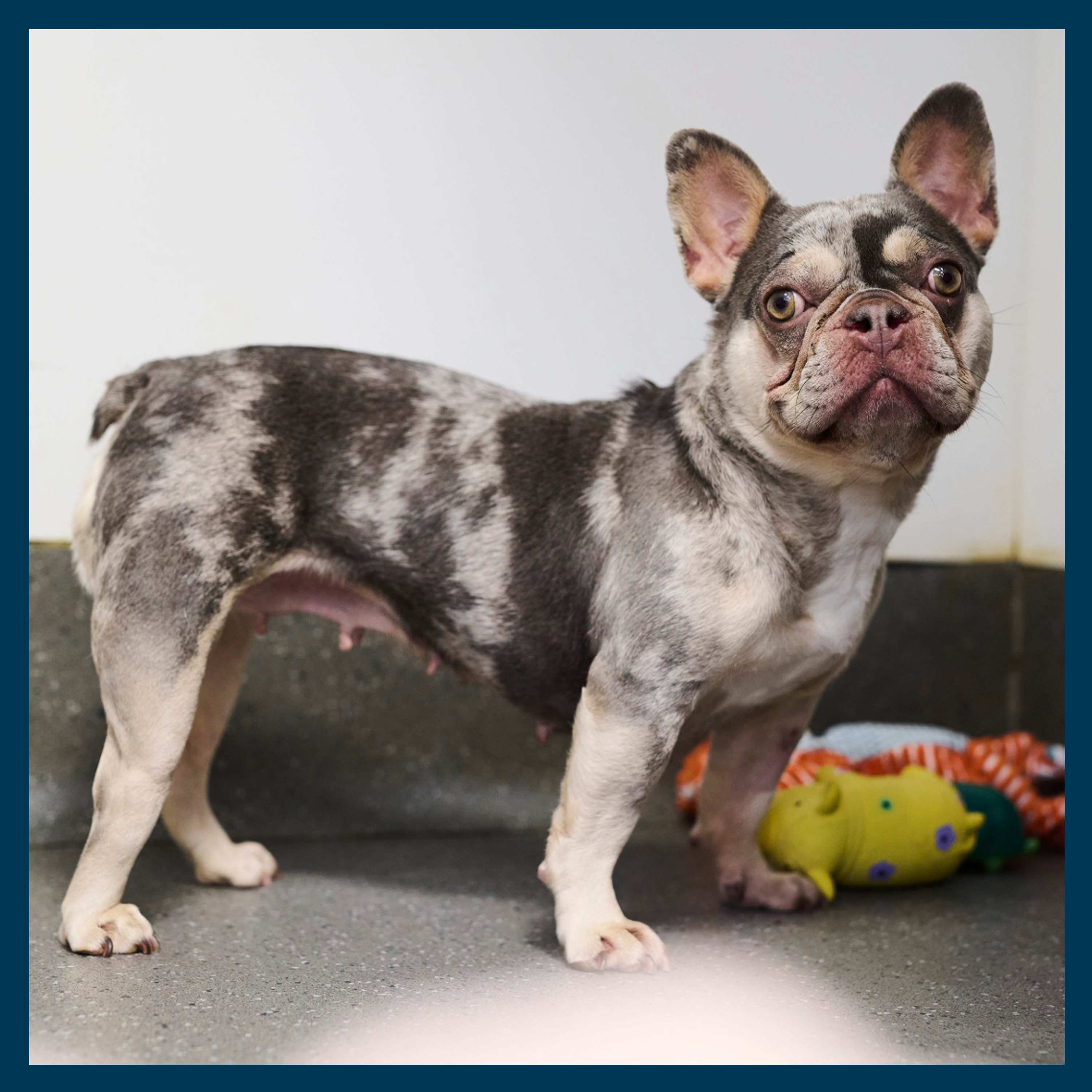
We talk about Frankie for half an hour before I meet her, because forewarned is forearmed. Claire Fourmoy, the senior clinician who operated on her six days ago, begins by explaining how this five year old French bulldog has found herself at the Finsbury Park Animal Hospital in North London. She came into the care of the RSPCA a year ago as a case, which means she was either neglected or abused by her previous owner. Her serious health issues, though, are related entirely to her breeding rather than the difficult life she went on to live. Frankie, the Frenchie is a brachycephalic dog. She has a shortened flat faced skull but the same amount of skin and soft tissue as a normal dog. The result is brachycephalic obstructive airway syndrome. Her squashed flat snout and narrow nostrils have left her struggling to breathe because her skull is too small. Her eyes bulge from their sockets and her flaps of excess facial skin leave her prone to irritation and infection. And if that wasn't enough, she also has a twisted nub of a tail that has social implications. Dogs use tails to communicate as well as physical ones. A tail is part of the spine. Because Frankie's tail is truncated, the rest of her spine is not as it should be either. Some of her vertebrae are out of whack. In total, Frankie has six extreme conformations six ways in which her shape, structure or appearance have been selectively bred to such an extreme degree that it negatively impacts upon her health. We pay more for dogs with squishy faces, bulging eyes and corkscrew tails because they're cute. We pay more for long dogs with short legs, the longer and shorter the better, even though one in four dachshunds suffer from invertebral disc disease, causing slipped discs. We pay more for a Dalmatian to look like a Disney cartoon, even though the extreme piebald gene means it has a one in three chance of suffering from congenital deafness. And if our very selectively bred dogs now struggle to breathe, then that's even cuter. Just type my cute snoring dog into YouTube and you'll see pugs, bulldogs, boxers, chihuahuas, collies, terriers, sheepdogs, spaniels and almost any other breed you can think of now have serious issues with extreme breeding. And although dogs have suffered most from our close attention, there's a whole Noah's Ark of other pets, from bubble eyed goldfish and giant eared rabbit to bow legged horses and very, very, very long haired cats, all sailing in the same direction. Last week the RRSPCA launched a five year strategy in an attempt to convince us that things have gone too far, that pets bred with extreme physical traits are suffering needless health and welfare issues. Preventing this avoidable harm, the charity says, is a moral responsibility. This is why Ashley Brown, the RSPCA's scientific and policy manager and the Strategies lead author, has brought me to Finsbury park to meet a recuperating bulldog. Frankie's first surgery began with a nose job. Fourmoy opened her airways by removing soft tissue from her throat, her nostrils and her larynx. Much of her soft palate had to be cut away. If and when she recovers, the next surgery will be more like a facelift. Formoy will cut away excess facial skin and with some more stitching and cutting, help the eyes sit more comfortably in their sockets. Without that, Frankie would continue to struggle to keep her eyes moisturised. In some brachycephalic cases, the eyes pop out altogether. All of which sounds like a lot to deal with, but the prognosis is good because Frankie has survived the airway surgery. Fourmoy explains. The risk of death from more surgery and more anaesthetic is reduced by about 80%. After all the trauma she has endured, she might even turn out to be one of the lucky ones. Once her surgery, which would have cost about 8,000 pounds at a private practice is completed. At this news, Brown takes a deep breath. The last time she was here, the surgeons were trying to save a three year old English bulldog called Poppy that had a similar list of health issues to Frankie. Poppy made it through the airway surgery and Brown shows me photos of a sweet dog looking up at the camera from her post surgical haze. Alas, Poppy struggled to recover. Even the best treatment was not enough to undo the harm caused to her by breeding for extreme confirmation. Brown says in the end, euthanasia was the only humane option. Poppy and Frankie are no longer outliers, their fates no longer the exception. According to data collected by the Royal Veterinary College in 2022, a fifth of the UK dog population are breeds with at least one extreme conformation. In the past decade, the number of French bulldog types coming into the RSPCA's care increased 3,800%. Briefed on what Frankie is going through, I am not expecting to find a dog that is particularly thrilled with her lot in life. I couldn't have been more wrong. As soon as she's retrieved from her cage, she waddles over to introduce herself. She wags what passes for her tail. I stroke her and she leans in for more. Like other dogs that have undergone this surgery, she is experiencing the joy of being able to breathe properly for the first time. It is impossible not to fall for the squishy faced little runt completely, which I suppose makes me part of the problem. She watches on enthusiastically as 4Moy talks about hip and elbow dysplasia, common in French bulldogs and pugs, but even more so in larger English bulldogs, Again because of selective breeding. It's normal and cute for these dogs to sit with their legs splayed, but it's not normal at all. Fourmoy says it's a sign that they can't sit in a normal manner and it's a big contributor to lower lifespans. The reality is that vets are having to put animals down earlier. In a 2022 study, the RVC found the average life expectancy of a Frenchie was just four and a half years, way back when they had proper snouts and they were kept mainly for rat catching, not Instagram. They could have expected to live twice as long.
- [09:20]
Manveen Rana
So how did we get to this point and what can we do about it? That's in just a moment.
- [09:35]
Creative Planning Representative
If you're looking for something predictable and low friction over the long term, public markets may be a suitable option. But the moment you want different investment characteristics, it may be time to consider the private markets. See how your wealth can work smarter@creativeplanning.com
- [09:49]
Optum Representative
Access Healthcare can feel complicated. That's why Optum uses technology to connect the people and processes that make healthcare easier, more affordable and more effective. We're making it clearer for you to know exactly what your benefits cover and to help you better manage your health. We're coordinating care between your doctors and your technology. We believe better, simpler healthcare is always possible. That's healthy optimism. That's optim. Visit optum.com to learn more.
- [10:21]
SoFi Representative
Today we'll attempt a feat once thought impossible overcoming high interest credit card debt. It requires merely one one thing a SoFi personal loan. With it, you could save big on interest charges by consolidating into one low fixed rate monthly payment. Defy high interest debt with a SOFI personal loan. Visit sofi.com stunt to learn more. Loans originated by Sofi Bank NA member FDIC terms and conditions apply. NMLS 696891.
- [11:03]
Matt Rudd
The seeds of today's problem can be found in the 19th century. For many millennia before that, dogs were bred and kept because they had traits that made them better at certain tasks, such as hunting, herding, guarding and retrieving. It didn't matter how they looked. Then wealthy Victorians started keeping pets that had no practical purpose other than to amuse their owners. By the mid 19th century, several organisations were competing to shape the emerging world of pedigree dog breeding. Eventually, the Kennel Club emerged as the arbiter of what makes a good dog. Scroll forward 150 years, add a pandemic, a sprinkle of social media and a large helping of market forces, and we have what we have today a largely unregulated market in which the cutest dogs sell for the most. Dan o', Neill, a professor of companion animal epidemiology at the rvc, has devoted his career to our pets. As a vet, he noticed a worrying trend. Clients who had to have a pet put down because of an extreme conformation would often get the same type of animal again. They love these dogs, but they know they have health problems, so they resolve that dissonance by minimising the health problems, he says. They say to themselves, I know I shouldn't own a dachshund and my last one had to be euthanised because of this disease. But I love them, I'll look after them, I'll make sure they have the best of everything. Samuel Bradley runs the RSPCA's intelligence unit. Anyone can breed dogs in the UK, and regulations vary between home nations. In England, you need a breeding licence only if you breed three or more litters and sell at least one puppy in a 12 month period. There are star ratings, risk ratings and strict welfare standards that apply to the license. It is part of Bradley's job to ensure those rules are being followed. So I ask him why the RSPCA can't take action against breeders who are creating these Frankenstein pets. The problem is that it's a hypothetical animal that doesn't exist yet, he says the current Animal Welfare act has no provision for unborn future animals. If his team finds animals suffering as a result of extreme breeding, they can and do take action. But prosecution is only a last resort when someone is deliberately and persistently committing a crime. The truth is, the problem has become too big and too widespread to criminalise. People are now buying and selling dogs as a product, he says. If a product is seen as new, novel or rare, it commands a higher fee. It doesn't make any difference if that product is a dog with restricted airways. Everything changed during the pandemic when the average price of a puppy in the UK more than doubled, from 808 pounds to 1,875 pounds. It meant you could make a fair amount of money as a breeder, Bradley says. Today, online breeders use logos for their brands. These logos tend to be cartoonish, cute depictions of wrinkly, bug eyed, selectively bred animals. These breeders then compete to make the most outlandish claims, the rarest dog, the most expensive dog, in the hope of getting influencers to make YouTube videos about them. The influencers are of course, happy to oblige. There's a video of a quote rare coloured Frenchie being sold in the US for a million dollars. And another of Venom, the 500,000American bully set to dramatic beats. There are classified ads listing bloodlines of famous bulldogs that have since died as a result of their innate health issues. The sums being asked frequently run into the thousands for pets that could cost more in vet bills. The good news is that awareness can make a difference. After XL bully dogs were made illegal, for example, some cunning breeders tried to market XL bully cats in all their over muscled, under haired glory as a viable alternative. We saw it happening and we responded by speaking to the media and addressing it online, Bradley says. Now when you search for them, you will hopefully find a summary that includes the health warnings and medical conditions associated with XL cats. On the administrative floor above the animal hospital in Finsbury Park, Thelma the dachshund is sitting alert on a swivel chair. Her owner, Claire Haigh, the hospital's manager, is getting a sandwich, so I introduce myself politely and remind Thelma that dachshunds have serious back problems and she really should get down. Thelma is having none of it. She barks until I leave and later when I grass her up, Haigh is sanguine. We've tried everything to stop her jumping up. She says spongy steps, ramps, everything, but she just gets the zoomies and leaps about. When Thelma kept jumping on Haigh's daughter's bed, the solution they came up with was to change not the dog, but the bed for a lower one. Haigh adopted Thelma five years ago after she was rescued from a puppy farm. She would never have considered a dachshund because she knows what that entails, but Thelma needed a home and quote, she just looked so cute. We need to stop providing what the humans want, she says. More seriously, we need to be going to adoption centres and not going to breeders. Full stop because there are too many dogs and they're being bred into ridiculousness. An adopt first policy would certainly make a difference. At the very least it would take the heat out of the market. Ashley Brown, though, hopes that her five year strategy will lead to a change in our relationship with our pets. The first of her strategies aspirations is to create a movement for healthy pets, one that makes breeding with harmful physical features unacceptable, which doesn't seem unreasonable. Companion animals do not choose the bodies they are born into and they do not choose a life of suffering, she adds. The responsibility for protecting them rests with us. With luck, Frankie will be scheduled for her final life changing surgery very soon. A quick postscript should you be thinking of getting a dog, it would be an excellent idea to save yourselves years of expense, stress and misery by making sure it's a healthy one. There's a very quick online checklist at www.innatehealthassessment.org to help you screen your prospective pet for extreme confirmations. And so ends this public service announcement.
- [19:01]
Manveen Rana
That was Matt Rudd, contributing editor at the Sunday Times, and you can read his full Sunday Times magazine piece@www.thetimes.com with a subscription. It's called They're Not How Extreme Breeding Is Making Our Pets Sick. The producers today were Emily Wilson and Jennifer Kennedy. The executive producer was Sophie McNulty and sound design was by Ivan Eastleigh. Theme composition is by Malicetto. Thanks for listening. We'll be back tomorrow.
- [19:31]
Carvana Customer
Foreign.
- [19:38]
Creative Planning Representative
Investors at the highest level of sophistication, those with strong advisory support. The natural outcome is two distinct portfolios One public, one private. Each plays a different role in the overall strategy. Uncover new investment opportunities for you@creativeplanning.com New evening.
- [19:55]
Carvana Customer
Buyers remorse. Buy a new car. I'll be moving in. Let's get started.
- [20:00]
Carvana Salesperson
Sorry, I think there's been a mistake. I bought it from Carvana.
- [20:03]
Carvana Customer
You what?
- [20:04]
Carvana Salesperson
Yeah, Great price. I even have seven days to love it or return it.
- [20:07]
Carvana Customer
So there's no.
- [20:09]
Carvana Salesperson
No, no. Buyer's remorse. More like Buyers rejoice.
- [20:13]
Carvana Customer
I guess I'll let myself out. Congratulations. I mean it.
- [20:17]
Carvana Salesperson
Buyers rejoice. Buy your car today on Carvana. Limitations and exclusions may apply. See our seven day return policy@carvana.com.