Loading summary
Transcript21 lines
- [00:01]
Optum Announcer
Healthcare can feel complicated. That's why Optum uses technology to connect the people and processes that make healthcare easier, more affordable and more effective. We're making it clearer for you to know exactly what your benefits cover and to help you better manage your health. We're coordinating care between your doctors and your technology. We believe better, simpler healthcare is always possible. That's healthy optimism vats Optum. Visit optum.com to learn more.
- [00:31]
Dish Network Announcer
Dish has been connecting communities like yours for the last 45 years, providing the TV you love at a price you can trust. Watch live sports news and the latest movies, plus your favorite streaming apps, all in one place. Switch to Dish today and lock in the lowest price in satellite TV, starting at $89.99 a month with our two year price guarantee. Call 888-add-D dish or today.
- [01:04]
Manveen Rana
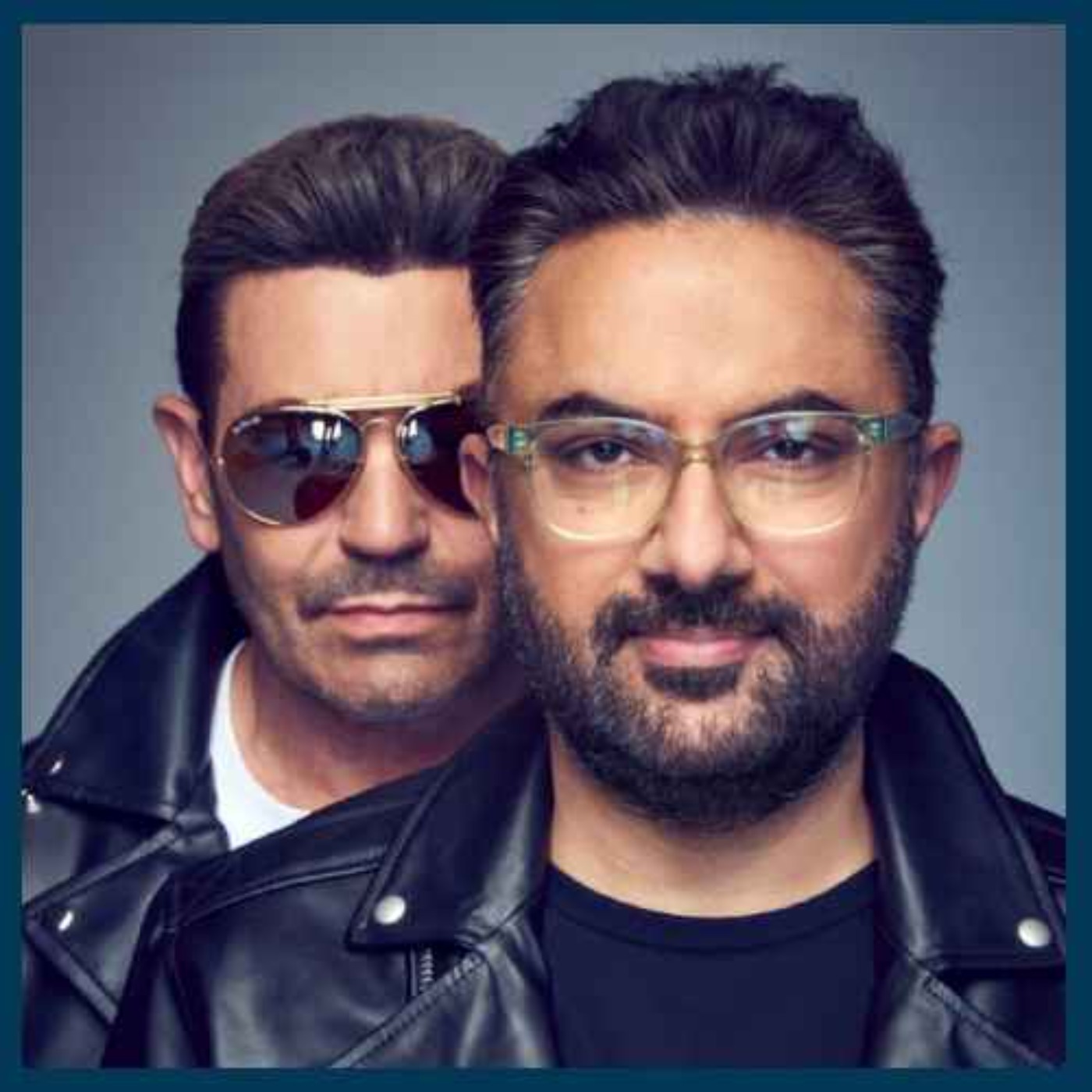
From the Times and the Sunday Times, this is the story on Saturday. I'm Manveen Rana. At his peak, George Michael was one of the most famous pop stars in the world. But for the writer Satnam Sangara, he was more like a lifelong companion. Growing up in Wolverhampton in a Sikh family, Satnam became obsessed with George Michael's music, and while writing a new book about him, he realised how much they unexpectedly had in common. Both children of immigrant families, both navigated questions of identity and belonging in Britain, and both wrestled with family expectations and a desire to reinvent yourself. Satnam has written about George Michael for the Times Magazine, and we asked him to read his piece for today's episode.
- [02:08]
Satnam Sangara
It's 1990, I am 13. I still have a top knot, the long, uncut hair that is characteristic of observant Sikhs, and I must cast an odd silhouette as I stand outside HMV in Wolverhampton, gawping in wonder at the album display in the window. If memory serves, I didn't know that Listen Without Prejudice Volume 1 was coming out. Maybe I'd been busy at my summer job at a local sewing factory, where they played nothing but Bhangra, or preparing for a new term at school at the start of September. I remember purchasing the album in cassette format. My exhausting illegal employment, which had me occupied for up to 90 hours a week during the school holidays, was paying just 50 pence an hour, so it must have cost me a couple of days wages. I didn't feel shortchanged, though. I listened to the album on a loop for weeks and pored over the sleeve notes, memorizing the names of engineers and musicians, some of whom I have talked to at length recently. As I have researched my new book Tonight, the Music seems so the Meaning of George Michael. I had inherited the George Michael bog as a child from my two elder sisters during the peak of Wham mania in the mid-80s. It is perhaps peculiar that this fandom persisted into adolescence and beyond. There were so many other more fashionable acts I was into that I could have made my thing. From Massive Attack to Prince. No other teenager around me was into George Michael. Maybe the peculiarity of the passion was the appeal. Pop music, after all, has long been a way for young people to demonstrate they are not like other young people. But almost 10 years after his death, as I get within the age that he was when he died at the age of 53, I am glad I chose George Michael. And having spent nearly two years reflecting on his life and talent, I can make more sense of why I was so drawn to him. His lyrics struck a note. Unlike most of the men in my life, he didn't seem allergic to expressing actual feelings, and they hinted at an enigmatic world beyond. My parents, cousins and teachers and close community image may have played a part. Laughably. When I gave up on the long hair that my increasingly religious mother insisted upon, I took the sleeve of the cassette single of Freedom 90 with with me to the barbers. Also, though I had no real appreciation of it at the time, Michael and I had an eerie amount in common. Like him, I hated the way I looked as a teenager. Although I wasn't spotty, bespectacled, chubby and subject to unruly curly hair in precisely the same way, we both had creative pretensions, though while I was thinking about my next morose diary entry, he was writing Careless Whisper, one of the most successful love songs of all time, at the age of just 17. He also had a family history of severe mental illness like me, with both an uncle and a grandfather on the mother's side of his family, having died by suicide. On top of all this, Jorge Kyoka Espanato was, like me and Andrew Ridgley of whammy, the child of a migrant and of minority ethnic extraction. It is not known widely enough that Michael's maternal grandmother was Jewish. Ridley's father, Albert, was born in Alexandria to an Italian mother and a Jewish Egyptian father, and that his father, Keyako Spaghietl, arrived in England in 1953 as a Greek Cypriot immigrant. Inevitably, there are parallels between our imperial immigrant experiences. Apparently the Paniotto family story goes that when Jack Panos, his anglicized name, arrived with his cousin in the summer of 1953, they had less than £1 between them which is such a common story among Asian immigrants that a 2014 BBC radio series about pioneering Asian immigrants was given the title Three Pounds in My Pocket. Like my ancestors, the Panietos were farm workers going back centuries, and several generations often lived under the same roof in village homes. The industry chosen by Merkel father restaurants was also a common choice for both South Asian and Cypriot migrants. The book project was meant to provide a holiday for my day job as a historian of the British Empire. But he ended up demonstrating my ultimate thesis in those other books that the influences of the Empire are inescapable. If British imperialists had not been involved in India, Suez and Cyprus, then Ridgely, his father came by boat from Egypt in 1956 during the Suez crisis. Michael and I would not have been born in Britain, if at all. And as I delve deeper into Michael's story, I. I discovered further parallels within the parallels. The boring language lessons that our parents inflicted upon us. The luxury saloon cars to which our uncles aspired, the having to stay quiet in the house because your dad was working night shifts. The posing in photographs that we considered macho at the time but really, in fact looked quite gay. There's also the fact that we both came from unartistic backgrounds, but ended up in creative fields. Any direct comparison would of course be absurd, for Michael, in his mid-20s, became not only one of the most successful musicians of all time, but also one of the most famous men in the world. With a wild success of Faith, Billboard named him the greatest pop star of the year in 1988.
- [08:15]
Satnam Sangara (Reading Personal Reflections)
Having established that Wham. Was going to be a successful group, I think that it really dawned on me after about six or eight months that there was something really big to come out of it. I'd never really seen stardom above Top of the Pops, you know.
- [08:29]
Satnam Sangara
In the decades that followed, he just kept getting more and more famous. So much so that today he's recognizable just from line drawings of his face, sunglasses and bouffant. This was the kind of fame that rarely happens now. It was a time when celebrities could truly become household names across the west and beyond. Even my Punjabi mother, who only listened to religious music, knew who George, Michael, Michael Jackson, Prince and Madonna were in the 80s. The subsequent attention made Michael's life and insane. How insane? Well, in the 90s, he told a journalist that five or six women, some of whom had taken legal action, were alleging that he had fathered their children. He said, none of them are telling the truth. They named their children after me. Two of them gave them My full Greek name. An English fan once lived for four days under one of his houses in London, which was built on a slope that created a crawl space between the floorboards. He said, I had no idea she was under there. I was talking to my friends one night and I thought I could hear my name being called out. Then she suddenly presented herself. He also talked about being followed with the doctor's surgery. Former colleagues tell me stories about how other mega celebrities would lose it around him and Michael would sometimes try to hide behind doors and behind sofas to avoid them. Perhaps the defining thing about Michael's fame was that other famous people were starstruck by him, including the most famous woman of the age, Princess Diana. The 80s tabloid favorites met on numerous occasions, shared the same haircut for a period and she was smitten. He said, I was invited to the palace many, many times before I actually met her because I was so afraid of the publicity if we did become friends and when we did meet, I think we clicked in a way that was a little bit intangible. She was very like a lot of women that have been attracted to me in my life because they see something non threatening, maybe because I take care of my sisters and I'm so protective of my sisters. Women seem to smell that there were certain things that happened that made it clear she was very attracted to me. If nothing happened, it was in part because Michael was gay and many have condemned him for remaining in the closet for so long. Not least Noel Gallagher, who who once said that Michael had no right to talk about the Iraq war because this is a guy who hid who he was from the public for 20 years. But having spent a long time looking at what George Michael was going through at the time, I have nothing but compassion for him. He was a young man still working things out for himself in pressured circumstances. And I know a little about what it is like to hide your love life. I was never in the closet or confused about my sexuality and I wasn't cruising as Michael was as a teenager. But I struggled in my late 20s to confess to my Sikh parents that I was dating heterosexually outside my family's religion. At one point I even kept a second flat and subletted to my friend Ollie and the comedian John Oliver, just in case my parents visited and I had to pretend I wasn't living with my non Sikh girlfriend. It was an all consuming crisis at the time and things must have been infinitely more disorientating for Michael due to accelerating fame, his father's homophobia and the Extreme homophobia of the press. Michael was asked if he was a quote pufter in almost every interview he did. And when in 1988, the Daily Mirror asked him at a press conference if he had taken an AIDS test, his no was enough to inspire tabloid headlines about how he was so terrified of AIDS that he would not have a test. This was a period when it was basically impossible to be gay in the public eye. Few people, least of all Michael, would have guessed that there would be any kind of positive outcome when he was put in handcuffs and at Will Rogers Memorial park in Los Angeles, charged with lewd conduct and in the process became one of the biggest celebrity stories of the decade. Beverly Hills police officers arrested the singer known as George Michaels. Mr. Michaels was arrested for a violation of 647A of the penal code, engaging in a lewd act. Some journalists put Michael masturbating in a public toilet after on the same moral plane as Gary Glitter's transgressions, which at the time included 50 child pornography offences. Almost all the coverage assumed that Michael would be ashamed that his career could be over and that he would be trying to hide. Instead, with the world's media focused on him, he went out for a meal at a nearby restaurant, Tobago. He ate, said hello to Tony Curtis and Lionel Richie, who was also dining there, and travelled back home as if it were a regular night. He followed this up with an interview with CNN in which he refused to say he was ashamed of what he had done.
- [14:00]
Satnam Sangara (Reading Personal Reflections)
I want people to know that I have not been exposed as a gay man in any way that I feel. I don't feel any shame. I feel stupid and I feel reckless and weak for having allowed my sexuality to be exposed this way. But I don't feel any shame whatsoever and neither do I think I should.
- [14:24]
Satnam Sangara
Ultimately, Michael made a deliberate choice not to become prey. And then he was irresistibly funny about what had happened. The title of his best of collection, Read, released in December 1998, contained a reference to toilets. Ladies and gentlemen. The video and lyrics for the single outside poked fun at what had happened to devastating effect. None of this made it easy to be a straight male fan at the time. Indeed, my fandom has never not caused me problems from childhood into adulthood. One of my first ever book reviews I received for my family memoir took issue with, among other things, my quote, restricted outlook and my descriptions of poverty. And in a final brickbat, he added, as for the author's love of George Michael's back catalogue, some things are worth keeping secret.
- [15:33]
Optum Announcer
Healthcare can feel complicated. That's why Optum uses technology to connect the people and processes that make healthcare easier, more affordable and more effective. We're making it clearer for you to know exactly what your benefits cover and to help you better manage your health. We're coordinating care between your doctors and your technology. We believe better, simpler healthcare is always possible. That's healthy optimism. That's Optum. Visit optum.com to learn more.
- [16:02]
Satnam Sangara
I thought, what if I've scaled businesses?
- [16:05]
Dish Network Announcer
What if I scaled my philanthropy? What if I did as much in
- [16:08]
Satnam Sangara
one year as I've done in my whole life?
- [16:09]
Manveen Rana
See how your wealth could have even
- [16:11]
Satnam Sangara
Greater meaning@creativeplanning.com Impact Dish has been connecting
- [16:16]
Dish Network Announcer
communities like yours for the last 45 years, providing the TV you love at a price you can trust. Watch live sports news and the latest movies, plus your favorite streaming apps all in one place. Switch to Dish today and lock in the lowest price in satellite TV, starting at $89.99 a month with our two year price guarantee. Call 888-@dish or visit Dish Do.
- [17:01]
Satnam Sangara
Towards the chaotic end to George Michael's life, every incident and arrest would result in a plethora of missives varying between mockery and sympathy. Almost as if it had been a relative of mine who had just, say, driven into a branch of Snappy Snaps and the news of his death on Christmas Day in 2016, when my obligation to organize a large Boxing Day lunch clashed with my obligation to produce a 2,000 word obituary for the Times on one of my specialist subjects, caused tension. Not for the first time, I was struck by my mother's empathy, even though she was born in the Punjab and has never bought a record in her life and has never written an article on a tight deadline. She offered heartfelt sympathy and brought me cups of tea as I typed away into the night. Others, however, took the opportunity to crack the usual George Michael jokes and when I tentatively admitted to feeling upset, suggested I was being a drama queen in yeah, yeah, yeah, the story of modern popular, Bob Stanley picks out Michael for a kicking, comparing his quote creamy voice with that of Cliff Richard and claiming it, quote, conveyed little soul. But he is right that Michael lived his life back to front, working hard to be taken seriously as a young man and then undermining it all with wild behaviour in middle age. Though it wasn't his fault. Michael was an addict. Addiction is an illness, and the illness killed him, and I suspect that the traumatic and elongated nature of Michael's passing is probably why his contribution has gone largely unmarked. There has been no tribute concert. There is no physical memorial beyond a ropey mural or two. Fans are not allowed to leave mementos at his grave in Highgate Cemetery in North London. And beyond his elevation into the Rock and Roll hall of fame in 2023, there has been little collective, national or international reflection upon his cultural contribution. This is also why I so wanted to write something examining his life and legacy. There are countless books out there about the likes of Bob Dylan, the Beatles and Prince. The biggest pop artist of our age, Taylor Swift, has her music analyzed at three day academic conferences nicknamed Swift Posiams. But I cannot think of many commentators who have gone beyond the soap opera of Michael's life to take him or his music seriously. The simple facts of his career from Wham to his solo work, suggest it is time to recognize his genius. 13 number ones in the UK Singles Chart, 10 number ones on the US page Billboard Hot 100, more than 120 million album sales, two Grammys and five Brit Awards, 12 Billboard Music Awards, four MTV Video Music Awards and a place in Billboard's Greatest of All Time Hot 100 artists. His range in tone is remarkable. His it is hard to believe that Bad Boys, A Different Corner and Freedom 90 were all written by the same person. 1987's Faith, an album on which he played a large number of instruments, which he wrote and produced almost in its entirety, and which became one of the best selling albums of all time with sales of more than 25 million, was rightly dubbed at times almost Too Good by Rolling Stone and listed by a 2003 edition of the magazine as one of the world's greatest albums. On top of this, Michael was a terrific philanthropist who gave in a manner that did not seek credit or attention. He spoke out bravely on a range of difficult causes in an eerily prescient way, whether it was aids, apartheid or Iraq.
- [21:10]
Satnam Sangara (Reading Personal Reflections)
There's no moral stance to be had in a preemptive strike. There is no Christian justification for attacking first. I think if you have the integrity to protect the oppressed, you do it wherever it happens, not wherever it happens. Alongside oil. Tony Blair has no authority to do this. He's the Prime Minister. He is not someone we are supposed to follow into lethal situations without asking questions.
- [21:45]
Satnam Sangara
And despite becoming a staple for easy listening radio, he repeatedly broke boundaries. Wham's tour of communist China in 1985 was the first visit by a pop band from the West, a white man from each Finchley. He ended up getting awards for black music in America and in the process helped change the way such music was categorized. For many, he became a symbol of 80s Thatcherite excess. Yet he supported progressive causes throughout his life, played benefit gigs for minors and NHS nurses, and wrote about poverty and unemployment. He had massive global hits, sometimes without any promotion at all. He was a teen crush for millions of girls and then became an impassioned campaigner for gay rights. His occasionally ludicrous looks were also iconic. Furthermore, a decade after his death, he is everywhere. Leaving aside the accelerating success of Last Christmas, which seems to do better by the year, Kate's whisper is a meme on TikTok and Instagram. So much so that when I mention the title of my new book in passing to a classroom of 10 year olds who really shouldn't be on social media, they sing the song back to me. The sensual Father figure recently went viral after it was interpolated by Taylor Swift and featured in the movie Baby Girl, prompting celebrities including Pedro Pascal to reenact the sultry scene on social media. No wedding or Friday night disco is complete without a Wham track or two, and George Michael is still one of the most played artists on a slew of British radio stations. If I had to pick out the most important legacies, it would be the songs and the voice. If it's true, as the American author and journalist Mark Myers maintains, that a song is not iconic until it has stood the test of time of a generation 25 years, then a remarkable number of George Michael songs are are iconic. As for the voice, there's no shortage of videos on the web from singing professionals marveling at what Michael could do, and fellow singers were quick to praise him too. But you can listen for yourself. Is there anybody in the modern age of pop who managed to capture both happiness and sadness at the same time as Michael did with his vocals and lyrics? I was worried that spending so long thinking about him and learning perhaps too much about his life would result in me being put off George Michael forever. But in truth, I admire him more in 2026 than I did in 2016. I was also worried that writing about pop music after something as heavyweight as colonialism would prove unchallenging. But he lived a life that tells us a lot of interesting things about the turbulent times we've been through, and as I prepare to become associated with the subject of George Michael forever, I appreciate the many life lessons he provided, not least that fashion is for idiots.
- [24:54]
Manveen Rana
That was Satnam Sangara and you can find his article@thetimes.com his latest book tonight the Music seems so the Meaning of George Michael is available from timesbookshop.co.uk the producer and sound designer today was Dave Creasy. The executive producer was Edward Drummond. I'm Manveen Rahner. Thanks for listening. We'll be back tomorrow.
- [25:29]
Optum Announcer
Healthcare can feel complicated. That's why Optum uses technology to connect the people and processes that make healthcare easier and more affordable and more effective. We're making it clearer for you to know exactly what your benefits cover and to help you better manage your health. We're coordinating care between your doctors and your technology. We believe better, simpler healthcare is always possible. That's healthy optimism. That's Optum. Visit optum.com to learn more.
- [26:00]
Manveen Rana
Summer smells like sunshine, citrus and long weekends. Kick off the season by refreshing your home during Pura's Summer Savings event. It's the perfect time to upgrade to a smart fragrance experience, control intensity and set schedules right from your phone, all while enjoying clean premium scents. Take advantage of our limited time 20% off sitewide sale and bring the feeling of summer indoors. Visit pura. Com today.