Loading summary
Transcript28 lines
- [00:00]
AT&T Business Wireless Representative
Not every sale happens at the register. Before AT&T business Wireless checking out customers on our mobile POS systems took too long. Basically a staring contest where everyone loses. It's crazy what people will say during an awkward silence. Now transactions are done before the silence takes hold. That means I can focus on the task at hand and make an extra sale or two. Sometimes I do miss the bonding time.
- [00:24]
Narrator / Interviewer
Sometimes AT&T business Wireless connecting changes everything.
- [00:33]
Podcast Host / Sponsor Announcer
This episode of the story is sponsored by PwC.
- [00:36]
PwC Representative
Technology doesn't wait, and neither should you. Staying competitive means getting ahead, not just keeping up. PwC takes you further with tech. From optimizing the systems that put your data to work to scaling AI from proof of concept to competitive edge, PwC
- [00:53]
Podcast Host / Sponsor Announcer
helps you meet tomorrow's tech demands so you can compete at a speed that rewrites the rules.
- [00:59]
PwC Representative
Discover more@pwc.co.uk from the Times and the
- [01:03]
Podcast Host / Sponsor Announcer
Sunday Times, this is the story on
- [01:06]
Manvi Morana
Saturday, I'm Manvi Morana.
- [01:12]
Podcast Host / Sponsor Announcer
Most of us will have experienced it.
- [01:15]
Manvi Morana
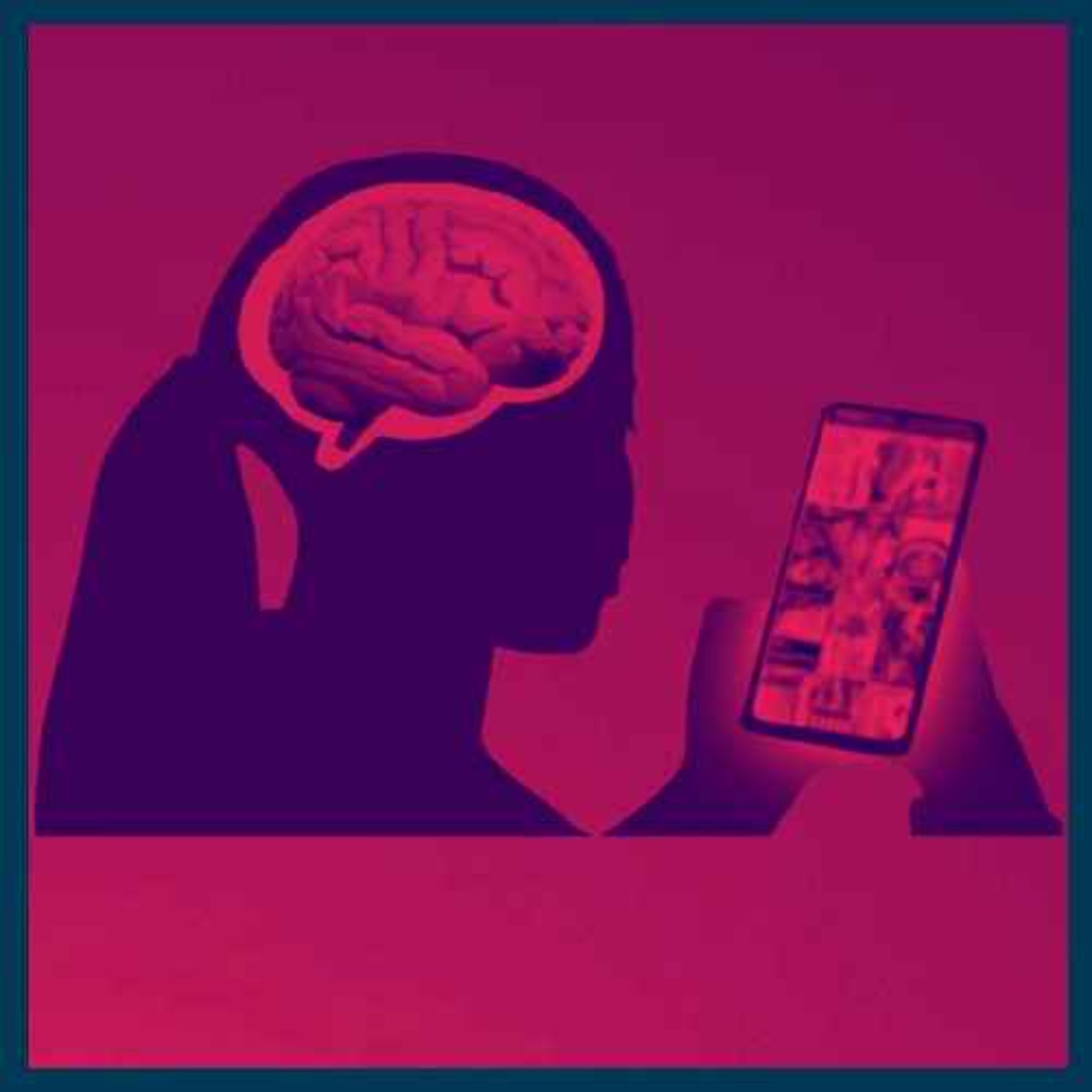
You pick up your phone for a quick look at social media, only to look up an hour later wondering where the time went. That's thanks to something called Infinite scroll, the technology behind modern social media and the biggest thief of your time and life. It was invented in 2006 by software designer Azeraskin as a simple way to make browsing easier. Now it's helped create the endless feeds that power Instagram, Facebook, TikTok and X. Twenty years later, even its creator says he regrets the impact it's had with a new survey this week suggesting that people might spend up to five years of their waking lives mindlessly scrolling. So how did a feature designed for convenience become one of the most powerful tools for capturing human attention? And what is endless scrolling actually doing to our brains? Fleur Britten, a writer for the Times, met Raskin and we asked her to read her article.
- [02:51]
Narrator / Interviewer
When an American software developer named Aza Raskin came up with the concept of the Infinite scroll back in 2006, little did he know that it would turn into one of society's most powerful time thieves. The idea, now used by nearly all social media platforms, was simple new content that automatically and continuously loads as you scroll on an app or a website, creating a never ending stream of videos, tweets, posts, messages, you name it. If you've ever sat on the sofa at the end of the long day and opened Instagram just for a second, only to find you're still there three hours later in the dark watching an endless supply of 10 second videos, you have been a victim of the Infinite Scroll. Its original purpose, Raskin explains on a video call from San Francisco, was to help users so they didn't have to keep refreshing a web page for new information. No need to click on page two, for example. No need to make a decision about whether or not to continue. The content would just keep on coming. He designed it while running his own software studio, Humanized, and decided never to patent it, instead keeping it open source and sharing it with Google and Twitter during social media's infancy. By 2013, Raskin could see that the thing I'd made to help people was instead damaging them. You'd walk onto a bus and no one would look around. They were bound to their digital master, heads down, fingers scrolling, esophagus crushed. It changed our physiology. The British government is concerned about Infinite Scroll. In its latest release on its proposal to limit social media for children, it mentioned the possibility of of requiring platforms to switch off addictive features, for example infinite scrolling and autoplay. Since 2006, Big Tech has significantly refined Raskin's design, making Infinite scroll even more sticky to keep us online. For example, videos start playing automatically without us clicking on them. Teasers of subsequent videos playfully bounce into view, and algorithms prioritize provocative content, which can prove irresistible. Infinite scroll is, says Raskin, core to what these companies are now. They've all changed to become these infinite slot machines. But what does it actually do to our brains? The most important impact of Infinite scroll is on the dopamine system, says Dr. Bei Bing Chen, a neurologist at Henry Ford Health in Michigan. It works rather like gambling and is similarly addictive, he says. With both, you don't know what's coming next. In gambling, you keep going back because you might win online. You do so because amongst the dross, you might see something brilliant or hilarious. Infinite scroll has a side effect that experts call popcorn brain, a term coined in 2011 by the American computer scientist and author David Levy. Because our brains are so overstimulated with incessant digital noise, our thoughts and attention rapidly bounce from one thing to another. Like popping kernels, Popcorn brain leaves our brain constantly craving novelty. Chen explains that over time you become desensitized and it can make everyday things reading, conversation, walking feel more difficult to find. Rewarding, he adds, because your brain gets used to very short bits of information, it worsens your working memory and long term recall. Frequent social media use has also been shown to literally change the structure of the brain, he Sundays, citing a 2017 study that found that young people with an average age of 23.6 who checked Facebook multiple times a day tended to have less gray matter in the nucleus accumbens where dopamine is released, though Chen cautions that association is not causation. What is clear, though, is that the more time we spend online, the more likely we are to have some sort of cognitive decline. It doesn't help that the urge to scroll severely disrupts our sleep schedule, the problem he sees the most in his patients Sleep is possibly the most important thing for preventing cognitive decline. An interim report on young people and work by the former Health Secretary Alan Milburn described how all of the 12 and 13 year olds he talked to said that they went to bed between midnight and 3am because they had been scrolling on their phones. The other major impact is on our attention spans. The Harvard Medical School stress Expert and author Dr. Aditi Nuroka cites a famous study by psychologist Gloria Mark that found that human attention spans when using screens had dropped by nearly 70% in the individuals she studied in the early 2000s. It was about 2.5 minutes. Now it's 47 seconds, says Nuruka. Reduced attention is a hallmark of brain rot caused by over consumption of digital content. Naruka is concerned by the effect of infant scroll on our amygdala, the part of the brain that controls the stress response. Our amygdala is triggered by seeing disasters around the world in the palm of our hands, but it doesn't recognize the difference between something happening thousands of miles away and or in your backyard. Feeling a sense of stress only pushes us back onto our phones as we seek quick relief, creating what Nuroka calls an unhelpful, primal urge to scroll. Your brain isn't broken, you are not weak. It's simply the way your biology is designed. None of this bodes well for what might be happening to children's brains.
- [09:38]
Brookfield Representative
Foreign.
- [09:52]
PwC Representative
This episode of the story is sponsored by PwC.
- [09:54]
Podcast Host / Sponsor Announcer
AI is everywhere. Return on investment? Not so much. So how do you move past the hype and make AI actually deliver? PwC takes you further with tech, strengthening the data quality, processes and workflows that shape how well AI performs.
- [10:13]
PwC Representative
PwC turns innovation into implementation so you can accelerate from experiment to scale.
- [10:19]
Podcast Host / Sponsor Announcer
Discover more at pwc.co.uk.
- [10:25]
Brookfield Narrator
at Brookfield, we invest in the thing behind the thing behind the Next Big thing. Our focus across infrastructure, energy, real estate, private equity and credit is helping to build the backbone of the global economy. We combine deep operational expertise with disciplined long term investing, uncovering value and partnering alongside clients to shape tomorrow's economy. Today Brookfield Own what's next? Learn more@brookfield.com this is not an offer to sell or investment advice. Investing involves risks, including loss of capital.
- [10:56]
Barclays Investment Bank Representative
From globalization to innovation, sustainability to market volatility, there's always more than one side to a story. Explore different perspectives on today's most important business and economic issues with the Flipside podcast from Barclays Investment Bank. Hear two research analysts in a lively debate and get insights from every angle. To further inform your view, listen to the Flipside on your favorite platform.
- [11:40]
Narrator / Interviewer
The author and consultant paediatrician Dr. Sanjeev Nachmani of Leicester Children's Hospital, whose adolescent patients sometimes spend as many as 12 hours a day on their phone, observes a developmental delay in the prefrontal cortexes of chronically online children. The prefrontal cortex is the part of the brain that helps control emotional regulation, moral judgment, and complex social behavior. What we're seeing in children addicted to social media is a loss of nerve cells in the prefrontal cortex and weakened white matter connections to it, he says. One effect is that some children are rendered ill at ease doing something as basic as talking to someone. He also observes a skyrocketing of mental health issues anxiety, depression, eating disorders, suicidal thoughts. The good news, he adds, is that, provided they're weaned off their addiction slowly, people can make a full recovery. His advice is to start small. First, no phones at mealtimes or for short durations in the car. The next step is no phones first thing in the morning, because that leads to a dopamine surge. Slowly shrink usage down to 2 hours on weekdays, 3 hours on weekends. One of the most powerful stimuli for recovery from phone addiction, he adds, is physical activity. It doesn't have to be exotic or expensive, just regular and consistent 30 to 40 minutes, four times a week for a number of months to years. Physical activity helps exactly the same part of the brain affected by addiction the emotional circuitry and white matter to recover. Recovery in both children and adults is possible because of neuroplasticity, Nuricar says. The brain can rewire itself. Brain rot suggests a permanent decay, but the good news is that it's reversible. Small changes every day can have a big impact. It is possible, too, to change the technology itself to beat its addictive qualities. It turns out there's a very simple solution, says Raskin. All you have to do is start adding in little delays. It's like when an airplane's WI fi doesn't work well. It gives your brain a chance to catch up with your impulse and you think, do I really want to be here? No, I'm going to do something else. In 2018, Raskin Co founded the center for Humane Technology, CHT, a nonprofit addressing the harms of Big Tech's attention capturing designs, including Infinite scroll and algorithmic feeds. According to CHT's research, infinite scroll has approximately tripled our engagement. And while there are no public figures showing how long users keep scrolling on one app for, it is likely that without this technology there would be no doomscrolling the compulsive browsing of negative content on social media. Part of the issue is that capturing our attention is how big tech converts products that are free to use Instagram, Facebook, TikTok, et al into trillions of dollars. They require you to be glued to the screen, says Raskin, because if you're not around, you can't be influenced and they can't monetize that shift in your behavior. In an attempt to loosen Infinite Scroll's grip, Raskin and his colleagues have spoken to all the major tech companies, briefed heads of state, and created courses. Raskin testified against Meta in the recent New Mexico court case that found the owner of Facebook, Instagram and WhatsApp was liable for endangering children. Meta was ordered to pay $375 million to the state. In his testimony, Raskin admitted, even though I know exactly how Infinite scroll works as its creator, I still found myself going to the bathroom at a friend's dinner and scrolling, unable to control my use. I think that had a big impact on the jury. He believes that it would only take a couple of courageous companies or jurisdictions to start regulating social media access, and others would follow. The countries that do are going to reclaim their kids. I actually think there's going to end up being a race to the top. That's an expression we haven't heard in a while.
- [16:16]
Manvi Morana
That was Fleur Britton reading her piece titled I created Infinite Scroll. Now I regret how it damages our brains, which you can find@thetimes.com the producer and sound designer today was Dave Creasy. The executive producer was Edward Drummond. Thanks for listening. We'll be back as usual tomorrow.
- [16:44]
Podcast Host / Sponsor Announcer
This episode of the Story is sponsored by PwC.
- [16:47]
PwC Representative
What does an AI ready workforce actually look like? Breakthrough performance comes from combining human intelligence with machine capability. PwC brings it all together and takes you further with tech, empowering you to move faster, solve more complex challenges and unlock new value.
- [17:05]
Podcast Host / Sponsor Announcer
PwC combines talent strength with tech strategy so you can unite human potential with AI power.
- [17:12]
PwC Representative
Discover more at pwc.co.uk.
- [17:18]
Brookfield Representative
because you didn't just say, how can I provide these investments? How do I holistically provide everything? How do I bring in the legal, the accounting, all this, and do it at a price point no one else is doing it?
- [17:26]
Creative Planning Representative
Learn more about how we approach wealth management at creativeplanning.
- [17:30]
AT&T Business Wireless Representative
Com.
- [17:30]
Creative Planning Representative
Integrated.