Loading summary
Transcript15 lines
- [00:00]
AT&T Business Wireless Salesperson
Not every sale happens at the register. Before AT&T business Wireless checking out customers on our mobile POS systems took too long. Basically a staring contest where everyone loses. It's crazy what people will say during an awkward silence. Now transactions are done before the silence takes hold. That means I can focus on the task at hand and make an extra sale or two. Sometimes I do miss the bonding time.
- [00:24]
AT&T Business Wireless Narrator
Sometimes AT&T business Wireless connecting changes everything
- [00:30]
Brookfield Advertiser
At Brookfield, we invest in the thing behind the thing behind the next big thing. Our focus across infrastructure, energy, real estate, private equity and credit is helping to build the backbone of the global economy. We combine deep operational expertise with disciplined long term investing, uncovering value and partnering alongside clients to shape tomorrow's economy. Today Brookfield Own what's next? Learn more@brookfield.com this is not an offer to sell or investment advice. Investing involves risks, including loss of capital.
- [01:04]
Manveen Rana
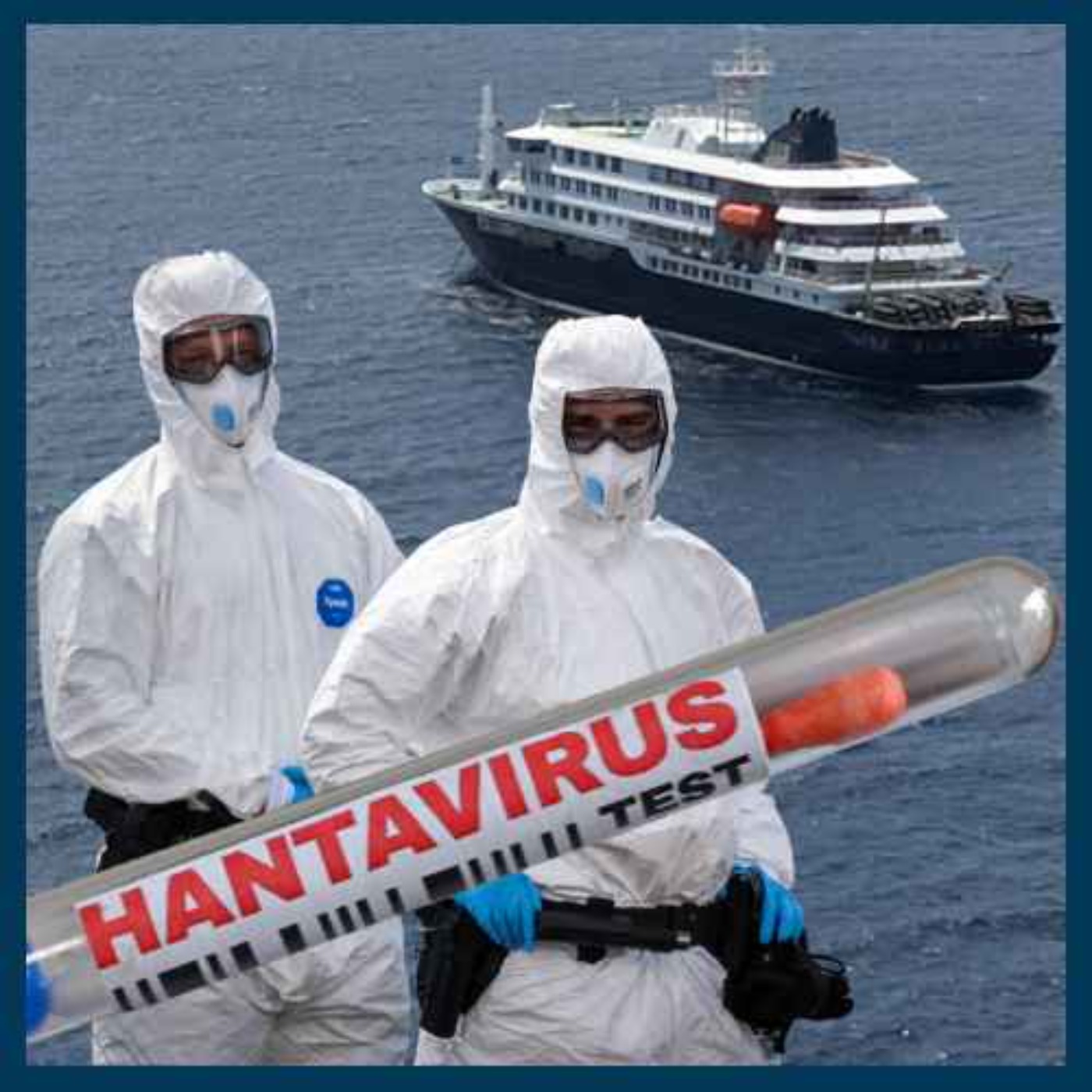
From the Times and the Sunday Times, this is the story on Saturday. I'm Manveen Rana. What started as a once in a lifetime wildlife cruise quickly turned into an international health emergency. Passengers aboard the MV Hondius were traveling through the South Atlantic when several people fell seriously ill with hantavirus, a rare but deadly infection. Three passengers died, others were evacuated and health authorities across multiple countries scrambled to try and avert a crisis. At the time of recording there have been 11 confirmed cases. Three deaths and 20 people in the UK now are self isolating, but major questions remain. Could the virus have been detected sooner and did delays at sea allow it to spread further? This is the story of the cruise ship outbreak that shocked the world, written by Maddy Spence and read by Shabnam Garaw.
- [02:44]
Narrator/Reporter
In the last week of March, Esteban Daniels, a bird watching guide in the remote Argentinian town of Ushuaia, took an elderly French couple to his local rubbish dump. The pair had hired Daniels for a private tour in the hope of seeing a white throated Cara Cara which scavenges there. It's a famous site, so many people go to see the birds there, daniel tells the Sunday Times, saying he's also taken an American woman and a British man bird watching at the dump. A week later he said goodbye to his clients as they boarded the MV Hondius, the ship that would take them to some of the world's most remote islands to spot rare birds, dolphins and humpback whales. For them and the other passengers on board, totaling with the crew almost 150 people of 28 nationalities, it was the journey of a lifetime. Within weeks, three of the passengers were dead, having been infected with hantavirus, a lethal pathogen carried by rats. It all raises questions about whether the presence of an infectious and potentially lethal illness was determined quickly enough and what steps were taken to stop its spread. By the time the ship alerted health officials, three weeks had passed since the first passenger fell ill. Two people had already died, one was in critical care and 28 had left the ship. The Argentinian health authorities have identified the Ushuaia dump as the probable source of the virus, which can infect people who breathe air contaminated by rat urine and droppings. The first passenger to become ill was a 69 year old Dutchman. Authorities believe he had visited the dump on a birding tour with his 69 year old wife in the week before the Hondia set sail. They have said that pygmy rats, which carry hantavirus, live at the landfill site. There's no evidence, however, that the Dutch couple visited the dump. Daniels is skeptical that they contracted the hantavirus there. He points out that it's a renowned birding spot and that people visit frequently. You don't go inside. You leave your car on the road that runs by the dump and you step out behind a 2 meter high fence which you can look through with binoculars. You stay for a few minutes, maybe take a picture, then move on, he says. I've been there many times over the years. You don't see mice, rats walking around. The director of epidemiology for the province of Tierra del Fuego, where Ushuaia sits, told the Buenos Aires Herald, for us, it's very unlikely to suspect a local source of infection. You would need to have some case of hantavirus in the province and that is not the case. The Andes strain of the virus, which has been identified in the ship's passengers and can be passed from human to human, has not been detected in Tierra del Fuego since 1996. Officials say there has, however, been a surge in cases of hantavirus elsewhere in Argentina since the beginning of the year. The National Health Ministry has recorded 101 in this epidemiological year, which runs from June to June. There were 57 the previous year. The cases have largely been in the north of the country, and nearly all were of the Andes strain. In the last month, there have been three cases of the Andes strain reported in a single family in Chubut province, north of Ushuaia. The exact movements of the Dutch couple are not clear, but they had been traveling around the country for months. They arrived in Argentina on November 27 last year and according to the Health Ministry, rented a car to explore the country before entering Chile on January 7th. In late February, they crossed the Andes and went on a 20 day road trip to Mizion in the north of Argentina, home of the iguazu waterfalls. On March 13, they headed east into Uruguay, returning to Argentina on March 27 by ferry and flying to Ushuaia four days before setting sail on the Hondias. Argentinian officials have denied there is an outbreak of hantavirus and said that Argentina sees cases and deaths every year. The expedition began smoothly as the ship sailed into clear weather through the Beagle Channel and around the southern tip of South America against a backdrop of snow capped mountains and humpback whales. On the previous night, the crew of the Hondias had gathered in Ushuaia for their last meal on solid ground before we weigh anchor and disappear into the vast blue for the Atlantic. Odysse the chef Kabir Moraes posted on social media the 35 Day Journey, organized by the Dutch company Oceanwide Expeditions, was to take them across the South Atlantic
- [08:45]
Manveen Rana
all the way to Cape Verde, off
- [08:46]
Narrator/Reporter
the coast of Africa. Fares cost up to £20,000 and some passengers shared confined cabins with strangers. It was a small group by cruise standards and most on board were hardened travellers, bird watchers and nature enthusiasts. Over the next few days they braved the rough Scotia seas, enjoyed lectures on sea birds and ate at the communal buffet. Then, on April 5, as the ship arrived at South Georgia island, the Dutchman developed a fever, headache and mild gastrointestinal symptoms. Six days later he died on the ship. A YouTuber on board, Ruhi Senet, 35, said that when he heard of the death, he honestly thought it was because of the rough ocean conditions. One of our passengers sadly passed away last night, the captain, Jan Dobrogowski, informed passengers the next day. I'm told by the doctor we're not infectious, so the ship is safe when it comes to that, sennett told the Daily Mail. The captain said it was due to natural causes and that others rushed to console his widow, not knowing her husband had been killed by the deadly virus. The death of a passenger is not unusual on a cruise ship. No microbiological tests were performed on the Dutchman and according to Ocean Wide Expeditions, the doctor on board said there was no evidence of a virus. The ship sailed for another three days with the Dutchman on board as well as his grieving widow. On April 14, it reached the Tristan da Cunha archipelago, unaware of the virus on board, 110 passengers and crew disembarked although standard biosecurity measures meant they disinfected their boots and clothes before leaving the ship. They proceeded to take smaller boats to wild and uninhabited outcrops, including Gough island, an inaccessible island on Tristan, population 220. They milled around, squeezed into the local pub and gave a lecture in the school. Four islanders joined the boat to travel abroad, and at least one British person stayed behind. On April 22, the ship had reached the British overseas territory of St Helena. That day, a British passenger went to see the ship's doctor, complaining of shortness of breath and signs of pneumonia. By now, the Dutchman's widow was also unwell with gastrointestinal symptoms. Of the ship's passengers, 29 stayed on the island. When the ship departed again on April 24, seven were Britons and two of them made their way back to the UK where they're now isolated. Four were known to have remained on St Helena. Health authorities are tracing the seventh Briton to a country outside the UK, where they too are isolating. The next day, Saturday, April 25, the Dutch widow flew from St Helena with her husband's body to Johannesburg, South Africa, with the intention of carrying on to the village of Hollowik in the Netherlands. However, during the flight she became increasingly unwell and was deemed unfit to continue her journey. She died on arrival at the hospital in Johannesburg on April 26.
- [12:57]
Brookfield Advertiser
At Brookfield, we believe you can own wealth that's measured in generations. For 125 years, we've built long term wealth through expertise, discipline and a clear vision for the future, providing investors access to alternative strategies built for what's Next Brookfield Own what's next. Learn more@brookfield.com this is not an offer to sell or investment advice. Investing involves risks, including loss of capital. Past performance is not indicative nor a guarantee of future results. Please review performance and offering materials before investing.
- [13:28]
AT&T Business Wireless Narrator
From globalization to innovation, sustainability to market volatility, there's always more than one side to a story. Explore different perspectives on today's most important business and economic issues with the Flipside podcast from Barclays Investment Bank. Hear two research analysts in a lively debate and get insights from every angle. To further inform your view, listen to the Flipside on your favorite platform.
- [13:54]
AT&T Business Wireless Salesperson
Not every sale happens at the register before AT&T business Wireless checking out customers on our mobile POS systems took too long. Basically a staring contest where everyone loses. It's crazy what people will say during an awkward silence. Now transactions are done before the silence takes hold. That means I can focus on the task at hand and make an extra sail or two. Sometimes I do miss the bonding time.
- [14:17]
AT&T Business Wireless Narrator
Sometimes AT&T business wireless connecting changes everything.
- [14:41]
Narrator/Reporter
Ian Norton, a former chief of the WHO's emergency medical team initiative, says with virus like this, you see a peak viral load in the person very soon before they die. Someone who is extremely unwell, that's their most infectious period. Ships must keep a record of their passengers health and report any illnesses to the port authority when they arrive in a new country. Oceanwide Expeditions maintains it followed protocol and reported the death to its shore teams. They said at the time of the woman's disembarkation, no common pathogen had been identified and it believed there was no heightened risk. However, there are no strict rules for when and how events must be escalated. Norton, who is now managing director of Respond Global, a health emergencies consultancy, said that given that there had been a cluster of illnesses reported on the ship, one of them fatal, the Dutch woman probably should not have been on a commercial flight. You would have to examine whether letting somebody offload without screening for illness or before tests were available, if that was the right thing to do or not, norton says. He accepts, however, that a rare case of hantavirus infection would have been far from the doctor's mind. Meanwhile, back in the middle of the South Atlantic the same Sunday, the British man's condition worsened. The next day he was medically evacuated from Ascension island to South Africa and whisked to intensive care. He remains in hospital. By this time, three passengers had become very ill and two had died. Others had left the ship. No public health body had yet been notified. The ship's medical team were now worried that an infection might be responsible for the series of illnesses and requested that the hospital in South Africa run tests to check for a pathogen. They initiated hygiene protocols and medical monitoring on the ship. The next day, Tuesday, April 28, a German woman reported to the ship's doctor with a fever. By May 2, she had developed pneumonia and died. In the following days, the first laboratory test confirming Forhanta virus had been returned. In the case of the British man in a hospital in Johannesburg and three other passengers on the ship had presented with symptoms. The Dutch National Coordination Centre for Communicable Disease Control, equivalent to the UK Health Security Agency, was told by the Hondius about illnesses on May 1, according to the WHO, it first received notification of a cluster of severe acute respiratory illness, including two deaths in one critically ill passenger on May 2 from the youth. Oceanwide Expeditions said that proper procedure was followed in informing all guests and crew and that The Hondius crew informed oceanwide shore teams of the first illness and death and that maritime standards regarding the proper management and reporting of a death at sea were strictly followed. The WHO has insisted that the risk to the wider public is low and that this is not the start of another pandemic. The incubation period of the ande strain is two to eight weeks and the fatality rate can be up to 50%, according to the health body. After the news broke, the world spotlight turned to the remaining passengers, 21 of them British, while the Hondias sailed to its final destination of Cape Verde, arriving on Wednesday. But then the Cape Verdean authorities had refused it permission to land the citing the risk to the local population. After 48 hours of political squabbling, the Spanish authorities agreed the Hondias could continue to the port of Grenadilla on Tenerife. We finally left Cape Verde which was a relief for everyone on board, a passenger, Kassim I.B. hatutu, told the Sunday Times last week, adding that several doctors joined us on the ship before departing, which was very reassuring. No one currently has any hantavirus related symptoms and we hope it continues that way. Hatutu said passengers were out on deck but wearing masks and keeping their distance from each other. He described the mood on the ship as having been calm with a bit of concern, but that now the ill passengers have disembarked. It doesn't feel different to any other sea days we've had before. Others were more eager to get off the ship. Jake Rosmarin, a nature enthusiast and travel blogger from Boston, posted a tearful video from his cabin. There's a lot of uncertainty and that's the hardest part, he said. All we want right now is to feel safe, to have clarity and to get hope. As of Monday 11th of May, all passengers had been taken off the MV Hondius and repatriation flights had been completed. The ship then disembarked for the Netherlands.
- [20:31]
Manveen Rana
That was Shabnam Garrawal reading a piece by Maddy Spencer. You can find the article online along with all of our reporting on the hantavirus outbreak@wtimes.com the producer and sound designer today was Dave Creasy. The executive producer was Edward Drummond. Thanks for listening. We'll be back tomorrow.
- [21:10]
Brookfield Advertiser
At Brookfield, we believe you can own wealth that's measured in generations. For 125 years we've built long term wealth through expertise, discipline and a clear vision for the future, providing investors access to alternative strategies built for what's next. Brookfield Own. What's next? Learn more@brookfield.com this is not an offer to sell or investment advice. Investing involves risks, including loss of capital. Past performance is not indicative nor a guarantee of future results. Please review performance and offering materials before investing.
- [21:40]
Aura Advertiser
Most people don't realize how much of their personal information is being bought and sold. Every day. Data brokers are making billions, pulling details about you from public records and the Internet, then packaging and selling it, usually without your consent. That's how your information lands in the hands of scammers, spammers, even stalkers. It's why you get endless robocalls and why ads seem to follow you everywhere. That's where Aura comes in. Aura actively removes your data from broker sites and keeps it off. They also instantly alert you if your information shows up in a breach or on the dark web. But Aura goes beyond data protection. With one app, you get a vpn, antivirus, password manager, spam call protection, dark web monitoring, and even up to 5 million in identity theft insurance, all backed by 24. 7 US based fraud support. Other companies might sell just credit monitoring or even just a vpn. Aura gives you all of it together at the same price. Competitors charge for just one service. Start your free trial today at aura.com safety protect yourself now@aura.com safety.