Loading summary
Transcript87 lines
- [00:01]
Podcast Host
From globalization to innovation sustainability to market volatility, there's always more than one side to a story. Explore different perspectives on today's most important business and economic issues with the Flipside podcast from Barclays Investment Bank. Hear two research analysts in a lively debate and get insights from every angle to further inform your view. Listen to the Flipside on your favorite platform.
- [00:26]
Grow Therapy Advertiser
Everyone treats summer like it owes you happiness. Long days, pool parties, your best life on a loop. So what does it mean when you feel worse? The summer blues are real. It's why summer is one of the busiest stretches of the year for people starting Therapy Grow Therapy is here for all the moments when you decide you want more. More support, more clarity, more tools. Grow connects you with thousands of high quality licensed therapists across the US Offering both virtual and in person sessions, nights and weekend. The therapist you want takes your insurance on. Grow grow accepts over 125 insurance plans. Sessions average $21 with insurance and some pay as little as $0 depending on their plan. Visit growtherapy.com acast today to get started. That's growththerapy.com acast growth acast availability and coverage vary by state and insurance plan.
- [01:30]
Manveen Rana
From the Times and the Sunday Times, this is the story. I'm Manveen Rana.
- [01:40]
Catherine Philp
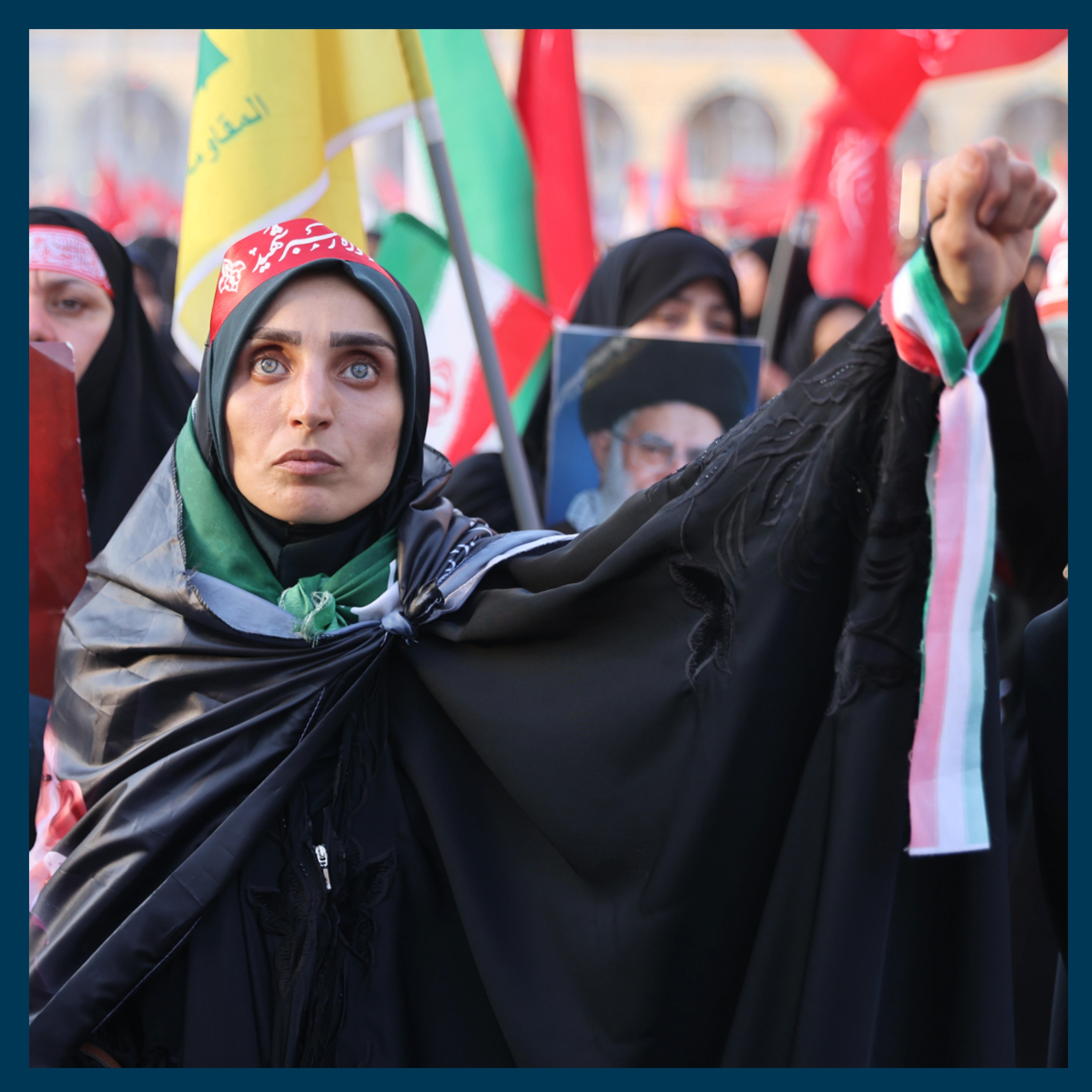
So I'm in the middle of Tehran and some huge crowds who are walking along in the funeral procession for Zayt Supreme Leader who was killed in the airstrike by the Israelis on the first day of the war.
- [01:58]
Manveen Rana
For the first time since the war began, a Times journalist has been inside Iran. Catherine Philp, the world affairs editor, was there last week reporting on the former Supreme Leader Ayatollah Khamenei's week long funeral.
- [02:18]
Catherine Philp
The tone has turned from mourning and crying into calls for revenge. And there's a lot of posters around saying things like kill Trump, Trump must die. There will be blood.
- [02:35]
Manveen Rana
President Trump had promised that there would be no strikes on Iran during this period.
- [02:41]
Donald Trump
We gave him a week off for a funeral because we're nice, it's true.
- [02:46]
Manveen Rana
But that didn't last.
- [02:49]
Catherine Philp
The US Military has said that it's launched a series of strikes against Iran in response to what it said were three Iranian attacks on commercial vessels in the Strait of Hormu.
- [02:59]
Manveen Rana
The war, it seems, is back on.
- [03:03]
Grow Therapy Advertiser
Is the ceasefire done?
- [03:04]
Manveen Rana
Is the MOU dead?
- [03:05]
Donald Trump
It's a very interesting question to me. I think it's over. I don't want to deal with them anymore. They're scum. You know what scum is? They're scum. They're sick people.
- [03:16]
Manveen Rana
With the Strait of Hormuz closed again, tensions are rapidly escalating, and Donald Trump's threats get more aggressive by the day.
- [03:26]
Donald Trump
We're going to hit them very hard tonight. We're going to hit them very hard tomorrow night. We're going to hit them very hard the night after. And then next week it gets really bad for them because next week comes the power plants, next week comes the bridges.
- [03:42]
Manveen Rana
But in the midst of all this chaos, what do ordinary Iranians want? Just how unified is the country over the war? And what do continuing hostilities mean for, for the daily lives of millions of people in Iran?
- [04:01]
Catherine Philp
It is true that we want no war in this region or anywhere. When we are talking about peace and compromise, we are talking about peace and compromise. Indeed, the enemy does not dare to attack us.
- [04:23]
Donald Trump
Again,
- [04:36]
Manveen Rana
The story today inside Iran.
- [04:48]
Catherine Philp
I'm Katherine Philp, and I'm the world affairs editor at the Times.
- [04:54]
Manveen Rana
Catherine, when you look back on your time in Iran, what's the thing that really stands out to you? What will your abiding memory of this trip be?
- [05:04]
Catherine Philp
I suppose it would be the sheer spectacle of, of the number of people almost identically dressed in the streets and in the mosque for the morning of the funeral of the late supreme leader. And it was extraordinary because when you looked out, it was a sea of black. They were carrying different placards and different flags, that kind of thing. But apart from that, it was just this sea of very anonymizing black.
- [05:34]
Manveen Rana
It sounds extraordinary, and we'll talk about that funeral more in a moment. Before we do, though, Catherine, you've been trying to get into Iran for months now, really, since those protests erupted back in January before the war. How hard has it been to get access to the car country? And are there restrictions on you when you're there?
- [05:53]
Catherine Philp
So the last time I was there was in November last year. So obviously the protests started not long after that, which were a mixture of people looking for social liberties, pushing for their political rights, and protesting against the terrible state of the economy and the cost of living and that kind of stuff. That all started in at the very end of December and came to a bloody climax in January when the security forces essentially put a stop to the demonstrations by gunning down thousands of demonstrators.
- [06:28]
Manveen Rana
The images emerging from Iran paint an ever more horrifying picture. Witnesses say security forces fired live ammunition
- [06:36]
Catherine Philp
from motorbikes and rooftops.
- [06:39]
Manveen Rana
They speak of massacres, a bloodbath.
- [06:42]
Catherine Philp
I had already applied for a visa at that point, and it wasn't rejected. We just Heard nothing about it. And then, of course, the war began. Now, during the war, there were a few Western teams were allowed in. They were all television, no newspaper journalists. So essentially I had that application in just in limbo since February, and then suddenly received a note one day saying, please let us know if you would like to come to the Ayatollah's funeral. And these are the days. And then we were told that we would only be allowed to cover the funeral itself. In reality, when we got there, there was actually quite a bit more leeway than we were expecting. It was possible to go and speak to other people and do things not associated with the funeral. So, strangely, yes, a little more freedom than expected.
- [07:35]
Manveen Rana
And what was it like as a Western journalist walking around right now, you know, with the war still ongoing? How do people react to you?
- [07:44]
Catherine Philp
I mean, there was no sense that I was part of the enemy, I suppose. I'm not being British, you know, I don't know how different it would be to be an American again. We were told before coming by the media agency who did our arrangements for us, it said british and Americans should not identify themselves to people in the funeral crowd. But it really wasn't like that at all. There was absolutely no sense of hostility. And people would say, where are you from? And welcome to Iran. What I have to say is, despite all the talk of revenge, there is absolutely no sense of hostility towards us here. Even before people who've asked where I'm from and, no, I'm not American, everyone comes up and says, thank you. Thank you for coming to our country. I think that there was possibly a little bit more fervent feeling in the mosque when Khamenei's coffin was first brought out for public view. Someone came up and pressed a note into my hand, which I opened it and said, down with America. But then I got another one which had been so very carefully written out in English, saying, dear friend, please tell the truth about what you see here. Which, again, is a, you know, is a common thing, because I suppose people in Iran are used to propaganda, so they assume that that's what you're going to do.
- [09:06]
Manveen Rana
That's extremely extraordinary, though. You know, the idea of people pressing messages into your hand sounds like a different era.
- [09:12]
Catherine Philp
The thing about. I think usually when you go to Tehran, I think people who go for the first time are quite surprised by how it doesn't feel like a different era. And it's a busy city full of beautifully dressed, fashionable women and things like that. But on an occasion like this, it Absolutely did feel like a different era.
- [09:39]
Manveen Rana
Catherine, you were there for the funeral of the former Ayatollah Khamenei. Just describe what it was like. This is a multi day affair. And how important was it for Iranians?
- [09:51]
Catherine Philp
Well, I think it mattered to certain people on different levels, certainly for the regime. They wanted to show unity and strength. They wanted to show that they could turn out a huge crowd and that it could look impressive. They did, ahead of time decide how many people were going to be there. They told us all there would be 20 million. And so after the fact, after it happened, of course they said there were 20 million. There's no way there were 20 million people there. But that's what they decided it was going to be. The Iranians have made some very ambitious projections for how many people will be out here today. Talking about 20 million, I'd say it is millions. Central Tehran is so busy that I suspect this is in the millions. But anyway, look, it's still a very large number of people. The first day of public mourning was on Saturday and that was at the Grand Masala, which is this, this huge mosque complex that's used for when, when the Supreme Leader would do Friday prayers and that kind of thing. It's a. Yes, it's a vast area and that. So that was packed with people. And these were the people who'd come to see his body or his coffin for the first time. And so they were the. I, I suppose you would say these are the most fervent mourners. And as soon as the coffin, his coffin and the coffins of the relatives who were killed alongside them, as soon as they appeared, the crowd just erupted and there was wailing and crying and throwing. Of you throwing flowers. And the crowd kind of surged forward to try and get closer to the coffin, which was well out of reach. So they couldn't have. Then the next day they did the, formally the funeral prayers. And that was when one of the people leading the prayers began to talk about kill Trump and vengeance against Trump. It shifted in that time from a sense of sadness and mourning to calls for revenge and those carried on with the procession on the next day. But I would say that with the procession, there were a wider range of people there. I mean, people were bringing their kids out. It sort of almost felt like more of a day out.
- [12:19]
Manveen Rana
Did you have a chance to speak to some of these people?
- [12:21]
Catherine Philp
Yes, I did. Despite us being warned not to. People were very happy to come and speak to me and would come up and speak to me or I would Go up and address them, ask them why they'd come. And most of them said things like they, you know, they wanted to show the world that Iran was still standing strong. We will never follow the superpowers, we will never obey them. We have our own tradition, we have our own ancient history and we will continue that as Iranians. Thank you very much. Or you know, they wanted to pay their respects to the Supreme Leader himself. And what did he mean to you and Iran? Is he a symbol of leadership or is it about religion? What's the main.
- [13:29]
Donald Trump
He was like grandfather to me.
- [13:39]
Catherine Philp
There was interesting couple I met who were a professional couple. He was an engineer and she was a doctor. And I could sort of tell from them that they were quite well to do. Then I asked them why they were there because they look quite unexpected people to be there. And they said, we feel we didn't appreciate him enough when he was alive. So that's why we've come.
- [13:56]
Manveen Rana
Wow.
- [14:08]
Donald Trump
That we are ashamed because we didn't
- [14:10]
Catherine Philp
do enough when our leader was alive. We came here to say that we regret. And I thought that was a very unusual answer.
- [14:20]
Manveen Rana
Well, that's really interesting because the Ayatollah was controversial not just around the world, but even amongst Iranians. In his life, how was he being seen in death?
- [14:32]
Catherine Philp
I would say that there was quite a lot of recasting him as a kind of religious icon.
- [14:40]
Manveen Rana
So joining the long tradition of martyrs.
- [14:42]
Catherine Philp
Joining the long tradition of martyrs, exactly. And that was very explicitly done. Oh, there was also talk of that he didn't run away as people had predicted because that was a sort of, you know, a bit of a Mossad psyops theme going around was that he would run away. The fact that he was killed on the first day of the war and he was killed alongside his relatives, including his daughter, his son in law and their one year old granddaughter. And this tiny little coffin was up there on the flatbed truck with. So it was a memory that he hadn't died alone, he'd stayed with his family and he had died alongside them. People mention that a lot. Our brave leader, he didn't hide and he's a martyr because he, he stood his ground. But I mean, one question I asked was, you know, do you see this as a victory parade? Do you think you've won the war? And most people said, of course we have, but it's not over yet. But there was a sense that Iran had survived this, more than survived this war against the world superpower. And there was some triumphalism in that,
- [15:45]
Manveen Rana
and it's really interesting that you talk about the triumphalism when they're talking about the war and how Iran managed to stand its ground. I mean, how do they. How do they talk about the conflict? Because, you know, as you say, before the war began, there were huge protests in the street. Did it have a kind of a galvanizing, rallying around the flag effect?
- [16:05]
Catherine Philp
I mean, I think inevitably, yes. The people I was speaking to obviously saw it as a great thing because of the fact that they perceived Iran and the regime to have won it. But it's much more difficult to take the temperature of the entire rest of the country. I mean, I never believed that Iranians would continue protesting once the war had started. I thought that that was very unlikely to happen. I mean, I think you'll remember that Trump exhorted them to do that in the very early days, but it was pretty clear to me that they weren't going to do that. And they didn't, and I think were very frightened by what was happening and didn't know how it was going to end. So they weren't going to create another front by coming out. And then also there was enormous shock, obviously, at the massacres that ended the protest, because the protests had stopped before the war began, because people had been gunned down in the streets. So there was a massive sense of shock. I mean, I subsequently met someone, nothing to do with the funeral, who said he celebrated when the war started because he thought it would be the end of the regime. And as they realized that that wasn't what was going to happen, there was a sense of disillusionment with the west and America that actually they're not trying to get us free or help us. This war is really for their own purposes. And so it certainly hasn't done very much to promote good feeling towards the west in.
- [17:32]
Manveen Rana
That's so interesting. And it's so interesting to hear those sort of slightly contrarian views when you're at a funeral, which is, you know, obviously a set piece of, you know, nationalistic fervor. Did you get a sense that this was, right now, a country united, or is there still a lot of division the moment you get beyond the funeral?
- [17:51]
Catherine Philp
I mean, there's still a lot of division. I thought the funeral would actually be bigger than it was or would feel bigger because there was this huge crowd filling the main boulevard, but either side of it was very, very quiet. They'd essentially brought Tehran to a standstill. They'd stopped all the traffic, they'd cut off the Roads going in and out. On the day of the procession, they even stopped air traffic because they were, you know, there was this threat of there could be an attack on the funeral. So when you went out into the rest of Tehran and was sort of trying to find people who were not interested in going to the funeral, it was really quiet. A lot of people from Tehran had just got in their cars and got out the. Yeah, and there were. Even if you went on social media and if you knew where to look, there were images of massive tailbacks, of traffic jams all the way up to the north of Tehran, where people going up to the Caspian Sea to a beach resort to avoid the funeral or go to the mountains. And people even. And these are clearly, you know, young dissenters opposed to the regime were posting videos of themselves drinking alcohol and dancing and saying, this is our celebration of what's going on right now. So it is out there.
- [19:10]
Manveen Rana
Yeah.
- [19:10]
Catherine Philp
And they find ways of doing it.
- [19:12]
Manveen Rana
Well, that's really interesting, too. So is social media sort of operating as normal? Are there still ways you can find people online expressing dissent?
- [19:21]
Catherine Philp
Absolutely. Yes, you can. They're careful how they do it and where they do it. Everyone uses a vpn, Even on a mobile phone, they'll use that because you can't get onto most sites without it. You know, a lot of these social media sites and other news sites are actually blocked in Iran, but everyone has a workaround. So sort of patchwork resistance that everyone, you know, finds ways around the regime. The fact that so few women wear the hijab now, that's kind of gone to one side. I think it's something like 60% of Iranians having their mobile phone have the number of a. Like a bootlegger, someone who'll deliver alcohol
- [19:57]
Manveen Rana
to their house, really, because that's utterly illegal, right?
- [20:00]
Catherine Philp
Yes, it is. But I think that remarkably resourceful people are finding ways to get around and live with the regime, not just take to the streets.
- [20:13]
Manveen Rana
And, I mean, just give us a sense of that. You know, what are those sort of quiet acts of defiance that are still taking place that show you all isn't quite as you think it would be in the Iranian regime?
- [20:27]
Catherine Philp
I mean, if we just take Tehran for a second. It's a city of many layers. So there's always been the things that go on inside that don't go on in the streets. You know, the sort of clothes that women will wear, and then they'll put on top something that. That is more appropriate. I mean, for a long time, when people were wearing the hijab, it would be, how much hair could you get away with just showing around it? There's this vogue in north Tehran, which is sort of kind of wealthier, hippo part, but there's a vogue there for wearing crop tops. Really? Yeah. And girls will wear crop tops, but then they'll wear something like a baggy jacket over it. You know, they're just these small acts of defiance. And then of course, in private with their friends, they'll do a lot of things that are not allowed by the regime.
- [21:15]
Manveen Rana
And Catherine, in the past that's been really difficult because there is sort of a morality police. Effectively, we've seen women protesting the hijab being arrested and treated awfully. Is that happening? How have they allowed people to sort of loosen the rules a bit?
- [21:30]
Catherine Philp
So that was happening? I would say that was well underway when I was last there in November. It was a conscious decision that had been made and sort of said out loud that they wouldn't remove the law, but they wouldn't enforce it either. It's sort of this way that you kind of let things go at the same time. There was one where women started driving motorbikes and they technically weren't allowed to because they couldn't get a license. Well, lo and behold, in February, after all those protests had been brought to a very bloody end, a brutal end with the massacres, they suddenly changed the law and allowed women to ride on motorbikes and get their licenses.
- [22:10]
Manveen Rana
Wow.
- [22:12]
Catherine Philp
So there is a responsiveness in the regime, and I think that there has to be. But I would say that it's about creating a pressure valve. So it's, it's giving a little bit of social freedom so that nobody is seeking political freedom, because I think that that would be challenging to them. So they can graciously hand out some of a few of these social freedoms now and again in order to hold on to the really big ones.
- [22:44]
Manveen Rana
Coming up with a ceasefire in tatters. How did war return to Iran? And what will it mean for ordinary Iranians?
- [23:04]
Grow Therapy Advertiser
Everyone treats summer like it owes you happiness. Long days, pool parties, your best life on a loop. So what does it mean when you feel worse? The summer blues are real. It's why summer is one of the busiest stretches of the year for people starting therapy. Grow. Therapy is here for all the moments when you decide you want more. More support, more clarity, more tools. Grow connects you with thousands of high quality licensed therapists across the US offering both virtual and in person sessions, nights and weekends. The therapist you want takes your Insurance on Growing Grow accepts over 125 insurance plans. Sessions average $21 with insurance and some pay as little as $0 depending on their plan. Visit growththerapy.com acast today to get started. That's growththerapy.com acast Growth Acast Availability and coverage vary by state and insurance plan.
- [24:04]
Commercial Advertiser
Still waiting in line Again, that's time you will never get back. Save time and money with stamps.com over 4 million businesses have skipped the line with stamps.com join them to save up to 90% off carrier rates from your computer or phone right now. Print postage for certified mail, registered mail and packages in seconds. Then schedule a pickup right from your home or office for a limited time. Go to stamps.com and use code podcast for a free welcome gift. Taxes and fees apply.
- [24:34]
Podcast Host
Your team just added its 67th AI tool and also your 67th security blind spot. The good news? The Vanta agent works like a GRC engineer in the background, finding every app your team uses, scoring the risk and drafting fixes for you. Vanta is the platform used by over 16,000 fast moving companies like Ramp, Cursor and Harvey who are shaping the future with AI and staying ahead of AI risk. Get started@vanta.com.
- [25:12]
Manveen Rana
Catherine, you've been describing your experiences in Iran during the funeral of the former Ayatollah. Donald Trump had promised not to strike Iran during that period. He talked about it, saying it'd be very easy to, but he wouldn't. And yet last Tuesday we did see the resumption of hostilities. Just explain as much as you can because it did all happen in head spinning speed. What happened? Why did the US resume strikes so
- [25:44]
Catherine Philp
the Strait of Hormuz had been reopened, that is Iran was going to allow it to reopen as part of the Memorandum of Understanding it had drawn up with the us. The memorandum and particularly the clause that dealt with the straightforward news is very poorly phrased because it said that traffic through it must resume within 30 days. And then in 60 days there would be some kind of new system that Iran would be in control of. And there was a suggestion that Iran would take money for that. Now what the US was doing after the Iranians open the Strait of Hormuz was it was signaling to tanker traffic to take a route which took them close to the coastline of Oman at the same time that Iran was saying, no, we're controlling this, you need to come up here by the Iranian coastline, not the Oman coastline. Iran fired on two tankers that were taking the Oman route, clearly because they wanted nobody to go that route and thought that if they did begin to go along that route, they would lose control of it and it could be harder to get it back than it was. That's what prompted the Americans to start firing again. It was the Iranians who fired first, but fired on that tanker traffic in order to cling onto their control of the Strait of Hormuz that led to
- [27:10]
Manveen Rana
a whole new escalation in the war. For now, just describe what's happened since.
- [27:17]
Catherine Philp
Yeah, absolutely. I mean, this is still going on. The US Fired mostly on targets around places like Bandar Abbas near the strait, sort of military infrastructure that could be used to help close the strait or to threaten traffic through the strait. So it was mostly in the south of the country. Iran fired back at Gulf countries, places like Bahrain and Qatar, where there are American air bases and military bases, but naval assets, too. And this has really been their tactic of how they reach the enemy in the region. I mean, the price of oil has soared up since this all tit for tat essentially began again. But that is again because of the fact that the Strait of Hormuz has been effectively shut again. And so no oil is getting through there. But it looks very much on the path of escalation again.
- [28:18]
Manveen Rana
Well, Catherine, at the start of this week, we had another announcement from Donald Trump that he was going to re. Implement the blockade of the Strait of Hormuz, which won't have helped the oil markets either. Just explain what he was suggesting.
- [28:31]
Catherine Philp
We suggested something that I immediately predicted it wouldn't, wouldn't last 24 hours.
- [28:37]
Manveen Rana
You saw the town.
- [28:39]
Catherine Philp
I mean, he did exactly what he'd asked Iran not to do. And, you know, he often tries to get in on monetizing things. So because Iran has said it was going to charge people to go through the Straits of Hormuz in the future once they reopened it again. He said, well, so are we. We'll go in and we'll keep it open. And everyone will have to pay 20% of their cargo, which is an enormous amount of money. If you think of the size of those tankers and the price of barrels of oil going through, that would be absolutely astronomical number. And nobody's going to want to do it.
- [29:12]
Manveen Rana
I mean, that would push oil prices up for good.
- [29:15]
Catherine Philp
Well, yes, and he seems to have realized this because he's sadly, only after
- [29:22]
Manveen Rana
he'd announced it, I was going to
- [29:24]
Donald Trump
charge a fee, but instead they'd rather spend a lot of money in the United States, which frankly, is better because I don't like the idea of A fee. It's got to remain free because otherwise others will do the same thing.
- [29:41]
Manveen Rana
Donald Trump has said the ceasefire is over. He's threatening an even bigger escalation next week. What does all of this mean? Is the war back on? Are these just skirmishes? Do people have to get around a table and negotiate again?
- [29:57]
Catherine Philp
I think that the best defense against this becoming an all out war once again is that neither side really want it. I mean, Donald Trump is just going to walk back straight into the problems he did before. The fact that he doesn't want to be remembered for plunging the world into a crippling recession slash depression. Nothing about that has changed. And the Iranians kind of only agreed to the memorandum themselves when they looked at their long term or medium term economic prospects if they couldn't get the oil out themselves. So there's a lot on both sides that would make it desirable not to carry this on forever. But Iran has discovered its power to what it can do with the straightforward Hormuz by shutting and opening it again. And, you know, you can't unlearn that once learned. And so it doesn't want to give up that weapon that it's just discovered it has.
- [31:03]
Manveen Rana
And strategically, Catherine, as you point out, you know, the Iranians realize they have an incredibly powerful weapon in the Strait of Hormuz. That's something that they will always have up their sleeve. Now, at the same time, if the war continues, what does life look like for ordinary Iranians, for the people who were either escaping that funeral or attending it? How much worse could things get on the ground?
- [31:27]
Catherine Philp
I mean, it could get a lot worse. The economy has been badly affected by what's happened. People have lost jobs. I know I did speak to a young man who was saying that most of his friends didn't have jobs and certainly didn't have jobs at the level that they were educated to, because he's a very highly educated public. And a lot of people just, you know, can't find work that is commensurate to their qualifications. So I think we would see more hollowing out of the economy there. I think things for the poorest levels of society, things are getting quite critical in terms of whether they can afford, you know, basic foodstuffs and, and just, you know, the things of, of basic life where they can still afford petrol. Now, these are issues that helped fuel the most recent riots. So that was a combination of, you know, people looking for social freedoms, as I said before, but also joined by the Bizaris, by the merchant classes and those People who could no longer tolerate the high cost of living and the inflation, which is out of control. The problem about all of that is that Iran is not particularly responsive to its population on those things. And that's partly because, as you know, the economy is. It is a closed one because of sanctions, but also because of the tentacles that the Revolutionary Guard have throughout the economy, the amount of it that they control. And again, it's a reason why you might think that logically, the Iranians would want to make their country wealthier, but opening up and getting rid of sanctions would also open up their economy in ways that that doesn't work for everyone in Iran that's actually in a position of power. It's something of an oligarchy in that sense. So there are people with things to lose if the economy improves. So it's a bit of a catch 22 for an ordinary Iranian.
- [33:20]
Manveen Rana
And Catherine, having been there, do you think the war, the death of Ayatollah Khamenei, the changes that seem to be happening in the regime, obviously a lot of it is still in flux. It is still a country in transition. You know, you have the loosening of some laws around hijabs and women's rights. At the same time, there's still a real sense of control. Has the war changed Iran fundamentally? Do you think this is going to be a different country to the one you visited back in November?
- [33:54]
Catherine Philp
I think it's really hard to say as an entire country, whether it's changed or not, because you're seeing it at such a. You know, it's such an extraordinary moment with everything around that funeral. I think it's the leadership of it and the way that it's run is likely to change. So I think that you're probably going to see more of a move towards a securitized state more than a clerical state. And I think the fact that they've given some way on these social issues that. I mean, the thing about the hijab with headscarf, it may sound trivial to us, but it was always called by the clerics one of the pillars of the Islamic revolution. It was meant to be very important. The fact that it was worn, the fact that it's sort of starting to go by the wayside and it's not so important anymore to enforce that kind of thing that points to a more securitized Iran. So you can let go of these things. They're not as important as holding an iron grip over the people politically. By that, I mean politically. So I don't think the space for dissent is going to widen at all. And I think that if there were future mass public protests against the regime, I fear it would end exactly how it did in January. And I did meet a few people who were in those protests and who said that while they still had hope then in January, everything that has happened since has killed off their, their sense of hope. I mean, these are people who really still believe that they could affect change, even after the massacres. But then when the war started and you know people, gosh, is Trump really serious about regime change? This could really happen. What they've seen as the war has gone on is in fact that the war may have actually entrenched and strengthened the regime there because it's survived.
- [36:07]
Manveen Rana
That was Katherine Philp, World Affairs Editor, and if you have any questions about this or any other episode, do drop us a line to the storyatthetimes.com the producers today were Sophie McNulty and Jesse Fox. The executive producer was Harry Stott and sound, design and theme composition were by Malicetto. Thanks for listening. We'll be back tomorrow.
- [37:06]
Commercial Advertiser
When everything is moving all at once. Your workforce, your tech stack, your business. You don't need more tools. You need one solution. That's why Paylocity built a single platform to connect hr, finance and IT with AI driven insights and automated workflows that simplify the complex and power what's next. Because when everything comes together in one place, growth comes easy experience. One place for all your HCM needs. Start now@paylocity.com 1.
- [37:36]
Podcast Host
Your team just added its 67th AI tool and also your 67th security blind spot. The good news? The Vantagent works like a GRC engineer in the background, finding every app your team uses, scoring the risk and drafting fixes for you. Vanta is the platform used by over 16,000 fast moving companies like Ramp Cursor and Harvey who are shaping the future with AI and staying ahead of AI risk. Get started@vanta.com.