Loading summary
Transcript58 lines
- [00:00]
Jim Armitage
Before we had AT and T Business Wireless coverage, our delivery GPS wasn't the most reliable. Once our driver had to do a 14 point turn to get back on route. A 14 point turn. An influencer even livestreamed the whole thing. Not good for business. Now with AT&T business Wireless, routes are updating on the fly and deliveries are on time. And the influencer did get us 53 new followers though. AT and T Business Wireless Connecting changes everything
- [00:30]
Weight Loss by Hers / Advertisement Voice
if you've felt stuck trying to lose weight, you're not alone. Enter Weight Loss by Hers. It's designed to support you in reaching your goals and hers now offers access to an affordable range of FDA approved GLP1 medications, including the Wegovy Pill and the Wegovy Pen. Even better, with a range of affordable GLP1 options, hers makes it simple to find an approach that fits your needs and your budget. If eligible, you'll get a treatment plan personalized to you and unlimited dosage changes as needed. Weight Loss designed to work with your life. Ready to reach your goals? Visit forhers.com eligible to get personalized affordable care that gets you that's F o r h E-R-S.com eligible forhers.com eligible weight loss by hers is not available in all 50 states. WeGovy is the registered trademark of Novo Nordisk as to get started and learn more, including important safety information, WeGovy clinical study information and restrictions, visit forhers.com.
- [01:32]
Manveen Rana
From the Times and the Sunday Times, this is the story. I'm Manveen Rana.
- [01:44]
Jim Armitage
There's this corner of Sussex and Kent near Ashdown Forest made famous by A. A. Milne who wrote Winnie the Pooh nearby where millionaires live. It's a sort of a millionaire's playground.
- [02:00]
Manveen Rana
That's Jim Armitage, a contributing editor at the Sunday Times. He found himself in this well heeled neighborhood on the hunt for one particular
- [02:11]
Jim Armitage
estate, one of the biggest properties in the area, Home Farm. I went to visit it last year and it's sort of how the mighty have fallen. It's a once beautiful house there, the big sort of manor house which is in rack and ruin, the swimming pool collapsing in the sides and this sort of green sludge floating on the surface, the stables. It was a huge number of horses that were stabled there, just kind of crumbling apart and it was a really grim scene of faded grandeur.
- [02:42]
Manveen Rana
Really Rewind more than a decade and Home Farm was a very different place. It was the moneyed backdrop to a racy, glamorous social scene where the owners reveled in living the high life and flaunting their wealth.
- [03:04]
Jim Armitage
It was one of the most lavish properties in the county. Not only was it, was it a lavish property, it was also a big sort of social scene around, around this place. They had a lovely heated swimming pool where you'd often have these incredibly glamorous pool parties with young and beautiful people and they'd sort of parade past the fleet of luxury cars, supercars, Bentleys, Land Rovers and all the rest that were park up out the front and then the sort of the, the star attraction. At the top of the hill, at the top of the property, there was this big helipad with a, with a Windsor and lights that would light up for the pilots as they descended. At night, the helicopters would come chop, chop, chop, chop, chop, chop, chop across the valley and land at the top of the premises.
- [03:47]
Manveen Rana
Now that we've done the tour, I know what you're thinking. Who lived in a house like this?
- [03:55]
Jim Armitage
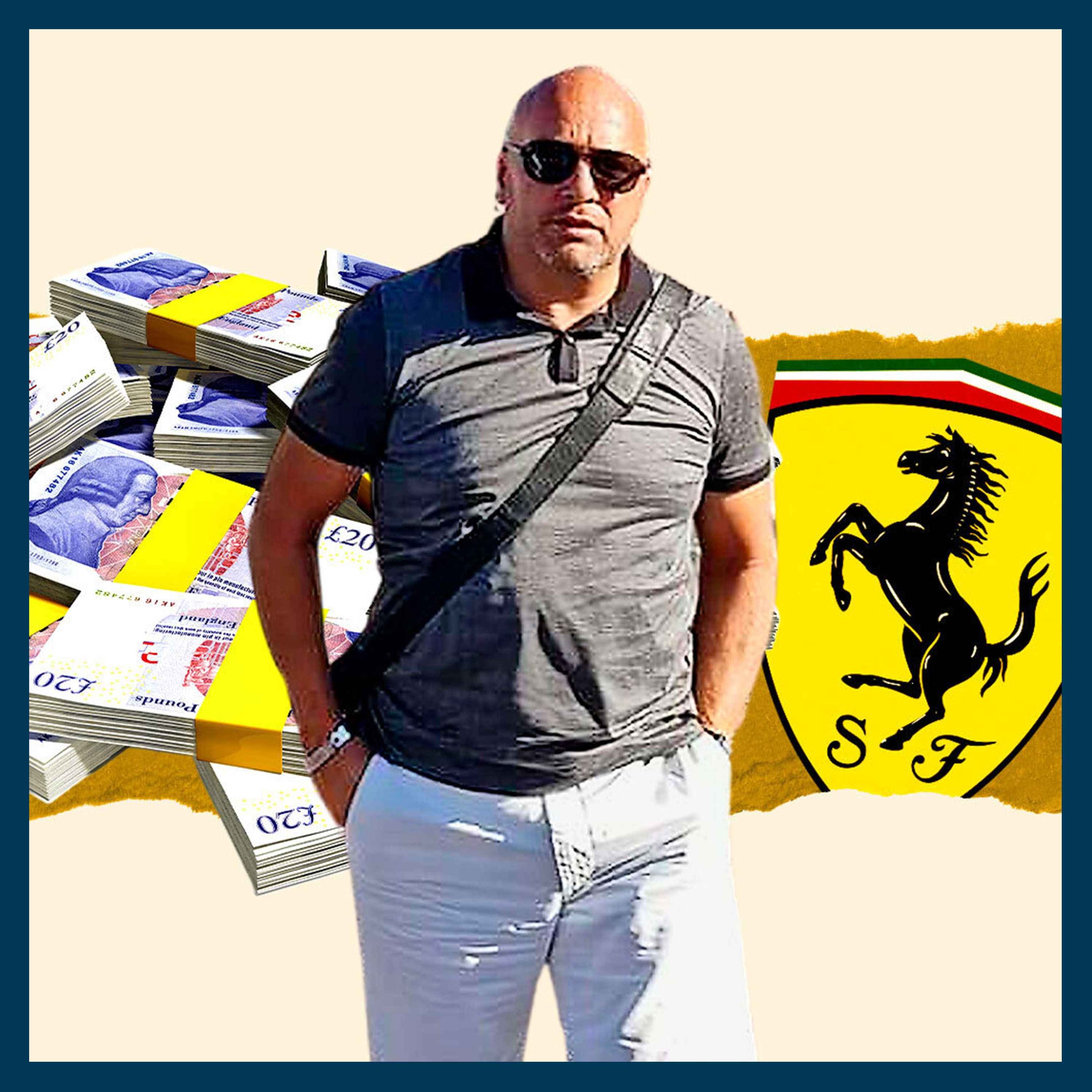
The owner of it all was a guy called Spencer Golding. He gained his riches as the man behind a company called London Capital and Finance, which was, it emerged, the biggest Ponzi scheme that Britain has ever seen.
- [04:11]
Manveen Rana
That lavish lifestyle, the vast properties, the parties, the supercars, were all built on a scheme that took 237 million pounds from investors, many of them pensioners who lost their life savings emotionally.
- [04:30]
Antonia Sommer
Trust was broken. I can't even to date, I can't have anybody in my home that I don't know. I'm wary of people. I see potential danger in everything. Today.
- [04:49]
Manveen Rana
Spencer Golding's lavish houses lie in ruin. But did he manage to avoid a similar fate? Has justice been served? And how was a Ponzi scheme on this scale allowed to take root in the first place? Seven years on, the Times has been uncovering where all the money went. The story today inside Britain's biggest Ponzi scheme. Jim, you broke this story originally and you've been covering it for years. How did you first become aware of the scandal behind London Capital and Finance?
- [05:44]
Jim Armitage
Yes, it was. It was a strange one. I had a phone call from a contact of mine down in the southeast who there's a really strange bunch of characters making crazy amount of money, flaunting crazy amount of money in helicopters and cars and the like, and it just doesn't smell right. He said he thinks it's something to do with pensions, it's something to do with an investment scheme, but he wasn't quite sure. So between us, we kind of looked into it and pretty quickly we discovered that this company that they called London Capital and Finance. When you looked into the accounts, you could see that it really wasn't all that it was making itself out to be.
- [06:26]
Manveen Rana
So you get the whiff of something not being quite right. Take us back to the start. I mean, where does this scandal sort of begin?
- [06:34]
Jim Armitage
Well, yeah, so you have to go back to the years after the financial crisis. If you remember, that was a time when it was almost impossible for small and medium sized companies to raise any money. The banks were really kind of reining in their horns and were very wary about lending to anyone but the most, the biggest companies. So there was a gap in lending. So all sorts of new sort of fangled ways of getting money from primarily people who have money, that is largely pensioners, into these young businesses that needed the money. So into this scene walks a couple of characters, Spencer Golding and Simon Hume Kendall, who's a kind of a posher, sort of city wheeler dealer kind of character. And they were looking at ways to raise money for their business ventures. Now, the first of these ventures were properties that they bought basically scrubland in, in the Caribbean, which they had this idea that they could raise money to to build luxury resorts on. And then later on a similar kind of project in Cornwall where there was a slightly sort of a dilapidated holiday park that they were going to buy and do up. They originally did the transaction, but they were scrabbling around for money. So they had the idea of setting up a new investment scheme which would raise money from primarily older people and use that money to invest in these projects.
- [08:04]
Manveen Rana
Jim, tell us a bit more about these two men you mentioned, Spencer Golding. What do we know about him?
- [08:13]
Jim Armitage
So, yeah, Spencer has an extremely chequered past, it has to be said. Very little is known about his young life, but he suddenly emerges as a very wealthy guy splashing cash around in this corner of Kent and East Sussex. And it's not entirely clear where he made his first money from. He's a big kind of muscular character. Terrifying, frankly, if you get on the wrong side. Yeah, exactly. He's kind of built like a wrestler. I'd gu. Then you've got the counterpart, Simon Hume Kendall, who was about as opposite as you could imagine. He was very expensively educated at Radley Private School, King's College, you know, very kind of blue chip upbringing. He went into the City, started off working at the Lloyd's of London market, where they do ship insurance, but he kind of had quite a checkered time of it, to be honest. In the City. A lot of his Companies ended up going bust. So he wasn't at the prime of his career, should we say, when he and Spencer Golding happened to meet each other at a social event, started chatting, talking about business and sort of fell in together from there on.
- [09:26]
Manveen Rana
So these two characters meet Chalk and cheese, really, they couldn't be more different. But you have one man who has a Mayfair lifestyle but doesn't seem to be able to fund it. His businesses keep going bust and then you have another who seems to have lot of money. Nobody quite knows how they come together. This company is born. How does it work?
- [09:50]
Jim Armitage
Yes, well, it appears to have started off with them getting together to buy and develop these properties in the Caribbean. And then following on with another property in Cornwall, they just realized they needed financing. So they had the idea of creating what's known as a mini bond company. So mini bonds were a new invention at the time, a way of basically allowing members of the public to invest in high risk companies in the form of buying bonds. Traditionally, these have been out of the reach of the public because they're so risky and you have to be a very sort of sophisticated investor to knowingly take that risk. But with this form of product, they managed to get around the rules and they started this business, first of all, aimed at people in the southeast. And this was marketed as being a company that would invest in fast growing small and medium sized companies in the southeast of England. In fact, allegedly what they ended up doing was raising money from the public and actually investing it in their own projects, including that one in the Caribbean and including that one down in the southwest in Cornwall. So they wanted to raise more and more money. But it was only when they were introduced to another character called Paul Careless that they really started to make big, big, big money. So who was Paul Careless? He was an entrepreneur based down in Brighton who had this extraordinary knack of using the Google algorithms to advertise for companies and bring in marketing leads for them. So the idea that created this huge, huge demand for LCF was when you merged his techniques with a very low interest rate environment and mini bonds that they marketed with an interest rate of 8%, which was about four times what you could get from your bank, you suddenly created this massive, massive storm of demand. And Paul Careless company was pushing this stuff out through Facebook, through Google, through all these sort of relatively new social media channels, and it just went absolutely berserk. And very, very soon they were getting millions and millions of pounds in every month.
- [12:16]
Manveen Rana
So you have these two men who have set up a smaller scheme in the Southeast. And now they've met someone who can really market their project, who can get more and more people investing. This is Paul Careless and the ads are all over Google. Just talk me through them. If you were one of the people on your computer doing a search and one of these ads pops up, what are you being told?
- [12:41]
Jim Armitage
Yeah, so here's the real clever bit. So at that time there were companies like Money Saving Expert, for example, which specialized in having these best Buy tables. If you were looking for, say, a credit card or a savings account, you'd go onto one of these websites and it would compare Halifax vs. Barclays vs. Whoever else in that sort of field, and you could figure out very quickly who had the biggest, the best interest rate and you'd choose it. So what Paul Careless did, he created these phony versions of that, whereby London Capital and Finance would be at the top of the table with its interest rate of 8% and then next to it would be Virgin with 3% or Barclays with 2%. So straight away you're giving the impression that you've got this wonderful company on a par with these blue chips borrowers and you think, well, oh, I'll go for London Capital and finance and 8%, that sounds great. And that's where the vast majority of the people got introduced by clicking on that link. And before they know it, they're through to London Capital and Finance sort of call centre. And that's where the hard sell began.
- [13:48]
Manveen Rana
You've recently managed to find out a bit more about this scheme and where the money that people were investing in the company was actually going. Tell us what you've learned.
- [14:00]
Jim Armitage
Well, as a. As the High Court judge eventually ruled many years later, what was actually happening was they were borrowing money from the public, investing it in a series of complicated shell companies and basically filtering a lot of the money back into their own pockets or their own businesses. So these hundreds at first, then thousands of investors who were investing in lcf, they were originally getting the interest that they were promised, that 8%. But far from the interest coming from the many brilliant small businesses that their money was being invested in, which is what they were promised, what was actually happening was that the money that they were getting back was coming from new investors. Money that is what's known as a Ponzi scheme or a pyramid scheme, where your original investors are paying for the interest for the new investors. Many, many, many millions of pounds allegedly ended up in the personal bank of the men at the center of this. If you troll through the, the documents that have been filed at the court. You just see the most outlandish spending, tens of millions of pounds going on luxury watches, Patek Philippe watches, diamond jewelry, gold bars. There's a yacht down in Antibes which, which they're trying to sell at the moment. Huge, huge, beautiful houses that you'd see in the pages of Country Life. I mean, Spencer Golding had dozens upon dozens upon dozens of supercars and equestrian. I said earlier, he's massively into horses and equestrian, sort of the equestrian world. Luxury horse boxes with all mod cons, dining tables and multimedia video screens and all the rest of it, just crazy, crazy, crazy spending. Now, we all know what happens with any Ponzi scheme or with any pyramid scheme. Eventually the merry go round stops. You can't afford to pay the new investors with the old investors money and it all collapses. And that's what happens with every Ponzi scheme. And that is what happened here.
- [16:15]
Manveen Rana
Jim, it's always intriguing when you look at a classic Ponzi scheme. You know, you're taking money from one set of people in order to pay others. It's going to catch up on you at some point. You can't keep paying interest because you're not actually investing in anything. You must know it's all going to come crashing down. And yet people do it for them. It did come crashing down. How did that happen?
- [16:39]
Jim Armitage
So what was going on all the way through this period? Warnings were coming into the city regulator, the Financial Conduct Authority, right back from 2015, saying, this looks dodgy. Look into this. This looks like a Ponzi scheme. You know, warning, warning, warning. The Financial Conduct Authority to its eternal sh, did nothing about all of these warnings that were coming in until sort of mid to late 2018. Finally, somebody at the FCA picked up on the many, many warnings that they were getting and started investigating. This was about the same time as I started making inquiries with the FCA saying, look what is going on with these guys. And eventually, in November time, the FCA decided, right, we've got to shut this thing down. They should have gone in in November, but they were concerned that one of the executives he likes shooting, these are country folk and they had a tip off that he had shotguns kept on the premises of the headquarters. So they got scared that if they went in he might shoot them. I think, frankly, absurdly. So they went to and fro on this detail for a couple of weeks. Again, all the time, members of the public are investing in this thing, which the FCA suspect is crooked. Eventually they Went in in December and shut the thing down. And very, very quickly, the whole thing imploded and went bust.
- [18:02]
Manveen Rana
When it does go bust, just describe the sort of the impact, how much money is at stake.
- [18:09]
Jim Armitage
So by the time the FCA finally, finally went in and closed the thing down, some 11,625 people, primarily elderly people and pensioners, had parted with some £237 million. That makes it the biggest Ponzi scheme that's ever happened in the uk.
- [18:30]
Manveen Rana
And while it's brilliant that it gets called out, the authorities are aware that something has been going wrong. The scheme collapses. There are suddenly thousands of people who'd invested their money who suddenly have no access to that and no interest coming in. Tell us a bit about some of those people who lost their money. I know you've been talking to many.
- [18:53]
Jim Armitage
Yeah, this was the most harrowing part of the story, to be honest. Pretty soon after it collapsed, I started talking to victims and most of them were just in a state of shock, to be honest. They couldn't believe what had happened. And they were asking me, where's my money gone? And we're talking about people's life savings. Many, many times, people would be saying, this is all I had. I gave them all my money. I spoke to people who'd lost hundreds of thousands to this scam. So there was this sort of period of just abject panic. It didn't even really make big news initially. It took quite a few weeks until, obviously, apart from the reporting that I was doing, that, it kind of really got picked up in a big way. And, yeah, I'd say probably about five or six months down the line, this sort of army of thousands and thousands of people started barraging their MPs and saying, look, we've lost all of our savings here. We can't afford our retirement anymore. And it finally became quite a big political story, a very big political story. In fact, there are individuals here who have suffered due to no fault of their own. And it is absolutely right that each and every one of us who has those constituents stand up and fight to ensure that they get fairness and justice. And there were big investigations launched in by the Treasury Select Committee into how the Financial Conduct Authority had completely failed in its work to sort of protect the public. And a big investigative report was held by Judge Dame Gloucester into how appallingly the FCA had managed this whole thing. And it basically was devastating for the FCA because it just showed how abjectly it had been operating for years and years and years and how it just wasn't fit for purpose to protect the public. The findings were so brutal of the FCA's behaviour that the treasury kind of reluctantly agreed to help compensate the victims. So everybody got up to £68,000 back from the taxpayer, from the treasury, so people who'd lost up to 68,000 were made good. But as I said, many, many people, I mean, the majority of the people I spoke to had lost way, way more than that and they lost everything above 68. I think the worst story that I, that I heard that again came up in the court hearing was, was one of poor Chloe Darragh, who she, when she was a teenager, she was involved in a really horrific car smash which left her with very, very serious brain injuries that were going to be life affecting for the rest of her life. The other driver's insurance company paid, I think about 3 million pound in compensation, which was to pay for her care for the rest of her life. Her father, who was her trustee, was worried that that wasn't going to be enough to pay for her for, you know, after he'd gone for the many years that she'd be living. So he, like so many other investors in lcf, was looking for a higher interest rate than he was getting from the bank. And tragically, he handed over about 1.3 million pounds of her insurance money to London Capital and Finance. When Chloe Darragh's father was about to part with that 1 million pound plus of her insurance money, there was a particularly sort of long flurry of emails. They were so excited at Paul Careless Co. At the prospect of what they might make. Paul Careless emailed one of his colleagues and I'm quoting here, oh, by the way, if he pulls off that 1 million Friday, then I'm buying a 70k car from the comms the week after Operation FU. Everyone who didn't believe the F is not asterisk like I just did.
- [22:53]
Antonia Sommer
Wow.
- [22:53]
Jim Armitage
And then after securing that money, the word gets out very quickly that the salesman's managed to get. That was actually 1.3 million, 1.2 million. Careless. A colleague emails to Careless. Holy cow. Party. And shortly afterwards the email trail goes on about the massive party they're about to have and they're planning it in the Hotel de Vin in Brighton. All of that money, according to the allegations in the court, were basically derived from the 1.2 million pound that Chloe Darragh was supposed to be having to spend on her lifetime care after her car crash injuries
- [23:37]
Manveen Rana
coming up.
- [23:38]
Antonia Sommer
So then he wanted to know any pension any every single thing he wanted to know. He said, well, we could invest all of this. If you leave a couple of thousand, should you need it, leave it behind. I invested 162,000 with 2,000 left behind.
- [23:55]
Manveen Rana
We speak to an LCF investor who's seven years on in is still looking for justice.
- [24:08]
Weight Loss by Hers / Advertisement Voice
Today's markets move fast. Get the insights you need in 10 minutes with the Barclays Brief, a new podcast from Barclays Investment Bank. Through sharp dialogue and scenario based analysis, our leading experts analyze key market themes each week. So whether you're managing a portfolio or leading a business, the Barclays Brief podcast can help you make smarter decisions today. Stay sharp, Stay brief. Find Barclays Brief wherever you get your podcasts. This podcast is supported by MIDI Health Are you in midlife and feeling dismissed, unheard or just plain tired of the old healthcare system? You're not alone. For too long, women's serious midlife health issues have been trivialized, ignored and met with a just deal with it attitude. Many of us have been made to feel ashamed or forgotten. In fact, even today, 75% of women seeking care for menopause and perimenopause issues are left entirely untreated. It's time for a change. It's time for miti. MITI is not just a healthcare provider, it's a women's telehealth clinic founded and supported by world class leaders in women's health. What sets MIDI apart? We are the only women's telehealth brand covered by major insurance companies, making high quality, expert care accessible and affordable for all women. Our clinicians provide one on one face to face consultations where they truly listen to your unique needs. We offer a full range of holistic, data driven solutions from hormonal therapies and weight loss protocols to lifestyle coaching and preventative health guidance. This isn't one size fits all care. This is care uniquely tailored for you. At midi, you will join our patients who feel seen, heard and prioritized. You will find that our mission is clear to help all women thrive in midlife, giving them access to the health care they deserve. Because we believe midlife isn't the middle at all. It's the beginning of your second act. Ready to feel your best and write your second act script? Visit joinmitty.com today to book your personalized insurance covered virtual visit. That's joinmitty.com the Care Women Deserve Every idea starts with a problem. Warby Parker's was simple. Glasses are too expensive. So they set out to change that by designing glasses in House and selling directly to customers. They're able to offer prescription eyewear that's expertly crafted and unexpectedly affordable. Warby Parker glasses are made from premium materials like impact resistant polycarbonate and custom acetate and they start at just $95 including prescription lenses. Get glasses made from the good stuff. Stop by a Warby Parker store near you.
- [26:55]
Manveen Rana
Jim, you've been telling us about some of the investors in LCF and what happened to them afterwards when they realized this was a scheme. Tell us about Antonia Summer.
- [27:09]
Jim Armitage
Antonia. I love Antonia. She had, I think it was £160,000 which was all the money that she'd saved during her long career as a primary school teacher. She was in her late 60s at the time.
- [27:26]
Antonia Sommer
My first contact with LCF was when I was looking to transfer ISAs which were all over the place and I looked on what appeared to be a money saving expert advertisement. It wasn't. London Capital and Finance phoned me and made an appointment for a home visit to talk about transferring the ISAs,
- [27:53]
Jim Armitage
the biggest fish. Rather than have a conversation over the phone with the salesman in Kent, in the head office they would get a guy turning up at the door to do a face to face sale. There's a chap called Jonathan Russell Murphy did most of these sales.
- [28:12]
Antonia Sommer
So I called the FCA to ask if John Russell Murphy, who was coming to see me from London Capital and Finance, was indeed a financial independent financial advisor. They said yes. John Russell Murphy arrived on time. He sat at my kitchen table, he was all suited up, very nice, posh voice. And he said, well, let's go through your assets then. And I said well, I want to move this, this, this. And he said anything else? And I said well, do you know I've been speaking to another company about leaving that with them. And he said why would you want to do that? You know they're going to charge you 6%, you know, why lose all that money? Come with us.
- [28:59]
Jim Armitage
Russell Murphy basically shows her, guides her through and watches her as she does it. Transfers her money out of her ISAs so that he can transfer them into London Capital and Finance bonds.
- [29:13]
Antonia Sommer
So then he wanted to know any pension, any, every single thing he wanted to know. He said, well, we could invest all of this. If you leave a couple of thousand, should you need it, leave it behind. I told him throughout that I was risk averse. Was he sure that I could take these out at any time? I understood that there might be 180 day interest lost or whatever and he said no, perfectly fine, we have all these companies that are borrowing, they're the middle range. They're no problem at all. Okay. I invested 162,000 with 2,000 left behind. It was October when I first signed up with them. And two months later, I had an email from the administrators in December 2019 asking me to come. All the investors were invited to the offices of the administrators and it would be explained to us. And I did attend, and they said we'd be lucky to get 20% of whatever we'd lost. I only got 85,000 back. I don't see it as compensation. I see it as recompense, partial, but not compensation. It did not take any account of the worry, the stress, the hurt, the abusive behavior of these people. And actually, I had no money left aside from the work pension and the other pension, which hadn't been touched by John Russell Murphy. So it was difficult emotionally. Trust was broken. I can't even to date, I can't have anybody in my home that I don't know. I'm wary of people. I see potential danger in everything. So, yeah, it's broken trust. Six years on, we are still all the victims waiting for justice. That's all we're asking, for, justice.
- [31:29]
Manveen Rana
So, Jim, you mentioned the fca, the Financial Conduct Authority, earlier. I mean, how was this not found out sooner? It feels like so many people had been investing their money. Why did it take so long?
- [31:43]
Jim Armitage
Yeah, this is, some would say, as big a scandal as the Ponzi scheme itself. Right back in 2015, at the very start of the issue of these mini bonds, a financial advisor called Neil Liversage, he emailed the fca. I've seen the email warning them exactly of what this alleged scam was. He'd completely clocked it from beginning to end and he'd laid out what was going on. The FCA never did anything. In the following months and years, the FCA received dozens upon dozens upon dozens of warnings, complaints. Questions from the public going, can I trust these guys? This looks too good to be true. But they just did nothing. And what has emerged was going on at the FCA was just that. The chain of command was just completely all over the place. The staff were completely demotivated. Complaints were coming in to the call center and just ending up nowhere. I have to say the FCA has been through after that excoriating Gloucester report, there has been some significant changes there. But at the end of the day, you've got not very well paid civil servants trying to regulate rogue operators who are making millions of pounds buying helicopters And Patek Philippe watches and all the rest of it, employing the best lawyers and the best brains in the business. You know, will this happen again? Well, I wouldn't like to bet on it not happening again.
- [33:10]
Manveen Rana
Has there been any form of accountability? I mean, what's happened to the men at the heart of this operation?
- [33:16]
Jim Armitage
So the Serious Fraud Office has started an investigation pretty soon after the FCA went in and shut this thing down. The investigation is ongoing. I think that's about eight years later. But the biggest kind of action, really legally that's happened to these guys is that there was a High Court case that was brought by the administrators against them. So maybe I should explain the 237 million pounds that's been lost when this sort of situation arises, a group of sort of financial experts known as administrators, they go into the company and try and recoup as much money as they possibly can for the investors. So that process is ongoing at the moment. Basically laid out the allegations of exactly what a massive Ponzi scheme this was and how the intention was always to enrich themselves, these individuals, at the expense of the public. Hume Kendall settled out of court or in the early stages of the proceedings. It's important to note that he denies any wrongdoing and hotly disputes the claims that he personally enriched himself to the tune of 20 million plus. He hotly disputes that figure. But Careless and Golding did not settle. And the judge found broadly, very, very much in favor of the bondholders and administrators, agreed with pretty much everything that the administrators accused them of and held Golding liable for £180 million for the damage that he'd caused these people. But of course, the judge said the chances of Golding ever coming up with anything like that kind of money is pretty much zero. By all accounts, Spencer is spending a lot of his time in Spain, where his brother lives. I heard that the Hume Kendall, much more low profile than they were, but still living down in the home counties. Careless is currently, he declared himself bankrupt in a nice suburb of Portugal, where he's living at the moment. And, yeah, life goes on.
- [35:28]
Manveen Rana
So, Jim, just to be clear, the money hasn't been returned and seven years on, the investigation is still ongoing?
- [35:40]
Jim Armitage
Precisely. And I'm told that the team of investigators at the Serious Fraud Office has changed at least three times in the course of this investigation. As you say, we've still got four men under investigation. You said earlier that assets have been. Have been seized. A lot of them have been seized, but a lot of them, some of them have disappeared. Without trace. Spencer Golding is claiming, I heard recently, that he doesn't know where the jewelry has gone. I think he said something towards the effect of he lent them to somebody, but he doesn't know where they are.
- [36:13]
Manveen Rana
Now, is there much hope that this investigation will end in real results for the investors?
- [36:20]
Jim Armitage
Well, you talk to the investors now and most of them are pretty much resigned to the fact that they're not getting it. They're not gonna get their money back beyond that compensation. They've had that 68,000 what they want. Now, again, universally, they speak with one voice. They want accountability. But the SF is a very, very slow running beast. Their track record on, on prosecutions is patchy at best. It tends to take them years and years and years to go from making arrests to pressing charges if they ever get that far. So frankly, who knows whether we're going to get justice as the bondholders see it. In this case, only time will tell, as they say.
- [37:06]
Manveen Rana
And as you say, they've only been given 68,000 pounds of compensation. That's from the government, not from the company. That's obviously a fraction of what many of them will have paid to begin with. How are they coping? How are they now?
- [37:22]
Jim Armitage
Most of them are living very different lives to what they'd expected to before they came across London capital and finance. One lady I spoke to last week was saying she was gonna, she was hoping to give a big inheritance to her grandson. That's no longer happening. Yeah. Straightened circumstances all round, really. And it really, it's hard to retain one's faith in the justice system when the biggest Ponzi scheme that this country has ever seen, quarter of a billion pounds, largely of pensioners money. Many of those pensioners, incidentally, who have died since this has happened just through sheer, you know, demographics that this had taken them so long. You know, we've got to do something about the prosecution of white collar crime in this country. We've got to do something.
- [38:21]
Manveen Rana
That was Jim Armitage, contributing editor at the Sunday Times. And earlier we heard from Antonia Sommer, an investor in lcf. The producers today were Harry Stott and Callum Martin. The executive producer was Taryn Siegel. Sound design and theme composition were by Malicetto. If you can do leave us a review wherever you get your podcasts. Thanks for listening. We'll be back tomorrow.
- [38:50]
Jim Armitage
Sa. From globalization to innovation sustainability to market volatility, there's always more than one side to a story. Explore different perspectives on today's most important business and economic issues with the Flipside podcast from Barclays Investment Bank. Hear two research analysts in a lively debate and get insights from every angle to further inform your view. Listen to the flip side on your first favorite platform.
- [39:45]
Antonia Sommer
Support is available 247 with Verbo Care.
- [39:48]
Weight Loss by Hers / Advertisement Voice
We're here day or night, ready whenever
- [39:51]
Antonia Sommer
you need help because a great trip starts with the right support.