Loading summary
Transcript72 lines
- [00:00]
Shaima Bakht
A better help ad. Hold on one second. I just need to. What if you had a room where no one interrupts, no notifications, no expectations, just space to talk with. BetterHelp therapy happens in a space that's yours. Visit betterhelp.com randompodcast for 10% off your first month of online therapy.
- [00:32]
Barclays Brief Announcer
Today's markets move fast. Get the insights you need in 10 minutes with the Barclays Brief, a new podcast from Barclays Investment Bank. Through sharp dialogue and scenario based analysis, our leading experts analyze key market themes each week. So whether you're managing a portfolio or leading a business, the Barclays Brief podcast can help you make smarter decisions today. Stay sharp, stay brief. Find Barclays Brief Wherever you get your podcasts.
- [01:06]
Luke Jones
From the Times and the Sunday Times, this is the story. I'm Luke Jones.
- [01:21]
Shaima Bakht
Come to the general park in Rania and as you can hear, it really is the hub of the town. There's live music, there's games, what they call curd, dominoes and, okay, board games.
- [01:36]
Luke Jones
Shaima Bakht is a reporter at the Times and she's been in northern Iraq.
- [01:41]
Shaima Bakht
Men gather in literally in their hundreds to drink tea and to catch up over cigarettes and shisha. But as we're speaking to all of these people, it's very clear that the reason why so many people are able to gather in this park is because of a lack of job opportunities. And there's real resentment around that.
- [02:02]
Luke Jones
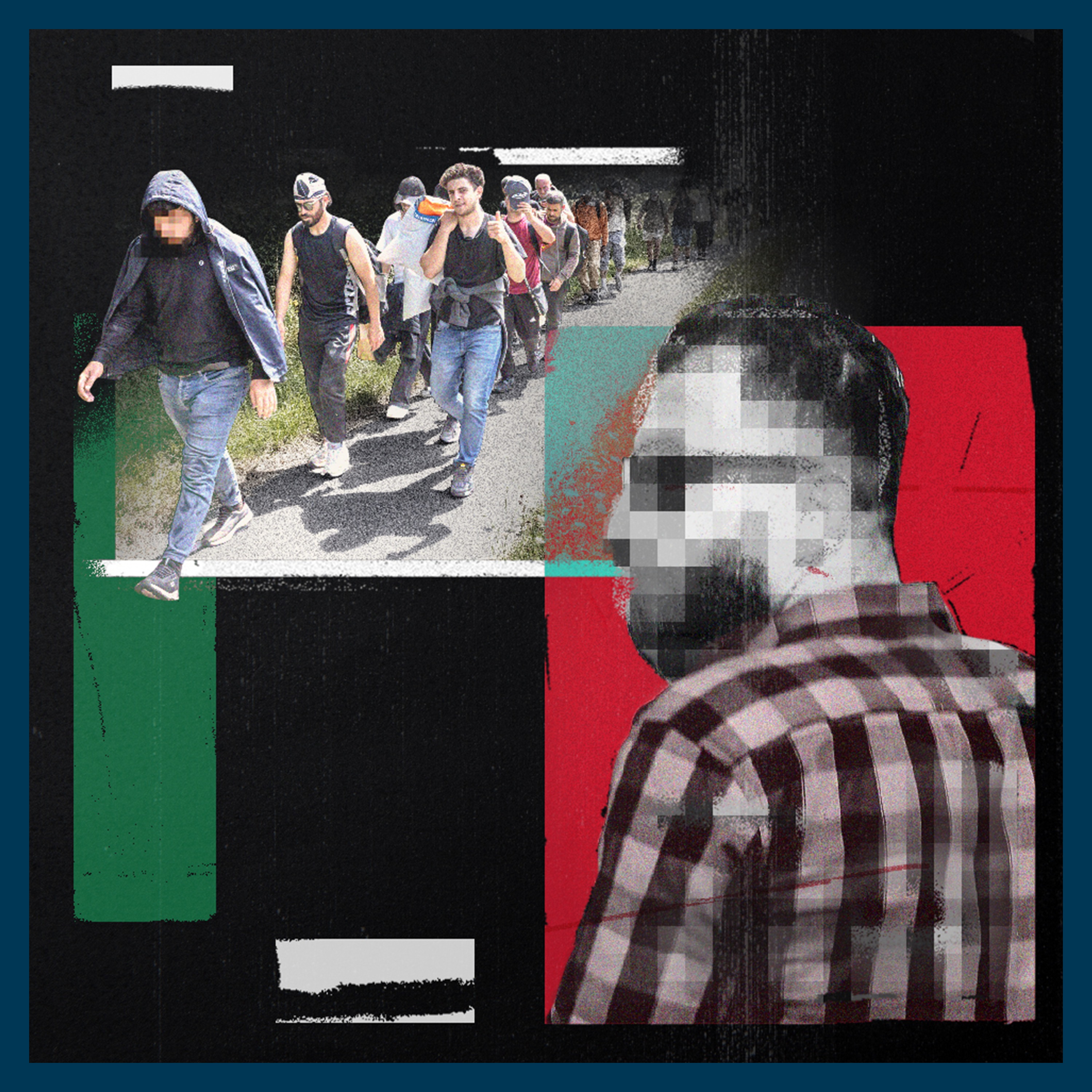
There is one particularly thriving industry, though, providing many with lucrative job opportunities, people smuggling. This small Iraqi town is arguably the epicentre of the small boats crisis playing out in the English Channel. Nearly all of the kingpins, foot soldiers, route navigators and the rest are from here. Why the Times went to go talk to them. The story today Meet the smugglers behind Britain's Small boats crisis.
- [02:49]
Shaima Bakht
I've recently in the past few years kind of been following smuggling routes across the world and specialize in migration. You know, that's taken me to Poland and Belar, Southeast Asia. I've interviewed smugglers in northern France and that kind of brought me onto this story.
- [03:06]
Luke Jones
Well, how exactly did you get into this swarm?
- [03:09]
Shaima Bakht
So because I was looking into these, these global smuggling routes, I kept coming across this theme on the English Channel, which is one of the busiest routes in the world, but also obviously the busiest route to the UK that the people who are running those small boat operations in northern France were almost entirely Iraqi Kurds. And on top of that, I had heard from multiple global experts that actually those Iraqi Kurds mostly came from one small village and I just thought, you know, we've got to go to this place and we've got to find out what's making these men want to do this, sort of.
- [03:51]
Luke Jones
The name of this village is what?
- [03:52]
Shaima Bakht
Rania.
- [03:53]
Luke Jones
And what's that like?
- [03:54]
Shaima Bakht
So Rania is this really picturesque, small, small village in the mountains of Iraqi Kurdistan. It's in the north. It's near a massive lake. It's really unassuming. I mean, there's not much to it. It's, you know, some shops and markets and then one big kind of town park, and that's where all the locals kind of gather. I spoke to some of these men kind of hanging about in this town center, And among them were some young men and also some boys, actually, who explained to me why they found this lucrative industry so alluring. One man told me that it's a small town, there's no opportunities, there's no investment, no tourism. And that's why there's no money coming in. And the only money that is coming in is from the relatives of people who went outside of the town. So people who were smuggled out there.
- [05:04]
Luke Jones
You mentioned that this is part of Iraq's Kurdish region. Just explain for the uninitiated exactly what that is and how that is administered differently to the rest of Iraq.
- [05:13]
Shaima Bakht
Yeah, so Iraqi Kurdistan is a kind of semi autonomous region within Iraq, and they have their own government, they have their own language, they're their own people. And it's been decades and decades and decades of unrest. And actually, still they are fighting for complete independence. Many of them under Saddam Hussein, there was a huge bombing campaign, chemical weapons used against Kurds.
- [05:36]
Luke Jones
As we drove along the deserted main street, the extent of damage and death became clear.
- [05:42]
Shaima Bakht
Buildings and property had been crushed by the sheer weight of missiles. Yet the biggest indiscriminate killer left no scars. The people, the families we found lying all around had not been injured. They'd been poisoned by chemical bombs and shells containing cyanide, mustard and other nerve gases. And actually, one of the main towns that led this uprising that eventually resulted in Iraqi Kurdistan being recognized by Iraq was Rania. So they have this resistance in their blood, so to speak. But as well as that, it never really recovered from a lot of the bombing campaigns. And that is why so many people wanted to leave. And wherever there is a demand for people to leave, there is obviously the opportunity for someone to become a smuggler.
- [06:31]
Luke Jones
Is that why then people turn to smuggling? Because I guess that's quite a lucrative business opportunity, amongst other things.
- [06:38]
Shaima Bakht
Yeah. I mean, so when we visited Rania, a lot of the people who we'd spoken to who did end up entering this industry, they told us that they actually just wanted to leave and they realized that there was no money and that they instead to kind of fund this process of them getting out of Iraq, joined some of these smuggling operations. We also met this one man whose father was also a smuggler. And he explained that the main reason isn't actually always money, it's about purpose. And he said to me that it's not just because of a lack of job opportunities, because he knows many people who had a job, who had businesses, had money, but they still chose to smuggle. And the reason why he says that they still chose to smuggle is because they didn't feel useful. Because he says when you're here in Rania, you won't feel useful and you don't feel valued.
- [07:43]
Luke Jones
So you met several smugglers, including actually people very high up in the operation as well. Who exactly gets into this line of work? I mean, is it just a cross section of everybody?
- [07:53]
Shaima Bakht
It really, it really, really is. It's a cross section of everybody. I mean, we spoke to antique collectors who became major kingpins. We spoke to people who ran farms as well on the side. We spoke to, you know, family men. We didn't get to speak to them, but there are some women also involved. And then of course you've got all these kind young people. So, you know, in, in Iraq the working age is a bit younger. So they don't consider maybe, you know, a 14 year old, 15 year old, a child and many of those kind of teens and even some people a bit younger have also started to get involved. So it's really a huge cross section.
- [08:27]
Luke Jones
And how, how are you actually picked to take part in this? How does one get a job if it is a job in one of these smuggling networks?
- [08:35]
Shaima Bakht
It's, I mean, it's a combination of two things. So one part is you could just walk into this main central part of Rania in midday. Many of these smugglers admit that they can just approach people and say, do you want some work? I need men. Will you join my team? I can pay you. The alternative is, of course there are many of those people who will approach these smugglers, will ask their friends or their family members, do you know someone who can help me get some money? And the whole point is that there's just not enough opportunities.
- [09:03]
Luke Jones
Yeah. So what are the early roles that you might do if you are recruited into this network? And what's the Hierarchy that you might work up eventually.
- [09:13]
Shaima Bakht
Yeah. So, I mean, it is always evolving, but we kind of establish that there is a clear pecking order. So you've got these foot soldiers. So it's kind of how it's described by many experts. And they are the people who you actually see on the news who are pushing the small boats out, who man these camps. And really, most of them were migrants themselves and might have had relatives who ran smuggling operations and decided to, or even just traveled there and then asked for work. And actually, the man who I spoke about earlier, whose father was also a smuggler, that's exactly how he got into the business. He told me about his childhood. He had to work multiple jobs. It was a very difficult time in Rania. He told me that he tried to go to Turkey. He stayed there for six months, for three of those months. He said he was waiting for a visa as an immigrant and he was trying to get through as an immigrant. And then basically he said that after that he tried to get involved in the business because he wanted to find a safe route for other people, as he found that those routes were incredibly difficult and dangerous. So those are kind of the foot soldiers. They're the people who we see among the migrants who are taking payments, but they are the lowest of the rank. They are paid the least. Then you have middle. Middlemen. So these are people we met a few of them. They're called pathfinders, and they will establish the routes. So they'll go out and they'll coordinate with other nationalities. So, you know, because they're crossing borders like Turkey, going, you know, across Italy, they'll. They will find routes that are accessible,
- [10:55]
Luke Jones
and they're the ones actually beating the path. The person who's actually the pathfinder is working from home on their phone, organizing
- [11:00]
Shaima Bakht
all this from afar a lot of the time. Yeah, exactly. Then you have kingpins. And again, there's, you know, there's other kind of roles in between these. These three categories. But the kingpins, you know, when we use that term, we're talking about someone who will never leave, will never need to leave their house because they have so many men working for them, possibly in multiple areas, and they can just earn hundreds of thousands of pounds because they're taking a cut from these small boat operations. And often they are the ones who actually fund the buying of these dinghies and these small boats. And because they have so many men, they are seen as very fearsome people who you wouldn't want to come across. And so, you know, they keep their status as kingpins and the spread of
- [11:43]
Luke Jones
nationalities through all those ranks. Am I right in saying that the kingpins would largely be the Iraqi Kurds and they would be in Rania still? And maybe as you go further down, you've got a mix of other nationalities who are being employed.
- [11:54]
Shaima Bakht
Well, actually, I'm talking in this instance entirely about Iraqi Kurds, because Iraqi Kurds can't possibly dominate every smuggling route in Europe, but they do have a monopoly over the through routes to the uk. And it's just because of this unrest in Iraqi Kurdistan that has led to so many people wanting to come to the UK that they almost established their own roots at a very early point in time.
- [12:22]
Luke Jones
We see a better life, but we can't have it. One of my uncle, like, he's, he's been in UK for like, I can say 20 years.
- [12:30]
Shaima Bakht
Like he now he got two or
- [12:32]
Luke Jones
three big charm restaurants in, in London. He got like, I can say 40,
- [12:39]
Shaima Bakht
50 employees, workers there.
- [12:44]
Luke Jones
None of them got any Social Security and they don't have anything, any resident
- [12:48]
Shaima Bakht
cars in the UK for the past couple of years. It seems that all of the foot soldiers in Calais and Dunkirk, which is now where all the boats are launching from, they're almost entirely from Rania. But if you kind of go down the side of the coast to parts where there's less boat launches now, you'll see some Iranian Kurdish smugglers and also people from other parts of Iraqi Kurdistan. So that's really, really interesting because what is clear is that people are recruiting or trusting people from their own towns in Iraqi Kurdistan and they're maintaining those lines. And if someone crosses those lines, we know that it can get very violent
- [13:25]
Luke Jones
because is there a pecking order about which is a good bit of beach? So if someone has a monopoly on a really good bit, there might be people from other gangs wanting to get that.
- [13:34]
Shaima Bakht
Totally. Yeah, exactly, exactly that. Because, you know, for the last, I don't know, year, two years, it has been almost entirely from one kind of slice of Dunkirk and that is completely run by people from Rania. And there is an interesting element, and this is what some of the Kurds argue has allowed for them to maintain this monopoly. And there is. Even though they won't cross these lines, they can't take that business. They will work together. So, you know, as one person told me, Kurds help Kurds. And so, you know, if there's not enough, if they need more boats or if there's too many people, they might give some of these migrants onto a Different gang, and there is some. Some element of cooperation, but in terms of taking over a beach, I mean, that's, that's when you see this. This violence and someone's shot in northern France. And we do, we do hear about that in the news.
- [14:30]
Luke Jones
You've explained to some of the sort of foot soldiers. I want to hear of a phrase. What about some of these pathfinders, the people in the middle, doing some of the routes? I mean, did you speak to any of them?
- [14:38]
Shaima Bakht
Yeah, one of the middlemen, he's called the Dhuk Pathfinder, which is the area that he obviously operates. It's not very far from the Turkish border. So that's the route that he runs alongside other middlemen. He actually ran all of his operations from his WhatsApp, which had his face on it. He was smiling and it was the same number he used for personal things, same number that he had for a whole decade. He showed us, like, messages from young people who were contacting him. He just didn't care. And he said he wasn't afraid of the authorities.
- [15:09]
Luke Jones
So actually, journalistically, was it quite easy for you to find him?
- [15:12]
Shaima Bakht
Well, journalistically, finding him and getting in touch was easy. He agreed to an interview and then it all kind of got very difficult. On the day that we agreed for an interview, he just kept dodging our calls because he said he'd give us a location and he just stopped replying. But then he was like sending us different locations. And so we were on this great chase throughout D Hook and it started to get really late and eventually Speda, the journalist who I was working with, who's Kurdish, she decided to call me on a different phone number. And we got in touch with a woman who he was with. We found out later it was a female relative and she just. I mean, she just ended up giving us the location and we were like, shall we just go? But we were obviously very nervous at that point of, who are we going to meet? And we knew that he was a very notorious man in that town.
- [16:00]
Luke Jones
And when you did get to sit down with him, what did he explain about what he exactly does?
- [16:05]
Shaima Bakht
He was actually, in some respects, quite humble. He said, I'm not the biggest fish in this game and there's many people above me. I only have a team of 10 men. And he said he thought that he was doing a noble act and that he didn't really want to leave the business and that he wasn't afraid of raids.
- [16:27]
Luke Jones
So do they see it as a sort of noble pursuit? Because I don't when we hear about people smugglers, we think, well, you don't want to tell anybody that you're in that line of work. It sounds horrible. But are they proud of their job?
- [16:38]
Shaima Bakht
Absolutely. And I mean, every single person that we spoke to, even the people, I mean, we spoke to people who had families that died on these going across these channels and they told us that they still thought very highly of these smugglers. They see these people as heroes really, who are willing to put their own lives on the line to establish safe routes for people to get out of the country. And you know, the smugglers that we spoke to, I mean, they did not feel remorseful at all. And they said that they're proud of what they do. They think that they save people's lives.
- [17:19]
Luke Jones
Coming up, where are law enforcement with all of this? Are they tracking some of these people down in Rania to try and stop the boats at home? Do I have more from Shaman next?
- [17:37]
Farnoosh Tarabi
Hi, this is Farnoosh Tarabi from so Money with Farnoosh Tarabi. And today I want to talk to you about Boost Mobile. Quick Money tip Stop paying a carrier tax if your phone bill feels trapped in a pricey plan, this is your sign to unlock savings. Boost Mobile helps you reset your spending. With the $25 Unlimited Forever plan, you can bring your own phone, pay $25 and get unlimited wireless forever. And that simple switch can unlock up to $600 in savings a year. That's money you could put towards paying down debt, investing or something that actually brings you joy. Those savings are based on average annual single line payment of AT&T Verizon and T Mobile customers, compared to 12 months on the Boost Mobile Unlimited plan as of January 2026. For full offer details, visit boostmobile.com
- [18:28]
Shaima Bakht
from globalization to innovation, sustainability to market volatility, there's always more than one side to a story. Explore different perspectives on today's most important business and economic issues with the Flipside
- [18:40]
Brookfield Announcer
podcast from Barclays Investment Bank.
- [18:42]
Shaima Bakht
Hear two research analysts in a lively debate and get insights from every angle. To further inform your view, listen to the Flipside on your favorite platform.
- [18:53]
Brookfield Announcer
At Brookfield, we believe you can own wealth that's measured in generations. For 125 years, we've built long term wealth through expertise, discipline and a clear vision for the future, providing investors access to alternative strategies built for what's Next Brookfield Own what's Next. Learn more@brookfield.com this is not an offer to sell or investment advice. Investing involves risks, including loss of capital, capital, past Performance is not indicative nor a guarantee of future results. Please review performance and offering materials before investing.
- [19:36]
Luke Jones
Shaim, you've been explaining how this one town in northern Iraq and Iraqi Kurdistan seems to have such a monopoly on the small boats crossings that we've seen coming from the northern coast of France into the uk. And it sounds like you've done amazing work delineating all of this, speaking to lots of people, doing the job of a good journalist. My question though is, couldn't a police officer do basically the same work and stop this from happening?
- [20:01]
Shaima Bakht
Well, that is a criticism that you hear a lot around these smuggling gangs. And certainly in northern France we've seen, you know, these really notorious images on the news of the French authorities standing by on the shores, watching these boats go by. And that's, that's obviously, you know, evoked a lot of anger in terms of what they can and can't do to stop these boats from crossing the Channel. But in terms of the uk, we do know that they actually agreed on a pact with Iraq back in 2024.
- [20:30]
Luke Jones
I'm pleased to announce today a new security agreement between Iraq and the uk. This is a world first that will help us smash the people smuggling gangs and secure our borders.
- [20:43]
Shaima Bakht
So within that package, there was an £800,000 boost to border security in Iraq, as well as other kind of intelligence sharing.
- [20:51]
Luke Jones
And we've also announced funding for Iraqi law enforcement to tackle this problem upstream way before it reaches our shores.
- [21:01]
Shaima Bakht
And the nca, which is of course the National Crime Agency, who are really the authorities who tackle these sorts of smuggling gangs across the world. They coordinated with local authorities to disrupt a smuggling network. They did a few raids early last year that resulted in some successful arrests of a UK based smuggler who was from Iraqi Kurdistan, Shlom Suleimaniya, which is the region from that Rania sits within. So probably from Rania, as well as a hawala dar, which is someone who kind of manages the money between smuggler and migrants. And so they've said that they've disrupted this network. Obviously we visited Rania and Iraqi Kurdistan after these raids happened and we saw that these operations were still going on. So I think, as we've heard from many people, it is a bit like whack a mole. And I think maybe there needs to be a different approach. Maybe you can't just arrest one big kingpin and, you know, he could very easily be replaced around him. Yeah, exactly.
- [22:02]
Luke Jones
But my question is, are British authorities actually present in Iraq and Irania or are they having to rely on Iraqi law enforcement or whoever to actually do some of the investigating and raiding and arresting.
- [22:13]
Shaima Bakht
So, I mean, they've not been entirely clear about who's doing what, but from our understanding, it is local, local authorities who are, who are doing the majority of this. And the NCAA said that they did. You know, it's joint. That's how they describe it. The NCAA has been quite close with this sort of information probably. So these smugglers don't get, you know, a wind of what they're doing. So we don't know exactly who's launching them. But from kind of the reports that they put out, it does sound like it's very heavily on the kind of local.
- [22:41]
Luke Jones
Some people who are very pro. More international aid, an argument they use quite often is saying that, well, actually if we help some of these places with their development, with economic opportunities there, that will actually help solve the problem. Downstream of people wanting to leave and reach the uk, Is that being done in any sense? I mean, does any work to actually make it Rania a place where people might want to stay and not end up in, you know, southern coast of England?
- [23:06]
Shaima Bakht
It doesn't look like Rania specifically is getting that sort of care and attention, unfortunately. I mean, as I said, the UK, UK's joint agreement has invested some money into Iraqi Kurdistan, full stop. So not just about security enforcement. And so I think they are obviously trying to do something there that might help with the situation. But Rania seems to be almost always neglected. And, you know, that's what people tell us, you know, when we've spoken to experts, that exactly what you said. They. They suggest not only will it curb migration out of Iraq, but it will stop this kind of line of people smuggling. Because most of these people smugglers were just people who wanted to leave.
- [23:43]
Luke Jones
But also the economic future of Rania is not just about inward investment. It's all tied up with what is their relationship with the government in Iraq proper. And I don't know, the British aren't necessarily gonna solve that, are they?
- [23:58]
Shaima Bakht
No, exactly. And I think that's where it all becomes really complicated. This distinction between Iraqi Kurdistan and Iraq has led to many budget disputes and other issues that basically have meant that Iraqi Kurds often have less money or even have their payments delayed. There are about a million Kurdish workers who go months without pay because of these budgetary disputes. So even when they have a job, being a Kurd in Iraqi Kurdistan is still very difficult. You know, when I was there, you couldn't even fly from Iraqi Kurdistan to Baghdad. I would have to Go outside of Jordan to fly back to Jordan and then fly into Baghdad, which is ridiculous. And so there's a lot of. There's still a lot of difficulties between federal Iraq and Kurdish Iraq. And I think until that's also addressed, there's going to be big problems.
- [24:50]
Luke Jones
What about the money is a way of disrupting this, going after some of the payments and where that money is and solving it that way?
- [24:58]
Shaima Bakht
Well, the NCAA has started to do exactly that. So in these countries, particularly in the Middle east, there's the hawala system, which is basically this kind of unofficial banking system where you just kind of rely on a middleman who both part trust to hold money and then to transfer it. And it means that you avoid banking fees, it's untraceable. And so while many normal people use the hawala system just to transfer money to relatives and it's all kind of innocent, there's obviously a lot of this kind of black market money that's flowing in and out. And, and the NCAA did, in these raids that I mentioned last year, they did arrest one hawala dar is what they're called, who was linked to this massive operation. And so I think that's a really good start because tackling all sides of this is important.
- [25:44]
Luke Jones
But as you say, it's such a fluid system and you take out one bit, and who's to say it doesn't just reorganize around it and keep going because there's such a strong will to actually continue with this industry? Just finally, is there anything that surprised you about all of this? I mean, having looked at this enormous route and in the context of all the previous reporting you've done on this, are you surprised by any of it?
- [26:03]
Shaima Bakht
I mean. I mean, yes, there were some parts, you know, the hospitality of some of these smugglers was really surprising, honestly. I guess the point is that, you know, they wanted to almost tell their side of the story because it's such a different perspective in Iraqi Kurdistan, as we already spoke about. So we were invited into this farmhouse with these two big kingpins and they offered tea and they were incredibly friendly and they invited, you know, us back to their holiday home for a party. We obviously didn't accept that, but that was all very interesting. And how they continuously called themselves heroes, despite also admitting that they paid for the bodies of some who drowned in the central Mediterranean routes to be flown back. And they said it as though it was such a proud moment and that no one has ever challenged them on being bad people. One of the kingpins actually he was just so brazen with how he described his job. And he claimed that he ran 500 small boat operations across the channel. Obviously we can't take everything at his own word, but people definitely knew who he was. And what he told me was back in the 90s, the thing, you know, these things were really different. They were under sanctions in Iraq and the situation was difficult. And he said that at that point he became involved in smuggling. And he said while some people might call it people trafficking, they don't call it that. And he said he has now started to have a reputation. He built himself a reputation. And to the people in that town, it was something good and it was something that gave people an opportunity. And another thing that he said that was kind of, you know, was quite powerful was that he described the Kurdish people as the walking generation because they are willing to kind of go anywhere and any lengths by foot. And that's after decades of persecution. They're just willing to walk as far as it takes to find somewhere safe. And he said that that's the, the only way to really stop people smuggling is to give people actual job opportunities. You cannot quit smuggling. It's in our blood. And you can only let it disappear if you give opportunities to young men and hire them with their own visas because they are going to leave anyway. So why not let them leave legally instead of spending their money on smugglers?
- [29:26]
Luke Jones
That was Shaman Bakht, a reporter at the times. Thestoryatthetimes.com is our email. If you want to get in touch with us at any point, that is it from us today though. Today's producer was Michaela Arneson, the executive producer was Taryn Siegel. And sound design and theme composition were by Milo Seto. I'm Luke Jones. See you soon,
- [29:51]
Shaima Bakht
Sam.
- [30:18]
Barclays Brief Announcer
Today's markets move fast. Get the insights you need in 10 minutes with the Barclays Brief, a new podcast from Barclays Investment bank. Through sharp dialogue and scenario based analysis, our leading experts analyze key market themes each week. So whether you're managing a portfolio or leading a business, the Barclays Brief podcast can help you make smarter decisions today. Stay sharp, stay brief. Find Barclays Brief wherever you get your podcasts.
- [30:48]
Brookfield Announcer
At Brookfield, we invest in the thing behind the thing behind the next big thing. Our focus across infrastructure, energy, real estate, private equity and credit is helping to build the backbone of the global economy. We combine deep operational expertise with disciplined long term investing, uncovering value and partnering alongside clients to shape tomorrow economy. Today, Brookfield Own what's next? Learn more@brookfield.com this is not an offer to sell or investment advice. Investing involves risks, including loss of capital.