Loading summary
Transcript134 lines
- [00:00]
Grow Therapy Advertiser
History shows women keep showing up for everyone every day. But who's showing up for you? Grow Therapy helps you put your mental health first with therapy that's covered by insurance and built to support you. Whether it's your first time in therapy or your 50th. Grow makes it easier to find a therapist who fits you, not the other way around. You can search by what matters like insurance, specialty, identity or availability and get started in as little as two days. Therap There are no subscriptions, no long term commitments. You just pay per session. Grow helps you find therapy on your time. Whatever challenges you're facing, Grow Therapy is here to help. Grow accepts over 100 insurance plans, including Medicaid in some states. Sessions average about $21 with insurance and some pay as little as $0 depending on their plan. Visit growtherapy.com acast to get started. That that's growtherapy.com acast growtherapy.com acast availability and coverage vary by state and insurance plan.
- [01:09]
Babbel Advertiser
Par le tu francais hablas espanol par le italiano? If you've used Babbel, you would Babbel's conversation based technique teaches you useful words and phrases to get you speaking quickly about the things you actually talk about in the real world, with lessons handcrafted by over 200 language experts and voiced by real native speakers. Speakers Babbel is like having a private tutor in your pocket. Start speaking with Babbel today. Get up to 55 off your Babbel subscription right now at babbel.com acast spelled b a b b e l.com acast rules and restrictions may apply.
- [01:54]
David Collins
From the Times and the Sunday Times. This is the story. In a classroom in North Yorkshire, a group of trainee police officers are settling down for their next lesson.
- [02:11]
Paramedic Instructor
The purpose of these kits is to buy you time. It's ultimately to give that person the chance to breathe until the ambulance arrives.
- [02:21]
David Collins
Moments earlier, the atmosphere was different, recruits taking the mick out of one trainee's distinctive man bun. But now they're silent, taking it in.
- [02:31]
Paramedic Instructor
It's not about you becoming a paramedic, okay? It's about you having something. Because your choice is that you either watch somebody unconscious and not breathing die in front of you, or you can give them this medicine, which will restart their breathing and allow the ambulance to arrive and take over their career.
- [02:49]
David Collins
They've been shown how to use naloxone, a drug which can end the effect of an opioid like heroin, essentially halting an overdose and maybe saving a life.
- [03:00]
Paramedic Instructor
So within your kit, you will get two of these. Often described by your dad as a nasal, like a Vicks nasal spray. You hold it with two fingers on the top, thumb underneath. You're going to tilt that person's head back slightly just to give clear access to the nostrils.
- [03:16]
David Collins
For police officers about to take to the cobbled streets of York and Harrogate, this might all seem a bit extreme. But the instructor explains drug related deaths across the UK are the worst since records began. The real life consequence of illegal dealing.
- [03:32]
Paramedic Instructor
The sad thing is a lot of those were preventable, so a lot of overdoses and drug related deaths are preventable.
- [03:38]
David Collins
The rush of drugs into North Yorkshire is due in part to the rise of county lines, where dealers offer drugs via text message. The person running the operation might be sitting safe at home in another city entirely whilst using young and often vulnerable runners to deliver the drugs and take on all the risk. I'm David Collins, the Northern editor for the Sunday Times. Last year, North Yorkshire Police gave me unprecedented access to the operation they set up to tackle a new generation of drug dealers. This is the story of how York fought back. The story today on the Line, episode two, the never ending battle.
- [04:44]
Police Officer Adam
This is the team, or most of the team. Not everybody's here today, but most of the time.
- [04:47]
David Collins
York's Fulford Road police station is a squat brown box of a building filled with a maze of 80s wooden trim and plastic flooring. It reminds me of the police station in that old ITV drama, the Bill. Crammed into a tiny office on the third floor is the Operation Sentry team led by Mike Brocken.
- [05:08]
PC Richard Fell
Apparently Mike said they were all happy on this team, didn't we?
- [05:11]
Police Officer Adam
I did, yes.
- [05:12]
David Collins
Said morale was high.
- [05:13]
PC Richard Fell
It's true. Morale is an all time high.
- [05:16]
David Collins
The job of Operation Sentry is to disrupt the work of organized crime. They're central to the work of tackling the county lines running into York. On one wall there's a string of mug shots of those they've arrested. On the other, well, it's quite so.
- [05:35]
Police Officer Adam
This is. This is Adam's masterpiece that's on the board.
- [05:38]
David Collins
It's a. It's a spider diagram and there's lots of different names written on different colours and each name has a line connecting it to another name and it's a kind of swirling mass of lines, isn't it? The lines connect the county lines dealers identified so far, showing which individuals have been in contact, who's attacked who, who's been stopped by the police. They stretch right across the north of England, red for Leeds green for Nottingham, blue for nearby Selby.
- [06:13]
Police Officer Adam
It just shows how tangled web, literally tangled web that is involved in the county lines. It was for us to try and understand the potential links between them and how well to try and understand what on earth was going on. But ultimately there will be someone that we haven't yet identified as part of that spider diagram that is probably in control of all of those people.
- [06:34]
David Collins
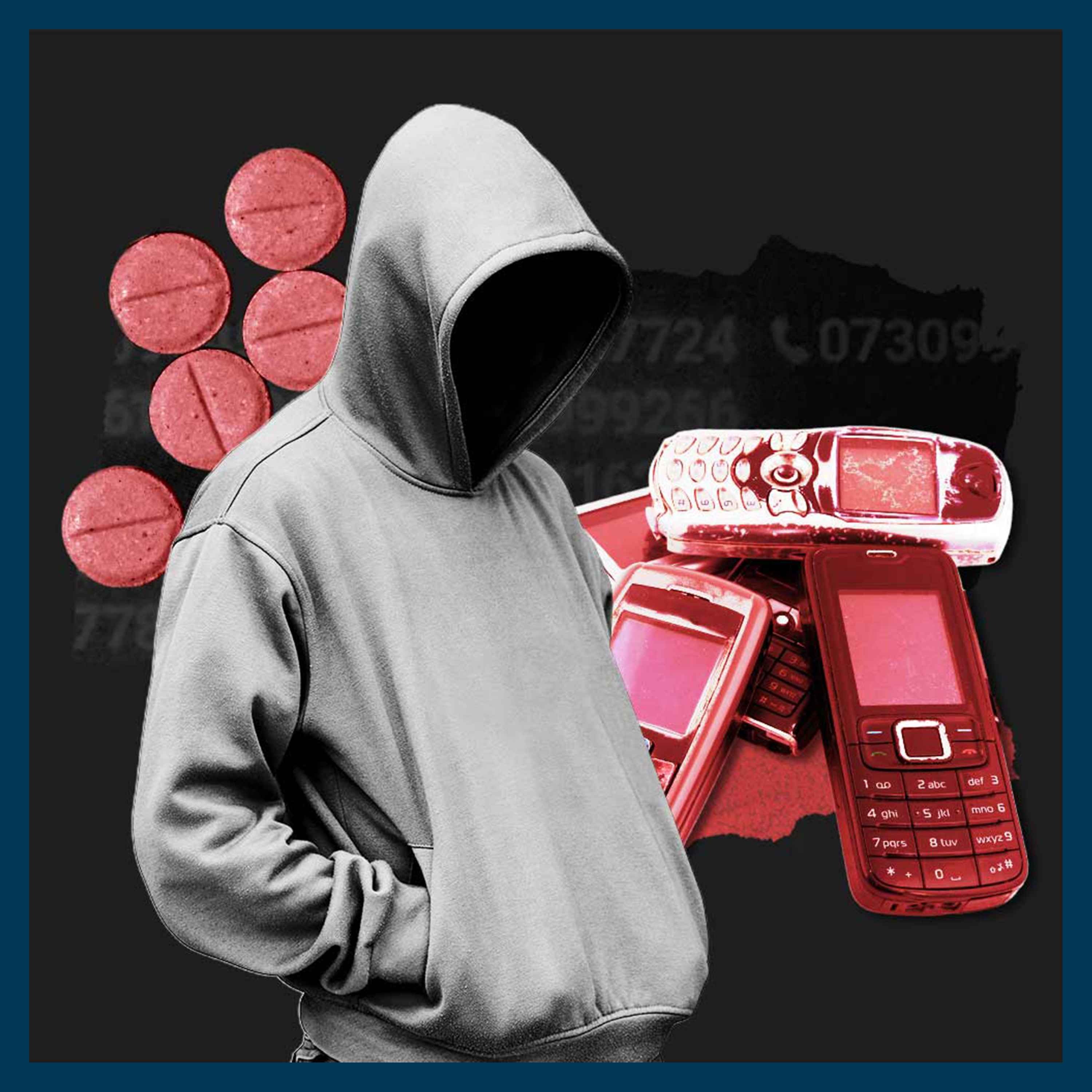
How Operation Sentry gets to that person is another question. During my time with police in York, I start to realise that traditional police work. Going out on patrol, wearing a grey hoodie, black tracksuit, bottom, speaking to addicts. He's been with a group and they've
- [06:52]
PC Richard Fell
been waiting to pick up scar drugs in Essex.
- [06:54]
David Collins
So we're just blue lighting across York. We're heading to, I think, a Tesco's, arresting people suspected of knife point robberies. All that barely scratches the surface of County Line's activities. You might arrest the odd kid sent to the city to deal with, but that's often little more than a sticking plaster, delaying things only until the next day when a gang can send someone else. Operation Titan was set up to turn the tide. It's the police's grand plan to bring together teams working on organized crime, child exploitation, even the vehicles used by drug dealers which are traveling into York. Instead of trying to interrupt the sale of drugs, they focus on those at the top, tracing the people who operate these lines and putting them in jail. The first step is to find a phone.
- [07:54]
Police Officer Adam
As you know, a lot of people get arrested in York for various offences and we have the power to then seize and examine their phones. So someone might get arrested for a domestic violence matter that as part of their investigation, there might be evidence contained on their handset relating to that offence. But when you download it for the assault, you will obtain the content of all of the messages that are currently stored on your handset.
- [08:14]
David Collins
Looking through the messages on seized phones, police look for the telltale language of drug dealing. Fat shots, best of both white and
- [08:22]
Police Officer Adam
brown on banging W2 for 15/2 gram,
- [08:27]
David Collins
30 about with both massive sizes, items to weight.
- [08:32]
Police Officer Adam
Call me, I'll look after you.
- [08:35]
David Collins
Sent out in bulk, these appear on many phones at once. Collect enough texts from enough seized phones and police can piece together a picture of the county line and how it operates. Next, they have to decide which lines to target first. That's done by scoring the line, ranking it according to its risk to the community.
- [08:56]
Police Officer Adam
It would be based on whether there are children involved, whether there's firearms, whether there's previous violence Et cetera, et cetera.
- [09:02]
David Collins
And then once police decide which line to focus on, the second stage is
- [09:06]
Police Officer Adam
you then need to attribute that phone to whoever sent those messages out. And that's probably the harder part of the investigation. That's where we have to bring in our analytical officer that's in our team.
- [09:17]
David Collins
The analyst starts looking at the phone's data, where it was when each message was sent.
- [09:22]
Police Officer Adam
And the reason we have to do that is if I arrested you in possession of the drug's phone today, but that hadn't had a bulk event sent out in probably even in the last five minutes, I have to show that you're responsible for sending those bulk events out in the previous days because you
- [09:39]
David Collins
could say, oh my mate gave me this phone and I've only had it for a day or whatever.
- [09:44]
Police Officer Adam
Exactly. You want to be able to show that actually this person has been offering class A drugs for sale over 2, 3, 4 months as opposed to they were found in possession of the drugsline phone, which are two very different things.
- [09:55]
David Collins
So how do you put that phone in their hand when they send the
- [09:59]
Police Officer Adam
bulk other calls that are made from that phone or who the person is that they contact the most? Because it might be a mum, it might be a girlfriend. It's always the girlfriend. By the way, when it comes to a line holder, if the line holder is a male, their downfall is always the girlfriend.
- [10:14]
David Collins
That's good, that's good to know.
- [10:17]
Police Officer Mike Brocken
Okay, as you're aware, this is OP Fiverr which is a North Yorkshire police led investigation in relation to the Teddy drug dealing line.
- [10:26]
David Collins
What all that painstaking investigation can lead to is this. It's 5am and I'm in great need of coffee. But we're 40 miles from York in a fortress like police station in Bradford
- [10:40]
Police Officer Mike Brocken
looking for mobile phones. Obviously we're there looking for drunks as well, that's always a bonus. But it's the mobile phones that we're looking for. You've all got a package in relation to what the fo we are looking for.
- [10:51]
David Collins
This briefing is preparing officers for a raid on the home of the holder of the Teddy line. Teddy is one of the oldest lines running into York. Moving in to fill the vacuum left by the arrest of Alfred Deer, who used to control the city's drug trade. It stuck around because the line has mostly stayed under the radar. Teddy tends to not engage in violence and use clean skins. People without a criminal record as drug runners with which means less attention from the police. They operate like a normal business. Nine to five opening Hours. Their message is polite.
- [11:28]
Paramedic Instructor
Morning, it's Teddy. I'm active all day with both bigger sizes it's Teddy. Active all day with both.
- [11:37]
David Collins
Police suspect the person coordinating the teddy line is 36 year old David Smith. He lives locally in Bradford and has previous convictions for drug dealing. He's the man police are trying to arrest today. Once he's in custody, the focus will be on finding the line phone, the one sending out the messages. Officers will watch both sides of the building in case anyone attempts to dispose of the evidence.
- [12:01]
Police Officer Mike Brocken
Likewise if you're out front, don't know which room's his bedroom. Eyes open for anything coming out of the windows as we go through the door.
- [12:08]
David Collins
Bradford is covered by West Yorkshire police, but Mike's here in a stab proof vest to lead things. If he's nervous, he's doing a good job of not showing it.
- [12:18]
Police Officer Mike Brocken
Right, two minutes.
- [12:19]
PC Richard Fell
Let's go.
- [12:22]
David Collins
In the center of a pitch black estate, 20 police officers climb out of cars and head towards a terraced house. The beeps of radios and barking of the next door dog the only sound until an officer takes a rip saw and buries it into the plastic front door, cutting it directly down the middle. Another starts pounding it with a battering round. Police pour up the stairs and make the arrest. Inside there's confusion and fear.
- [13:20]
Police Officer Mike Brocken
Got a T shirt, some things to put on.
- [13:23]
David Collins
I'm scared to move.
- [13:24]
Police Officer Mike Brocken
Okay, you're okay. You're safe now.
- [13:26]
Police Officer Adam
Is this your room?
- [13:27]
David Collins
Yeah.
- [13:27]
Police Officer Adam
Yeah. Do you want to
- [13:30]
David Collins
Smith. A large man with a beard and dark brown hair is allowed to put on a T shirt whilst his wrists are handcuffed in front of him. Okay. And.
- [13:43]
PC Richard Fell
And you've been cautioned, okay. So you don't have to say anything
- [13:47]
David Collins
but it may harm your defense if you do not make sure when questioned. Something which later on in court and
- [13:52]
PC Richard Fell
anything you do say may be given an evidence. That's all that means mate. Yeah.
- [13:57]
Police Officer Adam
You want my life?
- [14:00]
David Collins
Officers lead into a van outside to be taken for questioning and the search begins. Drugs are found first wrapped in small white plastic bags. Well suspected.
- [14:13]
Babbel Advertiser
We can't say straight away that it is. However it's suspected that it is.
- [14:16]
PC Richard Fell
Yeah.
- [14:17]
David Collins
How much do you reckon sir?
- [14:19]
Paramedic Instructor
Four golf balls, maybe 150 to 200.
- [14:24]
David Collins
200 wraps each with a street value of about £10. £2,000 worth of drugs. Street value potentially. We have to get an expert to comment on it. We get it weird, purified. Sure. It's incredible how small it is. £2,000 worth of drugs. Look at the size. But it takes 40 minutes of going inch by inch through the property before a phone is revealed, stashed next to a wedge of banknotes in a desk compartment. How'd you find that? It's do the drawers are designed like that. Well, that's not something he's made, is it? Is that just the way the desk is?
- [15:02]
Police Officer Adam
It's the way the desk is, but
- [15:02]
David Collins
he just used it creatively. A red Nokia. It's one of those brick light phones you played Snake on 20 years ago, having to text by pressing each number multiple times. And it matches the maker model of the phone used to deal for the Teddy line.
- [15:18]
Police Officer Adam
And we know that the Teddy line was active as recently as yesterday. We know that they don't operate overnight because they were generally a daytime business. So he's obviously put it there when he's closed business for the day yesterday. And more than likely it will have gone live again this morning at some point.
- [15:33]
David Collins
It's bagged and entered into evidence, seized
- [15:37]
Police Officer Adam
from void in dresser.
- [15:42]
David Collins
A digital forensics team will later be able to match this handset to the messages offering crack cocaine and heroin for sale. As police build their case, there's also evidence David Smith was interested in protecting himself. A Stanley knife. Flick knife, cricket and baseball bats close to the door and behind the sofa.
- [16:09]
PC Richard Fell
Knife.
- [16:10]
David Collins
Is it a serrated blade about 2ft long and thick as a machete? Mike is satisfied.
- [16:18]
Police Officer Adam
Ultimately, we found what we'd hoped to find. We found our county line holder, David Smith, in his bedroom. And within his bedroom we found his personal mobile phone, the Teddy drugs line. We found a quantity of suspected class A drugs and a quantity of cash. And within the address as well, we found a number of weapons that would be indicative of kind of the drug dealing community, shall we say?
- [16:41]
David Collins
Well, you've earned yourself a bacon sandwich, haven't you?
- [16:43]
Police Officer Adam
To be honest, this morning, I'd hope so. At some point. We'll get one.
- [16:46]
David Collins
Yeah. David Smith was charged and remanded into custody on October 16 last year. In November, he made an early plea of guilty and was sentenced by a judge to four years and four months in prison. Another line closed, another success for Operation Titan. Slowly, piece by piece, the police are reducing the number of county lines in operation. In January 2025, there were 20 county lines running into York.
- [17:23]
Police Officer Adam
Today, I would say four or five. Presently, based on what we know, you've
- [17:28]
David Collins
not just halved it, you've actually knocked 75 off.
- [17:31]
Police Officer Mike Brocken
Yeah.
- [17:32]
David Collins
Since I've left York, police believe that figure has been brought down to two. The challenge now is to keep them away. Foreign.
- [17:48]
Grow Therapy Advertiser
SHOWS Women keep showing up for everyone every day. But who's showing up for you? Grow Therapy helps you put your mental health first with therapy that's covered by insurance and built to support you whether it's your first time in therapy or your 50th. Grow makes it easier to find a therapist who fits you, not the other way around you. You can search by what matters like insurance, specialty, identity or availability and get started in as little as two days. There are no subscriptions, no long term commitments. You just pay per session. Grow helps you find therapy on your time. Whatever challenges you're facing. Grow Therapy is here to help. Grow accepts over 100 insurance plans, including Medicaid in some states. Sessions average about $21 with insurance and some pay as little as $0 depending on their plan reg. Visit growththerapy.com acast to get started. That's growthherapy.com acast growthherapy.com acast availability and coverage vary by state and insurance plan.
- [18:57]
Jerry and Stamps.com Advertiser
Shipping, billing, admin, payroll, marketing. You're managing all the things, so why waste time sending important documents the old fashioned way? Mail and ship when you want, how you want with stamps.com print postage on demand 24, 7 and schedule pickups from your office or home. Save up to 90% with automated rate shopping. That's why over 1 million small businesses trust stamps.com go to stamps.com and use code podcast to try stamps.com risk free for 60 days. Are you noticing your car insurance rate creep up even without tickets or claims? You're not alone. That's why there's Jerry, your proactive insurance assistant. Jerry handles the legwork by comparing quotes side by side from over 50 top insurers so you can confidently hit buy. No spam calls, no hidden fees. Jerry even tracks rates and alerts you when it's best to shop. Drivers who save with Jerry could save over $1,300 a year. Don't settle for higher rates. Download the Jerry app or visit Jerry AI acastod.
- [20:15]
David Collins
Through all the success North Yorkshire Police have had targeting county lines, keeping their area drug free is a different challenge entirely. If you're a dealer, it doesn't take much to buy a new phone. Switch your contacts over and start again. I've been told about one case still making its way through the courts, where a suspect charged with running a county line was released with an electronic monitoring tag. A month later, he's back in custody, once again suspected of running an entirely new line. Reoffending has become so Common police here argue suspects should be kept in prison on remand whilst waiting for a trial. They've coined a phrase, bail's a fail.
- [20:59]
PC Richard Fell
But what we know happens is we get rid of a line and then it'll come back. It's just a never ending battle, really. It's kind of like a recycling scheme of drugs and people. Because I think what we found is they lose a runner or a line holder and they just get refreshed with a new one and then they come back because the money's so much money involved in county line drug dealing, drug dealing in general, they're just going to come back.
- [21:27]
David Collins
Out on Patrol are two members of the Serious Organised Crime Disruption Team, 32 year old PC Kirsty Butler and her colleague PC Richard Fell.
- [21:37]
PC Richard Fell
Even I've got to guess my age, no doubt because you might say I'm older. See, people always do that, don't you? No, I'm 28, I'm 52, it's my 20th year of policing. Majority of my career has been like response policing. Then I went into community safety, neighbourhood policing, problem solving and then I've come onto this team.
- [21:57]
David Collins
Does that feel for you guys as a team?
- [21:59]
PC Richard Fell
Because it's quite a depressing picture, isn't it?
- [22:03]
David Collins
Because you know, you build an investigation, you take one person out and then it's just another person who's going to step in. Is that not a bit demoralizing?
- [22:12]
Resident Mary
You're never going to stop drug addiction, aren't you? That's the issue. So there's always going to be a void to fill. But it is a bit disheartening, isn't it?
- [22:21]
David Collins
And it's vulnerable people who pay the price. Kirsty and Richard are out on cuckoo watch. Because county lines often send people into an unfamiliar city, they sometimes look for a place to sleep or deal their drugs. The least visible option is often an out of way flat home to a drug user or another vulnerable person, such as someone with learning difficulties. Once they can befriend or threaten their way in, runners can take the flat over, much like a baby cuckoo can take over a nest.
- [22:53]
PC Richard Fell
There'll be no telltale sign from the outside, we'll knock on the door. And more often than not, if they don't answer, that's a bit of a. Well, either not in all their flat houses full of drugs or full of county liners. So they're not allowed to answer the door.
- [23:13]
David Collins
So we're now going into an estate where I can see blocks of flats and we're Going to approach an address now that was being controlled by the Bobby line, is that right?
- [23:23]
PC Richard Fell
We've got intelligence that they were here for a time. They've then targeted another address, which is the last address we got them at when we disrupted the last address. They were then left without an address.
- [23:37]
David Collins
Right at the time we joined the pair. The Bobby line was the latest to be shut down by the police. Its line holder arrested in a sting at a petrol station a week earlier. If someone wanted to start that line up again, they may be looking for a new location. Right now, Kirsty and Richard have a list of vulnerable residents to check on one by one, disrupting any attempt to rebuild.
- [24:02]
PC Richard Fell
I've looked at the recent intelligence. We know that this guy has had involvement with them up until them being arrested. But on the other hand, he's actually contacted police prior to this, saying, I'm concerned because they're trying to get back to my address. If he has been running and helping them with their dealing, is that because it's pressure?
- [24:23]
Babbel Advertiser
Threats?
- [24:24]
PC Richard Fell
Threats and fear, because that's generally how they operate, through fear.
- [24:28]
David Collins
Another reason people might not answer the door to the police. Would you be able to open the door for us?
- [24:34]
Resident Mary
It's the police.
- [24:36]
David Collins
Which proves to be the pattern for the morning.
- [24:38]
PC Richard Fell
I mean, he's probably not even in, is he? And we always made contact with a neighbour, introduced ourselves as the police and then they.
- [24:46]
Resident Mary
She didn't want to let us. I was wondering if you've seen your neighbor.
- [24:49]
David Collins
No.
- [24:50]
Jerry and Stamps.com Advertiser
Recently?
- [24:51]
PC Richard Fell
No.
- [24:51]
Resident Mary
No.
- [24:53]
PC Richard Fell
That's not going to be very welcome, is it?
- [24:55]
Resident Mary
No.
- [24:56]
David Collins
Door after door unanswered until Kirsty and Richard head to check on someone, who we'll call Mary.
- [25:04]
PC Richard Fell
Someone with a curtain shut.
- [25:07]
Resident Mary
But a lot of the houses are unkept, shall we say.
- [25:10]
PC Richard Fell
Yeah, she's a drug user, so. But I think awareness is always raised, you know, when the curtains are just shut. Blackout curtains shut, can't see in. It's a little bit of a. You got to question what's going on, aren't you? Some people just. Some people just like living in the dark.
- [25:38]
Resident Mary
We're from the police, come to do a welfare check, see how you are.
- [25:42]
David Collins
Fifteen minutes later, they emerge.
- [25:45]
PC Richard Fell
All right, take care. See you later.
- [25:51]
Resident Mary
She was quite talkative. I've never met her before, so I don't know if she's up and down usually and we call her on a good day or. But she's a drug user. She's currently on tag. She didn't want to give us any line information because she's still scoring.
- [26:12]
PC Richard Fell
She doesn't want to cut off her supply, she didn't want to cut off
- [26:15]
Resident Mary
the supply and she was annoyed that we'd taken out Bobby because he delivered after 9pm.
- [26:26]
David Collins
Why is that a good thing?
- [26:27]
PC Richard Fell
But certain times when they, when they want the drugs more than other times and he was a good line of supply because he could deliver at a time that suited, I suppose it's when you get your Tesco order in it, you know, your supermarket order delivery.
- [26:40]
David Collins
Talking to Mary confirms to police that for now, the Bobby line appears to still not be operating. She told officers she'd been ringing the line's old number, but it won't connect.
- [26:50]
PC Richard Fell
So the last time when we took the other line out, the Bobby line, which is on a different number within three, was it three days later, the new line was established with the new number. So they'll then advertise again and it's back on.
- [27:05]
David Collins
So this is eight, eight days, is it? And it's still not on?
- [27:08]
Police Officer Adam
Yeah.
- [27:09]
PC Richard Fell
So when was the last. When was the arrest? Third one it. Yeah. So this is probably the longest we've gone, which is a plus.
- [27:18]
David Collins
Let me say that again, in case you missed it, the longest the police have gone without the Bobby line restarting is just eight days. The problem is, as long as people like Mary still want to buy drugs, criminals will want to supply them. It's why policing the drugs trade becomes what Richard calls a recycling scheme of drugs and people. Every success, every line holder, jails, every picture of a suspect on the wall of York police Station creates another gap in the market. In fact, remember the Teddy line in Bradford, the polite 9 to 5 operation where I watched police cut through the door and make an arrest. That line's holder, David Smith, was jailed for four and a half years. The phone he used was seized and its Office of Drugs silenced temporarily because just a few weeks after David Smith's arrest, when I left York, that line started up again.
- [28:23]
Paramedic Instructor
Hi, it's me, Teddy. I'm active all day with both bigger
- [28:28]
David Collins
sizes, someone new was at the helm, stepping into Teddy's shoes, trying to carry on its legacy. Right now, even as you're listening to this, the Teddy line is active, dealing drugs into York. What I've learned is that there's always someone next in line who could be threatened or encouraged to take over and run the business. The customers can be passed from dealer to dealer. All you need is a phone and the drugs. And most shockingly of all, sometimes the person who steps up to take over the business is a child. That's tomorrow on the Story. I'm Sunday Times Northern Editor David Collins. This episode was produced by Kate Lamble. The the executive producer was Dan Box, sound design was by Tom Burchell and theme composition was by Mal Lucetto. If you have any questions or comments, drop us a line to thestoryatthetimes.com or you can leave us a comment on Spotify. Thanks for listening. Goodbye.
- [30:15]
Brookfield and 1Password Advertiser
At Brookfield, we believe you can own wealth that's measured in generations. For 125 years, we've built long term wealth through expertise, discipline and a clear vision for the future, providing investors access to alternative strategies built for what's Next Brookfield Own what's next. Learn more@brookfield.com this is not an offer to sell or investment advice. Investing involves risks, including loss of capital. Past performance is not indicative nor a guarantee of future results. Please review performance and offering materials before investing. A password manager should be the first security purchase you make for your team. Why? Because compromised passwords are the number one way bad actors attack companies, and small businesses are their favorite targets. But unlike a lot of security challenges, passwords actually have a pretty simple solution. 1Password lets you manage all your business's credentials so you can feel confident that your data stays secure as your company grows. Find out more at 1Password.com specialoffer and start securing every login.