Loading summary
Transcript109 lines
- [00:04]
Cologuard Advertiser
When you turn 45, it's your turn to blow many candles and to screen for colon cancer. Use the Cologuard plus test in the privacy of your home and send it back to obtain your results. Cologuard products are intended to screen adults 45 and older at average risk for colorectal cancer. Prescription only. See More information@cologuard.com Request the Cologuard plus test from your doctor. For more information in Spanish, visit cologuard.com
- [00:29]
Progressive Insurance Advertiser
Preva this episode is brought to you by Progressive Insurance. Do you ever think about switching insurance companies to see if you could save some cash? Progressive makes it easy to see if you could save when you bundle your home and auto policies. Try it@progressive.com Progressive Casualty Insurance Company and affiliates. Potential savings will vary. Not available in all states.
- [00:54]
Manveen Rana
From the Times and the Sunday Times this is the story. I'm Manveen Rana. There are moments that shock a country into demanding change.
- [01:08]
Martina Lees
So in 1979, there was a big fire at a Woolworths shop in Manchester that started on a sofa. Ten people died. And then there was a campaign to bring in regulations to stop this from happening again.
- [01:24]
Manveen Rana
It took almost a decade, but in 1988, the government brought in new fire safety regulations for furniture, which established tests
- [01:34]
Martina Lees
that were so tough that it was basically impossible to pass them without using a lot of flame retardants in the foam and most often also in the fabric of a sofa or an armchair or a mattress.
- [01:49]
Manveen Rana
The government thought it was making our home safer, but it now seems we it had the opposite effect.
- [01:56]
Martina Lees
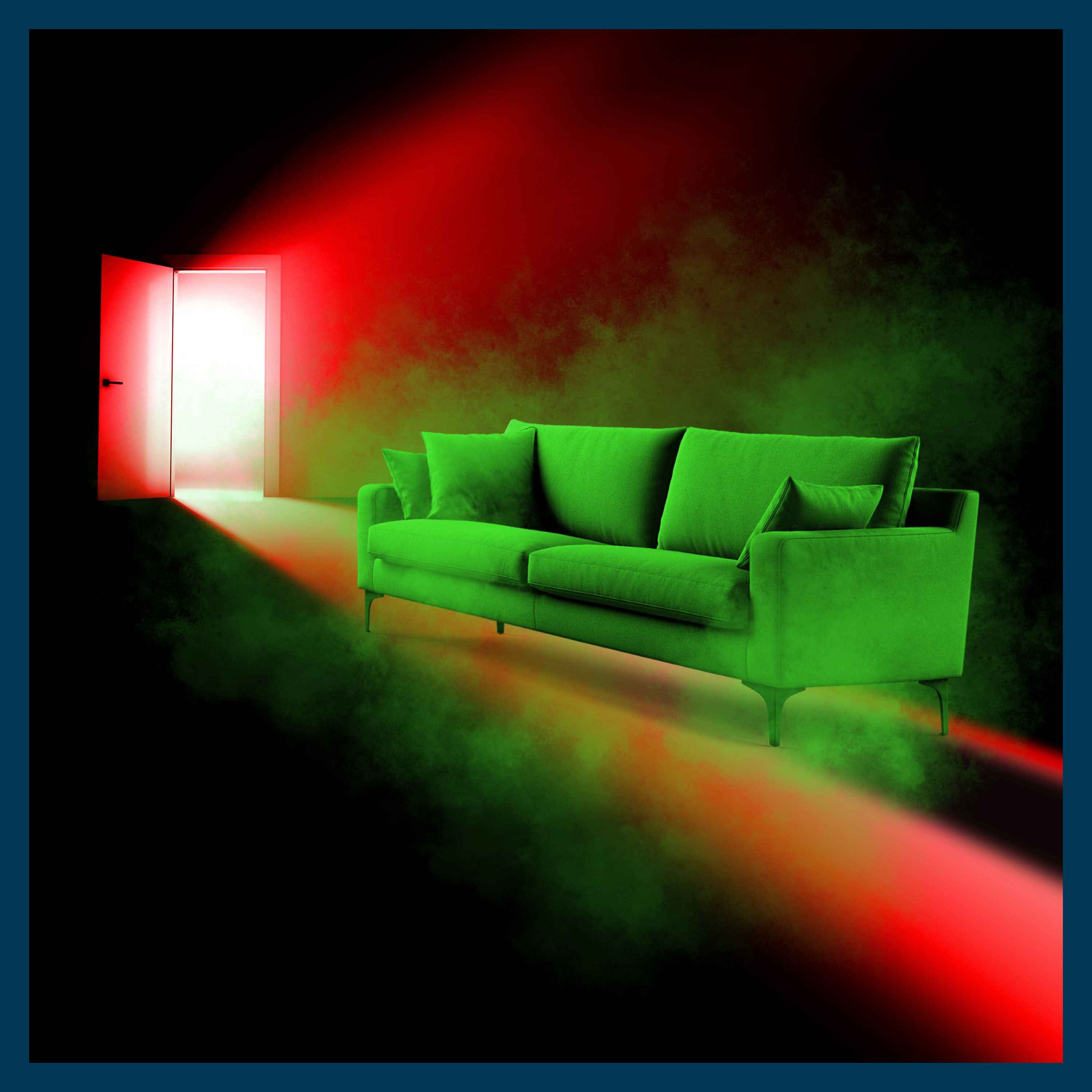
Some of these chemicals have been shown to be toxic to humans and animals, and we have indeed in Britain, the most toxic sofas in the world, just
- [02:07]
Manveen Rana
let that sink in. The sofas in all of our homes, the place we retreat to at the end of a long day, our refuge when we need to relax, could be utterly toxic. It was a realization that drove the Sunday Times senior reporter Martina Lees into a long and complex investigation.
- [02:30]
Martina Lees
It's taken me over two years to investigate this issue. It is such a complicated subject, and I read through a lot of scientific papers and met scientists and spoke to different people who have campaigned about this to really understand what we can say definitively, what with artsuke mongering.
- [03:05]
Manveen Rana
The story today. Are you sitting comfortably? Why our sofas are so toxic.
- [03:20]
Martina Lees
The first time I met Delys Featherson Dilke was in an upholstery studio in southwest London with another upholsterer, Sharon o', Connor, and they were telling me about the problem around flame retardants in furniture. And as they were talking, I was just trying to pick up a jaw from the floor and at one point they were showing me a fabric that was back coated with very thick flame retardants.
- [03:47]
IKEA Representative
Have a good feel with your hands. Have a feel of that.
- [03:52]
Martina Lees
Oh, it's so stiff.
- [03:53]
IKEA Representative
It's wet. Can you feel it's wet feeling?
- [03:56]
Martina Lees
Yeah, it's almost like damp feeling. Yeah.
- [03:58]
IKEA Representative
So that has been treated.
- [04:00]
Martina Lees
It was several millimeters and it sort of this white, powdery substance that just came off as you touched it. And I just said, please open the window. And they were, yes, let's open the window. It just feels different. The. The fabric, it's. It's stiff, it's much thicker than normal fabric. And you're going to have that on pretty much every fabric that you have on a sofa in this country, which is terrifying.
- [04:26]
Manveen Rana
Tell me a bit about the women you were meeting, Delith in particular, who is she? And just describe her journey into all of this.
- [04:33]
Martina Lees
Delith used to be a lawyer for Warner Brothers. She spent about 20 years in commercial law and then she took an upholstery course. She's told me she wanted to see more of a. She has three children and lives in Richmond in South West London. And then she did a diploma.
- [04:52]
IKEA Representative
About four years ago, I did an advanced diploma in furniture design. And as part of that, for two months of it, we were set the task of investigating every bit of material that we were going to put into
- [05:07]
Martina Lees
our chair and was astonished at the copious amounts of research on flame retardants in furniture.
- [05:16]
IKEA Representative
And then I read the 2019 environmental audit, toxic Chemicals in Everyday Life. It attributed one whole chapter to flame retardants in furniture. And it was very firm and very brief and very to the point. And it said there is no evidence they work and there is clear links to health harm and environmental harm.
- [05:40]
Martina Lees
The furniture in Britain and also in Ireland are uniquely toxic because of the regulations that we have here.
- [05:48]
Manveen Rana
That's so interesting. So Delith having retrained to make sofas in Richmond, so she doesn't have to keep flying to la. Still thinking like a lawyer, spots that the chemicals going into these sofas are really very toxic. Tell us a bit about these chemicals. What are they?
- [06:05]
Martina Lees
So flame retardants are meant to delay ignition, so it buys you time. They're meant to save your life if there is a fire. However, a huge body of research has over the years shown that various different types of these chemicals, they build up in nature and in humans, the chemicals are man made. They don't break down and they don't stay in your sofa. They migrate out into the house dust and then into us and especially into young children who have the highest levels of them in their bodies. They are born with it through the placenta from their mother, then they ingest more through breast milk and through crawling around in the dust and putting things in their mouths. Some of the chemicals have been linked to infertility problems, to developmental problems in young children, such as IQ loss, attention problems. Some of them have been linked to cancer. The most shocking thing that happened recently is that the World Health Organization just over a week ago declared the chemical that's most common in British sofas, called tcpp, which makes up about a fifth of the volume of the foam of your sofa.
- [07:18]
Manveen Rana
Wow.
- [07:19]
Martina Lees
Is probably carcinogenic to humans.
- [07:21]
Manveen Rana
Oh my God. I mean, for anyone listening to that, you know, on the one hand it sounds great that it's a flame retardant, it's gonna save your life in a fire. On the other hand, the number of times people will fall asleep on a sofa will be, you know, very close to the foam in it. And you're saying it's carcinogenic?
- [07:41]
Martina Lees
That's carcinogenic, yes.
- [07:43]
Manveen Rana
How has that happened? Why is that uniquely happening here in the uk?
- [07:49]
Martina Lees
Well, it's because of these regulations that make the test so difficult to pass that most manufacturers use a lot of flame retardants. It's unavoidable in the foam because the foam test is so difficult and in the fabric that it's usually used. So I should also say that some of the chemicals have been linked to other issues like immune problems, also damage to the cornea, kidneys, nerves. It is quite a long list of various health conditions. Endocrine disruption is another one to your sex hormones and thyroid hormones, which can cause weight problems in both directions, depression, anxiety. So yeah, it's, it's not just that it could threaten your life, it is linked to quite debilitating and life changing conditions.
- [08:37]
Manveen Rana
I mean, that's so shocking. It's not somewhere you normally look for dangers in your life, you know, your sofa.
- [08:44]
Martina Lees
Quite.
- [08:45]
Manveen Rana
How much of these chemicals are being used in our sofas?
- [08:50]
Martina Lees
That's the scariest bit for me. It's about typically 2 kilograms per sofa, according to Professor Richard Hull at Lancashire University, who's been studying this. And it makes up 10 to 20% of the foam volume of your sofa. So that's like up to a fifth of it as you look at your sofa there, that's how much of it is. And if you think, you know, a normal house might have two sofas and four mattresses, each of them has that much in it.
- [09:20]
Manveen Rana
Wow. You mentioned that the reason it's happening here in Britain is because the tests for fire safety are so much more stringent. Just explain how that's come about. Why are our tests different to the rest of Europe's?
- [09:33]
Martina Lees
Well, it goes back to the fire back in Manchester in 1979 where 10 people died because of a fire that started on a sofa. And that led to the government introducing these very rigorous test regulations that makes it almost impossible to pass without literally adding bucket loads of flame retardants.
- [09:54]
Manveen Rana
That's extraordinary. And it's not just Europe. We've sort of become a bit of a global outrider on this. And that's partly because I other parts of the world have recognized these chemicals are very dangerous and have started to do something about it. You mentioned Delith. Tell us about another remarkable woman who's taken this challenge on on the other side of the Atlantic.
- [10:14]
Martina Lees
Dr. Arlene Bloom is a Californian environmental health scientist. And in the 1970s she was trying to be the first woman to climb Amherst from America.
- [10:26]
Manveen Rana
Wow.
- [10:26]
Martina Lees
And at the same time at night in the camp, she was writing a co writing a paper for Science magazine. Flame retardants in children's pajamas, which they have found to be a possible cause of cancer while she was up Everest. Yes.
- [10:42]
Manveen Rana
That's just showing off.
- [10:43]
Martina Lees
So quite. She's remarkable.
- [10:45]
Dr. Arlene Bloom
We found a little girl who'd never worn the trist treated pajamas because her mom got pajamas in the uk and when we put her in the pajamas the first day, we found, we collected her urine and found breakdown products from Tris in her urine and they were known cancer causing chemicals. And every day she wore the pajamas, the level went up and she stopped wearing them and the level went down.
- [11:13]
Martina Lees
So the paper got published and this chemical Tris got banned from children's pajamas in America. And then Fast forward over 30 years later, she then discovered that the same chemical was being put in American sofas because California had rules similar to the UK's that made it very difficult to pass tests without adding a lot of flame retardants. So she set about changing the regulations that drove the high use of these chemicals. And Arlene founded a nonprofit that brought peer reviewed science to politicians, journalists and so on. And in 2013, California started to change the regulations that drove the heavy use of these chemicals. And because California is Such a big. The rest of America and Canada were following the same rules and putting these huge amounts of chemicals in their service. So when California stopped, so did the rest of America and Canada.
- [12:11]
Dr. Arlene Bloom
California passed a law saying they had to label furniture whether or not it had flame retardants. And so there was a label developed that had a checkbox saying contains flame retardants or does not contain flame retardants and also said that the flame retardants were harmful.
- [12:29]
Martina Lees
So that leaves Britain as the only country in the world still using this.
- [12:35]
Manveen Rana
Having changed the regulations in California and America, she's now turning her attention to the uk.
- [12:42]
Martina Lees
Yes, Olene has been advising Dilis V on achieving the same here and has indeed sent in material to the government here as evidence as well.
- [12:53]
Dr. Arlene Bloom
I have been off and on working with people in the UK for. I don't know, I should look, but I think since about 2010, maybe because you do use the most, I think the UK furniture has more flame retardants than any other furniture in the world and not a proven benefit.
- [13:14]
Martina Lees
Hopefully we will get there too. But in the meantime, all of our sofas have this, or almost all of our sofas will have these chemicals in. If your sofa has a fire safety label on in the UK or Ireland, it will have a lot of flame retardants. And until we all buy new sofas and the rules have changed so that they are then safe from the chemicals, we are going to have this in our homes, casting out bits of flame retardants into the dust and into us for decades to come.
- [13:45]
Manveen Rana
I'm tempted to throw mine out and sit on the floor too.
- [13:48]
Martina Lees
Quite.
- [13:49]
Manveen Rana
Is the government aware of just how dangerous these chemicals might be?
- [13:54]
Martina Lees
Well, since 2023, the government has deemed your sofa so toxic that you are not allowed to put it into landfill or recycle it. If you go to your local tip, you'll see a sign saying it has pops in it and therefore has to go in a separate skip from where it will be burnt. But meanwhile, we are all still sitting on.
- [14:22]
Manveen Rana
Coming up, Martina became the first journalist to be allowed to watch the fire tests in action at the world's biggest furniture manufacturer. Is it actually the safety testing that's posing such a danger to the public? That's in just a moment.
- [14:49]
Cologuard Advertiser
When you turn 45, it's your turn to blow many candles and to screen for colon cancer. Use the Cologuard plus test in the privacy of your home and send it back to obtain your results. Cologuard products are intended to screen adults 45 and older at average risk for colorectal cancer prescription only. See More information@cologuard.com Request the Cologuard plus test from your doctor. For more information in Spanish, visit cologuard.com
- [15:15]
Progressive Insurance Advertiser
prevar this episode is brought to you by Progressive Insurance. Do you ever think about switching insurance companies to see if you could save some cash? Progressive makes it easy to see if you could save when you bundle your home and auto policies. Try it@progressive.com Progressive Casualty Insurance Company and affiliates. Potential savings will vary. Not available in all states.
- [15:35]
Farnoosh Torabi
Hi, this is Farnoosh Tarabi from so Money with Farnoosh Tarabi and today I want to talk to you about Boost Mobile Quick Money Tips Stop paying a carrier tax if your phone bill feels trapped in a pricey plan, this is your sign to unlock savings. Boost Mobile helps you reset your spending. With the $25 Unlimited Forever Plan. You can bring your own phone, pay $25 and get unlimited wireless forever. And that simple Switch can unlock up to $600 in savings a year. That's money you could put towards paying down debt, investing or something that actually brings you joy. Those savings are based on average annual single line payment of 18,000 DOL, Verizon and T Mobile customers, compared to 12 months on the Boost Mobile Unlimited plan as of January 2026. For full offer details, visit boostmobile.com.
- [16:36]
Manveen Rana
Martina, you've been telling us about how these really alarmingly toxic chemicals are to be found in most household sofas, which has certainly terrified me and can't be great for most of listeners either. So apologies there, but you've been investigating this for a while and you've actually managed to get very rare access to Ikea and some of the testing they do on sofas. Tell us about that. Where did you go?
- [17:00]
Martina Lees
So IKEA is so worried about the use of chemical flame retardants that they don't use them for the rest of the world. So Ikea makes one sofa for Britain and Ireland with the chemicals in to comply with the rules here, and another sofa that looks exactly the same for the rest of the world without the chemicals.
- [17:24]
Manveen Rana
Oh, and if they're so worried about using these chemicals, they clearly feel they have to because of the regulations in the uk. How do they mitigate for that?
- [17:35]
Martina Lees
So I had the rare opportunity to go to IKEA's Test labor in Sweden to see how they test the materials for sofas for fire safety.
- [17:48]
IKEA Representative
Are most curious about how we work with requirements at ikea. What's our point of view on chemicals is on flammability.
- [17:58]
Martina Lees
It was the first time IKEA invited a journalist to go and see that. It was quite funny. I flew into Copenhagen and then you take the train from there. And as I went through passport control, the guard asked me, why are you here? And I said, I'm going to Ikea to set some sofas on fire. And he looked at me quite funny. And then Dink stabbed the passport.
- [18:19]
Manveen Rana
Welcome.
- [18:20]
Martina Lees
Yes. So off we went. And so IKEA demonstrated some of the tests that we use in the UK to show how difficult it is to pass them. So they make these kind of mini sofas that has foam and then fabric on it. So the test that we use in Britain uses an open flame, which is a bigger source of ignition than used in tests in other parts of the world. So that makes it harder to pass it.
- [18:49]
Manveen Rana
This is the difference in testing. That means we end up using much more flame retardants in Britain. This is where the problems arise.
- [18:56]
Martina Lees
Exactly, yes.
- [18:57]
IKEA Representative
To pass the tests for the great British market, we have the gas. Different kinds of gas flames test, and we also have a creep test.
- [19:10]
Martina Lees
So in the test for fabric, so an engineer will hold a gas flame, sort of the. It's supposed to mimic a match against this mini sofa. The fabric has to resist the flame and not go whoosh for the duration of the test.
- [19:28]
Manveen Rana
How long is the test?
- [19:29]
Martina Lees
It's about two minutes. So the test for foam is even harder. They make like a mini bonfire on the sofa and then set it alight and it's supposed to burn out by itself, hence the use of so much flame retardants to stop the foam going whoosh.
- [19:47]
IKEA Representative
So we put this rig on scale in one of the boxes and it shouldn't, after these 10 minutes, it should self extinguish and it shouldn't lose more than 60 gram of weight.
- [20:00]
Martina Lees
Now, remember, foam is usually made of petrochemicals, so it's solid petrol sitting there.
- [20:06]
Manveen Rana
Yeah. So, hang on, you basically you create a fire on the sofa, you give it a certain amount of time and it has to burn itself out without setting the rest of the sofa on fire.
- [20:14]
Martina Lees
Yes.
- [20:15]
Manveen Rana
Even though, as you say, most of the foam is usually petrochemicals.
- [20:18]
Martina Lees
Yeah. Of all petrol byproducts.
- [20:20]
Manveen Rana
So how do they do that? Is that where the flame retardants come in?
- [20:25]
Martina Lees
Yes. So the flame retardants slow down the ignition and also the rate at which it burns, if it does ignite. And that is how you get it to not Go whoosh.
- [20:39]
Manveen Rana
Yeah. So, Martina, you've described these incredibly difficult tests, very stringent tests that they're having to do for the UK market. How does that compare to the rest of the world?
- [20:50]
Martina Lees
In Europe, what they use is a smoulder test. So they put a smouldering cigarette, it's not a Marlborough, but a science cigarette, on the mini sofa, and then they leave it there for an hour and it's supposed to go out by itself without going whoosh. So it's still a tough test, but it's much easier to pass it without putting a bucket of flame retardants in there.
- [21:21]
Manveen Rana
Martina, if you didn't know about how toxic those flame retardants are, you might think that was a good idea. You know, the idea that your sofa won't suddenly go whoosh if there is a fire around it. Are sofas in the UK actually safer when it comes to a fire than the rest of Europe?
- [21:38]
Martina Lees
Well, when you look at fire death rates around the world in comparison to the uk, you would think that if this work and did save lives, that fire death rates would have come down faster in Britain post 1988 than elsewhere, but it did not. The death rates came down at roughly the same rates in countries where the rules are much less stringent, like in New Zealand, that don't even have much in terms of furniture fire safety rules. So there is no sign, no conclusive evidence that it does actually save lives. And what is also very concerning is scientists here at Lancashire University have tested how the chemicals react with the smoke, and they have shown that it actually makes some of the chemicals make the smoke more toxic, so it will kill you faster. In fact, the combination that is most common in British sofas, the chemical tcpp, the same one that the World Health Organization has said is probably carcinogenic to humans, combined with something called a brominated flame retardant in the fabric, will give you about five minutes until you pass out and is incapacitated.
- [22:54]
Manveen Rana
That's so alarming. So you've got these very dangerous chemicals going into our sofas, supposedly to make us safer. In the case of fire, that's not actually working. What did IKEA say about this?
- [23:06]
Martina Lees
IKEA doesn't want the regulations to stay as they are because I really worried about them.
- [23:12]
IKEA Representative
Another example could be the brominated flame retardants that we banned already in 2000, even though there were no legal restrictions at that time. So we wanted to go ahead of legislation. We put that as a policy or a direction and implemented as a requirement
- [23:27]
Martina Lees
and they really don't want to use flame retardants. So normally a manufacturer would comply with the highest regulations wherever and then make the same product for everywhere else in the world, because that gives them economies of scale. But they don't do this for sofas because they are so worried about how toxic the flame retardants are for sofas in Britain and Ireland, they try and basically use less foam in the sofa, bury it down deeper.
- [23:57]
IKEA Engineer
We can also create distance to more flammable materials to put them deeper into the construction. So, for example, we could change order between the pocket springs and the foam, for example, just put the foam as far down in the construction as possible.
- [24:12]
Martina Lees
And they will also try and use fabrics that you just take away the chemicals from the top layer. So a leather or a wool will get the chemicals away from your skin, which is also a good thing.
- [24:28]
Manveen Rana
Yeah, I mean, that sounds safer. A lot of people listening to this will wonder how. How is it that these chemicals, which, you know, people have started worrying about even in the 70s, have been allowed to be used for so long? Why has it taken so long to try and get regulations to do something about them?
- [24:48]
Martina Lees
One part of it is that science to show harm takes so long. So to ban one chemical takes about 10 years of evidence. You can't prove that one specific person got sick from one specific chemical. It's very. You can't ethically expose someone to it to see what happens to them. So scientists have to go into nature and into our homes and measure the levels of these chemicals, how much there is. If there's a lot and they don't break down, that's concerning. Then they start looking at. They subject animals in a laboratory to them to see what happens, which for rats or mice, it would take two years. Study. And then they do studies on cells to see what is the smoking gun effect of a chemical on a cell. Is there a mechanism that directly causally links it? They also do population studies to track the effects on humans over time. For example, in 2003, scientists in America took blood samples from over 1,000American adults. Then they tested it for high levels of PBDEs, a specific group of flame retardants. And they looked at who was still alive 16 years later. The people with high levels of these chemicals in their bodies were four times more likely to have died of cancer. To get this study published took about 20 years. But what happens is one chemical gets replaced by one that's almost the same, probably with similar harms. And each time this happens, it takes about 10 years to get the next one banned. So that's one part of it. And in Britain, there's also been other issues, like, for example, the grenfell fire in 2017, which I have reported on extensively. So understandably that caused concern about being seen to reduce fire safety regulations. I also think that this is a very complicated topic. It's difficult to understand and it's hard to explain to the public why would we be changing the rules? So they've been under review since 2009 and only now the government has finally said, we want to change this. But they haven't done it yet.
- [27:04]
Manveen Rana
Tell me about that. Because Delith, the woman you were seeing in her workshop, the lawyer turned sofa maker, she's been leading the charge on a lot of this campaign. How far has she got?
- [27:16]
Martina Lees
So Delith, she worked with 12 environmental health scientists and published a paper a few years ago in an academic journal to set out the scientific case for change. She's been on a British Standard Institution committee drawing up new rules and she has led 6,000 upholsterers in petitioning the government to change the rules and met ministers in the process. Her work has, where things had just stalled and not gotten anywhere, I think has really helped to push it over the line. So MPs back in 2019 had done a parliamentary review from the Environmental Audit Committee, saying the rules should change. Britain should. Should bring its testing rules in line with Europe and America to reduce the levels of chemicals we use. And that wasn't done. But now the government's saying they want to do that and switch to the kind of test they use in Europe and America, which is based on a smoldering cigarette. So it's a smaller ignition source. It still gives you a level of safety, but it's not as hard to pass without flame retardants. And in fact, you can pass it with art, so it doesn't drive the high use of them.
- [28:32]
Manveen Rana
Those changes haven't gone through yet. In the meantime, some of the people campaigning are already worried about how these chemicals have affected them. I mean, just tell us about some of the people you've been speaking to and the impact it's had on their way of life.
- [28:49]
Martina Lees
So Sharon o' Connor told me that she used to be a retail executive and had no health problems. And in her 30s, she reached. Reaching. Trained in upholstery while receiving fertility treatment for two years, but she couldn't get pregnant. And she still hasn't had a child. She's now 54. There's extensive research linking some chemical flame retardants to infertility, including a population study in America that linked the organous phosphates, which is the group of chemicals that's now most commonly used, to a 41% reduction in a woman's chances of getting pregnant. I also spoke to Bruce Jack, who's an upholsterer in Cornwall, and he got multiple sclerosis and it became so debilitating that he had to shut down his business. He lost his livelihood. One major study in the US two years ago found a causal link in cells showing how certain flame retardants could be linked to multiple sclerosis. So neither of them can prove that this is the cause of their issues, but neither of them can think of any other reason why it would have happened.
- [30:08]
Manveen Rana
Wow. What can people do? You know, because I think listening to this and listening to the studies, you sort of suddenly realize that we are all effectively lab rats in this greater experiment. And it could take decades to work out exactly which chemicals are right and aren't or to get the regulations in place. If you're living in the UK now with a sofa you're worried about, what can you do to mitigate the risks?
- [30:35]
Martina Lees
It's difficult because it's eye wateringly expensive to buy a sofa without flame retardants. There are a few small boutique brands who make them. It starts about £3,500 for a two seater.
- [30:47]
Manveen Rana
Wow.
- [30:48]
Martina Lees
So a lot of people don't have that choice. For most people, buying a sofa is a big investment. You're going to have it for a long time. So one study that that is encouraging, as Arlene Bloom's think tank did a study in America to see what difference the Californian change has had. And they found that when people changed the foam inside their sofas, it did reduce the levels of flame retardants in them and their homes. So you could just swap out the foam. We can all push the government to say, put through this, change the rules now that drive the use of these regulations.
- [31:25]
Manveen Rana
Write to your mp.
- [31:27]
Martina Lees
Yes, write to your mp. There is a government consultation out that's going to be open until June, so you can respond to that. But we will have to buy new sofas, all of us, to avoid having this in our homes. So if you are needing to buy a new sofa now, I would say look for a leather or a wool cover, which you can get through the tests without coating that directly in the flame retardant so it will be deeper into the sofa, which is better. And look for sofas with extra layers in beneath the textile. Avoid fabric that's actually dipped in the chemicals, which is directly against your skin, and also avoid fabrics marketed as inherent flame retardant, so which means that it's directly against you. Again, wow.
- [32:17]
Manveen Rana
For people like Dallas who've been fighting for change, have you spoken to her recently? How does it feel that they might be on the cusp of getting that through?
- [32:26]
Martina Lees
I spoke to her last week on the day that the government announced they're planning to change the rules, and she said, I think we've won. But she wasn't celebrating yet. She was making a big bed spread for a Netflix show, actually, so they're hopeful, but it's not over the line yet.
- [33:06]
Manveen Rana
That was the senior property writer at the Sunday Times, Martina Lees. You can read more of her work@thetimes.com or in print on Sundays. The producer today was Edward Drummond, the executive producer was Tim Walklate, and sound design and theme composition were by Mao Lisette. If you can do, leave us a review wherever you get your podcasts. Thanks for listening. Have a lovely weekend, preferably not on your sofa.
- [34:08]
Cologuard Advertiser
When you turn 45, it's your turn to blow many candles and to screen for colon cancer. Use the column Cologuard+Test in the privacy of your home and send it back to obtain your results. Cologuard products are intended to screen adults 45 and older at average risk for colorectal cancer prescription only. See More information@cologuard.com Request the Cologuard plus test from your doctor. For more information in Spanish, visit cologuard.com
- [34:33]
Progressive Insurance Advertiser
prevar this episode is brought to you by Progressive Insurance. Do you ever think about switching insurance companies to see if you could save some cash? Progressive makes it easy to see if you could save when you bundle your home and auto policies. Try it@progressive.com Progressive Casualty Insurance Company and affiliates. Potential savings will vary. Not available in all states.