Loading summary
Transcript31 lines
- [00:00]
Brookfield Announcer
At Brookfield, we invest in the thing behind the thing behind the Next Big thing. Our focus across infrastructure, energy, real estate, private equity and credit is helping to build the backbone of the global economy. We combine deep operational expertise with disciplined long term investing, uncovering value and partnering alongside clients to shape tomorrow's economy. Today, Brookfield Own what's next? Learn more@brookfield.com this is not an offer to sell or investment advice. Investing involves risks, including loss of capital.
- [00:31]
Warby Parker Announcer
Taking care of your eyes shouldn't be a hassle. That's why Warby Parker is a one stop shop for all your vision needs. Our prescription glasses and sunglasses are expertly crafted and unexpectedly affordable. Stop by a nearby store or use our app to virtually try on frames and get personalized recommendations. Did we mention we offer eye exams and take vision insurance too? For everything you need to see, head to your nearest Warby Parker store or visit warbyparker.com today. That's robyparker.com.
- [01:12]
Callum Martin
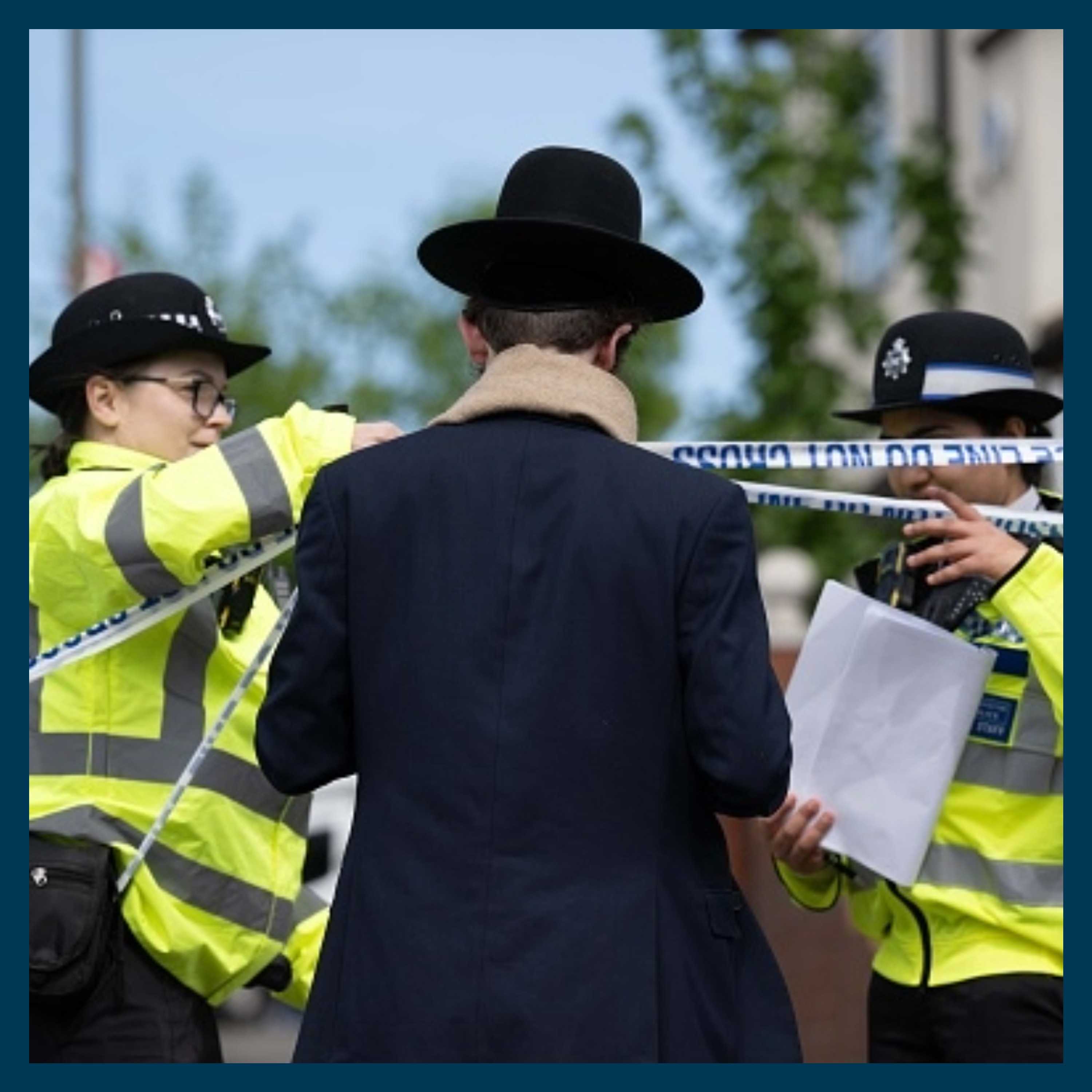
Hi, I'm Callum Martin, a producer on the Story. There's one story that's dominated the news over the past couple of days and we thought we should bring you an update. Yesterday police declared a terrorist incident after two Jewish men were stabbed in Golders Green, London. A suspect is in custody and the two men are in a stable condition, but there are plenty of questions left to answer as the Jewish community reels from this latest in a recent string of anti Semitic attacks. On Times Radio this afternoon, columnist and presenter Daniel Finkelstein spoke about his feelings following the attack.
- [01:51]
Daniel Finkelstein
Like every Jew today, I feel angry, I feel distressed, and yes, I'm afraid to say, I even feel a little bit scared. I'm not chanting shame on you at local Labour MP Sarah Sackman, who's Jewish, or calling Keir Starmer, who's married to a Jew and has Jewish children, a Jew Harmer. But nor am I going to fall out with those Jews who do shout these things. I quite firmly disagree with them, but I do understand the emotional need to chart something at someone. These are cries of despair and despair seems to me a perfectly reasonable reaction. And I do think there are things that can be done that authorities can do that aren't being done. We need to start taking people seriously when they say what they want to do to Jews. When people say they want jihad, we have to see that they really do and understand they mean what they say. When they say they want to globalize the intifada that is directly an incitement to armed resistance against Jews in this country and anyone who pretends these phrases mean anything else is gaslighting. There are radicalized groups, lone wolves and global actors who are putting these ideas into practice. And government could be doing more to confront these ideas and these people. Enough. Now.
- [03:15]
Callum Martin
We should say that last week on the story we looked at this issue in depth following a number of attempted firebombings at Jewish sites. And we've put a link to that episode in the show Notes. But now to get the latest on this episode of the story, we're handing over to Times Radio's John Pienaar.
- [03:33]
John Pienaar
Now let's first of all say hello to Matt Datham, the home affairs editor at the Times. Hello to you, Matt.
- [03:38]
Matt Dathan / Neil Basu (context dependent)
Good afternoon.
- [03:39]
John Pienaar
Welcome. Thanks for joining us. Can you first of all give us the latest on this story because we know more now, don't we, about the man who was arrested in Golda's Green. And of course, we have heard from the prime Minister.
- [03:48]
Matt Dathan
Yes, that's right. We, we know the name of the suspect, S.S. suleiman. He's a Somalian born British national who came to the UK as a child legally in the early 90s. And what we do know now is that he was referred to the government's prevent program, the Counter extremism program, in 2020. His case was was then closed later that year. But the Metropolitan Police nor the home officer giving any further information as the reasons why he was referred or why his case was closed. Now there's a lot of reporting restrictions around naming the suspect, but also the background of of the suspect. But what we do know in the public domain is the Metropolitan Police Commissioner has said that he has a violent past and mental health issues. So there is more, much more to come out about this suspect. But at the moment we are restricted as to what we can report.
- [04:47]
John Pienaar
Okay. Now members of the Jewish community are angry. There is a lively political debate going on. But there's also, I see, Matt, some controversy about the leader of the Green Party who's been critical of the treatment of the man who was arrested by police.
- [05:03]
Matt Dathan
Yes, I'm sure a lot of people will have seen the footage that was that was taken as two police officers apprehended the suspect as he was on the floor, he was gripping the suspect was gripping a small knife that he had used allegedly to stab the two Jewish men. And there was another member of the public who was also trying to help ungrip the the knife. Police officers also believed, we're told by the Metropolitan Police Commissioner that they believed he might be wearing a an explosive vest as well, so you can understand the context in which these two officers are trying to tackle this suspect who they had just tasered and in order to try and get the weapon out of his hand, they were trying to kick his hands. So to free the knife and in doing so they were kicking an area near his head. Now it's unclear whether it was definitely kicking his head, but yeah, this Green Party leader has, has reposted a comment on Twitter that is criticizing police for kicking someone with history of mental health issues, which rather was raised quite a lot of eyebrows that the leader of a political party is concentrating on that aspect of this terror attack.
- [06:17]
John Pienaar
Right now the, the police investigation is I guess still at a comparatively early, early stage, but we do know they're still busy, as far as we're aware, investigating whether this attack was a lone wolf operation or whether it was part of something larger.
- [06:33]
Matt Dathan
Yes, that's right. Now we have heard from the, the new group that believed to be directly linked to Iran, called Ashab Al Yamin, who have claimed credit for a string of arson attacks and other lower level attacks since the Iran war broke out, in which they actually were the source of, the original source of the, the attacks. They quite clearly had inside information which suggested that they were behind the attack. Now the, they claimed credit within minutes of this attack yesterday, but they used information that was already in the information and footage that was already in the public domain. And we've been talking to security sources and analysts who are very skeptical that they are behind this attack. But that doesn't mean that the security services are obviously, they're investigating the claims and investigating whether this, this man was acting alone as, as you say, as a lone wolf attacker and potentially a copycat attack or whether he was on behalf of a group or a potential state backed group like the irgc. But the security services are still investigating and we don't know. But what we, what we are being told by sources is that they are, they believe at the moment that it is more towards the lone wolf, lone wolf attack than anything else, not least because of the mental health background of this guy and his violent history.
- [08:01]
John Pienaar
All right, Matt Dathan, grateful to you. Thank you, Matt. Now then, let's say hello to Neil Basu, who's the former head of the Counter terror department at the Metropolitan Police. Neil, hello.
- [08:13]
Matt Dathan / Neil Basu (context dependent)
Good evening, John. Thanks for inviting me on.
- [08:14]
John Pienaar
Yeah. Hi. You're welcome. Keen to get your view on various things. Let me start with this. We know there's to be a, a, a pro Palestinian demonstration in London at the Weekend, it's going to be marching, it's going to be ending up at the Israel Embassy. There'll be no doubt protesting against the. The government of Israel. Should we expect that demonstration to be policed differently than in the past, maybe more stringently?
- [08:38]
Matt Dathan / Neil Basu (context dependent)
Yes, I think it will be policed more stringently. And I think Sir Mark Rowley and the Chief Constable of Manchester have both made comments on that in recent months, that the level of language and protest that's been allowed has probably been allowed to go too far. And what we do know is that although protest is incredibly important, and I totally agree with Lord Mann, who you were quoting earlier on on your program, that we don't want to live a society where no free speech is allowed, where protest is not allowed, where freedom of association is curtailed. Yeah, but I. But I think we've seen over years now, since the. Probably since that horrific terrorist attack by Hamas and the response of the Israeli government, that these protests have gone so far as to intimidate and scare a huge section of our community, the Jewish community. If any community doesn't deserve to be living in fear, it's that community, and they very much are.
- [09:34]
John Pienaar
Yeah. And you've been hearing, as we all have, those calls for a much tougher approach than the one you're describing when it comes to demonstrations, pro Palestinian demonstrations. The independent reviewer of terror legislation, Jonathan hall, he was talking to me about banning these marches outright. Now, listening to you there, you do not seem to share that view.
- [09:57]
Matt Dathan / Neil Basu (context dependent)
No. I think, unusually for Jonathan Hall, I think there's a little bit of state overreach there. I know he declared it a national security emergency as well. I tend to agree more with the Home Secretary that if you declare something a national security emergency, and I have policed many of them, you are talking about some very serious assertive behavior, including suspending quite a lot of our democratic rights and freedoms whilst you deal with that national security emergency. I don't think the Jewish community want to live in a society like that either. I hope and pray that they get to live in a society where they are free and not living in fear and behind walls and behind electronic gates. We're not there yet, but I don't think the answer to it is to ban protest entirely and ban free speeches. Like Lord Man. We are capable of targeting people who cross the line in those protests and online. The difficulty being is that I don't think society has decided where that line needs to be drawn, and I think we've got it in the wrong place.
- [10:58]
John Pienaar
Do you Believe then the police and the, the command level of the police have, have got it clear in their own minds where the line should be drawn when it comes to operational decisions. So we're going to see tougher operations. The Prime Minister, as you say, hinted earlier on the protesters shouting such things as a global intifada, they could expect to be arrested and prosecuted for racially inflammatory language. How much tougher could the police get, law as it sits?
- [11:26]
Matt Dathan / Neil Basu (context dependent)
Well, I think they'll, they'll judge whether or not it's appropriate to arrest people on the day for that kind of language or whether to arrest them later on. Having gathered the intelligence and evidence that they're doing that, all public order commanders have to make difficult decisions, not thinning the blue line too much while they're in the middle of policing protest. If it's peaceful and if it's non violent, then I imagine they won't have to take such a dramatic action. But I think given the comments the Commissioner and the Chief Constable of Greater Manchester, also policing a huge Jewish community, have said in the past, I do expect it to be much more stringent. But I know the public order commanders involved, they've been hamstrung in the past by Crown Prosecution Service decisions saying, effectively, you can't arrest people for this kind of language. It is not something that would pass any kind of test that would get people in front of a court. That's been incredibly difficult. I think society, particularly parliamentarians, need to start consulting with the public about where the boundaries of free speech are. You know, this isn't the First Amendment of the United States. European human rights has never made free speech an absolute right. It's always been bounded. You don't have the freedom to say things that do harm. And unfortunately, we're seeing a great deal of free speech turned into incredibly harmful rhetoric which can incite and inspire violence and has.
- [12:46]
John Pienaar
Well, tell me then, Neil, if Crown prosecutors previously came to the view that the use of inflammatory language didn't pass the test of, of having a more than 50 chance of ending in a conviction, that was the view then. Why should it be different now? Or would they consider the public attitudes and therefore the views of juries would have changed?
- [13:08]
Matt Dathan / Neil Basu (context dependent)
Well, I'm, I'm not a qualified qc.
- [13:10]
John Pienaar
You can see where the question comes from.
- [13:12]
Matt Dathan / Neil Basu (context dependent)
I can, absolutely. And I, my view is that there's something about being reckless or intentional in what you're saying and the effect of what you're saying, which are points to prove within the law. Now, for the last two years, it's become very clear that things like Global Intifada and From the river to the Sea are not language that is said innocently for many people. It's said to inspire violence and it's a call, effectively for the eradication of Israeli Jews and their homeland. Now, how many times do you have to say that publicly for people to take the hint that when they go out in public and say it, they are effectively breaking the law? I think the Crown Prosecution Service themselves will have looked at that and would have said, well, maybe there is a more than 50% realistic prospect of conviction now. And they, in my view, would be right.
- [14:01]
John Pienaar
Right now, you were a senior operational police police commander. How will this £25 million extra for the protection of Jewish communities, how will that be spent?
- [14:10]
Matt Dathan / Neil Basu (context dependent)
Well, there's always been a considerable amount of money, taxpayers money, dedicated in a fund from government to the Jewish community. It's channeled through the Charitable Army Community Security Trust. I was the Barnet borough Commander for four years back in 2009-2012, and I worked very closely with them. They used that money to help protect synagogues and schools. They use that money to train people in order to be effective eyes and ears of the community and to help in terms of security at those events, including congregations simply gathering to pray. So you can imagine what it feels like to go to your local synagogue and have to be accompanied by stewards who are effectively security professionals with police officers either walking alongside them or with rapid access to police officers. That's not a very comfortable way to go and to go and pray, and no society should have to do that. But that money will be spent on increasing that visibility, that training and that commitment to the security of those premises. I hope some of it goes towards interfaith capabilities as well, because as we're calling out antisemitism today, as. As every decent people should, it is effectively racism and we should be calling out all forms of racism. And some of the best work I saw as an operational police officer was when people like the CST and the Jewish community wanted to share their expertise with the Muslim community to protect their mosques and madrasas. And that kind of interfaith work needs to be funded as well in our communities. We need a community cohesion strategy, we need an integration strategy, we need a counterextremism strategy. We don't appear to have any of those things. Various administrations have ducked that responsibility and now we need to step it up.
- [15:56]
John Pienaar
Okay, very clear and strong thoughts from you, Neil. Thank you. Neil Basu, the former head of Counter Terror the Metropolitan Police.
- [16:07]
Callum Martin
That was John Pienaar from Times Radio Drive talking to the former head of counterterror at the Metropolitan Police, Neil Basu, and the Times Home affairs editor, Matt Dathan. For more from John Piena, you can listen to Drive every weekday at 4pm on Times Radio. We'll be back as usual tomorrow morning to explore the local elections in England. See you then.
- [16:45]
Brookfield Announcer
At Brookfield, we invest in the thing behind the Thing behind the Next Big Thing. Our focus across infrastructure, energy, real estate, private equity and credit is helping to build the backbone of the global economy. We combine deep operational expertise with disciplined long term investing, uncovering value and partnering alongside clients to shape tomorrow's economy today. Brookfield Own what's next? Learn more@brookfield.com this is not an offer to sell or investment advice. Investing involves risks, including loss of Capital.
- [17:16]
Dish Network Announcer
For 45 years, Dish has been connecting America with the best in family, tv, entertainment and advanced technology at an unbeatable value. And that commitment continues with our new 45th anniversary special offer. Get the lowest price in satellite TV, starting as low as $89.99 a month. In a world of rising costs and hidden fees, Dish stays transparent, reliable and on honest, just like our founders intended. Learn more by calling 888-add-D dish or visit dish.com terms and conditions apply.