Loading summary
Transcript49 lines
- [00:01]
Stamps.com Advertiser
Still waiting in line. Again, that's time you'll never get back. Save time and money with stamps.com over 4 million businesses have skipped the line with stamps.com join them to save up to 90% off carrier rates from your computer or phone right now. Print postage for certified mail, registered mail and packages in seconds. Then schedule a pickup right from your home or office for a limited time. Go to stamps.com and use code podcast for a free welcome gift. Taxes and fees apply.
- [00:30]
John Pienaar
Lots of places can expose you to identity theft. Oh no. That's why LifeLock monitors hundreds of millions of data points a second for threats to your identity, which is way more than anyone can do on their own. If we find anything suspicious, like new loans or changes to your financial accounts, we alert you right away, all through text, phone, email or the LifeLock app. Get the alerts that could make all the difference. Save up to 30% your first year@lifelock.com podcast terms apply.
- [01:11]
Manveen Rana
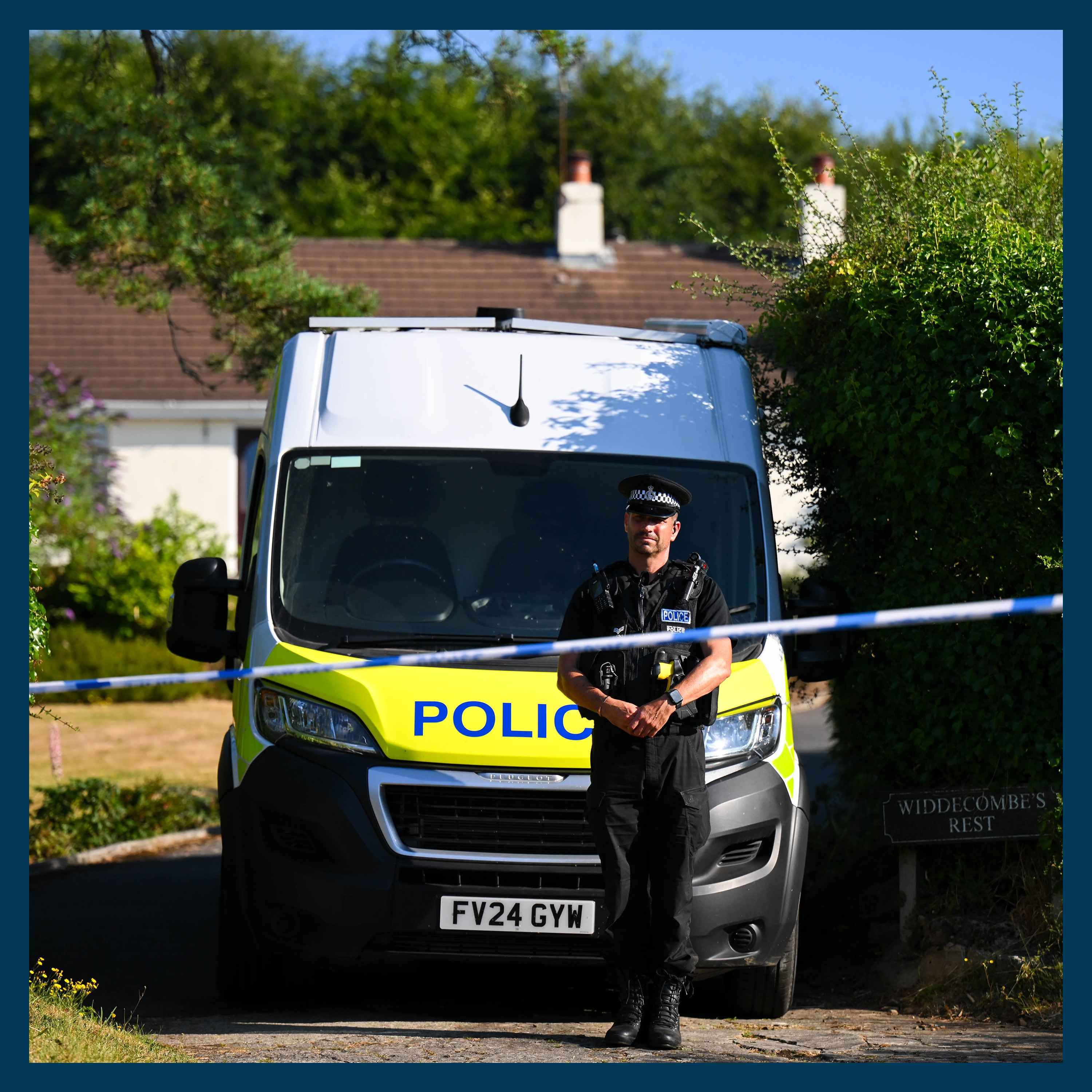
Hi, it's Manveen. It's been four days since the former MP Anne Widdcom was found dead at her home in Dartmoor. Today we've learned that counterterrorism police are now leading the investigation into her killing after new information and evidence has come to light. A 28 year old man was originally arrested on suspicion of murder at his home in South Yorkshire. He's now been rearrested on suspicion of commission preparation or instigation of acts of terrorism. For the latest on that, we're handing over to our Times radio colleague John Pena.
- [01:56]
John Pienaar
So we've just been listening to a statement, two mps in the Commons from the Home Secretary Shabana Mahmood on the investigation into Anne Widdicom's killing. Counter Terror police have taken over the investigation. A 28 year old man identified by police as white and British is being questioned after being arrested on Saturday. Police at first said there was nothing to suggest a political motive. Counter Terror police took over and the Home Secretary says they're pursuing multiple lines of inquiry. Now we're going to be looking at this story in some depth on the program. As you can imagine, Nigel Farage, who has called a by election in his own Clacton constituency, casting it as Farage versus the main parties, the media and the establishment. He was accused of using the death of their party colleague for political propaganda. Reform UK reacted fiercely to that. Now, will this dispute escalate? Firstly, the Home Secretary has confirmed the suspect arrested on suspicion of the murder of Anne Widdekin was not known to the anti terror organization Prevention Mr. Speaker,
- [02:54]
Home Secretary Shabana Mahmood
on Wednesday, Anne Widdicombe was murdered in her home. The circumstances of her death are extremely distressing. Counterterrorism policing have now taken the lead in the investigation. As Lawrence Taylor, the head of National Counterterrorism Policing, has said, and I quote, we now have new information and evidence that means counterterrorism policing is leading the investigation. We are pursuing multiple lines of inquiry to establish the motivation for this attack. The police now have a suspect in custody, a 28 year old white British man. And I can confirm to the House that this man was not known to prevent.
- [03:36]
John Pienaar
The Home Secretary invited the Leader of Reform, Nigel Farage, to meet the government organization in the Home Office that manages security for politicians.
- [03:45]
Home Secretary Shabana Mahmood
Security measures are kept under constant review to ensure MPs can carry out their duties safely. And I know that the police intend to issue guidance to MPs soon and they will be contacting parliamentarians in their constituencies to offer support. I also recently commissioned the former Lord Chancellor, Sir Robert Buckland, to review the lessons from Sir David Amos's murder, including into required improvements to security for MPs on working in their constituencies. I recognise the particular concern that the Reform Party will feel today and of course, Nigel Farage, the party's leader. I'm happy to offer a meeting for Mr. Farage with the Chair of Ravic, the independent body within the Home Office that manages the security of those in public life.
- [04:30]
John Pienaar
Now the Home Secretary, Shadow Home Secretary for the Conservatives, Chris Philp, paid tribute to Anne Widdicombe.
- [04:36]
Jonathan Hall
Anne was also a much loved celebrity with memorable appearances on Strictly Cun Dancing and and Celebrity Big Brother, including being whirled around by, I think it was Anton Dubeck. So we will all remember Anne fondly as a public figure who was always formidable, she was always charming and she was always entertaining.
- [04:58]
John Pienaar
Richard Tice there and the speaker of the House, Sir Lindsay Hoyle. He pushed back against accusations that some MP security was prioritized over others.
- [05:08]
Stephen Roberts
Just for the record, every member of
- [05:10]
John Pienaar
Pont is equal in the security. To me there is no difference between any member I want to issue when things are brought to my attention. Because we don't discuss security. I don't put out there what is happening, what has been done, but I reassure everybody that when it is mentioned to me, it is passed on to the security people to deal with. Unfortunately, I'm sorry that people don't think I do that. Lucy Pell, the Speaker, Lindsay Hoyle there and reforms. Richard Tice had this to say.
- [05:41]
Oliver Wright
We were all reeling with shock, sadness and anguish at the loss of our own and also the manner in which she has been taken from us. She was a colossus in public life, in political life, a legend adored and loved by millions and millions of people,
- [05:58]
Stephen Roberts
including my own late mother, for whom
- [06:01]
Oliver Wright
she spoke so very warmly of Anne. She was a remarkable lady.
- [06:06]
John Pienaar
Deputy Reform Leader Richard Tice there in the Commons and this now. Welcome to the program. Oli Wright, the policy editor at the Times. Hi to you, Ollie.
- [06:14]
Oliver Wright
Hello.
- [06:14]
John Pienaar
So what are you thinking, Ollie? So we did hear from Shabbat Mahmoud inviting Nigel Farage to meet with the the organization inside the Home Office that was is responsible for a politician's security, maybe taking some of the heat or attempted to take some heat out of the situation at that point, but there is plenty of heat situation.
- [06:34]
Oliver Wright
Yeah. I mean the first thing to say is this is definitely embarrassing for Devon and Cornwall police who were keen to stress that, you know, it wasn't a terrorism related case and it wasn't politically motivated. And this about turn has really sort of given fuel to its critics who said that they sort of doubted that explanation in the first place. And you know, clearly it has now risen up top of the the political agenda, not least because it plays into very long standing fears and concerns from Nigel Farage and other senior Reform politicians that the level of security available to MPs is not what it should be and is not commensurate with the risks that they face.
- [07:16]
John Pienaar
And Ollie, there is a statement now from Reform uk. Let me just read you some of that. The statement accuses the police, the government and parliamentary authorities of deliberately ignoring their plea for stronger security for the Reform mp'. The party then says that it's resorting to paying for personal protection, paying for protection of its senior politicians as they enter and leave the Houses of Parliament because they say the lack of security provided by the authorities. And this is from the House authority. A spokesman says any assessment of an individual MP's security arrangements or advice is subject to a rigorous risk based assessment conducted by security professionals with input from police and a range of professional authorities. These are naturally kept under continuous review. And the Home Office, a spokesman there said the Home Office has expanded police support for MPs away from the Parliamentary estate, including by funding a full time network of police officers to support MPs, locally elected representatives and candidates across the UK. That is from the Home Office. Ollie, I wonder what you make of that. Reform saying they're going to pay for their own senior politicians security?
- [08:25]
Oliver Wright
Yeah, I mean they've said this in the past and indeed I think they have done it particularly for people like Nigel Farage, because there was a row some months ago now about the level of protection that Farage was getting from the parliamentary authorities, which Reform believed was not substantive enough for the. For the risks that he faced and that they had no choice but to pay for the additional security that he needed themselves. Clearly, you know, the Home Office is keen to stress that it's a sort of operational decision, it's not one for politicians, and I think that is right, but it still doesn't sort of negate the fears that Reform have that, you know, what they say they need, they're not getting.
- [09:08]
John Pienaar
Ollie Wright, Policy Editor at the Times, thank you so much. Now, a big welcome to Stephen Roberts, who's a former Deputy Assistant Commissioner at the Met. Hello to you, Stephen.
- [09:18]
Stephen Roberts
Good afternoon, John.
- [09:19]
John Pienaar
Hi. Great to have you here. Steve, what do you make of what you've been hearing? I mean, starting with the. With the concern that Mempis are, perhaps, it's argued, not well enough, protect. Protected. And in the case of reform that party says they are, their calls for greater protection is ignored.
- [09:36]
Stephen Roberts
Well, it's a curious thing, all MPs, and the speaker himself has made this clear today, although he shouldn't have needed to, frankly, that all concerns around the security of MPs are passed on to the appropriate bodies. Anybody who knows about the security arrangements around MPs won't and shouldn't talk about them, for very obvious reasons. But there is considerable care taken to make sure that there is appropriate security around all MPs and former MPs, indeed. But appropriate to the actual level of threat to their physical harm. It is not the job of the police or the Home Office or the House of Commons officials to protect members of Parliament from those who simply disagree with them and want to express that disagreement fairly volubly. And indeed, a lot of politicians, from my own experience, hate the fact that they sometimes are seen being protected by police officers and want very much to have that contact with the public.
- [10:47]
John Pienaar
And how, then, tell me, Stephen, how is the vulnerability, the need for protection in the case of individual MPs or politicians, how is that assessed?
- [10:57]
Stephen Roberts
It's assessed by well trained officers who will deal with each MP individually, because MPs circumstances can be very different. For example, you can have an MP who has a constituency in the north of England, who has a property there and property in London, travels a lot between them and needs protective measures, perhaps at both places where he or she lives, whereas others will live locally in London and need less protection. But the advice has to be tailored by the well trained officers, mostly common sense measures, but it's appropriate and it's proportionate to the level of risk that those individuals are running.
- [11:47]
John Pienaar
So what do you make of the Reform UK accusation that their calls for protection have not been heeded and that they mean to pay for their own protection in the case of their senior fig?
- [11:57]
Stephen Roberts
Well, if they choose to pay for their own protection, that's a matter for them and I understand they've got plenty of funds to do that, but they cannot be protected, nor should they expect to be protected from people who merely disagree with them. I'm quite sure that each of their cases has been considered, as every MP's case is considered, to make sure that they get appropriate advice and appropriate assistance to keep them safe.
- [12:25]
John Pienaar
Okay. Now Devon and Cornwall Police, they were initially running the investigation that's now being handed or taken over by the anti terror officers. Is that embarrassing for Devon and Cornwall?
- [12:38]
Stephen Roberts
No, I don't think it is. And I last heard the Assistant Chief Constable of Devon and Cornwall saying that at the stage that the investigation was at there was nothing to suggest it was a politically motivated attack. Well, since then there will have been increasingly thorough searches at the home of this individual who's been arrested. Any computers, any other IT equipment that he's got, there may be information on there, there may be written information, documentation that's been hidden that wasn't available to Devon and Cornwall. So if they found something that suggests, even suggests a political motivation, it's right and proper that the counterterrorist branch should take it on and it's entirely appropriate that they will be supported by Devon and Cornwall police. It's not embarrassing, it's merely a matter of this is the way some investigations go. I don't know what you've got before you've investigated.
- [13:34]
John Pienaar
Okay, that's, that's an answer to that. And what about the, the way that the Devon and Cornwall Constabulary dealt with the handling of, of information on this? They, they made it, made it public that the, the man who was, had been taken into custody questioning was white and British. Now there have been Reform UK calls that that should be the case in every, every, every investigation. What do you make about the way Devon and Cornwall are dealing with that?
- [14:01]
Stephen Roberts
I think that was a sensible step at the time and since, well, events about a year ago now there has been this intention or this concern that people will make assumptions about the race and the origins of any attacker in a situation like this and in circumstances where Anne Widecombe was To the right of politics, if I can put it like that. There would always be a concern, perhaps that she would have been attacked by somebody who may have been a recent immigrant, may have been a recent asylum seeker. And I think it was quite right that Devon and Cornwall squashed that idea right from the outset. No, this was a white British man.
- [14:45]
John Pienaar
Yeah. Maybe to forestall others, you know, using misinformation in the way that has happened and no doubt would happen again. Stephen Roberts, thank you so much for joining us. Now. Welcome to the program. Then, live on the ad, Jonathan hall, the independent reviewer of terrorism legislation. How's you, Jonathan?
- [15:04]
Jonathan Hall
Hi.
- [15:04]
Oliver Wright
Hi.
- [15:04]
John Pienaar
What are your thoughts, Jonathan?
- [15:07]
Jonathan Hall
Well, my thoughts are that it was. Yeah, the police are getting a bit better at their comms, in the sense that they do say the race and nationality and they have to be consistent, and they are at the moment. That's good. I don't understand why Devon and Cornwall police were steering the public away from the idea that this was a terrorist case. And I don't know why they didn't simply say they had an open mind as the motivation. And I think they probably broke one of the golden rules of investigations, which is not to comment on live investigations in case new facts emerge. But so that aspect is slightly regrettable, I think. The bigger picture, of course, is it's incredibly worrying. I mean, it's a terrible murder of a former mp. And I mean, thinking about the picture more generally, this actually is what, terrorist legislation, potentially. I mean, leaving aside Anne Widdicom's case, where it is live investigation, I don't want to say anything about that at all. But generally MPs do need to be protected, because once you start attacking MPs, then you really are striking a blow against the core of democracy. The vital organs of democracy are in Parliament of whatever colour and stripe and political persuasion. So I think this is something that really does affect the national security of the country.
- [16:17]
John Pienaar
And you support the identification of the man in custody as being white and British. Does that mean you would say that that should happen in every serious case?
- [16:27]
Jonathan Hall
Yes. And if you remember, after Southport, I was the one who said that it should have been done in relation to the race and nationality of. Of Axel Rudy Gabbana. Because there was that wild Internet lie going around that it was someone called Ali Al Shuktani, a small boat person. Sometimes these cases will involve people who've arrived on small boats, but it's far better just to be honest with the public and give them sober information about race and nationality. So absolutely I support it.
- [16:51]
John Pienaar
All right, let me just turn to the, the, the argument coming from the reform side that they are at particular risk, at greater risk of, of an attack or some sort of, you know, offense of this kind, depending on what we find out about what. Do you buy that argument? Have you sympathy for the argument that reform is particularly exposed? Or can it be said that MPs across the spectrum could be the target of some sort of attack from anyone, almost anyone, on any kind of motive?
- [17:21]
Jonathan Hall
Yeah, I'm very wary of this question because if I generalize and I point out that MPs from across the spectrum have been killed, obviously Jo Cox and the attack on Steven Timms and David Amis, it makes it look as if I'm trivializing, which I'm not. I'm deeply, deeply sympathetic and worried for any mp, including in particular the Reform mp. So I, I take it incredibly seriously. The sad fact is that recent polling shows that people are more supportive now of political violence and if that's what it turns out to have been in Adam Widcombe's case, and that is a very worrying and troubling sign.
- [17:55]
John Pienaar
Yes, I suppose is also worth pointing out that there is no such thing as perfect security.
- [18:01]
Jonathan Hall
There is no such thing as perfect security. Everything is about trade offs. Absolutely. But, but I, I, you, we have to think about the pipeline, people coming into politics and if it turns out that it was a political attack of some description on someone who'd retired, then obviously the message sends to people who are thinking about having a life in politics in the future is a pretty bleak one. So I think it is, it's very, very important. And I mean, you know, it's not the only aspect of terrorism. There's the, the arrests of the 12 people who were, I mean, from the sound of it, were conspiring to murder. I mean, the police have put out a statement where they're talking about what could have been a terrible attack on a religious event. So it's not the only focus of terrorism legislation, but it's a particularly important one to protect the vital organs of democracy.
- [18:46]
John Pienaar
Yeah, but if that does turn out to be the case, it is right and proper to mention that as well. In the context of this discussion. We don't know too much about the facts because we cannot. But it says something about the climate of the times.
- [19:00]
Jonathan Hall
Yeah, I think so. And I mean, you know, I, I read the BBC News article and it talked about the nature of the arrest. So it was arrest under section 41. That's a very strong Terrorism act power, which allows you to detain someone for up to 14 days and also others were arrested for conspiracy to murder. So although it's an investigation, we don't know what the evidence will be. It sounds if the police had some very, very worrying threat to life type information. So yeah, it is very worrying and well done the police for stopping it.
- [19:35]
Manveen Rana
That was John Pienaar speaking to the Times Policy editor Oliver Wright, Stephen Roberts, the former Deputy Assistant Commissioner at the Metropolitan Police and Jonathan hall, the independent reviewer of terrorism legislation. You can hear John Pienaar every day from 4 till 7pm on Times Radio. The story will be back again tomorrow when we'll be looking at the Home Secretary's announcement about changes to the law that could allow the leader of the Rochdale grooming gang, Shabir Ahmed to be deported. But will it work? That's tomorrow. See you then.
- [20:40]
Stamps.com Advertiser
Shipping, billing, admin, payroll, marketing. You're managing all the things, so why waste time sending important documents the old fashioned way? Mail and ship when you want, how you want with stamps.com print postage on demand 247 and schedule pickups from your office or home. Save up to 90% with automated rate shopping. That's why over 1 million small businesses trust stamps.com go to stamps.com and use code podcast to try stamps.com risk free for 60 days.
- [21:10]
Manveen Rana
Summer smells like summer road trips, ocean breezes and long evenings under the stars, it's a feeling you want to hold on to restore your sense of place. With Pura's new Summer fragrance collection, we've captured the magic of the season in clean premium scents that transform your home into your favorite destination. Discover the art of scentscaping and bring the summer in. Visit pur.com to explore the collection.