Loading summary
Transcript34 lines
- [00:01]
A
Today's markets move fast. Get the insights you need in 10 minutes with the Barclays Brief, a new podcast from Barclays Investment Bank. Through sharp dialogue and scenario based analysis, our leading experts analyze key market themes each week. So whether you're managing a portfolio or leading a business, the Barclays Brief podcast can help you make smarter decisions today. Stay sharp, Stay brief. Find Barclays Brief wherever you get your podcasts. Summer smells like salt in the air and warm sand. Restore your sense of place with Pura's new summer fragrance collection. Discover transportive clean scents@pura.com.
- [00:57]
B
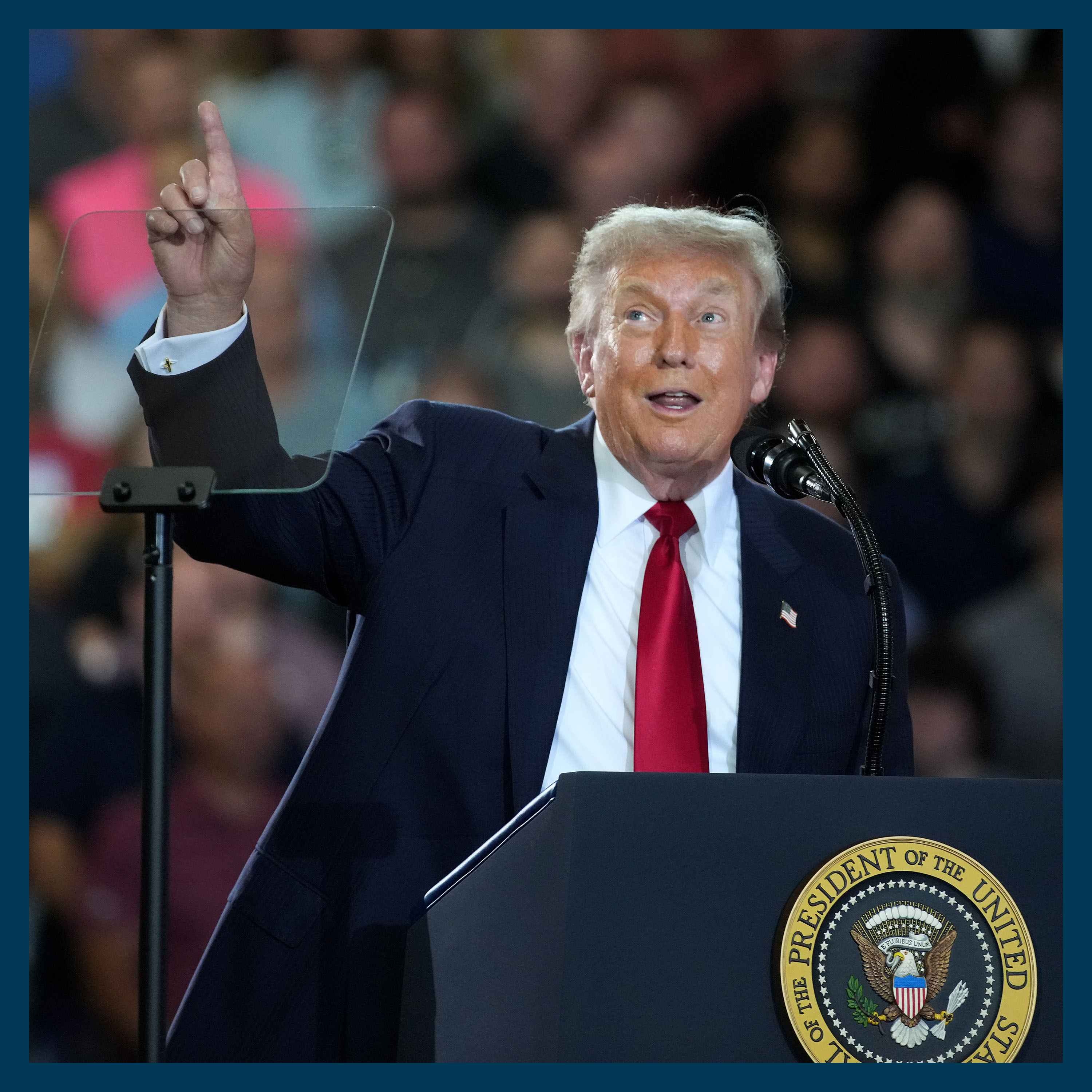
Hello, this is Harry Stott, a senior producer on the story could peace be coming to Gaza? Well, President Trump's Board of Peace thinks so as he announced a deal overnight. Writing on Truth Social, he called it a monumental step towards lasting peace and security. But is this a genuine turning point in the long search for an end hostilities in Gaza or just another dead end? To get the latest, we're handing over to two of our colleagues over at Times Radio. First we'll hear from Ryan Tubrady and following that from Aisha Hazarika. Here's Ryan.
- [01:39]
C
President Trump has announced a deal which would see Hamas disarm in Gaza, saying it'll pave the way for a new Palestinian government and the withdrawal of Israeli forces from the Strip. Israel is said to be skeptical about the plan. Let's talk to former editor for the defense editor for the Times, Michael Evans. Michael, good afternoon to you and thanks for being with us today.
- [01:58]
D
Good afternoon.
- [01:59]
C
So without buy in from Israel, can this happen?
- [02:03]
D
I guess it can. I mean, I think while we've all been focused on the war in Iran, Gaza has been somewhat. But behind the scenes, clearly there have been a lot of high level negotiations going on with Hamas. We've had several countries mediating and helping out, Egypt, Qatar and Turkey. I think it is potentially an amazing achievement that Hamas, which is, as you know, designated as a terrorist organization by at least a dozen countries, has agreed to disarm. There are lots of conditions to that, but the mere fact they've agreed to disarm is a big step.
- [02:46]
C
What do you think has brought them to this precipice? I mean, it is extraordinary if it's true.
- [02:52]
D
Well, there are two things. First of all, there's new leadership of Hamas. They've effectively not had an overall leader for quite some time since the last one Sinwar was killed by Israeli troops. So they haven't had a proper leader. But this guy, Khalil Al Faya, who has been one of the negotiators in the past. And he's a pretty tough guy and actually has been, obviously was very much associated with Sinwar, his predecessor. But I think he maybe, I'm guessing, has come to see the reality of the situation in Gaza. You know, the idf, the Israeli Defense Forces have not destroyed Hamas, they had hoped to, but they have caused huge damage not only to their manpower levels, but also to their stocks of weaponry and to their tunnels, which they rely on. So I think it's perhaps they reached a point of realization that they can't go on, if you like, protecting the Palestinian people, which is how they would put it, with a diminishing manpower and diminishing weapons. So I think they've decided to go for the, well, the political solution and then try and put all the emphasis on Israel if they fail to go along with it.
- [04:20]
C
Okay, so you're giving Hamas the benefit of the doubt that they are sincere in their buy in to this project.
- [04:30]
D
I mean, it's, you know, it's very difficult to gauge this, but one has to rely on the expertise and achievements of the negotiators that have been involved in dealing with this and particularly, you know, all the regional countries who've been involved. And if they think that this is a genuine decision by Hamas, then one only has to go along with it. I think, you know, I think one has at this stage, day one, if you like to be optimistic. It would be rather foolish to be too pessimistic. Trump is clearly elated by it won't do him any bad, any bad because he's had a really tough time in recent months with Iran. So I think one can only hope that this is a genuine decision by Hamas. But it could all go wrong.
- [05:19]
C
And Israel's post October 7th military aims were always to destroy Hamas. And does this deal help go some way to securing that, if not completely, if it comes to pass?
- [05:31]
D
No, I don't think so. I mean, they've always envisaged what they call a demilitarized Gaza Strip. So in other words, everything remotely military should be removed from Gaza. I don't think that's going to be achieved. Even if Hamas disarms, they're not going to hand over the weapons to, to Israel. They will be stockpiled, I presume, somewhere in safely in Gaza and looked after by the new Palestinian government when it comes into being. So it won't be a demilitarized Gaza as such, which is what Israel wants. But you know, it's a step forward and this is the sort of decision which Benjamin Netanyahu now has to make. Whether it's in the interests of Israel for him to go along with this deal, it's certainly in his interests, I would say, to support Trump's, what he called Trump's achievement, because that Israel needs Trump, Israel needs the United States for their own future security, and therefore, I suspect they will go along with this, but again, with conditions.
- [06:43]
C
All right, Michael, thank you as always. Michael Evans, former defence editor with the Times, appreciate that very, very much.
- [06:48]
E
Foreign. Now, Israel is yet to comment, but Donald Trump has warned that he will be very disappointed if Israel does not withdraw its troops. This is despite Reuters reporting that fresh Israeli airstrikes are happening on Gaza today and have wounded several Palestinians. Well, let's now speak to Jonathan Conrekus, who is a senior fellow at the foundation for the Defence of Democracies and a former spokesperson for the Israeli Defense Force. Jonathan, welcome to the show. Thank you for joining us.
- [07:25]
F
Hello, Aisha. Thanks for having me on.
- [07:27]
E
And what is your reaction to this agreement from Donald Trump?
- [07:32]
F
Well, I think it's a step in the right direction. I think a lot of people in Israel and probably many Gazans, want this to succeed desperately. I think a lot of people would want to see Gaza demilitarized, Hamas's weapons taken away, and a new type of leadership in Gaza strike route, one that isn't about jihad, that isn't about fighting with Israel, but is about respectful coexistence. And I think that it will have strong support in Israel once Hamas is indeed disarmed. And here really is the core issue, because, you know, we have experience with Hamas. There's a concept in Islamic teachings called hudna, which means basically a pause, a pause in hostilities. It goes back to the days of Muslim conquest of the Arab peninsula and other areas whereby, according to those customs, the hudna can be asked for when an Islamic force is in a position of disadvantage in order to gather their strength and then to break the hudna, the ceasefire, once they see fit. And if this is a hudna, a new type of hudna, then it's not a good thing. But if we're talking about a real disarmament of Hamas with international verification, then by all means could be very positive.
- [08:56]
E
And the deal is conditional on Israel's withdrawal. Is that likely to happen? Or may Israel do a similar thing, say that they're going to withdraw and then spring again if need be?
- [09:10]
F
No, no, I don't. I don't think Israel has any interest, any real interest in staying in Gaza. Populist statements aside, I don't think that the Israeli public or the Israeli military is interested in it. And I think that what Israel wants is for Israelis in the kibbutzim, the communities on the other side of the border, those who were attacked and slaughtered by Hamas on October 7, which is how the war started. The interest in Israel is for these communities to be safe and for their not to be a jihadi genocidal terror organization on the other side of the border. If this can be achieved through the disarmament of Hamas, then I think Israel will be very quick to withdraw. But what this hinges on is whether or not Hamas will actually be disarmed. If there will be independent verification that the weapons have indeed been handed over. And the language is pretty clear. It's supposed to be all of the weapons from the big long range rockets and what's left of it to the AK47s. And Hamas is supposed to hand over maps of all of their tunnel infrastructure, their weapons manufacturing sites, all of it. And that is the condition. And once that is made and, and there's verification of it, then Israel, according to agreement, is supposed to withdraw. And I think Israel will do that. It has every interest to do so.
- [10:33]
E
And there's been no, I mean, you're not a spokesperson for the Israeli government. There hasn't been a reaction yet from the Israeli government. Why do you think that that is, Jonathan?
- [10:47]
F
I think that's mostly related to the political cycle in Israel. I think the current government is cautious domestically, politically to be perceived by the Israeli public as being too lenient, as agreeing to international dictates and jeopardizing the security of Israeli civilians. You know, putting it on ice and hoping for the best. I think the government is very careful not to go into an agreement that, where there's not a clear way for it to be successful and most importantly for security for Israelis to be ensured. And I think that's maybe why there hasn't yet been an official acknowledgment. But I assume that Israel will eventually say, yes, we will sign, we will be part. We will honor the agreement, of course, conditioning it on the actual disarmament of Hamas, complete disarmament of Hamas, dismantling and demilitarization of the Gaza Strip and verification of that. And once that happens, if it happens, and that's of course a very big ask once, and if it happens, then I think Israel will see that as a very good outcome.
- [11:55]
E
And then if that happens, are you confident that Israel will stop killing people in Gaza?
- [12:02]
F
Well, as you put it, whether you're putting it, it's a specific choice of words. Israel is fighting Hamas. Israel is taking out Hamas terrorists and fighting to defend itself and its population in Gaza. And just like before October 7th, Israel wasn't killing anybody in the Gaza Strip. But that changed when Hamas invaded into Israel and massacred 1,300 Israelis on one day.
- [12:28]
E
Terrible, a terrible event. But just to go back to the question, if you think that if Hamas is on this track, do you think that Israel will, and you know you're saying it, of course it's to kill terrorists, but there are innocent people that are getting killed as well. To return to the question, do you think Israel will stop killing people in Gaza?
- [12:50]
F
I think Israel will continue. I really regret the way that you're, you know, phrasing and framing the question, but that's up to you. But what Israel, what I think will continue to do is to defend itself against Jihadi terrorists that are basing themselves in Gaza and using Gaza as a launchpad against Israel. And Israel will stop fighting those terrorists when they no longer pose a threat to Israelis. And obviously if they stop posing a threat, then there's no reason to fight. If there weren't tunnels in Gaza, we wouldn't need to dismantle them. And if they weren't firing rockets at Israel, we wouldn't need to defend ourselves. And if they weren't invading into Israel, we wouldn't need to target them as they try to do so. It's a really simple situation here of cause and effect. And the moment that there isn't a reason to do so, I have no doubt that Israel won't want to jeopardize troops or forces or money and efforts in order to pursue something that isn't necessary. But unfortunately there still is the necessity for Israel to defend itself against Hamas.
- [13:52]
E
And looking ahead to the elections that are happening in October, a recent poll has found broad support for opposition parties. Do you think that the upcoming elections will, will also be a factor in, in terms of how the, the government and Netanyahu is, is sort of thinking about how to handle this next phase?
- [14:15]
F
Well, I think, you know, like in most election cycles in democracies around the world, everything gets kind of jolted and hijacked when there's elections looming and politicians do all kinds of questionable things when there's elections around the corner. I hope that the politicians will be, you know, as cool headed as possible. I hope that the Israeli establishment will be, keep things on an even keel.
- [14:40]
E
And what about the violence that's happening as well in the west bank in terms of settlers. Is that something that, you know, you hope that this sort of deal will be able to sort of look at as well? Because if we all want a two state solution, which I hope most people would, what's happening in the west bank is, is also something quite a few of our listeners have messaged in about that as well.
- [15:06]
F
Yes, I'm sure there's a lot of concern because it's been a, you know, significantly or prominently featured in Western media reality on the ground in what Israelis call Judea and Samaria, what you just used the Jordanian or colonial term for the West Bank. The situation, it's, it's indeed tense and I totally agree that Israel should do more in, in terms of law enforcement. It should prevent violence across the board by Israelis and by Arabs. This deal in Gaza, I don't think it will influence the situation in Judea and Samaria. It has no legal scope and UN Security Council Resolution 2803 doesn't speak about that. But you spoke about the two state solution. I'll, you know, offer a, an opinion here. I think that if you would listen to Israelis and Arabs alike, the two solution is pretty much dead. A lot of people have fallen out from that idea and they do not believe in its sustainability. Israelis, center left, right wingers and most Arabs living in the land of Israel I think would share that opinion and it would be good for Europeans and Americans to actually listen to the natives, listen what people think and believe. And the two state solution isn't, doesn't look like it's going anywhere if you ask the people who are supposed to live with it.
- [16:29]
E
Okay, well thanks very much for your time. That's Jonathan, Jonathan Konricus, who is a senior fellow at the foundation for Defence of Democracies and a former spokesperson for the Israeli Defence Force.
- [16:45]
B
That was Jonathan Conricus, former spokesperson of the Israel Defence Forces and senior fellow at the think tank foundation for Defence of Democracies, speaking to Ayesha Hazarika. And before that we heard from the Times ex defence editor Michael Evans speaking to Ryan Tubridy. You can hear Ayesha in the afternoon every Friday, Saturday and Sunday on Times Radio. And Ryan Tubrady is standing in for Ed Vaisey who is on every Friday from 10 till 1. The story will be back over the weekend with our regular read tomorrow and a story on Sunday that asks why President Trump can't persuade American women to have more children. We'll see you then.
- [17:36]
A
Summer smells like summer road trips, ocean breezes and long evenings under the stars. It's a feeling you want to hold on to. Restore your sense of place with Pura's new Summer Fragrance Collection, we've captured the magic of the season in clean, premium scents that transform your home into your favorite destination. Discover the art of sunscaping and bring the summer in. Visit pur.com to explore the collection.
- [18:02]
C
All new drinks are now at McDonald's with refreshers like the Strawberry Watermelon Refresher and the Mango Pineapple Refresher with Popping Boba to crafted sodas like the Sprite Berry Blast with berry flavors and cold foam. Who knew ice cold drinks could be so fire six all new drinks are here now at McDonald's.
- [18:29]
F
Refreshers contain caffeine.