Loading summary
Transcript87 lines
- [00:00]
Creative Planning Wealth Advisor
Because you didn't just say, how can I provide these investments? You'd be how do I holistically provide everything? How do I bring in the legal, the accounting, all this, and do it at a price point no one else is doing it.
- [00:09]
Louise Callaghan
Learn more about how we approach wealth management@creativeplanning.com integrated
- [00:16]
Manveen Rana
this episode of the Story is sponsored by PwC.
- [00:20]
PwC Announcer
Technology doesn't wait, and neither should you. Staying competitive means getting ahead, not just keeping up. PwC takes you further with tech. From optimizing the systems that put your data to work to scaling AI from proof of concept to competitive edge, PwC
- [00:36]
Manveen Rana
helps you meet tomorrow's tech demands so you can compete at a speed that rewrites the rules.
- [00:42]
PwC Announcer
Discover more@pwc.co.uk
- [00:47]
Manveen Rana
from the Times and the Sunday Times, this is the story. I'm Manveen Rana. It was business as usual on Sunday, 10 May, at the local market in a village in northern Nigeria.
- [01:04]
Louise Callaghan
It was the busiest market day of the week, and all the people from the village had come to trade goods to sell and to buy the things they needed for the week. There's women selling things. There's little kids running around.
- [01:18]
Manveen Rana
Little Louise Callaghan is a foreign correspondent for the Sunday Times.
- [01:22]
Louise Callaghan
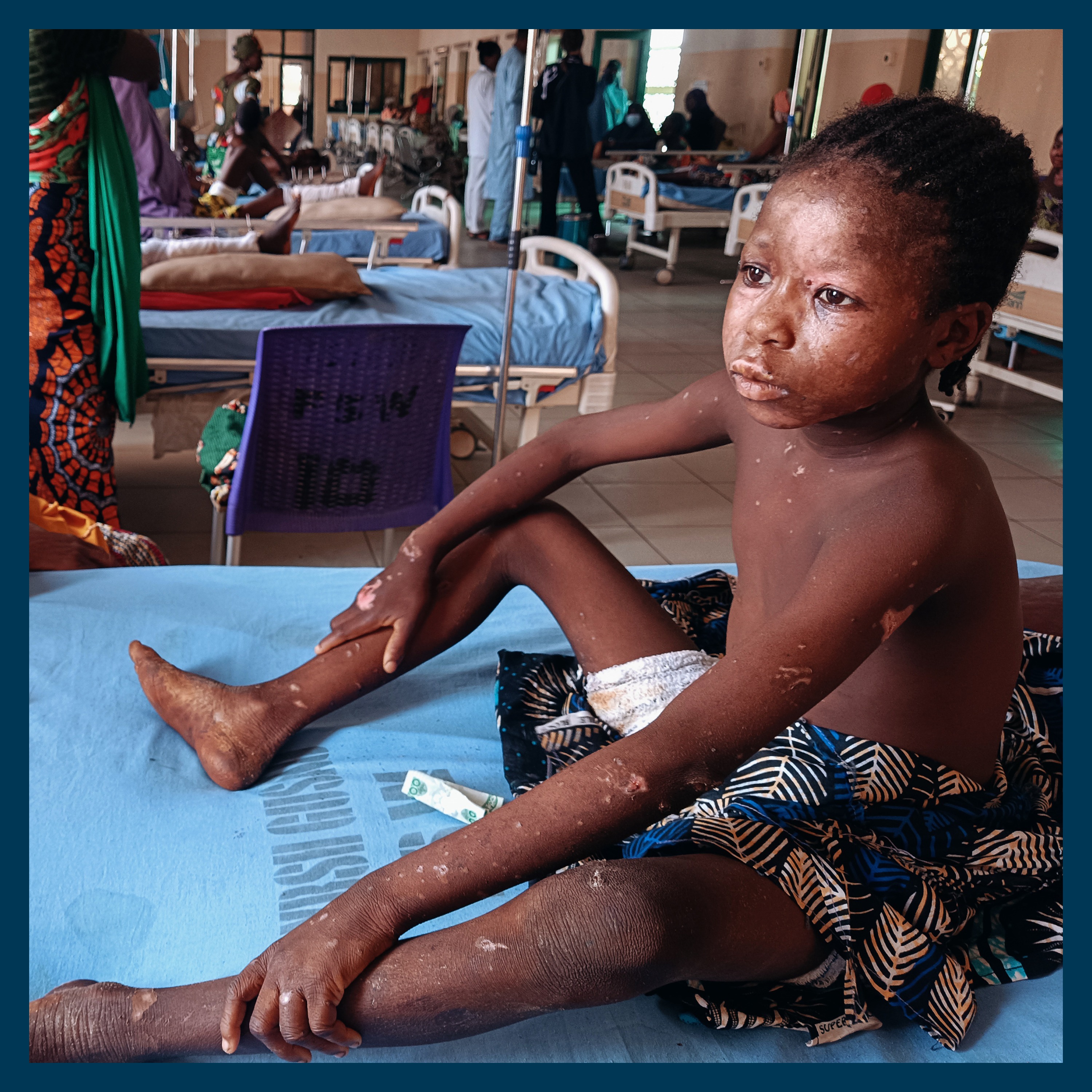
Two sisters decided to go to the market looking for tomatoes. Their names were Aisha and amina. Aisha was 10 years old.
- [01:33]
Manveen Rana
Suddenly, the busy hubbub of the crowd was interrupted by the roar of a Nigerian military aircraft passing overhead. Minutes later, it returned and dropped a bomb in the center of the market.
- [01:56]
Louise Callaghan
Aisha told me she couldn't remember what happened, but suddenly everything went black. Human rights group said that at least 100 civilians were killed.
- [02:08]
Manveen Rana
Aisha's mother rushed to the scene only to find the bodies of Aisha's sister, Amina, her brother and uncles scattered among the remains. Aisha was alive but badly burned, one of dozens who'd been injured.
- [02:26]
Louise Callaghan
I met Aisha and her mother at a hospital. Aisha's lower body was covered in burns. She was sat on a hospital bed, had dirty sheets and she had kind of her limbs smoking laid out so they didn't touch each other because they were so badly burnt. Her face was also covered in burns.
- [02:44]
Manveen Rana
This was the fourth such bombing in a month carried out by the Nigerian government.
- [02:49]
Louise Callaghan
The Nigerian military came out with a statement. They'd killed several terrorists who were meeting in the area, they said a few days later they completely denied that civilians had been killed in the strike. The military insists there is no credible evidence to support claims that the Operation resulted in civilian casualties. We wanted to find out what really happened. So I went to Kusao, a city a few hours from this village where more than a dozen survivors of the strike were being treated.
- [03:26]
Manveen Rana
Louise Callahan has been to this remote and dangerous part of Nigeria to investigate why the government is killing its own citizens. And given their close military ties with the US and the uk why more isn't being done to stop them? The story today, Nigeria is killing its own civilians. Louise, you've just been to Zamfara state in Nigeria, where a lot of this was happening. Just describe what it's like.
- [04:13]
Louise Callaghan
So Zamfara is a state in northwestern Nigeria. This is kind of arid scrubland. There's baobab trees growing everywhere. It's very beautiful, largely rural, quite a remote area. It feels far away from everything. And in recent years, it's been gripped by violence and instability as armed groups who are operating with impunity in the area really terrorize the civilians who live there. It's dangerous to get to, but we managed to find a way. So I drove in to Kusao along this road, which is plagued by almost daily attacks from armed groups and kidnappings. And we went into the town and managed to meet these survivors of this airstrike.
- [05:02]
Manveen Rana
And, Louise, why has that area become so unstable?
- [05:07]
Louise Callaghan
So a huge reason why it's so unstable in this area is just this lack of governance. There's very little government presence, and in that vacuum, armed groups have gained power. So it's particularly these people that that Nigerians call bandits. Most of them are herders from the Fulani tribe. And for decades, there's been this kind of tension in between pastoralists who, you know, run their farms, who are sedentary, and then these herders who are kind of mobile and move around and they have conflicts over grazing for their cattle. But this old conflict in recent years, over the last decade really has turned into something new. So I think as the Nigerian government and the armed forces have failed to control this area, bandits have managed to gain really significant power.
- [06:04]
Manveen Rana
And, Louise, is there any sort of religious affiliation there? Because, you know, from what you're describing, these are herders who are armed. The government, when it describes the area, talks about militants. Is that Boko Haram? Who are they?
- [06:19]
Louise Callaghan
Right. So northern Nigeria. Is this really kind of confusing to the outside of mix of armed groups and militants and Islamist insurgents at the moment? A lot of people will probably remember the kidnapping of the chibok schoolgirls in 2014. In a video released today, the leader of the islamist extremist group boko haram, standing in front of an armored car, says, I abducted your girls. So in the northeast of the country today, there are groups like boko haram, Also an isis affiliate called iswap, which is really powerful, Growing in power all the time. So since the kidnapping of the chibok girls, then northern nigeria and actually, I mean, large swathes of Nigeria now have become lawless. And in that lawlessness, groups like boko haram, like. Like iswap, and also these bandit groups are in a constant battle with the nigerian armed forces Trying to exert control over larger and larger parts of the country, and they are moving southwards. So if you think about Nigeria on a map, before or around the time of the kidnapping of the chibok schoolgirls, the instability was kind of centered in the northeast of the country. Now that instability is spreading through so much of the country. Whether it's boko haram or I swap or the bandits, they are operating in much bigger areas than they used to before. Bandits have been moving southwards looking for grazing for their cattle, and they're sort of wreaking havoc on the way.
- [07:57]
Manveen Rana
And when you say wreaking havoc, I mean, just describe how bad it's got.
- [08:01]
Louise Callaghan
We just received the most extraordinary, horrifying testimonies from people we spoke to in zanfara. They said that the bandits, they kidnapped people. I mean, we're talking almost every day, they kidnap people who are just, you know, trying to live their lives. I mean, these aren't amazingly high value targets. You know, this isn't rich people. It's not politicians. It's poor people who are trying to make a living in this area. Farmers, they're kidnapped, they're extorted. And these bandits with very few numbers, they can basically control and enslave large populations. So, for example, we spoke to some displaced women who told us that the bandits had come to their village, taken everything they had. Tell me, what did they do? Bolts of fabric, goats, things like that. Just stolen everything from them and then effectively enslaved the men in the village. So these people were subsistence farmers. They live only from what they can farm on their plot of land. But the bandits had taken them and taken them to their own lands, Forced them to work on there without paying them. So they had enslaved them there.
- [09:20]
Manveen Rana
I mean, it sounds horrifying and, as you say, utterly lawless. I know you've spoken to one of the men who was actually kidnapped by them. What did he tell you?
- [09:29]
Louise Callaghan
I spoke to a young man called Abdurrahman Hassan. He's a civil servant and a son of a local emir in Zamfara. And a few years ago he was kidnapped from his home.
- [09:42]
PwC Announcer
It was on a Sunday night, around 1am I just had some people jumping through the fence.
- [09:52]
Louise Callaghan
A group of bandits jumped over the walls around his house and they came and they took him from his bed.
- [09:58]
PwC Announcer
They broke the front door, they broke my bedroom door. And they enter.
- [10:04]
Louise Callaghan
He tried to fight them off, but they dragged him away. And they marched him for hours and hours.
- [10:09]
PwC Announcer
We trek for more than 100 kilometers into the bush. Into the bush.
- [10:16]
Louise Callaghan
Now, when they had him there, they kept him for 39 days. And every day he was on the phone to his parents trying to negotiate the terms for his release.
- [10:27]
Manveen Rana
What did the bandits want from him? I mean, this isn't somebody they're using as a slave.
- [10:31]
Louise Callaghan
No. So what they wanted was a prisoner exchange. So he was negotiating for a ransom, but in the end he ended up being swapped for some of their own people in a prisoner exchange. And the point that he made, which I thought was really important, was that he was on the phone to his parents, who are powerful people in the area. Every day. It would have been very easy to trace where he was, especially because the bandits, when they kidnap people, then to take them all to the same place. Everyone in the local area kept telling me, yeah, we know where they are. So it should have been quite fairly easy to figure out where he was. But during the 39 days that he was there, no one attempted a rescue mission. And in the end he was released because his parents were able to negotiate a prisoner exchange.
- [11:20]
Manveen Rana
And why was that? Why was there no help coming?
- [11:23]
Louise Callaghan
Well, he believes the government were just reluctant to get involved, that it was a lack of political will, a lack of sort of desire to do something. And he actually, he made such a good point, I thought, which was that he was saying that if he'd gone on social media and posted an insult against someone who's really high ranking in politics or in the army, if I
- [11:51]
PwC Announcer
just maybe on Facebook, I insult someone that's high profile, within minutes they'll come and rescue me.
- [12:00]
Louise Callaghan
You know, the authorities would have shown up in half an hour. You know, they'd have been at his door. But when he was held in this remote area, really suffering for 39 days, no one really did anything.
- [12:11]
Manveen Rana
And why is the government so reluctant to get involved? I mean, you'd think they'd want to be able to have a grip on all of this area.
- [12:20]
Louise Callaghan
From my understanding, from Speaking to both officials within the government, people in the armed forces first is that the armed forces are overwhelmed. So let's not underplay that. They've got operations in the majority of Nigeria states, in fact in almost all of them. So the scale of the challenge they're facing is enormous. And of course, the Nigerian armed forces do carry out operations to rescue people who've been kidnapped. Is not like they're doing nothing. It's that they are not doing enough to respond to the scale of the problem.
- [12:54]
Manveen Rana
I suppose that starts to explain what happened in that market in May. You know, if they are having to resort to quite desperate use of their defence forces. Just tell us what we know about what the government thought they were targeting in the market that day.
- [13:13]
Louise Callaghan
So the armed forces put out the statement after the attack saying. Saying that they had been targeting a high level meeting of militants that was taking place. So from the survivors that I spoke to, there are a few different points of view. So the people who were inside the market, so that's mostly the women and children, none of them had seen any bandits that day recognizable as being armed men walking around. But I did speak to some men who were working in a motorcycle taxi stand that was kind of on the outside of the market, and they said, yes, earlier in the day we saw some bandits who were there, but they left. So what they said was that the aircraft from the Nigerian armed forces had flown over once, probably for reconnaissance, and then later it had come back and dropped the bomb. And then. So these men on the outside of the market told me that the first time it went over, the bandits immediately understood what was happening and they left. They drove away on their motorcycles. So by the time the aircraft came back and dropped the bomb, they said there were no bandits there.
- [14:18]
Manveen Rana
So the only people who are hit are innocent civilians. And yet the government puts out a statement saying it was targeting militants and no children, no innocent civilians were killed, which is just extraordinary. And this isn't an isolated incident. I mean, just tell us how often this is happening. What do we know about the bombings that are taking place out there?
- [14:40]
Louise Callaghan
Right, exactly. So this problem of civilians being killed in airstrikes has existed for a long time, but what has changed is that in recent months, the number of civilians alleged to have been killed has really escalated. So last year there were about 35 civilians that were killed in airstrikes. And this year so far, there's been more than 250. Wow. So just to give you a sense of how that's happened, so we've got this strike in Zamfara where around 100 people were killed on the same day, another six civilians were killed in another airstrike elsewhere in the country. And then in April a month earlier, there were more than 100 people killed on another airstrike on another crowded market in another state. And then so it seems like in the last few months the number of civilians who have been killed in these airstrikes is really increasing and the frequency of these types of asteroids that kill civilians is increasing.
- [15:41]
Manveen Rana
And Louise, I mean, these numbers are astonishing. Why haven't we heard about this before?
- [15:46]
Louise Callaghan
So these are really remote areas which are very dangerous, very difficult to get to. And then so I think that journalists and human rights groups have really been struggling to get there and to try and communicate with people there, get verifiable numbers. There's very little phone signal. A lot of people don't have smartphones in those areas. They can't take pictures, they can't share with them. And then so it takes a really long time for information to get out. And obviously it's complicated by the fact that the Nigerian armed forces are out there saying none of this happened, we didn't kill any civilians, is not true.
- [16:33]
Manveen Rana
Coming up. Why hasn't the Nigerian government been able to cross crack down on these armed groups? And what responsibility do the US and the UK share in trying to hold them to account? That's in just a moment.
- [16:57]
PwC Announcer
This episode of the story is sponsored by PwC.
- [17:00]
Manveen Rana
AI is everywhere. Return on investment, not so much. So how do you move past the hype and make AI actually deliver? PwC takes you further with tech, strengthening the data quality processes and workflows that shape how well AI performs.
- [17:18]
PwC Announcer
PwC turns innovation into implementation so you can accelerate from experiment to scale.
- [17:25]
Manveen Rana
Discover more at pwc.co.uk.
- [17:31]
Hers Weight Loss Advertiser
if you've felt stuck trying to lose weight, you're not alone. Enter weight loss by hers. It's designed to support you in reaching your goals. And hers now offers access to an affordable range of FDA approved GLP1 medications, including the Wegovy pill and the Wegovy pen. Even better, with a range of affordable GLP1 options, hers makes it simple to find an approach that fits your needs and your budget. If eligible, you'll get a treatment plan personalized to you and unlimited dosage changes as needed. It's weight loss designed to work with your life. Ready to reach your goals? Visit forhers.com eligible to get personalized affordable care that gets you that's F o r h e-r s.com Eligible for hers.com Eligible weight loss by hers is not available in all 50 states. WeGovy is the registered trademark of Novo Nordisk. As to get started and learn more, including important safety information, WeGovy clinical study information and restrictions, visit forhers.com Then I
- [18:29]
Creative Planning Wealth Advisor
thought, what if I've scaled businesses? What if I scaled my philanthropy? What if I did as much in one year as I've done in my whole life?
- [18:36]
Louise Callaghan
See how your wealth could have even greater meaning@creativeplanning.com impact.
- [18:52]
Manveen Rana
Louise, you've been telling us about the Nigerian government's battle to try and get rid of the bandits who have more or less taken over this area. It doesn't seem to be working as a strategy. Just talk us through what they've tried so far.
- [19:07]
Louise Callaghan
So for years the military has been carrying out sort of air and ground operations to try to fight the bandits, but they have not been doing enough. The scale is not at the level that would be required to win against these bandits. It's just not happening. There's a lot of anger as well. I mean, this is very personal. A lot of high level members of the Nigerian armed forces have been killed. I mean, they're taking these really significant losses as well. They are fighting and in some areas they're failing to win against the bandits on the ground.
- [19:40]
Manveen Rana
Why do you think they haven't really been able to stop these groups so far?
- [19:45]
Louise Callaghan
Part of it is that the Nigerian armed forces are overwhelmed. They're fighting on so many fronts. They just are overwhelmed by the scale of the problem which is growing so dramatically. Another is really just a failure of governance. The government has essentially relinquished control over some of these areas, say officials that I've spoken to. And there's also corruption. Of course the Nigerian armed forces deny this. But look, they've got this huge budget. The defense budget is enormous. They've got support from the west. And still it seems like a lot of the money which is supposed to be going to fight insurgents is siphoned off and it doesn't reach the people it's supposed to be getting to.
- [20:35]
Manveen Rana
So, Louise, is this why they're now doubling down on these aerial strikes, these bombings from above? And why are they proving to be so imprecise?
- [20:45]
Louise Callaghan
Well, the interesting thing is that they can do targeted strikes. Nigeria has high precision equipment. They have fighter jets. They have this cooperation with the US to launch very, very targeted strikes at specific targets, at specific people. From the sources that I spoke to, they said that a big part of the reason why These strikes are going wrong. Killing civilians is faulty intelligence. So, for example, there may have been intelligence that bandits were in an area at one point, but by the time that the airstrike happens, they've already left. That's quite a common one that comes up. There's faults in the chain of command as well. There seems to be problems communicating in between different levels of the armed forces. Nigerian armed forces are very, very top down and sometimes then intelligence is lost on the way or mistakes are made along the way. So that's something that comes up a lot when you speak to military sources.
- [21:41]
Manveen Rana
And Louise, you mentioned earlier that, you know, they should be able to be much more precise with these airstrikes because they have so much cooperation with America and the UK and so much of their kit. How close is that relationship?
- [21:54]
Louise Callaghan
So the UK and the US are really, really close allies of the Nigerian armed forces. The uk, for example, they've provided tens of millions of pounds worth of military equipment to the Nigerian armed forces. They work with them very closely. They provide training on fighting insurgency, on human rights. And then so the US State Department, I mean, last year they approved a sale of hundreds of millions of pounds worth of munitions and precision bombs. And they've also sent soldiers to train Nigerian armed forces. And these soldiers are actually involved in fighting on the front lines at times.
- [22:31]
Manveen Rana
In that case, I mean, given how closely integrated they are, it's not just that they're providing kit. You've got soldiers on the ground training, being on the front lines. Are the UK and the US aware that civilians are being killed?
- [22:44]
Louise Callaghan
Yeah, absolutely. They are 100% aware that civilians are being killed and they're aware that they've been being killed for a long time. It's a kind of recurring issue that I've seen when I've been reporting in Iraq before, in Egypt before, where it's these militaries who fairly often commit what would be considered human rights abuses, but they're very, very close allies of the UK and the US in their fight on terror. And then so because of that, they kind of get a pass. And I think that's. That seems to me to be what's happening in Nigeria now.
- [23:23]
Manveen Rana
And for the government to be killing so many civilians in these operations, you know, for them just to be collateral damage and often lied about afterwards, does that constitute a war crime?
- [23:36]
Louise Callaghan
Yeah. So I just spoke to researchers from Human Rights Watch who said that they've called for an investigation into these airstrikes and into other possible crimes committed by the Nigerian armed forces. And they said that they should be investigated on the basis that a possible war crime has taken place. You know, they're not able to say for sure, but absolutely there is. Like targeting civilians is a war crime. What we don't really know is exactly what happened because the Nigerian armed forces haven't been transparent about it. Was this mistake. Were they actually aiming at some bandits that they believed were in the area, missed and hit civilians? Or is it the case that the Nigerian government believes that all civilians in these areas are terrorists? So the Nigerian defense minister came out a little while ago and he said, our new strategy is anybody. Our new strategy is that a friend of a thief is a thief. Anybody that is doing any trading, any support to them, we find you together with them, we're going to deal with
- [24:45]
PwC Announcer
you like the bandit, like the terrorists.
- [24:47]
Creative Planning Wealth Advisor
So people should know, if you don't want.
- [24:48]
Louise Callaghan
So people should know if you don't want to be harmed, please avoid where these terrorists are and don't give them any support. But here's the point. The people who are living in these areas don't have any other options. These are people whose lives are brutalized by the bandits. They are enslaved by them. They are often held captive by them, kidnapped by them. So this idea that anyone who is in an area where terrorists operate is a terrorist, that fundamental idea would seem to be a breach of human rights law.
- [25:16]
Manveen Rana
And I mean, if there is an investigation, if these are proved to be war crimes, surely the US and the UK will have to do something about this.
- [25:25]
Louise Callaghan
Well, I do think that they have a responsibility to bring it up to their allies and speak to them. The problem is, it's that the UK and the US have in previous years, really just paid lip service to abuses committed by their allies across the world and in Nigeria as well. But I think in Nigeria now, this is a case where pressure from the west would change things. And I think that this is an opportunity, particularly for the British government and the British armed forces, to try and actually push for change within the Nigerian armed forces rather than just taking it for granted that they're telling the truth when their leaders say they would like some more human rights training and that they're taking all the measures they can to stop civilian casualties.
- [26:13]
Manveen Rana
What are the Nigerian government saying about these cases? What are they saying about their approach to these bandits and why it's all going so wrong.
- [26:22]
Louise Callaghan
So the Nigerian enforcers and the government point out very fairly that they are facing these huge, huge security challenges. Their people are being killed. They are overwhelmed. This is all true. But fundamentally, then when they do go and kill civilians, in many cases, they do not admit that they have done it and they just accuse human rights groups and the media of lying. I mean, in some cases then the Nigerian armed forces have said, yes, we killed civilians, we didn't mean to, it was a mistake. But in these cases in Zamfara, for example, these hundred people who are killed, they have not done that, they have not admitted it.
- [27:02]
Manveen Rana
And what have the British and American government said about this? Have they addressed what's happening?
- [27:09]
Louise Callaghan
So obviously we put all these allegations to the Nigerian Air Force, the Nigerian military as a whole, the Nigerian Ministry of Defence, the British Ministry of Defence, and the U.S. department of Defense, which now calls itself the Department of War. And the only people who actually ended up responding were the British Ministry of Defence. We put all these quite specific allegations to them and asked them what they were doing to talk to their Nigerian allies to make sure that they were taking all measures to avoid civilian casualties, and they responded. Through the UK Nigeria Security and Defence Partnership, we are committed to supporting Nigeria to promote peace and stability in the region. The UK provides defence engagement to the armed forces of Nigeria to build their capacity to counter internal and regional security threats. UK defence training always includes the need to respect international law and uphold fundamental human rights.
- [28:10]
Manveen Rana
If America and Britain wanted to, they could lean on the Nigerian government. They could actually make them change the way they're doing these operations. They could genuinely make a difference. If they don't do that, what happens next? I mean, how much worse can this get?
- [28:27]
Louise Callaghan
I think if the west does not step up and put pressure on Nigeria to stop killing civilians, they will continue to do so. And as the security situation worsens and the armed forces come under more and more pressure, whether that's from bandits or whether that is ISIS affiliates who are growing in power, Boko Haram, who is growing in power, then they are going to keep taking these measures which hurt civilians in order to try and stop the spread of the violence. And if this keeps happening, then more and more civilians are going to be killed.
- [29:05]
Manveen Rana
And they must be losing so much legitimacy from amongst the civilian population when this happens. I mean, could this turn into a proper full blown civil war?
- [29:16]
Louise Callaghan
There is a war in Nigeria now, whether the government wants to accept it or not. There is instability and violence which is spreading throughout the country, not just in remote areas in the north, but also there have been attacks a few hours outside Lagos. A lot of the people that I spoke to in Nigeria, and that's everyone from officials to human rights groups to local leaders. They say something needs to be done urgently. The armed forces are overwhelmed, of course, but they are also not doing what it takes. They do not have the political backing to do what it takes to try to stop this violence and extremism spreading.
- [30:19]
Manveen Rana
Louise Callahan, foreign correspondent for the Sunday Times the producer today was Michaela Arneson. The executive producer was Kate Lamball. Sound design and theme composition were by Malicetto. If you'd like to get in touch with us, we're@thestoryatthetimes.com thanks for listening.
- [30:37]
Louise Callaghan
We'll be back tomorrow.
- [31:10]
Manveen Rana
This episode of the Story is sponsored by PwC.
- [31:13]
PwC Announcer
What does an AI ready workforce actually look like? Breakthrough performance comes from combining human intelligence with machine capability. PwC brings it all together and takes you further with tech, empowering you to move faster, solve more complex challenges and unlock new value.
- [31:31]
Manveen Rana
PwC combines talent strength with tech strategy so you can unite human potential with AI power.
- [31:38]
PwC Announcer
Discover more at pwc.co.uk.
- [31:43]
Creative Planning Wealth Advisor
because you didn't just say how can I provide these investments? You'd be how do I holistically provide everything? How do I bring in the legal, the accounting, all this, and do it at a price point no one else is doing it.
- [31:52]
Louise Callaghan
Learn more about how we approach wealth management at creativeplanning. Com. Integrated.