Loading summary
Transcript65 lines
- [00:00]
Manveen Rana
A better help ad. Hold on one second. I just need to. What if you had a room where no one interrupts, no notifications, no expectations, just space to talk with BetterHelp Therapy happens in a space that's yours. Visit betterhelp.com randompodcast for 10% off your first month of online therapy.
- [00:33]
Skyrizi Ad Voice
My perfect day has sand, salt water and friends, but my moderate to severe plaque psoriasis can take me out of the moment. Now I'm all in with clearer skin thanks to Skyrizi Risankizumab RZA, a prescription only 150mg injection for adults who are candidates for systemic or phototherapy. With Skyrizi, most people saw 90% clearer skin and many were even 100% plaque free. At four months, Skyrizi is just four doses a year.
- [00:59]
Skyrizi Ad Disclaimer
After two starter doses, don't use if allergic to Skyrizi. Serious allergic reactions, increased infections or lower ability to fight them may occur before treatment. Get checked for infections and tuberculosis. Tell your doctor about any flu like symptoms or vaccines.
- [01:13]
Skyrizi Ad Voice
Thanks to Skyrizi, there's nothing on my skin and that means everything.
- [01:17]
Michael Stevens
Nothing is everything.
- [01:21]
Skyrizi Ad Voice
Ask your doctor about skyrizi, the number one dermatologist prescribed biologic in psoriasis. Visit skyrizi.com or call 1-866-skyrizi to learn more.
- [01:36]
Manveen Rana
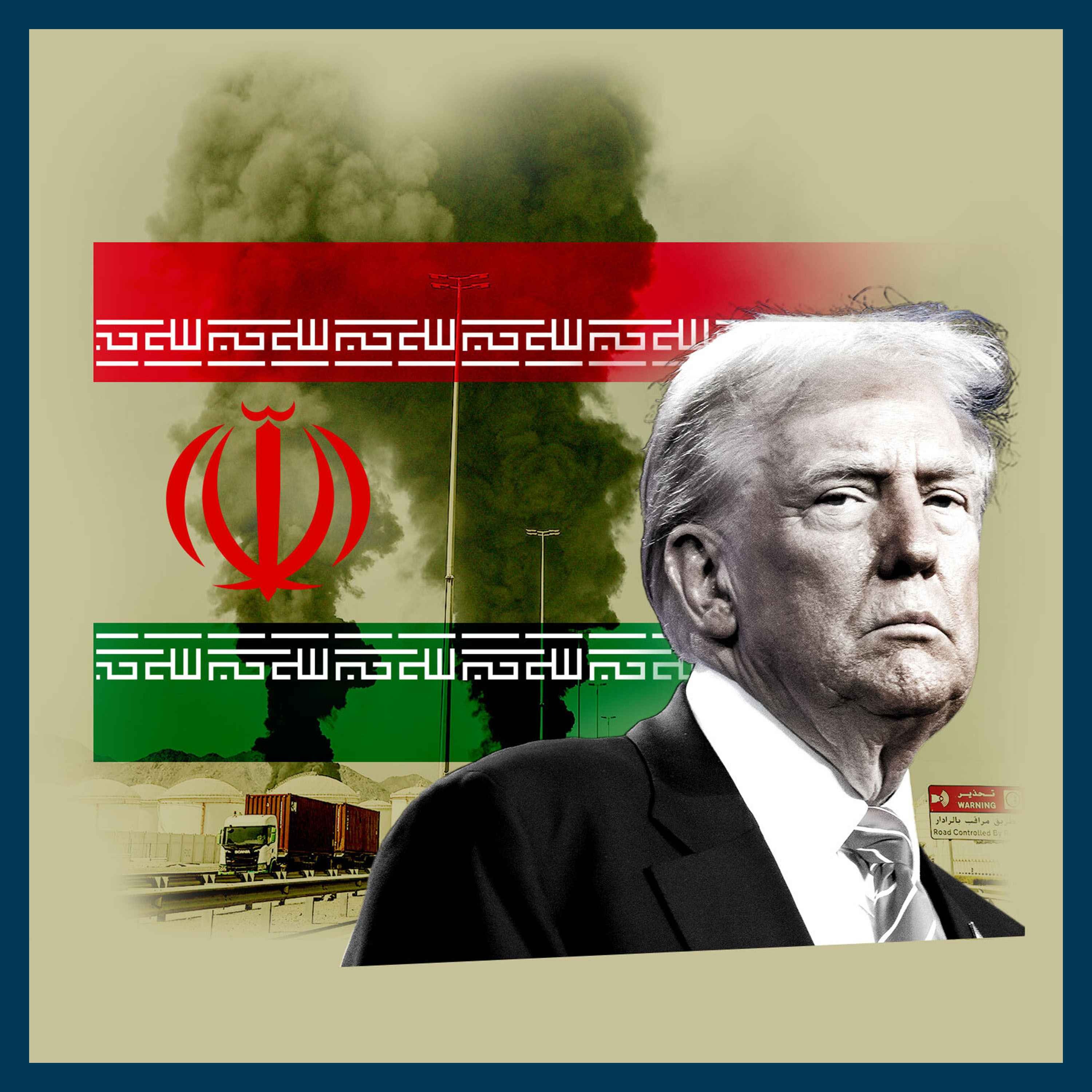
From the Times and the Sunday Times. This is the story. I'm Manveen Rana. If you're wondering what is happening in the war in the Middle east, you're not alone in the American corner. This was Donald Trump on Friday in Florida talking to America's largest retired community about the war in Iran.
- [02:01]
Michael Stevens
Look, we're winning so big. We're winning again. Their air Force is gone. Their ships are gone.
- [02:09]
Manveen Rana
If that sounded like the war was already won, President Trump soon changed his tune in screaming headlines just two days
- [02:19]
Skyrizi Ad Disclaimer
later, President Trump announcing a new operation. This is Project Freedom.
- [02:24]
Manveen Rana
That will allow some of the ships
- [02:26]
Skyrizi Ad Disclaimer
that have been stuck in the Strait
- [02:27]
Manveen Rana
of Hormuz to be safe, safely escorted out of that waterway. Project Freedom. A whole new turn in the war. The US military promised 15,000 service personnel were being used to support President Trump's attempt to break the deadlock in the Strait of Hormuz. But will it work? In an interview on Monday, President Trump didn't always seem convinced.
- [02:53]
Michael Stevens
We'll see what happens. Well, let's see what happens, but I think we'll see what happens. So we'll see what happens.
- [03:01]
Manveen Rana
Iran, meanwhile, have called Project Freedom Project Deadlock and claim it's broken the Terms of the ceasefire with fresh Iranian attacks taking aim at the uae. Is the ceasefire over? What role is the UAE now playing in this regional war? And as things stand, is there any hope for peace? The story today, a new chapter in the war in Iran.
- [03:48]
Michael Stevens
Well, I certainly think in the last 24 hours there's been a, oh, no, not again. Please let's not go through this all over again. We just can't. And I think there was a collective four letter expletive from just about every Gulf country when it looked like we were going back into conflict again.
- [04:06]
Manveen Rana
That's Michael Stevens, a senior associate fellow at rusi. He grew up in the Gulf. His father was in the oil business and he's been a consultant on the region for years. So it's a patch he knows.
- [04:17]
Michael Stevens
Well, given the sort of 12 hours that have passed since the initial missiles were launched from Iran and supposedly seven Iranian small boats were destroyed by the U.S. things have calmed down a little. And I think the messaging both from Iran and the US Seems to indicate that they do still want to talk and that they would rather try and work this out peacefully than escalate to some sort of conflict where we could be at this for another two, three months.
- [04:46]
Manveen Rana
Michael, just help us pick a path through the events of the last few days to understand how we got here, how we've got so close to the war breaking out again. So just take us back to the weekend and the American declaration of this new Project Freedom. What exactly is it and how is it meant to work and is it working?
- [05:08]
Michael Stevens
Essentially, the Americans have not been able to militarily open the Strait Hormuz or at least force it open. So what has happened was that the Iranian semi enforced blockade and toll booth that was put in place was then itself blockaded by the United States, leading to essentially a Mexican standoff in the Strait of Hormuz. Project Freedom is the Americans latest move to try and gain that leverage back. That is essentially to force the strait open through armed escorts of civilian shipping. And so far it does appear that two ships have gone through the Iranian blockade. President Trump is saying that he's doing this as a favor to the entire world. Again, I think it's a little bit of rhetoric and positioning, but time is running out for President Trump in the sense that over the horizon, come midterm elections, the pain of oil shortages and critical minerals and supplies will come very soon and are likely to increase in severity, particularly on the American economy over the next two, three months because of the length of this disruption. So he has to find a way through this impasse. So there's domestic US Angle here. There's also the direct negotiations with Iran angle, where the US Is just going to simply call Iran's bluff and say, okay, you said you're going to enforce this blockade. How about it? The issue, as I see it, is that a number of very senior US Former officials have said this is high risk. What if you hit a mine? What if by mistake you get involved in a confrontation with the Iranians and then let's say two civilian ships are targeted in response? It doesn't require an awful lot of shooting for shipping companies to suddenly go, we're out. So high risk strategy, not guaranteed to work. Let's see what happens. The only thing I think that we can hope for is that the Iranians see renewed urgency to get back to the negotiating table.
- [07:05]
Manveen Rana
So, Michael, as you say, this is a high risk strategy. We're told that up to 15,000 U.S. service personnel would be thrown into this operation in order to escort ships through the Strait of Hormuz. But as you say, if they hit one mine or if a civilian boat is attacked by the Iranians, the whole thing falls apart. It did feel like there was a lot of uncertainty around how this operation would actually work. I mean, a lot of shipping companies saying there's no clarity over what exactly the US Is hoping to do.
- [07:36]
Michael Stevens
There's been a lack of clarity for the last two months, Manveen. It's getting very tiring, actually, because what's happening is that tactical decisions are being seen as kind of strategic plays. And when you don't actually know what your end goal is, then it's always very difficult for anybody trying to run some sort of business, which involves transit through the Strait of Hummus or security in general, to look at this situation and go, well, do you know what? I'm happy to take the risk. Risk. I think it's worth pointing out that we're trying to solve a problem which did not exist on February 27, 2026, and everybody's starting to pay the price. We're running into strategic reserves of oil in most countries. It's not just the Philippines or Korea. It's now Europe as well. Obviously, there's been a lot of discussion about jetliners and jet fuel. So the impacts are really starting to be felt. And that's why there's an urgency here, because I think everyone realizes that it's enough already. This is causing so much pain. And the truth is that the conflict as it exists today is not about the initial conflict, which was Iran gaining nuclear weapons. It's about opening the Strait of Hormuz.
- [08:45]
Manveen Rana
When President Trump first talked about Project Freedom, he made it sound as if the Iranians were on board. He made it sound like a humanitarian effort, because those boats that have been stuck there for a very long time, some of them are running out of food. They have crews, they have staff who really need to be able to get to land. He made it sound like it was all party coming together to try and fix that humanitarian problem. The Iranians, though, have made it quite clear that's not how they see it. They see it as breaking the terms of the ceasefire. Just talk us through the Iranian response and how it's played out.
- [09:17]
Michael Stevens
Yeah. And this has been a pattern, hasn't it, that the US Believes that it can unilaterally sort of change the rules of the tennis match, but if the opponent keeps hitting the ball back, then you don't have that ability to do so. And this is what has happened time and time again, which is that Trump comes out on his social media and his truth social and says, we are doing the following and it's going to cause X, Y and Z results. And then Iran goes, well, no, you're not. And we get stuck in the impasse yet again. And I think that the Iranian response is quite simple, that the US can try this. It's going to be incredibly costly. By the way, that 15,000 troop number that you quoted there has not been that many US troops deployed in the region since the Iraq War of 2003. That is the scale that we're looking at here. And the US is still not able to kind of force strategic leverage, which is, I'm afraid to say, in the long run, pretty damaging for US interests. So the Iranian response right now is, look, hold firm. Don't appear like you're on the back foot. Don't appear that you're feeling too much pain domestically, economically. Make sure that these IRGC boats are still able to buzz around, keep reminding people that the Strait is not safe, and then deny any accusation that you are the aggressor. So when the Iranians launched a series of missiles and drones on the UAE over the weekend, they denied that it had ever taken place, and when the evidence was clear and uncontrovertible, then said it was in direct response to offense and the fact that the US and the UAE had been the warmongers in all of this. So they're gonna try play the harmed, innocent party in all of this, whilst making sure that it's very difficult to get out of this impasse without talking.
- [10:54]
Manveen Rana
And how is Donald Trump responding to this latest bout of fighting? Because we've sort. The UAE are obviously furious. The Israelis are piled in behind them. What is America saying?
- [11:06]
Michael Stevens
His Twitter account has been, or his true social account has been very sort of accusatory and saying that actually the reason that we're in this state is because the Iranians keep back channeling and saying that they want a deal. Now, my understanding is that the current communication is through the Pakistani mediators. I'd be very surprised if the Iranians are telling the Pakistanis that they're begging for a deal. Now, Trump is trying to present himself as benevolent, as caring about the international order and doing a favor for the world. It is true that there have been crews stuck in the Strait of Hormuz for months. They are running out of food, they're running out of sanitary equipment. And Trump is absolutely right to say that this is an urgent matter that needs resolving. The question in my mind is, what then? If this strait is opened, does that mean we start talks again? All the things Trump threatened to do to Iran, take Hag island, invade mass troops on the borders and threaten to push Iran back into the stone Age and wipe them out. I mean, he said he's going to obliterate Iran about 25 times. It's not happened. So the question then is, when you keep talking this way and you're sort of accused of crying wolf, what is your next option? And it appears to me that he's constantly trying to open up pathways to get leverage for negotiations, which, if you read the subtext of that, is not a bad thing, because I think what it means is he would like to discuss and talk to the Iranians rather than go back to war.
- [12:34]
Manveen Rana
And in terms of where those negotiations would be heading, we seem to be getting a clearer idea now of what the new Iranian regime, what the new leadership looks like and what they want. I mean, do we have a sense of what they expect the end state to be for this war?
- [12:51]
Michael Stevens
Yeah. So they've obviously presented these 14 points to the Americans. The Americans at the present time have said they are studying the proposals and they will come back with a response. The biggest concession, I think, is from the American side about what level of uranium enrichment should be allowed in Iran in the future. Now, America has said that it wants a 20 year pause on domestic enrichment. The Iranians have agreed to. I think it's five years. The fact that we're even having that discussion is a huge jump from where we were even, I think six weeks ago, where it was just kind of black and white maximalist. There was talk of a special forces operation to go in and take all the uranium from under Isfahan. And now we're having a sort of environment where there can be a middle ground. Where I think it's going to get complicated is Iran's pushback against the US's regional interests. So Iran has said, listen, we don't want US offensive weaponry and basing structures near our borders. We cannot accept that. Obviously the US also can't accept that that's an impasse. And then they brought to the table the question of Lebanon. I think this is a very interesting point because if Iran felt really desperate that it had to, or at least the regime that it had to save its own skin, I don't see why it would bring Lebanon into the equation. But it has and it feels that is a tool and lever that it can use to extract concessions from the United States and also to pressure Israel to pressure the United States to stop this conflict.
- [14:23]
Manveen Rana
And Michael, concessions around nuclear were being talked about in the deal that was on the table before this war broke out. Is the thing that's changed now is that there's not only a nuclear threat, but actually a straight up Hormuz threat which didn't exist before. In that we now know Iran can leverage that to stop the world in a way, utterly debilitating way. Will that form a part of the end deal, whatever it is? Will Iran get some kind of fee for every ship that moves through?
- [14:52]
Michael Stevens
I don't think the Gulf states would accept that outcome because it just adds a price on its attacks, on their vital exports. So what I do think is very clear is, you know, over the last 20 years, people in my field have been talking about what would happen if the Strait of Hormuz were closed. It was always a sort of red teaming exercise that you would go through. The fact that it's now happened and that genie is out the box. I'm afraid to say it's looked pretty good from the Iranian perspective in terms of the strategic leverage that it's afforded them. And we've all had to move with the times and accept that there is a new reality where actually the world's greatest superpower can't really force the agenda here. I've always felt that Hormuz was a far more useful strategic weapon for Iran than a nuclear bomb. A nuclear bomb is very limited in the ways in which you can use it and maybe that will actually shift the Iranian mindset into thinking, well, what was the strategic value of a bomb anyway? Maybe we can make concessions in the nuclear sphere because actually we've shown now we have a lot of impact.
- [16:02]
Manveen Rana
Coming up, how did the UAE become one of Iran's biggest enemies? That's in just a moment.
- [16:22]
Skyrizi Ad Voice
My perfect day has sand, salt water and friends. But my moderate to severe plaque psoriasis can take me out of the park.
- [16:28]
Michael Stevens
Moment.
- [16:29]
Skyrizi Ad Voice
Now I'm all in with clearer skin thanks to Skyrizi. Risankizumab RZA a prescription only 150mg injection for adults who are candidates for systemic or phototherapy. With Skyrizi, most people saw 90% clearer skin and many were even 100% plaque free. At four months, Skyrizi is just four doses a year.
- [16:48]
Skyrizi Ad Disclaimer
After two starter doses, don't use if allergic to Skyrizi. Serious allergic reactions, increased infections or lower ability to fight them may occur before treatment. Get checked for infections and tuberculosis. Tell your doctor about any flu like symptoms or vaccines.
- [17:02]
Skyrizi Ad Voice
Thanks to Skyrizi, there's nothing on my skin and that means everything.
- [17:06]
Michael Stevens
Nothing is everything.
- [17:10]
Skyrizi Ad Voice
Ask your doctor about Skyrizi, the number one dermatologist prescribed biologic in psoriasis. Visit skyrizi.com or call 1-866-Skyrizi to learn more.
- [17:26]
Advertisement Voice
You do it all, so why not get all the electrolytes hydrate better than water with new Gatorade lower sugar now with no artificial flavors, sweeteners or colors and 75% less sugar than regular Gatorade. New to the fridge. All the Gatorade electrolytes you love. Gatorade lowers sugar. Is it in you? Now available nationwide, we have launched Operation Epic Fury.
- [17:52]
Michael Stevens
Stops us being a proper country when everyone says they're right. Who do you believe? None of us knew the depth of that relationship. If the lines are blurred, can you read between them when the story breaks?
- [18:06]
Manveen Rana
Who brings perspective?
- [18:08]
Michael Stevens
If you want to understand the issues that define our times, it starts with
- [18:13]
Advertisement Voice
listening Times Radio on your smart speaker, on digital radio or the Times Radio app.
- [18:31]
Manveen Rana
Michael it felt like this war was about to kick off again after the Iranians hit a number of very strategic sites in the UAE over the weekend. That does feel different as a phase of this war. You know, when this war began, it feels like Iran was slightly indiscriminately hitting its neighbors. This was much more targeted. How has the UAE evolved into being an actor in this war? What role are they playing at the moment?
- [19:00]
Michael Stevens
Well, I think first of all the Iranians I'm afraid to say, have demonstrated increasing ability to target infrastructure successfully. And about three to four weeks into the war, it was very clear that their abilities had significantly increased. And that's obviously because of their relationship with Russia and the targeting data that they were given. They were able to destroy sensitive radar sites in Jordan, critical national infrastructure in Israel. They obviously gravely damaged the liquefied natural gas facilities in northern Qatar. And they were doing the same in the uae, where if there was a strike on an oil field in Iran, they would respond and they would hit an oil field in the uae. What has emerged is that public enemy number one for Iran is obviously Israel and public enemy number two is the uae, who is the closest ally of Israel in the region. We now know that in the early stages of the war, the Israelis provided a defensive shield for the UAE which helped it intercept missiles. So that's the Iron Dome system which was shipped across. That's never happened before, that level of integration between Israel and an Arab state, particularly in the face of Iran. And I think to some extent, as the Iranians realized that there was a kind of quasi forward operating base for Israel, I wouldn't call it a real operating base, but a quasi operating base, then they started to go, okay, well, you know what? The country that's going to feel the most pain here is going to be the uae. We're going to make sure that they are the most disrupted out of all of the Gulf states. And subsequently that has happened. The UAE has faced more than double the number of airstrikes, missile attacks and drone attacks of any other country in the region. More than Israel, in fact. So it really has sort of emerged. This is kind of front line for two main reasons. One is because Dubai is this kind of international city where, you know, peace and stability are so important to the prosperity of Dubai and its continued success. And Iran knows that's a huge strategic lever. And secondly, there has been low lying tension between Abu Dhabi and the rulers of the UAE and Iran for some time, in fact, for really the last 25 years. And as a result, the Iranians have kind of felt, right, it's time for some payback. If you notice, they have not struck Qatar and Oman in the same way as they have struck the uae. And that is a lot to do with political decision making.
- [21:21]
Manveen Rana
That is fascinating because it does feel like we're sort of redrawing allegiances across the Middle east at the moment. You mentioned how closely aligned the UAE is to Israel at the moment. I mean, they signed the Abraham Accords a number of years ago, but nobody expected Israeli defense to cover part of the uae. How close is that relationship at the moment?
- [21:41]
Michael Stevens
Very close. There is no closer ally of Israel in the region than the uae. I don't even think the Israelis expected it to morph in the way that it has into this kind of strategic relationship. Now, look, clearly there are a number of very senior Emiratis of Palestinian descent who are very upset about what happened in Gaza. The UAE had to tow a very fine line, but they did not sign the Abraham Accords to walk away. And they have clearly lasted what is the most serious fracture between Israel and its Arab neighbors for decades, since probably 1973, I would say. And the UAE has made its bed. Now, there are a number of reasons as to why it's done this and why it's signed the Abraham Accords in the first place. Firstly, it's much easier to do than a bordering state because it was never really involved in the conflict, so it could make peace from a distance. Secondly, Sheikh Mohammed Bin Zayed, who is the ruler of the uae, made a bet that the world was moving forward to technological innovation, artificial intelligence, and the countries that got ahead in that race would be the ones that survived, particularly after all the oil ran out. Who was the neighbor that had that ability to kind of innovate? It was Israel. And so mbz, as he's known in the uae, made that calculation that a strategic alignment with Israel was absolutely in his country's national interest. And he has stuck to it. And there is a growing friendship between the two capitals. But there's also an underlying sort of movement of investment in tech companies back and forward. I used to go to Dubai Mall and hear Hebrew spoken quite regularly. So the strategic link is absolutely cast. It's ironclad and it's going to be there for for years.
- [23:25]
Manveen Rana
At the same time, the UAE's alliances, long held with countries and regional powerhouses like Saudi Arabia, seem to be fraying.
- [23:35]
Michael Stevens
Absolutely. Now, there's talk that some Emirati commentators who are not known for being moderate in their opinions and are usually a bit hyperbolic, have said that the UAE has outgrown the region. I mean, rubbish. Of course it hasn't outgrown the region. It's a country of 10 million people, it's Arabic speaking and it's surrounded by Arabic speaking nations. It will not outgrow the Middle east east region. But I think that the UAE does look at the way the world is shifting and does not see Saudi Arabia and its leadership of the gcc, which is the Gulf Cooperation Council as being the kind of leadership that suits its national interests. So I'm afraid to say that has become a very serious break in the gcc. And there is some talk that the UAE may leave the gcc. I think it's premature. Let's wait and see what happens.
- [24:26]
Manveen Rana
We should also note that in the last few weeks they have left opec. How significant a move was that?
- [24:32]
Michael Stevens
It was significant. Now, there are two ways that you can look at this. One is that the UAE does feel constrained by opec. It has made it very clear that it wants to pump 5 million barrels a day by 2030. Emirati officials will say to you that they can pump 4.85 million barrels a day. Not now, but they are being restricted by OPEC to 3.15, I think it is, or 3.1. And they don't feel that meets their interests. And I can understand from a revenue point of view why the UAE has long been frustrated at the structure. Because if you look at where the world is moving, cheap Chinese electric vehicles are coming on the market all over the planet. I think it's very likely that even in the global south, people will be driving electric vehicles rather than petrol vehicles not too far in the future. And the, the UAE wants to maximize the assets that it has in the ground now. Now, obviously this is kind of irrelevant because nobody is getting any oil out to market. But in the moment where they could get oil out to market, the UAE does not want to be restricted from making sure that its assets are made the best use of in the time that it has available, which is in this sort of 10 to 15 year time frame. And that OPEC, frankly, by controlling production and setting quotas, particularly quotas that suit Saudi Arabia, is just not acceptable for the uae. So there has been a long burning frustration there which has kind of bubbled out. Now the issue is the timing. Clearly the timing is designed to be a finger in the eye of Saudi Arabia. There's no doubt in my mind that the way that they have announced it, which was during a GCC summit held in Saudi Arabia, was to try and dent Saudi prestige because they're upset at Saudi Arabia. And so there is a political question here and a technical question on the technical question. In the long run, I think the UAE probably will benefit. But the question is then how that translates into other multilateral forums that the UAE thinks don't work for it as well. Difficult to foresee in the sense that you have things like the Arab League, the Organization for Islamic Cooperation and even the gcc, which are multilateral frameworks the UAE is part of. Would it translate its frustration with opec, which is clearly as political as much as it is about pumping oil into these other fora. Unclear to me. Maybe the UAE has made its point and when the Strait of Hormuz opens, it will go out and pump its oil and frankly wave goodbye to everyone in the rearview mirror without having to break these frameworks. We just don't know, Michael.
- [27:12]
Manveen Rana
To understand how this war is almost in a way accelerating some of the realignment in this region, we should also talk about Pakistan, which has emerged as sort of the peacemaker in these talks between Iran and America, and yet it seems to have ended up in problems of its own with the uae. Just talk us through what's been happening.
- [27:34]
Michael Stevens
There has been a growing frustration. I mean, the UAE seems frustrated with just about everybody at the moment, which is a dangerous place for a little country to be. Whilst they may be influential in the Arab world, the globe is a big place and a country of 10 million people is a small boat in a large ocean. So here's the issue. The UAE has increasingly pivoted closer to India. There's a framework called i2ut, which is Israel, India, the UAE and the US which was an axis that was building in the region. The Pakistanis have in response built a very strong relationship with Saudi Arabia. And so that has essentially driven this wedge in between the Pakistanis and the uae. So I'm afraid to say at the moment there are just calculations on both sides of this equation which aren't matching up.
- [28:25]
Manveen Rana
Stepping back, looking at the region at large and all of those tensions that exist and the very fragile ceasefire, if it is still in place, how close could we be to a return to full scale war end, do you think?
- [28:40]
Michael Stevens
On a personal level, I just hope it doesn't go that way because the strain that this is putting on people in the region, the resource infrastructure in the region and our own bank balances here in the west is enormous. And I'm afraid to say there are so many second order effects which are happening as a result of this war. And I really didn't want to be the prophet of doom when we first spoke. I didn't. But I'm afraid we're at the worst case scenario here, which is that actually rather than this being all out conflict, there's just stalemate where the economic damage continues to get worse. In a weird way, if it had been a short, sharp war and someone had won, then actually we would be in A place now where the strait would probably be open and we would see some return to normality. I have no idea what the regime in Iran would look like right now, but we've kind of ended up with the worst of both worlds. The Islamic Republic survives. In fact, it's more ideological and more militarily focused than it was two months ago. And it's fairly kind of coherent in the way it makes decisions. Strait of Hormuz is firmly shut. I'm really not convinced that this operation to reopen it will work. And we don't see any strategic diminution of Iran's role in the region. So does make you think, what was this all for? But my hope, and I go back to what we talked about earlier, is that they are continuing to discuss potential pathways for negotiation. At no point have negotiations officially stopped. And I think that is a positive, and maybe this is my own internal bias hoping for the positive here. But the fact that they continue to talk, the fact that we haven't had a full resumption of hostilities, and maybe that's because neither Iran nor the US can afford it. Whether that's because MAGA is splitting or whether because Iran is actually at the end of its sort of military capabilities, I'm not sure. I think it's probably a bit of both. But they both want a way out. The issue is that we're in this sort of Gordian knot where no one wants to make the biggest compromise first? Because actually, a lot of this conflict is about perception. It's not like the Battle of The Somme where 50,000 people die in the first morning. This is a conflict about perception, about posture and geopolitics. And those are multiple knots which have made this very difficult to untie.
- [30:50]
Manveen Rana
And, you know, given that it is a war of perception, a war of narrative, which party in this now very entrenched battle can afford to hold on longer? You know, who do you think will blink first?
- [31:05]
Michael Stevens
Up until two weeks ago, I would have said that Iran probably could have held on longer simply because the political timeline for the president, Trump, that is, was pretty short. And we all know when the midterms are. His polling is not looking good and Republicans are getting upset. The issue, I think, in the last couple of weeks is that the US Blockade, of the blockade is actually having an impact on Iran. Internal stability does look like it's starting to fray a little bit. They are feeling the pain. Inflation has gone up to 70% now. It was 40% in January. And bear in mind, in January, you had mass protests on the street to do with socioeconomic conditions inside Iran. The economic situation is way worse than it was in January. So if you are the Iranian regime, you're looking at that going, this is not good for us. Now we have an external enemy to some extent. There's a rally round the flag moment and we can buy a little bit of time with that. But actually I think it's probably in the Iranians interest to come to some sort of deal too. Having their ships not going to market is pretty damaging for them. Now they got six, seven weeks of being able to get their ships through the strait, but that is not happening anymore and the effects have been almost immediate. So in my view, actually I think both sides need to come to a deal pretty quickly.
- [32:34]
Manveen Rana
That was Michael Stevens, Consultant and Senior Associate Fellow at the Royal United Services Institute, Institute, Rusi and at Rand Europe. The producers today were Olivia Case and Sophie McNulty. The executive producer was Tim Walklate and sound design and theme composition were by Malicetto. If you can do leave us a review wherever you get your podcasts. Thanks for listening. We'll be back tomorrow.
- [33:05]
Michael Stevens
Sa.
- [33:34]
Skyrizi Ad Voice
My perfect day has sand, salt water and friends, but my moderate to severe plaque psoriasis can take me out of the moment. Now I'm all in with clearer skin thanks to skyrizi risen Kizumab RZA a prescription only 150mg injection for adults who are candidates for systemic or phototherapy with Skyrizi. Most people saw 90% clearer skin and many were even 100% plaque free at four months. Skyrizi is just four doses a year after two starter doses.
- [34:01]
Skyrizi Ad Disclaimer
Don't use if allergic to Skyrizi. Serious allergic reactions, increased infections or lower ability to fight them may occur before treatment. Get checked for infections and tuberculosis. Tell your doctor about any flu like symptoms or vaccines.
- [34:13]
Skyrizi Ad Voice
Thanks to Skyrizi. There's nothing on my skin and that means everything.
- [34:18]
Michael Stevens
Nothing is everything.
- [34:21]
Skyrizi Ad Voice
Ask your doctor about Sky SkyRizi, the number one dermatologist prescribed biologic in psoriasis. Visit skyrizi.com or call 1-866-SkyRizi to learn more
- [34:32]
Advertisement Voice
At Vrbo, we understand that even the best of plans sometimes need a little support. So we plan for the plot twists. Every booking is automatically backed by our VRBO Care guarantee, giving you confidence from the very start. Whenever you need help, it's ready before your stay, the through the moments in between and after your trip. Because a great trip starts with peace of mind and maybe a good playlist. But we've got the peace of mind part covered.