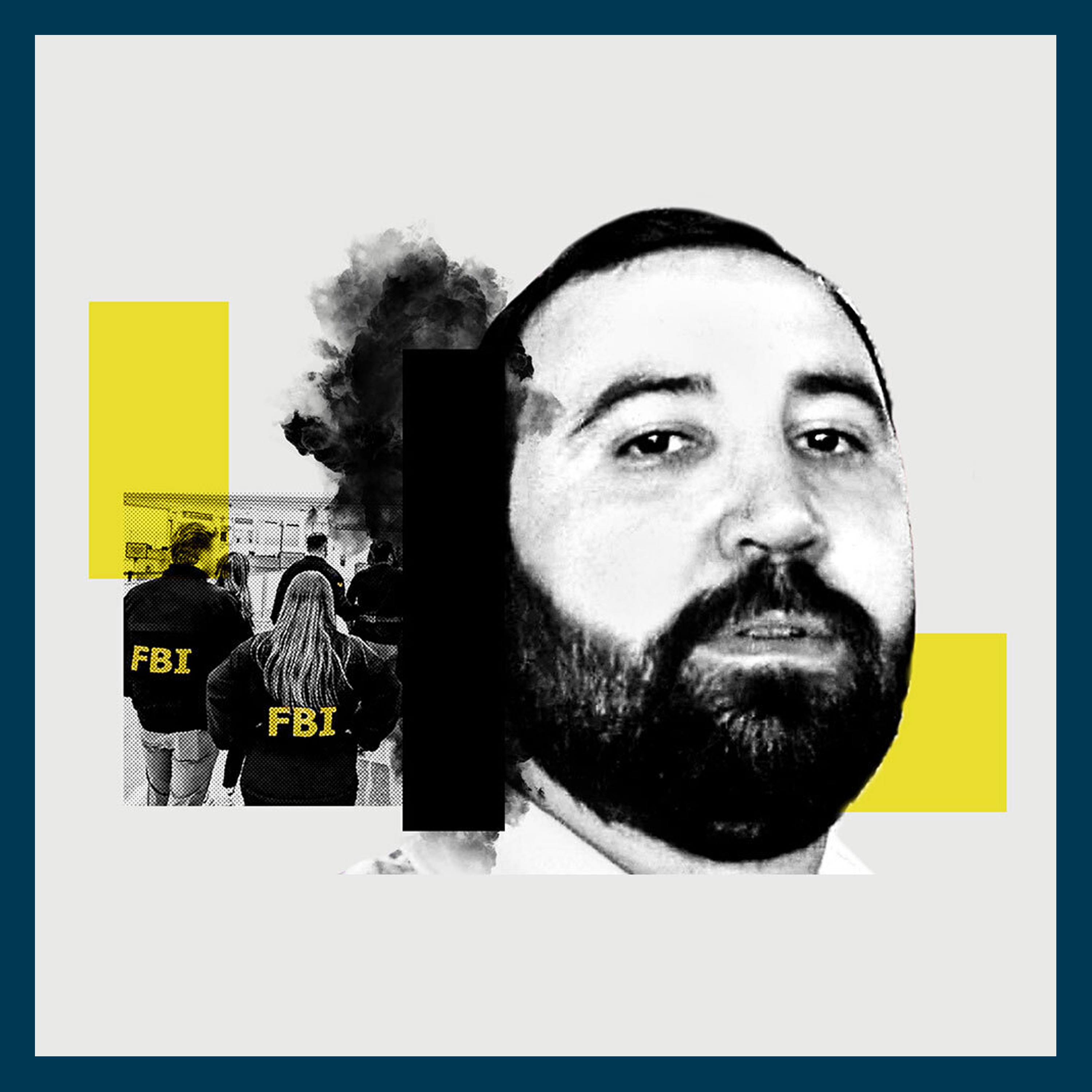
Loading summary
Transcript68 lines
- [00:00]
Financial Advisor
Because you didn't just say, how can I provide these investments? You'd be, how do I holistically provide everything? How do I bring in the legal, the accounting, all this, and do it at a price point no one else is doing it.
- [00:09]
Luke Jones
Learn more about how we approach wealth
- [00:10]
Interviewer
management@creativeplanning.com integrated
- [00:16]
PwC Sponsor Voice
this episode of the Story is sponsored by PwC.
- [00:20]
Luke Jones
Technology doesn't wait, and neither should you. Staying competitive means getting ahead, not just keeping up people. PwC takes you further with tech. From optimizing the systems that put your data to work to scaling AI from proof of concept to competitive edge, PwC
- [00:36]
PwC Sponsor Voice
helps you meet tomorrow's tech demands so you can compete at a speed that rewrites the rules.
- [00:42]
Luke Jones
Discover more at pwc.co.uk. from the Times and the Sunday Times, this is the story. I'm Luke Jones.
- [00:57]
Dipesh Ghadda
So it was early in the hours of the morning a few weeks ago in the Iraqi capital of Baghdad. A group of men were getting ready for work. They allegedly opened up Apple's FaceTime app and called a man more than 3,000 miles away in North London who was standing outside a synagogue. One of the men in the Baghdad bunker tells the person in the UK to take a petrol bomb and light it, according to US Court papers, and then he tells him in English to throw it.
- [01:37]
Luke Jones
That attack was the firebombing of the Kentin United Synagogue in North London, an anti Semitic attack in the British capital operating in this case from a bunker in Iraq, but backed by Iran. And it was one of 18 attacks this particular group has been accused of unleashing across Europe. The alleged mastermind, one of the men in that room in Baghdad, has now
- [02:03]
Interviewer
been caught by the FBI.
- [02:05]
Luke Jones
It's been called one of the most significant counterterrorism arrests in recent years. But who is he and will his arrest make our communities any safer? The story today, the Iranian agent allegedly directing attacks via FaceTime.
- [02:42]
Dipesh Ghadda
I was following and reporting on a spate of arson attacks that had been taking place in and around the Barna area of North London back in March and April. And journalists and police alike were trying to work out were these random attacks or was there something more sinister and orchestrated behind it?
- [03:07]
Luke Jones
Dipesh Ghadda is home affairs correspondent at the Sunday Times. He covers crime, security and terrorism. So immediately this story was straight on his radar.
- [03:19]
Dipesh Ghadda
And I think speaking to counterterrorist police and sources in the security world, they were coming to a conclusion that they were part of a pattern that may have pointed to a hostile state. But it Wasn't until out of the blue, the FBI announced they'd arrested a man that we actually knew the bigger picture.
- [03:46]
Interviewer
So let's rewind because you mentioned that there was these spate of attacks that started in March, April. Can we directly link that, do you think, to the beginning of the US Israeli war in Iran?
- [03:58]
Dipesh Ghadda
Yeah. So obviously the war started on February 28. On its first day, Ayatollah Ali Khamenei was assassinated in an Israeli strike. And what you see is a week or so later, the first of these firebombings taking place in Europe.
- [04:19]
News Reporter
Investigators say the blast, around 4am, not only damaged the synagogue, it also blew out windows of neighboring buildings.
- [04:25]
Dipesh Ghadda
There were 18 attacks in total over the course of the coming weeks. The first was on a synagogue in Belgium.
- [04:33]
News Reporter
Thankfully, no one was injured. Now the Interior Minister is calling it a vile anti Semitic act.
- [04:39]
Dipesh Ghadda
That was quickly followed by another petrol bombing of a synagogue in Rotterdam, followed by a Jewish school being attacked in Amsterdam, as well as an American bank.
- [04:51]
News Reporter
The overnight blast damaged the wall of the school, but there were no injuries reported. Now it's the second anti Semitic attack in two days in the Netherlands. So security had already been stepped up at some of these Jewish institutions.
- [05:04]
Dipesh Ghadda
And then eventually later in March, we had the first firebombing that took place in London in Golders Green.
- [05:13]
Interviewer
And what did the authorities think about who might be responsible for all of these? I mean, did anybody claim responsibility?
- [05:22]
Dipesh Ghadda
Obviously, the more attacks that took place, the authorities began to wonder whether this was a coordinated series of incidents. And there was actually an Islamist group known under the acronym hay, which was quick to claim responsibility of each of the attacks. They would be releasing short videos within hours of some of the incidents, with actual raw footage of the attack itself in some cases. So that made it appear as if it was an Islamist group, a bit like a new Al Qaeda, a new isis. But that was only half the picture seems to be the case now, looking at the US indictment against an individual called Muhammad Al Saadi. Essentially, this Islamist group was an online only entity and he was the man behind it, pulling the strings.
- [06:31]
Interviewer
And what do we know about him? Where's he from? And I how old is he even?
- [06:35]
Dipesh Ghadda
He's only turned 33 last week in fact, so relatively young chap. He was born in Tehran in 1993. He's a dual Iranian Iraqi national. He's from a Shia Muslim family. His father originally was in Iraq, but moved away under Saddam's rule, who was obviously part of the minority Sunni population. But then it seems that his father was also part of an Iranian backed Shia militia which was opposing Saddam's rule. And when the US invasion took place in 2003 and Saddam fell, this Al Saadi family moved back to Baghdad.
- [07:21]
Interviewer
Got you. So it's sort of, I guess, you know, allegedly a family business. Is it clear that this Al Saadi, the one behind this group, Hay, was basically following in his father's footsteps, doing similar things to what his father did.
- [07:35]
Dipesh Ghadda
Analysts believe that Al Saadi also joined a Shia militia group in Iraq. It's called Kataib Hezbollah. It basically takes its instructions directly. Iran's Islamic Revolutionary Guard Corps. So it was a case of, yeah, like father, like son.
- [07:57]
Interviewer
And do we know, I mean, how involved was he? What was he doing? Was he quickly in charge of things or was he just a sort of eager foot soldier?
- [08:05]
Dipesh Ghadda
Well, I think he sort of rapidly rose up through the ranks to become a commander. He had previously seen some service in Syria where the Shia militia were sort of brought in to prop up Bashar Al Assad's army. He also did a stint fighting against the Islamic State in Iraq. And very quickly he had become a confidant of an Iranian general called Qasem Soleimani. He is probably the most revered figure within Iran's military. He is the head of something called the Al Quds Force, which is an elite unit of the IRGC responsible for carrying out overseas operations.
- [08:51]
Interviewer
And many people might recognise that name from 2020 when a US strike killed him, a Trump ordered strike, something that Donald Trump talks about quite often. How did all of that affect Yaman Al Saadi as he was rising up through the ranks?
- [09:06]
Dipesh Ghadda
According to the US indictment against Al Saadi, he was actually meant to be driving Soleimani to meet another senior figure that very day when the strike took place on Baghdad Airport. So he was left devastated by the death of his, basically his mentor. And it wasn't long before he was taking to social media, Twitter, for example, as it was then basically threatening revenge to America.
- [09:35]
Interviewer
So this group, High, which now it seems like he allegedly heads up, how did that emerge out of all of this?
- [09:42]
Dipesh Ghadda
So what seems to have happened, or what's alleged by the US authorities, is that shortly before the war with Iran kicked off, Al Saadi had traveled to Tehran, briefly met Ayatollah Khamenei before he was assassinated. And then in the days and weeks after the war began, he is alleged to have been part of high level discussions, including members of the irgc. There was a chap called Esmal Khani who was Soleimani's successor to basically work out a retaliatory strike against the West. The solution, as they put it in the indictment. And so it seems that clearly senior figures in Tehran had their hands full fighting the war. It appears as if they entrusted Al Saadi to kind of come up with a plan to carry out some revenge attacks in Europe and the West. And he was effectively, you know, told to go off and come up with a plan. And that is how we think Hay was born. And as we'll get into it, this would eventually all come to a head, leading to multiple attacks across UK and Europe over the following weeks and ultimately attracting the attention of the FBI in America.
- [11:16]
Luke Jones
Coming up, how did Al Saadi allegedly recruit for and direct these attacks? And how did the authorities finally catch up with him? That's in a moment. This episode of the Story is sponsored by PwC.
- [11:33]
PwC Sponsor Voice
AI is everywhere. Return on investment, not so much. So how do you move past the hype and make AI actually deliver? PwC takes you further with tech, strengthening the data quality processes and workflows that shape how well AI performs.
- [11:52]
Luke Jones
PwC turns innovation into implementation so you can accelerate from experiment to to scale.
- [11:58]
PwC Sponsor Voice
Discover more at pwc.co.uk. what if a marginal gain unlocked greater performance? What if an insight in data could change everything? At Aramco, our focus on detail helps us deliver reliable energy to millions across the world. Because margins aren't marginal, they're where we can truly push the limits of what's possible. Aramco, an integrated energy and chemicals company. Learn more@aramco.com par le tu francais hablas espanol?
- [12:37]
Dipesh Ghadda
Par le italiano?
- [12:39]
Babbel Advertiser
If you've used Babbel, you would Babbel's conversation based technique teaches you useful words and phrases to get you speaking quickly about the things you actually talk about in the real world. With lessons handcrafted by over 200 language experts and voiced by real native speakers, Babbel is like having a private tutor in your pocket. Start speaking with Babbel today. Get up to 55% off your Babbel subscription right now at babbel.com acast spelled B-A B B E L.com acast rules and restrictions may app.
- [13:25]
Interviewer
Dipesh we're talking about this man, Al Saadi and the attacks that we've seen across Europe since the US Israeli war in Iran began. How exactly did all of this start to unravel for him and this group he's alleged to have led? Hai. How is he caught?
- [13:42]
Dipesh Ghadda
So what you had is a Series of attacks in the uk, a series of attacks across other European countries, including the Netherlands, Belgium, Germany, France. So the national security apparatus, counterterrorist police in all of these countries who are suffering these attacks were clearly all talking to each other, trying to work out what was going on. And clearly they also had a fair bit of communication with the FBI in America. So Scotland Yard would have been sharing what it knew from its investigations. But as it happened, the FBI seemed to be ahead of a curve because it had actually managed to make contact with Al Saadi directly as he was trying to recruit to carry out further attacks on that side of the Atlantic. And as it transpired, he recruited what he thought was a member of a Mexican drug cartel to carry out a series of attacks on synagogues in America. He including in Manhattan, I believe. But not everything was as it appeared. The man he thought he was talking to turned out to be an undercover FBI agent. And he was offering him $10,000 in cryptocurrency to carry out these attacks. And by the end of April, he'd actually even asked him to consider killing Jews as part of his attacks.
- [15:17]
Interviewer
Gosh. So how did, how did Al Saadi end up in handcuffs then? Who actually then made the arrest?
- [15:25]
Dipesh Ghadda
So literally the day after he'd asked his would be recruit to kill Jews, he was suddenly picked up in a hotel room in Istanbul in Turkey by armed Turkish police. It seems that they had been monitoring him for some time and he was initially held in what Al Saadi's defense lawyer describes as an underground prison before being handed over to the FBI in mid May to be then flown on a private jet to New York where he is now facing eight terrorism related charges.
- [16:08]
Interviewer
And this all seems, I mean, maybe it's just typically American, but it seems very, it seems like an enormous operation and very dramatic. I mean, does that suggest that they think that Al Saadi is a very big fish when it comes to these kind of problems as we're experiencing them in the West?
- [16:25]
Dipesh Ghadda
Yeah, I mean, when the indictment was unveiled in New York, Kash Patel, the director of the FBI, actually described Al Saadi as a high value target responsible for mass global terrorism. And I understand that the UK security services and counterterrorist police share that assessment. So his arrest actually is being looked at as one of the biggest catches in recent times.
- [16:53]
Interviewer
It also seems, as you described, you know, that he was moving around with lots of these enormous figures in what's been happening in the Middle East. People like Qasem Soleimani, people like the late AYATOLLAH in Iran.
- [17:05]
Dipesh Ghadda
Well, that's the most astonishing thing about this story. I mean, the guy's barely turned 33, but it seems that he has actually got to the very top of the regime in Tehran, having met the Ayatollah and the senior generals responsible for Iran's overseas attacks.
- [17:25]
Interviewer
So now he is in New York in the US awaiting trial for these charges. Since he's been behind bars, what new evidence, what new insight has actually come to light as prosecutors actually build this case about him, about the man and how he operated.
- [17:40]
Dipesh Ghadda
I mean, what's interesting about this chap, I think is given his relative youth, he's clearly a very social media savvy individual. I mean, he operated accounts on Telegram, Snapchat, Twitter, X. I think he's on Facebook as well at some time. And so what is alleged? That he sought to recruit individuals across the world to carry out these arson attacks with the lure of thousands of pounds in cryptocurrency. So they weren't, you know, the people he was trying to recruit, they weren't necessarily ideologically driven. Often they were allegedly from quite a sort of young background, small time criminals who were basically after a fast buck. And he tapped into this and the aim is what?
- [18:27]
Interviewer
Because it's not like it is. Even though they have very real world consequences, some of these attacks, it's not like they're taking, taking out big bits of critical infrastructure or something. Is it just about the fear that it generates in communities?
- [18:39]
Dipesh Ghadda
Yeah, absolutely. I mean, there weren't any people actually injured or killed in these attacks, but they were deliberately targeting the Jewish community and it did create a climate of fear. I was there in Golders Green Finchley. Scotland Yard had to increase its armed patrols in the area. There was a sort of elevated alert level there. And in the indictment against Al Saadi, he himself is claiming that this was all part of a campaign of so called psychological warfare against the West.
- [19:14]
Interviewer
So Al Saadi is now charged with eight terrorism related offences for attacks he was alleged to be planning in the us. What has he said in court about all of that?
- [19:25]
Dipesh Ghadda
So Al Saadi actually appeared at a court hearing in Manhattan at the start of this month and he entered a not guilty plea. And what he actually told told the judge was I'm not guilty in a war situation. I'm a prisoner of war, I'm not a threat. Our children and women are being killed by your rockets. So he effectively seems to be saying, look, all's fair in love and war.
- [19:50]
Interviewer
And I guess if you're watching the reporting of this from Tehran, maybe from within the bowels of the irgc. I mean, would you be worried about this trial and I don't know, maybe what he might say in evidence or on the standard?
- [20:01]
Dipesh Ghadda
It's quite possible. But I think the way that the Iranian regime has pivoted is that sadly, there are probably many figures like Al Saadi. So he may go down and he may spill the beans on certain things, but there's probably going to be no shortage of people who are going to replace him and then potentially attempt the next proxy attack. And that's certainly a view that's shared by the security services in the UK and other parts of Europe and America.
- [20:33]
Interviewer
And what might happen in this case now, say he is found guilty on these charges, I mean, what kind of a sentence might he be looking at?
- [20:39]
Dipesh Ghadda
He's facing eight different counts of terrorism related offenses. Each of them, I believe, have a maximum sentence of about 15 to 20 years. So if he's found guilty, he's basically gonna spend the rest of his life in a US jail, probably a supermax prison in Colorado.
- [20:57]
Interviewer
And does that preclude him, I guess, being able to come here to the UK to maybe face some kind of justice here if charges are levelled?
- [21:05]
Dipesh Ghadda
Well, it seems that the UK authorities are happy to let justice take its course in America given the fact that it's the FBI who's detained him. But there is one interesting footnote here in that the US prosecution told the court earlier this month that in order to build their case against Al Saadi, they are quite keen to get hold of phone evidence of suspects who may have been detained in the UK and across Europe to see if there was any sort of paper trail that led to him directly. So there will be potential consequences here in the UK as well.
- [21:49]
Interviewer
And just finally to Pesh, how much do you think that this individual case actually matters? Do you think there is something to be learned here, something that can help make people in Europe and other parts of the west safer going forward? Or is it just this continual game of whack a mole that it seems like authorities are constantly having to play?
- [22:09]
Dipesh Ghadda
Yeah, I mean, unfortunately, I think the authorities feel that this is the shape of things to come. I think gone are the days when Russia or Iran might send, quote, spy linked to the embassy who would come over and carry out an attack with a sort of poison tip umbrella. The sort of MO that they're using now is very much recruiting, you know, thugs for hire, basically, as Scotland Yard would call it, to carry out their dirty work and there are various sort of it's a double edged sword that because obviously they might not get the outcome that they want because they can't control it as closely as they would like. But it's also a lot more difficult for the authorities to kind of foresee those smaller plots coming. They don't require huge amounts of, you know, planning like a sort of al Qaeda attack or an ISIS attack. So it makes the job of British counterterrorist police and MI5 significantly harder. From that respect,
- [23:29]
Luke Jones
Let us know what you make of all of this. The storyatthetimes.com is our email. Thanks to Dipesh Gadda, Home Affairs Editor for the Sunday Times. That is it from US today. Today's producer was Olivia Case. The executive Producer producer was Taryn Siegel. Sound design and theme composition were by Manassetto and I'm Luke Jones. See you soon. Foreign.
- [24:19]
PwC Sponsor Voice
This episode of the story is sponsored by PwC.
- [24:22]
Luke Jones
What does an AI ready workforce actually look like? Breakthrough performance comes from combining human intelligence with machine capability. PwC brings it all together and takes you further with tech, empowering you to move faster and solve more complex challenges and unlock new value.
- [24:40]
PwC Sponsor Voice
PwC combines talent strength with tech strategy so you can unite human potential with AI power.
- [24:47]
Luke Jones
Discover more at pwc.co.uk.
- [24:52]
Paige Desorbo
hey, I'm Paige Desorbo from Giggly Squad and I want to talk to you about Arm and Hammer Hardball cat Litter. Because when it comes to fighting cat odor, they are the champs. Like what smell the litter box was my biggest fear when I got my kitty, Daphne. But since I started using Arm and Hammer cat litter, I don't notice any cat smell. I always feel confident about anyone stopping by, whether it's my friends or my family or even people in my building. So for my fellow cat parents, be guest ready with Arm and Hammer Hardball cat litter. Find it now at Walmart or Amazon.