Loading summary
Transcript67 lines
- [00:00]
Farnoosh Tarabi
Hi, this is Farnoosh Tarabi from so Money with Farnoosh Tarabi. And today I want to talk to you about Boost Mobile. Quick Money tip. Stop paying a carrier tax. If your phone bill feels trapped in a pricey plan, this is your sign to unlock savings. Boost Mobile helps you reset your spending. With the $25 Unlimited Forever plan, you can bring your own phone, pay $25 and get unlimited wireless forever. And that simple switch can unlock up to $600 in savings a year. And that's money you could put towards paying down debt, investing or something that actually brings you joy. Those savings are based on average annual single line payment of AT&T, Verizon and T Mobile customers compared to 12 months on the Boost Mobile Unlimited plan as of January 2026. For full offer details, visit boostmobile.com
- [00:52]
Manveen Rana
this episode of the Story is brought to you by HSBC uk. You know, in life we talk a lot about the grind. We put in the hours, the sweat and the late nights to build something meaningful. But there's a crucial shift that needs to happen. It shouldn't just be about how hard you work. It's about how hard your money works for you. That's exactly why we've partnered with HSBC uk. They know that wealth means more than money and they have the global experience and and a diverse range of investment options to help you grow what you've earned. Whether you're focused on long term wealth or building a legacy for the next generation, they provide the tools to help you look ahead with confidence. With HSBC uk you can get personalised support from a network of wealth specialists. To learn more, search HSBC wealth today. T&Cs apply HSBC UK current account holders only £100,000 investments or savings required for the advice service. Investing has its ups and downs so you could get back less than you invest. Eligibility criteria and fees apply from the Times and the Sunday Times. This is the story. I'm Manveen Rana. While the world's attention is fixed some 1,500 km to the east where every
- [02:22]
Richard Spencer
bridge in Iran will be decimated by 12 o' clock tomorrow night, tensions are
- [02:30]
Manveen Rana
quietly mounting in the West Bank.
- [02:34]
Richard Spencer
Producer Abir Salman identifies us as journalists before translating the soldiers commands. Sit down. Sit down.
- [02:42]
Manveen Rana
At the end of March, a CNN crew was arrested by an IDF patrol after interviewing residents in the West Bank.
- [02:50]
Richard Spencer
So we're currently detained by the Israeli military. They've told us to sit in our cars and wait. As you can see, one of them
- [02:56]
Manveen Rana
is right here from inside the car where he's being detained. The CNN journalist asks the soldier what he's doing here.
- [03:08]
Richard Spencer
We're here because this is our place. The land is ours.
- [03:16]
Manveen Rana
The west bank has been occupied by Israel since 1967. It's about half the size of Northern Ireland. Since the war in Iran began six weeks ago, violence by Israeli settlers has shot up, killing seven Palestinians.
- [03:33]
Richard Spencer
Every day, every single minute, there is another attack on our homes, our people,
- [03:39]
Narrator/Advertiser
even our olive trees.
- [03:41]
Richard Spencer
A heavy cloud of grief has settled over us.
- [03:50]
Manveen Rana
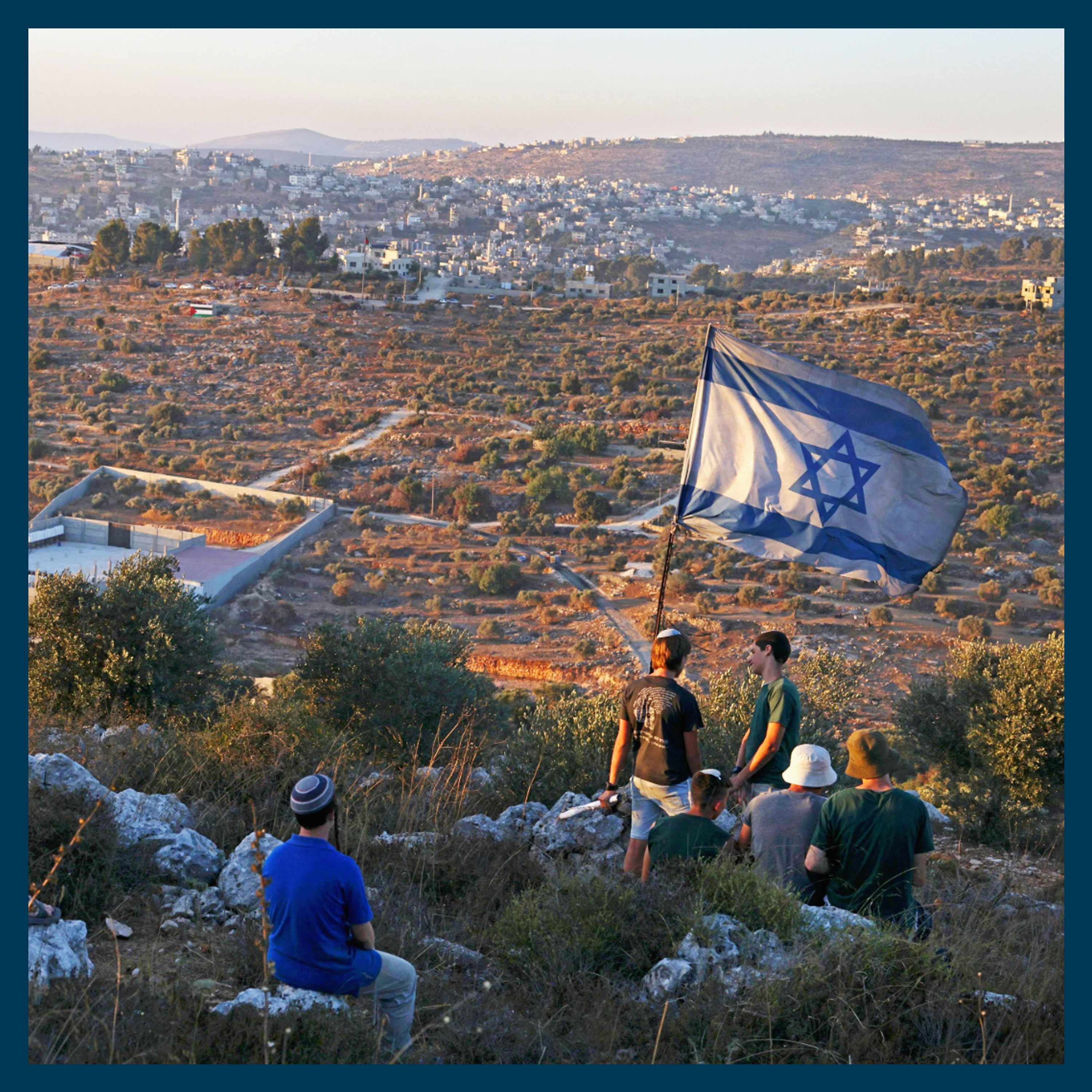
The west bank is home to over 2 million Palestinians. But now more and more Israelis are displacing the Palestinians and settling in their territory. Their numbers have reached more than 700,000. So what's going on in the West Bank? How are settler gangs using force to establish new outposts? And will they ever be held accountable? The story today, how settlers are using the Iran war to seize the West Bank.
- [04:37]
Richard Spencer
So Abu Fala is in the West Bank. It's about half an hour's drive north of Ramallah, which is the sort of de facto capital of the west bank and therefore effectively of the Palestinian territories.
- [04:49]
Manveen Rana
That's Richard Spencer, who's covered the Middle east for the Times for years, and he's been reporting from the west bank this week.
- [04:57]
Richard Spencer
And it's in this beautiful hilly landscape. You have these valleys which are full of olive groves, and then you have the villages on the hills overlooking these valleys. These villages can be quite vibrant, but at the moment, they are like this whole region caught up in conflict have been for years now. And that has affected the way people live and their daily lives very, very consequentially.
- [05:27]
Manveen Rana
And, Richard, you described how close this village is to Ramallah and the heart of the West Bank. Just remind us of sort of, you know, who is in charge of the West Bank. How are decisions made there?
- [05:41]
Richard Spencer
It's a very complex situation. The Israeli authorities have divided the west bank into three areas. There's Area A, Area B, and Area C. Area A is where the big cities are, like Ramallah, and that is under the full control of the Palestinian Authority. Area C is under the full control of the Israeli authorities, is a kind of buffer zone, and this is where they've established their settlements. And then you have Area B, which is the areas between the civilian issues are run by the Palestinian Authority, but the security is run by the Israelis. And to come back to Abu Fala. So Abu Fala is in Area B, and the settlements on the other side of the valley are in Area C. So effectively, these are kind of security. No man's land because they're Palestinian villages, pacific. But the Palestinian security forces, the Palestinian police can't go there. So there is really no one there to protect the Palestinians. That's why these areas have become so tense, such areas of conflict and why these very aggressive settler movements that want to encroach on Palestinian territory feel they can do so in these so called Area B villages.
- [06:54]
Manveen Rana
And Richard, take us back to last month. There have been a series of attacks in Abu Fala. Just describe what was happening.
- [07:03]
Richard Spencer
So as I say, Abu Fala's is what you might almost call a frontline village. And the background is that while the Israeli army that is supposed to be policing this area has been busy with Iran, with Gaza, with Lebanon, the expansionist settlers, these gangs of very Israeli nationalist right wing guys who think that Israel should be basically allowed to annex the west bank have been coming down into the valleys, attacking, attacking olive groves, setting up these little outposts which become like bases of their activity in the valleys which are not legal but don't seem to be removed very often. And last month what we saw was in the middle of the night, the village was woken up, there were people on lookout because they expect these things to happen, have been happening across the West Bank. And the village men gathered outside this house which was coming under attack from this gang of settlers. There were about 20 in the first instance. And a van or jeep arrived and started handing out weapons to these settlers. And at least one of them started to open fire on the villagers and two men were shot in the head and killed. And that's basically the story here.
- [08:23]
Manveen Rana
And you've spoken to some of the men who were there that night. What did they tell you?
- [08:28]
Richard Spencer
So I mean, it's interesting talking to these guys because on the one hand it's something that's become very regular for them. I mean, they've been used to these settler attacks now for years. But of course they're also angry and very sad. And I was speaking to Ibrahim Hamail, who's one of the farmers in this area, he has olive groves. And he was telling me about watching this violence unfold last month when the settlers attacked. And he said he'd watched the settlers hand out their guns and open fire. And he saw a guy, it was obviously 1:30 in the morning, 2 in the morning, it was pitch black and he saw someone fall to the ground and it was his cousin. And yeah, he's a very stoic man in his mid-40s who doesn't really see what the future is for this Community under this constant attack.
- [09:23]
Manveen Rana
And Richard, as you say, this has become something they're almost getting used to. It's. It's not the first attack on their community or on their land. Tell us what happened last August in broad daylight.
- [09:36]
Richard Spencer
When I was talking about this incident last month when the two guys got shot, they referred to a BBC film that had been made, which I found. And it's a great bit of journalism by the BBC correspondent there, Lucy Williamson, who's interviewing one of the guys I spoke to, the guy whose cousin was shot dead. Fear is natural, but there is something stronger than fear that drives me to stay here. The scent of my ancestors and an attachment dating back hundreds of years. He's talking in front of this valley behind him where his olive trees have been cut down. And you can see the olive trees that have been sawn through at the base and just lying on the ground. And in the background you can see these black hatches guys walking through the olives towards the film crew from the other side of the valley. As we stood there, masked settlers carrying
- [10:29]
Manveen Rana
sticks charged down the hill and across
- [10:32]
Richard Spencer
the field towards us. And they seem completely unabashed that there's a TV crew there. They might even be doing it because there's a TV crew there and it's clear there's going to be a confrontation. Indeed there is one. A completely unprovoked attack. We have to go, Fred. Get out of here, guys. What happens is the settlers then start setting fire to the other olive trees that are still there, the olive groves that are still there. So you see these fires going off all along the valley as the BBC crew, they retreat to their jeep but carry on filming as these black clad men with balaclavas who've come from the other side of the valley are setting fire to the valley. Effectively this has now escalated into open confrontation between settlers and local palace, with more people coming to join the fight on either side.
- [11:24]
Manveen Rana
And Richard, as you say, this isn't a lone instance. This village is on the front line, but it's not the only one that's been attacked. Just paint a picture for us of what's been happening across the west bank recently.
- [11:38]
Richard Spencer
So this is one village amongst many across the west bank where this sort of thing is happening. I've written about this before. There have been some astonishingly violent episodes. A lot of these events are happening in this sort of frontline villages along area B, area C, sort of boundaries, if you like, with the settlers coming in over the boundary because they're effectively not being policed. No one's been arrested or jailed for any of these killings. And what the locals say is, obviously, there was a spike in this activity with the. The Gaza war and say, with the army elsewhere or the tension elsewhere or whatever. These attacks increased, and they've increased again since the start of the war in Iran. And the guy who monitors all this for the Palestinian Authority told us that in the last year, there were 89 of these settler outposts set up. There have been more since the start of the Iran war. And there's also been an upsurge in violence. And these two were two of seven villagers killed across the West bank since February 28th when the bombing started of Iran. They say this is effectively deliberate. People are using the distraction of the Iran war to pursue a de facto annexation of the west bank, if you like, or at least getting more and more territory in the west bank to make a independent state in the west bank impossible, because the more land is controlled by Israelis and settlers, the harder it is to actually ever give the territory a unitary Palestinian status, if you like.
- [13:21]
Manveen Rana
And just give us a sense of how much that's changing in numbers, how many of these new settlements we've seen pop up and how quickly.
- [13:30]
Richard Spencer
It's not that there's been a massive increase in house building, that there has been some increase in house building. And in the last couple of years, the authorization of more building has. There have been occasional freezes when America puts pressure on the Israeli government to step back, which, as I say, until President Trump, there was a lot of pressure from American administrations for Israel not to go ahead with settlement building, because it is seen as illegal under international law to build on occupied territory. So there'll be more permissions. Some of those building works have begun, but it's not really, at the moment, a question of total numbers. The issue really is the territory. If you establish these outposts and these outposts then make life impossible in the valleys for Palestinian farmers, then, you know, the Palestinians are losing effective control over large areas of territory. Because if you take away a whole valley where Palestinian farmers can't go at the risk of being attacked by settlers, or if they farm it, they are. You know, their crops will be burned. And if that's happening across the territory, then. Then you're effectively making the Palestinian entity, whether it's the future state or the current authority, untenable and unviable economically and demographically, you know, because people leave, people will go for jobs elsewhere, and you'll be left with an aging population that can't really defend itself or indeed, you know, sustain itself.
- [14:56]
Manveen Rana
Richard, who should be in charge of security here? Is it the IDF who should be ensuring that these settlers aren't trying to do a land grab? And what are they saying about the way these attacks are happening in the west bank at the moment?
- [15:10]
Richard Spencer
Yeah, so the IDF are the ultimate authority. So the IDF are called in when there is violence. So on the incident that I referred to with the two guys who were shot, the IDF arrived, and their line is that they are trying to keep the two sides apart. They did issue a statement after this particular incident in which they said, you know, this violence doesn't represent the state of Israel. And it's clear that some IDF senior officers are very unhappy with what's happening in the West Bank. But it was notable. That statement kind of tried to sort of put the blame on both sides. He said he didn't want people taking the law into their own hands, but it wasn't clear who it was referring to. You know, were they saying that the settlers were taking the law into their own hands by attacking the Palestinian village, or was it a veiled criticism of the Palestinians for trying to defend their village? But in which case, who else was trying to defend it? Because there weren't any police there when they fired tear gas, they fired it. Obviously, they come in from the Israeli side, so they're firing tear gas towards the melee, if you like, but they're firing it towards the Palestinians and they're towards Palestinian territory. And a third man died when a. He had a heart attack when a tear gas canister went off on his feet, and he was actually watching it all unfold from a nearby rooftop. So the Palestinians feel very strongly, the IDF say that they're trying to stop trouble, but in effect, they're acting on behalf of the settlers. But the. The formal line of the IDF is we are there to defend people. They say they have dismantled outposts and they regularly dismantle these illegal outposts. But they also say that they have to act in line with security priorities, which is a veiled way of saying, as well, you know, our troops are currently fighting on the Gaza front, the Lebanon front, the Israel front. We can't be everywhere as to why no one had been arrested for these shootings. They referred us to the Israeli police, but as I say, the Israeli police are run by someone who is effectively the front man for the settler organization. So it's not surprising, perhaps, that you haven't seen anyone arrested and charged with these shootings.
- [17:14]
Manveen Rana
And, Richard, while it is shocking that there is no accountability. None of these settlers, none of the people who are shooting Palestinians are being held accountable. There is no sense of justice. What would happen on the Palestinian side? You know, you talked about the veld statements there about Palestinians who defend their villages. Would they be held accountable? Would they be arrested?
- [17:39]
Richard Spencer
Well, that's what they claim is that it's a one sided situation because if they raise their hand against a settler, they will be detained and charged with violent crimes or terrorism. You do see occasionally where, you know, Palestinian kids are throwing stones at settlers and last summer a 14 year old kid was throwing stones and he was shot dead by the idf. He was from New Jersey. He was there on holiday with his extended family.
- [18:09]
Narrator/Advertiser
A family and community looking for answers after a teenage Palestinian American who grew up in New Jersey was shot and killed in the west bank by Israeli soldiers. The Palestinian American Community center confirming the death of 14 year old Amir Mohammed said Rabi.
- [18:25]
Richard Spencer
The IDF described him in their statement as a terrorist because in the language now increasingly used in Israel and across Israeli occupied territory, any Palestinian who commits an act of violence is described as a terrorist and is therefore fair game. Sounds a bit inflammatory, but you know, there's no sense that you're overreacting by shooting a 14 year old boy dead for throwing stones because he's a terrorist. And they say this makes it very difficult for them to actively defend their villages or their land because they're at risk of being deemed as terrorists if they are seen fighting an Israeli settler.
- [19:14]
Manveen Rana
Coming up, is the Israeli government softening on settlers? And how does this all fit into the bigger picture in the Middle East? That's in just a moment.
- [19:33]
Narrator/Advertiser
This episode is brought to you by Progressive Insurance. Do you ever think about switching insurance companies to see if you could save some cash? Progressive makes it easy to see if you could save when you bundle your home and auto policies. Try it@progressive.com Progressive Casualty Insurance Company and affiliates. Potential savings will vary. Not available in all states.
- [19:52]
Farnoosh Tarabi
Hi, this is Farnoosh Tarabi from so Money with Farnoosh Tarabi. And today I want to talk to you about Boost Mobile. Quick Money tip. Stop paying a carrier tax. If your phone bill feels trapped in a pricey plan, this is your sign to unlock savings. Boost Mobile helps you reset your spending. With the $25 Unlimited Forever plan, you can bring your own phone, pay $25 and get unlimited wireless forever. And that simple switch can unlock up to $600 in savings a year. That's money you could put towards paying down debt, investing or something that actually brings you joy. Those savings are based on average annual single line payment of AT&T, Verizon and T Mobile customers, compared to 12 months on the Boost Mobile Unlimited plan as of January 2026. For full offer details, visit boostmobile.com Healthcare can feel complicated.
- [20:45]
Richard Spencer
That's why Optum uses technology to connect the people and processes that make healthcare
- [20:50]
Manveen Rana
easier, more affordable and more effective.
- [20:53]
Farnoosh Tarabi
We're making it clearer for you to
- [20:55]
Manveen Rana
know exactly what your benefits cover and
- [20:57]
Farnoosh Tarabi
to help you better manage your health. We're coordinating care between your doctors and your technology. We believe better, simpler healthcare is always possible.
- [21:06]
Richard Spencer
That's healthy optimism.
- [21:08]
Manveen Rana
That's Optum.
- [21:09]
Farnoosh Tarabi
Visit optum.com to learn more.
- [21:25]
Manveen Rana
Richard, you've been describing how while the world is watching developments in Iran, settler gangs have been establishing new outposts in the West Bank. Under Israeli law, those settler outposts are illegal. Why are they growing unchecked? Is it just that the IDF is distracted?
- [21:44]
Richard Spencer
That's what they would say. I mean, a more cynical view is that it is the aim of a large part of the Israeli political spectrum. There's sympathy across the more hard line parts of the Likud Party for the idea that the west bank certainly will not be granted statehood. We know that Netanyahu and other ministers in his government have set their store very much against the granting of Palestinian statehood and whether that means they're actively pursuing annexation. De facto annexation. But that's what it looks like. It looks like any opportunity can be used to extend Israeli control over more and more of the West Bank. They call it Judea and Samaria. They've stopped calling it the west bank altogether. So they use the historic Jewish Jewish names for this territory as a sign that effectively it is de facto part of Israeli territory, even if it isn't recognized as such or isn't even such under Israeli law. So that would be the cynical view, that it is actually part of de facto government policy to expand across the West Bank. I'd say the official line is just that there aren't the resources available to dismantle all the outposts.
- [23:02]
Manveen Rana
And just explain how these illegal outposts become, as far as elements in the government are concerned, legitimate Israeli territory. How do they become sort of formalised as authorised settlements?
- [23:15]
Richard Spencer
The process is quite simple. You'll see a tent suddenly, you know, emerge from a olive grove in the middle of the valley, and the villagers all know the process now, and they see the tent, but there's nothing they can do about it. And then, you know, prefab, concrete hut is put up. And then, you know, you'll see that there are settlers, effectively young men living in this concrete shack they set up there. Then it'll start getting electricity and maybe another couple of shacks will go up and then it'll start gradually formalizing and it'll gradually expand and then there'll be pressure on to formalize them, to authorize them, because the alternative is for the army to go in and physically remove the men, women and children who have set up home there effectively. And that process again has sped up since the start of the Gaza war and the ending of restraint from America, if you like, on the settler movement. Quite a few individual settlers and settler organizations were sanctioned over the last few years, both by the us, by the uk, the EU and other western states for their violence. But Trump, when he came to power, he lifted the US sanctions on these, these organizations. President Trump has overturned sanctions brought in under the Biden administration on far right
- [24:33]
Narrator/Advertiser
Israeli settler groups and individuals in the West Bank.
- [24:36]
Richard Spencer
President Trump is basically setting up his White House to be one of the most pro Israel Israel in the past few decades, metaphorically flipping the switches on Biden era policies. So as these places are authorized, the effective extent of settlements spreads further and further.
- [24:59]
Manveen Rana
As you said, there are elements in the Israeli government for whom this has always been part of their aim. They are pro settler politicians. What's happening across Israel though? I mean, do we have any sense, you know, where is the polling on this? It's always been against Israeli law to build these settlements. Do people oppose them now?
- [25:20]
Richard Spencer
I think a lot of people have kind of turned their heads away. The events of October 7th certainly reduced sympathy even on the centre left of Israeli politics to the Palestinian cause, particularly because of course a lot of the towns and villages that were attacked by Hamas on October 7, very brutally of course, and killing lots of civilians and kidnapping those hundreds of people. A lot of those kibbutzes, they were left wing, they were liberal. Some of the people kidnapped had been part of left wing movements. So that alienated a lot of the centre left of Israeli politics from the whole Palestinian core. So there's overwhelming support in Israel, certainly for the war in Gaza and indeed for the war in Iran. There is still left wing activist groups who are staging anti war protests, but they are now very small compared to what they would have been a decade or two, two ago. I guess the center of Israeli politics has moved a long way to the right. The idea of opposing a two state solution that is no longer seen as a right wing position. Skepticism of The Palestinian cause, skepticism about the two state solution has grown massively. And as a result, if you see things like the settler violence as a symptom of that debate, if that makes any sense, although people, if you explained very clearly what was going on, people might express sympathy for the Palestinian villages, I don't think it would be on the top of their political concerns.
- [26:56]
Manveen Rana
So something has shifted. How about the rest of the government? I mean, there was a moment when Netanyahu unveiled a map of a Greater Israel at the un.
- [27:06]
Richard Spencer
For all those outraged by the slogan from the river to the sea, this is the map that the Israeli Prime Minister raised here in the United Nations. This is the map from the podium of the General assembly erasing a nation of Palestine and the Palestinian people. Israel from the river to the sea. Israel from the river to the sea by the Prime Minister of the State of Israel.
- [27:34]
Manveen Rana
Is this sort of part of the government's aim now? Are there territorial ambitions?
- [27:39]
Richard Spencer
Netanyahu is, as we know, a very smart politician who is very careful about not setting out very clearly any of his long prone plans. So he's never said what his end state for Gaza is, for example, all he says, he's very clear about what he's not going to do. He's not going to allow a Palestinian state, he's not going to negotiate with Hamas. He'd rather Hamas was destroyed, even if it was meant destroying Gaza. But then he'd rather Hamas stayed than allow, say, a multinational solution that loosens Israel's freedom of action, if you like. So his prime concern is to maintain his and Israel's freedom of action. And anything that grants Palestinian autonomy in the west bank or restricts the role of his National Security Minister, Ben gvir, or is hostile to the views and interests of settlers and their units in the army and so on. That's the most important thing. And there can be no compromise. Certainly he has shown no personal remorse about the fate of Palestinian villages in the West Bank. I think that would be fair to say.
- [28:50]
Manveen Rana
Richard, you've worked in the region for years. You've watched a lot of the recent history of Israel and Palestine and the two state solution, what's left of it, play out and unfold around you. What do you think happens next? Given that there are still wars raging in Iran and Lebanon and the international community has been very quiet on what's happening in the West Bank. Where does this end? Where does it end for the Palestinian?
- [29:18]
Richard Spencer
I think it's unfair to say the international community has been very quiet. I mean, you know, it may not always get reported, but as I say, the Britain and the European governments have sanctioned these settler groups and individual settlers. The International Criminal Court has opened cases against Israeli leaders. And, you know, there is pretty strong condemnation. There's not much you can do if you have an American administration which is the main external power broker in the Middle east, that is fully on the side of not only Israel, which has generally been the case, but of this particular Israeli government. Netanyahu is very close to the Republican Party. They support him and so clearly does Donald Trump. There's not been any sign that Trump is going to restrain any of this. So the question really then is part of the much bigger question we're all facing. Is Donald Trump representative of the New World Order? Is he representative of how America is going to assert its power over the coming decades, or is something going to give on that front? Is there going to be a new approach to international relations and that applies to the Middle East? I mean, what has happened gradually over the decades, but certainly has been souped up since October 7th, is, I mean, to say people have come more hardline is kind of fairly obvious, but I think the actual narratives have become much more maximalist. So nobody, for example, to come back to the west bank seems to believe in the two state solution on either side anymore. The dominant discourse on the anti Zionist movement, the anti Israel movement, both in the broad left in the international community, but also particularly in the pro Palestinian cause in the Arab world, is that Israel has to be destroyed. It's no longer a case of trying to persuade the world to create a secure two state solution. And of course, on the Israel side, as I say, the sympathy for the idea of a two state solution has really withered since October 7, 2023. And you see far more people online and you meet them in real life, both in Israel and their supporters in the west, saying Jordan is the state for the Palestinian people. For example, that's where the people of Judea Samaria, West Bankers, we would say belong. They should just go there. This whole territory should be Israel. Israel should just be allowed to do whatever it wants.
- [31:48]
Manveen Rana
Where does that leave the Palestinians in the west bank who you were talking to, you know, at the moment, do they just live in fear?
- [31:56]
Richard Spencer
They live in fear and annoyance and as I say, a sense of despair. There's not really a sense there's anything much they can do. I mean, the Palestinian Authority itself is a fairly defunct organization politically. There's no sign of elections, there's no sign of anyone who might be a negotiating partner with the Israelis should the Israelis decide they want one. And so your average 55 year old middle aged Palestinian sort of people I was speaking to are pretty hopeless about their future, but they have friends. One of the men I was speaking to who you know, he spoke in fluent Californian English. I said, where are you from? He said, I'm from California. And he said, I was born in this village but I left as a teenager with my parents when I was 13. You know, went to school in California, went to university there, spent 35 years as a lawyer there. I have my own law firm in Anaheim, California, but I'm now semi retired. My son's a lawyer as well. I've handed over the practice to him and I've come home to do whatever I can to protect my village. And he has, you know, people back home back in California who can apply political pressure trying to do something for these rather beleaguered Palestinian villagers. Foreign.
- [33:33]
Manveen Rana
That was Richard Spencer, former Middle east correspondent for the Times. We've put a link to his story on the settlers seizing land in the west bank in the description to this episode. The producers today were Sophie McNulty and Taryn Siegel. The executive producer was Tim Walklate and sound design and theme composition were by Malisetto. Thanks for listening. We'll be back tomorrow.
- [34:33]
Narrator/Advertiser
This episode is brought to you by Progressive Insurance. Do you ever think about switching insurance companies to see if you could save some cash? Progressive makes it easy to see if you could save when you bundle your home and auto policies. Try it@progressive.com Progressive Casualty Insurance Company and affiliates. Potential savings will vary. Not available in all states.
- [34:52]
Farnoosh Tarabi
Hi, this is Farnoosh Tarabi from so Money with Farnoosh Tarabi. And today I want to talk to you about Boost Mobile. Quick Money Tip Stop paying a carrier tax if your phone bill feels trapped in a pricey plan, this is your sign to Unlock savings. Boost Mobile helps you reset your spending. With the $25 Unlimited Forever plan, you can bring your own phone, pay $25 and get unlimited wireless free forever. And that simple switch can unlock up to $600 in savings a year. That's money you could put towards paying down debt, investing or something that actually brings you joy. Those savings are based on average annual single line payment of AT&T Verizon and T Mobile customers compared to 12 months on the Boost Mobile Unlimited plan as of January 2026. For full offer details, visit boostmobile.com.