Loading summary
Transcript71 lines
- [00:00]
Progressive Insurance Announcer
This episode is brought to you by Progressive Insurance. Do you ever think about switching insurance companies to see if you could save some cash? Progressive makes it easy to see if you could save when you bundle your home and auto policies. Try it@progressive.com Progressive Casualty Insurance Company and affiliates. Potential savings will vary. Not available in all states.
- [00:20]
Farnoosh Torabi
Hi, this is Farnoosh Tarabi from so Money with Farnoosh Tarabi and today I want to talk to you about Boost Mobile Quick Money tip. Stop paying a carrier tax. It's if your phone bill feels trapped in a pricey plan, this is your sign to Unlock savings. Boost Mobile helps you reset your spending with the $25 Unlimited Forever plan. You can bring your own phone, pay $25 and get unlimited wireless forever. And that simple switch can unlock up to $600 in savings a year. That's money you could put towards paying down debt, investing or something that actually brings you joy. Those savings are based on average annual single line payment of AT&T Verizon and T Mobile customers compared to 12 months on the Boost Mobile Unlimited plan as of January 2026. For full offer details, visit boostmobile.com.
- [01:14]
Manveen Rana
From the Times and the Sunday Times, this is the story. I'm Manveen Rana. We have a ceasefire in in Iran.
- [01:25]
Progressive Insurance Announcer
Both the US And Iran say they've agreed to a two week ceasefire. As I've been saying, President Donald Trump said he is suspending his latest deadline for Iran to strike a deal or face US Military escalation.
- [01:36]
Manveen Rana
But who blinked first? Both sides are claiming it as a victory.
- [01:41]
Progressive Insurance Announcer
I think everyone is agreeing that Iran
- [01:43]
Catherine Philp
has won the war because first of all, Iran did not surrender to American terms. And it is the site that is
- [01:51]
Progressive Insurance Announcer
providing the terms for discussion about the ceasefire. What the President set out to do was decimate the Iranian military, decimate their ability to wage conventional war. And that military objective, as the President said yesterday, as I said yesterday, has been achieved.
- [02:08]
Manveen Rana
So how was this ceasefire negotiated and can it last? Does Iran's chokehold over the Strait of Hormuz new now, make it unassailable? And what has this war meant for America's position in the world? The story today a ceasefire in Iran. What happens next?
- [02:46]
Catherine Philp
My morning actually began last night because I am sad enough to not go to bed when something like this is happening.
- [02:56]
Manveen Rana
That's Catherine Philp, world Affairs editor at the Times, speaking to us a few hours after the news broke.
- [03:02]
Catherine Philp
And actually I didn't have to stay awake as long as I thought I might because what I first saw was a Flash coming up, saying that Trump had agreed to this 10 point plan put forward by Iran and postponed the attacks. And that was obviously a huge relief.
- [03:25]
Manveen Rana
And, Catherine, we'll get into some of the details, such as they are, in a moment, but what do we know about this ceasefire and how it was negotiated?
- [03:34]
Catherine Philp
Well, we understand that there were some discussions on the Iranian side on Monday talking about essentially resubmitting a proposal to the Americans on the basis of one that the Americans had already rejected. And so those discussions apparently began in greater earnest on Monday evening. They were conveyed to the Pakistanis, who've put themselves in this process as a mediated because of their relationships with both sides in this conflict and also with a significant number of other interested parties. And it was Pakistan who relayed those to Trump and asked him to postpone his threats of targeting Iran's civilian infrastructure whilst these negotiations could take place using this. Now, despite the fact that these are mostly points that the US has rejected in the past, Trump jumped on that and I think that we can read from that that he was really looking for an off ramp here. So we have this situation where this has been agreed by both sides that they will discuss these points on Friday in Islamabad, in Pakistan, but that both sides have already claimed victory by getting this ceasefire in place.
- [04:59]
Manveen Rana
Strikes have continued through the night. We weren't quite sure if it had actually come into being, if this is a ceasefire that's even begun to hold it.
- [05:07]
Catherine Philp
What we understand from Iranian state media was that they reported that the Supreme Leader had given the order for firing to stop. Now, what we know happened before this war began was that a lot of the command and control in Iran was decentralized. So it is possible that one of the reasons there's continued to be some fire is that simply the message had not got round to everyone to stop.
- [05:35]
Manveen Rana
And we know that there's also been strikes on the Israeli side too.
- [05:39]
Catherine Philp
That's correct. There have. And they have been described as in response to some of those attacks that have happened. Of course, the most significant Israeli strikes that have continued have been on Lebanon. Now, Israel has unilaterally declared that Lebanon is not part of this framework agreement that the US has struck with Iran, or at least has accepted as a starting point for discussions.
- [06:06]
Manveen Rana
Catherine, as you said, it did feel like President Trump was looking for an off ramp. He's mentioned in some of his speeches in the last couple of days that he knows the American public want their troops back, want an end to this war. He's clearly feeling a lot of domestic pressure to make that happen. We're now told this is the off ramp, this ceasefire that's suddenly come into being. Tell us a bit about Pakistan's role in all of this. Why have they become the intermediaries?
- [06:33]
Catherine Philp
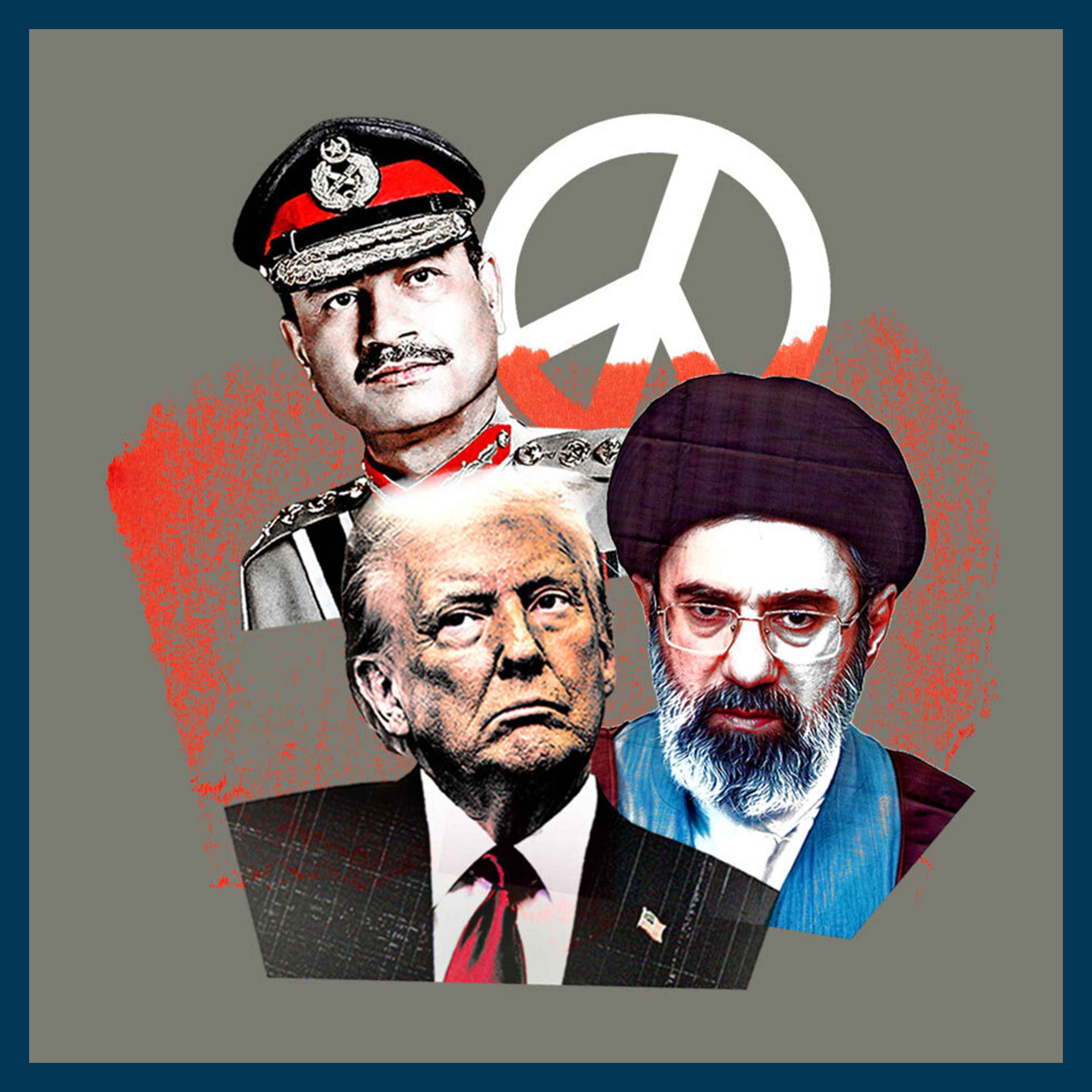
Pakistan has managed to forge very good relations with Trump, mostly at the expense of India, because when India and Pakistan had a conflict amongst themselves last year, Pakistan essentially allowed Trump to take credit for forcing a truce, forcing a ceasefire,
- [06:51]
Manveen Rana
even nominated him for the Nobel Peace
- [06:53]
Catherine Philp
Prize, indeed nominated him for the Nobel Prize, which, as everyone knows, was, at least at the time, the way to his heart. He's very fond of Asim Munir, who is the de facto leader of Pakistan, even though he's the military chief. It's more or less under military rule now, and Trump calls him my favorite field marshal. So Pakistan also has this relationship with Iran, and it has relationships with quite a lot of other countries who are involved here. It has very strong interests of its own in resolving this, because it's very badly exposed to the closing of the Strait of Hormuz in terms of its energy supplies, its fertilizer. It also has a mutual defense pact with Saudi Arabia, the details of which we don't really know because they've never been made public. And so obviously, absolute horror in Pakistan at the idea that they might have to get involved in this if Saudi called on them, which is not quite what they were thinking of when they made that pact. They saw it more as a sort of anti Israel thing. So they've got very strong reasons of their own. But the other reason is that, of course, Pakistan does love to get one over on India to look indispensable on the world stage and also make Pakistanis feel really good about their country's punching of above its weight, which is a great distraction against all the horrendous domestic problems that Pakistan has, both economically and with its security situation.
- [08:27]
Manveen Rana
Yeah, we should say they've managed to crack, as you say, the way to Donald Trump's heart, not just by nominating him for the Nobel Peace Prize, but also allowing his family's cryptocurrency to bed in. And talking about changing their financial infrastructure to allow crypto from World Liberty Financial.
- [08:44]
Catherine Philp
I understand that's right, that World Liberty Financial is run by Zach Witkoff, the son of Steve Witkoff. And cryptocurrency is one of several industries which Pakistan believes it can lure the US into substantial investment in Pakistan, one of the others being critical minerals. But that one is obviously interesting because it plays into the kind of personal enrichment dynamic that We've seen fuel a lot of Trump foreign policy, the fact that his family and his associates families are getting rich off what they do on behalf of the US As a world power.
- [09:25]
Manveen Rana
And Steve Witkoff has been the chief negotiator on many of these deals, although he seems to be slightly replaced by JD Vance in what's being talked about for these talks in Pakistan later this week. Just tell us about the substance of them. What are the 10 points that will be under discussion?
- [09:41]
Catherine Philp
Firstly, that the US should commit to not attack Iran again. Now, there is already a fascinating discrepancy in the Farsi language and the English language versions of this document released by Iran. Within that clause in the Farsi version, it also says that Iran must be allowed to continue to enrich uranium. Now, that was meant to be a red line for the Americans before this war began, and it was one of the points on which negotiations foundered. There is the issue of Iran's continued control, the Strait of Hormuz. There is the lifting of primary sanctions and secondary sanctions so that countries, for example, that by Iranian oil can't be punished for it. There is suggested to be a lifting of all the existing UN Security Council resolutions against Iran and a wipeout of all the iaea, that's the UN nuclear watchdog. All the resolutions against will get war reparations from, we assume, the U.S. the withdrawal of all U.S. combat forces from the region, and obviously then the cessation of the war on every front in the region. And this includes Lebanon.
- [11:02]
Manveen Rana
I mean, that's quite a wish list from the Iranians. What has the American response been to this? I mean, presumably if there is a ceasefire in place, they are happy to talk.
- [11:13]
Catherine Philp
Donald Trump has called it a workable basis for negotiations. On what grounds? I cannot reconcile that with his positions before the war. It's just not, I think that it is grasping at an off ramp, because I'm genuinely not clear if he's actually read these. He actually threatened CNN over a statement that it reported which had come from Iran's National Security Council. And in that statement, they were essentially boasting that this was a great victory for them because they presented all these issues. Trump went on Truth Social and said that CNN would be prosecuted for making stuff up, apparently not realizing that actually Iran had said this. So I think there's some kind of selective reading going on, shall we say? But I think the question throwing it forward is, okay, it's extraordinary to me that you would accept a negotiation on the basis of this list of these 10 points. Almost all of which you've rejected in the past. But what you do with them going forward is very problematic.
- [12:23]
Manveen Rana
Catherine, as you say, Donald Trump has been heralding this as a great victory for America. The Iranians are saying the same for them. A great strategic victory for them. It's really hard to work out what exactly is going on. But if you were looking for a metric of success, I suppose for America, you could compare what's on the table now with these 10 points with the deal that they could have signed before the war began doing that. Is this a win?
- [12:49]
Catherine Philp
Iran was not exercising control of the Strait of Hormuz before this conflict began. So you're actually trying to negotiate over something that you managed to give away to them during the war after hostilities began. So that is not a great position to be in. But I think it goes bigger than this. I think that the signal this sends out to the rest of the world and to adversaries and rivals like China and Russia is a very worrying one. I think behavior Trump, in particular, his behavior over the last few days, he may now defend it as having been intended to pressure Iran. Has the looked very problematic?
- [13:35]
Manveen Rana
Certainly, if you care about international law.
- [13:37]
Catherine Philp
Well, that, yes. And that. And, you know, I mean, he has torched valuable alliances by throwing his toys out of the cot over the fact that NATO allies didn't join them in a conflict they weren't consulted about and does not fall within the remit of a defensive alliance based in the North Atlantic. He has undermined American moral leadership by waving off the significance of war crimes and saying that he was prepared to do things so apocalyptic that J.D. vance had to actually say, no, no, I wasn't referring to a nuclear weapon when I said we had tools we could use. I think in the bigger picture, this is a Suez moment for America. This is a point at which they've been blinked. They, they've done something extraordinarily reckless and blinked in the face of it. And lots of people who wish them ill are watching.
- [14:45]
Manveen Rana
Coming up, where does this war leave America's frayed alliances? And what does it mean for oil prices and the global economy? That's in just a moment.
- [15:03]
Progressive Insurance Announcer
This episode is brought to you by Progressive Insurance. Do you ever think about switching insurance companies to see if you could save some cash? Progressive makes it easy to see if you could save when you bundle your home and auto policies. Try it@progressive.com Progressive Casualty Insurance Company and affiliates. Potential savings will vary. Not available in all states.
- [15:22]
Farnoosh Torabi
Hi, this is Farnoosh Tarabi from so Money with Farnoosh Tarabi and today I want to talk to you about Boost Mobile Quick Money Tip Stop paying a carrier tax if your phone bill feels trapped in a pricey plan, this is your sign to unlock savings. Boost Mobile helps you reset your spending with the $25 Unlimited Forever plan. You can bring your own phone, pay $25 and get unlimited wireless forever. And that simple switch can unlock up to $600 in savings a year. That's money you could put to down debt, investing or something that actually brings you joy. Those savings are based on average annual single line payment of AT&T, Verizon and T Mobile customers, compared to 12 months on the Boost Mobile Unlimited plan as of January 2026. For full offer details, visit boostmobile.com now
- [16:12]
Progressive Insurance Announcer
is your time to get into a new Dr. Horton home by taking advantage of its national Red tag sales event this Friday, April 10th through Sunday, May 3rd. Stop by any of its participating communities and find select red tag homes at Incred Pricing. So whether you're buying your first home or looking for an upgrade, you don't want to miss the red Tag sales event starting this Friday. Discover the Dr. Horton Difference. Tap your screen now or visit Dr. Horton.com Dr. Horton, America's builder and equal Housing Opportunity Builder.
- [16:54]
Manveen Rana
Catherine, you've been describing what we know of the terms for this ceasefire to take place in the Middle East. One of those is control over the Strait of Hormuz. What is the current status on that? Is the strait open again? Is it open for business again?
- [17:11]
Catherine Philp
That sort of depends. Who was it within the administrator? I think it was Pete Hegseth who said, well, the strait's not closed, it's just that they're shooting at ships.
- [17:20]
Progressive Insurance Announcer
The only thing prohibiting transit in the straits right now is Iran shooting at, shooting at shipping. It is open for transit. Should Iran not do that?
- [17:27]
Catherine Philp
This is the issue. Who goes first down sniper's alley? Who's going to go down there first and see if the Iranians shoot or not? Now, there was a lot of talk early on about how the Iranians were going to mine the Strait of Hormuz, et cetera. So it really was closed. It's not closed, it's selectively closed. And the Iranians have let certain people through, including actually Pakistani tankers as a sort of thank you for the role that they're playing, and some Chinese as well, and indeed their own oil they've let through. So stuff can get through. But Iran is proposing that it effectively erect a toll booth on the Strait
- [18:05]
Manveen Rana
of Hormuz is this strategically, for Iran, a massive boon? You know, could this be the start of effectively that toll booth system? Will they be charging every ship that goes through a fee?
- [18:17]
Catherine Philp
Now, allowing Iran to charge a fee for passage through the Strait of Hormuz is not something that anyone actually wants. This is not like the Suez Canal in this respect. The Suez Canal is an artificial waterway and it's a business. It's like having a toll bridge. You can charge for a toll bridge, you can't charge for, you know, under the laws of international law, you are not meant to charge for the fact that you just happen to geographically have a proximity to a waterway.
- [18:50]
Manveen Rana
What will this mean for oil prices? You know, we saw the markets rallying a bit and we saw the price of Brent crude fall on the news of this ceasefire. Is that likely to be lasting?
- [18:59]
Catherine Philp
The whole oil price thing, you know, is based on futures. So it's people trading futures rather than the immediate price changing at the gas pump. I think that it's going to take a while for really for the actual flow of oil through the Gulf to get back to where it was. But I think in the short term it could take quite a while to restore the flow.
- [19:24]
Manveen Rana
Catherine. This ceasefire, we're told, is, you know, double sided, as President Trump describes it, between Iran and America, brokered by the Pakistanis. There's no mention of Israel and we've already talked about the Israelis saying it doesn't include their war on Lebanon, which the Pakistanis and the Iranians don't agree to. Where does all of this leave Benjamin Netanyahu?
- [19:47]
Catherine Philp
Well, if you see some of the reaction coming out of Israel today, there's absolute fury from, and he's getting it from lots of different sides. He's getting it from the opposition and he's getting it from his own right wing as well, because they see this as a capitulation. Israel wanted to keep going on this war, you know, and having had the extraordinary fortune of convincing America that they should be part of it, to give up at this point, it is very problematic. And it's problematic for Netanyahu as an individual as well, because he's got an election coming up. He also, you know, he's got his corruption trial for, during which he would like to stay in power to try and avert the worst consequences of that. And this is a, this is an enemy, Iran is an enemy that Netanyahu has built his political career on for over 30 years. To just kind of give up halfway is not the outcome he was looking for.
- [20:46]
Manveen Rana
And does it strain that relationship between America and Israel having gone into this war. You know, there are reports in America overnight of the head of the CIA telling President Trump that Israel's pitch about regime change in Iran was farcical. We've heard reports from friends of JD Vance that he's been shouting in phone calls to Netanyahu about Israel's proposal for this war and whether it was entirely honest or accurate. Does this strain that relationship between the Trump administration and Israel?
- [21:18]
Catherine Philp
Well, I think of JD Fantas shouting down the phone at Netanyahu. It's already strained, isn't it? I mean, I was absolutely fascinated by the level of detail in those leaks to come out at this stage talking about it's for a forthcoming book. But, you know, in the New York Times today, the amount of detail about a meeting in the Situation Room that was essentially chaired by Netanyahu in just February and the leaks coming out about that suggest that there are people, you know, probably Vance and possibly others in the Cabinet who are very unhappy about this. But there's a larger issue. I mean, firstly, I don't see Trump coming out anytime soon and going, yeah, it was all Bibi's fault. I shouldn't have done it, Oops. But I don't also don't think he really wants to say that he was forced into it by someone else. I suppose it depends in part on what Israel asks of America next and how America responds, because, you know, there's a very live debate, and not just on the left now in America, it's on the right, too, about exactly what is the utility of the US Relationship with Israel. It's very expensive. And there is an argument that it is something of a strategic liability. Now, I think it also depends on the behavior of the Gulf allies. Are they going to want to proceed with things like the Abraham Accords? What happens to American funding for Israel? Do people in the Republican Party decide that it's more trouble than it's worth? There's a lot to play for.
- [22:52]
Manveen Rana
And Catherine, as you mentioned, all eyes are on the Gulf. Really. The Gulf's relationship with America has been based on the promise of security over decades. And yet when they were in trouble, when they were under attack over a war that they weren't consulted on, that America and Israel went into together, there wasn't very much help forthcoming. Where does this leave the Gulf in the future? And where does it leave their relationship with America?
- [23:15]
Catherine Philp
I don't think that they're about to walk away. But, you know, Mohammed bin Salman has also had extraordinarily has quite recently been the target of one of Trump's baser insults.
- [23:29]
Progressive Insurance Announcer
He didn't think he'd be kissing my. He really didn't.
- [23:32]
Catherine Philp
He thought he'd be just another American president that was a loser, where the
- [23:37]
Progressive Insurance Announcer
country was going downhill.
- [23:39]
Catherine Philp
But now he has to be nice to me.
- [23:42]
Progressive Insurance Announcer
You tell him he better be nice to me.
- [23:44]
Catherine Philp
No one is spared this, and I think that's being understood in some Gulf capitals that it hadn't so much before. In the end, the Gulf has got to live next door to Iran, and that's why they didn't want to see a sort of decimated, chaotic Iran, even if they wanted to see Iran humbled and unable to present a strategic threat to them.
- [24:06]
Manveen Rana
It's not just Mohammed bin Salman who's come in for a lot of criticism during the course of this campaign with jibes that are bound to do lasting damage. Sikhir Starmer, the British Prime Minister, has been singled out a number of times, too.
- [24:19]
Progressive Insurance Announcer
You know who that is?
- [24:20]
Catherine Philp
Churchill. Winston Churchill. The late, great Winston Churchill.
- [24:24]
Progressive Insurance Announcer
And, you know, unfortunately, Keir is not Winston Churchill. Do you have.
- [24:29]
Manveen Rana
Where does this leave America's alliances?
- [24:32]
Catherine Philp
It leaves them in a very difficult place. Oddly enough, I think that this actually might save Keir Starmer's political career, because being insulted by Donald Trump actually plays quite well in the UK and doing what he wants you to do doesn't. But that's a very different thing to what it does to the alliances. I think it, for allies, it cements that the US is a dangerous and unpredictable ally who cannot be trusted. And whether that changes when Trump is gone is an open question. But I think the way that allies have seen America as a whole kind of go along with this, and the fact that Congress has not attempted in any way to assert itself is very worrying.
- [25:23]
Manveen Rana
We know that the talks will be taking place at the end of this week in order to try and solidify that ceasefire into some kind of lasting peace deal. That's a phase we haven't got to with Gaza or Lebanon. Ceasefires were declared, very little changed. Is there a danger of that happening here? And if so, what will that mean for the Gulf, for oil, for the global economy?
- [25:45]
Catherine Philp
Yeah, you're exactly right. I mean, the first thing when I heard, I think it was on Monday that the Pakistanis were talking about a two stage ceasefire deal, I just immediately thought of Gaza and thought, my God, we haven't even got past phase one in Gaza. And this is the problem with phase deals. I mean, you kind of have to phase them. But if they are premised on something that's then never going to happen, you get stuck. And I would say that whilst America may not have the appetite to go into a hot war again with Iran, Israel will probably feel able to if an agreement is not struck. But critically, Iran has now learned that the lever of the Strait of Hormuz is its most powerful current weapon and that it can paralyze the global economy. So if a deal is not done, you risk Iran simply doing that again and ultimately triggering a global recession if the strait continues to be blocked.
- [26:53]
Manveen Rana
In the past few days, we've seen President Trump threaten to wipe out a civilization, threaten war crimes by targeting civilian infrastructure. All of that has now come to nothing. But he's clearly a very angry world leader. We have another two and a half years of his time in power. How does this augur for that? What are you expecting to see? I mean, as a, as world affairs editor, you're going to be very busy, I suspect.
- [27:24]
Catherine Philp
I suspect I'm going to be busy. However, no, I'm not a psychologist, but Donald Trump's niece Mary is, and I watched a podcast interview with her in which she was talking about his psychology. The guy is decompensating before our eyes, but that's been happening over many years now. It's just accelerating because of the pressure he's under. She said he's sort of always been like this, but she saw signs of cognitive decline as well. And because he has created a disaster for himself, he has painted himself into a corner he cannot get out of. And that's why we're seeing him start to throw people like Pam Bondi. And arguably the most sycophantic of the sycophantic propaganda is Caroline Levitt, under the bus because they cannot save him from himself. She was focusing on some of his most extraordinary statements, including that one about wiping out a civilization. It's the fact that nobody either could stop him from posting it or even thought they should, because it was fine. But on the more positive side, we do have these midterms coming up, and it. It does seem quite possible that the Republican Party could be dealt a very heavy blow by this. Now, in the last two years of a final presidential term, a president is a lame duck anyway. But if you've taken a. If your party has taken a thrashing and potentially lost control of the Senate and the House, then it's much harder for you to throw your waist around. Now, I mean, I know that he. I know that Donald Trump has done most of the things he's done in the last how long's it been since he could feel slug? Forever. 18 months since he came into into nervousness. Not even that is it. It's only not even that dog years. So yeah, most of what he's done he's done by executive order. He has completely sideswerved Congress. I don't think Congress will be quite so laid back if and when he's a lame duck and if and when control either switches or becomes more balanced. And so there is the chance of domestic opposition to some of his wilder impulses. I also think this is a bit of a teaching moment as well. I'm not sure he's going to launch another war quite like this. Again, this all happened off the back of Venezuela, which looked like a cakewalk. And this has been pretty bruising. So maybe it saves us from the next one.
- [30:14]
Manveen Rana
And Catherine, finally, many of us went to bed last night wondering if we were on the brink of Armageddon. Has that threat completely gone away or is it likely to be back in a few weeks time?
- [30:25]
Catherine Philp
Wow, that's a good question. David or Bright, who I would call the world's foremost nuclear expert, said that he was concerned that the 10 point plan that has been put forward was more likely just to bring a break between two wars rather than the end of one. So I think that certainly the threat of Israeli military ongoing Israeli military action against Iran is very live.
- [31:16]
Manveen Rana
That was Catherine Philp, World Affairs Editor at the Times. The producers today were Olivia case and Sophie McNulty. The executive producer was Tim Walklate and sound design and theme composition were by Marla Seto. If you can do leave us a review wherever you get your podcasts. Thanks for listening. We'll be back tomorrow.
- [32:08]
Progressive Insurance Announcer
This episode is brought to you by Progressive Insurance. Do you ever think about switching insurance companies to see if you could save some cash? Progressive makes it easy to see if you could save when you bundle your home and auto policies. Try it@progressive.com Progressive Casualty Insurance Company and affiliates. Potential savings will vary. Not available in all states.
- [32:27]
Farnoosh Torabi
Hi, this is Farnoosh Tarabi from so Money with Farnoosh Tarabi. And today I want to talk to you about Boost Mobile. Quick Money Tip Stop paying a carrier tax. If your phone bill feels trapped in a pricey plan, this is your sign to unlock savings. Boost Mobile helps you reset your spending. With the $25 Unlimited Forever plan, you can bring your own phone, pay $25 and get unlimited wireless forever. And that simple switch can unlock up to $600 in savings a year. That's money you could put towards paying down debt, investing or something that actually brings you joy. Those savings are based on average annual single line payment of AT&T, Verizon and T Mobile customers, compared to 12 months on the Boost Mobile Unlimited plan as of January 2026. For full offer details, visit boostmobile.com.