Loading summary
Transcript63 lines
- [00:00]
Advertisement Voice
This is a Monday.com ad the same Monday.com designed for every team. The same Monday.com with built in AI scaling your work from day one the same Monday.com with an easy and intuitive setup. Go to Monday.com and try it for free. The to do list doesn't stop and neither does the pressure to keep up with it if you've been running on fumes. Growtherapy makes it easier to find care that's covered by insurance and actually built around you, whether it's your first time in therapy or your 50th. Grow makes it easier to find a therapist who fits you, not the other way around. You can search by what matters like insurance, specialty, identity or availability and get started in as little as two days. And if something comes up, you can Cancel up to 24 hours in advance at no cost. Grow helps you find therapy on your time. Whatever challenges you're facing, Grow Therapy is here to help. Grow accepts over 100 insurance plans. SA sessions average about $21 with insurance, and some pay as little as $0 depending on their plan. Visit growththerapy.com acast today to get started. That's growtherapy.com acast growtherapy.com acast availability and coverage vary by state and insurance plan.
- [01:22]
Rosie Wright
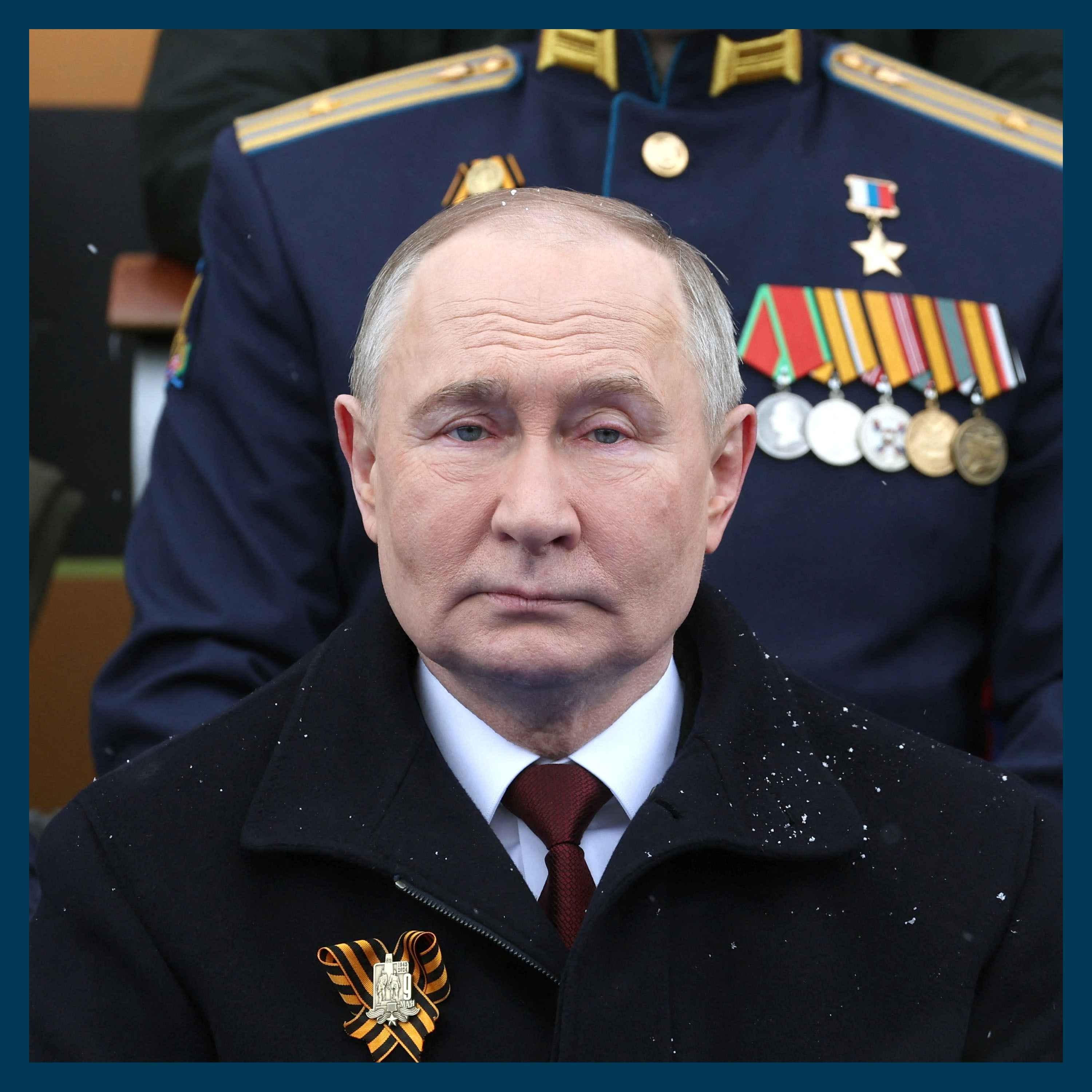
From the Times and the Sunday Times, this is the story. I'm Rosie Wright. It's the 9th of May in 2016, and in Moscow, Russia's Victory Day celebrations are in full swing. The annual parade marking Russian victory in the Second World War is as much a celebration as it is a demonstration of military might. Warplanes fly overhead, tanks and missiles roll through the streets. And in Red Square, Vladimir Putin gives his address to the thousands of troops lined up before him.
- [02:15]
Alexander Gabuyev
May 9th is both a national and a very personal family holiday. It became a symbol of the sacred kinship of Russia in unity, in devotion to the motherland, our strength, confidence and dignity. Happy holiday. Happy great Victory Day. Hurrah.
- [02:48]
Rosie Wright
Ten years on, the Russians are once again making their preparations ahead of tomorrow's parade. But this time around, celebrations will be a little more muted. Russia's Victory Day parade this May 9th will look rather different. There'll be no tanks or missiles. In fact, there'll be no military equipment whatsoever. On Moscow's Red Square, the Kremlin cited the current operational situation and blamed what it called a terrorist threat from Ukraine. So as Russia marks its biggest celebration with a whimper rather than a bang, what's the mood like on the ground five years into the war in Ukraine, how are people feeling about their government and the economy. And what's been the true impact on Russia of the war in Iran. The story today, why Putin's big parade will be a damp squib.
- [03:59]
Alexander Gabuyev
I have now a four year prison term on my back as of two weeks for being part of the Carnegie Endowment, which was labeled as an undesirable organization and as a foreign agent. So a lot of laws and my criminal sentence will need to change before I can go back. I left the country on March 1, 2022 and cannot go back.
- [04:21]
Rosie Wright
Now living in exile in Berlin is Alexander Kabuev, the director of the Carnegie Russia Eurasia Centre, one of the prime
- [04:28]
Alexander Gabuyev
centers on research on Russia, Ukraine and the broader region. The center was in Moscow for nearly three decades, but then obviously after 2022, the Kremlin shut us down. So we relocated to Berlin and establish a center there.
- [04:49]
Rosie Wright
Tomorrow, Russia is going to celebrate its annual Victory Day Parade. For anyone who isn't familiar, what is the purpose of the Victory Day Parade in terms of what Putin's trying to demonstrate, not just to Russians, but to the world?
- [05:00]
Alexander Gabuyev
I think that World War II resonates deeply across the former Soviet Union and in Russia. My great grandfather died in the war, like many family participants. And I think that for people my generation, there are a lot of people whom you personally knew who took part in this war. Soviet Union lost about 27 million people. So what Putin did is that he instrumentalized this memory about World War II to turn it into a cult, a way of civil religion or ideology in modern Russia that is supporting the legitimacy of the state, the greatness of the state and the regime, and the need to have this quasi imperialist foreign policy where Russia needs to be respected. And he is the heir to Joseph Stalin and all of this line of Soviet rulers. So the more time passes from the actual World War II, the more lavish the parades are. And reinstating the parades on the Red Square with all of the heavy armor, fighter jets was one of the feature of his rule.
- [06:15]
Rosie Wright
And it's attempting to be a show of sort of Russia's military might. This year it's going to feel different, as it has done in the last couple of years. How so?
- [06:24]
Alexander Gabuyev
So the usual parade before the full scale invasion of Ukraine was like a lot of various unique units marching on the Red Square with Putin and his guest of honor sitting next to the Lenin Mausoleum. And there would be young cadets, elite troops, and then there would be a lot of heavy armor, tanks, armored vehicles, and also some missiles, including nuclear capable. And then there will be Fighter jets and various other military jets flying over the Red Square this time around. No heavy armor, no cadets, no youngsters, and just very small number of troops marching on the Red Square. It's a big difference.
- [07:10]
Rosie Wright
And to state the obvious, why is
- [07:12]
Alexander Gabuyev
that, and this is for one reason and for one reason only, is that Ukrainians now have indigenous capabilities that are able to strike the Red Square, the heart of Moscow, and probably target Putin. When he is watching this parade, it
- [07:28]
Rosie Wright
will feel very pared back to what you would have seen before Russia's invasion of Ukraine. Just give us a bit of context as to how Russians are feeling about the role that their country's playing and about the sort of success of the military operation so far. You know, we're grinding on five years now.
- [07:46]
Alexander Gabuyev
I guess that the data that we operate is patchy, and we need to take that into account. It's a society with military censorship. But for whatever we have, the data points to a picture that up until recently, probably a year ago, Russians were quite happy and thought that the situation is going into the right direction. That was. Putin continues to tell them that everything is going according to the plan. It's sometime in late December where the war in Ukraine has surpassed the Soviet part of World War II. So it's now longer than World War II that Russia is fighting. So the mood is souring. And also the side effects of the war in the economy and also in terms of losses are becoming increasingly palpable.
- [08:37]
Rosie Wright
Tell me a bit more, Ben, about the economy. What impact is that having on the sort of the bank balance, the financial health of ordinary Russians?
- [08:47]
Alexander Gabuyev
I guess that ordinary Russians feel the heat mostly because of the inflation that remains relatively high. This is why the central bank of Russia keeps the interest rates very high. It's 14.5%, has been close to 20% throughout the war. And this is good for ordinary Russians who put their money on the deposits and, you know, let your deposit savings grow. But it's very bad for businesses, particularly businesses that are small and medium enterprises, because they don't have access to credit. And this is why a lot of factories go into four days working week and then three days working week. So a lot of people feel that inflation is eating up their earnings, and then the economy is also stagnating.
- [09:37]
Rosie Wright
And is that the logic of the Russian people who feel, right, the economy is stagnating and that is because of Putin's actions in Ukraine? Is that the sort of logic that people flow through?
- [09:49]
Alexander Gabuyev
I think that the Kremlin provides them with multiple reasons to believe that this is because of the Western sanctions, that they feel the heat, and that's the narrative. However, I think that we are in a very early territory where the dissatisfaction of the society with the regime is becoming increasingly more palpable and visible. And even the loyal sociologists register that. So Putin's approval ratings are going down. The independent Levada polling agency that is probably the best aggregator of sociological data that we have, they point that the approval ratings of the government, the number of people who say that things are going the wrong way is increasing, while the people who are supportive and say that the country is staying on the positive course is going down.
- [10:42]
Rosie Wright
Yeah, there's something also that's shifted in the last few months, which becomes increasingly difficult for people to ignore, and that is the sort of ever expanding use of Internet blackouts by the government. Can you just explain what's been going on there?
- [10:55]
Alexander Gabuyev
That's definitely what's bringing most people over the edge. And I guess that this is the most important factor for dissatisfaction right now. For some reason, the Kremlin and the government are shutting down Internet. They've started to do it last year in certain regions, particularly those close to the front line. And the reason for that is that Ukrainian drones frequently use the SIM cards of Russian cell phone operators to get their coordinates. And the government believes that if you shut down cell phone coverage and mobile Internet, then they're safe and then Ukrainians innovate around that. But nevertheless, this wave of BL blackouts on the Internet is spreading across the board. And as we record Moscow and St. Petersburg and many large cities literally sit without access to Internet because the government is trying to block it.
- [11:51]
Rosie Wright
And from your perspective, is it just about stopping the Ukrainians having that information or is it also about stopping Russians getting access to information?
- [12:01]
Alexander Gabuyev
It could be both. And I guess that the most immediate trigger, most likely is Putin's concern about his safety. See the side effect, the side bonus in the mind of the Kremlin might be that, oh, okay, people then don't have the avenues to channel their frustration. However, I guess that the second order effect is that people are so used to digital economy, they are so used to Internet, and Russia is a pretty much Internet based society, so lack of access makes people actually much more angry, not the other way around. Then you hear Putin saying on tv, which is still broadcasted, that everything is going according to the plan and you know that it's plain wrong and that really seeds doubt in your mind.
- [12:47]
Rosie Wright
So that doubt, and we'll talk a little bit later. About to what extent there is maybe some European optimism that we like hearing stories to say, oh, you know, the Russian people are ready to feel a bit more emboldened to speak up. And, you know, maybe there'd be some sort of renewed opposition to President Putin. Do you think people feel more emboldened to speak up? What would actually be kind of the status of Russian opposition today?
- [13:11]
Alexander Gabuyev
Well, I guess that we need to distinguish between the anger building up in the society and the political opposition that can channel this anger in the parliament or on the streets and ultimately force Mr. Putin out or force the Kremlin to stop this criminal war. And I think that in terms of anger, yes, it's there, it's palpable. People I know start to open up and talk to each other about the war or about their dissatisfaction. Something that didn't happen couple of months back, and that's new because the society is caught by repression again. Thousands of people go to jail a year because of their criticism of the war or get fined. So something there is changing. However, the political opposition that would be popular is nowhere to be seen. Alexei Navalny is dead for a reason. His followers and his organization is crushed. A lot of people, people are chased into exile and can criticize the regime out of comfort of Europe, like myself and many other people who are either in research or in political opposition. But I guess that for now there are no such political channels existing. However, we are in a very early stage of this dissatisfaction. So I'm still skeptical that will lead to any real pressure on the Kremlin. But never say never. Things have happened in Russia before at the end of the Soviet Union that developed very rapidly. My parents who witnessed that as adults told me that if you would tell us in early 1991 that in just couple of months the KGB, the Communist Party, the Soviet Union itself will be gone, we will laugh at you. Of course, it was absolutely unimaginable, but yet it happened. I don't think that we are at this stage, but we should be watching these signs very carefully.
- [15:14]
Rosie Wright
How do you feel then when we see news and this is sort of tentative at this point of some. I mean, there's a sort of celebrity, almost influencer. This is Victoria Bogne. Tell me if I'm saying her name wrong, who used her profile? She was on the sort of Russian equivalent of Big Brother to say something critical of President Putin. I mean, tell us what she said and how significant it is that someone of that profile is prepared to say to 20 million people who saw her video, not Everything adds up here.
- [15:51]
Alexander Gabuyev
Well, honest admission, I didn't know who Victoria Bonya was before she started to criticize the cause of the events. And that's also because I only recently learned about existence of Taylor Swift. So Victoria Bogne is a social media star in Russia who does all of this kind of coaching, beauty, blogging, whatever. She lives outside of Russia in France, but is wildly popular. And Instagram as other products of Meta are banned in Russia. But Russians flock there in millions. And Instagram, as in many countries around the world, has also become a network that is used by a lot of businesses to advertise their products. So the ban was affecting the Russians, but the ban on Internet is affecting them even more. And that's what Bornia, as somebody who monetizes her Internet presence talking to the Russian audience feels acutely. And she has spoken out, not critical about President Putin, but critical towards the whole direction of travel, particularly this Internet regulations, and said that Mr. Putin needs to be more attuned to what the Russians want. People are dying, businesses are dying, small businesses, medium businesses, people are losing money. People are now googling how to move from Russia and live in another country. I believe that the worst thing is happening because you, Vladimir, do not know what is going on in your own country. You are being given the wrong information. So he's ill informed. And that was her criticism. She didn't say directly that the decisions he's making are wrong. Her criticism is more likely to be connected to the kind of old entire Russian pattern that the Tsar is actually good, but he's ill informed by people around him. So she wants to cut through this entourage. And she was widely criticized by the Russian official propaganda and these propaganda figures like Vladimir Solovyov, one of the major kind of villains on the Russian television, suddenly felt a lot of pushbacks from their viewership. So they had to apologize and they had to kind of mend fences with Bonya.
- [18:17]
Rosie Wright
It's surprising though that the Kremlin would be engaging with an influencer because they have realized she does have influence.
- [18:23]
Alexander Gabuyev
That's true. And that's really something new. Previously you would ignore the criticism or throw your critic in, but then this critic lives outside of Russia and then turns out to be difficult to shut down. So you need to react in some way. And here kudos to the Kremlin political managers who are savvy and can be flexible sometimes. But it also tells you that this frustration and this new public sentiment is something that the Kremlin starts to reconcile.
- [19:03]
Rosie Wright
So is that public sentiment enough to make any real difference? Is Putin's grip on power really loosening? Has the war in Iran changed anything? That's next.
- [19:20]
Advertisement Voice
The to do list doesn't stop, and neither does the pressure to keep up with it. If you've been running on fumes, Grow Therapy makes it easier to find care that's covered by insurance insurance and actually built around you, whether it's your first time in therapy or your 50th. Grow makes it easier to find a therapist who fits you, not the other way around. You can search by what matters like insurance, specialty, identity or availability and get started in as little as two days. And if something comes up, you can Cancel up to 24 hours in advance at no cost. Grow helps you find therapy on your time. Whatever challenges you're facing. Grow Therapy is here to help. Grow accepts over 100 insurance plans. Sessions average about $21 with insurance and some pay as little as $0 depending on their plan. Visit growththerapy.com acast today to get started. That's growththerapy.com acast growtherapy.com acast availability and coverage vary by state and insurance plan. VRBO makes it easy to claim your dream summer spot with early booking deals from homes with pools to poolside loungers. When you book a vrbo, you don't have to reserve any loungers. They're all yours. All you have to do is book early Book with vrbo, we have launched Operation Epic Fury.
- [20:39]
Alexander Gabuyev
Stop. Start seeing a proper country.
- [20:41]
Rosie Wright
When everyone says they're right, who do you believe? None of us knew the depth of that relationship.
- [20:47]
Alexander Gabuyev
If the lines are blurred, can you
- [20:49]
Rosie Wright
read between them when the story breaks? Who brings perspective?
- [20:55]
Alexander Gabuyev
If you want to understand the issues that define our times, it starts with
- [21:00]
Rosie Wright
listening Times Radio on your smart speaker, on digital radio or the Times Radio app. Alexander We've been talking about the mood and the economy in Russia. Let's look outside the borders. So the geopolitical agenda in the last couple of months has been dominated actually of course not by the war in Ukraine, but the war in the Middle East. Can you remind us about the relationship then between Russia and Iran?
- [21:33]
Alexander Gabuyev
Russia is not an Iran treaty ally, however, this is another authoritarian regime that is deeply anti American and Russians have exploited this link. First when both Russia and Iran propped up the dictatorial regime of Bashar Al Assad in Syria and then after the start of the full scale invasion of Ukraine, Putin has turned to Iran for the drone technology. This long range Shaheed drones that Russia operates originate from Iran, although the Russians have fine tuned them to a Very significant degree. And now in the war that Trump is waging against Iran, Putin is not officially supporting Iran. But we know from the media reports, including your colleagues, that Russia is providing some intelligence and targeting data for the Iranian army and is sending military equipment to Iran.
- [22:27]
Rosie Wright
Yeah, what we heard from the UK Defence Secretary John Healey, he said he could see the fingerprints of Russia on Iran's actions.
- [22:34]
Alexander Gabuyev
We've seen the similar tactics and technologies used by Iran as Russia uses in Ukraine. And I'm releasing today our latest defense intelligence assessment which confirms that ahead of this conflict, Russia was sharing intelligence, it was providing training to Iran. It seems that Russia is providing some satellite imagery, targeting data and positioning of American assets that Iranians then strike on diplomacy. Well, Russia is opposed to the American invasion. Russia has suggested itself as a mediator, which didn't fly. And we know that Pakistan is playing this role. And then Russia has vetoed couple of UN Security Council resolutions that criticize Iran.
- [23:24]
Rosie Wright
What also has provided, I think a bit of an opportunity for President Putin is the fracturing of European and American relationships. To what extent does Putin have so much to gain actually from that?
- [23:38]
Alexander Gabuyev
That's beyond his control and that's something not of his making. But definitely whatever champagne is not on court yet in the Kremlin is being in court now when he hears the news that, oh, Americans will withdraw 5,000 troops from Germany or they will not deploy the mid range missiles that Biden administration has promised to Germany as a stopgap before Europe develops these missiles of their own. So definitely it's music to Putin's ears. And the more fracturing there is in transatlantic alliance, the better.
- [24:10]
Rosie Wright
And not only that there's been a financial gain for President Putin because, well, one of the first things that happened is there were sanctions that meant different countries couldn't buy Russian oil. And one of the first things President Trump did was lift those.
- [24:23]
Alexander Gabuyev
That's true. And also the Russian oil companies because of the sanctions, had to provide very steep discounts to their remaining customers in China, India and Global South. And first these discounts disappeared and then the oil price started to climb. And because the physical supply of oil is stranded in the Hormuz Strait and in the Persian Gulf, Russian oil is definitely welcome across the world. The windfall for the month of March alone is about US$6 billion. It's an even bigger figure for April that's been now calculated. However, one caveat, it's not a windfall that will fully fix the Russian problems with their fiscal space. The federal budget deficit is growing because of the war and because of the decelerating economic growth. So the jury's out whether the war in Iran will be so disruptive for the global economy and for the global oil prices that it will fix Putin's cash crunch problem.
- [25:27]
Rosie Wright
What would be a good outcome for Putin in Iran?
- [25:30]
Alexander Gabuyev
I think that the war stays protracted, that 20% of the global oil supply at least, is stranded there. And oil is scarce commodity. And a lot of countries turn to Russia. And if the oil is in 150 US dollars a bottle, Sheltery, that's definitely music to Putin's ears.
- [25:57]
Rosie Wright
You have so helpfully, for us, painted a picture of the kind of, well, the economic situation, also the military capacity of Russia and well, that will be on display at this parade tomorrow in a more limited capacity. What about the politics? Because in September, in a few months time, Russians will be voting in their state elections, which are, as we know, sort of largely a sham. I mean, Putin's been in power for 26 years. Explain to us how he has that grip on power, what you're anticipating for the elections come September, because might there be some small sentiment that the. The normal architecture, which would just facilitate Putin coming in again, might feel disgruntled enough to do something different this time around?
- [26:40]
Alexander Gabuyev
So we are talking about parliamentary elections. First and foremost, presidential elections will happen in 2030. However, these parliamentary elections are an indicator of the support to Putin and the regime, and they are about the composition of the parliament that is increasingly manipulated by the Kremlin. I think that right now, all of the MPs are either members of the ruling party, the United Russia, that's Putin's party, or are members of the opposition party that has been domesticated and fully controlled by the Kremlin. So it's a sham opposition. Previously, in Russia, the largest protest that happened on Putin's watch, the political protest in the capital and in large Cities, was in 2011, a lot of years back when the election was stolen. And that's what has given rise to the political star of Alexei Navalny. I don't anticipate that something like that will happen around this time. The regime has been preparing to be able to steal elections, to, you know, steer elections and to beat up whoever is protesting for many years, a lot of resources have been allocated to that. But definitely the fact that the king is naked and he had to steal an election to get his party in charge I think will be remembered and will deliver one more crack on this building of the authoritarian regime.
- [28:05]
Rosie Wright
We are hearing some reports of a sort of leaked assessment about a potential Putin coup. Do you know anything about that?
- [28:12]
Alexander Gabuyev
Yeah, I've read the assessment. I guess that the data about Putin being increasingly concerned about his life, changing locations, frequently spending more time in bunkers, that seems too accurate. And several news organizations, the Financial Times, the CNN have managed to verify some of these data points. And they, they resonate with what I hear from my sources. However, coup organized by former Defense Minister Sergei Shoigu seems to be very unlikely to me. And I think that both media have let this detail out of the report that a European intelligence agency has given to them because he is a very loyal, very corrupt, very unpopular official. His ability to launch a couple against President Putin is to me, very doubtful,
- [29:16]
Rosie Wright
Considering everything we've talked about. Opposition getting a bit maybe bolder or at least cutting through the public discontent with the Internet, cutouts, economic stagnation, this sort of seemingly endless war. What is your evaluation? Is this the start of what could be an I appreciate, very slow, but an erosion of Putin's power?
- [29:40]
Alexander Gabuyev
I guess it is a start of erosion of Putin's power. The process can be a very long one, unfortunately. And I think that that needs to be sink in that Russia is not winning this war. And I guess that when that sinks in and Putin is deprived of resources to continue, we will hopefully first see the war ending on terms that are beneficial to Ukraine, that are safeguarding, that Ukraine will maintain its sovereignty and statehood, although not its fully internationally recognized territorial integrity at this point. And that will also set the clock for evaporation of Putin's regime again. It can be around for quite some time, but this will definitely add to the cracks in the building of the regiment.
- [30:25]
Rosie Wright
What would it take to destroy it?
- [30:26]
Alexander Gabuyev
Well, the most likely scenario is unfortunately, biology. Foreign.
- [30:54]
Rosie Wright
That was Alexander Gabuyev, director of the Carnegie Russia Eurasia Center. Today's producer was Callum Martin. The executive producer was Edward Drummond. Sound design and theme composition were by Mal Lisetto. And I'm Rosie Wright. Do leave us a review because it helps others to find us. And if you'd like to get in touch, it's the story@thetimes.com See you again soon.
- [31:51]
Alexander Gabuyev
For 45 years, Dish has been connecting America with the best in family tv, entertainment and advanced technology at an unbeatable value. And that commitment continues with our new 45th anniversary special offer. Get the lowest price in satellite TV starting as low as $89.99 a month. Month. In a world of rising costs and hidden fees, DISH stays transparent, reliable and honest, just like our founders intended. Learn more by calling 888-add-D dish or visit dish.com terms and conditions apply. We have launched Operation Epic Fury. Stop. Start seeing a proper country.
- [32:25]
Rosie Wright
When everyone says they're right, who do you believe? None of us knew the depth of that release.
- [32:31]
Alexander Gabuyev
The lines are blurred.
- [32:33]
Rosie Wright
Can you read between them?
- [32:34]
Alexander Gabuyev
Depth of the relationship.
- [32:35]
Rosie Wright
When the story breaks, who brings perspective?
- [32:39]
Alexander Gabuyev
If you want to understand the issues that define our times, it starts with
- [32:44]
Rosie Wright
listening Times Radio on your smart speaker, on digital radio or the Times Radio app.