Loading summary
Transcript47 lines
- [00:00]
A
At Brookfield, we believe you can own wealth that's measured in generations for 125 years. We've built long term wealth through expertise, discipline and a clear vision for the future, providing investors access to alternative strategies built for what's Next Brookfield Own what's Next. Learn more@brookfield.com this is not an offer to sell or investment advice. Investing involves risks, including loss of capital. Past performance is not indicative nor a guarantee of future results. Please review performance and offering materials before investing. Who won? How did they play? What was wonderful, what was woeful, and why? I'm Tom Clark and on the Game Football podcast we answer all of that, plus provide detailed analysis of the tactical trends on the pitch and the financial situations off it. I'm joined by former footballers as well as reporters and columnists from the Times and Sunday Times. We're here twice a week and for this summer's World cup we'll bring you daily shows with our team covering every inch of the tournament. Find the Game wherever you get your podcasts.
- [01:05]
B
From the Times and the Sunday Times, this is the story. I'm Manveen Rahna.
- [01:12]
C
I arrived in Svalbard in early March on a flight from Oslo, so far in the north, you're almost at the North Pole, and everything from the plane over Svalbard was white. Svalbard has often been used as as a starting point for expeditions to the North Pole, famously In the late 19th century when people tried to get there in hot air balloons and things like that.
- [01:40]
B
Earlier this year, Matthew Campbell, the foreign features editor at the Sunday Times, took a trip to a land of wonder at the top of the world.
- [01:50]
C
The first thing you see when you go into the airport terminal is a giant polar bear by the suitcase carousel, and the first thing I noticed was all the Chinese tourists posing for selfies.
- [02:05]
B
Svalbard is home to more polar bears than people. There are whales and reindeer, although the tourists are a relatively new phenomenon, and one little town in the remote Arctic tundra is drawing more international interest than most. It's a little place called Behrendsburg.
- [02:27]
C
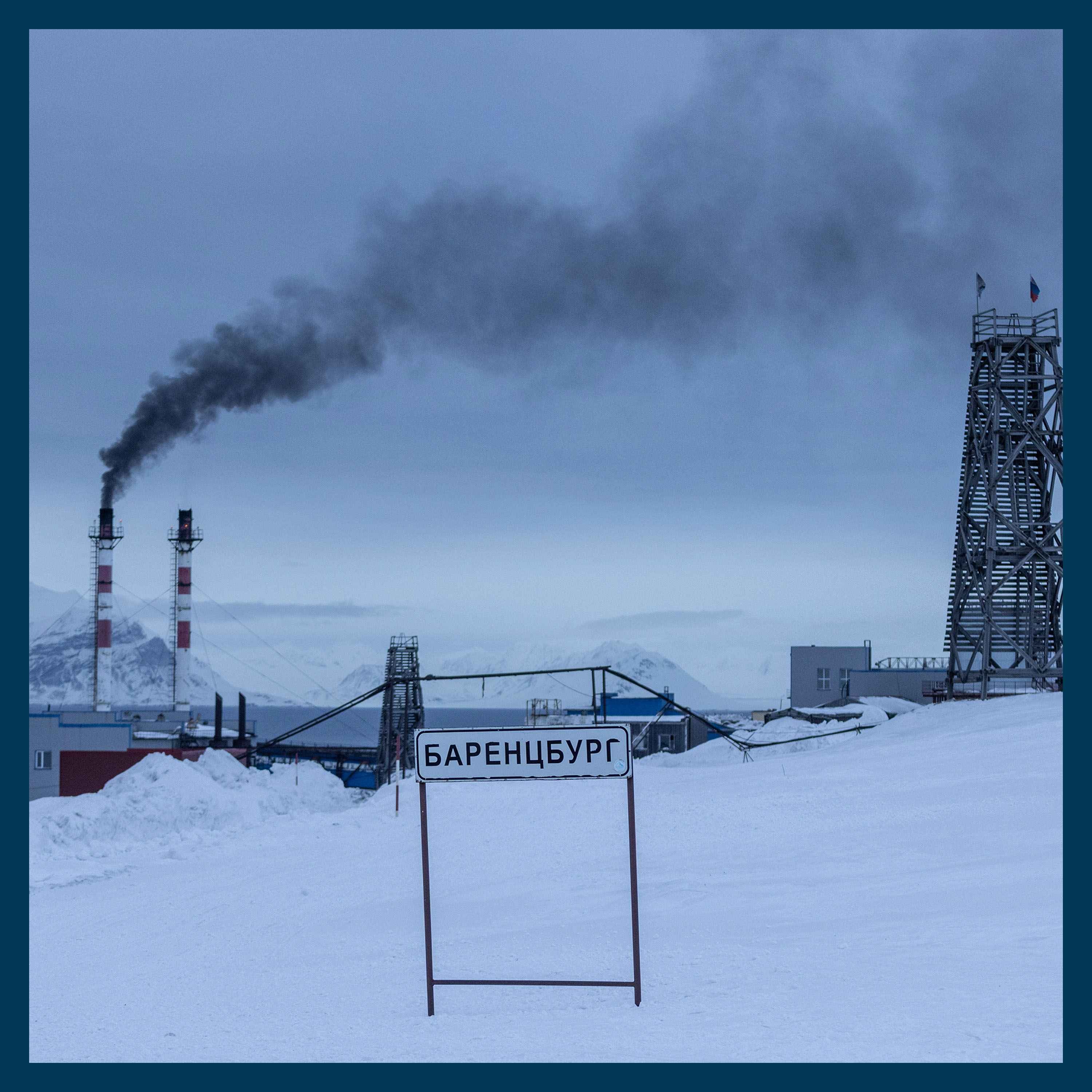
Well, to get there we had to travel for half a day on snowmobiles across this frozen wasteland from Longyearbyen, the Norwegian administered hub. We went past herds of grazing reindeer and the odd Arctic fox and then suddenly you see the name of a town and it's in the Cyrillic script. It says Barentsburg.
- [02:55]
B
The sign is in Cyrillic script because this is a corner of Norway, a corner of NATO territory that is like
- [03:03]
C
a little Russia since the 1930s, it's been inhabited by Russians. They're coal miners mainly. So it's a Russian community where the money is Russian, the ruble, the TV programming is in Russian and the school curriculum is Russian. So in other words, it's a part of Russia in a sense, but in Norwegian territory. This is NATO land, but Russia is here.
- [03:33]
B
Barentsburg is a historical settlement, but it's now seen as a growing threat as Svalbard becomes the new front line in the battle between the great global powers in their scramble for control of the Arctic. This could be one of the greatest security threats that NATO now faces. As the Foreign Secretary Yvette Cooper recently explained, the Arctic is the gateway for the Russian Northern fleet to threaten the uk, to threaten Western Europe, Norway, but also the United States and Canada and our whole transatlantic security. And that's why it's so important that NATO doubles down on Arctic security. So what's happening in the little Russian community of Barentsburg? And what's life like in Svalbard, living on the frozen tundra, which is now at the heart of the race between great global powers? The story today, the Norwegian island in Putin sights.
- [04:58]
C
Hundreds of years ago, Norwegians referred to the place as Svalbard. And that word gave you a very good idea of what they felt about the place because it meant cold shore, and so it attracted only very hardy explorer types, fur trappers and fishermen. Then coal mining began and for a while that was lucrative and people went there to work in the mines, basically. More recently there have been big changes because Svalbard is suddenly attracting larger numbers of tourists. People go there to go dog sledding, to go around in the wilderness on snowmobiles, to have an adventure. There is a lot of wildlife, birds in summer, particularly whales and polar bears. Now polar bears roam all over Svalbard. But tourism in Longyearbyen has developed. There are now several quite high end tourist hotels where you can have reindeer tasting menus and things like that.
- [06:07]
B
Did you sample some? What are they like?
- [06:09]
C
I did have some reindeer at one point and it was good, but not necessarily that much different from lamb or roast beef. Slightly more meaty, perhaps. So Svalbard is on the map in that way, but it's also on the map in other, more significant ways, I think.
- [06:28]
B
So to understand why this place, which has sort of become a tourist destination with its luxury hotels, why it's such a geopolitical hotbed, I suppose it would help, firstly perhaps to have a quick geography lesson. So just talk us through the map. Where exactly is Svalbard, and why does it make it such a place of interest for so many different countries?
- [06:53]
C
Right now, Svalbard lies almost in the middle of the sea between Greenland and northwestern Russia. There's a very important Russian city called Murmansk, which is a port city in Russia, and the northwest there, sort of north of Finland. And Murmansk is home, one of the main homes to the Russian Northern Fleet. It has aviation there as well, but it's a very significant Russian military port. For Russian submarines to leave Murmansk and head into the Atlantic, they have to pass through what is known as the Bear Gap. And that is the gap between Svalbard's southern tip and the northern tip of Russian territory near Murmansk. And whoever controls Svalbard controls access, in a way, to this sea route and over the Bear Gap. And so that is what makes it strategically important.
- [07:56]
B
So that's the geography lesson. Now give us the history lesson. Who does control the Bear Gap? Who controls Svalbarden? How has the interest of so many countries played out over time?
- [08:08]
C
Well, under the famous Svalbard Treaty of 1920, various countries who signed the treaty are allowed to operate in Svalbard. Their people, their citizens are allowed to live there and to work there. This was always meant in the past that they were allowed to do mining and fishing and hunting and things like that.
- [08:31]
B
So it would be Norwegian, but others could operate.
- [08:33]
C
Yes, indeed. So in Svalbard, you have people from all over the world working there. Philippines, Thailand, Spain, Portugal, Argentina, Uruguay. You meet so many people from different places. It's a real United nations of citizens. Under the treaty, they're allowed to live there. On top of that, you have a lot of interest in the place for strategic reasons. There's a very important satellite station there because it's near the North Pole. Every satellite operating in the world at some point passes over Svalbard, you know, passes over the North Pole or whatever orbit it's on. It will go over the North Pole. So this makes it a very important listening station, in a sense. And as the mayor of Longyearbyen, Thierry Aunovic, pointed out to me, he was saying that there's a lot of intelligence activity with basically people spying and trying to find out who's doing what. And there's also a very important scientific station in the north, an international research center which is shared by various countries at a place called NY Allison, where you have Russian and British and Chinese and Indian scientists basically taking samples of ice cores and sending up weather balloons and trying to document the changing conditions.
- [10:00]
B
So, Matthew, for various scientific and geographic reasons, this is a place, a series of islands that are of huge strategic importance to a number of countries. And because of this very old treaty, a number of countries have a presence there. It is surprisingly cosmopolitan. Does anybody have a military presence there?
- [10:21]
C
There are no military on Svalbard. No soldiers, no tanks, no military aircraft. This has always been the case. Recently, in recent years, though, there have been complaints that Russia is engaging in what could be described as military displays on Victory Day in May, when, since the war in Ukraine began, the parades have become slightly militarized. People waving flags, have been military helicopters flying over. And this is in Barentsburg. And so some experts would interpret this as a violation of the Svalbard Treaty that specifically banned military activity. But there are no armies or soldiers. Everybody is allowed to carry guns for their protection against the polar bears, but they're not allowed to bring their tanks.
- [11:17]
B
Take us back to this town that you visited, Barentsburg, where it is like a little Russia, you know, where these Victory Day parades are happening. You described it as a place where the supermarkets sell you goods in rubles. It feels like you could be in any Russian town. How has that come about? How has that become a flourishing Russian settlement? Give us a bit of the history.
- [11:45]
C
Well, it goes back to the 1930s, and literally a decade after Russia signed the Svalbard Treaty, they started a colony there in Barentsburg. There were also other colonies on the main island of Svalbard, which the Russians refer to as Spitsbergen. But Barentsburg is undergoing something of a renaissance, I would say. Buildings are being renovated, painted in bright colors. And I was told by one resident that these are to make room for all of the new arrivals, that there are miners coming in to work there, even though I was also told that the mining these days might just be for show compared with Soviet days when there were as many as 2,000 people living in Barentsburg. But since then, population declined. But now this year, Russia has begun a passenger ferry service from Murmansk, and I think that's quite significant. The population in Barentsburg is, for the first time in years, is beginning to grow. Although you can't have children there because there's no maternity hospital, people are coming from Russia to live in Barentsburg. Now, there's one caveat, I think, which is that this could say a lot more about Russia than it does about Barentsburg, in the sense that it was whispered to me in Barentsburg that a lot of the Young men who are turning up are basically trying to get out of harm's way and avoid the military service. Nobody wants to be drafted into the army to fight in Ukraine.
- [13:37]
B
And Matthew, so you've got now this. This boat, this ferry that goes directly from Murmansk in Russia to Barentsburg. There's no going through customs in Norway. Norway doesn't. Can't even keep track of how many Russians are coming in. It seems like the population is growing. Why? You know, as you said, the mining has diminished. What do the Russians do when they get there from the people you met? How do they describe it to you?
- [14:04]
C
Well, the Russians ostensibly are coming to work and to work in the mine, but it's not really exporting coal anymore. And so there's not a lot of coal needed to heat Baronsburg. And so I was told repeatedly by experts that it's more for show and it's to maintain a presence. This is the raison d'. Etre. We're here to do mining under the treaty. Whereas Russia's interests clearly lie elsewhere, or at least there are other interests clearly in Svalbard than coal.
- [14:39]
B
Tell us about some of the people you met in Barentsburg. What did they say to you?
- [14:43]
C
Well, when you raised the geopolitical topic, the people I met were, on the whole, derided the notion that they were there for anything other than as a place to live and to. To work. You know, we're not conspiring. We're not doing anything to anyone. We just want to survive. And the world is treating us very unfairly. I think people had the sense that they're out to get us. They don't like us, but we don't understand why. We're just doing our thing here where we're scraping a living. And it is noticeable, though, that I was told in Barentsburg that normally at that time of year there would be lots and lots of visitors from Longyearbyen. There would be tourists, there would be dozens of snowmobiles outside the Red Bear pub and restaurant, the one sort of attraction in town where you can get your reindeer stew and other more Russian dishes. But that has gone now, and there aren't the visitors of the world. Basically, Norwegian tour companies have applied a virtual blockade and they're very unhappy about that. In Barentsburg, as they say, they're losing a lot of income from tourism that they had before the war in Ukraine. Relations have changed since the war in Ukraine, basically. And, you know, you hear Norwegians saying, oh, they keep on trying to provoke us Renovating these buildings is prodding us. You know, why are they doing this? Why are they. Why are they trying to reinforce their toehold in this region? What's going on? There are a lot of suspicions and there's an air of intrigue about the place nowadays. You know, there's a sense that something you know is going on against the backdrop of these geopolitical tensions that have erupted ever since Donald Trump started talking about Greenland as a potential American possession.
- [16:52]
B
Coming up Could Svalbard be the launch pad for a Russian invasion of NATO territory, or should we be looking elsewhere? That's in just a moment.
- [17:12]
D
Healthcare can feel complicated. That's why Optum uses technology to connect the people and processes that make healthcare easier, more affordable and more effective. We're making it clearer for you to know exactly what your benefits cover and to help you better manage your health. We're coordinating care between your doctors and your technology. We believe better, simpler healthcare is always possible. That's healthy. Optimize optimism. That's Optum. Visit optum.com to learn more at Brookfield
- [17:42]
A
we believe you can own wealth that's measured in generations. For 125 years, we've built long term wealth through expertise, discipline and a clear vision for the future, providing investors access to alternative strategies built for what's Next Brookfield Own what's next. Learn more@brookfield.com this is not an offer to sell or investment in advice. Investing involves risks, including loss of capital. Past performance is not indicative nor a guarantee of future results. Please review performance and offering materials before investing. High interest debt is one of the toughest opponents you'll face unless you power up with a Sofi personal loan. A Sofi personal loan could repackage your bad debt into one low fixed rate monthly payment. It's even got super speed since you could get the funds as soon as the same day you sign. Visit sofi.com passpower to learn more. That's sofi.com P O W E R Loans originated by Sofi bank and a member FDIC. Terms and conditions apply and MLS 696891.
- [18:52]
B
Matthew, you've been describing Svalbarden, in particular this little Russian. What used to be a mining town, Barentsburg, still is visibly, but there's clearly more going on. There are lots of suspicions from Norwegians who live in Svalbard about why Russia is increasing its presence there again, is there any evidence that this is a strategic national move?
- [19:18]
C
What has alarmed Norwegians and NATO officials, comments from Russian lawmakers in Moscow and some of them quite strident along the lines of, this place is ours. You know, we discovered it centuries ago. It was our people who went there first. They called it the Pomor Islands. And there were these Russian people went to live in Svalbard, at least to hunt there, perhaps seasonally. But some have gone further and said, you know, and we want it back and we should take it and it's good for Russia and it's Russian territory. And. And so this puts a bit of pressure on Putin, I think, or maybe that's part of the game in Moscow. You know, that you have these outliers who make statements like that to test the waters. That's one thing that's caused alarm.
- [20:06]
B
And Matthew, when you hear voices in Russia talking about this, is it just a sense of historical pride? They feel that this is a series of violence that they should have a claim to, or is it because of a more modern geopolitical, a strategic mission? Why do they feel they should have a claim to Svalbard?
- [20:27]
C
Well, I think that whoever controls Svalbard can make a pretty good case to control the whole Arctic in a sense. That's what this Russian politician said. His name is Andrey Gurulov. He's an MP in one of the pro government parties in Moscow. And he made a point of saying that, you know, we need to set up bases in Svalbard, what he called great bases, the. Exert power over the entire Arctic, he said, and that he, we should be open about this. Others have proposed renaming Spalbard the Pomore Islands as they, they used to be known to Russians, you know, centuries ago.
- [21:25]
B
So that there does seem to be a direction of travel, that there is talk of wanting to take them over. When you spoke to Russians who were living there in Barentsburg, is that something that they acknowledge?
- [21:37]
C
No. The Russians I spoke to were very dismissive of any idea that they wanted to take over this place for Russia and take over the whole of the Svalbard archipelago. They were more intent on saying, you know, this is all propaganda by the West. You know, we're peace loving people, we're just trying to survive here. We just came here to work.
- [21:59]
B
Matthew, you explained earlier that, you know, the, the interest in this area has definitely heated up, particularly since Donald Trump expressed his newfound obsession with Greenland. Why are so many world powers now focusing their sights on the Arctic? What is the great game up there?
- [22:21]
C
The other dimension to this is natural resources. One of the main impacts of global warming is that as the ice retreats and as the glaciers melt more and More of the natural resources that are craved by the superpower economies are becoming more easily accessible. And these are things like rare earth minerals as well as actually gold. There's a lot of gold apparently to be had in the Arctic, but all sorts of commodities that are extremely valuable these days and that can be used in charging batteries for electric cars or mobile phones. These things apparently are buried under the ice and under the sea in the Arctic region. In Svalbard, mining so far has been limited to coal. And so there hasn't exactly been an outbreak of mining for precious metals or anything like that yet. But people are expecting it. And the Norwegian government is in some ways preparing to try and defend Svalbard against mass spoliation. They are introducing all sorts of new laws and regulations intended to protect the environment, to prevent development of mining operations and things like that. And it's difficult under those circumstances, I think, to envisage large scale mining for the time being, at any rate.
- [23:52]
B
And you mentioned that Russia isn't the only world power that seems to have set its sights on Svalbard. I mean, how much of a sense of there being a tussle for, for this island? How much has that already felt? And which are the countries people are most worried about?
- [24:07]
C
Well, it's Russia and China, basically. China. Apart from the tourism, there is also a Chinese presence in the International Scientific Research Station. Not so long ago, they put up two big stone lions. And in Svalbard, this caused a huge outcry because it seemed so unusual. People were posting images on social media with Chinese people who appeared to be wearing military camouflage. It could have just been someone's clothing, but they did look a bit militaristic. And so they were asked to remove these stone lions, but I noticed that they haven't been taken away yet. But what else has happened is that the authorities in Longyearbyen have basically stopped taking Chinese students at the university in Longyearbyen because a lot of them wanted to do research which involved going on Norwegian Coast Guard vessels around the coast of Svalbard. And there was a suspicion that these were being used for espionage. And so they thought it was easier rather than just to ban them from going on the coast guard vessels, to ban them altogether. But this has not stopped vast hordes of Chinese tourists turning up. And so China definitely has a very big interest in Svalbard and I think the entire region because of the idea of new access to the Atlantic. If you're China and you have a vessel and you want to go into the Atlantic, normally You would have to go round down south and then through the Suez Canal. The Arctic route is much, much quicker. And with the melting of the ice, this is becoming accessible to them. And so they want to be in. And then they're also thinking about the possible mining. They've got more icebreakers than anyone else and so does Russia is building icebreakers faster than America, certainly. So that is another part of the race, the race to be able to exploit whatever the Arctic has to offer, either from a strategic advantage point of view, from mineral resources or from shipping routes. All three of those things are basically at stake in the Arctic.
- [26:18]
B
And in terms of China, you know, it sounds like there are attempts at espionage. There's more people visiting than ever before. For Russia, which has long had a community on the island anyway, if there was an attempt to take it over to claim sovereignty, what would that look like?
- [26:36]
C
The idea, perhaps that has been outlined by various military experts, is that Russia could try to, to do what it did in Crimea in the sense of changing the situation on the ground without people necessarily noticing. Suddenly these so called little green men appeared in the streets of Sebastopol in Crimea. There was a big debate about who they could possibly be because I think we kind of all knew they were Russian, but they didn't have any insignia and nobody knew what they were doing there. Days went by, they changed the situation on the ground. There was a Russian takeover of Crimea. This is all speculative. Could Russia do something like that in Svalbard? Well, it's possible. The idea would be to test the resolve of NATO, given what Trump has been saying about Europeans of late. If you're a Moscow, you might well conclude that America's commitment to NATO is less than it used to be at the very least. And you might think the time is right to test this. In other words, you could introduce some security forces to Svalbard and then see what the reaction is.
- [27:51]
B
And Matthew, given this has been flagged as one of the greatest dangers NATO faces, one of the most vulnerable spots for Russians testing the water, does it have any plans for, for how to defend it?
- [28:06]
C
Well, I'm not aware of any plans to introduce military forces there. I think this is something that Norway in particular is thinking about very intensely and wondering what the best response should be to any indications that Moscow is going to push forward on this front. There are lots of people with very close eyes on that, from us to the Americans too, I think, and you know, other countries and kind of half expecting it and wondering what they're going to do. In response to that. I'm not sure that there's an oven ready plan ready to go, you know, at the first sign of trouble, but one would hope that there might be one quite soon.
- [29:12]
B
That was Matthew Campbell, foreign Features Editor at the Sunday Times. You can read more about his trip to svalbard@thetimes.com and we'll put a link to his piece in the episode. Description the producers today were Harry Stott and Edward Drummond, the Executive producer was Tim Walklate, and sound design and theme composition were by Malicetto. Thanks for listening. We'll be back as usual tomorrow. SA.
- [30:14]
A
At Brookfield, we believe you can own wealth that's measured in generations. For 125 years, we've built long term wealth through expertise, discipline and a clear vision for the future, providing investors access to alternative strategies built for what's Next Brookfield Own what's Next. Learn more@brookfield.com this is not an offer to sell or investment advice. Investing involves risks, including loss of capital. Past performance is not indicative nor a guarantee of future results. Please review performance and offering materials before investing.
- [30:45]
D
Healthcare can feel complicated. That's why Optum uses technology to connect the people and processes that make healthcare easier, more affordable and more effective. We're making it clearer for you to know exactly what your benefits cover and to help you better manage your health. We're coordinating care between your doctors and your technology. We believe better, simpler healthcare is always possible. That's healthy optimism. That's Optum. Visit optum.com to learn more.