Loading summary
Transcript84 lines
- [00:01]
A
From the Times and the Sunday Times, this is the story. I'm Manveen Rana.
- [00:14]
B
It feels a little bit like Groundhog Day, if I'm honest. Last year we had the. The worst harvest we've ever seen. This one is very.
- [00:29]
A
Ollie Harrison is a cereals farmer based near Liverpool. He runs one of the more than 200, 000 farms in the UK and almost all of them are facing the same problem. The weather.
- [00:45]
B
Some crops are actually worse, a third of what they should be. It's literally been like a. An air fryer out there. You've got all this hotter blowing at these plants and it's just killed them off.
- [01:03]
A
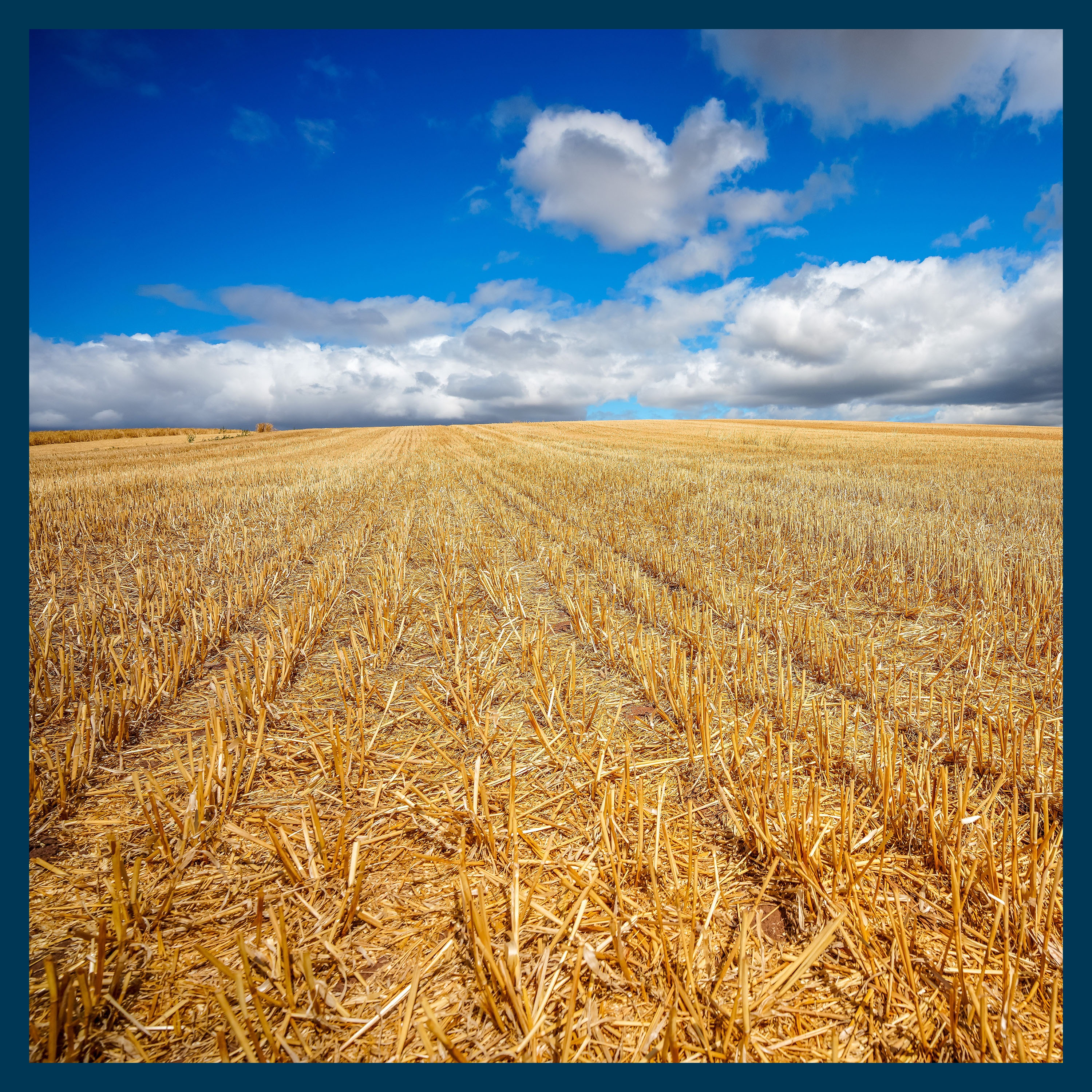
Nothing. This summer feels normal right now. The farm should look more like this
- [01:10]
B
harvest would be in full swing. You know, we'd have dripping ripe crops of. Of wheat sort of blown a little bit in the breeze.
- [01:18]
A
But instead, this year, the harvest plan, such as it was, came early.
- [01:25]
B
Any crops that haven't been harvested yet are just. Just tiny, sort of 6 inches to 12 inches high rather than a couple of feet high because they've just been stunted by the extreme temperatures and the hot wind that we've had.
- [01:37]
A
The harvest across the country looks set to be the worst on record. Even Westminster is waking up to the crisis. This was the leader of the Greens, Zach Polanski, L last week.
- [01:52]
B
We face a threat to our food and water security. Farmers are now warning we could see food shortages after flooding followed by drought has decimated crops.
- [02:07]
A
What does this current heat wave and our rapidly changing climate mean for the future of farming in the uk, and what does it mean for national security?
- [02:25]
C
I uncovered a report earlier this year, a secret government report warning ministers that the UK's food system could collapse under the strain of climate change and nature loss in coming decades.
- [02:44]
A
The story today, heat wave Britain. Why food shortages are on the horizon.
- [02:57]
C
Yeah.
- [02:57]
B
So the noise in the background is the lads moving grain into the dryer, not to dry it, but to cool it so that we can put it into the store. And also moving some wood chip round because we recycle tree waste as well at the moment to keep our head above water. So I am literally on the edge of Liverpool. We have a Liverpool postcode. I grow wheat, barley, beans, oilseed, rape. Although this year we have switched the cropping slightly to some combinable maize, which is normally not grown in this country because it's normally not hot enough. But this year, after what happened last year, we decided to try some. So it seems to be going okay, although that won't be harvested till September, October time.
- [03:41]
A
I mean, so the harvest has clearly come early. But you know, as you say, if it's killing the plants off, what sort of difference have you had in terms of yield?
- [03:50]
B
Some spring wheat, you'd expect to do around 2 tons to the acre. And it's, it's done just over half a ton to the acre. So that's, you know, wow, 25, 30% of what we'd have anticipated, the winter crops. Again, we'll take wheat for an example. In an average year you'd have three tons to the acre. In a good year you'd have four. You know, this year we've had slightly under two. Well down really. I mean, I put a straw shed up six weeks ago to straw, straw. The straw at the moment's nearly worth more than the grain we're harvesting out the field. The grain's so small and shriveled. I've literally, I've sold someone all my straw this week. We're carting it all to them by Friday. And I've ordered two paddle courts to put in the shed because I need the cash flow, I need to earn out of that shed because I can't earn money putting straw in it and selling it in the winter when the price goes up a little bit. I need it now. And it's just not farming. It's, you know, I want to be sat on a tractor looking at fields, not, not working out how big the door needs to be on a disabled toilet.
- [04:50]
A
Wow. And this is just down to, to the weather. Is it that there's, it's too hot or is it also that there's been a lack of rain? I mean, what's having the biggest impact?
- [05:00]
B
Ultimately it's both, but I think it's the heat that's done the most damage for us.
- [05:04]
A
Yeah.
- [05:05]
B
If you remember back in May, beginning of May, we had like 30 odd degrees for like nearly a week. Solid crops aren't used to that and they're not really bred to grow in them conditions. You know, when they see them temperatures, it's generally July and that's when they'd ripen and set themselves ready for, for harvest. They basically go into survival mode when it comes to summer and they, they throw a seed head up and start to ripen. And that's what started to happen in May. You know, the plant went into survival mode. They've had this real hot temperature again and this wind and no moisture whatsoever and they're just shriveled up. So if you imagine grapes, you know, nice Plump and juicy sort of round things. But then when you turn them into raisins, they're all crinkly and shriveled up. That's basically what's happened to the wheat. The seeds in the wheat are shriveled up and tiny. And of course you sell it by weight if there's no weight in it. And the seeds so small, that's where your yield's gone.
- [05:58]
A
Would it help if it rained more now?
- [06:00]
B
It wouldn't make any difference now it's, it's too late. You know, they died a month ago, the plants. And any rain now is only hampering us harvesting the straw. So the straw comes out the back of the combine that's like the, the waste product, the stalks of the plant that's now on the floor and we bail that up and use it for animal bedding or even forage for animals. Well, at the moment we're rained off today for that because we've had some drizzle this morning, so that's too damp to bale.
- [06:24]
A
How frustrating. And that sort of also points out that it's not just like the growing season. The weather around the harvest makes a real impact too. I mean, how has that worked out for you?
- [06:36]
B
For harvesting? It's been relatively easy. You know, we cut our neighbour's farm, we did a thousand acres in a week, which is just bonkers. You know, that would normally be a few weeks work on and off between weather patterns. We've got next year's crop to start putting in the ground, so we want to start drilling some cover crops and some oilseed rape in is just a dust bowl. If we put it in the ground now, nothing would happen to it other than be getting eaten by pigeons and crows and whatever. So there's no point in putting that in the ground until we've got rain of any significance on the horizon.
- [07:05]
A
Yeah, I mean it all sounds really urgent in terms of just the huge number of problems you're facing because of the weather. I hope you don't mind me asking. I mean, you've sort of implied that you're going to have about 25% of the crop you would normally have. But like, what does that mean in monetary terms?
- [07:22]
B
It will be similar to last year, you know, with proper 250, 300,000 pound loss on the, the arable activities on the farm, which we can only find through propping up with a diversification. Luckily, you know, being urban fringe, I have quite a bit of it. I've got some office space to rent out some Dog walking fields. Yeah, things like that. We recycle tree waste, but we've worked for nothing and borrowed more money just to grow food. It just seems bonkers. We'd be better off stopping growing food.
- [07:50]
A
And that's really terrifying for the rest of us because if we're looking at food security in this country, you don't want farmers to be in a position where it just doesn't make sense to be growing food anymore. You said earlier that one of the things you did this year because last year was so hot, was think about changing the crops. Is that something you'll sort of accelerate for next year? Are there crops that you could be growing that might suit this weather better?
- [08:12]
B
Yes, but of course we never know what we're going to get. 2005 was very dry, 2004 was very wet. So if I'd have put a significant acreage of grain maze in that year, I would have lost money on that because there just wouldn't have been the daylight for it. So we can only mitigate a little bit of risk by doing that from
- [08:32]
A
all the other farmers you're talking to. I mean, what's the mood like at the moment?
- [08:36]
B
Really downtrodden. You know, people are just looking for ways that they might be able to diversify. I mean, it's sad times. The confidence was knocked out the sector sort of two years ago with the budget, and then on the back of that, we've had two awful harvests. The mood is not good at the moment.
- [08:54]
A
Yeah. Farming is so much more than just a job. It's a way of life. But it's also sort of, you know, there's a custodian sort of role of passing the land on from one generation to the other. Do you think this is a farm you'll be able to pass on to your children? Do you think it'll still be functioning as an arable farm?
- [09:13]
B
I think the farm may exist, but I think it will be just a mixture of diversified businesses working around the farmyards and the land.
- [09:22]
A
Wow. Not growing crop.
- [09:24]
B
No. If I didn't have staff, I wouldn't plant anything this autumn.
- [09:28]
A
Wow.
- [09:29]
B
But it's a big decision to lay people off. But if it was me on my own, I'd be like, there is no point in planting anything.
- [09:35]
A
I mean, that's horrifying if that's happening in farms across the country. You know, if the only reason you're going to be planting crops this year is because of the jobs that you don't want to lay people off, that's appalling. At the same time, apart from the extraordinary weather you're getting, there's so much else as a backdrop this year. In particular, whether it's fertilizer costs because of the Strait of Hormuz or the Treasury's decisions around certain taxes. I mean, for you, how much is all of that having an impact?
- [10:06]
B
You know, they go on about the straw that broke the camel's back. Well, you know, if you think you've got the uncertainty around government policies is a bit of straw, and then you've got, you know, the dry weather is a bit of straw, the fertilizer prices is a bit more straw, the fuel costs have doubled. That's a bit more. There really is this breaking point at the moment, which is such a shame. And, you know, it doesn't make you really want to get up in the morning.
- [10:31]
A
Yeah. At this rate, if things don't change, do you think in, you know, a decade we'll still have domestic farms in this country? Do you think we'll be entirely dependent on produce from abroad?
- [10:44]
B
Unless we look after our food system and start at a farm level, it will be a dangerous place to be. Because if you imagine when the Second World War happened and we, you know, they didn't need to invade us, all they had to do was cut our food off because we couldn't feed ourselves. So they had incentives to invest in farming and, you know, carry you through them turbulent times. So with the right protection, to take some of the risk out of it to keep us growing has got to be a good thing. Every pound invested in agriculture can actually deliver nine pound back to the economy. So I think if we had a government that recognized this and took some of that turbulence out of the peaks and troughs or insured against some of these losses to keep us growing food, they then we will have food security. And in them good years, we can keep a bit in storage for the bad years. And ultimately, if we've got that storage opportunity and things, we can then also export as well. And that's when we can really make a difference to the economy.
- [11:38]
A
Do you feel like the government has your back at the moment?
- [11:41]
B
Yet to be seen. It would be nice to see agriculture thriving. It is the primary manufacturing industry. You know, everything that's produced on a farm, if we then further process it into Weetabix or porridge, oats or whiskey, you know, it's adding value, creating jobs along the way and an exportable surplus. I think brand Britain is a thing. We are a farm shop to the world and, and maybe we should capitalize on that a bit more. But you can't just turn food on it at the flick of a switch. You know, it's a 12 month to 24 month process to produce animal feed grains, beef, lamb, and if we all stop now, it will take a lot to get us back going again. I know the new Prime Minister, I was actually supposed to meet him a few weeks before, before his by election, but didn't get chance. I am assured that he wants to come and visit the farm in, in August. So hopefully that will happen and he will understand what's going on. So hopefully, you know, he is going to listen. They are going to look at agriculture as being crucial, bit like the mod in defense and we can get some investment to keep us going and we might actually stay in business and be here for a lot longer.
- [12:55]
A
Coming up, what can politicians do to help farmers and the UK's food security? We'll hear from our environment correspondent in just a moment.
- [13:22]
C
About a decade ago, I just realized that environmental issues, climate change in particular, were going to be a much more important determinant of what happens in the next few few decades than I had ever appreciated.
- [13:40]
A
Ben Cook is the environment correspondent for the Times. While his work has taken him from climate conferences to rainforests and deserts around the world, more recently the urgent problems he's been covering have been closer to home.
- [13:56]
C
It is just a fascinating beat to work on because it requires you to think about how all the systems which underpin our quality of living, such as agriculture and water and so on, are basically designed for a climate which increasingly no longer exists. And we need to rethink how the hell to redesign those systems really quite quickly.
- [14:32]
A
That is something that is becoming starkly clear this summer. Everybody's feeling it, particularly farmers. You know, we've just been hearing from a farmer near Liverpool on just how bad this, this year has been for him. Are you hearing that across the board?
- [14:48]
C
Yeah. A lot of farmers are saying that their yields are down, that they're struggling to irrigate their crops, and Britain's harvest looks set to be the worst on record.
- [15:02]
A
Wow. Is it starting to be noticed in Westminster? Because obviously it's a very urgent problem for the whole country if farming is in as much trouble as it seems to be.
- [15:13]
C
So Zach Polanski said that climate change is the biggest crisis the UK has faced since World War II.
- [15:22]
B
With another heat alert just having ended, we have still heard next to nothing
- [15:28]
C
from the very top of government.
- [15:30]
B
No emergency briefings, no new plan and Precious little detail about how this government will protect people from the crisis.
- [15:39]
C
I also uncovered a report earlier this year, a secret government report, warning ministers that the UK's food system could collapse under the strain of climate change and nature loss in coming decades. I should stress could. That's by no means a. I'm not
- [16:02]
A
sure I feel a whole lot better
- [16:03]
C
prophecy, but it's scary stuff.
- [16:07]
A
Before we look at how this catastrophic summer for farming is going to affect us all, just taking a step back, Talk to us about farming. Farming in this country. How big an industry is that? How important is it to our food supply?
- [16:24]
C
Farming is a huge industry here. About 2/3 of the UK's land is farmed.
- [16:32]
A
Wow. 2/3 of the whole land?
- [16:34]
C
Yes.
- [16:35]
A
Amazing.
- [16:36]
C
Which is a lot more than other European countries. We are a very intensively farmed landscape. There are around 200,000 farms in the UK and they employ about half a million people. This means that just under half of the food on our plates is produced in the uk, including the majority of grains, meat, dairy and eggs.
- [16:59]
A
So it's a really sizable industry. Give us a sense of just how bad this summer has been for them.
- [17:10]
C
So the latest estimates are that this year's harvest will be about 19 million tonnes of wheat and oats and barley, compared to an average of about 23 million tons. So it's quite a big hit.
- [17:30]
A
I mean, that is a significant shift. That's about a fifth of what you'd normally produce, just not appearing this year. Why is it so bad? I mean, how does it compare to other years? Is this a trend we're seeing or is this a one off?
- [17:47]
C
While it's a significantly worse harvest than the long term average, actually not too different to harvests we've seen in this decade so far, most of which have been pretty dismal. So we've had three of the five worst harvests on record since 2020. And this is really hitting farmers hard because the crops they grow one year pay for the investments they have to make into the next year. And so this year's harvest is hitting them while they're down. In terms of why we're seeing this trend, scientists are clear that this is climate change. One harvest like this would be a freak event. But if this year's harvest is as bad as expected, it will be four of the five worst harvests on record since 2020. And the reason why climate change is driving that trend is, is basically that the hotter the air gets, the more water it can hold, and so the less frequent rain becomes. But Then when rain does arrive, it's way more intense. And so climate change leads to this much more erratic pattern of weather, which is really difficult for farmers to deal with.
- [19:32]
A
As you say, it's leading to much more erratic weather. It's not even predictably, just much hotter for farmers. What does that mean in terms of the decisions you make for the next year, for the next season? Is one answer. And it's a very controversial point. But is 1 Answer GM crops? I should say that's genetically modified crops, because it feels like it's been a while since we've had that debate.
- [19:56]
C
So the government has actually eased its regulations about gene editing in recent years, allowing the creation of new varieties. So I should say this is a really nerdy point, but there is actually a distinction between gene ed. Modification, which is the byword for basically taking genes from wherever in the natural world and inserting them into any species you like. And that's how you get the craziness of like a mouse with an ear growing on it or whatever, and then gene editing, which is basically where you take genes out of, say, wild varieties of wheat and put them into domesticated varieties, which is seen as less controversial. And that's what the government is allowing. And what that allows you to do is to select for genes which are more heat tolerant. And this could allow us to develop crops which are able to thrive in a climate a lot hotter than even the one we're experiencing today.
- [21:14]
A
Wow. So you just end up with a much hardier crop. I can see why that would be appealing right now. We've talked a lot about cereals and grain. Are we seeing the same kind of impact on sort of dairy farmers and farmers who are sort of concentrating on meat rather than arable livestock farms?
- [21:34]
C
Yeah, we are. So the way dairy farmers would like to farm their cattle is to get them to graze lush grass in the summer and then feed them hay in the winter. What we're seeing this summer is that the grass is not lush, it's yellow and. And arid. And so farmers are already having to supplement their livestock's feed, and that will drive up prices of milk and cheese going into the winter.
- [22:13]
A
So, Ben, do any of these farmers have any potential solutions? I mean, are there things they think the government should be doing to try to mitigate what's happening with the climate?
- [22:23]
C
So the one thing farmers across the board are insisting on is, is the need to build more reservoirs. And to the government's credit, it is actually getting on with that. It's working with the water companies to build nine big new reservoirs by 2050, which will be the first reservoirs we've built since the 1990s, which tells you something about the lack of preparation so far for the kind of weather we're seeing today. Curiously, climate change is not probably going to make Britain drier overall. It's just going to lead to drier summers and much wetter winters. So the better we can get at storing all that winter rainfall and using it in the summer, the more secure our food system will be. We've also allowed vulnerabilities to build up in the UK's food system, which really don't have to be there. So we import a lot of our fruit and veg from the Netherlands, which has basically the same climate as the uk. There's no reason why we should be so dependent on Dutch horticulturalists growing a lot of our aubergines and peppers and Mediterranean crops in big greenhouses. Those greenhouses could be in the uk. Also, it's worth saying that a lot of our lower quality cereal crops are actually fed to animals. And so if the food system does become really strained, one way to deal with that would be to eat lower down on the food chain, eat less meat and actually eat those cereal crops ourselves instead of feeding them to cows and pigs and so on.
- [24:30]
A
In the meantime, how much are ordinary consumers, you know, all of us, likely to feel the effects of what's happening to farming in this country? When we're in the supermarket, all of
- [24:42]
C
this is going to feed through to higher prices in the shops. That will be higher prices of bread made with British wheat, but it will also be higher prices and potentially even shortages of a lot of our salad crops like tomatoes and cucumber and lettuce and so on. We've actually all already seen shortages of cucumber in the shops earlier this summer, and that's basically because a lot of our salad crops are grown in Spain and Morocco, which are dealing with the same extreme weather that we are as well. Chris Ciacchirini of the Energy and Climate Intelligence Unit told me that he would not be surprised if we saw shortages of peppers and tomatoes this summer, because, as I say, they come largely from Spain and Morocco.
- [25:45]
A
So together you have shortages of some fresh produce, you have the price of other staple goods like bread going up, because wheat is just so much less common now. It's so much harder to get hold of, especially at a good quality stuff. All of that will alarm most households. What does all of this mean for the UK's food security?
- [26:09]
C
I wish I could give A cheerier answer to this question.
- [26:12]
A
I was afraid you were going to say that. How bad is it?
- [26:15]
C
The outlook for Britain's food security is a lot scarier than you might think just by looking at the state of our supermarket shelves, which, despite it all, are still cornucopias compared to what our grandparents were buying. So a memo written by anonymous whistleblowers in the food industry, published in the magazine the Grocer last April, said climate change and nature loss posed a big, bigger threat to UK food security than Covid, when obviously we had enormous supply chain disruptions and some empty shelves, and that supermarket plans for dealing with the volatility of extreme weather were based on, quote, wishful thinking.
- [27:19]
A
Oh, wow. Yeah, all of that is quite alarming. Just so that we all know. You're not stockpiling yet, are you?
- [27:29]
C
No, I'm not, actually. I'm not.
- [27:31]
A
Phew. So the message is don't panic yet.
- [27:40]
C
Yeah, don't panic yet. The message of a lot of the academics I speak to is not that our shelves are going to be empty in six months time. It's not as alarming as that. It's not that we should be immediately panicking and rushing out to buy whatever we can for our stockpiles, but it is that our government should be thinking a lot harder about how to protect our food security.
- [28:24]
A
That was the Times environment correspondent Ben Cook and before him, Ollie Harrison, a farmer near Liverpool. The producer today was Olivia Case, the executive producer was Edward Drummond. Sound design was by Dave Creasy and theme composition was by Malicetto. If you can do leave us a review wherever you get your podcasts and if you're a farmer or if you have any thoughts on our food security or the future of farming, then do get in touch. You can drop us a line to the story@thetimes.com thanks for listening. We'll be back tomorrow.