Podcast
The Story of London
Hosted by Saul · EN
Welcome to The Story of London, a podcast dedicated to telling the history of London as a single narrative tale; from its birth until the present day.
Each episode takes us along that tale, a chronicle of the most fascinating and vibrant city on Earth.
There is a lot of content in here and each listener can enjoy it in a variety of ways. You can listen to an episode by itself for a slice of life from London’s past; or, if you have a favourite period of time you want to explore, find the era and follow the Chapters in that section.
Or maybe you want to join us on the grand journey, starting at the beginning and following along? Whatever option, welcome to the chronological tale of this amazing place.
The Story of London covers events as they happened, from the actions of the great and the good, down to those of the poor and marginalised. We try to be as historically precise as possible, sometimes stumbling upon little gems of history that change the way we see the past, and never take ourselves too seriously.
Feel free to join us… new episodes every week.
23episodes
Episodes
Newest firstAll episodes
Chapter 207- “Alack! Poor mouse!” (1546)
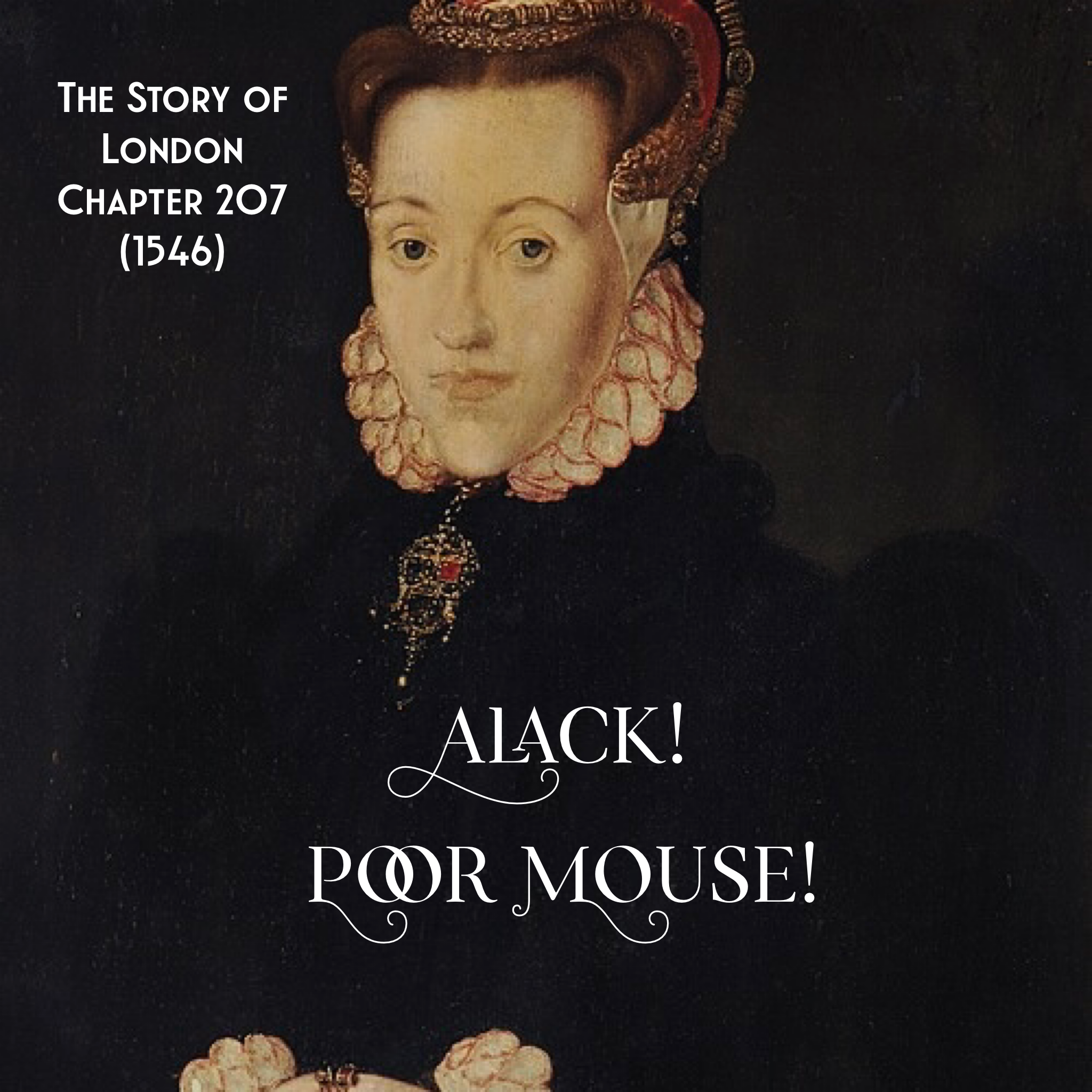
4d ago00:57:18Tap to summarize1546- a year which saw the full tyranny of Henry VIII bloom across London; when the city was not being forced to buy tonnes of surplus wheat from the King; when it was not celebrating the end of the War with France; and when it was not almost burning the wives of cattle barons… it was dealing with a great many things.One of these was the closure of its legal red light district over on Bankside, an event which actually caused the spread of illegal sex trade; but it also witnessed a wild year wherein the 6th wife of Henry VIII came within an inch of being arrested for heresy, and an amazing, and bold woman called Anne Askew found herself suffering a horrendous death upon Smithfield. Welcome to the last full year of the life of Henry VIII- it alls it gory detail.Cover features Portrait of Anne Askew by Hans Eworth (1560)
Transcribe →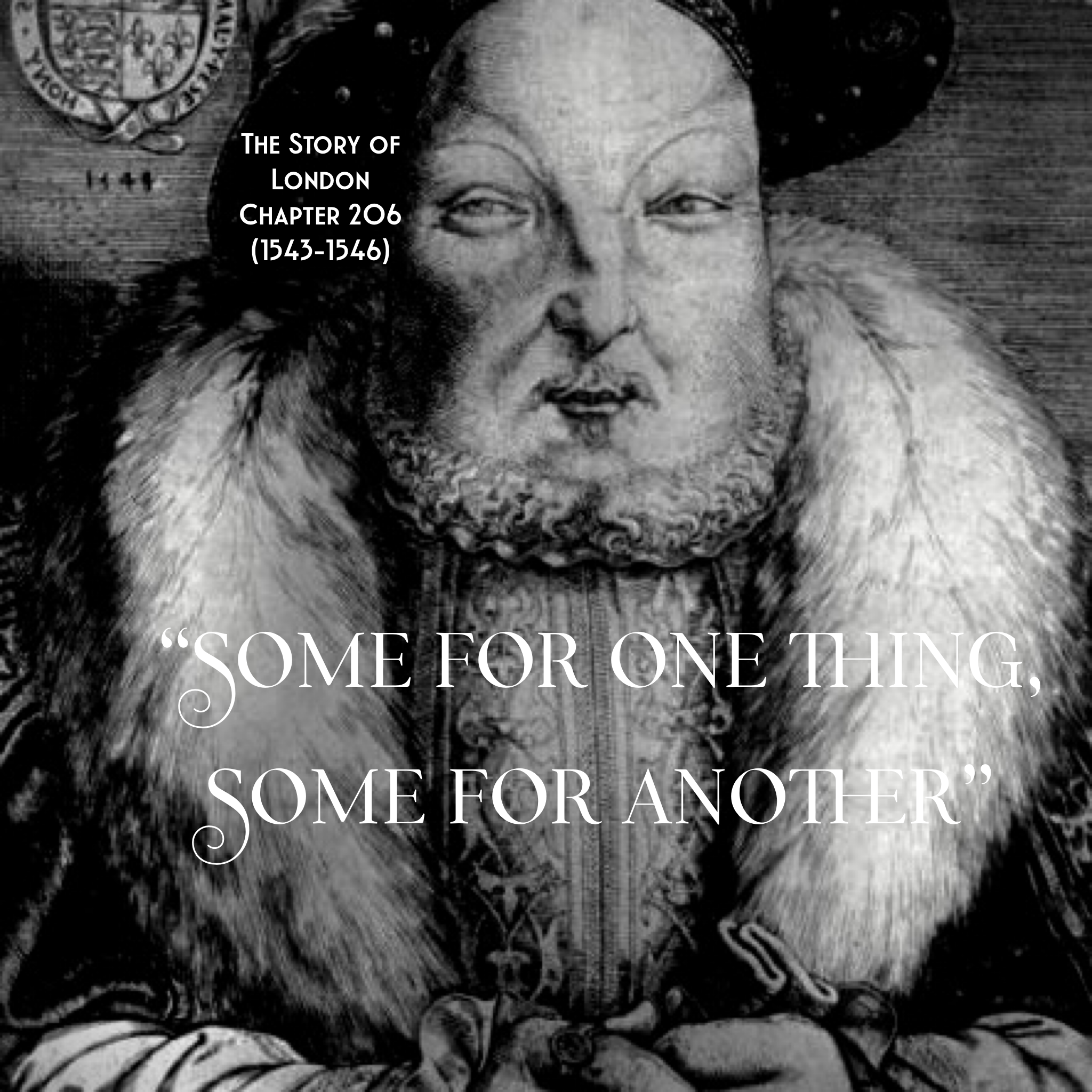
Chapter 206- “Some for one thing, some for another…” (1543-1546)
2w ago00:51:34Tap to summarizeThe Story finds itself in the last years of the reign of Henry VIII- and we find our metropolis a place where innocent simple teenagers are burned alive, where security clampdowns see curfews and house searches, where ships explode on the Thames, where thousands of men leave the streets to march out to war, where the economy contracts, where no one is safe, and where all of this is caused by an obese, diseased, angry, foul tempered man, playing games with people and dragging all down into insanity.Cover includes portrait of Henry VIII by Cornelis Metsys.
Transcribe →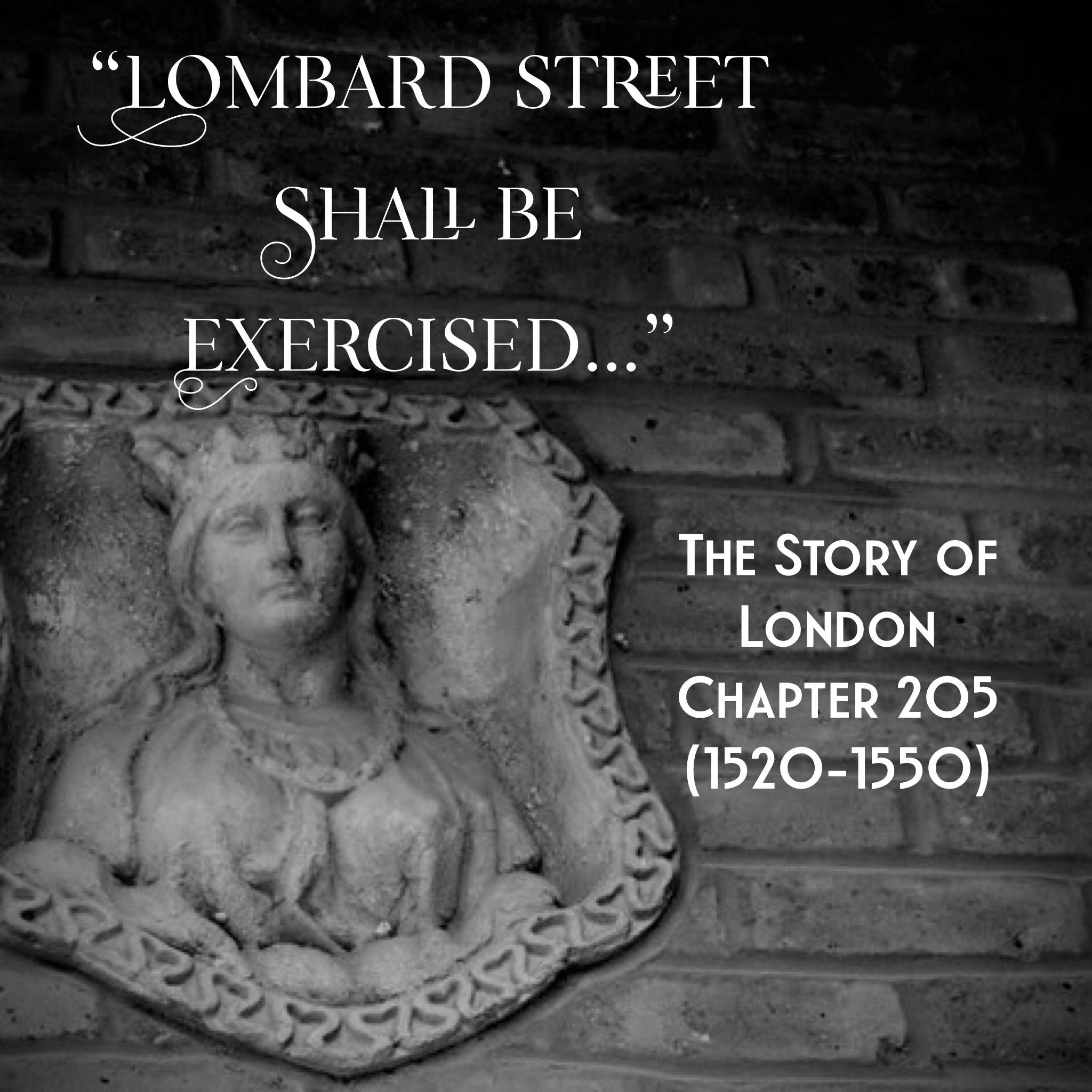
Chapter 205- “Lombard street shall be exercised…” (1520-1550)
3w ago00:52:49Tap to summarizeAn episode where we look under the surface to see what the cities merchants were doing- and run into some surprising truths; this was London at the birth of modern capitalism, and this chapter takes you though the sophisticated financial operations taking place in the city, the newly emergent international trade in credit, why Antwerp was showing the way London had to follow, and introduce a family who would dominate trade in the city over a few generations; the Gresham dynasty.Welcome to the ground floor in the revolution that will change London forever… Cover includes altered picture of the Mercer’s Maid, symbol of the Mercer Livery Company, Dryden Street, London
Transcribe →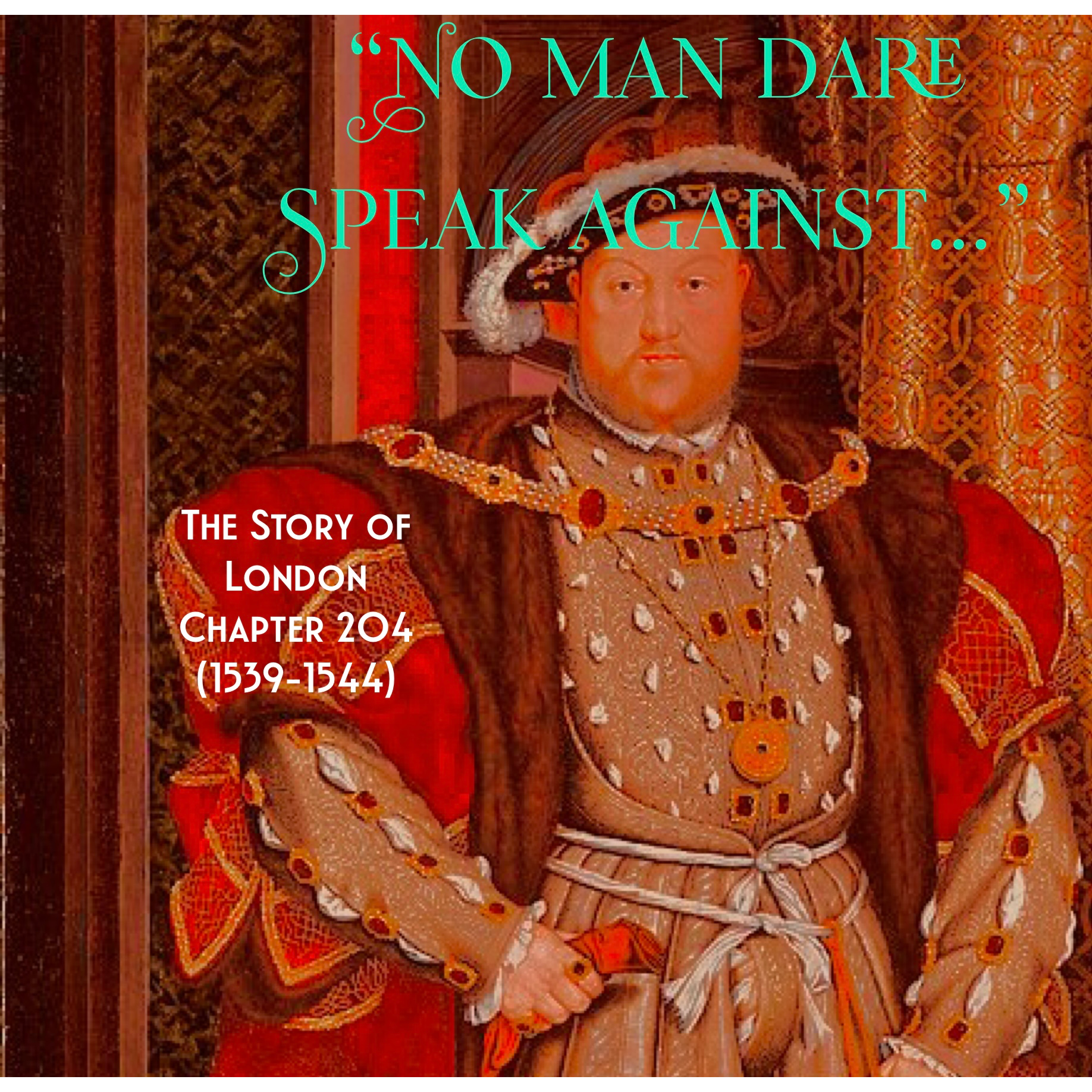
Chapter 204- “No man dare speak against…” (1539-1544)
4w ago00:54:55Tap to summarizeHenry VIII was a tyrant. He was a brutal, wilful, petulant king, whose desire to do whatever the hell he felt like and deal with the consequences later, had driven his country into uncharted and dangerous waters. And this is his reign made manifest upon the streets of London- a city filled with massive mock battles on the river, accidental shootings of washerwomen, new churches to prevent bodies being dragged through Whitehall Palace, confusing mass executions of both Protestants and Catholics on the same day, parades of soldiers never destined to fight, and the king going through wives faster than some residents went though a decent jacket.And in all of this- that highest ranked of all London residents, Thomas Cromwell was to fall from power and be put to death. The sheer madness of the king made manifest in a city just trying to cope with his whims… Cover includes altered version of the portrait of Henry VIII, done by Hans Eworth based on the original by Hans Holbein the Younger (1540-1547)
Transcribe →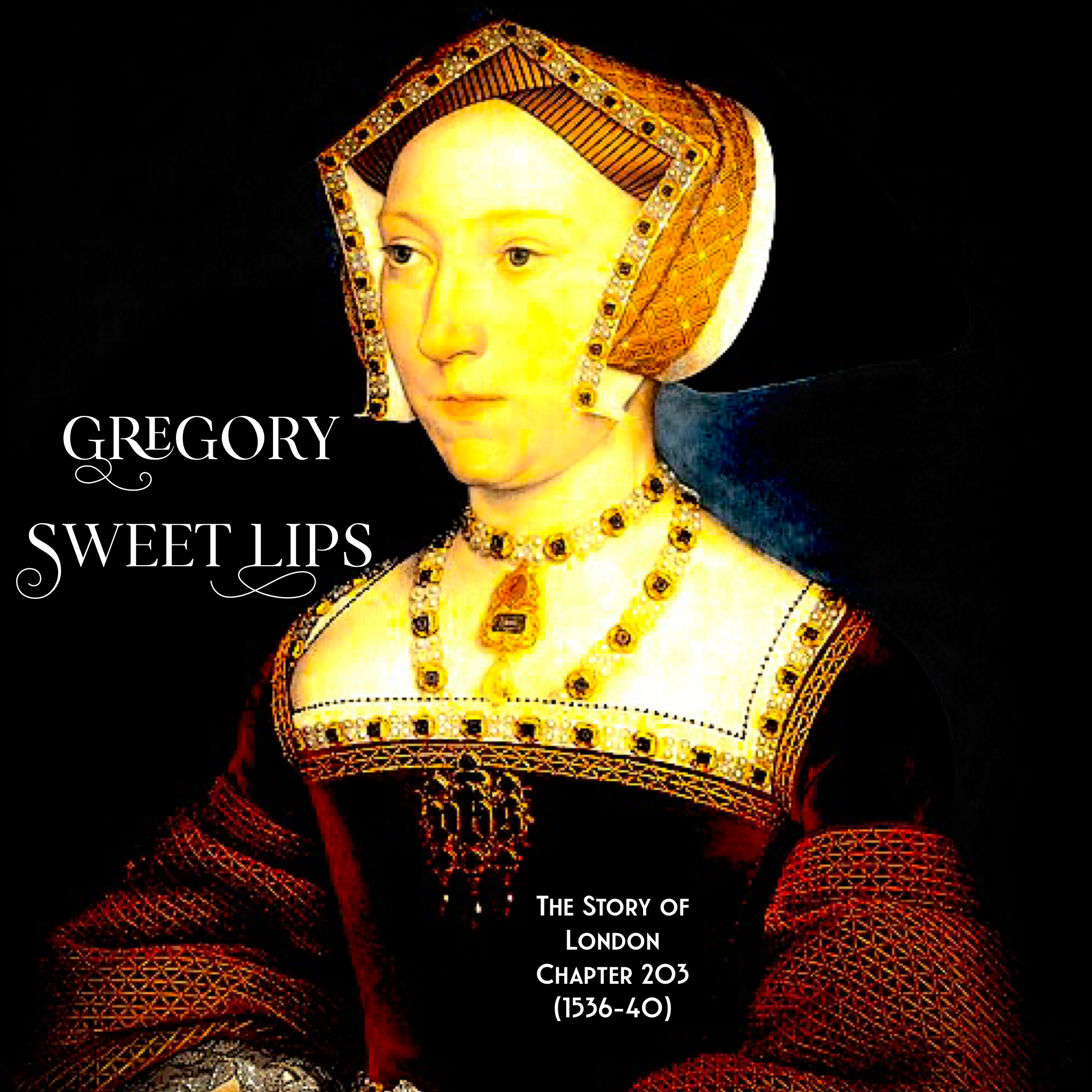
Chapter 203- Gregory Sweet Lips (1536-1540)
Jun 2500:52:47Tap to summarizeThis weeks chapter examines four busy years in the story of our city- culminating in the first death by shooting in its history; along the way we explore a country descending into resentment, resignation and eventually rebellion as Henry VIII descends into tyranny. We examine the seeming madness of his actions, from the speed and ferocity with which he turned on Ann Boleyn, to the dramatic sudden marriage to Lady Jane Seymour, to suddenly being married to a German princess…Along the way we look as the city copes with massive rebellions in the north, violent turmoil in Calais, and crucially, explore why the city itself remained peaceful- discovering that while the king increasingly gave way to his own dark passions, perhaps driven there by a near fatal accident, London’s mercers and others began to look to each other for continuity.Cover includes detail from the portrait of Queen Jane Seymour by Hans Holbein the Younger.
Transcribe →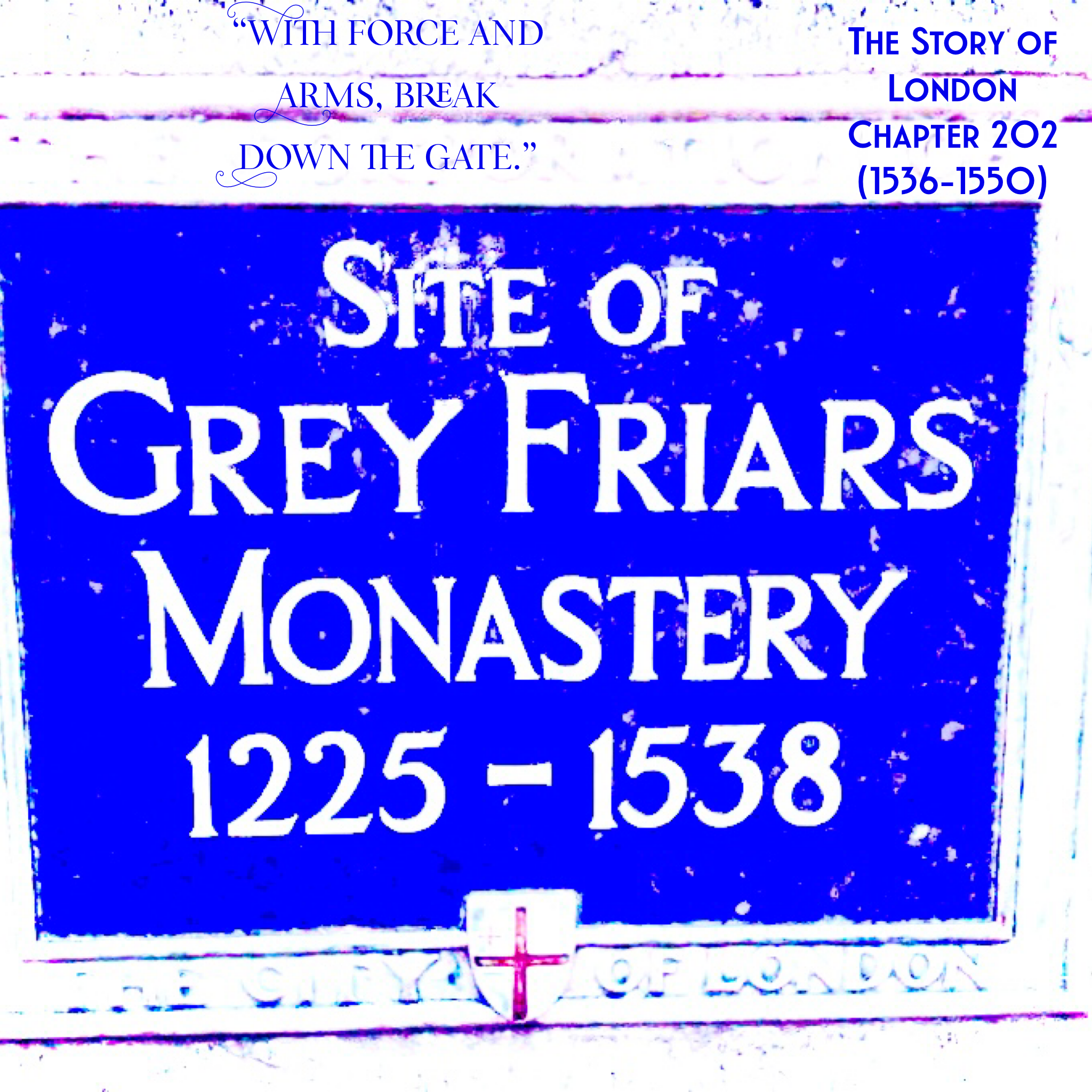
Chapter 202- “With force and arms break down the gate” (1536-1550)
Jun 1700:54:20Tap to summarizeWe take a pause from the narrative, to examine, in detail, what the dissolution of the monasteries of London meant for the city- literally, who gained the land and the buildings, what did they do with them, and how much money was made from this?What we see is series of deals that will influence London for the next few decades, as a plethora of new landlords and new homes erupted, and how a small bunch of people were able to make a fortune out of this.Cover includes photograph of the blue plaque denoting the site of Grey Friars Monastery, the City of London
Transcribe →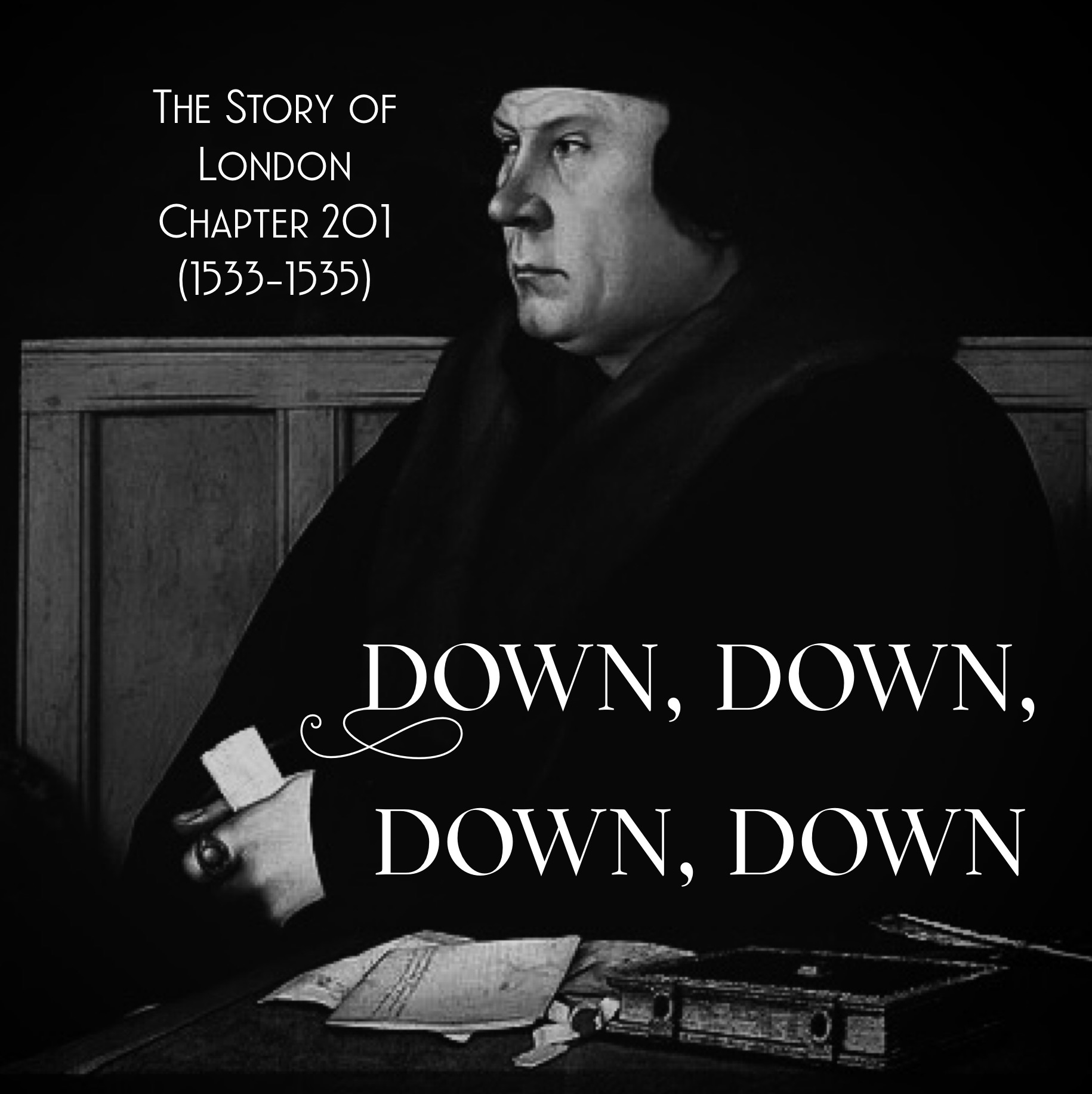
Chapter 201- Down, down, down, down… (1533-1535)
Jun 1000:55:01Tap to summarizeWe return with the story as we examine the circumstances that saw a drastic change in fortunes for the cities two most powerful residents- for Thomas Cromwell? His rise in power and status, and his leaving of a physical mark upon the very fabric of the city.For Thomas More? The opposite. The driven man, rushing headlong towards his own death, the circumstances of his life making it impossible to avoid.And around this, a city on the edge of panic, the politics of the new Queen, and much more, as the Story of London reaches the end of the saga of ‘The Boy from Milk Street’.Cover features the Portrait of Thomas Cromwell, attributed to Hans Holbein the Younger, c.1533, Frick copy of original.
Transcribe →
Chapter 200- “She has raised a fire…” (1528-1534)
May 2700:57:13Tap to summarizeThis week we examine the tale of Elizabeth Barton- holy woman, prophetess, political demagogue and the figure who openly defied Henry VIII over his desire to marry Anne Boleyn. But her story is one which drops us into a world of religious fervour, popular discontent, and public humiliation, as her extraordinary tale reveals the unspoken opposition and helplessness to what the king was doing…Cover contains a detail from ‘Portrait of a Lady’ by Rogier van der Weyden, c.1460, often erroneously said to be a portrait of Elizabeth Barton.
Transcribe →
Chapter 199- “Long live the Conqueror” (Reformation 2/2) (1531-1534)
May 2000:50:05Tap to summarizeThe complex and convoluted tale of Henry VIII’s break with Rome continues as the myriad passions of the King run headlong into his own doubt, a sudden need for international travel, the issues caused by him consummating his relationship with Anne Boleyn and more.Meanwhile Westminster was being completely rebuilt, lepers were being cast out onto the streets, and murderous cooks are being boiled alive- welcome to London at the start of the Reformation!Cover features detail from ‘Portrait of Henry VIII’, c 1520’ by unknown artist.
Transcribe →
Chapter 198- “…The Devil should have right” (Reformation 1/2) (1529-1531)
May 1400:49:44Tap to summarizeSurprisingly, the forces that drove the most dramatic changes in England, were born, cultivated and found expression within London. The Story reaches a moment of grand political crisis- Chancellors fall, parliament flexes its muscles, the capricious King makes up arguments as he goes along, and London carries on, providing intellectual and emotional fuel for it all. And while this happens, Thomas More, the judge from Milk Street, ascends the highest position in all the land, while still presiding over cases of London criminality, and being the face of the kings sudden desire to start killing heretics… welcome to the open salvos of the Reformation.Cover includes a detail of the portrait of Sir Thomas More, by Hans Holbein the Younger (1527),
Transcribe →