← The Table with Anthony ONeal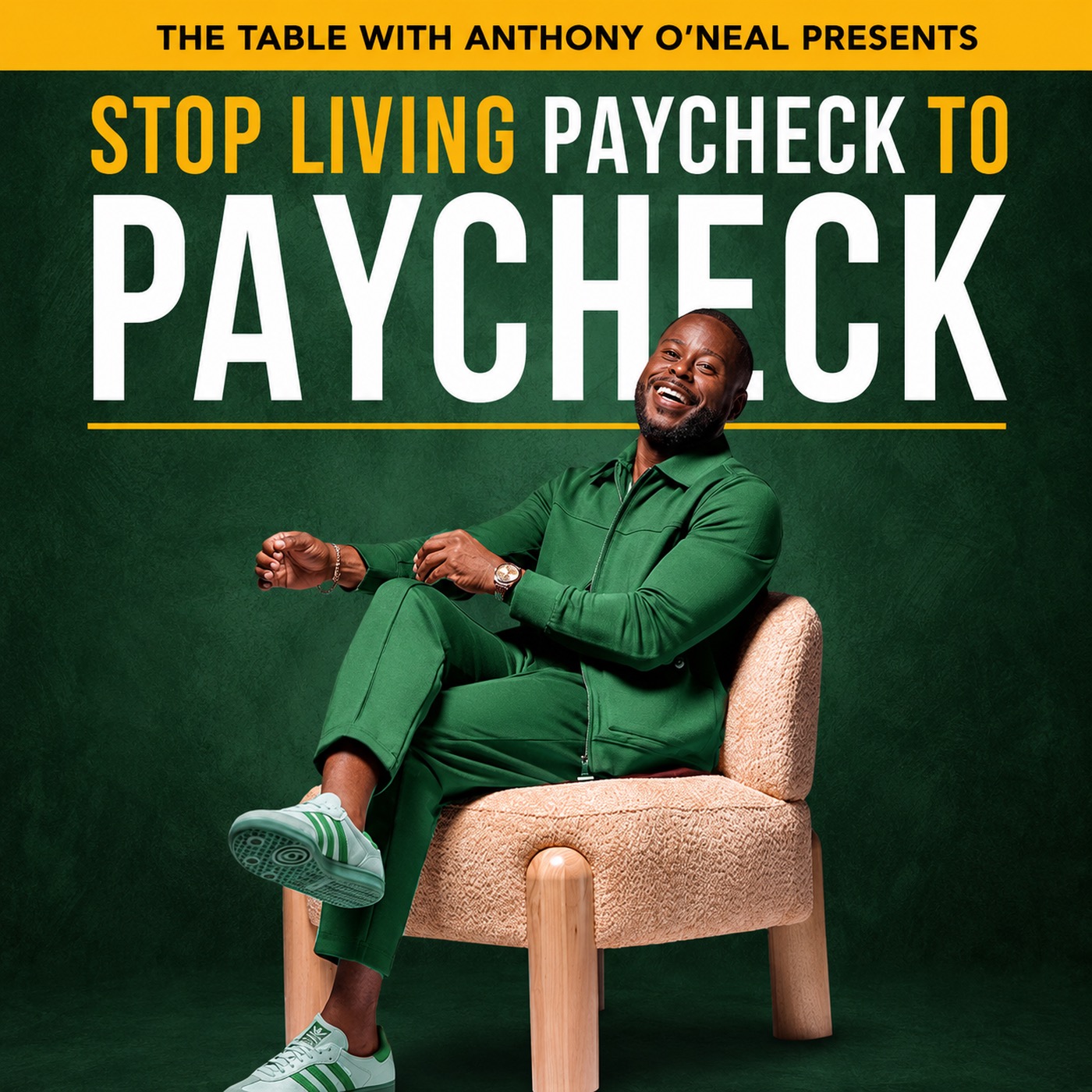
The Table with Anthony ONeal
She Made $72,000 a Year, Did Everything Right, and Had Nothing to Show For It
00:27:53
Loading summary
Transcript19 lines
- [00:00]
A
I cashed out my entire 401k thinking someone stole my identity.
- [00:04]
B
A fake email cost me my dream home. After I sent my personal information to a scammer, my AI agent wired thousands to an account I'd never seen.
- [00:12]
C
When billions of people feel unsafe, that's no longer a security problem. It's an economic one. At Gen, we're building the trust layer for a more fearless planet with products and technologies from our global brands, Norton, Lifelock, Avast and Money Lion. See it in action@genndigital.com brought to you
- [00:31]
A
by the Capital One Savor card. With Savor, you earn unlimited 3% cash back on dining, entertainment, and at grocery stores. That's unlimited cash back on ordering takeout from home or unlimited cash back on tickets to concerts and games. So grab a bite, grab a seat, and earn unlimited 3% cash back with the Savor Card. Capital One, what's in your wallet terms apply. See capitalone.com for details.
- [01:01]
B
What if I told you the money advice that you grew up with, the advice that kept your family living paycheck to paycheck could be the very same thing that's, I would say, keeping you from hitting your financial goals, from you really experiencing financial freedom. You see, right now there are millions, and I mean there's millions of people who are working hard every single day, paying bills, doing everything, quote, unquote, right. And they still feel stuck. And it's not because they're lazy. It's not because they're irresponsible, but because they're following a blueprint that was never designed to build wealth. It was never designed to build something of substance. But that blueprint was only designed to survive. And I'm tired of just surviving. If you ever wondered why, why I am stuck, even though I'm doing everything I was taught, today's episode, it's going to be for you. Today's episode is going to be specifically for you. Let me ask you this question. Who taught you what you know about money? For most of us, it was our parents. And watch this. It's not about what they physically said to us. It's about what we physically saw them doing. It was our grandparents and watching them struggle and work hard just to make sure we have food on the table. Or maybe it was just someone who we love. But here is the truth. Most of them never built wealth. They survived. And watch this. They look good surviving. They sacrificed and they kept the lights on. But they never had the tools, the true tools to build something bigger than survival. They lived off of this saying that as long as I got a roof over my head, clothes on my back, and food on a table. Thank God, thank God, thank God. But here's the truth. If we keep following that message, that map, we're going to end up exactly where they are and where they did. So let me apologize to my parents and to my grandparents right now because they gave me the very best that they could. But that blueprint doesn't work. It doesn't work. It was a few years ago. I was sitting across from a young woman. She was about 28 years old at the time, making about $72,000 a year. While I'm sitting there, she's crying. Not because she was broke, but because she done everything, quote, unquote, right. Car notes, student loans, credit cards, all the responsible things her parents taught her. And she was current on everything, but she had nothing to show for it. She had no savings, she had no investments, just a pile of payments that felt like chains. But she was looking good. And she looked at me and said, anthony, excuse my French, what the hell am I doing wrong? And I had that image vividly in my head. And I told her, I said, I yeah, yeah, you're doing something wrong, but technically you're not doing anything wrong. You're just following the wrong, the wrong blueprint. The blueprint you're following is what your parents and what the generation before yours do survive. They didn't have a thrive blueprint. And she was like, I want a family. I want freedom. I'm tired of working just to survive. How come I, how come this work is not putting me here and letting me go there and, and putting me in position to do this? And then I gave her a blueprint. Not really a blueprint, but we had to really talk about some of the beliefs. And, and, and right now I trying to, trying to make sure I stay on track because I'm getting a little emotional here, right? But today I'm going to show you the three beliefs that most families pass down. And these are the beliefs that I believe that are quietly destroying some of our chances to build real financial freedom. And I want you to know these beliefs came from love. But love doesn't make a belief true. And survival isn't the same as thriving. So again, I want to say, mom, dad, if you're watching this, I love you. But I also heard my parents say, I want you to do better than me. And these are coming from things that I've learned. I've learned way more good than negative. But these are the things that I've learned, that I got to do better and we got to do better. How many of us, let me answer this. How many of us grew up hearing everybody's going to have a car note, everybody's going to have student loans. It's just how it works. You just got to make your payments on time so your credit doesn't hurt. Let me hit you with this fact. The average car payment in America right Now is over $700 a month. That's $8,400 a year gone. And for what? A car that loses value the second you drive off the freaking lot. When our parents was paying me, paying maybe 100 to $200 a month back in them days. So, so, so times have changed and here's the truth. Debt is not a fact of life. Debt is honestly a choice. But most of us were what we're taught to manage debt, not to eliminate consumer debt. We were taught as long as you make the payment on time, your credit score will be good and you'll always have access. But no one taught us how to get out of debt. Doesn't it bother you, oh, I was about to hit my desk. Doesn't it bother you that we were taught to consume but not to own? And here's the common mistake,
- [07:54]
A
thinking you
- [07:54]
B
can out earn your debt. You can't build wealth on a cracked foundation. The system was made for that. So here's the action step of what I need you to start doing today. Today I'll make, if I was you, I would make getting out of consumer debt my number one priority. This is where you can log into the in the Black app, go to anthonyonil.com forward/app and this and you're going to upload all your debt, all of your stuff, and it's going to give you an actual date. You're going to get out and you're going to really get on the plan to get out of debt. Because if I was, let's say 25 years old, I wouldn't buy a car that I deserve. I would buy the car that I could pay cash for. If I was 35 years old, I would refinance or pay off, you know, all of my consumer debt aggressively. Now if I was in my 40s like I am now, just now starting, I would downsize if I have to because I firmly believe that freedom is worth more than actual stuff. And when I say freedom, I'm talking about financial freedom. Financial freedom is worth more than actual stuff. Check this out, family. Did you know that nearly 4 in 10Americans still have zero money invested in the stock market. That's a gap where wealth is built or missed. If you're just saving, you're falling behind because the markets average close to about a 10% stage a year for a century, while your savings account is barely keeping up with inflation. I want to make this if you wait just five years to start investing, you could lose out on hundreds of thousands of dollars in future wealth. That's not hype, that's real math. The wealthiest 10% of Americans now own over 90% of all stocks because they started and they stayed consistent. But here's the thing. You don't need to be rich to to honestly get inside of the investing game. With platforms like SoFi, Invest Public and Moomoo, you can open an account today, start with as little as a dollar, literally, and buy fractional shares of the same assets that have built generational wealth for millions. No commissions, 100%. No excuses on your end. Listen, I need you to hear me clearly. Stop sitting on the sidelines. Go to anthonyonil.com invest right now to compare the top investing platforms and open your first investing account today. Your future self and your children's children will thank you for taking action. Right now. We have to start building wealth, not just watching others get rich. Do not let another year go by. As a matter of fact, don't let another day go by. Take the first step, family. Visit anthonyonil.com desk let's get to work. Let's start investing ASAP. Let's get back to the show. Here's belief number two that a good job is the goal. For generations, getting a good job was the dream. But here's the trap. Income doesn't build wealth. Income is not wealth. I've met people making six figures, seven figures with zero net worth. They're broke. They're living paycheck to paycheck. Like a lot of us. If all you do is chase a paycheck, you'll always be one emergency away from being broke. You'll always be one emergency away from your life. Flipping over financially without saying any names. One of my friends was making about $120,000 a year. But after taxes, debt and lifestyle, he had nothing left. He was good on paper, but honestly, living paycheck to paycheck in reality. I was watching this interview with earn your leisure and the lady asked him, asked them both Troy and Rashad, what is that thing that's preventing people from building wealth? It's lifestyle, living above your means. And he Says something and I will always respect Rashad. He said, man, I have to fight that. And that's the truth, man. Y' all remember when I made my first, you know, two, $3 million? I saw them seven figures in the account. The very first thing I was like, well, shoot, I got this money. I can go buy my big dream home. This is like, I think I told you all before, this is like almost four years ago. And I went and I. And I got the home. And I was like, whoa, whoa. When I came back, bought the land, the home's gonna cost me about, like, $2.8 million. The land cost me about $600,000. And I was like, I got out the deal because I didn't want to be wealthy on paper, but broken reality because I overextended myself. So if I were starting today, I would build multiple streams of income and I would start a side hustle, invest in skills, and learn about real estate or digital income immediately. If I was, let's say, 25 years old, I would start a hustle, even if it's just $200 a month. If I was in my mid-30s, I'm investing heavily into my 401k and starting to learn about real estate. Because now I should be in a real good career field now, if I was 45 to 55, right. I'm looking for ways to really cut my experiences. Watch this into consulting and coaching. And I'm honestly going to be doing something later this year that's going to really help people in the consulting and coaching phase. Because I think, well, I don't want to say too much. I won't say too much. Let me go on to belief number three. Let me go on to belief number three. Belief number three. Money isn't something you talk about. How many of you grew up in a home where money was never discussed? Let's go deep. Money and sex was never discussed. Where asking about bills or income felt disrespectful. When asking mom, dad, how come we can't go to this particular place? Was kind of disrespectful. The silence was honestly, I think our parents thought was once protection. But that same silence today is a wealth killer because now we're multiplying and re.
- [14:57]
A
I cashed out my entire 401k thinking someone stole my identity.
- [15:01]
B
A fake email cost me my dream home. After I sent my personal information to a scammer, my AI agent wired thousands to an account I'd never seen.
- [15:09]
C
When billions of people feel unsafe, that's no longer a security problem. It's an economic one. At Jen, we're building the trust layer for a more feature Fearless Planet with products and technologies from our global brands Norton, Lifelock, Avast and Money Lion. See it in action@gendigital.com this message is
- [15:28]
A
brought to you by the Capital One Venture X Card. Venture X offers the premium benefits you expect like a $300 annual Capital One travel credit for less than you expect. Elevate your earn with unlimited double miles on every purchase, bringing you one step closer to your next dream destination. Plus enjoy access to over 1000 airport lounges world worldwide. The Capital One Venture X Card what's in your wallet? Terms apply. Lounge access is subject to change. See capital1.com for details.
- [15:57]
D
Most people don't realize how much their personal information is being bought and sold every day. Data brokers are making billions pulling details about you from public records and the Internet and then packaging and selling it, usually without your consent. That's how your information lands in the hands of scammers, spammers, even stalkers. It's why you get endless robocalls and why ads seem to follow you everywhere. That's where Aura comes in. Aura actively removes your data from broker sites and keeps it off. They also instantly alert you if your information shows up in a breach or on the dark web. But Aura goes beyond data protection. With one app, you get a vpn, antivirus, password manager, spam call protection, dark web monitoring, and even up to $5 million in identity theft insurance. All backed by 247 US based fraud support. Other companies might sell just credit monitoring or just a vpn. Aura gives you all of it together at the same price competitors charge for just one service. Start your free trial today at aura.com remove protect yourself now@aura.com remove duplicating what
- [16:58]
B
we saw Generational wealth doesn't transfer through silence. It transfers through intentional conversation and intentional direction on what we need to do. And one of the most common mistakes I see within this one, within our families and specifically within the black community, thinking humility means never talking about money. In reality, though, silence is a generational tax. And I had to learn that for myself. I had to learn that me being silent and not talking to, you know, the young people who are growing up and calling me their mentors and looking up to me for me not talking to, you know, the two by two adopted daughters who are technically my cousins and not really having an honest, hard conversation about money with them. That's going to hurt them and parents. Let let me Say this, let me say this. If you're going through financially right now, you have teenager, teenagers and middle schoolers, you being silent and not telling them, hey, this is where your dad, this is where your mom, this is where your parents are financially. And we need you to understand this because while we are here, son, this is why we need you to get A's and B's in school so you can get a scholarship and go off to a four year university and, or you can, you know, graduate high school and get into a trade school, whatever that is, son, and we can set you up right so you, you don't have to be 30, 40, 50 years old, 60 years old, struggling financially. Silence kills your children. Silence kills the possibility of wealth entering into your family because you do not want to hurt them. You think it's too much for them, but no, exposing it honestly helps them understand. I see what, what debt does to families and I don't want to experience that. So if I was starting today in this part meant I'm making a money conversation, a key value within our family. I will be talking about money every single month with my children. This is what we have, this is what we owe, and this is what we're building and this is where we're headed. If I was 25, I would ask my parents about their financial story. And I've done that. It wasn't until I was about 30 something years old that I realized that my biological mother was an actual breadwinner in the family. And it all makes sense. And I say this with no disrespect, this is just the truth. In reality, my dad worked one job and came home and tried to build a business while my mom worked three jobs. I get my hard work ethic from my biological mama because I saw my mama put in the work. I saw my mom do what she had to do for her family to survive. So I took that same mindset from my mama. Thank you, mama. And I put that in a different blueprint because I don't want to just survive, I want to thrive. And so when I had a conversation with my mom and my other father and I realized that my mom was the breadwinner, it made all the sense in the world. Now if I was 30, in my mid-30s, I'm starting to have the money conversation immediately with my kids. And I want them to ask me some uncomfortable conversations. I want them to ask, like, I'm taking them to the bank and I'm showing them how much money we got in the bank. I'm showing them at 40 years old, son, I only have $30,000 in my investment portfolio. And if I don't put more money in here, it's going to hurt you because you got to take care of me. But don't you be this age and have the same money. I'm having a conversation with my children. Mom, dad, can I. Can I get this for this? Yes and no. No, I'm not giving it to you. But you can take your butt out there and cut that grass. You can take your behind out there and wash some cars. And if you do that, I'll give you 16, $15 an hour. Now we're teaching them how to earn. Were raising a. We're raising a lazy generation, man. I remember sitting in a home playing PlayStation. I remember my mama said my mom and dad like, all right, boy, go out there and play basketball. Go out there and get some of that energy out, man. This generation is different, man. My mama, I was so short. My dad had me and my little sister washing dishes. And at the age of five, he will pull a chair up to the sink. And after dinner, I will step up on that chair. My sister will step up on her chair. I will wash Yvette with rinse. We were having. We got to start changing how we're having this conversation with our children. If I'm in my 40s now, this is what I'm doing now. I'm sitting down with my family and I'm sharing them the financial plan that I have for myself. And I'm asking my parents now about their financial plan. And when I get married, when I start dating someone seriously, with the intent of marriage, man. Yeah, for sure. This is where we are financially. This is where I'm at financially. Where are you financially? What are your goals? Where are we going? So the question I'm going to ask you, what does the new blueprint look like for you? I'm going to give you three pillars that I blink, that I believe needs to be inside your blueprint. The pillar number one is debt freedom. Because debt freedom is the foundation. You can't build on a crack foundation before you invest, before you build, before you even start giving generously to other people, you gotta get free for yourself and for your family. That's pillar number one. Pillar number two is you gotta. You gotta come up with different revenue streams. That is a strategy. That's not a luxury. One stream of income is one point of failure. So I need you to start small. I need you to start right now, and I need you to Build Start. This is pill number two. Pill number three, I need you to have financial transparency within. Within your family. I need you to break the silence. If you're struggling, if you're hurting right now, be honest with your loved ones. Because the conversation you have today could be the inheritance your grandchildren never have to work for. I'm gonna say that one more time. The conversation you have today with your children could be the inheritance your grandchildren never had to work for. What do you mean by that, Anthony? If you tell your kids how you're struggling, it's gonna snap them to not struggle. When they get in a new mind, now they're able to leave their kids an inheritance because of the conversation you had out of. Out of boldness. So as we end this show, I want to give you some practical roadmap directions that I think you need to be doing that I've done personally. Which is, number one, you write down every belief about money you inherited. I want you to write this down and circle the ones that are holding you back. And when you circle those ones that are holding you back, I want you to really remember those and bring that to your next therapy session. Because here's the truth that a lot of financial people do not want to say. That we can give you this roadmap of what I'm about to give you. I can give you the tools and the resources to build wealth. But if you don't get these beliefs out of your heart, out of your mind, it ain't gonna work. So you need to write down your honest beliefs about money and take those in and have a honest conversation with your therapist. Not about the practicality side of money, but the belief, your mental, your spirit thoughts around money. Because when we can get those healed now, the practical stuff going to be easy, then number two is pick one belief. Once you get through that, I need you to break it. And when you start breaking these beliefs, I need you to write down new beliefs that you want to live by. Here's number three. Take one action step this week. Pay off one of your credit cards. Start a side hustle. Start having money conversations with family members and peers. Number four, share this episode with someone you love. Don't let the silence continue. One of the things that I love about my friendship circle is that, man, we talk about money every week because we realized that the cycle ended with us, with our generation. It's not going to end with my kids. It's not going to end with my grandchildren. It ends with me. And oftentimes what me and my Friends would do, man, we will sit down and have this conversation. We'll write it down. We'll even get up on the drawing board, like, what are some of the things that we want to do for our families? And we will have a honest conversation. And I remember on that one time, the very first time we did this, man, I think out of seven of us men who were in that room, three of us were crying. And when, when, when. I won't say the names because I want to protect that room. When one of the guys asked us this question, why are we crying? It was because we, for the first time ever, we were in a space that we felt honestly that we can have a true honest money conversation and not be judged. All of us in that room were not in a good place financially, but we had the means to be there financially, but we didn't have the right blueprint. I was in a room, but can I be honest with you? I didn't even have the right blueprint. I had a blueprint, but it wasn't the right one. So all seven of us was able to talk about the beliefs that grew up in and the things that we saw that changed how we believe, that incorporated that contributed to how. How we believe and when we did that. If you can get on the phone with your girlfriend and with your homeboy and gossip, man, you can get in the room for an hour, two hours, and gossip about your future, gossip about the grandchildren you ain't met yet, gossip about the children you haven't even met yet. If we can spend all this time creating content and responding to other people's drama, man, Get in the room, get on zoom, get on the phone and change your beliefs around money. Yeah, I'm over my time. Share this. I'm thinking about doing a. I'm thinking about doing a webinar on how to create a space. It's almost like, I don't know if it's a webinar, but, like, I want to create a community of people to where once a month, on this particular day, we all get in a room of five to 10 people and we all dream. I think we're doing that. Let me know if that's a good idea. Let me know in the comments if you think that's a good idea. Like, like, like across the world, wherever we are. And what I'm even thinking about doing is creating an actual conversational PDF that everyone will have to go through and answer inside and map out and write out to where. It's almost like a conversational guide. But minimum five people to max 10 or I can't say minimum. Well, the minimum of three people so it could be a healthy conversation. But the max 10 order some food, get some pizza, get some drinks. If you drink, hell, smoke a cigar, do whatever you want to do but get in the room with people. And I'm thinking about creating that into a day where on this particular Saturday we have whatever amount of people across the world in Ghana, in Africa and in the States, in Canada and London. Let me know if this is a good idea in the comment section. I want to do it. I really do want to do it y'.
- [30:40]
A
All.
- [30:40]
B
It's your boy Anthony o'. Neill. Share this with somebody. I'm seeing the next show. Peace out.
- [30:57]
C
When others hear noise Tiero Price interprets market signals to find investment opportunities. That's the power of action active ETFs from T Rowe Price. Their portfolio managers approach data from multiple perspectives, analyzing trends and conducting deep research to give you their curiosity backed active management expertise. Learn more about their active ETFs@troprice.com Explore ETFs Exchange Traded Funds ETFs are bought and sold at market prices, not NAV. Investors generally incur the cost cost of the spread between the prices at which shares are bought and sold. Buying and selling shares may result in brokerage commissions which will reduce returns. T. Rowe Price Investment Services, Inc.
- [31:39]
A
I cashed out my entire 401k thinking someone stole my identity.
- [31:43]
B
A fake email cost me my dream home. After I sent my personal information to a scammer, my AI agent wired thousands to an account I'd never seen.
- [31:51]
C
When billions of people feel unsafe, that's no longer a security problem, it's an economic one. At AT Gen, we're building the trust layer for a more fearless planet with products and technologies from our global brands Norton, Lifelock, Avast and Money Lion. See it in action@genndigital.com.