← The Team House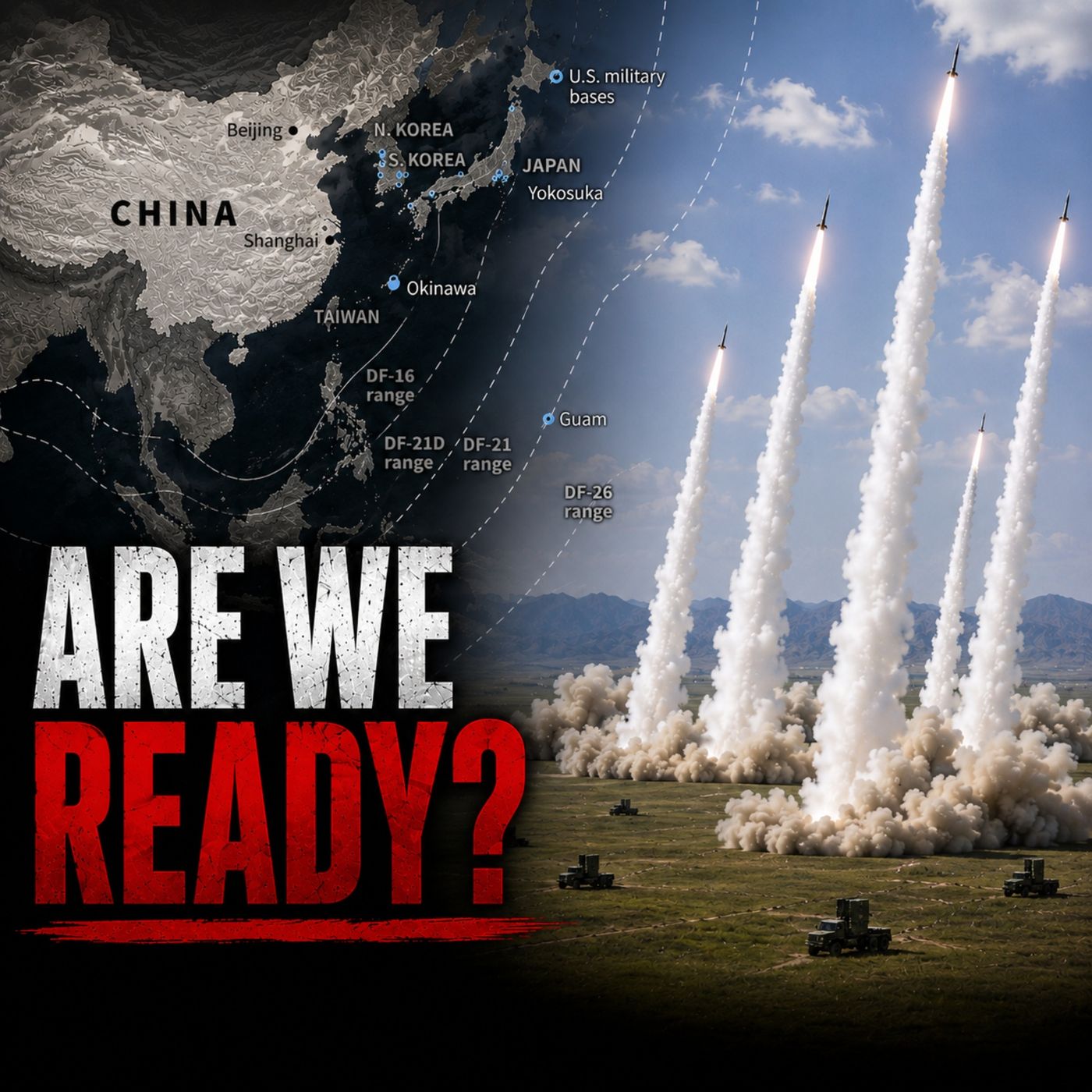
The Team House
Can the U.S. Win a War in the Pacific Against China? | EYES ON GEOPOLITICS
00:55:23
We sit down with former U.S. Navy submariner and defense analyst Thomas Shugart to examine the rapidly shifting military balance between the United States and China, from Taiwan invasion planning and shipbuilding to missile stockpiles and the future...
Loading summary
Transcript162 lines
- [00:03]
Host (possibly Sean or main podcast host)
My Lowe's Pro Rewards members save big
- [00:05]
Thomas Sugart (Defense Analyst, former US Navy submariner)
during Lowe's Pro Savings Days.
- [00:07]
Commercial/Advertisement Voice
Get your member volume discount plus an
- [00:08]
Host (possibly Sean or main podcast host)
extra 5% off eligible orders with a quote of $2,000 or more and buy
- [00:13]
Commercial/Advertisement Voice
more and save more with up to
- [00:14]
Thomas Sugart (Defense Analyst, former US Navy submariner)
20% off in stock molding when you spend $250 or more members. Get more at Lowe's. Valid through 731 exclusions.
- [00:22]
Commercial/Advertisement Voice
More terms and restrictions apply.
- [00:23]
Thomas Sugart (Defense Analyst, former US Navy submariner)
Can't be combined with any contract or
- [00:24]
Commercial/Advertisement Voice
special pricing loyalty program.
- [00:25]
Thomas Sugart (Defense Analyst, former US Navy submariner)
Subject to terms and conditions.
- [00:26]
Commercial/Advertisement Voice
Visit the Pro Desk or lowe's.com terms for more details.
- [00:29]
Host (possibly Sean or main podcast host)
Subject to change.
- [00:30]
Commercial/Advertisement Voice
Tyler redick here from 2311 Racing Victory Lane. Yeah, it's even better with Chumba by my side. Race to chumbacasino.com let's Chumba. No purchase necessary. BTW group void where prohibited by law. CTNCs21+ sponsored by Chumba Casino.
- [00:46]
Host (possibly Sean or main podcast host)
Hey everybody. Welcome to another episode of Eyes on Geopolitics. I'm here with Thomas Sugart, Jonathan Hackett and Jack Murphy. For the people that don't know who Tom is, he actually did a great episode on the Team House. You should check that out. Talking about his career, He's a former US Navy submariner who served more than 25 years and he's now a data analyst, defense analyst, excuse me. And an adjunct senior fellow at the center for New American Security where obviously he focuses on the Indo Pacific and the involving like and just the balance between America and Chinese militaries and stuff. So he's the guy who's keeping his eye on all this. He's got a great Twitter account. I suggest if anyone's interested in this topic to check him out and follow him there. I'll leave a link in the description as well. You can find them. Tom, thanks for joining us.
- [01:39]
Thomas Sugart (Defense Analyst, former US Navy submariner)
Pleasure to be here. Thanks.
- [01:40]
Host (possibly Sean or main podcast host)
D. Of course, I mean, obviously I feel like the Chinese American, you know, rivalry has kind of taken a back seat, at least in the press since Iran started. And there's obviously some connections there too. Like there's some rumor that China is helping Iran with some targeting or at least supplies. You know, definitely they were the biggest Iranians. They were Iran's biggest customer for oil. So there are some connections there. But I definitely want to focus on that US Chinese rivalry where it's at. You know, I just saw that China just had some like live fire drills off the coast of Taiwan a few days ago for a couple days and like just where we're at essentially now July 2026 with this, you know, this thing that will basically Define the next probably 50 years.
- [02:36]
Thomas Sugart (Defense Analyst, former US Navy submariner)
So I would say that while there has been perhaps a drop off a bit in the rhetoric of the, of the competition, as it were, I mean, the facts on the ground haven't, from China's site certainly haven't dialed back at all. You know, they are being aggressive as they ever were in the South China Sea. You know, we just saw the other day Chinese sailors, you know, beating on Philippine sailors with sticks. Remember, that's a treaty ally. The United States, we're talking about that they're, you know, conducting violent action against. The development of the Chinese military has, if anything, the trajectory has increased in the last few years. We now have multiple classes of nuclear submarines under production. We have the, the commander of the Office of Naval Intelligence. And testimony recently said that Chinese submarine production is now going to go all nuclear. They're not going to build conventional submarines anymore, which is quite a surprise to me. And development. We have their first nuclear powered aircraft carrier under construction. We have the revelation that they are using even more than we thought, commercial shipping in practicing conducting amphibious assaults. We have increasing numbers of Chinese aircraft crossing the median line and the Taiwan Strait. We now have the Chinese, not just Coast Guard, but their whole of government, other agencies as well, acting like they own the waters east of Taiwan. Waters that are actually, you know, really should be divided between the Philippines and Japan. I mean, so the facts on the ground in the Pacific are if anything, more aggressive than they were in the past. It's just the US Government doesn't seem to be choosing to make a lot of hay about it right now at this point. I guess they've got other things they're busy with.
- [04:19]
Host (possibly Sean or main podcast host)
Yeah. Boys, any questions? Go ahead, please.
- [04:22]
Jack Murphy (Podcast co-host or guest)
Well, I mean, I think, you know, based on what you're saying, I'd be interested to hear you expand on the arms production. Because my impression at least of China is that their strategy in the past has been not to meet us tank for tank, fighter jet for fighter, jet, carrier for carrier. Is that still true? And if it is, what do you think or how do you interpret this? Sort of like, I guess, increase in proliferation.
- [04:52]
Thomas Sugart (Defense Analyst, former US Navy submariner)
So I think what we'll see is until Taiwan is resolved one way or another, there will be a pretty significant asymmetry between what China is doing then and their capabilities are developing. And what we traditionally see is US power projection capabilities because Taiwan is only 100 miles away, right? So you need different capabilities to do that. So for example, let's talk about amphibious assault vessels. So you know, when you look at the US Navy and its amphibious assault vessels. You have, you know, large amphibious assault ships, you know, 40,000 plus tons in some cases. They're equipped to operate, you know, thousands of miles from home for months at a time. That's overkill for the Taiwan Strait. You don't, you need something that can efficiently take troops as fast as possible, load them as fast as possible, go 100 miles, unload them as fast as possible, come back and get more. Right. So, so while China does have and is building more amphitheas, assault ships that are similar to those that we build, that's not the meat and potatoes of what they would need to do a Taiwan invasion. That's where China uses an asset that it has and we don't have any any longer, which is a massive merchant marine. So they're going to, so the vast majority of the sea lift capacity that China would use, and this is not theoretical, right. We see them practicing, doing this routinely in their exercises. So they use civilian vessels that have been modified, built to national defense standards, owned by state owned companies that are run by the Chinese Communist Party. I mean literally the leadership structure of these companies is dual headed Chinese Communist Party and company. They use these all the time. These are ferries, these are landing craft tank, which I call LCTs. And I can expand on this some more sort of kind of remarkable discovery last year. So civilian vessels that are used for kind of the dump trucks of the sea that are derived on landing craft designs, we're now seeing them use those in exercises. So that's going to kind of be the meat and potatoes of a Taiwan invasion. On the firepower end of it, it's going to be rocket launchers like kind of China's himars, so to speak, but that are long, you know, longer range. So those are capabilities that are asymmetric, that are going to be focused on that kind of assault. Now at the same time, China is developing capabilities that do look more like the traditional markers of US global power projection. So nuclear powered aircraft carriers, more nuclear submarines, nuclear power ballistic missile submarines, tankers, strategic airlift, that's all going to, is starting to look in some cases toward the future where you have a China that has. They made it clear their goal is to have a world class military. Well, that's the kind of things you have to have a world class military that projects power worldwide. So over time I think it will start to look a little bit more like those US capabilities, but they still got to get past Taiwan first.
- [07:36]
Jonathan Hackett (Podcast co-host or guest)
And Tom, I'm curious. China is building up a Lot of these assets, these physical things, but their forces haven't been tested in combat. And of course that is a huge question mark of how will they stand up. Just like any military, including our own World War II, you know, there were early moments when we learned a lot of lessons very quickly. And I'm curious, how do you see that playing out? How has China developed kind of a rapid lessons learned uptake to, in anticipation of something like that happening?
- [08:04]
Thomas Sugart (Defense Analyst, former US Navy submariner)
So I think that that point has validity the sense that they have not engaged in combat operations. But what I'd say it's important to keep in mind is what kind of combat operations have they engaged in and have we engaged in? So the United States, yes, has engaged in lots of wars over the last 20 years. However, none of them were against a peer competitor that had anything close to our capabilities. So I think the utility of that and calling a difference between the two is maybe a little less than people might think. Let me give you an example. Between World War I and World War II. You know, the Wehrmacht didn't fight anyone for 20 years. There was almost no one in the German army. Very few, you know, you had a few really senior officers who had been in World War I 20 years before, but very few of their personnel had been involved in combat with a, with a peer adversary in high end warfare. On the other hand, you had the UK who had been engaged in all kinds of brush fire wars, you know, colonial, essentially imperial management around the world against various, we call them, third world countries today. Well, which army was better prepared for high end combat when the shooting started between peer industrialized nations? I would say, I would say, I don't think he would, you would want to look at the Germans and say, well, they weren't ready for the war because they didn't fight. They didn't fight for 20 years. But clearly they were, they were doing the right kind of training for the fighting that they were going to have to do. Now of course you did have German observers in other conflicts, you know, in the Spanish Civil War probably observing. I know they're, I think they're working with the Russians, some probably in the Finland war might have been observing there.
- [09:40]
Jack Murphy (Podcast co-host or guest)
Chinese civil War also.
- [09:42]
Thomas Sugart (Defense Analyst, former US Navy submariner)
Yeah, and. Well, and who do we have watching the Russell Ukraine conflict? You've got Chinese observers, they're getting the latest lessons learned probably at Russian headquarters, seeing how they do business, learning lessons for them. So I am, I'm not as confident about that. Also I would keep in mind that we have to look at the fact that any conflict in the western Pacific is going to be. Its decisive elements are probably going to be in the air and at sea. You know, they're going to be air and naval combat. I mean, if there is an attempt to invade Taiwan, the conflict will eventually be finished one way or the other on the ground in Taiwan, but it'll be decided in the air and at sea. You know, if, if the Chinese military through air and sea superiority has unfettered access to Taiwan, it can send as much troops and supplies as it wants across. I don't see any way that that that Taiwan survives that. So. And that assuming that Taiwan is isolated and can't get supplies in like Ukraine can, so if that conflict is going to be decided in air and at sea. Well, when's the last time anybody fought a peer navy at sea? It was not the Iran war, that's for sure. The closest thing we have is the Falklands in 19 in the 1980s. So, you know, we have to remember that there's two ships in the United States Navy that have sunk another warship at sea and that's USS Constitution, which we did it in 18 in the War of 1812 and is in Boston Harbor. And now we have USS Charlotte, the submarine that sank in essentially, I wouldn't say defenseless, but pretty helpless Iranian frigates. So I don't think either side has a lot of experience in really high end naval combat. And I think we have to be very careful about, about thinking otherwise.
- [11:22]
Jack Murphy (Podcast co-host or guest)
I mean, the other question I'd like to ask, and this is more of a political question I suppose, is sort of the timing and we've been having this conversation for many years now and China has made. It's always been China's policy to reintegrate, reunify Taiwan into the mainland. Why hasn't that happened yet? What are the Chinese waiting for? Is, is the wars in Ukraine, in the Middle east, is that sort of like figuring into their calculus that they don't want to become a global per pariah, what do you think is the reason why they haven't made this attempt yet?
- [11:57]
Thomas Sugart (Defense Analyst, former US Navy submariner)
So I always make clear that I am a military analyst, not a political analyst. So I look at it from a military perspective and I think certainly up until this point it's been pretty clear that they didn't have the military capability to be able to successfully to have confidence that they would win an invasion of Taiwan and succeed in the event of a US intervention, that they didn't have the ability to deter a US intervention and they didn't have the ability if they failed to deter, to defeat a US Intervention. So that's a pretty clear reason why they wouldn't try. So the question becomes, when do they reach the point where they do have the confidence that they're going to succeed, that either they have the confidence that they will be able to convince the United States not to intervene or the US Intervenes, it won't matter, they'll be able to defeat it. So that's, that's why we have to, I think, have to be watching those capabilities that are, that they're developing. I think, I think at this point, probably deterring a US Intervention is what they may be hoping for. But, but they, if you look at Chinese doctrine, they always say you have to be ready for that, for the intervention of the powerful enemy, they call it, you know, which is their, their, their code for the United States. That means they have to be ready for a protracted conflict. They also talk about that in their, in their, in their doctrinal texts. So, you know, that's, that is, I think, what they're worried about. I think that's, that's what's kept them from pulling the trigger from a military perspective. So then the question is, will there come a time, you know, Xi Jinping has told the PLA to be ready to execute a invasion of, or an assault on Taiwan in 2027. Are they going to be there? I don't know. I mean, it's hard to tell at this point, but they think they're doing the kinds of things that I would expect them to do, to be able to do that.
- [13:39]
Jack Murphy (Podcast co-host or guest)
Oh, you might be muted, John.
- [13:41]
Host (possibly Sean or main podcast host)
Oh yeah, John's having some mic problems. Yeah, we'll see. John's going. I'll be right back after these messages. Now. Hello, everyone. If you're hearing this, you are not a member of the Patreon. You can get your hands on ad free episodes that come out early and you can ask us questions, maybe we'll answer them. You can also watch the Team House podcast completely ad free and early and you can also watch it live as we interview our guests. And it's the best way to support the channel. So if you can, if you're open to it, you can go to patreon.com theteamhouse that link is in the description. We appreciate the supporters and we hope you would consider being one. So it's patreon.com theteamhouse thanks guys.
- [14:27]
Commercial/Advertisement Voice
Hey, it's Sissne for Albertsons and Safeway. It's back to deals time now through August 25th, enjoy hundreds of weekly storewide deals and earn four times the points. Look for in store tags to earn on eligible items from Charmin, All Planters, Triscuit, Hidden Valley and Progresso. Then clip the offer one time in the app and save all event long. Stack up those points to save even more. Enjoy exclusive deals when you shop in store or online for easy drive up and go, pick up or delivery subject to availability restrictions apply. See website for full terms and conditions.
- [14:59]
Jack Murphy (Podcast co-host or guest)
Bubba Wallace here from 2311 Racing on the track My car's look is everything but today I'm talking about more than just paint schemes. I'm talking about my favorite games at Chumba Casino. Check out exclusives like Stampede Fury and
- [15:12]
Thomas Sugart (Defense Analyst, former US Navy submariner)
my own King Croc Fury.
- [15:13]
Jack Murphy (Podcast co-host or guest)
It's just as wild as my car look in Texas with over 200 games and new ones weekly play for free at chumbacasino.com let's Chumba sponsored by Chumba
- [15:23]
Commercial/Advertisement Voice
Casino no purchase necessary. VGW Group voidware prohibited by law 21+
- [15:26]
Thomas Sugart (Defense Analyst, former US Navy submariner)
terms and conditions apply.
- [15:28]
Commercial/Advertisement Voice
This is the story of the one As a maintenance engineer at a beverage manufacturing plant, he starts his day knowing every line is ready to run because Grainger delivers the industrial grade products he needs needs to keep mixers, conveyors and packaging equipment moving. With Grainger's vast selection of bearings, belts and motors, he keeps operations running smoothly so nothing grinds to a halt. Call 1-800-GRAINGER Click grainger.com or just stop by Grainger for the ones who get it done
- [15:59]
Host (possibly Sean or main podcast host)
in your mind, Tom, what's your like, what's the most pressing issue between the US And China, both militarily and politically? I mean, if they did go in in 2027 and try to take Taiwan, obviously this is kind of skewing into a political question. Will there the US Be there to interdict, to stop it, to try and stop it? You know, we're seeing like Thad missile batteries being moved from the the in and around the theater and stuff like that. I mean that obviously signals something to China, right? Where are you at with that? Like where's your thought process there?
- [16:37]
Thomas Sugart (Defense Analyst, former US Navy submariner)
I just don't know at this point. I mean, you know, we had pretty clear statements from the last administration, from the president, from President Biden that, you know, he said things like straight up, the United States would intervene in the case of a Chinese assault on Taiwan. Where? To the point that the administration, you know, the folks below him kind of reeled it back at times and said, well, the United States, our policy remains the same as it Ever was, you know, strategic ambiguity. You know, we would consider it to be a grave problem, but it doesn't mean we're going to, you know, they would, they would kind of walk that back. President Trump has kind of said things now and then that it's hard to tell where he would go on this, where, you know, he's given indications he wouldn't, would not defend Taiwan in some cases. But at the same time you have a, you have a national defense strategy that very explicitly says the goal is to prevent China from gaining control of Taiwan, the first island chain of which giant. Of which Taiwan is kind of the lynchpin in the center of the first island chain. So it's hard to know quite frankly what, what, what this administration would do in the event of that. I think any administration against the Chinese military that really has been fully prepared is going to face some pretty grave decisions about, about what to do. This would not be free for the United States to intervene. And China has been looking at this problem for decades now and is basically building the military that is the scariest that you could deal with. You know, that is built for the American way of war, that is designed to destroy the bases that the, the US has come to rely upon in the region, that's designed to attack the US's highest value naval units at sea, its aircraft carriers. If you look in particular, you know, there was one kind of ominous development recently, the Air Force, Air Force War College, Air War Colleges, China Aerospace Studies Institute CASI recently released a study that they had found using open source imagery, a new type of Chinese missile launcher being tested out in the desert in western China. And what this was was basically a large rectangular kind of retractable roof silo complex. But it wasn't just one silo. It appeared to be one kind of building that would have multiple medium range ballistic MRBM sized missiles in it. And if you do the math, I'm guessing something like 12 to 16 missiles per one of these things. So basically the, the roof would roll back and this thing would launch like a vertical launch system, but full of humongous MRBMs, missiles that can hit all of Japan, potentially Guam or beyond. That's, these were just under development, but this is a couple of years ago and they move pretty fast on this stuff. So it's possible that, you know, that that sort of thing could be under construction. Now why does that worry me? Because that is the kind of weapon system that is built for a first strike, that's built for them to use it first. It's A used or delusive type weapon system. Here you've got a fixed target with a bunch of missiles in one place that are relatively expensive, that could be struck in the event of an ongoing conflict. It's very much the kind of thing you use to initiate a conflict or to threaten the start of it. So I talked about this on Twitter, like this is a textbook first strike weapon. So to see them testing those a couple of years ago now when these images were taken makes me wonder, are they being built somewhere? That's the kind of thing that I worry about in conjunction with their improvements in amphibious capacity that indicates they really are making the preparations that the kind of things you would need to be able to again, either defeat or ideally deter U.S. intervention.
- [20:10]
Host (possibly Sean or main podcast host)
John, you were about to say please?
- [20:12]
Jonathan Hackett (Podcast co-host or guest)
Yeah, I was curious. You know, we're talking a lot about the march toward conflict and I wonder about the march away from conflict. I mean, in early, maybe let's say 15, 20 years ago, we allowed RIMPAC to have Chinese observers. We've allowed other periods of time to have Chinese military folks interacting with us in exchanges and different things. Kind of like trying to cool some tensions or at least bring each other closer for various diplomatic reasons. What do you think that the way forward on that could be if you were going to make an argument to say that's a good idea, what are some ways the government could actually do that that would be effective?
- [20:46]
Thomas Sugart (Defense Analyst, former US Navy submariner)
So I think the tricky part of those connections between the US military and China is that it's pretty consistently the US has tried to have those hotlines open and lines of communications open because I think we see that as useful. And part of this based on our experience in the Cold War, we set up a hotline with Moscow for a reason and we found that to be useful, that from both sides, for both sides, to prevent misunderstandings from turning into something bigger. The Chinese, I think have, from what I've read, seem to see this very differently in that they see those lines of communication as something to reward us with when we're behaving the way they like us to behave because they know that we seem to want that more than they do. They actually, there are accounts that they see some utility in the lack of those lines of communication causing us to be more cautious. They want us to be more uncertain about what might happen and that therefore we'll be more cautious. So they see withdrawing those lines of communication in a crisis as a means of getting us to back down because we're too worried about a conflict breaking out. So I think they see that in a very different way than we do. I, you know, I oftentimes see writers in the think tank space say, you know, we should have more, we should have more open lines of communication with China. And I think everybody agrees, but talk to the Chinese about it, you know, you, if you want, if you want traction on that, on that argument, write the article in Chinese because they're the ones that really are the one are that usually blocking that sort of thing.
- [22:16]
Jack Murphy (Podcast co-host or guest)
We, we interviewed a FBI league at the embassy in China years ago, and he had this incredible story about how everything with the Chinese is so transactional. And his example was they got word, unfortunately, of a American citizen at a Chinese school who was abusing children. And they went to the Chinese authorities and said, hey, this guy's a bad dude. You know, this is a criminal. He's hurting kids. You need to go and arrest him. And the Chinese were like, okay, you release a couple of our spies, we'll go get them. And the guy was like, what? Like, this isn't like a trade?
- [22:50]
Jonathan Hackett (Podcast co-host or guest)
Like, what are you talking about?
- [22:53]
Thomas Sugart (Defense Analyst, former US Navy submariner)
Wow.
- [22:55]
Host (possibly Sean or main podcast host)
Yeah. Just for our legal attache, right?
- [22:58]
Thomas Sugart (Defense Analyst, former US Navy submariner)
Yeah, yeah, yeah.
- [22:59]
Jonathan Hackett (Podcast co-host or guest)
Just want to jump back in. Tom, you're talking about the first and second island chain. Some years ago, I was in the South China Sea doing some stuff for another partner we had, and we were getting daily Chinese overflights of pairs of Chinese aircraft that basically violating the sovereign airspace of that country. And I'm curious, from where you sit and what you analyze, what do you think the role of that second island chain will play for China if they were to go, if you know, the main objective is Taiwan, what are they doing in those envelopes around those island chains to kind of enable that operation?
- [23:32]
Thomas Sugart (Defense Analyst, former US Navy submariner)
So China has, if you look at China's naval strategy over time, they've started with the idea of near seas operations. So their first goal was to be able to gain sea control inside the first island chain. You know, so for those not familiar, first island chain is basically Japan, down through Taiwan, the Philippines, kind of the first set of island chains that encompass the Yellow Sea, the East China Sea, South China Sea. Second island chain is further out. It's Guam, it's the Marianas. You know, it's down through maybe parts of Indonesia. I don't know if, I don't know if you call Australia part of it. But the longer term goal in Chinese naval strategy has been to between the first and second island chains. So in the Philippine Sea, for example, at least get to a point where they have sea denial. That they can prevent operations by others and they call those far seas operations. But to be clear, they do have a goal to gain the gain control of those far seas in the longer term too, to actually get sea control in the, in between the first and second island chains. So folks understand what we're talking about here. So you have so sea denial and sea control, those are war, those are wartime concepts. Is the idea that during a war sea denial is you preventing the other side from using a given area of water not all the time, but in most times, most places. So right now, for example, Iran is essentially waging a sea denial campaign in the Strait of Hormuz. They're basically trying to deny the use of that not all the time, but most time, most places. Whereas the US is attempting to gain sea control over the Strait of Hormuz, where most times in most places we can use that waterway for our use. And we seem to be having limited success. There's China would be trying to basically at the minimum, gain sea control inside the first island chain, seed denial out to the second island chain. Their longer term goal is to gain sea control out to the second island chain as well. So in wartime, having gained sea control inside the first island chain allows China to keep its ports open, to be able to get imports in and out of China. I think there are a lot of folks that kind of assume that we could shut off China's seaborne imports in wartime. And I think that's a dangerous assumption to make because we have to remember that trade out at sea is highly internationalized. Like ships that are going to China don't necessarily have a big sign on the side of it that say that we're. I mean, they may be broadcasting something on AIs, but it could be a lie. Cargoes get bought and sold en route. So you can't just sink ships in the middle of the Indian Ocean, for example, or maybe even at Malacca. You may not know be able to reliably tell where something's going even as it goes through the Strait of Malacca. So the only way to really stop shipping from going into China is to threaten the actual entrances, the Chinese ports. Well, if China gains sea control where they can effectively protect the approaches to their ports, then it becomes much more difficult to cut them off from seaborne trade. The perfect example I give of that, how difficult this can be is the ever given. So many people may remember that that was the ship that ran aground in the Strait of in the Suez Canal a few years ago. It was the ship that basically ran Aground and was blocking the straight, the Suez Canal. That ship was, let me see if I can remember, Japanese built, Japanese owned, chartered to a Taiwanese company with mostly Indian crew carrying goods from China to Europe. I mean, do you sink that ship in the middle of the Indian Ocean? Do you stop it and board it at the Strait of Hormuz? But it is carrying trade from China. So I think that problem is much more difficult than people think it is. And that's where that first island chain, second island chain stuff really comes to the fore. I think it's worth remembering too. We've gotten a pretty good lesson here with the straight of Hormuz that you can't make these shippers go through. Right. If they think it's too risky. And that's been a bit of a surprise, I think, to a lot of people, myself included, was that even if you say, hey, we'll convoy you, even if you say we're going to give you insurance, they may still not go right if they think the risk is too great. And these shipping companies don't owe any allegiance to the United States. They don't owe any allegiance to our allies. They're flagged all kinds of places. They're owned all kinds of places. So it may be very difficult to have shipping continue to our allies. China's not like that. Right. China has an enormous merchant marine. It's Chinese flagged, it's Chinese owned, it's crude by Chinese. They can make those guys keep going. And that's where that, I think that physical control inside the first island chain really matters.
- [28:05]
Jonathan Hackett (Podcast co-host or guest)
We talked a lot about the conventional aspect just now, but also with the maritime aspect, the merchant marine kind of moving into the less conventional category or kind of quasi gray zone, let's say. What about the actual unconventional warfare capability in Taiwan? If this thing was to go off, obviously we'd be having a very conventional confrontation, whether that's Taiwan or the US or both, against China. What would the unconventional insurgency or other types of resistance that are non conventional potentially look like?
- [28:33]
Thomas Sugart (Defense Analyst, former US Navy submariner)
That's a tough one for me. You know, I really am kind of a maritime air naval analyst for the most part. I mean, Chinese doctrine certainly talks about what they call sabotage operations, which would basically be special Forces. You know, there's certainly a. We see plenty of stories of Taiwanese former officers and other, you know, Taiwanese citizens that have gotten afoul of the law in. In basically being bought out by the Chinese. Yeah, so. So I think they're. Whether it's money or ethnic cohesion or family ties or Whatever. There's certainly, I think a much more risk of fifth column activities behind the lines than there is potentially with, you know, one nation state versus another nation state. And you don't have those connections or different, different ethnicities that are, you know, they're, they're different, they look different. You know, I think there's a lot more risk of that behind the lines in Taiwan. I think the Taiwanese should expect disruptions like that. They should expect some pretty significant fifth column activities. I do worry about, you know, there being elements of the Taiwanese society that kind of open the gates and let, you know, let the invaders in potentially. I think that, that's why, I think, I think Autonomy's government has to be very, very careful about that stuff. And I think they are, I think they're certainly working hard to try to eliminate that sort of thing. But it's definitely a risk. I think that the Chinese Military talks about 3D island assault, three dimensional island assault. So there's going to be a significant airborne angle to it. There's going to be a significant helicopter assault angle to it that could certainly result in a lot of folks being put down behind the lines. I think you could see, you know, they've got their own special operations forces. You know, there's all kinds of things they're probably going to do with those folks. China has tens of thousands of fishing boats that they can use to transport small teams to do things. That's another asymmetric advantage they have that really doesn't exist anywhere else. So there's plenty of opportunity to have a bit of a Swiss cheese effect on the Taiwanese defenses in the manner that you're talking about. I think that's what if that answers your question.
- [30:39]
Jonathan Hackett (Podcast co-host or guest)
Yeah, it's really interesting.
- [30:40]
Jack Murphy (Podcast co-host or guest)
Another subject I'd like to touch upon, I mean maybe this is separate but related, is rare earth minerals on the seabed. And I've seen some papers about this and I was wondering what you think about how those, if any of those deposits play into the sort of conflict we've been talking about and if that relates to, you know, sub, subsurface warfare as well.
- [31:03]
Thomas Sugart (Defense Analyst, former US Navy submariner)
I mean, China, China clearly has put us in a bit of a hammerlock with, with rare earth. I mean, we saw how things didn't go well with the trade war that the president initiated against China. They pretty quickly pulled that lever on rare earths and forced the US to back down. How does that apply in a military conflict? I think it matters more for a protracted conflict than it does for a short term one that's really something that's going to speak to longer term industrial production and ability to supply munitions and replacement parts. And that's part of their game plan. Their doctrine specifically says that for a campaign against the powerful enemy. And again, that's us that you have to specifically with that enemy, you have to consider the possibility of protracted conflict which is then going to be driven in large part by industrial production and national resilience. So, yeah, their ability to have more of a hammer, even more of a hammer lock on that area of industrial production is going to matter. Does it matter as much in wartime? I don't know. I'm not sure if that kind of activity can. Can continue on. I mean, many of the places that they're looking at to do that are in the central Pacific. These are not close to China for the most part. So can they sustain that in wartime? I doubt it. Now, are there other angles to it?
- [32:25]
Commercial/Advertisement Voice
Sure.
- [32:25]
Thomas Sugart (Defense Analyst, former US Navy submariner)
I mean, a lot of places where these things exist are areas where U.S. vessels would be transiting back and forth both in peacetime and wartime. Reporters have asked me, could they leave behind things that would be useful for them? Yeah, they could leave behind sensors potentially, if they've got industrial activ. We have to remember, like anything the Chinese do, like, they have a very specific military civil fusion strategy that leverages their civilian industry for military purposes. They're quite clear about it. Although in recent years they have kind of talked a little less about it because it was so obvious what they were doing. So you should assume that if there's any industrial activity they're taking that could have military benefits, that those are being used for military purposes as well. So let's say they are doing mineral mining on the bottom of the ocean. If there is a possibility that that activity could have military benefits by harvesting data, by looking at the bottom type, by leaving behind sensors, by whatever, I would assume they're doing it. I mean, there's no reason that they would. These are not Chinese companies, are not normal companies. They don't just operate for profit. They operate at the behest of the ccp. So if there's military utility to something they're doing, you should assume they're. They're. You should assume that they're getting it.
- [33:34]
Host (possibly Sean or main podcast host)
I have a question. Talking about a protractive fight, what would it look like if we were in a protracted fight with China and like, where our like status is in terms of shipbuilding is nowhere near. We don't have the capacity anywhere near China that what China does. So let's say a war does last a couple years and we lose a couple aircraft carriers or we lose a couple destroyers. How do we replenish that?
- [34:02]
Thomas Sugart (Defense Analyst, former US Navy submariner)
I mean, I don't know at this point, I'm not. I have a hard time imagining us keeping up. They've got such a head start in shipbuilding. I mean, could we improve from where we are? Yes, absolutely. You know, we could reopen. Shipyards have been closed, but it takes time to train the people to do that. We have to remember the last time we were in a. You know, as I said, it's been a long time since we were in a pure naval naval war at sea. Well, the last time we did that was World War II. The last time the US fought a peer competitor at sea was the battle of leyte Gulf in October 1944. So what did that conflict look like from a protracted war perspective? Well, everybody knows, right? The Chinese, or I'm sorry, Chinese, the Japanese executed an attack against Pearl harbor and destroyed a significant portion of the US Pacific Fleet and yet still lost the war because there was a tidal wave of American naval production that had begun in 1938 and 1940, you know, years before that point. The two Ocean Navy Acts of 1938, 1940, financed humongous increases in the size of the US Navy so that that large capital ship production was already happening at the time the war started. It didn't really matter if the, if the Japanese had won or lost the Battle of Midway, they still would have been overwhelmed by US Carrier production. It didn't really matter what happened at the Battle of the Coral Sea. They still would have been overwhelmed by US Capital ship production. So the thing that's scary to me about the Chinese at this point is they're the ones practicing executing the Pearl harbor attack on the US in the form of a surprise attack using ballistic missiles and other and other weapons. But they also have the huge industrial production on their side. So it's like I'm worried about a Pearl harbor happening to us. And we're the ones that are going to get out produced after the attack is over and after we've incurred those losses. So I am deeply worried about that capacity. I think it also, when you look at the ability to deal with battle damage, China has the US Navy in peacetime without any battle damage is having a great deal of difficulty just completing its normal maintenance, just from our ships getting used, not necessarily being incurring battle damage. The Chinese shipbuilding industry, again, it's dual purpose. The same shipyard pumps out warships, that pumps out commercial vessels and they also do overhauls and refits on military vessels as well. So that's more capacity again than in the event of a conflict could be used to repair battle damage as well. So yeah, I'm deeply worried about that asymmetry in shipyard capacity in the event of protracted war.
- [36:37]
Jonathan Hackett (Podcast co-host or guest)
Speaking of asymmetries, especially in special operations world, a lot of times we heard about unrestricted warfare. The book that was written in 1999 by two plaaf kernels, this was kind of like the source document that we had a lot when especially talking about great power competition and like how does SOCOM fit into that and so on. That was like the doctrinal book we had from the other side. How much weight does that still actually hold from the other side if it ever did?
- [37:02]
Thomas Sugart (Defense Analyst, former US Navy submariner)
If you know, I tend to focus on the doctrinal text that I look at are the science of campaigns from 2006 because those are more like the joint. First of all, they're highly authoritative. So they're published by their National Defense University. So 2006 science of campaigns, the 2013 science of military strategy and then a 2020 version. One problem we have is that a lot of that production has dropped off. Like there's fewer of those texts that are now being released into the open source world. So it's hard to know. Obviously there's been a lot of changes and a lot of lessons that have been learned from the Russo Ukraine war and drones in the last few years. So I'm sure there have been changes to the way China is looking at a combat like that. But it's difficult to know because they don't really replace that. They haven't really released those, the replacements for those techs. That being said, I think much of the, the larger, bigger muscle movement military that we see being in production now is I think it makes sense to see from a doctrine, from a document like that from 20 years ago. That's kind of the timeline for this is how we're going to do this, this thing. Okay, well let's start working on the product, the weapon system development and then the testing. And the 20 year timeline is kind of consistent with that. So it makes sense that we'd be seeing a Chinese military that in its kind of longer term, larger capital investment areas like ballistic missiles, hypersonics, using merchant. Because they talk in science of campaigns about using merchant, merchant, merchant ships to supplement, you know, Sealift. We see the, the carriers being built. I mean all that kind of stuff is on that timeline. So those tend to be documents that I'm used. There's some fantastic translations by again, csi China Aerospace Studies Institute has translated some of those documents. The trouble is, again, we're not seeing much in recent years. That's really dropped off a lot.
- [38:52]
Jonathan Hackett (Podcast co-host or guest)
There's a book by Fravel called Active Defense. I don't know if you've read that he's at Princeton. That talks about kind of the idea of luring the enemy in deep and then engulfing them, which is based off like earlier Maoist thought. But it has for some time remained. I don't know if it still remains. I'm curious, from that strategic perspective, is that still a valid concept for them?
- [39:12]
Commercial/Advertisement Voice
Sure.
- [39:12]
Thomas Sugart (Defense Analyst, former US Navy submariner)
I mean, active defense is. That is still something they've. At least again, in the documents we have, they still do talk about active defense, but they also talk, you know, more recently, have informationized warfare and then intelligentized warfare are the kind of. The more recent expansions to that. We got to remember too, active defense is China's way in some regard of saying that whatever they do is defensive. Right. So. So like, for example, if, let's say Taiwan declares independence and they launch a humongous ballistic missile strike on Taiwan, they would say that was defensive, Right. They were. China, Taiwan had insulted us, had caused us damage in the political, you know, arena. And so we are defending ourselves politically by launching this huge ballistic missile strike. That is not something anybody else on the planet is going to be considered a defensive measure. But they will still call it active defense in that regard. Or let's say that they saw the US had turned on the O plan and was spinning up the tip FID to start, you know, sending. Getting all our forces out there, and then they launched a strike on our bases in Asia. They would call that defensive. They would say they would call that active defense. So it's kind of a convenient way politically for them to call whatever it is they're doing as a defensive thing.
- [40:29]
Host (possibly Sean or main podcast host)
What's O plan in tfib?
- [40:32]
Thomas Sugart (Defense Analyst, former US Navy submariner)
Oh, plan. O plan's operational plan. So the theater level operational plan for whatever is you're doing. Defense of Korea, defense of Taiwan. And then the tip FID is the TP FD plan Force. I forget what it all stands for.
- [40:49]
Host (possibly Sean or main podcast host)
Putting you on the spot.
- [40:50]
Thomas Sugart (Defense Analyst, former US Navy submariner)
It's basically the giant, the big, you know, gonculator plan of how to get all the stuff over there that we need to execute the Oathman.
- [40:57]
Host (possibly Sean or main podcast host)
Essentially, I'm just for the. For the audience and me too. I didn't know what that meant.
- [41:02]
Thomas Sugart (Defense Analyst, former US Navy submariner)
Sure.
- [41:03]
Host (possibly Sean or main podcast host)
Talking a little bit more about the pro, like the protracted war that, that they're planning for. Are you worried at all about like the DOD and it's like kind of slow procurement process enable like the ability for it to adjust. Like we're seeing it a bit in Iran right now with our missile defense. Obviously we probably would have been in a better spot if we had some low cost drones to be able to, you know, knock out the ballistic missiles and drones that are heading over to our bases. Are you worried about something like that? Let's say a conflict lasted, you know, years. Our, our kind of inability to adjust and improvise.
- [41:40]
Thomas Sugart (Defense Analyst, former US Navy submariner)
I think that well, to some degree necessity is the mother invention. Right? So where do we see the most aggressive innovation and action happening? It's in Ukraine, it's in Russia. Because they have to. Right. Nobody gets bent out of shape about the relatively small risks that you might be taking when the larger risk is that you're going to lose a war and you know, get killed. So it's, it's extremely difficult I think to cause change at the scale that it needs to happen at in a peacetime military. And yes, we're fighting a war against Iran and there is innovation happening there, but it's not an existential war for the United States. You still have bureaucratic imperatives that can over can override things. You can still have, you know, if you're building a Runway somewhere, you know, environmental issues, you can have all kinds of rules that Congress has put in place about sourcing things, buy American rules. Like a lot of that can get in the way of doing things. That's what we call red tape, right? I mean it's all, all of it. Every, every, every little bit of red tape is somebody's good idea, right? I mean somebody says hey, we should make sure we're not buying things that are, you know, Iranian sourced. Yeah, sounds great, right? So that's one more bureaucratic requirement because the burd is there has to be some person that, that verifies that yes, we are in fact not buying stuff from that's Chinese source or that's what we call it bureaucrat.
- [43:04]
Commercial/Advertisement Voice
Right.
- [43:04]
Thomas Sugart (Defense Analyst, former US Navy submariner)
It's some expert that makes sure you're actually doing the way you said the rule. It seemed like a good idea at the time. You know that when you combine all those things together, it makes it harder and harder and harder to do things. Ultimately if you have a no kidding existential war, you can say that is all off the table. All the requirements are waived. Declare an emergency and you can Move forward faster. But it's difficult to do that in the, in the absence of existential conflict conflict. So I do worry about our ability to move fast and there are some good signs for sure. You see a lot of defense, new defense startups that are doing interesting things. But what I worry about is that some of those certainly in the event of an air and naval dominated conflict, aren't quite as transformational as people might think they are. One of my sayings that I semi famous for in Twitter circles is there are no magic beans, right? There's no, there's no magic beans, there's no free lunches like drones, for example, at sea. I mean, they're not as new at sea as people think they are. Right. The U.S. the U.S. you know, during the Cold War we worried about cruise missiles, right? Scary. Russian cruise missiles, Mach 3. We worried about homing torpedoes, right? Those are basically drones. So what, you know when you say, hey, there's a one way attack drone that's going to attack ships at sea? Well, yeah, those are called cruise missiles, right. And quite honestly, 100 mile per hour cruise missile that's propeller powered is not as scary as what we've been dealing with now for decades. If you look at the ranges involved in some of those weapon systems, if you look at the huge blue Pacific, right. They're not, they just don't operate that far in many cases. So I think things may be a little less transformational than some folks think. So some of those defense startups that are kind of their shining light of hope may not be quite as transformational in a high end aero naval war as people might think. I do think so. If you look at the, on the shipbuilding question, you know, one thing I saw pointed out the other day that where the US actually does have an asymmetric advantage is in boat production. So if you look at U.S. boat production, the U.S. is I think the world's largest producer of boats. Not ships, but boats. So like, and a lot of it's driven by us boating, the boating community, right?
- [45:17]
Host (possibly Sean or main podcast host)
You want to go out in the lake and you know. Yeah, go out.
- [45:20]
Thomas Sugart (Defense Analyst, former US Navy submariner)
Well, guess what, you can take that same hull form and put a gps, you know, somebody already got a GPS on it. You know, you could put some sign up, some sort of autonomous thing on it, load it full of tnt and now you've got it, you've got a one way attack drone. And we have plenty of the world's largest producers of that sort of thing, personal watercraft and all these, all these Ukrainian USVs a lot of them are basically modified jet skis. We're actually pretty well placed to do that. The problem is, how do you get something like that 6,000 miles across the Pacific? So unless we're fighting a war here, and then we've really got problems.
- [45:51]
Jonathan Hackett (Podcast co-host or guest)
That power projection problem. That brings up an excellent point about allies and partners. Because you remember, you know, the 2021 NDS, for example, mentioned allies and partners like 128 times, something like that. So obviously we have allies and partners. Indonesia, Philippines, Australia, you know, you name it, they're there. We've been working shoulder to shoulder with them. Not just Taiwan, but also obviously Japan with a sofa in a enhanced defense Security cooperation agreement with Philippines. All this is designed just for that battle. So let's say that battle starts, whatever that looks like, not for our allies and partners. But what about China's allies and partners? They've got security cooperation agreements with Russia and Iran of varying degrees, and other countries around, especially Solomon Islands, for example. What are the Solomons going to do? What kind of basing access and overfly is China looking for? I'm curious from that kind of perspective.
- [46:40]
Thomas Sugart (Defense Analyst, former US Navy submariner)
That's a great question. And it's, it's. For one thing, they certainly don't have the same number as we do. I mean, you know, what's. I don't like, I have a hard time imagining Russia choosing to get into a kinetic war with the United States just to help China take Taiwan. But let's say the Russians just send the Pacific fleet out, right? They don't. They don't. They're not sending them out to actually shoot at us. They just send them out, and all of a sudden we have to worry about that. Like, we have to cover down on that. So when we've already got our hands full with the Chinese navy, now you've got this huge distraction of, let's say, a bunch of Russian submarines out roaming around the Central Pacific or eastern Pacific. You know, that could certainly make things much more complicated. Let's say the North Koreans start rattling their saber and they're at least doing enough that the South Koreans decide, you know what? We don't really want you using our airfields in this conflict over Taiwan because we don't want to get North Korea into this. They could certainly do things to make life much more complicated. I don't see them. I don't think I see those, you know, Russia, North Korea actively engaging in combat operations. But they could certainly make an already strapped US Force and US and allied force have that much More to worry about, at least cover down on the Central Pacific. I mean, you know, it's sensible that they would be building, building bridges there for the future, because let's face it, a Chinese NAVY that in 15 or 20 years is the equal of the U.S. pacific Fleet, that is not a navy that has to fight the US Specifically in the western Pacific, they can push out to the Central Pacific now at that point. And now those places start to matter a lot more for the basing and access. Right. So the Chinese haven't built a lot of naval bases overseas, but Chinese contractors have built a lot of ports and airfields overseas that are ostensibly commercial. And so seeing these kinds of things in development in places like that, that could someday be a Chinese base and in some cases maybe whether the locals want it to be or not, I have to remember that.
- [48:37]
Jonathan Hackett (Podcast co-host or guest)
And actually that Gwadar port in Pakistan, that's run by China, I'm curious, what role might something like that, far flung or Djibouti, for example, they have troops there as well. What role might those far flung places play if the war kicked off in Taiwan?
- [48:52]
Thomas Sugart (Defense Analyst, former US Navy submariner)
So I think where that matters is China's made quite clear in their defense white papers that maintaining their sea lines of communication is a huge priority. Makes sense, right? They're the world's largest trading nation, they're the world's largest exporter. They have the world's largest, largest merchant marine. So that really matters to them. And if you look at the sources of raw materials that China has, some of the key sources are across the Indian Ocean. So it's raw materials or whatnot from Africa and energy from the Middle East. So we should expect to see them, you know, create infrastructure over time that would allow them in conflict to be able to try to maintain those sea lines of communication. So water, that's an example that we're trying to make inroads in the Maldives, Tanzania. There's plenty of places across those, across the Indian Ocean in particular that you see them in making investments in the kinds of places that you would imagine they would be interested in. You know, one thing I found kind of interesting in a lot of these places is there they tend to be a little bit out in the country. You know, Hampton Toda Port, for example, in Sri Lanka waters kind of out there in the country. Why does that matter? Well, I mean, they will. People will say things like, well, the local host nation has said that this isn't for military use. Well, what if it doesn't matter what the locals think? I mean, in World War II, right. We fought our way across the Pacific, we built bases all over the place. Does anybody even know what the local communities thought about, about the bases that we use to fight our way across the Pacific? Do you think we asked? I mean, Xi Jinping is not going to let his own people decide whether he launches or wins or loses World War three. He certainly doesn't care what they're going to care what the Sri Lankans think. If he has a defensible base that he can use and put PLA and Marines around it and tell the locals, hey, we're going to use this for what we want to use it for and just stay out of it. You know that that's how that I think potentially could work. So if they built the facility, if it's there, if it can be used in the event of a high end conflict, I would expect it to be used regardless of any previous agreements or what anybody said about what it's for.
- [51:00]
Host (possibly Sean or main podcast host)
Jack, you got something?
- [51:03]
Jack Murphy (Podcast co-host or guest)
I mean, I guess the last thing, and we touched on it briefly is the subject of depletion of stockpiles of ballistic missiles, cruise missiles and so on. John and I have talked about this before. I mean, there was just over the weekend, I believe Mike Waltz was in the press talking about this, blaming the last administration for it being depleted and then saying actually it's not depleted. But politics aside, I think that goes to your procurement and sustainment side of this conversation. Has what you're seeing in our fight with Iran and the depletion of weapons stockpiles, is that concerning for you as we move into a theoretical conflict with China in the future?
- [51:45]
Thomas Sugart (Defense Analyst, former US Navy submariner)
So I have to say that it may surprise people to hear me say that I'm not quite, I don't think the depletion of stock, interceptor stockpiles makes quite as big of a difference for, you know, for China's calculus and deciding whether to pull off something, because I'm not sure those stockpiles are really going to matter much after the first salvo, regardless of how deep the magazine is. At US bases in Asia, I expect the interceptor batteries to be overwhelmed by the sheer number of Chinese missiles. I mean, I have a hard time imagining that our stockpiles are going to get so low that there isn't one set of missiles on the rails ready to go for that first shot. But I mean, Chinese doctrine is pretty straightforward that some of the first things they hit in a firepower strike is ballistic missile defenses. Right? They have, they have, you know, DF27 hypersonic missiles that are probably very difficult to shoot down and appear to be pretty accurate. That's the kind of thing I would expect them to use to destroy BMD rather than deplete it. So you know how many sets of reloads we have in the magazine on base. I'm not sure it matters all that much to be honest.
- [52:59]
Host (possibly Sean or main podcast host)
When the launcher is blown up.
- [53:01]
Thomas Sugart (Defense Analyst, former US Navy submariner)
If the launchers are destroyed and the runways are cratered, you can't fly anything in anyways. And, and the, you know, and the, and the crews that operate them have been killed by anti personnel airbursts. And I mean I just.
- [53:13]
Jack Murphy (Podcast co-host or guest)
Yeah, you're picturing sort of like, like our base in Bahrain that got just overwhelmed and evacuated.
- [53:19]
Thomas Sugart (Defense Analyst, former US Navy submariner)
Far beyond that. I mean, like, you know, people, I think people look at what the Iranian missiles have done and oh, they shot 100 missiles at our carrier. None of them hit. Okay, Iran is not China. Right. The PLA rocket force is not the IRGC could force. They are not the same. Go look at Iran's version of a stealth fighter and compare it to China's actual version. Go look at Iran's version of a frigate and compare it to an actual Chinese frigate. I mean, they're just not the same thing. It's harder to tell those differences with missiles, I think because they kind of all look the same to people as opposed to the kind of look at cardboard looking stealth fighters that they parade. But I think the differences are just as deep and I think any confidence. And we've seen how challenging it was even with Iranian missiles to defend our bases, and yet we seem to not be refusing to harden anything in the western Pacific. The Air Force isn't budgeting any money for it. I beat this drum over and over again. That is to say nothing of drones. Like, let's remember China is the world's largest drone producer. I worry deeply about drone strikes on. You know, people may recall Operation Spiderweb, right, The Ukrainian attack on Russian air bases. I worry a lot about that kind of thing happening to us that could make the Bahrain stuff look relatively tame in a lot of ways.
- [54:43]
Host (possibly Sean or main podcast host)
Tom, we got to get you back, man. This was great, great episode. I mean, I don't feel great about it. Obviously.
- [54:50]
Thomas Sugart (Defense Analyst, former US Navy submariner)
Everybody says that when they talk to me like so much fun to talk to you. We're screwed. Yeah, hopefully not. I mean,
- [54:57]
Host (possibly Sean or main podcast host)
I want everyone to go and check out. Tom, if you have something to plug, man, feel free that I didn't hit.
- [55:02]
Thomas Sugart (Defense Analyst, former US Navy submariner)
I'll provide links to you guys for some of the things that I mentioned and you can feel free to put those in there if you want.
- [55:08]
Host (possibly Sean or main podcast host)
Yeah. The links will be down in the description and in the show notes if you're listening on audio and Tom is a great Twitter follow if you're interested in this. He is. He's got his ear to the ground. You know what's going. He knows what's going on. Of course. Jonathan Hack at Jack. All their links are in the description as well. Tom, a pleasure.
- [55:26]
Thomas Sugart (Defense Analyst, former US Navy submariner)
We gotta thank you gentlemen.
- [55:27]
Jack Murphy (Podcast co-host or guest)
Yeah, thank you.
- [55:28]
Thomas Sugart (Defense Analyst, former US Navy submariner)
That's great. Thank you.
- [55:32]
Commercial/Advertisement Voice
Hey, it's sissy. For Albertsons and Safeway, it's back to deals time now through August 25th. Enjoy hundreds of weekly store wide deals and earn four times the points. Look for in store tags to earn on eligible items from Sparkling ice, Red Bull, St. James, General Mills, Pete's Coffee and Chobani. Then clip the offer one time in the app and save all event long. Stack up those points to save even more. Enjoy exclusive deals when you shop in store or online for easy drive up and go pickup or delivery subject to availability restrictions apply. See website for full terms and conditions.
- [56:03]
Thomas Sugart (Defense Analyst, former US Navy submariner)
Tyler redick here from 2311 Racing.
- [56:05]
Commercial/Advertisement Voice
Another checkered flag for the books. Time to celebrate with Chumba. Jump in@chumbacasino.com let's Chumba. No purchase necessary BTW group void where prohibited by law. CTNC21+ sponsored by Chumba Casino.
- [56:19]
This is the story of the one. The one who keeps multiple buildings running smoothly day after day. Plumbing that flows, H Vac that hums, cleaning supplies that keep surfaces sparkling. That's why she counts on Grainger. With easy reordering online and 24. 7 support, Grainger helps her keep the products she needs on hand so shelves stay stocked and buildings stay ready. Call 1-800-GRAINGER click granger.com or just stop by Grainger for the ones who get it done.
- [56:49]
Jack Murphy (Podcast co-host or guest)
Hey guys, I want to take a moment to tell you about the Teamhouse podcast newsletter. If you go and subscribe, it's totally free and what it will do is aggregate all of our data, all of our content that we put out, the things that are on the team house on our Geopolitics podcast. Eyes on things that I write journalistically with Sean Naylor on the high side, anything else that we have going on books, we recommend upcoming guests that we have coming on the show and also, you know, filtering in some fun stuff in there as well if you'll go and check it out. We send it out just once a week. We don't want to spam you guys it's just a kind of roll up of all of our content on a weekly basis. You can find our newsletter@teamhousepodcast.kit.com join again. The website for that is teamhousepodcast.kit.com join so we hope to see you there. The link will be down.
- [57:48]
Commercial/Advertisement Voice
Hey it's Sissy. For Albertsons and Safeway, it's back to Deals time now through August 25th. Enjoy hundreds of weekly storewide deals and earn four times the points. Look for in store tags to earn on eligible items from Charmin, All Planters, Triscuit, Hidden Valley and Progresso. Then clip the offer one time in the app and save all event long. Stack up those points to save even more. Enjoy exclusive deals when you shop in store or online for easy drive up and go pick up or delivery subject to availability restriction supplies. See website for full terms and conditions.
- [58:18]
Thomas Sugart (Defense Analyst, former US Navy submariner)
Tyler redick here from 2311 Racing game night's fun until someone spends five minutes
- [58:24]
Commercial/Advertisement Voice
lining up one shot chalk.
- [58:26]
Thomas Sugart (Defense Analyst, former US Navy submariner)
Breathe. Rechock. Still aiming While they figure it out, I fire up Chumba Casino. I can spin anywhere, anytime and there's always a new social casino game every week. Spins happen way faster than that shot. Play now@chumbacasino.com let's Chumba sponsored by Chumba Casino. No purchase necessary.
- [58:45]
Commercial/Advertisement Voice
VGW Group voidware prohibited by law 21
- [58:47]
Thomas Sugart (Defense Analyst, former US Navy submariner)
terms and conditions apply.
- [58:49]
Commercial/Advertisement Voice
DQ Presents Being a Miracle Maker Making a difference in your community has never been easier because Your life is 30th is miracle treat day at DQ.
- [58:59]
You buy a Blizzard tree at participating
- [59:02]
Thomas Sugart (Defense Analyst, former US Navy submariner)
locations and DQ will donate a dollar or more to Children's Miracle Network to
- [59:06]
Commercial/Advertisement Voice
benefit your local children's hospital.
- [59:08]
Thomas Sugart (Defense Analyst, former US Navy submariner)
So on July 30, buy a Blizzard Tree and be a miracle maker. A Blizzard eating hero doing their part on miracle treat day July 30th. DQ happy tastes good in the description.
- [59:25]
Commercial/Advertisement Voice
Hey, it's Sissy. For Albertsons and Safeway, it's back to Deals time now through August 25th. Enjoy hundreds of weekly storewide deals and earn four times the points. Look for in store tags to earn on eligible items from Frito Lay, Reese's Nestle, Outshine and Haagen Dazs. Then clip the offer one time in the app and save all event long. Stack up those points to save even more. Enjoy exclusive deals when you shop in store or online for easy drive up and go pick up or delivery subject to availability restrictions apply. See website for full terms and conditions.
- [59:55]
Hey it is Ryan Seacrest here. Want to bring a little Hollywood excitement to your day Take a few spins with Chumba Casino's brand new game, Ryan Seacrest's 10K Ways. It's free and features 10,000 ways to play giving you non stop action including thrilling bonus re spins and cascading reels. Every spin brings something new, so step into the spotlight, enjoy the excitement and play today@chumbacasino.com no purchase necessary. VGW Group Void where prohibited by law. CTS and CS21+ sponsored by Chumba Casino.
- [60:31]
Hey, it's Sissany for Albertsons and Safeway. It's back to deals time now through August 25th. Enjoy hundreds of weekly storewide deals and earn four times the points. Look for in store tags to earn on eligible items from Sparkling ice, Red Bull, St. James, General Mills, Pete's Coffee and Shabani. Then clip the offer one time in the app and save all event long. Stack up those points to save even more. Enjoy exclusive deals when you shop in store or online for easy drive up and go, pickup or delivery. Subject to availability restrictions apply. See website for full terms and conditions.
- [61:04]
Thomas Sugart (Defense Analyst, former US Navy submariner)
Bubba Wallace here from 2311 Racing you know what's slower than a pace car
- [61:09]
Jack Murphy (Podcast co-host or guest)
waiting at the car wash?
- [61:11]
Thomas Sugart (Defense Analyst, former US Navy submariner)
That's when I fire up Chumba Casino.
- [61:14]
Jack Murphy (Podcast co-host or guest)
It turns those slow minutes into fast fun.
- [61:17]
Thomas Sugart (Defense Analyst, former US Navy submariner)
With new games every week, you'll never get bored.
- [61:20]
Jack Murphy (Podcast co-host or guest)
Next time you're stuck in the slow lane.
- [61:21]
Thomas Sugart (Defense Analyst, former US Navy submariner)
Speed up with Chumba. Play now@chumbacasino.com let's Chumba sponsored by Chumba Casino. No purchase necessary.
- [61:28]
Commercial/Advertisement Voice
VGW Group voidware prohibited by law 21
- [61:31]
Thomas Sugart (Defense Analyst, former US Navy submariner)
terms and conditions apply.
- [61:38]
Commercial/Advertisement Voice
Hey, it's Sissne for Albertsons and Safeway. It's back to deals time now through August 25th. Enjoy hundreds of weekly storewide deals and earn four times the points. Look for in store tags to earn on eligible items from Sparkling ice, Red Bull, St. James, General Mills, Pete's Coffee and Shibani. Then clip the offer one time in the app and save all event long. Stack up those points to save even more. Enjoy exclusive deals when you shop in store or online for easy drive up and go, pick up or delivery. Subject to availability restrictions apply. See website for full terms and conditions.
- [62:09]
Cha cha cha cha Chumba looking for excitement? Chumba Casino is here. Play anytime.
- [62:14]
Thomas Sugart (Defense Analyst, former US Navy submariner)
Play anywhere.
- [62:14]
Commercial/Advertisement Voice
Play on the train, Play at the store. Play at home. Play when you're bored. Play today for your chance to win and get daily bonuses when you log in.
- [62:21]
Thomas Sugart (Defense Analyst, former US Navy submariner)
So what are you waiting for?
- [62:23]
Commercial/Advertisement Voice
Don't delay. Chumba Casino is free to play.
- [62:25]
Experience social gameplay like Never before. Go to Chumba Casino right now to play hundreds of games except including online slots, bingo, Slingo and more. Live the chumba life@chumbacasino.com no purchase necessary.
- [62:37]
Thomas Sugart (Defense Analyst, former US Navy submariner)
VGW group Void where prohibited by law. 21 terms and conditions apply.
- [62:46]
Commercial/Advertisement Voice
Hey, it's Sissy for Albertsons and Safeway. It's back to deals time now through August 25th. Enjoy hundreds of weekly storewide deals and earn four times the points. Look for in store tags to earn on eligible items from Sparkling ice, Red Bull, St. James, General Mills, Pete's Coffee and Shabani. Then clip the offer one time in the app and save all event long. Stack up those points to save even more. Enjoy exclusive deals when you shop in store or online for easy drive up and go pickup or delivery subject to availability restrictions apply. See website for full terms and conditions.
- [63:17]
Thomas Sugart (Defense Analyst, former US Navy submariner)
Step into the world of power, loyalty and luck. I'm gonna make him an offer he can't refuse with family. Cannolis and spins mean every everything. Now you want to get mixed up in the family business. Introducing the godfather@champacasino.com test your luck in the shadowy world of the Godfather slot. Someday I will call upon you to do a service for me. Play the Godfather now@Champacasino.com Welcome to the family. No purchase necessary.
- [63:44]
Commercial/Advertisement Voice
VGW group void we're prohibited by law.
- [63:46]
Thomas Sugart (Defense Analyst, former US Navy submariner)
21/members and conditions apply.
- [63:54]
Commercial/Advertisement Voice
Hey it's Sissany for Albertsons and Safeway. It's back to deals time now through August 25th. Enjoy hundreds of weekly store wide deals and earn four times the points. Look for in store tags to earn on eligible items from Sparkling ice, Red Bull, St. James, General Mills, Pete's Coffee and Shabani. Then clip the offer one time in the app and save all event long. Stack up those points to save even more. Enjoy exclusive deals when you shop in store or online for easy drive up and go pickup or delivery. Subject to availability restrictions apply. See website for full terms and conditions.
- [64:25]
Hey, it's Ryan Seacrest here and I have discovered a fun new escape from the daily grind. Chumba Casino Chumba Casino has hundreds of social casino style games and it's all free to play anytime anywhere with daily bonuses. So get to chumbacasino.com no purchase necessary. BGW Group Void Prohibited by law.
- [64:39]
Thomas Sugart (Defense Analyst, former US Navy submariner)
See terms and conditions 21/.
- [64:47]
Commercial/Advertisement Voice
Hey it's Sissany. For Albertsons and Safeway, it's back to deals time now through August 25th. Enjoy hundreds of weekly storewide deals and earn four times the points look for in store tags to earn on eligible items from Charmin, All Planters, Triscuit, Hidden Valley and Progresso. Then clip the offer one time in the app and save all event long. Stack up those points to save even more. Enjoy exclusive deals when you shop in store or online for easy drive up and go pickup or delivery. Subject to availability restrictions apply. See website for full terms and conditions.
- [65:17]
Hey, it's Ryan Seacrest here and if you're looking for some serious fun, head over to chumbacasino.com@chumba casino. You can play all your favorite social casino style games for free anytime, anywhere. It's the most fun you can have on your phone or computer. No purchase necessary. BGW group void. We're prohibited by law. See terms and conditions.
- [65:32]
Thomas Sugart (Defense Analyst, former US Navy submariner)
21/.
- [65:38]
Commercial/Advertisement Voice
Hey, it's Sissany for Albertsons and Safeway. It's back to deals time now through August 25th. Enjoy hundreds of weekly storewide deals and earn four times the points. Look for in store tags to earn on eligible items from Charmin, All Planters, Triscuit, Hidden Valley and Progresso. Then clip the offer one time in the app and save all event long. Stack up those points to save even more. Enjoy exclusive deals when you shop in store or online for easy drive up and go pick up or delivery. Subject to availability restrictions apply. See website for full terms and conditions.
- [66:08]
Hey, it's Ryan Seacrest here and I have discovered a fun new escape from the daily grind. Chumba Casino Chumba Casino has hundreds of social casino style games. It's all free to play anytime, anywhere with daily bonuses so get to chumbacasino.com no purchase necessary. VGW group void. We're prohibited by loss E terms and conditions.
- [66:23]
Thomas Sugart (Defense Analyst, former US Navy submariner)
21/.
- [66:30]
Commercial/Advertisement Voice
Hey it's Sissany for Albertsons and Safeway. It's back to deals time now through August 25th. Enjoy hundreds of weekly storewide deals and earn four times the points. Look for in store tags to earn on eligible items from Frito Lay, Reese's Nestle Outshine and Haagen Dazs. Then clip the offer one time in the app and save all event long. Stack up those points to save even more. Enjoy exclusive deals when you shop in store or online for easy drive up and go pick up or delivery. Subject to availability restrictions apply. See website for full terms and conditions.
- [67:00]
Hey it is Ryan Seacrest here and if you're looking for some serious fun, head over to chumbacasino.com@chumba casino. You can play all your favorite social casino style games for free anytime anywhere. It's the most fun you can have on your phone or computer. No purchase necessary. BMW prohibited by law. SEA terms and conditions 21/.
- [67:24]
Hey it's Sissany for Albertsons and Safeway. It's back to deals time now through August 25th. Enjoy hundreds of weekly store wide deals and earn four times the points. Look for in store tags to earn on eligible items from Frito Lay, Reese's Nestle, Outshine and Haagen Dazs. Then clip the offer one time in the app and save all event long. Stack up those points to save even more. Enjoy exclusive deals when you shop in store or online for easy drive up and go pick up or delivery Subject to availability restrictions apply. See website for full terms and conditions.
- [67:54]
Hey guys, it is Ryan. For years Chumba's been setting the bar for online social casino fun and it just keeps getting better. With new games released every week and daily bonuses to collect, the fun never stops. So claim your welcome bonus now@chumbacasino.com no purchase necessary.
- [68:07]
Thomas Sugart (Defense Analyst, former US Navy submariner)
BGW Group Void we're prohibited by law. See terms and conditions 21/.
- [68:16]
Commercial/Advertisement Voice
Hey it's Sissany for Albertsons and Safeway. It's back to deals time now through August 25th. Enjoy hundreds of weekly storewide deals and earn four times the points. Look for in store tags to earn on eligible items from Frito Lay, Reese's Nestle, Outshine and Haagen Dazs. Then clip the offer one time in the app and save all event long. Stack up those points to save even more. Enjoy exclusive deals when you shop in store or online for easy drive up and go pick up or delivery subject to availability restrictions apply. See website for full terms and conditions.
- [68:45]
Thomas Sugart (Defense Analyst, former US Navy submariner)
Tyler redick here from 2311 Racing game night's fun until someone spends five minutes
- [68:51]
Commercial/Advertisement Voice
lining up one shot chalk.
- [68:53]
Thomas Sugart (Defense Analyst, former US Navy submariner)
Breathe. Rechock still aiming while they figure it out. I fire up Champa Casino. I can spin anywhere, anytime and there's always a new social casino game every week. Spins happen way faster than that shot.
- [69:06]
Commercial/Advertisement Voice
Play now at Champa Casino to.com let's
- [69:09]
Thomas Sugart (Defense Analyst, former US Navy submariner)
Chumba sponsored by Chumba Casino. No purchase necessary.
- [69:12]
Commercial/Advertisement Voice
VGW Group voidware prohibited by law.
- [69:14]
Thomas Sugart (Defense Analyst, former US Navy submariner)
21 plus terms and conditions apply.
- [69:21]
Commercial/Advertisement Voice
Hey it's Sissy for Albertsons and Safeway. It's back to deals time now through August 25th. Enjoy hundreds of weekly store wide deals and earn four times the points. Look for in store tags to earn on eligible items from Charmin, All Planters, Triscuit, Hidden Valley and Progresso. Then clip the offer one time in the app and sa save all event long. Stack up those points to save even more. Enjoy exclusive deals when you shop in store or online for easy drive up and go pickup or delivery subject to availability restrictions apply. See website for full terms and conditions.
- [69:52]
Hello, it is Ryan and I was on a flight the other day playing one of my favorite social spin slot games on chumbacasino.com I looked over the person sitting next to me and you know what they were doing. They were also playing Chumba Casino. Everybody's loving having fun with it. Chumba Casino's home to hundreds of casino style games that you can play for free anytime, anywhere. So sign up now@chumbacasino.com to claim your free welcome bonus. That's chumbacasino.com and live the Chumba Life
- [70:16]
Thomas Sugart (Defense Analyst, former US Navy submariner)
sponsored by Chumba Casino. No purchase necessary.
- [70:18]
Commercial/Advertisement Voice
VGW Group void where prohibited by law
- [70:20]
Thomas Sugart (Defense Analyst, former US Navy submariner)
21 terms and conditions apply.
- [70:22]
Commercial/Advertisement Voice
Hey it's sissy for Albertsons and Safeway. It's back to deals time now through August 25th. Enjoy hundreds of weekly store wide deals and earn four times the points. Look for in store tags to earn on eligible items from Frito Lay, Reese's Nestle, Outshine and Haagen Dazs. Then clip the offer one time in the app and save all event long. Stack up those points to save even more. Enjoy exclusive deals when you shop in store or online for easy drive up and go pick up or delivery. Subject to availability restrictions apply. See website for full terms and conditions.
- [70:52]
Hey guys, it is Ryan. For years Chum has been setting the bar for online social casino fun and it just keeps getting better. With new games released every week and daily bonuses to collect, the fun never stops. So claim your welcome bonus now at chumbacasino. Com. No purchase necessary. BGW Group Board prohibited by law.
- [71:06]
Thomas Sugart (Defense Analyst, former US Navy submariner)
See terms and conditions 21+.