← The Team House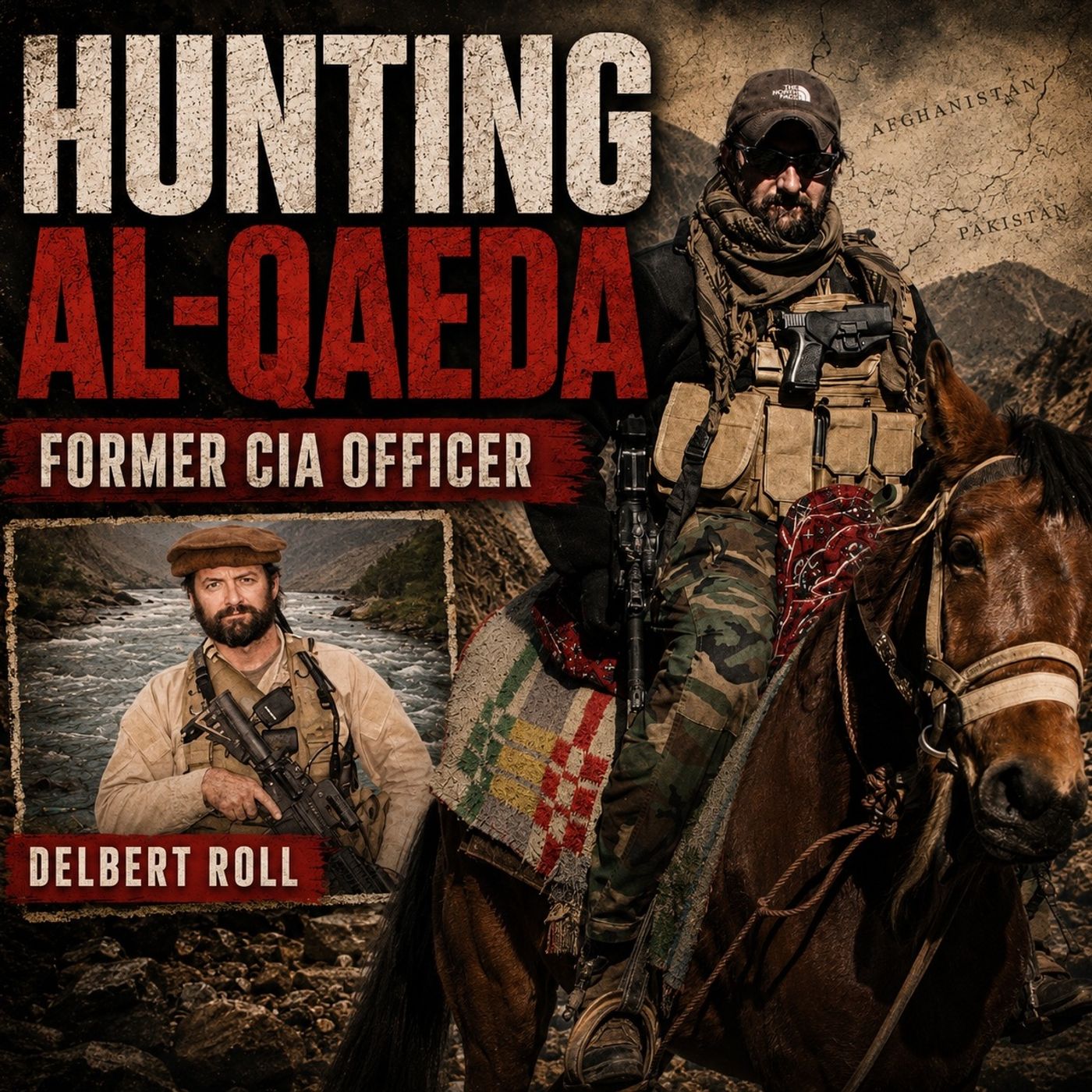
The Team House
Former CIA Officer Breaks Down Source Operations in Afghanistan | Delbert Roll
01:58:20
Former Army officer and CIA operations officer Delbert Roll joins us to discuss his path from Third Special Forces Group to the Agency, including joining CIA just before 9/11 and working counterterrorism operations in Afghanistan. He breaks down CIA...
Loading summary
Transcript226 lines
- [00:00]
Starbucks Narrator
What's up y'?
- [00:01]
Delbert Roll
All?
- [00:01]
Starbucks Narrator
Summer's got a different tempo. Everything's a little looser, brighter. One plan turns into another. You hear something, you stay a little longer. Next thing you know, you're somewhere you didn't plan to be. It's those in between moments. That's where the ideas hit. Conversations stretch out. Little memories sneak up on you. Sometimes it's just about what's in your hand. That color, that chill. The new Tropical Butterfly Refresher from Starbucks. Guava and passion fruit flavors with mango pineapple flavored pearl. Yeah, that feels like summer before you even taste it. Funny how one small stop becomes the best part of the day. Start your summer rhythm with Starbucks. Try the new Tropical Butterfly Refresher from Starbucks.
- [00:49]
Bretzky
What's up everybody? It's Bretzky and America is turning 250 and I can't think of a better way to celebrate that than playing on an American owned Supply Social Casino. Spinquest.com with all of your favorite games, live craps, bubble craps, live blackjack, there's no better place to play for free and win real cash prizes.
- [01:10]
Spinquest Announcer
Spinquest.com Spinquest is a free to play social casino void where prohibited. Visit spinquest.com for more details.
- [01:21]
Jack Murphy
Hey guys, I want to tell you tonight about my new novel, the Most Dangerous man coming out June 9th. I think like a lot of you, I read in high school the short story the Greatest Game, which is almost a century old at this point, but it's the classic premise of man hunting man for sport. This book is based off of that a little bit, but also on stories that I have heard over the years about safari guides that have actually taken hunting parties, wealthy people hunting poachers in West Africa. That idea kind of cooked off in my mind when I was asked to write a novel and get back into writing fiction again. And this book is about a ranger with the Ranger Reconnaissance Company who's on a mission in West Africa and gets kidnapped and hunted for sport by a group of wealthy tech billionaires. I had a lot of fun writing this book and I think you'll have a good time reading it. It's quick, fast and furious, fast paced action action novel and I hope you all check it out. It's up there. You can find it wherever books are sold. The hard copy, the hardback, the softcover, and also the Kindle ebook edition. We'll have some links down in the description for you. The book comes out June 9th and I hope you all let me know what you think of it.
- [02:44]
Delbert Roll
Foreign.
- [02:54]
Jack Murphy
Hey Folks, welcome to the team house. I'm Jack Murphy here with our guest tonight, Delbert Roll. Delbert served as a signals officer and an army infantry officer in 3rd Special Forces Group. He was a commo guy.
- [03:10]
Delbert Roll
He.
- [03:10]
Jack Murphy
And then he made the jump over to the CIA for a short period of time. He was an analyst and then transferred over and became an operations officer and had a whole 20 years career there doing a lot of CT work in places like Afghanistan, but also covert action, counterintelligence, countering weapons of mass destruction, and many other things that we'll get into in this interview. Del, thank you for joining us.
- [03:37]
Delbert Roll
My pleasure, man. Pleasure to be here.
- [03:40]
Jack Murphy
So, I mean, the, the first question I always ask folks is about their origin. If you tell us a little bit about like, where you grew up and, you know, what your upbringing was like.
- [03:49]
Delbert Roll
So, yeah, I was born in Pennsylvania, grew up on a small farm outside of a small town in rural Pennsylvania. Not so small, not so rural anymore, but yeah, grew up on a farm, pretty normal upbringing. Basically joined the army really as kind of a way to, you know, see the world, if you will. You know, a lot of my, my free time when I was a kid, I would be, was a voracious reader only because it really gave you the opportunity to see the rest of the world. So, yeah, joined the army, enlisted as a military police soldier initially while I was in the reserves in college, graduated from college, commissioned regular army infantry. Basically spent the next 11 years, 10, 11 years in the Army. Kind of got to that point where, you know, and, you know, because you were active Duty Army 10 year mark, is that point where you're like, well, what am I going to do, right? Am I going to stay Winnie, Am I going to do something different? At the time, I was married at the time and literally, you know, I was stationed in Fort Bragg. She lived in another state. We rarely saw each other just because you were gone all the time and you had a serious workload and wanted to do something different, wanted to still continue to serve the country. So initially I wanted to be an FBI agent, right? I was fascinated by the FBI, read lots of books on it, saw lots of movies, watched all TV shows, had been really interested in the work of John Douglas, who really, he was not the pioneer of profiling, but like one of, one of the early guys, found that fascinating and I probably had an unhealthy fascination with Dana Scully, but, you know, you get that. So I, I initially put in my packet to go to the FBI and for your, for your viewers back in the day before we had computers and we had to like type everything. You would get like, you had to type out literally this application form. And I remember getting, getting a copy and the recruiter saying, oh, here's five, take five, because you are going to screw this up. So go ahead, you type that out, you submit it, that's going fine. You start with some initial interviews, you go through some testing. It's moving along and it's, it's, it's, it's looking pretty good. And then one day I get a letter in the mail and it says, your file has been basically put on pause. Call your, your recruiter for more information. So I call my recruiter and the guy tells me, he goes, listen, there's a hiring freeze. So yes, your stuff is on pause. And I'm like, well, how long is that going to take? And he's like, well, it could be three months, could be three years, could be six months, could be six years. Knows. And ironically, I have served with enough FBI personnel since then to know that in the 1990s that was a constant thing. They would have just hiring freezes for no apparent reason. In any case, started looking at a couple other things. Marshal Service, dea, couple other things. It was around that time that a friend of a friend who had left the army to join the agency, I was put in contact with him and he kind of talked me, talked to me about it. He goes, so is this something you'd be interested in? And yes, he made that hand gesture, but it sounded like, sounded like a pretty cool thing. So again, went through the process of typing up my application, submitted that similar thing to what you, you've had other guests tell you about where you, you go to a hotel in Northern Virginia, then a bus shows up and takes you to a non descript location and you have a series of interviews and some tests. And I don't remember exactly when they gave me the poly, but they did give me the poly at some point anyway that goes well. And eventually you get this provisional letter of acceptance. Well, they're still doing your background check because they still got to give you a tssci. This goes on for like a year. And I'm coming down on the point where it's like, listen, I have already told the army that I intend to leave. I've, I've submitted the paperwork to resign my commission. What the heck's going on? And I remember calling the adjudicator and they're like, well, hold tight. More time goes by. I ended up talking to a friend My. My father's best friend from, like, growing up, who had been a Marine Corps lieutenant colonel who knew a couple people who got me in touch with somebody whose real name. I have no idea what it was, but I kind of walked him through. Hey, this is the situation we're in. I'm coming down the wire. And he's like, all right, hold tight. Let me make a couple phone calls. Literally three hours later, I get a call from the adjudicator. I explain the situation. It's like, listen, I cannot extend my resignation again. I need this knocked out. Right. And then like a week later, boom, it's done. So, yeah, then left Fort Bragg, went to Northern Virginia.
- [09:46]
Jack Murphy
Dell.
- [09:47]
Bretzky
Before.
- [09:47]
Jack Murphy
Before we jump into the agency training, I want to ask you a bit more about your time in the Signal Corps with third group. This is in the 1990s at this point, right?
- [09:57]
Delbert Roll
Yeah.
- [09:58]
Jack Murphy
And what was sort of the mission profile? Like, what was your job at that time?
- [10:04]
Delbert Roll
So my job as the combo guy was basically to do whatever the hell the battalion commander, XO and S3 told me know. But as far as, like, the mission profile, that was a weird time because. And some people may cringe when I say this, but at the same time, folks that were there will know this is true. It had essentially become kind of like the Peace Corps with guts. Right. Like, third Group is Africa facing. Right. And third Battalion is Sub Saharan Africa. We spent a lot of time doing a lot of food missions, right. So we did a lot of fit missions, but we also did a lot of de mining operations. So you'd send an ODA to a given country and they'd be working with contractors, but they would be leading the effort to de mine the area. Because Africa, especially back in the 90s, which is the 90s, was utterly littered with landmines. So that was a big. That was a big effort. I know it could be deeply, deeply rewarding, but at the same time, deeply frustrating. Sure. And what I mean by that is, Guy, an ODA would go down, right? And they set up the infrastructure for demining operation. And that might include, you know, building, you know, like the shack that you're going to store equipment in or fences or specifically radio type stuff. And this is where I would fit into this stuff is they go out and they set up a series of repeaters for the Motorola radios that they were going to be using with the locals who, you know, orchestrate and manage the de mining process. And then they would rotate home and they'd come back like a month later and all the repeater towers have been torn down, the wires have been stripped out. The wires are then fashioned into, you know, little elephants and helicopters and motorcycles. And they try and sell them back to the SF guys who, you know, spent like a month putting up this repeater network. But that was, that was an interesting, that was an interesting period of time because yeah, we had satellite communications at the time. Time, right. But that was really kind of space available and it was not a frequently available resource. So a lot of our guys, we were making regular communications between Bragg and say, Botswana, Zimbabwe, what have you, with HF radio shots. And it's a crazy thing because when you stop and you think about it, HF radio, it's that really long wave radio signal and making a shot from Fort Bragg, North Carolina all the way to say, the southern part of Africa, it takes skill. It takes skill. It takes technical acumen to make that sort of thing happen. And that was also back in the time of day where you had communications windows. You couldn't just call any time you had specific comm windows. And that was not merely just administrative purposes. It's also like the. How you're going to make that shot depending on the, the various elements of the stratosphere that are going to affect that signal wave. That factors into it as well. But yeah, really, really cool experience. And honestly, it's the sort of thing that I think helped me on, helped me later on down the road when you are. Because I think, you know, that's the reality is you take your cumulative experience and apply it to new things. So like when you're trying to figure out how do I make a good robust codecom plan for my asset? Right. So as you're well aware, when you're planning a comms plan for in special operations, it's based off at pace methodology. So primary, alternate, contingency, emergency. And we use the same planning methodology, you know, when we were planning similar, you know, comm strategies with assets, you know, you get your primary means, your alternate means, you've got contingency and emergency and kind of like a universal fallback. And that's designed so that regardless of what happens, you're going to be able to establish or re. Establish communication with that asset. So the last thing I would say it was interesting because at that point in time, you know, deployable computers were pretty nascent. I mean, we've had deployable computers like since World War II. But in terms of the modern era, I remember one day the, the S3 coming to me and saying, I want a paperless ISOFAC. And I'm like, okay, how the hell am I going to do that? And essentially. And this is. This was before WI fi, but we built a deployable local area network where you had, you know, laptops, computers spread out across the ISO fact. All of which were connected with. No, it wasn't fiber, but, you know, Cat 5 cable. Yeah, Cat 5. And, you know, we. We built a server. The funny thing was, I remember the boss saying, all right, make it happen. I'm like, well, how much money. How much money do we have for this? You know, like, what's the scope of this project? Because I'll find you some. Right? And I think we got like $2,000, something like that. It was like this.
- [15:58]
Jack Murphy
So you get to go down to Radio Shack and.
- [16:02]
Delbert Roll
Yeah, exactly. And we. Eventually we. We. We made it happen. We built like, you know, one of the first deployable local area networks. And. And that was. That was cool. That was a. You know, you felt like you accomplished something. And after that, I went on the 112 and Company Command there, and it was great. You know, they're all great Americans, but, you know, I just wanted to do something kind of different.
- [16:27]
Jack Murphy
What is that? What is the 1 12th? Is that like the predecessor to, like, the Joint Communications Unit?
- [16:34]
Delbert Roll
No, it's. It's a slightly different sort of thing. So it used to be, like, I want to say 30, 40 years ago that each Special Forces battalion had detachment, Right. So sometime in the early 1990s, the decision was made to ensure that, technologically speaking, that they were advancing and bringing the best, you know, to. To the fight. He was brought all together to establish the 112. So the joint Communications Unit that you're talking about down in Tampa, that is. That is a bit more of a strategic element, and it really exists to support, you know, the much more senior elements. Whereas 112 is. Is really a more tactical. Okay, tactical communications element. So basically, and when I think back to when I was there, the tech level of technology was, you know, comparatively what they have now, we're talking about cave paintings, really. I mean. I mean, it was. It was the best we had at the time, but it doesn't even begin to compare to what they do now. Right, right.
- [17:51]
Jack Murphy
And so you did your company command there, and that was when you started really planning to make that jump over to the agency.
- [17:59]
Delbert Roll
Yeah, yeah. And like I was saying, I went looked at the FBI, looked at the Marshal Service, looked at. Looked at a couple different things, but then really kind of got hooked by the Idea of going to work at the agency and, and I realize that's kind of vague and whatnot, but I will tell you that my career management has been a lot very similar to that feather in beginning of forest gum. There's never been really a plan, Jack. It would be easier to, you know, predict a trajectory of a pingpong ball being thrown down. Down a sewer system. Yeah, I just kind of, hey, this sounds awesome. So let's go do it. Yeah. So join the agency. Like I said, three weeks before the attacks, that was, that was a crazy day. The great irony of it was about a week before it happened, we were all sitting in the bullpen and somebody had made the comment that how easy it would be to hijack an aircraft taking off out of Reagan. You know, basically get into the, the cockpit and then just drive it into the White House or whatever, and nobody really thought anything about it. But a week later, I'm sitting at my desk and I'm. I'm going through basically a target deck, looking at collection, this plan for the next 72 hours, you know, kind of organizing my thoughts as to what I'm gonna have to do in the days ahead. And I get a phone call from my wife at the time, and she's like, did you hear what happened? I'm like, I don't know what. And you know, one of the. A plane instructor, World Trade center. And I'm like, that can't be right. So in the call, get up, walk out of the bullpen, down to the next bullpen where I know there's the tv. And I get there just as you see the second aircraft hitting the second tower. And in that moment you kind of know, well, the world just changed. We're going to war. We're already at war, you know, now what? So lots of confusion. And that day, that day was so maddeningly confusing because people were reporting all kinds of crazy stuff that they thought they. There was a report of a car bomb going off at State Department. There was a report of a D.C. helicopter that had gone missing and possibly been hijacked. None of which turned out to be true. Eventually the decisions made, we need to evacuate the agency. Right. So I'm in, working in analytical cell at this point. People are just running for the doors and I'm like, where are we supposed to go? Because we're at war and apparently the enemy's here. So I just kind of sat at my desk for a while and eventually a spoke security police officer comes through and he's like, sir, you can't stay. You gotta go home. And so I'm like, all right. So I'm walking down, you know, down downstairs at this point, like, the agency is like, abandoned. And it strikes me, it's like, there's gotta be something I can do. And I'm like, you know, we gave a bunch of Stinger missiles to the Mujahedeen, like, a little over a decade ago. I wonder if we have any leftover, right? And so I go to find the closest foe in the security office, and I'm like, hey, you know, I just got out of the Army. You know, technically I'm still in the army. If you got any singers lying around, as one does, I can man fight a wall hanger. Yeah. And, and of course, the, the guy looks at me like, you're, you're a sad little man and you need to leave. So I was told no, and I was told to get the hell out of the building. So.
- [22:01]
Jack Murphy
Dell, that reminds me of, well, a couple stories, you know. Did you ever cross paths with Justin Sapp?
- [22:09]
Delbert Roll
I know of him. I don't know him.
- [22:12]
Jack Murphy
I, I, as I recall, he was at, I may be misremembering, but I'm pretty sure he was at Key west at the dive school. And they call all the students out to pull like, security duty after the attacks happen. And they're all kind of wondering, like, what are we guarding against here? Scuba Bin Laden, what's this about? Or another story was, and it wasn't after, immediately after the attacks. It was, I think, the first State of the Union address after 9 11. And Bill Gage, Secret Service agent, was doing security planning for it and goes up on the rooftop of one of the buildings there in D.C. and, and there was like a Marine unit or something with Stinger missiles up there. And they had been instructed to shoot down commercial airliners that are like coming down on, on the Capitol. And he was like, who gave you orders to do this? Like, who authorized this? And it was just some unit that just decided on their own, like, contingency
- [23:07]
Delbert Roll
planning, bravely showing initiative.
- [23:10]
Jack Murphy
But I guess for like, the listeners just point out, like, this was such a super chaotic time for some of the younger folks out there who maybe don't understand what it was like in the immediate aftermath.
- [23:21]
Delbert Roll
It was super chaotic because there was no clarity of what exactly was going on. There was lots of people who were trying to do the right thing, report what they were seeing. You know, people were confused and freaked out. And at the same time, you know, you've got recently separated from the army knuckleheads who are like, I want to do something, I don't want to abandon my position. So yeah, all kinds of, all kinds of confusion. Absolutely nuts.
- [23:49]
Jack Murphy
What happened next for you? I mean, what was, what was the next day like at work?
- [23:54]
Starbucks Narrator
A lot of people put off buying a new mattress because it feels like a hassle. Too many options, too many claims and no real way to tell what's actually going to hold up. Ghostbed makes that decision easier. Ghostbed is a family run company with more than 20 years of mattress making experience backed by deep manufacturing expertise. Their approach is straightforward focus on quality materials, smart construction and a consistency over time. Not flashy features or complicated sales tactics. Every Ghostbed mattress is built for long term comfort, using durable foam and proven cooling technology to help regulate temperature while you sleep. It's designed to feel reliable night after night, not just when it's brand new. And if you're not sure which mattress is right for you, Ghostbed's online mattress quiz helps narrow it down quickly. Whether you're a side sleeper who needs a little plushness or someone who prefers a firmer feel, the quiz matches you with the right option based on how you actually sleep. They also keep pricing grounded. Ghostbed mattresses cost up to 50% less in comparable brands. You can rest easy knowing you're not. You're getting one of the best values at this quality level. Every mattress comes with a 101 night sleep trial, an industry leading warranty and fast free shipping. And as a teamhouse listener, you can get an extra 10% off your order. Just go to ghostbed.com house and use the promo code HOUSE at checkout. That's ghostbed.com house codehouse for an additional 10% off site wide. Okay, upgrade your sleep with Ghostbed, makers of the coolest beds in the world. Some exclusions apply. See cipher details. Thank you Ghostbed for sponsoring the show. Thank you guys for helping support the show. Bye
- [25:34]
Jack Murphy
guys. If your lady or your fella or that person that sends you an eggplant emoji at 2am is ready for better sex, then you should be too. That's where Bluechew comes in. They have been on a mission for years to help get you bricked up, build your confidence and help you actually perform in the bedroom. Their new arousal boosting formula, Bluechew Gold is helping millions of men have better sex in 2026. While most ED meds focus only on blood flow, Bluechew Gold goes further by combining two ingredients for blood flow with two ingredients for mental arousal and connection. So you're not just physically ready, you're actually in the mood. This type of innovation is why bluechew Gold is the number one brand in erectile function. Don't let your mind get in the way of a good time. Discover your options@bluechew.com and we've got a special deal for our listeners right now. When you buy two months of BlueChew Gold, you get a third for free with the promo code Housecall. That's promo code Housecall. Visit BlueChew.com for more details and important safety information. And we thank BlueChew for sponsoring this podcast.
- [26:48]
Ryan Seacrest
Hey, it's Ryan Seacrest for Albertsons and Safeway for you. Safe days are here now through June 23rd. Find hot deals throughout the store and earn four times the points. Look for in store tags to earn on eligible items from Chobani, Vitamin Water, Jelly Belly, Nutella, Haagen, Dazs, Nestle and Altshine. Then clip the offer in the app for automatic event long savings. Stack up those rewards to save even more. Enjoy savings on top of savings when you shop in store or online for easy pickup or delivery, restrictions apply. See the website for full terms and conditions.
- [27:20]
LifeLock Announcer
Lots of places can accidentally expose you to identity theft. Doctor's offices, online retailers, insurance companies, the list goes on. Thankfully, LifeLock monitors hundreds of millions of data points a second for threats to your identity, which is way more than anyone can do on their own. LifeLock keeps an eye on your personal information, credit applications, finances and more. And if they find anything suspicious, like new loans or changes to your financial accounts, they alert you right away, all through text, phone, email or the lifelong LifeLock app. Even better, alerts are automatically activated the moment you become a Lifelock member. No extra work on your part. Get the alerts that could make all the difference. Don't wait. Join LifeLock now. Visit LifeLock.com iHeart and save up to 30% your first year. That's LifeLock.com iHeart for 30% off. Terms apply.
- [28:20]
Bluff
Forget whatever plans you have this weekend because you're staying at home and playing on Spin Quests. And there's never been a better time to sign up than right now. New users get $30 coin packs for just $10, all the table games you love, with hundreds of slot games and real cash Prizes. That's at spinquest.com S P I N
- [28:40]
Spinquest Announcer
Q U-E S-T.com Spinquest is a free to play social casino void where prohibited. Visit sports benquest.com for more details.
- [28:51]
Delbert Roll
You know, the weird thing was I got back, like, the next day, right? And it was like, stunned silence. You know, if you were in this, if you were in the counterterrorism center, you know, they never left. They just worked all night long, right? Everyone else was kind of like, what can we do? How can we help? Over the weeks that would come, like, literally everything started shifting to counterterrorism, right? Literally everything. That is. That is something that the Agency gets criticized about, that over the course of the 20 years war, we basically focused way too much on CT. I don't agree with that. I also don't disagree with it. I think it's like, yeah, we did, but that's what we were told to do.
- [29:44]
Jack Murphy
You had to prioritize with limited resources, too.
- [29:48]
Delbert Roll
Oh, for sure. And at some point, we can talk about, like, limited resources of the Agency and why that kind of makes us a pain in the butt to everyone. But. But, like, literally, you know, I was being asked to look at imagery for various islands in the Philippines, just like, looking for any evidence of, you know, strange or anomalous activity, you know, And I was supposed to be focused on the WMD program of a specific country, and it wasn't the Philippines. But, yeah, there was a constant shift. But the. The other thing I would say is, you know, if you were in the agency in the 60s, 70s and 80s, and you didn't work against the Soviet target at all, I would ask, well, what were you doing? Because that was the primary, you know, issue. Now, that's not to say that you're not going to work against other stuff as well, and those things kind of fed into it. But, yeah, that was the primary threat of the day, whereas counterterrorism was the primary threat of the 20 years that I was there. And, yeah, you always hope somebody was thinking about Russia and China and everything else, but, yeah, argumentally, that was. That was the case. But getting back to your original question, what was it like? It was a lot of stunned silence. You know, people were just kind of like, what the heck just happened? It was. Honestly, it was kind of like the day after Bin Laden was killed, right? You know, you basically got up, walked around in your underwear not knowing what the hell you were going to do for the rest of your career because, like, all of a sudden, Bin Laden's dead. But I remember going to my supervisor and just being blunt. I want an immediate transfer of the Director of Operations and start training. And he was like, yeah, it's good to want things, good to have aspirations. My Friend. Because when you join, you have a contract, right? So they made me do a year as an analyst.
- [31:48]
Jack Murphy
Why did you sign up as an analyst rather than going to ops?
- [31:52]
Delbert Roll
Didn't I tell you before that my professional plan was always like a feather floating around in the air?
- [31:58]
Jack Murphy
Correct.
- [31:59]
Delbert Roll
Honestly, it just didn't occur to me. But I think, but honestly, if I go back and I think about it, the reason why I left the military was I wanted to have a family. I wanted to put down roots, wanted to have kids. I did eventually. You know, I'm a father of two sons, both of which were in college. One just finished his plebe year at West Point. He's currently out in the field learning, you know, patrolling, loving it. But yeah, that was, that was kind of why I was like, I want to contribute, but I want to do something where I can have a family. But then the war happens and you're
- [32:38]
Jack Murphy
like, there goes that idea.
- [32:40]
Delbert Roll
Yeah, yeah. I mean, it's like, you know, kind of going back to the movie Patton. You really want to tell, you know, your grandkids that you were shoveling in Louisiana when we were at war, you know. No. So. But eventually did my time as an analyst made it over, started going through the pipeline that, that took about a year because you, you have some initial training in the Northern Virginia area and then you go down to the, the schoolhouse and that's, you know, six months of, of high intensity. It's funny, sometimes people call it, you know, it's Ranger school for your brain because it just doesn't stop. But I think I had an advantage in that. I was a little bit older. I was in my early to mid-30s at the time. And I say that was an advantage because most of the folks who had a little bit more life experience, right, they knew they had a job to do, right? It's like, okay, you know, I'm going to do whatever training during the day and then at night you usually go back to your, your homeroom and you're writing reports, right? You're from your notional exercise related, you know, clandestine meetings and intelligence you've acquired and all this stuff. Well, us older guys would go in, we'd sit down, we'd write our reports, submit them and head back to the barracks by like 9 o', clock, right? Whereas the younger folks who were just out of college with jibber jabber, chit chat and they would be up till like midnight or later and doing that every once in a while is fine, but you need to understand you're going to do this day after day after day after day for months and months.
- [34:28]
Jack Murphy
Yeah, Being. Being a soldier taught you that?
- [34:31]
Delbert Roll
Oh, yeah, for sure, for sure. And the funny thing is, like, years later, when I came back and I was in instructor, you see the same exact stuff. You're like, watching these, like, youthful young people who are in their, you know, mid-20s, just out of college, and over a period of a couple weeks, you see them just get beat the hell down because they're getting, like, no sleep trying to write. And that's another thing is don't let perfect be the enemy of good. Right? Because I would see colleagues when I was a student, but then also see students was when I was an instructor who would stay up insanely late to try and write the perfect missive, the perfect intelligence report. And you're like, listen, you're going to run yourself into the ground and you might physically harm yourself or others if that happened. You know, you've gotta, like, provide the raw intelligence in your operational cable and get the hell to bed. That's what you need to do, because you're going to do this tomorrow and the day after that and the day after that. So that's why it sometimes gets called reader school for your brain, just because it just doesn't freaking end. But, you know, the, the one thing I'll tell you about the farm experience, and you are going to make friends that are going to be your friends for the rest of your life. Right. Ironically, Alana. Alana and I went through the same farm course together. Bunch of other cats. Brian Hoke, who is like, dear friend, one of my best friends, he was in the class with us as well as a bunch of other folks. Ironically, Brian was killed in action almost 10 years ago this fall, and several of us got together on Memorial Day or the day before Memorial Day to go see him in Arlington. So, you know, it's just really, really tight bonding experience and just some great people. So, yeah, went through the farm, then I got mowed for a year, did that, came back, and then started into a series of overseas gigs. I ended up going to Afghanistan a couple times, then through a language program, got to go to a, A, a nice clean European assignment, you know, where you can drink the water. Water out of the tap, which was, which was awesome. Did some good work there, Came back and then went on to do a time stint in the, in the schoolhouse and then on to another overseas war zone tour and then went on to my final gig, which was running that, that kind of a. It was not the Farm. It was a training platform for the, for the whole, the intelligence community. And basically I went that route to do that simply because by that point in time the marriage had failed. I had ended up with primary custody of my sons. And you know, I promised them, hey, I'm not going to move you around. Yeah. And eventually retired again because, you know, my son was like, dad, I wanna, I wanna graduate from high school here. And I'm like, okay,
- [38:19]
Jack Murphy
so tell us about that first overseas assignment, which sounds like it was Afghanistan.
- [38:25]
Delbert Roll
Yeah, yeah, it was, it was a crazy, was a crazy thing, right? So you, you fly over there in this contracted aircraft. You get there, you spend like a day or two at station learning what's what, getting some in briefs, getting right onto a couple things. And I will note that Talibar was a real thing. It was real, not there anymore obviously. And then you fly out on an Mi17, you, the middle of the night to your, your forward operating base where you're going to be and you get there, middle of the night, you're tired as hell, you go in, you meet the chief, he tells you to go to bed and you, you get on it the next day. But it was really, and I think this is going to be the case for anyone, any type of assignment is the most really awesome, crazy, robust experiences you're going to have is to be on your first store because you're fresh off the farm. It's time for you to earn your stripes and get after it. And that would be, that would be the same whether or not you were in a war zone, in a semi permissive environment or permissive environment, doesn't matter. The expectation is once you get there on the ground that you immediately take your training and experience, start applying it and spotting, assessing, recruiting, developing and handling sources. That one I want to say within, within a couple weeks I ended up taking, it was kind of a, an overnight trip if you will. Actually it was like a week long deployment up deep up in the Hindu Kush. That was pretty crazy. Great experience launched up there with some military folks as well as some of our indigenous personnel. Really an amazing experience. Within about a month and a half though, it was probably one of the more, what's the word I'm looking for one of, one of the biggest operations of my career. You know that you directly run yourself, right? Because you're going to do, can, you're going to continually to do bigger things and things you are going to have more responsibility for. But you know, it's during that first tour when you, you Run an operation. And it's like, no, you are the man. You are the one doing this. Make it happen. I was having a regular scheduled meeting with a, a source that I just picked up that had been turned over to me from another officer and good individual, well vetted, well meaning, really like working with us. Well, one day we're having a, wrapping a meeting and it's getting towards the end of the meeting and I want to say this is like mid to late December time frame. And he says to me, he goes, it's the end of the meeting. And I'm like, you got anything else, man? Is there anything else you want to tell me about? And for context, I had before the meeting, reached out to one of the targeters that was supposed to supporting our operations at that specific base. And it was, it was ironically Elizabeth Hansen, who was later killed in coast in 2009. And she tipped me on a couple things that were coming up. Like there were some Pakistan military activity that was planned in a given region and essentially, you know, kind of focused on, you know, taskings and requirements for the individual based off of that. Because what we were expecting was if there was military action, that there would be kind of a reflexive movement of hu and Taliban personnel. So the meeting goes well, given tasking. And as we're wrapping up, I asked him, hey, do you got anything else, anything else you want to mention? And he goes, yes sir. Do you know these two people? And he pulls out of his pocket these two paper photographs that he cut out of the newspaper of two individuals and he lays them on the desk and I'm like, yeah, I know who they are. Do you know who they are? And he goes, I don't know who they are, but they have been in my village before. So without getting into specific details, one was a mid level Al Qaeda individual and one was a very senior, very senior Al Qaeda individual. And don't really want to get into specifically whom, but you get the picture. So this individual, this kid, the source really had no idea who these folks were. And I'm like, I get it. And, and one might ask the questions like, how could you not know who this person is? It's like, hey, you know, we live, we live in a world where, you know, not always, not always does everybody know what's going on? So in any case, take the information right off the report of historical travel to this, this general area, but put it in, everything's fine. What's Ramadan? Right? And at the end of Ramadan, there's Eid which is kind of a celebratory period where essentially, you know, people are celebrating the end of the fasting period of Ramadan. And I get a phone call from him and it's late in the evening. And he said, you remember those. That individual that I showed you the picture of? I go, yeah. He goes, he's. I don't remember if he was here or if he was coming here. I want to say that he was there, okay? That he was there in the village. And I'm like, really? Huh? Go figure. This basically kicks off like I want to say, the longest four days of my life, really. For the next four days, we're running constant operations, connecting with him via a technical means, commercial technical means, leave it at that. Getting reports as to what's going on. So who the individual? You know, we'll keep that discreet for the time being. But you know, basically National Command Authority is eventually notified, probably within about 12 hours. You've got various elements of the military that are requesting RFIs.
- [45:18]
Jack Murphy
Point out for folks, National Command authorities is the President and the Secretary of Defense.
- [45:26]
Delbert Roll
Yes, sorry about that. And our request for information or intelligence, depending on who's asking the question. But, you know, we start just this constant cadence of communicating with him, providing with taskings, taking his reporting, and we're getting really good stuff. We're identifying who are the key individuals that are visiting the village in question, what compounds they're in, you know, really solid stuff and kind of building the targeting package that this individual of high interest is in this village. We don't know how long he's going to be in the village, but you can assume that he will probably be leaving after this religious period is over with. So, you know, like when I say it's the longest four days of my life, I mean it was because I would just be at my desk typing reports, taking phone calls from the agent, doing all this stuff. One of the, at one point we, we got to this, this challenge of he would report that so and so was in such and such a compound within this village. And the challenge there was, well, that's not really helpful. What we're looking for is, you know, 10 digit grid coordinates, right? So at one point we contemplated how could we get him a gps. And we looked at a couple different options to include having one of our indigenous paramilitary types infiltrate in the Pakistan to handoff the the device. But that had all kinds of risk associated with it. But what we eventually remembered was that we had a high resolution plotter printout of overhead imagery of that Village, right? And so a plotter is just a really big printer. So you're talking like a sheet of imagery that's like 3ft by 6ft, what have you. Now the thing about imagery taken from a satellite is that is menstruated at an even greater degree of accuracy than a 10 digit record, right? So if you can identify what specific compound, then they have all of the targeting information they need in terms of like where it is on the, on the planet Earth. So we went through basically a process, process of, and this took hours of basically doing a verbal map trapping, map tracking exercise with him over, over the phone. Like, you know, I would ask him things like, okay, if you're in this compound and you're looking north and you're right outside of it and you're looking north, what do you see? And he's like, I, I don't know what this north is you speak of, of. And that would be, you know, something that would come up more often, you know, or frequently throughout time in Afghanistan, was that certain concepts that are elementary to you and me don't necessarily translate. It's not part of their work.
- [48:36]
Jack Murphy
I was going to say Dell, like, you know, a lot of people don't understand, like if you had taken that guy and had him in your office and were showing him that, you know, classified high resolution imagery, say, here's your village, show us what building it is. He would not recognize it or even know what the hell he's looking at because he's never in his life seen an overhead representation of his village and probably not any other village either.
- [49:02]
Delbert Roll
Yep, yep. No, it's totally true because like they've never been in airplanes, right? They just don't have that visual understanding of looking at the world, world in a two dimensional concept. And, and the other reality is there's certain things that you and I take for granted that people in the developing world, like, they don't, it's outside of their scope of exposure. At one point I was, and this is completely, we'll get back to this story, but completely different operation at a walk in, come in and we were debriefing them in Afghanistan, especially in the Hindu Kush area, you know, you get quakes all the time. Just happens all the time. So we're sitting in this cargo container debriefing him. We have a minor quake, right? And guy's eyes just get like plates. Ah, come on, man. This happens all the time. He goes, why does that happen? And you know, he asked me through the translator and I go, Back without even thinking of who, who I'm talking to. I start to explain plate tectonics theory and how the Hindu Kush, because it's part of the, you know. Yeah, you get the idea. I'm just like, it just rolls off my.
- [50:18]
Jack Murphy
You should have just said Allah wills it. Leave it right there.
- [50:21]
Delbert Roll
Well, the funny thing was my, my, my interpreter like, looks at me like, I will try and interpret what you just said. And he tries. And then the source looks at him like there's something growing out of my head and comes back to me, he goes, so that doesn't make any sense. I'm like, I'll wilt it. And, and then he's like, oh yes. And you know, the crazy thing is these are, they're not dumb people.
- [50:52]
Jack Murphy
No, they're not.
- [50:53]
Delbert Roll
No, they're very intelligent. But when you don't have access. Yeah, certain things it's like, you know, it's, it's just outside.
- [51:03]
Jack Murphy
Yeah, they're, they're, they're uneducated, but at the same time they have this tremendous local experience and like, as far as, like, like them doing ad hoc repairs to a Toyota Hilux, like they can do things to those vehicles you didn't think was possible.
- [51:19]
Delbert Roll
Oh yeah, no, absolutely. And they can literally make a broken down vehicle operate full, fully operational with like bubblegum 550 cord and. Right. And you, you and me, that a, that ain't happening. That, that dead Hilux is just going to sit there. But they're amazing, beautiful, wonderful people. I remember on my first tour, some of the locals got together and made me a birthday cake. You know, and birthdays are really not a big thing there, honestly. Yeah, that's why everybody's birthday is the 1st of January any given year. And the birthday cake was, it was like really a really big scone. It had the density of a tile off the space shuttle. Like you could strap your feet re. Enter the earth's atmosphere. But you know, that was, the point was they're just beautiful people and they recognize that. Yeah, they're just wonderful. But getting back to the original story, so we, we were able to basically identify key compounds where, you know, the target is, entourage, where people were located. This is being reported up to the national Command Authority. Eventually the decision's made. Big strike. And at the end of it, he wasn't there.
- [52:46]
Jack Murphy
Air strike or a ground airstrike or
- [52:49]
Delbert Roll
a ground raid airstrike, because it was cross border. There was.
- [52:54]
Jack Murphy
Oh, gotcha.
- [52:54]
Delbert Roll
There was some debate of sending in a tier one element to Go across the border. There was some discussion of it, but that was the point where they were asking. They were requesting information that there was just no way my guy could possibly. Right, right, right. You know, things like, well, you know, disposition of, you know, weapon systems, caliber weapon systems, frequencies that the. The enemy QRF might be using. And I totally understand as a former soldier that you want that kind of intelligence, but there's no way in hell I'm going to ask him to go get that because he will utterly be fingered and he'll be dead. And it won't just be him, it'll be his family, too, which is something that, you know, I'm glad we're talking about it, because it's something a lot of times gets missed is besides collecting intelligence for the good of the nation, job one of an operations officer is the safety and security of that asset, their asset, their family. We take it very, very seriously. So, yeah, there was just like. I'm not. I'm not gonna ask him that. So there you have it. But at the end of the day, when the strike occurred, it was unclear where he had gone, but I think in the aftermath, he was either either departed like an hour before or earlier that day.
- [54:26]
Jack Murphy
This is like HVT number two or
- [54:28]
Delbert Roll
three, something like that. Yeah, A senior. A senior target. Right. But there was a couple things here that I, I personally don't doubt. The individual in question was there for a couple of reasons, because there's never been any definitive reporting that said he was somewhere else at that day in that time. Right. So, you know, that's one of those things that an absence of evidence is not evident in and of itself. So there you go. The other thing was, about six years later, I was in another location again overseas, and there was a newspaper report about how Pakistan military moved into a certain area, certain village. They'd seized it, rested, arrested control of it from Al Qaeda and Taliban, push those folks out. And part of it was they discovered this kind of a cave complex in the mountain above the village. And they start describing the cave complex, and they showed some. Some sketches of it. And I'm reading this, and this is years later, and I'm like, God, this looks so familiar. Like, why does this feel so familiar? And then eventually I remember that one of. I had written a report based off a. Reporting from that asset about that compound, how it was laid out, where approximately was, how many people could be fit in it. And the point here is that his reporting and what was eventually an open source kind of married up. So Even though that high value individual was not at the time, target at the time of the attack, no one's ever been able to say that it was somewhere else. And everything else that the source provided was, was spot on, authenticated and authoritative. So. So yeah, that was probably one of the bigger, bigger operations I got to do. Did some other good stuff that year for a while, was working closely with JSOC elements and our, basically our indigenous troops to basically shut down rat lines that were moving troops out of Pakistan into Afghanistan. So I would basically work with my guys who develop source networks that could articulate everything we needed to know about the facilitator who was moving troops in and out. Eventually set up a targeting package for the facilitators compound. And then when we go move on it, I would go with the paramilitary force basically to manage and handle that source because we wanted to get him eyes on hours before the actual hit. And then I would take control of them when, you know, once the blocking force was in place, the assault force was moving in. Because after we got the guy our source needed to positively identify as like, yes, this is him. And we would, we basically put the source in, you know, fatigues, balaclav over his head to obscure who he was. And that was a pretty, pretty productive effort. But the thing was you, you go, you hit a target, you remove the facilitator, you shut down the rat line for a week, and then another facilitator moves in and the whole thing starts over again. And we did that a few times that summer and. But yeah, that was the, that was the first door. And then ended up coming back. Well, I went home for a period of time because my second son was being born. So I want to be around a little bit for that. Went back out again then as a deputy chief of base. That was a, that was a good year, but not as, not as exciting because by that point movement was being far more restricted. Like for example, during my first tour. And the first tour was just bed, not bedlam in a bad way, but you just have to do so much right. During the first tour, 10th Mountain went into the Pesh river valley and basically seize control of it. Re establish a number of bases in the area. And we were able to go out with 10th Mountain. We couldn't go out on the infill. We had to wait like 24 hours till things calmed down. But yeah, we went in and spent two weeks on the ground with 10th Mountain. An amazing experience. I remember working closely with Lt. Col. Cavelli. Great guy. So we insert on this mountaintop Abaskar and meet with him. He's like, okay, here's the patrol base. Move there and you know, be safe. So looking at the map and it's like a one mile straight line distance on the map. I'm like, okay, it's an hour long movement, no big deal. It took four hours. And of those four hours, it was three hours of sliding down the side of the mountain such that when I finally did get to the patrol base, I was exposed from like my right ankle all the way up to my right hip. BDUs were totally shredded. Yeah, it was awesome. It was awesome. But. But then, yeah, on later tour when I went back as a deputy chief of base, you know, not as exciting, movement, much more restricted, you know, and more, you know, management role. So you're not doing as I was.
- [60:23]
Jack Murphy
I was gonna ask Dell, what's it like supporting a conventional army infantry unit as a CIA officer? Like, this is a far, a far cry from doing brush passes and Bucharest or something like, I mean this is a whole different sort of thing. And it's something that for. Except for maybe some of the sad guys that were active in Central America. It's kind of a new thing for the CIA, isn't it?
- [60:48]
Delbert Roll
Absolutely. And it's challenging because for a couple of reasons, like US conventional US military was in Afghanistan to essentially conduct counterinsurgency against the Taliban. Right, Right. That's their job. We're there to be running cross border operations into Pakistan to find, fix and facilitate the finish of Al Qaeda senior leadership. Right. So our job, our mandate, our authorities and what we've been told to do is run cross border operations, not conducting intelligence collection inside of Afghanistan. Now that being said, if we, if we run into it, great, we will share it immediately. And that, and that was the normal process. Like whenever I got any intel that you know, could be of use to them, I shared it with them immediately. Right. We didn't even, you know, get to the point of. Well, it depended if it was something that could wait a day for it to be pushed up to states and informally published and released. We wait. But if it was like short orders, you know, this is going to happen in the next 12 hours, then I would like take my notes, go find Colonel Cavelli or. God, I'm blanking on some of the other guys I work with. But you would go straight to them, tell them, hey, this is what I got. This is who I got it from. This is what we assess the credibility of it to be, you know, so you constantly share that thing. But that was also by 2005, 2006, really when I was a deputy, 2007. I will also say that we learned as an organization over time. Like Sean Wishwezer, I know you interviewed him a couple weeks ago. Sean's a good friend. He had served in a chief of base position earlier on in the war. And he will also tell you that he was hesitant to share information until basically there was a meeting of a mind, meeting of the minds between him and the ODA team leader and warrant to kind of like they had a robust discussion. I'll leave it at that because it's his story, not mine. But at least for us, I could totally understand there was a hesitancy to share information. But also being a former army officer, I also know that these guys need this stuff. Right. The challenge really became, and I think most of military leadership understood it's like, listen, I'm here for this mission, you're here for this mission, right? This is all in the greater good of national security. But yeah, there were, there are, it's always going to be individuals and a lot of times it comes in a personality that yeah, yeah, why don't we share this? You know, because this is secret stuff like yeah, we're all on the same team, man. So.
- [63:56]
Jack Murphy
And in between these tours you got to do some language training also.
- [64:00]
Delbert Roll
I did, I did go through a language program. I will tell you that. It was friggin intense. It was as, as intense as going through the Farm because that is your day job, right? Eight hours a day in language training. Plus there's an expectation you're going to do five hours worth of study, you know, in addition to that. And the expectation is for the language. I had, I had to learn it in nine months. Right? And that's like from zero to at least level three for you to go out there.
- [64:41]
Jack Murphy
What was the language?
- [64:43]
Delbert Roll
Oh, it was Spanish.
- [64:47]
Jack Murphy
Come on. They gave you an easy one.
- [64:49]
Delbert Roll
They did, they did. And you know, yeah, I probably should have said that. But anyway, not, not that important. You know what I feel bad for was like, you know, my friend Brian, he had Greek, right? Because he was going to, to Athens. And what I remember him telling me about Greek was There were any 18 different forms of conjugation for verbs. And I'm like, brother, how in the hell do you do that? But then like you, you have folks who go through, learn Russian, learn Chinese, it's like that's usually like two years, something like that.
- [65:27]
Jack Murphy
Yeah. Chinese or Mandarin has something like nine different intonations or something like that.
- [65:33]
Delbert Roll
Yeah, yeah. But even, even so, like, all right, I am not going to try and tell you that Spanish is as hard as, say, you know, Chinese. Obviously it's not.
- [65:46]
Jack Murphy
Right, but why the hell are they having you learn Spanish when they're deploying you to Afghanistan?
- [65:52]
Delbert Roll
Well, this was after my Afghan tours, right. So this was. I was going to a place where they spoke that.
- [65:59]
Jack Murphy
Okay, okay, gotcha.
- [66:02]
Delbert Roll
But, you know, for other things, like, like Urdu, Pashtu, that sort of thing. Did they send people through those training courses? Yeah, they did, but they didn't really push it as a priority because, let's face it, where are you going to use Pasto? Yeah, you're going to use it, you know, this reality, and you end up picking up, like, a little bit of the language while you're there. So it would be the equivalent of, like, kitchen posture, kitchen Urdu, where you know, very, very basic stuff where you could, like, ask them, hey, how are you doing? How's your family? Isn't the weather nice today? You know, that sort of thing. But not a, you know, high level, not a high level at all. But, you know, honestly, do you really want to spend the Next, the next 20 years of your career in Afghanistan? No.
- [66:53]
Jack Murphy
So that the next, the next tour was somewhere a little bit more inhabitable.
- [66:58]
Delbert Roll
Yeah. And honestly, the nicest assignment of my entire professional career. Like, I, I had done a tour in South Korea when I was in the army in the mid-90s, and South Korea is nice, but back in the.
- [67:13]
Ryan Seacrest
Hey, it's Ryan Seacrest for Albertsons and Safeway for you. Save days are here now through June 23rd. Find hot deals throughout the store and earn four times the points. Look for in store tags to earn on eligible items from angelsoft, Silk, All Spam, Hormel, Planters, and Canada Dry. Then clip the offer in the app for automatic event long savings. Stack up those rewards to save even more. Enjoy savings on top of savings. When you shop in store or online for easy pickup or delivery, restrictions apply. See the website for full terms and conditions.
- [67:45]
LifeLock Announcer
Lots of places can accidentally expose you to identity theft. Doctor's offices, online retailers, insurance companies, the list goes on. Thankfully, Lifelock monitors hundreds of millions of data points a second for threats to your identity, which is way more than anyone can do on their own. Lifelock keeps an eye on your personal information, credit applications, finances, and more. And if they find anything suspicious, like new loans or changes to your financial accounts, they alert you right away, all through text, phone, email, or the LifeLock app. Even better, alerts are automatically activated the moment you become a Lifelock member. No extra work on your part. Get the alerts that could make all the difference. Don't wait. Join LifeLock now. Visit lifelock.com iheart and save up to 30% your first year. That's lifelock.com iheart for 30% off. Terms apply.
- [68:45]
Bluff
Forget whatever plans you have this weekend because you're staying at home and playing on spinquest. And there's never been a better time to sign up than right now. New users get $30 coin packs for just $10. All the table games you love with hundreds of slot games and real cash Prizes. That's@Spinquest.com S P I N Q U
- [69:05]
Spinquest Announcer
E S T Spin Quest is a free to play social casino void where prohibited. Visit spinquest.com for more details.
- [69:15]
Delbert Roll
Mid-90s, the pollution was insane. Like every time you go out and go for a run, it was like smoking an entire pack of cigarettes. It was just, it was crazy. I hear it's much nicer now. But yeah, it was a European posting. Very nice. Um, and it was a good change for the family. Still working various, you know, challenging and interesting target sets. So that was a great experience. And then after that, went down to, went down to the farm to, to be an instructor. So that was, that was pretty cool.
- [69:56]
Jack Murphy
So they wanted you to get like a traditional case officer tour.
- [70:01]
Delbert Roll
Yeah. And, and the beauty of it is so, you know, first tour, you know, a line officer, just doing the job. Second tour, deputy base in a war zone. Third tour, go back to being more of a, more of a line officer. But at the same time you're, you know, a referent for this and you were a referent for that. But it's great because then it gives you the opportunity to do things like brush passes and signals and signal sites and stuff like that. So, you know, at the same time you're working unilateral activities, you're also working with liaison. So it's, it's, it's a, it's a good rounding experience. Right, because you don't want individuals to be nothing but war zone type stuff. That's not good for them. It's not good for their career. And even paramilitary operations officers, at certain points in their career, they're going to be pulled out of the cycle of going and doing paramilitary stuff and be sent to a traditional tour so they can get that exposure. You know, that's, that's one of those. And you know, I am not a paramilitary operations officer. However, Many of them are very, very good. Not simply at the paramilitary stuff, but the operational. The traditional operational stuff is. Well, so. But, yeah, that's very normal. But then of course, you get promoted to a point where it's like, all right, now they're making you management, so then you're managing like a, you know, a global covert action program from hq. I tried to approach it from the perspective of, yeah, I'm hq, but I'm gonna go out and try and visit every platform at least once if I can. Did I get to all of them? No, I didn't get to every one of them. But we try to go out and sometimes it would be just like a site survey check on things. Sometimes it was to deliver, you know, some variant of training. So. And the beauty of that was you're, you're, you. If you do and you're giving them a training course, you get to spend several days with them one on one. You actually get to see who they are, how well they perform. So did that for a couple years.
- [72:26]
Jack Murphy
This is like a liaison type operations.
- [72:30]
Delbert Roll
Yeah, yeah, absolutely. And, and here's what I would say, without going into details that I can get into. It's really the sort of thing that I think the American people would expect. Right, so what do I mean by that? There's going to be certain targets, certain issues that we can't go after for a variety of reasons, like you, me. All right, Even if we spoke level five, near native, multiple dialects of Arabic, neither one of us looks Arabic, neither one of us looks Middle Eastern. And same thing, if you're talking about the Balkans or if you're talking about South America, if you're talking about wherever. Language is important, it's absolutely critical. But it's more than that. It's understanding the culture, it's understanding the nuances. It's understanding the fabric of that society at a level that an altar insider is never going to get right. So depending on what the issue is. And we, we do this for counterterrorism, we do this for counter narcotics, we do this for a bunch of different things, and we've done it for decades. You partner with the local, for the local liaison, because they have people who, it's more than just speaking the language. They know the culture, they know the history, and we work with them and basically we run them as proxies, as a proxy force to gather information that we can. And that's, that's a critical point. Cover action is a lot of things, and sometimes it does have a kinetic or lethal component, but 90% of the time it's about gathering information for other things to happen, whether it's for a policymaker to make an informed decision or maybe you're working closely with liaison government and they're going to do take action on something. But yeah, most often it's about, it's about gathering information and I think, I honestly think that's what the American people would expect of us to figure out a way to get the job done. Yeah, so there you go. I'm talking a lot.
- [74:44]
Jack Murphy
No, it's, no, it's great. You also got involved in the counterintelligence side of things at one point.
- [74:51]
Delbert Roll
Yeah, a little bit. I really can't get into detail at all about that. But you know, think of it in terms of potentially recruiting intelligence officers of another service. So. But yeah, I really can't get into that stuff.
- [75:07]
Jack Murphy
That's like a pretty high stakes, isn't it?
- [75:10]
Delbert Roll
Yeah, yeah, for sure, for sure. Definitely. Because they're like very much taking significant risk in terms of, you know, if they get caught, they're, they're, they're all kinds of screwed. But I like there, there's, Yeah, I remember this had nothing to do with me. But it's an example of where things can go horribly side sideways for like foreign intelligence officers. There was, this occurred roughly when the time I was over in Europe. There was a, a Russian foreign intelligence officer who was basically working a series of penetrations of a given service, or not a service per se, but really a, a government. So he made a mistake. And this is, this is funny because it kind of harkens back to Sean's book about kind of highlighting that, you know, the Russian intelligence is. Russian intelligence services are plagued with corruption and a lot of times they make horrendous mistakes. In this case, the Russian intelligence officer had been basically running penetrations that government. And what he would do is he would pick him up in his vehicle and he'd go to a certain place and he'd park and they have the meeting in the car and then they drive away. Where the guy made mistake was one, he parked his vehicle in the same place literally every meeting with this, with this agent. Right? Literally the same place. Problem number two was what he didn't realize was where he was parking was immediately next to an apartment building where a senior member of the national police force lived. So this senior liaison officer would be coming home at night and he would see this diplomatic plated vehicle in the same location every three weeks. And that only takes, you know, a couple times to happen. And he's like, ah, something's happening here. Without getting into details, basically they immediately put that individual under surveillance, both human and technical. Basically watched him for an extended period, somewhere between six and 12 months. And then in the course of a weekend, basically wrapped the, every, every penetration he had of that government was wrapped up and arrested. And then probably like a day or two later he was identified as Persona non grata and sent home. Wow.
- [78:05]
Jack Murphy
Are those the, is those the types of operations that like the CIA would engage in, like disrupting Russian intelligence abroad or, or here maybe?
- [78:15]
Delbert Roll
Oh, absolutely, absolutely. We're absolutely going to work with our foreign partners to disrupt, you know, Russian intelligence operations. When it's, you know, a traditional human operation or if it's, you know, covert influence, whenever we can, wherever we can, we're going to work against them. So. And the, it's pollen season and when
- [78:45]
Jack Murphy
did the counter WMD stuff come in?
- [78:51]
Delbert Roll
Probably around mid career. That's also something that I really don't want to get into detail with. What I will tell you is, and it kind of goes back to, kind of speaks to how we'll approach things like that in, in at least in one of those instances, I had recruited the individual. And to be clear, all right, I have a degree in humanities, right. I do not have a deep scientific background, right. But my job as an operations officer is literally to handle the operation, right. So I'm focused on things like training the individual, ensuring their communications are robust and secure the security of the overall operation, making sure that he remains committed to the cause, committed to the relationship with CIA, all of that traditional operations stuff, right. But when it came to having substantive understanding of the science around what this individual had access to, that way over my head. So what we did in that case was we worked with elements back at HC and we were able to meet in a third country location where we could bring in a. No kidding PhD to be part of the debriefing. So. Because at the end of the day, like, I just cannot, I just don't know, you know.
- [80:24]
Jack Murphy
Yeah, I think Jim Lawler talks about this about, you know, training the intelligence officer to, you know, speak about nuclear fission and things like this.
- [80:36]
Delbert Roll
Yeah, yeah, for sure. And ironically, again, later on in my career when I was running that community platform, one of the things we focused on was developing a course that was focused on emerging in and disruptive technologies for that exact reason. Because overwhelmingly when you look at like who becomes operations officers, there's a lot of finance individuals, there's a lot of lawyers, accountants, the sort of things you'd find at the FBI. Having people with deep scientific background doesn't, I'm not saying that they're not there because I've actually known two operations officers who had degrees in physics and advanced degrees, but most of us don't have that background. So what we'll do is we'll partner with the Directorate of analysis back at HQ and we'll bring, you know, a no kidding PhD to whatever country we need to bring them to so they can sit in the room and have a robust discussion about something that's just going to go over my head. Now I'm still, I'm still there, I'm still participating, but my part is the management of the, the meeting, management of security for communications. I'm making sure the room you're facilitating. If I've had to bring in some kind of surveillance team to put a bubble around the safe house or the hotel or whatever, I'm managing that component as well. But then I'm going to literally use the analyst from back at HQ to help debrief this guy and make sense of it, because I'm not going to be able to. Jim's a great guy. I would love to call him a mentor, but we never got to work together in, in the Agency. But he is, he's an amazing man and a true national treasure.
- [82:28]
Jack Murphy
Yeah. And going back and being a instructor at the Farm, you kind of touched upon that a little bit already. But what were you, you and were you just one of the instructors that kind of like does the source meets and stuff with the students? Like, how did that work?
- [82:47]
Delbert Roll
So, you know, like any sort of thing like this, you can approach it where you're just going to do, you know, the bare minimum and kind of, it becomes a, a low key break assignment. Because the reality is when you live in, when you work for the Agency, there is really no such thing as work life balance. Right. That's why I kind of like my, my post retirement career as a consultant is I have work life balance that I never had before, ever. So to answer your question directly, there are going to be folks who will use it as a break from the grind of their career. And I totally understand that, truly do. And those individuals will, they'll be instructors, they'll maybe do some role playing, but they're not going to request to be a reference for anything. They're not going to request to be, you know, chief of a training element. And that's fine, you know, but then there's going to be some of us who are going to get more involved in different elements of it. So, you know, you're going to teach classes on, you know, everything from the asset recruitment cycle or the agent recruitment cycle, depending on, you know, however you want to phrase it to. Maybe you want to focus on counterintelligence methodologies or defense against counterintelligence methodology. So, you know, makes it sound a little bit like Hogwarts, but, you know, it's things like teaching a student. What do you do when you are driving down a dark road in the middle of the night after an asset meeting and you run into a roadblock? How do you deal with that? How do you deal with, you're meeting an agent in a hotel room and suddenly there's a knock on the door and they say it's House. And there's general tips and procedures as to how we handle that sort of thing. And the reason is they work. I would tell you that one of the most rewarding emails I got from a student, years after he had been a student, he sent me an email one day. He goes, hey, you remember that thing you taught us to do in this circumstance? Well, it happened to me and I did what you told me to do and it worked. And I'm like, yes, that is why I told you to do it. But yeah, it's, it's, that's incredibly rewarding. So you may have, you may have officers that specialize in commercial operations. Right. Who are kind of lead the curriculum in that direction. Yeah, there's just so many different things. There's, and there's definitely curriculum referrals for things like surveillance detection routes, high threat meetings, basically covering the gamut. And then of course, you know, maybe you become the chief of the operational training base, which is essentially being, you know, chief of the home rule.
- [85:59]
Jack Murphy
I think we also got to mention, kind of blew past this Dell. But during this time while you're, or maybe the first half of your career at the Agency, you were still a reserve officer in the army.
- [86:11]
Delbert Roll
Yeah, yeah. For anyone who might be considering that, I would highly recommend against, especially during a period where the nation's at war. And the reason being is you're trying to battle both things that argumentably should be a full time career. So there's things like, you know, the, the army wants you to do something called ila, which is intermediate level education, which is kind of the equivalent of getting a master's kind of sort of. And you're trying to do that while you're a full time CIA operations Officer kind of hard to do the worst for. It for me was when I was doing Afghan tours, what I would do is I would come home on like an R and R for a couple weeks and I was like, all right, I'm gonna pick up a week's worth of military duty while I'm on R R. Doing military duty on R R is just dumb, but that's what I did. And one time I got off the aircraft the next day, reported to support like a week long surveillance training exercise. And I made it through the week and collapsed and ended up in the hospital. And basically I collapsed and they just didn't know what the hell was wrong with me. And they're like, he's exhausted. You know, he's, he's getting, he's getting through the, he's getting through the, the week, you know, chewing stimulants and consuming coffee because he hasn't freaking slept. So after that experience, I basically would attempt to front load as much military duty before I deployed and then pick up the rest of it when I got back. But yeah, you mentioned that. It's like trying to do both of them at the same time is just, it's just nuts.
- [88:15]
Jack Murphy
The army did find a way to utilize your newfound civilian skills as an intelligence officer, though, which is interesting.
- [88:25]
Delbert Roll
Yeah, there's. It's one. Basically, it's something that I think most of us would expect or once you'd hope military government to do. And that is basically there's a memorandum agreement between two the, you know, Department of Defense and the agency that essentially allows you to continue your military career as a reservist where while you're working for the agency with the understanding and the agreement, if you should be mobilized, you are going to be used in a capacity that is commensurate with your, your agency official specialty. So, you know, you could be, you know, maybe you're a logistician in the military, and that's great. We need, we need logisticians. But then you're, you know, an analyst at the agency. If you get mo, they're going to use you as an analyst, not as a logistician and so on and so forth. Unless it's something, you know, cool like you're an aviator. Right? So, so yeah, I was able to do that and basically was used as a operations officer with a JSOC element for a year. Tremendous, tremendous opportunity. Just really super impressed with everybody I got the opportunity to work with. Yeah, it was fantastic. And then basically state attached to them and I was a unit member for, for that, that mobilization tour, but was able to stay associated with them for the rest of my career, basically facilitating, you know, training operations and things of that nature.
- [90:09]
Jack Murphy
I'd love to ask, you know, because you have this like really unique insight. The difference between how JSOC and the CIA go about collecting intelligence is that everything I hear, you can correct me if I'm wrong, is that the CIA kind of is like long term strategic intelligence where JSOC is more like short term targeting intelligence.
- [90:31]
Delbert Roll
In general terms, yeah, that's accurate. However, it really depends on what element you're talking about. Like so CAG for example, has its own internal collection capability for something like that. For cag, for debgru, it's going to be very short term tactically focused. You know, I think if you, if, if your readers are wondering, for readers, if your viewers were wondering, well, what would that look like? If you remember in the movie Black Hawk down, there's that scene early on in the movie where Eric is kind of like hanging out downtown in Mogadishu and he gets on his bicycle, rides away. That's what we're talking about. Jsec, JSOC operators that are doing close recce reconnaissance for something. So it's very tactical in nature. It's very, it's high risk to be sure. So, so yeah, a lot of JSOC is going to do that. Agency tends to be much more long term. That being said, there's also certain organizations within JSOC that will be looking at what they refer to as the third ridgeline. So they're looking at things that might be an issue at some point in the next decade or two. And they're basically establishing a pattern of activity that will facilitate either commercial operations or something like that. Because sometimes they're commercially covered, sometimes they're doing some other thing. Most of it, yes, is going to be very short fused, tactically focused. But you know, I assure you there are deeply experienced professionals there that do look at that third ridge line.
- [92:18]
Jack Murphy
My understanding also is that JSOC is sometimes the more aggressive of the to where the CIA is a little more risk adverse, where the military being the military is more like the, there's a bit more of that move fast and break things mentality.
- [92:32]
Delbert Roll
Yeah, yeah, that's true, but it is true. But I think it really just depends on the situation. It depends on a bunch of things. It depends on like what is the purpose of the organization. Right. You know, the military's purpose is to, you know, conduct warfare and that usually Involves breaking right. And if JSOC comes in, they're going to be there for a relatively short period of time, and they're probably not coming back. Or maybe they will be, but it's also very short duration and their specific focus is to execute whatever that mission is. You know, whereas the Agency, and actually, glad you brought this up, it does take a longer optic in terms of what is it trying to do. It's trying to go in a little bit softer. They've got to maintain the President. The presence there is, you know, there is concern about equities. Right. Because ultimately, if you piss off the local service, right, if you do something to upset them, they can make your life a living hell. They can lock you down. It can surround your entire, you know, station, embassy, follow your people home, bumper lock you to the point where you cannot accomplish anything. So we have to look at it from the perspective of being able to do the job, run the. And run the operations and do the mission not just in the next 72 hours, but, you know, for the next 24 months. Because the thing is, and Sean actually has a couple good stories about times where liaison, you know, got upset with us for something they perceived that we did, and, you know, they just made it very, very hard to operate for the duration of the time they use in that assignment. But again, that's his story, not mine. But, yeah, they can. They can absolutely make life very difficult. And I'm glad you bring it up because, you know, one of the. One of the things people don't get is how small the agency is, right. I'm not going to confirm or deny numbers, but like, let's just say for argument's sake that the whole of the agency is roughly somewhere between one and two infantry divisions. Right. I've heard numbers out there, and truthfully, I don't know if those numbers are accurate because. Because I never knew and didn't care to know how big the agency was. But let's just pick a number of, say, 20,000. That 20,000 includes everyone from the director to that brand new officer that just, you know, started duty yesterday. Right. Everything in between. But that's also all five directorates. So Directorate of Operations, Director of Analysis, Directorate of Service Support, Science and Technology, and Digital Innovation. That's all five directorates. When you get down to operations, right, you're really looking at maybe less than a regiment, maybe two battalions. It's not a big number. And then you take that number and you break down all of the different, you know, occupational specialties when you've got, so operations officers, your case officers, you got paramilitary operations officers, you have case management officers who are reports officers. Now those three categories, they are trained and certified and authorized to conduct operations. But then you've also got staff operations officers, you've got targeters, and more often than not, those got. Those individuals are not operationally certified and they don't conduct operations they absolutely support. They're critical to our success. But my point here is you keep refining this number down into the number of individuals who can actually run operations is very, very small. We used to say things like, there was more FBI agents assigned to Manhattan island than there were agency officers covering the globes. I think that's a slight exaggeration.
- [96:48]
Jack Murphy
I think I was reading Tim Weiner's book and he was saying how some politician was shocked to find out that the CIA's budget for covert action was under a billion dollars. Or DOD has like billions and billions and billions, and it was just kind of shocking how little they actually had to play with.
- [97:08]
Delbert Roll
Yeah, I mean, we can get more if we need it, but the, the point I'm driving at here is it's a very limited resource. You, you have a very limited resource. You have a limited number of officers to cover an entire country wherever you are overseas. And we just cannot afford to not play the long game. We can't afford to break, break stuff and, and enrage the local service and potentially make our jobs impossible to execute.
- [97:41]
Jack Murphy
It's.
- [97:41]
Delbert Roll
Which was a really long winded answer.
- [97:43]
Jack Murphy
No, no, no, it's good. I mean, it. People need to hear some of these things because, like, I've had conversations with people here in Brooklyn, you know, normal, normal people, and, you know, they find out I'm a journalist, I cover this and that, blah, blah, blah, and they start telling me that, you know, the CIA installs all of the presidents in Central and South America. Did you know that? You know, like, and I'm trying, I try to explain to them, like, they couldn't do that if they had 10 times the resources that they actually have. And then the other uncomfortable part of the conversation is, I hate to break it to you, but America doesn't really give a fuck about your country as much as you think it does. And that's kind of a difficult conversation to have with some, some people.
- [98:27]
Delbert Roll
No, it's, it's true. Because, you know, we have this thing called the nif National Intelligence Priorities Framework. Right. And the reason why we have that is to articulate and make crystal clear to operators in the field chiefs of Station. This is what you need to focus on. And it breaks it out by country category, but also like themes. So the top of the stack is something like counterterrorism. Then it's like probably weapon semesters. Then it's like China, Russia, North Korea and Iran. Right. There are, there are a long list of things after that. But you know what, basically what we're focused on more often than not is counterterrorism because you got to do it. Weapons of mass destruction because it is a no kidding existential threat threat if they're used. And then the, you know, China, Russia, North Korea and Iran and there's plenty of other horrible things that happen. There really are, you know, human trafficking is, is, you know, a stain on humanity. But we don't have the bandwidth to do, to address that. It's not a national security threat. We just can't there. It's, it's just not there. So, yeah, just kind of elaborating and unpacking what you're saying. You're right. We don't really care about your country. It's nothing personal.
- [99:59]
Jack Murphy
Yeah. And then you finished out your career. Was it community intelligence?
- [100:08]
Delbert Roll
So it basically was, it was a, it falls underneath the Director of Operations or it's managed by Director of Operations on behalf of Director CIA, blah blah, blah, blah, blah. But it's what they call community human. And basically it was a training platform that was ironically mandated by the 911 Commission Report to basically enhance interoperability between various members of the ic. So sometimes that was really educating folks on who everybody else is and what they bring to the table, which is a critical and important thing. Right. Because so much of our ability to work together and collaborate effectively is inhibited by not fully understanding what is important or understanding the culture of other, of other groups. Right. So like I'll give you an example, Operations officers, right? You're going to get promoted because there's a requirement for you to recruit an asset in every assignment. Right. For the most part. That's something that, if you don't do that, if you can't do that, your career is going to flatline and eventually you'll leave. And I've known officers who, good people, charming, can handle very well. They could not pull the trigger on recruitment to save their lives. They just couldn't. It was not in their character and their careers flatlined and, and they eventually left. But that applies to lots of other organizations as well. So I don't remember if it was DEA or it might have been the Marshals, but I think it was probably dea, where in order for a special agent to be promoted, they've got to have X number of cases with a wiretap. They've got to close X number of cases every calendar year. The point here is that every organization is going to have metrics and KPIs, and that's not just, you know, bureaucratic tomfoolery that literally has an impact on individuals personal lives. So when you have a better understanding of that, of what is, you know, what's weighing on the individual across the table from you, it's more, you get more productive collaboration. Right. And the irony of it is we will spend so much time training you to, you know, to leverage empathy and, and to focus on understanding what motivates a source that you want to recruit as a penetration. And yet a lot of times we
- [102:55]
Ryan Seacrest
struggle to hey, it's Ryan Seacrest for Albertsons and Safeway for you. Save days are here now through June 23rd. Find hot deals throughout the store and earn four times the points. Look for in store tags to earn on eligible items from Monster Energy, Kettle Chips, Kraft Best Foods and Kellogg's. Then clip the offer in the app for automatic event long saving. Stack up those rewards to save even more. Enjoy savings on top of savings when you shop in store or online for easy pickup or delivery, restrictions apply. See the website for full terms and conditions.
- [103:26]
LifeLock Announcer
Lots of places can accidentally expose you to identity theft. Doctor's offices, online retailers, insurance companies, the list goes on. Thankfully, LifeLock monitors hundreds of millions of data points a second for threats to your identity, which is way more, more than anyone can do on their own. LifeLock keeps an eye on your personal information, credit applications, finances and more. And if they find anything suspicious like new loans or changes to your financial accounts, they alert you right away, all through text, phone, email, or the Lifelock app. Even better, alerts are automatically activated the moment you become a Lifelock member. No extra work on your part. Get the alerts that could make all the difference. Don't wait. Join LifeLock now. Visit lifelock.com iheart and save up to 30% your first year. That's lifelock.com iheart for 30% off terms apply.
- [104:26]
Delbert Roll
Ugh.
- [104:27]
Bretzky
I have had no luck lately.
- [104:29]
Delbert Roll
Wait. Lady luck Britsky. I got you. I've had so much luck on spinquest.com they have all of my favorite games, slot games, live blackjack craps and bubble craps.
- [104:40]
Bluff
You can even get a 30 coin
- [104:42]
Delbert Roll
pack for just 10 bucks.
- [104:44]
Bretzky
10 bucks for 30. I'm headed over to spinquest.com.
- [104:47]
Spinquest Announcer
right now, Spinquest is a free to play social casino void where prohibited. Visit spinquest.com for more details.
- [104:56]
Delbert Roll
Apply that same mindset to the people that we work with. So there was a lot of that. We also did some specialty courses. We did one that was focused on emerging and disruptive technology, which was incredibly, you know, eye opening. I remember when we initially did that course, we were talking about quantum computing. Quantum computing was theoretical at that time. And then like, a couple years later, when I was taking my son to visit universities and we were at RIT up in New York, and he's like, oh, here's our quantum computer. I'm like, what you have? And they're not commonplace at this point, but there's a lot of. So. But yeah, that whole thing was to at least give an operations officer or other core collector a baseline understanding. Understanding of a given technology, such that they could at least begin the process of connecting with and assessing and evaluating somebody for potential recruitment.
- [106:06]
Jack Murphy
Yeah, I can see it. I. I just recently finished this book written by a. A defector. I think he was the deputy head of the Russian bioweapons program. And Ken Alabec is his name.
- [106:19]
Delbert Roll
Name.
- [106:19]
Jack Murphy
And he.
- [106:20]
Delbert Roll
Oh, yeah.
- [106:21]
Jack Murphy
Oh, you know that dude?
- [106:23]
Delbert Roll
Oh, yeah. I don't know him personally, but I, like, I've read, like, I think all of his books. Okay. Yeah. Yeah.
- [106:29]
Jack Murphy
So, I mean, it's interesting the way he, like. I mean, the book, it's called Biohazard is really fascinating. But then also when he gets to the United States and he's being debriefed every day, and he's like, you know, a lot of these people have no idea what I'm talking about. Like, they don't really understand the dangers of what we were working on.
- [106:48]
Delbert Roll
Oh, oh, for sure, for sure. Yeah. When. Earlier on in my career, when I was. When I was on the analytical side and I handled some things in a certain country's WMD portfolio. But, yeah, Alabec was required reading. There was also, like, familiarization training. And, you know, the irony of it was when the pandemic kicked off, I'm looking at it with all of that stuff in my head, right? You know, because people were convincing about, like, you know, their movement being restricted and not having school, not being able to play sports. And I'm like, if. If this was like, smallpox or weaponized tularemia, we would be so stacking bodies in the street, it would overwhelm our. Our ability to deal with it. So, yeah, Alabec, his books are. I'm not going to say they're good reading because they're horrifying, but once that knowledge is in your head, you will see the world in a different. In a different light. Yeah, yeah.
- [108:00]
Jack Murphy
And so you cycle out of the reserves in 2009 and then you retire five years ago. So I guess kind of on the tail end of the pandemic.
- [108:11]
Delbert Roll
Yeah, yeah.
- [108:13]
Jack Murphy
How's retirement been treated?
- [108:14]
Delbert Roll
It was one of those things that, to be brutally honest with you and with your viewers, I would still be doing the job because I loved it. I love the mission, I love the people. You don't always love the agency. I mean, it's got a great, got a great cafeteria, an amazing gift shop. But no, really, you do it for the mission and the people. Right. But my son was like, dad, I really want to finish school here. And at that point in time, basically I was being told by hq, it's like, listen, it's either time for you to come back and take a management degree or a management position in headquarters or go back out overseas and take a field command. And I was just like, I can't do that. So it was time to wrap it up and. And I don't regret it. I mean, I missed the job, I missed the mission and the people every day. But you know, my son, my son finished out high school with as captain of the football team, captain of the wrestling team, captain of his club rugby team. He's a pleave at West Point. He made the varsity squad, you know, first semester as a plebe. He's doing fantastic. My older son, he's going to graduate from a really good school in Virginia. You know, at the end of the year, at the end of the day, it's like, at a certain point you can't make this stuff work. Yeah. As. Yeah. And there it is. Yeah.
- [109:58]
Jack Murphy
You want to set your kids up for success. And it sounds like they're doing pretty well now.
- [110:03]
Delbert Roll
Oh yeah. Oh yeah.
- [110:05]
Jack Murphy
And how has retirement been treating you? You know, personally and professionally? What have you been up to the last couple years?
- [110:12]
Delbert Roll
So. So my day job is I work as a strategic implementation consultant. So that's a lot of project management, change management, process improvement. It's with a company called Greencastle. Greencastle. It's a good, it's a good outfit. What's interesting about it is it's 100 veteran owned and operated. So they literally will not look at your resume if you're not a veteran. So that, that's been a really interesting experience. Experience. Because you know, like, you Spent your career in rangers and sf, right? You, you have a optic as this is what the army is, it's what the military is. You know, and I had my career. So I look at it, this is what they're, you know, life of service is. And then you start meeting every other member of, of the, of the military and you're like, oh, wow. It's a much bigger universe than I thought. But separate from that, I've been writing kind of writing military espionage type stuff or really more espionage. If I were to describe it, I would describe it as if Jean Licore wrote Sicario. So looking for that, that gritty realism, but at the same time want to be able to write something that if one of my former colleagues picked it up and looked at it, they would be like, you know, yes, that's good stuff. You don't, you don't want them to say this is garbage. But also with a healthy dose of kind of Kurt Vonnegade esque humor, you and I were talking earlier today about, you know, there's that reality of when you're in the service, whether it's the military, the agency there, there's a distinct tendency to have that, to mess with your, your teammates, to get under their skin, to screw with them. And I personally have like brother, brother wives into the conversation. It's like, you know, wait, the woman you refer to as your sweet boo boo, she let you leave the house wearing that. What the hell has she got? Vision problems, Jeff. You know, and gallows humor. You know, it's, it's part of it, but I think it also offsets, you know, the other elements, the darker elements of those types of stories. But yeah, it's, it's coming along. Been working with a, a great agent, have the interest of a significant. Let me rewind that a second. Been working with a great editor, have the attention of a really important agent and hopefully we will be getting something in front of a publisher later on this year.
- [113:03]
Jack Murphy
So that's awesome.
- [113:05]
Delbert Roll
And I know that's vague, but you being a soon to be public. Well, no, you are, you are a published author, but you're about to be a published fiction author. Yes. You know that the whole thing about the industry is it's, it's, it's like they treat that stuff like it's top secret, special compartmentalized information. You cannot, you know. Yeah, it's, it's just bad.
- [113:30]
Jack Murphy
But publishing is a harsh mistress. I, I can say they've never really asked me, I think, you know, if I can be Honest. I think the whole reason why I was given a book to deal was because they knew I would be a loudmouth and talk about it a lot on podcasts.
- [113:50]
Delbert Roll
Well, I'm excited about it for. For a couple reasons. One, I read your first book and that was very cool because, you know, being assigned to Fort Bragg for five years, you know, I totally remember certain physical places at Fort Bragg that you kind of spoke about in, in your stories. Like when one of those things you. You talked about in the first book was, you know, hey, ho. Insertions with man. Portable tactical nukes. And I remember the place where those were supposedly stored.
- [114:26]
Jack Murphy
Oh, yeah, on main post.
- [114:29]
Delbert Roll
Yeah. Yeah. And I remember being out for a. A run with a couple of my guys and. And they're like, hey, you know what they used to do over that building, right? No. And, you know, it's like that's where they kept the nukes. Like, oh, wow. It's kind of cool. But yeah, I'm excited because, you know, kind of what you kind of shared about, you know, Most Dangerous man, about how it kind of, it's going to focus on a character or protagonist, more representational. The Ranger regiment. Yeah, that's pretty cool.
- [115:02]
Jack Murphy
Yeah, thanks, man. I'm looking forward to seeing your book when it gets out there. Sounds like, you know, we're a little ways out, but we'll have you back when it's closer.
- [115:11]
Delbert Roll
Oh, for sure, for sure, brother. And I will, I will definitely let you know when that, you know, comes is closer to being reality.
- [115:21]
Jack Murphy
Well, so a few things as we kind of wrap things up here. Some recent controversies involving the CIA. I wanted to ask you about this cat that had, you know, however many dozens of gold bars in his home that he liberated from the CIA's coffers.
- [115:41]
Delbert Roll
Well, so a little bit about that. What that is is basically non traditional remuneration. Right? So obviously we pay assets, and more often than not, you're going to pay them in cash, right. And you either it's going to be the cash that's native to that country or maybe a regional currency. Sometimes maybe you pay them in euros, potentially in dollars, but you. There's problems with that. Right. Because they can be traceable. Even if you go through the process of cleaning that money, you know, you're still taking a degree of risk in some cases we may, depending on the amount of, you know, remuneration facilitated through other means. So in this case, they're talking about diamonds and gold and luxury watches. But I would say that more often that non traditional remuneration is going to be things like getting them access to health care that they need that they can't get in their country. Maybe it's for them, maybe it's for their, their mother or spouse or what have you. And it could be, you know, facilitating some kind of scholarship, if you will, so their children can go to the school that they want them to go to. The thing I would say about this situation is, it's interesting because, you know, the first thing people ask is, like, what does the agency have, like a warehouse of diamonds and gold? I literally don't know and never cared. Because if I needed something like that, I would just say, I would send in a requisition report saying, I need you to get me this, and they'd figure it out. Here's the thing, though. If it, if it was acquired from the Agency, it's not a good thing, but it could be worse. And what I mean by that is my understanding what's been in the news is that this was a result of countertest, counterintelligence investigation, right? So if this had been discovered in his house and it couldn't be traced back to the Agency, then I would be terrified because that is a lot of remuneration and I'd want to know, was he working for the Russians, the Chinese, or who and what? So this is, that's actually a good thing, that it's not that. But I think the, the bigger issue becomes, apparently this was acquired in like a period of like a year to a year and a half. So I've got to wonder if he's the only person involved. And when I say that, it would be one thing if you, you have a situation with an asset or some kind of entity where, you know, you're, you're paying them, you know, three bars of gold a month, right? That's a ridiculous amount of money, but whatever. And you're gonna actually give him only two and you're gonna hold on to one, Right? Even with that, that would take a really long time to pilfer the amount that, you know, supposedly is in the news. So it kind of leads me to believe that one, you know, all of this is alleged. It's eventually going to come out in the, in the wash. But it just strikes me that it just, just doesn't seem realistic that he did this on his own.
- [119:05]
Jack Murphy
I mean, it's a, it's a lot of cheddar to walk out the door with, for sure. But I mean, are you. What you're alluding to is that there are some checks and balances in even covert, you know, accounting or finance, so to speak, that you as a CIA officer can't just like walk in and take the gold bars out, but without signing for them or whatever the accountability mechanism, mechanisms are there.
- [119:28]
Delbert Roll
There's a requisition process, you know, that you have to go through. There's regular accounting, like every month you have to account for what you spent on your revolving fund, right? So you get a revolving fund. It's, you know, X amount of money depending on where you are. You take contacts out for dinner and cocktails or whatever. You know, if you're going to pay an asset that may be a separate account, but you, you have to record all of it. And like literally when you pay an asset, they're going to sign a piece of paperwork, they're going to, you know, it's going to say Mickey Mouse or, you know, Mickey Rooney or it's not going to be their name. But like literally I am required to provide receipts. Wow.
- [120:13]
Jack Murphy
Put it next.
- [120:15]
Delbert Roll
Yeah, that's real and that's what you'd expect. So how in the devil he walked out with all of that money and diamonds and watches is mind boggling. So either the system utterly failed or other people could potentially be involved. But again, I don't know. But it is deeply concerning. So.
- [120:37]
Jack Murphy
What a heist.
- [120:39]
Delbert Roll
Yeah, no kidding.
- [120:42]
Jack Murphy
Well, Dell, anything else you want to hit up before we get going tonight? Really appreciate it. I think it was a great, great interview.
- [120:51]
Delbert Roll
Hey, I, I loved it. Great. I think, you know, one of the, one of the reasons why I love doing these things is, you know, the agency is, it is a secret intelligence organization operating in an open society. Right, right. And unfortunately we don't, we can't really do, we can't really do press conferences. Right. I mean, we've done a couple. Right. But those are outliers. One of the things I work, I learned from working with the, the Bureau periodically was what is the Bureau's center of gravity? Right. It's the faith and confidence of the American people. That's why they do press conferences. Right. It's not, you know, for the glory. All that they, they need, need to be transparent as best they can. And they've got to maintain the commitment to the United States people so that the people of the United States have full faith and confidence in them. Because if they ever lose that, they're dead in the water. We are. The Agency, on the other hand, really can't do that because the moment you step in front of a camera Your cover is burned. And it's not. It's like losing. I'm not going to say that, but it's just gone. It's just gone. It's over. And so all the time, all the effort, all the resources that went into building that cover, you know, as a rule, we just don't do it well. So an opportunity like this to kind of get out there and talk about the agency, I think is important. It's an honor. And bluntly, the one thing I'd let people. What I'd like people to leave with is the understanding that this. The people that join the agency are the same people that serve in uniform. They're the same people that join the FBI and the marshal service and our local police and firefighters and first responders. They're all the same people. They're people that have chosen to serve something greater than themselves. Themselves. Do we sometimes make mistakes? Do we sometimes, like, cause more problems? Yeah. But for the most part, we're people that just want to serve something greater than themselves. And I think we're blessed and incredibly fortunate to have folks like that. So.
- [123:20]
Jack Murphy
Absolutely.
- [123:22]
Delbert Roll
I.
- [123:23]
Jack Murphy
Well, Del, thank you for doing this, man. I really appreciate it. And thank you, everyone who joined us tonight. And we will see you next week. Take care.
- [123:37]
Ryan Seacrest
Hey, it's Ryan Seacrest for Albertsons and Safeway for you. Save days are here now through June 23rd. Find hot deals throughout the store and earn four times the points. Look for in store tags to earn on eligible items from Monster Energy, Kettle Chips, Craft Best Foods, and Kellogg's. Then clip the offer in the app for automatic event long savings. Stack up those rewards to save even more. Enjoy savings on top of savings. When you shop in store or online for easy pickup or delivery, restrictions apply. See the website for full terms and conditions.
- [124:08]
LifeLock Announcer
Lots of places can accidentally expose you to identity theft. Doctor's offices, online retailers, insurance companies. The list goes on. Thankfully, LifeLock monitors hundreds of millions of data points a second for threats to your identity, which is way more than anyone can do on their own. LifeLock keeps an eye on your personal information, credit applications, finances, and more. And if they find anything suspicious, like new loans or changes to your financial accounts, they alert you right away, all through text, phone, email, or the LifeLock app. Even better, alerts are automatically activated the moment you become a Lifelock member. No extra work on your part. Get the alerts that could make all the difference. Don't wait. Join LifeLock now. Visit lifelock.com iheart and save up to 30% your first year. That's lifelock.com iheart for 30% off terms apply.
- [125:08]
Bluff
What's going on everyone? It's bluff here. And you know what's more American than America's 250th birthday? Supporting American owned companies like Spin Quest, America's number one social casino with over a thousand games like live dealer Blackjack and craps. They're offering new users a 30 coin package for just $10. Go to spinquest.com and sign up.
- [125:29]
Spinquest Announcer
Today Spin Quest is a free to play social casino void where prohibited. Visit spinquest.com for more details.
- [125:38]
Jack Murphy
Hey guys, I want to take a moment to tell you about the Team House Podcast newsletter. If you go and subscribe, it's totally free and what it will do is aggregate all of our data, all of our content that we put out. The things that are on the Team House on our Geopolitics podcast, Eyes on things that I write journalistically with Sean Naylor on the high side. Anything else that we have going on books, we recommend upcoming guests that we have coming on the show and also, you know, filtering in some fun stuff in there as well. If you go and check it out. We send it out just once a week. We don't want to spam you guys. It's just a kind of roll up of all of our content on a weekly basis. You can find our newsletter@teamhousepodcast.kit.com join again. The website for that is teamhousepodcast kit.com so we hope to see you there. The link will be down in the description.
- [126:38]
Ryan Seacrest
Hey, it's Ryan Seacrest for Albertsons and Safeway for you. Save days are here now through June 23rd. Find hot deals throughout the store and earn four times the points. Look for in store tags to earn on eligible items from Chobani, Vitamin Water, Jelly Belly, Nutella, Haagen, Dazs, Nestle, and Outshine. Then clip the offer in the app for automatic event long savings. Stack up those rewards to save even more. Enjoy savings on top of savings when you shop in store or online for easy pickup or delivery, restrictions apply. See the website for full terms and conditions.
- [127:10]
LifeLock Announcer
Lots of places can accidentally expose you to identity theft. Doctor's offices, online retailers, insurance companies, the list goes on. Thankfully, LifeLock monitors hundreds of millions of data points a second for threats to your identity, which is way more than anyone can do on their own. LifeLock keeps an eye on your personal information, credit applications, finances and more. And if they find anything suspicious like new loans or changes to your financial accounts, they alert you right away all through text, phone, email or the Lifelock app. Even better, alerts are automatically activated the moment you become a Lifelock member. No extra work on your part. Get the alerts that could make all the difference. Don't wait. Join Join LifeLock now. Visit lifelock.com iheart and save up to 30% your first year. That's lifelock.com iheart for 30% off terms apply
- [128:10]
Bretzky
what's up everybody? It's Bretzky and America is turning 250 and I can't think of a better way to celebrate that than playing on an American owned social casino spin court with all of your favorite games. Live craps, bubble craps, live blackjack. There's no better place to play or free and win real cash prizes.
- [128:31]
Spinquest Announcer
Spinquest.com Spin Quest is a free to play social casino void we're prohibited. Visit spinquest.com for more details.
- [128:46]
Ryan Seacrest
Hey, it's Ryan Seacrest for Albertsons and Safeway for you. Save days are here now through June 23rd. Find hot deals throughout the store and earn four times the points. Look for in store tags to earn on eligible items from Chobani, Vitamin Water, Jelly Belly, Nutella, Haagen, Dazs, Nestle and Outshine. Then clip the offer in the app for automatic event long savings. Stack up those rewards to save even more. Enjoy savings on top of savings. When you shop in store or online for easy pickup or delivery, restrictions apply. See the website for full terms and conditions.
- [129:18]
LifeLock Announcer
Lots of places can accidentally expose you to identity theft. Doctor's offices, online retailers, insurance companies, the list goes on. Thankfully, Lifelock monitors hundreds of millions of data points a second for threats to your identity, which is way more than anyone can do on their own. LifeLock keeps an eye on your personal information, credit applications, finances and more. And if they find anything suspicious like new loans or changes to your financial accounts, they alert you right away. All through text, phone, email or the Lifelock app. Even better, alerts are automatically activated the moment you become a Lifelock member. No extra work on your part. Get the alerts that could make all the difference. Don't wait. Join LifeLock now. Visit LifeLock.com iHeart and save up to 30% your first year. That's LifeLock.com iHeart for 30% off terms apply.
- [130:18]
Bluff
Hanging out at the pool is great. Relaxing and playing Vegas style games on my phone at the same time. Drink in one hand and a blackjack in the other. It's all at spinquest. Over a thousand games, including your favorite slots and table games. Be cool with this Summer Special new players get $30 coin packs for 10@spin
- [130:39]
Spinquest Announcer
quest.com Spin Quest is a free to play social casino void where prohibited. Visit spinquest.com for more details.
- [130:52]
Ryan Seacrest
Hey, it's Ryan Seacrest for Albertsons and Safeway for you. Save days are here now through June 23rd. Find hot deals throughout the store and earn four times the points. Look for in store tags to earn on eligible items from Angel, Soft, Silk, All Spam, Hormel Planters and Canada Dry. Then clip the offer in the app for automatic event long savings. Stack up those rewards to save even more. Enjoy savings on top of savings when you shop in store or online for easy pickup or delivery, restrictions apply. See the website for full terms and conditions.
- [131:24]
LifeLock Announcer
Lots of places can accidentally expose you to identity theft. Doctor's offices, online retailers, insurance companies. The list goes on. Thankfully, LifeLock monitors hundreds of millions of data points a second for threats to your identity, which is way more than anyone can do on their own. LifeLock keeps an eye on your personal information, credit applications, finances and more. And if they find anything suspicious, like new loans or changes to your financial accounts, they alert you right away, all through text, phone, email or the Lifelock Lifelock app. Even better, alerts are automatically activated the moment you become a Lifelock member. No extra work on your part. Get the alerts that could make all the difference. Don't wait. Join LifeLock now. Visit lifelock.com iheart and save up to 30% your first year. That's lifelock.com iheart for 30% off terms apply.
- [132:24]
Bluff
Happy Birthday America. It's time to celebrate and play your favorite Las Vegas casino games by American owned spinquest.com what's better than fireworks and American Pie? Hitting a blackjack in the palm of your hand and you won't lose your fingers. Over a thousand games, including slots and live dealers and $30 coin packs are on sale for 10 spinquest.com buy American
- [132:45]
Spinquest Announcer
players for American players Spin Quest, there's a free to play social casino boy where prohibited. Visit spinquest.com for more details.
- [132:59]
Ryan Seacrest
Hey, it's Ryan Seacrest for Albertsons and Safeway for you. Save days are here now through June 23rd. Find hot deals throughout the store and earn four times the points. Look for in store tags to earn on eligible items from Angel Soft, Silk, All Spam, Hormel Planters and Canada Dry. Then clip the offer in the app for automatic event long savings. Stack up those rewards to save even more. Enjoy savings on top of savings when you shop in store or online for easy pickup or delivery restrictions apply. See the website for full terms and conditions.
- [133:31]
LifeLock Announcer
Lots of places can accidentally expose you to identity theft. Doctor's offices, online retailers, insurance companies, the list goes on. Thankfully, Lifelock monitors hundreds of millions of data points a second for threats to your identity, which is way more than anyone can do on their own. Lifelock keeps an eye on your personal information, credit applications, finances and more. And if they find anything suspicious like new loans or changes to your financial accounts, they alert you right away. All through text, phone, email or the LifeLock app. Even better alerts are automatically activated the moment you become a Lifelock member. No extra work on your your part. Get the alerts that could make all the difference. Don't wait. Join LifeLock now. Visit lifelock.com iheart and save up to 30% your first year. That's lifelock.com iheart for 30% off terms apply.
- [134:30]
Bretzky
What's up everybody? It's Bretzky and America is turning 250 and I can't think of a better way to celebrate that than playing on an American owned social casino. Spinquest.com with all of your favorite games, Live crabs, bubble craps, live blackjack, there's no better place to play for free and win real cash prizes.
- [134:52]
Spinquest Announcer
Spinquest.com Spin Quest is a free to play social casino. Boyd where prohibited. Visit spinquest.com for more details.
- [135:03]
Delbert Roll
Foreign
- [135:06]
Ryan Seacrest
hey, it's Ryan Seacrest for Albertsons and Safeway for you. Save days are here now through June 23rd. Find hot deals throughout the store and earn four times the points. Look for in store tags to earn on eligible items from angelsoft, Silk, All Spam, Hormel, Planters and Canada Dry. Then clip the offer in the app for automatic event long savings. Stack up those rewards to save even more. Enjoy savings on top of savings when you shop in store or online for easy pickup or delivery, restrictions apply. See the website for full terms and conditions.
- [135:38]
LifeLock Announcer
Lots of places can accidentally expose you to identity theft. Doctor's offices, online retailers, insurance companies, the list goes on. Thankfully, Lifelock monitors hundreds of millions of data points a second for threats to your identity, which is way more than anyone can do on their own. LifeLock keeps an eye on on your personal information, credit applications, finances and more. And if they find anything suspicious like new loans or changes to your financial accounts, they alert you right away. All through text, phone, email or the Lifelock app. Even better alerts are automatically activated the moment you become a Lifelock member. No extra work on your part. Get the alerts that could make all the difference. Don't wait, just join LifeLock now. Visit lifelock.com iheart and save up to 30% your first year. That's lifelock.com iheart for 30% off terms apply.
- [136:37]
Bretzky
What's up everybody? It's Bretzky and America is turning 250 and I can't think of a better way to celebrate that than playing on an American owned social casino. Spin Corps quest.com with all of your favorite games Live craps, bubble craps, live blackjack, there's no better place to play for free and win real cash prizes.
- [136:59]
Spinquest Announcer
Spin Quest.com Spin Quest is a free to play social casino void where prohibited. Visit spinquest.com for more details.
- [137:13]
Ryan Seacrest
Hey, it's Ryan Seacrest for Albertsons and Safeway for you. Save days are here now through June 23rd. Find hot deals throughout the store and earn four times the points. Look for in store tags to earn on eligible items from Chobani, Vitamin Water, Jelly Belly, Nutella, Haagen, Dazs, Nestle and Altshine. Then clip the offer in the app for automatic event long savings. Stack up those rewards to save even more. Enjoy savings on top of savings. When you shop in store or online for easy pickup or delivery, restrictions apply. See the website for full terms and conditions.
- [137:45]
LifeLock Announcer
Lots of places can accidentally expose you to identity theft. Doctor's offices, online retailers, insur companies, the list goes on. Thankfully, Lifelock monitors hundreds of millions of data points a second for threats to your identity, which is way more than anyone can do on their own. LifeLock keeps an eye on your personal information, credit applications, finances and more. And if they find anything suspicious like new loans or changes to your financial accounts, they alert you right away, all through text, phone, email or the Lifelock app. Even better, alerts are automatically activated the moment you become a Lifelock member. No extra work on your part. Get the alerts that could make all the difference. Don't wait. Join LifeLock now. Visit lifelock.com iheart and save up to 30% your first year. That's lifelock.com iheart for 30% off terms apply.
- [138:45]
Bluff
What's going on everyone? It's bluff here. And you know what's more American than America's 250th birthday? Supporting American owned companies like Spinquest, America's number one social casino with over a thousand games like Live Dealer, Blackjack and Craps. They're offering new users a 30 coin package for just $10. Go to spinquest.com and sign up today.
- [139:08]
Spinquest Announcer
Spin Quest is a free to play social casino void where prohibited. Visit spinquest.com for more details.
- [139:21]
Ryan Seacrest
Hey, it's Ryan Seacrest for Albertsons and Safeway for you. Save days are here now through June 23rd. Find hot deals throughout the store and earn four times the points. Look for in store tags to earn on eligible items from Monster Energy, Kettle Chips, Craft Best Foods and Kellogg's. Then clip the offer in the app for automatic event long savings. Stack up those rewards to save even more. Enjoy savings on top of savings when you shop in store or online for easy pickup or delivery, restrictions apply. See the website for full terms and conditions.
- [139:51]
LifeLock Announcer
Lots of places can accidentally expose you to identity theft. Doctor's offices, online retailers, insurance companies. The list goes on. Thankfully, LifeLock monitors hundreds of millions of data points a second for threats to your identity, which is way more than anyone can do on their own. LifeLock keeps an eye on your personal information, credit applications, finances and more. And if they find anything suspicious, like new loans or changes to your financial accounts, they alert you right away, all through text, phone, email or the LifeLock app. Even better, alerts are automatically activated the moment you become a Lifelock member. No extra work on your part. Get the alerts that could make all the difference. Don't wait. Join LifeLock now. Visit lifelock.com iheart and save up to 30% your first year. That's lifelock.com iheart for 30% off terms apply.
- [140:52]
Bluff
Forget whatever plans you have this weekend because you're staying at home and playing on spinquest and there's never been a better time to sign up than right now. New users get $30 coin packs for just $10. All the table games you love, with hundreds of slot games and real cash Prizes. That's at spinquest.com S P I N
- [141:11]
Spinquest Announcer
Q U-T.com Spinquest is a free to play social casino void where prohibited. Visit spinquest.com for more details.
- [141:22]
Delbert Roll
Foreign.
- [141:29]
Ryan Seacrest
Hey, it's Ryan Seacrest for Albertsons and Safeway for you. Save days are here now through June 23rd. Find hot deals throughout the store and earn four times the points. Look for in store tags to earn on eligible items from Monster Energy, Kettle Chips, Kraft Best Foods and Kellogg's. Then clip the offer in the app for automatic event long savings. Stack up those rewards to save even more. Enjoy savings on top of savings when you shop in store or online for easy pickup or delivery, restrictions apply. See the website for full terms and conditions.
- [142:00]
LifeLock Announcer
Lots of places can accidentally expose you to identity theft. Doctor's offices, online retailers, insurance companies. The list goes on. Thankfully, Lifelock monitors Hundreds of millions of data points a second for threats to your identity, which is way more than anyone can do on their own. LifeLock keeps an eye on on your personal information, credit applications, finances and more. And if they find anything suspicious like new loans or changes to your financial accounts, they alert you right away. All through text, phone, email or the LifeLock app. Even better, alerts are automatically activated the moment you become a Lifelock member. No extra work on your part. Get the alerts that could make all the difference. Don't wait, just join LifeLock now. Visit lifelock.com iheart and save up to 30% your first year. That's lifelock.com iheart for 30% off terms apply.
- [143:00]
Bluff
What's going on everyone? It's bluff here and we're driving through the states in the bluffmobile and the best thing that we can do is play our favorite casino style games On Spinquest. They have over a thousand games including live dealer blackjack and craps. With tons of slots and unlimited options. You can get a $30 coin pack for just $10. For new users sign up today, go to spinquest.com right now.
- [143:22]
Spinquest Announcer
Spin Quest is a free to play social casino void where prohibited. Visit spinquest.com for more details.
- [143:36]
Ryan Seacrest
Hey, it's Ryan Seacrest for Albertsons and Safeway for you. Save days are here now through June 23rd. Find hot deals throughout the store and earn four times the points. Look for in store tags to earn on eligible items from Monster Energy Kettle Chips, Kraft Best Foods and Kellogg's. Then clip the offer in the app for automatic event long savings. Stack up those rewards to save even more. Enjoy savings on top of savings when you shop in store or online for easy pickup or delivery, restrictions apply. See the website for full terms and conditions.
- [144:07]
LifeLock Announcer
Lots of places can accidentally expose you to identity theft. Doctor's offices, online retailers, insurance companies, the list goes on. Thankfully, Lifelock monitors hundreds of millions of data points a second for threats to your identity, which is way more than anyone can do on their own. LifeLock keeps an eye on your personal information, credit applications, finances and more. And if they find anything suspicious like new loans or changes to your financial accounts, they alert you right away. All through text, phone, email or the LifeLock app. Even better, alerts are automatically activated the moment you become a Lifelock member. No extra work on your part. Get the alerts that could make all the difference. Don't wait. Join LifeLock now. Visit lifelock.com iheart and save a up to 30% your first year. That's lifelock.com iheart for 30% off terms apply.
- [145:07]
Bretzky
Oh, I have had no luck lately.
- [145:10]
Delbert Roll
Wait. Lady Luck Ritzky. I got you. I've had so much luck on spinquest.com they have all of my favorite games, slot games, live blackjack, craps and bubble craps.
- [145:21]
Bluff
You can even get a $30 coin
- [145:23]
Delbert Roll
pack for just 10 bucks.
- [145:25]
Bretzky
10 bucks for 30. I'm headed over to spinquest.com right now.
- [145:29]
Spinquest Announcer
Spinquest is a free to play social casino void or prohibited. Visit spinquest.com for more details.
- [145:45]
Ryan Seacrest
Hey, it's Ryan Seacrest for Albertsons and Safeway for you. Save days are here now through June 23rd. Find hot deals throughout the store and earn four times the points. Look for in store tax to earn on eligible items from Monster Energy, Kettle Chips, Kraft Best Foods and Kellogg's. Then clip the offer in the app for automatic event long savings. Stack up those rewards to save even more. Enjoy savings on top of savings. When you shop in store or online for easy pickup or delivery, restrictions apply. See the website for full terms and conditions.
- [146:16]
LifeLock Announcer
Lots of places can accidentally expose you to identity theft. Doctor's offices, online retailers, insurance companies, the list goes on. Thankfully, Lifelock monitors hundreds of millions of data points a second for threats to your identity, which is way more than anyone can do on their own. LifeLock keeps an eye on your personal information, credit applications, finances and more. And if they find anything suspicious, like new loans or changes to your financial accounts, they alert you right away, all through text, phone, email or the Lifelock app. Even better, alerts are automatically activated the moment you become a Lifelock member. No extra work on your part. Get the alerts that could make all the difference. Don't wait. Join LifeLock now. Visit lifelock.com iheart and save up to 30% your first year. That's lifelock.com iheart for 30% off terms apply.
- [147:16]
Bluff
Forget whatever plans you have this weekend because you're staying at home and playing on Spin Quest. And there's never been a better time to sign up than right now. New users get $30 coin packs for just $10. All the table games you love, with hundreds of slot games and real cash Prizes. That's at spinquest.coms P I N Q
- [147:36]
Spinquest Announcer
U S T.com SpinQuest is a free to play social casino void where prohibited. Visit spinquest.com for more details.
- [147:51]
Ryan Seacrest
Hey, it's Ryan Seacrest for Albertsons and Safeway for you. Save days are here now through June 23rd. Find hot deals throughout the store and earn four times the points. Look for in store tags to earn on eligible items from Chobani, Vitamin Water, Jelly Belly, Nutella, Haagen, Dazs, Nestle and Altshine. Then clip the offer in the app App for Automatic event Long Savings Stack up those rewards to save even more. Enjoy Savings on top of savings when you shop in store or online for easy pickup or delivery, restrictions apply. See the website for full terms and conditions.
- [148:23]
LifeLock Announcer
Lots of places can accidentally expose you to identity theft. Doctor's offices, online retailers, insurance companies, the list goes on. Thankfully, Lifelock monitors hundreds of millions of of data points a second for threats to your identity, which is way more than anyone can do on their own. LifeLock keeps an eye on your personal information, credit applications, finances and more. And if they find anything suspicious like new loans or changes to your financial accounts, they alert you right away, all through text, phone, email or the LifeLock app. Even better, alerts are automatically activated the moment you become a Lifelock member. No extra work on your part. Get the alerts that could make all the difference. Don't wait. Join LifeLock now. Visit lifelock.com iheart and save up to 30% your first year. That's lifelock.com iheart for 30% off terms apply.
- [149:23]
Bluff
Hanging out at the pool is great. Relaxing and playing Vegas style games on my phone at the same time. Drink in one hand and a blackjack in the other. It's all at spinquest. Over a thousand games including your favorite slots and table games. Be cool with this summer special new players get 30 coin packs for 10@Spinquest.com
- [149:46]
Spinquest Announcer
Spin Quest is a free to play social casino Boyd where prohibited. Visit spinquest.com for more details.
- [149:53]
Ryan Seacrest
Hey, it's Ryan Seacrest for Albertsons and Safeway for you. Save days are here now through June 23rd. Find hot deals throughout the store and earn four times the points. Look in store tags to earn on eligible items from angelsoft, Silk, All Spam, Hormel, Planters and Canada Dry. Then clip the offer in the app for automatic event long savings. Stack up those rewards to save even more. Enjoy savings on top of savings when you shop in store or online for easy pickup or delivery, restrictions apply. See the website for full terms and conditions.
- [150:25]
Bluff
What's going on everyone? It's Bluff here and we're driving through the states in the Bluff Mobile and the best thing that we can do is play our favorite casino style games on Spinquest. They have over a thousand games including live dealer, blackjack and craps. With tons of slots and unlimited options. You can get a $30 coin pack for just $10 for new users sign up today. Go to spinquest.com right now, SpinQuest is
- [150:48]
Spinquest Announcer
a free to play social casino void where prohibited. Visit spinquest.com for more details.
- [150:55]
LifeLock Announcer
Lots of places can expose you to identity theft. That's why LifeLock monitors hundreds of millions of data points a second for threats to your identity, which is way more than anyone can do on their own. If we find anything suspicious, like new loans or changes to your financial accounts, we alert you right away, all through text, phone, email, or the LifeLock app. Save up to 30% your first year. Visit lifelock.com iheart Terms apply.