← The Team House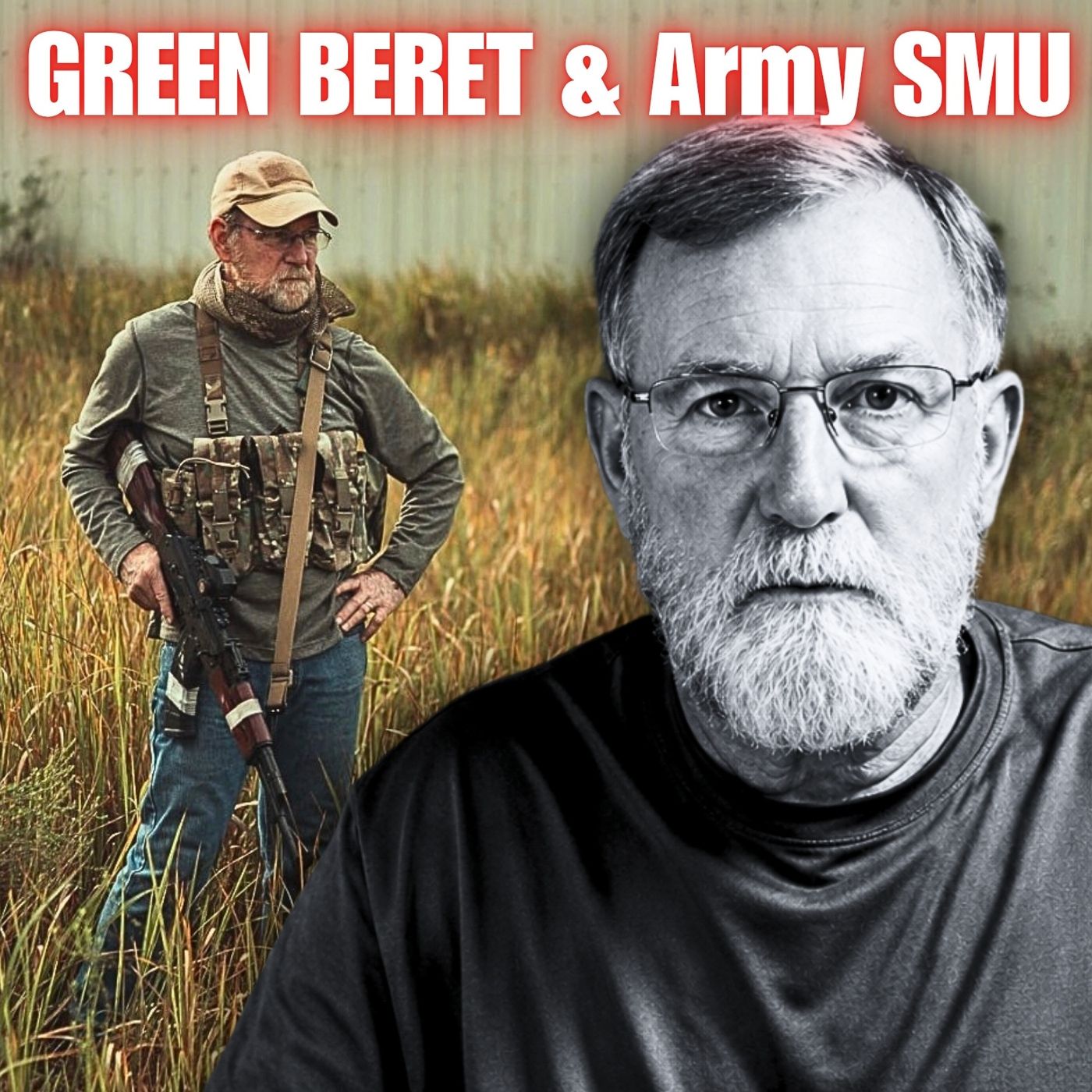
The Team House
Former Green Beret and SMU Operator | David Carmichael | Ep. 412
00:59:23
David Carmichael joins us to discuss his memoir Gray Man: A Life Lived Under the Radar, tracing his life from growing up in missionary communities across West Africa to surviving abusive boarding schools and eventually finding his way into the U.S....
Loading summary
Transcript162 lines
- [00:00]
Host or Narrator
Hot take. You can disagree with someone and not hate them. I know. Really groundbreaking stuff. But lately that line seems blurry because hate is rising across communities in all kinds of ways, and Jewish communities are getting a lot of it right now. You don't have to agree with people. You just have to not be awful. The blue square is a simple way to say, I'm with you and I don't tolerate hate of any kind. Go to bluesquarealliance.org, get a pin, share it, and stand up.
- [00:26]
SpinQuest Advertiser
I'm here with spinquest, where you can play and win from the comfort of your own home with hundreds of slot games and all of the table games you love with real cash prizes. Right now, $30 coin packs are on sale for $10 for new users. It's all@spinquest.com that's s p I n
- [00:47]
q U-E-T.com Spinquest is a free to play social casino void where prohibited. Visit spinquest.com for more details.
- [00:56]
Jack Murphy
Hey, folks, this is episode 412 of the Team House. I'm Jack Murphy here with our guest on the show, David Carmichael. He is the author of Gray Man, A Life Lived under the Radar. You guys can go and find this book on Amazon right now. I read the Kindle version, but I also have a hard copy here. It is about David's life growing up. He had a very interesting upbringing growing up largely in Africa, and then it chronicles some of his journey through the army as well. So, Michael, thank you for joining us. We really appreciate it.
- [01:34]
David Carmichael
Thank you for having me. I do, too.
- [01:38]
Jack Murphy
So I guess to start at the beginning, David, I mean, tell us a little bit about your family background.
- [01:46]
David Carmichael
My grandparents immigrated from Scotland. Right. Well, originally during the. Just before the Depression. Then when the depression hit, they headed back to England and came back just before the war started to the States. My father was born in England and then he married my mother here in the States and they decided to become missionaries. So they. My grandparents were already missionaries in Ghana, which was at the time was the West Coast, Gold coast in West Africa. That's where my father grew up. He came back states, got married, and he went back. And I grew up in Mali, mostly with trips to boarding schools throughout West Africa. And I was there from 1956 to. Until I came to the States to go to college and. And joined the military. So my parents were out there for 27 years. My brother grew up out there and he went back to Africa for mostly the rest of his life. So I have a long history in, in particular in West Africa back then. Well, when we first got there, the, the countries were French West Africa. They were colonized by the French or in some cases the British. And there was a pretty good life. And along about 1960, 61, most of those countries got their independence and turned directly towards the Eastern Bloc. China, North Korea, East Germany, Russia, who came into the country. And it wasn't so great a living after that. So I grew up in a little town near Timbuktu, which is the fabled city up on the north side of the Niger river at the edge of the Sahara Desert. And we would travel from there down country to boarding schools in guinea, the Ivory coast and stuff. We lived, for the first 12 years we lived in a mud hut, no electricity, no running water. And yeah, about 12 years in, my father got a little old name generator. So we had a little bit of electricity at night to listen to the BBC and Voice of America. There was little to no communication. The only communication was the government landline down at the government post office. And it worked if the camels didn't eat the, it didn't eat the lines. So it could take weeks literally to get information in and out. Back then, all the mail came in by the occasional airplane or up the river on the, on the riverboats. So that was my life. I, I would go off to, I went off to boarding school as a six year old the first time and spend eight months away from my parents in the mountains of Guinea. So, yeah, boarding schools weren't fun. Yeah, as you can, as you can read in the book, we went, you know, there were hard times at boarding schools. And my book, if anything, is a, is a story of resilience. It's of living that life, going to those boarding schools and still, you know, having a successful military career and successful business career. And so, you know, I hope that some other, some young person who's struggling will maybe read it and realize that they don't have to, they don't have to live under the circumstances they were dealt.
- [06:04]
Jack Murphy
Yeah, well, yeah, let's talk about that a little bit more. I mean, six years old is pretty young to be separated from your parents, but in their mind, I mean, I remember in the book you mentioned that your father went to boarding school. So did they, they felt that they were kind of giving you a proper education even though you were out in the wilds of West Africa. Was that kind of the thought?
- [06:29]
David Carmichael
I mean, that's part of it. But the reality was that the missions, pretty much all missions at the Time felt that the missionaries could not, could not win the hearts and souls of the Africans if they were busy teaching their children school. And there was extreme pressure on the missionaries at the time, not just our mission, but others, to send their kids off to boarding school. The option, you know, there was the option of doing homeschooling, but I said it was highly discouraged back in those days. It's only been in the, you know, in the last 30 years that all the abuses and problems of boarding schools came out and it's gotten a lot of attention. And now, you know, not only, well, all boarding schools, including Catholic schools and you know, all that stuff. So nowadays people wonder how the heck did you ever do it? Especially you know, a mother sending off her six year old. But it was kind of what was expected at the time.
- [07:42]
Jack Murphy
And so the first boarding school was Ghana. You were six years old. I mean, you were very young. But you do relate some of those experiences. I mean, what do you remember about that first run at boarding school?
- [07:55]
David Carmichael
Well, as I said, I was six years old. My parents couldn't take me to school that first year. So I rode with another missionary family. And you know, you get into the, the highlands of Guinea. It's beautiful, beautiful area. But you know, the boarding school, the, and there was dorm parents and teachers that, you know, were rough on you. It was a, you know, it's a rough life. There was a lot of abuse. Females had a lot of sexual abuse. Males had a lot of mental, spiritual and physical abuse. You were required to write a letter home each week. But that letter never went out unless the dorm parents approved it and they highly censored it. They would make you change, whatever. So parents for the most part didn't know what was going on. And they learned some when you came home. But you know, I went that first year. The semesters were set up in four month semesters with a two week break in between. And if your parents could, they, they could come down and spend, take you to wherever for two weeks on a vacation. But that first year my parents weren't able to come. So I spent eight months that first year, you know, away. It's kind of, you know, that's not what you want for a six year old, I guess. Yeah.
- [09:30]
Jack Murphy
Some of the things you describe like in, in the book, I mean it, it goes beyond like, you know, hitting a kid's knuckles with a ruler or you know, occasional paddle because somebody acts up. I mean some of the things you describe, it almost sounds like a kind of cult.
- [09:46]
David Carmichael
Well, the, the problem in those cases was that the people that the missions chose to be dorm parents were often missionaries who didn't do well in other places and they were relegated to that job and in some cases didn't want to be there and they were just mean and abusive. There's no other way to put it. So, yeah, everything that was described in that book and I didn't even touch the surface because, you know, I gave a lot of references. And there's a video series on YouTube called All God's Children, All Girls Children. The documentary is what it, what it's to look it up and it gets a highly detailed account of all that abuse that went on. And the people that made that video were my roommates. The rich Dar. One of the primaries in the video was my roommate. His brother was a year older. So I was, I was there, I was involved in everything you see in that video. So that's if someone is further interested in the abuse that went on at boarding schools. That's a great video to watch, but I listed a bunch of other references there as well.
- [11:09]
Jack Murphy
And after that was over and you know, you went back to your parents after eight months, sort of, how did your life pick up from there?
- [11:18]
David Carmichael
You know, when you went home after eight months for a three month break, it was, you know, start out with, you know, euphoria. You're back with your family, everybody's happy to see each other. You know, we spent a great three months hunting and fishing in our, in our time. It was, it was, it was great, you know, and then, then all of a sudden you're a couple of weeks away from going back and everything gets somber again and you're off doing it all over again. So that went on, you know, that went on for three or four years for me in guinea. And then the president of the country at the time, Sekou Toure, kicked all the Westerners out. And so we went to another boarding school in the Ivory coast called Ivory Coast Academy. And it was much, much better from a standpoint. Abuse. It was a, it's a much better school. So I spent three or four years there and then I came back to the States in time to finish high school and, and shortly after that joined the military. But, you know, coming back to the Western world or to the States after being in Africa, we typically, we'd stay in Africa four years at a time. Then we'd come home for a year and my parents would go around and, you know, talk to their churches and raise support stuff. But we kids, our clothes were 10 years out of date. Our social norms were out of date. We were coming back to kids in high school who had grown up together, been on the peewee leagues together, all knew each other and we were, you know, know, we just didn't fit in. You know, and even if, you know, our parents, missionaries live on the, on what the churches give them and what the, you know, so they don't have a lot of money. So they weren't buying us the latest clothes and you know, the latest things that a, a teenager would want to have to fit in. So even coming back to the United States, it was, you know, you know, that was quite a, quite a culture shock. Yeah. Yeah.
- [13:34]
Ghostbed Advertiser
A lot of people put off buying a new mattress because it feels like a hassle. Too many options, too many claims and no real way to tell what's actually going to hold up. Ghostbed makes that decision easier. Ghostbed is a family run company with more than 20 years of mattress making experience. Backed by deep manufacturing expertise. Their approach is straightforward focus on quality materials, smart construction and a consistency over time. Not flashy features or complicated sales tactics. Every Ghostbed mattress is built for long term comfort, using durable foam and proven cooling technology to help regulate temperature while you sleep. It's designed to feel reliable night after night, not just when it's brand new. And if you're not sure which mattress is right for you, Ghostbed's online mattress quiz helps narrow it down quickly. Whether you're a side sleeper who needs a little plushness or someone who prefers a firmer feel, the quiz matches you with the right option based on how you actually sleep. They also keep pricing grounded. Ghostbed mattresses cost up to 50% less in comparable brands. You could rest easy knowing you're not. You're getting one of the best values at this quality level. Every mattress comes with a 101 night sleep trial, an industry leading warranty and fast free shipping. And as a teamhouse listener, you can get an extra 10% off your order. Just go to ghostbed.com house and use the promo code HOUSE at checkout. That's ghostbed.com house codehouse. For an additional 10% off site wide upgrade, upgrade your sleep with Ghostbed, makers of the coolest beds in the world. Some exclusions apply. See cipher details. Thank you Ghostbed for sponsoring the show. Thank you guys for helping support the show. Bye.
- [15:13]
Ryan Seacrest
Hey, it's Ryan Seacrest for Albertsons and Safeway. Spring is a time to give yourself a refresh. So spend time on self rejuvenating, shop in store and online for great savings on all your favorite personal care Items. Now through May 26th. Earn four times points when you shop participating items like Pantene Shampoo, Crest Toothpaste, Tampax Radiant Native Shampoo and Secret Gel Deodorant. Then redeem points for discounts on future purchases of groceries or fuel. Offer ends May 26th. Restrictions apply. Offers may vary. Visit albertsons or safeway.com for more details.
- [15:45]
SpinQuest Advertiser
Forget everything you had planned for this weekend because you are sitting on your couch and winning from the comfort of your own home. I'm here with Spin Quest, where you can play hundreds of slot games, all the table games you love, and you could even win real cash prizes. New users $30 coin packs are on sale for 10@spinquest.com Spin Quest is a
- [16:07]
free to play social casino void where prohibited. Visit spinquest.com for more details.
- [16:15]
Bradley W. Hart
It's World War II and American spies are on a secret mission to stop Nazi Germany from building an atomic bomb. Bradley Hart I'm Bradley W. Hart, host of the National World War II Museum's podcast series, Secret World War II Spies and Special Ops. The largest conflict in human history wasn't just one on the battlefield, it was also one in the shadows. A new season is available now. Find and follow Secret World War II wherever you get your podcasts.
- [16:47]
Jack Murphy
So you come back to finish high school and I guess before moving on, I mean, and maybe you didn't even know this at the time, looking back on that, you clearly were raised with a strong Christian upbringing. Did some of those negative experiences in your early life kind of like carry over and did they affect either your faith or, you know, how you kind of proceeded through the rest of your early years?
- [17:13]
David Carmichael
Yeah, you know, growing up, it was twice on Sunday and at least once during the week and revivals where everybody, you know, if you didn't get on your knees at the altar every time you made a call, you were, you were, you know, shamed. That's what I grew up with. And then I briefly went to a Bible college in the States, and about the time I turned 20 years old, I divorced myself from all that. I joined the army and I basically left all that behind me at that time. That's not to say I haven't gone to church, but I've gone to some churches. Not often, frankly, but some churches that are more liberal than the the Baptist, the conduct, you know, the Baptist I grew up with was you didn't smoke, drink or chew, dance, go with girls that do. You didn't go to the movies there was a time where we weren't allowed to do anything strenuous on Sunday. You know, it was that kind of a very conservative upbringing. So once I joined the military, you know, I kind of left it open. And it was, it was many years after that before I even really reconnected with my family. I wasn't at odds with my family, but they were overseas, I was overseas, I was going in military. We just didn't have much time to interact. And it wasn't until basically after I retired from the military that I. And settled down a little bit that I reconnected with even my family. But so to answer your question, I guess I would consider myself spiritual but not religious.
- [18:58]
Jack Murphy
No, I get it. And so the, it sounds like the army was kind of an escape in a lot of ways for you.
- [19:06]
David Carmichael
It was, you know, I had to. From the, my earliest days, I can remember wanting to be a soldier. I can remember playing army. It's something I just always wanted to do and. But yes, it was an escape. I initially, you know, and I always wanted to be an elite whatever. So in my mind that was Special Forces, right. So I, I went in and delayed entry program where they're what they call the guarantee back then or their contract to be able to try out for Special Forces. And then, and then I hurt my knee playing college soccer and they reneged on that. So I said, well, I'm going in anyway. So I went in. They put me in his avionics mechanic. I spent three years doing that. And I. Then I got out for a period of time. And then, you know, I said to myself, you know, I've always had this goal, I'm gonna go do it. So I signed back up, reenlisted, and with a guarantee to go to airborne school. That's what happened.
- [20:17]
Jack Murphy
And you had to finagle your way into Special Forces after that?
- [20:21]
David Carmichael
Yeah, yeah. For better or worse. When they, when they sent me to Fort Bragg, I went to 18 Airborne Corps repo Depot, or I was supposed to, but it's when I hit brag, I went over to 5th Special Forces Group and I asked to see the sergeant major. Pretty ballsy, I suppose, for a Spec 4, but yeah, he saw me and I said, look, I. I grew up in Africa. I speak these languages. I said, you know, I'd be wasted somewhere else. You really, I'd really like you to put me on Special Forces. And he did. So that's how I got into, into fifth Group. Now once I was in there, I let it be known that I Wanted to go to the Q course, but of course only the, only the hardcore skills guys that were, you know, the type of people that aren't A teams. That's what, what they were sending Q course. But it turned out that the command had decided at the time that they wanted intel and ops guys with the teams and if they were going to deploy with the teams, they needed to have all the same training as the teams. So that's how I was able to get into the Q course.
- [21:42]
Jack Murphy
And what about what year was this that you got the fifth group?
- [21:47]
David Carmichael
78. 78.
- [21:49]
Jack Murphy
Okay.
- [21:51]
David Carmichael
I went through Yori in the winter of 79, 80.
- [21:57]
Jack Murphy
So it's probably like Colonel Montel was the commander at the time.
- [22:01]
David Carmichael
Yeah, that name rings a bell. Yeah, I think Maxim Sergeant Maxim had just left. He wasn't, he wasn't attack. I think he might have left in the, the class before I got there.
- [22:17]
Jack Murphy
And I, I think, I think Mark Boyot and Taffy Carlin were both either lieutenants or captains at the time in, in fifth group. They've both passed on unfortunately.
- [22:28]
David Carmichael
But who is the, the colonel that cut down all those Koreans with a, with an ax or the shovel?
- [22:39]
Jack Murphy
Oh shit. I, I do. He was, he's Medal of Honor recipient. Yeah. I'm sorry, I can't remember his name.
- [22:47]
David Carmichael
I think, I feel like he was of course at my level, I'm not exactly sure, but I think he was the guy that was in charge of training. Yeah.
- [22:59]
Jack Murphy
And so when they brought you into fifth group, you're, you're, you know, a part of the unit. But as you, you point out yourself in the book, I mean, you're not a Green Beret just yet until you graduate the Q course, kind of. What did they have you doing at the unit in the meantime?
- [23:15]
David Carmichael
I was brought into the 801st MI Battalion and so I was doing, you know, what, what young intel guys doing an MI battalion. Well, but frankly I wasn't, wasn't there that long before I went off to selection and then, and then not long after selection I got picked up for ocs.
- [23:37]
Jack Murphy
So how did that happen? Did you, you applied for OCS at the same time you were applying selection?
- [23:43]
David Carmichael
Yeah, I had applied for OCS about same time. Well, when I got to the unit, and I mean not the unit, the 800 first into fifth group and you know, I've basically forgotten about it and it came through sometime after I finished the Q course, not too long after that. So obviously normal SF guys going through the Q course, they, their second phase, phase two is whatever their, their discipline is. In our case, they basically put us through an EIB course basically to train us to be all in all the infantry skills. So that, that was the phase two that they put our group through. I don't know how many of the group there was probably about 20 oni guys, maybe 10, 20. I don't know how many made it through. No idea.
- [24:45]
Jack Murphy
What else do you recall about the Q course at that time? Those were sort of still sort of the early days of Special Forces as it was getting more formalized.
- [24:56]
David Carmichael
Yeah, one thing I know, or I realized from seeing the way things are, you know, now is the, the unit itself put us through our pre, pre course training and not only they did that whether you were going to scuba school or whatever, but for the, you didn't have like, right now I think they got like two or three different levels of pre selection before you ever get to, to Camp McCall. Anyway, I went to Camp McCall at that time. They were the, the old wooden barracks, you know, there was no heat, obviously, there was no hot water. And you know, we did our time at Camp McCall like everybody else did, you know, beating, you know, doing the rucksack marches and hoping we weren't the last guy through the gate. I never did have to beat the gates, but yeah, it was, you know, it was tough. And then phase three, it was winter time in North Carolina, so it was cold, a lot of ice and cold rain and stuff. Oddly enough, my hobby now is restoring old Land Rovers. So I take my old Land Rovers to events up and down the east coast. And one of the events, in fact I'm going to later this month is in Eorre National Forest. So it's kind of interesting to go back there and be able to drive around the woods that we had to hike through.
- [26:36]
Jack Murphy
That's because you got exposed to Land Rovers when you were in Africa driving around.
- [26:43]
David Carmichael
Yeah, yeah, we had Africa landovers growing up in Africa. And when I finally, when I retired and started a business and started, you know, making a little money, had enough wherewithal I started, I bought my first Land Rover and now I have more than I need, but that's what I do. But you know, and I've actually met some guys up in Uarriage that, that volunteer as local, local guerrillas and stuff and they help the cadre and stuff. So it's kind of fun to come full circle on that.
- [27:26]
Jack Murphy
So you graduate the Q course and then you go to OCS and that. And now are you coming back to fifth group as an Officer.
- [27:36]
David Carmichael
Yeah, maybe. But what they did was they sent me off, they branched me mi, which was unfortunate, but I didn't have a choice that I would have rather been branched infantry. So right away they sent me off the basic course out of Fort Huachuca, and. And then, you know, the advanced course comes along. I spend a couple years at Huachuca trying to figure out how to get out of there. And then I was picked up for an MTT to Somalia, again, based on my Africa background. And through that mtt, I met a couple of guys who later remembered me and pushed for me to be invited to go to selection for this other unit I was in. So in. So I was able to. So I was still an intel officer. I was trained in all the, all the intel disciplines, but basically I spent most of my career doing human stuff before moving on.
- [28:44]
Jack Murphy
Let's talk a little bit about that MTT to Somalia because that must have been very interesting. Especially, I imagine you guys got there right after the Soviets pulled out.
- [28:55]
David Carmichael
We did. In fact, the school buildings that we were teaching in had closets. It still had Soviet maps, Soviet compasses, and other Soviet things in them. We trained the security and intel cadre about 40 people. And being an intel guy, I did a complete study of Somalia and all the people while I was there, and I had pictures of every one of them and I had, you know, whatever bio I could get on it. I mean, it was something. Wasn't something I was tasked to do on the mtt. I just did it and came back to states and nobody was interested. And in 1983, was that when Somalia came out in night? Was it 83? Somalia? Anyway, when we went back into Somalia, I contacted people and said, hey, I have all this stuff. Some of the people you may be fighting now are people I trained. Are you interested? And the answer was no. Got nothing. Which in my mind is typical. The intel services, if you are not with them at the time, in the moment, you know, they don't. They don't. They don't give you much credence.
- [30:21]
Jack Murphy
I should point out too, for our listeners, an MTT is a mobile training team. So that's sort of like the bread and butter of Special Forces really, is going around the world and training around that time. So you were in Somalia? 83, I think 1983. We sent the first MTT to Lebanon also. And, but, but ODAS A teams at that time were all over Central South America. I mean, all over the place.
- [30:48]
David Carmichael
Yeah, yeah, they were. That's the one. I got chosen to do.
- [30:54]
Jack Murphy
And how do you. What was sort of your impression of the Somalian forces at that time and the people that you were training?
- [31:05]
David Carmichael
You know, I wasn't very impressed and that the African forces that I was came across were not very impressive, not very well trained. The Somalis would rather, you know, sit around and chew cut and. And stay up all night than, you know, than actually work. You know, even trying to get them to do simple things like map reading courses and anything that involved physical activity, you weren't getting much out of them. I wasn't impressed, bottom line. But we had a job to do. We trained them in, you know, some intel stuff and map reading and that kind of thing.
- [31:57]
Jack Murphy
And so you did a good enough job on this mtt, it sounds like that it caught some people's attention and they started suggesting maybe there's another place that you could go.
- [32:07]
David Carmichael
Yes. Yeah, there was a couple, or at least one guy that was on the team, plus another guy that I had known in another unit. And, you know, I guess they remembered my Africa background or something. For some reason they decided I was appropriate for the. For evaluation.
- [32:26]
Jack Murphy
And what are you able to say about the. That evaluation, that selection course that you went through? And I mean, at that time, did you even really know what you were trying out for?
- [32:36]
David Carmichael
No. No. And it was. It's been described in many podcasts and books and stuff, but it's a typical selection that special minute mission units go through, going back to SAS days, patterned after the sas designed to test your metal and see how far you're willing to go without knowing where you're supposed to go or how far you're. You're supposed to go. Was that kind of a thing
- [33:14]
Jack Murphy
using. Yeah. Land navigation and ruck marching as sort of like a stressor?
- [33:18]
David Carmichael
Right, right. Yeah. It wasn't. I mean, I don't think it was about how physical you could be, although there's probably a component, but it's how you react to constantly changing unknowns.
- [33:39]
Jack Murphy
And when the course ended, you know, did what. What was that like for you? Did you get brought into a board or how did they tell you that, you know, they wanted you to come to the unit?
- [33:53]
David Carmichael
Yeah, there was a board selection board at the end of the. At the end of the selection process. And then. Then after that you go to the. To the organization and get further training?
- [34:08]
Jack Murphy
Yeah, I mean, you talk in your book, for instance, you mentioned that you got to go to the farm and get trained on human intelligence tradecraft. Like, was that like, kind of a rare thing at that time for army guys to be able to go and do that.
- [34:25]
David Carmichael
Not necessarily for army guys, but it was kind of unique for me being Special Forces trained to also be a human intelligence officer. There was a few of us around, but not too many at that time. You know, I also, I mean, that was, it was an awesome opportunity for me because yes, I went there for. Was trained the way all army case officers are trained, but I also, during my time in the command, you know, went to HALO school and scuba school. So it's kind of, kind of unique to have that opportunity and not only to get one as an officer, but to get two, you know, both disciplines as an officer. So I went to. I went through key west in 84 and I swore that was the hardest school I ever went to and I swore I'd never forget it. But I ended up honor graduate, one of the honor graduates out of it, so worked fine. And I went on to be a diver for many years after that, a civilian and, you know, had all the padding disciplines. And in my business, we, we made, we had a sewing. We have a sewing factory and we made gear bags for the scuba industry. So as part of that, my son and I would enter all the, all the spearfishing tournaments sponsored, sponsored all of them in this area. And we did that for, for a lot of years.
- [36:09]
Jack Murphy
Yeah, I mean, it is pretty cool. And the way you kind of talk about it in, in the book, it sounds like, you know, you guys and what you were doing, you were almost like the modern version of the oss to be a human and also be this sort of like commando that's, you know, free fall trained and dive trained and everything else.
- [36:32]
David Carmichael
You know, as I said in the book, armies all over the world have units that are trained to do what the average soldier is not trained to do. They all, you know, they all have special operations elements. They all need, they all need intelligence for their, for their missions. So. Yeah, don't know how you unique. It was in the world of, you know, of that. But yeah, that's. I mean, I was a human, human guy. And yeah, you know, I mean, post. Post Iran 79, you know, there, there was. They were looking. This was before jsoc. This was. But, you know, there were certain elements that were being stood up at the time to, to, you know, fill in the gaps that were realized after Desert one.
- [37:40]
Jack Murphy
Yeah, there was kind of a feeling, right, that the CIA wasn't really able to support the intelligence needs of the military.
- [37:47]
David Carmichael
Right.
- [37:47]
Jack Murphy
And we had to kind of fill that gap,
- [37:51]
David Carmichael
it's my understanding that's the way the military felt. They wanted people who were. Who were their people, who were trained the way they knew they were trained to collect the information that they specifically needed to do their specific jobs. And that CIA didn't necessarily provide that to them, nor did the conventional intelligence services.
- [38:23]
Jack Murphy
And I feel like we should also take a moment here to mention, you know, this time frame. 83, 84, 85. You're getting married, you're having children. Tell us a little bit about how you meet your wife and how you start a family.
- [38:38]
David Carmichael
I met my wife when I was still a Spec 4 at Fort Huachuca. Her father was a sergeant major there. I met her. I don't. You know, she. I'm 8 years old, 6 years older than her. So I was 24, she was 18. When we got married, We. And then we had kids after we went back to Fort Benning, back to Fort Bragg, back to Fort Benning, and then finally back to Fort Huachuca as an officer. That's when we had our. Our kids. But I spent. I spent a lot of time away from home, as most guys do, but the unit we were in was, you know, had a really supportive wives group. And. And. But my wife, Jackie, pretty much raised the boys on her own for many years. And it was only when it came time to retire that I. I decided my kids were just going into junior high. And I said, you know, I got to be around. I got to be around for that. So that's when I chose to retire. I am. I had put in my papers for retirement. Branch called and said, hey, you're number one on the list within. Not. Probably not for the whole army, but whatever, within my peer group. And do you want to reconsider? And I said, no, no, I'm time to get out, start a business and take care of my family.
- [40:21]
Jack Murphy
You guys did spend some time in Korea, right, before you retired?
- [40:26]
David Carmichael
Yeah, I spent two years. I was the liaison officer, the nnsc, which is Neutral Nations Security Commission at Penguin, John. So I represented the UNK Mac, or the US Armed Forces in Korea to the. To the Neutral Nations Commission countries, which were the Czechs, the Polish, the Swiss and the Swedes. And their job since Armistice Day was to just kind of monitor the peace. And they had compounds right up on the demarcation line. And, you know, that's where those blue Quonset huts are that you see in newsreels, you know, when they have repatriation of remains or when, you know, important people Meet up there or occasionally a
- [41:23]
Jack Murphy
defector runs across the border.
- [41:26]
David Carmichael
Yeah, yeah, that happened. So yeah, I was, that was my job, was to support those people. But we also met weekly, if not daily with North Koreans. The North Koreans, our North Korean counterparts. So, you know, I met with North Koreans probably more than the joint duty officer did. But yeah, that's what I did for two years. It was a, it was an accompanied assignment. My family lived on the basin Yongsan and it's like a mini USA there. It was great living for them. Actually a good assignment from me too. I was, I would drive up to Panmunjom a couple hours up every morning, come back in the evenings. Sometimes I'd stay the night up there, but generally I was free on the weekends. So it was pretty good assignment. The NNSD that. So after the wall came down, attitudes, politics started changing and the Czechs were the first to pull out. You know, they had increasingly poor relationship with their North Korean host. The checks pulled out and then right about the time I left or just after I left, the Polish pulled out and that effectively ended the nnsc. I think the Swiss and the Swedish stayed on for a while, but I'm not sure there's anything going on there now.
- [43:01]
Jack Murphy
What was your impression of the North Koreans, I gotta ask, because we have a sort of view in America of these sort of stone faced North Korean general. I was wondering what the reality was like, you know, for you and what you thought.
- [43:16]
David Carmichael
Everyone I saw was that way. But you got to understand that the, the people that are at Panmunjom are probably handpicked for the purpose. Highly, highly trained, highly motivated, you know, supporters of the regime. Yeah, they were that way. And they, those guards up there would, would be happy to shoot you if they, if they thought they had an opportunity. I explained in my book where I had to, you know, sometimes I'd screw around with them and there's some information in there, you know, where I just play with them. They, they, they were those young North Korean guards and Taos were tasked to watch my every step. And whereas most people might walk down the middle of the pathway, I would, I would sidle up next to the buildings, get in the shadows, get under the overhangs where they couldn't see me and you know, just to mess with them and. But you know, there was, people got shot running across trying to cross that line. And I had my escape routes mapped out. So the fainting thing happened. I knew how to get away.
- [44:28]
Jack Murphy
You got there a little, a little bit after the Famous hatchet incident. Right.
- [44:35]
David Carmichael
Well, quite a bit. That was in 76.
- [44:37]
Jack Murphy
Okay.
- [44:39]
David Carmichael
And. But prior to that, you could walk pretty, Pretty freely between the buildings and. Or, you know, around that. That. That area in Penwin and John there. But after that, they kind of stopped that and everybody stayed on their sides of the line. You know, I. I pushed the envelope on that.
- [45:04]
Jack Murphy
So one of the other things I wanted to ask you about, and I know you can't really tell the story behind it, but you made major as you kind of round out your career and you got an award from the Director of the Central Intelligence Agency, the DCI Award. Can you tell us? I know, again, I know you can't tell really the backstory, but can you tell us about that award itself?
- [45:32]
David Carmichael
No, to be honest, I can't. I mean, suffice it to say that the guy who endorsed my book is Rick Prado. Guy who wrote Black Ops.
- [45:42]
Jack Murphy
Yep.
- [45:43]
David Carmichael
And he has. He has some nice things to say about me, but I'd rather not say where or when because that might give away too much.
- [45:53]
Jack Murphy
Oh, no, I understand. I was sort of more asking like, what is that award? Like, is it the equivalent of like a silver star?
- [46:01]
David Carmichael
Well, my understanding is it's the highest award that the agency gives to a non agency employee. I may be wrong about that, but that's what I was always told.
- [46:13]
Jack Murphy
That's pretty cool.
- [46:13]
David Carmichael
And, you know, it's something that DCI gives. Director of Central Intelligence Agency gives to someone who's done a job they like, I guess,
- [46:28]
Jack Murphy
well, start to talk to us. You mentioned it a little bit about, you know, when you decide to retire and you want to spend some more time with your family. Tell us a little bit about like, winding down, getting to Tampa and starting to put your retirement papers in.
- [46:46]
David Carmichael
When. When I finished the tour in Korea, the branch said, since you've had this hardship tour, we'll let you have your choice of places to go. I didn't think it was a hardship tour, but they did. And I said, well, dang, I want to go to Florida. Then send me to. Send me to Tampa. And so that's how I ended up in Tampa. And you know, I worked there for two years, but there really wasn't much going on. Gave me time to go through the Command General Staff course by correspondence. And then I decided to retire. They what would have happened was, had I taken the promotion that they said was, you know, right there around the corner for me, I know I'd have ended back up in. I'd ended up in D.C. doing something. And I would have ended up doing something that took a lot of time away from my kids. So I just decided to stay and retire in Florida. You know, I've at times regretted it because it wasn't too long after that that all my peers went off to the desert and most of my peers retired as 06 or better. And I have no doubt that if I had taken that O5 rank, that I'd have hit 06 by the time, but I didn't. So there's no, no sense crying over it. But it would have been, you know, a person who spends their whole life preparing to go to war, whether they say so or not, probably wants to go to war and prove themselves. And so I kind of wish I had stayed in and gone there, but I didn't know that at the time, you know, so it is what it is. I went on and started a business. And that's. That was 30 years ago.
- [48:47]
Jack Murphy
And so your business was basically, if I remember right here, it's. It was making waterproof bags for dive operations.
- [48:54]
David Carmichael
Well, it was making scuba bags. I had. When I first retired, I wanted to do an import export business, but I never could get any traction. And then someone, since I was a diver, I knew dive people. Someone asked me if I could make scuba bags. I was already going to Asia, you know, sourcing and doing other stuff. So I just learned everything I could about making scuba bags. And we made them and we started out designing them here in the States and making them in Asia. And then in 2007, with numerous requests for US made stuff, I decided to form the US operation. So we, we built a factor. We opened a factory here in the States, you know, and now we make what's called Barry Amendment or, you know, military bags and stuff, along with other commercial bags. But we started out making scuba bags. That's, that's what we did. And we, at one time, we were, you know, one of the leaders in the industry in making good, tough bags.
- [50:04]
Jack Murphy
So you have, I mean, tell us a little bit about like this factory. It's like a. So shop, essentially.
- [50:10]
David Carmichael
Yeah, it's a 10,000 square foot facility where we have 40, 50 sewing machines. And, you know, we make, we make whatever. We're what's called a job shop. So we make anything other than clothing and large tent structures, something that's too big for us. But we make cases, covers, bags, everything from little mesh bags for the medical industry to rolling luggage and big stuff. We make, we make the fuel splash guards for the F22 fighter squadrons. We make the wheel covers for those same F22s, and we make other gear bags for melted. We make parachute recovery bags that are primarily. They're specifically designed to get wet parachutes out of the water from Marops. So when you jump into the water, you're. You're. By the time you get back to shore, all the water is drained off. So those are purchased by special operations people, some foreign countries. NASA has bought some in the past. So, yeah, that's the type of thing we make.
- [51:31]
Jack Murphy
And you said there's a commercial side of it as well. Like if people wanted to go and see, you know, what the company offers, is there a place they can find you online or elsewhere?
- [51:40]
David Carmichael
Yeah, our website is American Sewing.net and basically it's just a representation of the type of things we do. So people can see what we do is not necessarily. Is not necessarily a website where you can buy stuff. Yeah, and in commercial side, if you have a company that's making a widget, you need a case to put that widget and you call us and we make the. We make the COVID case, whatever for you. But, like, say we do little mesh bags for Medline, different medical industry things. We basically anything, anything that's sewn together.
- [52:23]
Jack Murphy
And you also mentioned that after you retired, you kind of reconnected with your family. What was that like?
- [52:31]
David Carmichael
Well, about the time I was retiring, they were also retiring from different things, except for my brother, who was in Africa. And, you know, it gave us all time to. To connect, and then we connected more. I hadn't really talked to my dad much in years, and it got a little tedious because he. He was a preacher and he proselytized and he always wanted to know if I was going to church or not, which, of course, I wasn't. And that created some tension. So one year, one day on a Saturday evening, he called me up and did not mention any of that. One time. All he wanted to do was talk about how my day was going, how the business was going. We had a really great talk and connection, and every Saturday evening to the day he died, after that, he would call me and we'd have typical conversation. It was an awesome reconnection with him after so many years.
- [53:37]
Jack Murphy
Yeah, no, that's incredible.
- [53:39]
David Carmichael
You know, the point is, is if you want to. If you want to connect with parents or children, connect to them on their level.
- [53:48]
Jack Murphy
Yeah, no, good point. And otherwise, how has retirement been treating you? You're still down in the Tampa area?
- [53:57]
David Carmichael
We do. We still live in Tampa. We still have the business. I'm 72 years old, so I'm ready to retire a second time. I. I much rather spend my time building old Land Rovers.
- [54:14]
Jack Murphy
And you enter those in like. Like truck competitions and things like that, where they come and join?
- [54:19]
David Carmichael
Well, yeah, in the. In the Land Rover world, kind of like the Jeep road, you have events where you go riding through the woods. That's the forest, you know, up and down hills and through to the deepest mud you can find and stuff. So, yeah, I mean, I have some hangar queens that I just take to car shows, and then I have one that, you know, is outfitted with snorkels and things like that to go through deep mud and water, and I'll take that to those trail events.
- [54:50]
Jack Murphy
And then, you know, I also got to ask, I mean, what was the inspiration that led you to writing this book? I mean, the book is even called the Gray Man. A Life Lived under the Radar. And you, you are kind of that guy. So what inspired you to write the book?
- [55:07]
David Carmichael
What. What kicked me in the butt to get me going was my. My son gave me a Christmas present, which was a subscription to a company that will send you a question each week. And you answer the question, and at. At the end of the year, they put together a book about your life. Well, right off the bat, I realized those questions were nonsense, so I did finish that up, but I ended up writing my own chapter soon. When I got done with that, I said, you know, this is. I need to put this in a better format. And so I rewrote the book and rewrote it a couple times and send it off for approval a couple times before I finally got it all approved by the government and stuff. But the whole Gray man thing, I mean, when you're going through boarding. Well, first of all, I grew up as a loner in Africa, out hunting by myself and stuff. Then you go to boarding school and you're keeping your head low to keep away from bullies and what have you. And then, you know, later on, I was a human officer. I basically lived my whole life kind of. Kind of trying to stay out of the limelight, which was a detriment in my business life because I was not nearly the salesman that I should have been. I just am not. Not that outgoing. But, yeah, I think Gray man fits.
- [56:41]
Jack Murphy
And the book can be found on Amazon. I hope people will go and check it out. And, David, is there any other reflections that you have from this? Your life experience or your experience writing the book? Anything else that you'd like to talk about.
- [57:02]
David Carmichael
I don't know. Like I said, I hope people buy the book. I've had. I've had good comments. I've been on a couple other podcasts that are more related to missionary kids and, and things like that. But, you know, maybe it'll help someone. It's not really an education on, on anything military. It's just like I said, it was, it was done. I'm. I did it for a historical reference for my kids in the fact. And then people start saying, well, you need to get this out there more because other people be interested in. And that's why I started doing, you know, Rick Prado encouraged me to do the podcast and get it out there more. So I'm glad he did. I'm enjoying the experience.
- [57:49]
Jack Murphy
And I should also point out to people that your, your book here, this memoir is filled with pictures. And I mean, some of these pictures, like your dad, I think this was your father doing dentistry in West Africa. I mean, it's just totally surreal.
- [58:04]
David Carmichael
Yeah, my, my father was a. A dentist, you know, and he contracted hepatitis from working in people's mouths. That's before they knew what age was and stuff. And yeah, he lived many years after that, but eventually liver cancer killed him. So he literally gave his life for those people he served over there.
- [58:29]
Jack Murphy
It's amazing. And I, I think we have one question for you from a viewer.
- [58:35]
Ghostbed Advertiser
Yeah, David, for you had a pretty long business career. What are some lessons learned from throughout owning your own business? And you did mention a little bit about, you know, you're not as outgoing and salesman enough, but any other lessons learned from running a business?
- [58:53]
David Carmichael
You know, if I had any success, it was because I was always true to my word. I was always honest, and people noticed that. And throughout my business career, I had several different occasions where important wealthy people asked me to help them or offered to help my business. So, yeah, you've got to be reliable. You got to be honest. And if you do that, success will follow.
- [59:35]
Jack Murphy
Definitely. And again, the book is Gray A Life Lived under the Radar by David Carmichael. We'll have some links down in the description of this podcast and on the video. If you're watching this on YouTube, you can click on it and get to the book that way. And your website was@Americansewers.net American Sewing.
- [59:58]
David Carmichael
American. Yeah. Americansewing.net okay, we'll have a link to that, too.
- [60:06]
Jack Murphy
David, thank you for doing this interview and spending some time with us today.
- [60:10]
David Carmichael
Thank you. I appreciate it.
- [60:12]
Jack Murphy
I hope folks will go and check out the book. And thank you everyone who joined us tonight and we will see you next time. Hey guys, I want to take a moment to tell you about the Team House Podcast newsletter. If you go and subscribe, it's totally free and what it will do is aggregate all of our data, all of our content that we put out. The things that are on the Team House on our Geopolitics podcast, eyes on things that I write journalistically with Sean Naylor. On the high side, anything else that we have going on books, we recommend upcoming guests that we have coming on the show and also, you know, filtering in some fun stuff in there as well if you'll go and check it out. We send it out just once a week. We don't want to spam you guys. It's just a kind of rollup of all of our content on a weekly basis. You can find our newsletter@teamhousepodcast.com kit.com join again. The website for that is teamhousepodcast kit.com join so we hope to see you there.
- [61:19]
Ryan Seacrest
Hey, it's Ryan Seacrest for Albertsons and Safeway this spring. Sweeten your day one sweet treat at a time. Now through May 26th. Whether you're shopping for gifts for friends and family or just want to pick me up for yourself, get great deals on your favorite sweet treats. Shop in store or online and save on items. Items like Reese's Peanut Butter Cups, Trident Sugar Free Gum, Albanese Gummy Bears, Kinder Wafer Eggs or Snickers Bars. Get these deals before they're gone. Offer ends May 26. Restrictions applied. Offers may vary. Visit albertsons or safeway.com for more details.
- [61:51]
SpinQuest Advertiser
Forget whatever plans you have this weekend because you're staying at home and playing on spinquest and there's never been a better time to sign up than right now. New users get $30 coin packs for just $10. All the table games you love, with hundreds of slot games and real cash Prizes. That's at spinquest.com S P-I-N Q U-S-T.com
- [62:13]
Spin Quest is a free to play social casino void where prohibited. Visit spinquest.com for more details.
- [62:20]
VRBO Advertiser
VRBO makes it easy to claim your dream summer spot with early booking deals, from homes with pools to poolside loungers. When you book a vrbo, you don't have to reserve any loungers. They're all yours. All you have to do is book early book with vrbo.
- [62:36]
Jack Murphy
The link will be down in the description.
- [62:41]
Ryan Seacrest
Hey, it's Ryan Seacrest for Albertsons and Safeway Spring is a time to give yourself a refresh, so spend time on self rejuvenation. Shop in store and online for great savings on all your favorite personal care Items. Now through May 26, earn four times points when you shop participating items like Pantene Shampoo, Crest Toothpaste, Tampax Radiant Native Shampoo and Secret Gel Deodorant. Then redeem points for discounts on future purchases of groceries or fuel. Offer ends May 26th. Restrictions apply. Offers may vary. Visit albertsons or safeway.com for more details.
- [63:12]
David Carmichael
What's up baby?
- [63:13]
Jack Murphy
It's Bretzky and I'm here to tell
- [63:15]
David Carmichael
you that spinquest.com is giving out free Sweeps coins. All you got to do is purchase a 10 coin pack and guess what? They're gonna give you you the coins from a $30 coin pack that lets you play all your favorite games like Blackjack, Wanted Dead or Wild. And we're talking real cash prizes, baby.
- [63:34]
SpinQuest Advertiser
Spin Quest.com Spin Quest is a free to play social casino void where prohibited. Visit spinquest.com for more details.
- [63:44]
Ryan Seacrest
And Doug, there's nowhere I wouldn't go to help someone customize and save on car insurance with Liberty Mutual, even if it means sitting front row at a comedy show.
- [63:53]
SpinQuest Advertiser
Hey everyone, check out this guy and his bird.
- [63:56]
David Carmichael
What is this, your first date? Oh no.
- [63:58]
Ryan Seacrest
We help people customize and save on
- [63:59]
David Carmichael
car insurance with Liberty Mutual together. We're married.
- [64:02]
Ryan Seacrest
Me to a human, him to a bird.
- [64:04]
David Carmichael
Yeah, the bird looks out of your league.
- [64:05]
Ryan Seacrest
Anyways, get a quote@libertymutual.com or with your local agent.
- [64:09]
David Carmichael
Liberty Liberty. Liberty. Liberty.
- [64:18]
Ryan Seacrest
Hey, it's Ryan Seacrest for Albertsons and Safeway this spring. Sweeten your day, one sweet treat at a time. Now through May 26th. Whether you're shopping for gifts for friends and family or just want to pick me up for yourself, get great deals on your favorite sweet treats. Shop in store or online and save on items like Reese's Peanut Butter Cups, Trident Sugar Free Gum, Albanese Gummy Bears, Kinder Wafer Eggs or Snickers Bars. Get these deals before they're gone. Offer ends May 26. Restrictions applied. Offers may vary. Visit albertsons or safeway.com for more details.
- [64:50]
SpinQuest Advertiser
Forget whatever plans you have this weekend because you're staying at home and playing on spinquest and there's never been a better time to sign up than right now. New users get $30 coin packs for just $10. All the table games you love with hundreds of slot games and real cash Prizes. That's at spinquest.coms P I N Q U-E S T.com Spinquest is a free
- [65:12]
to play social casino void where prohibited. Visit spinquest.com for more details.
- [65:19]
VRBO Advertiser
This summer, don't squeeze in. Spread out. Find homes big enough for your whole guest list on vrbo. From family reunions to trips with friends, VRBO has spacious summer stays for every group size, area and budget. That's vacation rentals done right. Start exploring on VRBO and book your next day now.
- [65:55]
Ryan Seacrest
Hey, it's Ryan Seacrest for Albertsons and Safeway this spring. Sweeten your day one sweet treat at a time now through May 26th. Whether you're shopping for gifts for friends and family or just want to pick me up for yourself, get great deals on your favorite sweet treats. Shop in store or online and save on items like Reese's Peanut Butter Cups, Trident Sugar Free Gum, Albanese, Gummy Bears, Kinder Wafer Eggs or Snickers bars. Get these deals before they're gone off rents May 26. Restrictions apply. Offers may vary. Visit albertsons or safeway.com for more details.
- [66:25]
SpinQuest Advertiser
You know what? It sucks to be bored. But when I get on my phone and play real casino games on spinquest.com the time flies by. That two hour wait at the DMV seems like 10 minutes. Play your favorite slots, live blackjack, live craps with a live dealer. New players. $30 coin packs are on sale for 10 bucks. Play spinquest.com and you'll never be bored again.
- [66:49]
Spinquest is a free to play social casino void where prohibited. Visit spinquest.com for more details.
- [66:56]
Book a Loved by Guest property with VRBO and you get a top rated vacation rental that's loved for all the right reasons.
- [67:02]
VRBO Advertiser
I love my VRBO for the location.
- [67:04]
SpinQuest Advertiser
Good reason.
- [67:04]
David Carmichael
Oh and for the pool.
- [67:05]
Ryan Seacrest
Cause pools are cool.
- [67:07]
SpinQuest Advertiser
I feel the love book of verbo that's loved by guests if you know you verbo.
- [67:15]
Ryan Seacrest
Hey, it's Ryan Seacrest for Albertsons and Safeway this spring. Sweeten your day one sweet treat at a time now through May 26th. Whether you're shopping for gifts for friends and family or just want to pick me up for yourself, get great deals on your favorite sweet treats. Shop in store or online and save on items like Reese's Peanut Butter Cups, Trident Sugar Free Gum, Albanese, Gummy Bears, Kinder Wafer Eggs or Snickers bars. Get these deals before they're gone off rents May 26. Restrictions apply. Offers may vary. Visit albertsons or safeway.com for more details.
- [67:47]
SpinQuest Advertiser
Forget whatever plans you have this weekend because you're staying at home and playing on spinquest, and there's never been a better time to sign up than right now. New users get $30 coin packs for just $10 all the table games you love with hundreds of slot games and real cash Prizes. That's at spinquest.coms P I N Q U-E S T.com Spinquest is a free
- [68:10]
to play social casino void where prohibited. Visit spinquest.com for more details
- [68:17]
VRBO Advertiser
at VRBO we understand that even the best of plans sometimes need a little support, so we've planned for the plot twists. Every booking is automatically backed by our VRBO Care Guarantee, giving you confidence from the very start. Whenever you need help, it's ready before your stay, through the moments in between, and after your trip. Because a great trip starts with peace of mind and maybe a good playlist. But we've got the peace of mind part covered.
- [68:49]
Ryan Seacrest
Hey, it's Ryan Seacrest for Albertsons and Safeway this spring. Sweeten your day one sweet treat at a time. Now through May 26th. Whether you're shopping for gifts for friends and family or just want to pick me up for yourself, get great deals on your favorite sweet treats. Shop in store or online and save on items like Reese's Peanut Butter Cups, Trident Sugar Free Gum, Albanese Gummy Bears, Kinder Wafer eggs or Snickers bars. Get these deals before they're gone off REN's May 22 6. Restrictions applied. Offers may vary. Visit albertsons or safeway.com for more details.
- [69:20]
SpinQuest Advertiser
Whether it's slots or live dealers, Spinquest.com has the fun and action you're looking for with Spinquest exclusives blackjack, roulette, Baccarat and even live dice with craps and bubble craps. The games never stop so you don't have to, and right now, new users get $30 coin packs for just 10 bucks. Play now@Spinquest.com SpinQuest is a free to
- [69:45]
play social casino void where prohibited. Visit spinquest.com for more details.
- [69:51]
VRBO Advertiser
With VRBoCare. Help is always ready before, during and after your stay. We've planned for the plot twists, so support is always available. Because a great trip starts with peace of mind.
- [70:07]
Ryan Seacrest
Hey, it's Ryan Seacrest for Albertsons and Safeway. Spring is a time to give yourself a refresh, so spend time on self rejuvenation. Shop in store and online for great savings on all your favorite personal care Items. Now through May 26th. Earn four times points when you shop participating items like Pantene Shampoo, Crest Toothpaste Tampax Radiant Native Shampoo and Secret Gel Deodorant. Then redeem points for discounts on future purchases of groceries or fuel. Offer ends May 26th. Restrictions apply. Offers may vary. Visit albertsons or safeway.com for more details.
- [70:38]
SpinQuest Advertiser
You know what? It sucks to be bored. But when I get on my phone and play real casino games on spinquest.com the time flies by. That two hour wait at the DMV seems like 10 minutes. Play your favorite spots live blackjack, live craps with a live dealer. New players $30 coin packs are on sale for 10 bucks. Play spinquest.com and you'll never be bored again.
- [71:02]
Spinquest is a free to play social casino void where prohibited. Visit spinquest.com for more details.
- [71:09]
LifeLock Advertiser
Lots of places can accidentally expose you to identity theft. Doctor's offices, online retailers, insurance companies. The list goes on. Thankfully, LifeLock monitors hundreds of millions of data points a second for threats to your identity, which is way more than anyone can do on their own. Lifelong lifelock keeps an eye on your personal information credit applications, finances and more. And if they find anything suspicious, like new loans or changes to your financial accounts, they alert you right away, all through text, phone, email or the LifeLock app. Even better, alerts are automatically activated the moment you become a Lifelock member. No extra work on your part. Get the alerts that could make all the difference. Don't wait. Join LifeLock now. Visit lifelock.com iheart and save up to 40% your first year. That's lifelock.com iheart for 40% off terms apply.