← The Team House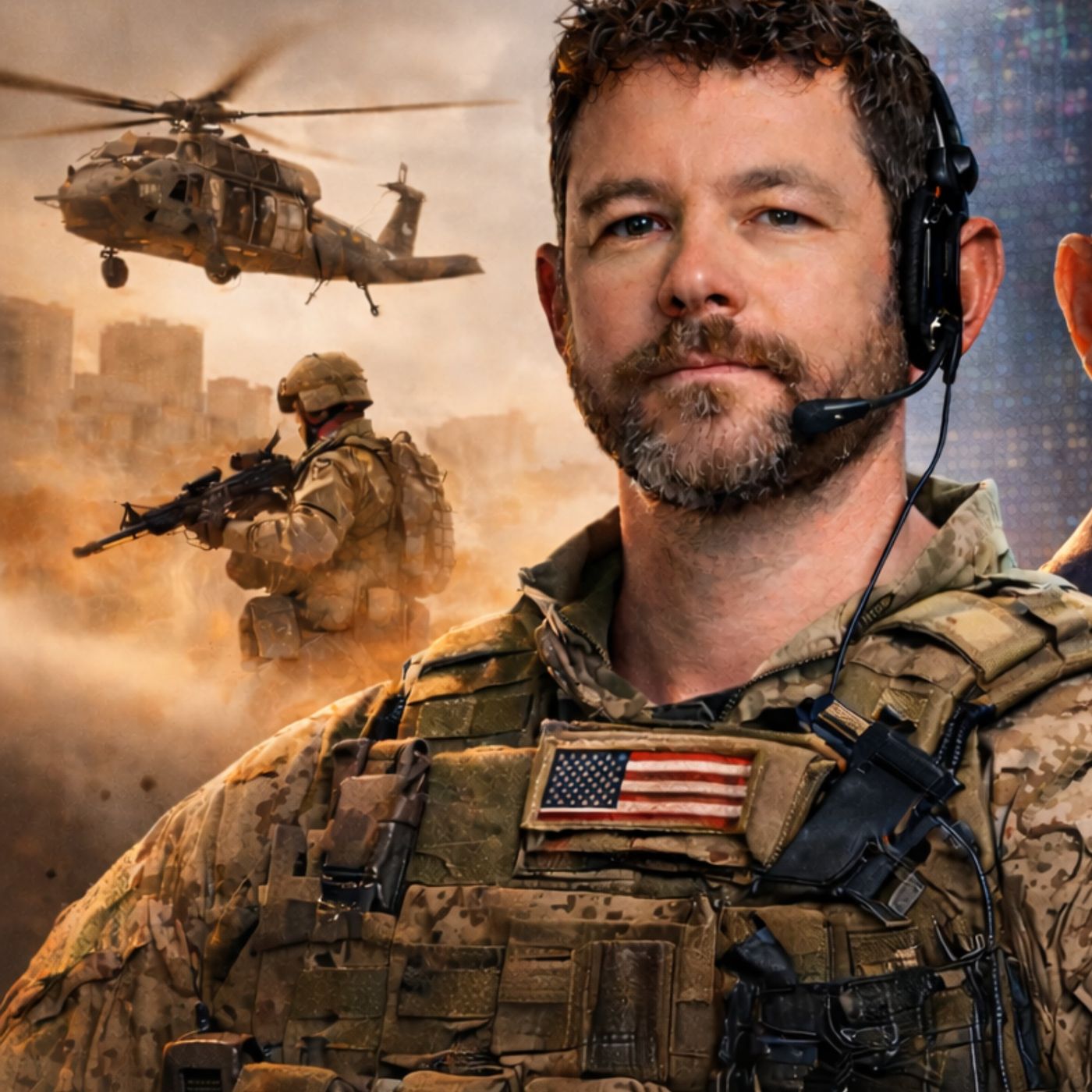
The Team House
From Army Intel in Iraq to CSO of Coinbase | Philip Martin | Ep. 398
01:37:57
Philip Martin is a former U.S. Army counterintelligence officer who spent years hunting threats and protecting forces in Iraq before transitioning into the private sector. He now serves as Chief Security Officer at Coinbase, where he applies military...
Loading summary
Transcript397 lines
- [00:00]
Ebay Narrator
The worst part about loving cars might just be buying them and all the parts. But on ebay, behind every car and part is a story waiting to be shared. There was a guy who bought a 2021 Porsche Cayman that was well loved. I mean, there are plenty of Caymans in great condition on ebay, but this
- [00:18]
Philip Martin
one needed some work.
- [00:20]
Ebay Narrator
This guy buys it and rebuilds the whole thing, all with parts he found on ebay.
- [00:24]
Philip Martin
And now that nearly scrapped Cayman is
- [00:27]
Ebay Narrator
out tearing up the track. From Toyotas to Aston Martins, ebay has thousands of cars and the largest online selection of vehicle parts and accessories. Ebay, things people love. This is Sarah Spain from Good Game
- [00:40]
Sponsor Voice
with Sarah Spain, brought to you in
- [00:41]
Ebay Narrator
part by Vital Farms.
- [00:42]
Philip Martin
Let me tell you why Vital Farms. Pasture raised eggs are the only eggs
- [00:45]
Ebay Narrator
I have in my fridge. The hens, they're living the good life. Fresh air, sunshine and wide open pastures.
- [00:50]
Interviewer (Jack Murphy)
I use my Vital Farms for my
- [00:52]
Ebay Narrator
famous frittatas and you could trace your
- [00:54]
Philip Martin
eggs back to the farm they came from.
- [00:55]
Sponsor Voice
Check the carton for the farm name,
- [00:57]
Ebay Narrator
pop it into vitalfarms.com farm and boom, you're looking at the pasture. So next time you're in the store, look for the black carton in the egg aisle and visit vitalfarms.com to learn more. Vital Farms Good eggs, no shortcuts.
- [01:09]
Interviewer (Jack Murphy)
Hey everyone. I want to tell you about my new novel, the Most Dangerous man, out in June. It is a novel about a Regimental Reconnaissance company soldier who gets kidnapped while he's on a mission to West Africa. And when he wakes up, he finds that he is now being hunted for sport by a group of tech billionaires through the wilds of West Africa. This book is based on stories that I heard over the years about safari guides taking wealthy clients hunting for poachers on game reserves in Africa. I took that and I took a century old short story, the Most Dangerous Game, and modernized it. And the product is this book which I think will feel contemporary and resonate with audiences today. Thank you and please check it out.
- [02:10]
Philip Martin
The team house with your hosts, Jack Murphy and David Park.
- [02:23]
Interviewer (Jack Murphy)
194 of the team house. I'm Jack Murphy here with our guest tonight, Philip Martin. He served in Army Counterintelligence with deployments to Iraq and a few other places around the world. And he is currently the chief security officer at Coinbase, which is a crypto company, crypto wallet company, crypto company, crypto company. And we'll get into all of that in this interview. Philip, thank you for joining us today. Thanks for having me yeah, absolutely, man. So, you know, the first question I always ask people is about their origin story. And yours is a little interesting. Like tell us how you kind of grew up and what that path was that took you towards the army eventually.
- [03:00]
Philip Martin
Yeah, sure. So I've, I've. I mean, I think for me a fairly unique story of how I got here. So I was, before I ever went in the military, I was a software engineer. You know, I was that nerd in my parents basement. I grew up in Northern California. We don't have basements. It was a metaphorical basement, but it was a basement nonetheless. And taught myself to code. Loved everything about computers and the Internet and all of it. Ended up starting a few small businesses in high school, went to college, got super bored, dropped out, joined a startup. And then 911 happened and there's this confluence of me being pretty burned out with the, with what was at the time sort of that just post.combust era and then attack on our country and there's a bunch of family history there. I didn't mention this when we were talking before, but with the exception of my dad who's a minister, there's like the entire history of my family is involved in service in some way, shape or form. Right. Both my grandparents were in World War II. And you know, my mom got into genealogy at one point and she went like full ham. But we can go back. There was a, we weren't called the Martins at the time, but there was a Martin in the Revolutionary War and every, every major conflict since. So it was, it was something I thought, I thought long and hard about. Like this is, this is an opportunity for me to do something that I might not ever get a chance to do again.
- [04:36]
Interviewer (Jack Murphy)
And you mentioned the sort of tail end of the dot com era. This is pretty well before social media and all that stuff comes around. So was you working with the Netscapes and the Yahoos?
- [04:49]
Philip Martin
Yeah, actually I worked at Netscape briefly.
- [04:53]
Interviewer (Jack Murphy)
You did?
- [04:53]
Philip Martin
Yeah, Netscape, Netcenter.
- [04:56]
Interviewer (Jack Murphy)
Only people our age even know what that means.
- [04:58]
Philip Martin
They even know there. Right. I actually interviewed at Yahoo back when it was still Yahoo. So yeah, it was a fascinating time to be in the Valley for sure.
- [05:05]
Interviewer (Jack Murphy)
Yeah, yeah, exciting times too. Right?
- [05:08]
Philip Martin
Yeah, I took down that Skip Net center by accident for a good five minutes at one point.
- [05:12]
Interviewer (Jack Murphy)
Oh, that was you?
- [05:13]
Philip Martin
Yeah, yep, that was me. That was me. My fault.
- [05:17]
Interviewer (Jack Murphy)
And what was kind of your role? Were you a coder or.
- [05:19]
Philip Martin
Yeah, software engineer.
- [05:20]
Interviewer (Jack Murphy)
Okay, so yeah, you were in the thick of it.
- [05:22]
Philip Martin
Yeah, absolutely. It was a lot of fun. Right. Like, you know, I got. I got to participate in like a huge boom cycle in the Valley and, you know, see a lot of stuff, learn a lot of lessons. Sure. That have served me well Right. Over the course of my career.
- [05:37]
Interviewer (Jack Murphy)
That's really cool. So you get burned out on this and being a software engineer, 9, 11 happens. What was kind of like your approach? Like, where did you go first?
- [05:51]
Philip Martin
Yeah. So I went army first. It was the only thing I really ever considered. I'll tell you my edible crayon story later about my Marine Corps colleague at Coinbase. But yeah, army is all I really ever considered. And went into the recruiting station. It's like, I want to join. I went through the Guard rather than go full active duty and was in my mind, maybe I want to do it later. I never ended up going full active duty, but looked around, I'm like, I don't want to do anything that has to do with computers. I'm sort of over that. Did my asvab, all that sort of preliminary testing. They're like, you can sort of do what you want. What do you want to do? And I was like, this counterintelligence thing looks interesting. They're like, yeah, it's about people. Which is half true and like, half not true. And it's complicated. Right, right. Um, but it was the best choice I think I could have ever made. Loved every second of it. As I, as I then sort of went in and, you know, did basic Fort Leonard Wood and then down into Fort Huachuca for. For AIT and then language school for Arabic. It was a long time. It was like, it's like a two year training pipeline.
- [07:08]
Interviewer (Jack Murphy)
Yeah, yeah. I mean, DLI alone is like a year, right?
- [07:11]
Philip Martin
Year and a half for year and a half for Arabic, for the cat. Four languages all year and a half.
- [07:15]
Interviewer (Jack Murphy)
And you told me before you were a three three.
- [07:18]
Philip Martin
I maxed out at a three three. I graduated. DLI is like a two two plus.
- [07:21]
Interviewer (Jack Murphy)
Okay, that's super good.
- [07:23]
Philip Martin
And then after my deployment to Iraq, where I spoke Arabic a lot. Right. I did another. I did, you know, my next annual test, and I was a 3 3. And the way they do these testing is like, there's one test that goes up to three three, and there's another one that goes three plus three plus up to five. So I maxed out the test that I took and just actually never ended up taking the other test.
- [07:45]
Interviewer (Jack Murphy)
So for what people listening don't understand, like being a 33 in your target language in the military is Considered fluent.
- [07:52]
Philip Martin
Yeah.
- [07:53]
Interviewer (Jack Murphy)
There might be some like, technical jargon and stuff. You might not know if you're a 3 3, but you're pretty dialed in at that time.
- [07:58]
Philip Martin
So 3 3. I believe the rubric is you're considered a high school graduate. You were fluent to the equivalent of a high school graduate. And that in that and like a 5 5, which is the max the scale goes to. You are the equivalent of a college educated professional.
- [08:14]
Interviewer (Jack Murphy)
Yeah. You're writing poetry in Arabic.
- [08:15]
Philip Martin
Correct.
- [08:18]
Interviewer (Jack Murphy)
After you finish dli, what is the training course for a counterintelligence agent?
- [08:24]
Philip Martin
Yeah. So it's called something different now. It's called cisac, the CI Special Agent Course. And it is a. What was the time that I did it? A 22 week, if I recall correctly. It was 26, 28 somewhere in there. 20 something week training course down in Fort Huachuca, Arizona, which is about as far south as you can go in Arizona and not be in Mexico. And you know, it's really about getting a bunch of kids. Right. You know, because it's mostly 19, 20, 21 year olds that are, that are going in there to understand a little bit about how the army works and a lot about how espionage work. Right. How and why people choose to betray their country, how and why we investigate them, and then sort of the broader universe of CI as well. Because like a lot of people think about CI and you think about like, I don't know, maybe like ncis. Right, right.
- [09:28]
Interviewer (Jack Murphy)
Where they're like, it's not cid.
- [09:30]
Philip Martin
Right. And like there's this huge world of CI that includes things like, I don't know, tscm. Right. Which is like bug sweeping and technical countermeasures and there's a bunch of cyber stuff, Right. Investigations in forensics. There's human related stuff. Right. For force protection operations.
- [09:49]
Interviewer (Jack Murphy)
There's, there's like disinformation campaigns around sensitive secrets.
- [09:53]
Philip Martin
Right, exactly. Right, right. Because like people ask me all the time like, what is, what does CI do? Like what do you guys do? Right. We know what intelligence does. And I say, well, look, if intelligence is about you defining like your view of your adversary, CI is about you defining your adversary's view of you. Yeah, right. In a way that's advantageous to you
- [10:14]
Interviewer (Jack Murphy)
and it's maybe worth mentioning to the viewers. You know, you mentioned it briefly. It's called the Special Agent course. CI guys are also badged special agents.
- [10:26]
Philip Martin
Yep.
- [10:26]
Interviewer (Jack Murphy)
You want to explain that distinction to folks?
- [10:29]
Philip Martin
So, I mean, it's a, it's, it's a lot of, it's A lot of nuance. It's actually even more nuanced than that because not all CI guys are. Are like the go to fletc, the Federal Law Enforcement Training Center. Okay, some of us do, but not. Not everyone does. And so, like, you're. If you don't go to fletc, you're not a full federal agent with arrest powers. Right. But you're a badge credentialed CI agent, so you do have a lot of law enforcement adjacent sort of abilities, especially on army reservations. But like, for example, as like a normal everyday CI agent, or at least this is true, when I was in, I couldn't arrest somebody. I could have the MPS do it, but I couldn't do it directly the way I could if, like, you know, you'd gone to FLETC and were in a billet that. That. That had those powers with you. But that badge of credentials gave you a lot more access and a lot more ability to sort of get things done than you would otherwise.
- [11:33]
Interviewer (Jack Murphy)
And the. The arrest power is because part of the job field is you're a spy catcher.
- [11:38]
Philip Martin
Yep, correct. Part of the job field, in fact. I mean, the core of the job field really is about hopefully preventing the loss of national intelligence secrets, but at the very least, detecting, responding.
- [11:55]
Interviewer (Jack Murphy)
So you're in the California National Guard, qualified as a counterintelligence special Agent. Tell us about the run up to your first deployment. Was that something you volunteered for? Did your whole unit go?
- [12:07]
Philip Martin
No, that was something I individually volunteered for as soon as I could after I got out of dli. I think it was like, I don't know, three, four months tops after I got out of DLI before I was sort of in the run up to that deployment. So I deployed with a. Actually a Louisiana guard Battalion, the 415th, I want to say, out of Baton Rouge. Although if I'm wrong, they're going to murder me. They'll just like, all come up and whatever.
- [12:33]
Interviewer (Jack Murphy)
Baseball bats and accidentals.
- [12:35]
Philip Martin
Correct. And delicious food. And so I joined them over in Fort Dix, New Jersey, for our workup. And I mean, it was interesting. I always think, like, some of that stuff feels like, you know, someone saw a movie about a combat deployment and designed the workup. Because of that, some of it feels very relevant. Right. So it's always this weird. This weird mishmash.
- [13:07]
Interviewer (Jack Murphy)
Well, you mean, like some of the training felt like anachronistic, like, yeah, why are we entering and clearing a trench line?
- [13:13]
Philip Martin
Correct.
- [13:13]
Interviewer (Jack Murphy)
Yeah.
- [13:13]
Philip Martin
Yes, that. That's a good example. Or, you know, we did lots of like, you know, scenario role playing stuff that was nothing like what we actually encountered in country. And like, maybe, maybe it was like, you know, because I was, I was there, you know, five, five to seven. And so maybe it was more applicable back in 2002 or I guess we weren't there in two, but like 2003. Right. During, during the initial invasion.
- [13:38]
Interviewer (Jack Murphy)
You say you were there from five. You mean literally you were there from 05 to 07.
- [13:42]
Philip Martin
Very tail end of 05 to the very, very beginning of 07.
- [13:46]
Interviewer (Jack Murphy)
Okay, so like 14 months a bit.
- [13:48]
Philip Martin
Something like that, yeah.
- [13:49]
Interviewer (Jack Murphy)
All right, so. So tell us about, you know, get deploying to Iraq and sort of where you were and what your job was.
- [13:54]
Philip Martin
Yeah, so I was in a little spot called FOB Kalsu, which is right on the Sunni Shia divide in Iraq. So for those, for folks that don't know Iraq is loosely. Obviously it's not a sharp line, right. But loosely segregated or again was into a Sunni population and a Shia, the two different sects of Islam. And they didn't like mix a ton of. But right on this line they did because, you know, they were adjacent similar communities and there was always a lot of conflict around them because of that. It was also Iraq's very, a very tribal place. A lot of the Middle east is, is Iraq's very, very tribally organized. And we were on the lines of a couple of different local tribes. So it's a very interesting, like high conflict potential area to be in. And sort of. We covered a pretty good chunk of that sort of central south area of Iraq.
- [14:59]
Interviewer (Jack Murphy)
And that was a particularly hot time.
- [15:01]
Philip Martin
It was, it was, we got, you know, we took indirect fire a lot in the base. In fact, one of my. We can, I'm sure we'll get into war stories, but I have a really, really proud story. When we rolled up the local mortar cell that had been, you know, dropping, dropping boards on the base every day for the other day, we were able to get intelligence on them, roll them up and it just stopped. Like, talk about seeing impact from, from your work. Right. We hit, we hit their little munitions cache, right. Got, you know, the little mortar primers. Look like shotgun rounds. Got all that out there, got all that stuff and it would just overnight.
- [15:44]
Interviewer (Jack Murphy)
Well, yeah, let's jump into it. How did you go about dismantling that network? How did you develop the intelligence for something like that?
- [15:52]
Philip Martin
You know, what's really interesting is a lot of intelligence to me is very serendipitous. Right. And it's like Luck is timing meets preparation. Right? Is one of the old sayings. I think it's sort of a similar thing in intelligence operations. But one of the things that you have to do in a scenario like that is you have to get out there in the community and meet people and be, like, helpful and be a human and have conversations. Because, you know, most, the vast majority of a population in a place like that just wants to live their life. They're not connected to an insurgency. They don't want to be connected to an insurgency. Their concerns are, is their local, you know, livestock healthy? Yeah. Right.
- [16:35]
Interviewer (Jack Murphy)
These guys are making problems and making
- [16:36]
Philip Martin
problems for us, making problems for them. They don't like it either, but they frequently feel they don't know how to go about it. They don't know who to talk to. They feel threatened if they might do it. And so it's creating those opportunities for someone to come to you and say, hey, like, I saw something weird, or for someone to go to someone else and, like, talk, right? Oh, God, that, you know, whoever he was, I saw him over there. That, that, that at the time, it's super weird. I think they're doing something. And for that to make its way back back to you, right. Requires roots and connection in the community. And so really, it was about talking to people, building relationships, being a reasonable person. Hey, their generator's broken. Let's go to all civil affairs. Can they get, like, can they get something out here to help them out? Hey, there's, you know, there's a. There's, you know, some kid is sick. Hey, can. Is there like a local medical assistance thing we can, we can engage with building that goodwill? So we did that, and all the time, right, we're taking indirect fire, and it's from these guys that would, like, you know, pull up somewhere in this, in this, in the old Toyota van, and they'd pop out, set the mortar up, pop off three or four rounds, throw it back in the van, run like hell, right? They couldn't hit anything, right. Reliably, but it was a big fob, so they'd hit something and, you know, most of the time it hit something somewhere, unoccupied, somewhere in the base. Sometimes it would hit. It would hit close to home. There's one time when they hit right outside the chow hall an hour before lunch, like an hour later, there would have been a line of soldiers outside that, and they would have, they would have hurt a lot, a lot, a lot of people. And so we had been, you know, really, they had been a target for us for a while. Right, right. How can we get lines on them? What are their ingress, egress routes? Like, where do we think they're staged? How can we build connections there? How can we find people that might know who these people are or where they're based? And we had developed a little bit of a targeting package on them for us and for our local. At the time, it was four ID and a team from, I think it was the fifth group that was there on FOB Cal Suit. And we knew their names and we knew where they, in theory, lived, although they were never there. We'd hit their houses multiple times on, like, tips that, oh, he's back visiting his wife or whatever. And I mean, you know, it's in the middle of the night in Iraq. The sound of a Humvee carries quite a long way. Right. It is really hard to sneak up on someone like that, especially when they have connection in the community. And so we could just. We could. We had a really, really hard time nailing them down until. And the other thing you do in intelligence operations is you want to help people help you. Right? You're not just out there, you know, glad handing, saying hi, you're like, hey, and like, I'm glad we're able to help you. We'd really love to help you by making this place safer and calmer. If you see any of these things, we'd really love to. To know about them. You see someone, you know, messing around an abandoned house that, you know, no one lives there. You see someone, whatever it was, and it was actually that one that caught us. This tip is someone that we had helped in a local village was driving. I forget why he was doing this. Probably to and from somewhere. He was selling something or whatever. And he's like, I saw these guys in a white van in this house that no one lives in. It's like, it's clearly they had never finished building it, right? It had just been abandoned at some point and they were digging and, like, you know, I kept driving and then I called you guys and, like, figured you'd want to know because this is the kind of thing you're interested in. Like, yes, it is. So, you know, we go to the platoon that covered that area, and we're like, hey, we got this intelligence. Like, let's talk it through. Could be them. Maybe it's not them. We don't know. And so, okay, great, we plan a raid. We got there, I think it was the next day. No one's home. No one's anywhere around it. But we had brought a canine with us and they had brought the metal detectors, whole nine yards. So the canine starts going around the place and alerts in this little area sort of beneath the tree where they. They had dragged some, like, palm fronds and whatever, you know, EUDs out there. They cleared the whole thing. And there's clearly been disturbed dirt right where they had dug. We. We went down after that. We discovered an old. Like a couple of old ammo crates, like, you know, you. I'm talking about like, like AK crates basically. Right. Pulled that out, and it was their entire weapons cache. It was their mortars, it was their mortar primers, it was the mortar rounds, RPGs, whole nine yards. Oh, man.
- [21:31]
Interviewer (Jack Murphy)
Stole their toys.
- [21:32]
Philip Martin
Stole their toys, took them home, put them on the wall. Actually, not home home, obviously, but, you know, back to the back to the back to the house. And after that, the mortar attack stopped. This was like, maybe, maybe three or. No, this was like five months before we rotated out. We had five months of getting no indirect fire.
- [21:55]
Interviewer (Jack Murphy)
That's pretty cool.
- [21:55]
Philip Martin
Yeah.
- [21:56]
Interviewer (Jack Murphy)
I've heard stories about the Brits doing stuff like that to the IRA where they'd, like, replace the plastic explosives with clay.
- [22:04]
Philip Martin
I had this conversation with the platoon leader at the time. I'm like, guys, instead of taking this, hear me out.
- [22:09]
Interviewer (Jack Murphy)
Yeah, yeah.
- [22:10]
Philip Martin
Can we, like, booby trap this?
- [22:12]
Interviewer (Jack Murphy)
No, sir.
- [22:13]
Philip Martin
No, no, no. How about we. How about we see if we can leave and like, leave behind an observation team? Can we do that? No, we can't. Because what if something happens? Recent black extraction, blah, blah, blah. Like, we hadn't planned for it. Whatever. Like, I want to get these guys.
- [22:30]
Interviewer (Jack Murphy)
Yeah, yeah. No, it would have made sense to put the snipers out there and wait until nightfall, see what happens.
- [22:34]
Philip Martin
Yeah. Fellas, you already know what time it is. It's time to level up. And Bluetooth just dropped something crazy. I'm talking next level championship belt. Gold plated energy. Bluechew gold is the newest innovation from the number one chewable Ed brand. This ain't your grandpa's little blue pill. This is a four in one beast that's setting the gold standard for performance. We're talking two ingredients for blood flow to keep the rocket pumping, mixed with optimorphine and oxytocin to turn up the arousal and connection to your brain and body. Bluetooth gold dissolves under your tongue and it works as little as 15 minutes. That means you can get it on quicker and stay in the game longer. Elevation without hesitation. This is peak passion and peak performance in a single tablet. Next time she sends you that you up text, answer her with a picture of bluechew Gold. She'll know exactly what's going on. And we got a special deal for our listeners making life easier by getting harder and discovering your options@bluechew.com special deal for our listeners. Get 10% off your first month of BlueChew Gold with a code housecall that's promo house Call H O U S E C A l l visit bluechew.com for more details and important safety information and we thank BlueChew for sponsoring this. Podc guys get that BP hard bluechew.com promo code house call get 10% off your first month now. Thanks guys.
- [24:00]
Interviewer (Jack Murphy)
This time of year, the pace doesn't slow down, but you still need to. The calendar's packed, the weather's changing and your body's reminding you that it's time to rest and reset. That's where Ghostbed can help. It's a family run company founded by a team with over 20 years of mattress making expertise. They've spent decades perfecting how to build a bed that's durable, comfortable and engineered to help you recover. Every Ghostbed mattress is made with premium materials, proven cooling technology and their exclusive Procore layer, a targeted support system that reinforces the center of the mattress where your body is the heaviest. It helps to keep your spine aligned and your back supported so you wake up ready to take on what's next. And Ghostbed's cooling materials don't just keep you from overheating, they help regulate your temperature year round. Each Mattress comes with 100 one night sleep trial and a 20 to 25 year warranty plus fast free shipping. Most orders arrive in two to five days, so better rest is just around the corner. Right now. During Ghostbed's holiday sale you can get 25% off site wide For a limited time, just go to ghostbed.com house and use the promo code house at checkout. That's ghostbed.com house promo code house Upgrade your sleep with Ghostbed, the makers of the coolest beds in the world. Some exclusions apply. See site for details and thank you Ghostbed for sponsoring the show. Please check out the link down in the description and support our sponsor on ebay.
- [25:40]
Ebay Narrator
Every find has a story. Like if you're looking for a vintage band tee. Not just a tee, the band tee from the last show your favorite band ever played. You wore it everywhere. Then your BFF started wearing it. Which is cute until they unfriended you and took it with them. Which was not so cute. Anyway, now you're on ebay. And there it is. Same tee from the same tour, still living in your memory rent free forever. See, the things you love have a way of finding their way back to you. But ebay isn't just for getting whatever your ex BFF stole back. It's also for that rare championship foul ball you caught, then heroically gave to the kid next to you. And where else are you going to find your first car? The one you wish you'd never sold? But now you finally get the chance to take back home for good this time. Shop ebay for millions of finds, each with a story. EBay Things people love no matter the
- [26:40]
Sponsor Voice
occasion, snack time should be easy. That's why Skinnypop popcorn keeps it light, airy and endlessly delicious. SkinnyPop is made from just three simple ingredients, delivering an irresistible taste without being complicated. Skinnypop's simplicity allows you to freely enjoy as much popcorn as you want. Just open the bag and enjoy. No overthinking, no tough choices. When it comes to snacking, Skinny Pop just makes sense. Deliciously popped, perfectly salted Skinny Pop. Popular for a reason.
- [27:09]
Philip Martin
A KFC tale in the pursuit of flavor. The Colonel made his $10 Tuesday bucket
- [27:15]
Ebay Narrator
so full with eight pieces of juicy
- [27:17]
Philip Martin
crispy chicken or tenders that it might just last you till Wednesday if you've
- [27:22]
Interviewer (Jack Murphy)
got that kind of self control.
- [27:24]
Philip Martin
I mean some people want leftovers, others are more into right nowers. The Colonel lived so we could chicken 10 bucks, 8 pieces. One big deal with KFC. $10 Tuesdays prices and participation may vary. Taxes, tips and fees extra.
- [27:40]
Interviewer (Jack Murphy)
And I should also mention. So we've been talking about how you're a counterintelligence guy but now in Iraq you're very much in a human role which was pretty common I think for CI guys when they got deployed to.
- [27:52]
Philip Martin
It was common then and this is interesting because the, the there weren't enough. So there's a whole different mos right. This human human intelligence collector right at the time is 97 echo. They got renumbered after I left the 35 series but that's actually their job. Right. They're supposed to be out there on the human intelligence teams doing the collection like this. There just weren't enough of them them and so they had pressed CI guys into doing this because like it was skill adjacent needs of the war. Yeah, right. And so a lot of CI guys in that time period ended up on the tactical human teams doing this work.
- [28:32]
Interviewer (Jack Murphy)
Can you Talk at all about some of the CI work that you did do during that time frame. You know, you mentioned force protection was a big.
- [28:39]
Philip Martin
Yeah, so CI has a bunch of different missions, right? And I'll tell you, a lot of this traditional CI work I did at the time was around, like, on base security, right? All the bases in Iraq had a huge local national workforce. They would come and be part of maybe, like, a local market that was established. They'd be the people who were setting up the hescos and all this stuff. Like, it was a huge local, national workforce. Even bigger in Baghdad, right? That was where it was enormous. They were doing all the trash collection and everything else. And pretty obviously, if you're an insurgent, one of the things you want is intelligence about, well, what are the Americans doing on their base, right? Who's going there? Where are they? All this stuff is gold to you as an insurgent. When are they leaving? Call us when you see that. Didn't you see this? And so a lot of the traditional CI work I did was around that, right? Was around, hey, I've seen this person, this local national, on his phone a lot, and they seem super interested in, or very commonly, hey, this guy was asking me a lot of questions about where we go, where I'm from, what we do, all that stuff. And so it was about running investigations related to that, trying to figure out, like, is this guy just a curious person who's trying to sell this soldier a blanket or a bootleg DVD and trying to strike a conversation, or is this actually an intelligence gathering operation that we need to be concerned about? Really hard to tell the difference, honestly, in that theater, but it's still really important work. I remember there was one. One guy
- [30:33]
Interviewer (Jack Murphy)
who.
- [30:36]
Philip Martin
So there's a. There was. There was a soldier. I think it was a supply guy. And again, he comes to us and says, like, hey, like, I think. I think I've seen something. Because we would go out and do briefings, right? Like, about counterintelligence, the indicators. If you see these things, whatever, come talk to us. I've seen this guy. He works in the mess hall. And, like, I forget what it was exactly that he was doing. I think he was like, I. I think I've seen him, like, pacing out the mess hall, right? Trying to figure out how long, how far from here, how far from there. And, like, he's out there every day doing this stuff. I'm, like, very concerned. Yeah, I was very concerned about this. So I go over there, I interview him. The. The soldiers doing the Report, talk to him like, you know, when, where, what, why, whole nine yards and document the whole thing. Go out there and like watch this guy for a few days. Like what's he doing? In my opinion, he wasn't doing anything. He was taking a smoke break. Right.
- [31:37]
Interviewer (Jack Murphy)
He's just pacing around.
- [31:38]
Philip Martin
He's just pacing around with a smoke break. Right. But like that's, unfortunately that is, that is both the most annoying thing about CI and it's where a lot of legitimate leads come from, these walk ins. Right, right, right. And it's, it's just absolute hell to sort through all the wheat from the chaff or the chaff and wheat.
- [31:59]
Interviewer (Jack Murphy)
And the, the double edged sword there of course is, you know, if you're catching spies, it's like, well, why didn't you catch them sooner? What the. But if you're not catching spies or like why aren't you catching spies?
- [32:10]
Philip Martin
Correct. It's an impossible situation.
- [32:11]
Interviewer (Jack Murphy)
Right.
- [32:11]
Philip Martin
You know, statistically there's a spy, statistically someone in that population is doing something that's related to espionage. Right. So yeah.
- [32:22]
Interviewer (Jack Murphy)
And otherwise it sounded like you were pretty busy over there supporting 19th group, 4th ID. Can you tell us about some of the other. Like you said you were outside the wire like almost every day.
- [32:33]
Philip Martin
Pretty close to every day. So a lot of the work that we did with the guys that, with the infantry and special Forces was we would, using our sources, go out and help positively identify either the house that we were going to hit because there are no address, street addresses. Right. Like there aren't even numbers. Right. They're barely even street names. Yeah, right. And so it's very easy to hit the wrong house. Very, very easy. Or positively identify the targets of, of the raid. Right. Because there's not necessarily a world where you have pictures of, of your target always, especially in like these lower level situations where you're, you're trying to roll up a local, a local cell leader.
- [33:17]
Interviewer (Jack Murphy)
Yeah, we, we brought the source in, the Bakalava out on target a few times.
- [33:21]
Philip Martin
Gloves. Right. Like, you know, change him into an American, into a, you know, American uniform. Put the whole thing. Yeah, absolutely. Did a bunch of that. Eventually we transitioned to like, I don't know how much you were, you did with like the IEDs and that stuff, but you know, the EFPs, right, that they were making, they would hide them in this expandable foam. Right. To make them look like a rock.
- [33:48]
Interviewer (Jack Murphy)
Oh, like spray foam.
- [33:49]
Philip Martin
Right, right. Well, eventually, because like, you know, taking a source out on a PID is incredibly dangerous to the source, right. It's. You try your best to make sure there's no identifying marks, but like maybe they walk a certain way or like maybe they say a word that shouldn't. Whatever. It's very easy to get a source burned that way. So we don't want to do that. So we made these little, our own little rocks and we put these little IR blinkers in them. The little ones, you've like a 9 volt battery, little IR flasher. And the foam is open cell, it's open enough that you can. The rock will pulse in ir and we just have them go and like drop the rock in front of the house we were supposed to hit so we didn't have to have them come with us. Or maybe, or if we did, they were way back and nowhere near the actual raid. And we'd like bring the people out one by one, you know, Humvee here, headlights on, going that way, sourcing the Humvee. Bring them up. Is this the person? Yes or no? Is this the person? Yes or no? Like, like almost zero chance of anyone identifying the source at that point.
- [34:56]
Interviewer (Jack Murphy)
You know, as you're saying, this reminds me of some other incidents where bringing the source out on target and they for the life of them cannot identify.
- [35:05]
Philip Martin
Oh yeah, absolutely.
- [35:06]
Interviewer (Jack Murphy)
Maybe they don't want to. Maybe they don't know.
- [35:08]
Philip Martin
Maybe they were scared, they're trying to cash in. I don't.
- [35:11]
Interviewer (Jack Murphy)
Who knows?
- [35:11]
Philip Martin
Yep. But man, I remember this one time, it wasn't exactly. It was different. We had geared up for a raid. It was. It was a whole infantry company going out.
- [35:22]
Interviewer (Jack Murphy)
A big target.
- [35:23]
Philip Martin
Big target, like local. I forget what they were, I forget who the actual. But the whole, the whole company was geared up 2 o' clock in the morning and my source isn't there, right? So like we were supposed to. He had, he had a specific way he was going to meet us and he wasn't there. So I had this infantry company, like they were, they were ready, right? Music was playing, they were ready to go. And I had to walk over there and tell them, like, we can't do this raid. Like, my guy's not here. We can't ID the house, we can't ID the target. Like we can't go out here. And so this infantry captain, right, I'm an E5 at the time, right? Infantry captain comes up to me and he says, where's your source live? We're going to drive by and pick him up, right? And my puckers, right? I'm like, I'm like, I'M sorry, sir, we can't do that. We can't do that. He's like, no, we're going to do it right now. We're going to absolutely do this. We're going to drive by your source's house, we're going to pick him up, we're going to go hit this target because my guys are ready. And I told him, no, we can't do it. That's going to endanger my source, probably get him killed. And eventually he drugged the S2 out of bed and is like, make this guy tell me. And the S2, thank God, backed me up. It's like, absolutely not. No way are we doing that. That is the opposite of how you run sources and handle sources. But I'll tell you what, I have never been more scared than I was in that moment.
- [36:59]
Interviewer (Jack Murphy)
Yeah, I mean, yeah. I mean, it's an interesting scenario because there's a tremendous amount of pressure on you to get them to. Yes. To get them on the X at this.
- [37:09]
Philip Martin
Absolutely.
- [37:09]
Interviewer (Jack Murphy)
Yeah. It's the same. You hear from even, like, guys who are like Jags working and targeting cells. Like, there's a tremendous amount of pressure to be like, yes, this strike is lawful.
- [37:19]
Philip Martin
Yeah, you know, exactly.
- [37:20]
Interviewer (Jack Murphy)
And you might have to stand up to your commander and be like, no, sir, you can't do that.
- [37:24]
Philip Martin
Yep. And that is, that is never comfortable. Especially at 2 o' clock in the morning with these guys like hyped to
- [37:30]
Interviewer (Jack Murphy)
go, yeah, yeah, yeah, half a can of dip in the.
- [37:34]
Philip Martin
Oh, yeah.
- [37:34]
Interviewer (Jack Murphy)
Drinking, drinking. Rip.
- [37:35]
Philip Martin
It's three.
- [37:36]
Interviewer (Jack Murphy)
Three.
- [37:36]
Philip Martin
Rip it in the, in the, in the back of the Humvee.
- [37:39]
Interviewer (Jack Murphy)
They're like, so did you ever run down that source?
- [37:43]
Philip Martin
And. Yep, yep. I forget what is. He had some excuse. I forget what it was. But like, he's carpet shopping. But yeah, it was, it was, it was, it was a dumbass excuse. And like, he was useful. So we kept working with him like he had good information, but we never put ourselves in a situation again where we had to depend on him. Yeah. Show up like that.
- [38:06]
Interviewer (Jack Murphy)
Source reliability.
- [38:07]
Philip Martin
Yep, yep. Not good. Not good.
- [38:11]
Interviewer (Jack Murphy)
Yeah. I mean, do you ever feel like one part of your job is like being like a social worker?
- [38:16]
Philip Martin
Not, not even one part. In CIA, it's a huge part.
- [38:19]
Interviewer (Jack Murphy)
Part.
- [38:20]
Philip Martin
Especially if you're out there.
- [38:21]
Interviewer (Jack Murphy)
Come on, buddy.
- [38:22]
Philip Martin
Yeah, Correct. Like, hey, here's. It's not even. It's a social worker, but it's also, you know, helping them understand why the thing that you want them to do is the good thing for them. Right, right. And Sometimes it is, and sometimes it isn't. Right. But, like, it's still the thing you want them to do.
- [38:41]
Interviewer (Jack Murphy)
And how did things kind of, like, change from early 05 to early 07? Did you see kind of like the AO change, the battle space change?
- [38:50]
Philip Martin
Yeah, You know, I think it calmed down over that time period.
- [39:02]
Interviewer (Jack Murphy)
Did the surge starting to kick in?
- [39:05]
Philip Martin
I think the surge was, like, a little bit later. Okay. I think the surge. Eight or nine somewhere.
- [39:11]
Interviewer (Jack Murphy)
You. Maybe you may be right.
- [39:13]
Philip Martin
But, like, we had done. We had done several big. Not. We. I was not involved, like, several big operations. I think second Fallujah was during that time period, if I recall correctly, like, a bunch of big operations in the ao, and it seemed to me to be calming down a little bit. But, I mean, these things are cyclical, in my. My opinion. So, like, I don't know if it was actually true.
- [39:42]
Interviewer (Jack Murphy)
Yeah. And sometimes it's. The frustrating thing is, like, it can feel like you're being very successful.
- [39:48]
Philip Martin
Yeah.
- [39:48]
Interviewer (Jack Murphy)
Like, you're out there recruiting sources, you're hitting these targets. It feels like you're winning, and then you see how the war turns out.
- [39:54]
Philip Martin
It's like. Oh, right. Exactly. What was the.
- [39:57]
Interviewer (Jack Murphy)
Actually.
- [39:58]
Philip Martin
Right, right. Did it. Did it actually make a difference? Yeah, and, you know, it's. It's. I'm sure some of it did in. Some of the Didn't. It's the small wins. To me. Sure. That. Stick around.
- [40:07]
Interviewer (Jack Murphy)
You're an E5 counterintelligence guy. Like, it's. They're all small wins. None of us are generals or.
- [40:12]
Philip Martin
Yeah, none of us are generals. It's. But the things I look back, and I'm like, yes, I did a difference. Are things like interdicting that mortar cell.
- [40:19]
Interviewer (Jack Murphy)
Yeah.
- [40:19]
Philip Martin
Yeah. Right. That could have. Over the. Over the next. And I don't. I don't even know how long maybe they didn't get back operational. Right. I have no idea. But that almost made a difference. Certainly saved at least one life.
- [40:30]
Interviewer (Jack Murphy)
Yeah, definitely. And then talk to us about, like, transitioning back home. You're in the Guard, so you're literally going back home, right?
- [40:39]
Philip Martin
Yeah. Yep. So in the Guard, come back and, you know, one of the good things about the Guard is that you have the opportunity to sort of, to an extent, pick and choose, where you engage, the missions you go on. And so I went back, started working at Amazon.
- [40:57]
Interviewer (Jack Murphy)
The mighty Zahn.
- [40:58]
Philip Martin
The mighty Zaun. And, you know, I'm a very happy Amazon customer, more so than I would probably care to admit. But I discovered, you know, after my Experience in the military, it was just not satisfying. Right. The mission of Amazon, in my opinion at least, is to ship more boxes to more people faster. And that's, That's a real mission. That's important. Right. It's about enabling people, logistics. It's about. And it does a bunch of good stuff, but it's not exciting to me. It doesn't sort of scratch that.
- [41:32]
Interviewer (Jack Murphy)
You're not a logistics guy.
- [41:33]
Philip Martin
No, knowledge knowledge. Logistics guy. And so I, you know, continued. Did, did some cool missions. Some stuff in Uganda, some stuff in the. In the Caribbean, mostly on sort of a force protection liaison capacity. Some other. Other similar stuff, mostly in. In Africa, Middle East a little bit. But also was. Was. Was discovering that, like, hey, the military has actually changed me quite a bit in terms of, like, what I want, what my goals are and what's ultimately satisfying to me. And so a buddy of mine that I served with had gone. Had also gotten out and, and had gone to work for Palantir one day. As I'm sort of complaining about all of this, he tells me, look, come on, come over and interview. They're hiring some cybersecurity people. You should really think about it. So I did. I met the team. I was like, oh, wow, this feels like a mission. Bringing the warfighter technology from Silicon Valley. And like, look, a bunch of stuff that's invented in Silicon Valley is not, Is not useful. It's experimental, is like vaporware, fake it till you make it, whatever. That's, That's a real thing. But I had worked with the systems that Palantir was replacing, and the first time I was able to log into the platform, be like, holy crap, like, I wish I had this when I was, I was deployed. Just the ability to integrate, query model, visualize information, to associate things with each other. That'd be hard to associate if you were trying to do it by hand. I was hopefully one of the last generations where, when I went through CI school, I learned association diagram plotting by hand. We'd do link charts with literal yarn and like the, the push. Push pins and like. Right. Which is bonkers in this day and age. And like, yes, we had, we had analyst notebook, analyst notebook too, but it's not good, right. It was not useful. It was not really fit for the mission. And especially on this day and age when information is so much more, so much larger than. But any case, I saw it, got really engaged by the mission, the product, the people, and went over there and just had a great time.
- [44:07]
Interviewer (Jack Murphy)
Yeah. Before we get into Palantir, I just want to hit you up about Uganda, Jamaica, some of those other things that you did before leaving the military in 2012. Those are kind of, I don't want to say irregular, but I mean, interesting some parts of the world that you went to.
- [44:23]
Philip Martin
Yeah, I mean, I think, you know, one of the interesting missions for CI is as you mentioned before, force protection. Right. And so the things that we, you know, are asked to do. Uganda is a great example where the core mission was training local Ugandan forces in air, mobile and aerial resupply operations. Right. I have no experience in any of that, but we were also in sort of northern northern Uganda, which far north Uganda is where a group called the LRA Large Resistance army was active and probably, I don't know if they are still or not, but was at the time active. And so, you know, as we start and there was a, there were a bunch of like, you know, Islamic extremist groups in that area. Broadly speaking of Africa. There's a lot of like ways that there could be non mission risk to right forces on the ground. And so, and so my job and the job of any CIA guy in that context is to, you know, work with local nation security forces, intelligence forces, as well as, you know, use our own eyes and ears to figure out, build relationships with, you know, local community members, leaders, whatever it is to, to, you know, first of all, spot necessity, any risk that might occur to U.S. forces in the area to build relationships necessary that someone knows to come to somebody when something happens and that, you know, we're responsive or helpful or engaged and to make sure that we're working with those local national security intelligence forces to, because, you know, they want us there to train their people in something they couldn't get otherwise. They want to keep us safe. Right. But they don't necessarily know what we care about or how to contact us or if something is happening, like, you know, what to do about it necessarily. So it's a lot of that work, which is really interesting. Right. It's about building relationships, getting to know people and spend a lot of time away from the main body, talking to the locals, talking to local officials, and you build interesting and fun relationships, ships and get to see, get to execute a mission that's fundamentally about like protecting the force.
- [46:45]
Interviewer (Jack Murphy)
Did you find any, you know, legitimate force protection issues? Anyone that was targeting Americans while they were deployed there?
- [46:52]
Philip Martin
Nothing that developed into anything but like, you know, the point of doing that mission well, in my opinion is you take action before the threat's real. Right. In many cases before you can even know if threat. If the threat's real. Real to say, like, hey, hey. We see. This is a specific example. We see the. In. I forget which town this was in. Probably in. In Kampala. Sorry. This is in. This is in Kampala, which is the capital of Uganda. Down south, we started to see these cars. You know, we soldiers were there when they. They were. When they were not up north in the bush. And they would rotate back down and rotate back up and whatever. We'd see these. And they had. Oh, wait, no, I'm crazy. I'm talking about Jamaica. Yeah. Jamaica is a very different mission in. In Uganda. I'll get to that one in a second. Sure. In. In Uganda, it was about understanding where the local Islamic population was and what their attitudes were toward. Toward us. We were in the very far north of the country. It was bushland. In fact, the US Military paid to renovate a motel so the soldiers could stay at, adding, you know, clean water, new mosquito nets, that whole thing. So it was about, like, being clear on what was on and off limits, where people couldn't. Couldn't go, like. Like that kind of thing. Jamaica was interesting because similar. We were in Kingston and we were doing some missions in the interior of the country around local medical aid, building a veterinary clinic, building a human clinic in some disadvantaged areas. But we would see these suds pull up to the hotel we were at every night, and we'd see. See these, you know, soldiers. Clearly, it's really enclosed. Go, like, hop in and do whatever. They had. They had the freedom to go in and out. They weren't restricted. We realized, and this is obviously concerning to us. We realized the local strip club was sending cars for soldiers so that they could go attend the club. Now, look, you do you.
- [49:12]
Interviewer (Jack Murphy)
I'm not cracking down on our fun.
- [49:14]
Philip Martin
I'm not. I'm not judging anybody for their extracurricular activities. But it's an interesting question of if I was a bad guy and I wanted to get a soldier in a compromising spot where I could potentially kidnap somebody, that's a damn good way to do it, is to create those relationships.
- [49:32]
Interviewer (Jack Murphy)
Get on the party bus.
- [49:32]
Philip Martin
Get on the party bus, guys. Right? Have a great time. And it's not the first or the second or the tenth. It's the twentieth time that you have the operation in place. You execute and you snatch your target. And so we unfortunately had to crack down on. On this to say, like, hey, guys, like, you can't do this, right? You're putting yourself in a really vulnerable place. And. And like, if you get taken, you're gonna. It's not gonna be bad.
- [49:58]
Interviewer (Jack Murphy)
So they had to self drive to the strip club after that.
- [50:01]
Philip Martin
No, no. We told. We went and told the commander, who was not happy at all about what I sold.
- [50:06]
Interviewer (Jack Murphy)
You guys are such narcs.
- [50:07]
Philip Martin
Such narcs. Such. Such narcs. We really are. But that was. That was quickly resolved.
- [50:17]
Interviewer (Jack Murphy)
We have a friend of mine, civil affairs guy, this story where he deployed to Kinshasa.
- [50:23]
Philip Martin
They were in the Congo.
- [50:25]
Interviewer (Jack Murphy)
And the squad leader, it was really just like three CA guys, and one of them was the squad leader. He didn't last but 24 hours there. Like alcohol, hookers. And the DIA was like, y. He's acting.
- [50:37]
Philip Martin
You gotta leave. You gotta leave. Sorry. Come. Come collect your. Come collect your person.
- [50:42]
Interviewer (Jack Murphy)
Yeah, Come collect your boy.
- [50:43]
Philip Martin
Yeah. Happens all the time.
- [50:45]
Interviewer (Jack Murphy)
Yeah. No, you're right. I mean, it does. 2012, you get out. You mentioned working for Amazon and then going to work for Palantir, which sounds like it was a better fit for you. So Palantir, be real with us. Is it the Illuminati? Should we be afraid of this company?
- [51:04]
Philip Martin
Absolutely not. So I work. What do they do?
- [51:06]
Interviewer (Jack Murphy)
For real?
- [51:06]
Philip Martin
For real. It is about. The core thesis here is. It's expanded a bit from this since I left, because I was there. I was there for about five years. But the core thesis is there's too much data in the world. Humans cannot effectively access, visualize, engage with it. It's true, it's too hard. But at the same time, we have to, because in that huge amount of data lies real insights that are necessary for national security. And so it is about being able to ingest, process, slice, dice, and present data to a human in a way that they can engage with much larger amounts of data than they could necessarily on their own. Right. Analyst notebook, he brought that up, is the bane of my existence. That's like the idea, right? You're bringing in data sources, you're sort of putting them together and starting to build diagrams. But the analyst notebook is very constrained in terms of how much you can get in there and how you can query that data effectively, the ways you can present it, whereas Palantir was not. So it's about allowing humans to access the data that exists in ways that they can actually interact with it, visualize it, present it productively to get insights out of it. And that's still, I would argue, the core of Palantir. I think with the rise of AI, we've seen Palantir, among other Companies. And I have no special insight at this point. I've been gone from there for almost a decade. But we've seen it incrementally evolve into a data platform that allows for not just humans, but tools to operate on that data in a sort of a unified way across a business, which is hard. A business of any scale.
- [53:04]
Interviewer (Jack Murphy)
And they also work with the Defense Department a lot?
- [53:06]
Philip Martin
Oh, a ton. Yeah. They work on both sides. Right. Defense departments, they work on the intel side. They work and they work extensively with commercial organizations.
- [53:18]
Interviewer (Jack Murphy)
And you were there for five years and I imagine your kind of background was a little unique in counterintelligence, but also as a software engineer. And is that why you got picked up there?
- [53:28]
Philip Martin
Yeah, I think so. I think it was a combination of, like, understanding of mission alignment, which is so important, I think when both hiring and choosing a company to, to work in and skill set for sure.
- [53:47]
Interviewer (Jack Murphy)
And did you did security for them?
- [53:50]
Philip Martin
I did security for Palantir when I was at Amazon. I was doing security and it combined. But yeah, I was the second, second or third hire on it on a Palantir doing security. We're still very, you know, I think we were 300 people at the time Palantir was.
- [54:09]
Interviewer (Jack Murphy)
Were you guys getting into like red teaming and that kind of thing?
- [54:12]
Philip Martin
Oh, of course, yeah. Yes. That's always been a big component of the security programs I've been involved with. Because if you can't think like your adversary, you don't understand where your weak points are.
- [54:24]
Interviewer (Jack Murphy)
So you try to hack into your own systems, you try to break through your own doors, that sort of stuff.
- [54:28]
Philip Martin
Absolutely. And, and when we, you know, when we look to bring in new software, new tools, new whatever, also poking that. Right. Like, what vulnerabilities might this introduce into our systems that we don't know about and in many cases the manufacturers don't know about.
- [54:43]
Interviewer (Jack Murphy)
Any cool stories from that phase of your life that you want to talk about?
- [54:47]
Philip Martin
You know, there was one. It tickles me to this day.
- [54:50]
Interviewer (Jack Murphy)
Sure.
- [54:52]
Philip Martin
We were installing a security system, like an alarm system at, at one of our executives. House. House. Houses. And we got a sample in of. Of the system. Right. They'd set it up in like a, in like a pelican case where we had the, the head unit and all that stuff. And they're like, you know, this is this. It was top of the line. It was what, you know, everyone had at the time. And so like, they're like, you're not going to find anything but like, go take a look at this and so we, you know, we, we took a look, took it apart, poked at it, prodded at it, and figured out that we could actually brute force the pins, the alarm system pins remotely. And so all we had to do was figure out the IP address of this thing and they were on the
- [55:38]
Interviewer (Jack Murphy)
Internet and just run the four digits.
- [55:40]
Philip Martin
Just run the four digits and get in there, no problem. Every time. And it wouldn't lock us out because it would. On the keypad. Right? On the keypad, if you would. Eventually it would tell you, oh, you've charged how many times, delay you longer, whatever. And it had this silly web interface. If you use that, it'd do the same thing. But if you sort of went under the hood of the web interface and poked at the API directly, no limits at all, it was great. So we could have broken into celebrities houses or whatever, as long as we had just known the IP address out there.
- [56:17]
Interviewer (Jack Murphy)
So that's interesting. You mentioned, mentioned, like, you were also doing security for like, the chief executives or people who would may. It was the idea of people who may bring corporate proprietary information home with them.
- [56:27]
Philip Martin
Not just that, but, like, even then Palantir was pretty controversial. And so we wanted to make sure that, you know, when we were. And we do the same thing at Coinbase, right? Like when, when we have people who buy, you know, association with the company, the brand are at additional risk. Either from. At the time, it would have been activists targeting Palantir, most likely that we provide them a level of additional safety that commensurate with the risk. And so we had a whole physical security team that was responsible for the physical pieces of that. But we worked together very, very closely. So when they were considering new hardware like that, they would run it past us just to see, you know, what's what, make sure this, make sure this thing's okay
- [57:13]
Interviewer (Jack Murphy)
and tell us about, you know, jumping on with Coinbase. How did that come about?
- [57:19]
Philip Martin
Yeah, so about five years into my tenure at Palantir, my boss left and to go on to bigger and better things. And I, you know, I think working at a company, it's about the mission. Yes. It's also about the people and you have to enjoy both. And so, you know, with my boss gone, I'm like, you know, I'm sure they're going to replace him. I don't really want the role, but at the same time, maybe I should, like, look around and see what's out there for me. And ended up getting connected to the team at Coinbase. Coinbase was very, very early Right. So this was like, this was 2016 and hundred people in an office in SF. You know, Bitcoin was very young at the time as even a concept. And the fascinating thing to me was there were really security challenges at play there that people hadn't really solved before. Now I'm a big advocate that like most problems in the world, it's not the first time the world has seen the problem. Problem, right? So if you do the research, if you work at it, you'll find either a solution or a partial solution, or you'll find pieces of solutions you can put together to make a whole. And so you should do that. You shouldn't reinvent the wheel. Coinbase. There were like, very rarely did I encounter even pieces of solutions to the problems that we had. Right. How do you protect private keys, which are really just short strings of data that, that by themselves control access to hundreds of millions, then and now hundreds of billions of dollars.
- [59:04]
Interviewer (Jack Murphy)
Because it's such like a nascent technology that it hasn't correct.
- [59:08]
Philip Martin
Or, or like, look, managing private keys is not new. The NSA does it on an incredible scale. But it's, but it's, but it's different, right? It's not, they can, they have different safety. They don't always have to use these things. They don't have to be an Internet connection, Internet connected systems. They don't have to be as necessarily available or accessible as, as, as ours do because they, in the case of Coinbase, right, I need to use those keys when I send funds or when customers send funds. And so the challenge was like, very, very different, but very exciting.
- [59:40]
Interviewer (Jack Murphy)
So just to back up for one second, I mean, Coinbase is a crypto company. I mean, what does that actually mean to do they run crypto wallets? Do they make crypto coins? I don't know anything about this stuff.
- [59:51]
Philip Martin
So the answer is yes to all of it. So Coinbase is a. You can think of us as like a fidelity in that we provide an interface for you to interact with. In our case, the crypto ecosystem, in their case, the stocks and bonds and that ecosystem. So there's like a retail brokerage, if you will, component. Although we're not a brokerage, there's an exchange component which is where items get traded. Right. So in the context of like stocks and bonds, that might be the NASDAQ or the nyse, things like that. Right. It's a place where buyers and sellers can meet and a transaction occurs. We operate an exchange, we operate in an institutional business. Right. So instead of you on the retail side, we might be a fidelity. The institutional business, maybe we're a JP Morgan or someone like that who's offering what's called prime brokerage services, hedge funds and VCs and other banks or other businesses like that, and products and services to help them interact with the crypto ecosystem the way they want. We're also a custodian. Right. So if you have $100 million in crypto, you gotta ask yourself, where do I want to put that? Right. And, you know, you're safe in your basement is probably not the right answer. But it's private keys. It's not a bar of gold. You want to store a bar of gold, you go to, you know, Malka Meat, or you go to, you know, one of the other major sort of companies that specialize in this kind of thing.
- [61:24]
Interviewer (Jack Murphy)
How does that work for you guys? And again, this is such, like a new world, I guess, in general, but it's specifically new to me. Banks hold onto your money and using what it's called fractional reserve banking, they're able to invest that money and make money off of your money while it's chilling in the account.
- [61:40]
Philip Martin
Correct.
- [61:41]
Interviewer (Jack Murphy)
Bitcoin or a crypto coin, is chilling on a data center that you guys own. How do you make money off of that? We don't really.
- [61:48]
Philip Martin
No, we make money on. In the context of a retail investor like yourself, we would make money on fees when you buy and sell.
- [61:56]
Interviewer (Jack Murphy)
Okay, gotcha. It's like a sales tax.
- [61:59]
Philip Martin
Yep, sales tax and then fees and other kinds. You know, there are other kinds of transactions staking things like that. We would take a fee on what you overall earned, but we don't do fractional reserve. We don't lend out customer assets to make money on them.
- [62:15]
Interviewer (Jack Murphy)
Can you even do that yet with. With crypto?
- [62:18]
Philip Martin
I mean, it's a complicated answer to that question.
- [62:20]
Interviewer (Jack Murphy)
Yeah,
- [62:22]
Philip Martin
the basic, like technically, potentially, but philosophically, absolutely not.
- [62:31]
Interviewer (Jack Murphy)
And we were talking a little bit earlier, and I mean, I'm not totally dismissive of crypto, but I'm also kind of skeptical about it. But you were making sort of an interesting case, I think, for crypto and what it can potentially do that current currencies, including the reserve currency, the world's reserve currency, maybe can't do for people.
- [62:53]
Philip Martin
So there's, there's a bunch of interesting stuff about, about crypto. And like, look, I'll be the first to admit, crime occurs on crypto. Sure. Right. Crime occurs in the dollar, crime occurs in the yen, probably in livestock transfers. Right. Like, crime is Everywhere. Scams are everywhere. And so like, it's a big deal to us that consumer, consumers are become educated and really think through protecting themselves. But there's also a lot of positive aspects to crypto, right? So let's take a, maybe a Ponzi scheme as an example, right? And so in a Ponzi scheme, right, the bad guy is tempting people to invest with them, and they are essentially paying returns to people by taking money people are giving them and just paying it right back out, right? And they're just trying to accumulate more and more money and eventually they think they have enough and just run away with all of it, right? That's a very simple version of a Ponzi scheme. And there are certainly Ponzi schemes in the context of crypto, just like there are, you know, Bernie Madoff, right? Sure. Biggest one ever in the traditional financial system. The difference is when you go to, to trace that money, right? And you look at, okay, in the traditional financial system, maybe it's run through a couple of shell companies, maybe there's an overseas link somewhere, which makes things harder. And it's incredibly hard to track that money down on ebay.
- [64:25]
Ebay Narrator
Every find has a story. Like if you're looking for a vintage band tee. Not just a tee, the band tee from the last show your favorite band ever played. You wore it everywhere. Then your BFF started wearing it, which is cute, until they unfriended you and took it with them, which was not so cute. Anyway, now you're on ebay. And there it is. Same tee from the same tour, still living in your memory. Rent free forever. See, the things you love have a way of finding their way back to you. But ebay isn't just for getting whatever your ex BFF stole back. It's also for that rare championship foul ball you caught, then heroically gave to the kid next to you. And where else are you going to find your first car? The one you wish you never sold, but now you finally get the chance to take back home. For good this time. Shop ebay for millions of fines, each with a story. EBay. Things people love no matter the occasion.
- [65:25]
Sponsor Voice
Snack time should be easy. That's why Skinnypop popcorn keeps it light, airy, and endlessly delicious. Skinny Pop is made from just three simple ingredients, delivering an irresistible taste without being complicated. Skinnypop's simplicity allows you to freely enjoy as much popcorn as you want. Just open the bag and enjoy. No overthinking, no tough choices. When it comes to snacking, Skinnypop just makes sense. Delicious, nicely popped, perfectly Salted skinny pop. Popular for a reason.
- [65:54]
Philip Martin
When you're a pro, you gotta do a little bit of everything. A little, a little and even a little. And it helps to have something that works as hard as you do. That's why Valspar has durable, high coverage paint for every job, every time made for more Valspar pros, head to those today and talk to a pro rep about saving time and money on your next job with Valspar. Signature paint exclusions apply. See valsparpro.com for details. Boggling percentage of the FBI are accountants. Right. For this exact reason. Right. Because they have to be able to follow the money to make the case in cryptocurrency, by and large, with a couple of exceptions called privacy coins. Those transactions, there's no way to hide or obfuscate that really. We can talk about mixers and things like that, but those transactions are there on the blockchain for anyone to look at. You're not going and auditing books of a company.
- [66:52]
Interviewer (Jack Murphy)
The FBI doesn't have to subpoena you to do that.
- [66:55]
Philip Martin
Nope.
- [66:55]
Interviewer (Jack Murphy)
It's just public information.
- [66:56]
Philip Martin
They would have to subpoena us to connect that. Assuming it was a Coinbase user to connect that address to an identity to say, okay, this transaction occurred. A paid B know a Bitcoin and
- [67:10]
Interviewer (Jack Murphy)
this is the guy that owns the
- [67:11]
Philip Martin
wallet who owns a. Okay, gotcha. Assuming it's our customer, if they subpoena us then we could tell them that not unlike, you know, a bank has similar records that they would, they would. This is a little bit different when you talk about self custody and self custodial wallets. And we can, we can go down that rabbit hole if you. The crypto is a huge wide ecosystem. Right. There's a, there's a very deep topic to get into. But the core of it, the really big difference is those transactions are there. They will be there forever. There's no hiding them, deleting them, obfuscating them, getting rid of them. And that is an immense benefit to law enforcement when they go back and try to figure out what happened.
- [67:47]
Interviewer (Jack Murphy)
And I mean that's like just in the last like 10 years really, that that's become like a field, right?
- [67:52]
Philip Martin
Yes. So Bitcoin was sort of invented in 2009 and I think really started to gain momentum maybe 2012, when Coinbase was founded in 2012 as well, and is obviously blown up in the past. Call it five, six years.
- [68:13]
Interviewer (Jack Murphy)
I'll circle back around on that. But some of the other uses of crypto that you were mentioning was you said some of the challenges to economic freedom, especially that people in third world countries have, how would that type of person use crypto?
- [68:28]
Philip Martin
Yeah. So going back to mission, right, like what is Coinbase's mission? Why did it, why did it engage with me is Coinbase's mission is to increase economic freedom in the world. Right. And what does that mean practically? It means that if you're an entrepreneur in Central Africa somewhere and you come up with a great idea, you should be able to raise money, to accept payments, to pay your vendors, to do all of the things that we would take for granted here in the US and you should be able to do it globally, to be able to take that amazing idea and, and really bring it to life. Right. People, good ideas don't know borders, they don't know boundaries, they don't know race or creed or anything. They're just good ideas. And the, and it really does all of us, I think, a disservice to say if you have a good idea and you're over there, well, good luck with that good idea, you're never gonna be able to do anything with it, but if you're over here, you're fine and you actually have all the tools you need. That to me is insane. There's a bunch of other stuff in economic freedom about property rights and like people shouldn't be subject to arbitrary seizures and they should be able to control their money and their, and their value and their assets they've earned and bunch of other stuff in there as well. And so that mission really resonated with me. And crypto is a very interesting way to improve economic freedom because it is largely global, borderless. In the world of cryptocurrency, it doesn't matter where you are, whether you're in the us, whether you're in Uganda, you have the same access to crypto currency, you have the same ability to transact. It doesn't matter if you're in Argentina and your currency is being hyperinflated. Right. You have access to a stable store of value. In that case, maybe it's like usdc, right? A US dollar backed stablecoin where you can put your hard earned money and not have it inflated away by the central bank of that country. Right, right. And so it's really about bringing, I think, strong financial tools to a world where they don't always exist, bringing strong property rights. You can't seize a Bitcoin, broadly speaking. Right. You send Coinbase a warrant and say that's the fruits of crime. Of course, we're going to free freeze those assets. But like in a self custody wallet for example, where you control your own keys, there's no mechanism to freeze a Bitcoin that you control without your consent. There's no mechanism for the government to say that's my Bitcoin, now I'm going to take that away. It doesn't exist.
- [71:22]
Interviewer (Jack Murphy)
Do you think it's coming to Bitcoin?
- [71:24]
Philip Martin
No, absolutely not. So Bitcoin is really just software at the end of the day. Sure. And it's written by a community of folks who are very dedicated to Bitcoin's core ideals. Right. And so I could not see a world where Bitcoin as an example would introduce that kind of government. They would see it as censorship, effectively.
- [71:52]
Interviewer (Jack Murphy)
Yeah, I mean I just bring it up because I mean there was a time when Switzerland had bank privacy laws and it was the place to go for private banking. Y that's kind of over now.
- [72:02]
Philip Martin
It is. I think it'll be a very interesting future for Bitcoin and other cryptocurrencies. Right. Because in the context of Switzerland there was a government. Right. There were banks, there were institutions that could be targeted and leverage that could be had of those institutions. Bitcoin is software. It's written by humans. Obviously.
- [72:27]
Interviewer (Jack Murphy)
It's just a bunch of dudes working around the world.
- [72:29]
Philip Martin
Right. And. You can't force them to even if you could. Right. Say sit them down, write a back door into Bitcoin. Okay, well that's all open source. Everyone can see the code that gets, that gets added. And so they're just not going to, they're not going to run that software, they're not going to deploy that code. It's, it's, it's, it's a, it's a useless tactic.
- [72:54]
Interviewer (Jack Murphy)
Right, right. Oh, I, I see what you're saying. Because it's, the system's transparent, correct?
- [72:59]
Philip Martin
Yeah.
- [73:03]
Interviewer (Jack Murphy)
Dollar backed stable coins. And the other thing you mentioned to me that I thought was interesting was when we threw all those sanctions at Russia when they invaded Ukraine.
- [73:13]
Philip Martin
Yeah, yeah. So you know, post, post Ukraine this time around, you know, we threw the book at Russia in the context of sanctions in a way that I don't know that we've ever done before to another country maybe Iran possibly. And I think in this, at this time though, the world, a lot of the world sat up and took notice and thought, wow. We didn't necessarily necessarily understand or think the US was ever going to use that power or that we were giving them that power and maybe we're friendly with the US now but are we always going to be. And we should really start to think about our exposure to this, the power we've given over. And we saw a number of central banks explore ways to not de dollarize but decrease their exposure. We saw countries like Iran, China, Russia start to trade not in US dollars, start to settle transactions not in US dollars between them which is, I'm not going to say unheard of but like a big departure from historical norms. And it's a concerning trend, right? Because if that continues, if de dollarization continues, the US loses one of its biggest soft power tools, right? The ability to enforce enforce sanctions. At the same time we see the rise of dollar backed stablecoins. Right. And so the dollarization of international, you know, of international trade is a decision that governments have made and make governments and central banks, right, because it's trusted, it's available, it doesn't have the kind of currency controls. We don't see it being inflated the way other countries have inflated their currency for. So it's the most stable option that's available. They can also make a different choice potentially it's going to take a lot of work and a lot of easy years to do that. But there's a different side to that, right? That of the individual consumer. In these countries I mentioned earlier, Argentina, because they've had an episode had and are having an episode of hyperinflation where their local currency is getting devalued by their government for a bunch of reasons not unique to Argentina, that's just a top of mind country. A bunch of countries have done this over the years and the citizens of those countries get screwed, right? Because suddenly their currency is worth less and less and less and they have no control over that. It's just happening to them. With dollar back stablecoins and the global accessibility of cryptocurrency they can actually make a choice now that they could never make before. They can make the choice to say actually I want to keep my funds not in my local currency but in a dollar backed stablecoin. They can effectively dollarize their own personal commerce, their own personal trade and mitigate the risk of their country's central bank government creating an inflationary environment that's devalues their work and that's almost a re dollarization from the other direction of commerce of international.
- [76:54]
Interviewer (Jack Murphy)
How does that change as far as the political action on the back end that becomes interesting. Yeah, I imagine like Weimar Germany. What if those people were able to dollarize their currency and didn't have to burn, as we're told, piles of money
- [77:09]
Philip Martin
in the streets of whatever.
- [77:10]
Interviewer (Jack Murphy)
Yeah. Like, like what does that look like for a government?
- [77:13]
Philip Martin
Well, I mean, it depends on the goals of the government. Right. Like it could be something that, that is that the government really doesn't want and then that becomes a whole separate issue in conversation. Right. Well, so, okay, now the government in, in a world where, where this freedom exists, how do they stop that? Well, maybe they, you know, restrict. Tried to restrict the Internet, maybe they pass laws about what funds can be used in commerce or all sorts of things. But the history would tell us that a black market would emerge, that the ability to trade, that hard goods, hard currency will show up. I think in Germany it was probably gold and silver was the hard currency that was used. And I'm sure the government seized all that stuff or put restrictions on its use, and it was still probably used in the black market. In a world where they don't have the ability to seize it, maybe it becomes a crime to possess in a country like that. But the transactions could still happen and the commerce could still go on and it would insulate that population from the impact of that and therefore decreased control of that government on its people. Right. Which is fascinating. Right?
- [78:33]
Interviewer (Jack Murphy)
Yeah. I mean, there is a bit of, like, anarchist philosophy behind it that I can appreciate.
- [78:38]
Philip Martin
Yeah.
- [78:39]
Interviewer (Jack Murphy)
But I do wonder, like, for instance, so what do you think this means for like, the dollar as the world's financial reserve currency?
- [78:46]
Philip Martin
Like, I mean, nothing is going to dethrone the dollar in the short term. It's just. It's just not going to happen. Yeah, yeah. Right. Or the medium term, or probably even the long term. But there's been experiment. The IMF and I think the WTO have talked for a long time academically about, hey, should we establish a basket of currencies as the, the. The.
- [79:21]
Interviewer (Jack Murphy)
That are sort of like, pegged to one another?
- [79:23]
Philip Martin
Right, right. And that, and that by doing so, does that mean can we, like, create more stability? The mechanisms for that are incredibly complicated. Right. When you get down to brass, tax and exchange rates and like, how does all that work, you're basically getting into,
- [79:38]
Interviewer (Jack Murphy)
like, world government at that point.
- [79:39]
Philip Martin
Right. You, you basically are. Yeah. In theory, a cryptocurrency could solve that much more neatly and simply than I think, any other solution that's out there today. Whether or not that's going to happen, that's a whole different conversation in question.
- [79:59]
Interviewer (Jack Murphy)
Yeah. So you're currently the Chief Security Officer at Coinbase. Tell us a little bit about your job There. I mean, you told me you deal with everything from insider threats, physical security, anti fraud.
- [80:13]
Philip Martin
Yep. We deal with everything from, from bomb threats to our executives all the way on the other side to people trying to break into Coinbase user accounts and everything. Everything literally in between. There's a really fun. You should look it up on, on some. Brian Armstrong is our CEO and he has a, a pretty significant presence on X. And just an example of one of the random things that we deal with. He was recently gifted a bottle of tequila. He didn't know it was coming. It was from the guys at the all in podcast and they have a new tequila. I haven't had it. Brian says it's very good. And they were sending some to sort of friends. He'd been on the podcast previously. They were sending him a bottle. We screen Brian's man, right, like we do for executives and other office locations, because crazy people do crazy things, right?
- [81:08]
Interviewer (Jack Murphy)
You have a tequila taster. Like Putin has a food taster.
- [81:11]
Philip Martin
No, what we do have is an X ray machine. And interestingly, that bottle of tequila is backlit, so it's shipped in, you know, a box. Right? Okay, gotcha. Right.
- [81:23]
Interviewer (Jack Murphy)
Display box.
- [81:24]
Philip Martin
When you open the door to the box, there are, there's a, there's a, there's a magnetic door sensor that you open and it triggers a little controller that lights LEDs behind the bottle to provide backlight. The, the controller is, is, you know, the liquor, right? Is, is in a bottle with a cap on it. And it's very obviously. What do you think that looks like on an X ray?
- [81:48]
Interviewer (Jack Murphy)
Just like some dynamite tied together.
- [81:51]
Philip Martin
It looks like a bomb. It looks exactly, it looks like a textbook picture of a bomb.
- [81:56]
Interviewer (Jack Murphy)
Oh. Because it has a trigger mechanism.
- [81:57]
Philip Martin
It has a trigger mechanism. It has a little controller. It has these wires from the controller going to like places around the liquid filled container in the middle, right? So we look at this, we're like, that's a bomb. Right? Because it was all, it was delivered by courier service and it was like the whole thing was super shady. And I'll show you a picture here. If we have, if we, we have time and we, you know, we look at this, we're like, okay, great, let's call the lapd, their bomb squad. They come in, they look at it, they're like, that's a bomb. Like, okay, what do we do? What's our strategy going to be? How do we deal with this? They were, you know, they were on the way. The bomb truck was, was, was, was rolling out to the House at the
- [82:43]
Interviewer (Jack Murphy)
time the robots coming.
- [82:46]
Philip Martin
In fact, the robot was there. There was already there. And then, like, we keep looking at it and, like, blowing the image up on the X ray, and we're like, there's a. There's a logo on that circuit board that's. That's in there. That's the. That's the controller for the lights. And we, you know, we're looking at it. Does it say all in? Why would it say all in? When we start Googling, we realize, and the whole story, like, unfolds in about, you know, five minutes. Five minutes. That, like, oh, this is a bottle of tequila. But LAPD doesn't know that and is our. And they're not going to take our word for that. And so we spend probably 20 minutes talking them out and blowing up Brian's bottle of tequila. And, like, a controlled detonation.
- [83:34]
Interviewer (Jack Murphy)
They have, like, the big, like, sphere that they're gonna put it in.
- [83:37]
Philip Martin
Yep. Get the robot to take it in the sphere. They're in a control detonation. It was going to be amazing. But we did successfully save Brian's tequila, and he got to drink it, and he actually gave it to the security team that did the response, because he's a good guy. And it's apparently good bottle.
- [83:57]
Interviewer (Jack Murphy)
I know the insider threat thing is, like, a huge issue that corporations deal with, and obviously the government, too, like that we found out, with numerous moles and leakers and so on, that the insider can do a tremendous amount of damage to the organization.
- [84:12]
Philip Martin
Absolutely.
- [84:13]
Interviewer (Jack Murphy)
How do you guys kind of deal with that?
- [84:15]
Philip Martin
Organizationally, it's tough, Right. Insiders are, I think, one of the toughest threats to face, because by definition, they sort of.
- [84:22]
Interviewer (Jack Murphy)
They're supposed to be there.
- [84:23]
Philip Martin
They're supposed to be there, and in many cases, they're supposed to be doing a lot of the things that they're doing. We've had cases, you know, in India, Philippines, places like that, of, you know, bad guys offering insiders very large for the region sums of money to become insiders. Right. We did a big public thing about this earlier this year about a criminal group that had been targeting Coinbase customer support agents. Interesting. Based in India, offering, you know, tens of thousands, hundreds of thousands more of dollars to them in exchange for taking actions like, you know, sharing customer information. So the criminals could then use that to go steal from the customers or try to at least. Gotcha. Right. And the hardest thing about that is, well, what were they asking the customer service reps to do? We'll go in and look at the record of a customer. What is a customer service record rep supposed to do? Go in and look at the records of a customer. Right. The difference is maybe it was not a customer they were supposed to look at, or they were looking at more than they should have, things like that. Right. But, you know, we do a lot to try to both prevent and detect the this kind of stuff. Obviously, the systems we build have to have the right level of auditing and logging. We need to know what everyone's doing at all times. That's basic table stakes. But we have a very robust insider threat program that's both defensive and offensive in nature. That is, we want to know who's coming after us. Who are these guys? Guys. What are their tactics? What are their techniques?
- [86:16]
Interviewer (Jack Murphy)
I was going to ask you, do you think you guys get targeted by foreign intelligence services? Is this kind of something?
- [86:22]
Philip Martin
Really interesting question. I'm sure. So to some degree, it's more likely that they'll be targeting our customers. Right. So, like, I don't know that, you know, the MSS in China cares about Coinbase per se, but they do care about dissonance. Sure. Right.
- [86:41]
Interviewer (Jack Murphy)
Okay.
- [86:41]
Philip Martin
And to the extent that a dissident is using cryptocurrency to perform activities, that's how we would get looped into that targeting, most likely. And they're more likely in that context to probably go after the dissident themselves. Right. To steal their credentials rather than come after Coinbase writ large. What we do see, though, is like transnational crime groups. Right. Are our biggest threat group by far.
- [87:11]
Interviewer (Jack Murphy)
Like organized crime.
- [87:12]
Philip Martin
Organized crime around the world.
- [87:17]
Interviewer (Jack Murphy)
And, you know, you mentioned it. So the. It's like this new form of crime. We've even had it happen here in Manhattan, where, you know, hacking into somebody's crypto wallet is probably very difficult to do, I imagine, but you can go to the guy's residence and say, I'm gonna hit you in the head with this monkey wrench if you don't give me access to it. Like, we've had that happen here in the city.
- [87:41]
Philip Martin
Absolutely.
- [87:42]
Interviewer (Jack Murphy)
What did you make of that? Like, kind of like emerging form of theft. That's what it is. And like, how do you. I mean, now you need to. You need physical security as well.
- [87:51]
Philip Martin
Yeah, I mean, it's really. It's interesting because, you know, traditionally you think of that with people who had, I don't know, watches or some other valuable collection of items.
- [88:03]
Interviewer (Jack Murphy)
Like, if you can, like, I'm pretty sure in the city, you know, if you're like, say, A diamond merchant and you're carrying $100,000 diamonds, you can get a concealed carry permit to protect yourself
- [88:15]
Philip Martin
from being robbed, probably. I mean, that sounds very logical to me.
- [88:19]
Interviewer (Jack Murphy)
Yeah.
- [88:20]
Philip Martin
And so I think it's the same advice I give someone who has, who's like, been collecting baseball cards their whole life and their collection's worth, you know, a quarter million dollars. Well, my suggestion is don't put that on the Internet. Right. OPSEC first. OPSEC first and always is be smart about what you're publishing. As criminals are mostly opportunistic. Right. Right. They're out there saying, oh, you know, this guy posted about all their baseball cards or their Bitcoin or their watch collection or whatever. Can I find them? And if the answer is yes, you're much more likely to be involved in that kind of crime. This, this includes, you know, bragging at parties. Don't go, don't go to the bar and loudly brag to the.
- [89:07]
Interviewer (Jack Murphy)
Look at my crypto coins, bro.
- [89:08]
Philip Martin
Exactly. Right. There have been literal cases of that that I've seen where people do exactly that. And, and yeah, they get jumped after the fact. So in the same way, Don't make bad choices. Right. Don't walk down the dark alley at night alone counting your money. Right. These are choices that we understand in the context of the physical world. We've all learned them. You and I learned them a lot in the military, but everyone grows up. Don't count your money in public. Turn your, when you're going on vacation, pause your mail. Right. There's a hundred different little things we learn. We never learned that growing up about the Internet, about social media, about, about this new form of security and opsec. We all need to start practicing more. And it's a real problem because criminals, whether they be people trying to scam you or take over your account or verge into the physical world, are using that lack of, of awareness and lack of knowledge to execute their crimes. And I think it's on all of us to educate not just ourselves, but those around us. Right. Because I don't think, you know, you and I probably don't need a refresher on the tenets of opsec, but you know, I'm sure we both know someone who does.
- [90:31]
Interviewer (Jack Murphy)
And other types of like the other anti fraud operations that you've been involved in. What are some of the other kind of like fraud or scams or things that you're seeing in crypto that you're having to deal with as a security officer?
- [90:44]
Philip Martin
Yeah, I mean, is something I believe Strongly. There are no new scams. Right. It's all old scams.
- [90:52]
Interviewer (Jack Murphy)
Yeah.
- [90:52]
Philip Martin
Right. They're just, you know, you slap a new coat of paint on them for the, for the, for the new circumstances you find yourself in. Right. So like, there's a thing that was very popular, you know, in the last, over the last year, year or two called pig butchering, which is, which is a style of romance scam. What distinguishes it is. And it comes, it's actually has. The name is Chinese and translates to pig butchering. But the, the principle of it is like, you fatten up the pig before you take it to slaughter. You spend in, in this style of scam, you spend a lot more time building the relationship and convincing the victim that, that you are there for. You know, mostly it's a romance type scam. It can be confidence scam. It's a confidence scam. Right? And then before you execute whatever your, your actual scam is the actual way you steal the money. Right? But. But it's a romance scam. It's a confidence scam. And these can vary in detail, but really are. They don't vary in substance. Instance. Other than that, you know, we have, we have all sorts. I think probably right now what we see a lot of is. And you probably get those, those like spam text messages, right? About like.
- [92:09]
Interviewer (Jack Murphy)
Yeah, sure.
- [92:10]
Philip Martin
Hi. Hi. Hi, Jenny. Are we still on for golf tomorrow? Right. Yeah. Yeah, that's, that's normally an entrance into a, into a confidence scam of some sort of. There, There are other more nuanced things, but like, like a lot of people are seeing that right now.
- [92:25]
Interviewer (Jack Murphy)
And who are like the actors behind these scams? You know, have you like, unmasked some of them and where they are?
- [92:30]
Philip Martin
So I'll tell you what. And this is really, really sad. Yeah. They are largely human trafficking victims working out of scam compounds in Southeast Asia.
- [92:39]
Interviewer (Jack Murphy)
I've heard exactly this.
- [92:40]
Philip Martin
Yeah. And it is truly horrific. They are abused physically, sexually, mentally, emotionally. They are confined in these camps. There's a great person. Her name's Erin West. She was formerly a DA in Santa Clara county and runs a thing called Operation Shamrock. And she was actually over there in Southeast Asia not too long ago at no small risk to her personally working with people to locate these centers and to film them and figure out, hey, how are they getting Internet? How are they getting power? Is the local, like, is the local government aware of this? Can we.
- [93:23]
Interviewer (Jack Murphy)
Yes.
- [93:24]
Philip Martin
Right. And, but, but how can we then bring pressure on those governments to make these scam compounds untenable? And so, like, she does a bunch of great work. Cannot. Cannot praise her highly enough for that. But it's. It's. It's an incredibly sad story.
- [93:45]
Interviewer (Jack Murphy)
Yeah. And. And so these, you know, women are, like, calling sad dudes.
- [93:51]
Philip Martin
Not just women, men too.
- [93:52]
Interviewer (Jack Murphy)
Men too, yeah.
- [93:53]
Philip Martin
Across the board. Yeah.
- [93:54]
Interviewer (Jack Murphy)
Calling up little old ladies like, help us save the orphans in Ukraine and, you know, this kind of stuff.
- [93:59]
Philip Martin
They. They do. They do those scams. They do, you know, meeting lonely people on dating apps. They do, you know, those kind of mass text messages. Yeah, yeah. That we just talked about. They do the whole scam, the whole board. Yeah.
- [94:13]
Interviewer (Jack Murphy)
I heard about one in Thailand that got blown out just recently where the Thai government, like, came in and seized the dude's assets. And he runs and.
- [94:22]
Philip Martin
Yep. But I mean. And I'm not going to discount that. That's. That's amazing. Great outcome. There are 10 more where that one came from. Yeah.
- [94:30]
Interviewer (Jack Murphy)
Yeah.
- [94:31]
Philip Martin
They're all over the place. Place.
- [94:32]
Interviewer (Jack Murphy)
And they're all over Southeast Asia.
- [94:35]
Philip Martin
Yes. I think. I think there's a bunch in. In Thailand. There's, you know, there's. They're. They're really all over Southeast Asia.
- [94:41]
Interviewer (Jack Murphy)
You think it's really working with local governments that, you know, that the FBI would be able to really mitigate that?
- [94:48]
Philip Martin
I think. I think there's two choke points, really. It's about how do they get the supporting services. That's the choke point. Right. Because those scam compounds, they. They need computers, they need Internet, they need power, they need all of these supporting services, and they need the humans to do it. But the supporting services are where you can really cause damage to these operations. So getting local governments to intervene, even if they don't raid, putting pressure on the Internet service providers that are giving them Internet by publicly naming and shaming. Oh, hey, this scam. This scam compound is served by whatever, like, you know, that doing the same thing with maybe like, utilities or with other supporting services, I think can be very impactful in this context, even if the local governments, for whatever reason, don't want to engage.
- [95:47]
Interviewer (Jack Murphy)
I mean, we're coming to the end of the list here for me. I mean, is there anything else that you want to talk about that you're passionate about as far as crypto or security or cybersecurity that, you know, you think it's important for listeners to know about?
- [96:00]
Philip Martin
I mean, the big thing, and I would just reiterate this, is we're in a new world of personal security right now, and your listeners probably don't need a reminder about opsec. They probably don't need a reminder about, you know, getting, getting spam tax or spam calls or whatever. But I bet every single one of your listeners knows someone who does. And the thing I would encourage anyone, everyone to do is do not let the first time a potential victim hears about a scam. Don't let that be from a scammer. Let it be from a friend, right? Have the conversation up front. So that person you're like, gosh, they're, they're older and they love everybody and they'll answer every phone call and whatever. Oh, gosh, they're like, you know, lonely, disconnected. They're reaching out.
- [96:54]
Ebay Narrator
On ebay, every find has a story. Like if you're looking for a vintage band tee. Not just a tee, the band tee from the last show your favorite band ever played. You wore it everywhere. Then your BFF started wearing it, which was cute. Until they unfriended you and took it with them, which was not so cute. Anyway, now you're on ebay. And there it is. Same tea from the same tour, still living in your memory. Rent free, forever. See, the things you love have a way of finding their way back to you. But ebay isn't just forgetting whatever your ex BFF stole back. It's also for that rare championship foul ball you caught, then heroically gave to the kid next to you. And where else are you going to find your first car? The one you wish you'd never sold? But now you finally get the chance to take back home. For good this time. Shop ebay for millions of finds, each with a story. EBay things people love.
- [97:54]
Sponsor Voice
No matter the occasion, snack time should be easy. That's why Skinnypop popcorn keeps it light, airy, and endlessly delicious. Skinny Pop is made from just three simple ingredients, delivering an irresistible taste without being complicated. Skinnypop's simplicity allows you to freely enjoy as much popcorn as you want. Just open the bag and enjoy. No overthinking, no tough choices. When it comes to snacking, Skinnypop just makes sense. Deliciously popped, perfectly salted Skinny Pop. Popular for a reason.
- [98:24]
Philip Martin
When you're a pro, you gotta do a little bit of everything. A little, a little, and even a little. And it helps to have something that works as hard as you do. That's why Valspar has durable, high coverage paint for every job. Every time made. For more Valspar pros, head to Lowe's today and talk to a pro rep about saving time and money on your next job with Valspar Signature paint exclusions. Apply see valsparpro.com for details for community. Hey, they're um, you know, this, this, this person, maybe they don't, they don't, they're financially insecure. They don't know much about this new, whatever it is, whatever that risk factor is. The thing that prevents people from getting caught up in scams is education by, by far the best preventative. And so I'm a huge advocate of like, you know, I can do what I can do from the context of Coinbase. And we, when we put a lot of content out on, on YouTube, we do a lot of stuff on Instagram, we do blogs, we work, we work with other brands. But I'm never going to be able to reach everybody and I'm especially not going to reach the truly vulnerable people. Yeah, right, right. That's the, it's, it's the grandma. Correct. It's the most infuriating thing is like I can shout from high heaven about this and the audience I reach, they're
- [99:44]
Interviewer (Jack Murphy)
not watching this podcast.
- [99:45]
Philip Martin
Yeah. I mean, but everyone here has a grandmother.
- [99:48]
Interviewer (Jack Murphy)
Right?
- [99:49]
Philip Martin
Right. Everyone here has friends. Everyone here has those people in their lives that they, that you know, they can ask the question, have you, have you heard about the scams going around the Internet right now? And if you haven't, can I tell you a little bit about them? Because they can really cause a lot of damage. Yeah, yeah, right. Have those conversations because people out there need the information.
- [100:09]
Ebay Narrator
Okay.
- [100:10]
Interviewer (Jack Murphy)
So if I have decided I want to become a crypto bro now.
- [100:14]
Philip Martin
Yeah.
- [100:14]
Interviewer (Jack Murphy)
Going all in. Where can I find Coinbase? What do I need to do?
- [100:17]
Philip Martin
Coinbase.com.
- [100:19]
Interviewer (Jack Murphy)
okay.
- [100:19]
Philip Martin
Right. And it's a very straightforward sign up a lot. It's, it's, it's basically the same as opening a bank account. Right. We'll, we'll make sure you're, you make sure you're not a sanctioned individual. Make sure you're not otherwise, you know, not a nice person. Open your account, you can connect it to your bank account so you can move funds over and just like that you're able to buy cryptocurrencies currency. Now the question is then what should you buy? Right, right. And so there is a ton of educational material out there. There are also a lot of scammers out there. What I tell people is stick with the big names to start. Bitcoin, Ethereum are the two biggest names by far in the crypto space. Right. Get a little bit of exposure to that. Not much. And certainly in the very beginning, you shouldn't put more in there than you would put on a sports bet. Yeah.
- [101:12]
Interviewer (Jack Murphy)
A friend once told me, like when dabbling in cryptocurrency, he was like, don't put anything into it unless you're prepared to just set that money on fire to start.
- [101:21]
Philip Martin
Because. Because you don't know enough. Right. To really, to make, to even understand what the choices are. Right. Or what the trade offs are. Right, sure. But like a little bit of exposure now you got skin in the game. Right. And so that is the sort of the gateway to starting to learn more. Right. And then go out there and look at Coinbase's YouTube, look at the blog, look what we're talking about. We try to share great information with consumers and engage on all of our socials and sort of slowly branch out from there. Right. Doing like you would any other hobby. Right. You want to go learn to barbecue meat. Right. Okay, great. Let's start from, you know, from a few trusted sources, I've learned the basics. And then let's start to go out there and read the. Read the message boards.
- [102:06]
Interviewer (Jack Murphy)
Yeah, well, yeah. And the next thing you know, you have saltwater fish tanks.
- [102:09]
Philip Martin
Right.
- [102:09]
Interviewer (Jack Murphy)
In a D and D miniature collection. You've been painting. That's how it starts.
- [102:14]
Philip Martin
It is, it's how it starts. But you know, you wouldn't have known what miniatures to get and how to paint them if you didn't take that first step.
- [102:20]
Interviewer (Jack Murphy)
Yeah, yeah. And it's totally true that, you know, I would have no idea how to go about some of those hobbies if it was not, not for the Internet and YouTube and these sorts of things that diffuse and spread that information.
- [102:32]
Philip Martin
It's really amazing.
- [102:33]
Interviewer (Jack Murphy)
Yeah. Anything else we haven't talked about here that you'd like to mention?
- [102:37]
Philip Martin
No, I think it's a great conversation.
- [102:39]
Interviewer (Jack Murphy)
Okay, well, thank you, Philip. I really appreciate your time.
- [102:43]
Philip Martin
Appreciate you.
- [102:44]
Interviewer (Jack Murphy)
Coinbase.com and thank you everyone who joined us and watched this interview. Appreciate it.
- [102:52]
Ebay Narrator
On ebay, every find has a story. Like if you're looking for a vintage band tee. Not just a tee, the band tee from the last show your favorite band ever played. You wore it everywhere. Then your BFF started wearing it, which is cute. Until they unfriended you and took it with them, which was not so cute. Anyway, now you're on ebay. And there it is. Same tee from the same tour. Still living in your memory, rent free forever. See, the things you love have a way of finding their way back to you. But ebay isn't just for getting whatever your ex BFF stole back. It's Also for that rare championship foul ball you caught, then heroically gave to the kid next to you. And where else are you going to find your first car, the one you wish you'd never sold? But now you finally get the chance to take back home for good this time. Shop ebay for millions of finds, each with a story. EBay Things people love no matter the
- [103:52]
Sponsor Voice
occasion, snack time should be easy. That's why Skinny Pop popcorn keeps it light, airy and endlessly delicious. Skinny Pop is made from just three simple ingredients, delivering an irresistible taste without being complicated. Skinnypop's simplicity allows you to freely enjoy as much popcorn as you want. Just open the bag and enjoy. No overthinking, no tough choices. When it comes to snacking, Skinny Pop just makes sense. Deliciously popped, perfectly salted Skinny Pop. Popular for a reason.
- [104:22]
Philip Martin
A KFC tale in the pursuit of
- [104:24]
Ebay Narrator
flavor the Colonel despised the word empty.
- [104:27]
Philip Martin
Empty plates, empty tables, empty stomachs. That's why he made the KFC$5 bowls. Like the famous bowl, Creamy mashed potatoes,
- [104:36]
Interviewer (Jack Murphy)
crispy chicken, corn gravy and cheese. Because the only empty the Colonel liked
- [104:41]
Philip Martin
was when you reached the bottom of that bowl. The Colonel lived so we could chicken
- [104:46]
Interviewer (Jack Murphy)
five KFC bowls for just $5 each.
- [104:49]
Philip Martin
Prices and participation may vary. Taxes, tips and fees extra and we'll
- [104:52]
Interviewer (Jack Murphy)
see you next week. Hey guys, I want to tell all of you today about a new newsletter that we're launching that encompasses both the Teamhouse Podcast, the Eyeson Podcast, and the High side News outlet, which I run with Sean Naylor. The newsletter is going to be once a week, it's going to come into your inbox and you're going to get the most current podcasts on Eyeson and the Team House and whatever's topical or current on the High side. So it's another way for us to get the information out to you as social media algorithms are pretty iffy and you never really know what you're going to get. So this is a once a week email. It'll slide into your inbox and it will have you know the greatest hits of that week.
- [105:36]
Philip Martin
It's really good checking it out.
- [105:39]
Interviewer (Jack Murphy)
The website for it is teamhousepodcast.kit.com join teamhousepodcast.kit.com Join go there and you enter into your email list or you enter your email into to the little thing on the website and you're good to go and that'll be it. So we really appreciate your support and hope you'll consider signing up. Where's the link? The link will also be down in the description if you're looking for it there.
- [106:07]
Philip Martin
And that's Teamhousepodcast, Kitkit, Kilo, India tango.com join on eBay.
- [106:18]
Ebay Narrator
Every find has a story. Like if you're looking for a vintage band tee. Not just a tee. The band tee from the last show your favorite band ever played. You wore it everywhere. Then your BFF started layering it, which is cute. Until they unfriended you and took it with them, which was not so cute. Anyway, now you're on ebay. And there it is. Same tee from the same tour. Still living in your memory. Rent free, forever. See, the things you love have a way of finding their way back to you. But ebay isn't just for getting whatever your ex BFF stole back. It's also for that rare championship foul ball you caught, then heroically gave to the kid next to you. And where else are you going to find your first car? The one you wish you'd never sold? But now you finally get the chance to take back home. For good this time. Shop ebay for millions of fines, each with a story. EBay. Things people love.
- [107:17]
Sponsor Voice
No matter the occasion, snack time should be easy. That's why Skinnypop popcorn keeps it light, airy, and endlessly delicious. Skinnypop is made from just three simple ingredients, delivering an irresistible taste without being complicated. Skinnypop's simplicity allows you to freely enjoy as much popcorn as you want. Just open the bag and enjoy. No overthinking, no tough choices. When it comes to snacking.
- [107:40]
Philip Martin
Pop.
- [107:40]
Sponsor Voice
Skinny Pop just makes sense. Deliciously popped, perfectly salted Skinny Pop. Popular for a reason.
- [107:48]
Philip Martin
Hey, Sal. Hank.
- [107:50]
Interviewer (Jack Murphy)
What's going on?
- [107:50]
Philip Martin
We haven't worked a case in years. I just bought my car at Carvana, and it was so easy.
- [107:55]
Ebay Narrator
Too easy.
- [107:56]
Philip Martin
Think something's up? You tell me. They got thousands of options, found a great car at a great price, and it got delivered the next day. It sounds like Carvana. Just makes it easy to buy your car, Hank. Yeah, you're right. Case closed.
- [108:11]
Ebay Narrator
Buy your car today on Carvana. Delivery fees may apply. On ebay. Every find has a story. Like if you're looking for a vintage band tee. Not just a tee. The band tee from the last show your favorite band ever played. You wore it everywhere. Then your BFF started wearing it, which was cute until they unfriended you and took it with them, which was not so cute. Anyway, now you're on ebay. And there it is. Same tee from the same tour. Still living in your memory. Rent free, forever. See, the things you love have a way of finding their way back to you. But ebay isn't just for getting whatever your ex BFF stole back. It's also for that rare championship foul ball you caught, then heroically gave to the kid next to you. And where else are you going to find your first car? The one you wish you'd never sold? But now you finally get the chance to take back home. For good this time. Shop ebay for millions of finds, each with a story. EBay Things people love no matter the occasion.
- [109:23]
Sponsor Voice
Snack time should be easy. That's why Skinnypop popcorn keeps it light, airy and endlessly delicious. Skinnypop is made from just three simple ingredients. Delicious, delivering an irresistible taste without being complicated. Skinnypop's simplicity allows you to freely enjoy as much popcorn as you want. Just open the bag and enjoy. No overthinking. No tough choices. When it comes to snacking, Skinnypop just makes sense. Deliciously popped, perfectly salted Skinny Pop. Popular for a reason. Dinner time. It's where little moments are cherished With Blue cash preferred. Get 6% cash back at USC supermarkets and bring everyone together.
- [110:01]
Ebay Narrator
I did say everyone. Learn more@americanexpress.com Explore BCP terms and cash back cap. Apply with Blue Cash preferred. On ebay. Every find has a story. Like if you're looking for a vintage band tee. Not just a tee, the band tee from the last show your favorite band ever played. You wore it everywhere. Then your BFF started layering it, which is cute, until they unfriended you and took it with them, which was not so cute. Anyway, now you're on ebay. And there it is. Same tee from the same tour, still living in your memory. Rent free forever. See, the things you love have a way of finding their way back to you. But ebay isn't just forgetting whatever your ex BFF stole back. It's also for that rare championship foul ball you caught, then heroically gave to the kid next to you. And where else are you going to find your first car, the one you wish you never sold? But now you finally get the chance to take back home for good this time. Shop ebay for millions of finds, each with a story. EBay Things people love no matter the
- [111:13]
Sponsor Voice
occasion, Snack time should be easy. That's why Skinny Pop popcorn keeps it light, airy and endlessly delicious. Skinny Pop is made from just three simple ingred, delivering an irresistible taste without being complicated. Skinnypop's simplicity allows you to freely enjoy as much popcorn as you want. Just open the bag and enjoy. No overthinking, no Tough choices When it comes to snacking, Skinnypop just makes sense. Deliciously popped, perfectly salted Skinny Pop. Popular for a reason.
- [111:43]
Philip Martin
Warranty with American Home Shield.
- [111:46]
Ebay Narrator
You can now video chat with live repair experts for help with home fixes over the phone. American Home Shield. Don't worry.
- [111:52]
Philip Martin
Be warranty.
- [111:53]
Ebay Narrator
Visit ahs.com listen for 20% off any
- [111:56]
Philip Martin
plan available as a benefit with select plans.
- [112:05]
Ebay Narrator
On ebay, every find has a story. Like if you're looking for a vintage band tee. Not just a tee, the band tee from the last show your favorite band ever played. You wore it everywhere. Then your BFF started layering it, which is cute, until they unfriended you and took it with them, which was not so cute. Anyway, now you're on ebay. And there it is. Same tea from the same tour, still living in your memory. Rent free forever. See, the things you love have a way of finding their way back to you. But ebay isn't just for getting whatever your ex BFF stole back. It's also for that rare championship foul ball you caught, then heroically gave to the kid next to you. And where else are you going to find your first car? The one you wish you never sold? But now you finally get the chance to take back home for good this time. Shop ebay for millions of finds, each with a story. EBay Things people love no matter the
- [113:06]
Sponsor Voice
occasion, snack time should be easy. That's why Skinny Pop popcorn keeps it light, airy, and endlessly delicious. Skinnypop is made from just three simple ingredients, delivering an irresistible taste without being complicated. Skinnypop simplicity allows you to freely enjoy as much popcorn as you want. Just open the bag and enjoy. No overthinking. No tough choices. When it comes to snacking, Skinnypop just makes sense. Deliciously popped, perfectly salted Skinny Pop. Popular for a reason.
- [113:41]
Ebay Narrator
On ebay, every find has a story. Like if you're looking for a vintage band tee. Not just a tee, the band tee from the last show your favorite band ever played. You wore it everywhere. Then your BFF started wearing it, which is cute, until they unfriended you and took it with them, which was not so cute. Anyway, now you're on ebay. And there it is. Same tee from the same tour. Still living in your memory. Rent free forever. See, the things you love have a way of finding their way back to you. But ebay isn't just for getting whatever your ex BFF stole back. It's also for that rare championship foul ball you caught, then heroically gave to the kid next to you. And where else are you going to find your first car? The one you wish you never sold? But now you finally get the chance to take back home. For good this time. Shop ebay for millions of fines, each with a story. EBay Things people love no matter the
- [114:41]
Sponsor Voice
occasion, snack time should be easy. That's why Skinnypop popcorn keeps it light, airy, and endlessly delicious. Skinnypop is made from just three simple ingredients, delivering an irresistible taste without being complicated. Skinnypop's simplicity allows you to freely enjoy as much popcorn as you want. Just open the bag and enjoy. No overthinking, no tough choices. When it comes to snacking, Skinnypop just make sense. Deliciously popped, perfectly salted Skinny Pop. Popular for a reason.
- [115:17]
Ebay Narrator
On ebay, every find has a story. Like if you're looking for a vintage band tee. Not just a tee, the band tee from the last show your favorite band ever played. You wore it everywhere. Then your BFF started glaring it, which is cute. Until they unfriended you and took it with them, which was not so cute. Anyway, now you're on ebay. And there it is. Same tea from the same tour. Still living in your memory. Rent free, forever. See, the things you love have a way of finding their way back to you. But ebay isn't just forgetting whatever your ex BFF stole back. It's also for that rare championship foul ball you caught, then heroically gave to the kid next to you. And where else are you going to find your first car? The one you wish you never sold? But now you finally get the chance to take back home for good this time. Shop ebay for millions of finds, each with a story. EBay Things people love no matter the
- [116:18]
Sponsor Voice
occasion, snack time should be easy. That's why Skinny Pop popcorn keeps it light, airy, and endlessly delicious. Skinnypop is made from just three simple ingredients, delivering an irresistible taste without being complicated. Skinnypop simplicity allows you to freely enjoy as much popcorn as you want. Just open the bag and enjoy. No overthinking, no tough choices. When it comes to snacking, Skinnypop just makes sense. Deliciously popped, perfectly salted Skinny Pop. Popular for a reason.
- [116:54]
Ebay Narrator
On ebay, every find has a story. Like if you're looking for a vintage band tee. Not just a tee, the band tee from the last show your favorite band ever played. You wore it everywhere. Then your BFF started layering it, which is cute, until they unfriended you and took it with them, which was not so cute. Anyway, now you're on ebay. And there it is. Same tee from the same tour still living in your memory, rent free, forever. See, the things you love have a way of finding their way back to you. But ebay isn't just for getting whatever your ex BFF stole back. It's also for that rare championship foul ball you caught, then heroically gave to the kid next to you. And where else are you going to find your first car? The one you wish you never sold, but now you finally get the chance to take back home. For good this time. Shop ebay for millions of fines, each with a story. EBay Things people love no matter the occasion.
- [117:55]
Sponsor Voice
Snack time should be easy. That's why Skinnypop popcorn keeps it light, airy, and endlessly delicious. Skinnypop is made from just three simple ingredients, delivering an irresistible taste without being complicated. Skinnypop's simplicity allows you to freely enjoy as much popcorn as you want. Just open the bag and enjoy. No overthinking, no tough choices. When it comes to snacking, Skinnypops Pop just makes sense. Deliciously popped, perfectly salted. Skinny Pop. Popular for a reason.
- [118:30]
Ebay Narrator
On ebay, every find has a story. Like if you're looking for a vintage band tee. Not just a tee, the band tee from the last show your favorite band ever played. You wore it everywhere. Then your BFF started wearing it, which is cute. Until they unfriended you and took it with them, which was not so cute. Anyway, now you're on ebay. And there it is. Same tea from the same tour. Still living in your memory. Rent free forever. See, the things you love have a way of finding their way back to you. But ebay isn't just forgetting whatever your ex BFF stole back. It's also for that rare championship foul ball you caught, then heroically gave to the kid next to you. And where else are you going to find your first car? The one you wish you never sold. But now you finally get the chance to take back home for good this time. Shop ebay for millions of finds, each with a story. EBay Things people love no matter the occasion.
- [119:31]
Sponsor Voice
Snack time should be easy. That's why Skinny Pop popcorn keeps it light, airy, and endlessly delicious. Skinny Pop is made from just three simple ingredients, delivering an irresistible taste without being complicated. Skinnypop's simplicity allows you to freely enjoy as much popcorn as you want. Just open the bag and enjoy. No overthinking, no tough choices. When it comes to snacking, Skinnypop just makes sense. Deliciously popped, perfectly salted. Skinny Pop Popular for a.
- [120:07]
Ebay Narrator
On ebay, every find has a story. Like if you're looking for a vintage band tee. Not just a tee, the band tee from the last show your favorite band ever played. You wore it everywhere. Then your BFF started layering it, which is cute. Until they unfriended you and took it with them, which was not so cute. Anyway, now you're on ebay. And there it is. Same tea from the same tour, still living in your memory rent free forever. See, the things you love have a way of finding their way back to you. But ebay isn't just for getting whatever your ex BFF stole back. It's also for that rare championship foul ball you caught, then heroically gave to the kid next to you. And where else are you going to find your first car, the one you wish you never sold? But now you finally get the chance to take back home. For good this time. Shop ebay for millions of finds, each with a story. Ebay Things people Love no matter the
- [121:08]
Sponsor Voice
occasion, snack time should be easy. That's why Skinnypop popcorn keeps it light, airy, and endlessly delicious. Skinnypop is made from just three simple ingredients, delivering an irresistible taste without being complicated. Skinnypop's simplicity allows you to freely enjoy as much popcorn as you want. Just open the bag and enjoy. No overthinking, no tough choices. When it comes to snacking, Skinny Pop just makes sense. Deliciously popped, perfectly salted Skinny Pop. Popular for a reason.
- [121:39]
Ebay Narrator
Hi, this is Danielle Robe, the host of Bookmarked by Reese's Book Club, a podcast by hello Sunshine and I Heart podcasts. I'm partnering with Simple Mills and I've just found my new go to Reading snack, Simple Mills Almond Flour Crackers. Think of this as a quick book style review because these crackers deserve it. The premise? A snack that feels light, not heavy. Made with almond flour, sunflower seeds and flaxseeds. Nutrient dense ingredients your body can use, not empty carbs and the taste Crunchy classic flavors that leave you feeling energized. For a good plot twist, try Popums. Cheesy, Airy Poppable Crackers packed with veggies Final Verdict these are a shelf staple. Find simple meals at your grocery store with Venmo.
- [122:26]
Philip Martin
Stash a taco in one hand and ordering a ride in the other means you're stacking cash back. Nice. Get up to 5% cash back with Venmo stash on your favorite brands when you pay with your Venmo debit card. From takeout to ride shares, entertainment, and more, pick a bundle with your go tos and start earning cash back at those brands. Earn more cash when you do more with stash. Venmo stash terms and exclusions apply. Max 100 cash back per month. See terms at Venmo Me stash terms.