← The Team House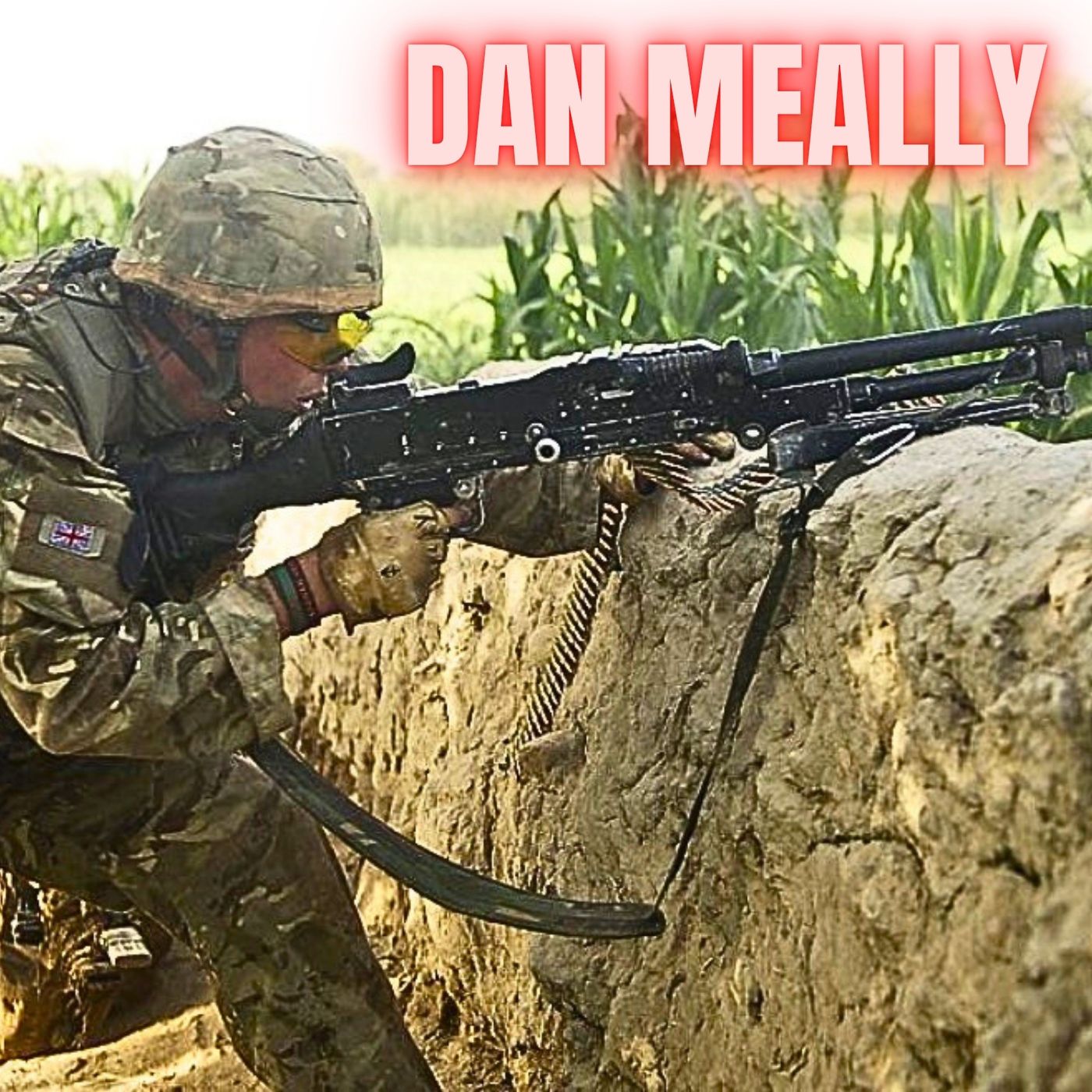
The Team House
From Iraq’s Chaos to the Frontlines Against ISIS with the YPG | Dan Meally | Ep. 405
03:06:30
Dan Meally shares his journey from a chaotic early career in the British Army to deploying in Iraq, where tactical successes often clashed with strategic failure. He later recounts fighting ISIS alongside Kurdish forces in Syria, offering a raw look...
Loading summary
Transcript565 lines
- [00:00]
A
I like things my way, my coffee, my schedule and my treatment.
- [00:05]
B
So I talked to my doctor about self injecting with the Vivgard Hytrulo pre filled syringe which contains fgartegamide alpha and hyaluronidase qvfc. It's injected under your skin subcutaneously.
- [00:16]
A
It means I can inject in my space on my time. It's my treatment, my way.
- [00:21]
B
Visit vivgardmyway.com that's V-Y V-A-R-T myway.com and talk to your doctor about Vivgard Hytrulo. Brought to you by Argenics Tax season
- [00:31]
C
has arrived and doing taxes without the
- [00:34]
B
right help can feel overwhelming.
- [00:36]
C
Intuit TurboTax is here now to guide
- [00:38]
A
you through it with confidence.
- [00:39]
B
Match with a TurboTax full service expert
- [00:42]
C
who handles everything for you from start to finish. Your dedicated expert checks every single deduction and credit to help you get the best possible outcome so you can feel confident you're getting every dollar you deserve.
- [00:52]
B
And the best part, you'll see real
- [00:54]
C
time updates on your expert's progress right
- [00:56]
A
on your phone while you live your life.
- [00:58]
C
Plus, you get unlimited expert help at no extra cost, even on nights and weekends during tax season. Visit turbotax.com only available with TurboTax full service experts. Real time updates only on iOS mobile app.
- [01:10]
B
Hey guys. Welcome to episode 405 of the Teamhouse. I'm Jack Murphy here with our guest today, Dan Mealy. Dan served in the British military and he then went on and served as a volunteer with the ypg, the People's Protection Units, the Kurdish militia in northwest Syria, who at that time were heavily engaged in fighting isis. And today he is a brewmaster.
- [01:38]
A
Not quite, no. But Dan.
- [01:43]
B
So Dan, welcome to the show, man. Thank you for doing this.
- [01:47]
A
Yeah, no worries, man. Yeah. This is the first time I've ever spoken by this.
- [01:53]
B
So, yeah, yeah, I mean it's kind of a relatively small group of people of Westerners that went over there and did what you did, but not, not microscopic either, you know, considering the totality of the war.
- [02:11]
A
Yeah, I mean there was a pretty solid turnaround of guys. The guys constantly rotating in and out and then you have people like me that sort of just sort of dipped in. But yeah, what was strange, the amount of like celebrities that I was out there with, like guys ended up on the news all the time. It was, yeah, it was quite odd. I'm quite glad that I didn't slip into that group quite like having my anonymity for a while, so. Yeah.
- [02:37]
B
You mean, like people who are Instagram famous?
- [02:43]
A
I didn't want to be controversial, but yeah. Okay.
- [02:47]
B
Yeah, I hear you. All right, so, Dan, let's start off at the beginning, man. You know, we're talking a little bit before the show. You and I are roughly the same age, roughly. Probably similar experiences in a lot of ways. But tell us about how you grew up and how that took you to the military in those early years. What was it, 2003, you enlisted, right.
- [03:09]
A
Yeah, it's kind of. Didn't have a happy childhood, kind of had that military interest, but from a historical point of view. But, yeah, long story short, my dad had set me up like a savings account. I'm from an Irish Catholic family, so it's quite normal to do that because christening money's usually given and that goes into, like, a savings account. You get that when you. So, yeah, long story short, I was like, 15, and my mom told me she stolen it. So that was like, right. I'm gonna do anything to get the out at home. So, yeah, I ended up joining. Joining the Army. So, yeah, it was a weird. It's a weird sort of way, but it was like it was my escape, if that makes sense.
- [04:03]
B
No, it makes perfect sense. And what did the British like in the United States? Is there some sort of deal where if you serve in the military, you can go to college? You get college tuition paid for anything like that?
- [04:16]
A
Absolutely not, man. Once you. Once they put you loose, that's. Yeah, you're on your own. It's quite a. Quite a brutal transition, and I had a really good setup, so I took redundancy in 2012. My last gig was the Olympics, was doing security there.
- [04:36]
B
That's awesome.
- [04:37]
A
Which. Well, G4S still haven't paid me for it, so I'm still waiting for that check along with the rest of the British army, But, yeah.
- [04:49]
B
So 2003, you joined the military to get away?
- [04:52]
A
I.
- [04:53]
B
What. What did you. Not. Mos. That's what we call it in the United States. But what. What job did you enlist for?
- [05:01]
A
Okay, well, this is kind of funny. So I'm red, green, colorblind, so I should never have got in. So what happens? I don't know if you remember the colorblind test. It's like a circle with these dots, and there'll be, like, a number in the middle.
- [05:13]
B
Yeah, yeah.
- [05:13]
A
So I'm going through, and I already knew I was ready. Colorblind. So I'm like, six, seven, smiley face, eight. Cabbage. Yeah, like okay, you need to come with us. So this nurse took me into this room. It's like a darkened room. There's this box with, it's like an LED light, but it was just like one singular light. And that just changed between like orange, red, green. And I had to say what it was and I just of flagged it and they were like, okay, that's good enough. I had three options. My first choice was the Royal Electrical Mechanical Engineers because I thought obviously when you people tell you about the military they always say get trade. Second choice was the Royal Engineers and then my final choice was my local infantry regiment. So the first two options were gone. But it gets better. Because my age and because of the arm that I was selected to go for on the fitness test, I had an insane amount of time to do the mile and a half run. Like something like 14 minutes. I could have stopped and had a cigarette halfway around. Yeah. But because I then lost that option, I had to do the infantry at policy, infantry standards. I really hadn't been training a huge amount. But there's these two, there's these two paratroopers or guys wanted to join the powers. So I was like, well I'm just going to stick with them thinking that's a good idea and then I'll pass the past. The mile and a half run came to the mile half run set off. These powers were gone in a couple of seconds. But I actually did quite well on it, like smashed it and then. Yeah, they were still quite worried about colorblindness. And then this color sergeant thing from. It was an infantry regimen. You just basically pointed at this. Jerry can pick that up, take it over there. Yeah, you're in. And that was it. But I actually started my basic training on my 17th birthday. So yeah, that was a, that, that
- [07:38]
B
was, that was controversial in the UK at the time as I recall because you know, boy soldiers, they were deploying to Iraq, I believe in the early years.
- [07:51]
A
Yes and no. 18. Yes. There was an incident, I think it's 1972 where two 17 year old soldiers were kidnapped and murdered by the Iraq. And that was huge at the time. Three Scottish soldiers, but yeah. And after that they, they stopped. The 17 thing though. I've heard rumors, I don't know how true it is that guys, I don't know how you would do it because you have to give so much documentation when you join up, but I've heard rumors that some guys were able to slip through somehow but I've got no idea how true that is. I'M aware of the rumor. I've never met someone that did it, if you know what I mean.
- [08:28]
B
So, I mean, the, the rule is that you can enlist but you can't deploy. You're going to be in training until you're 18.
- [08:35]
A
Yeah, that. Well, in theory, yeah.
- [08:38]
B
No, they do, they do the same here.
- [08:39]
A
Yeah, yeah. So it was. You gotta remember that. So this was 2003. No one was. Everyone had taken their eyes off background. It was all Iraq, but I joined like, it was a very experienced battalion, but it was a very, should I say, peace time. They'd just come back from Northern Ireland after I finished basic training. They'd done the final tour of South Omar. They'd had their leave companies come back. I've joined the company. And yeah, it was, it was more like a Young Defenders institute. I joined it's 3 Platoon A Company and within the first few months of being there, the company was known as Class A company because that's how it works. Because basically every CD team lose two or three guys. And we had a CDT every month at one point. It was not a healthy environment for a young man, but that way. So, yeah, it was an interesting, interesting experience.
- [09:47]
B
Like a lot of hazing and things like that.
- [09:51]
A
Well, yeah, I mean, it was. You've got to remember as well, the Iraq war was very unpopular with the British public, but it's also massively unpopular in the services. Like, people did not see anything there worth dying for and failing it. Popping a hot one on a drug test is a really quick way of getting out. If you, you know, you've done a couple of years, pensions aren't gonna be great anyway. You're not really losing anything. So a lot of guys use that, particularly when, when they knew, obviously you'd have payday Friday, you knew you were getting drug tested Monday morning. And yeah, guys, you know how to play the system themselves out. So, like my platoon, we had a platoon sergeant, platoon commander. They hated each other. We had two lance corporals and we had one corporal who had failed junior juniors the first time around and had to do it again and was sort of grudgingly given it a few years later. So he was no one's choice to be a section commander. So, yeah, we were horrendously on demand.
- [10:54]
B
Wow. And I mean, did you guys end up making it over to Iraq eventually?
- [11:02]
A
No. Well, I did Belize the first time around with them, which was. Yeah, that was rough jungle warfare training. Yeah, man. And what happened was before, before we deployed, my platoon sergeant had identified the Fact that I could, like, read and write to a sort of competent level. So I was going to be like the assistant signaler. The two guys who were signals trained, like, a week before we deployed, they'd come in on a Monday morning. One of the guys I lived with, he had just done a line of code to wake himself up on the drive in. And as he driven into camp, the drug. The gates were shot and the drug team from camp. So he. He didn't just pop a hot one, he popped a hot one while obvious hits on co, but he didn't say anything and they ended up deploying him anyway. We just got out into the field and that's when even the British army thought it's a bit up to send two guys that we know who have just. So they pulled them away and I was just given an entire platoon's worth of signals kit, which. Yeah, yeah, it was up, man. Because I ended up having to man pack most of it because the sergeant, like, we weren't allowed to back. Backfill it. So, yeah, I had a rough jungle exercise. Like, it was so bad because, like, the equipment we were using was so antiquated. We're using the Klansman radio, which you had to, like, tune in and. But there was no encryption, so you had, like, the back code book. So you had to encrypt your message first. Dude, I just. Literally just come out of training. I'd learned how to turn the thing on. I didn't know how to be a signaler. So we're doing, like, CTR recce, and I'm, like, whispering into the radio and I'm saying, there's, like, a column. Well, there's a brigade of T72s lined up in the middle of the jungle. Completely screwed up the backhoe. I mean. Yeah, it was wrong. Yeah. Welcome to the jungle.
- [13:17]
B
Yeah, man. Yeah, Belize is fun. And then you guys did. Did they kind of leave you in that position as the signaler? The. We'd call it the rto, I guess.
- [13:32]
A
No. Well, I ended up, like, pretty much going down with heat. We were doing. We were just moving to a different hover location. And because I had. Because we weren't allowed to backfill the kit and I was the new guy. I was carrying everything pretty much. I fell into his. Like, we were going up a stream and I've fallen into it, and I put my hands down, and it was limestone and it was completely smooth. So I put my hands down and my arms slid. I'm like, I'm gonna have to sit this one out till someone grabs me, which was a horrible experience. They pulled me up, rolled me over, picked up the bergen, like, are you carrying? To top it off, we didn't have the SA80A1 at this point. We'd already gone to the A2. But what sort of snuck under the Mythology of the A1 is a piece of called the LSW, which is basically an SA80. More metal welded to it and they call it. So they pretended it was a support weapon and some inbred from the Ministry of Defense bought it. So I had like ammo for my support weapon as well. Like a sandbag full of blanks. Platoon sergeant, to be fair to him, went absolutely ballistic and made sure that all the guys started carrying some of the kit. But I was like so degraded. This was like the first week being in the jungle, my body just couldn't catch up and. Yeah, man, yeah, grew up quick.
- [15:05]
B
So. And when, where did you end up getting sent after Belize. You guys return home?
- [15:11]
A
Yeah, so we got back at this point. My fitness was pretty good as well. Which to be fair, does obviously put you into good stead. Obviously having just come back from training, also just finishing training, the guys had like six weeks off. I think it was six weeks leave. So they came back with beer bellies. So it was easy to sort of keep up with the fizz, shall we say? So, yeah, I really got into that. Our next deployment was to. I turned 18. We went to Northern Ireland for the marching season. But this was going to be the first year. It was just going to be the PSNI on. On the streets. We were going to do a month of public order riot training. And the people who were playing the enemy, the civil, our sister regiment, they're all green jackets. I don't know if how much people know about the tribal nature of regular British infantry. It gets quite heated. Like, dude lost in the. I remember coming around the corner and my platoon sergeant has got a guy on the floor. He's got the shield on his throat. He's hitting him and he's just going run. Keep going, keep going as he's hitting this. Yeah, it got pretty wild. Yeah. At one one point I got separated. I completely red misted. That was going to become a feature of my military career. Got separated from my call sign. There was DS with me and I remember him looking at me. I can barely see through the visor because they're all up potatoes and cracks and stuff. You can barely see anything. This was at night.
- [16:56]
B
They're throwing potatoes at you. That's racist.
- [17:02]
A
He just looks at me like, yeah, dude, you just. And let the crowd sort of go to me. And I just knuckled up, man. So I just threw my weapons it slung, so I just threw it to my back and just started swinging and he pulled me out and I was like. Like, this is the early 2000s. So I knew I was in trouble. I'm either gonna get chewed out or I'm gonna be on the floor winded in a minute. So took me to the sim bin and lifty blizzard and then gave me, like, probably the highest praise I'd ever received up until that point. Into these guys. My platoon sergeant Case picked me up and this guy was like, yeah, you got a good one here. Like, did it like a double take. I bought him
- [17:49]
B
because you are willing on somebody from the rival. Rival unit.
- [17:54]
A
Yeah, man, I got stuck in. Well, the thing was, so the school that I went to, where I finally ended up growing up, it had a really big playing field. So if you got into a fight at school, you had to wait for one of the teachers to run from one of the buildings to come and break it up. So you have to hold your own. So, yeah, I was quite cool with that, if you know what I mean. Like, I wasn't. I wasn't. I didn't have a problem. So, yeah, that was. That definitely put me in good step for a bit. But then the opportunity for a talk in Iraq was coming up. One of the regiments that we would be amalgamating into, the rivals, was preparing to go and they. They were very short bods, as everyone was. And, yeah, so I put my name down, basically. I knew if I wanted to have a military career, I needed to know how I was in the. In the ship. Yeah, yeah. And go. So I just wanted to get myself out there as quickly as possible, naive and ignorant as I was. But yeah, yeah, so. And that as well. We, after Northern Ireland, we went on something called spearhead, like lead element. So wherever we get involved, we would have been the first unit to go. We all knew we were going to Iraq, we just didn't know when. At least this way I knew when I was going out of date to work off of. So, yeah, that was the sort of thinking behind that.
- [19:21]
B
Guys, if your lady or your fella or that person that sends you an eggplant emoji at 2am is ready for better sex, then you should be too. That's where bluechew comes in. They have been on a mission for years to help get you bricked up, build your confidence and help you actually perform in the bedroom. Their new arousal boosting formula, BlueChew Gold, is helping millions of men have better sex in 2026. While most ED meds focus only on blood flow, Bluechew Gold goes further by combining two ingredients for blood flow with two ingredients for mental arousal and connection. So you're not just physically ready, you're actually in the mood. This type of innovation is why bluechew Gold is the number one brand in erectile function. Don't let your mind get in the way of a good time. Discover your options@bluechew.com and we've got a special deal for our listeners right now. When you buy two months of BlueChew Gold, you get a third for free with the promo code housecall. That's promo code housecall. Visit bluechew.com for more details and important safety information. And we thank Bluechew for sponsoring this podcast. Hey, guys, I'm Jack Murphy here at the team house and today I want to tell you about the sponsor for tonight's show, Mars Men. This is a natural testosterone support supplement, I take it. I've been taking it for about the last five weeks now, and I'm starting to notice a difference. You take five of these pills each day and each one of these cans lasts you a month. I think you need to use them for a couple months to get the full effect of them. But I'm about five weeks in and I'm starting to notice a difference already. Increased energy, better performance in the gym, all of those things. I've, you know, quite frankly, in the past had a problem with testosterone as a lot of military veterans do, as a lot of men who are going into their 40s do. And, and this is actually something that seems to be helping me get my levels back up even higher. So I'd highly recommend checking them out. It has eight different substances in it that help boost your testosterone count. If you guys will go and check them out, we'd really appreciate it. So would the sponsor. For a limited time, our listeners get 50% off for life plus free shipping and three free gifts@ Mengotomars.com that's Mengotomars.com for 50% off and three free gifts when you check out. After you purchase, they will ask you where you heard about them. Please show support for the show and tell them that the teamhouse sent you. Thank you, everyone.
- [22:09]
C
This week with digital coupons at Safeway and Albertsons, get beef rib roast for $7,97 cents per pound member price with minimum purchase of $50 or more in a single transaction. Exclusions apply. See Store for details and Broccoli, cauliflower or Russet potatoes are $0.97 per pound Member price limit 6 pounds plus. Selected sizes and varieties of Lucerne butter cheese or Philadelphia cream cheese are $1.97 each member price. Visit Safeway or Albertsons.com for more deals and ways to save.
- [22:39]
A
My name's MacKenzie and I started a GoFundMe for the adoptive mother of a nonverbal autistic child. The mother had lost her job because she wasn't able to find adequate care for this autistic child, so she really needed some help with living expenses, paying some back bills. So I launched a GoFundMe to help support them during this crisis, and we raised about $10,000 within just a couple of months. I think that the surprising thing was by telling a clear story and just like really being very clear about what we needed, we had some really generous donations from people who were really moved by the situation that this family was struggling with.
- [23:26]
B
GoFundMe is the world's number one fundraising platform, trusted by over 200 million people.
- [23:31]
C
Start your GoFundMe today at gofundme.com that's
- [23:34]
B
gofundme.com gofundme.com this podcast is supported by
- [23:38]
C
GoFundMe this week with digital coupons at Safeway and Albertsons. Get beef rib roast for $7.97 per pound member price with minimum purchase of $50 or more in a single transaction. Exclusions apply. See Store for details and Broccoli, cauliflower or Russet potatoes are $0.97 per pound Member price limit 6 pounds plus. Selected sizes and varieties of Lucerne butter cheese or Philadelphia cream cheese are $1.97 each. Each member price. Visit safeway or albertsons.com for more deals and ways to save.
- [24:10]
B
Cool. So what part of Iraq were they deploying you to and what was going to be your unit's mission?
- [24:17]
A
So Basra mainly in the southern parts of the suburbs, but main job was MLTT with the police, which got abandoned within weeks.
- [24:32]
B
Is that local and national training?
- [24:36]
A
Yeah, I mean, I don't know about police and I don't know why we got sent to do that job in the first place, to be honest. But yeah, basically because the, because the police were so corrupt, we just couldn't work with them. We couldn't trust them enough to just turn up to their bases. So we got rerolled. We ended up doing force Protection. But we didn't have any sort of like we were using stripped down Land Rovers still. And this is like 2006. This is well into the FPS and the passive infrared.
- [25:07]
B
Yeah.
- [25:07]
A
And we were still in when. When I said I antiquated the British army was back then. It actually takes the breath away to think how we were equipped. Yeah, that was a rough. We were quite lucky. Michael signed my company. We were either just before an incident or just after. We did initiate one of the largest ambushes of British forces up until that point.
- [25:31]
B
No.
- [25:33]
A
Yeah, man. We. We did an operation to relieve the base, Abanaji, I think it was in Alamara. It's called Operation Oyster where we basically drove to and back three times in a massive convoy using exactly the same route. Because that's how imaginative the command we had was. I mean for me, looking back now, particularly having gone to university and stuff and sort of studied, I don't consider myself an intellectual, but looking at how much damage 30 years of northern Ireland have done to the British Army's intellect was absolutely highlighted in the debacle of Iraq.
- [26:17]
B
Could. Could you explain that a little bit? I mean, what do you think it was about Northern Ireland and all those years deployed there that kind of like shaped the mentality of the British officers and NCOs.
- [26:29]
A
I mean it wasn't their fault. You only know the language that you know. Do you know? Yeah, it's a tricky. It's a tricky one. I don't. At the intellectual, at the academic level because you have 30 years of any sort of ideas that deviated from government policy during the 70s, 80s and 90s was sort of deemed sort of lefty pro IRA stuff, even though it had a valid point in its current insurgency sort of assessments. So the army sort of cauterized itself from academia in that sense. And it became almost like incestuous approach to. So modernizing what. What they'd learn rather than just try and blueprint it into another environment. The amount of times people would make that the comparison of Sunnis and Shias as Catholics and Protestants, even though that really doesn't fit, it's far more fractured and completely odds with. With reality. I mean, I used to sit in briefs and again, this is. No, no offense unit I was with. They hadn't done a tour other than Northern Ireland 10 years. This was their first tour since Bosnia in 1995 or 1996. Sorry. I would sit in briefs and look at my watch and wait until someone said in Northern Ireland. And it was usually around the seven to five minute mark. And, yeah, I just wanted to take my helmet off. Yeah, The. The. The way a rap deteriorated on that tour as well, because Telecate was the sort of beginning of the siege of bases. I didn't see it at the time, but Lynx was shot down over the city. Remember the aftermath, that. That was a big deal for us. You had guys going out. There was public order situations. So in Northern Ireland, when there's a riot, the rioters know when the police in the army turn up, whether they can see it or not, there's a helicopter watching them and the helicopter will follow them and find out where they live and then they'll get lifted. In the early hours, that wasn't happening, right, because they didn't give a. There was too many of them. So when the army would turn up with their shields and their battens, the Iraqis would just shoot at them and throw hand grenades. So very quickly the Northern Ireland game would end to the point where riots would happen and we would just say, right, we're staying in. It's their streets. They want to burn them, let them. We're not. We can't affect anything. Probably the best thing we did that I believe that we did while we were there was we ensured that the Basra Police department got paid because a lot of them were having to moonlight as taxi drivers and they were very busy in that city. If there's any takeaway from that tour that I feel contributed, that would be it. Yeah, yeah.
- [29:35]
B
Going through the locals.
- [29:39]
A
Yeah, I mean, it was. Yeah. I mean, it's wild, man, seeing bodies in the sh Road. Because this is when the. The Sex Harry started going off. Rao just emptied of cities within two or three months.
- [29:54]
B
Tell us about the. You said that the largest ambush, you know, when you guys were doing that convoy back and forth. What happened that day or night?
- [30:02]
A
Oh, man. Yeah, it was a night. So I think the bridge is called the Com Rally bridge. It's a bridge north of Basra, just over where, think the shack separates over an island or something. It was at night. We had loads of locally employed HET drivers and we were going over the bridge in packets. Across from the bridge is basically a huge housing estate. I was on the third packet getting ready to cross and it was the packet that was going across. Yeah. Got opened up at. And. And honestly, it looked like every window in this place had a AK sticking out of it and shooting at us. While this. While we were waiting, a crowd of people had cut the fuel lines on the trucks, so our drivers were having to get out and. Yeah, yeah, man. Record a situation. Yeah, man. This was really well thought out. Luckily, we had warriors on. On call and a couple of Charlie twos, so the moment they turned up the crags, like to back off, but. Yeah, those are.
- [31:06]
B
Those are helicopters.
- [31:09]
A
Sorry. The Warrior IFE Challenger 2 tanks.
- [31:14]
B
Oh, gotcha.
- [31:15]
A
We had on call. Yeah. Yeah. So they rolled up and just sort
- [31:18]
B
of they off once they saw that.
- [31:21]
A
Yeah. One of the enduring images I have, though, was the company sergeant major sort of litter with headlights, facing a crowd by himself with just two buttons to go up and go. Yeah. We're about to move off, sir. Come on. Yeah, he was. Yeah, he was an outstanding dude. Yeah. So, yeah, one of the guys got shot in the head on the second packet. He survived. As in kind of funny. So they're firing back. He's. The rounds hit his helmet. It's passed under his scalp and popped out the other side. But he thought the guy behind him, who was also firing it, punched him in the back of the head. So he turned around and punched him. The guy's like, what the are you doing? He's like, you just hit me. He's like, no, I didn't. And then he could see all the blood coming down backwards.
- [32:18]
B
So, yeah, it kind of crossed across his scalp and took a. His.
- [32:23]
A
Yeah, just opened up the back of his.
- [32:25]
B
Yeah, yeah.
- [32:26]
A
And the dude sold. Like. I'd have gone home personally, but, yeah, hardcore. Yeah. Yeah, man. Yeah. I think we lost one guy from the battalion. It was a blue on blue, but it was kind of one of those unfortunates. He. He's with the brigade recce force and doing a strike up on the. Bravo's come running out, firing the weapon, and guys are fired at him. Crossfire and Crosby. Yeah, crossfire. Which was. Yeah, obviously. Really? I wasn't from that unit, so I obviously didn't have that level of connect, as it were, but, yeah, it's always when it happens, you know?
- [33:10]
B
Yeah.
- [33:10]
A
Yeah. To be honest, other than that, compared to other units, we actually had a pretty. Pretty good tool in terms of injuries and deaths. So as bad as it was, it could have been a lot worse.
- [33:21]
B
And so what are you thinking sort of on a personal level, in a professional level now that, you know, you thought, I got to get into the. I want to be a, you know, combat veteran. Now you've experienced it, are you thinking like, I want to stay in the military, I want to continue doing this? Or you're like, I want to go to college and get me the hell out of here.
- [33:39]
A
No, those I can't. I got bored of Iraq. I didn't see us doing any good and there was a lot of spin on how things were going. Like yeah, I mean that was across the board but the British were uniquely bad at that and it was just the. I mean we were the smallest arm gang in a city full of massive arm gangs and it was just a. Yeah, like I said as well seeing the damage that Northern Ireland had done as well. He's like right, we really need to learn from this. Also because my contract I had another two years I think to to do but to be fair because we were reforming into the Rifles we've been slated to be a commando regiment or commander compatible regiment. So I thought well that's going to be worth sort of sticking around for. And to be fair how I described the unit that I joined A Company to 2nd Battalion Line Infantry. That was a time and period. A lot of those issues have been sort of dealt with. Before I'd left we had like new command, more professionalism in the NCOs and things had already massive improved. So I don't want it to sound like I'm crouching about that unit but I ended up finishing in I what I believe to be the best you could get an infantry unit tuned up to. After we re rolled to a commando commander regiment battalion. Sorry.
- [35:22]
B
Other than the command handover, what were some of the big changes that you guys made as you became a commando?
- [35:34]
A
Well a lot of it to be honest. We we had a lot more interaction with the the raw Marines for a start which is a good thing. Which meant because the rifles in regular battalions there's five one rifles that I was in was the commander or one we were kind of hermetically sealed from the rest of big army if that makes sense. And we were certainly cut away from the rest of the big rifles. They were sort of forming their tradition sort that that the rifles is very uniquely corporate within the British military. They've got a very corporate outlook. We were able to keep the away from that. Like a big part of that was after Iraq I I joined bugle platoon which is the machine gun platoon of in an infantry battalion it's the core of drums for the rest of the infantry but it's bugles for the Rifles. Went away and did my beagle course came back. The Rifles would give the guards a run for their money when it comes to like tradition and sort of etiquette and bugle platoon which every battalion has. They're sort of like the Custodians of the traditions and history of the regiment. We off having a bugle platoon, we were like, no, no, we're a fighting Italian. We have a machine on platoon and his machine comes first. Which sounds really petty. But this was a huge deal within the rifles. The fact that we had this amount of leeway and the fact that all our commanding officers were SAs massively meant that we, you know, General Sir Nick Parker, I was, um, attended an event he was at and he said, even one Rifles is not an elite and that we need to get out of our heads that we are. The Royal Marines felt otherwise and effectively they said, you know, if you want to be part of 3 Commando Brigade, you have to meet at least a standard. If you're not going to do the commando course. Because it just wasn't feasible to get an entire battalion through aac, you at least, yeah, have to meet standard. And the army and their wisdom, to be fair, started giving us SAS or WestF commanding officers. And that really, I mean just the level of training we started getting was compared to what I'd received previously was just through the roof. And like I said, I, I would say obviously the power is their own thing and I'm not gonna, you know, and everyone with a brain knows that, but we really were the best. You could get a regular infantry regiment tune up to. I've got no problem saying that.
- [38:06]
B
Yeah, that's pretty cool. You got to see the whole transformation.
- [38:11]
A
Oh, completely.
- [38:18]
B
So what was, what was next for you as. As you go through this transition process? What. What's the next tour for. For the commando.
- [38:28]
A
Yeah, so we had Herrick 9, 2009. I got given local promotion. Yeah. In their wisdom, they gave me that school. So we deployed. I was in like a weird multiple, which is roughly half two. I don't. That's how all. That's when again, a legacy from Northern Ireland. We were going to get broken off and we're going to be working with the ta, the reservists at Cambastion, which is obviously a massive team when you sort of slop your gut side thinking you're going to be in Green Zone. The battalion have been given the role of omlt, which was Operational Monitoring Liaison Team. So small team of Brits with a Afghan platoon, Company Kandak I think it was, which was basically. That was the coolest job for us in Afghan at the time. But yeah, we got to Camp Bastion. We then were told that we were gonna break off like Michael Sign, we're gonna go off to Bob Keenan, which is in gresh and we're going to be relieving. It's the rule, one of the Royal Scots regiments. So, yeah, so we've had the massive deflation of Bastion and then we got the. Yes, we're going out into the field and into the Green Zone as well. So, yeah, we get to. For Keenan, Keenan had a small outpost that guarded a bridge that the Taliban had previously blown up and it was the only way in and out. So it was like four Brits and about a platoon's worth of Afghans in this little checkpoint. It was a great little place to sort of get them trained up, as it were. So this is my introduction to the A. We've landed in Keenan, got our kit, we've had a wall round and then we've gone straight out to relief the guys that were already up there to. We were going to be, I think it was a week or five days we're up there. So we go get in, meet the guys we're going to be with for the next few days. I've been based in Edinburgh, so I can understand Scottish people, but majority of the guys from my regiment are from the southwest and the southeast. A lot of them don't understand like last region. So I was like the Tajiman because
- [40:48]
B
they all sound like Sean Connery,
- [40:51]
A
mate. Like, no, I think I know even thicker.
- [40:54]
B
Yeah, yeah, yeah, yeah,
- [40:59]
A
yeah. But yeah, that was great, those guys. But yeah, that was the first time I'd worked the A A. My God, you know, you hear stories, but until you see it, I mean, I know you guys are working like with the commandos and the triples. We had the other guys, we had the. The bulk of the Afghan National Army.
- [41:20]
B
A lot of people put off buying
- [41:22]
A
a new mattress because it feels like a hassle. Too many options, too many claims and
- [41:26]
B
no real way to tell what's actually
- [41:28]
A
going to hold up. Ghostbed makes that decision easier. Ghostbed is a family run company with
- [41:33]
B
more than 20 years of mattress making experience.
- [41:35]
A
Backed by deep manufacturing expertise. Their approach is straightforward, focused on quality materials, smart construction and a consistency over time, not flashy features or complicated sales tactics.
- [41:48]
B
Every Ghostbed mattress is built for long term comfort, using durable foam and proven cooling technology to help regulate temperature while you sleep. It's designed to feel reliable night after
- [41:58]
A
night, not just when it's brand new. And if you're not sure which mattress is right for you, Ghostbed's online mattress quiz helps narrow it down quickly.
- [42:06]
B
Whether you're a side sleeper who needs a little plushness or Someone who prefers a firmer feel. The quiz matches you with the right
- [42:12]
A
option based on how you actually sleep. They also keep pricing grounded. Ghostbed mattresses cost up to 50% less in comparable brands. You could rest easy knowing you're getting one of the best values at this quality level. Every mattress comes with a 101 night sleep trial, an industry leading warranty and fast free shipping. And as a team house listener, you
- [42:32]
B
can get an extra 10% off your order.
- [42:34]
A
Just go to ghostbed.com house and use the promo code HOUSE at checkout.
- [42:40]
B
That's ghostbed.com house code house. For an additional 10% off site wide, upgrade your sleep with Ghostbed, makers of
- [42:49]
A
the coolest beds in the world.
- [42:51]
B
Some exclusions apply. See cipher details. Thank you Ghostbed for sponsoring the show.
- [42:55]
A
Thank you guys for helping support the show. Bye. We must have been in that base, I mean, not even two hours and an Afghan Ana guy come off guard. Another guy's gone to relieve him. Guy that's just come off guard has gone through this guy's kit and stolen like a cassette tape. The guy on guards come down, he picks up a metal picket, smacked the guy across the arm and broke his arm. The guy with a broken arm then picks up his weapon, tries to copy it, goes to shoot him. So we've all had a Mexican stand up in the middle of this camp. I had the Sig 226 on me at all times. So we've had this Mexican standoff. We've managed to calm things down. We told the commander that he like needs to deal with this. So he wanted to take the guy around the back and execute him. We've been in the field hours.
- [43:48]
B
You're kind of having to defuse this whole situation. Like, yeah, guys, we can't do that.
- [43:54]
A
Trying to be a diplomat because you don't want them sleeping.
- [43:57]
B
Right, right, right.
- [44:01]
A
Yeah. I mean I was 21 years old.
- [44:07]
B
Did, did you guys, did you guys have problems with them smoking opium and things like that?
- [44:16]
A
No, the smack, they weren't so heavy on that police. I mean, they were stoned all the time though. I mean, I went to Amsterdam when my redundancy money came through. I took my girlfriend to Amsterdam. But I smoked off like a. The moment I was out of the army. I didn't have anything on these dudes like these. And like, they would have give like Keith Richards, the heyday of the, the Rolling Stones, a run for his money. Man. Because it is unreal is a constant. But your clothes stink of it and you're outside constantly. Yeah. And they would just do that. I've never thought possible. Like, so this was in that area. The IED threat wasn't that big, so we were still doing like staggered fighting patrols. I was lead man a lot of the time for our call sign. So we had like DNA in the middle and we had a dog bark. But it like came into the middle of the patrol as we were staggered along the file and the guy at the back fired the shop through the middle of the call sign. Oh, get the dog. Oh, yeah, yeah, yeah. And this was like not a oneoff. It's kind of like, don't. I know a lot of them died trying to protect their country, but it was infuriating working with them at times. I know a lot of people have had good experiences, but I'm afraid I didn't. And the police were worse.
- [45:43]
B
Did you feel that by the time, the end of your time working with them, do you. Had they made any progress or was it still like day one?
- [45:52]
A
Yeah. I mean, the moment they get into contact, they just rattle around and head back in and start telling more stories about how many people they killed. And it was almost like war is performance if you know.
- [46:04]
B
Yeah, yeah, yeah.
- [46:05]
A
And the only other guys that actually wanted to win were the guys on the other side. They actually wanted to win. I mean, again, we didn't do this job for that long. Danes ended up taking it off us and we ended up going back to Bastion and ended up doing force protection on the helicopter. Which me. That was an experience. Yeah,
- [46:31]
B
yeah.
- [46:32]
A
That was a rough tool for that because we were with 1 Rifles. They were. One of you have four. Four. 2 Commando, 40 Commando, 1 Rifles. So if you went out on the flight, it was a one in three chance it was going to be someone that you knew. So it wasn't like it's a cat a with a leg missing. It's. Oh, I'm from anything.
- [46:52]
B
Yeah, yeah.
- [46:53]
A
I mean, yeah, it was. That was rough. I'm amazed. We actually would like to do that job. But yeah, yeah, it was pretty rough.
- [47:02]
B
And so you guys were sort of like the security element for the medevac.
- [47:06]
A
Yeah, we'd hold out where we could if. If it was needed. But our primary job really was force protection on the ground and we could get dropped off if necessary. So it was like all man buy a team if. If required for whoever was on the ground. That didn't really get necessary though. Pretty much every time I jumped off I was like, you sure? You sure you don't Want to keep us? Yeah, but I mean, it was just a while to see that much of the war. That makes sense. It's quite unique. Like we got. We had one call, like it was a Turk had a heart attack in the middle of a firefight and I remember that blowing my mind. Obviously you train to treat a heart attack, but you never actually expect you're gonna do it.
- [47:56]
B
Yeah, because they're all 18 year old soldiers.
- [47:59]
A
Exactly. Yeah. Yeah, that was pretty wild. But one of the most, like one of the worst was there was a blue on blue with a javelin, I think it was. Three guys were killed. The one survivor was an MFC from Sport company, my company. And I knew him and it was just that, like, obviously he was blast. I didn't, like we weren't friends, but I knew him. To say hello to him, he was just completely shell shot, man. So I'm sat across from him. I remember, like, I didn't know what to do, so I knew he smoked, so I just gave him a pack of cigarettes, like the whole pack. I remember the Load Masters, like, looked and like thought we were about to spark up. Like, no, no, it's cool. I know him. He's like, what? What? And I. No, no, I know him. He's like, it's cool, it's cool. And like, you got it then, like, just let me sort of. You're gonna be all right, dude. Sort of thing. But yeah, that was, that was burnt through. Quite a few uniforms on that.
- [48:53]
B
Yeah, man. Yeah, no, that's. That's tough.
- [48:57]
A
Did.
- [48:58]
B
Did you have problems transitioning back to the UK after these? You know, especially that experience.
- [49:05]
A
Oh, man. Yeah, I had to go in for like, alcoholism. Yeah, I really had to call mine settled back together. I basically coming back from Iraq, I pretty much started partying and didn't stop for about a year and a half. And it got pretty sort of like my fitness went to. My attitude was horrendous. I mean, I was not. I wasn't a model soldier when I was a good soldier, if that makes sense. I'm just really good at scrap. But yeah, I did have to sort myself out. To be fair to the army, they really allowed me to do that. They. Yeah, they gave me the space to do that. I was given the right to hang myself and I used it to pull myself up. So, yeah, yeah, they're definitely owing to that. When we got back from that tour, they put me on a promotional course, which was a mistake because I was arrogant as. Because I've been. I haven't just been doing stuff I've been taking patrols out so in my head I'm Mr. Awesome because everyone's telling me how great of a draw it is. I hadn't set up an ambush in years. I hadn't done a recce patrol in years. I hadn't like done some guard but proper guard in the field in years. I didn't practice anything. The only thing I was really good at Matt reading Just before the final exercise as well my girlfriend was taken into hospital and that was obviously a massive like like I was given the opportunity to go but family said look we've gotten, she's fine, we're going to take care of her. You crack on but it was not my head, not in the right space as well Completed the final exercise came off had the debriefs afterwards and was told that I was under no certain doubts the worst, the biggest disappointment on the entire course with the exact words he used and they were right. I don't. Yeah they are absolutely right. However I did come off a better rifle that absolutely yeah I yeah I learned a lot from that went back to my platoon there's within the rifles there's like a post int to go to the band that obviously the army had the regiment has a band and buglers from the things can go for like a two year posting and they were like look you need some time out you need to go to. We're going to send you to the band to do some ceremonial for years. You know when you're too stupid to see when someone's doing you a favor.
- [51:38]
B
Yeah yeah yeah
- [51:42]
A
yeah So I obviously took that really well so I've gone down to Winchester which camp with fans base which is. It's actually a really nice camp like it looks nice which is unique for mod sort of property and it's in a beautiful part of the country so I was arrested for drunk and sorely within a couple of weeks in the time I was the first guy from the band to have done so in about 12 years I think it was. It got even worse because I was arrested outside of Bang. I got taken to Maidstone which is nowhere near where I'd actually been arrested. I was released the next morning I was given 120 pound fine. So I've gone to a train, I'm heading back to camp done the phone call of doom yeah I've just been released because I knew they knew and the guy that I spoke to said well you've been released. Oh yeah, you know 120 pound fine he's like, what for robbing a bank. Somewhere along the road, someone said, I tried to bank like three in the
- [52:43]
B
morning on my own.
- [52:46]
A
Yeah. But then something kind of strange happened. I met a girl. And so, you know that one girl that civilizes you?
- [52:56]
B
It happens to the best of us.
- [53:00]
A
Yeah. So I met her and thought I actually quite like this girl, so maybe I should, like, lay off the drink for a bit so I can do stuff with her. And, yeah, I started training again while I was down there. Really got into my fizz again because I didn't want to be there, but I knew which side my bread was buttered, if you know what I mean. We were posted to Sandhurst as the band there, which was amazing. I'd do like two duties a day and had the rest of the day off. And so the girl, this girl, girl, she'd gone to the best girl schools in. Sorry. Her stepdad had been the head of mergers and acquisitions for a major chemicals company called ICI back in the day and had lived in Japan for eight years. So I was literally commuting to work from this beautiful, like, picturesque cottage in. Sorry. To work at half a day in Sandhurst and back for about half a year, which was pretty cool. It was, yeah. Like I said, I was too stupid to not realize people were doing me a favor. However, it is the kind of posting where you can go to rust really quickly and people do. And there was no way I was gonna be sat around getting excited about going to Australia to do a ceremonial job when my friends are getting blown out. Right, Right. I'm not that dude. There were guys there that. I know he felt that way. But, yeah, I was very adamant I was going on our next tour. I don't know whose strings were pulled because I know I was constantly told, there's no way they're gonna let you go. You haven't done it yet. I tried to be like Billy Big Ball. So I was like, yeah, my CEOs. So, yes, who the gonna tell them who's gonna be on his orbit? And they're like, no, no, you don't understand that. Never let anyone go, mate. I was gone within a weekend, like, yeah, I'm done. Went back to the platoon, picked up where I left off, was back in machine guns. We were going to be the fire support group for the Herit 14, buzzing around in jackals. So we were all trained up for that. And then at the last minute, 42 Commando decided they'd rather do that job. We had it taken off of Us, which was a massive kick in the teeth. I mean, like, it was a kick in the teeth for us. But our platoon commander had literally had his command taken off him and he was in tears when he gave us the news that we weren't doing that job anymore and that we were going to be split up. That was an emotional day. Yeah, yeah. So, yeah, we got broken down as the machine gun sections to various multiples within the rifle companies. And to be fair, as bad as that was, I did end up in a multiple of the most unassuming badasses you've ever seen. The guys are with were outstanding considering, like most of them, it's their first time out of the country. Yeah, yeah, yeah, they were pretty good, man.
- [56:04]
B
Where did, where did you guys get sent this time?
- [56:08]
A
So we went to Nari Siraj side. So just outside of Muscala on the road up to garage.
- [56:16]
B
Okay.
- [56:17]
A
It was one of the most dangerous. I know everywhere is one of the most dangerous areas of Afghan, so I don't know what that's worth, but yeah, it was pretty hairy. Yeah, we had a rough tour on that. My multiple commander, Kev, who was also my machine gun platoon commander, was killed within a few days. A few weeks. And then a few days later, one of the guys stepped on a device cut in half. We lost two ISO injuries as well. With him. We were attached to four two Commando Kilo Company. I talk about this. Yeah. So we've been sent to a certain area to check it out. The IDs happened. We then had to wait for engineers to clear out because we're combat ineffective. We then embarked on vehicles that 42 Commando had sent to pick us up. Obviously when you get in vehicles. So obviously the uninitiated internally radios off as soon as we were on the vehicles. The HQ didn't know that in the roaring vehicles were radio speakers so we could hear everything that was being said on the net. I'm going to be diplomatic and say the decision was clearly being made. There was any repercussions. It was going to be our commander that was going to wear it while bits of our friend is still falling out the air, which was because the guys that we were attached to were really sound. Once we got back to the CP that we started off at all multiple commanders out of the first vehicle. He's just looked at us all and put his arms up because we've all heard it straight away and I couldn't have been proud of them for it. The guys basically mutinied and we're like him, your company Marines. Yeah, we absolutely lost our. The marine boss that was with us because we had a platoon of them with us. I mean, again, I don't want to. I'm telling you now, if you're in the most dangerous country in the world, having a room full of Romaine Commando next to you, you sleep safer, all right? I'm telling you, you sleep a lot better. So, I mean, there's no disrespect, but he was. I standing and he said, look, I've got to get on the net and say that heavily armed poolside has got broke. And it's like the senior body was down to me to, like, explain facts of life that, like, this is. This is mutiny. Like, we're gonna get that. You can't just say, I'm not working for you anymore. But the main cell was. We thought we were helping our commander out, and actually we just make a massive world of hurt for him on top of a really day already. So, yeah, we got ripped out there the next day. Wow. Went back to on Rifles. Wow.
- [59:08]
B
A real. A real mutiny in wartime.
- [59:13]
A
Yeah, I say it was a mutiny. It was like. It's not like anything was planned. It's the moment we got out of beer, everyone started swearing.
- [59:20]
B
Yeah, yeah, yeah. No, I get it. There's an uprising. There's insurrection in the ranks.
- [59:26]
A
Well, we were human, man.
- [59:28]
B
I get it. Yeah.
- [59:30]
A
I mean, again, I don't want to. For two Commando are an amazing unit. The guys who were with were outstanding. But, yeah, I haven't been half as derogatory about their officer commanding as their own blokes were about it. I'll leave it at that.
- [59:46]
B
Yeah, No, I get it, I get it. I mean, the bodies are still warm and they're already trying to pin the blame. Who are we going to blame? Like, wow. That's what you're worried about right now, really?
- [59:57]
A
Yeah, yeah. I mean, again, yeah, happens in war. It is what it is. But, yeah, we luckily, like I said, we. We went back to A Company 1 rifles, which was our parent unit, and we had an amazing tour after that. I mean, we really. I mean, this was supposed to be courageous restraint, but I mean, that. That wasn't going on. We'd had. We'd had a Scottish soldier go missing, and he'd been captured and tortured, and we had the pleasure of finding his body. Not my fault.
- [60:33]
B
With the company, he was kidnapped by the Taliban.
- [60:37]
A
Yeah, it was really weird, man. He basically got out of. I know what. I think he woke up in the middle of the night when I walked out of his camp on his own and walked to an area where he had allegedly lost a piece of equipment, we think. Well, the inquiry said that they're not sure about his state of mind when he was picked up. But. Yeah, it's just such a weird thing.
- [61:05]
B
It is weird because the Taliban normally, you know, as bad as they are, the Taliban usually isn't about like torturing or beheading people. That's more of an Al Qaeda thing.
- [61:16]
A
Yeah. I mean, these guys went to time on him. I don't want to. I mean, they made a display of it.
- [61:22]
B
Jesus.
- [61:24]
A
Yeah. And it. What it's. That thing is particularly in Hellman, like current research shows it's very debatable to what extent it was actually the Taliban who we were fighting. You had various criminal groups and stuff like that. So, I mean. And you always hear the rumors of the Chechens that, you know, the other ao. I mean, so you don't know who really outing about. But yeah, that was. We searched that village the next day as well where he was fined and there was a guy. There's a guy we previously arrested after he was caught in a VCP for blowing up another guy. So that's the Afghan justice. So, yeah, courageous restraint was well out the window after that. Yeah. Was no way I was going to let one of them get a second chance.
- [62:15]
B
Yeah. Yeah. I mean, it's that sort of like set the tone for the rest of that deployment, I guess.
- [62:21]
A
Yeah, pretty much for me. Yeah. Yeah. I. When I say that, I mean, like, the right people have got no interest in shooting the wrong people. Yeah. It was weird as well because we had a BBC documentary team with us that was filming one of the guys. They filmed him all the way through. Training school, young soldiers and. Yeah. Do you actually catch an ambush? You can hear me firing the GPMG in the ambush in it. Which was a. Yeah, that was a crazy day. But, yeah, that was. That pretty much set the tone that, to be fair, the company actually did. It's gonna sound really bad. We did a lot of good work. Like one of the. One of the checkpoints, the locals wanted to rename their village after the commander there. They wanted to. Commander Pete Clay. They got on with him so well. Yeah, it was. It was annoying for a lot of the riflemen because the AOs were very quiet and it's hard to explain to them. That's because you're actually doing quite a good job. Right, right. If it's kicking off, do you know what I Mean, it's a hard sell to a young rifleman who's super keen to get stuck in. But it was that. It was weird, that transition, because you go from that AO and like, these are fixing what we call them swords, but bayonets. The moment you're getting into, you know, you cross that invisible line on the map and then you're abandoned country again and something's gonna happen. But, yeah, no, I had some good moments there. I got. Yeah, but I mean, one of the craziest moments was finding out that bin Laden had been taken out. Oh, yeah, yeah, yeah. Well, we got it through on the radio and as we're hearing it, you could just see the guys just quietly, like, getting close to their kit and checking their magazines and making their way towards the walls, just in case. Because we thought we were going to be like. We thought this was going to be World War Three. Yeah. No, there's nothing. I mean, the Afghans didn't give a.
- [64:23]
B
Yeah, yeah. By that point, he was just some Arab dude living in seclusion in Pakistan.
- [64:30]
A
Yeah, man. I mean. Yeah. It's so odd. I should remember some of the guys going, was that it? We're going home now.
- [64:39]
B
Yeah, yeah. War's over.
- [64:41]
A
Yeah, yeah. I mean, you can't blame them. Yeah, that was a. Yeah, that was an awful moment.
- [64:47]
B
Looking back on it, of course. I mean, they were kind of having the right idea there that that would have been a natural place for us to leave. Leave Afghanistan. And instead we stayed there almost an additional, what, 10 years. I mean, it's kind of crazy.
- [65:00]
A
I mean. Yeah. I mean, I'll be honest, I have stronger feelings about the Afghan security forces than government than I do Taliban. To me, being angry at the Taliban's like being angry at Quasar. The rain, it just doesn't.
- [65:15]
B
Yeah, yeah, yeah.
- [65:16]
A
It's a force. I'll put it to you this way. So we added Afghan police checkpoint down the road from us. We had an elder. One day, he turned up to our front gate saying that they've taken my son or they're taking my grandson as a child. Can you please go and get him? And we were like, you know how these situations can go. So what we were going to do was check them all for ID cards and take away anyone that didn't have an ID card. So we've walked down and it's only about. It's about K. A bit away from our cp. We got the kid away. Obviously passed it up that they're assaulted the sexually abusing kids. I don't know how many. I would love to know how ISA has not been investigated by the ICC being complicit in the exploitation of children, given how many times we warned them what was going on.
- [66:05]
B
Yeah.
- [66:06]
A
With the people they were training. It astounds me that there's never been an investigation. Yeah, we got the kid away, handed him back to the elder. We've gone back to our place. The next day, he's come back. They've taken him. Oh, sorry. No, sorry. He didn't come. Then a couple of days later, there's a massive firefight at the police checkpoint because they were out cleaning their car, and the Taliban just rolled them up, killed seven of them. I think there's like three left. And we were watching this from rcp, and I remember then realizing that in terms of counterinsurgency, the only people who had objectively improved the lives of people in where we were was the Taliban. Right. Like, what the are we doing here, man? Yeah.
- [66:56]
B
Local commanders kidnapping kids and.
- [67:00]
A
Yeah. I mean, there's a British politician actually quite respectful, called Rory Stewart. He, like, he walked across Afghanistan and stuff, wrote books about it. He's an academic dude.
- [67:12]
B
Oh, I know who you're talking about. Yeah, yeah.
- [67:16]
A
I mean, the Afghan he talks about. I don't know. I can see it. I don't know about you maybe in cabal, but. Yeah, the African eyesore was horrendous.
- [67:25]
B
Yeah. I had. I had to read one of his books in. In college. The professor alleged that he was actually a British intelligence guy. Yeah. I mean, there's a. There's a whole. I mean, it's a very odd book that he wrote about how, like, he goes and he has his walking stick made and he's walking across, like. It's very. It has a sort of Lord of the Rings sort of vibe to it.
- [67:50]
A
I was gonna say Lawrence Arabia cosplay, but yeah, I'll meet you halfway on that.
- [67:54]
B
Yeah, yeah,
- [67:58]
A
yeah. I mean, I. I don't doubt for a second as an individual. Very expensive man. But, yeah, that. That took a. That seemed to affect so many people. I mean, the fact that people were surprised at how quickly the country fell. Right, right. As if there was this ever decrease in front line, and that was never the case. The Taliban basically stopped using the bush, so started using the roads, and that was it. I mean, that was the front line.
- [68:30]
B
Yeah. It is one of those things where, you know, like, a private in your unit could have made a better prediction about what would have become of Afghanistan than academics and people who actually people I respect a lot and are very well educated and they know a lot about the country. But there's some sort of like strange separation that happened there that they were seeing all this capacity building in Kabul and things like this and they just did not understand what you guys were experiencing, I don't think.
- [68:59]
A
Well, they just didn't want to hear it.
- [69:00]
B
That. Yeah, that's a problem. That's a problem too.
- [69:03]
C
This week with digital coupons at Safeway and Albertsons get beef rib roast for $7.97 per pound member price with minimum purchase of $50 or more in a single transaction. Exclusions apply. See store for details and broccoli, cauliflower or russet potatoes are 97 cents per pound member member price limit 6 pounds plus selected sizes and varieties of Lucerne butter cheese or Philadelphia cream cheese are 197 each member price. Visit safewayralbertsons.com for more deals and ways to save.
- [69:33]
A
My name is Mackenzie and I started a GoFundMe for the adoptive mother of a non verbal autistic child. The mother had lost her job because she wasn't able to fit find adequate care for this autistic child. So she really needed some help with living expenses, paying some back bills. So I launched a GoFundMe to help support them during this crisis and we raised about $10,000 within just a couple of months. I think that the surprising thing was by telling a clear story and just like, like really being very clear about what we needed, we had some really generous donations from people who were really moved by the situation that this family was struggling with.
- [70:20]
B
GoFundMe is the world's number one fundraising platform trusted by over 200 million people.
- [70:25]
C
Start your GoFundMe today at gofundme.com that's
- [70:28]
B
gofundme.com gofundme.com this podcast is supported by
- [70:32]
C
GoFundMe this week with digital coupons at Safeway and Albertsons get beef rib roast for $7.97 per pound member price with minimum purchase of $50 or more in a single transaction. Exclusions apply. See Store for details and broccoli, cauliflower or russet potatoes are $0.97 per pound member price limit £6 plus selected sizes and varieties of Lucerne butter cheese or Philadelphia cream cheese are $1.97 each member price. Visit safeway or albertsons.com for more deals and ways to save.
- [71:04]
A
Like Philadelphia Me the best piece of journalism, I mean for the for British forces, two massive things. Well, one massive thing helps was A TV series called A guy called Ross Kemp started going out with forces and filming what was going on, which garnered a huge amount of sympathy from the public. And stuff like pay started to improve, like rations. Interesting body armor. Yeah, it took that to spur it on, but it was all quite. It was not objective report, if that makes sense. You then contrast that with. Do you remember Ben Anderson? He did a documentary called what Winning Looks Like?
- [71:43]
B
I don't think I saw it.
- [71:45]
A
Oh, mate. There's a Marine major in that, Bill Stuber, and the situation he's in. And he absolutely gets into the tribalism. You. It's the only time you see on camera what a commander at that level having to deal with. And that was the experience I had, and that was the experience that the majority of units had. But that's the one documentary that shows it.
- [72:08]
B
That's interesting. Okay, I'll look for it. Yeah, yeah, yeah. And so then what was next for you guys after that deployment?
- [72:20]
A
Well, for me, not much. We were slated to go on the next Afghan tour. We found out that we probably weren't gonna. It wasn't gonna be a war fighting tour, so I'd already switched off. Then we found out we wouldn't be leaving Bastion, so I was like, doubly switched off. I'm not into a peacetime army.
- [72:42]
B
Yeah, who gives a. Yeah, I'm.
- [72:46]
A
Yeah, I was there for the fight, so I was done. I was looking at a career. Right. Obviously, I settled down with this girl. She was. She is amazing. Was amazing. So, yeah, so I got ready to get out. Then we were told that redundancies were going to come up and that I was eligible because I'd stayed in support company. I hadn't promoted. I was up for a pretty good redundancy package, so I was going to wait that one out. I was kind of on the fence. On my first tour of Afghan, I used the time that I was in Bastion. I started doing a MLAT language courses.
- [73:25]
B
Okay.
- [73:26]
A
I got 87. So an MLAT test, you have like 20 minutes to learn a fake language. And then you tested on it. And I did it and I got like 87. So I constantly kept asking to call my language Russian language course. And it kept getting, you know, when they dangle that carrot. So I decided to teach myself. My girlfriend got me Rosette Stone. So I started to teach myself Russian in Afghan because of C Here had kicked off. I'm like, no, no, I don't want to sound like one of them. But I was definitely saying, we're going to need to get an eye on these. So, yeah, from that point on up until the second tour, obviously had this carrot angle, but yeah, yeah, we'll sort that out. Yeah, we'll sort that out. You know, and I just wanted to know what, what things do I have to do to impress upon you I am an ideal candidate to come in this course to at least give me something to work with. Do you know what I mean? Right. That day just never came. There was always one more exercise. There's one more. I'll do this. Oh, yeah, yeah. So when the redundancy packages came up and then we got, we had our summer league taken off of us to go do the Olympics, I'm like, yeah, where's that paperwork? Pretty much all of us. It was eligible, like, you know, get us out of here, we've gone down to London. It was actually quite good, if I'm honest. It's quite fun when London's that full of tourists and you've got nothing but free time and money like it. Yeah, it was a great place to be at the time. Yeah, it was, it was what I would say, Britain at its best. I know some GB news people probably hate that, but yeah, it really was a good time. And then, yeah, that was me. I got. Basically we were all told that we had to take all the leave that we were approved before we left the army. I had six months of accrued leave that I, I was owed. So I spent the last six months in the army just playing Skyrim in the flat in my new flat. That in Deus Ex as well. Yeah.
- [75:27]
B
Oh, my God. Two version of outstanding games that. Oh my gosh. Did you beat the main quest in Skyrim or are you one of those guys that just like wants to go and do everything else?
- [75:41]
A
I've never did it in oblivion. It took me years before I did it. First time in a Blue Man. Yeah, I do every side mission, everything. Yeah, I'm that dude.
- [75:51]
B
Yeah, you're the 1100 completionist guy. No, I, I, A few years back, I finally got back into PC gaming. Like I was big into it when I was a kid in high school. Just a few years ago, got a new PC gaming PC and I played like the super modded Skyrim. You know, I played that freaking game off and on for probably like three years.
- [76:14]
A
Is it just me or is it still beautiful?
- [76:16]
B
It is it. With all the, with all the updates that they've made to it, you know, it still looks very modern, you know.
- [76:22]
A
Yeah, it's such an impressive Game like, like, you know, when you can tell that genuine heart went into it. The other game I'd say for that was Red Dead 2 hands down, the greatest game ever made.
- [76:33]
B
Yeah, Demetrius played that one. I, I, I, I have it, but I haven't played it yet. But, and, and, and the day. The Deus Ex games also were like. I played the first one when I was in high school and yeah, the newer, the newer ones I love too. They were, they were great.
- [76:49]
A
Yeah, no, I really enjoyed them. Even the ones that are considered a bit ropey, I still really enjoy. What's, what's weird now. The game I'm playing at the moment I first played in 2009. It's called Battle Station Specific. I'm just giving it a shout out because it's such a good game.
- [77:05]
B
Cool.
- [77:05]
A
It's a strategy game set in Pacific War, but you can control individual units and it's great. It's just really fun game done really well.
- [77:14]
B
Sounds cool.
- [77:15]
A
So, yeah.
- [77:17]
B
So, so six, six months of paradise playing DSX and Skyrim. And are you, are you in the midst of all this? Are you having any thoughts about your future, perhaps? What, what's coming next for Dan?
- [77:31]
A
Yeah, well, I really struggle at this time. It was difficult to find work. I qualified to do all the maritime theory because that was what was in vogue. I just find it so hard to get on the ladder. I never really got started when a few interviews, some of the guys that I'd known from the army had gone on to do that as team leaders. This was when the companies stopped using fully Western teams and then they'd use, like, Sri Lankan guys to save money. So I, I just, my friends no longer had the leverage, if that makes sense, to get on board. And every time you'd apply for a maritime job, there was like, more and more of these courses, qualifications you needed to get. And they're like three, four grand a piece. And, you know, every few months there's just more and more that you need to get. So I basically just started doing bouncing in South London and I took it, like, to fish the water, man.
- [78:30]
B
You were doing, you were doing what?
- [78:33]
A
I was a dormant advancer.
- [78:34]
B
Oh, really?
- [78:35]
A
For two years inside. Yeah. Yeah. I ended up running through those.
- [78:39]
B
Parlaying your military experiences? Yeah, yeah.
- [78:43]
A
I was, I had some fun nights, man. Like. Yeah. I nearly got stabbed on my second. Yeah. Some of the clubs that I worked at were unbelievable. But I met, I, I met Fat Man Scoop, Leicester Square, if you remember him. He was an absolute gentleman. Yeah. Now he's like a hip hop sort of DJ back in the day. But yeah, I was running a. Yeah, on and off running the door in Leicester Square but then ended up working at a bank doing security there which was like infinitely better paid. Much more high level as well because you're doing kind of the counter penetration. You've got to be aware of industrial espionage, insider trading, that kind of stuff. So it was a lot more. Very different.
- [79:32]
B
Yeah, yeah, yeah.
- [79:33]
A
Clearing, you know. But yeah, it meant I could get a lot. I had a lot of. I'll put you this way, the first people who ever said, yeah, we think you might, you might need to talk to someone. Dan was other bouncers because somewhat overzealous in my role.
- [79:56]
B
And around this time frame, I imagine this is sort of like, like 2014. All this stuff with ISIS is starting to kick up. And how, how is that sort of playing in the back of your mind?
- [80:10]
A
Yeah, I just remember having that sinking feeling because you know what's coming.
- [80:16]
B
Yeah, yeah, yeah.
- [80:16]
A
You know, I mean for the people that that was the wave, that wave was gonna hit. You knew what was coming and it wasn't that you knew no one in the west wanted to get the involved. There was no help coming. Yeah. After all the adventures, understandably people were sick to death burying their sons over in the Middle east, something. Sorry. And yeah, understandably the thought of getting involved, I mean ISIS weren't stupid. They knew the west was weary. Yeah, I mean it, it was what we knew was coming. I think anybody that had an eye on the Middle east, this. It was clearly what was going to come. It was like a slow jumbie, wasn't it just every day there was like a new. They're taking this territory, they're taking this time, done this, you know what I mean? It was. And this ink block was just getting bigger and bigger. But yeah, obviously had a massive interest in what was going on. Started to look into who was fighting who. And then it hit the news that the YPG had specifically said they were looking to. For GW guys to, to go out over the women. Except they would accept anyone. But yeah, it was the g. What guys that they first invited. So yeah, I thought it. My life really wasn't going anywhere. My relationship had come to an impasse. Yeah, we, we were out of sync in where we wanted to be in our lives. Sure. I wanted to go to university, she wanted to start a family. So yeah, how that had gone. Yeah, I wasn't that man. And to be perfectly honest, I was making a Miserable relationship really deteriorated and it's horrible watching someone you love you know the effect you're having on them. So yeah, thought it was time to. Time to go. Contacted this was through line to Rajava Facebook group like yeah, the first Facebook war. Showed him my certificates or copies of my certificates. Explained like this is my history, this is the unit I was in, this is where I finished. And yeah they yeah took me on put my flights. I gave myself about two or three months to learn language, to get the cult basics of the culture where places were I wanted to prep for going alone. I wanted to have a cover story. So I basically bought like a like a journalist advice news journalist outfit through my hair. I pulled a camera with a stupid lens. I deliberately chose a route through Istanbul because I knew that was the route that security companies used. So a single fighting age man going there on his own, it wasn't that unusual so I knew I wasn't going to get stopped or there's less chance of being stopped on that route through Turkey on the way. Yeah bought a load of. So you used to be able to get the old US army manuals on Amazon for like 99 cents and had all of that on my Kindle. So everything like an SPG 9 AGF 17. Yeah, yeah, all that. Then wiped it. So all I had to do was the moment I got it online again on the other side I just had to get wi fi and I could get all the books back on many if I got stopped it would have been empty other than a few books. So yeah, just little things like that or two burner phones, one with my contact once I got there, one that had Red Cross red present British Consulate in Iraq, British Consulate in Turkey, Amnesty International, Human Rights Watch, basically anyone. But if I got lifted just to get a message out that I was alive somewhere and then obviously your chances of survival tend to increase from what I've been told. Made sure I had like a pretty decent first aid kit. I still had like cell locks and like that from. From Afghan, loads of cat tourniquets, ffds. I mean I'm left with like a half a rock for that. So that wasn't unusual. And then yeah pretty much just had like warm kit, hill walking kit, basically nothing that looked too military. I wish I had taken stuff because guys were flying in with body armor plates and by the end of it, yeah, weapon mods and all kinds of stuff. Yeah language was a big one. It's just weird and it's amazing how easy it's. People warm to you. If you can just say, hello, how are you? Do you know, I mean, it's that simple question can win you so many smiles. So, yeah, I wanted to make sure that I had as well as like a working. I've obviously lost most of this command, you know, but like enemy 200 meters left, you know, behind hill. You know, be able to give fire control orders, that kind of thing, or at least shout where I'm seeing something. But yeah, yeah. Pretty uneventful flight. I, other than I bumped into one of my old platoon sergeants in Gatwick. We were on the same flight, like completely by random. Told him what I was doing. He was like, you feeling all right? So, yeah, I had a last Guinness in Stansted, got on the flight and I remember landing in Istanbul thinking, what the. Because obviously Midnight Express. I did not want to go into a Turkish nick. So, yeah, the whole time I was in there, you know, you got a feeling like a hand's gonna go on your shoulder at any time.
- [86:13]
B
Yeah.
- [86:13]
A
So I'm like looking. I'm looking at like perfume. Like just anything's trying to look normal. Which obviously may probably stand out like. So, yeah, some top ex infantry tradecraft going on. So, yeah, I got onto the flight to Iraq, which was the worst bit, because I thought, if they're gonna nick me, it's gonna be on the flight. Because that shows intent or that's tends to be how it is in the uk. Didn't happen. Flight took off, no problem. Landed in Iraq. Well, sorry, in the KRG at Saliman. I don't know how many people have mentioned this. It smells completely different to Iraq, doesn't it?
- [86:51]
B
Yes, it does.
- [86:51]
A
The krg, it's like. It's noticeable.
- [86:56]
B
The gra. The. The grass is literally greener when you cross the border.
- [87:00]
A
Yeah. I mean, it's fresh mountain air. It's stunning. Amazing. Part of the world. Yeah. So got off the flight, gone through customs. They were. I hadn't. I've completely forgotten that. Obviously having two mobile phones in Iraq is a bit of a. It's a bit of a problem. So, yeah, they were quite suspicious of that. But then when I showed them, there was like five numbers, none of them were bad. Very cool with that. Yeah. Find my contact didn't pick up. So it's three o'clock in the morning. I'm outside Salome. I'm absolutely shattered. It's been an emotional. I've literally just broken up my girlfriend that morning. It was horrendous. Biggest thing, like, of all the up. I'VE done that is by far the most painful. Like, the thing that I regret the most was in causing pain. Yeah. And I was pretty pissed off. So, yeah, I went into a hotel. Went into a hotel, sat in the lobby, ordered some coffees and just. Yeah. Tried to contact the contact that I'd used in Europe before going to see if they could give. Give the guy kick up the ass to come and pick me up. Because obviously you've got a thousand and one. I'm on my own as well. I was the only person there at that time. Guy comes into the hotel, says hello, shake hands. We go outside. It's a Toyota Hilux. And he gives me the passenger seat. And he was gonna sit behind me, and I'm like, nah. And they both burst out laughing, the two guys. So I was like, okay. So, yeah, on the back. And then we started driving through Sully. And then you hit. It kind of reminds me, you know, when you see footage of, like, the suburbs of Lebanon.
- [88:51]
B
Yeah, yeah, yeah.
- [88:52]
A
You've got all the flags. Yeah, I mean, like, you know, you.
- [88:55]
B
They drove you onto the military base.
- [88:59]
A
No, no, no, this was through. Through Sully, around the sort of. The main. Is that sort of circular road, isn't there? The circular highway. And then into one of the suburbs, into a safe house.
- [89:11]
B
Gotcha.
- [89:11]
A
Yeah. To this day, it was on the. Definitely on the western side.
- [89:16]
B
I. I may have been in that same place at one point, actually.
- [89:21]
A
Okay, so you walk in, it's a big open room. There's like a sideways door that led out to an outer sort of courtyard. Then there's a.
- [89:30]
B
No, this. This was. This was. This was like fifth floor up in an apartment structure.
- [89:35]
A
I stayed there on the way out. Yeah, I know that one.
- [89:40]
B
Okay.
- [89:41]
A
Load of bunk beds.
- [89:43]
B
They were sleeping on the floor when I was there. They had like. Yeah, yeah, yeah, yeah. There weren't actually any other fighters coming through. I was there as a journalist, and that's. That's kind of how I interacted with that. There's another time. 2015, I went back again as a journalist, and I was on that base in Soleimania. And I walked on. You know, you need to get permission to come on the base and everything. And so I'm talking to the guards at a little station there, and they're like, okay, so you're. They take my passport. Okay, so you're an American. You're here to fight isis.
- [90:18]
A
I'm like, whoa, whoa, whoa, whoa.
- [90:19]
B
Hold on a second, buddy. Let's talk about this for a second.
- [90:27]
A
No, I mean, my, my intro was pretty cool, man. We got to the safe house, there was a Swiss dude from the Syriac Military Council.
- [90:36]
B
No.
- [90:38]
A
Yeah, yeah. So we got chatting, then the next few volunteers started coming in until obviously we formed a packet to send off to the mountains. So, yeah, that was an interesting write up. So people don't know the Kurdish regional government in northern Iraq. There are two armies and two police forces and they're both politically affiliated. So one is sort. One is more tolerant of the YPG PYD than the other. You have to run a gauntlet of checkpoints because different. The size, different police units will man different checkpoints. So it's kind of like that maze labyrinth to get through to get unimpeded.
- [91:22]
B
Yeah, they're all called peshmerga. But Americans sometimes don't understand that. It's almost as if, you know, like in our party, if the Democrats had their own army and the Republicans had their own army, in the American political system, that's sort of what it's like in Kurdistan where you have the Talibanis and the Barzanis and each one has their own military.
- [91:47]
A
It's wild. I'm amazed it works.
- [91:51]
B
Well, they did have a civil war in the 90s, I'll point out.
- [91:55]
A
Yeah. Yeah. I mean, yeah. I mean, no, I couldn't imagine that.
- [92:03]
B
Yeah, our. Our political system is already up as it is. I don't think we need that here. Yeah, I don't think.
- [92:09]
A
Yeah, the Republicans kind of do have them not be on violence at the moment. So. Yeah, I don't think it go well with the Democrats.
- [92:20]
B
So what was your. What was. Yeah, please continue. You know, your, your journey, making it through that gauntlet.
- [92:28]
A
Yeah, I mean, it was pretty uneventful. We did. You had this guy from Texas who was known as Heavil Cowboy. He was a lovely guy. He was very keen to remind people he was from Texas.
- [92:41]
B
Yeah.
- [92:42]
A
We're trying to pass up incognito, and when we're getting stopped at checkpoints, he's pulling out his Dallas Cowboys, like, membership lifetime card thing. Yeah. Like literally sticking it in their faces as their. So we had to like politely say, look, we'd like to get there without being arrested. So can you chill out with that? I mean, I'm not trying to. He. He was. He's a really nice dude. But he did also have an encyclopedic knowledge of the American Civil War. Like, I've never met someone who was able to recite, like, how many cigars Robert Ely smoked. And it was insane. Like textbook Ken Burns should have done a documentary on him. It would just have been ten episodes. So, yeah, we traveled up. I mean, the mountains up there. I mean. Yeah, if you're into hill, then that'd be an amazing place. The candle Candle mountains are. Oh, yeah. Cold as. Definitely didn't bring enough warmth yet. So, yeah. We then went up to a gorilla camp, should we say. Yeah. Got introduced some other volunteers who were waiting to go across. Same sort of thing. We were waiting to get trafficked once we were in a larger group.
- [94:09]
B
Was this the guerrilla camp that's sort of on the side of a mountain and the. The structures are sort of built into the side of the. Yeah, okay.
- [94:17]
A
Yeah, yeah, yeah, yeah. I remember waking up one morning and seeing a circus drawing and myself. And.
- [94:24]
B
And the. The.
- [94:25]
A
It looks like exactly what it is.
- [94:27]
B
The. The toilet is a little bit further uphill and it's sort of a porcelain bowl cemented into the ground.
- [94:33]
A
Okay, yeah, yeah, that's the one. And you've got the female YPG camps. Just ypj. Sorry, just down.
- [94:40]
B
Yeah, yeah, yeah, yeah, yeah.
- [94:44]
A
I kept pointing that because there was like this. There was a farm building in the valley, wasn't being used. And I was trying to say, like, you guys up here from a drone. You look like exactly what this is. It looks like a gorilla. Can you go down there? Your itinerant workers, like, think. And this became a running theme my four or five months where we were out there for like, trying to like,
- [95:10]
B
you know that base got. That base got bombed in like 2015 or 2016.
- [95:16]
A
Yeah, it got flattened, mate. Yeah, yeah. I mean, it wasn't like they were even trying to hide it, were they? Not really so obvious. I mean, I saw checkpoints near the hook guarded by PKK guys in PKK uniforms. They weren't hiding it. But, yeah, we. We formed up a big enough group to get traffic to cross. We didn't have to do the crazy jungle gym through the bushes and green zone we did on the way out. But, yeah, we just went straight down to the Euphrates or Tigris.
- [96:01]
B
Yeah, you did the river crossing in the little rubber boat? Yeah, oh, yeah.
- [96:05]
A
On the ridge, which, you know. God. Yeah, it's kind of like my first. I'd spent like the majority of eight years in an amphibious unit, and this was my first, like, hot landing, if you know what I mean. Well, I say hot into a conflict, but yeah, we. Oh, sorry, I forgot as well. Yeah. Before we went, we had the final group of Westerners turn up and One of them was a guy called Tim. And Tim was a British guy who seemed a bit unhinged at the time. He claimed to have been in one of the former regiments that made up the rivals who I was in. So I could work out whether he was or not. Within about 10 seconds of meeting him, I wasn't entirely convinced, but people do. They do go through basic training, do three months and then leave.
- [97:03]
B
Sure.
- [97:04]
A
And acquire some knowledge. So I'm not trying to downplay what he may or may not have done. I just wasn't convinced that he'd done the tools that he'd done as well as Brandon Glossa, Canadian guy who ended up spending the entire time with. And then a British soldier who'd gone awol. He was known as Soldier D in the press, who I think has gone on to run some sort of, like, the mining medic operation in Ukraine, last time I heard. So, yeah, that was good for him. Yeah. We crossed over, got picked up in cattle trucks, got taken up this massive hill. Is it Derek?
- [97:41]
B
Yeah, Derek. Yeah.
- [97:42]
A
Oil. So we're in these, like, old bombed out, like, just demeanable sort of construction buildings freezing our bollocks off. So me and Brandon ended up spooning to stay warm that night because it was so cold. And, like, if you spoon in someone within 24 hours of meeting them. Yeah.
- [98:03]
B
You can work together closer as a team after that.
- [98:07]
A
Yeah, definitely. I mean, it is hard to explain how cool northern Syria is in the winter. So this. Yeah, this thing was. Yeah, it was around January, February, just before the Eastern. The ass. Hacker Offensive. Offensive. Sorry, it already just come in or was going in. Obviously we didn't know any of this because obviously we're not getting newspapers, there's no Internet. We haven't got a clue what's going on while we're waiting at Derek, because we're being processed through their paperwork and stuff, where we pick up weapons and ammo. I had a. I went for an AK because the ammo is ubiquitous. All three serial numbers matched off, which I was quite happy with. But it was made in 1974, so it was a good year, good vintage. It worked absolutely fine.
- [98:59]
B
Hey, listen, listen, Dan. A classic never dies.
- [99:03]
A
Oh, exactly. Yeah. But what was crazy was so, like, a lot of the guys that come for M16s understandably, go, you know, but they still had the packing grease in. So you've got to think that went from Colombia to Iraq. Oh, sorry. To a US serviceman, then to an Iraqi, then stolen by isis, then back to a well, then stolen by YPG and then back in the hands of like an American of a Canadian. Like just the logistics involved in that.
- [99:34]
B
It's crazy.
- [99:35]
A
Is phenomenal. Yeah. And no one bothered to clean the packing resources at any point along this stage.
- [99:42]
B
I remember we. We had a guy who is like a. One of the JTAC or call for fire guys worked in the strike cell and during this, this war, this conflict, he was having to call in airstrikes on American made Humvees that ISIS had obviously commandeered. And he was like, that was the creepiest thing of my life because you're so scared of blue on blue all the time. And he's like calling in an airstrike on a Humvee was like the, like freaked me out. Like nothing else.
- [100:11]
A
I'd never considered that. Yeah, that must have been sketchy, man. Yeah. I mean for me it was also. It's the first time I've been shot at with NATO weapons. Yeah. I mean.
- [100:23]
B
Yeah.
- [100:23]
A
240s, because that's what they had on the other side. Yeah, that was. That is an odd experience, but. Yeah, I can't imagine. Yeah. Being a pilot as well. Are you sure? Are you sure?
- [100:36]
B
Yeah, yeah, exactly.
- [100:37]
A
That's definitely the right one. Yeah, yeah. I mean. Yeah, yeah, that was great. I mean, I think one of the oddest experiences for me was. Yeah. After we. We went to Derek, got processed there and then we went down to the academy, but they had already split us off. So G. What veterans who didn't want to stay at the academy would do like a cut down version of the course by propaganda and then you get moved on. So we did that, which was wild, man. Like some of the stuff they believe, the indoctrination. Yeah. I know you mentioned about the. The claim that the Civil War was it.
- [101:20]
B
That was.
- [101:21]
A
That was.
- [101:21]
B
One of the. One of the guys that went to the academy told me something about that that they thought like the south won the American Civil War. Yeah. There's a lot of things I admire about the. The Kurdish philosophy and Democratic Confederalism jives with me in a lot of ways, but they have some skewed views about history in some places.
- [101:41]
A
Yeah, I think I know what that is though. I think what they did. That's a mistranslation or not. Well, Descri. Well described.
- [101:51]
B
Oh, it's a translation issue.
- [101:54]
A
Yeah. I think what they were getting at with that is basically if you're a black dude in 1905 getting lynched high. Well, the union stood at Cemetery Ridge. Really didn't do you any favors. So it's the materialist conception of history. The outcome of the American Civil War.
- [102:08]
B
Okay.
- [102:11]
A
Wasn't the promise wasn't kept. Yeah, yeah, yeah. I mean that, that makes a lot
- [102:16]
B
more sense if that's philosophically what they're, what they're going at
- [102:22]
A
because that's Marxist way of looking at history and I think that's what they were using.
- [102:26]
B
Right, right,
- [102:30]
A
yeah. I mean it's a mix of Maoism as well because you have something called like a technical whip, which is self criticism where you literally stand up in a room and other people strips off you, which is really, I mean that's a cult like dynamic. That's a well trodden path. If you look at like the Maoist sort of groups in the 60s and 70s around like LA and Berkeley and that my favorite terrorist group of all time, Symbionese Liberation Army. We're big into that. Yeah. So anyone at home? Look them up. Imagine what Rachel Dolezal and Robin d' Angelo starting that.
- [103:09]
B
Yeah, that was, that was Patty Hearst, you know, Patty Hearst supposedly getting brainwashed. Yeah. And brought into them. But the, I mean they also believe in, I believe social ecology is another part of what they believe. I mean it really is an algamation of different beliefs that they kind of brought together because to their credit they realized that Marxism didn't really work and they realized that the party had to evolve and find new ways of living and new ways of governing. So I do admire that about them.
- [103:42]
A
Yeah, no, well Marxism wouldn't fit because it's based on industry. So social ecology by definition is anti Marxist in the sense of the primacy of industry was a key part of Marxism shifting. That is a huge part of the ideology to social ecology. So. Yeah, I'm sorry, as in like the, the, the way cultures and societies naturally evolve, if you want to use that term. Which is I think why they lost a lot of their anti capitalist for many of them in some regards their sort of anti capitalist beliefs by simple din of the fact that throughout history there's always been someone with more of something that needed something else. And there was some with more of something else who needed something more and they started talking. That's always been the case. So that's why I think they were a lot more accommodating of sort of free enterprise to an extent. So yeah, that side of things was fascinating. I, I think when it came back
- [104:51]
B
I, I was just gonna say I think politically it was also very interesting that, that they kind of, you Know, like in the west we have this either a cynicism about politics or we're dismissive. It's all fake. Our elections aren't real. You know, it's like the joke about, you know, at the street light you want to cross the street and you press the button for the red light and it doesn't change anything. We have these criticisms about democracy, the, the Kurds and specifically the PKK and their offshoot groups kind of, I think, understand, like, no, politics isn't evil. It's just something that you use to accomplish specific goals for the society. It's a vehicle that you use to get to somewhere else rather than something that you should just dismiss and pretend isn't there.
- [105:42]
A
Yeah, I mean, I mean a huge part of where I would say certainly in my own country we're going wrong is the level of apathy. Yeah. And it's not from nowhere. You know, there's a very good reason why people are athletic towards politics. When you've got the threat they were against in terms of not just isis, but obviously Turkey as well, the Syrian regime, the politics becomes more important. You know, when you see, when you can see that A to B, do you know what I mean? It becomes a real thing. It stops being something that other people do for you and it's something.
- [106:23]
B
Yeah, yeah, absolutely. Absolutely.
- [106:27]
A
Yeah. I mean it's, it's crazy though, because I've seen people try and transplant aspects of it. In the uk there's a recent political party was set up, your party, which they hit literally every tripwire that a left wing group can hit, they hit within the first like three weeks, the infight and fractionalism. Google these people. It's led by a guy, Jeremy Corbyn, who used to run the Labor Party.
- [106:59]
B
Yeah, yeah.
- [107:00]
A
This gives you an idea, right? Yeah. So Jeremy Corbyn was found to have run a political party so racist against Jews, it broke the law. In this new party he started, he been called a Zionist as an insult at conferences. Like, that's how leftwing these people are. Like, that's how much cool a. Oh my God. Yeah. And they, they talk. One of the guys was interviewed and he's talking about they're going to have 20 leaders and they're going to operate different cantons. And it straight up reminded me again of the 60s Maoist thing. Like Mam was a political and military strategy that fit China at a particular period because of geographical reasons. The same with the cantons and Rajava. And that was because they were in three separate areas and they had to
- [107:48]
B
be the, the, the cantons comes from Switzerland though, where.
- [107:52]
A
Well, that's right. Yeah, originally. Yeah, yeah, yeah. But yeah, this, I think this guy. Yeah, I'm pretty sure that he was on the Richarvan sort of model, as it were.
- [108:05]
B
Agrarian society.
- [108:07]
A
Yeah, yeah. I mean these, yeah, these people are a parody, but yeah, they're worth, yeah, 10 minutes.
- [108:18]
C
So you're, you're this week with digital coupons at Safeway and Albertsons get beef rib roast for 7.97 per pound member price with minimum purchase of 50 or more in a single transaction excluding apply see store for details and broccoli, cauliflower or Russet potatoes are $0.97 per pound Member Price limit £6 plus selected sizes and varieties of Lucerne butter cheese or Philadelphia cream cheese are 197 each member price. Visit Safeway or Albertsons.com for more deals and ways to save. With Vrbo's last minute deals, you can
- [108:51]
A
save over $50 on your spring getaway.
- [108:54]
C
So whether it's a mountain escape city
- [108:56]
A
break or a week at the beach,
- [108:57]
B
there's still time to get great discounts.
- [109:00]
C
Book your next day Now.
- [109:01]
A
Average savings $72. Select homes only this week with digital
- [109:05]
C
coupons at Safeway and Albertsons get beef rib roast for $7.97 per pound member price with minimum purchase of $50 or more in a single transaction. Exclusions apply. See store for details and broccoli, cauliflower or Russet potatoes are $0.97 per pound Member Price limit £6 plus selected sizes and varieties of Lucerne butter cheese or Philadelphia cream cheese are 197 each member price. Visit safewayralbertsons.com for more deals and ways to save.
- [109:34]
B
Your experience at the academy was this. At the base where there's the rail line tracks that go across the entrance and there's the, the empty box trucks, box cars are just kind of dead right there on the tracks.
- [109:47]
A
I know where that was. We went there for a few weeks, no, a few days before going to the front.
- [109:51]
B
Oh, okay.
- [109:52]
A
The academy. We, yeah, this was like a two story building. It had like, it faced down a hill. There were ranges set up. There were like accommodation buildings and a shitload of child soldiers. Yeah, so if you've gone there as a journalist, I'm not surprised they kept you away.
- [110:11]
B
Well, two things. Well on I research and later I found out that those rail line, the rail line that was built by you guys back in the old days from Turkey all the way all the way down to Basra, that Was a, that was a rail line that went down there. But the child soldiers. Yes, I did run into that numerous times while I was there and even having conversations with like the YPJ girls. And if it ever came up, you know, how old are you? And they'd be like 16. And then they'd think about it for a minute. No, no, no, no, I'm 18, I'm 18, I'm eighteen. And they're like, okay, okay, got it.
- [110:48]
A
Yeah, yeah. I mean, yeah. I can't make excuses for using child soldiers. The biggest the YPG was used. Well, say used. It kind of became like an unofficial orphanage for a lot of children whose parents and families have been killed.
- [111:12]
B
Yeah.
- [111:13]
A
And so when it's referred to child soldiers, it's a tricky one, man, because it's, it's different.
- [111:20]
B
It's different than when you enlisted as a 17 year old. It's also different than when you, what you saw in like West Africa where these militias would come into a village and they'd literally, they would force the young kids to rape the oldest woman in the village so that they were ostracized and they could never come back. That's not what was happening with the Kurds in Syria. It really was an act of desperation. And I mean, I respect the fact that these young people were willing to fight and die for freedom, but it's still horrifying to me, like, especially as a father, that so many of these young people died.
- [112:00]
A
I mean, for me it's almost like, you know, that question of like there's five guys on the track and things coming down.
- [112:06]
B
Yeah, yeah, yeah. What do you do?
- [112:11]
A
ISIS are 10 miles down the road. 10K down the road. They're coming this way. You've got a box full of AKs. You know what's going to happen to everyone when they get here? Are you going to be that selective one who gets to defend themselves? Do you know what I mean? It's a. Yeah, Yeah. It was a tricky one with that. I mean, obviously I was used to like military discipline. You never keep your finger on the. Yeah. On the street. Yeah. I mean just those tiny little things that you just don't even realize you do without thinking that stop you from accidentally shooting people. That wasn't happening. Yeah, yeah, I know A lot of these kids, like, they were, they were a menace and, and like one of the guys that I'd crossed with got shot through the car and had to like wait three weeks to get, to get out. Buy it by one of these kids about With a pkm. I mean they used to do the thing of the. Clear the ak, put the magazine back on. Sorry? Clear the ak, fire off the action again, put the magazine on and then point it and go. Fire off the action. As a joke. You don't do that in.
- [113:18]
B
Yeah, no, no, no.
- [113:19]
A
Even the British army as up as it is or was, you don't do that. Yeah, yeah. So, yeah, that. I, I got to be honest, I think of the units I was actually with, there weren't that many. I think there's like two 15 year olds in the two or three units. I was with the two, two or three fours. So yeah, I didn't see a huge amount of them on the front line, but they definitely were in uniform and they definitely had work. So. Yeah, yeah, it's one of them.
- [113:54]
B
And where did they push you out to on the front eventually once you finished your time there?
- [114:01]
A
Yeah, so we literally ended up, we got bounced through a couple of camps, hit a long road and then, yeah, heard the air strikes going in as we're getting closer and then we pulled up to Tel Hamas.
- [114:12]
B
Yep.
- [114:13]
A
Which was a big offensive. Yeah, that was rough. I think they took a lot of casualties on that. But that's when I first met the bulk of the Westerners. The ball we got put in was with a guy called Jack Holmes who was like a young British guy, he was quite famous back home. I didn't see Jordan Matson, but he was definitely about. There was quite a few Westerners with the fire support group on the Dushka trucks. Like a flatbed with the 223 millimeter anti aircraft guns. I wanted to get on with that because my whole career had been fire support. So that's. Yeah, yeah, that's where I wanted to go, but that wasn't happening. So yeah, we got put into it to ball onto the command of a white J. She was a geneticist, PhD from Rome. Unreal. Yeah, she would have had an outstanding career in any military if she had the luxury of being able to go to a staff college or like she absolutely had that command presence. She was later killed not, not long after there A lot of. I mean the attrition rate in that conflict was unbelievable. Yeah. But yeah, we, as the main attack was going into Tel Harness, we were cleaning up the villages around, but most of the fighting was done. Quite a few bodies from the airstrikes, you know when they've been hit by the concussion. So the bodies are all together, but you can see all the bones in the chest cavity. In that bus because they're starting to puff out and yeah, obviously we weren't burying them because we didn't have time. So yeah, we sort of bounced from village to village and so yeah, we just piling on the trucks head towards the village. If there was fighters in there, they literally do the like the Mad Max thing of drive around firing into it while. While a Hilux with you know there's 16 barrel, 107 launchers.
- [116:14]
B
Yeah, yeah, yeah, yeah.
- [116:16]
A
They just DF that straight into the. It was great. Yeah, really effective. Having experience like an insurgency to be in a battlefield where you're moving that rapidly was unreal to me. Like covering the kilometers couldn't fathom in Afghan, you know where 100 meters is a can change the world you're in. Yeah, I mean the whole time we were there because we, we used to use women which were like Land Rover defenders. They've got a V8 engine with roll agent 50 with a GPMG on the commander side. Like six of them could have just torn through their logistics lines like they, we. Yeah, it could have been so easily wrapped up that conflict so early on. But yeah, so we were the main. From what I was to understand later that the main point what we were doing was cutting off their logistics points. So Sinjar was going to be isolated which meant that their logistics lines then had to run through Iraq which opened them up to the coalition airstrikes that were a little more squeamish about flying into Syrian airspace. But yeah, it was a weird time for aircraft because we've done one attack, we've come over a hill just taking this time village and there was a Russian, the Sukhoi bomber, fighter bomber thing was in the air ahead of us. It's the first time I've ever been in a non deconflicting airspace and the Russian plane was on our side which is a whole. That was a weird yes. Yeah. And I SF guys were obviously about. I didn't see them speak to. Obviously they weren't going to come speak to us, understandably. But being having so much air power going on around, it's like I saw a lot of ordinance get dropped in Afghan but the amount that was dropped in ISIS was on a different level. Like you almost started to feel sorry for him on.
- [118:22]
B
On the American side did you guys have like A10s coming in? I remember some guys telling me about that.
- [118:28]
A
I didn't see A10s. It was mainly Spectre, so C130 whatever variant drones faster didn't identify a lot Fast X and just.
- [118:41]
B
Yeah,
- [118:43]
A
the C130s had the night and the drones had the day. But it was weird. You'd wake up one morning and you'd see, you know, the, the contrail from the drone, you'd see that and then you wake up the next morning and you'd have no cover. Something else was going on somewhere else. So. Yeah, but on a night you'd see that. C130 guys, they must have had one hell at all because. Yeah, I don't think any of them flew back with ammo. They all ran Scott expended from what I saw. Yeah, they. They really went to town on him. We, we got dropped off with the unit, the sport that we originally with drove off, we're late to find out were supposed to come back and pick us up but never happened. They got caught up in another scrap and that's where Sara had been killed. So obviously they had much more things to worry about than, than us. The first westerner had been killed before we gone on that offensive. Australian guy, Ashley I think his name was, but he was the first Westerner that I'm aware of that was, that was kill. So we were kind of concerned that they weren't going to send us to the front depending on how the media. Because obviously the YPG were very media savvy. They knew how to try and play, play the western media. But to be fair, it didn't hold them back at all. They didn't hold us back. Sorry. We were straight in on attacks, doing offensive ops, nothing too heavy if I'm honest. It wasn't a huge amount of fighting at that point. Most of the places we took were abandoned. The big difference between the G, what guys and the more so political guys or guys had not had any experience but wanted to get involved was their approach to like clearing rooms and searching buildings. Because we were obviously super paranoid about IDS and these guys were just kicking doors through, walking through doorways, tearing stuff open.
- [120:42]
B
Are you talking, are you talking about the Kurds or are you talking about more like the European interest anarchists that showed up?
- [120:49]
A
Oh yeah, yeah, yeah, yeah, the anarchists. Well not just them actually. There was guys because we had a mix. You had like red blooded Republicans out there.
- [120:59]
B
Yeah, the guy from Texas and.
- [121:01]
A
Yeah, yeah, yeah, well, yeah. So there was a big like fracture between the YPG and the Syriac Military Council. There's a lot of guys who come to join the ypg didn't do their homework before going and didn't realize they were a very left wing group and they started to jump ship to the Syriac Military Council and the YPG became paranoid that they were going to become too large and powerful and sort of trying to exert their own and become sort of a threat or a political faction that became more muscular than they felt it should be. So yeah, there was a big tension there. So the, the Syrian guys got majority of like the ex bikers and, and born again sort of. Yeah. But yeah, there was guys that had turned up, they had no military experience. Kind of the attitude with some of them, not all of them was if you knew, if you guys knew what you were doing, we wouldn't have to be here. Again, not all of them. I have to be honest, some of the European anarchists that I work with were some of the most disciplined people I've ever met. That was a big experience for a lot of veterans because you've got to remember you have two groups of people who on any given day would never talk to each other, living together, cleaning skip. Do you know what I mean? So it was really interesting to see that dynamic grow over time and watching, you know, a former US Marine corporal sit down and say, yeah, that Swiss. Yeah, he's a, he would have been a really good Marine. I mean like that's an unusual thing. Yeah, yeah. Because we kind of took a lot of those guys under our wing, as you'd expect because they're watching my back so I want, I want them to know what they're doing. Like not once did you have to remind someone it probably be a good time to clean your weapon bud. Or any. Yeah, you might want to pack your away before we sell you. I mean there was none of that. I think it was a huge surprise, the dedication that a lot of these activists had. But yeah, it was a big eye opener for, for a lot of people.
- [123:16]
B
Yeah, I mean it's. The situation you're describing, I mean, is so surreal, it's almost impossible to imagine. But it's surreal in a sense that, you know, it's also surreal in the sense that during the Spanish Civil War, Spanish anarchists controlled cities for a brief period of time. It's like this sort of unfortunately, you know, a brief moment in time where you're seeing something happen where the war is bringing these different people together. But I mean, I don't follow the war as closely as I used to, but what I, I can, I think the writing is on the wall. What's going to happen in northwest Syria? And it's, it's heartbreaking, honestly.
- [124:06]
A
Yeah, I mean I've got to be honest, I thought. I thought the writing was on the wall pretty early on when I got back to ut. I mean, I was at a transition point myself because I knew I was on a railroad that was going to lead me to dying in a ditch somewhere in a. Probably a really cool way, but dead is dead. Yeah. Right. So I was seriously thinking, like, you know, what do I want to do? And that's when I started redoing my education and prepping to go to university. So being able to sort of watch the war from the outside, but knowing the internal aspect, what was crazy, because I heard about Till. Oh, yeah, major issue. Yeah, yeah. I'd never met him. He was out there after me and he did way longer than me. I was told that there was some crazy German academic going around punching YPG commanders. And I was like, that's my soul brother. Because many a time it could have gone. Yeah. The only reason it didn't happen was we were told that there was, like, a series of, like, secret prisons that YPG was running.
- [125:17]
B
There was. Yes, there was.
- [125:21]
A
Yeah. I. I didn't meet anyone who got locked up, and I didn't meet anyone who knew someone that got locked up, but everyone knew about it, if that makes sense.
- [125:29]
B
There were. There were some guys that got so PTSD that they had to lock them up for a period of time. And there were also bad guys in those prisons, too. And I think, now that I'm thinking about it, I think one of those prisons was down in Tel Hamis.
- [125:45]
A
Okay, was.
- [125:46]
B
Was. Was there a compound with apartment buildings and there's a huge water tower that had been shot. The. Shot the up.
- [125:55]
A
Ah, I think I know what that is. Is that closer to Sinj?
- [126:00]
B
Yes, it's close to the Iraqi border.
- [126:03]
A
I took that time.
- [126:05]
B
Yo, you were there for that?
- [126:07]
A
Yeah, yeah, I was on that one.
- [126:09]
B
Yeah.
- [126:10]
A
So I know what you mean.
- [126:11]
B
Yeah. So tell us about that. Because that water tower, I climbed to the top of it. It was totally riddled with bullet holes and RPG rounds every. It was destroyed.
- [126:20]
A
Yeah. No, that place was fucked up, to be fair. A lot of the air power had gone in, cleared the way. Like me at one point, me and two people cleared like a whole hamlet by ourselves because we got so used to clearing buildings in small numbers. But, yeah, the unit that I got to, the first unit I'd got to the day before, they'd taken a village and they hadn't searched it properly. And they've set up to set up Chai and then an ISIS Dushka truck just burst out of a garage and like just the guy on the gun was just blasting. As guys are like setting up team, they've panicked, grab their rifles, everyone's missing, tracers going everywhere. And these guys got away and just drove off into the distance. So they, they got really good at like making sure they were going to check every building this time. So that was reassuring. But yeah, like that happened a lot. Finding like ISIS hideaways and in the
- [127:17]
B
apartment buildings and stuff to do that now and again.
- [127:21]
A
Yeah, they'd usually leave like a few idiots in like a village and so I have to. They'd usually leave, leave like a couple of idiots in the village to sort of just give us problem. But like I said with DF107 straight into the building, that usually ended it pretty quick. So, yeah, having been on the receiving end of that, I can assure you it works. So yeah,
- [127:48]
B
it was your.
- [127:49]
A
Yeah.
- [127:51]
B
Like what was the composition? Was it mostly Western or was it a mix of. Of Kurdish and foreigners?
- [127:59]
A
So it was about 50. 50 Western? No, no, sorry, about about 1/3 Western, 2/3 Kurds. But they made a point that a lot of the Kurds in that. Or could speak English or had grown up in more cosmopolitan areas.
- [128:14]
B
Yeah, they came, they came from Europe.
- [128:15]
A
Yeah, yeah, yeah. I mean I speak passable French. My ex girlfriend, the one that went to the good school was half French. So yeah, I can get by in Paris basically. So that was good for me because I was able to talk to. Because my Comanche was. But there was still another language that I could use if necessary within couple of Kurds because some of them had grown up in Belgium, couple in France. There was actually a. A general who spent a lot of time with us, General cheer. And he'd grown up, we'd spent a lot of time in Montlier. So yeah, we would chat quite a bit about. About his time in France in French or try to villain terrible French on my behalf. But his was spectacular. So yeah, that was, that was quite common. I refer, I refer to the Westerners in our group, Colonial Club because it was Brits, Aussies, Canadians and Americans. So as a piss, take them colonials. I just like to say that my family's predominantly Irish and I don't buy into flagshagging. I'm a Republican, I don't believe in monarchy, so just gonna put that there. Want any comebacks? But yeah, it was a really good group of guys actually. For the most part. Most of them were switched on decent, like not up. Do you know what I mean? There was a lot of scope for messed up the guy that brought us together as it were. Tim ended up with quite a reputation.
- [129:56]
B
The Cannibal hey everyone, I want to tell you about my new novel the Most Dangerous man out in June. It is a novel about a Regimental Reconnaissance Company soldier who gets kidnapped while he's on a mission to West Africa and when he wakes up he finds that he is now being hunted for sport by a group of tech billionaires through the wilds the of West Africa. This book is based on stories that I heard over the years about safari guides taking wealthy clients hunting for poachers on game reserves in Africa. I took that and I took a century old short story, the Most Dangerous Game and modernized it and the product is this book which I think will feel contemporary and resonate with audiences today. Thank you and please check it it out.
- [130:58]
C
This week with digital coupons at Safeway and Albertsons get beef rib roast for $7.97 per pound member price with minimum purchase of $50 or more in a single transaction. Exclusions apply. See Store for details and Broccoli, cauliflower or russet potatoes are $0.97 per pound member price limit £6 plus selected sizes and varieties of Lucerne Butter cheese or Philadelphia cream cheese are 197 each member price. Visit safeway or albertsons.com for more deals and ways to save. If you work in university maintenance, Grainger
- [131:30]
B
considers you an MVP because your playbook
- [131:33]
C
ensures your arena is always ready for tip off. And Grainger is your trusted partner, offering the products you need all in one
- [131:40]
B
place, from H Vac and plumbing supplies
- [131:43]
C
to lighting and more. And all delivered with plenty of time
- [131:46]
B
left on the clock so your team always gets the win. Call 1-800-GRAINGER visit grainger.com or just stop by Grainger for the ones who get it done.
- [131:58]
C
This week with digital coupons at Safeway and Albertsons, get beef rib roast for $7.97 per pound member price with minimum purchase of $50 or more in a single transaction. Exclusions apply. See Store for details and Broccoli, cauliflower or russet potatoes are $0.97 per pound member price limit £6 plus selected sizes and varieties of Lucerne butter cheese or Philadelphia cream cheese are $1.97 each member price. Visit safeway or albertsons.com for more deals and ways to save.
- [132:29]
B
So pick it up. Tell us. Tell me about the Cannibal how you came across that dude.
- [132:36]
A
Yeah, so Tim, Tim came to us the night before we were Gonna cross over. He was erratic. However, some of the guys that I'd met I felt were putting on, they were playing up to a part, if that makes sense. Some guys were trying to portray themselves as like adventurers and that kind of thing. And I just think he was playing up as like the crazy man. I mean there was a lot of that, so I didn't take it too seriously. It was only once he was, he'd been given his weapons and he's got like three hand grenades and a few magazines. You think he'd opted to go for an M16 which was obviously an unusual choice for a Brit, but I'm familiar with it. But if I had the choice between that and an ak, I'm going for the ak. It's a simple weapon. So yeah, I had to show him how to use it, like the base, like literally how to chart where the charging handle is, not a cocking handle, like down to the point of how a gas operated weapon cycles. Which for someone that claimed that he'd been in the military is unusual. He then got separated off to a different group when we got to tell Hamis and every now and again we'd bump into other people and they would be like, oh, have you heard about Tim? Have you heard about Tim? And someone eventually said, yeah, so Tim had, they're doing an attack. There was a wounded ISIS guy and in a position they'd just taken. So they're setting up the fence and while everyone's setting up the fence, Tim's like looking at this guy and starts like eating bits of them. Started feeling like bits of his liver. Right. Apparently again, I didn't see this. I spoke someone who claims they saw it, but again that's questionable in a place with a lot of questionable characters. The YPG thought it was hilarious. The YPJ was super freaked out and did not like being around it. So I tend to go with the YPJ view on world in that regards. They did eventually remove him. I, I don't know what happened to him afterwards. The next time I heard about him he was in the press, in the Daily Mail where he pretty much whether how reliable of a narrator of his own history is is debatable. But yeah, he pretty much told the Daily Mail everything I've just said. Yeah, it was a, it was odd because you'd hear Tim stories everywhere you went. And again it's, you know how rumors work in the military. You don't discount all of it. You know, it's not, it's not always, always I mean, he wasn't the only one. There was a dude, he was stripping the finger bones out of the guy's hand that he wanted to keep souvenirs he got sent back.
- [135:45]
B
Yeah, the stories I heard about Tim was that he would, like, come up on dead ISIS guys who had been killed in airstrikes and their bodies are charred, and he, like, pulled the ear off and just start chewing on it and that kind of thing.
- [136:01]
A
And then, yeah, apparently he got to. Yeah, sorry. I remember we got to tell Hammers. And when Tim got separated from. That was. Sorry, I've completely forgot about this. It's in my diary as well. He. Yeah, there was already a pile of dead ISIS guys being piled up along the sandburn. And we'd stopped, and Tim just ran over to go and have a look at him. He wasn't playing about with bodies, but he did just go over just to like, oh, wow, there's dead bodies. I mean, once you've seen that, you've seen it a million times. Yeah, yeah. Again, I put it down to inexperience, but, yeah, I didn't see him about with anybody personally, but this was early on, and then all this other stuff came out subsequently. So it's a. Yeah,
- [136:51]
B
the. The incident. The incident that, again, that I've been told secondhand, you know, that instigated him being kicked out was that he ate a piece of a wounded YPG fighter that they were working on. And there's a joke that somebody made some gallows humor that there's a joke there about leftists eating their own.
- [137:18]
A
Tim was not a leftist, I can tell you that. We had plenty of time to talk about politics, and he was very much on the other side of the aisle.
- [137:24]
B
Well, that's. That's the f. The followup is. My understanding was that the next time the guys kind of caught up with him, he was living as, like, a homeless vagabond in Europe. And in his ruck sack, he only had two things, a bottle of whiskey and a copy of Mine Kampf.
- [137:42]
A
I mean, that's a party that. Yeah, I mean, that's a good night.
- [137:48]
B
Yeah.
- [137:50]
A
He told me he traveled to the Holy Land. He traveled through Jordan, Israel, and when he was there, he passed under a. Like a highway bridge, and a falcon came down and blinding light came out the falcon's eyes. And it was God. And God had sent him on a mission to. To fight ISIS innate people. Clearly. Yeah. I mean, hey, God has a plan. Yeah, I've done communion, you know, you just took it a Bit more seriously, I think. Yeah. I heard rumors more once I was back in the uk, because I'd check in all the time. To be fair, it was. This point was when Manbish, I think it was. And that's when the Westerners started getting. Getting hit. Jack. Jamie Bright, an Aussie guy who was one of. He was an absolute gentleman, like one of the sweetest people ever met in the army, in a military environment. A genuine humanitarian. Yeah, there was. Oh, God, yeah. Did I tell you about the actor Michael Enright?
- [139:10]
B
No. No.
- [139:12]
A
So Jordan Matson put on Facebook that if the British government didn't remove Michael Enright, he was going to end up being killed by other volunteers. I've never met, like, this dude could start a fight with a lamppost. He was so abrasive. He was from Manchester originally. He'd been an extra in few films like Pirates of the Caribbean. The YPJ kept using him as, like, propaganda, so they'd, like, drive him out to the front. He have an ak, fire a few rounds at an empty building, then they'd move into a different place with other Westerners. He'd fire a few rounds there. So they'd build up like a. For him. Yeah, yeah. And then sort of send that out. Like Hollywood actor fighting ISIS kind of thing. But, yeah, it was odd. Like, you'd be talking to him, having a conversation, and then someone else would walk into the room and, like, as I'm talking to you now, I mean, like, he sounded like a Game of Thrones character. Yeah. I've never met a more abrasive man. Not to the point where, like, I was considering killing him or anything, but. But apparently people were. So. Yeah, last time I heard, he was stuck in Belize, actually, at the British Consulate, trying to get back into the US because he's technically a US citizen, but they weren't having any of it. So I don't know what's happened to him. I don't know if Britain took him back or what.
- [140:38]
B
I. I met Jordan Madsen when I was in Syria.
- [140:42]
A
What did you think of him? I only got to say a lot.
- [140:44]
B
I did meet him in Derek. He seemed like a nice enough guy, you know?
- [140:48]
A
Yeah. Yeah. I. I didn't hear anything bad about him. The first Westerner I met was crossing that river and they were coming the other way and he was complaining that he'd been kept the front, and the only way you get to the front was if you were friends with Jordan Matson. That just simply wasn't true. I never met him and I was on the front days but, but, but
- [141:11]
B
it did have so much to do with. With like who you interfaced with and. And who you knew, you know that. That did have a lot to do with it.
- [141:21]
A
Yeah. No, networking was vital. I made sure there was certain people that I made sure I stayed in their good graces for the event of like, oh yeah, this other unit might be. Do you know what I mean? Because there was so much variation in the tools and I again with the British Army, I'd say I saw best and worst. The first for us, we're like I said, very cosmopolitan, highly educated, lots of people, the world mix of politics, GW guys. But next to ball were what we refer to as gundies, which is the kamaji for villager. These are guys that have grown up in the mountains, had a PK education, weren't particularly worldly, were very into what we called up a magic, which was oh, Lapo. We'll just. We'll use revolutionary spirit to get through. Like. No, no, you're going to need ammo, trust me. Yeah, yeah, yeah. So we would like before we do an attack, when I said we were in this stage where we just taking titans and villages. When we get the brief R, we're going to take this place tomorrow and then, yeah, medical cover is going to be Apple magic. Hopefully will. Will pray to him and he'll come in and save everyone.
- [142:35]
B
For the. For the viewers who are listening to this oppo, it means. I believe it means uncle. And it's a. It's a reference to Abdullah Oalan who is sort of the spiritual and for a long time the literal leader of the pkk.
- [142:49]
A
Yeah. I mean the uncle. It's so close to Big Brother.
- [142:56]
B
It's a little weird. I. I've seen. I've seen young YPJ and YPG fighter. YPG fighter at correction. Young guy actually kissing his picture.
- [143:07]
A
Oh yeah, yeah. I mean there will be people. The only books they've ever read will be Abdullah.
- [143:17]
B
Yeah, yeah. That guy. He had a little knapsack, a little backpack with all of his possessions in it and most of it was oppos
- [143:24]
A
readings and nearly all of them had a picture of him on him. Well, yeah, yeah. Some of the guys in the second to we were in, they fought in Cabani. The big fight. Yeah, yeah. I mean don't. Don't what those guys have gone through. I can't imagine. They used to have like night terrors. Some of the YPJ fighters, well, were escaped slaves and they would have night Terrors and we would like go in and try and hold them down. Pretty early on, like one of our support was a dude hung himself. Me and Brandon had to like declare him dead. He had, you can see he'd been self harming for years because they don't roll their sleeves up or they, they were funny about you showing skin, exposed skin.
- [144:14]
B
Yeah, yeah.
- [144:15]
A
You wouldn't, you wouldn't have known it. First time I've ever seen that in the Middle East. I've never known someone take their own life. I know it sounds like an odd thing to say, but I've never heard of it or seen it in that culture. So that was a shock and I hadn't realized just how traumatized a lot of these people.
- [144:33]
B
Yes, yeah, yeah.
- [144:35]
A
And yeah, that was a big part in the reason to come home was like my belief was they didn't need more angry young men with guns. What they needed was nurses, doctors, architects, educators, you know, I mean, engineers, civil servants, you know, but also with the politics of the region, there was no way, there's no way Turkey is going to allow a Kurdish state on the border. There's no way the United States and NATO is going to lose Turkey.
- [145:04]
B
Yeah, absolutely. Yeah.
- [145:07]
A
That was always going to be the outcome. I also, if I'm honest, fully sympathize and understand Syria's and Syrians right to want to secure their borders, all of it, and have equal access to their natural resources under the new government after years and years of conflict.
- [145:24]
B
I think the Kurds would be perfectly willing to accept, you know, because they. This idea of cantons that we've talked about before. I think as long as like Kurdish rights are recognized, I think they would be at least somewhat receptive to that. Because during the Syrian, during Assad's regime, the Kurds could not legally have a job, they couldn't get a passport, they were not allowed to speak their own language. I mean, it was very oppressive.
- [145:52]
A
Yeah. I mean, I can't imagine what it's like if you're a YPJ fighter and you fight, talk through that period and manage to survive to then have to bend the knee to an Islamist regime.
- [146:03]
B
Yeah, what the hell.
- [146:05]
A
Yeah, that I can't begin to imagine what that's like. They said they're going to integrate the YPJ into the new Syrian army, but we'll see how that goes.
- [146:16]
B
Yeah, hard to believe.
- [146:19]
A
If I was away, I wouldn't share a barracks with the Islamist. If I was a YPJ fighter, you know what I mean? Like that's no. There's obviously certain personalities roster for. I know earned a huge amount of respect. Individuals like that may be able to.
- [146:38]
B
But I. Yeah, I think, yeah, Rajdha led like battalions of Arab men, which is again, so surreal to even contemplate that in that part of the world.
- [146:52]
A
It's phenomenal, man. I mean, a lot of people got very excited about the ypj. Like they came quite fetishized, I think.
- [147:00]
B
Yes.
- [147:00]
A
And not just in by Western men, but Western female outlets.
- [147:05]
B
Yeah. Western feminists. Yeah.
- [147:09]
A
And it was like, oh, this is a. I mean it is a new. I think they thought that was going to spread. Yeah, I don't think it was, if I'm honest.
- [147:19]
B
Yeah, there was. There was a certain amount of conflation taking place that like people in the west thought like, yeah, this is this expression of socialism and feminism that's global, but really it was a fight about Kurdish independence and Kurdish freedom and I think that kind of got lost somewhere. Somewhere in the mix.
- [147:39]
A
Yeah. And in a up way, it needed ISIS as the engine to power that. Yeah, if that makes sense. That needed the conflict to put the spotlight. Yeah, yeah, it was, it was the opportunity that was needed for those. For that to happen at that time in the chaos of the Syrian civil war. So, yeah, it was. I mean, to be fair, and they were very diplomatic. I mean, there was a Syrian outpost in Car Mishlo pretty much the entire time. They had a working relationship. Yeah, yeah. So they weren't stupid, do you know? I mean, like they knew when to negotiate, they knew when to say the right things in front of the right people. But again, the group itself was heavily factional. You had the old tool PKK guys, you had the new agree. We had, you know, the people that grown up that were more sort of in tune with what was coming out of Berkeley and NYU than anything coming out of Istanbul. So yeah, it was a real mix of like any military is factional. They just pretend and work hard to not allow it to impede. But it was because of the nature of the politics. Like the level of. The level of leadership at like the table level was huge. So you then times that by company, battalion, brigade. It. The. The types of leadership you can be under vary massively. And. And that's. That's what me and Brandon experience. They thought we were CIA spies. Of course, at one point.
- [149:21]
B
Of course, yeah.
- [149:22]
A
The Gundies. Brandon had an iPhone and I had a cat tourniquet and it was sticking out of the twist arm was sticking out at the top of my Wedding and they thought that was a radio antenna and I had to get it out and show them. Called the commander idiot. And then we left and went to another sport that was just down the road. Oh, yeah, second meeting there.
- [149:45]
B
There was a. A conspiracy or a curdspiracy that they were spreading out the Westerners because they were afraid to put you guys into one unit and it might be like a revolt or something like that.
- [149:58]
A
Yeah, a lot of. I mean, I'll put it to you this way. When I got there, I genuinely thought I was gonna be the least militarily accomplished person. I thought I was gonna have like X Seals, x Green Berets going. How the. Did you do eight years and never promote? You know what I mean? No. Similar sort of thing with the Kurds in terms of you tell the people that cut their teeth fight in Turkey. Because it was a much more advanced military than the Syrian region. I mean, the Syrian military, Syrian Arab army, sorry, was primarily designed to terrorize its own people. And though they tend to be quite poor at actual conflict. So, yeah, that, that, that variation in terms of command, you could tell the people that cut their teeth and where. So.
- [150:53]
B
Yeah, yeah, the. The hardcore, like, PKK guys and women are no joke.
- [151:02]
A
No. Yeah. You're going to end up dead or in prison if you join the pkk.
- [151:11]
B
And they know that. They totally know that. Yeah.
- [151:15]
A
That doesn't stop them. The shaheed thing was difficult the way that.
- [151:22]
B
The martyr stuff.
- [151:24]
A
Yeah. Because you don't want to get caught in a suicide charge. I mean, I'm not doing a banzai charge for anyone, you know, I mean. But yeah, so you'd have these infuriating conversations with my. The gundy commander that had a guy called, who we fell out with, like, so how are we going to take this village? How are we going to do it? It's like, right, we're going to get in a line and then we're going to run like. No, no, no. You've got a base of fire on the high ground there. Dead grind there. Like, come on, like. And then you try and explain it. Look, do you want to take racket? Yeah, yeah, yeah. Okay. And then you want to go on to. All the way through. You want to hook up to the Cabani canton and all that. You're going to fight with. Yeah. How are you going to do that if you die tomorrow? Do you know what I mean? And you try and. Yeah, yeah. If you want to win this war, you can do more with alive soldiers than you can dead ones. And try and, like. I mean, trying to give them. Okay, well, I was just going to
- [152:26]
B
say my impression is that that was kind of a theme, at least in the early years of the war. Maybe it changed that. Some of these guerrilla fighters came down out of the mountains and they had extensive experience with guerrilla warfare in the mountain environment. But now, you know, this part of Syria we're talking about is absolutely flat. It's like a pancake. And the fight was very conventional, was a very conventional infantry sort of fight. And a lot of the guys told me that just trying to, like, talk to them about the concept of fire and maneuver, laying down a base of fire and coming flanking around from this was something that was very, like, lost on them.
- [153:06]
A
Yeah. I think they saw it as over. Complicating a simple task, and they quite simply were prepared to take a level of casualties that we wouldn't. True. We weren't used to it. Came across as, like, a certain amount of callousness on behalf of the command. But then again, you've got to factor in the fact these were kids. They're not.
- [153:29]
B
Yeah.
- [153:30]
A
You know, they've never been to a training establishment. They've never sat in a staff college. Some of them never sat in a classroom. So, yeah, you can't expect West Point in northern Syria, know. I mean, it's just not going to happen. I think it was a bit unfair. Some of the guys came back who did do the long haul, said that a lot of the GW guys were sort of couldn't handle the fact that they didn't have a petrol call. And it was like, no. A lot of the guys knew, like, they were fully aware that there was no cars coming in together, but they didn't want to die on a suicide charge either. Right. Do you know what I mean? And, yeah, it was. It. I mean, yeah, like I said, it's hard. Like the fighting afterwards, taking raka. And then, of course, you had the Iraqi army in Mosul, which must have been unbelievable. I mean, you're talking like Philippines Stalingrad type. Yeah. You know, type. It's got to be up there and barely anyone remembers it.
- [154:35]
C
This week, with digital coupons at Safeway and Albertsons, get beef rib roast for $7.97 per pound. Member price with minimum purchase of $50 or more in a single transaction. Exclusions apply. See Store for details and broccoli, cauliflower or Russet potatoes are 97 cents per pound. Member price limit 6 pounds, plus selected sizes and varieties of lucerne butter cheese or Philadelphia Cream Cheese. Are 197each member price. Visit Safeway or Albertsons.com for more deals and ways to save United.
- [155:05]
A
Footnote in history Night.
- [155:08]
B
What was, what was sort of the. The rest of your run like with the YPG that you got with this Gundy commander And what was, what was sort of the, the. The next steps for you?
- [155:19]
A
So yeah, we had a massive fallout with him. We left, went to literally the building a few hundred meters away and then we ended up with. It was a mix of. They were all older, all guys in their like late 20s, early 30s, which was great. Iraqi Christians, atheists, a couple of Sunnis, mix of Kurds, mainly Arab or Assyrian and we spent the rest of the time with them. We had a massive BBID hit the base just down the road from us, which was huge. It looked to me it looked like a BMP variant. There was some sort of turret on the top. It looked from the top I didn't see the road wheel, so I can't confirm if I'm honest, but it had the look of BMP. Machine Gunner was firing the whole way, RPGs were bouncing off it and we just stood there and watched because we had nothing to answer it to. We didn't have aircuff all the time. Like, like I said, you'd wake up one morning, there'd be drones up and then the next day they wouldn't because they were needed elsewhere. So yeah, sometimes the drones would get them early and sometimes they just couldn't. But yeah, later on, so we'd actually asked to go back and it was usually around a three day period to find out whether you got the A or nay. We'd asked. And then two days later ISIS tried to overrun our position. Because we've been sniping them for a good few weeks. We had a Dragon off. Me and Brandon had basically the same bore site. Obviously the Dragon officer rifle. Really? Yes, it's a marksman rifle, it's not a sniper rifle and I'm not a sniper. After eight years I can shoot marksman level as I should be able to as a, as a rifleman. So it didn't take long. You just fight, you're dropping rounds in. I mean we were just doing that from sun up till sundown for weeks, just taking pot shots. And obviously you get lucky sometimes. Most of the times you don't. But yeah, at one point, yeah, so before the attack what it was, we'd been given a load of ammo and we had the Russian 7692 or something. It was armor piercing. Incendiary tracer.
- [157:38]
B
I think you're talking. Are you talking about 77, 62 by 54 rimmed?
- [157:44]
A
That's the one. Sorry. Yeah, exactly. Incendiary trace or AP. Incendiary tracer.
- [157:52]
B
It's the. The through the dragon off.
- [157:57]
A
Yeah.
- [157:58]
B
Was it the silver. The silver tip bullet?
- [158:01]
A
Silver tip red, black.
- [158:03]
B
Okay.
- [158:04]
A
If that makes sense.
- [158:04]
B
Okay. So the silver tip is. Is light ball. And you're probably right. That. That's API.
- [158:12]
A
Yeah, yeah, yeah. We did the job. What we would do with that. If we saw vehicles, we'd stick. Try and stick them in the engine block. We did that. Set a war on fire. They didn't like that. And then we. Brandon, this was his idea. I'm going to steal his idea. Started firing them into the roof. The building that we'd identified, they were staying in. So we set fire to the building and then when they tried running out with all this, we, the other Kurds who had better arcs to follow, just opened up machine guns on them. That was really. Yeah, we became like celebrities after a while for this. We had a funny one. I dropped a guy and they started hitting us with mortars because every now and again they'd always respond if we hit one of them and they started hitting us with mortars, they'd already. It was an 82. They'd already bracketed the base. So we knew that the next time they hit us, they were going to be pretty bang on. And yeah, the first couple of rounds, they didn't land within the compound but just outside. And then third round exploded in the barrel. So, yeah, they had a cook off and so they lost at least one guy from that as well. So. Yeah. But yeah, they tried to over us, overrun us on the night. It was quite funny. We're settling in. Just got to last light. And then I was just chatting and you just heard. And then they fired a volley of RPGs into the wall behind us. There's like a big sandburn that built up, but it was like sandburn and then the wall. So we got the concussion from these, from these RPG rounds. Our stand to position was actually by the front door, the only way in and out. Naturally, all these guys just got up on the one side of the firm, started firing it at the incoming. But I was determined to stay on the door because I was like, if one suicide bomber gets in, we are all, yeah, yeah, there's no way we're gonna. Yeah. And the only reason, I mean that story is all trusty hit from one side and attack from the other. You don't. You know. To me it was pretty obvious what they were trying to do. They kept machine guns on us for nine hours. Like they kept a constant rate of machine guns from a fire on us for nine hours from sundown till sun up. And I mean having been most of my career machine gun platoon, that is an incredible amount of logistical. Yeah capability. And it was a mix of 240s to 14.5 aircraft guns. But yeah, luckily they were firing high and it was spin over arc over the camp. But like you'd hear the Ryans coming in low like you didn't want to stand up too long. In response to that, the YPG sent us a T55 but at no point had anyone ever service the tracks. So it just squeaked the whole way. But it sounded like it was like 2 meters away even though it was like a mile away. So yeah, that turned up and just started blasting out the village across from us. Yeah, until morning. Did the ammo kind re spread ammo. Did breakfast. Said a goodbyes. Pretty emotional. It's like something like one of the guys because has to be one of the funniest people I've ever met. Like he could have been a stand up comedian. He was kind of like a Charlie Chaplin because obviously he didn't speak English but like he could have, he'd have blown Saturday Night Live at the part, you know, I mean. So yeah, saying goodbye to them was, was pretty, was pretty hard. And like I said though, I mean my abiding opinion was that there was clearly like the amount of air power that was going up. They were going to be fine. Like as bad as the fighting got in the urban locations, it was as good as it was going to get for them. But they needed hospitals. They need one field hospital in that place could have saved so many lives that you've been dropped off in. You do what I mean like by a huge amount. Yeah. And that was my view. Yeah. I mean again, it was nice to be on the morally right side. Never heard of a single count of rape the whole time I was out there.
- [162:47]
B
That that's because you have men and females soldiers integrated on the, in the field. Yeah.
- [162:54]
A
Yeah. I, I'll be honest, I was never one of those dinosaurs that like women should stay off the battlefield. I've spent enough time with the Afghan national army to know that one person that wants to fight is worth 100 that don't. So yeah, I've got nothing but respect for the ypj. I mean I Saw them do that. Would have won any number of honors in a western military. I mean, one of the craziest. We had this rpg ypj, RPG gunner, now biswing gunner. And that night that we got attacked, the YPJ set up a sort of swift ambush to hit ISIS as they retrieved before them off. And we had one thermal imaging set and the commander passed it to me, so I see what's going on. And luckily, as I put it to my eye, she fired the RPG and it hit the dude straight in the chest at about 200 meters. And you know when you see through thermal, the bits like the white bits
- [163:53]
B
because it's white hot.
- [163:54]
A
Yeah, yeah, the bug splat. And I saw that. I couldn't believe what. Yeah, and that was firing at a muzzle flash. She did that.
- [164:06]
B
That's insane.
- [164:08]
A
Yeah. I mean, to be fair though, I noticed every Afghan military unit had the one guy who knock the wings off with an rpg. Everyone else that fired it go somewhere else.
- [164:18]
B
Yeah, yeah, there's a. There's a rocket man.
- [164:21]
A
Yeah, every unit has one. She was clearly it. So yeah, yeah, he land. Her name was. She was amazing.
- [164:33]
B
And so, yeah, what was next with. With this, this adventure in Syria?
- [164:40]
A
To be honest, after that I ripped out fairly quickly. It was a really quick process to get out, so I left everything. So I was trying to arrange like a couch surfing circuit to when I got back.
- [164:58]
B
But you said you went, you went like the crazy overland route to get back to Canada.
- [165:03]
A
Oh, yeah. Oh, man. Yeah. So we did some like. Yeah, I'm not. I'm pretty sure we passed into Turkey at some point, but yeah, we went over this like it was like being in the Green Zone, like for real. It was long and some, some not like a river delta, but you know where the islands in Oxbow Lake start to break up. And yeah, like it was set off in the evening and we were like jumping in ditches. There was like Peshmerga patrols. Awesome. Within meters of us on the road as we laid on the floor, search lights as we. It was insane. It was like something off film, like a prison escape film. And yeah, we did that. Had no idea we were back in the rock. And then we just came around this, into this field between these two hills and there was a PKK guy with a vehicle waiting for us. And yeah, we started a slow drive back then to the camp that we started off in. And that's where I met Eight Nazlin. He was a British guy who captured in Ukraine, tortured by the Russians.
- [166:16]
B
Oh, I Know who you're talking about. I think I may have spoken to him once, actually.
- [166:21]
A
Yeah. I mean we only spent like, I think a day and a night there. What I met of him was a really nice dude. Bit naive at that time. He certainly wasn't after. But yeah, like I said, yeah, it was, it was weird. Some of the people that I met, I didn't realize back in the UK or in the US and become sort of like minor celebrities, you know what I mean? But yeah, I was quite happy to sort of lay low and focus on education.
- [166:51]
B
Yes. So. So tell us about coming home and reintegrating.
- [166:58]
A
Yeah, it was odd. I think it helped coming back with a good feeling. Like I felt like I'd done something good, which was unusual for my military experience. Yeah, I mean, to be honest, it was more like. It was quite a clarifying thing. Like I said, I knew that if I carried on the path I was going because I had no interest in like the legit private security thing I like. So because of my experience trying to get on the maritime security stuff, I of saw it as a scam when. Oh yeah, you need to have these courses. Oh, which we offer by the way, for blah, blah, you know what I mean? So I was done with that. But because of like the kind of people that you meet out there, I was getting offers for jobs in like Sudan. Like. Yeah, there was again, but half of it, you don't know if it's, you know, a lot of it's for anyone, but I was definitely on the cusp of that. You have like the professional private military, like suits, ties, certification.
- [168:06]
B
Yeah, yeah.
- [168:06]
A
Licenses. And then you got the other side. The other side interested me way more.
- [168:13]
B
Yeah, exactly.
- [168:15]
A
To me, I mean, if you're guarding an oil I post somewhere. For me it was the offensive operation operations aspect. That's what I missed. I wasn't gonna. I wasn't gonna enjoy being on Guardian Iraq any more than I was in central London.
- [168:32]
B
That, that's exactly, that's exactly the same thought I had, you know, that it's like, yeah, you can go in and become like even like a. Most of the paramilitary contractors, not all of them, but most of them were essentially bodyguards. And most of the private security stuff was like that it was doing security. It's like, well, if that's what you know, yeah, you're making better money. But as far as job satisfaction, I might as well just stay in the army, right?
- [168:58]
A
Yeah, I, I know it was really hard for a lot of like former platoon sergeants who got out. And they hadn't done a guard since. They were like, private. And then being put in a watchtower for 12 hours. Yeah. Do you know what I mean? It's a big culture shock. So. Yeah. I mean, again, I'm not on private contracts. I know. I was in Iraq when, like, root Irish was.
- [169:21]
B
Yeah, yeah, yeah.
- [169:22]
A
I mean. And. Yeah. But for me, the. The buzz was the offensive operations. I've been lucky in my military career. I've done some pretty cool. Yeah. Like a good few, like heli. Airborne brains. Like massive kickoffs. Yeah. That was the thing that I missed. But eventually that is gonna get.
- [169:48]
B
Yeah. So. So you were. You were like. You were like, cutting yourself off at this point in life.
- [169:53]
A
Yeah, I mean, I bet. Why? So I grew up. It was time to grow up having fun. Send some. I've done some. I've survived a lot. I wasn't gonna slide it for forever. And I saw education as like a new challenge. That makes sense.
- [170:11]
B
Yeah.
- [170:12]
A
But I knew I wasn't a muppet. I was uneducated and I was ignorant. That sure wasn't stupid. So, yeah, got back, had to use a charity to. Because I wanted to go my own way, if that makes sense. I didn't want to rely on people. So I did go for a charity. Ended up in, like, a veterans home in a city called Plymouth, which was a great. Yeah, it was a great place, to be honest. It was really good Veterans home. Sounds like I was there with loads of guys and dads. It wasn't that. It was like younger veterans do. I mean, of the G. What wars? Just trying to get back on the ladder kind of thing. Divorce the. That you up. You know what I mean? Sure, yeah. They. They helped you with that. You had a roof over your head somewhere. Chill out. So, yeah, I started doing an access to higher education course. Spent like two years, a year and a half thing in college, which was great. I actually did better than I thought I was going to. And then applied for, I think. Well, at the time, it was ranked, like, I think, the third UK's best university. And it was the best for history. Russian history was my jazz. That's everyone who has history. For some reason. There's just something that sticks its hooks in you that other subjects don't. And mine was Russian history. So. Yeah, but yeah, it was great. You don't just focus on that, do you? Like medieval in your early. Your first year in. That first year is pretty much about examination of text and that kind of stuff. And historiography is more important than history at that point and then yeah yeah carried on with that and then obviously co hit and then the world changed. And yeah sort of bounced around from a few different jobs wasn't really satisfied but to be honest where I'm at now, can't grumble. The money's pretty good. People I work with are great and yeah it's a good yeah they've been really understanding of my part like this will be the first time a lot of them this they've heard bits but not, not to this extent Naturally people have said like yeah when you've done the interview ask me link. So yeah but yeah it I think I was lucky in regards that I was given the opportunity of redundancy which meant I couldn't get back into the the army so the option of up the first couple of years and going I'll join back up was just never there. That was never an option again I'm not looking down on people who do that do that. I fully understand why they do it. Go back to what you know where you feel safe but because that wasn't an option I kind of had to get my together myself and that was a good impetus. You know it's either that or being homeless. So yeah but in regards to your question on education and stuff you don't get any grants. You could pro there probably have some out there to apply but like I said I spent two years trying to get on a language course after performing unusually high on the language course for a hostile nation that had already like poisoned one guy in the UK and invaded South Sea. Having that carrot dangled for two years and then having it brought back out when dun back office. Oh yeah, we see you. No, I'm done. I am done.
- [173:53]
B
Did you get to learn Russian in college?
- [173:57]
A
No, I didn't. I was trying to teach myself. I mean I've lost most of it. I. It's like a muscle. You, you pick it up easy sure but you lose it quick as well. There was bits that I had to for well I didn't have to but it helped the Russian course that I focused on the history course that I focused on was mainly Russian expansionism in Central Asia. So the stands from so Catherine the Great right up until 1945 in the Allied victory in Europe which was. It's a fascinating like a really fascinating subject was like the early checker OGPU counterinsurgencies in Central Asia like how they adopted they've all conducted their own counter insurgency operations like the 1920s against the the group called where they were collectively known as Basmarchi, who were. It was a mix of Islamist nationalists. Just didn't want to be occupied by the Russians. But they were collectively known as bandits, naturally. And just the crazy lengths that throughout sort of Soviet history they went to to try and keep those areas under wraps. Again. Yeah, just a sort of an interesting, obscure case study that I'm sure anyone with an interest in the subject would enjoy.
- [175:17]
B
Yeah, no, I. I would. I would read it. This was. This was focused on Central Asia.
- [175:22]
A
Yeah, yeah. So Uzbekistan. Uzbekistan. Well, basically butcher this. The valley. Yeah, basically there. A massive valley through Central Asia, very fertile, was used by the locals to grow food. The Russians insisted they grew cotton instead to try and rival the United States in the UK and India, with hilarious consequences. So, yeah, that's the crux, mainly of it.
- [175:54]
B
Yeah, I was in. I was in Central Asia a little, maybe a year and a half ago, and one of the museums, I think it was in, in Almaty, they had a placard talking about the transition into their Soviet era. And I swear, there's one sentence in the museum, just one sentence that says, like, the transition from an agrarian nomadic culture to the Soviet system was quite challenging. That's it.
- [176:26]
A
That is such a good. That is such a good quote for the Soviet Union. My favorite. I forget who it was who said it. Basically, it was about when it got to the collapse, when they could no longer keep the pretense up. And I think it was a former Soviet diplomat who said they forgot nothing and they'd learned nothing. Yeah, I think it's a great, great line. Yeah. Yeah. The education was great. It was the first time for me that I'd really, really had time to sit down and think. It was the first time I'd really looked at my sort of mark on the world, the good and the bad. Yeah. I mean, all in all, like I said, done some ships and some. Some of the proudest moments I had was on some of the worst days. I was incredibly, incredibly fortunate to have been around the caliber of people that I was. The NCOs that I was fortunate to have with outstanding, I think, the junior officers that were produced from Sandhurst, particularly after 2007. 8. Around that kind of period when Afghan really started to kick off for us. Probably the best generation have ever been produced by this country. I don't know about you. You can tell when someone does. Doesn't know what they're talking about when they start. Sebastian, as a practice. I mean, there's always an individual that we can test Strips off. But until you've been in command, if you think commanding war is easy, you're a idiot.
- [178:03]
B
Yeah.
- [178:04]
A
You don't know what you're talking about. So. Yeah. I mean, all in all. Yeah. You do that kind of private account of. What you. Well, yeah. How you've affected the world. Now it's affecting you.
- [178:22]
B
Yeah. Now that your life has slowed down a little bit, there's a opportunity for some reflection.
- [178:29]
A
Well, yeah. And to be perfectly. Frankly, I didn't think I was going to see 30.
- [178:32]
B
Right.
- [178:32]
A
Do you know what I mean?
- [178:33]
B
Yeah, yeah.
- [178:34]
A
In fact, I'm a few weeks away from 40. It's magical to me. This is amazing. Yeah. I'm sure you've had this, you know, those days where thing.
- [178:42]
B
Yeah, for sure.
- [178:43]
A
There's a good. You know, I mean, there's a good chance this is. This is going to be the day. And it's weird because once you've opened that, it's quite liberating. I find it really, like, I'm actually really glad that I was able to face my mortality at a young age because it is quite liberating.
- [178:59]
B
It does something. It does something both both positive and negative because, like, my. My sense of.
- [179:05]
C
This week with digital coupons at Safeway and Albertsons, get beef rib roast for $7.97 per pound. Member price with minimum purchase of $50 or more in a single transaction. Exclusions apply. See store for details and broccoli, cauliflower, or Russet potatoes are 97 cents per pound. Member price limit 6 pounds plus selected sizes and varieties of lucerne butter cheese or Philadelphia cream cheese are $1.97 each member price. Visit safewayoralbertsons.com for more deals and ways to. To save.
- [179:35]
B
Danger is, like, much lower, I guess, than an average person. Like, I don't. Like. I. I'll put myself into dangerous situations, like the stupid stuff I did running around Syria. And it doesn't feel that dangerous to me in the time, like. Like, I. I don't have that sense that, like, a normal person would have, which is something I came to recognize eventually.
- [180:00]
A
Yeah, that's a massive symptom. Yeah. Yeah. It's weird. Well, I've always described combat as the ultimate extreme sport.
- [180:08]
B
Yeah.
- [180:09]
A
And I think that's what's addictive about it because it's like the ultimate gambling. It's the ultimate mma. It's the old. Do you know what I mean? It's. Yeah, it's for keeps. I mean, another sort of moment that sort of brought it home. A friend of mine was killed by Israel a couple of years back today. Guy called James Kirby was with the World Center Kitchen.
- [180:30]
B
He got killed in Gaza.
- [180:33]
A
Yeah, he was one of the security guys. Yeah, that was with him. We're trying to. Well, obviously we, my friends are trying to petition the government to try and get the footage released, but I think we both know how Israel's gonna. Yeah, gonna handle that. Though I did send the Israeli MC an email to explain that James was dead. Definitely not Jadi. But. Yeah, no reply.
- [180:56]
B
Shocking.
- [181:00]
A
Yeah. Yeah, but like I said, it's moments like that you think. Yeah, I probably made the right decision.
- [181:07]
B
Yeah, yeah. Being in retirement, I know I definitely hit that. It was a weird sensation actually. I remember specifically waking up one morning and. And I think I was having dreams or something. This is around like 2017. And I remember just waking up in the morning and like this feeling of relief washing over me and I realized like, I don't have anything to prove to anyone anymore, including myself. Like that doesn't exist anymore. Like I'm an adult now. I'm a grown up. Like that coming of age story is over and moving on to the next thing. And it was a very, just such a. An incredible feeling to have in that moment, you know, in which I think you experienced, you know, probably maybe came to you in a little bit of a different experience or a different way, but very similar.
- [181:57]
A
I mean, yeah, I mean, I'm not religious at all, but I'm certainly thankful.
- [182:02]
B
Yeah.
- [182:02]
A
You know, I mean, yeah, I'm very much aware that I'm the product of the hard work of lots of other people who also risked themselves to ensure that I'm here. I mean, if anything, I'd love to give a massive shout out to anybody who took part in the air campaign against isis. Thank you for keeping my house alive. I don't care if you're a pilot or a drove for truck on an airbase. Thank you. But yeah, no, it's weird. I definitely feel just going to attack. I mean there were days in Syri we had no ball. I mean and like that's a hot place to not drink. Like every now and again I'll go for like a pint glass of water and think that's magic.
- [182:47]
B
You always had cigarettes though.
- [182:49]
A
Oh yeah. Ardens. Yeah, yeah.
- [182:52]
B
And what's the other is Galois.
- [182:55]
A
Galois, the French. Well, they're not. They're, yeah, Turkish. They're allegedly French. Yeah, yeah. There were some Turkish ones as well with like charcoal filters.
- [183:06]
B
Yeah, yeah, yeah, I forgot about that.
- [183:10]
A
Yeah, yeah, they were. So. Because they were. There was a hierarchy, wasn't there, of, like, what cigarettes if you couldn't get, then you went for the next one. So I think it was Galois with the top. Ardens were always the bottom because. Yeah, it reminded me of homage to Catalonia when Orwell talks about getting the Soviet cigarettes and all the tobacco falls out, because that's. That's what happens with Ardent. You rattle them about enough. All this. Well, they call it tobacco. I have no idea what it is. All falls out and you just end up with an empty paper tube. That's a. Yeah, it's been a while because it's been nine years since I've been to Iraq. I've forgotten that experience.
- [183:50]
B
So what are you up to nowadays?
- [183:55]
A
So, I mean, yeah, I've just started. Not long started this work at the brewery. Been great at the moment. I mean, I did try doing the podcasting during lockdown. Did a few interviews with some of the guys I was with.
- [184:08]
B
That's cool. You should do more of that.
- [184:13]
A
Yeah, yeah, actually, yeah, I definitely use cycles. I need a project. I did have something else possibly cooking. So of my instructors, when I was in training, ended up on the front page of the sun newspaper because he was abusing recruits. So I'm fascinated by how, like, the British military deals with that because I've seen it firsthand and I'd love. Yeah, I'd love to. I'd love to interview him to find out what. How that was investigated, how that was dealt with, and then, like, compare that with some of the other stuff that's happened over the years. I mean, I told you about the. The rape and murder of a Kenyan woman, Agnes Wanjiru, in Kenya, actually.
- [185:02]
B
Oh, no, I. Yes, I. I do remember hearing about this.
- [185:05]
A
Yeah, yeah, These. The Raw An. The Kenyan government's released the name of the guy when the British government wouldn't. It's been a real weird diplomatic incident, to put it mildly. I mean, it's the horrendous rape murder of Young. But in terms of the bigger repercussions, it's been quite embarrassing, basically, for the Ministry of Defense. And of course, we've got the bubbling SAS murders that have been investigated and how that was or covered up, basically. So it's a weird thing. At the moment, the British military is not. Well, I wouldn't say it's in a good place. It's been chronically underfunded for far too long for some reason. We've had a series of politicians who seem to think that budgets, like hedges, you can just trim them over time and they grow back. Right. And that's just not works. So yeah, I, I wouldn't, so I wouldn't want to be in that. It would be a, I should imagine an uneasy time to be in a. Any European military at the moment.
- [186:18]
B
Yeah, I can see that. The post gwat drawdown and all the repercussions of that. And now they're trying to retool for other forms of warfare. I'm sure it's a painful process.
- [186:30]
A
Oh, it's huge. I mean, it's like trying to shift your industry. Do you know what I mean?
- [186:35]
B
It's literally.
- [186:37]
A
Yeah, well, yeah, I mean it was like, like for me, I actually think it was important that my generation was given the opportunity to take redundancy when we did again, in the same way that I said that Northern Ireland done a lot of damage intellectually to British military. I think we would have, if we'd have stayed in, we would have carried over bad habits that wouldn't have reflected the modern fighting environment, if that makes sense. So I, I actually felt that as well. I don't know if you know this, you know when you just had that feeling that you've done. Yeah, you've had enough and you know, it's time. Part of that was almost like handing over the torch to, to younger guys, which felt right, but I don't. Again, I don't know how you guys feel like this, but it's so weird. Some of the guys that I knew, like as young riflemen that have gone on to have like stellar careers way beyond anything I have achieved and like the pride you get from that. Oh God, he used to be my machine gunner. That's my driver, you know. That's been pretty cool.
- [187:42]
B
Yes.
- [187:44]
A
Like guys you take the piss out of and you find out that they're just finished, they're just wrapping up a 15 year SS career.
- [187:54]
B
That's awesome.
- [187:55]
A
Yeah, no, that's a good feeling. That's definitely when you reflect on, back on that and you see that, it's a nice feeling. Not that I claim to have any influence on them, but. Yeah, it's still good to see. It's good to see people succeed, you know.
- [188:09]
B
Have you ever thought about writing about any of your experiences? I mean, I think you mentioned that you kept a diary. You have a lot of insights about, you know, these conflicts.
- [188:19]
A
Likes I've had people offer. Yeah, I've had someone offer as a ghost writer. Yeah. Yeah. I mean, I suppose there's no Reason I shouldn't. I don't know. The thing that put me off. I don't. It's like a British military thing. But you ended up this. The six month tour book novel that would come out every single tour war.
- [188:45]
B
Yeah.
- [188:46]
A
It became like this weird military culture thing that at the end of every. I mean the six month tour thing was stupid and should never have continued. And it created this environment of. I suppose I felt it diminished what military writing could be, if that makes sense. I mean, the best example of this for me, one of the best books by Conflict I've ever read was Matterhorn by Carlantis. I don't if you're familiar with it.
- [189:19]
B
I haven't read it.
- [189:21]
A
For me it's the Sub is the quintessential book on conflict. It's set in Vietnam. He was a platoon commander of Vietnam in 69, I think. Not a great time to be and. But it's, you know, you've got this different viewpoints from various parts of the company, but it just hits those little things that you're like, oh God, yeah. That used to piss me off when people did that.
- [189:45]
B
Yeah.
- [189:46]
A
You know, those little things. You get that there were. There are similarities between every conflict. Getting woken up for God felt just as for me as it did for some legionnaire in Scotland. You know what I mean? It's now you pick that up when you study history as well though. You know, they sort of. Through notes.
- [190:05]
B
Oh, 100%. Absolutely. Yeah. I. I mean, one of my favorite books is War Story by Jim Morris, which is about a Special forces team in Vietnam. Pretty early on, maybe like 67 is. And when I read that book, like, the parallels between that and what I experienced with Special Forces in Iraq was like almost identical. I mean, almost identical really. There are a few differences, but as far as like the bureaucracy and how things work, I mean, it's very, very similar, you know, as we like wrap this thing up. Is there anywhere like you want to direct people to Dan, Whether they be like a, you know, the company that you work for now or a charity that you support or anything, anything else.
- [190:56]
A
I don't know how the company work for now would feel about that.
- [190:58]
B
That's fine.
- [190:59]
A
I didn't check this with them. I mean, the podcast I did. It's not me talking really. It's me interviewing the guys with. It's only like five or six episodes. It's called Project Eric. If anyone's got any interest in the sort of stuff I've touched on today, by all means, give It a look. It should be on Spotify. And again, like I said, a massive thank you to everyone that kept me alive in Syria. I'm fully aware that I would have been without that air cover. So yeah, it would be childish not to thank the United States Air Force for their contributions to my long term prospects.
- [191:39]
B
We will pull up the link to your podcast and we'll put some links down in the description so people who want to explore the this topic a little bit more in depth can go and check that out.
- [191:50]
A
No worries, man. It's raw as. I mean there's no editing.
- [191:53]
B
That's all good. That's the way. That's the way we like it.
- [191:56]
A
Yeah, no, totally. Did you watch. Did you see the they Shall Not Grow Old that Peter Jackson did about the first World War?
- [192:06]
B
What was the name of it?
- [192:08]
A
It's called they Shall Not Grow Old and what he did. No, no, I didn't color. It's phenomenal. But the soundtrack is just guys that were interviewed in like the 1940s.
- [192:19]
B
Oh wow.
- [192:22]
A
And it's. Yeah, just hearing all they've done put the tape recorder on and that was kind of what I was trying to do. So yeah, that's pretty cool your quality. But it's certainly, like I said, it's other people's stories. But yeah, certainly if you have an interest in that time space, it's a worthless.
- [192:41]
B
Well, Dan, thank you so much for doing this interview tonight. I know it's late for you over there in the UK at this point and this interview was a long time coming, I feel like. But I'm glad we got it done and I. I really enjoyed hearing your story.
- [192:56]
A
Oh, thank you. Yeah, anytime, man. And yeah, like, so I've been a fan for quite a while and I didn't join the Patreon. So it is. The least I could do is.
- [193:06]
B
You don't have to. We do appreciate all the people that support us on Patreon.
- [193:11]
A
Cool, man. Well, I'm gonna shoot off. It's like half midnight now.
- [193:15]
B
Yeah, yeah, got it.
- [193:19]
A
Absolute pleasure and thank you for everyone and thank you for your patience with my stupid dildo fingers. Turning off my phone. So.
- [193:25]
B
Yeah, no, all good, man. It was great. And everyone else out there listening, thank you for joining us and we'll see you next time
- [193:34]
C
this week with digital coupons at Safeway and Albertsons. Get beef rib roast for $7.97 per pound. Member price with minimum purchase of $50 or more in a single transaction. Exclusions apply. See store for details and broccoli cauliflower or russet potatoes are $0.97 per pound member price limit £6 plus selected sizes and varieties of Lucerne Butter Cheese cheese or Philadelphia cream cheese are 197 each member price. Visit safeway or albertsons.com for more deals and ways to save.
- [194:06]
B
Hey guys, I want to take a moment to tell you about the Teamhouse Podcast newsletter. If you go and subscribe, it's totally free and what it will do is aggregate all of our data, all of our content that we put out, the things that are on the team house on our Geopolitics podcast, eyes on things that I write journalistically with Sean Naylor on the high side, anything else that we have going on books we recommend upcoming guests that we have coming on the show and also, you know, filtering in some fun stuff in there as well. If you'll go and check it out. We send it out just once a week. We don't want to spam you guys. It's just a kind of roll roll up of all of our content on a weekly basis. You can find our newsletter at Teamhouse
- [194:52]
C
Pod this week with digital coupons at Safeway and Albertsons get beef rib roast for 7.97 per pound member price with minimum purchase of $50 or more in a single transaction. Exclusions apply. See store for details and Broccoli, cauliflower or Russet potatoes are $0.97 per pound Member Price limit 6 pounds plus selected size sizes and varieties of Lucerne butter cheese or Philadelphia cream cheese are 197 each member price. Visit safeway or albertsons.com for more deals and ways to save.
- [195:23]
B
Cast.kit.com join again. The website for that is teamhouse podcast
- [195:29]
C
this week with digital coupons at Safeway and Albertsons get beef rib roast for $7.97 per pound member price with minimum purchase of $50 or more and it's single transaction exclusions apply. See Store for details and Broccoli, cauliflower or russet potatoes are $0.97 per pound member price limit £6 plus selected sizes and varieties of Lucerne Butter Cheese or Philadelphia cream cheese are 197 each member price. Visit safeway or albertsons.com for more deals and ways to save
- [196:02]
B
so we hope to see you there. The link will be down in the description.
- [196:07]
C
This week with digital coupons at Safeway and Albertsons get beef rib roast for $7.97 per pound member price with minimum purchase of $50 or more in a single transaction. Exclusions apply. See store for details and broccoli, cauliflower or Russet potatoes are $0.97 per pound Member price limit £6 plus selected sizes and varieties of Lucerne butter cheese or Philadelphia cream cheese are $1.97 each member price. Visit safeway or albertsons.com for more deals and ways to save. This week with digital coupons. At Safeway and Albertsons get beef rib roast for $7.97 per pound member price with minimum purchase of $50 or more in a single transaction. Exclusions apply. See STORE for detail and Broccoli, cauliflower or russet potatoes are $0.97 per pound member price limit £6 plus selected sizes and varieties of Lucerne butter cheese or Philadelphia cream cheese are $1.97 each member price. Visit safeway or albertsons.com for more deals and ways to save. This week with digital coupons. At Safeway and Albertsons get beef rib roast for $7.97 per pound member price with minimum purchase of $50 or more in a single transaction. Exclusions apply. See STORE for details and Broccoli, cauliflower or russet potatoes are $0.97 per pound member price limit £6 plus selected sizes and varieties of Lucerne butter cheese or Philadelphia cream cheese are $1.97 each member price. Visit safeway or albertsons.com for more deals and ways to save. This week with digital coupons. At Safeway and Albertsons, get beef rib roast for $7.97 per pound member price with minimum purchase of $50 or more in a single transaction. Exclusions apply. See STORE for details and Broccoli, cauliflower or Russet potatoes are $097 per pound Member price limit £6 plus selected sizes of varieties of Lucerne butter cheese or Philadelphia cream cheese are $1.97 each member price. Visit safewayoralbertsons.com for more deals and ways to save. This week with digital coupons. At Safeway and Albertsons, get beef rib roast for $7.97 per pound member price with minimum purchase of $50 or more in a single transaction. Exclusions apply. See STORE for details and Broccoli, cauliflower or russet potatoes are $0.97 per pound member price limit £6 plus selected sizes and varieties of Lucerne butter cheese or Philadelphia cream cheese are $1.97 each member price. Visit safeway or albertsons.com for more deals and ways to save. This week with digital coupons. At Safeway and Albertsons get beef rib roast for $7.97 per pound member price with minimum purchase of $50 or more in a single transaction. Exclusions apply. See STORE for details and Broccoli, cauliflower or russet potatoes are $0.97 per pound member price limit £6 plus selected sizes and varieties of Lucerne butter cheese or Philadelphia cream cheese are 197 each member price. Visit safeway or albertsons.com for more deals and ways to save. This week with digital coupons. At Safeway and Albertsons get Beef rib roast for $7.97 per pound member price with minimum purchase of $50 or more in a single transaction. Exclusions apply. See Store for details and Broccoli, cauliflower or russet potatoes are $0.97 per pound member price limit £6 plus selected sizes and varieties of Lucerne butter cheese or Philadelphia cream cheese are $1.97 each member price. Visit safeway or albertsons.com for more deals and ways to save. This week with digital coupons. At Safeway and Albertsons get Beef rib roast for $7.97 per pound member price with minimum purchase of $50 or more in a single transaction. Exclusions apply. See STORE for details and Broccoli, cauliflower or russet potatoes are $0.97 per pound member price limit £6 plus selected sizes and varieties of Lucerne butter cheese or Philadelphia cream cheese are $1.97 each member price. Visit safeway or albertsons.com for more deals and ways to
- [200:56]
B
here's the truth. You could literally be adored by everyone
- [200:59]
C
and then come home and still get
- [201:00]
B
completely ignored by your own cat. It's classic cat behavior. But new Shiba Premium Puree is a lickable treat that changes all that. They're protein rich, made with bone broth and have the smooth, creamy texture cats go crazy for, especially when it's hand fed. Yeah, it's more than a treat. It's a fast pass to favorite human status. So feed your cat Sheba and and go from totally ignored to truly adored in just 12 days guaranteed or your money back.
- [201:27]
C
Learn more at Shiba.com this week with digital coupons at Safeway and Albertsons get beef rib roast for $7.97 per pound member price with minimum purchase of $50 or more in a single transaction. Exclusions apply. See STORE for details and Broccoli, cauliflower or russet potatoes are $0.97 per pound member price limited at £6 plus selected sizes and varieties of Lucerne butter cheese or Philadelphia cream cheese are 197 each member price. Visit safewayralbertsons.com for more deals and ways to save.