← The Team House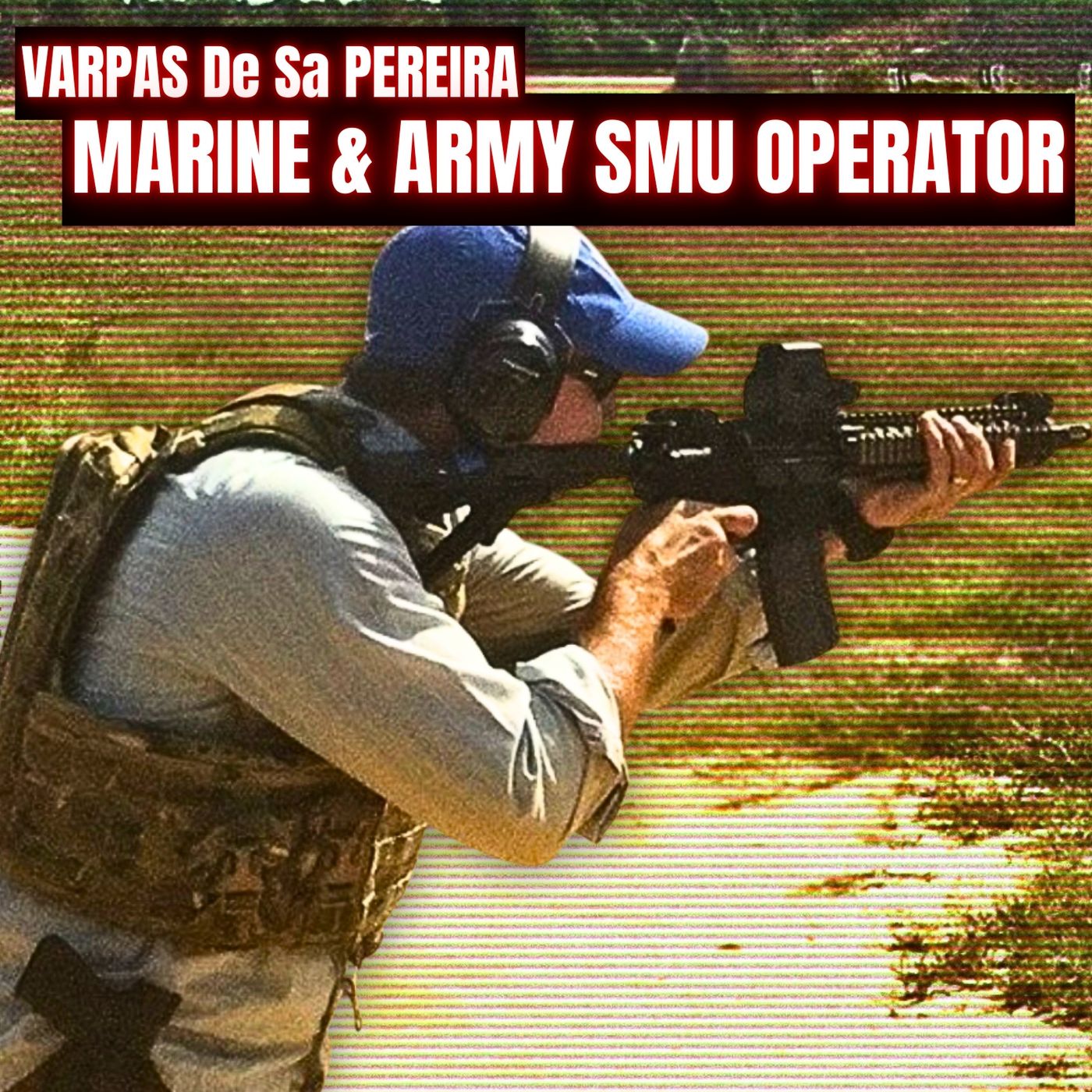
The Team House
From Marine to Army SMU Operator | Varpas De Sa Pereira | Ep. 382
01:58:01
This interview features Varpas, a decorated, retired Marine Corps officer and Tier 1 Special Operations operator, detailing his intense career and the harsh realities of transitioning out of elite service. He discusses his unique psychological model,...
Loading summary
Transcript193 lines
- [00:01]
A
Dinner time. It's more than just a meal. It's when work comes to a halt, where macaroni masterpieces are made and little moments turn into lasting memories. With the Blue Cash Preferred card, you can get 6% cash back at US supermarkets so you can bring home the flavors that bring everyone together. We did say everyone make the special moments even more rewarding. Learn more@americanexpress.com Explore BCP terms and cash back cap. Apply with Blue Cash Preferred. The Team House with your hosts, Jack Murphy and David Park.
- [00:42]
B
Welcome to episode 382 of the Teamhouse. I'm Jack Murphy here with tonight's guest on the show, Varpas Desa Pereira. He served as a Marine Corps infantry officer and then jumped over to the army and served in a USASAK unit, multiple deployments to Iraq, Middle East, Africa and ended up getting out of the Marine Corps and is now a clinical psychologist working at Veterans affairs, obviously working with veterans and veterans issues. So we're going to talk about the whole spectrum of all of that in the interview. Varpas, thanks for joining us.
- [01:20]
A
Thank you for having me.
- [01:22]
B
I should also mention up front too, he is also the author of the book Warrior Withdrawal. It's a. Well, you tell, you tell the audience. Varpus, what's your book about?
- [01:33]
A
So the book is about this cluster of symptoms that I found that sort of is in between this idea of adjustment disorder and post traumatic stress disorder. Having gone through school and looking at the diagnostics and statistics manual, kind of what happened to me as like patient zero of getting out of the military didn't really fit in either of those diagnoses. The cluster of symptoms for ptsd, one of them is avoidance. I didn't have avoidance of combat. I sought out combat. I had an affinity for being with veterans and being in the military. So that would be a disqualifier for ptsd. And then the other thing that could be described, explained to symptoms would be adjustment disorder. That has a time limit though, of about six months. And so 10 years later, I'm still struggling with wanting to be back on the front line. So it's like that can't be it either. So what is the, what is happening here? And ultimately, closest thing that I could find was substance abuse disorder. And so there's something about being a warrior that feels like you're addicted to something and so that when you get out, you experience the withdrawal symptoms. So the book is about my experiences, the multiple tours that I did, getting out, the struggles of getting out and then going through school and Working at the VA and sort of finding a way to help veterans recognize what has happened to them, the training that they went through. They get spit out into the world with no untraining. And then how do you manage it?
- [03:12]
B
Well, we'll get a little bit more in depth on that further along in the show, but I'm going to start you off at the beginning. You mentioned to me before the show your first name is Lithuanian, your last name is Portuguese. Tell us about the origin story of Varpus. Where did you grow up? How did you grow up? How did that eventually take you towards the Marine Corps?
- [03:33]
A
Yeah, so I guess both of my parents are immigrants, both naturalized American citizens. Mom is Lithuanian by way of Canada. Her parents led the communists. And so we're stuck in between the Nazis and communists. During World War II, displaced persons camp ended up in Canada and then it moved down to Chicago. This big Lithuanian population where she met my dad, who was born and raised in Rio, went to school in Rio, became a physician and then moved to Chicago seeking basically freedom. Like he talks about how we don't understand this in the US the first time he could vote. There's only one person he could vote for because it was a dictatorship. So he's like, I'm out of here. Showed up in Chicago, my parents met, ended up moving to the east coast, Massachusetts, Big Portuguese population there. They needed a Portuguese speaking doctor. So that's predominantly where I grew up is in Massachusetts speaking Lithuanian to mom, Portuguese to dad, and sort of thinking that that was everybody's life, house life. Like we just used English in school and then we all went home and spoke in our native tongues. Yeah, I think it was in third grade when I realized that's not, that's not the case. Everybody's house. So the last name, Brazilian, Portuguese, first name, it is a Lithuanian word. It is not a common name. It's not like Joe. It's. It's literally translated to large bell. And so I think I've joked about it before. Like my mom was Gwyneth Paltrow before Gwyneth Paltrow was naming her kid Apple. So she named her second son Large church bell, basically.
- [05:21]
B
Well, what did the first one get?
- [05:24]
A
So he's got my same. His dad's name. Sorry, our dad's name. And our dad has the same name as his dad's name, which is not much better because it's. So he's the third yr. So he's sort of the third. Except he also grabbed my mom's dad's name for his middle name. So he's not technically the third. But M means article of pain in Amazon Indian.
- [05:50]
B
Wow.
- [05:51]
A
So, so we go am. So we go like article, pain, large bell. And then my two younger brothers, Skydris, which is like sort of a made up, ish name of like, clear. And then my youngest brother, they were sure he was going to be born a girl, so they only chose the name Lima, which is actually a common girl's name or luck. Then when he popped out a boy, they're like, okay, well, he can't have a female name. So they gave him the masculine version of Lima, which is Limous, which you can imagine basically means male fairy tales.
- [06:29]
B
Okay, so your parents maybe need a little work on. On the naming conventions for the children.
- [06:36]
A
Yes. My mom was not a Johnny Cash fan. A boy named sue is not in her. Not in her eight track, you know, player. So I definitely tried not to do that with my own kids.
- [06:50]
B
So you grow up speaking Lithuanian and Portuguese. Growing up in Massachusetts, what piqued your interest in military service? How did that come about?
- [07:02]
A
So I was actually born in Maryland at Bethesda Naval Hospital, because my dad, in order to try to fast track his citizenship, got commissioned in the reserves as an army physician. So he's immediately promoted to major as an internal medicine infectious disease specialist. And so he was sent out to Fort Detrick. And so my dad was in the Army. I don't know why, but I had an affinity for the Navy. And then through high school, I was pretty sure I was going to go to Annapolis. It's really the only place I applied. And as a senior year, I had to have surgery. And So I was DQ'd for Annapolis. And then I got a scholarship to Boston University. I said, all right, I'll do that and then I'll go to Annapolis. You know, after the year, I'll reapply. But BU had an ROTC program, and so they gave me the Navy ROTC scholarship. And after a year there in Boston, I was like, I have three years of college now, like a year's worth of AP credits or two years worth of AP credits, plus a year's worth of actual college. I'm not going to go back and restart at zero at the Academy because all roads lead to, for me, Quantico as a. As a Marine. So at that point I was like, all right, I'll just stay here.
- [08:32]
B
So you commissioned through rotc?
- [08:36]
A
I did. And just like every other boy, basically, you know, GI Joes, camouflage, I did it all. Squirt guns, water Guns. Capture the flag was my favorite thing to play. And through grade school and high school, playing three sports, you know, sport every season and then continue to do that through college.
- [08:56]
B
And so you came into the Marines 1999, you got commissioned and now you have to go through infantry off basic infantry officer course. What do the Marines call it?
- [09:08]
A
Yeah, so we do something a little bit different. We, we have officer candidate school and then all marine officers go then through the basic school. So independent of your commissioning program, whether it's the academy or ocs, everybody goes to the basic school and everybody shows up with no MOs. So all officers go to Quantico. Nobody has an MOs. Some people have flight contracts. But then over the course of those six months, depending on how well you do, you get ranked from 1 to whatever it is, 100. And then you select your moss. Now in order to ensure quality spread, they cut that 100 into thirds and then disperse the moss sort of equitably. Which means that in the top, if you're in the top third, you need to be in the top of the top third to get combat arms. And if you're in the bottom third, usually it's the bottom guy, Mr. Irrelevant usually gets infantry.
- [10:12]
B
Yeah, I think the army does something similar so that you don't end up with purely just dumb asses in the infantry. Otherwise, I mean, it's bad enough as it is.
- [10:23]
A
I think what they try to do is they know just about everybody wants to be an infantry combat arms and then they don't want like your low justicians to be the lowest. All of the lowest performers at the basic school are your logos, your supply guys. Because then things don't get done. Yeah, as the generals say, you know, we think logistics, not tactics. Then from TBS I got, I was high enough to choose infantry. Then I went to the infantry officer course for about 10 weeks, got my orders to my first unit. So 1st Battalion, 5th Marines out of Camp Pendleton and linked up with them as they're preparing to do a boat package. So I went right away to Coronado for a month doing the scout swimmer school and then stayed there for probably another month doing the small boat raids. That's pretty cool.
- [11:13]
B
I mean it must have been exactly what you were looking for, right?
- [11:17]
A
It was. And it was basically a Rochambeau to determine who was going to get to go be the scout swimmer. And luckily I won. And I was only in the Rochambeau because I had already done like the maximum swim quality. You could still struggled with the brick, you know, Part of the qual for the scout swim, of course, still managed to do it. And all of that boat rating stuff was to prepare us for a deployment at the front end of 2001 to Okinawa.
- [11:49]
B
Did that Okinawa deployment materialize or did other things take precedence?
- [11:53]
A
Yeah, no, no, no. So 2001, so we deployed, we flew out January of 01, sort of standard rotation. It's a 31st Marine Expeditionary Unit, sailed around Australia, Iwo Jima, and it was only a six month tour. So we fly back around July of 01 and then we're on our off cycle basically. So we're looking at doing like Operation Bright Star, I think In Egypt Sinai, September 11th happens and then, you know, everybody starts to get think that things are going to change. For me they did because so here's the funny story. In 2002, 2000, I was the youngest Marine officer in the 1st Marine Division. So if you're not aware of how we do our birthday balls, it's the oldest Marine present and the youngest Marine present share the first piece of cake. And of course we're Marines, so everything has to be done and rehearsed and practiced. So as the youngest officer present, I had to go to the practices for the honor guard to like practice eating the cake or at least receiving it from. Oldest Marine present that put my name. So you can imagine that. Plus my name got me skylined with the general staff. And so then when I came back, when we came back from the deployment to Okinawa, from Okinawa, the chief of staff and the staff sec were already like, oh hey, that, that guy's good to go. You know, he's the first lieutenant, like we were gonna pull him up and I show up to my interview with the general, General Cowdery and the staff sex, like in the general is also like, do you want to be here? And I'm like, hell no. You know, I want to go to recon. You know. And he's like, oh, well that's exactly who we want here. You want the guys that don't want to be here. Because if you wanted to be here, that would be a problem.
- [13:53]
B
Reverse psychology is they got you.
- [13:57]
A
Yeah. So fortunately for me though, that ended up being a second deployment because he was the assistant division commander and we got flown to Kuwait for four or so months as part of a CJTF for consequence management. As far as I understand it, I think we were sort of kind of trying to build the backbone of the eventual division command for an eventual invasion into Iraq. So from around Christmas 01 through 02, you know, I'm in the Middle east flying around with the general, going to all the embassies in. In the Middle east talking about whatever they wanted to talk about. And then we come back and the. The benefit for me was it was only going to be for six months that I was the aide, and then I would, in theory, sort of have a choice of duty station coming home. So I wanted to go to recon. Interviewed with the recon battalion commander and he's like, I'm only going to make you the HNS co. I don't have any platoons open for you.
- [15:06]
B
What's H and S?
- [15:08]
A
So hhc. Oh, okay. Headquarters, Hot dogs and. And sodas Company. So that was not a deploying unit. And none of us at the time, so this is like mid 2002, thought that the entire divisions were going to get deployed for. For Iraq. So I said no thank you to that and took a job as an executive officer for another boat company. So I found myself back in Coronado for a couple months, getting ready to set sail in January of 03. So you kind of hit it, right? Yeah, well, basically. So set sail in January, full speed ahead. I think we had 36 hours in Singapore between San Diego and Kuwait. I got flown ahead into Kuwait, and then it was, you know, all of February and most of March. Kind of waiting, waiting for the green light to go.
- [16:08]
B
What's up, guys? This episode is sponsored by Presidius Watch Company. They make really awesome watches. A lot of, like, homage to former military watches out there. Go check out their website, presidius watch.com awesome stuff. This one I'm rocking right now. It's called the Rec Spec, and this one's based off John Stryker Meyer's actual watch that he wore in Vietnam. Shucking and jiving, doing the damn thing with Mac V sog. He sent it to them. They made it. They made it based on his watch. And this is it right here. It's the ultimate field watch for the ultimate, you know, gangster, that John Striker Meyer. What is all automatic movement, too. They don't spare any expense. You know what I mean? It's a proper automatic movement titanium as well. They have such a great selection. You could do mix and match straps and stuff like that from NATO. Straps, rubber straps, stainless steel straps, anything you want. I'm a watch guy. I do enjoy watches. And I've been rocking this for like the last few days. And, dude, I honestly forget it's even on sometimes, you know, it's so light, it's so awesome. The crown is recessed in so it doesn't like irritate my top of my hand. So I'm loving this watch right now. I don't even think about, I've been sleeping in it with it and stuff like that. So it's pretty awesome. So check them out. Presidius Watch company Presidius watch dot com. That's Presidius watch dot com and honestly they're freaking affordable too. You're not talking thousands of dollars like this is an affordable great watch. Everyday watch. It's awesome. Thank you to our friends at Presidius Watch One more time presidius watch.com and thank you guys for supporting the show. The sponsors that support the show, we love you.
- [17:49]
A
Dinner time. It's more than just a meal. It's when work comes to a halt where macaroni masterpieces are made and little mom turn into lasting memories. With the Blue Cash preferred card, you can get 6% cash back at US supermarkets. So you can bring home the flavors that bring everyone together. We did say everyone make the special moments even more rewarding. Learn more@americanexpress.com Explore BCP terms and cash back cap. Apply with Blue Cash preferred.
- [18:19]
B
So what was sort of like your platoon's mission and your idea of how the Operation Iraqi Freedom was supposed to unfold?
- [18:29]
A
I had no idea. I mean I was an executive officer, our specific job. So we're, because we're part of the new. We actually got attached to a British Commando Brigade, so 3 Commando Brigade as their part of their combat element. And we were tasked with crossing the border and then securing the deep water port facility of Umkaser while the, the 40 and 42 commando, they're the Royal Marines. I think we're taking the Alfal Peninsula. This is down in like Basra, south of Basra. Okay. Right. So literally right across the border is Umkasar. And then move we, we move. My battalion end up moving further north up to Azubayir and then a little bit further north and then we got detached from the Brits because of Jessica lynch, that whole fiasco. So we all moved north up to Nazarea. And so my battalion was part of the diversion attack to go rescue Jessica lynch out of Nazarea. Now me specifically, I was probably asleep in my, in my black bag while all this stuff was going on.
- [19:46]
B
Were any interesting incidents that happened during that deployment though that you were involved in?
- [19:53]
A
There are a few. I try not to, to speak ill of other people, but you don't have to name names.
- [20:02]
B
It's okay.
- [20:04]
A
There. There was one specific incident that. I'll talk about this one because I bring it up in the book where we're in azu. Bayer. We strong pointed the port because it's just our company providing security. And I'm driving around with my company gunnery sergeant, which in the army, it's like your first sergeant, because he's the logistics guy. And we hear 50 cal fire or sniper fire in my company gun. He's a former sniper, so he's like, that's outgoing. We're trying to figure out what are we shooting at. I get down to the platoon that's on that strong point into the south, and the platoon sergeant asked me like, hey, what's the. What's the drama, sir? And I'm like, I don't know. That's why we're here. The platoon commander tells me, you know, what's going on? They've got eyes on a target, but it's not a target. It's women and kids, you know, maybe some men in vans and they're just kind of looting a warehouse. And the platoon sergeant of that platoon tells me that our company commander had just called for a mortar mission, so he was going to use his 60 mortars on that target. And it's in that point in time where I was like, no, that's not happening. I had inscribed on my. My cover or my hat, no women, no kids. Borrowed from Leon the professional. And so I threw the platoon commander in our truck and we drove to the cp and I just asked them like, hey, did my CO just ask to do warfare mission? I said, he asked to shoot a fire mission. And they. And they said, yeah, but we're going to deny it. And I was like, okay, good. I was getting ready to walk out, but there had been some other incidents that had happened a couple days before. So the battalion gunner, the chief warrant officer, it's like, no, no, you know, you tell him everything that's going on. And so I said, okay, out of. Out of just curiosity, when you call for fire, you have to give a target description. And so I said, what was the target description that my CEO gave? And he said, 10 to 14 men in black with a case. I said, okay, that's. That's not what's there. Here's the platoon commander that had eyes on. It's women and kids and they're looting. And I thought that was sort of done. I thought that justice would sort of square things away. I did not expect what happened next which was I got called in as insubordinate. And then one of the other things that had come up was that that company commander had pointed his rifle at the fire support team leader. Like, if you call another up fire mission, I'm gonna kill you because I should backtrack. As soon as we crossed the border, we stopped and then we had incoming. My company commander was sure that there's no way the Iraqis could be shooting already at us. So he just was so sure that this was blue on blue fire that he was going to, you know, cause harm to the fire support team leader. And he, he actually called the training timeout. So the fire for effect went, you know, we, we got away. I got away. We all ran away. So I actually have my platoon commander's tactical notebook. His has Iraqi shrapnel embedded in it. And he, he kind of calls a training timeout, pulls the nap out on a Humvee, calls all the platoon leaders and me to the Humvee, and it's like, how did, how did this happen? And like, we can't stay here. Like, if that was. If that was their adjust fire mission, you know, we're bracketed now and we're not in a good place. Sure enough, we got hit again. Eventually we moved, and then our counter battery or somebody else took care of that D30 battery, so. So that came up. And then back to the mortar incident, though. My company commander asks me like, didn't you. So did you hear the call for fire on the radio? I said, no, I didn't. Oh, so you didn't hear what the grid was that I called in? I said, no, no sir, I didn't. I didn't hear what grid you called in. And he said, aha, see, so you didn't realize that I had actually offset the grid. He was going to use the 60 millimeter mortars as warning shots. Danger close to our own troops. Warning shots. And I, he got me with that. I was speechless. But anybody who knows anything about fire support is like, that's just preposterous.
- [24:43]
B
Yeah, that's not how the fire support center works.
- [24:47]
A
That's not how any of that works. And your warning shots with the 50 cal already are not working. So I really wasn't sure what to do in that scenario. But he said he could work with me or I could go to another company. And I had to weigh that decision. It's actually maybe one of the first times that I selected to, or I chose to do what's better for everybody else and what's best for me. I called in my fellow platoon commanders, all the other lieutenants, and I said, what's best for me is to leave this company. And I don't think that's what's best for you because I can, I can withstand this. And so I did. I stayed. We go to Nazarea. Basically, I don't see the company commander anymore. Fly home or sorry, not fly home. Fly back to Bahrain, get on the ships and sail home again. I get in more trouble for, for the shenanigans that allegedly I did in combat. And at that point, it's like late 2003, most, if most, if not all of the Marines are gone from Iraq. And I'm like, that was it. That was my combat. War's over for us. It's, it's, it's standing operations now. Big army time, like we. That was. And all of my peers are like getting their awards with V and bronze stars and all that stuff. And I get a big fat zero because of all the things that happened. So I was like, that's going to hurt me down the road. But no matter. I still was thinking, I can get over to recon or force recon. The path at that point in time for me was going to be through FAST Company, which is the Fleet Anti Terrorism Security Teams. So I get orders there. I show up. And Al Rashid Hotel had been rocketed. So it pulled in the two platoons from FAST that were, that were already. I mean, they're always four deployed, but they pulled in two platoons that were forward deployed into Baghdad to reinforce the. What would eventually become the embassy and the hotel. And so in order to maintain that force protection posture, they started to grab platoons from stateside. So I had, you know, within a month or so of shown up to Virginia with fast. I was back in Baghdad.
- [27:22]
B
And what can you tell people what the mission is of the FAST teams?
- [27:27]
A
Yeah, so it's anti terrorism. Whatever form anti terrorism can take, usually it's going to be like a heightened security, heightened force protection measures. They're used for whenever there's submarines that have nukes on them. They bring out these, these Marine platoons to help secure those areas for refuel. Defuel. They're four deployed. You know, when I was in Bahrain with fast, we're on a pager to reinforce embassies to go provide expeditionary security. We come with a ton FAST platoons come with a ton of skill sets to, to do all of that. They're kind of like a SWAT team, if you will. The Naval SWAT Team.
- [28:13]
B
And so the first assignment was you were going back to Iraq. You said for this. This hotel was getting hit.
- [28:20]
A
So the hotel was multiple, you know, was hit with a bunch of rockets. And so the concern became that the. What was then the Coalition Provisional Authority, which is Al Rashid, Alice, I think, was going to get hit. And it is now the US Embassy there on the Tigris. So they wanted to bring in a company's worth of fast Marines to provide better security for that place.
- [28:42]
B
How did that situation unfold for you guys?
- [28:46]
A
It was so drastically different from one like I was in the Green Zone. I mean, I was eating catered food made by Pakistanis, you know, in. In a palace with marble floors and toilets, which is a far cry from going two months without a shower and then. And then only getting kind of a quasi shower because they brought the NBC truck. And we're like, hey, you guys need to be decontaminated. The palace had a pool. David Letterman visited our palace. Some motivated Cav officer and his Stetson jumped into the pool to catch a football that David Letterman threw. And it was different. It certainly was a different side of the war. And. And still, you know, the Brown Irish was a big deal going from. From Biot from Baghdad international to the CPA. We were rolling around in SUVs that are unarmored, and Solder City was still not really secure. But this was this. It was a unique time in late O3 and into, I guess, a little bit early 04 there in Baghdad, where you could actually go to the souk not far from the combat surgical Hospital with no body armor, no weapon.
- [30:06]
B
Yeah, it's before things got really bad.
- [30:09]
A
Yeah. So then that changed. It was basically guard duty for a few. For three or four months for us. So I came home from that. We got relieved in place so that I could come home with the platoon and then make a regularly scheduled deployment to Bahrain, where we would be on the pagers for everywhere else. And so on that deployment, there was an American who was beheaded in Saudi. And so there was some additional concerns about threats to the embassy. So they launched us to go reinforce Riyadh for about a month in July. And same with.
- [30:52]
B
Yeah, go ahead.
- [30:54]
A
Oh, and. And then we got sent down to Africa. So I got. I got my taste of the Horn of Africa in 04. Again, different than, like, Al Fajer and what was happening in Fallujah.
- [31:07]
B
Yeah, I mean, what did they send you down to the Horn of Africa for?
- [31:12]
A
Some of it was training, and some of it was just to, you know, make sure, the embassy there was fine. It was good to have a platoon of Marines there to reinforce whatever might be going on. And that also kind of started to make me aware of how wild west it is out there. Like they sent us down to this one range where I think it took us like 13 hours to drive.
- [31:38]
B
This is out in Djibouti.
- [31:40]
A
In Djibouti, yeah. So we go way down south. It's like a 270 degree range. We're there on our owns. My one assistant or one of the other platoon commanders was supremely afraid that we were going to get overtaken by baboons. So he wanted to make sure that the firewatch had a fully auto M4. But in my mind I'm like, hey, we're doing this live fire training and if we have a casualty, there is no medical support. Like our Casavet plan was. This was the CH53s. They're on 180 alert, meaning that if we have something bad happens and we get on a sat phone and we call up to Camp Lemonnier, 180 minutes later, a CH53 is flying 30 minutes down south to come get or casualty. Interesting foreshadowing because when I was back In Djibouti in 09, we had an event where we had some casualties. And so it became fortunate for those guys that the French Foreign Legion was there and they could land one of their lynxes anywhere. And that's how they got those guys to the hospital.
- [32:50]
B
Well, this is a bit of a sidebar, but I worked on a story a few years ago and it was a Army National Guard unit in Djibouti, and they were making that same trip driving from the base out to the range, through all these canyons and valleys and everything. And what none of them knew, and you know what surprised them was this huge rainstorm came through. It just poured rain. And they got trapped out in the, you know, driving through these wadis, going through, driving LMTVs. And I actually got video of one of the LMTVs rolling over in the water. And they had four, three or four soldiers end up in the water. And they recovered. Like three of them managed to make it back to the shore. One of them got washed all the way out to like the ocean. And the French picked them up, but survived, thank God.
- [33:44]
A
I believe it. Even with light rain, didn't seem like anything. And if you're used to, I mean, if you're from the east coast or wherever, Seattle, there's rain all the time. The lightest amount of rain and Then we had about 48 inches of water that we had to forward in our Land Cruisers. Yeah, it's wild.
- [34:05]
B
And after the FAST teams, you did six months on division staff.
- [34:11]
A
Yeah. So I came back from that deployment, and they told me I was a captain and I was too senior to take another platoon. And rather than, you know, to suffer on battalion staff, I volunteered for to be an individual augment with my goal to be to go on a military transition team. My initial set of orders were to be for G4 Logistics in Kuwait. So I check into Camp Lejeune with those orders, and I'm like, hey, I'm a infantry guy from fast. I don't know anything about logistics. Can we change that? I'm here to be a mit. And luckily, they swapped me for some logistics officer and put me in the G3 down at the division. So I deployed as a frag order writer. Within a few months, it became clear in Ramadi that that's not a really difficult job. So the intentions message writer took up the frag order writer duties, and I got pulled as an out of high admit to go out to further west in anbar with the 2 7. So the 2nd Brigade, 7th Iraqi Infantry Division, with our three battalions, and hit Haditha and Rawa.
- [35:32]
B
And this is 2005. Ish.
- [35:36]
A
Yeah. So I spent just about all of 2005 in Iraq, which is. Which is great, because then I could pretend like the Red Sox were still.
- [35:42]
B
World Series champions and Iraq was kind of, like, deteriorating pretty seriously by this.
- [35:48]
A
Time frame, you know. So 05, I think, started the. A little bit of the awakening. I remember being on Camp Blue diamond when they brought in, I think, the tribes there to start negotiating with them so that we could all focus on Aqiz instead of, you know, fighting. Fighting the Shia. Everybody wanted to get Zarqawi. And then when I moved further out west, they were still fighting out in Al Qaim a little bit around. Around Rawa. But most of the. There's really. Well, I want to say that, you know, Fallujah was basically done second. Fallujah was done. Rockets would still hit Camp Blue diamond. And there wasn't a. A lack of combat happening in Ramadi. It just was not, I think, at the same level that it was in 04. For me personally, it was a lot of driving on, like, rap Bronze route uranium between all of the different Iraqi battalions. And that was also a different experience because it's, you know, minimum minimally staffed Humvees with you break all of the requirements and minimums. Just to get out the door where we're basically going with nine Americans, three vehicles out to wherever it is that we're going. And then that really came to a point when we got, you know, I was lead truck and so our truck got hit with a small ied, not enough to disable us. And I, we're pretty sure that this pickup truck in front of us is the one that dropped it. So we chase it down, we shoot at it to get it to stop. It pulls over. We have three trucks. So one goes far side security, one stays backside security. And then my truck know with the 50 cal is. Is oriented to the target. And it's really only at that moment that I realize I am the dismount. I'm the vehicle commander and the dismount. And the only other dismount is my Terp who's not armed. And so I was like, oh, right. Well, we close on the truck. I don't need my TERP to be armed. But then when we get closer, I have him come with me, we flank the truck, two guys get out. And at that point I realized I'm going to have to search them because although I trust my. It's like, which, which way do you go with that? Do I trust my Terp to do the searching and I cover him or do I have. So I handed my M4 on semi to the Terp and I'm like, you pull the trigger, it's going to go. Please stand in enfilade, you know, and I, I close the last, whatever it is, 10 meters with my M9 and search these guys. I know they dropped the ID through the. There's a hole in the passenger side. Floor, wall or floor. But, you know, there's. I had no evidence and so I wasn't going to detain these guys on a hunch, even though I was, you know, they're in the wrong place. They don't know where they're going. Their. Their story, their cover for action doesn't check out. It's like, yeah, nah, you guys missed your turn Albuquerque back there. So I know you're lying about this, but what was I going to do? There was. There was no explosives, and so it might have just been an 82 millimeter mortar rigged to blow that hit us. So we sent them on their way.
- [39:27]
B
Jeez, what a mess. And then after that deployment, you did the captain's career course?
- [39:36]
A
I did. Went down to Benning again. The common theme of my military career is deploy as often as possible and stay stateside as Little as possible. So I took the Army's course because it's six months instead of the Marine Corps because it's 13 months. Went to Benning for that, finished, got my orders back to Camp Pendleton as a company commander. And then I think it was a matter of a few months. Caught them on the tail end of their workup. And by, I want to say, July of 07, I'm back in Iraq.
- [40:18]
B
Wow, where did you guys go?
- [40:22]
A
So north of Fallujah is a place called Sacawia. And if, you know, no offense to CAV guys intended, beyond, you know what your job is, and your job is not coin. So, you know, the 5, 7 cav mechanized cav unit that's there really did no patrolling in the AOR that I inherited. Anytime they needed dismounts, they'd have to borrow them from the Marine battalions that were nearby. And so what ended up happening prior to me showing up was the CAV unit would go out and they'd hit IEDs. And so they stopped patrolling. And then they would only patrol if route clearance, like 224engineers would come, clear their route, then they would patrol from their Bradley. And then, you know, then they would go back right up until they had like a catastrophic event where I don't know if it was even combat related, but they had about 13 heat casualties.
- [41:25]
B
Oh, man.
- [41:25]
A
That had to get evacuated because they got stuck. And, you know, I inherited that AOR. It was the wild west. So August of 07, we start clearing it and that's the, you know, one of my patrols goes out and hits an IED into a canal. We go to reinforce them. My QRF kind of blows past them. It's a second ied. And so now I have two downed trucks. And we're trying to find where. Where the trigger guys are. So patrolling through the area, can't. Can't quite find them. Recover the vehicles best as we can, leave them in place. So we come back the next day with some wreckers to pull these things out of the one out of the canal and then. And then the one off of the side of the canal. And as we're driving that back, we get hit with another IED recovering that vehicle complex ambush. So this is sort of the unfortunate drawing of boundaries. The boundary was the canal, which was maybe 10 meters across. And so not my AO is where I'm getting RPG fire from and, you know, probably where the command was detonating all these IDs. So it's like I get authorized crossbow and the rickety Mud bridges didn't really look like they'd hold up for us to cross. So I'm like, we're good on our side. I need fire support retrieves in contact. And they're like, okay, well we can support you with artillery from Fallujah. And I had done the math already. I was like, no, thank you. We're kind of at their max range and I'm looking to hit somebody who's 20 meters from me. So what else you got? Sent us some Cobras. And so as Cobras I could manage because I could say, hey, keep all your fires north of the canal while we're. I mean we were so close that my Mark 19 gunner, like his 40, his 40 millimeter grenades were detonating. Yeah, we wouldn't hit their minimum spins to arm. And my 50 cal like we as pull the rear cotter pin, everything get. Try to free gun that thing. You couldn't depress it far enough to hit where the bad guys were. So you put your mind to use. And I was like, well, shoot all your flares. Shoot all our pop ups into the reeds so they catch fire. And then we'll shoot them as they're running out of their. Out of the reeds. They're not that flammable because they're right by the canal. But the bad guy, so bad guys, you know, whatever they were, they decided to try to egress out of the area. Hopped into a vehicle, the Cobra saw it and so that was the end of them.
- [44:24]
B
Smoked them.
- [44:24]
A
Yeah.
- [44:25]
B
The Cobra pilots don't screw around.
- [44:28]
A
They do not. After that kind of, the rest of the tour just progressed in the way that you wish it would in counterinsurgency operations. So we cleared the area, got some host forces or some host nation people to stand up a provisional security force. I start working with them, partnering with them. They run the checkpoints. Near the end of my tour there, they give me a call. They're like, hey, these two guys that we know are bad guys came into the area. They're both suicide bomb. We, we took care of them. One guy detonated himself, but the other guy didn't. And so we're asking, can you, can you shoot some loom so. And bring out your eod? I'm like, sure. This is awesome. You know, local people saw the local bad guys, called the local law enforcement. They managed it. And so now all they need is like our support with Illum and eod. And then I get told I actually can't shoot a loom because this is almost 2008. Or it might have been 2008. And the ROE was like, no, no. That the tiny little base plate could land on somebody and kill them. So no more looms allowed. It's like, all right, well, how long are we waiting for eod? Two hours. And so finally I go out there with EOD and talking to my Iraqi counterparts there, and they're like, you guys took so long. Like, I wish you would have told us you were going to take this long. We would just blow them up.
- [45:54]
B
Yeah, it was always like that with eod.
- [45:58]
A
Yeah. So to me, that was a success story. Right. Like, the tour started with the Wild West. You know, we cleared it out. We. We took our licks, we gave back, and then by the end, you know, the locals are managing their own stuff and.
- [46:20]
B
Go ahead. I'm sorry.
- [46:21]
A
Well, and it. It. You know, you. You leave thinking that everything went great, and then, you know, I don't remember was like, three or four months later, you're like, oh, you know, there's. There's still IEDs going off at ECP 5 or whatever it is outside of Fallujah.
- [46:38]
B
And you. I don't. This is kind of rare in the Army. I don't know about the Marines, but you got to pick up a second company command.
- [46:46]
A
I did. Right. So when I was at Benning, I went to that no form brief and kind of wanted to go to that unit. And they were asked the recruiters, hey, do you take Marines? And they said, yeah. And I was like, great, how do I join? And they said, you got to be branch qualified. I said, I. I eat crayons. I don't know what that means. And they said, you got. If you're infantry guy, you got to be a company commander. So I did that first tour as a company commander and then kind of called Headquarters Marine Corps and said, hey, let me go try out for this other unit. And they said, no, you're not up for PCs orders. So then I was like, all right, well, what do I do now? And what I did next was I went over from a line company to weapons company and kind of became the fire support coordinator for another deployment.
- [47:34]
B
That's awesome. Back to Iraq.
- [47:37]
A
Well, so we set sail. This is 2009. And so I really don't know what we thought we were going to do. I sort of figured maybe we'd get pulled into Afghanistan or Iraq. That's sort of the tendency with Marine Expeditionary units is they just go to places for 30 days and ruin it for all the people that have to Stay there for longer. That's the experience that I had as the knit guy. Like, hey, this Marine unit comes in, like, you're just gonna like eat and defecate in my area for 30 days, blow up stuff, and I'm gonna have to live with the. The results. Like, you're gonna shoot a miklic to clear possible IEDs. Like, do you know what that's gonna do to all my locals? Like, no. No. Thank you. So what we ended up doing is we got attached to the counter piracy guys outside the Horn of Africa.
- [48:27]
B
Ah, interesting.
- [48:29]
A
And in a fun fact, my ship was hit by a submarine. We were crossing through the Straits of Hormuz.
- [48:36]
B
Whose submarine?
- [48:38]
A
Our submarine.
- [48:39]
B
Oh, no.
- [48:41]
A
Yeah. So I was on USS New Orleans and we were hit by, I think it's USS Groton.
- [48:47]
B
Did you have to like go and go into port for repairs after that?
- [48:51]
A
Yeah. So the USS New Orleans had to go dry dock in Bahrain, which meant, you know, you had half a battalion's worth of infantry guys just twiddling their thumbs. So they ended up shipping most of us down to Africa.
- [49:06]
B
Again, someone got relieved for that. I don't think you can crash a submarine without getting in trouble.
- [49:12]
A
Yeah, the sub captain got relieved for that. Our captain did not. And in reality, like, normally you think if you hit something like that, you go to general quarters, you know, to deal with all the damage. But that didn't happen. And I know that didn't happen because I didn't even wake up when the sub hit us. This is all. So then I got. So I got sent over to the Boxer and this is 2009. So part of what we were doing is the Boxer ended up getting a whole bunch of guys from Dam Neck parachuted in to deal with Amerisk, Alabama.
- [49:51]
B
Oh yeah. So you, you guys were down in the Horn of Africa when that happened. Cool. And I mean, how did, how did that unfold from your perspective?
- [50:03]
A
Well, so from my perspective, I basically had nothing to do with it. And you know, because I was just a regular guy and they're going to bring their own fires, guys. And it sort of kind of escalated that way where all of these Marines in this, in this mu thought like, hey, we'll get to participate in this in some fashion. And then one by one, they're. Whoever thinks that they're going to do something kind of got written off. Like the recon guys were like, hey, we're the visit board search and seizure people. This is what we train. We're the experts on this. No, thank you. We got this other asset that's going to do that. Even my buddy, the Cobra pilot was like, well, I'm the, on the forward air controller airborne. You know, like, I will be the guy who's flying fire support for these guys. And he thought he was going to get to play and then he hears the, you know, the unit's air controller, like, hey, they have this stuff and bringing these little birds and all of that. So he got frustrated that he wasn't going to get to do anything. And so I think the only Marines that ended up supporting that at all was probably the Harrier pilots sort of flying with ISR over Somalia while the Bainbridge did the work with the lifeboat.
- [51:18]
B
So let's, let's circle back around here. Like, now you're getting to the point where you're able to go to assessment and selection. So you mentioned that they came in and gave you guys a brief while you were down at Fort Benning in the Captain's career course. Like, I, I know you can't get into the details of, of the brief, but what, what was it that kind of sparked your interest in, in this organization?
- [51:45]
A
So I, I had known about all those organizations. Well, I had known about that organization before, mostly through, I guess, Hollywood and, and reading Eric Haney's book. It was, it seemed up until that no foreign brief that it just wasn't in my cards. They don't take Marines. And Marines are kind of like a bucket of crabs sometimes, where if you want to go do that thing, some other Marines are going to pull you down and say, no, you can't. They'll never take you. Which is why I was, I had, I would not have even gone to the no form brief except it was required. So I went. And then I was just kind of on a whim, let me ask the army guy, hey, do you take Marines? And he said, yeah. So I was like, all right, well, what do I need to do? It was always my goal. Yeah.
- [52:33]
B
And so the Marine Corps kind of stymied you for a little bit. Although, I mean, again, being a company commander twice is pretty awesome. You finally come up for PCs orders and you had to go camp out in the school of the infantry until you could go to ans.
- [52:49]
A
Yeah. So, you know, because we're sometimes not able to see second and third order effects. When they told me I wasn't, I wasn't up for PCs orders, I couldn't apply for ans. Then when I was up for PCs orders, it was like, okay, well, now you can start Your application for ANS and it's going to take a while. So I was like, all right, well I have to find a job in the interim. So they stashed me in the ops shop for the regiment for a little bit. And the monitor, the detailer, branch manager, I don't know what you call it in the army. The guy who cuts you orders, it's like, hey, I can't, they're deploying to Afghanistan. Rct the regiment is, you're not. So I need to cut you orders somewhere else while you square all this stuff away. So I got PCA orders to the school of infantry at Camp Pendleton. I show up there as I'm getting my invitation to, to go to the selection. So I show up and I'm like, hey, I'm going to be your XO for the infantry training battalion. And also I'm going to go away for 45 days and then at the end of this year, you know, I'm up for orders to somewhere else probably.
- [54:00]
B
And so tell us about assessment and selection. What was that experience like?
- [54:06]
A
That's a good question. Because a lot of ans we relies on novelty in order to get good reads on people. So the general things that happen there I don't really want to talk about. However, I will say that allegedly after I finished, the woman that I was married to at the time said, would you do it again? And I said, absolutely not. Now I'm like, of course I would do it again. Right. And occasionally I will go back to help them out with Ans. And it's only like now, 10 or 15 years later almost that I'll hear things and then in my mind I'll think like here are some of the cadre talking about this candidate messed this thing up. And I'll be like, oh, that must be new. And it's only then that I realized, no, no, I also did that task. I just don't remember it because the stress level is so high that some of these memories don't encode and they're.
- [55:08]
B
Throwing like when you say novelty, they're like putting you in scenarios that take you outside your comfort zone. Basically.
- [55:15]
A
Yeah. So there's stress phases, you know, everybody uses. Land navigation is a great tool because it's sort of self correcting. If you have a good sense of. Geography, it's a simple task that should be simple to accomplish. And it's hard because of the terrain and the distances. And so it's self correcting. Like if you choose bad routes it becomes apparent because you don't make your times and all that stuff. So land navigation is a piece and then there's all these other things that come up that you weren't prepared for, you didn't know you were going to get tested on. And I really liked how in the instruction phase it was basically like med school where it's see it, so see it, do it, teach it is med school. And that was basically how it was. So, you know, like an iv like you see somebody doing it, okay, here's your fake arm. Practice it. All right, Turn to your buddy, stick them. I'm like, all right, let's see how this goes.
- [56:27]
B
And so you make it through assessment and selection. And then there must be the whole train up process. Must have been pretty cool. Now you're getting to do commando stuff, right?
- [56:39]
A
Well, so the Marine Corps had us a little bit of a pause there as well, because even though I passed ans they're like, but you still owe us some time here at Camp Pendleton. So I had to wait. I had to defer for a year to go to, to otc. So I did and then went to otc. And it was, it was fantastic. Like, I mean really, really hard work. I think in a year I had 17 non consecutive days off. It was all, almost all new and all challenging and no feedback. Almost no feedback. So to me, like somebody who, who strives or thrives on, on criticism or feedback or whatever it is or validation if I'm doing it well, like that was difficult. Like, did I do a good job or did I not do a good job? Like I need to know what the ham sandwich is that, what does it look like that you're looking for? So I could put, produce it. And I did pretty well at the captain's course. So it's like I know the doctrine, right? I, I can. If what you want is a ham sandwich, I can do that. I can do, you know, light infantry combat brigade tactics. You're not asking for that. So I'm stepping outside of, of that comfort zone. But you know, this is so nebulous. And they're like, just what do you think? I'm like, I don't know, you tell me. Is this a good idea or a bad idea? I have, you know, I'm a straight leg dude. Basically. I have no concept of, of, you know, if this is good or not. And they're like, yes, you know, use your imagination. Like, all right, well then we'll do it this way.
- [58:23]
B
And that was usually good for them.
- [58:26]
A
I mean, apparently, yeah, they like that.
- [58:28]
B
They like the creativity.
- [58:31]
A
And I, you know, you would learn from your classmates because some of them had, had. There are other courses that you can take that can help prepare you for some of that work. I had none of them and so it was all OJT for me. And then even within that class I could see that rookie mistakes that I had made in the beginning, I was no longer making them at the end.
- [58:56]
B
Is this mostly like HUMINT stuff that you're working on?
- [59:01]
A
Yeah, close target reconnaissance work.
- [59:06]
B
And what is, you know, do you know what I mean? You have to have some conception of like the job you're training for, like what is the actual position that you're going to be doing.
- [59:18]
A
So at ans, I had no idea. I had none really. And then when I got to otc, I started to get a sense of what the job would be if I was the person, if I was the operator on the ground. And they were starved for officers at the time. So it started to become a little bit more clear to me that what I was going to do was going to be troop commander. And so while, while I could also be a trigger puller or Humvee driver or whatever, more likely than not I would get staffed into task force positions.
- [59:55]
B
And this is kind of, I can't remember if we, we mentioned it here, but it was kind of interesting that the Marine Corps kind of suggested that you go this route instead of going to the other army unit that they felt you would have like better command time in this one.
- [60:12]
A
I think it's sort of like rewind all the way back to the beginning. When you grow up speaking three languages and your parents are immigrants, there's a, a preference to send you to one place over the other if you desire. So the question to me is like, do you want to be a super soldier? But in the reality is, is that if you go there, you're, you're really just going to be a troop handler in some respects or you could go to this other place where there's the possibility that you could also be the guy that operates. And so to me that was a little bit of a no brainer. Even though I didn't know what the job was, I was like, all right, let me do that.
- [60:53]
B
And after you finished otc, what was it like when you took this position when you arrived there?
- [61:01]
A
It was a little bit of a shock. And so the standard line that I use when I would go forward to talk to people at the, the, the T socks, the theater special operation commands is I would they would all want to be read into the unit and the SAP and all this stuff. And I would say, you know, 95% of what we do, and then that last 5% is uninteresting. And also, I borrow the line from the Disney movie Aladdin. It's like we have infinite cosmic power in an itty bitty living space. Like, the breadth of the things that we can do is, is massive. And, you know, the actual, what we can't, what we're allowed to do is very, very constrained. That came up a couple of times because this was during the Obama administration. And so there were two events which I can't remember the dates of, but I definitely got called into the office on a Saturday in the snow to sit down and come up with. I think we called it like the Chinese food menu of like, what can we do to strike back? Because the president's embarrassed by what Soleimani said about, you know, him. So what are our options? It's like, okay, like, you tell me, like, no limits, right? Like, yes, no limits. It's like, okay, man, we're gonna be here all day because, yeah, yeah, here are poisoned acoustic of things that I can do, you know, from, from A to Z. And then we're going to start adding numbers to these things because we're in all of these places. And we generated the list and then nothing was selected. It's like, no, thank you, I'll just have water. The other was the Syria gas attack. Now that I think about it, it was that red line had been crossed. And then the question was, I think we may have just been in the front leaning rest there because we leaned so far forward. So we got called in and it's like, hey, that's my area. What have you got that can go assess all this stuff? Go find everything. So we got ready and then no call came. And then by 72 hours later, you know, like, hey, our, our information is probably no longer accurate and I don't know that I can get anybody in there now.
- [63:29]
B
Yeah, I remember when that happened and there was some movement that they like Ranger Regiment, like they were like going to drop the hammer for a minute there. But then, yeah, Obama decided not to do it.
- [63:45]
A
Which is why it's interesting to hear the guys talking about it now. Like, Maersk, Alabama, that was his top time frame too. I mean, I was, I wasn't on.
- [63:52]
B
The boxer and AAD too, but yeah.
- [63:56]
A
So he allegedly gave the green light on that. And then what is unknown is there was also a German ship that was taken by Somali pirates. So the Boxer, for a brief period of time, had a bunch of German commandos on it as well. And then as the Germans are briefing their chains of command about how this is going to go down, I think they. They do the standard army of, like, hey, we expect 10% casualties. And since it's VBSS, you know, the number escalates to, I don't know, 15 or whatever. And their chain of command started to balk a little bit, like, whoa, whoa. You know, casualties? Like, no, the Americans just. They did this with no casualties, no problem. This is different. You know, it's the big deck, from what I hear, and this is hearsay. The way that kind of went down is the Germans asked the president, hey, you know, what do you think? He's like, I don't know. It's your ship. And so they kind of took that as, don't, don't do the strike. Gotcha.
- [64:58]
B
Yeah, it's kind of interesting what you say about the. The Chinese food menu, because I've had, as I understand it, even when the President signs a finding for the CIA and it has all this stuff, stuff on there, from, like, cyber warfare to assassination, but then it's like, hey, hold on, Skippy. You got to read the fine print down here where it says if you want to use any of this, you have to go back to the President and get permission. So, yeah, I mean, I don't know what your opinion is, but, I mean, is there, like, Jason Bourne really is not a thing? Like, that's a fantasy.
- [65:30]
A
Yeah, that's a fantasy. There's no Treadstone project. You know, to my knowledge, there's nobody who walks into the cafe and knows the numbers of all of the vehicles that are in the parking lots. Like, I mean, if you have that kind of didactic memory or you're that autistic, then great. I mean, maybe we can make use of that. But then we also don't have the charisma if you actually do a job.
- [65:56]
B
Well, speaking of which, because of your background, did you ever do any work in Europe, sitting in a cafe, smoking a cigarette, speaking Lithuanian?
- [66:06]
A
No. Near the end of my tenure was the invasion of Crimea. So, of course, the Baltic states got very nervous, and Sock Pack hosted a few working groups, and I got sent out there since Europe was my AOR or part of my aor. And the kind of the questions came up like, well, what have you got that can help there? And I said, nothing, but if you want something built there, I can build it. It's going to take about two years. And you need to tell me now, because the guy who's going to do it is retiring.
- [66:42]
B
Right. Did any of that go forward as far as building, like, clandestine infrastructure for them?
- [66:50]
A
That's my knowledge.
- [66:51]
B
Now, that's too bad.
- [66:54]
A
There may be. And, you know, I just may have been on the outside of the gate by the time it started to happen.
- [67:04]
B
So I. I take it you did two, three years as troop commander. And before we move on to the next thing, anything, any final thoughts on that period of your career? Anything that's interesting that you're able to talk about?
- [67:22]
A
Not. Not really. The only interesting things are the parts that are uninteresting. How, you know, the Marine Corps really doesn't like guys that go and become special. And so, ironically, like, as soon as I finished otc, they're like, hey, you're going to get orders to Command and Staff School. I was like, no, I'm not. There's no way. Like, I didn't just finish this program to get yanked into, you know, yanked over to Quantico for. For Command Staff College. And I think this is a problem that we often have is we anthropomorphize, you know, big army or Marine Corps. Like, Marine Corps has needs. Like, no, it doesn't. It is. It's not an entity. There's somebody who wrote this piece of paper directing this thing to happen. I just need to go find that person and talk to them. And so I got myself TDY to Quantico, found the guy who wrote the order that was going to send me to school. And I said what I need to do to get off of this list, because I know person X and person Y aren't on this list. Like, yeah, we scratched them off because this guy needs to get back into the cockpit, and this guy's over at marsoc. And I was like, I'm at marsoc, you know, give me a freaking break. Like, scratch my name off the list. So they did. I did still have to do the distance learning program. And because I got enrolled into that, I got pulled off of going to be the task force commander in Afghanistan. They just ended up sending someone else. That comes up later as I talk to guys that got out, because I would make the comment now that I was so frustrated that I did command and staff, it's a waste of time because I didn't end up becoming a lieutenant colonel or go onto a staff. I could have been the task force commander within a year or two years of having gotten out. Now I would say, well, command and staff was still a waste of time, but I could have been my son's soccer coach or I could have put work into who I am. That's to persist after the uniform is gone. And I didn't.
- [69:35]
B
And because of that, were you getting to the point now where like, you're kind of done with the Marine Corps?
- [69:41]
A
Well, so in order to, to work for that organization, I had to be a geographic bachelor. The woman that I was married to at the time didn't want to leave her job and travel to, to the east Coast. So I left her and the kids at, you know, just north of Camp Pendleton. And then when the Marine Corps was calling back and saying, hey, you need to go back to regular infantry, I said, that's fine. I'm more than happy to. Please send me to Camp Pendleton. That's where, you know, at the time my wife and kids were. And they said, no, you're going to go to 29 palms, which is the Marines version of NTC. So at that point I was like, no, thank you. I'm just going to take again. The Obama administration offered early retirement. So I took it. And then was the got the lived experience of how when you decide to get out, because that is so contrary to the value set of the people staying in, you constantly of become Persona non grata.
- [70:48]
B
Yeah.
- [70:50]
A
And even now as I talk to veterans, I've lived on both sides of that. So if you go back to my first company command tour, go into outside of Fallujah, like I had a E5 sergeant that was, you know, literally the best sergeant in the division because he'd won this super squad challenge. He'd done his two tours even though we were going back to the same place. All he wanted to do is go to Texas and open up a business that was a fitness gym slash strip club. I don't know how he's gonna make it work, but he thought he could make it work.
- [71:21]
B
God bless.
- [71:23]
A
Yeah. So I, I went through all of the same, you know, all of the pressure that I could put on him to make that enlistment, guilt tripping him, like, hey, we're going back to the same place. If you don't, if you don't also go, people are going to die. You know the area. Don't you want your guys to succeed? Like, you got to come with us. Reenlist, reenlist. And good for him that he didn't. And then I realized like, oh, this is, this is a problem of ours. And we're, we're a Lot of what have you done for me lately? Right. I also saw that in, in Baghdad when there was a couple of guys that, you know, they were partying at the Al Rashid Hotel and were not in the place where they were supposed to be when the, when the rockets hit. And so their commander was so embarrassed that he basically, you know, wrecked their careers and wouldn't give them the combat action ribbon. So they all left the Marine Corps. It's like, wow, you know, this is what we do to, to, you know, allegedly our brothers. And now at that point, I was feeling it, you know, feeling that weight on myself, like my 06 colonel was treating me like a liar about how I was trying to separate, trying to try to check my story with the other Marines of the unit. This doesn't make sense. No, it totally makes sense. And so it was a little bit of a, that seems to be common enough of a theme. If it's not ubiquitous, it's at least, you know, the preponderance of guys that get out. The departure is not pretty. And so that sets you into that six month to a year time frame post service where you're kind of lost. And so at the va, that's the danger zone, I think, where we see a lot of guys that start with substance abuse, major depressive episodes. Most divorces will happen within those first six months because you lose everything. You lose your sense of purpose, who you are, identity.
- [73:29]
B
Yeah, the, the military kind of treats you like a leper when you're getting out. But expanding on that, so you begin the retirement process. What was your transition like out of the Marine Corps?
- [73:42]
A
It was like immediate. You know, I got my orders, maybe, maybe it was in the springtime. And so I fought in every way that I could to try to modify them, change them, find loopholes, you name it. And then I think I basically had two months to separate. The other thing that the Marine Corps did, which was so awesome, was they, that's when they audit your record. And that's when they decided that my pay entry base date was wrong. And so they had been overpaying me for 15 and a half years. And so they just stopped paying me. What they're like, you owe the government, we overpaid you $60,000, so we're just not going to pay you for your last two months of service. And by the way, here's your bill for her for what? We overpaid you. Luckily, I ended up filing paperwork that said it's a no pay due. Hey, man, I didn't intentionally, you Know, defraud the government. Like, I had no idea that, you know, the extra $5 you were giving me per paycheck or whatever would amount to 60 grand at the end of my career. But, you know, for. For the months of October, November, I was like, where's my paycheck? And it just didn't exist.
- [75:09]
B
They just cut you off like, mommy and daddy, say no more. Your allowance is canceled.
- [75:16]
A
Yeah. So with that kind of departure, it's like, go f yourself, Marines. And for a while, I was like, I will. I will never work with Marines again. Because I couldn't. I couldn't believe it, that this brotherhood would do this to, you know, an alleged brother. But that's how it went.
- [75:36]
B
Yep. But years later, when they need you again, you're a brother. Suddenly we're family, right? We're family.
- [75:43]
A
Yeah. And so, you know, at the beginning, I would say as a contractor, I was like, I wouldn't work with Marines. And then even as a psychologist is like, I prefer not to work with marines except for people that I knew before I got out. And so I would work with recon because some of my lieutenants went over there and I would do, you know, if they asked for a favor, I would do a favor. And even then, you know, like, there's a recon platoon commander who went after those two, a recon company commander. And he's asking me like, hey, you know, what are the, what are the black ops that we can do on this mu. Like, what are the black ops we can do in. In Southeast Asia? I was like, none. Like you. You're not gonna. Nobody's gonna have you do that. And oh, by the way, like, where's all the ope that that these two guys I know before you did? Like, they prepped your battlefield, they gave you all of these things. Oh, no, no, no. Like we're going to do something different. It's like, oh, I see. I'm also guilty of this. Like, you can't teach a Marine anything. They were all experiential learners. So I can tell you to do the thing, but you're going to do it? Nope, I'm going to do it my way. And then. Oh, my way doesn't work right now. I'll come over here and try your way.
- [76:57]
B
What were you doing as a contractor at that time?
- [77:00]
A
I would contract for my old unit, either as a tactical instructor or as a role player. Cool.
- [77:09]
B
And at the same time, you are becoming acquainted with being a full time or part time dad.
- [77:16]
A
Mr. Mom. Yeah, yeah, Daddy Uber.
- [77:20]
B
Yeah, that's how I feel now. My daughter's a teenager.
- [77:24]
A
Yes. So, yep, it was a drastic difference. I think I talk about it in the book, how I went from briefing Sakur on a kill capture mission in his AOR probably early of 2014 to December 2014. My only responsibility is wiping my 2 year old's butt.
- [77:47]
B
And how is that going for you? You know, psychologically, that like this is a big, big adjustment that you're making.
- [77:55]
A
It was a massive adjustment, which is one of the reasons why, you know, I got drawn to, to write this adjustment stuff into, into the book Warrior Withdrawal. And you know, I was trying to figure out because, I mean, everything was, was gone basically, so the 15 and a half years of, of service and no more. Thank you for your service. And also, you know, active duty keeps on active dutying. And I saw this one comment on LinkedIn the other day where some person writes in that she's been out for a year and her company commander hasn't called her once. Like, well, of course, right. I laughed at it. I was like, oh yeah, that's. That maybe that's a problem. You know, like that they just don't care about you anymore because they have. They got to keep. The army keeps marching along, right, as the song goes. So 2015, I was Mr. Mom for a year. The woman that I was married to at the time, you know, she could increase her travel. So she did do that. And then by 2016 I was like, I, I got to do something. And so contracting opportunities came up and as long as they're a conus based, I would take them. And it was on one of these contracting gigs that I chatted with my op psych from the unit. I had a candidate that I was like, hey, this guy's a narcissist. How do I write that up? And he's like, like, you can go write it up this way, that way. And we had a longer discussion about how kind of I was in this, these doldrums having gotten out. I feel more like myself on these contracts, you know, so that's why it's a, it's like a withdrawal symptom. And he's like, you should be a psych or special operations units. Like he said, they'll talk to you in a way that they'll never talk to me because you've been to Coronado, you've gone through ans, you've done all of these things. So I was like, all right, write me the recommendation. And I started school and then Six years later, I was done. Four years of academics, a year of internship, and then. And then postdoc at the va. What.
- [80:11]
B
Is, what was kind of like your speciality when you went to psych school? Was it always, you know, an idea that you were going to work with veterans or.
- [80:21]
A
Yeah, so initially that's, that's what my goal was. I had gone through, through the CERGs, the FBI's Crisis Response Groups, Hostage negotiator course, because I figured I would do that. Well, I did actually try while I was Mr. Mom to volunteer to be a hostage negotiator here in Southern California. And I got turned down because basically that's nobody's primary gig. In fact, at the FBI there's only like six or seven or so full time negotiators.
- [80:53]
B
Yeah, we had one of them on here. Barry Nosner.
- [80:56]
A
Yeah, yeah. For everybody else it's a, it's an ancillary duty. Right.
- [81:03]
B
Secondary job.
- [81:05]
A
Right. So for the, you know, like the local townships, I was like, hey, I will, I will come to your negotiator. You know, you don't even have to pay me. I've got a pension. I just, you know, this is the work that I want to do. Like I can't because of liability reasons. So that also sort of pushed me into the Dr. Route. Almost as soon as I started psych school, though. That kind of soft guy. Not soft, yes. Special operations guy took over where you're always trying to get to the left of the boom. So, you know, with, with special operations it was all right, you know, before the ID blows up and then before the ID gets implanted, and then before the hole's dug and then before the IED is made and then, you know, before the guy buys the parts of the ied. That's how we get to the left of, of the boom. And in psych school, I was like, to me, that means I should be a child psychologist. So help people out before they develop all of these problems because the adults are fully baked cakes and I don't want to unbake the cat cake now. It's impossible. So just give me the raw materials of the kids and then we'll bake a good cake. So for three years, for three practicum years, I was a child psych working with at risk teenagers at the Children's Hospital of Orange County. Then and another intensive outpatient program with UCLA for kids that have, or teenagers, kids that have ocd. And then over in San Bernardino county in an outpatient clinic.
- [82:40]
B
This was your Postdoc work.
- [82:43]
A
So that was practicum work and internship in San Bernardino County. And then when it came time for postdoc, I had gone to a buddy's retirement ceremony and paddle pass. I mentioned that kind of. Or actually, I mentioned that exactly in the. In the book's introduction, how, while I'm there, the thoughts of this warrior withdrawal piece, like that missing thing, kept coming back. And I was back among all these veterans and spouses, and I was like, I feel like I need to. Something is calling me to write this thing. And so I took a residency postdoc year at the VA to sort of flesh out my hypothesis, which was largely based off of Dr. Freeze work operator syndrome. So at the time, I had thought what I went through was because I was an operator. And so my hypothesis was, okay, it's going to be the same. It's the tbi, it's the constant deployment. It's all this stuff that's caused me to have this difficulty transitioning. And so I went to the VA to confirm that assumption and then very quickly learned that's not the case at all. Because right off the bat, I started to get veterans that had not gone to combat and then veterans who had not deployed. And all the way down to. I had one soldier who was separated at ait, and the symptoms were the same. So the loss of identity, loss of sense of purpose, why bother getting out of bed? Communications issues, anger management problems, reliance on maladaptive coping skills like substance abuse, video games, isolation. So the way I, you know, all of those tend to be learned in the military because they're adaptive or effective. So like my tour to Okinawa in 2000 because. Or 2001, nothing's going on. So the joke about Okinawa tours is you either become an alcoholic or a PT stud, and then some people like me try to do both. There's nothing to do. So you just try to fast forward through the deployment because there's an end date. And so if I can sleep twice as long, then the deployment's half as long, and so I'll get home as fast as I can. And then, unfortunately, when you get home, usually it reverses and it's like, oh, I can't wait to be deployed again. Right. And so now you have a countdown to how can I get on this next deployment? And we fast forward through time with video games, substance abuse, you know, you name it. Unfortunately, when you get out, out, and now you're a veteran, what am I fast forwarding to? There's no. I'm just going to fast forward the rest of my life drinking to fall, not to fall asleep and sleep well. I'm going to drink through the weekend, to go back to work Monday, to get to Friday to drink through the weekend, because I don't want to deal with anything. So I saw all of that at all levels. And so my hypothesis shifted to basic training. Boot camp is sufficient enough to drag you into this warrior culture. And I absolutely think that there's a significant cultural component to it. It's one of the smallest culture cultures we have in the country. So few people are in it and it's so tightly bound that when you're out of it, you struggle with, you know, trying to be assimilated back into the civilian culture.
- [86:28]
B
I, I've described it in the, in the past, that it's like, especially for like what you did, that you were part of a, like a sub, sub subculture that probably there were certain things that you were, were read on to that 35 people in the entire world were read on to. And so it becomes like this increasingly small circle of like people who can relate to your experiences.
- [86:52]
A
That is absolutely true. And that I noticed that last November and this November when I went back out to contract for my old unit. And I'm sitting at a table and it's one of the few places where I can speak completely unguarded because everybody there, and there's I think less than 300 of us or something like that that have completed the entire thing. So to be in a room with 40 or 50 of them or just sitting at a table with five or six of them is, is. It's really de stressing and a good place to be. However, because I was seeing the same types of communications issues. You know, the, you know, it's, it's the guy that was the cook or the motor T guy that's walking around town with, you know, that U.S. army veteran hat and then the, you know, the nine line apparel t shirt and then the Don't Tread on Me sticker on the, on the back or their entire DD214 on the back of their pickup. And it's. This is the identification friend or foe. It's like don't mess with me. And because I would see all of that. It's also iff because I want veterans to approach because again, that's the withdrawal symptom. That's how I know it's a withdrawal symptom, because when you chat with another veteran, all of that goes away. Same as me sitting at that table with all My unit buddies. It's like all of that, the anger, everything, all that goes away. It's like I could just be meeting that. Yeah.
- [88:29]
B
That's incredible. One of the things you mentioned to me earlier, and I think you touched on it a little bit, was the sort of difference between PTSD and adjustment, that there is this process of transition and adjusting out of that military culture, which is sort of separate from ptsd. You need not have gone through some sort of traumatic combat event.
- [88:58]
A
Right. So had the opportunity to kind of really speak quickly through this at Austin for America. What I. And the way that I do that is I just go through the symptoms. So with post traumatic stress disorder, I know that as you were talking to Dr. Free right now at the VA, we don't really even bother asking about the trauma. I mean, we try to get the index trauma, but the post traumatic stress disorder checklist doesn't bother. It only asks about the other four symptoms. So those major symptoms. So those are re experiencing. So nightmares, flashbacks, that kind of thing. The second one is avoidance. So I don't go to do the things that cause me to remember the traumatic experience. Experience. The third thing is negative thoughts about self. Negative emotions. So, you know, I can't be happy. Right. I didn't do the best that I could or I could have done better. And then the last one is hypervigilance or hyperarousal. So is there a trauma? And then those. Those four symptoms with the PCL only measuring those. Those four. So when I looked at that for myself, it's like, okay, well, yep. I mean, I was around death and dying. Check. I have a whole bunch of veterans that weren't. And yet we have the same symptoms. So re experiencing. Do I have nightmares? Lash backs? No, I don't have those. Not at all. So it's like, okay, well, maybe mine's just a little bit different. The avoidance piece, I didn't avoid at all. I had the affinity for. Like I said before, I will seek out veterans. I feel more like myself when I talk to veterans. Most of my friends are veterans. So I'm not avoiding those things that might remind me of the trauma. I go to Camp Pendleton. I live close enough where I can hear the artillery fire. So it's like, okay, if I don't avoid, then I don't meet that criteria either. And so then the negative. Negative cognitions, negative emotions, and then the hyper arousal, it's like, well, that was my training. So we don't call it hyper arousal. We call it good situational awareness. And if you have good situational awareness and you spot the IED and you save people's lives, we give you a medal for that. And so what we don't realize then afterwards is if you don't train that away, the way that your brain works is it can modify that. So now I'm on the highway and I'm driving, and so I'm hyper alert at all the other drivers. And then when I get home and I haven't had a car accident, that's sufficient for my brain to reinforce. Well, that's because you were, you were hyper alert. So continue to be hyper alert. Or, you know, the classic one of I have to have my back to the wall when I go to the restaurant, you know, because somebody may come in and shoot up the place. Well, that almost never happens. And yet you're going to go home and say, well, but if it did right, I was ready. So I'm, I'm. My brain is internally rewarding itself for maintaining that high level of, of hyper arousal. And, and that's why, you know, sometimes you have to get a reset on that, which is like the SGB or some other forms of therapy. So when you put all that together, it's like, okay, then if it's not ptsd, maybe it's just the adjustment, which is kind of a more nebulous diagnosis, which is you have physical symptoms, emotional symptoms, you know, maybe some somatic symptoms. The problem with adjustment disorders, it's usually tied to, all right, well, six months after the, whatever, the adjustment is gone. It's no longer adjustment disorder. Now it's like it's something else. So if you lost your leg in combat, okay, well, for six months you have adjustment disorder. And then if you're still sad about it, it's like, okay, well, it's not adjustment disorder anymore because the leg's gone. That's done. Now it is. You're just depressed. And so that didn't make sense to me either because I was still having Those same challenges 10 years after I retired. I'm at like 11 years after retirement now, and I'm still pulled to do and still contract for, you know, my old unit. So it's not ptsd, it's not adjustment disorder. The only thing that made sense to me was, and I talked about this in the introduction too. I had a chat with a Green Beret buddy in our, in our team house or our team room about why do I have to deploy like that Afghanistan tour? Why did it have to be me? Obviously I didn't go and they sent somebody else. I'm sure they did as good a job as I could have, but it had to be me. And he felt the same way. And so I said, I feel like I'm an addict to patriotism or something like that. Like I'm just blindly doing this or something. I don't know why. Jump forward, whatever it is. Eight years, and now I'm going through the substance abuse disorder symptoms, and I'm like, all of these fit me if I just, instead of saying substance use, say, being a warrior. So there. There's 11 symptoms for substance abuse disorder. And when I teach a class about warrior withdrawal, I would go through all 11. And I don't try to define it for anybody. You say, all right, whatever causes you to feel like a warrior or you label it for yourself, is it positive reinforcement that I'm tough? Is that what I was looking for? And that's why I kept climbing the spear, to be in the toughest, most selective unit. I don't know. Maybe that's what it was for me. But if you take that and then you go through the symptoms, is it okay? Was I deploying more often than was healthy for me? Did I continue to deploy even though it was causing me physical harm? You know, was I deploying instead of spending time with family? Was I spending more time trying to go on deployments than is is necessary? Was I trying to quit deploying? And I was not able to? It's like all of these are subs. That's substance abuse symptoms, and then the final two being tolerance and withdrawal. So for me, tolerance was one deployment, not enough. Two deployments, not enough. So I did of 1, 2, 3, 4, 5, 6, 7 into 8, still not enough. Had to go to special operations. Still not enough. And then the last symptom is withdrawal, which is when you take that substance away. So when you're out of the military and you're no longer active duty, you're no longer. You don't. No longer feel like a warrior. You have all of these withdrawal problems, which. That's what I cataloged as. That's the anger management, communications issues, maladaptive coping skills, loss of sense of self, loss of identity, loss of purpose. And then as soon as we put you back into a warrior event, either like a, you know, a martial hobby, like when we put you back into an MMA gym, or we, you know, you become a law enforcement officer, and so you have a tribe again, and you wear a uniform again, and you have a sense of purpose again, and you feel more like Yourself, almost all of those things go away. So it's like, that's how it works with substances as well. If you are an alcoholic and we take you off of alcohol, you have withdrawal symptoms, and the smallest bit of alcohol that we give you back, those clear away. Which is why we use this hair of the dog business when you're. You had a wild night partying, and it's like, just take a shot and you'll be regular. So when I go through all of the 11 symptoms with the veterans that I work with, I ask them, hey, just keep score. And then at the end, I ask them, you know, just keep in mind what your score is. If you have three of those symptoms. Symptoms, you have a substance abuse disorder. If it's between three, it's more than between three and six. It's in the mild, moderate range. It's more than six, you get into the severe range. And then for me, I'm like, I'm at 11 of 11. And so right now I'm like a sober warrior. And when I would talk to the nexus guys or the skills bridge guys, the DODS still thinks that the solution is you just need a job when you get out. Like, that's not quite it. That's a little bit antiquated. Unless you just go ahead and identify with whatever the job is that you get next. If you stick with my substance abuse model, which is the only one that seems to fit, the solution has to be detox.
- [97:57]
B
What form does that take?
- [98:01]
A
So, like, you know, so they're saying, well, that's skills bridge, isn't it? And I'm like, no, it's not. Because you still pull that guy back and make him do a pft. You still pull him back and make him do all these other things. Like, he's not. He's not out of the military. He's still in the military. He or she is still in the military. And then, oh, by the way, when they finish their skills bridge, there's no guarantee that there's a job for them there either. So it's like, you know, you. You may have forestalled something thing, but that identity shift is still coming. So the detox has to be zero warrior stuff. And I don't know for how long. I do know that it takes 13 weeks to make a Marine, you know, basically trained Marine. And, you know, it takes what, 10 weeks to make a basically trained 11 Bravo. And then we do zero on the back end to undo any of that. So somewhere in there you have to do that or you have to find a way to help somebody get clear of that substance, educate them that that's what is happening. So that's what I try to do in my groups so that you, if you want to go back to it, you go in there clear eyed. Otherwise you do your skills bridge. It's like, hey, all right, yeah, yeah, we put you in rehab. And then as soon as you got out of rehab, we're like, we're going to a bar and we're all going to drink. It's like, okay. And then we're right back at it.
- [99:33]
B
And you found some success in treating veterans in that nature.
- [99:39]
A
So it's less of a treatment and more of what I try to do is increase. I mean, it does, it does work, it does reduce symptoms. But more what it does, I think is it increases someone's openness to therapy.
- [99:56]
B
Gotcha.
- [99:57]
A
Even the word like, I don't like saying therapist. I like calling myself a therapist because there's all these connotations along with that word. Nobody wants to go to therapy. It's also why, you know, the second the subtitle of my book is when B A M F no longer means badass motherfucker. Because PTSD means I'm broken, means I need to be fixed. It is a symptom. It is a disease. It is a disorder that I have and you have to fix it. I don't want to have that title. Whereas Banff or I will take that title. Like, yeah, so for the va, I call it baseline adjustment due to military fire functioning. It's like, I will enroll into that group. I will learn about. Okay, I was trained to be this way. I was trained to be hyper vigilant. Call it situational awareness. I was trained to think of myself as a bullet sponge. They scrubbed away all my personal boundaries. You know, I was trained to jump on the grenade before anybody else. And so, you know, I was trained to seek the sound of the gun. So not avoid. I was trained to have affinity. So we trained you. And I cite this in the book too. There's a young E3 who said PTSD is what you had to get to survive in Afghanistan. It's like, exactly. And then we never undid that. Nobody ever told you, you're a human being. You deserve to have X, Y or Z. And it's okay to have emotions. You don't have to shove them all down. And maintain your good military bearing.
- [101:32]
B
During the process of your work with va. Like, when was it that the idea for this book for warrior withdrawal came about?
- [101:41]
A
I had started to think through the cluster of symptoms and trying to map it onto the substance abuse disorder. And then while I was working at the va, two more things came up in my mind. One being Marsh's identity. It's like a square chart, quad chart, where you've either kind of know what you're going to be or you don't know what you're going to be. And then you either have gone through some things and tried some things out, or you haven't gone through some things and tried some things out. So where most veterans find themselves, because you're in that identity forming part of your life at 17, 18, when you enlist, you become what's called identity foreclosed. It's like you are going to be 11 Bravo and you're going to be 11 Mike and you're going to be 11 Charlie. It's like, no, I don't want to do that. I want to be an mp. Sorry. Your identity is foreclosed. You don't get to choose. You didn't get to be a rock star. You get to try out a carpenter or whatever. You're a soldier now and that is who you are. Identity foreclosure. And then when you get out, it's the Barry's culturation model, where civilians are the predominant culture. And we want you to assimilate, which means you give up all of your warrior self. You give up all those values. Values like integrity, accountability, responsibility, punctuality. You be like all the other civilians. Especially here in Southern California, when you tell somebody to show up at 3 o', clock, it's like, maybe they do, maybe they don't. Three thirties. Close enough. Still.
- [103:20]
B
See, that's an east coast thing.
- [103:23]
A
Yeah. So then, you know, okay, well, we aim for, is for you to be integrated. Right. I'll keep those things that I like about my warrior self and I will make them work in the civilian environment. That's very hard to do. So we end up kind of going below the water line where we're either separated, which is I only have veteran friends, I only hang out with veterans, you know, only do things. I'm a law enforcement officer or whatever it is, and I won't engage in the civilian culture. But more often than not, and this is why we have that problem at the six months to one year mark, is you're marginalized. So I'm neither a soldier nor am I a civilian. And that's when we have the depression, all of the issues, like my guy that failed ait, it's like I'm not even a soldier. Who the hell am I? So when I added all that, sort of halfway through my postdoc year, I started the Banff groups and decided to sit down and write the book.
- [104:28]
B
And I mean, I. Presumably, the book is about all these things we've just been talking about, but, I mean, what's in the book? Who did you write it for?
- [104:39]
A
So I basically wrote it for the veteran who is just getting out so that they can understand. And I didn't want to talk about myself at all. And then I was told by the publishers, like, yeah, you can't write a textbook. Nobody's going to buy it. You have to tell your story. And I accept that. As I note, I think in the book, like, at the unit is the first time I ever got exposed to ptsd. And it's a sergeant major who came in and his. His version of what happened kind of manifested as alcoholism, and it was hard to track because the guys are so good that even his 70% was still, you know, enough to be some other guy's 100. Right. Right. Until we had a cat. Until he had a catastrophic opsec issue. And so he got fired and sent away. So he's talking to us about that. And it's at that point in time that I reached out, so active duty to my opsych, and I said, hey.
- [105:44]
B
You were there when there were a couple suicides, too, in the unit, weren't you, around that time frame, 2010?
- [105:55]
A
I don't. Ish. Not that I recall. Okay. You know, my. My memory is all.
- [106:03]
B
I don't recall the precise, you know.
- [106:06]
A
Motor vehicle accidents as well, but, yeah, I don't recall specifically either way because that sergeant major had kind of been open about it. I feel like I owe it to all the other veterans to say, like, okay, well, if this happened to me as a guy who climbed all the way to the tip of the spear, then it's the umbrella that allows you to also then say it's okay to be. If that guy says he was sad, then it's okay for me to say that I'm sad. Right. Right. So that's kind of the beginning part of the book is a lot of what we talked about, and then the back end of the book is. Is kind of going through the symptoms, how it's different from ptsd, how it's different from adjustment disorder, and then a little bit about the groups that I would run.
- [106:59]
B
So the book is out now. It's called Warrior Withdrawal. We'll have links down in the Description for folks who want to check it out, where's the best place for people to go buy it?
- [107:10]
A
Probably Amazon is probably the easiest. Or they can go to the publisher, Dallas Books.
- [107:16]
B
And then another topic you had mentioned to me, I don't know if you want to get into it or how deep you want to get into it, about the courts being in some instances prejudiced against veterans, but like, just simply for their service, that, you know, this guy's a highly trained combat killer, blah, blah, blah.
- [107:35]
A
So that's a great segue too, because I published a book and because there are so many, some literary devices to sort of make manifest or make it easier to understand the challenges that are going inside of somebody's head that my, the book that I publish is being used against me in a court of law during my divorce. So thinking, you know, maybe this was unique to me, again, I reached out to some peers and I realized that this is extremely common for veterans as, as a community to struggle in the family court systems because my profession is being used against me. And, you know, there's some attorneys are sneaky and they'll try to say, like, all right, do you have a VA disability rating? Okay, well, isn't it true that you have, you know, PTSD and aren't you going to go shoot up the school? And I'm like, no and no, or sorry, first, none of your business and no. You know, the irony is that going back to that Aladdin line, infinite cosmic power, itty bitty living space, it's like, yeah, you know, I have all of the training in the world. And it's like that meme from the Patriot where, hey, if you don't have the capacity for violence, then you doing nothing is just being a. You know, it's like if you. So the guy who has all of the control to manage all of this violence, that's me. I'm the least, the last person you should be afraid of. And yet the family courts don't understand that. And so anybody whose spouse goes to the family courts because there's, there's no requirement for actual evidence and you can just get a restraining order right away. And so it's so common that there's Reddit saying about what's called the silver bullet divorce, where your spouse can just allege domestic violence, allege child abuse, and then that sets in motion the dynamics of the court that now you're constantly on the defensive and you can't even do what you need to do. And then if you step out of line even slightly, so even if the domestic violence temporary restraining order is garbage, if you by accident broke the 300 foot boundary, now you have a criminal charge that's going to get upheld and you lose your rights to your kids. And so that's not just happening to me. I find that this is happening. And among my patients, I do, I don't know, 20 to 25 unique intakes per week. I've done over a thousand intakes of veterans in the last couple of years. And almost always I will carry one or two who are in a similar situation where I have a guy that I talked to not that long ago who thinks he has PTSD because of a car crash and he drives for Uber. So I'm like, okay, well, we're back to that. Like, hey, avoidance and re experiencing. These don't quite match up. And so we delve more into his personal history and he's got an extremely awful situation in his marriage. And, you know, there's events in his life that are going to cause it to come to a head here in the next year or two. Like, that may be why you're having these nightmares your brain is unable to explain, you know, a pending divorce in a way that makes sense. So it goes back to the last time you were ever this scared and afraid of an impending wreck. And so it plays that out in your head as a car crash.
- [111:18]
B
It's unreal to me that a person that goes out and gets treatment, you know, goes through the process to get help and has a VA disability rating, they're going in to see someone like you, they're going to therapy, and the courts see that as derogatory information that they can use against you and as if you're some sort of menace to society even though you don't have a criminal record.
- [111:44]
A
Yeah. And so we're. We're stuck with the conundrum again where I. So again, the book is written for the veteran to read, to learn more about themselves. And I almost, I believe that more likely than not, it's going to be the spouse that buys it or somebody that cares for the veteran that buys it. And it's like, hey, you read this thing because this is you. And it's another barrier to treatment. For me already. I get veterans that don't want a PTSD diagnosis or they're concerned about who can see their health record because they're concerned that they'll lose their security clearance, or everybody's heard some apocryphal story about somebody who had a PTSD diagnosis and it got Leaked and then they took away their weapons. It's like that's not supposed to happen. That's not how your medical record is protected. And yet it is a barrier to treatment. Guys will not come in, they will not admit that anything is wrong because they don't want to lose access to these things. And so now this is just another one. And so somewhat ironically or not ironically, I may be working on another book to try to create a guidebook for veterans in divorce to explain to them, you know, we've just added moral injury into the diagnostic statistics manual. So that kind of compounds the warrior withdrawal stuff like justice is not served or I thought I was going over to Iraq to, you know, find weapons of mass destruction and then that wasn't the case. And so, you know, in my mind it's like, well, was it all worth it? Or more recently we had all those guys that, you know, 20 years of combat in Afghanistan and for nothing. And so that regenerates issues in veterans minds of this moral injury because we do the right thing, we follow the rules. I mean there's a 10% of us that get Article 15. Of course the majority of guys follow the rules and we believe in and truth, justice, the American way. We have honor, courage, commitment, integrity. And the opposite side doesn't for, I mean I can think of 10 cases off the top of my head. False child abuse allegations, false domestic violence allegations, whatever technique, tactic or procedure, they've got ttps to box you into a hole where you can't even fight out of it. And, and the veteran, like me included, I, I trust that the system is going to figure this out. And unfortunately the system still runs on money. It's like, what's going to happen first? Does the system figure it out or does the money run out? And that's an awful place to be. So again, because most divorces happen within six months of separation from the military. You have the veteran who has loss of identity, loss of sense of purpose, is relying on substances, whatever it takes to get through the day. And now their spouse is accusing them of being a monster and filing, you know, to move away and telling the court, this guy is crazy. He has all these guns, he's going to go kill everybody. And then, you know, all of those things that you left the military for get stripped from you, your family, your kids.
- [115:17]
B
Yeah, yeah.
- [115:17]
A
And then you're left with, you know, an empty house and it's like, what do I do?
- [115:21]
B
Yeah. And we know what a lot of guys do unfortunately.
- [115:25]
A
Right.
- [115:28]
B
Man. Anything else that we haven't talked about Varpus, that you want to make sure we cover tonight.
- [115:36]
A
So I, I am on the board of this nonprofit called Operation Shield. It's, we're, we're trying to grow to more states. We're really only in California for now, and what we're trying to do is bridge that gap. So catch the, the, you know, active duty soldier, sailor, airman, marine or guardian before they get out. And there's that kind of dead space between their enrollment into the VA where we can provide mental health services for them.
- [116:13]
B
So warrior withdrawal is out now. People can find it on Amazon. Maybe a second book coming. Varpas, thanks for sharing your story with us tonight.
- [116:24]
A
Yes, sir, thanks for having me.
- [116:26]
B
I Any final thoughts before we roll out of here tonight?
- [116:31]
A
I would just say to all the veterans out there, you're not broken. You don't need to be fixed, just need training. Absolutely.
- [116:39]
B
Thank you, Varpus, and thank you everyone who watches tonight. Maybe there's a veteran in your life that you want to share this video with or get or get Varpus's book for. So we'll see all you guys next time. Thanks for joining us tonight. Hey guys, I want to tell all of you today about a new newsletter that we're launching that encompasses both the Team House podcast, the Eyes on podcast, and the High side news outlet, which I run with Sean Naylor. The newsletter is going to be once a week, it's going to come into your inbox and you're going to get the most current podcasts on Eyes on and the Team House and whatever's topical or current on the High side. So it's another way for us to get the information out to you as social media algorithms are pretty iffy and you never really know what you're going to get. So this is a once a week email. It'll slide into your inbox and it will have, you know, the greatest hits of that week. It's really good checking it out. The website for it is teamhousepodcast.kit.com. Go there and you enter into your email list or you enter your email into the little thing on the website and you're good to go. And that'll be it. So we really appreciate your support and hope you'll consider signing up. The link will also be down in the description if you're looking for it there.
- [118:08]
A
And that's Teamhouse Podcast. Kitkit, Kilo India, tango.combackslash join.