← The Team House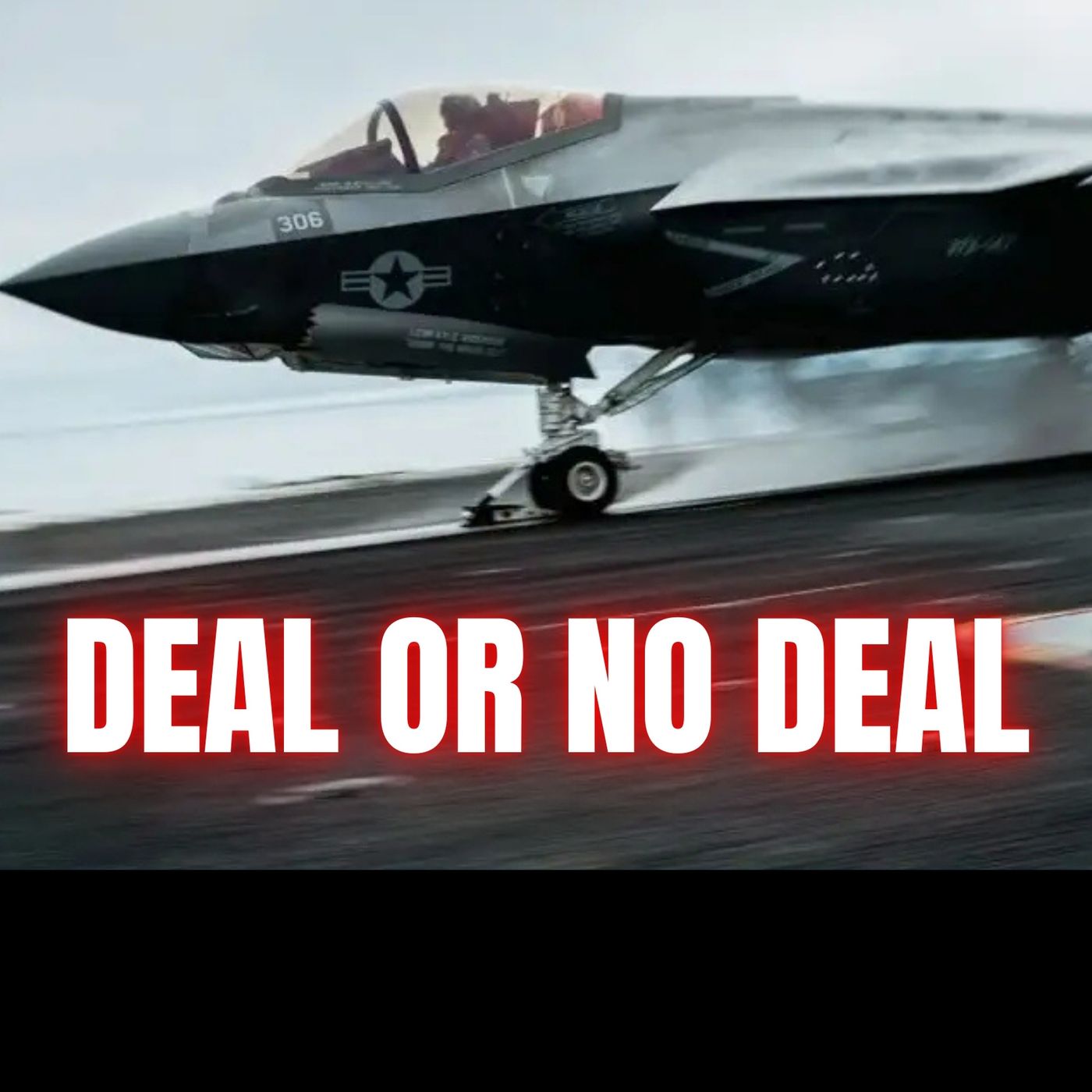
The Team House
From Nukes to Missiles to Proxies: The Iran Deal Keeps Changing | EYES ON GEOPOLITICS
00:46:01
We break down the U.S.–Iran negotiations and why the goalposts keep moving from nukes to missiles to proxy forces. With Israel, Turkey, and U.S. military power all in play, we dig into whether this is real diplomacy—or a setup for the next Middle East...
Loading summary
Transcript168 lines
- [00:00]
A
This is Teddi Mellencamp from Two Teas in a Pod with Teddi Mellencamp and Tamara Judge. There's the new season of 90 Day the Single Life. And it's hotter than ever. If you've never seen 90 day before, this is the one that will get you hooked. Their marriages crumbled. Now eight singles are taking the lead.
- [00:20]
B
And stepping back out to the scariest.
- [00:22]
A
Place of all, the dating world. There will be exciting first dates, steamy hookups, big letdowns and potential love waiting in the most unexpected places. Don't miss the new season of 90 Day the Single Life tonight at 8 on TLC at Lowe's.
- [00:40]
B
Get up to 35% off select major appliances.
- [00:44]
C
Plus members get free delivery, install and more.
- [00:46]
D
When you spend $2,500 on select major appliances Lowe's we help you save valid.
- [00:53]
C
Through 225 while supplies last selection varies by location.
- [00:56]
B
Excludes Massachusetts, Maryland, Wisconsin, New Jersey, Florida.
- [00:58]
C
Loyalty programs subject to terms and conditions.
- [01:00]
D
Visit lowe's.com terms for details.
- [01:02]
B
Subject to change.
- [01:04]
D
Visit your nearby Lowe's on Colorado street in Kennewick.
- [01:09]
C
Hey, what's up guys? This is D. Do us a favor and check out our patreon page. It's patreon.com the teamhouse. You get both Team House episodes and Eyes on Geopolitics episodes completely ad free. You get them early too. You can ask us questions. You can also watch the team ass episodes live as we shoot them. So and you help support the show and support what we're doing here. It's patreon.com the team house. Those links are in the description or if you're listening, it's in the show notes down below so you can click it real quick and easy and it helps us keep the lights on. So we appreciate it and we appreciate you guys listening. Thanks a bunch. Hey everybody. Welcome to another episode of Eyes on Geopolitics. I'm here with Andy Milburn. Mick Mulroy, Jason Lyons may be joining us. May not be having some technical issues on his end, but we will think about him the whole time. A lot happening as usual. First things first, let's do some house cleaning mix got they have a security conference intelligence conference happening in Whitefish in April, beginning of April. That link is in the description. Check it out. There's some great speakers that are going to be there and Whitefish is an all around great place to go. Andy Milburn, the man, the myth, the legend. Stirring up trouble as usual. His book when the Tempest Gathers that link is in the description as well. His substack too. You can check out his new article on War on the Rocks, too. That's give get. He's getting a lot of guff online for it, but I don't think it's not rightfully so because I think Andy's right about it. So check that out. It's a really good article.
- [02:44]
D
Yeah.
- [02:45]
A
By the way, on that point, there's a War on the Rocks podcast coming out this week with me as a guest. I sometimes stoop to do other podcasts where I discuss kind of a rebuttal to the rebuttals to that argument. Just very quickly because there's a lot of fallacious information that's not a crude word. The false information flying around and especially with the comparison with Mosul, people love throwing out numbers of Mosul have no bearing in fact. Okay, that is all. It's off my chest. Go ahead, Dee.
- [03:18]
C
Yeah, check out the article. It's a really, really good article. And stay tuned and keep your eye out for that podcast coming out with War on the Rocks.
- [03:26]
D
All right.
- [03:27]
C
A lot happening as usual. We had, you know, the US And Iran had discussions over the last few days. Initially last week they were going to have. They had to set up a meeting. The meeting went to shit. And then if like six hours or eight hours later, the meeting was back on. A lot going on, it seems like to me at least, like what it's coming out is we want Iran to get rid of their nuclear program, get rid of their ballistic missiles, and get rid of their support of proxies. As a layman, I don't, I mean, I. Iranian. The Iranian regime is actually is bad news, obviously. But like, if you're Iran, how do you get rid of your ballistic missiles? When we talked about it last week, it's like a huge, it's like a super important part of their integrated defense network.
- [04:15]
D
Yes, that's true. So greetings from still in Bozeman, Montana, where we're doing winter warfare training. Although it was 60 degrees yesterday, that's problematic, if you're wondering, for winter warfare training, but yes. So coverage this week was primarily on the Iranian negotiations. I think it's important to point out that the situation in Iran is dire and getting worse. So the prediction of the World bank is that the economy will actually contract in Iran by 3% this year. They're already about between 30 and 40% inflation rates. To put it in perspective, we're about 2.7. I think I looked it up. So I sound like I know what I was talking about. But obviously they're the real. Their currency has lost half of its value in a year. So. And it's, and it's predicted to get far worse. And there's additional sanctions that are going to be placed on companies and essentially pressure for financial institutions not to deal with Iran. So it's going to get worse. So there's a, it's bad and it's getting worse. So there's a lot of incentive, I think, by the Iranian regime, which is under incredible protest still. They've incarcerated over 50,000 people, killed over 10,000 people to have these negotiations. So the United States, I think from a diplomatic perspective has an upper hand. And the huge inflow of military power, you know, aircraft carrier strike groups already there. I think another one's on the way. There's eight or nine destroyers. There's multiple squadrons. I think it's, it's eclipsed the amount of firepower we've had prior to the 12 day conflict. So that's, and I think that was purposeful. Right. And there was, during these negotiations, they actually had Admiral Cooper in them, which the Iranians made a big deal about, generally speaking, that from a diplomatic perspective, it's not normal. But I think they're just highlighting that this is either going to go into a diplomatic solution that we agree with or it's going down the military path. And I think that is in fact what's going to happen. So a few more points and then toss it over to you, Andy. It was originally scheduled to be in Ankara, Turkey. The Iranians wanted it moved to Muscat, Oman. I think they do like the Omanis being the mediators more so than the Turks. But it was viewed originally by the Americans as delaying tactic like this. Okay, here we go. It's going to be a lot of delaying tactics just to avoid the military strikes. They both came out of the meeting positive. It took the US A little bit longer to have a positive statement, probably because it was Mr. Witkoff and Kushner there and they needed to brief the President, President make his own determination of whether it was positive. But they almost always say they're positive. So I wouldn't read too much into that. Unless there's another date set for continue the negotiations, this could easily slip into the military confrontation phase. And I do think this also allows the United States, last point. To get the theater, air and missile defense systems that they need out there. You know, the Thaad, the Patriots. There's a lot of concern about the retaliation that's coming from the Iranians once strikes, if strikes happen. So that should be done here fairly shortly. And then we'll see whether this is going to end in a negotiated new agreement and we can talk about the ballistic missiles and the support to proxies that the US is demanding be part of this or at least is wanting to be part of this. I don't think Iran will agree to that. Anyway, that's where we are right now.
- [08:30]
A
Andy. Yeah, yeah. You know, I'm going to take just a step back, guys, because someone mess. You know how I pay such close attention to all the input we get after every show. But some of that's hard to adhere to, actually. Like get rid of Andy. But a constructive argument, constructive comment the other day, just saying, hey, look, before you start talking, you know, using all these names, can you just explain who's who? All right, so I'll leave out the obvious ones. We assume everyone knows who Donald Trump is. President of the United States, Netanyahu, Prime Minister of Israel, Abbas. Abbas, hopefully not Butcher. His name, Boss Arachi, who is the Iran's foreign minister.
- [09:18]
D
Foreign minister.
- [09:20]
A
He's, you know, and I'll say just a line or two about them. I mean, he's signaling openness, but in practice he's drawing hard red lines. And we talked about that. And the hard red lines primarily have to do with Iran's ballistic missile defense, but also to a lesser extent, proxies. We often talk to Iran's supreme leader. And I got a question about that. That's Ayatollah Al Khamenei. And his role in all of this is to threaten, continuously threaten regional war. Right. Just to keep the stakes up. Steve Witkoff is Trump's envoy, who, who along with Jared Kushner, representing the United States.
- [10:01]
C
His son in law.
- [10:03]
A
Yeah. And Admiral Cooper. I'm sorry, Bradley Cooper. Admiral. Admiral Bradley. Sorry, there is an Admiral Bradley, but.
- [10:16]
D
Bradley Cooper is a CENTCOM commander.
- [10:18]
A
Yeah.
- [10:18]
C
And he's a beloved actor.
- [10:21]
A
Yeah. Sorry, Bradley Cooper. Yes. I was thinking it was SOCOM commander. My apologies, I punted that one into the sentence. Anyway, Bradley Cooper, who is there, is unusual to have a military leader at talks such as this. Hence the Iranians comments about that. And last of all, Recep Tayyip Erdogan, who is the President of Turkey and he's a big player in these talks. Trump the other day called him. I'm laughing because. A problem solver. All right, now Mick and I know Erdogan in the role of problem maker. So it's, it's quite unusual to hear him referred to in these terms. And he credits Erdogan with bringing peace to Syria. Right. Overthrow of Assad. He credits Erdogan with forcing compromise between the government of Syria and the sdf. And now he says that Erdogan is the guy voted the guy most likely to bring about peace through negotiation in the Middle East. And Erdogan is doing his best to do so, reaching out to the Iranians. But, you know, the US And Iran are certainly talking, but they're kind of talking past each other. Right. And it's going to be very interesting to see whether they can agree to some kind of compromise. I don't think the nuclear piece is a massive nuclear issue. I think Iran a massive issue. I think Iran's willing to compromise. They've already talked about. I don't think the Iranians haven't agreed to this yet. But Erdogan's suggesting that anything over 3%, any uranium that's enriched beyond 3%, is exported to Turkey and held in safekeeping there. Similar to. Remember when the Russians offered to do the same back before the chickpaw. Iran wants the talks to be exclusively nuclear. And the US Is saying right now that's not enough. Washington wants three things. An end to Iran's nuclear program. We talked about that. Limits on ballistic missiles that we haven't made clear what those limits are. And also an enter support for proxy militias across the region. Now, that last piece, even if Iran agreed to, would be really difficult to monitor. So while negotiations going underway, obviously President Trump's threatening devastating consequences if Iran refuses a deal. And those consequences would be not just military, but also economic. And as Mick talked about, the United States is already. They haven't imposed sanctions yet, but they're threatening to impose sanctions in all countries with dealings with Iran, which would hit China particularly hard. And U.S. forces in the region still continuously, still continue that state of high readiness. And that is all. Yeah, back. Back to you guys. It's diplomacy with a loaded gun on the table.
- [13:35]
D
So on the nuclear issue, I mean, we were talking about this before we started recording. I don't understand the logic of the regime when it comes to. If they didn't have an aspiration to get a nuclear weapon, they would be under much. I mean, just looking at it from their perspective, they wouldn't be under the same financial, economic pressure that they're under. Right. So their regime itself wouldn't be in danger of collapse necessarily, at least not from that. Which would polarize the whole population is economics.
- [14:09]
C
Right.
- [14:09]
D
Everybody's impacted by the fact that they can't buy food for their family, et cetera. So either give it up and get back into the community of nations or hopefully not acquire one. But they're in the worst position. They have 441kg of rich radium, up to 60%, which is not needed at all for civilian purposes. So they're right in the middle. Right. So I don't think we should ever allow them to acquire a nuclear weapon. They're completely unstable and obviously not even logical, at least from my perspective. So I think they could potentially be willing to do that. Now, are we going to accept a win? That's the question. Even like it could be more stringent than the JCPOA that Andy just referenced. Like the first agreement. The first one. Right. It, Right. So if it's a better agreement politically, not that I worry about political, you know, wins, but politically it'd be a win. Right. But if you have to include ballistic missiles, you might sink the whole chances of, of this being successful in support to proxies. It's going to almost hard. It's impossible to just put it in.
- [15:24]
C
The, put it in the press press release and just do it covertly. Like that's. What are we doing? We live in the real world or.
- [15:30]
D
Get a nuclear agreement. This is the, this was the argument that we made in the VOD when we pulled out of the JCPO in the first place. Yes, proxies are a problem. Destabilized Middle east ballistic missile program, obviously not good. Address them separately. Why not get them to agree never to have a nuclear weapon and take that as a win for the world. And then if there's issues with, you know, using proxy forces to attack our partners, address it, attack them back, or come up with a new sanction regime, but requiring it all to be in one bill unless we intend to mow the grass, literally, which costs billions of dollars to send all this military power over there and risk obviously the lives of the servicemen and women that are carrying this out on a regular basis. Why not actually get a, an agreement that is better for us, better than the jcpoa if you, if you care about that and better for the region. So hopefully that's where this ends up. You know, we'll have to see the Iranians get a vote, but I don't know, quite frankly, what is acceptable to the US right now, whether they, they'll live with just a better version of the JCPOA or.
- [16:53]
A
Well.
- [16:53]
C
So President Trump was on his plane and he was asked about it and he, I don't Know, if he misspoke or what. But he did mention about, like, nuke the nuclear program being the number one thing. Not so much proxies, not so much ballistic missiles. So he has a meeting this week to. Bibi Netanyahu's coming to Washington again for like the seventh time, I think it is, to talk about this. So I have a, I have a feeling that after that meeting will be, you know, there'll be an Axios piece, you know, detailing what went down and where we stand exactly with this. But it kind of feels like we're moving the goalposts a little bit, like we don't want a deal to happen and we really want to bomb these guys. And it's like that's a win. If they're down for like, you know, legitimately denuclearizing getting rid of their uranium, that's enriched to 60%, inspectors coming in, you know, like a real deal, actual thing. I mean, that's, that's as big of a diplomatic win that the administration is going to, like, hope to get.
- [17:58]
A
Yeah, I am, I mean, I, of course, who knows what's happening? But I would disagree with the fact that, that we, that the, the impact seems to be that there will be a war. I think that's unknown, but I think, I think some of the messaging coming from the administration is that Trump would be quite happy with a narrow nuclear deal combined with sanctions relief. He can paint that as winning the war without firing a shot. Iran could sell it as survival under pressure, and the only unhappy party would be Israel, because that's a good point. Israel is going to think that negotiations, successful negotiations, will rescue the regime in Tehran when it looked weakened. It's a, it's a kind of a 180 for Israel in the last month. You remember Netanyahu when, when the talk was backing the protests, Netanyahu commented in an interview with the economists that revolutions are better undertaken or like, more likely to be successful if managed from within, which was paraphrasing his quote. But he was worried about regional instability. But now that it looks as though negotiations might be something that the US Is open to, keeping it narrow to just the nuclear issue, then Israel is getting certainly very nervous. Hence Netanyahu's planned visit here to the United States. Well, like, listen, it's not the first time, of course, he's made an effort to change American policy by talking directly to Congress, for instance. Right.
- [19:39]
D
Yeah. Just to fact check myself. So I, I knew that the USS George Bush carrier strike aircraft, carrier strike crew had left Norfolk. But it's. According to cyber overlords here, it's, it's not known whether it's actually headed to the Middle East. So it has left. So maybe it is. That's what, that's the other one I was referring to.
- [19:59]
C
But we already have two aircraft carrier groups there, right? Aircraft carrier, carrier groups.
- [20:04]
D
So you have the USS Abraham Lincoln, which has a couple ships that's in the Gulf and the other one in the multiple destroyers. Well, which one's in the Med.
- [20:15]
C
Oh, man, I can't keep.
- [20:19]
A
I can't remember which, but now I have to look it up.
- [20:24]
D
Got to give, got to give. Fact, factual information.
- [20:28]
C
Yeah, absolutely. And I mean, listen, like there was the JCPOA number, the first one, you know, that kind of looked. It seems like at least it dealt with the rinsed uranium issue, you know, relatively well. And Israel and specifically BB Netanyahu was dead set against it.
- [20:46]
D
Like he was, ah, USS Gerald R. Ford. Sorry for interrupting. That is in the metaphor. Yeah, okay. No, no, no, no, no, no. Subsequently left. So sorry, I should have looked this up prior to this.
- [21:01]
C
No, it's all. So there's no. The Ford isn't there anymore to the left.
- [21:06]
D
Yeah. Okay, so maybe it's getting replaced by the George Bush, but they haven't announced that. But there's an aircraft carrier strike group and a lot of destroyers and.
- [21:16]
B
Hey, it's Ryan Seacrest for Albertsons and Safeway. It's cough, cold and flu season. Do not get caught feeling under the weather. Get back to feeling good with savings on all your cold and flu Essentials now through February 24th. Shop in store or online to stock up and save on items like Mucinex, Fast Max liquid Gels, Vicks, Dayquil and nyquil. Combo packs, holes, cough drops and Tylenol Children's liquid. Offer ends February 24th. Restrictions apply. Offers may vary. Visit albertsons or safeway.com for more details.
- [21:47]
D
If you're the purchasing manager at a manufacturing plant, you know having a trusted partner makes all the difference. That's why hands down, you count on Grainger for auto reordering. With on time restocks, your team will have the cut resistant gloves they need at the start of their shift. And you can end your day knowing they've got safety well in hand. Call 1-800-GRAINGER Click grainger.com or just stop by Grainger for the ones who get it done.
- [22:17]
B
Most people would rather assemble a 300.
- [22:19]
D
Piece cabinet than search for insurance.
- [22:21]
B
That's why the zebra searches for you.
- [22:23]
D
Comparing over 100 insurance companies to find savings.
- [22:26]
B
No one else can compare today@the zebra.com.com.
- [22:32]
D
Ton of aircraft there. So it's quite possible, but to Andy's point. So Prime Minister Netanyahu is coming to D.C. again, which is. Usually happens whenever he disagrees with what the US is trying to do. And, and I do think they don't want to see an agreement between the US and Iran. And one thing to point out is if you're following the national security strategy, national defense strategy, which obviously I disagree with, but nobody's asking me, then it would make sense to try to get to an agreement, a nuclear agreement, so that you can then focus on the Western Hemisphere and homeland defense, what it actually says. Yeah, yeah. Like, if you're going to follow your actual strategy, then you won't want to deploy all the assets we're talking about to the Middle East. It's counter to your own strategy. Right. So that this is a way to get there.
- [23:28]
C
Yeah, we need to keep control. Yeah. We need some off the coast of Canada to keep those fuckers in line. Yeah.
- [23:38]
D
Yeah, but you're not. I mean, Mick.
- [23:40]
C
Right, yeah. That whole, I mean, the whole thing is working, worrying about our regional whatever, you know, and it's.
- [23:46]
D
Yes.
- [23:47]
C
I also read that there's like a hundred plus, like support aircraft that have been flown over, like C17s to, you know, refuelers and everything. Like over a hundred.
- [23:58]
D
Oh, yeah.
- [23:58]
C
So it's like. Yeah, this doesn't really seem like the national defense strategy come to life.
- [24:04]
D
Seems a little counter to it or a lot.
- [24:07]
A
So one thing we, we haven't really talked about is Turkey's role. You know, I, I was, I. I mean, part of it, I think, isn't. You can interpret as the fact that Erdogan likes to be seen as a. A global figure. I mean, that's another statement, right? That's how he, he paints himself to his population. He is kind of the reverse. Ataturk. Ataturk took turkey into the 20th century. And Erdogan wants to take it back to kind of the time and, and in other ways, too, but he does. You know, the Turks are very nationalistic. I mean, if you, if you ever been to Turkey or dealt with their military, or indeed just waited through Twitter, one day you'll see that there's a lot of Turkish nationalism around. He has a strong base within Turkey and he likes to play to that base by being a player on the world stage. Yes, that's an element of it. But there's pragmatic reasons, too. I mean, Turkey has a 500 kilometer border with Iran, so a war that involves Iran is not going to do Turkey any good. And if there is such a war, of course, Turkey is likely to be first stop for any refugee flow out of Iran. There's, there's good reason Turkey to, to oppose an attack on Iran. And. But Erdogan's doing it in a smart way. He's not simply getting on, you know, speaking to the media and saying what a dumb idea it is. He's reaching out to President Trump, which shows how he really knows how to handle him. He lays on praise and then he says, hey, let me, you know, let me see what I can do on this. I think I may be able to reach an agreement that you're happy with.
- [25:59]
C
Well, Erdogan's done it before, right, With Trump. I mean, when we, like, bailed out on the, you know, Kurds in Syria, I think it was Trump 1, right?
- [26:11]
A
Yeah.
- [26:12]
C
You know, and that's why Secretary slept, you know, and that was a crazy, you know, it's over one phone call, essentially. It wasn't like a planned strategy, as far as I know. I mean, you were there, Mick. You know, that was your ao, essentially.
- [26:26]
D
So, yeah, President Erdogan said he could. He would pick up the fight against ISIS if we pulled out and left the Kurds on their own. That's why Secretary Mattis resigned. If you look back at the letter and, you know, we're still there, right? We're still there. How many years later? It's still an issue, though, quite frankly. This issue can back out with the US potentially leaving and really putting a lot of pressure on the SDF to accept the government and Damascus and integrate with it. So we'll see how that goes. Was the other issue I talked about, not really on the US media. This is the transfer of prisoners out of Syria to Iraq, because I think the US is concerned about the instability of the relationship. And right now, the SDF has been guarding these 7,000 prisoners for years. Right. So, yes, but President Erdogan does have the ear of President Trump, for sure. I think you're both right that he knows how to talk to him. But most countries don't want to see an actual conflict again, and they don't want to see. Even those that don't like the regime, I think probably have a very pragmatic view of what could replace it. And it's probably not a Nobel Peace Prize laureate. Right. It's probably the strongest dude in IRGC that's left standing. And it's been believed that the IRGC leadership has been pro acquiring a nuclear weapon and that it was actually the Supreme Leader, or is the Supreme Leader. That has been the hesitancy. So the question for a lot of the individuals that are assessing what will come next is would it be better or worse for the US Perspective to remove the current leadership? Which it's important to point out that Ayatollah is 86 years old, so this could happen tomorrow. I don't know his health, but without even the US Doing anything. So there's a lot of questions, I think, for the US to decide if they're going to ask for a maximalist, actual agreement, not just posturing before the negotiations, then this will probably end up in a military conflict again, because I also don't think politically you can send all this to the Middle east and then not get an agreement and then just turn around and go home. Right. So we've kind of made the choice by sending all this that we're going to use it if we don't get to an agreement, I think.
- [29:11]
A
And Mick brought up a good point, too. The. The Supreme Leader, Khomeini, even though, you know, he's waxing lyrical across the airwaves about what he how he's going to punish the United States, his bark has always proven far worse than his bite. Because, and this isn't me praising the Supreme Leader, but he is a pragmatist. He's a rationalist. He understands the game. If he goes, as Mick pointed out, we don't know who comes next. So by, you know, the Iranian constitution, although I'm sure it's not referred to as that, there's something called the assembly of Experts. Right. That's the first time I've heard that term used outside this podcast. But the assembly of Experts are. There are 88 clerics, but they are controlled very tightly by, guess who? The irgc. Of course, we're beyond the stage where Iran really is a pure theologist. Right. Is that the right word? What's the word I'm looking for?
- [30:21]
D
Theocracy.
- [30:21]
A
Theocracy, yeah. So I'm going to get Philip Feit for that, too, along with Bradley Cooper. Yeah, so we're beyond that stage. I mean, the IRGC pretty much controls everything within the country. It's an immensely powerful organization, and it's not renowned for its middle of the road, moderate views. So again, taking out Khomeini might not be the best thing to do, even if that's even on the table. But also something not to look forward to is when he does actually pass of natural causes.
- [30:57]
D
Right.
- [30:57]
C
Yeah. What comes next?
- [31:02]
A
Yikes.
- [31:02]
C
Let me. I got a question, because I'm sure some people are going to be wondering what. Where you guys mentioned, like, you know, Erdogan and his. His. What he was doing was a pain in the ass for you guys. Are you guys referring to Syria?
- [31:18]
D
That was constant. Northern Iraq at the beginning was also a big headache. We went in there early before the war, and then we got.
- [31:33]
A
Yeah.
- [31:34]
D
I mean, not very popular among US Special operations forces, or the agency, put it that way.
- [31:40]
A
Yeah. The Turks had guys in Northern Iraq in 2015, 2016, and with good intent to begin with to block ISIS. But they weren't there at the request of the Iranian. I mean, sorry, the Iraqi government. And they were very problematic for us. And of course, in Syria on a number of occasions. But even on small things like using their. Using their jammers to block our GPS during key points of the campaign against isis.
- [32:14]
D
They sent in their special operations with us when we first went into northern Iraq, and they want to follow us around. But we eventually gave them our Xbox. I think it was an Xbox. And then they didn't want to follow us around anymore.
- [32:26]
A
Yeah. Why?
- [32:26]
C
I mean, like, was that on purpose, Mick? You guys wanted to get rid of. Yeah.
- [32:32]
A
Okay.
- [32:32]
D
Yes. And it worked. They were like, yeah, we don't care so much anymore. Would you guys.
- [32:37]
C
Yeah, so just to give people some context, the serious. Like such an absolute clusterfuck or. I mean, it still is, but it was really bad. You know, the Turks hate the Kurds. Right. Everybody hates isis, essentially. Even the Iranians, even the Al Qaeda groups hate isis. But, you know, the Turks were supposedly with us. They would. You know, the Russians hated ISIS supposedly, too, but they were backing Assad. I mean, I'm not doing a good job of it because it could be an entire episode in and of itself, but, like, it was such an absolute, like, just a confluence of, like, differing interests and stuff like that that Syria, like, somebody needs to write a. A book about it, because it's insane.
- [33:17]
A
Yeah. The bottom line, our biggest problem, the Turks, it's always centered on the Kurdish piece. You can view it from a Turkish point of view that we did. The SDF in practice, covered quite a wide spectrum of Kurdish groups. And I'm not just talking about the sdf. I'm talking about groups that were aligned with US Government at the time, our foreign policy interest. Aligned. Right. Defeat of isis. But my point is this, that there were undoubtedly people within the groups that we supported who had previously taken action against Turkey. It's just, you'd be unrealistic to think anything otherwise. So that, you know, I'm not justifying what the Turks have done. They're being a total pain in the ass if you're crossing. And. And by the way, the way they treat the Kurds and have treated the Kurds in the past is pretty effing abysmal too. So. No, this isn't a pro Turkish argument. I'm just saying from their point of view, they will tell you that we have backed a terrorist organization. They're talking specifically about the pkk and they're saying that we have backed them and funneled arms into them, which we have not done directly or by intent. But it may well have been that that personnel and equipment crossed that thin, membraneous line between the multitude of Kurdish groups. Do you like that? That fell under the stf?
- [34:46]
D
Yeah, that was a good one. That was a good one.
- [34:49]
C
Yeah, but they were. They were.
- [34:52]
A
Sorry.
- [34:52]
C
I'm sorry. Yeah.
- [34:53]
A
The Turks have backed Arab militias in Syria and no doubt about it, with instructions to go up against and fight the SDF and drive them back to creating a buffer. But it was, at first the Turks justified this in terms of creating a buffer, but then it became clear that they were after the annihilation of the sdf. There's no doubt about it, they don't want the SDF still in existence. And as we talked about on the show, Mick and I and many others know what the SDF has done to us. It's enabled us to win almost bloodlessly. People are going to quibble with me, but minimal casualties, One of the most important campaigns of the last 50, 60 years, and that was to fight against the Islamic State. When I say one of. That's probably an understatement. I can't think of another.
- [35:43]
D
You're here. Totally agree. And one of our positions of all. And by the way, they said the same thing about the Iraqi Kurds. It's a common refrain. Our argument has always been collectively. So it would be better for us not to be with them. Because if we're with them, I mean, I don't buy that all these. Obviously I'm pro Kurdish, but if you believed what the Turk said, then our presence would mitigate any threat from them because we're there, right? We're with them. So it never really, especially in the Pentagon, where it's pretty universal, is how they view those two groups. It never really held a lot of weight for us because we were like look, if we're with them and we're providing the weapons and we know how they're using them because we're with them, how is that? So you think you'd be better off for us to leave? And again, to Andy's point, The SDF did 99% of the fighting and dying to beat the Islamic State and take and destroy the caliphate, or what they call the caliphate, so called caliphate. And that's going to be good. That's going to go down in the, in the legions of special operations, in irregular warfare. Just is.
- [37:03]
C
Also like, like you guys, you mentioned Andy, like Erdogan and the Turks, you know, complaining that like we were supporting the sdf, which was, you know, YPG and the PKK were a part of. I mean, he's not. He wasn't. And Turkey wasn't supporting Al Nusra or like Jelani's old outfit or what, you know, HTs like, what are we, what are we talking about here?
- [37:28]
A
Certainly, certainly the Turks backed Al Jelani. They deny having back Alison Nusra, but certainly they're openly and were supporting Al Jelani. And I mean, at the end of the day, Turtlene had a good argument for doing so, frankly, a good pragmatic argument. He brought the war to an end. There's no doubt about it. That was the only group that reasonably could be expected to do it. And the Turks backed it. They were in the right place. I mean, you know, give the Turks credit where they're due. I mean, we've blundered around in the Middle east backing the wrong groups. Every time Erdogan, by luck or by design, chose the right group. Okay, I'm not, that's not an ethical comment about Al Jilani and his band of married men. It's a comment about the fact that it was the one group that was in position, postured, and could overthrow the Syrian regime, given some backing. So, I mean, yeah, it was successful, vastly successful. The Turks, it was a blow to the Iranians, a blow to the Russians, and a threat to some extent to some of our interests in the region, as we talked about, represented by the SDs, who are kind of our conduit to intelligence and also to potential proxy action against the Islamic State in Syria. But, you know, back to the Turks, they see those Kurdish armed groups, they see the SDF on its borders as an existential threat. That's no exaggeration. And they view the SDF and they always will view any Kurdish groups, although the SDF are not exclusively Kurdish, as we talked about here, but they view them through the lens of the PKK insurgency, which continues inside Turkey.
- [39:21]
D
And in a lot of ways, that's just a boogeyman if you think about it. I mean, how big is the Turkish military? Are they really that concerned about, you know, invasion by the sdf? I mean, come on. It's more like if I need to have a. A distraction from my own issues with how, you know, he's handling Turkey and the economy, then it's. The Kurds are always the boogeyman. Right. We're on the verge of. It's just not.
- [39:45]
C
It's like a quick way to, like, spar, like nationalism up of, you know, so they have to worry about 30% inflation.
- [39:53]
A
But there is. There's something. I agree with all of that, and I'm not saying that, trust me. I'm a. I'm a Kurdish fan through and through. I've spent, you know, I spent a deployment in. In 2016 in the autonomous region of. Of Kurdistan backing the Peshmerga against the Islamic State. So I'm invested in it. I've written about it. I was very dismayed at u had talks about US forces pulling out of Syria for all of these reasons, but back to the Turks. So the mainstay of Kurdish presence in the SDF is an organization called ypg. And the Turks see the PKK and the YPG as being synonymous. They're not. But as I've said, there's certainly. There's a shaded area in the Venn diagram. Of course there is, because all groups up there, especially all Turkish groups, have to coordinate and collaborate to some extent. Even groups that hate one another.
- [40:47]
D
Yeah, so true. Well, I'm in a house that's very pro Kurdish. We got a lot of former Delta folks in here right now, and they did a lot of the heavy lifting out there. So it's just. It's something that we should recognize. It has to do with the way the US treats partners and allies. Shouldn't be disposable, shouldn't be transactional all the time. That's the way it is oftentimes in the Middle east especially. But I think the US should, should honor its partners and allies in a different.
- [41:23]
C
I got a question. How do you think the now, like, 2026. How does. How do the Kurds feel about the US now?
- [41:34]
D
It's hard. The SCF Kurds are. They're. They feel a bit portrayed. I know they are because they're telling me, but I know, I know. I know them. And they're texting me. And they feel a bit, a bit betrayed. But they also, you know, they have endured a lot as a, as a people. So they will persevere, they will succeed, I think. But they, I think they have rightful concerns about the loyalty of the US government, not the people they work with in the military and agency who they have lifelong friends with.
- [42:13]
C
But, but high level policy, right?
- [42:18]
D
Yeah, yeah. So, yeah, a lot of them feel betrayed right now, put it that way. Especially in the Syrian Kurds.
- [42:24]
A
Yeah. For the sdf, I mean, they, they want to hold on to the territory they have in Syria as an autonomous region in the same way as the Kurds in northern Iraq have an autonomous region. They want continued US Protection and specifically guarantees against Turkish attacks. You know, which. All of which seems quite reasonable. Right. But the problem is the, the fear that I think a lot of us have, I have, if I can speak for other people, is that as Erdogan creeps his way into US good graces, that there's going to be a price to it. And the price he's going to ask for. What is he, what does he want above all else from the U.S. he wants us to see, hey, you take Syria, you do what you want there to include against the stf. That's, that's really. I, I would argue whether one was once beyond the regional stability that'll play in his favor.
- [43:23]
C
Yeah. I mean, again, Syria is so insanely intriguing the, the interests that are go on in there. It still is. I mean, obviously, you know, we'll see if the guy, if Australia wants to be a George Washington or he wants to be Napoleon. Right?
- [43:41]
A
Yeah. I mean, you know, the bottom line is Washington can never, can never satisfy Ankara and the Kurds at the same time.
- [43:49]
C
Right.
- [43:50]
A
I mean, it. So it's a line that, that US administrations, not just this one, will always have to walk, but for all the reasons that we have given. I mean, there are ways to keep Turkey on side. They need us too, other than through the Kurds. And there are plenty of reasons, not just emotional, in fact, minority of them. Emotional, pragmatic. And then things that have to do with the values of this country. To throw up our partners as soon as they cease to be useful to us is not a good precedent for when we need partners again, as undoubtedly we will in future conflicts.
- [44:34]
C
Yeah, that's all I got, guys. You guys have anything else? You want to wrap this up?
- [44:42]
D
You know?
- [44:44]
A
Yeah, no, that was, that was not. I like this. I like this new time. That's. Oh, it's an old Time for you. Yeah, time zone.
- [44:50]
C
Well, not yet. You're back in the Eastern seaboard. Well, you're not really, but sort of. Anyway, I want you guys to do me a favor. I want you guys to check out Mick's new podcast, the Pub and the Porch. Applied Stoicism. That link's in the description. The Whitefish Security Conference. Sorry, Mick, I keep forgetting the name, but it's April 2nd to the 4th. Go ahead.
- [45:11]
D
Yeah, so right now it's called the Montana Intelligence Summit and it's going to switch. The Whitefish Security Summit. That's why you're.
- [45:17]
C
There you go. Yeah, but that link is in the description as well. And a ton of people. If you see the list of people who are talking at it, it's, you know, Admiral Bill McRaven and. And a lot more, folks, so andy Milburn.
- [45:30]
D
Stan McChrystal is the headline.
- [45:32]
C
Sorry, I fucked up. Stan McChrystal. I love.
- [45:35]
D
We'd love to get McRae for next year. So.
- [45:37]
C
Yeah, that's. That's someone to hope for.
- [45:39]
D
Bunch of mix.
- [45:41]
C
You said it.
- [45:42]
D
You knew I had to say it.
- [45:43]
C
You know you said it. I know. That's why it's okay. Andy Milburn, when the Tempest Gathers. That link's in the description as well as his great new article on the war on the rocks. That link is also in the description and patreon.com theteamhouse you get eyes on and Team House episodes ad free and early and you help support the show. All right, I'm out of breath. Thanks, guys.
- [46:09]
A
All right, Phyllis.
- [46:10]
D
Thanks, Jason.
- [46:11]
A
Take care.
- [46:13]
B
Hey, it's Ryan Seacrest for Albertsons and Safeway. Are you feeling those winter blues? Well, do not worry. They've got you covered with ways to boost your mood. Add a little sweetness to your day with big savings on all your favorite sweets. Shop in store or online and save on items like Gummy Savers five Flavors, Reese's Peanut Butter Cup Sour Patch, Watermelon, M M's Party Size, Stand Up Bags, and Ferrero Rocher Mixed Variety squares. Offer ends February 24th. Restrictions apply. Offers may vary. Visit albertsons or safeway.com for more details.
- [46:45]
A
Carvana is so easy. Just a click and we've got ourselves a car. See so many cars. That's a click.
- [46:52]
B
Tastic inventory and check out financing options.
- [46:54]
A
Payments to fit our budget.
- [46:56]
D
I mean, that's Clickonomics 101 delivery to.
- [46:59]
A
Our door Just a hop, skip and.
- [47:01]
B
A click away and bought.
- [47:03]
A
No better feeling than when everything just clicks. Buy your car today on Carvana.
- [47:12]
D
Delivery fees may apply.
- [47:14]
A
Are you really buying a car online on Autotrader right now? Really? At a playground?
- [47:19]
D
Yeah.
- [47:19]
A
Really?
- [47:20]
D
Look at these listings from dealers.
- [47:22]
A
Wow, your search can really get that specific. Really?
- [47:25]
D
And you just put in your info and boom, car's in your budget. Mom needs a second.
- [47:29]
B
Honey, you can really have it delivered.
- [47:31]
A
Really? Or I can pick it up at the dealership.
- [47:34]
D
One sec, sweetie.
- [47:35]
A
Mommy's buying a car.
- [47:37]
B
Mommy, look.
- [47:38]
A
I think your kid is walking up the slide.
- [47:39]
C
Kyle.
- [47:40]
D
Again?
- [47:41]
A
Really?
- [47:41]
B
Autotrader, Buy your car online.
- [47:43]
A
Really?
- [47:44]
D
Hey, guys, I want to tell all of you today about a new newsletter that we're launching that encompasses both the Team House podcast, the Eyes on podcast, and the High side news outlet, which I run with Sean Naylor. The newsletter is going to be once a week. It's going to come into your inbox and you're going to get the most current podcasts on Eyeson and the Team House and whatever's topical or current on the High side. So it's another way for us to get the information out to you as social media algorithms are pretty iffy and you never really know what you're going to get. So this is a once a week email. It'll slide into your inbox and it will have, you know, the greatest hits of that week. It's really good.
- [48:27]
C
Checking it out.
- [48:28]
D
The website for it is teamhousepodcast.kit.com join teamhousepodcast kit.com join go there and you enter into your email list or you enter your email into the little thing on the website and you're good to go. And that'll be it. So we really appreciate your support and hope you'll consider signing up. The link will also be down in the description if you're looking for it there. And that's teamhousepodcast.kit k I t ko.com.
- [49:05]
B
Hey, it's Ryan Seacrest for Albertsons and Safeway. It's cough, cold and flu season. Do not get caught feeling under the weather. Get back to feeling good with savings on all your cold and flu Essentials. Now through February 24th. Shop in store or online to stock up and save on items like Mucinex, Fast Max Liquid gels, Vicks, Dayquil and nyquil Combo packs, holes, cough drops and Tylenol Children's liquid. Offer ends February 24th. Restrictions apply. Offers may vary. Visit albertsons or safeway.com for more details.
- [49:35]
D
My name is Mackenzie and I started to go fund me for the adoptive mother of a nonverbal autistic child. The mother had lost her job because.
- [49:46]
A
She wasn't able to find adequate care for this autistic child. So she really needed some help with.
- [49:53]
D
Living expenses, paying some back bills.
- [49:56]
A
So I launched a GoFundMe to help.
- [49:58]
D
Support them during this crisis, and we raised about $10,000 within just a couple of months. I think that the surprising thing was.
- [50:10]
A
By telling a clear story and just.
- [50:12]
D
Like really being very clear about what.
- [50:14]
A
We needed, we had some really generous.
- [50:16]
D
Donations from people who were really moved by the situation that this family was struggling with.
- [50:22]
A
GoFundMe is the world's number one fundraising.
- [50:24]
D
Platform, trusted by over 200 million people.
- [50:27]
A
Start your GoFundMe today at gofundme.com that's.
- [50:30]
B
Gofundme.Com gofundme.com this podcast is supported by GoFundMe. Hey, it's Ryan Seacrest for Albertsons and Safeway. It's cough, cold and flu season. Do not get caught feeling under the weather. Get back to feeling good with savings on all your cold and flu Essentials. Now through February 24th. Shop in store or online to stock up and save on items like Mucinex, Fast Max Liquid Gels, Vicks dayquil and nyquil Combo packs, Halls, cough drops and Tylenol Children's liquid. Offer ends February 24th. Restrictions apply. Offers may vary. Visit albertsons or safeway.com for more details. Hey, it's Ryan Seacrest for Albertsons and Safeway. It's cough, cold and flu season. Do not get caught feeling under the weather. Get back to feeling good with savings on all your cold and flu Essentials. Now through February 24th. Shop in store or on line to stock up and save on items like Mucinex Fast Max Liquid Gels, Vicks, Dayquil and nyquil Combo packs, Halls, cough drops and Tylenol Children's liquid. Offer ends February 24th. Restrictions apply. Offers may vary. Visit albertsons or safeway.com for more details. Hey, it's Ryan Seacrest for Albertsons and Safeway. It's cough, cold and flu season. Do not get caught feeling under the weather. Get back to feeling good with savings on all your cold and flu Essentials. Now through February 24th. Shop in store or online to stock up and save on items like Mucinex, Fast Max Liquid Gels, Vicks Dayquil and nyquil Combo packs, holes, cough drops and Tylenol Children's liquid. Offer ends February 24th. Restrictions apply. Offers may vary. Visit albertsons or safeway.com for more details.
- [52:26]
D
Foreign.
- [52:36]
B
Hey, it's Ryan Seacrest for Albertsons and Safeway Are you feeling those winter blues? Well, do not worry, they've got you covered with ways to boost your mood. Add a little sweetness to your day with big savings on all your favorite sweets. Shop in store or online and save on Items like Gummy Savers 5 flavors, Reese's Peanut Butter Cup Sour Patch watermelon, M&M's party size stand Up Bags and Ferrero Rocher Mixed Variety squares. Offer ends February 24th. Restrictions apply. Offers may vary. Visit albertsons or safeway.com for more details. Hey, it's Ryan Seacrest for Albertsons and Safeway. It's cough, cold and flu season. Do not get caught feeling under the weather. Get back to feeling good with savings on all your cold and flu Essentials. Now through February 24th. Shop in store or online to stock up and save on items like Mucinex Fast Max Liquid Gels, Vicks dayquil and nyquil Combo Packs, Hulls, cough drops and Tylenol Children's liquid. Offer ends February 24th. Restrictions apply. Offers may vary. Visit albertsons or safeway.com for more details. Hey, it's Ryan Seacrest for Albertsons n Safeway. It's cough, cold and flu season. Do not get caught feeling under the weather. Get back to feeling good with savings on all your cold and flu Essentials. Now through February 24th. Shop in store or online to stock up and save on items like Mucinex Fast Max Liquid Gels, Vicks dayquil and nyquil Combo Packs, Holes, Cough drops and Tylenol Children's Liquid. The offer ends February 24th. Restrictions apply. Offers may vary. Visit albertsons or safeway.com for more details. Hey, it's Ryan Seacrest for Albertsons and Safeway. It's cough, cold and flu season. Do not get caught feeling under the weather. Get back to feeling good with savings on all your cold and flu Essentials. Now through February 24th. Shop in store or online to stock up and save on items like Mucinex Fast Max Liquid Gels, Vicks dayquil and nyquil Combo packs, Hall's Cough Drops and Tylenol Children's liquid. Offer ends February 24th. Restrictions apply. Offers may vary. Visit albertsons or safeway.com for more details. Hey, it's Ryan Seacrest for Albertsons and Safeway. Are you feeling those winter blues? Well, do not worry, they've got you covered with ways to boost your mood. Add a little sweetness to your day with big savings on all your favorite sweets. Shop in store or online and save on items like Gummy Savers five Flavors, Reese's Peanut Butter Cup Sour Patch, Watermelon, Eminem's Party Size Stand Up Bags and Ferrero Roche Mixed Variety squares. Offer ends February 24th. Restrictions apply. Offers may vary. Visit albertsons or safeway.com for more details.