← The Team House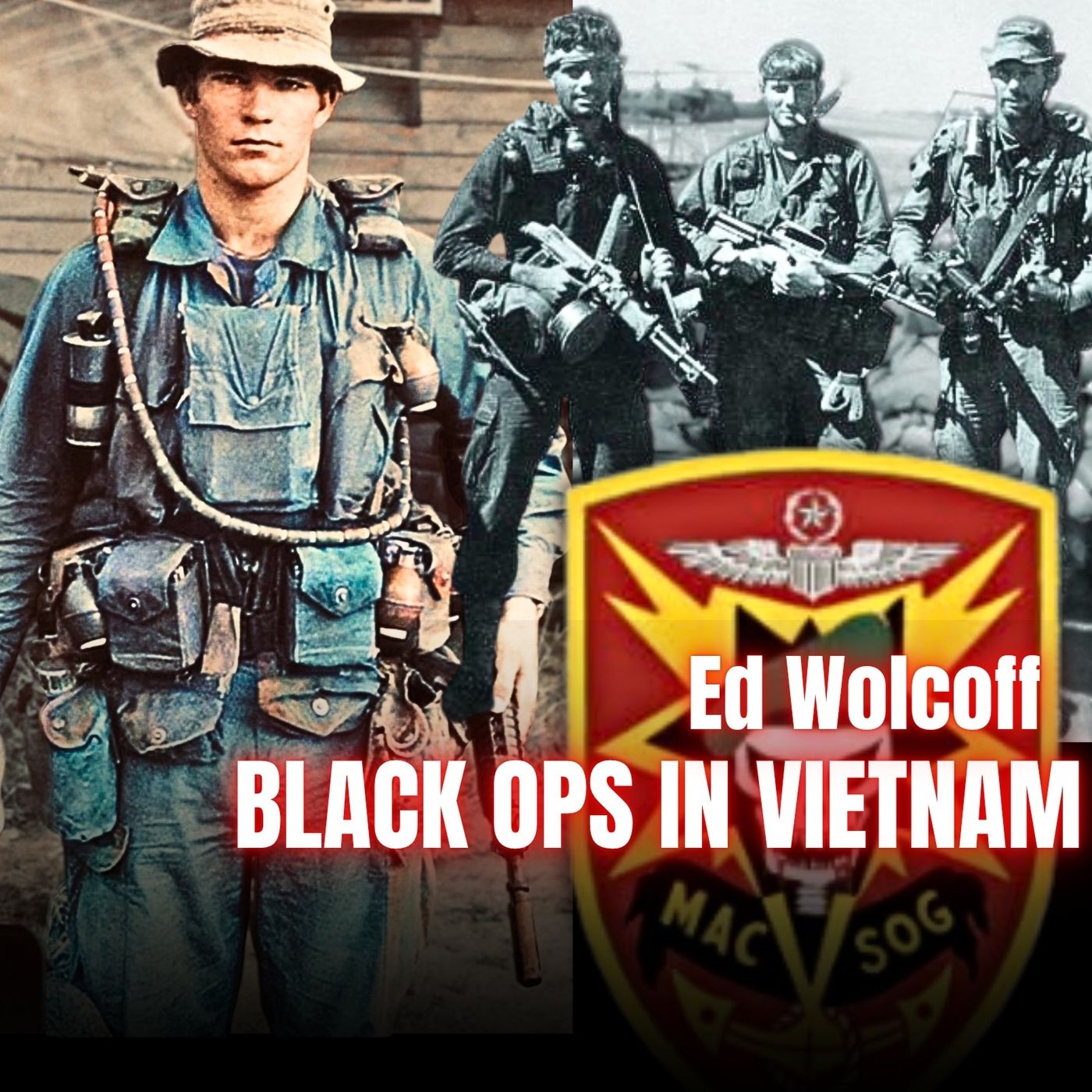
The Team House
Inside MACV-SOG: Black Ops Behind Enemy Lines in Vietnam | Ed Wolcoff | Ep. 407
02:44:58
MACV-SOG veteran Ed Wolcoff joins us to share firsthand stories from some of the most dangerous covert missions of the Vietnam War, operating deep behind enemy lines in Laos and Cambodia. He breaks down what it was really like leading recon teams...
Loading summary
Transcript230 lines
- [00:02]
Ed Wolkoff
Introducing Home Care Plus, a new subscription service from Lowe's that helps make life easier by giving members a hand with home maintenance. Let Lowe's tackle the tasks you keep meaning to do, like electric dryer, vent cleaning, replacing hard to reach light bulbs and more. Subscribe to Home Care plus for just $99 a year and consider your to do list done. Members get more at Lowe's. Available in select zip codes only. Cancel anytime. Non refundable fee. Product purchase required terms and service restrictions apply.
- [00:27]
Ryan Seacrest
Details@lowe's.com terms subject to change.
- [00:31]
Spinquest Advertiser
I'm here with Spinquest where you can play and win from the comfort of your own home with hundreds of slot games and all of the table games you love with real cash prizes. Right now, $30 coin packs are on sale for $10. For new users, it's all@spinquest.com that's S-P-I-N Q U-E-T.com Spinquest is a free to
- [00:54]
Ed Wolkoff
play social casino void where prohibited. Visit spinquest.com for more details.
- [01:01]
Jack Murphy
Hey everyone. Welcome to episode 407 of the Team House. I'm Jack Murphy, here with today's guest, Ed Wolkoff. Ed served in Vietnam with Mac V sog, spent time in Special Forces and then served as a nuclear officer. And you were also, was it an EOD company commander, Ed?
- [01:22]
Ed Wolkoff
I was an EOD detachment commander for quite a while and then, you know, for about seven and a half years in eod, but also in ordinance and to include special weapons. Gotcha. You have. Yeah.
- [01:38]
Jack Murphy
And he is also the author of the book Special Reconnaissance in Advanced Small Unit Patrolling. I got this book and use it as a reference myself. This is, I think it is the most comprehensive book out there on this topic, the most thorough that really goes deep onto the subject of tactics and techniques and procedures that are necessary, especially in jungle warfare, which we'll talk about I think quite a bit later on in this interview. But first, Ed, thank you for joining us on the show.
- [02:09]
Ed Wolkoff
Thanks. Glad to be here.
- [02:12]
Jack Murphy
So, Ed, I'd like to start at the beginning with these interviews. If you can tell us a little bit about sort of your upbringing and how that took you towards eventually the military.
- [02:23]
Ed Wolkoff
Okay. Graduated from high school and went to college, joined rotc, was a member of the ROTC Ranger company at the university where I was and we had some special forces advisors. They took me under my their wing and kind of indoctrinated me in special operations. And in hush tones talking between themselves, they would talk about sog. And I asked what was sog? And it was one of these things where they said we'd have to kill you before we tell you. And, but they, you know, they, they gave some, some insider information. They said that the SOG recon had 70 casualty rate. And I said, oh, that's, that's the place where I want to go. And I dropped out of college and joined the army as an enlisted man with the intent of realizing that dream, going airborne, you know, volunteering all the way, going airborne and Special Forces and ultimately in sog and I achieved that. And at that point, I had no, no real intent to become a career soldier, but I decided to do that after my experience in SOG and Vietnam.
- [04:01]
Jack Murphy
What year was this that you joined up?
- [04:04]
Ed Wolkoff
67.
- [04:05]
Jack Murphy
Okay, so you were hearing from some of your instructors who were there early on in the war, probably like 66 or 60.
- [04:12]
Ed Wolkoff
Well, I joined the army in 67, and then I, I got to Vietnam and SOG in March of 69, and then I was there for 25 months and ran 25 missions. Oh, wow.
- [04:27]
Jack Murphy
Wow. So tell us about kind of how you got into Special Forces and going through the training back in those days. I know Camp McCall wasn't quite as built up as it is today.
- [04:40]
Ed Wolkoff
Yeah, that's quite true. We were intense and it was. There was a big focus on physical fitness, the, and land navigation, as it is today. And back then, the training for Special Forces was in three parts. First was, you know, getting through the, the basic course and getting qualified. And the second part was your MOS training. And then the third part was the unconventional warfare training, and you had an index and then you were assigned to a group. And I chose weapons. When I was in AIT, I was an 11 Charlie, which was mortarman. And I had an affinity. I, I wanted to get into close combat operations. So I selected 11 Bravo Mos, which was, you know, infantrymen, light weapons actually, and was trained in light and heavy weapons. Later on, after I returned from Vietnam, I went to 11 Foxtrot course and that became my secondary, that was operations and intelligence. But at any rate, my, my assignment out of training group was to the six Special Forces group. I wasn't there very long. The my team sergeant and my sergeant major took a liking to me and they sent me to underwater operations course, scuba school. Wow. And at that point, I was a spec 4 and I asked around the more senior NCOs about how I could get to SOG, and I found a guy who was, who is bound for Vietnam. And he gave me the phone number for woman we referred to as Mrs. A. Who was the assignments up at the Pentagon. Not at the Pentagon, but at first cop Personnel command did.
- [07:32]
Jack Murphy
And you had to send her flowers.
- [07:35]
Ed Wolkoff
I didn't have to.
- [07:36]
Jack Murphy
Oh, a lot of guys have called me that.
- [07:39]
Ed Wolkoff
Yeah, I called her up by. Somehow I got a hold of a phone and without anybody listening because I knew my team sergeant, my sergeant major would be pissed off by volunteering for that after, you know, they'd done me the favor of signing me up for scuba school. Anyway, it was, you know, when I was on the phone with her, I told her I wanted to. Wanted to go to Sock. And she said, are you sure? Because she knew what the casualty rate was. She had to fill all those slots. And I said, yes, I'm absolutely sure. So she said, okay, I'll get you your orders. So I was waiting around and then the class date for scuba school started. And back then, and probably still there is a kind of a make or break event in the course which is called the. It was a. A pool training.
- [08:58]
Jack Murphy
Like the shark attack.
- [09:00]
Ed Wolkoff
Yeah, it was a harassment swim. Yeah, yeah. And I had just finished successfully completing the harassment swim. And it wasn't very pleasant for me because they had paired me up with a captain and they were all after the captain and I was just kind of like a, you know, a coincidental casualty, you might say. But anyway, I passed that and we went back to the barracks to get rid of the. For the next class. And I was told that the NCOIC of the committee wanted to see me. And I said, oh, I. I failed to. I failed to swim. I failed the harassment swim. He brought me in, said you got orders and, and he, he knew what the code was on the orders that indicated I was going to. So. And he said, we'll put you on a. On a bus back up to Fort Bragg and you'll have to process out and then you're on your. You're on your way. I didn't know at that point as a, you know, a lowly Spec 4 that I could have asked for a. A delay until I completed the scuba course. But I didn't know that at the time. So back up to brag, processed out and got to Natrang where they gave me. They. They further assigned me to the specific part of SOG where I was to be assigned, which was Command and Control Central or also known as FOB2.
- [10:45]
Jack Murphy
Ed, can I just ask a question real quick? Not that I know everything about this era, but I don't think I've ever Heard in the past of someone actually getting orders to SOG from the United States. It always seems like the guys talk about the arriving country and they'd give them some kind of brief, like very vague. We have this special reconnaissance outfit. Do you want to volunteer?
- [11:07]
Ed Wolkoff
And we.
- [11:07]
Jack Murphy
And that's kind of how they found their way in it. Was that like a unique situation that you found yourself in?
- [11:13]
Ed Wolkoff
Apparently it had changed when SOG started, you know, got off the ground. They were actually sending Spec Fours and Sergeant E5s to O and I course to qualify them to go to sog. And then they would be directly assigned. Assigned to sog. Well, they would have to go to the fifth Group because the fifth Group was the administrative service for Special Forces there and then. But on the orders, there was a, a three letter code on the orders within which indicated the ultimate unit of assignment. And I didn't know that at the time, but it was explained to me by, by the NCOAC of the Scuba Committee. And so, so I got to, got into Trang and processed in and then found my way on a Blackbird from the Trang to Kum. And that was an interesting. They were my adventure started, you know.
- [12:25]
Jack Murphy
Yeah, so tell us about that kind of flavor. First couple days arriving at CCC and what that fire base was like and the people you met there.
- [12:40]
Ed Wolkoff
So it was kind of striking flying over Vietnam. It was green rainforest everywhere, beautiful. Broken up by the occasional road and village and town and city. French architecture, you know, stucco and with red tile roofs and stuff like that. Very, very attractive from the sky. Not so attractive on the ground, but landed at, at Khan Tomb airstrip, like I said, on the Blackbird. And there was a tractor trailer from the FOB waiting to, to get the cargo from the Blackbird to take it to the fob. So I. And there was about four other folks on board the aircraft who were in inbound. And so we were sitting on the pallets as we drove out out the the road, the access road to the airfield. And right there was the provincial government building for Kantung Province. Took a right and in front of the, the provincial headquarters was this big open field and overgrown with weeds. And right in the middle of it was a French Penhardt armored car that had been destroyed. And it kind of resonated with me that the French had been there before us and, and had failed. And. And so, you know, the historical aspect of that kind of rushed in on me up the road about three miles, I would say, from Khan Tomb, from the airfield at least passing over A bridge. And we entered the gate. Now the FOB for some strange reason was divided into two by the highway. The highway is called QL14. And as far as a defensive setting, I thought it was inappropriate to have a highway dividing your. Your compound. You know it. Not only was it a highway for the Vietnamese, it was a highway for an enemy who wanted to, you know, to, to attack you on a high speed route of approach. But it, I digress here, but drove in the gate and it was, it was chow time and people were coming out of the mess hall and among them was a guy who had gone through training group with me. His name was John St. Martin. And John recognized me instantly and wanted me to, to join his, his team. He was not the team leader, he was the assistant team leader and, but there was a vacancy on the team. So he took me to see his team leader and he basically gave me the nod. And then I went over and spoke to the, the first sergeant over at Recon company headquarters the following. So I, I knighted over in the team room. And the following day we went over to, to see the sergeant Major. And he gave us the, the in brief or at least part of it and gave us the opportunity to decline the operation indicating hazardous operation, you know, across border operations, all that good stuff. And so among us was a medic. And then there was four other guys. One was an NCO and the NCO decided that he would go to the exploitation force. And the rest of us opted for recon from there. We got in, briefed by the S2 shop and gave us the one over the world thing. We got to see the big map on the wall where the area of operations was. And it was all, you know, just what I kind of expected. My first sergeant at that point was the guy by the name of Bob Howard. Oh yeah. And he was very striking in appearance. Extremely well built, powerfully built guy, scar on his face. And St. Martin had told me that he had been submitted for his third recommendation for a medal of Honor at that point and that he was going to get it this go round. And of course Saint Martin was in awe of Bob Howard and as was most everybody else that I knew that I encountered is very well thought of for obvious reasons. And so that's kind of was my introduction. Yeah.
- [18:50]
Jack Murphy
Hey guys, today I want to tell you about Van Man's tallow and honey balm. Think Dr. Squatch is some small wholesome company. Burt's Bees native? Think again. They've all been bought out by mega corporations and private equity Firms who hijack these beloved brands and fill them with the same corporate slop as everyone else. But one company is doing things differently. The Van man company. They started the tallow trend a few years back with their grass fed tallow moisturizers. And they've been crushing it ever since with hit after hit of clean, nearly edible solutions to your everyday products. Here's the thing about tallow. It's the best moisturizer on earth. Because the fatty acids in tallow are nearly identical to the oils in your own skin, your body actually recognizes it. One use and you'll feel the difference. Your skin will be softer and smoother than anything you've gotten from a bottle full of chemicals and fillers. And because there's no filler, garbage, a little bit goes a long way. This stuff will actually last. Tallow Balm isn't just some moisturizer though. It can replace your lotion, nightclamp, wrinkle cream, even Neosporin and diaper balm. It's powerful enough to heal the skin, yet safe enough to spread on your toast. That's real ingredients ready to ditch the corporate chemicals. Go to Vanman Shop Teamhouse and use the code teamhouse for 15% off your first order. That's Vanman Shop Teamhouse and use the code teamhouse for 15% off your first order. Van man real ingredients, no exceptions.
- [20:26]
Bluechew Advertiser
What's up guys? I want to thank Bluechew for sponsoring our video. Fellas, you already know what time it is. It's time to level up. And Bluechew just dropped something crazy. I'm talking next level championship belt gold plated energy. Bluechew gold is the newest innovation from the number one chewable Ed brand. This isn't your grandpa's little blue pill. This is a four in one beast that's setting the gold standard for performance. We're talking two ingredients for blood flow and to keep that rocket pumping, mixed with optimorphine and oxytocin to turn up arousal and connection in your brain and body. Bluetooth gold dissolves under your tongue and works in as little as 15 minutes. That means you can get it on quicker and stay in the game longer. Elevation without hesitation. This is peak passion and peak performance in a single tablet. So the next time your girl hits you up, setting you up, asking to see where you're at, just shoot her a picture of your piece and a Bluechew tablet and she'll know what's up. She'll be ready to rock. Make life easier by getting harder and discover your options. @bluechew.com we got a special offer for our listeners right now. Get 10% off your first month of bluechew Gold with the Code House Call. That's Promo Code house call. Visit bluechew.com for more details and important safety information. And we thank BlueChew for sponsoring this podcast one more time. BlueChew.com promo code Housecall for 10% off your first month of BlueChew Gold. Go get it right now. Your girl will love it.
- [21:56]
Martha (Kohler Cast Iron Ambassador)
When Kohler, the global design leader in luxurious kitchen and bath products, came to me and said, martha, we need an ambassador for our timeless, elegant, durable cast iron products, I said, I'm in now. Let me see the factory. Weeks later, I was suited up in coveralls and work boots, walking through their Kohler Wisconsin cast iron foundry. I stood next to the molten iron furnace, saw the hand applying enamel and touched the gorgeous finished products waiting to be sent out into the world. Since 1883, Kohler cast iron products have been forged and finished by the incredible craftspeople right in Kohler, Wisconsin. I'll tell you, I gained a newfound respect and appreciation for Kohler's cast iron craftsmanship. So now I'm lending my discerning stamp of approval to my most beloved Kohler cast iron products for their durability, beauty and timelessness. Shop my Kohler Cast Iron favorites curated on Kohler.com bring the warmth, character and enduring style of these timeless products into your kitchens and bathrooms. As the Kohler Cast Iron Ambassador, I say, long live Cast Iron.
- [23:18]
Ryan Seacrest
Hey, it's Ryan Seacrest for Albertsons and Safeway. You don't want to miss the annual beauty event for big savings on all your favorite beauty products now through April 28th. Spend $25 on participating products and save $5. Shop in store or online for items like Billie Women's Razors, Billie Body Buffer or Body Wash Native Hand Soap, Neutrogena Makeup Remover tablets and Q Tips. And save $5 when you spend $25. Offer ends April 28. Restrictions apply. Offers may vary. Visit albertsons or safeway.com for more details.
- [23:49]
Spinquest Advertiser
Forget whatever plans you have this weekend because you're staying at home and playing on Spinquest, and there's never been a better time to sign up than right now. New users get $30 coin packs for just $10. All the table games you love, with hundreds of slot games and real cash Prizes. That's at spinquest.com S P I N Q U-E-S-T.com Spinquest is a free to
- [24:12]
Ed Wolkoff
play social casino void where prohibited. Visit spinquest.com for more details.
- [24:21]
Jack Murphy
What was CCC Command and Control Central what kind of was their area of operation?
- [24:28]
Ed Wolkoff
The area of operations in Laos were divided between CCN and CCC roughly 50, 50 during in the area of the Ho Chi Minh Trail. And we also got a piece of Northeastern Cambodia. And interestingly enough that area of I mean it was all there was a major supply route slicing through the southern portion of of the Laotian Panhandle that went into the Tri border area and part of it part of that road continued on into South Vietnam although was all overgrown by that point. And then there was at least two branches of that road that went into Cambodia went south into Cambodia and everything. And I later found out that that particular area was an NVA base area for. It was called Base Area 609. And there was a concentration of enemy troops and enemy logistics located there. And that logistics fed not only into South Vietnam into the Central Highlands but it also fed into the the border area along the Cambodia South Vietnam border. So it was a vital area of interest to the enemy. And because of that it was extremely well guarded and and very hazardous territory for for operations. So I later on found out that our S2 shop had failed us in a number of respects by not providing us the intelligence that I that was look was at MACV headquarters J2 and never seemed to wind up down at our level and disseminated among the team leaders. And I can tell you about a couple operations that for me that revealed these kinds of things about what I was really getting into. And it turns out that I the. The casualty rate for our recon company at FOB2 was a hundred percent or over a hundred percent rather than the 70% that I had been told earlier. And of course casualties include kia, wia, mia. And. So the the reason why the casualty rate was so high was that guys would get wounded and they would come come back to the FOB from the hospital directly from the hospital. They they many of them were to be medevaced and they declined medevac to Okinawa or back to the States and and escaped from the from the hospital and hitchhiked back to the fob. An example of that was a guy by the name of Norm Doney. Norm Domi Doney. After Howard became an officer and came back to command the recon company at FOB 2. Norm Domini Dhoni had been with Delta Project at Natrang and for reasons that I can discuss later he decided to leave Delta and he was First Sergeant Recon Company at Delta Project. And he wanted to be First Sergeant Recon Company at FOB 2. So he was an outstanding individual. Brought a lot of experience. He had run recon himself before he took the first Sergeant's job. He wanted to prove his mettle to, to the, to the personnel that he would be in charge of. S first sergeant. So he took, I think it was rt, Texas. And he took several operations and on one operation he got wounded and it was his left eye. A fragment, grenade fragment penetrated his, his, his left eye. And they, you know, evacuated him to hospital and he just hit, hiked his way back to the FOB they were going to evac him to the States to perform surgery on the eye. And he refused. And he, he had optic fluid coming out of his, his eye and down to his cheek. And his remedy for that was just he had a hanky and he'd pat it and continue to drive on. And then he did another couple missions with that before he, before he became first Sergeant. So that was the kind of guys that we had there in leadership positions that we looked up to. I set the example for us.
- [30:59]
Jack Murphy
Could you tell us about your first mission and kind of jockeying up for that and you know, what the kind of preparation was that your 10 gave you before you went out?
- [31:11]
Ed Wolkoff
Oh, that's a nasty story. Actually. The, There were a couple of guys at CCC who had gotten into Special Forces through the back door. The fifth Group, Edna Trang, had a lot of vacancies, A Teams, B teams and special projects. So they would accept a, an infantryman with combat experience with the, you know, the rank of start Staff Sergeant or above into the Special Forces ranks. You come to the track and they give them a beret. Didn't. Never went through the selection process, never went through Special Forces training. And a couple of these guys really turned out to be really bad. And among them was my first team leader. And he didn't train the team. He was not particularly. Involved with the mon yards. And he, he did some things that were unacceptable as a team leader. The only deployment that I had under him was to A Bright Light, a week long Bright Light assignment. Bright Light was conducted out of our launch site. And the a Bright Light operation consisted of a special, you know, a recon team designated to go to the rescue of, of a team in trouble or recover the remains of those who had been killed, or rescue and, or recover crewmen for aircraft crewmen. And there was, it was often a very hazardous job. So we went up to To Docto, which is the launch site. And we were not called out for any rescue operations or recovery operations, which was fortunate because this team leader had never trained us. The. The training consisted of going out in the helipad and running through an immediate action drill or. And do that a couple times, and then go to the range and shoot your weapons and not even run battle drills and then come back, and that was it. And both St. Martin and I were very concerned about that. Plus his behavior was. I. I don't want to even talk about his behavior. Frankly. I. I could tell you offline, but.
- [34:47]
Jack Murphy
Inappropriate for the position.
- [34:50]
Ed Wolkoff
Inappropriate for a special forces soldier. Inappropriate for any soldier. At any rate. St. Martin and I went to see Bob Howard and told him what was going on with the guy, and he said, don't worry, I'll handle it. After that bright light, this team leader was going on leave to Okinawa, where he alleged that he had a wife. And while he was gone to Okinawa, Howard ensured that he never came back or he didn't come back. And he should have. He should have been ejected from Special Forces, but apparently that didn't happen. And I ran into him later on when I was an instructor at Camp McCall as a student. He was a student, and he was. He deserted.
- [35:57]
Jack Murphy
He deserted in the United States.
- [36:00]
Ed Wolkoff
Deserted the United States while he was going to that course.
- [36:04]
Jack Murphy
Oh, my God.
- [36:06]
Ed Wolkoff
So that. That gives you some inkling. Yeah. So St. Martin took us out on one operation into a very hot area called Hotel 9.
- [36:21]
Jack Murphy
I'm sorry, just one second, Ed. Before that. So when that team leader gets fired by Bob Howard, then St. John becomes the team leader. Is that how that worked?
- [36:30]
Ed Wolkoff
That was the way it was supposed to work. But St. Martin only had three missions under his belt, and that included the mission at the 10 school.
- [36:40]
Jack Murphy
Gotcha. So who was in charge?
- [36:45]
Ed Wolkoff
Realistically, he only had two. Two missions on the ground. And. And the reason why that loser had become team leader was because just before I got there, the team had gotten in. Into a contact and the team leader had been killed and the assistant team leader had been severely wounded and medevac back to the States. So the radio man wound up being the team leader, and he wound up being the team leader because he had claimed to have been a recon team leader in the 173rd. And. It was just. Yeah, so.
- [37:44]
Jack Murphy
So Hotel 9. Who was running the team when you guys went in?
- [37:48]
Ed Wolkoff
So St Martin was given the team, but we already had a designee. Okay. To take over the team. Gotcha. Identified at this point I think, well, this was another guy from the 173rd and the, he was. Bad in a different way from the original team leader we had. And I was beginning to think that RT in New York was a bad luck team at this point because he didn't train us any better than our first team leader. He was an alcoholic. He would come from training and go directly to the club and start drinking. And that was his practice every day. And. We had the first operation with him, was a very simple operation. We were going into a very hot area, but the mission was to drop off a, a transponder into an area called Oscar 3 for, for B52s to
- [39:29]
Jack Murphy
home in on beacon bombing.
- [39:32]
Ed Wolkoff
Yes. And it was basically fly in, jump off the helicopter, hide the transponder, call the helicopter come get you and go, go back. And that was it. So the first two people off the helicopter supposed to be the team leader and the radio man, which is what I was at that point. And he. I lost my balance. I was, I was standing on the skid ready to jump off the helicopter onto the ground. I lost my balance and got to the ground before him and he was very upset that I got onto the ground before him and chewed me out. And it went downhill from there.
- [40:36]
Bluechew Advertiser
A lot of people put off buying a new mattress because it feels like a hassle. Too many options, too many claims and no real way to tell what's actually going to hold up. Ghostbed makes that decision easier. Ghostbed is a family run company with more than 20 years of mattress making experience backed by deep manufacturing expertise. Their approach is straightforward focus on quality materials, smart construction and a consistency over time, not flashy features or complicated sales tactics. Every Ghostbed mattress is built for long term comfort, using durable foam and proven cooling technology to help regulate temperature while you sleep. It's designed to feel reliable night after night, not just when it's brand new. And if you're not sure which mattress is right for you, Ghostbed's online mattress quiz helps narrow it down quickly. Whether you're a side sleeper who needs a little plushness or someone who prefers a firmer feel, the quiz matches you with the right option based on how you actually sleep. They also keep pricing grounded. Ghostbed mattresses cost up to 50% less in comparable brands. You could rest easy knowing you're not. You're getting one of the best values at this quality level. Every mattress comes with a 101 night sleep trial, an industry leading warranty and fast free shipping. And as a teamhouse listener, you can get an extra 10% off your order. Just go to ghostbed.com house and use the promo code HOUSE at checkout. That's ghostbed.com house code house. For an additional 10% off site wide, upgrade your sleep with Ghostbed, makers of the coolest beds in the world. Some exclusions apply. See cipher details. Thank you Ghostbed for sponsoring the show. Thank you guys for helping support the show. Bye.
- [42:16]
Martha (Kohler Cast Iron Ambassador)
When Kohler, the global design leader in luxurious kitchen and bath products, kids came to me and said, martha, we need an ambassador for our timeless, elegant, durable cast iron products. I said, I'm in now. Let me see the factory. Weeks later, I was suited up in coveralls and work boots, walking through their Kohler, Wisconsin cast iron foundry. I stood next to the molten iron furnace, saw the hand applying enamel and touched the gorgeous finished products waiting to be sent out into the world. Since 1883, Kohler cast iron products have been forged and finished by the incredible craftspeople right in Kohler, Wisconsin. I'll tell you, I gained a newfound respect and appreciation for Kohler's cast iron craftsmanship. So now I'm lending my discerning stamp of approval to my most beloved Kohler cast iron products for their durability, beauty and timelessness. Shop my Kohler Cast Iron favorites curated on Kohler.com bring the warmth, character and enduring style of these timeless products into your kitchens and bathrooms. As the Kohler Cast Iron Ambassador, I say, long live Cast Iron.
- [43:38]
Ryan Seacrest
Hey, it's Ryan Seacrest for Albertsons and Safeway. Take care of yourself this spring with great savings on all your favorite wellness brands. Now through April 28th. Save $5 when you buy three or participating wellness items. Shop in store or online for products like centrum, silver, nexium, 24 hour, tums, ultra strength or Smoothies, tablets and Flonase spray. And save $5 when you buy three or more. Get these deals before they're gone. Offer ends April 28th. Restrictions apply. Offers may vary. Visit albertsons or safeway.com for more details.
- [44:09]
Spinquest Advertiser
Forget whatever plans you have this weekend because you're staying at home and playing on Spin Quests. And there's never been a better time to sign up than right now. New users get $30 coin packs for just $10. All the table games you love with hundreds of slot games and real cash Prizes. That's at spinquest.com S P I N Q U-E-T.com Spin Quest is a free
- [44:32]
Ed Wolkoff
to play social casino void where prohibited. Visit spinquest.com for more details. We were given Another mission. And he was, it was an area called Tango 7, which was a very hot area. And he really disliked St. Martin and, and me. He, and he swore that we were incompetent and would get him killed. That was his point of view. And he would, he would go to the club and talk about those kind of things and, and he would, you know, talk about other team leaders, give his uninformed opinion about them. And he talked about us. St. Martin and I like dogs and we knew about it. But he, we got this mission to Tango seven and we're up at the, the launch site and he's, he tells the launch officer with the launch officer tells him, get ready to go. We got a window. And he says I can't go. I refuse to go. I feel sick to my stomach. And. So the launch officer radios back to the fob. The FOB commander personally comes out and goes to, confronts him and he, his face is just purple with rage. And he said, are you going to take this mission or not? And the guy said, no, I don't feel good.
- [46:42]
Jack Murphy
Wow.
- [46:44]
Ed Wolkoff
So he said, you're relieved. You relieved him on the spot. Turn to St. Martin and said, can you take the team on this op? And Seymour looks at me and I, I nod. We, we, we agreed that we were going to take the team shorthanded and, and go on the op. And it was a successful operation. And this guy from being relieved, they sent him to the security company to, to run guard posts and stuff like that. He was relieved for cowardice and he should have been kicked out of Special Forces or the army and the Army. But interestingly, because we were so classified, nobody was ever given an ARAL 15. Nobody was ever court martial, even though some earned it. You include me.
- [47:47]
Jack Murphy
So did RT New York start to get back on track now that it was you two guys kind of running the show?
- [47:54]
Ed Wolkoff
That's correct. Required another radio man by the name of John Blau. And we started running ops and every one of them was in a hot target area. And every one of them, we got into contact and we ran about four ops, I would say, before we got into a, a very serious situation. And John got shot up very badly. And fortunately we were, we were able to get out of there in a very dramatic fashion.
- [48:50]
Jack Murphy
Could you, could you expand a little bit about what happened to you guys on the ground?
- [48:56]
Ed Wolkoff
Okay. So we landed on an LZ Tango 7 near Stream Valley. And one of the things that John did that wasn't particularly smart, mind you, John had never been tutored by A decent team leader. So John would, would take an azimuth from the LZ and go straight to his target, which was an invitation to, for the NVA to set up an ambush. Once they realized that you were on an azimuth, they could, they could find you and get ahead of you and, and set up a blocking force for you. Normally within a couple days we would be tracked down by tracker teams, NVA squads, typically with Laotian tribes and trackers. And these were the excellent troops, these were outstanding troops. But at any rate, two days into the op, they had not yet tracked us down. And we came upon an area of dead bamboo. And if you know anything about dead dead bamboo, particularly if it's fallen and they make a God awful noise, it's impossible to get through a patch of dead bamboo. Almost impossible to get through without making a hell of a lot of noise. And as cause as cautious as you could be. And so we entered that area of dead bamboo, which is fairly extensive area, probably had been killed by Agent Orange and got to the other side and all of a sudden we hear shouting from the green periphery inside, inside the, the vegetation. And at this point, John being the second guy in, in order of the file order, he saw and the point man saw buildings and they give the sign for buildings, which is basically like that. And I assumed that they were the typical bamboo huts, kind of a thing that the NVA used in the field. And just at that point there was yelling in Vietnamese from inside this, this area. And for some reason our translator, our interpreter did not translate what was being said to John. And I found out later after John had been all shot up and we got back to the FOB that they were saying there's Americans in the dead bamboo. So we got into inside the verge and I was confronted by something I really didn't expect, which is really big buildings under canopy, heavy log structure,
- [53:11]
Ryan Seacrest
long
- [53:11]
Ed Wolkoff
buildings, a cluster of four of them. And the ground surrounding these buildings was. There wasn't a leaf or a twig on it. It was totally policed up. And right before this cleared area where these buildings were, there was a fallen log, a fallen tree and we assembled there and John got this great idea that we would attack the, the largest building in the hopes of capturing NVA officers and documents of, you know, of importance and things like that. And I, I suggested to him that maybe we ought to bomb it first before we assaulted it with an eight man recon team, you know. And he agreed with that. So he, we got in contact with
- [54:24]
Martha (Kohler Cast Iron Ambassador)
our
- [54:27]
Ed Wolkoff
communication relay site and they passed the word back to the FOB at this point it was getting near dusk. It was about an hour, half an hour before dusk. And the order came back from the FOB Commander to, to bomb the facility and then police up whatever, whatever we could. But we were so close to those buildings that the only thing that would penetrate the canopy would be a white phosphorus grenade. And if we set off a white phosphorus grenade, then the enemy would know exactly where we were. So we summoned air support which came in the form of A1 fighter bombers and attempted to adjust fire by sound. We tried to, you know, zero them in to where we were located by the sound of their engines, told them to do a 90 degree turn or, you know, whatever to get us in the vicinity so that they could then. And we had hoped that they, that would be close enough where they could drop their bombs. They were, they were only carrying heavy bombs, cased case bombs, fragmentation bombs, and didn't have anything else to. For were loaded on those aircraft at that point. Well, they dropped some ordinance and it was totally way off in the, in the distance, not even close. So John decided the hell with it, we're going to go and assault that building. So we go back to where this fallen, fallen log is. And he devised the team into two parts at that. We were running an eight man team. So they were three Americans and the rest were Mont yards, three Mon yards. So it was St. Martin and I and two Martin yards up in the front. And the second wave was to be our radio man with the two N79 Grenadiers and a third Monyard. And the Grenadiers were to bracket our, our contested area with, you know, he. While the first wave, you know, assaulted this building. And just at that point, so John and I were up at the, up at that log and we both pulled pins on grenades and getting ready to assault the building. And John stepped over the log and it just out at that point, out of the corner of my eye, I saw a squad of NVA infantry with their weapons at high port walking along the periphery of this cleared area pretending that they didn't see us. But they did. And they hit us on the flank. And John fortunately threw his grenade and then fell back from stepping over the log. I threw my grenade and opened fire on this squad of nva. John had been hit three times. He had been hit in the ankle. If you know anything about an ak, it has a muzzle rise as it fires, so it rises up and two to the left because the ejection port is on the right. So it hit him in the ankle, hit him in the leg, and then sliced across his abdomen, which emptied his intestines. Oh, my God. To the ground. And so fortunately, we were sheltered by the, by the log. And my firing and possibly the firing of the. The grenadiers had knocked out some. Some of the NVA squad. So I had not been trained how to administer morphine. But John was in extreme pain. He was screaming and hollering, which of course pinpointed us the. The team leader in SOG recon teams always called what was called a 10 kit, which had medicines, tetracycline, lomodil,
- [59:53]
Jack Murphy
the
- [59:53]
Ed Wolkoff
cure chrome, all this kind of. And. And also had the morphine syrettes in them. And I wasn't taught how to use the morphine serettes. And this was like my, maybe my force operation on the ground. And everybody who went to. To sog, to the SOG fobs who were. To. Who were destined for recon or exploitation, exploitation force were supposed to go through the 10 course at long time. And they forgot about me. So I. It might have been that I missed that course on the surrettes because I was. I never went to long time. Everybody else went. For some reason, they missed me. At any rate, I tried to administer the morphine and. And it wouldn't eject. And John was still carrying on and screaming. And I said, all right, enough of this. I took his intestines, I piled them back on top of his abdomen, tucked his undershirt in and tightened down his belt to contain his intestines. And then I. I got his. His rucksack and gave it to one Montnard to carry, gave his weapon to another Montag to carry and gave his web gear to another monarch to carry. And then for the remaining people I had, you know, I tried to get them to help me drag Saint Martin to nlz, which was the dead. The area of dead bamboo where from whence we came. And it turns out that Montagnards could carry a load equivalent to that of an American any day. They. They really. Small in stature, but they could really carry a lot of weight. But their upper body strength was absolutely terrible. And they couldn't. They couldn't carry a Saint Martin and they couldn't drag him. So I. I wound up dragging him back to the, to the lz. And we just reached the LZ just as my strength ran out. I mean, he outweighed me by 30, 40 pounds. It was just.
- [62:42]
Jack Murphy
How far, how far did you have
- [62:43]
Ed Wolkoff
to drag him, oh, 30 meters, 40 meters, something like that. I was dragging him by the. I couldn't put them in a fireman's carry because of his intestines. Yeah, you know, Stu. And so I, I dragged him. And all this while he's, he's coming in and out of consciousness, and every time he's conscious he's, you know, he's, he's screaming out pain and stuff like that. So we get in, you know, about 10, 15 meters inside the. The bamboo. And two of the Mont yards had their street smarts about them. And they went along the periphery of the dead bamboo where there was some live bamboo, and they shook the bamboo away from where St. Martin was to distract the enemy away from where St. Martin was moaning and groaning and where the rest of the team was and, and attract the firing towards where the bamboo was being shaken. So we called, you know, an emergency for an emergency extraction. And by now it was dusk and. We had a, a forward air controller by the name of Don Fon, a captain, and he had a covey rider which was a. A senior NCO, an E7. And who was sitting in the back seat. And we started taking fire. We. And so the, the pilot had had four rockets on, under his, slung under his wings. And most of them were. They all were, as a matter of fact, white phosphorus. So he did strafing runs with these rockets and fired them into the uh. And where these, where the. The fire. The weapons fire was coming from. And at dusk, he, he could now see the muzzle flashes from these weapons. And he estimated that we had a company closing in on us based on the amount of fire. They weren't just firing at us, they were firing up at him because he was making low passes. They ran out of rockets. So the nco who was sitting in the back of the aircraft, opened the window and was firing his M16 out the window at, at the enemy as they were closing. And the fire, the amount of fire that they were taking as they were doing these strafing runs was increasing, increasing. And then they said, you got a battalion coming at you. And he had summoned, of course, air assets. And by the time they got there, it was starting to rain and it was dark. And the first helicopter came in and they had to turn their landing lights on in order to see us and to see how close they were to the ground and to the bamboo, which made them a perfect target. And they started taking all kinds of hits. Now we, at the, at that point the, the helicopters would not land because of the, because of the bamboo. So at that point in time we were using an extraction rig called the Hanson rig. And what it was was a. A 12 to 16 foot length of 1 1/2 inch nylon, 1 1/2 inch webbing with a very stout buckle on it. It was used for, you know, to tie down cargo on aircraft, on and on pallets and stuff like that. And we found a way to use those which, which if properly donned could basically create kind of like a, a basket arrangement so that you, you wouldn't fall out of a Hanson rig unless you actually tried. And so we used those at that point it had replaced something was called the McGuire Rig. And the McGuire Rig was simply a loop, a padded loop that you would sit on. And we lost a, a pilot that had been rescued because he didn't know how to use. He thought it was like the CA Air rescue where you put it under your arms. Yeah, yeah, he had to sit on it. He fell out of that. He, you know, he, his circulation was cut off and he just fell out of it while he was being rescued and died. But anyway, so you were supposed to rig these up and carry them on your web gear hooked onto your web gear with a carabiner. And mine was all hooked up. It was, you know, the webbing was cut, you know, set to the, my length from my shoulders down to my feet and and was laced through the, this very robust steel buckle and was tied off and all that good stuff and mine was ready to go. St. Martin had never rigged his, his, his Hanson rig. It was just a 16 foot inch belt.
- [69:26]
Jack Murphy
Oh my God.
- [69:28]
Ed Wolkoff
So I gave St. Martin my stable rig and hooked him up. And when the aircraft came in they dropped ropes and with loops in them at the bottom and at midway on, on the, on the rope, 5, 8 inch repelling rope effectively. I hooked him into that and, and three of the other mountain yards, maybe four. And I charged them with, you know, taking care of John and he was still screaming bloody murder and stuff like that. And that helicopter took off and that's when I found out that John's, that I, I didn't have time enough to rig the Hanson rig to my dimensions so I tied it into a Swiss seat. Never do that by the way, if you can avoid it. And, and when the second ship came in again with landing lights on and taking fire, Our radio man and, and the remaining monyard hooked on and I hooked up the radio to another string and as the helicopter gained altitude we started taking anti aircraft fire from 23 mic mic and 37 Mike Mike anti aircraft fire. And it was starting to rain like
- [71:18]
Jack Murphy
hell
- [71:21]
Ed Wolkoff
and we saw the detonations of the, of the anti aircraft artillery below us as we were and the. So we were flying back to our launch site over all this rugged rainforest and mountains and I started feeling a lot of pain from the, from the webbing which had bound up and was really slicing into my groin area. And at the same time that was going on, I was dealing with that. The radio prick 77 was flying out like a pendulum and coming back and smacking me repeatedly. So I managed to grab the radio, got a hold of the handset and begged the pilot to set us down so that I could because I was in pain and I was afraid that my circulation would cut off and that I would fall out of the harness. He refused to do that. And we flew through a torrential rainstorm at the, the op. You know, the, the cruising speed for the uh, 1D which is probably around 120 miles an hour, something like that. So the comp. So that was a, you know, kind of a complimentary, complimentary effect, the rain hitting you at that speed while you're flying at 120 miles an hour. And the rain was so heavy, the cloud cover was so dense that St. Martin's helicopter entirely missed the launch site and flew all the way to Kontum airfield.
- [73:31]
Jack Murphy
Oh my God.
- [73:34]
Ed Wolkoff
And they landed and, and got St. Martin loaded up on the helicopter. They had a, a chase medic with him and they got him to the Plaku hospital and they had to put an enormous amount of blood into him just to save his life. And they evac. You know, of course when they got him stable, they medivac him first to Okinawa and then to the States. That round that hit hit his thigh, shattered his thigh bone, his ankle was shattered and of course, you know, his intestines, as you can, you can imagine. And so my helicopter was able to see the, the launch site, airfield airstrip because there was a jeep there that had its headlights on illuminating the airstrip for them. So he kind comes in, in the usual flight pattern and he came in too low and I, I hit the asphalt pretty hard. And then he started dragging me all the way down the airstrip towards where the launch site was. And I had this. I look like a comet because something metal on, on the. My backpack was dragging on the concrete and there's a shower of sparks all around me. And there I was laying on my back while this was going on. I'm looking up at the helicopter and there's the crew chief looking out, looking down at me and I'm going, you know, like,
- [75:40]
Jack Murphy
you know,
- [75:43]
Ed Wolkoff
what, what, you know, what are you going to do about this kind of. I'm sure he couldn't see my expression, but finally he was able to communicate with the pilot. And the pilot gained altitude to get me up off the asphalt close to where the launch site was and then dropped me like a sack of potatoes again on the asphalt. Well, it turns out that this was the new commander of the 57th, 57th Helicopter Company and this was his cherry flight. Oh, so he was a, he was a major and he was. Every time you take over a helicopter company, you, you want to take at least one, one flight with them to. And particularly since this was a deep penetration operation, he'd never been on one before. So this was, this was his cherry flight for, for sod. And he comes out of the, the helicopter, runs over to me and begs my forgiveness and he said he, he had lost his. Between in night vision, the glare, the head, headlights on the Jeep and he was, he had lost the.
- [77:29]
Jack Murphy
It's like depth perception.
- [77:31]
Ed Wolkoff
Depth perception, thank you very much. He lost depth perception and it was just. So he apologized all over the place and I said, don't worry about it, I'm happy to be here kind of a thing. We were transported back to, to the FOB. And we were met by the new commander of Recon company by the name of Goulet. Great guy. And the first sergeant, which I think it was Dhoni at that point. And the, the tradition for us was you come off an op and you would be taken to the mess hall and fed a steak dinner. So they had to wake up the, had to wake up the mess sergeant
- [78:34]
Martha (Kohler Cast Iron Ambassador)
to cook us some steak when Kohler, the global design leader in luxurious kitchen and bath products, came to me and said, Martha, we need an ambassador for our timeless, elegant, durable cast iron products. I said, I'm in now. Let me see the factory. Weeks later, I was suited up in coveralls and work boots, walking through their Kohler Wisconsin cast iron foundry. I stood next to the molten iron furnace, saw the hand applying enamel and touched the gorgeous finished products waiting to be sent out into the world. Since 1883, Kohler cast iron products have been forged and finished by the incredible craftspeople right in Kohler, Wisconsin. I'll tell you, I gained a newfound respect and appreciation for Kohler's cast iron craftsmanship. So now I'm lending my discerning staff of approval to my most beloved Kohler Cast Iron products for their durability, beauty and timelessness. Shop my Kohler Cast Iron favorites curated on Kohler.com bring the warmth, character and enduring style of these timeless products into your kitchens and bathrooms. As the Kohler Cast Iron Ambassador, I say long live Cast Iron.
- [79:57]
Ryan Seacrest
Hey, it's Ryan Seacrest for Albertsons and Safeway. Take care of yourself this spring with great savings on all your favorite wellness brands. Now through April 28th. Save $5 when you buy three or participating wellness items. Shop in store or online for products like Centrum Silver, Nexium, 24 Hour, Tums Ultra Strength or Smoothies tablets and Flonase spray. And save $5 when you buy three or more. Get these deals before they're gone. Offer ends April 28th. Restrictions apply. Offers may vary. Visit albertsons or safeway.com for more details.
- [80:29]
Spinquest Advertiser
I'm here with Spinquest, where you can play and win from the comfort of your own home with hundreds of slot games and all of the table games you love with real cash prizes. Right now, $30 coin packs are on sale for $10 for new users. It's all@spinquest.com that's S-P I N Q U-T.com Spinquest is a free to play
- [80:52]
Ed Wolkoff
social casino void where prohibited. Visit spinquest.com for more details. And me, I, I was sitting at the table with the commander and the first Sergeant and John Blau was sitting with me and they wanted an account of what had happened and I gave them, you know, the story. And then. It kind of hit me how ridiculous this whole thing was about an eight man recon team attacking an NVA installation. And I started laughing like crazy. And at some point Bilal saw the humor in it too. He started laughing. But I caught a strange look between the commander and the first sergeant that I must, must have gone off my rocker. But at that point then I became the, the team leader of R2 New York.
- [82:00]
Jack Murphy
Did, did they finally send you to 10 school?
- [82:03]
Ed Wolkoff
Never really. It was, I was into my, I guess a year and a half point, had basically a full year as a 1 0. And the first sergeant said, you know, I've been looking at your, your record. Did you, you went to 10 school, didn't you? I said, no. He said, Jesus Christ. He couldn't believe it. And I says, I'm not going now, you know, and I have my own views about the 10 course. I mean, this 10 course was taught by former team leaders, but they wound up homesteading and as the tactical situation on the ground changed. They didn't and they. So what you got out of the 10 course was valuable, mind you, but it was in my view a basic special reconnaissance course where you got your advanced training was at the hands of a multi tour team leader.
- [83:29]
Jack Murphy
And what was it like for you running the team from then on out?
- [83:37]
Ed Wolkoff
It was interesting. From the get go the mont yards on the team had really loved Saint Martin. He really could relate to them. They adored him, his physical presence, you know, his you know, muscles and you know, always had a sense of humor about him. And the M Monarchs absolutely loved him. And because he was so statuesque they thought that he was, you know, invulnerable. And then I take over the team and I, I don't initially I don't enjoy the same relationship and I was more. I would, I love the yards and they, and we got along great but not in the same sense. Not as close as St. Martin was with him. And I was more directive in nature and, and I. The first mission that we had was. Kind of raised their level of concern about me. So that first mission was at this, at this point the first sergeant was Guy by the name of Pappy Greenwood, a master sergeant, good guy. He had been in provincial reconnaissance unit under associated with Phoenix program and he came to SOG and was the first sergeant and he said we've got a mission for you. Right at that point I was on bright light duty and he called me back from bright light and said we've got a mission for you. That's the way it went. He said there's going to be a B52 strike along the MSR and we're going to send you in on a bomb damage assessment bda. And he says you've never been on a BDA before. So I'll tell you what it, what, what typically happens, you land. It's tough getting through all the tangle of trees that have been tossed up by the B52 strikes. You wind up spending knighting over and then commencing your reconnaissance the following day. And he says every time the teams get run run out of the target area before they can accomplish the mission because the, the north have figured out where you are and they're waiting for you and they know that after every B. After every B52 strike a BDA would follow. So they were always waiting for us on a bda. So I said okay, well why don't we do it this way? Why don't you just land me on the beaten zone. I'll Conduct my recon right then and there and then I'll get extracted before nightfall rather than landing outside the beaten zone, which was the, the usual protocol. Land me right there. And he said, he was really shocked at that suggestion. He said are you sure you want to do it that way? I said yes. And he said all right, it's your call. And so we were inserted by a CH34 helicopter and landed down in the stream valley that was at the foot of this ridge. And the MSR followed along at the base, basically at the base of this ridge towards the tri border area. And it was an all, it was an all weather road and was vital to the enemy. So we landed there and we scaled up the side of this, this ridge to get on top of the road and I started taking pictures and there was bunkers along the side of the road for North Vietnamese to take shelter from air attack and whatnot. We walked a kilometer in the open along the road after the B52 strike had cleaned out all the vegetation. So anybody who was on a ridge on the other side of the beaten area of the other side of the, the stream valley could have seen us very easily. But they, but nothing happened untoward. And we got to a, to a point in the road which kind of formed a loop around a finger of this ridge. And I said, and my mont yards were getting extremely nervous and my point man kept on drifting back so that I, so that I got the message that he didn't want to go any further. And so I decided that we would climb this ridge and get to the top of the, to the ridge and get some more perspective, which is what we did. And we got up to the top of the ridge and there was this bomb crater from a 500 pound bomb right where that finger was. And some trees had been knocked out, knocked off around there. But this bomb crater, we looked at the bottom bomb crater and there was a tunnel. It had breached the tunnel atop of a tunnel. And that gives me, remind me to come back to this, the, this tunnel issue because it gets back to the, the intelligence issue that I mentioned earlier on in the conversation. So, So I say to my, one of my grenadiers that I wanted him to go down into the tunnel because he was not only armed with a, with a M79 grenade launcher, but he also had, was carrying a 45 pistol and I had a flashlight for him and he refuses. So I decide I'll do it. I, I take his.45 and I go down into, to the bottom of the crater. And go into the, into this, this tunnel that's been exposed. I'm there with my flashlight and my.45 and I'm crawling in, into the, in around in this tunnel and come to a point where there'd been a cave in. And I couldn't go any further, so I was contemplating what I was going to do next. Just then I get a shout from my assistant team leader saying, nva. And so I, I have, I can't turn around. So I wind up scooting back until I, I get even with the opening and I get a hand up and we all get into the bomb crater. And they tell me where they see these, see the NVA the NVA had crossed. They said it was an NVA squad that had crossed the beaten zone for the B52 strike and was now on our side of the road and on the ridge where we were, but at some distance. So I said, all right, that's enough. I've gotten all the photos that I, that I need. I've taken other photos from this elevation. Not a single bomb from the B52 struck strike has. Had. Had hit the road. Not, Not a single one, which was disappointing to me. So I call for an extraction, and they send again the Ch34 to pick us up. And the blade length was such that they could not land or even get close to this finger that was on the ridge. So the forward air controller directed us to another open area that was further along the ridge. That open area was separated from my open area by a. A finger of, you know, a, an isthmus of vegetation. Now, I had tried to knock down a tree with a claymore, and all it did was knock off the bark from the tree. So that wasn't a solution. So I tell the point man who was big fan of John St. Martin. His name was Jerong, and he had a brother on the team. It was one of my N79 guys. I said, I point him and I said, we go there, LZ over there. And as soon as we get inside the. The green verge, he takes off running in a panic, trying to get to the LC to get the hell out of there. And I then become the point man, and I'm really pissed off. And, you know, we get, we get through this, this green patch and we wind up where the, the CH34 had enough room to pick us up. And my interpreter taps me on the shoulder and says, one of the mon yards says there's nva. They were in an ambush and an ambush position that we just walked Right past them and they were pointing their weapons at us. And the Monyard pretended as though he didn't see them because he was afraid that if he acknowledged them and started a firefight that they had to drop on us and would wipe us out. The reason why those NVA did not open up their ambush on us was because we had Cobra. Cobra aircraft flying overhead. And they were. And they had just suffered a B52 strike. So they were. They were not. They didn't want to invite a fight. Well, that pissed me off because it could have gone all wrong. He should have opened fire on them. And because the. If they had been able to initiate the, the ambush without us initiating first, it would be, you know, a gunfighted six, you know, the okay corral kind of a situation. Better to initiate the gunfight than to, you know, let them have her shot. That was my view. Anyway, got back to the. To the FOB And I was going to fire the. The point man and his. And his brother just appointment. Actually he beat me to it. He quit and his brother went with him. And that's was my first inkling that my team was a little concerned about my acceptance of risk, you know, and. But I had always tried to measure the risk against. Opportunity and, and weigh the. The odds kind of a thing based on experience. So to circle back to this intelligence issue. Yes. So my next operation was in the same vicinity. And I'm not gonna talk about that operation right now unless you. You ask me to. But suffice to say that operation with St. Martin and I discovered a major, what apparently was not a logistics facility, but a major headquarters. These log structures, a regimental headquarters would be constructed of bamboo. A major headquarters be constructed of log. Semi permanent kind of a thing. I reasoned that out when we came back from an op, we would go to the S2 to get. Get a debriefing. And we described these, these structures. We described how, you know, the, how well kept this whole area was and how it was. How it was sheltered by the terrain and how was sheltered by the. The canopy and you know, gave them all, you know, everything that I could divine from. From the operation. And they never went back in S2 or the, the intel office at SOG could not make the connection. That this was more than just something out in the woods, you know, like a logistics. And St. Martin hadn't taken a photo, so which he should have done, definitely should have done. That would have validated everything we were saying about it. But anyway, in the second mission, I find an underground tunnel now you, you report an underground tunnel to headquarters that's back in Vietnam and that's fairly commonplace. That was commonplace in Vietnam. But the North Vietnamese owned the entire length of the Ho Chi Minh trail. They had no need to build tunnels, go to that effort. What was there in that tunnel that was required such care? So it was something spectacular. To me, it was not so spectacular to an intel analyst back at SOC headquarters who had never been on the ground, who did not connect the dots that this was an anomaly that you did not see in Laos but did see in South Vietnam. The third mission was in the same area again, Tango 7. And I discovered on one side of a river, a north south river, a set of high speed trails heading towards Cambodia. On the other side of that river I discovered a, a hidden. So when I get back from the operation again, I get debriefed and I tell them this time this kind of stuff. And no one seems to connect the dots because this is another route from the MSR into Cambodia. And no one is recon in that area to find out where it leads. You know, wood encampments lie along that river, along those trails and roads and all that other kind of stuff. And so there was no follow up to the kinds of things that we discovered, which was appalling because what we were, we were recon, right? We were supposed to discover this kind of stuff and then we expected some sort of follow up, some sort of action when it was discovered and it wasn't happening.
- [102:53]
Jack Murphy
What do you think led to that analytical failure on the S2 side?
- [103:00]
Ed Wolkoff
Some of the. So what the way I reasoned that this out subsequently was, and I'll make an analogy here. So during the, the hunt for Osama bin Laden in Afghanistan, we had special operators who were teamed with CIA analysts. Because what, whoever the leadership was at that point in time in the CIA realized that the analysts didn't know what they were looking at, but the operators did. So if something was an anomaly, the, the analyst wouldn't know if it's an anomaly unless the operator told him. He said, oh, this is something unusual, this is something that bears, you know, a second look, etc. Etc. An example would be the Russians and probably the Chinese, but certainly so the Soviets and, and the Russians in Ukraine. Would use penal battalions. The Russians during Second World War, these were criminals or deserters or slackards who refused to fight and they were sent to penal battalion. Penal battalion were used as they were suicide units. They were, they were the, the pointy end of the spear to draw fire and they were sent, they were the first ones sent against, you know, a, the, the allied units. And they got slaughtered. And when they were encamped, they were encamped basically in a, in an enclosure. Logs, like a fort. A fort. Barbed wire on top of the, you know, the logs. But the guards were on the outside looking in. So if you saw that, you might think, oh, the guards are looking out. But no, the guards. If the towers were on the outside, right. They were protected by the, by the wall. They were looking inward. And then you would say, oh, all these soldiers that are inside this enclosure, none of them are carrying weapons. Okay. So unless you told an analyst what to look for, not carrying weapons, morale looks low. Their, their comportment is bad, and they're being guarded from the outside. You wouldn't know that they're a penal battalion. So that's the same kind of thing that I think is a, is a problem with all intelligence analysts unless they are informed by somebody who has the tactical wisdom. Wisdom is training plus experience. Okay. And so that's, I chalked that up to them and what do you call it? Intellectual incuriosity.
- [106:58]
Jack Murphy
Yeah. Failure of the imagination.
- [107:02]
Ed Wolkoff
Yeah. Just, just staring at photos all day. Staring at maps all day. You probably don't get it. So. But anyway, that's what I chalked it up to, to be. And I, I found out other things in my experience. So this disease went all the way up to J2 at MACV. Yeah, yeah, yeah. And example was Assad team discovered tank track tracks near the, across the border from the Long Vey. A camp in I Corps reported it back. They bring the team leader down to MACV headquarters and he explains what he's seen and he's got photographs of the tracks. And the staff officer in charge of J2 was a major general. And he says, not possible. There are no tanks. The North Vietnamese don't have any tanks. And the North Vietnamese could never get tanks down into through these mountains. That's what, that was his opinion. And the, I guess then it was Westmoreland and Westmoreland listened to him. And then they attacked. Long vey overrun. Yeah. The funny part about this story was he did it again. Ben het down in the Tri border area got attacked by tanks again. Special Forces SOG teams had discovered tracks on both occasions. This major general says those are caterpillar tracks from Earth moving equipment. And they attacked. Ben hit. Of course they got wiped out, but they, it was a surprise to Ben Head that they were being attacked by tanks and they, they actually fired. They, they Knocked out one of our M47s or M48 tanks and, and killed and wounded. So, but. So it's the same major general says not possible. And this time it's. I don't know if it's still Westmoreland or if Abrams had taken charge at that point, but.
- [109:42]
Jack Murphy
So take us through. I mean, the kind of the, the tail end of Vietnam for you. Did you have a break in service or did you reenlist? What was sort of the next step
- [109:53]
Ed Wolkoff
in your army career? Well, I had originally thought that I, that I might get out of the army and go back to college. That was my initial intent, but I changed my mind. I really enjoyed the military and my experience with SOG was all positive. I never got wounded. Only two guys on my team got wounded other than St. Martin. And that was a remarkable. This is a by the way comment. It was. That was a remarkable feat because for two years SOG had our CCC FOB. Two had in excess of 100% casualties and not me. And one American and one yard got wounded for the entire 18 months, plus that I was a team leader. All positive. And I really enjoyed my Special Forces experience to that point. And then wound up, you know, reenlisting and I became an instructor at the special. At the Special Forces Reconnaissance course at Camp McCall. Now, as I mentioned in the book, At Longon, all the POI promo, instruction and lesson plans were all destroyed, gone forever. As the United States started this drawdown. They still had in the necessity. SOG was still going on for several months and they still needed. The new folks who are due to, to come to the FOBs. Now at that point there was two FOBs, I guess, to go through that training. So they had begun at this, this course at Camp McCall. So I was there briefly, but, uh, the position actually called for 11 foxtrot. And I was, I was not alone for Foxtrot yet. So they sent me off to,
- [112:39]
Jack Murphy
to
- [112:40]
Ed Wolkoff
Owen High School, and by the time I got back, they had discontinued the, the course and again they destroyed all the lesson plans of poi. So one of my challenges then was to kind of not only come up with the, the old, you know, the tactics, techniques and procedures, but also make them relevant to today. Right, right. And that was why I wrote the first book. Right.
- [113:20]
Jack Murphy
And what job did they give you since the Reconnaissance School was shut down?
- [113:25]
Martha (Kohler Cast Iron Ambassador)
When Kohler, the global design leader in luxurious kitchen and bath production products, came to me and said, martha, we need an ambassador for our timeless, elegant, durable cast iron products I said, I'm in now. Let me see the factory. Weeks later, I was suited up in coveralls and work boots, walking through their Kohler Wisconsin cast iron foundry. I stood next to the molten iron furnace, saw the hand applying enamel, and touch the gorgeous finished products waiting to be sent out into the world. Since 1883, Kohler cast iron products have been forged and finished by the incredible craftspeople right in Kohler, Wisconsin. I'll tell you, I gained a newfound respect and appreciation for Kohler's cast iron craftsmanship. So now I'm lending my discerning staff of approval to my most beloved Kohler cast iron products for their durability, beauty and timelessness. Shop my Kohler Cast Iron favorites curated on Kohler.com bring the warmth, character and enduring style of these timeless products into your kitchens and bathrooms. As the Kohler Cast Iron Ambassador, I say, long live Cast Iron.
- [114:47]
Ryan Seacrest
Hey, it's Ryan Seacrest for Albertsons and Safeway. Take care of yourself this spring with great savings on all your favorite wellness brands now through April 28th. Save $5 when you buy three or more participating wellness items. Shop in store or online for products like Centrum Silver, Nexium, 24Hour, Tums Ultra Strength or Smoothies tablets and Flonase spray. And save $5 when you buy three or more. Get these deals before they're gone. Offer ends April 28th. Restrictions apply. Offers may vary. Visit albertsons or safeway.com for more details.
- [115:18]
Spinquest Advertiser
Forget everything you had planned for this weekend because you are sitting on your couch and winning from the comfort of your own home. I'm here with spinquest where you can play hundreds of slot games, all the table games you love, and you could even win real cash prizes. New users $30 coin packs are on sale for 10 at spinquest.com SpinQuest is
- [115:40]
Ed Wolkoff
a free to play social casino void where prohibited. Visit spinquest.com for more details. I went to the 7th Special Forces Group and I was just a, you know, a team member. And at that point Special Forces was under a lot of pressure. They had already deactivated the the six Special Forces Group. They were working on the third and the and the seventh Special Forces Groups to deactivate them. Fortunately, that didn't happen. But I saw the handwriting on the wall and I decided, well, I might as well go to ocs, become an officer, which is what I did. And when I got into OCS, I mean, my experience at the 7th Special Enforcement Group was my sergeant major loved me and he sent me to, you know, courses. I Was number one in the NCO Academy, Distinguished Honor grad, that kind of stuff. He thought I was. I walked on water. He sent me to HALO school, which at that point was going to. That was an exception rather than the routine as it is now as a reward for my performance. And so I. I went to ocs, and in my platoon, there was a. One of my fellow candidates was an EOD guy, and he said, you know, you ought to consider going into EOD because as a second lieutenant, you get to command, which is probably the only occasion where a second lieutenant would command a unit. Actually lead a unit, yes, but command, no. So the. So that. And he said, and all you. You learn some new stuff and. And it's an actual mission and. And all that good stuff. And that appealed to me. And I reasoned that if I, if another war came along, I could do a branch transfer and go back to Special Forces. Yeah. And so that was my decision. I went into ordinance and commanded a detachment, and then I had subsequent. I was in Berlin brigade as the EOD officer for the American sector and had a couple of other hats I wore as well. Great assignment. Accomplished a great deal. And then commanded a company back in. In West Germany, which was a very challenging assignment, and I did very well there. So my experience to that point was that I. I really enjoyed my military experience. And so that answers your question, I guess. Yeah.
- [118:58]
Jack Murphy
Did you ever work with the Green Light program?
- [119:04]
Ed Wolkoff
No. Interestingly, when the. The. Not the Green Light, but Delta tried to rescue the embassy employees from Iraq. Yep. The. I was still in at sog, and I knew a number of these. So they decided that they weren't going to use SOG for that raid because they were convinced that SOG had been penetrated.
- [119:48]
Jack Murphy
Wait, wait, are you talking about the Sunday raid?
- [119:51]
Ed Wolkoff
Yes. Yeah. Okay.
- [119:53]
Jack Murphy
I'm tracking.
- [119:54]
Ed Wolkoff
Okay. So by then I knew that we were. We had been penetrated, and so I didn't hold a grudge. But I knew a number of those guys who went in on that operation who were former sock, and I also knew that others who were in Blue Light were former sock. Yeah. And so. When I was still in the EOD detachment, I got a call from my boss, and he said that Delta was looking for Special Forces qualified EOD officer. And the commander of Delta at that point was Charlie Beckwith. And I knew something about Charlie Beckwith. There was a number of guys who were in SOG who left Delta because of Charlie Beckwith. They couldn't tolerate him. Yeah. And there were other things about Charlie Beckwith that I Had learned as well and among them was he didn't take advantage of vice. He thought he knew everything. And I knew that that was a prescription for. That was not. Yeah. That was not a guy that you wanted as your commander. And I, I declined that position. And it. And that was a good thing because then I went on to the advanced course and my subsequent subsequently went to. To Berlin, which was a great assignment. Great assignment. Yeah.
- [121:55]
Jack Murphy
All the cloak and dagger going on there at the time.
- [121:59]
Ed Wolkoff
What in Berlin? Yeah. Yeah. Well, I work with, with dead a. They stored their ammunition with us with me and I had ammunition depots within the city and they had some special ammunition as you can imagine, that had been given to them by the agency and some of it went over shelf life and they come to me for disposal of it, stuff like that. I visited them on a couple of occasions
- [122:41]
Jack Murphy
like subsonic ammo and stuff like that.
- [122:44]
Ed Wolkoff
Well, here's, this is kind of interesting. So one, not subsonic. I didn't see any subsonic. They had incendiary delay incendiary devices.
- [123:00]
Jack Murphy
Interesting.
- [123:02]
Ed Wolkoff
But the most interesting thing was they came to me with a can of 45ammo, Special ammo with explosive warheads. And so there was fulminated mercury inside, inside the head of the, the 45 caliber pistol round. So that was, that was kind of interesting. Yeah.
- [123:43]
Jack Murphy
That's wild.
- [123:45]
Ed Wolkoff
Yeah.
- [123:49]
Jack Murphy
And tell us about, you know, kind of retirement, how you retired from the military and what you did in civilian life.
- [123:58]
Ed Wolkoff
Well, on the. To kind of finish off on my, my career story. I worked with Special Forces again when I was at Yuma Proving Ground where I was a test manager. And because of my clearance and my background, I was given any of the projects associated with, with Special Forces. So they had special munitions requirements. And I was the project engineer on those kinds of things. I was also given some really high tech projects to handle smart, intelligent, brilliant munitions, semi autonomous munitions and directed energy weapons. And I thought, you know, this is, you know, this was really great. It's another great assignment for me. Yeah yeah. I didn't expect it to be because frankly, Yuma Proving Ground is the of the world. But it was, it was a good, really good experience. I got to do some interesting really stuff and I work with Special Forces in developing some of the smart, intelligent, brilliant munitions and, and some of the booby trap devices that are still in, in their inventory. They also had ammunition developed specifically for them. What was the name of it?
- [125:33]
Jack Murphy
There's a pursuit deterrent mine pursued pursuit deterrent munition.
- [125:39]
Ed Wolkoff
Yes. I was the Project engineer for that.
- [125:41]
Jack Murphy
Oh, no kidding. Yeah, those are still around.
- [125:45]
Ed Wolkoff
Well, I'm, you know, so yes, I was the project engineer for. For that munition and could wish that I could have had one of those, you know, some of those when I was in. In sog. Hell yeah. Yeah. So I and also did some, some work for the agency where. And it was kind of a curious event at this point. I was a major and my boss came in to my office and said. He was really flust and he said we've got a problem. We need you in the conference room. We have some folks from the agency here who think they're supposed to be here to run a test and no one knows about it, you know. So I go into the conference room, I sit down and there's five guys from the agency and my boss and my boss's boss and they described the
- [127:10]
Spinquest Advertiser
problem
- [127:13]
Ed Wolkoff
and, And they asked me if I could. If I could handle this because it had been a up. They had. They had come to the months prior and went to the wrong office to coordinate the test. And, and so then they show up with the, with the expectation that it was. The test would be kicked off on time. And no one knew in the test directorate at all at any rate. So I said yeah, I can do this. And I looked across the table, I looked around the table and then across the table for me was a guy from CCC by the name of Joe Walker. Oh yeah, Joe Walker was probably the best team leader I'd ever encountered and very well respected formerly with Delta before he came to ccc. And then he had. And the ammunition that they were testing was foreign ammunition and it was the 122 millimeter rocket. And when Joe Walker was at SOG, he had gone to some of these ammunition holding areas for fire munitions
- [128:46]
Jack Murphy
to
- [128:46]
Ed Wolkoff
police up stuff that he. He might be able to use. And he saw all These stacks of 122 millimeter rockets and he started thinking about how he might be able to use those. Time passes. He's in the agency, he has an opportunity to use them, but he had. They don't have launchers. They have to figure out how to, how to use them in a innovative way. So. They had to create launchers out of PVC pipe. And then they had. Then the. Those were propped up by angle iron, well tied together or welded together in a cross crucifix, you know that, like that. And then their handler there, their liaison was a guy who had developed a. A potted. Timing device. So they wanted to Test these and get, figure out elevation, deflection and range characteristics firing from this, this jury rigged system. And they also wanted to test a fuse that was used that they thought might work. They didn't have enough fuses for all the, the 122s that they had. And they wanted to test a different fuse to see if that would work. And it didn't. And so they had a Fairly significant inventory of 122s that were restored here in the United States in bunkers on. Installation storage, ammunition storage areas. So, so that was my purpose is to try and Joe tried to recruit me into the agency, but I said I don't have my 20 years in yet, so I don't want to forego my military retirement. And then, so I declined the opportunity but said check with me later. You know, after I hit my 20. I didn't know how to get in contact with him actually. But years later I did. I discovered that he's, he's working out at Harvey Point now. He had been operational. So this thing with the 122s, that is a legendary op that is never spoken about, I guess among. But Joe Walker became a legend. And at Harvey Point his picture is all along the hallways in the, in the main building at Harvey Point.
- [132:22]
Jack Murphy
So they used those for some deniable operation somewhere in the world.
- [132:28]
Ed Wolkoff
Yes. And it was astounding what it did. About a hundred. Wow. Rockets fired in on timers and basically wiped out an enemy installation with him. So he got a lot of creds for that. I ran into him later and paid a number of visits as a, as a contractor because I had some things that I thought the agency might use. And I had, I basically had a contract working with them. A classified contract. You know what mazant is?
- [133:22]
Jack Murphy
Signals and measuring intelligence.
- [133:25]
Ed Wolkoff
Correct. So we had a, a program doing that for them. So my, the people that work for me in my division, my corporate division were, we're doing that kind of stuff out in Nevada. And then, you know, so it was at the Harvey Point again. And so I met up with him a couple times and he was running. He had had a while he was still operational. He had this really serious accident. He was on a railroad platform, fell off backwards and broke his back and, and that was it. So they hired him at Harvey Point to be an instructor. And then when he reached retirement there at the agency, they hired him back as a contractor to do the same thing he had been doing as a, as a, an agency employee. And he passed away from Parkinson's a Couple years ago, And I. I helped get him recognized as a distinguished member of the Special Forces Regiment before he passed.
- [135:01]
Jack Murphy
Oh, that's great. And do you want to talk a little bit about your book?
- [135:10]
Ed Wolkoff
You asked me about my. My course, corporate career. I'm sorry, I. I failed to tell you so out of the Pentagon, which is my worst. My worst assignment in my. In my career. I absolutely hated it. And then I. The day after I retired, I went to work for a contractor, and I was working in the. A joint program office for biological defense. And President Clinton had read a book about Ebola and started asking questions about it from his science advisor and was convinced that we needed to up our game in biological defense. And so they started up this office, and I was like, very, very in early into that program and was there for four or five years or so. And during that time frame, I went from, you know, a research analyst all the way up to a senior vice president within my firm and had the biggest division within the firm because I'm naturally aggressive. And I went after business. Any business that I thought I could win, I went after it. And I left that. That corporation because they had some unsavory business practices that I couldn't tolerate. And the president of the corporation and I didn't like each other, so I left and became a consultant and kept working on classified programs here and there and worked in business development for. To do proposals to win contracts, mostly defense contracts, and. And then retired, but have been keeping my hand in, like, writing on these issues and, and giving presentations to people who really care about these things. I hope. And I'm kind of like wedded to these campaigns about getting prepared for the next war.
- [137:37]
Jack Murphy
That's what I wanted to get into with you next was, you know, you're very passionate about jungle warfare and the training and doctrine that we give our soldiers around that. Could you kind of lay out from your point of view what the current deficiencies are? What lessons maybe need to be relearned in the force today?
- [137:58]
Ed Wolkoff
Well, Americans are particularly bad at forgetting past practices that have worked. They constantly reinvent the wheel, and every time that happens, casualties result, lost lives, lost treasure, and all that good stuff. That's the reason why I wrote my first book there. And in the course of my research for the first book, I literally read hundreds. That's plural. Hundreds of books and field manuals and tech manuals and. And also non, non military authors who wrote on military affairs. And so I wrote a. An article for the Marine Corps Gazette which is kind of sets up my concern about being prepared for jungle operations. Anybody who reads it should take the lesson from that article and say, wow, this happened then it could happen again. Should we do something about it now? I'm afraid that it hasn't had enough circulation. Where it's been sufficient to have an impact. But just, just a couple of brief notes about that would be during World War I, crush World War II. Shortly after Pearl harbor the Japanese invaded Malaysia. And at that point the Brits had a multinational core in Malaysia, 100,000 something like that, you know, a lot of people. And the Japanese kicked their asses. So they had Brits, they had Australians, they had Indian and they had Malaysian troops and they had some Dutch 100 casualty rate. And lost Malaysia within two months, something like that. And, and then, then the Japanese invaded Papua New guinea. And the Australians sent three divisions to fight in North Africa. And they did a great job fighting in North Africa. They were considered by the Allies as an elite echelon of forces because they,
- [141:22]
Jack Murphy
as light infantry and it's like the outback, right?
- [141:26]
Ed Wolkoff
Yes, they had the outback. Yeah, that's true. They, they had that kind of territory. So the, the Japanese were after Port Moresby which was on the southern coast of Papua New guinea and right across the channel from Australia. And if the Japanese were able to take Port Moresby then there would, there would be a major threat to Australia. So Australia called in, pulled back one of its crack divisions from North Africa. And they had about a week, I think is probably, probably true, about a week, maybe as much as a month before they were committed to a combat in North Africa against the Japanese. And the Japanese kicked their asses. This is an elite unit. Now the New Zealand's weren't equipped. They were still wearing in rainforest, wearing shorts and knee socks and low cut boots and short sleeve shirts. An infested area and long story short, 70% casualties for, for this, I think it was the 7th Australian Infantry Division. Then the Americans were called to participate and what they wanted to do was to clean the, the Japanese from these ports that were on the, the northern coast of Papua New Guinea. Now the reason why the Australians eventually succeeded in beating back the Japanese was because our, our navy had cut off supply lines to Rabaul and other islands where their bases were and they weren't getting any supplies, they weren't getting personnel replacements and the Japanese were starving to the point where they were actually indulging in cannibalism.
- [144:15]
Jack Murphy
Jeez.
- [144:19]
Ed Wolkoff
And so they, they were, they retired to these ports that were, you know, on the northern coast. And so the Australians and the Americans teamed up. So there was an American division that was literally boarding vessels to take them to Ireland, heading in the opposite direction when they were recalled, put on trains, sent across the United States, put on boats, sent to Australia, sent to New guinea. They had a 7% casualty rate. And the story goes on, you know, over and over and over again. These, these guys were not trained for jungle operations, and they paid for it all the way to and even when they are trained. So, I mean, Merrill's Marauders were trained by the Chindits in India for four months.
- [145:28]
Martha (Kohler Cast Iron Ambassador)
I think it was when Kohler, the global design leader in luxurious kitchen and bathroom products, came to me and said, martha, we need an ambassador for our timeless, elegant, durable cast iron products. I said, I'm in now. Let me see the factory. Weeks later, I was suited up in coveralls and work boots, walking through their Kohler Wisconsin cast iron foundry. I stood next to the molten iron furnace, saw the hand applying enamel, and touch the gorgeous finished products waiting to be sent out into the world. Since 1883, Kohler cast iron products have been forged and finished by the incredible craftspeople right in Kohler, Wisconsin. I'll tell you, I gained a newfound respect and appreciation for Kohler's cast iron craftsmanship. So now I'm lending my discerning staff of approval to my most beloved Kohler cast iron products for their durability, beauty and timelessness. Shop my Kohler Cast Iron favorites curated on Kohler.com bring the warmth, character and enduring style of these timeless products into your kitchens and bathrooms. As the Kohler Cast Iron ambassador, I say, long live cast Iron.
- [146:52]
Ryan Seacrest
Hey, it's Ryan Seacrest for Albertsons and Safeway. You don't want to miss the annual beauty event. For big savings on all your favorite beauty products now through April 28, spend $25 on participating products and save $5. Shop in store or online for items like Billi women's razors, Billie body buffer or body Wash, native hand soap, Neutrogena makeup remover tablets, and Q Tips. And save $5 when you spend $25. Offer ends April 28. Restrictions apply. Offers may vary. Visit albertsons or safeway.com for more details.
- [147:23]
Spinquest Advertiser
Forget whatever plans you have this weekend because you're staying at home and playing on spinquest. And there's never been a better time to sign up than right now. New users get $30 coin packs for just $10 all the table games you love, with hundreds of slot games and real cash Prizes. That's at spinquest.coms P I N Q U-E S T.com Spinquest is a free
- [147:46]
Ed Wolkoff
to play social casino void where prohibited. Visit spinquest.com for more details. And they were effectively almost a brigade in strength by the time they were committed to burma. And within five months they were reduced to about 125 people who could still stand on their feet. And these were trained. So I, I take a look at the, the Chinese and the Chinese have got military districts and two to three of them are along their southern border are far jungle and rainforest. They obviously train in that environment and we don't.
- [148:53]
Jack Murphy
One thing I would just point out Ed, before we move on is that right now there's a real focus on drones. And everyone thinks drones are the future of warfare. Whether it's the larger ones, airplane sized ones that flag surveillance missions, or the small quadcopter drones that you see in Ukraine all the time that fly in and kill soldiers or blow up vehicles if we have to fight in the jungle. Again, I'm not saying that we won't ever use drones, but it'll be in a very, very different manner than what we've seen so far.
- [149:22]
Ed Wolkoff
That is an excellent question. So about three years ago I went to the soft week here in Tampa.
- [149:32]
Jack Murphy
I'll be there this year, not good.
- [149:37]
Ed Wolkoff
And I went, they have a vendor displays there at their convention center here in Tampa. So I went to every drone manufacturer, US Drone manufacturer that was there. There was about four or five of them. I asked every one of them do you have a drone that can operate under jungle canopy? And every one of them said no. And I said why not? And the answer was almost uniformly some one of them said I don't know. But the, the, the answer was because there was no requirement. Right. For it.
- [150:26]
Jack Murphy
Right. There's no market for it.
- [150:29]
Ed Wolkoff
Yeah. So there is no requirement for that, for a drone with that kind of a capability or that wasn't then. And they said they're not going to waste their R D dollars on something that the military doesn't want. Right by. And so I've mentioned this to some, a number of people who ought to be influential at the O6 level, so forth. And I said somebody needs a state of requirement for drones that will operate under canopy, whatever that would take. I, I can think of a number of ways that that could be done. There are ways where drones could be used in an unconventional warfare setting. Yeah. So for example, when the Chinese, when the Chinese invade a country in the Pacific island chain they have to get there somehow. And there will be vessels, you know, Chinese, the plan, the Navy. And they'll be loaded with a lot of ammunition and fuel and so forth and so on. So launching drones at those kinds of targets would be very productive because then you're cutting off their logistics chain. Right. And, And so that would be productive. But how do you resupply an A team or a special operation team of any, any service when the, when we don't own the skies and we don't own the water and you don't, you don't have a, an adequate supply of drones, you know, how effective are you going to be? Right. The other interesting thing is, and I asked this a couple, a couple of times to military folks, officer officers to include officers. I said, have you ever seen an op plan, or an op order for that matter, that has an annex in it that describes what your unit will do if they're cut off by the enemy, which of course, I discuss in my second book, because partisans are different from guerrillas. Partisans are conventional troops and conventional units comprised of military personnel who have been cut off from their parent unit. Guerrillas are basically civilians, some of whom may have military backgrounds, but are not no longer military, generally speaking. So if you're cut off in the island chain someplace from your parent unit, one of your duties is to try and reunite with your parent UN unit. But if not, then you should be conducting unconventional operations against the enemy, and you should be trained accordingly. And you should have some part of your op order and your op plan indicating what you do in the event that you're cut off. And everybody that I've asked, everybody has said they've never seen such a thing. So, you know, their head is not in the game, if you follow my drift.
- [155:03]
Jack Murphy
Absolutely. And your second book that you mentioned, it's going to be sort of a manual, and I'm guessing like your special request reconnaissance book, but about unconventional warfare.
- [155:15]
Ed Wolkoff
Yep. There's a cover out on it. Oh, cool. You can see on Casemate would have a cover.
- [155:22]
Jack Murphy
Okay. So people can, people can probably go and pre order it.
- [155:26]
Ed Wolkoff
They can pre order. They can pre order it from Pen and Sword and Casemate. CasinoMate is the US distributor for pen and Sword, which is my publisher. It was on Amazon for pre order, but because there's been a delay in the printing, release of, publish, publication and release of the book, they. They pulled that advertisement down from the, from the page at Amazon until they have something, a commitment from the publisher on when it's actually going to be available.
- [156:08]
Jack Murphy
What's the name of the book so people can go find it.
- [156:13]
Ed Wolkoff
Oh, it's just, just search under my name. There's only two books. Yeah.
- [156:20]
Jack Murphy
Lieutenant Colonel Ed Wolkoff, W O L, C O O C O F F. That's correct.
- [156:27]
Ed Wolkoff
Yeah. Yeah.
- [156:31]
Jack Murphy
Well, and just a few other things as we start to wrap up here. You also have a new article coming out about military intelligence.
- [156:43]
Ed Wolkoff
I've started writing on it, but I've been diverted on writing a novel right now.
- [156:48]
Jack Murphy
Okay.
- [156:48]
Ed Wolkoff
That I got it working on a deadline to get done, and as soon as I've, I've, I've dropped that, then I'll, I'll, I'll, I'll finish off this article.
- [156:58]
Jack Murphy
Okay.
- [156:58]
Ed Wolkoff
And, and that, that is, it goes back to this same issue. You, you go and ask a military audience of whatever size you like, and you ask them how many of you know what the, the Chinese armies, TTPS and battle drills are and you will not get a single hand. I could almost guarantee it. Yeah. And if you don't know how the enemy is going to come at you and, and then, but the, you can be guaranteed that they know how you're going to come at them, but they don't know, you know, we don't know how they're going to come at us unless we start studying these, these things and incorporating those into training. So force on force red on blue kinds of training needs to be done incorporating these Chinese tactics and interesting history about the development of their tactics.
- [158:08]
Jack Murphy
Actually, I'm, actually, yeah, I'm fascinated to read that myself. But you told me this novel you're working on is like 95% done in the ballpark there. Do you want to give people like a thumbnail sketch of what to expect?
- [158:25]
Ed Wolkoff
Yeah, there's some. As a novel, of course, I take some literary license. Some of it is true, some of it is not true. Some of it's based on actual events, some are embellished events, some of the personalities are by name, some of them are not. And, but it is based on SOG operations and some of the operations that I was involved in that materialized or did not. I know I'm being a little mysterious here, but the core of the book is about a Special Forces SOG team leader who goes off as rocker and because of the pressures of deep penetration operations, and he has personal tragedy with, with a wife who committed suicide on him and, and stuff like that. And he, his, his, his team teammates are thinking that he's suicidal and he's, they're concerned about not only his Welfare, but their own. So I mean, that's, that's kind of like the theme of it.
- [159:52]
Jack Murphy
A little bit of Apocalypse now meets Mac V. Sog.
- [159:57]
Ed Wolkoff
You know, Apocalypse Now. There was actually a character in there from sog. Yeah. That's Assassin Captain. Yeah. Which I didn't know that actually for years until I, I read an article about it. Yeah. The. So that, so that I. There are any number of operations that came out of SOG that could be turned into movies. Yeah. Oh yeah. It could be turned into series. TV series. That. And, and you know, Apocalypse now isn't too far from.
- [160:54]
Jack Murphy
I'm, I'm shocked that they haven't done that already. And the only reason I can kind of in my imagination chalk it up to is that still to this day there's got to be some trepidation in Hollywood about the Vietnam War. But even then, I mean, they did We Were Soldiers films like that, so I really don't know why they haven't made a song.
- [161:17]
Ed Wolkoff
If it's anti war, they'll be happy to.
- [161:20]
Jack Murphy
We Were Soldiers wasn't very anti war. It was fairly.
- [161:26]
Ed Wolkoff
No, you mentioned that we were soldiers, which is. I'll tell you, at some point I'll give you a critique of that operation that kind of dovetails into some of the things I'm doing about. Intelligence failures. Yep. But the one not Apocalypse now, but the platoon. Platoon, yes. So platoon was definitely anti war. Yeah, yeah, yeah, yeah. How many academy words? I don't know. But if the, if the message is anti war, then I think Hollywood would, you know, entertain it. But if it's to celebrate military operations, then you're probably right there. It's poison ivy to them.
- [162:45]
Jack Murphy
Yeah. I think we, we at least ought to be able to celebrate the, the bravery and the heroism that some of these guys showed out there.
- [162:54]
Ed Wolkoff
Oh yeah. So it is. Would make really, really dramatic impact. Horrific. I mean, gore soaked kind of. Yeah, yeah, yeah. So, you know, to kind of give you an example of that before, you know, you run out of time here is shortly be before I, I arrived maybe three months before I arrived at ccc, The fobs were organized differently. There was a commander of all the FOBs, and later on they were separated out to individual FOBs, all under command of Lieutenant Colonel and it was at the, at that juncture, about a month before I got there, maybe a couple months before I got there, where those, those fobs were actually separated out under separate command and there was no capstone. Ccc or cnc commander. So to speak other than sog headquarters itself. And. So the, You know, forgot. Forgot my thread here. All right, so there was a. A team leader whose name evades me, who had been on operation. About three weeks, four weeks prior to the one I'm about to mention. And for that operation he was put in for the Medal of Honor and received it. His name evades me right now. And he was. His subsequent assignment was Bright Light. So he's a Dante. So a team goes, is. Is sent from CCN and at this, at this point CCC is commanded by a major. So this lieutenant colonel sends a team to. To CCC to launch into CCC's AO. And the. The team leader is kind of arrogant thinking that he's seen everything there is to see based on his, you know, the work that he did up at ccn. He goes into an area near the area that I refer to as Hotel 9 earlier in the conversation. And. The. For about a day they're moving freely and their practice was to. When they make night defensive perimeter. Back then we called it Ron rest. Overnight they formed a linear arrangement where the yards and the Americans would sit in a line back to back facing out. Which is a horrible thing to do that this was being taught actually at. At long time. And it's literally one rocket or would. Would kill most of a team if not all of them if fired along the long axis. So very, very stupid in my view. And you don't have visibility over terrain as it varies from. From where you actually are. So I. You catch my point. So they're in that. And comes dawn, which is normally a. A period of. A point of extreme caution ought to be extreme caution because that's when the North. North Vietnamese would hit recon team. After tracking them, they would close the distance and get ready to assault as dawn struck as. As the sun starts to come up. So as always, you know, you should always be very careful around that time. And this team did not take that care. And one American, the assistant team leader gets up and he has to go take a crap. Takes off his web gear, his rug rucksack is laying on the ground. He takes his weapon and he goes down to take. Take a crap down slope. And just then the NVA attack. And they kill everybody on the team except for the two Americans, the team leader and the radio man. Two mon yards, the guy who's taking a crap and another Monyard who managed to break away. These are North Vietnamese special operations personnel. And one of them is carrying a flamethrower and he lights up part of the perimeter and kill some of the monard with a plant thrower. They capture two Monyards and the two Americans and they take them off and they tie them to trees. And along comes a. An NVA officer who speak perfect English. He knows their names, he knows the name of the team and who's in charge, you know, who's the team leader, all that kind of detail he knows. And he's, he's happy to tell the team leader and the radio man that he knows this. And then he said, basically he directs the flamethrower, the guy who has the flamethrower to use the flamethrower on the two monyards who are tied to trees and burns them to a sender. And meanwhile, the team leader is screaming at the North Vietnamese and telling them, you know, he's trying to put the bravest front that he can. He knows he's doomed. So he's basically telling him, you know, you.
- [170:59]
Martha (Kohler Cast Iron Ambassador)
So when Kohler, the global design leader in luxurious kitchen and bath products, came to me and said, martha, we need an ambassador for our timeless, elegant, durable cast iron products. I said, I'm in. Now. Let me see the factory. Weeks later, I was suited up in coveralls and work boots, walking through their Kohler, Wisconsin cast iron foundry. I stood next to the molten iron furnace, saw the hand applying enamel, and touched the gorgeous finished products waiting to be sent out into the world. Since 1883, Kohler cast iron products have been forged and finished by the incredible craftspeople right in Kohler, Wisconsin. I'll tell you, I gained a newfound respect and appreciation for Kohler's cast iron craftsmanship. So now I'm lending my discerning staff of approval to my most beloved Kohler cast iron products for their durability, beauty and timelessness. Shop my Kohler Cast Iron favorites curated on Kohler.com bring the warmth, character and enduring style of these timeless products into your kitchens and bathrooms. As the Kohler Cast Iron ambassador, I say, long live Cast Iron.
- [172:23]
Ryan Seacrest
Hey, it's Ryan Seacrest for Albertsons and Safeway. You don't want to miss the annual beauty event for big savings on all your favorite beauty products now through April 28, spend $25 on participating products and save $5. Shop in store or online for items like Billi women's razors, Billie Body buffer or body Wash Native hand soap, Neutrogena makeup remover tablets and Q Tips. And save $5 when you spend $25. Offer ends April 28th. Restrictions apply. Offers may vary. Visit albertsons or safeway.com for more details.
- [172:54]
Spinquest Advertiser
I'm here with Spinquest where you can play and win from the comfort of your own home with hundreds of slot games and all of the table games you love with real cash prizes. Right now, $30 coin packs are on sale for $10 for new users. It's all@spinquest.com that's s p I n q U-E-T.com Spinquest is a free to
- [173:17]
Ed Wolkoff
play social casino void where prohibited. Visit spinquest.com for more. The. You know, do your worst. And, and, and the. The. This officer directs the flamethrower. Tell operator to turn the flamethrower on, on the team leader and burns him to a sender. He doesn't do anything to the radio man. And he tells the radio man, I'm going to let you go. And my purpose is I want you to tell everybody what you've seen here today. So the, the guy who's out taking a dump and the other monyard wind up getting to an LC and they're extracted. And the NVA take the radio man to an LZ without his equipment, without his weapon, so forth. They leave him his, his. His panel. The VS17 panel. Yeah. And, and so a search is conducted and they, and they see the panel and they recover this guy from lz and the NVA don't attempt to bring down the helicopter that retrieves them and they take him back to the FOB and he tells this story about how they were compromised and the use of the flamethrower and all this. And the commander from CCN who controlled all the FOBs, flies down by helicopter to Docto and gets nose to nose with this poor guy, this radio man, and tells him that he's a liar and he's a coward. Meanwhile, Zabotowski is the guy who got the Medal of Honor. Zabotowski is there at the, at the launch site. And Zabotowski goes to this officer and confronts him and says, don't you dare, you know, challenge this, this young man up. I'm convinced that he's telling the truth and I'm going to go in under bright light and find the remains of this team. And by now they were still trying to find the, you know, the, the, the other American and the. And he says, and if you got any hair on your balls at all, you'll come with me. And this lieutenant colonel refuses to do that. So he goes in on the operation and he finds the site. You know, he follows the trail from the lz back to where this incineration had been done. And he finds all these, these burnout corpses and retrieves them. And Chief Sog finds out about how this Lieutenant Colonel treated this radio man and relieves him for what he did. And so wouldn't that make a great episode in a movie? I mean, yeah, it's high drama. A movie. Yeah.
- [177:30]
Jack Murphy
Totally insane stories that came out of some of these missions. So again, I want to tell folks about special reconnaissance and advanced small unit patrolling written by our guest here, Lieutenant Colonel Ed Wolkoff. This is available now. You can go find it. And his new book about unconventional warfare can be pre ordered over on the Casemate website. And I'll be looking forward to some of the other works, you know, your novel and your article that you're working on, Ed, and otherwise. I just wanted to say thank you for coming on the show. We really appreciate it.
- [178:07]
Ed Wolkoff
Okay, appreciate it. Thank you.
- [178:10]
Jack Murphy
Any final thoughts before we check out for tonight?
- [178:14]
Ed Wolkoff
Well, after you check out, then we can have, you know, a couple other.
- [178:18]
Jack Murphy
Okay.
- [178:19]
Ed Wolkoff
Mentions.
- [178:20]
Jack Murphy
Okay, Absolutely. So for everyone else out there, we will see you guys next time. Thanks for joining us. Hey everyone, I want to tell you about my new novel, the Most Dangerous man, out in June. It is a novel about a Regimental Reconnaissance company soldier who gets kidnapped while he's on a mission to West Africa. And when he wakes up, he finds that he is now being hunted for sport by a group of tech billionaires through the wilds of West Africa. This book is based on stories that I heard over the years about safari guides taking wealthy clients hunting for poachers on game reserves in Africa. I took that and I took a century old short story, the Most Dangerous Game, and modernized it. And the product is this book which I think will feel contemporary and resonate with audiences today. Thank you and please check it out.
- [179:16]
Martha (Kohler Cast Iron Ambassador)
When Kohler, the global design leader in luxurious kitchen and bath products, came to me and said, martha, we need an ambassador for our timeless, elegant, durable test iron products. I said, I'm in. Now let me see the factory. Weeks later, I was suited up in coveralls and work boots walking through their Kohler Wisconsin cast iron foundry. I stood next to the molten iron furnace, saw the hand applying enamel and touched the gorgeous finished products waiting to be sent out into the world. Since 1883, Kohler cast iron products have been forged and finished by the incredible craftspeople right in Kohler, Wisconsin. I'll tell you, I gained a newfound respect and appreciation for Kohler's cast iron craftsmanship. So now I'm lending my discerning staff of approval to my most beloved Kohler Cast Iron products for their durability, beauty and timelessness. Shop my Kohler Cast Iron favorites curated on Kohler.com bring the warmth, character and enduring style of these timeless products into your kitchens and bathrooms. As the Kohler Cast Iron Ambassador, I say, long live Cast Iron.
- [180:37]
Ryan Seacrest
Hey, it's Ryan Seacrest for Albertsons and Safeway. Take care of yourself this spring with great savings on all your favorite wellness brands now through April 28. Save $5 when you buy three or more participating wellness items. Shop in store or online for products like Centrum Silver, Nexium, 24Hour, Tums Ultra Strength or Smoothies tablets and Flonase spray. And save $5 when you buy three or more. Get these deals before they're gone. Offer ends April 28. Restrictions apply. Offers may vary. Visit albertsons or safeway.com for more details.
- [181:08]
Spinquest Advertiser
Whether it's slots or live dealers, spinquest.com has the fun and action you're looking for with slow Spin Quest exclusives Blackjack, roulette, Baccarat and even live dice with craps and bubble craps. The games never stop so you don't have to, and right now, new users get $30 coin packs for just 10 bucks. Play now@spinquest.com Spin Quest is a free
- [181:32]
Ed Wolkoff
to play social casino void where prohibited. Visit spinquest.com for more detail.
- [181:46]
Martha (Kohler Cast Iron Ambassador)
When Kohler, the global design leader in luxurious kitchen and bath products, came to me and said, martha, we need an ambassador for our timeless, elegant, durable cast iron products, I said, I'm in now. Let me see the factory. Weeks later, I was suited up in coveralls and work boots, walking through their Kohler, Wisconsin cast iron foundry. I stood next to the molten iron furnace, saw the hand applying enamel and touched the gorgeous finished products waiting to be sent out into the world. Since 1883, Kohler cast iron products have been forged and finished by the incredible craftspeople right in Kohler, Wisconsin. I'll tell you, I gained a newfound respect and appreciation for Kohler's cast iron craftsmanship. So now I'm lending my discerning staff of approval to my most beloved Kohler cast iron products for their durability, beauty and timelessness. Shop my Kohler Cast Iron Favorites, curated on Kohler.com bring the warmth, character and enduring style of these timeless products into your kitchens and bathrooms. As the Kohler Cast Iron Ambassador, I say, long live Cast Iron.
- [183:08]
Ryan Seacrest
Hey, it's Ryan Seacrest for Albertsons and Safeway. You don't Want to miss the annual beauty event for big savings on all your favorite beauty products? Now through April 28, spend 25 on participating products and save $5. Shop in store or online for items like Billy Women's Razors, Billie Body Buffer or Body Wash, Native Hand Soap, Neutrogena Makeup Remover Tablets and Q Tips, and save $5 when you spend $25. Offer ends April 28. Restrictions apply. Offers may vary. Visit albertsons or safeway.com for more details.
- [183:38]
Ed Wolkoff
What's up baby? It's Bretzky and I'm here to tell you that spinquest.com is giving out free sweeps coins. All you got to do is purchase a ten dollar coin pack and guess what? They're going to give you the coin coins from a thirty dollar coin pack that lets you play all your favorite games like Blackjack, Wanted, Dead or Wild. And we're talking real cash prizes, baby. Spinquest.com Spin Quest is a free to play social casino void where prohibited. Visit spinquest.com for more details.
- [184:14]
Martha (Kohler Cast Iron Ambassador)
When Kohler, the global design leader in luxurious kitchen and bath products, came to me and said, martha, we need an ambassador for our timeless, elegant, durable cast iron products, I said, I'm in now. Let me see the factory. Weeks later, I was suited up in coveralls and work boots, walking through their Kohler, Wisconsin cast iron foundry. I stood next to the molten iron furnace, saw the hand applying enamel and touch the gorgeous finished products waiting to be sent out into the world. Since 1883, Kohler cast iron products have been forged and finished by the incredible craftspeople right in Kohler, Wisconsin. I'll tell you, I gained a newfound respect and appreciation for Kohler's cast iron craftsmanship. So now I'm lending my discerning staff of approval to my most beloved Kohler cast iron products for their durability, beauty and timelessness. Shop my Kohler Cast Iron favorites curated on Kohler.com bring the warmth, character and enduring style of these timeless products into your kitchens and bathrooms. As the Kohler Cast Iron Ambassador, I say long live Cast Iron.
- [185:36]
Ryan Seacrest
Hey, it's Ryan Seacrest for Albertsons and Safeway. Take care of yourself this spring with great savings on all your favorite wellness brands. Now through April 28th. Save $5 when you buy three or more participating wellness items. Shop in store or online for products like Centrum Silver, Nexium, 24 Hour, Tums Ultra Strength or Smoothies tablets and Flonase spray. And save $5 when you buy three or more. Get these deals before they're gone. Offer ends April 28th. Restrictions apply. Offers may vary. Visit albertsons or safeway.com for more details.
- [186:06]
Spinquest Advertiser
You know what? It sucks to be bored. But when I get on my phone and play real casino games on spinquest.com, the time flies by. That two hour wait at the DMV seems like 10 minutes. Play your favorite spots Live blackjack, live craps with a live dealer. New players $30 coin packs are on sale for 10 bucks. Play spinquest.com and you'll never be bored again.
- [186:30]
Ed Wolkoff
Spinquest is a free to play social casino. Voidware prohibited. Visit spinquest.com for more details.
- [186:42]
Martha (Kohler Cast Iron Ambassador)
When Kohler, the global design leader in luxurious kitchen and bath products, came to me and said, martha, we need an ambassador for our timeless, elegant, durable cast iron products, I said, I'm in now. Let me see the factory. Weeks later, I was suited up in coveralls and work boots, walking through their Kohler, Wisconsin cast iron foundry. I stood next to the molten iron furnace, saw the hand applying enamel and touched the gorgeous finished products waiting to be sent out into the world. Since 1883, Kohler cast iron products have been forged and finished by the incredible craftspeople right in Kohler, Wisconsin. I'll tell you, I gained a newfound respect and appreciation for Kohler's cast iron craftsmanship. So now I'm lending my discerning stamp of approval to my most beloved Kohler Cast Iron products for their durability, beauty and timelessness. Shop my Kohler Cast Iron favorites curated on Kohler.com bring the warmth, character and enduring style of these timeless products into your kitchens and bathrooms. As the Kohler Cast Iron Ambassador, I say, long live Cast Iron.
- [188:03]
Ryan Seacrest
Hey, it's Ryan Seacrest for Albertsons and Safeway. You don't want to miss the annual beauty event for big savings on all your favorite beauty products now through April 28, spend 25 on participating products and save $5. Shop in store or online for items like Billie Women's razors, Billy Body Buffer or Body Wash, Native Hand soap, Neutrogena Makeup Remover tablets and Q Tips and save $5 when you spend $25. Offer ends April 28. Restrictions apply. Offers may vary. Visit albertsons or safeway.com for more details.
- [188:36]
Spinquest Advertiser
Forget everything you had planned for this weekend because you are sitting on your couch and winning from the comfort of your own home. I'm here with spinquest, where you can play hundreds of slot games all the time, table games you love, and you could even win real cash prizes. New users $30 coin packs are on sale for 10@spinquest.com Spin Quest is a
- [188:58]
Ed Wolkoff
free to play social casino void where prohibited. Visit spinquest.com for more details.
- [189:12]
Martha (Kohler Cast Iron Ambassador)
When Kohler, the global design leader in luxurious kitchen and bath products, came to me and said, martha, we need an ambassador for our timeless, elegant, durable cast iron products. I said, I'm in. Now let me see the factory. Weeks later, I was suited up in coveralls and work boots, walking through their Kohler, Wisconsin cast iron foundry. I stood next to the molten iron furnace, saw the hand applying enamel and touch the gorgeous finished products waiting to be sent out into the world. Since 1883, Kohler cast iron products have been forged and finished by the incredible craftspeople right in Kohler, Wisconsin. I'll tell you, I gained a newfound respect and appreciation for Kohler's cast iron craftsmanship. So now I'm lending my discerning staff of approval to my most beloved Kohler cast iron products for their durability, beauty and timelessness. Shop my Kohler Cast Iron favorites curated on Kohler.com bring the warmth, character and enduring style of these timeless products into your kitchens and bathrooms. As the Kohler Cast Iron ambassador, I say, long live Cast Iron.
- [190:34]
Ryan Seacrest
Hey, it's Ryan Seacrest for Albertsons and Safeway. You don't want to miss the annual beauty event. For big savings on all your favorite beauty products now through April 28, spend $25 on participating products and save $5. Shop in store or online for items like Billie Women's Razors, Billie Body Buffer or Body Wash Native Hand Soap, Neutrogena Makeup Remover tablets and Q Tips. And save $5 when you spend $25. Offer ends April 28. Restrictions apply. Offers may vary. Visit albertsons or safeway.com for more details.
- [191:06]
Spinquest Advertiser
Forget whatever plans you have this weekend because you're staying at home and playing on spinquest. And there's never been a better time to sign up than right now. New users get $30 coin packs for just $10. All the table games you love, with hundreds of slot games and real cash Prizes. That's at spinquest.com S P I N Q U-E-T.com Spinquest is a free to
- [191:28]
Ed Wolkoff
play social casino voidware prohibited visits. Spinquest.com for more details.
- [191:43]
Martha (Kohler Cast Iron Ambassador)
When Kohler, the global design leader in luxurious kitchen and bath products, came to me and said, martha, we need an ambassador for our timeless, elegant, durable cast iron products, I said, I'm in. Now let me see the factory. Weeks later, I was suited up in coveralls and work boots, walking through their Kohler, Wisconsin Cast Iron Foundry. I stood next to the molten iron furnace, saw the hand applying enamel and touched the gorgeous finished products waiting to be sent out into the world. Since 1883, Kohler cast iron products have been forged and finished by the incredible craftspeople right in Kohler, Wisconsin. I'll tell you, I gained a newfound respect and appreciation for Kohler's cast iron craftsmanship. So now I'm lending my discerning staff of approval to my most beloved Kohler cast iron products for their durability, beauty and timelessness. Shop my Kohler Cast Iron favorites curated on Kohler.com bring the warmth, character and enduring style of these timeless products into your kitchens and bathrooms. As the Kohler Cast Iron Ambassador, I say, long live Cast Iron.
- [193:04]
Ryan Seacrest
Hey, it's Ryan Seacrest for Albertsons and Safeway. Take care of yourself this spring with great savings on all your favorite wellness brands. Now through April 28th. Save $5 when you buy three or more participating wellness items. Shop in store or online for products like centrum silver nexium, 24 hour, Tums ultra strength or Smoothies tablets and Flonase spray. And save $5 when you buy three or more. Get these deals before they're gone. Offer ends April 28th. Restrictions apply. Offers may vary. Visit albertsons or safeway.com for more details.
- [193:36]
Spinquest Advertiser
Forget everything you had planned for this weekend because you are sitting on your couch and winning from the comfort of your own home. I'm here with with Spin Quest where you can play hundreds of slot games, all the table games you love, and you could even win real cash prizes. New users $30 coin packs are on sale for 10@spinquest.com Spin Quest is a
- [193:58]
Ed Wolkoff
free to play social casino void where prohibited. Visit spinquest.com for more details.
- [194:12]
Martha (Kohler Cast Iron Ambassador)
When Kohler, the global design leader in luxurious kitchen and bath products, came to me and said, martha, we need an ambassador for our timeless, elegant, durable cast iron products. I said, I'm in now. Let me see the factory. Weeks later, I was suited up in coveralls and work boots, walking through their Kohler Wisconsin cast iron foundry. I stood next to the molten iron furnace, saw the hand applying enamel and touched the gorgeous finished products waiting to be sent out into the world. Since 1883, Kohler cast iron products have been forged and finished by the incredible craftspeople right in Kohler, Wisconsin. I'll tell you, I gained a newfound respect and appreciation for Kohler's cast iron craftsmanship. So now I'm lending my discerning stamp of approval to my most beloved Kohler Cast Iron products for their durability, beauty and timelessness. Shop my Kohler Cast Iron favorites curated on Kohler.com bring the warmth, character and enduring style of these timeless products into your kitchens and bathrooms. As the Kohler Cast Iron Ambassador, I say long live Cast Iron.
- [195:34]
Ryan Seacrest
Hey, it's Ryan Seacrest for Albertsons and Safeway. You don't want to miss the annual beauty event. For big savings on all your favorite beauty products now through April 28, spend $25 on participating products and save $5. Shop in store or online for items like Billi Women's Razors, Billi Body Buffer or Body Wash Native Hand Soap, Neutrogena Makeup Remover tablets and Q Tips. And save $5 when you spend $25. Offer ends April 28. Restrictions apply. Offers may vary. Visit albertsons or safeway.com for more details.
- [196:06]
Spinquest Advertiser
Forget whatever plans you have this weekend because you're staying at home and playing on spinquest and there's never been a better time to sign up than right now. New users get 30 coin packs for just $10. All the table games you love, with hundreds of slot games and real cash Prizes. That's at spinquest.com S P I N Q U-E-T.com Spinquest is a free to
- [196:29]
Ed Wolkoff
play social casino void where prohibited. Visit spinquest.com for more details.
- [196:41]
Martha (Kohler Cast Iron Ambassador)
When Kohler, the global design leader in luxurious kitchen and bath products, came to me and said, martha, we need an ambassador for our timeless, elegant, durable cast iron products, I said, I'm in now. Let me see the factory. Weeks later, I was suited up in coveralls and work boots, walking through their Kohler, Wisconsin cast iron foundry. I stood next to the molten iron furnace, saw the hand applying enamel and touched the gorgeous finished products waiting to be sent out into the world. Since 1883, Kohler cast iron products have been forged and finished by the incredible craftspeople right in Kohler, Wisconsin. I'll tell you, I gained a newfound respect and appreciation for Kohler's cast iron craftsmanship. So now I'm lending my discerning staff of approval to my most beloved Kohler Cast Iron products for their durability, beauty and timelessness. Shop my Kohler Cast Iron favorites curated on Kohler.com bring the warmth, character and enduring style of these timeless products into your kitchens and bathrooms. As the Kohler Cast Iron Ambassador, I say, long live Cast Iron.
- [198:02]
Ryan Seacrest
Hey, it's Ryan Seacrest for Albertsons and Safeway. You don't want to miss the annual Beauty event for big savings on all your favorite beauty products now through April 28th. Spend $25 on participating products and save $5. Shop in store or online for items like Billi Women's Razors, Billi Body Buffer or Body Wash Native Hand Soap, Neutrogena Makeup Remover Tablets and Q Tips, and save $5 when you spend $25. Offer ends April 28. Restrictions apply. Offers may vary. Visit albertsons or safeway.com for more details.
- [198:35]
Spinquest Advertiser
Forget everything you had planned for this weekend because you are sitting on your couch and winning from the comfort of your own home. I'm here with spinquest, where you can play hundreds of slot games, all the table games you love, and you could even win real cash Prizes. New users 30 coin packs are on sale for 10@Spinquest.com SpinQuest is a free
- [198:57]
Ed Wolkoff
to play social casino void where prohibited. Visit sports benquest.com for more details.
- [199:09]
Martha (Kohler Cast Iron Ambassador)
When Kohler, the global design leader in luxurious kitchen and bath products, came to me and said, martha, we need an ambassador for our timeless, elegant, durable cast iron products. I said, I'm in now. Let me see the factory. Weeks later, I was suited up in coveralls and work boots, walking through their Kohler, Wisconsin cast iron foundry. I stood next to the molten iron furnace, saw the hand applying enamel and touched the gorgeous finished products waiting to be sent out into the world. Since 1883, Kohler cast iron products have been forged and finished by the incredible craftspeople right in Kohler, Wisconsin. I'll tell you, I gained a newfound respect and appreciation for Kohler's cast iron craftsmanship. So now I'm lending my discerning staff of approval to my most beloved Kohler cast iron products for their durability, beauty and timelessness. Shop my Kohler Cast Iron favorites curated on Kohler.com bring the warmth, character and enduring style of these timeless products into your kitchens and bathrooms. As the Kohler Cast Iron Ambassador, I say, long live Cast Iron.
- [200:30]
Ryan Seacrest
Hey, it's Ryan Seacrest for Albertsons and Safeway. You don't want to miss the annual beauty event. For big savings on all your favorite beauty products now through April 28, spend 25 on participating products and save $5. Shop in store or online for items like Billie Women's Razors, Billie Body Buffer or Body Wash Native Hand Soap, Neutrogena Makeup Remover tablets and Q Tips. And save $5 when you spend $25. Offer ends April 28. Restrictions apply. Offers may vary. Visit albertsons or safeway.com for more details.
- [201:02]
Spinquest Advertiser
Forget whatever plans you have this weekend because you're staying at home and playing on spinquest, and there's never been a better time to sign up than right now. New users get $30 coin packs for just $10 all the table games you love with hundreds of slot games and real cash prizes. That's at spinquest.coms P I N Q U-E S T.com Spinquest is a free
- [201:25]
Ed Wolkoff
to play social casino void where prohibited. Visit spinquest.com for more.
- [201:39]
Martha (Kohler Cast Iron Ambassador)
When Kohler, the global design leader in luxurious kitchen and bath products, came to me and said, martha, we need an ambassador for our timeless, elegant, durable cast iron products, I said, I'm in now. Let me see the factory. Weeks later, I was suited up in coveralls and work boots, walking through their Kohler Wisconsin cast iron foundry. I stood next to the molten iron furnace, saw the hand applying enamel and touched the gorgeous finished products waiting to be sent out into the world. Since 1883, Kohler cast iron products have been forged and finished by the incredible craftspeople right in Kohler, Wisconsin. I'll tell you, I gained a newfound respect and appreciation for Kohler's cast iron craftsmanship. So now I'm lending my discerning stamp of approval to my most beloved Kohler cast iron products for their durability, beauty and timelessness. Shop my Kohler Cast Iron favorites curated on Kohler.com bring the warmth, character and enduring style of these timeless products into your kitchens and bathrooms. As the Kohler Cast Iron Ambassador, I say, long live Cast Iron.
- [203:01]
Ryan Seacrest
Hey, it's Ryan Seacrest for Albertsons and Safeway. You don't want to miss the annual beauty event for big savings on all your favorite beauty products now through April 28. Spend $25 on participating products and save $5. Shop in store or online for items like Billi Women's Razors, Billi Body Buffer or Body Wash Native Hand Soap, Neutrogena Makeup Remover Tablets and Q Tips. And save $5 when you spend $25. Offer ends April 28. Restrictions apply. Offers may vary. Visit albertsons or safeway.com for more details.
- [203:31]
Ed Wolkoff
What's up baby? It's Bretzky and I'm here to tell you that spinquest.com is giving out free sweeps coins. All you got to do is purchase a ten dollar coin pack and guess what? They're going to give you the coins from a $30 coin pack that lets you play all your favorite games like Blackjack, Wanted, Dead or Wild. And we're talking real cash prizes, baby. Spin Quest.com Spin Quest is a free to play social casino void where prohibited. Visit spinquest.com for more details.
- [204:02]
Spinquest Advertiser
Forget whatever plans you have this weekend because you're staying at home and playing on Spin Quest, and there's never been a better time to sign up than right now. New users get $30 coin packs for just $10 all the table games you love, with hundreds of slot games and real cash prizes. That's at spinquest.com S P-I-N Q U-E-T.com
- [204:24]
Ed Wolkoff
Spinquest is a free to play social casino void where prohibited. Visit spinquest.com for more details. It's tax season, and by now we're
- [204:34]
Ryan Seacrest
all a bit tired of numbers. But here's an important one you need
- [204:37]
Ed Wolkoff
to hear $16 billion.
- [204:40]
Ryan Seacrest
That's how much money in refunds the IRS flagged for possible identity fraud. But it's not all grim news. LifeLock monitors millions of data points per second and alerts you to threats you could easily miss on your own. If your identity is stolen, they'll fix it, guaranteed. Save up to 40% your first year. Visit lifelock.com iheart Terms apply with verbocare
- [205:04]
Martha (Kohler Cast Iron Ambassador)
Help is always ready before, during, and after your stay.
- [205:09]
Ed Wolkoff
We've planned for the plot twists, so
- [205:11]
Martha (Kohler Cast Iron Ambassador)
support is always available because a great
- [205:14]
Ed Wolkoff
trip starts with peace of mind.