← The Team House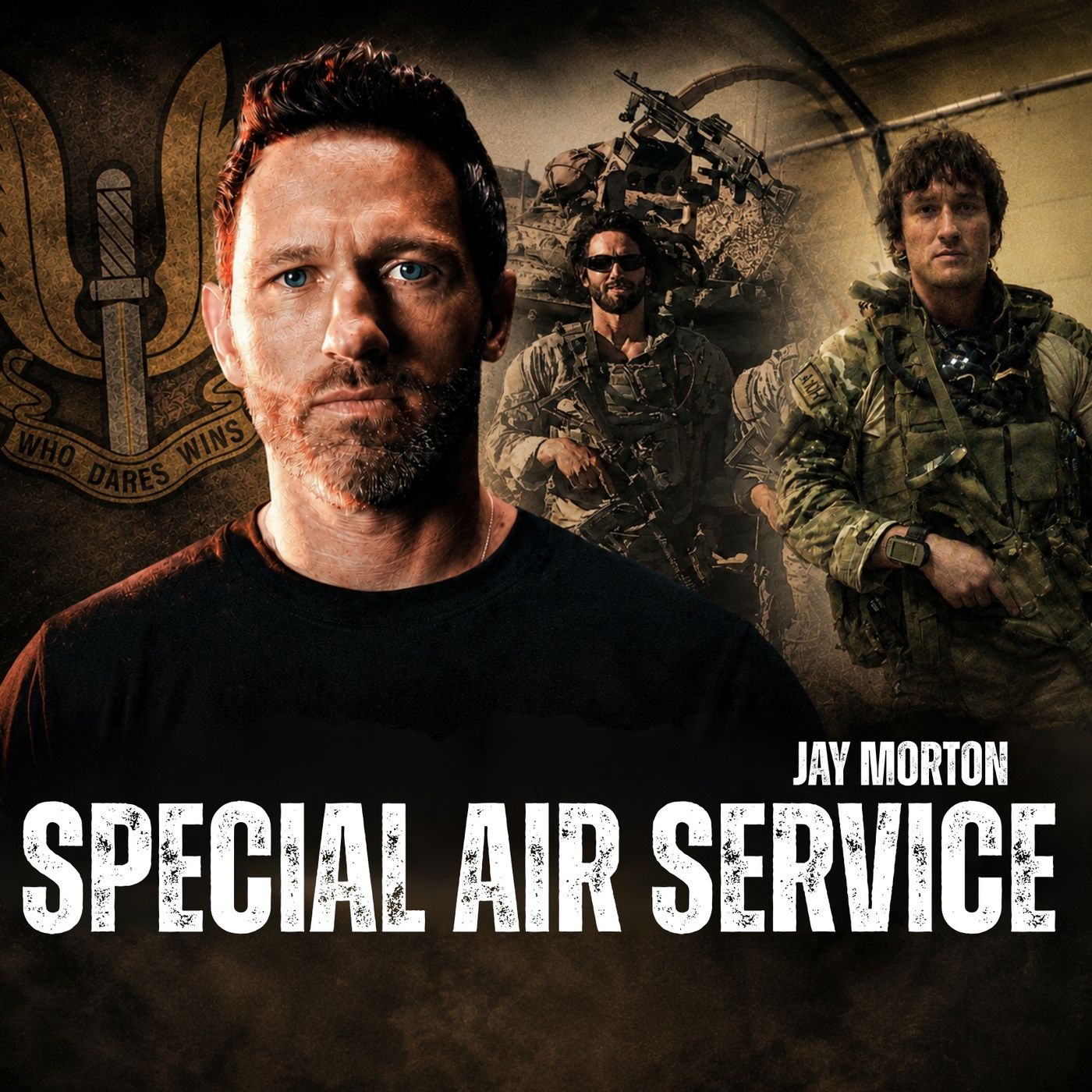
The Team House
Inside the SAS w/ SAS Operator Jay Morton
01:49:15
Jay Morton discusses his career in the British Parachute Regiment and the Special Air Service (SAS), including deployments to Afghanistan, the challenges of SAS selection, and the realities of life in one of the world's premier special operations...
Loading summary
Transcript197 lines
- [00:00]
Ryan Seacrest
Ryan Seacrest here. So every great barbecue takes a little patience. And while the food does its thing, you can enjoy a little Chumba Casino. The perfect recipe. Chumba Casino. Always good to have you back.
- [00:11]
Chumba Casino Announcer
No purchase necessary. VGW Group void or prohibited by law. CTCS21 sponsored by Chumba Casino.
- [00:17]
Grainger Commercial Announcer
This is the story of the one. The one who keeps multiple buildings running smoothly day after day. Plumbing that flows, H Vac that homes. Cleaning supplies that keep surfaces sparkling. That's why she counts on Grainger. With easy reordering online and 24. 7 support, Grainger helps her keep the products she needs on hand so shelves stay stocked and buildings stay ready. Call 1-800-GRAINGER Click grainger.com or just stop by Grainger for the ones who get it done.
- [00:46]
Jack Murphy
Hey, everyone. Welcome to the Teamhouse. I'm Jack Murphy, here with today's guest, Jay Morton. Jay served in the British Parachute Regiment and then in the Special Air Service, multiple deployments to Iraq and Afghanistan. And today he's an ambassador for Delta 3 Oscar, which we'll get into. Jay, thank you for joining us on the show today.
- [01:08]
Jay Morton
Awesome. Thank you for having me. Jack, whereabouts in the world are you?
- [01:12]
Jack Murphy
We're in Brooklyn.
- [01:14]
Jay Morton
Amazing. I've never been to New York. Brooklyn's New York, right?
- [01:18]
Jack Murphy
Yes. Yeah, yeah, yeah, yeah. Come visit, man. Be happy to have you here.
- [01:23]
Jay Morton
Yeah, I love the US I was recently out in Montana in Whitefish.
- [01:31]
Jack Murphy
Oh, yeah, it's beautiful out there.
- [01:33]
Jay Morton
Yeah. San Diego, California. I was there for the NASCAR race and then spent some time in Laguna Beach. But I'm going back out in August. So. Yeah, I'm potentially gonna stay over there for the three months on my Esther during winter because our winters are pretty, pretty rainy and wet over here in the uk.
- [01:55]
Jack Murphy
But it looks pretty nice where you are now.
- [01:58]
Jay Morton
Oh, it's beautiful. We're mid summer and I live in a place called Bournemouth, which is on the coast. So my apartment's pretty much opposite the beach, which is good stuff.
- [02:09]
Jack Murphy
That's great. So, Jay, I guess we'll start at the beginning. Right. I usually ask our guests what their origin story is. If you can tell us a little bit about what your upbringing was like.
- [02:24]
Jay Morton
Yeah, of course. So British born, I grew up in a town called Preston, which if anyone knows the football team Manchester United, it's probably about an hour north from Manchester United. Just a small working class city. Grew up with normal parents, mother and father, older brother, and went to school, loved playing sport, hated school. So there was, I think I'd always wanted to go into the military. At some stage I wanted to join the Royal Marines. Growing up or before that I wanted to be a fireman. I think as a kid full of testosterone, I was always driven or drawn to kind of dangerous jobs. And yeah, at the time there was a mate of mine at school that we were like two of the fittest guys in school and we were always kind of competing and battling in sports and he actually joined the Parachute Regiment when he left and went and joined 3 Para, which is one of the battalions. And he'd come back on leave and always tell me these stories about what he was up to. And it was mainly around shooting guns and going out and getting pissed with the boys. But weirdly you're kind of drawn to that. And I think looking back retrospectively, it's more about the teamwork and the camaraderie ship and being part of a shared purpose and a shared goal that you're more drawn to. But as an 18 year old, 19 year old lad hearing stories about fighting in the town and like getting pissed and all that kind of stuff is, is what it's kind of masked as. So yeah, I, I ended up joining the Parachute Regiment age 19, which was a massive shock to the system. It was probably the first time I've been away from my hometown and traveled and went to live in a different place in the uk and they're based in, in Essex, in Colchester. And yeah, shortly after obviously we deployed to. It was kind of the back end of the second Gulf War and we deployed out to Iraq for, for three months on a short deployment. And it was the back end of that tour that obviously you guys over across the pond were talking about going over into Afghanistan and we literally came back from that short deployment. We all got pulled into a tent just before we flew back and got told that the US are looking at going into Afghanistan. And there's a potential that our battle group and battalion were going to be the first ones to go in in 2006. And we flew back, had a short period of leave and then I think we had, you know, three or four weeks leave. We got pulled back in, flown out to Oman for sick for a six week training package, had like a couple of weeks leave and then deployed out to Afghanistan. And that kind of kicked off the Afghanistan deployment specifically for the UK and for you guys as well.
- [05:36]
Jack Murphy
Just to back up a little bit, what was the sort of selection process like to get into the paras?
- [05:45]
Jay Morton
Yeah, so we run a selection process. It's in total, the, the training block is Six months long. So we call that basic training. I don't know what you guys call it. And so yeah it's, it's a six month long period to take you from being a civilian, you know, an 18 year old scrote, all the way to, to being a pro. Well to join in a professional soldiering unit. Whether you can call yourself a professional soldier at the end of six months is, is debatable. And yeah, I mean the first six weeks it's pretty much shock of capture. Shave your head, give you a set uniform that, that you have to wear every day even when you're not in military uniform. When you're out of military uniform, it's a set of like blue Ron Hill joggers. So the kind of leggings that, that runners used to wear in like the 70s and a maroon, maroon jumper. And then the kind of selection process for it is called P Company. So that's a week long selection process and it's pass and pass or fail. And it consists of a series of tests. So we've got the 10 miler which is done I think, I think it's one hour and 50, I'm not quite sure. We have a 20 miler, we have a steeple chase, a log race and a stretcher race and there's, there's other things like the Tranasium which is an assault course and yeah, you're not allowed to fail or come off one of those. And to be honest being 19 years old it was, was pretty hard. I played amateur rugby growing up, I played rugby league, I played football, I played volleyball and kind of nothing prepares you for, for military basic training and specifically P Company. You know, I wouldn't class myself as being one of the, the fittest people there. I definitely wasn't the, the weakest. I think personally I have like an ability to just be able to hang on and not be the person that comes in first every time but never fall off anything. And I think as a, as a soldier in the parachute regiment, we're kind of looking for that, those people that not only can do 10 miles or 20 miles, but those people that can continuously push for 40, 50 miles, you know, with limited amount of sleep, water, food, all that kind of stuff. So yeah, so I, I got through first time and, and but yeah, it was, was pretty hard.
- [08:37]
Jack Murphy
And for our American listeners, if you could explain a little bit about the history of the British paras and, and sort of what their mission is, how it differs from some of the other units like the Royal Marines.
- [08:51]
Jay Morton
Yeah, so our parasyl equivalent of your airborne, and I'll get the dates completely wrong, but we were formed in World War II. I'm gonna say 1942, 1944, but I'll probably get that completely wrong. And yeah, we were formed as a. An airborne unit that was designed to be dropped behind enemy lines in World War II and cause absolute havoc. So, yeah, you know, the kind of missions that were done back then, we did just that. You know, because an infantry unit or a mechanized unit could be seen coming from so far out in terms of ground sign and movement and all that kind of stuff, they could be picked up by aircraft. An airborne unit was simply designed to just drop either behind enemy lines or close to and just go straight into combat. Obviously, it's not used as frequently now, but I think the kind of ethos of the Parachute Regiment is still there in terms of we train to be able to deliver the fight at any moment's time. So even though we're not getting dropped behind enemy lines, we still carry that tenacity as a fighting unit into anything that we do. Hence why, you know, we were the first unit that got picked guard into Afghanistan in 2006.
- [10:20]
Jack Murphy
Yeah, I will also get the dates and names completely wrong, but as I recall, our American Airborne got our berets from you guys. It was during World War II. And I think it was the British commander's wife, who was a poet, thought the boys would look very sharp wearing maroon berets. And so we got the maroon beret from you guys.
- [10:45]
Jay Morton
Yeah. Awesome. Yeah, you guys also have it as well, I noticed.
- [10:49]
Jack Murphy
Yep, yep. And so fast forward a little bit back to that first deployment to Afghanistan. You said it was 2006.
- [11:00]
Jay Morton
Correct? 2006.
- [11:02]
Jack Murphy
And so when you talk about, like, the unit carrying that tenacity with it in the combat, what was that mission set and where were you guys deployed to in Afghanistan?
- [11:13]
Jay Morton
Yeah, I mean, initially Afghanistan was looked at from a peacekeeping operation, and I don't think anyone knew that Afghanistan was going to turn into what it turned into. And specifically, you know, pre deployment, I was a private soldier and, you know, 20 years old, and you didn't really have an idea of strategic positioning of why we were going in. You know, from my eyes, it looked like you guys were going in for whatever reasons and we were just backing you up as allies across the pond. And initially when we deployed, it was. There was obviously no fighting. We. So the UK built a huge military base called Bastion. So the US main one was. Was Kandahar Airfield. And Then we built one called Bastion. At the time Bastion hadn't been complete, it was still under construction and we were living in those Green army six by nine or whatever they're called tents, the canvas ones that have been IT GP meetings pretty much since 1942. So we were living in those, sleeping on camp cots, eating 10 man rations. There weren't established kitchens and they were constructing this camp bastion. And I remember the first kind of week we were out there, we were just going out for some acclimatization runs because the, the heat was. We were out there in the summer so the heat was you know, 40, 50 degrees. But I always remember there was this fine dust everywhere and almost like cement and we'd be out on runs just running through this cement dust whilst these diggers were like building walls and has go bastion walls and yeah, we're just inhaling it like dumb 20 year olds. But yeah, it was, it was soft posture and we'd. We actually took two CH47s into a town called Gresham and landed just outside and we put a patrol in through the town and nothing happened. It was reasonably pleasant and friendly. I actually remember there was an old man that was selling ice cream on the side of the street and he actually made me a Mr. Whippy and I was stood on one knee with my GPMG facing all arcs, making sure the bad guys didn't come. And he just walked up to me and passed me this ice cream. I was like, I was like, so lads, you think I should eat this or is this like poisoned or what? And I ate it in the end. But, but yeah, I mean that goes back to Afghanistan, you know, it's like, I think deep down probably, you know, regardless of what happens there, I'm sure they're a friendly, welcoming group of people with a solid culture. I mean they're stone women as well, but I'm sure there's, there's other good sides to their culture. And then yeah, we were in garage for a week or two weeks and then we got deployed. In fact we were, our role was cq, not CQB qrf. So Quick Reaction Force whilst we were in the camp and at this stage we'd moved to proper accommodation, I think. No we hadn't. We're still in the tent and our patrols unit route. So our kind of brigade or our battalion recce force were out in vehicles. The old school Wimix. So the old Land Rover Defenders that had a 50 calorie GPMG on the back and a GPMG on the front and they'd been hit in a contact and one of the vehicles had been hit by an RPG and they'd extracted from the vehicle and were, you know, seeking cover somewhere and they put a call out to the Quick Reaction Force and it was myself and my company. So a company, we got tasked for the job, jumped on two CH47 lifters and landed in the middle of this farmer's field in Nausead. And this is probably about three, three weeks into being in, in theater and we all ran off the back of this heli and ran towards this wall. And I literally remember as, as the helis were lifting you could hear the crack and thump of rounds flying over our head and, and obviously that got louder as the heli lifted and I remember just looking to the lads to the left and right, I mean we all just burst out in laughter with that kind of, you know, that laughing in the face of adversity kind of thing. We, we had no intention or idea that this operation was going to go noisy, let alone Afghanistan. Afghanistan was going to go noisy. And yeah, that turned into probably a seven to nine hour contact of us trying to fight forward to get to this whimmick. At one stage, one of the, one of the sections in, in my platoon went left flanking on a, on a position on a compound. And I always remember Prig Pole was the, the section commander and he literally turned around to his team and went, if you've got wife or kids, stay here, the rest of you come with me. And he took the guy's left flanking and yeah, they, they obviously went round engaged in with the threat where, where needed and yeah, it was, it was an interesting one. It was, it was a long day, there was a lot of blood, sweat and tears and we flew back in and, and that was pretty much it. That kind of launched into, into that Afghanistan 2006 conflict of a lot of those style firefights. You know, it was pre IED era, so it was pretty much going out and just getting into scraps every day.
- [17:26]
Jack Murphy
This is like one of those firefights where the Taliban are just sort of like trying to encircle you, going around hedgerows and things like that and sporadic fire all day.
- [17:37]
Jay Morton
You'll know yourself, Jack. It's like, you know, 95 of the time you don't even see the enemy. You just hear them, you very rarely see them. I, I'd imagine it's the same as if an enemy force came from a different country to my hometown. It's like, I know all the ins and outs, the nooks and crannies, the, the ditches, the back alleys, you know, everything. You're not, you're not trying to close with and kill these people that are in your town. It's like you're just trying to get them out, Right?
- [18:04]
Jack Murphy
Right, guys, if your lady or your fella or that person that sends you an eggplant emoji at 2am is ready for better sex, then you should be too. That's where bluechew comes in. They have been on a mission for years to help get you bricked up, build your confidence, and help you actually perform in the bedroom. Their new arousal boosting formula, BlueChew Gold, is helping millions of men have better sex in 2026. While most ED meds focus only on blood flow, Bluechew Gold goes further by combining two ingredients for blood flow with two ingredients for mental arousal and connection. So you're not just physically ready, you're actually in the mood. This type of innovation is why bluechew Gold is the number one brand in erectile function. Don't let your mind get in the way of a good time. Discover your options@bluechew.com and we've got a special deal for our listeners right now. When you buy two months of BlueChew Gold, you get a third for free with the promo code housecall. That's promo code Housecall. Visit BlueChew.com for more details and important safety information. And we thank Bluechew for sponsoring this podcast. And Bubba Wallace here from 2311 Racing. You know what's slower than a pace car waiting at the car wash? That's when I fire up Chumba Casino. It turns those slow minutes into fast fun. With new games every week, you'll never get bored. Next time you're stuck in the slow lane, speed up with Chumba. Play now@chumbacasino.com let's Chumba.
- [19:46]
Chumba Casino Announcer
Sponsored by Champa Casino. No purchase necessary. VGW Group voidware prohibited by law 21 terms and conditions apply.
- [19:54]
Grainger Commercial Announcer
This is the story of the one. The one who keeps multiple buildings running smoothly day after day. Plumbing that flows, H Vac that hums. Cleaning supplies that keep surfaces sparkling. That's why she counts on Grainger. With easy reordering online and 24. 7 support, Grainger helps her keep the products she needs on hand so shelves stay stocked and buildings stay ready. Call 1-800-GRAINGER click granger.com or just stop by Grainger for the ones who get it done.
- [20:24]
Jack Murphy
Score big with the DQ $7 meal deal. Crispy chicken strips, hot fries, a refreshing drink and a tasty sundae all for just seven bucks. It's so much delicious food. You'll bring home the win every time and keep on winning when you upgrade to a small blizzard treat for just $2. More like the limited time Biscoff Cookie blizzard treat. The $7 meal deal with a $2 small blizzard upgrade for the win. DQ Happy tastes good. Participation may vary. That was kind of like winding down the tail end of that deployment.
- [20:59]
Jay Morton
Yeah, I mean that was pretty wild time. It was after that we went to Sangin Valley and I mean for anyone listening that deployed and went to Sangin Valley. We landed to so the FOB Jackson, which was actually one of our boys, Damien Jackson. We'd actually been tasked to go out to the Governor's building to support the Governor because he was getting death threats from the Taliban. I seem to remember about him sexually abusing kids. Probably true. But at that time you obviously you have to support the, the government. So we, we went out and, and set up shop in the Governor's house which is now, or obviously not now, but turned into FOB Jackson. And at the time it was this, this building and next to it was this orchard with this other kind of weird building. And we were there for about three or four days and there was a river that went down the middle of it and we used to wash in the river and we put like positions all around the area so we had 360, 360 degree defense. And yeah, I always remember kind of probably about four or five days into it. So we were actually. They were wild. Were you in Afghanistan at the same time?
- [22:33]
Jack Murphy
I was there 2004 into 2005 that winter.
- [22:40]
Jay Morton
Yeah. I mean there were wild times, weren't they? I sometimes I'm like jogging the memory.
- [22:45]
Jack Murphy
Surreal.
- [22:47]
Jay Morton
Yeah, we dug like a shell scrape in this orchard and our position just looked onto a wall and it was like a, I guess six foot wall, maybe a little bit less, you know, like the thick mud walls. And I always remember because the icon chatter and the, the, the J2 would suggest that they were going to attack from this, this wall one night. And they, they said they were just going to flood the place with fighters and send them over this, send them over this six foot wall and like all night we were literally probably 15 meters away from this wall, maybe less and we just sat in this shell scrape staring at this wall like eyes, eyes on store, like literally matchsticks in our eyes. Just I remember like a Couple of the lads smoked cigarettes and like, I was like, give me one of those cigarettes. I need to, I need to smoke. None of us slept the whole night thinking that we were just going to get flooded with Taliban, but nothing happened. But probably around four or five days into it, we, we built like the positions up a little bit more and we'd ran out of sandbags to build the positions up, so we were building them up with big cardboard boxes and just filling it with dirt and dust and hoping that that would catch around. And I was actually on top of this rooftop looking out onto if anyone's been there, that's listening. So it was trying to think where it was. It kind of looked so it was. I'm trying to remember the cardinal. I don't think I can. I think it's to the south of the west. Kind of looked away from the bazaar and the town area and into kind of the bush. And I was on the side that was on the opposite side to the governor's building with the, the river running down it. And I always remember this car drove past and it would had like three or four heavies in it and they had the, the windows down and they were just staring up at this position. And I was, I just remember thinking that's, that's not, you know, they're not friendly. And probably about an hour later we literally got hit 360 degrees like all around. The fob, machine gun, AK, RPG, wombat shells, and that kind of, that was it. Then it kind of kicked off in, In Sangin and we pretty much stayed in, In Sangin for the, for the duration of the, the, the six month tour that we did. And yeah, I mean there's a million stories to come out of just that one, that one, that one location. I'm sure for a lot of people that served in Sangin listening, it was, it was a hellhole. And you would go out most days and most days you'd end up in a, a scrap and you'd be calling A10s, you know, your guys, A10s, which were phenomenal. And we had Apache helicopters from the UK and from the US as well, which were also, you know, a godsend. If you heard that thing in the sky, you were pretty much free to roam wherever you wanted to go. But as soon as he went off station, just all hell broke loose. But yeah, it was, it was an interesting time. Being 20 years old, I turned 21 over there and yeah, it was. Yeah, I mean we could probably talk all podcasts just about being in Sanger, if I'm being honest.
- [26:02]
Jack Murphy
Joe. Yeah, yeah. I mean it's one of those. Sounds like one of those formative experiences, like you were also learning your job as you went, you know, like actually becoming a professional soldier. I think,
- [26:14]
Jay Morton
yeah, 100% it's becoming a man as well. Right. It's. You cross that path of, of boy to manhood and specifically becoming a professional soldier, like you said you get into, to prove yourself in combat, whether you like that or not. It's the arena that you chose to show up in. And also I always look back at it with good memories. I think you learn a lot in those type of situations. You develop a lot of. It's a bigger growth than any any state university would, would get you. And it also, it's something that you'll never take away. You know that I think as men personally, and I don't know what your views are on this, but I think as men we're, we've been at war since the moment that we've walked out of caves. I think it's so inherent for us and we can, we can imagine all we want that we're going to live in this super peaceful world, but we can see by modern press that that's just, that's never going to happen. It's a, it's a dream to think that the human race is going to get on with, with the, with its, with each other on Earth. So it's like for, for you to go out and actually do that as a man. I think there's something, there's something in that that's quite, quite special.
- [27:36]
Jack Murphy
Yeah. It's also crossing over that threshold where you're doing something now that could get you killed. And also if you don't do your job, you could get somebody else killed. And I think that tends to mature people very quickly.
- [27:50]
Jay Morton
Yeah, 100%. And, and actually like how amazing it is, is it that you've worked in a team that, that does that, that you have to, you know, whether you're a medic, whether you're a shooter or whatever, it's like you've been part of an integral team and a key part of that small team that you know, if something doesn't go right or if you make a mistake, not only may you die, the question consequences are that real that not only you met may you die, but someone else may die and that person's a. Could be a father, that person could be a husband or whatever. It's with those real consequences become kind of. And those Real responsibility comes a lot of like, self growth and self actualization.
- [28:36]
Jack Murphy
And what was it like coming off of that deployment and redeploying back home?
- [28:44]
Jay Morton
So we, I mean, we'd. We'd gone to Cyprus for a period of decompression, and so it was three days. Decompression. They fueled it with alcohol, which
- [29:01]
Jack Murphy
not a great idea.
- [29:02]
Jay Morton
There's a good thing and a bad thing because we got to decompress. But it's actually a funny story because so literally, I think the first night you get there, you get. They stick a barbecue on for you and it was like unlimited booze. They make this barbecues. And it was the first one that the British army had done. So I think they just thought that booze was the answer. Everyone got absolutely battered. And I remember we'd had the barbecue, desserts were out, and there'd been like a couple of like drinks throw nothing heavy. And like a couple of cans had flown over. Some people got hit in the face. I remember being stood at the dessert section helping myself to a army issued blackcurrant cheesecake. And I just remember turning around and there was like cans flying, drinks flying, food flying, like, left. And I was like, where the has this come from? I remember just grabbing like handfuls of dessert and like launching it into the crowd. And the next minute I'm picking desserts up and throwing it. And the next minute people are grabbing tables and chairs and like, it was absolute carnage, like literally erupted. I remember it being on. It was on YouTube in the early days. And like, one of the lads is like naked, wrapped around with like the St. George's flag. There's Union Jacks everywhere. And it was fucking carnage, mate. And like the med center where the doctor was. The doc, I think the doctor was also hammered. There was a queue of about 11 blokes outside with like, eyes hanging off and like broken noses, teeth hanging out. It was. So, yeah, I think we fully got to decompress and the next day they just put like water sports on and. But yeah, I mean, like, to get to the serious point of coming back from, from, From a theater like that, I mean, personally, like, I, I mean, I, I felt fine. I mean, I was probably, you know, there was definitely, I mean, PTSD and stuff like that was never spoken about back then. Even kind of exposure to trauma and what that. That can do. And I, you know, personally, for me, you know, I was, I, I didn't suffer with it coming back from that, that deployment, but I always remember the guys got back into Colchester And
- [31:43]
Chumba Casino Announcer
I
- [31:43]
Jay Morton
actually had a girlfriend at the time, so I jumped on a train and went straight back to see her. And the lad stayed in the block, I don't know if you call it the block, but the army camp and obviously got on the booze again and I spoke to them the next day and literally every window in the block got smashed.
- [32:02]
Jack Murphy
Holy shit.
- [32:03]
Jay Morton
And like, you talk about, you know, like equally the next day that the sergeant major just said, lads, as long as you replace all the windows, nothing will be said. Like, don't stress it because equally I think there's a, there's a, there's a. What's the word? There's a way that our body processes what we've just been through and done. And whether that's anger, aggression, whether that's, and to do that with your whole team in that kind of setting, whether it's throwing cans at each other or cake or like smashing windows, I think there's a process that your body goes through to, to release or whatever it is that it's, that it's storing and that's how it came out. Now obviously you see the obvious and you probably saw this as well, Jack. You know, lads go straight on, on self destruct mode and they stay on the piss the whole, the whole leave and, and get into fights and, and all that kind of stuff. And in fact, on the two weeks off that we got from the six month deployment in the middle of it, I'd actually come back and ended up getting arrested whilst I was, I was drunk just for being a complete idiot, if I'm being honest. But I think there's this like, whether it's an anger inside or like we've been doing this and do you know what I mean? It's like there's a, there's a feeling inside that unless you've kind of experienced that level of combat, you'll never kind of be able to relate to. But we'd come back and ended up again alcohol fueled. But yeah, just we were shouting and all sorts of stuff and my friend got like CS gassed in the face and he's got thrown in the cell for a night. But, but yeah, apart from that, like everything was great.
- [33:59]
Jack Murphy
Yeah, I mean it's hard to turn it off, isn't it? I mean you're going 100 miles and then suddenly you're back home, you're in the UK in this case and it sounds like you probably hadn't gone into like even a training cycle yet. You're just sort of like refitting Getting ready for the next thing. And so the guys are sitting in the barracks, bored out of their minds, and, yeah, they get into the booze and this is what ends up happening.
- [34:25]
Jay Morton
Yeah, it's completely that. And it's. You know, I've had times where I've struggled in the past, more so during, during my Special Forces career, coming back off operations. And you can logically, when you're out of it, you can logically look at it and see what happened. It was a very kinetic time, working all hours. Your body's stressed anyway because you, you work in night shifts. But then, you know, the job that we were doing, we were going out on day operations and night operations, plus we had to provide training for the Afghan force that we were, that we were training. And it was just a busy kinetic period. I didn't get any decompression. I literally told that I was going to fly back on a C17 and be back in the UK within 24 hours. And I went from being on the grab, being on the ground, on a. On a job, doing the handover to the next squadron, handing my weapon systems in jumping on a plane and being back in the UK within 24 hours. And, and that's, that's where I struggled because. Yeah, yeah, yeah, my body, brain, nervous system, whatever you want to call it, was just like, what the is going on here? Like, like you're on a train. Like, like, what is. What is going on? But again, you know, you don't realize when you're in it because the education's not there, the awareness wasn't there. We didn't really know what it was. So you kind of just had to live with it.
- [35:55]
Jack Murphy
Right?
- [35:56]
Jay Morton
And for, for me, it was. It was drinking. You know, I, I, albeit not, not a crazy amount. I mean, we all used to drink when we were younger, but it'd be the only thing that made me feel normal again within a very short period of time. It kind of dissipated within two weeks. But for those two weeks, you know, the feeling that I had inside was like this. I don't know, it's like an energy here or like a, you know, a feeling here. And it was. It was kind of hard to, like, settle back into normal life, but the only thing that could kind of normalize that was just drinking. So I just drank and then I just noticed the feeling lift and myself start to feel normal, whatever you want to class as normal. And in two weeks, I felt just like I usually do. Anyway,
- [36:48]
Jack Murphy
if upgrading your full sleep setup has been on the list, For a while, Ghostbed's 4th of July sale is the time to actually do it. Right now you can get $250 off mattress bundles, which means you can add cooling pillows, cooling sheets or an adjustable base and still come out well ahead of what you'd pay anywhere else. And as a teamhouse listener, you get an extra 10% off on top of that using the code house. Ghostbed is a family owned company with more than 20 years of mattress making experience. Their background is in manufacturing, so every product in their lineup is built with the same focus on materials and construction rather than marketing spend in inflated markups. Every Ghostbed mattress is built with cooling from the ground up and their Pro core support layer which reinforces the center of the mattress where your body puts the most weight. Don't take it from me, they've got more than 100,000 positive reviews from people who made the switch and didn't look back. Mattresses are made in the USA and Canada and come with a 101 night sleep trial, fast and free shipping and a Warranty up to 25 years, twice the industry standard. Not sure where to start? Head to ghostbed.com house and take their mattress quiz to find the right mattress, then build from there. Go to ghostbed.com house and use the promo code house at checkout. That's ghostbed.com house promocode house. Some exclusions apply. See site for details. So you're back from deployment. Did you deploy again with the paras or when did the SAs start to come into your thought process?
- [38:32]
Jay Morton
So deployed again in 2008 back out to Afghanistan. It was a quieter deployment. The, the main battle group was 2 Para. So the, the second battalion of the Parachute Regiment and they kind of took the brunt of the main kind of fighting battalion within the operation. Ourselves we were based out of Caf, we just provided QRF and we did some of the kind of jobs. It was quite interesting, quite an interesting operation, but again not as kinetic as the, the one that we had in 2006. And then it was towards the back end of, of that 2008 operation when I started thinking about joining the Special Forces. And you always get, you always get a few members that have been on selection and failed and found their way back to, to the, to the battalion and would always talk about the stories about being on selection and what it's like and if I'm being honest, I was around 23 years old. I thought I was too young to inexperienced to go on selection. The average age was like 26, 27 and it was a platoon sergeant that I had at the time called Dan Jarvi who was this Scottish jock from Dundee who was hard as woodpeckers lips and yeah, just a, an excellent man and an amazing soldier. He was opportune sergeant and I was his driver and the back end of that 2008 tour. And he just kept saying, you know, Jay, go on Selection. And I just, you know, would say excuses like too young and maybe I'll go and join the brigade recce force and do that for some time and then, then go on Selection. And he just kept saying just go on Selection, go to Selection. And so I applied to go and selection when I came back from that deployment and then yeah, it was 2009 in summer when, when I went on special forces selection. So 24 years, 24 years old and yeah, that's six months. So a six month selection period and yeah, broken into to certain phases. So the hills phase would be the navigational testing phase, carrying big packs over, you know, we train in, in the Welsh mountains. So it'd be over, over the Welsh mountains, big packs navigating through you know, 20, 30 kilometers of ground per day. And then we go out to the jungles of Brunei and train out there for six weeks where we deploy for fully tactical for four weeks. And that's considered the, the pinnacle of, of Special Forces selection where if you get the pass or the fail from that to fail post jungle training or jungle phase is, is pretty, it's an anomaly. Once you pretty much get the, the tick in the box for the jungle, you, you're pretty much in. Albeit you're not a badged SF operator at that time.
- [42:01]
Jack Murphy
The jungle is where you guys really like focus on the patrolling skills. Right, and those are like troop leading procedures and that sort of thing.
- [42:09]
Jay Morton
Yeah, I mean if you look at areas in the world that are difficult to operate, you've got the Arctic and the jungle is two of the most difficult places to operate as a soldier. If we just take the jungle, you know, simply just living or operating or living just doing the basics is, is pretty pretty difficult. You've got 100% humidity and you know, 30, 40 degree heat on a daily. You wearing full kit, full belt kit with you know, live, live ammo, scales of, you know yourself, you know yourself, six mags of bandolier plus you know, water, you know, shovels, mess tins, five days rations. You think of the amount of water that you need to drink in a day, you're carrying probably around 7 liters of water. That's 7 kilograms or 16 pounds if you're in the US of water. And then all your patrol kit, so all your sleep kit, your sleeping bags, specialist patrol kit. We had a radio which was just a massive block of wood which was heavy and didn't actually transceiver or, or transmit. So, yeah, I mean, you're, it's, it's pretty, pretty difficult to do anything. I mean, you take navigation through the jungle. All the maps were produced 30 years ago, if that were produced on, you know, on a very basic thought process of what the ground looks like underneath the canopy. So it's a difficult thing to navigate through the jungle. You're kind of navigating on ridge lines only. And, you know, if you think the jungle's flat, think again. It's very, very kind of contoured. So you've got to stick to the ridge lines because it's the only thing that doesn't have a million trees and wildlife and fauna and flora. Flora and for whatever the word is on it. And then you're navigating on a map that's 30 years old with all that kit. So it's difficult. Plus the fact that it's fully tactical from the moment that you go in the, in the jungle to the moment that you leave. So if you want to go for a piss, you go in with a buddy, buddy. If you want to go to the, the toilet, if you want to go and wash or fill your water bottle up, it's buddy buddy. If you're cooking one of your cooks, the other stands there with his weapon, making sure you don't get attacked. And yeah, it's, it's difficult. They're. They're looking for. If you've got what you've, you know, if you've got the skills and the resilience and the mindset, and if your face fits within a special Forces fighting squadron or a team and you're tested on general soldiering, live firing, kind of receiving missions and, and carrying them out. And yeah, it's, it's tough, but I actually enjoyed the jungle. It was, it was. I don't know, I felt like it was just a good place to showcase soldiering skills. And I felt like I, I think away from all the noise of. You know what it's like, Jack, in a normal green army unit. There's a lot of noise of wanting to go on the piss like girls or training or whatever it is, you know, without all that noise. And all you had to worry about every day was you, your buddies, eating, drinking, making sure Your weapons clean, making sure your parang was clean, showing up and doing the, the best that you can do every day. It's like when you simplify it to that it's take all the noise of modern day life out. It's. I, I don't know about you, I tend to thrive in that.
- [46:33]
Jack Murphy
Yeah, this was what you signed up for really?
- [46:37]
Jay Morton
Yeah, completely. To be a professional soldier and to showcase what you can do and show if you're capable of being the Special Forces was. Yeah, it was fun.
- [46:49]
Jack Murphy
And then what were the additional phases that come after the jungle?
- [46:54]
Jay Morton
Yeah, so straight after that you come back and you get told whether your pass or fail and the majority of the people. So we start with around 150 applicants at the start of selection hills phase might get rid of half if not 70% of those. So on a, on a healthy selection you want to be going into the jungle with around 50 applicants. Sometimes it could be 30. Just depends on what that year has been like. So you come out of the jungle and you've probably got anything from 10 to 20 applicants. So huge attrition rates. And then you go into kind of the continuation phases of it. So there's a period called surveillance and reconnaissance, which is your kind of traditional surveillance and reconnaissance. So observation posts, so bush hides, subsurface observation posts. I think that lasts for about three weeks. That was probably a week of training and then a week and a half of training. Then a deployment task where you break down into teams and go and put a subsurface or a bush hide in somewhere. And actually at the time I, at the back end of the jungle phase, literally on the final attack, I'd picked up the heaviest bloke that was on selection, an officer that went to serve in the sbs. An ex rugby player. He was a big old boy with a fat head and he'd gone down as a, as a role play casualty on the final attack right next to me. So obviously I dropped every, you know, not dropped everything but ran straight towards him, grabbed him and proceeded to throw him onto my back and at which point my back popped and you know, having just spent five and a half, six weeks in the jungle carrying a massive bergen, your back kind of arches like this as opposed to like that. And yeah, my back popped and damaged the desk and meant that the, you know, in that stupidity moment of being a 24 year old kind of thirsty parachute regiment soldier wanted to be in the special forces, I just disregarded any right. The fact I was in, in severe pain and just cracked on not wanting to, not wanting to come off and wanted to complete selection with the lads that I was on it and not wanted to come off and go into medical rehab and come back on selection again. So I grin, gritted my teeth and cracked on. Which meant that surveillance and reconnaissance with a full size op burgen, with all your chicken wire and tools and camera kit, you know, huge, 200 or no 600 lenses, the big bird spotting ones and all that kit meant that I had a bigger rucksack for surveillance and reconnaissance than I did in the, in the jungle. Plus the fact that it was in, in Hereford and it was probably around October time and pissing down with rain. So that trying to insert into a farmer's field to put a bush hide or a subsurface op with all that kind of kit, you're slipping all over the place and probably causing you back more damage than good. And actually we'd, we'd spent the whole night trying to get into this position. And everyone wants to do a bush hide because obviously with a bush hide all you do is you go into a big thick bush, you cut it out and create, create an observation poster and op in the bush. No one wants to dig a subsurface op because it takes all night to dig a massive hole and then you live in it for the rest of the rest of the week. And the sun came up in the morning, we thought we had this amazing bush hide. And one of the instructors, we call them, direct and stuff, he was, he was a character and he stood over us and he's just like, what the is this? And he looked around and it was like, we're all soaking wet, we've all got all this camera equipment out and we're literally just let, let in a load of like nettles and thorns. So he, he kind of give us the, give us the, the day and daylight to dig a subsurface op. So we dug this probably 2 foot by 5 foot hole in the ground, went down probably a meter, cammed it up and lived in it for the rest of the, for the rest of the week, seven days. And we had two guys observing the, the objective, which was an old farm building. We had one guy on rest or cooking and then one guy on rear sentry. And needless to say that for the majority of the time most of us were asleep. It kind of worked in our favor because like, it kept the elements off us and it was pretty warm. But yeah, so you do, you do surveillance and reconnaissance and then you do counterterrorism. So we train in, you know, CQB and global domestic counter terrorism, that's I think four weeks and then escape invasion. So resistance to interrogation, which is what it's called now or sia, where you go on the run for a week, you get 24 hour hours of food, so 24 hour rations, limited kit and equipment, limited navigational aids, and you have to get from, through a series of checkpoints until you reach the final checkpoint, at which point you are taken captive and interrogated for 36 hours. And I think at that point you, you know, there's nothing really that they can throw at you that's gonna pull you off selection. So you, you kind of still trying to do the best, best you can, but your head's in it. And albeit 36 hours of interrogation sounds pretty hellish at that point. You're, you're just, you're getting through it and surviving it. And you know, if anyone's done any kind of mock, mock interrogation serials, you just got to ask for food and ask for warm clothes and ask for new shoes and pray that they don't beat you up and ask for coffee and stuff. And the more you ask for, the more you get. So yeah, so obviously you're pretty, pretty tired and knackered by the end of that. And in interrogation, if anyone doesn't know, you're either in a stress position or being interrogated for that 36, six hours. So standard two stress positions, everyone probably knows them, is stood leaning against a wall or sat cross legged with your hands above your hands on your head. So either you're doing that with, you know, some cultural music in the background being played or specific to whatever theater you're operating in, or you're having coffee thrown in your face or being asked where your parents live. So it was good to get that one out the way and get some sleep. And then the final phase is, is parachuting. So just hey ho, parachuting to special forces standard. And at that level you kind of come back and we'd done our parachuting out in the States, so we went over to California and trained at an air base called El Centro. And yeah, you come back from that and, and pretty much you've got a week in camp just doing regular stuff and you have a badging day parade which is at the clock tower. You get your, your sandy colored beret and your blue stable belt, you take the picture and then the next day you turn up at the squadron as a, as a new, new blade. And then you kind of realize that selection Was. Was nothing. And you know that for the last six weeks, you thought you're an SAS soldier and you're at the bottom of the food chain and you go and pick up the bacon butties and the tea urns in the morning and do all the shit jobs as any new bloke does.
- [55:43]
Jack Murphy
What was it like being a new guy showing up at your squadron? What were some of the other guys like that you were working with?
- [55:51]
Jay Morton
It's interesting because my troop was. Was at the time a little bit older, so there's some guys in their late 30s, and there was one guy that had come up two years before me, and then before that was probably about four or five years. So it was a senior, senior team. And if I'm being honest, no one really gives a. As in everyone's just cracking on doing what they need to do. No one stops and, you know, people will be like, oh, you're right, mate, whoever. But I think at the time, and it's probably changed now, there's no one really to just take you aside and go, you know, mate, this is the. This is what's going on. Like, you know, this is, you know, you got a room. And the. The tl at the time, the team leader was. He gave you a little bit of insight, but it was almost like you just turned up on day one and were expected to. To know what weapon system you fire in, how to. To zero it, and, you know, you just had to ask questions and. And kind of almost try and blend in and just copy what the lads were doing, albeit I don't like to do that myself. Now, if there's a new guy, I like to take him under my wing and make sure that he feels welcome and introduce him to everyone and make sure that he knows what he's doing. Because, you know, I turned up, I was 24 years old. It's a pretty daunting place to turn up to an SAS Saber squadron and then find out all your teammates are in the late 30s and also pretty like big units as well. So, yeah, I think it was just that era of that. That's how men did it. You know, you just turned up and cracked on kind of thing. So. Yeah, and that.
- [57:39]
Jack Murphy
That time frame, I imagine a lot of these guys were pretty salty. Like they'd been in Iraq doing raids and all kinds of counter terrorism work.
- [57:48]
Jay Morton
Yeah. And that's probably part of it, right, is like you turn up and at the time, I'd done, you know, two Afghan tours that were. That were pretty heavy. But these Lads have been out on, you know, on tf, is it TF Night or TF Black or whatever it was and you know, they'd all seen some stuff and they're all bonded by that and teammates and all that kind of stuff. So you throw in some young 24 year old and yeah, they're not interested in you just at that moment. It's like you've, you've got to earn your gravy and you've got to earn your, your place in that team because you're surrounded by a bunch of alphas and they're not going to look at you until you prove why they should look at you.
- [58:31]
Jack Murphy
How did you go about that?
- [58:36]
Jay Morton
I mean the same way you go about anything, right? Like I, I, I like being a soldier and all you've got to do is, is do your best. You know, luckily for me like the, the guy that had been in for two years prior to, to me, he was kind of mates with all that side but he was still trying to like come to like chat to me and stuff like that. And if I'm being honest, like the first six months you're kind of on your own. It's like you're volunteering for everything. You know, if you get to the end of the brief and all the lads live in town and you're going, you're going on the range that day, then you just go, right, I'll grab the, I'm in the cookhouse in the morning so I'll grab all the, all the lunches and, and coffee and stuff. And then you offer, you know, don't want a coffee whilst you're driving up. It's like you just make, you just show that you're a valuable asset to that team in as many ways that you can. And, and if you do that and you don't, you avoid making any fuck ups and you show them that you know you're a valuable asset and that you're capable of being in that, that team. Then you know, they all come round to it and slowly but surely they all, they all did. And it was actually, it's quite funny. I was, we deployed out to Norway because I went into mountain troops. So extra extreme cold weather warfare was, was part of our remit. And one of the team members, I won't say any names but he was a, he's a big old boy, like covered in tattoos, involved in like football hooliganism and all that kind of stuff and I got teamed up with him in, as a, as a tent buddy but yeah, it's interesting. He, he was, he was, he was sound. He ended up being rtl and I became really close to them in the end. But it's like your first, your first trip away with, with the lads in, in Norway and it's just me and him in a tent at night trying to, like, trying to cook and stuff. And let's just say conversation was limited. I don't think he wanted to speak to me, but, but yeah, all that. As soon as you kind of blend in with a team and, and they realize that you're, you're a good asset, then all that changes and then you replace them, right? You, you become in that position that you're now the senior person and,
- [61:11]
Jack Murphy
and
- [61:11]
Jay Morton
you get a chance to do it differently. And for me it was like all the new lads that ever came up, even to this day, if someone's there, it's like, I think probably because I never had it like that, it's, it's important to take them under your wing regardless of how good or they are. As a soldier, it's, it's imperative because, you know, you don't necessarily get a soldier that turns up that's incredible, that can tick every box and that's, that's amazing at what they do. It's like in the Special Forces, it's, it's a diverse unit and every soldier's got a different background, a different upbringing, a different skill set. And that's the beauty of the Special Forces is that we train hard and we become professional soldiers at what we do from that point on. But, you know, if someone's a medic, if someone's an rmp, if someone's a, you know, a vehicle mechanic or whatever, it's like they bring a skill, a skill set that's valuable to that unit and doesn't necessarily mean that day one, they're this perfect soldier. But there's a chance there that that person could be molded into a, you know, an amazing soldier in the future. And it's your job and responsibility to do that as a senior member of that team.
- [62:23]
Jack Murphy
And so lucky you getting to be assigned to a cold weather team, which I'm sure was a lot of fun. What was sort of, did your troop have like a deployment schedule? Was there something that they were looking to kind of like work up to?
- [62:41]
Jay Morton
Yeah. So the Special Forces itself rotates on a two year schedule. So as a saber squadron, you're generally on either operations, you've got a UK role or you're on, you know, operations around the world and if you're not on any of those then in between is just training and then there's also training whilst you're in, in that. But yeah, I mean Afghanistan was still the flavor of the month when, when I joined. So that was the deployment whilst I was in. And then, you know, it's, it's a, it's a very busy life. It's a, it's a lot of time away from home, it's a lot of time out your bed. It's a lot of time spent training and drilling and different scenarios and different places and it was, you know, the, the best thing that I've ever done. Do you know what I mean? I genuinely had a, an amazing career and being someone who joined when I was 24, I left when I was 34 like for those years like to do that. It's like I wouldn't if I had the choice I'd do it all again in a heartbeat.
- [63:59]
Jack Murphy
And you're still obviously a young guy but you're also single, no kids. And I'm sure that helped.
- [64:06]
Jay Morton
Yeah, 100%. You know, some people managed to form a relationship with Tyler reddick here from
- [64:14]
Chumba Casino Announcer
2311 Racing Victory Lane. Yeah, it's even better with Chumba by my side. Race to chumbacasino.com let's Chumba. No purchase necessary BTW Group Void where prohibited by law CTNCs21+ Sponsored by Chumba
- [64:28]
Jay Morton
Casino Keep a relationship whilst they're serving. But it's, it's difficult. I always said I wouldn't want kids whilst I'm in because you just don't get to see them grow up. And I know by speaking to some of my friends that are still in or looking at getting out now that you know they missed out a massive chunk of their kids lives growing up just because they're away on six month deployment. They're away even whilst we're in the uk. It's like we're deployed to different parts of the uk, around the world, training and different roles. So yeah, definitely being single and not married and no kids helps for sure.
- [65:07]
Jack Murphy
And so what was it like when you guys got to Afghanistan? I'm guessing this was like 2010 or so.
- [65:15]
Jay Morton
Yeah, this would have been 2010. 2010. 2012 might have even been 2011, 2013 different. I think by that time you've definitely seen this phase change of, you know, like in 2006 we didn't see one IED. It was all I'll shoot guns at you, you shoot guns back at us. And then you definitely send this, this shift now of advanced technology within IEDs or at least not advanced technology but advanced tactics in terms of where they placed, place them, how they funneled you into areas and you know, you're starting to see these iads that you couldn't pick up with metal detection and all that kind of stuff. Reduced metal or whatever they were called. I can't remember what they were called which, you know, I mean it was a pretty dark side of Afghanistan if I'm being honest. That that whole IED warfare game, I was pretty lucky to steer way away from that and never really experienced teammates getting hit by them. But obviously they were all around us at the time and in fact during one of the deployments whilst I was in the sas, we literally specifically just went after a whole IAD network and took it down whilst I was working there which significantly reduce the amount of IED attacks that were being carried out on our own. Raw Marines that were based in the same area at the same time and probably had a knock on effect for US troops at the same time. So probably one of our prouder moments of operational deployment that we were a part of. But yeah, I mean luckily our operations were mainly carried out in the darkness of night. Very limited day operations specifically because at night time we hold the upper hand. We have NVGs, we've got you know, helicopters and different.
- [67:30]
Jack Murphy
Yeah, I was going to say mostly helicopter insertions I guess.
- [67:34]
Jay Morton
Yeah, helicopters, a lot of walk ins. So yeah, I mean we trialed around with some parachute operations as well which were, which were more kind of to prove, prove the point that we less about the, the actual objective.
- [67:51]
Jack Murphy
So like some, like some soft targets to show that this is possible.
- [67:56]
Jay Morton
Yeah like strike to spike kind of stuff. But I mean still, I mean jumping into Afghanistan's a whole completely different from jumping into the west coast of America.
- [68:09]
Jack Murphy
Yeah. Yeah. I mean I've heard stories where the American side special ops guys have they messed around with it or looked at it but they're like our squadron is going to get spread out over this whole valley because there's so much wind.
- [68:23]
Jay Morton
Yeah. And like you've got to take in the human element of it as well. And albeit we were proficient in Free fall and Halo. Hey ho. At that time it was never like when we carried out the Afghan jumps. We weren't specifically looking into it as, as we weren't as specialist as we should have been for that level of jump. The air troop lads are always going to be skilled enough to do it but to Then expect a full squadron to land, you know on that, on that drop zone, you know, within a solid grouping is it's a big ask for you know, 40, you know, 30 to 40 soldiers. Some of the lads don't even like it. Some of them aren't even good at it. That's, that's just a given. You know, you get we can't be good at everything. And that's kind of what those jumps proved. But actually at the time we, we started to put non air troop guys on the HAP C course, so we started to get them free fall trained and myself, I was literally on, on that first course. So as a mountain troop. Interesting operator. Yeah, I was on the first course, the first Halo hey ho course out in the, in the States, which, which was great. And now you know, I think every, every badged operator is is free fall trained. But actually coming back from being qualified as, as, as Halo. I'd literally just done the course and then we deployed out on that, on that job and I got picked to jump in with the, the air troopers as the first stick on the blacklight DZ to, to mark the, the DZ for the rest of the the squadron. And there was only six of us that jumped. And yeah, needless to say that that didn't go all too great. It was a complete red alum. So zero moon state. You struggled to see your hand in front of your face. And yeah, we we dropped out, had a bit of a split in the sky for whatever reason and I'd actually never jumped onto a DZ that was being marked by a strobe from, from the drone from the Reaper. And we'd, I mean we, we kind of felt that there was a way stronger wind that pushed us back, that pushed us way beyond the, the drop zone. And by the time we'd realized that we, we were going up a little bit too fast and we'd gone past the, the strobe that was getting emitted from the, the Reaper, the prayer, I can't remember which one. By the time we we turned back into wind, we weren't really penetrating. So we ended up London a K and a half away from from the designated drop zone mark the, the DZ and then brought the rest of the squadron in. But like I said, you know, you expect you know, 30 to 40, you know, hey ho qualified operators to land on a tee in red alum state in in Afghanistan. It's like you, you're having a laugh and like, especially with the conditions that we we jumped in, it was Tricky for us as trained free fall operators to, to land on the, in the right spot. And yeah, people landed, you know, not everyone, the majority of the lads landed within that, that area, but there was some that were all over this, all over the place. So I mean, again, you know, you learn from, from these kind of situations and I know that what that meant was obviously everyone getting trained in free fall and then specifically squadrons looked at how we get proficient at being free fall operators. Considering looking at the, looking at the operational theatre that, that we're in or that we were going into, you know, if helicopters aren't an option for certain weapon systems, parachuting in still a very, you know, credible option. So yeah, that's the kind of direction that it went.
- [72:47]
Jack Murphy
Yeah, I was going to ask. So did, was the conclusion that airborne operations like this aren't really feasible in Afghanistan or more that like we need to elevate the level of training that we put the guys through to get more proficient at it?
- [73:04]
Jay Morton
I think, I think airborne operations are totally feasible and just, I think the level of training needs to be increased so that you minimize kind of the jump compromise in the actual operation. So for example, for a hostage rescue, that's like a perfect method of infill, right? Because for obvious reasons. So yeah, I mean that, that was the kind of the fallout of that piece was that we need to be way more skilled but again, a great one to run out and to test and see how it goes.
- [73:51]
Jack Murphy
Yeah, absolutely. And other thing I want to ask, were you guys operating mostly around Helmand province at this time?
- [74:01]
Jay Morton
Yeah, I mean we, we actually operated within all of Afghanistan. Okay. So yeah, so yeah, the whole, the whole of the area. I mean there wasn't, there's no other uk. I mean we had the sbs out there at the same time. But yeah, we were pretty much the whole of the, the Afghan battle battle area. I mean Helmand was the hot spot, but Kandahar as well. But yeah, all over pretty much.
- [74:31]
Jack Murphy
And you mentioned going after a IED network. Were other targets like high value targets getting called up, you know, kind of like around the entire country? It sounds like.
- [74:42]
Jay Morton
Yeah. So I mean the main battle group or the main objective was hvts, so high value targets. And then yeah, you kind of had like a load of smaller teams that would work with Afghan National Special Forces units, smaller teams dotted up over, around the AO that would carry out like training, training roles, but also have an operational side to them where you're trying to hand over the responsibility to the, to the Afghans you know, they can at some point take over and start. Start doing detention operations within their. Their own battle space.
- [75:24]
Jack Murphy
You guys were doing unilateral operations mostly, but you're saying you had other elements that were doing what we call foreign internal defense.
- [75:32]
Jay Morton
Yeah, yeah, same thing. So, yeah, like an S triple T similar to that. So small team of three would go and embed themselves with a. A local strike team and train them, develop them, fund them. Obviously, the bigger picture would be that someday we would give Afghanistan back to a government that would be able to stand up and provide some sort of democracy and freedom for the Afghan people. And these small training teams would stand up and be the special forces of the elite units of that, providing protection and all that kind of stuff to the, to the people. Obviously didn't go that way, but that was the objective.
- [76:20]
Jack Murphy
Yeah. I was going to ask, you know, what was sort of your perception as, you know, you, you go on these deployments to Afghanistan. Of course, you know, yeah, rolling up an IED network is a tangible win for any unit. But did you have any thoughts or observations about how, like, the larger war was going in, in Afghanistan?
- [76:44]
Jay Morton
Yeah, I mean, it was always in the back of your head. Even like in those early days in 2006, it was almost like. I remember having those conversations with the lads and just going, like, what we actually here for? Like, what's. What's the objective? But. But again, look, it's hard. So a couple of things. It's like, it's hard for us to be able to. It's hard for us to put today's thinking on.
- [77:11]
Grainger Commercial Announcer
Yeah.
- [77:11]
Jay Morton
Something that happened 20 years ago. And I, I think this is, like, a flaw of modern society right now is. Is. We're trying to. We're trying to almost say, right, 200 years ago when life was completely different and, you know, neighbors were probably killing each other over a loaf of bread or something like that. Let's put today's thinking on that. And just because, you know, that person said this or, like, had that or whatever, it's like now we should, you know, completely disregard him out of human existence. It's like the same thing with, with Afghanistan. It's like we can quite easily fall into a trap now when we've got this free, like, abundant world of, like, you know, you want anything and you get it, and, like, you know, we've all got money and we've all got, like, freedom to be able to have ideas and thoughts, to be able to. To say, right, going into Afghanistan was the wrong thing. To do that's like, you can retrospectively look at it and say, you know, maybe, you know, maybe we, we should have reconsidered going into Afghanistan. Maybe, you know, what were the real legitimate reasons for going into it. But like, I, you know, I don't think that anyone sat in any of those high political war rooms and went, you know, let's go in here for, for shits and giggles, you know what I mean? It was like there was some serious reasons why we went in there in the first place. And as a soldier on the ground, you know, Afghanistan's a barbaric place. It's not a place where pride flags can be flown or women have the same rights as what they do here. It's barbaric. Women still get stoned to death. You know, women can't show any, any, any skin. Right. Not even their eyes. And not only that. Right. But they can't even see a man that, you know, I'm going around to, like, Afghan houses. I was doing some rogue stuff whilst I was in. I go around to, like the houses with the interpreter and like all the women had like, be stood at the door staring at you, but they're all covered. Like their eyes are covered everything, gloves on their hands, like, nothing can be shown. And like, you know, tell me that that's not oppression. And not only that, but they can't see another human. And for that short space of time that we were deployed in Afghanistan, did you start to see universities, schools? Kabul became Western. You know, women in Cabul went from being fully covered up to wearing, you know, just a hijab or, or just the scarf. And, you know, you started to see early signs that Afghanistan was a more peaceful place to live. And if you ask the interpreters or people that live there when it wasn't ruled by the Taliban, that, that, that's the case. Do you know what I mean? And, and now it's gone back to, to rule under the Taliban. It's gone back to, to, to, to the old school ways that that was as well.
- [80:20]
Jack Murphy
Yeah. I think also it's maybe worth pointing out that no one really expected or thought that we're going to be in Afghanistan for. What did it end up being, like 22 years? You know, I think one of the criticisms actually of the war is that every commander came in and thought we were eight months away from victory. And we did that over and over and over again, especially after, after we killed bin Laden in 2011. I mean, who thought that we would be there for another decade that's pretty crazy, you know, like now, again, in retrospect, as we sit here today, looking back on it, it's like, what were we doing?
- [81:00]
Jay Morton
100%. If you look at, again, retrospectively, like the amount of money that we spent as two nations and what did we actually achieve within there? Like, if anything, we stirred the hornet's nest. But again, like, it's just the way of the world and you learn the lessons from. You learn the biggest lessons from the. Your biggest mistakes and, and we get now the privilege because we still live in a free world to decide what the next 20 or the next 40, the next 50 looks like.
- [81:37]
Ryan Seacrest
Yeah.
- [81:39]
Jack Murphy
When I was reading through your bio, it mentioned you also got involved in like the clandestine side of the job as your career progressed.
- [81:50]
Jay Morton
Yeah. What do you mean by clandestine?
- [81:53]
Jack Murphy
Sorry, I, I think you said it said that you did like two covert deployments.
- [81:58]
Jay Morton
That's right, yeah. Yeah, probably three. And then, yeah, they're just obviously countries that you can't talk about.
- [82:07]
Jack Murphy
Sure.
- [82:07]
Jay Morton
Deployed. But yeah, again, like, super interesting stuff to see that, that part of, of the job. And it was kind of about the time that, that Afghanistan had started coming to an end for us anyway. And yeah, it's interesting. I mean, you look at the battle space now in, in the world and how that shifted and you've obviously got what's going on in, in Israel, Gaza, Palestine and, and Iran and, and the wider countries, Lebanon and every involved country and state. And then you've got, you know, the Ukraine and Russia thing and how that looks. It's. It's an interesting space right now and I think it brings a lot of uncertainty just because there's, there's bigger powers that be, there's bigger nations that be, and no one really knows what the outcome's going to be.
- [83:07]
Jack Murphy
Was that sort of your job on those deployments, like confirm or deny, you know, a recce of a sorts to go out there and, you know, be the eyes and ears for the British government.
- [83:18]
Jay Morton
A little bit, yeah. A little, little bit of reporting. A lot of. It's a little bit of just like this, this kind of military entrepreneurial ship of just go to a different place and, and set something up and just see what, see what's there. Whether. There's always going to be an element of reporting in everything that we do, but it's, it's a little bit of, a little bit more of just right, this is your job, this is the team. Go over there and just see what you can make happen, like make some connections, build some Stuff, find some people to train and report back.
- [83:56]
Jack Murphy
And was that something that you enjoyed by comparison to. I imagine this is like a singleton mission or maybe you go out in twos. But did you enjoy being away from your troop and doing this type of work?
- [84:08]
Jay Morton
Yeah, I mean, it's, I mean, don't get me wrong. Being, being in, being in the squadron is good. You've got a smaller role. Not necessarily a smaller role, but you've got a more defined role. You know, your job that, that evening might be to be a sniper on, on the high ground. If that's your job, your job might be to be a ladderman. Your job might be to just be a. In a team. It's, it's pretty, pretty linear and, and binary. I think when you go out on those smaller jobs and tasks, it's a little bit more creative. You don't have one specific role. You're working there as a team, trying to figure out what it is that, you know, where can you have an effect or how can you, how can you make this situation better, or do you know what I mean? It's, it's a way more interesting job role than just right.
- [85:07]
Jack Murphy
It's, it's all, it's. It's on your shoulders and you have to come up with creative solutions.
- [85:12]
Jay Morton
Yeah, of course. Of course. Yeah. Yeah. And again, some of that can be traditionally very boring and it's not as exciting as what, what people see it as. And some of it can be, can be fun and you can do some. You can get yourself into some wacky situations and do stuff that no one gets to do in the world. So, yeah, it's, it's, it's, it's interesting.
- [85:39]
Jack Murphy
Are. I know you can't mention any, like, places or dates or anything, but can you mention any of these wacky experiences?
- [85:49]
Jay Morton
I mean, less on an operational standpoint, you know, you and a team in the middle of, like, some country where there's a war happening and living in a safe house and, you know, you'd be going out and having fun, drinking beers and sometimes getting into a little bit of mischief and stuff. And it's like that kind of vibe.
- [86:19]
Jack Murphy
Yeah, it's like being on the set of Star wars or something.
- [86:24]
Ryan Seacrest
Yeah.
- [86:24]
Jay Morton
Like, just. It's good fun. You know, you, like, work hard, you try and you try and find things that you can do or build things. And you know that there's. How should I, how should I put this? You know, without. Obviously, when you've got the whole squadron, it's very formal, official and then when you're in these small teams, it's a lot more relaxed. You know, fires in the evening, sundowners, barbecues, like, you know, working with other agencies and working with other nationalities as well. And, yeah, driving around in places that you shouldn't be and seeing some things that you shouldn't necessarily see or being part of and it's just. Yeah, it's a very interesting side of the, of the job, for sure. If you get the, if you get that again, it can be very boring.
- [87:20]
Jack Murphy
And was, Was that sort of like the tail end of your time at the SAS or.
- [87:25]
Jay Morton
Yeah, yeah. So kind of the last four years and then. Yeah, and then I'd. I'd actually. We send guys away in the mountain troops to. We send two guys every four, four years, I think it is, to go and train in, in Germany to be a mountain guide. So I'd, I'd. I'd managed to get myself on that course. So you have to learn German. The whole course is done in German and, and yeah, you go out to, to Bavaria and live in the Alps for, for two years. So. So I'd done that and, you know, it was kind of being in the Alps for that period of time and, you know, seeing something different that wasn't just soldiering kind of like shifted my outlook on stuff. And before, I was very much specifically a green soldier and wanted to stay in the Special Forces and all that kind of stuff and progress my career, and having gone and done that just opened my eyes to a completely different way of life or a different way of living and was actually, when I come back from that tour, we, we deployed on, on one of those operations and I deployed out. I'd actually spent three months in a. In an ops room somewhere in the middle of summer. And I used to just come out this ops room. I was, I was a team leader in the ops room. And you'd go in about 5 in the morning and come out at about 7:30 at night and it was like sunny during the day. And I remember coming out and I stood out. I stood somewhere and one of the lads walked past me and he's just like, jay, you all right? I was just like staring at the sun, just trying to get some vitamin D, because I've just been staring at screen screens for like the last eight hours or something. And then I deployed out and the lads were just like. I think, I think I knew straight away at that point that my, my career was going to change. And, you know, there probably wasn't long Before I had to. To leave the. The Special Forces and go and do. Go and do what I wanted to do. So, yeah, it was pretty much four years on getting, getting back from that course. And then there's a few reasons of why I decided to leave. It was mainly because of that, seeing a different way of life. And I think the longer you're in the Special Forces, it's like the job can be quite monotonous. It's, you know, you're doing the same thing day in, day out, albeit there's variety, but it becomes very much. It becomes very. Or can be. Can be very samey. And then, you know, I'd always joined. Joined to be a soldier. And the longer that you stay in, the more you just end up sat behind a desk, which ultimately we all do at some stage. But I think at that time I felt like I. If I left at the age of 34, then I'd still have a good run of life or setting something up outside and. Sure, yeah, there's a few things. There's a little bit of, like, structuring of the regiment and people getting in charge in positions that potentially shouldn't be in those positions that there's like a few funnels that kind of led me to. Just to let me to leave.
- [90:59]
Jack Murphy
And when it was that class you took in the Alps, was it like that you fell in love with mountaineering, or was it more like that you fell in love with way of life in the Alps and the civilian, civilian life out there?
- [91:15]
Jay Morton
Probably both.
- [91:16]
Jack Murphy
Yeah, probably.
- [91:18]
Jay Morton
Probably. First taste of freedom, Jack.
- [91:20]
Jack Murphy
Gotcha.
- [91:21]
Jay Morton
Yeah.
- [91:21]
Grainger Commercial Announcer
Yeah.
- [91:22]
Jay Morton
You know what I mean? Like, real freedom, like in not driving back to camp on a Sunday night for the 10th weekend in a row. But also, also the beauty and awe of mountaineering and the mountains and something different and adventure and I think I'd always been hardwired for adventure. Just the reason that I joined the military. It was, you know, it was. It was something that. That's always kind of been something that I've always been drawn to. So to do it in the Alps was amazing.
- [91:59]
Jack Murphy
And I. I mean, it sounds like you were ready and made the right decision at the right time in your life. But was that transition out of the military still a challenge for you?
- [92:11]
Jay Morton
Yes and no. I think, I think I. I had a plan when I left and I started working for an outdoor. For a clothing brand that was set up by 2 SBS Special Boat Squadron guys.
- [92:23]
Jack Murphy
Oh, are you talking about the. What is it true? Dark? Yeah, they're. They're great.
- [92:29]
Jay Morton
Yeah. Sick. Yeah, they got. They're based down here. They're doing really well now. But I started working with those guys when I get out, when I. When I left. So don't get me wrong, there was, like, periods where I'd left and I was like, sat in a flat in London. That's where I lived at the time. And. And you just, like. You're like day five into not really knowing what you're doing. Yeah. And I, like, sat in the flat just like, okay. Um. Because at the time, through dark, like, the guys had just kicked it off. I mean, when I joined them, they. They just designed three garments, so it wasn't like there was loads of work to do. So you were kind of just like sat there thinking, like, all right, what are we going to do today? But then I think. I don't know about you, Jack. I think, like, that whole getting out process isn't just, like, within the first week or two weeks or three weeks, if you leave it. It's a process of years of, like, this shedding of, like, the skin that you built up within the military to you, like, now becoming like, a civilian and, like, doing civilian things and, like, softening up emotionally and. And all those kind of things. It's. It's like a shift over you. You. Like, every year I notice different things. I think when I first came out, I very much thought I was still Jay, the Special Forces soldier.
- [94:10]
Jack Murphy
Yeah.
- [94:10]
Jay Morton
And I probably did for, like, two or three years. And it was an ego thing. Do you know what I mean? It was like, I'd be like the guy not know who I am. It's in the. In the back of your head. That's what you were kind of thinking. It took me a long time to, you know, to, like, shed that skin and. And, you know, there's. It was an amazing career, and, you know, it's still such a big part of my life now in everything that I do. Because you'll never be able to take away those 14 years of sure of military service, but it kind of doesn't define me now, so. So many other things do that.
- [94:53]
Jack Murphy
Yeah, I mean, no, that's absolutely true. And I mean, you spend your. Your young adult life in the military, and it's normal to go with what, you know, I guess you could say, until you learn a different way of life.
- [95:09]
Jay Morton
Yeah, completely. And, you know, going back to the. The big, you know, two things, like, the. The big thing that was. Was that drew me to Lee leave was. Was freedom, was having autonomy over your life and your Decisions and, and all that kind of stuff. And I can't remember the second thing that I was gonna say, but yeah, freedom.
- [95:35]
Jack Murphy
And so, I mean that is pretty great that you got a job working with True Dark right out the gate. What, what is kind of like your civilian life and career sort of progressed over the last couple years. What does that look like?
- [95:51]
Jay Morton
Yeah, I mean it's been a lot of trial and error. I, I, I still like to keep my foot into the, the veteran community and, and the military community like I think we spoke about before. Like I work with this brand, Delta 3 Oscar, helping them as an ambassador but also developing their military line of product. So for example that they produce, they've got this really cool pattern that, so their main company D3O has this got their shock resistant or shock absorbing product that's flexible so you whack it with a hammer, it goes all hard. And they're in kind of extreme sports, skiing, motorbiking, dirt biking, all that kind of stuff, mountain biking. And They've now got Delta 3 Oscar, which is their military line of products. So they've got a, a plate that goes behind a ballistic plate that if, if your ballistic plate gets hit, it reduces the chance of blunt force traffic trauma, dissipates the energy of the, the round and reduces the chance of, you know, broken bones and all that kind of stuff. They've got some pretty cool helmet mounts, sorry, helmet pads that reduce the, the chance of shock and reduce the chances of TBIs and, and brain injuries. So like I, I still like to keep my, my foot into, into the military kind of side of things. I'm a, I work with a veterans organization doing some stuff for those guys. And then my kind of day job is I've got a company that runs premium adventure travel for mainly high net worth clients. So pretty much anything, it doesn't have to be adventure travel. For example, I just had a, a lady climb Mount Kenya and going safari in Kenya. I'm flying out to Monaco to talk to someone about climbing Everest next week. So it's quite diverse. And then I do, so I work for a partner in a company called who DARES Group which provides special forces corporate training and experiences. So we have a lot of companies come to us for specific training to kind of make their teams better. Or it could just be a company that wants to run like a one or two day special forces style experience package. So yeah, quite, quite diverse but still kind of keeps the old skill set.
- [98:50]
Jack Murphy
Yeah, yeah, yeah. You keep your hands in a lot
- [98:52]
Jay Morton
of this Stuff, of course I only started shooting guns again recently when I went up, went back out to the States because albeit we have guns in America, in the UK we don't have them the same as you guys, which is unfortunate. So it was good. When I was in Montana, we went down to a range there and got to shoot some Ars and, and, and Glocks.
- [99:14]
Jack Murphy
And you're still mountaineering, you're still working as a mountain guide?
- [99:19]
Jay Morton
Yeah, still still mountaineering. Loads out to the Alps this year, out in September. Still doing a lot of that stuff. Still have a lot of projects that I'm working on for myself. Like out next year to Denali in Alaska, potentially K2 and in Pakistan and then. Yeah, just still trying to do things that keep the old excitement.
- [99:48]
Jack Murphy
Yeah, yeah, absolutely. And tell people where they can go to find these different services that you offer. Whether it's Delta, Delta 3 Oscar or the corporate training or the adventure travel. Where can people go to find that service stuff?
- [100:06]
Jay Morton
I mean Instagram's the, the main platform like either on my page, J Double Morton Concept Expedition is on Instagram. You can email us if you're interested in doing anything. Either one on one group trips or experiences. And that's just info. Conceptexpeditions.com and then yeah, check out Delta 3 Oscar, obviously their website, their, their social media, all that kind of stuff. And yeah, it'd be be good to speak to some of the guys that listened and always keen for a chat.
- [100:40]
Jack Murphy
Yeah, that's great. Anything else that you'd like to talk about? Anything that you know, I didn't ask during this interview that you'd really like to get into?
- [100:49]
Jay Morton
Not that I can think of. Jack. I mean I'd love to read your book at some stage. I just saw the background there.
- [100:55]
Jack Murphy
Oh yeah, the novel. Yeah, that came out in June.
- [101:00]
Chumba Casino Announcer
Yeah.
- [101:00]
Jack Murphy
It's a fun read, I hope.
- [101:03]
Jay Morton
Good stuff. Good stuff.
- [101:05]
Jack Murphy
And likewise, if you come through New York, please let us know.
- [101:10]
Jay Morton
Cigars and bourbon.
- [101:12]
Jack Murphy
Yeah, yeah, we can. We don't. We don't really have the thing with guns. We sort of have that same problem here in New York City. You're not going to do too much shooting around here, but you might have to go upstairs state. You have something D. Yeah.
- [101:27]
Grainger Commercial Announcer
Question.
- [101:27]
Jack Murphy
What was it like going summiting Everest?
- [101:34]
Jay Morton
Yeah. So first summited in 2017 and it was, I mean the journey to it was we, we tried to climb the mountain before that called Manasli, which is the eighth highest. It was the first time I'd ever climbed a high altitude Mountain and
- [101:58]
Ryan Seacrest
I
- [101:58]
Jay Morton
think being like a special forces soldier you think you can do anything. But I'll issued like has a different story in that. And so, so to climb an 8,000 meter peak you need three, six weeks. And I'd arranged to go out with this guy called John who was an ex SAS soldier who is now older, been successful in business and last minute John told me that he couldn't go out for the six weeks but he could go and do three weeks. So I was like mate, don't worry about it, it's a mountain, we'll crack it, whatever. And so I went off and you know, did whatever for three weeks. And then we met in, in Nepal. Obviously this was the first time that I'd ever been exposed to altitude at that, at that height. And we skipped the normal base camp trek which is 10 days for Manasli similar or probably less about 8 to 9 days similar to the Everest one. And if, if you look at altitude so the body can adjust probably around every 500 meters and what happens is you go a little bit higher, triggers the body to produce more red blood cells. You can carry oxygen around the, the body more proficiently. So we kind of rushed this mountain and float, you know, John wanted to helicopter straight into base camp and then we just had to go for the summit push. We got stuck at Camp 20 in a huge snowstorm and there's probably around a foot of snow outside the tents. And we got stuck in these tents with, with these German guys that I funnily enough knew from my time out in Germany they were military guys from the the KSK and they, they were the only ones with tents because they funnily enough were trying to do like an unsupported expedition and they were going up at when everyone was coming off the mountain because our tents were at a, a camp higher up and we're stuck in these tents with all these Germans and like we, you know, we were running out of food and John looks like he's going to die because he's probably got, you know, altitude sickness and he's knocking on the door of cerebral edema. And then we obviously the snow cleared and we decided to crack onto the summit and obviously a lot of fresh snow, cold temperatures, slopes around you know, 34 to 37 degrees. It's like prime avalanche terrain. And anyway we ended up just below Camp 4, just narrowly missing a, a huge slab avalanche which point we turned around, came back down and both survived coming back down. So then when we went out to Everest, Everest seemed like A bit of a breeze. We, we gave ourselves the amount of time, so eight weeks, we acclimatized properly and actually the. When we got up to Camp 4, which is the final camp, it's called the South.
- [105:05]
Ryan Seacrest
Hey guys, it's Ryan. I want to tell you about my new pastime, Chumba Casino. Chumba Casino has been around for over a decade delivering the most fun you can have online play social casino style games for free, anytime, anywhere. So sign up@chumbacasino.com no purchase necessary.
- [105:19]
Chumba Casino Announcer
VGW grouped by law see terms and
- [105:20]
Jay Morton
conditions 21 U.S. cole said 8,000 meters. There was a huge storm, like a windstorm that was whipping through the, the coal. And there was a load of teams turning around and coming back down. And there was teams that had stayed there 24 hours and they were considering going up that night or turning back around. And we decided to take a punt on it and went for the summit push and the wind dropped down halfway up and it was actually a beautiful day. Clear blue sky, perfect conditions. But because of this storm, no one else had gone for the summit push. There was probably. I passed probably four people on the way up. As I got to the summit, we had one Sherpa. Two of them turned around. The idea was John would climb with two, I'd climb with one. So John was climbing with a Sherpa a little bit far, a little bit behind me. I was just on my own and there was no one on the route literally past four people on the way up. And when I got to the summit, there was two Korean climbers getting a picture. And I rushed over to them and was like, guys, can you take a picture? Pulled out my squadron flag with the emblem on. They took a picture and got off the summit. And that was the only picture that I had of the, the squadron flag. And it came out blurry. So I, I was literally stood on the summit of Everest on my own. No Sherpas like no other climbers. And it was pretty surreal. I remember thinking, you know, how do you make the most of like being on being the highest man in the world at this point? And I don't think there is a way. It's like you're just excited to be on there. And John came up a little bit after and we got some, some good pictures and, and got off the mountain. But yeah, it's a pretty special mountain. Obviously it's changed over the years. Went up again in 2019 and you started to see the crowds build. I was up on there on in 2023 but only up to Camp 3. But again, you're seeing massive swaths of people now going there. I think, you know, everything's becoming more accessible and people want to push themselves more and get an Instagram picture in more wackier places. In Everest is just one of those places.
- [107:41]
Jack Murphy
Everest is obviously the highest, but as a mountain guide, adventure travel guide, what are some like lesser known mountain ranges that are just as beautiful that you would recommend to people?
- [107:55]
Jay Morton
I mean, I'd recommend the Himalayas.
- [107:58]
Grainger Commercial Announcer
Yeah.
- [107:59]
Jay Morton
Everest is obviously super busy, but you can get up to. There's some pretty beautiful, like six and a half thousand meter, 6,500 meter peaks to climb. Nepal's beautiful. Like there's literally the Himalayas is the biggest mountain range in the world. It's like phenomenal even just to go and see it and experience it. And even if you hike up to 5,000 meters on one of the passes, it's a size and scale that you will never experience anywhere else in the world. Obviously the Alps on my doorsteps. Amazing. Super busy, though. You can get some quieter places, but in the summer it's really busy. Scotland, like, epic, epic place. Be prepared for insanely harsh winters where you will see every single season known to man and you'll be absolutely drenched for the whole duration of whatever it is that you're going to do. Where else? I've not done that much in America. I'd love to, like, I'm, I'm going to spend more time in America over the winter. Patagonia is obviously beautiful, insane, very desolate, very isolated, not that busy even just to go there and trek is, is absolutely beautiful. So, yeah, there's, there's lots of, lots of amazing places around the world to go and explore. Absolutely.
- [109:29]
Jack Murphy
Well, Jay, thank you for taking the time to do this interview and sharing your story with us.
- [109:36]
Jay Morton
Yeah, appreciate it, Jack. Thanks for, thanks for the. Thanks for having me on.
- [109:39]
Jack Murphy
Yeah, absolutely. Any final thoughts before we get going today?
- [109:44]
Jay Morton
Appreciate it. Appreciate you guys.
- [109:46]
Jack Murphy
Thank you. And thank you everyone who joined us and watched the show today. And we'll see you again next week.
- [109:56]
Ryan Seacrest
Ready to put a little spin on your day? Then check out Chumba Casino's new online social casino game. Ryan Seacrest 10K Ways. It's free and packed with 10,000 ways to play. Only@Champacasino.com no purchase necessary.
- [110:07]
Chumba Casino Announcer
VGW Group 4. We're prohibited by law. CT's and C is 21 plus sponsored by Trump a Casino.
- [110:12]
Jack Murphy
Hey guys, I want to take a moment to tell you about the Team House podcast newsletter. If you go and subscribe, it's totally free and what it will do is aggregate all of our data, all of our content that we put out. The things that are on the team house on our Geopolitics podcast Eyes on things that I write journalistically with Sean Naylor. On the high side side, anything else that we have going on books, we recommend upcoming guests that we have coming on the show and also you know, filtering in some fun stuff in there as well if you'll go and check it out. We send it out just once a week. We don't want to spam you guys. It's just a kind of roll up of all of our content on a weekly basis. You can find our newsletter at teamhouse podcast kit.com again the website for that is teamhousepodcast kit.com join so we hope to see you there. The link will be down in the
- [111:12]
Ryan Seacrest
description hey it's Ryan Seacrest here and I have discovered a fun new escape from the daily grind. Chumba Casino Chumba Casino has hundreds of social casino style games. It's all free to play anytime anywhere with daily bonuses. So get to chumbacasino.com no purchase necessary.
- [111:27]
Chumba Casino Announcer
21/.
- [111:33]
Ryan Seacrest
Hey it is Ryan Seacrest here and I have discovered a fun new escape from the daily grind. Chumba Casino Chumba Casino has hundreds of social casino style games. It's all free to play anytime anywhere with daily bonuses. So get to chumbacasino.com no purchase necessary.
- [111:47]
Chumba Casino Announcer
BGW Group Boy we're prohibited by law. See terms and conditions 21/.
- [111:56]
Ryan Seacrest
How to have fun anytime anywhere. STEP 1 Go to chumbacasino.com chumbacasino.com Got it. STEP 2 Collect your welcome bonus. Come to papa. Welcome bonus. Step 3 Play hundreds of casino style games for free. That's a lot of games, all for free. Step 4 Unleash your excitement. Woo hoo choo Choo.
- [112:13]
Jay Morton
Chumba Chumba Casino has been delivering thrills
- [112:16]
Ryan Seacrest
for over a decade. So claim your free welcome bonus now and and live the temba life.
- [112:19]
Grainger Commercial Announcer
Visit Chimbocasino.com no purchase necessary VGW Group
- [112:23]
Chumba Casino Announcer
Void we're prohibited by law. 21 terms and conditions apply.
- [112:32]
Ryan Seacrest
Ryan Seacrest here. So every great barbecue takes a little patience. And while the food does its thing, you can enjoy a little Chumba Casino. The perfect recipe. Chamba Casino Always good to have you back.
- [112:44]
Chumba Casino Announcer
Necessary VGW Group Void we're prohibited by law. CT's and C's 21 sponsored by Champa Casino.
- [112:53]
Ryan Seacrest
Hello, it is Ryan and we could all use an extra bright spot in our day, couldn't we? Just to make up for things like sitting in traffic, doing the dishes, counting your steps. You know, all the mundane stuff. That is why I'm such a big fan of Chumba Casino. Chumba Casino has all your favorite social casino style games that you can play for free, anytime, anywhere with daily bonuses. So sign up now@chumbac casino.com that's chumbac
- [113:18]
Jay Morton
casino.com no purchase necessary.
- [113:19]
Chumba Casino Announcer
VGW group Void where prohibited by law 21/ terms and conditions apply.
- [113:29]
Ryan Seacrest
Looking for a little Hollywood style fun? Check out Ryan Seacrest 10k ways exclusively at Chumba Casino. There's 10,000 ways to play get spinning for free at Chumbac casino.com no purchase necessary.
- [113:40]
Chumba Casino Announcer
VGW Group Void we're prohibited by law. CTS and CS21+ sponsored by Chumba Casino. Tyler redick here from 2311 Racing Victory Lane. Yeah, it's even better with Chumba by my side. Race to chumbacasino.com let's Chumba no purchase necessary. VTW group Void where prohibited by law.
- [114:04]
Ryan Seacrest
CTNCS21+ sponsored by Chumba Casino. Hey guys. It is Ryan. For years Chumba's been setting the bar for online social casino fun. And it just keeps getting better. With new games released every week and daily bonuses to collect, the fun never stops. So claim your welcome bonus now@chumbacasino.com no purchase necessary.
- [114:26]
Chumba Casino Announcer
BGW route were prohibited by laws in terms of conditions 21/.
- [114:38]
Jack Murphy
Bubba Wallace here from 23 Xi Racing on the track. My car's look is everything. But today I'm talking about more than just paint schemes. I'm talking about my favorite games at Chumba Casino. Check out exclusives like Stampede Fury and my own King Croc Fury. A shot just as wild as my
- [114:53]
Jay Morton
car looked in Texas.
- [114:55]
Jack Murphy
With over 200 games and new ones weekly. Play for free at chumbacasino.com let's Chumba
- [115:01]
Chumba Casino Announcer
sponsored by Chumba Casino. No purchase necessary. VGW Group voidware prohibited by law 21/ terms and conditions apply. Tyler redick here from 2311 racing the rush of racing. Nothing beats it, but Chumba Casino comes close. Chumba's got fast spins, fun games, daily bonuses and all the action you can handle. Now that's a ride. Ready to hit the throttle? Get in the driver's seat and head to chumbacasino.com let's Chumba Sponsored by Chumba Casino no purchase necessary. VGW Group voidware prohibited. By law 21 terms and conditions apply.
- [115:45]
Ryan Seacrest
Foreign.
- [115:52]
Chumba Casino Announcer
From 2311 Racing Victory Lane. Yeah, it's even better with Chumba by my side. Race to chumbacasino.com let's Chumba.
- [116:01]
Ryan Seacrest
No purchase necessary.
- [116:02]
Chumba Casino Announcer
VTW Group void where prohibited by law.
- [116:04]
Ryan Seacrest
CTNCs 21+ sponsored by Chumba Casino. Ryan Seacrest here. Every great barbecue has one secret ingredient. Patience. You do a little, and you wait a little. And while your dinner does its thing, you got a few minutes to yourself, right? Well, kick back with a little Chumba Casino. A flip and a spin. Who knows, maybe even a login bonus. It is the perfect recipe. Chumba Casino. Always good to have you back.
- [116:32]
Chumba Casino Announcer
No purchase necessary. VGW Group Voidware prohibited by law. CTS and C's. 21+ sponsored by Chumba Casino.